A chilling start to spooky season at Newport’s Riverfront Theatre
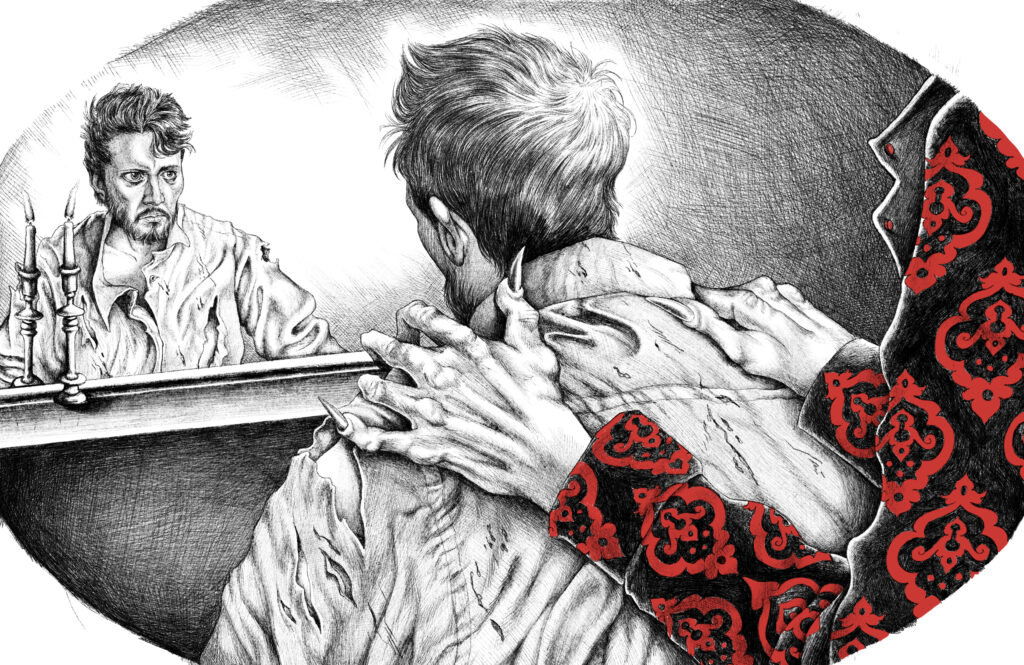
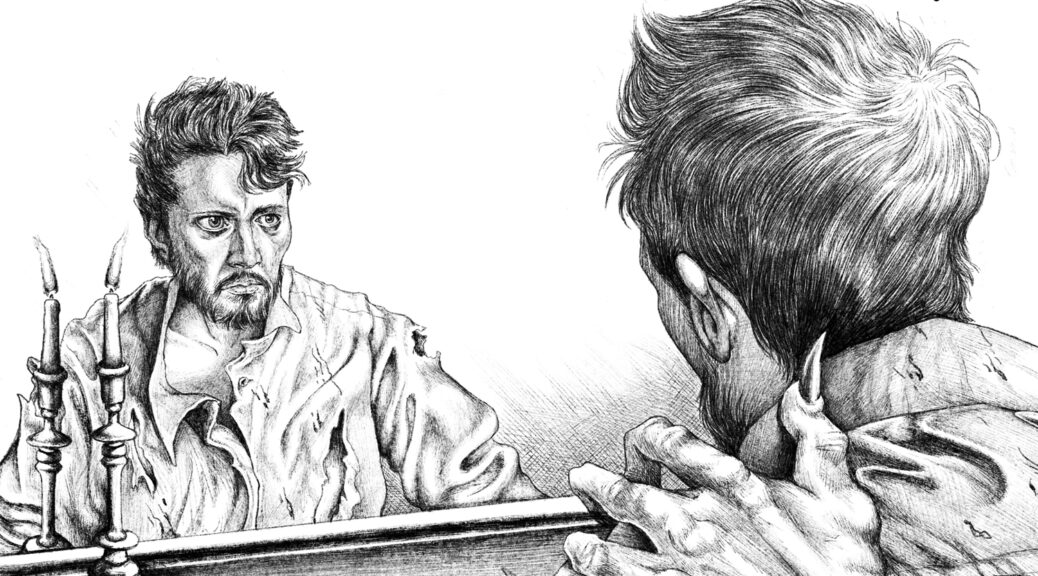
Inspired by Bram Stoker’s genre-defining vampire novel of 1897, Dracula’s Guest shines a light on a relatively minor character in the Dracula canon; one who is often overshadowed by flashier, more bombastic figures like Van Helsing and the Count. That character is R.M. Renfield: Dracula’s bug-eating mortal servant/familiar who, in exchange for the promise of eternal life, assists his diabolical plans to set up a new vampiric feeding ground in England. While the book never reveals Renfield’s backstory, Dracula’s Guest seeks to answer this tantalising ‘what if?’ – with a few terrifying twists and turns along the way.
The play is directed, adapted and produced by James Hyland, who also stars as Dracula opposite Ashton Spear as Renfield. Premiering in 2021, Dracula’s Guest won the Dracula Society’s Hamilton Deane Award and an Offcomm Commendation at the Off West End Awards, both in 2022. This taut two-hander begins with Renfield alone, trembling at a table set for two. On the menu tonight: a glass of brandy and a rotting pig’s head. The second chair is empty – but it won’t be for long. In sweeps the Count, and the Gothic feast begins.
Over the course of a tense and often gruesome hour, we watch the pair engage in a psychological game of cat and mouse. Hyland’s passion for the source text is clear, and he does well to weave in many key motifs from Stoker’s work while striking a few bold, original notes of his own.
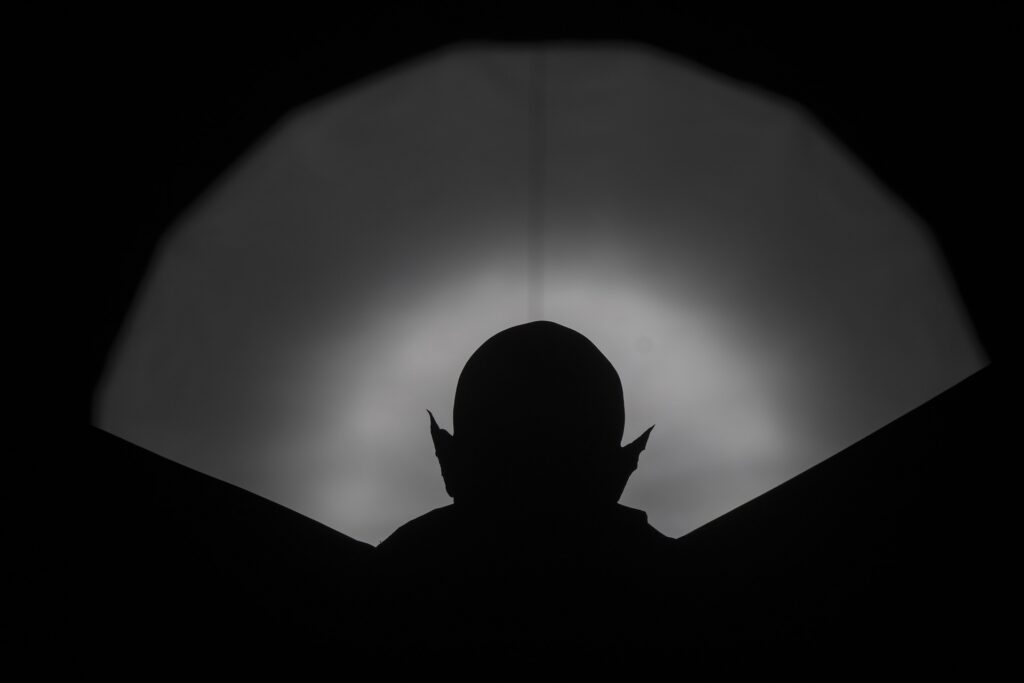
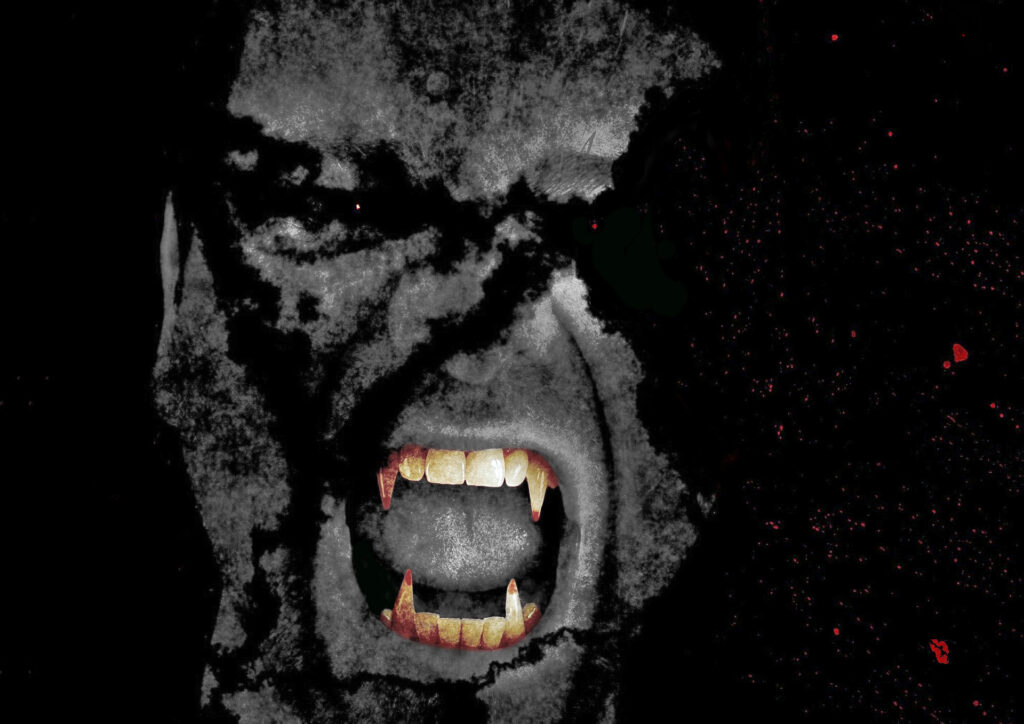
One of these is to hone in on Dracula as a figure of compulsion. His Count is a sadistic manipulator, a toxic narcissist, and a staunch believer in his own myth. He embodies some of the new ‘vampires’ of our own age: manipulative and coercive men in positions of power, who use tools like negging and gaslighting to dominate and control. In the novel, he is an old warlord trapped in a new age, waxing lyrical about his gory glory days. This is a sense that Hyland does well to capture in his performance, giving the impression that Dracula was thirsty for blood long before he acquired the dark gift.
His Count is still very much at war, but it is also a stage that he craves: part shogun, part showman. Hyland’s performance leans into the theatrical bombast of Hammer Horror and even further back in film history, to the Expressionistic silent movies which still influence our cultural image of the vampire today. There’s even something of the feral balletics of Gary Oldman’s Kabuki-inspired performance in Hyland’s unsettling physicality and bursts of animalistic rage. Hyland, who I had the pleasure of interviewing earlier this week, clearly has a feel for the Gothic and would surely have brought that to past productions of Jekyll and Hyde and A Christmas Carol that he has created and starred in under his production company, Brother Wolf.

Spear, in contrast, grounds us in a truly empathetic humanity. In a novel so preoccupied with the often-fine line between sanity and madness, Renfield sits at the intersection between truth and delusion. His and Hyland’s interactions play like a dance (at times literally), with moments of dark comedy intercut with sequences of bug-eating grossness that aren’t for the faint of heart. And the psychosexual undertones within Stoker’s novel are present here, too, with Dracula seeking to persuade his captive to ‘join’ with him in perhaps more ways than one.
The play is all the more unsettling because Renfield is not Dracula’s only Guest: the audience, too, has been invited into his hallowed halls, and may likewise be looking for the exit, especially during some of the grislier bits! A testament, I’m sure, to the skilful sense of tension and unease that has been crafted, both by the two actors onstage along with Chris Warner’s spine-chilling score. It’s a taut and unsettling two-hander that will have you sleeping with the light on long after the lights go down.
Vampires are creatures of the past who also represent our present. Through them we might reflect on our own heritage and histories, what haunts us in our waking lives, and what we refuse to let die. While the script could be tighter in parts, the play builds to a genuinely shocking climax that will have you asking yourself what happens next. Dracula’s Guest may well have the answer, but the question remains: would you invite them in?