Tag Archives: featured

Review, The Tallis Scholars 50th Birthday, Middle Temple Hall, London by James Ellis

It would be a fleeting affair in London to make sure I was celebrating with The Tallis Scholars. Something I did not want to miss. In the wonderful atmospheric Middle Temple Hall, known for its first recorded performance of Twelth Night, the evening went by in a flash.

Drink and canapes were flowing throughout, as things started off with Palestrina’s Magnificat Primi Toni and the eternal Misere by Allegri. The balcony space was utilised for both works, this opening gave you the feel for this choir, their mastery over polyphony and admiration of religious works. There was a marvellous vibe to proceedings, the audience blessed to hear such things. The latter was a highlight, with its serene high notes and it’s tennis match between both choirs in the space.

American writer Leon Wieseltier gave a fabulous speech about his first time hearing the Scholars. Passing the church in which they were singing, he fell in love with them all those years ago and has continued to give unwavering support to them ever since. His writing was highly eloquent and often funny. Caroline Trevor, wife to conductor Peter Phillips, also recounted many years with the choir as singer, leading later to romance. Their was a nice slab of gossip in this speech, personal insight which went down well, Peter beaming in the wings.

I’m glad there was a world premiere, this time from Nico Muhly and his A Glorious Creature. Taking Thomas Traherne’s words, a piercing perspective on the sun and its radiant light giving, Muhly has written a piece which didn’t excite me. It was a sort of strange slice after slice of the words, the singers each getting turns in the polyphony. It was pleasent, but left me a bit chilly.

John Tavener’s Song for Athene needs little introduction. Written as a perosnal tribute to a family friend, it would later be catapulted into fame with it’s usage at Lady Di’s funeral. Here the Scholars offered up a well sculpted and tender version, I found myself in bits. It was a special addition with Lady Tavener present, we lost Sir John some ten years ago. Arvo Pärt’s Virgencita ended this second set with more touching auroas and a reminder of his talents still going stong in his 9th decade.

James Jolly, Editor-in-Chief of Gramaphone also recounted good times with the Scholars, we were offered a tribute copy of the magazine with a history of the choir. Peter Phillips gave the final word, in a speech filled with pride, also acknowledging the pitfalls of the past and present taking them on international tours. We we given goody bags with the aforementioned magazine and Peter’s unexpected flutter into book form about the restaurant they frequent after reharsals.

It was all very inspiring seeing how much of a success they have been, 50 years is quite a long time really. Of course, things had to end with Tallis himself and we had three works: Loquebantur variis linguis, Suscipe quaeso and Gloria from Missa Puer natus. It couldn’t have ended on a finer note with their namesake composer that they have honoured countless times. These sweet pieces crowned the night, their affirming faith, their simple simplest registers and easy listening appeal had us leaving the event with much contentment. 

Review, Rhinoceros, Theatr Genedlaethol Cymru, at Pontio, by Gareth Williams

 out of 5 stars (4 / 5)

In contrast to NTW, Theatr Genedlaethol Cymru goes from strength to strength. Rhinoceros is the latest in a series of shows and commissions to offer fresh, bold and imaginative theatre. In fact, Manon Steffan Ros’s adaptation of the classic text by Eugène Ionesco is the first Welsh-language production that feels not just national but international in scope. This, in spite of the fact that pop cultural references populate the dialogue.

I say this as a Welsh learner who had to sit and listen to the play without audio description or captions. A problem with the Sibrwd app meant that I was forced to engage with it on its own terms. It is testament to not only the actors but the whole creative team that I became immersed very quickly in this increasingly-apocalyptic world. Set in an unknown location in Wales, friends Bérenger (Rhodri Meilir) and Sian (Bethan Ellis Owen) are enjoying tea outside the local grocer’s shop when a rhinoceros runs in front of them across town. The small but effective skill of the actors to shake the furniture to create the vibrations of its movement is but one of several parts that make this a spellbinding watch. Everything from the placement and use of props to the physical manifestation of the creature within each of the characters makes Rhinoceros a captivating commentary on social conformity.

Bethan Ellis Owen perfectly embodies the absurdity that underscores the whole production. For in her transformation, we witness the destructive, dramatic and the ridiculous. Her hysterical movement and exaggerated speech causes laughter among the audience even as it contains a nervous quality that points to a more serious tone. For Meilir presents an increasingly distraught and tortured soul as he fights desperately against the change, from person to creature, that friends and colleagues succumb to. This is no linear tale however: horror is always punctuated with the comic; fairy dust is often laced with fatalism; and the funereal contains a certain cultural irony. It is a melting pot of genres and emotions, expertly crafted and directed by Steffan Donnelly and his team.

What ratchets up the drama and emotion of Rhinoceros is the absence of an interval. It allows the momentum to build to an epic proportion, making its conclusion all-the-more powerful and demanding. It is, at its best, a warning: do not allow the light to be infected by the dark. And this speaks not only to its distinctly Welsh culture but to a Western world in danger of doing just that.

Click here for show dates.

Reviewed by
Gareth Williams

Review, Machinal, Ustinov Studio, Bath by James Ellis

Photo credit: Foteini Christofilopoulou

 out of 5 stars (4 / 5)

The unassuming Ustinov Studio in Bath sees a season with acclaimed director Deborah Warner for what should prove to be a highlight of the theatre calendar. Tackling Sophie Treadwell’s blazing play, a guest appearance from another titan Richard Jones directs in his fashionable and sharp way.

Jones’ work I know best through his time with Welsh National Opera and English National Opera, the former’s Olivier winning take on Alban Berg’s Wozzeck fittingly mirrors Machinal. The Yellow Wallpaper of Charlotte Perkins Gilman permeates the space in Hyemi Shin’s angular and claustrophobic set. The hectic ensemble of actors plays multiple roles as commuters, workers, medical staff, drinkers in a bar and more. The energy here is affirming, Treadwell’s musical and punchy lines are tight and in moments are profoundly abstract and true.

Jones knows what he’s doing. Sat in the front row makes for an incredibly heightend encounter. The patter of conversations, arguments, clatter of dishes, screaming and a pounding bulldozer never quite leave your ears, sound design by Benjamin Grant wonderfully also adds to the absolute din of the whole thing. The futility of the whole thing, the sadness seen with this Young Woman who is bludgeoned by all, forced into a marrige she doesnt want, a child she can’t look after and a tragic decision leads to her execution. Loosley based on the real life story of Ruth Brown Snyder, who murdered her husband, begin was the first woman in the US to get the electric chair. One wonders just how many people now and in the past find solace in story, in the play the leading lady stutters, has panic attacks and other anxious bouts.

Rosie Sheehy has given an unforgettable performance in what is not an easy character in anyones eyes. Her spasms, tics, pounding, flinching all add to a well crafted offering. I found it hard not to hear Lois Griffin in her accent, the play capturing the spirt of New York frenzies. Tim Frances as Husband feels compasionate, if complicit in his misogyny, in well acted form. Buffy Davis is the despondent, Irish Mother, some great humour and maternal blathering. The Young Man, whom our lady has a passionate affiar with, is a lovely Pierro Niel-Mee. The character has some flippently racist remarks of the era (1920s), though this one night stand proves a toxic trait, if it saved our lady even just for a few hours. Pierro works as this sort of sexy saviour, chemistry between both actors faired well. Though his betrayal is all to much.

The troupe of actors mesh around the tight stage, accents strong and a well placed aura is in the air. I spoke of energy and their passion, this must be a cracking play to be part of. The framing of each part, sees an actor place a wooden relief of each scenes name to be hung above all, the shadow of which almost mimicking the wings of freedom our lady yearns for.

Machinal runs at the Ustinov Studio till 18th November 2023

Review, Die Walküre Act 1, City of Cardiff Symphony Orchestra, St Martin in Roath by James Ellis

Photo credit: James Ellis

 out of 5 stars (4 / 5)

There is a hunger to perform Wagner from amateur orchestras. Perhaps the demands asked from this problematic composer seem less daunting today, though command in vocals and a robust orchestra must simply give all.

Part of Wagner’s Der Ring des Nibelungen, the remarkable four part, 15 hours behemoth, The Valkyrie is the second outing. This first act is the most intimate of the enquire Ring, with just three characters in an hour timeframe. The twins Siegmund and Sieglinde who were separated at birth, rediscover themself…with knowing romantic intentions. With the latter married to Hunding, this act sees the twins father Wotan loom over it’s entirety.

This is the only opera where the ring of power forged in the last part Das Rhinegold, is never seem and the actions of Wotan to secure his reclaiming of the ring again sets the story in motion. The lover twins leave Hunding in the night (who was already mortal enemies with Siegmund anyhow) pulling Wotan’s sword Nothung out of the massive tree in the centre of their lodgings as fate foretells.

I was impressed with the orchestra, filled with proclaiming Wagner Tubas, patient harps and pounding timpani. Sat in the front row, I also realised just how much orchestral weight there was to the celli, who get some ravishing moments in this opening act. The romantic feel towards the twins spreads over the musicians and they all get swept away in this strange love story. The swarm-like opening has the strings able and willing to muster up this piercing prelude, as Siegmund escapes the hunt from Hunding and his men in the forest. You can expect Wagner to be loud and the attractive church acoustic caught this thick sound to the roof.

Even with the sweeping amore, comes Wagner’s heavy later compositional style. Our three soloists did a grand job of keep the pace and the drama up for the duration. As Hunding, James Platt oozed into it the horrid nature of this villain. His bass was like a very fine honey, the snarling, vicious line tackled well and you could very easily see him on stage in the role.

Fiona Harrison-Wolfe made for a resplendent Sieglinde, though on a few occasions the orchestra drowned her out. Never an easy role, this being the only character in all three huge acts of Valkyrie, Sieglinde boats high register climaxes and more sincere, homely moments too. Fiona ventured well into this, also thanks to the support from tenor Gareth Dafydd Morris as the love interest. Gareth is a familiar face in Cardiff, this feels like a treat for him.

The declaratory and soaring vocals of Siegmund gave Gareth time to shine, the duet at the end with Fiona a highlight. Affirmed conductor Martin McHale had lots of rehearsal time with the players and it showed. Some brass and light woodwind fluffs may have been expected, due to the demands put upon them but it went along without a hitch. 

Review: Everybody’s Talking About Jamie by Gemma Treharne-Foose

 out of 5 stars (4 / 5)

Press Night 23 October 2023

“A riotously upbeat tale for our times….” 

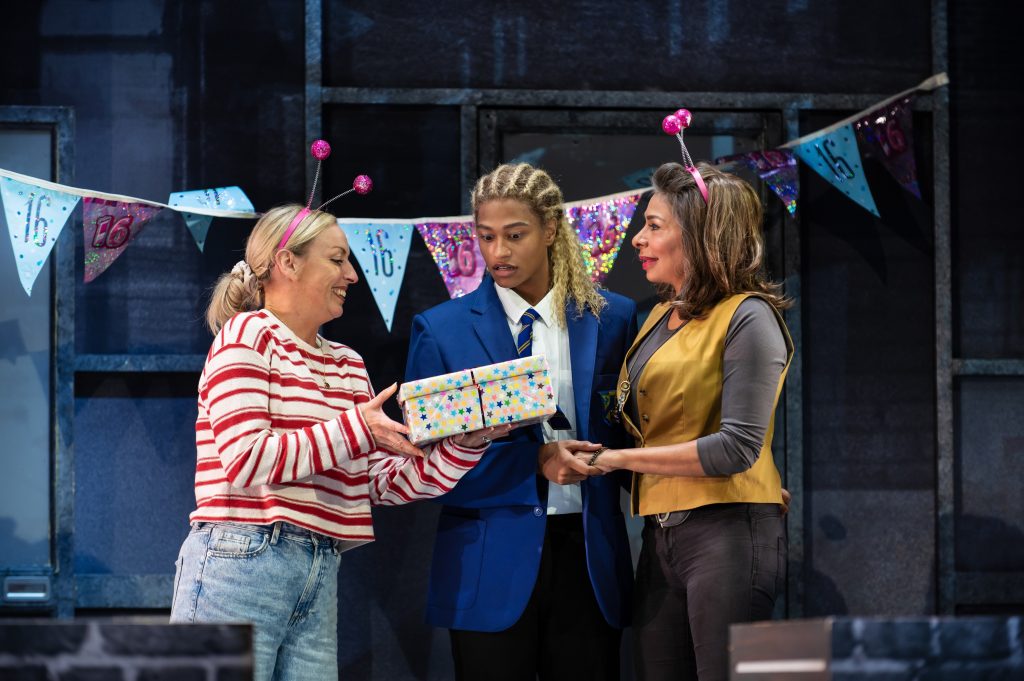
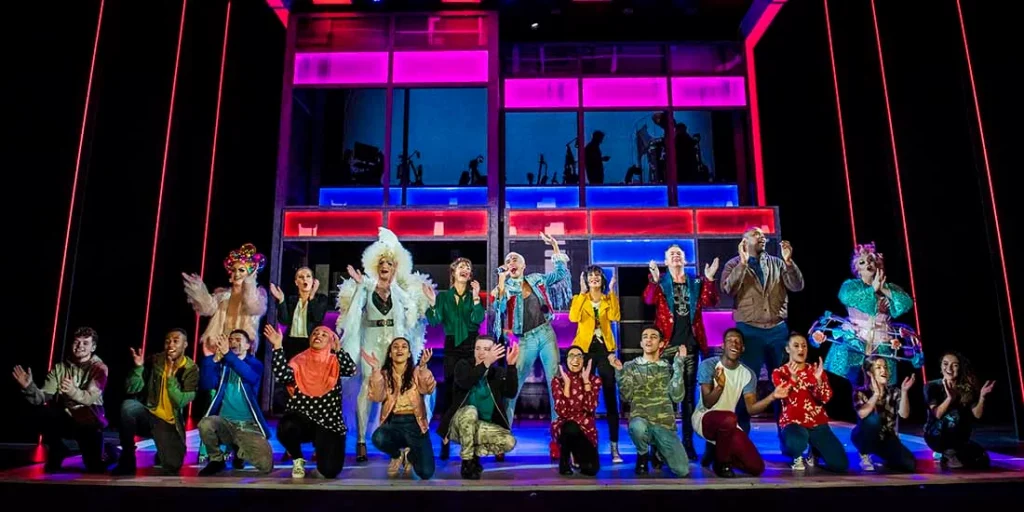
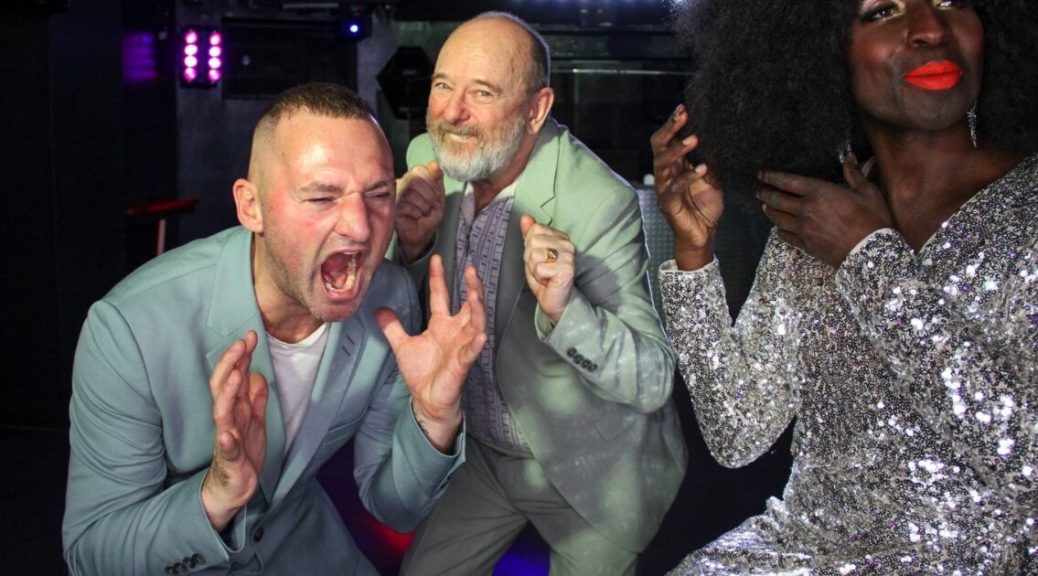
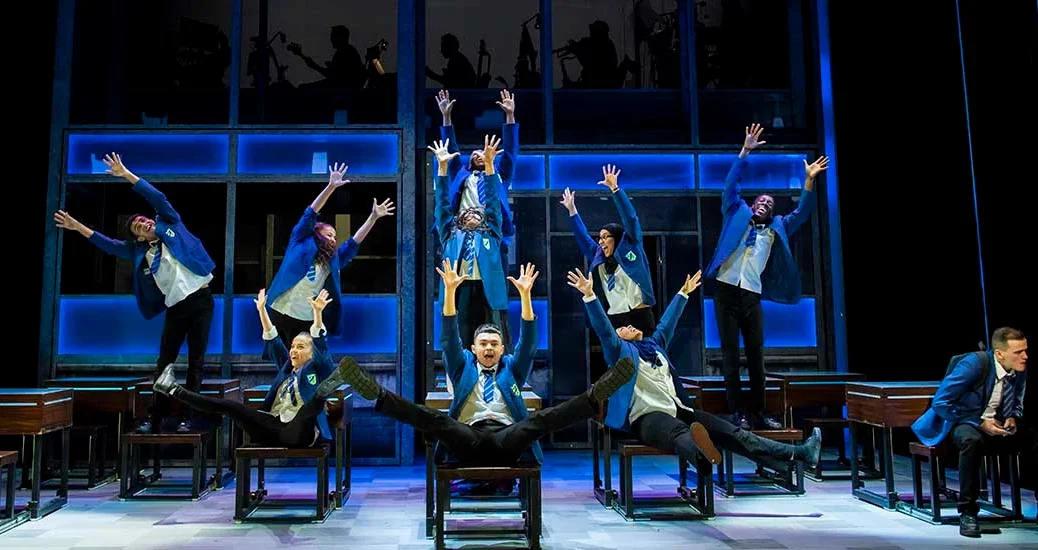
Everybody’s Talking About Jamie (playing at the WMC until the 28th October) has had a meteoric success since the original documentary about 16 year old Jamie New (who wants to be a drag queen) was introduced to us on our TV screens in 2011. Since then, we’ve seen a musical, an award-winning world tour and a movie starring Richard E Grant and Sharon Horgan. Attending the opening night in Cardiff with my teenage daughter, I wondered if the setting of much of the play (in a typically grim British state school) would chime with her or potentially be shot down as a sad attempt by Millennials to capture Gen Z culture…never an easy line to tread!

It’s the kind of premise that would make a Daily Mail reader’s head explode. We have a gloriously camp 16 year old Jamie New who daydreams of stardom as the next big thing in the Drag scene. His accomplice, a Muslim, hijab-wearing Pritti Pasha (Talia Palamathanan) is his best friend and wing-woman. Supporting his bold and some might say outrageous career aspirations while maintaining her own moral and religious code, the friendship represents the kind of unity and integration that we all wish for. This is never too forced, or too jarring in its earnestness. Talia Palamathanan’s voice is absolutely sensational and her solo number ‘It means beautiful’ (by Dan Gillespie Sells) is stunningly delivered and I saw multiple folks around me wiping away the tears at the end of the number.

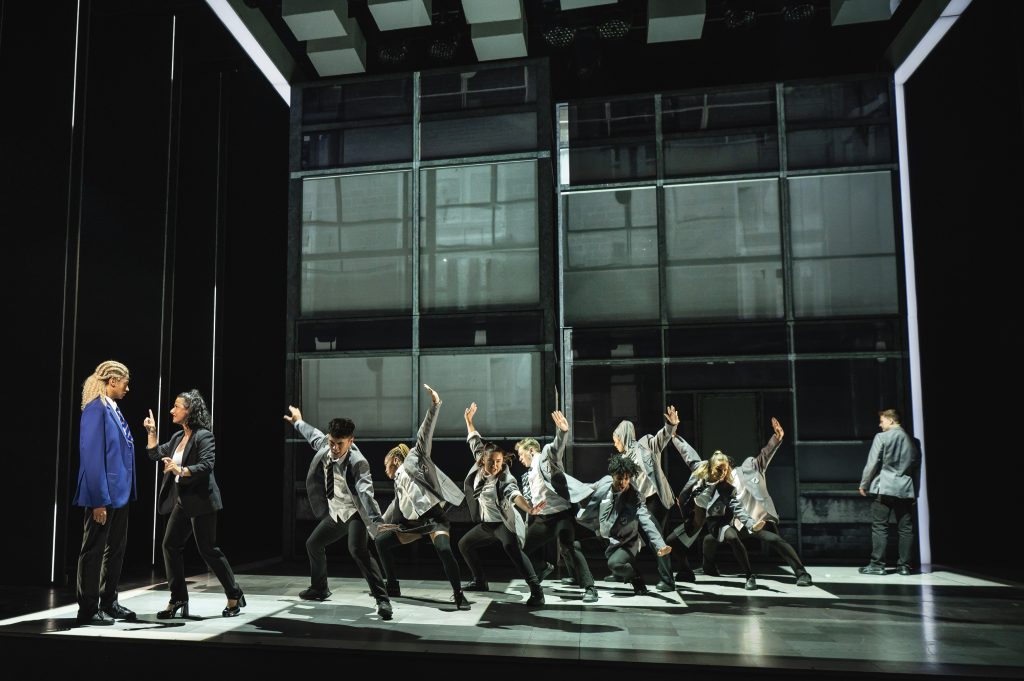
Huge credit for first-class character work and rapport with the audience must go to Shobna Gulati as Ray and stand-in Georgina Hagan (who was replacing Rebecca McKinnis as Jamie’s Mum Margaret New the night I attended). Georgina’s two solo tracks “If I met Myself Again” in Act 1 and “My Boy” in Act 2 were truly some of the best numbers in the show. Georgina’s vocals gave me goosebumps and although I’m not usually a fan of sequences with contemporary dance peppered into some scenes, Georgina’s emotional delivery took the whole scene to the next level. The dancers accompanying her were superb – it helped to tell the story and made Georgina’s incredible vocals even greater.

Some of the set-up for Jamie’s big reveal may remind you of Billy Elliott (young Northern lad overcomes toxic and stifling masculinity and a troubled father-Son relationship to follow his dreams, plucky ‘Diamond in the rough’ family members will rally around to support him when it really counts, etc etc). But this show, though perhaps formulaic in places, manages to simultaneously pack in a great story, outstanding choreography, quality songs and a great set. I wasn’t a huge fan of the visuals on the screens behind the stage set – it made the overall look and feel a little ‘commercial-like’ or trying to be like MTV or a swishy campaign when the action and performance on stage really is enough to carry the show…no glossy brand-like photography needed!

Hot on the heels of the incredible Layton Williams who played Jamie New in 2019 (and is now fox-trotting across our screens in BBC’s Strictly), is Ivano Turco. Ivano’s performance as Jamie is spectacular. Sometimes when you listen to the original soundtrack to popular musicals, it can feel like it’s not possible to improve on this ‘original recipe’ – and no disrespect to anyone on the original soundtrack but Ivano’s silky smooth voice is like honey. His approach to the songs is beautifully soulful and his relationship and interaction with Georgina Hagan as his Mum was lovely.

My daughter and I LOVED this show. We listened to all the songs again on the drive back home and we’ll be closely following Ivano’s career – he’s destined for a glittering future. This is a gloriously upbeat tale for modern times and it’s a dopamine booster. Highly recommend it!

Review Carwyn Presented by Bale and Thomas in Association with Theatr Felinfach, Torch Theatre and RCT Theatres by Ella Fay

Credit Drew Buckley

Not many plays start with the actor already onstage, but this production of Carwyn makes you feel immersed from the very start as the audience is taken on a journey of a man that is sadly often forgotten, but he’s one worthy of being celebrated and remembered in Welsh culture.

The play begins and ends with the passing of Carwyn James but throughout the piece, the audience is hooked by the outstanding performance of Simon Nehan . Nehan tells a story of Carwyn reflecting on the good and bad of his life that is well worth knowing. We see two sides of Carwyn, one in which the whole world got to see, the way he felt how he had to be perceived on the outside, and the raw and real side of Carwyn, who spent his life hiding his true self from a brutal society as he was a man, simply living ahead of his time.

Showing both sides of Carwyn through the talented writing of Owen Thomas and the brilliant directing from Gareth John Bale, was something so impactful to watch as his eye-opening story is a story that is heartbreaking, relevant and necessary. I can say without hesitation that Carwyn the play is a production deserving of a standing ovation and if I was to watch it again, I know I would be moved and feel a little more impacted each time.

Review The Night Woman, Julene Robinson, Barbican Centre by Tanica Psalmist

The Night Woman is directed and unapologetically performed by Julene Robinson. Embodying an electrifying, eloquent vibrancy expressed through dance, singing, live music and themes revolving around self-love, as well as the true essence of blackness navigating through life’s metaphysical journey, essentially as a black phenotype, inevitably encountering difficultly, challenging and disempowering experiences due to nuances, biases, prejudices, discrimination, lack of sovereignty and an identity crises due to a lack representation of dark pigmentation, coarse hair and society’s sensitive triggers to discomfort and negative conscious biases from foreign lands, within your own family and inner community.

Julene’s poetical and metaphorical expression of her exploration of darkness to discover inner beauty, magic, Godliness and purity, is mystical and impactful. Leaving you exploring the depths of the starry, moonlit sky using dazzling twinkling fairy lights and robes to represent tree branches, glowing in the low dim illuminance. This play speaks loud volumes of spirituality, trance and ancestral reconnection to reach places of true acceptance, embrace darkness no matter your linage or background, and to do so both internally and externally in every capacity, to avoid escapism of the fear of the unknown, due to colonial biases around darkness, distributing worldwide ignorances.

Watching Julene Robinson performing without an interval was a phenomenal experience, she’s not only an enchantingly performer who effortlessly takes audiences on a complex phenomena, but her use of characterisation in humorous and unapologetic ways to highlight the day in the life of Caribbean girls, born of a darker hue, living in the West Indies, and the general inadequacies faced by woman within the diaspora is magnifying.

The Night Woman, is an eye-opening fusion of loss, grief, femininity, unlearning to learn sequel; reflective stories told in an educative and playful way; with non-stop metaphors, depth and Jamaican humour all in one to re-live, restore, re-imagine and re-ignite all to come alive in the darkness by closing their eyes, whilst simultaneously appreciating dark skinned beauty by remembering darkness birthed light, and the gentle reminders of how life, including human life grows in the darkness where a God dwelled comfortably and humbly before colonial negative connotations of the word black and society’s conflicting interpretation, hatred and detest for darkness, dark matter and the night woman that birthed light lovingly.

Review Carwyn Presented by Bale and Thomas in Association with Theatr Felinfach, Torch Theatre and RCT Theatres by Holly Ford.

Carwyn the play grants the audience an intimate view into Carwyn James’ private life, revealing a side of himself that he spent his life hiding from a judgmental and unaccepting society. This is a story, often heartbreakingly forgotten, but one that deserves to be celebrated in Welsh culture.

“People shouldn’t fear death, they should fear they didn’t live their best life”- Carwyn.

As he passes, Carwyn’s life flashes before the eyes of the audience. From his triumphs to tragedies, Carwyn’s story is one that must be told. We see Carwyn as who he was to the outside world; who he felt he had to present himself as, because he felt that the time he lived in was not a place for his true self. This play shows us this version of Carwyn, but also, who he was in his solitude. As a result of this, there is something so heart-rending, poetic, and beautiful about this piece. The skillful writing of Owen Thomas, powerful performance from Simon Nehan and the impactful directing from Gareth John Bale put together capture Carwyn’s story in a poignant and moving way; that was undoubtedly deserving of a standing ovation. This is one of the few pieces I have ever seen that I can confidently say that if I watched it many more times, I would be in tears at the end of each and every one.

Credit Drew Buckley

Series Review, Anfamol, S4C, by Gareth Williams

 out of 5 stars (4 / 5)

A Welsh adaptation of Fleabag seems quite superfluous in the face of Anfamol’s success. For this is a production that takes the best of Phoebe Waller-Bridge’s comedy and turns it into something original. First conceived as a stage play, the critical acclaim which it received has seen Rhiannon Boyle now adapt it for the screen. She has taken the frank, witty, dark and direct elements of her monologue and traversed them into a script that is punchy and pointed, hilarious and harrowing. The result is a five-part series that injects S4C’s schedule with something that is vivaciously fresh. Boundary-pushing at its best.

https://www.youtube.com/watch?v=9WcklT1cWuQ

Bethan Ellis-Owen reprises her role as Ani, a forty-something single woman looking to become a mother on her own terms. Ellis-Owen brings a subtle sharpness to her emotions; able to portray dogged determination and inner brokenness with apposite aplomb. Her knowing side-looks to camera borrow unashamedly from Waller-Bridge; while the addition of fantasy sequences, particularly with exotic sperm donor Estevez, offer the kind of quirky aside that feels distinctly Welsh. (Think Parch or Enid a Lucy). There is a dark side to such visions however. For alongside the comic that, in part, comes from its overtness to sex and unabashed portrayal of the fertility process is the devastating effects of postnatal depression and the exacting reality of life as a single mum. Ellis-Owen manages to navigate these emotional shifts with ease; and in doing so, presents to us a character that is highly empathetic, and authentic in every way.

She is joined by a stellar support cast, of which Sara Gregory is the most prevalent. Playing Nia, a kind of nemesis to Ani, Gregory brings a chic strength to her character that cleverly masks a hidden life of sadness and despair. While publicly portraying herself as “Blueprint Mother” online, privately, Nia is struggling. Her birth-plan goes out the window; her marriage is distant, husband absent; and when Ani trolls her online, her success as an online blogger is left in tatters. But along with Ani’s seemingly perfect sister (played by Lowri Gwynne), the drama comes to a point where perfection is extinguished as a myth and vulnerability is celebrated in all its f***ed-up glory. Sticking two fingers up to the chauvinistic, infantile male sex at the same time, it becomes a powerful and thought-provoking piece on feminism, motherhood and mental health in the present age.

Anfamol continues S4C’s excellent batch of female-led dramas whilst offering something very different to what has come before. And though it may feel derivative of Fleabag, it is by no means a copy of it. It has its own distinct subject matter and significant narrative to tell.

Click here to watch the series.

Reviewed by
Gareth Williams

Review: Life of Pi, Wales Millennium Centre by Gemma Treharne-Foose

 out of 5 stars (3 / 5)

Press Night Oct 18th 2023 

‘A visual feast…’

Those who watched Ang Lee’s film adaptation of Yann Martel’s 2001 novel will be familiar with the premise of Life of Pi. A young 16-year old boy from Pondicherry in India is launched into an epic adventure as the ship carrying his family and their zoo to a new life in Canada sinks – and he finds himself adrift in the ocean with only a fearsome Bengal tiger for company. 

Through the prism of Pi’s recollections later in a hospital ward, we hear how he survives 227 days at sea – and how the narrative which we come to believe – as bizarre and hallucinogenic it seems – is later completely turned on its head. 

This is a story exploring themes of religion, the complexities of people, the sanctity and sentience of animals and the sheer will to survive. The degree to which this stage adaptation adds to or takes away from both the book and Ang Lee’s film adaptation is up for debate, however. 

Previous reactions to the stage tour all seem to touch on this production being a “visual feast” or “an incredible visual adaptation”, “aesthetically pleasing” or that the puppeteers and animals steal the show. This is most certainly true – the production’s stunning set, magical special effects and masterful puppetry will wow the senses and pack a visual punch. 

But some of the book and film’s deeper delves into the philosophies of the human experience and the hypocrisies of religion are lost somewhat in this truncated stage adaptation. Speaking for myself and my father, seeing this stage show for the first time, we found ourselves disliking and feeling upset by some of the depictions of animal suffering. Truth be told, we can’t even stomach David Attenborough’s programmes these days.

This unease mind you, is probably a sign of the incredibly well-executed puppetry and choreography by the team. This did remind me also of the discomfort I felt watching Ang Lee’s film. So absorbed was I by the idea that the animals were suffering, I probably missed some of the intended broader points of the story. The highlight of this production, then becomes focused on the mode of delivery of the story rather than the story itself. Because the plot is pretty harrowing and – to quote a former colleague of mine who I bumped into in the show’s interval: “pretty grim”. 

This is not a stage show that will not exactly elevate or lift you as some productions can. It illustrates the difficult line writers and directors tread in that no creative really wants to spoon feed their audience and only serve up neat and today tales in a pretty little bow. But in the quest to make us think and engage us with what’s going on via the mechanisms of the stage production, we lose the potential to get under the skin of the characters and get to know them well. The characters become pawns for pondering the story, rather than characters you truly care about. Life of Pi is also an exploration of the stories we tell and how they come to form part of our “truth” – and as an audience you’ll be confronted with these idiosyncrasies in live time, preferring one version of “truth” over another. 

As an audience, we become desperate for those light moments of relief when Pi makes a quip, when the stars come out, when the glowing wiggly fish arrive because we’re reminded of the moments of light relief and beauty in a world that can be truly depressing and awful at times. As Pi tells Ms Okamoto in the hospital ward: “I’ve had a TERRIBLE journey…” 

Life of Pi in 2023 hits differently. You’ll think about how some things never change. When Pi’s family flee India due to the dangerous unrest (supposedly echoing Indira Ghandi’s 1976 declaration of “The Emergency”), you’ll ponder the plight of others in the world who now face becoming refugees in hostile territories, as we see playing out when the family are treated poorly by crew and passengers on route to Canada. 

Huge congratulations and oceans of praise must go to the energetic and engaging Divesh Subaskaran playing Pi. His physicality and presence in the lead role is stupendous, leaping from one side of the boat / bed to the other and embodying all of the trauma, hope and mania of Pi during his tumultuous journey across the sea. His stamina, his powerful voice, warmth and wit shine through even in the bleakest of times. You are rooting for him from the very beginning and willing for his terrible story to take a turn for the better. The chemistry and rapport between Divesh and Keshini Misha playing Pi’s sister Rani is sweet, offering up a ray of hope ahead of the family’s ill-fated journey. 

Finally, the purveyors of the visual magic in this show have to be set and costume designer Tim Hartley, Puppetry and Movement Director Finn Caldwell. The lighting, visual effects and projections in this production are wonderful thanks to Andrzej Goulding and Tim Lutkin. 

Life of Pi may not be an easy watch – but it’s certainly a beautiful one.