 (3 / 5)
(3 / 5)
 (4 / 5)
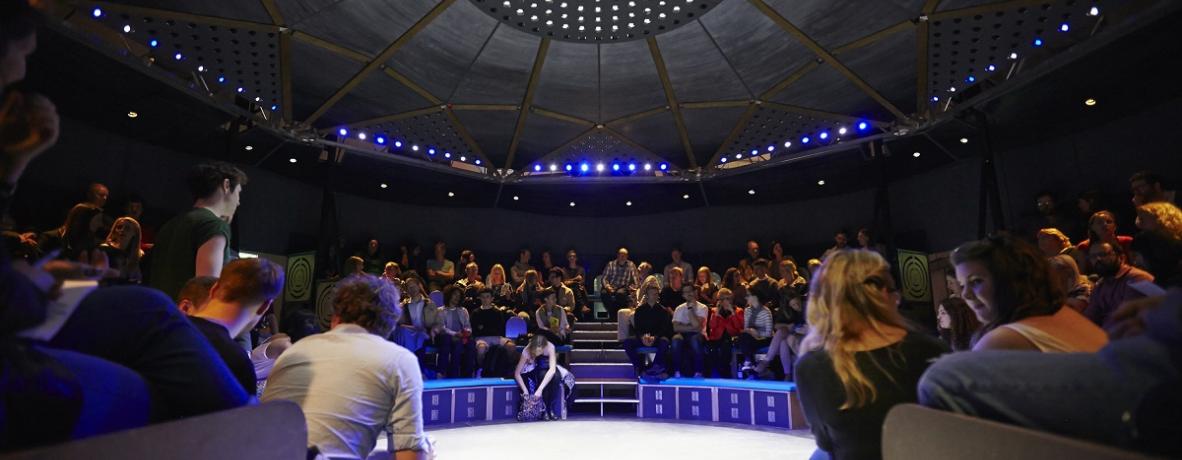
The Roundabout Theatre makes a welcome return to North Wales sporting a rather distinct yellow exterior. If you’ve not heard of it before, this is a theatre like no other. Assembled from flat pack with nothing but an Allen key, once complete, it is a fully self-contained, intimate little theatre that houses some of the most fantastic new plays in Britain. One of those plays is Island Town, which I was lucky enough to see last week. This 80-minute story of small town life could be described as a dramatic stage version of the BBC3 comedy This Country. Still full of humour but with a darker political edge, Island Town focuses on the lives of three friends trying to get by in a place that offers very little in the way of meaningful activity. With only the hope of escape, they settle, for the time being, on hanging out with one another, getting drunk on cider and looking ahead to the start of their adult lives. But when school’s out and exams are over, they find that it’s not so easy getting by in a place where there’s nothing to do. And escaping is not as easy as it sounds.
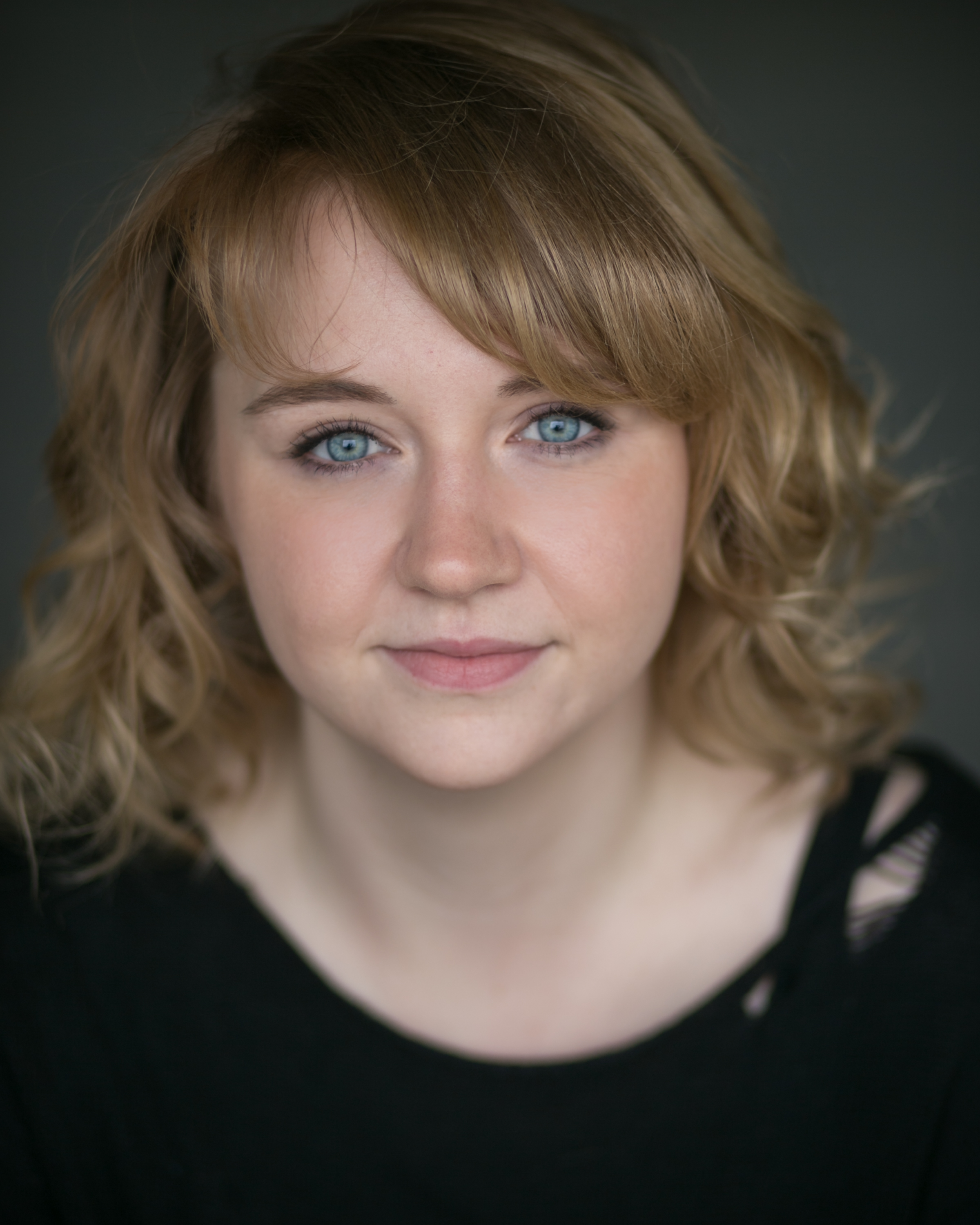
Writer Simon Longman has done a sterling job in creating a simple yet powerful narrative. He has created three well-formed characters that all three actors seem to comfortably step into and make their own. It is their relationships that drive the story forward, and make this piece particularly engaging. Whilst I am sad that the wonderful Katie Elin-Salt is not part of the cast this year, the production company, Paines Plough, have nevertheless found three excellent actors to play the roles. Katherine Pearce, in particular, has proved to be a real coup. I say this because she steals the show as Kate, an angry and assertive young carer who feels trapped by the need to look after her ill father. Pearce crackles with antagonistic rage. She places Kate as the centre of attention, a position which seems to strengthen her resolve whilst simultaneously covering up her vulnerability. Such is her pragmatic insistence and strong-willed notions that the three of them must escape the confines of their hometown that we, like Sam (Charlotte O’Leary) and Pete (Jack Wilkinson), agree to go along with her. Yet the consequences of such a decision are damaging to say the least. From here, Pearce slowly allows her character’s vulnerability to creep up to the surface. She causes the fragile state of her character to painstakingly crack through its steely confines. Such a move makes for an emotive performance, and makes Pearce herself one-to-watch.
Both O’Leary and Wilkinson give good support to Pearce in her more central role. In particular, Wilkinson brings a wonderful humorous naivety to his character. He deposits real warmth into his performance that evokes much laughter from the audience, particularly as he spins a fantastic web of outrageous stories, the highlight of which has to be his cremation for a fish. You can’t help but love him, which is why the injustice that he subsequently suffers elicits very strong feelings. In this instance, Longman makes Pete a political mouthpiece for the small town unemployed. He notes that there are no jobs in the local area. With no means of earning money, he must sign on. Yet he can’t sign on as he hasn’t got enough money for the train to the out-of-town job centre. There are no buses, and he can’t drive either. The non-specificity of Island Town’s setting means that it speaks generally into the heart of rural British life, of “Towns that sit like islands in the middle of fields”. Longman shines a sharp spotlight on the realities of small town life, making this not only a humorous play but a very relevant one too.
Island Town is a funny, thought-provoking play of minimalist proportions. At the same time, its message is somewhat universal. At one end, it captures the wonderful creativity that can arise from sheer boredom. On the other hand, it reveals the desperation that can result from a lack of amenities. Katherine Pearce gives a strong emotive performance as Kate, ably joined by Charlotte O’Leary and Jack Wilkinson. The three capture life in a small town incredibly well. With no props or no scenery, they still manage to draw us into their world and make it incredibly real. I’d recommend you catch it, if not in Mold then elsewhere. That’s the beauty of this pop-up theatre. It can pop up anywhere.
Click here to find out more.

(3 / 5)
Verve Leicester’s version of the 1982 double Oscar winning film “An Officer and a Gentleman” is the second attempt to adapt this iconic movie into a musical. The first premiered in Australia in 2012 and bombed out of sight. So can we expect more from this improved 2018 version?
Still set in 1982, the story seems a little dated nowadays with gender issues much more under the spotlight. It is essentially a Cinderella storyline set in Pensacola, Florida, the location of the first Naval Aviation Station in the U.S. military set up in 1914. Since that time, countless number of naval aviators have been trained here. Rather like my home town of Brecon, which also has a, (although diminishing), military presence, there is an uneasy relationship between army personnel stationed there and the local inhabitants. Writer Douglas Day Stewart trained at this base for service during the Vietnam War so his story is based upon his own experiences.
Pensacola, or at least the part around the naval base is depicted as a depressed area where local girls dream of capturing the heart of a trainee officer, in order to raise them from their station.
Friends Paula and Lynette are two of these girls, although it turns out have different agendas. The story shows the courtship of the two officer candidates Zack and Sid, who have to endure a tough twelve-week course to determine whether they are officer material.
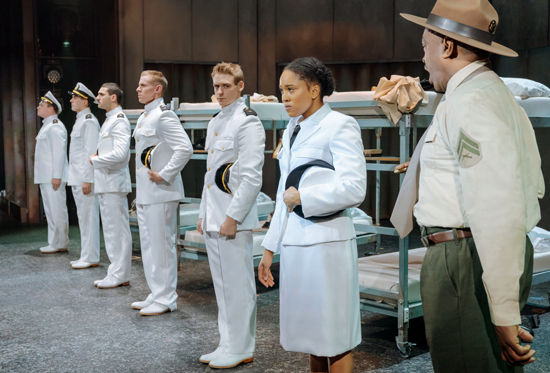
The musical version follows the basic story-line of the movie interspersed with a number of well known hits which generally have a slight connection with the action, that helps to keep the show within its historical context.
Early on in the show, a gang of girls working in a mundane job sing, “It’s a Man’s World” and the development of the plot tends to emphasise this.
Emma Williams as Paula is the pick of the singers on display.
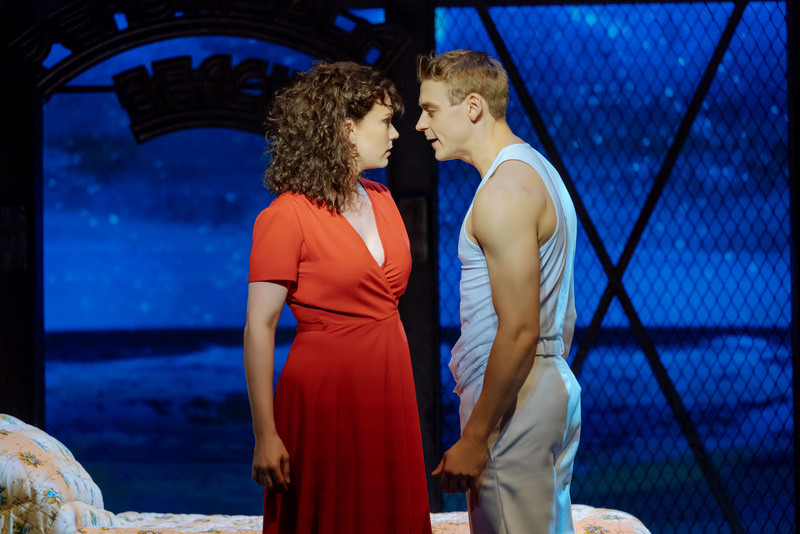
Her strong and versatile voice is highlighted in her duet with her mother Esther, (Rachel Stanley), in “Don’t Cry Out Loud” – one of the highlights of the show. Other 80’s pop and rock standards, ” St. Elmo’s Fire”, “Livin’ on a Prayer”, “The Final Countdown”, “On the Wings of Love” and altogether a total of 22 songs are present to entertain you. Most are sung well enough, although sometimes a little stridently, and they are accompanied by recordings of a commissioned band.
Michael Taylor’s set design and Ben Cracknell’s Lighting are of a high standard. With a backdrop of video projections, it provides a filmic effect. The love scene against a backdrop of crashing waves rushing on to Pensacola Beach is memorable.
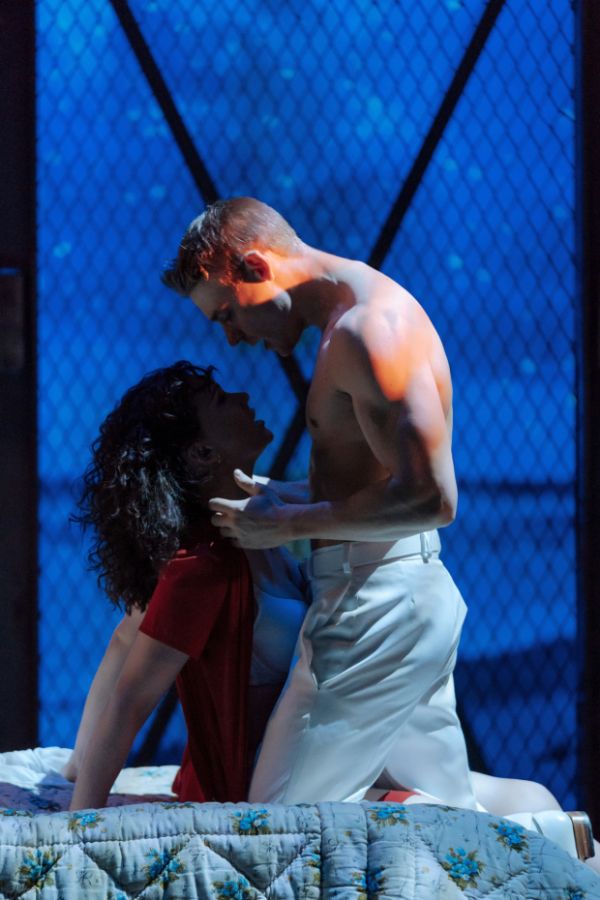
The performance was well received and I think this was influenced by the final scene, which director Nikolai Foster judges perfectly by not going too over the top. This is the scene where Richard Gere playing Zack was at odds with director Taylor Hackford for being too overly romantic in contrast to the social deprivation and class issues that preceded it. He wanted a different more realistic ending but lost out.
An Officer and Gentleman – The Musical isn’t a classic, but it did get audience members around me singing and moving in their seats to the motion of the music and was rapturously received.
If your bag is 80’s music, and a familiar story-line, then you will love this show.
It lasts around 2 and a half hours including a 20 minute interval.
There is strong language throughout and sexual references and scenes.
It runs until 30th June
https://www.wmc.org.uk/Productions/2018-2019/DonaldGordonTheatre/AnOfficerandaGentleman/
Cardiff marks the first touring location for this production. For further details of tour dates
http://officerandagentlemanmusical.com/book
Roger Barrington
 (1.5 / 5)
The previous occasion I attended The New Theatre in Cardiff, Jess Conrad was donning his “amazing technicoloured dreamcoat”. The year was 1978, so with great anticipation, I returned to Cardiff’s well known variety theatre. Opened in 1906, the average height of British men was 4 inches shorter than today, which meant that the Dress Circle seat that I occupied for the performance under review, was decidedly less cramped in Edwardian then what I had to endure.
So, not off to an auspicious start then. I was attracted to this production because I have a life long interest in the famous consulting detective.
The action takes place in 1921 and 1922 and we learn that Sherlock was born on Twelfth Night 1854, which makes him 67-68. In a declining mental and physical state his isolated existence at his Sussex home is interrupted by the discovery of a woman, dressed in male attire being found on his own private beach. Over the next 100 minutes, we witness Sherlock piecing together the evidence until he unmasks the killer towards the end of the show.
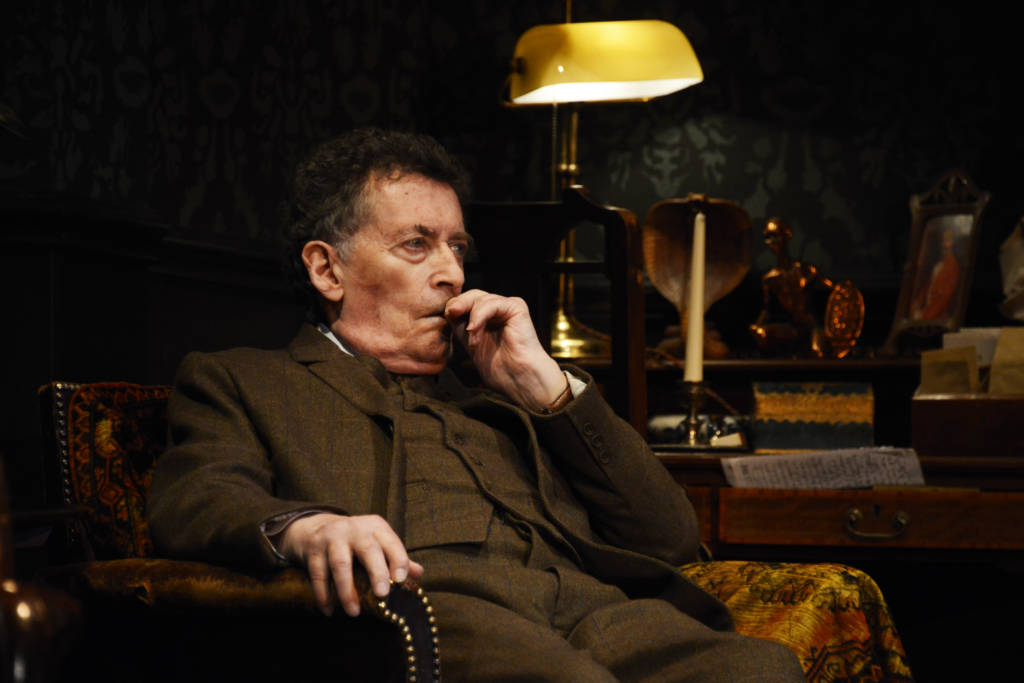
Sherlock Holmes is played by Robert Powell, a solid actor whose acting peaked at the summit of Mount Calvary in Franco Zefferelli’s 1977 mini-series, “Jesus of Nazareth”.
Powell, excellent in this production, is much more believable portraying Jesus than he is Sherlock Holmes. Whether it is Basil Rathbone in the 1940’s, Jeremy Brett in the 80’s, Benedict Cumberbatch in the past ten years and Sir Ian McKellan in the 2015 film, “Mr Holmes”, there is a consistency in how our hero is depicted. Sharp intelligence, a kind of nervous inspired energy, a man of unique intellectual ability and impeccable instinct, I just don’t see Robert Powell being able to achieve that within his acting range. A great voice, I concede, but, even in Sherlock’s dotage, as Sir Ian McKellan was able to show, we must believe that Holmes is still an exceptional sleuth.
Liza Goddard as John Watson’s wife Mary is also miscast.
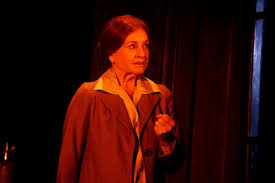
I have seen Ms Goddard on stage before in a dramatic role and I’m not overly convinced that her talents lie in this direction. The Final Curtain is a comedy thriller, but, sadly the writing doesn’t allow Mary to share many of the humerous lines, and that is a shame, because Liza Goddard is at her best in comedic roles. Instead she comes across as a Dame Judi Dench on Xanax.
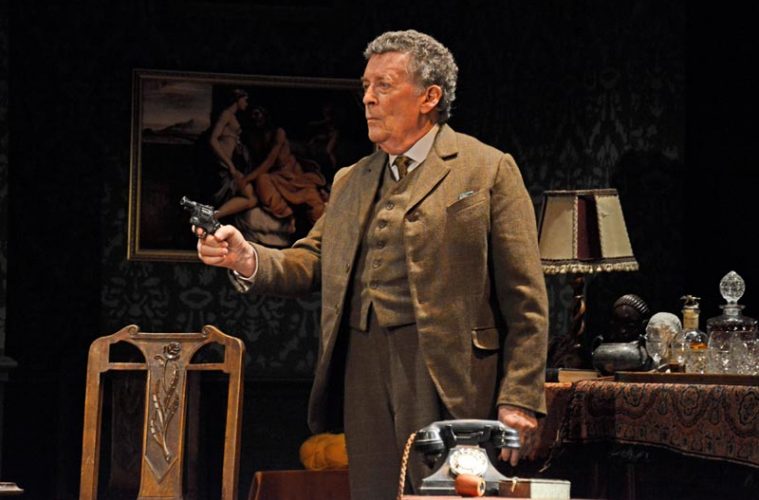
Timothy Knightly as Dr. Watson fares a little better.
I last saw this actor in the fantastic 1994 revival of Arnold Wesker’s “The Kitchen” directed by Stephen Daldry. I attended the first night and it remains one of the most memorable productions I have ever seen. This production could do with some of the sheer excitement and tension that “The Kitchen” possessed.
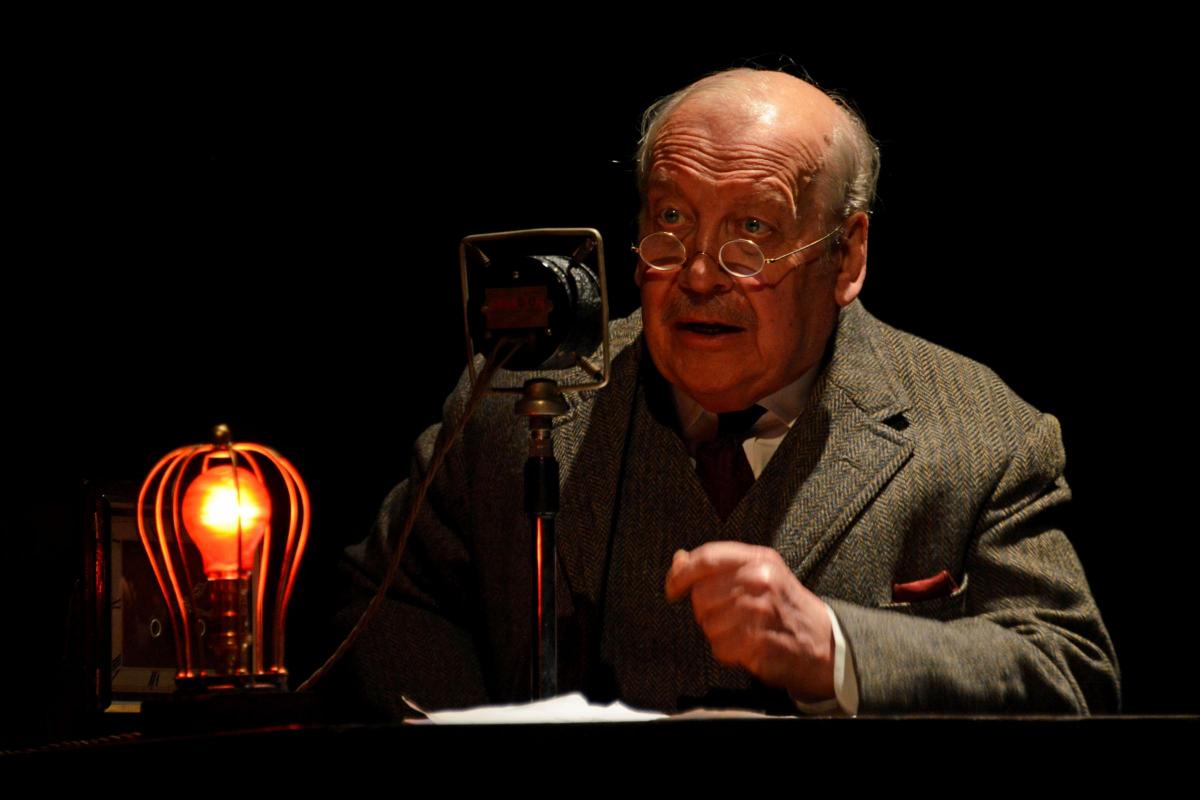
Roy Sampson plays Mycroft Holmes.
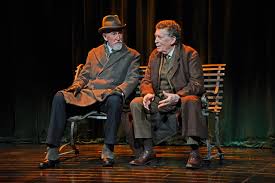
Other than a comment about sibling relationship where he is implied but not present, there doesn’t appear to be any reason why he appears in this story other than padding it out a little.
Anna O’Grady plays Miss Hudson – get it? Daughter of the famous Mrs Hudson, housekeeper of 221B Baker Street, who, as this story is set in 1921, based upon the youthful appearance of Miss Hudson, her mother must have set some kind of record for giving birth. And as there is never a mention of a Mr Hudson – well the mind boggles?Miss Hudson is the breezily cheerful stereotypical Cockney maid.
Lewis Collier plays Detective Inspector Newman, looking suspiciously young for this rank for 1921. It is a totally nondescript character and the actor has little to work with.
Oh and there is a tramp played by Peter Brollow, which is fair enough as long as you don’t ever undertake crossword puzzles.
The play is written by Simon Reade, has an excellent pedigree of credits. Recently he wrote the screenplay for the film version of R.C. Sherriff’s novel “Journey’s End”. and has also worked with The Theatre Royal Bath, (whose production this is), notably on “A Room with a View” an adaptation of E.M. Forster’s exquisite novel. I don’t know what went wrong here. The dialogue is largely anodyne, bordering on the soporific, which manages to convey no chemistry between Holmes and Watson. The exception being the final scene where they are planning their future together, which is not bad at all.
There are some amusing lines, but the story provides no thrills and is so predictable, I was beginning to feel that I had read the story previously – I hadn’t. I had experienced greater excitement on a wet afternoon in Cwmbach.
And the final scene is totally superfluous and if you think about it, totally ridiculous.
The effects are nothing special and scene changes are carried out in an untidy and clumsy way of a curtain moving slowly back and for across the stage.
Sets other than 221b Baker Street are sparse with only limited props.
This production lies very much in the commodity camp of theatre. The House was almost full, and plays such as this do have a place in the dramatic canon, but I have seen this genre done much better over the years. If you are looking for theatre which challenges you, you would be better off staying at home taking on your pet Shih Tzu at a game of chess.
Sherlock Holmes – The Final Curtain – well, one can only dream.
The play runs until Saturday 30th June 2018 before moving on to Leicester’s Curve next week.
The play is suitable to all.
Runs 110 minutes including a 20 minute interval.
Tour dates
https://www.theatreroyal.org.uk/production/sherlock-holmes-the-final-curtain/
New Theatre Bookings
http://www.newtheatrecardiff.co.uk/what’s-on/sherlock-holmes-the-final-curtain/
Roger Barrington

Double Vision is a brand-new thriller co-produced by Wales Millennium centre and the award-winning theatre company Gaggle Babble for Festival of Voice 2018. This is a very ambitious and multi-sensory show which is predominantly set on a luxury cruise liner called The Empress of the Sea.
As you take your seat in the auditorium you can already sense you are about to embark on a journey filled with humour and a surreal feeling, as you are seated by ushers played by members of the cast, who don’t seem to know when the show is about to start.
The show opens with the amazing voice of Lisa Jen Brown who is a member of the welsh folk band 9Bach who plays Serena in the show. The show has no interval but there is a definite sense of it being split into two halves.
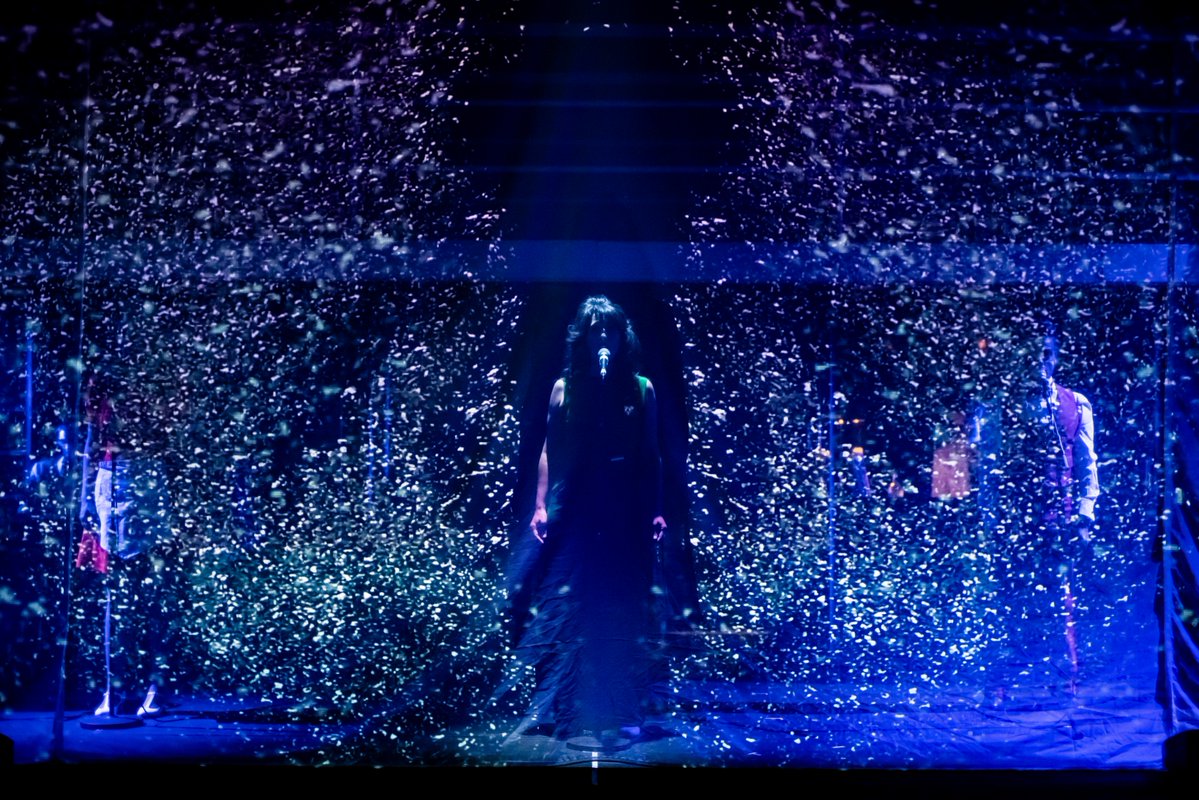
The first half begins with the weird and wonderful guests boarding the cruise liner, this half of the show is performed behind a white gauze sheet, which reduces the visual nature of the show for the audience. Mel played by Mared Jarman works in the Bijoux bar on board with Serena who mesmerises the guests with her haunting voice as the singer in the bar. You get the sense that the women are good friends and get a sense from Mel’s character that she is very fond of Serena and is very protective of her. This makes sense a bit later in the show when you find out that Serena is blind. One night after performing at her usual spot in the bar Serena tells Mel that she is looking to leave the ship once it docks in Miami, this throws Mel who does not want her to leave. Another point in the show where again you feel Mel is protective over Serena is when the ship docks in Havana and the women get separated. This scene is in the middle of a nightclub where there are steamers which are released on to the audience and balloons printed with a single eye that are thrown into the audience.
In the second half of the show the white sheet is dropped making the view clearer to the audience. The atmosphere onboard changes from a light humour, to one of terror and danger as the ship is caught up in a storm. We learn that one of the passengers have fallen overboard and with this the story takes a dark turn of a surreal nature.
I was lucky enough to catch the last showing of this production which for me contained amazing singing, music and performances from all the cast. This show was very accessible for visually impaired people as a detailed touch tour was provided before every show and also the cast did an amazing job with integrating audio description into the show. I hope to see more work like this in the future and feel that Gaggle Babble have set the bar quite high. I look forward to attending the next production by this theatre company and see where they take it from here.

We grow up with our heroes, and they grow with us; when we are young, they seem like giants, gods – incomparable, unbeatable, undefeated. But legends fade and heroes grow old. They even die, sometimes. In The Final Curtain (a new play presented by Theatre Royal Bath Productions and Kenny Wax), even the great Sherlock Holmes is fading; slower, frailer, more frayed at the edges, as he faces the phantoms of mystery and mortality – and its one of the best theatre experiences I’ve ever had.
Companionably estranged from his partner in crime/ life, Dr John Watson, a retired Sherlock Holmes (Robert Powell) is living out his twilight years on the South coast of England, with bees to keep, and rheumatism and paranoia to keep at bay. His adventure-less existence is thrown into disarray when a figure from his past re-emerges: Mary Watson (Liza Goddard), the estranged wife of his dear Doctor, who claims to have seen visions of her long-dead son James in 221B Baker Street, and wants Sherlock out of retirement and on the case.
The story is beautifully, intricately crafted by writer Simon Reade; the language is elegant and artful, and Reade captures the heart, soul and style of these iconic characters whilst also holding the audience in delicious suspense right to the very last second. The title, The Final Curtain, evokes another literary sleuth’s final investigation – namely, Curtain: Poirot’s Last Case, by Agatha Christie. Both Poirot and Holmes’ final cases are filled with melancholy meditations on their lives and careers, and whether they were right to sacrifice their own potential happiness for the good of Queen and Country. After all, their deeds are history, and their godliness is tarnished by the undeniable proof of their mortality.
Because Holmes isn’t as young and spritely as he used to be; he suffers from rheumatism, so much so that, with a heavy heart, he cannot play his beloved Stradivarius. and this is shown in stark relief by one of the most subtly heart-breaking exchanges of the play. With his iconic self-assured straightforwardness, Holmes informs the Lestrade-like policeman at a crime scene that he is familiar with 140 different types of tobacco; to which the officer replies, ‘Didn’t it use to be 220?’ In one interaction, Holmes is heartbreakingly marked out as being barely half the man he used to be.
The same cannot be said of the sensational Robert Powell, who, after a long and celebrated career, is at the very pinnacle of his acting prowess. His Holmes isn’t a performance as much as it is a complete inhabitation of the character, so natural that you really feel he has lived a whole life in Sherlock’s shoes. From the first moment he appears, in which he mischievously introduces himself as Sherlock Smith, Powell commands the stage with effortless elegance and a strength of purpose that grounds the character even as Holmes fears he is somewhat losing his touch. His interactions with Roy Sampson’s superb, sophisticated Mycroft were particularly touching; they inhabit the classic characters so fully, so intricately, that I quite forgot I was watching a play and felt as though I truly was observing an actual conversation between two real brothers.

As a lifelong fan of Doyle’s detective duo, I am always very particular about how Dr Watson is portrayed; the danger is that he has the potential to fall somewhere on the extreme ends of the scale, being alternately portrayed either as a priggish grump (like Ian Hart in BBC’s 2002 version of The Hound of the Baskervilles) or as a bumbling idiot (like Nigel Bruce in Basil Rathbone’s series of Holmes movies in the 1930s/40s). Happily, then, that Timothy Knightley portrays a wonderfully avuncular, earnest and sweet take on the character that is true to the spirit of Dr Watson, whilst amusingly emphasising his pulpy over-dramatization of his and Holmes’ cases. Seeing Holmes and Watson side by side, in the flesh, was a real treat, and their interactions – and it’s adorable that, even after all this time, Watson is still falling for Holmes’s disguises.
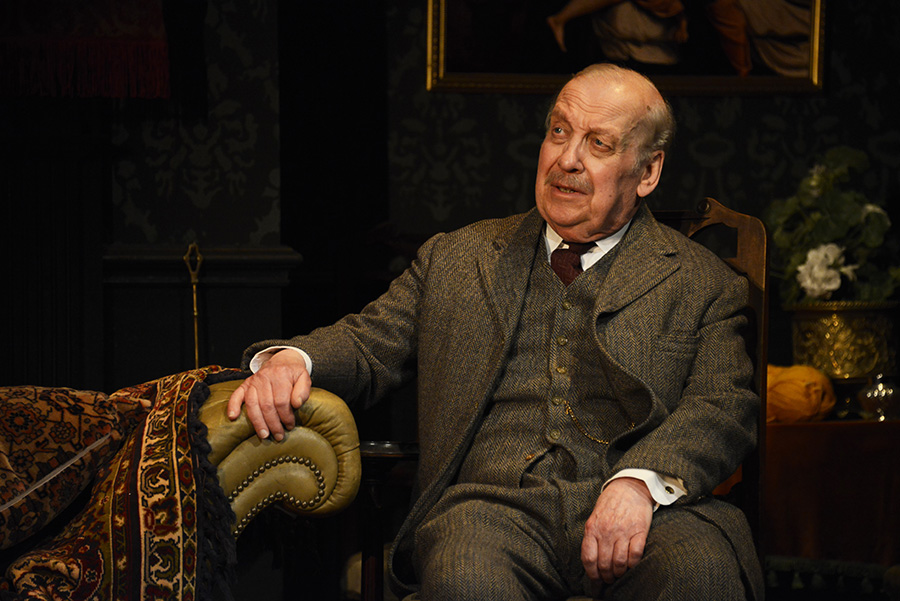
Although Holmes and Watson only infrequently share the stage, their relationships forms a huge part of the tale – as ever it should. No explicit reason is given for the duo’s relative estrangement, though it’s heavily implied that the cracks began to form when Watson got married and started his own family. Although Watson contributes little cerebral value to their investigations that Holmes does not already possess – other than his medical training and military experience – Watson’s primary role is as Holmes’ chronicler and humaniser. And, more than that, Watson is the beating human heart to Holmes’ more clinical mind.
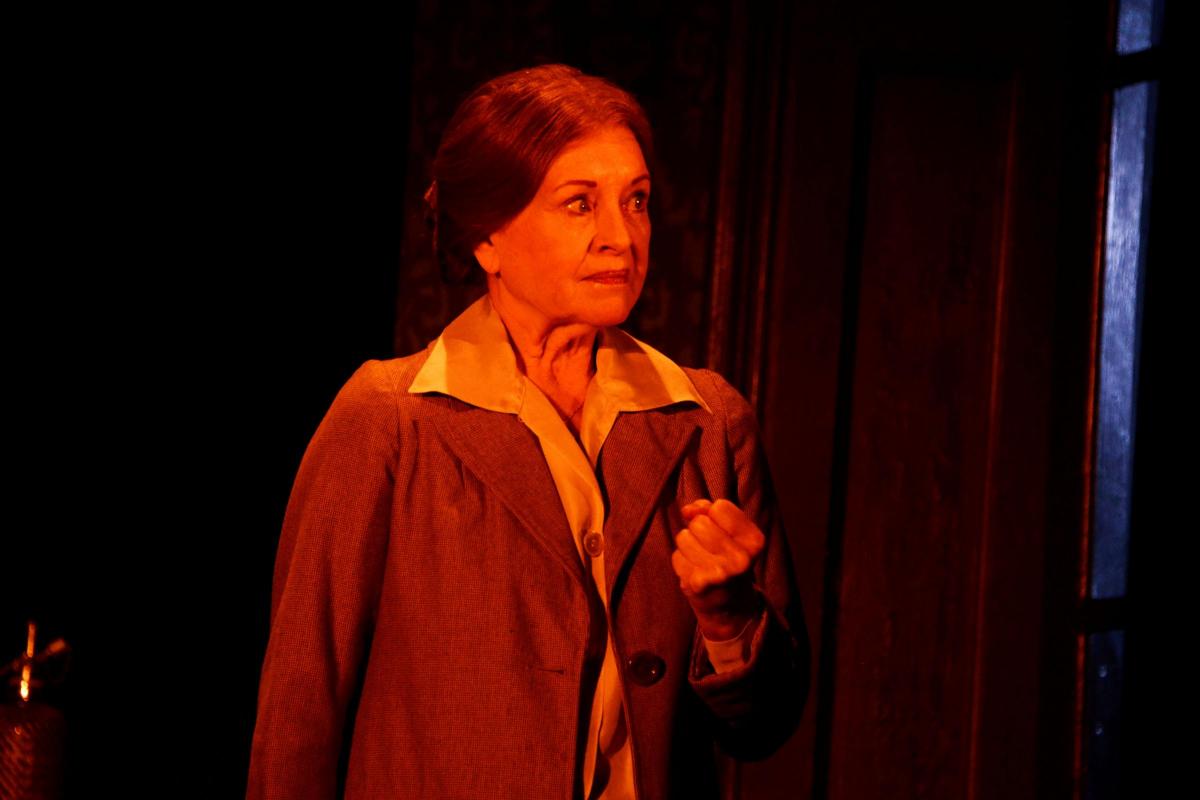
Though there is a Watson who can match Sherlock beat for beat in terms of intellect and eloquence: Mary, wonderfully played by Liza Goddard, who is definitely not a member of the Sherlock Holmes fan club. Goddard, famous for more comedic roles, thrives in the complex, dramatic character of Mary Watson, who isn’t afraid to confront Holmes with his demons and his duty. Mary points out that the only mystery Holmes couldn’t solve was marriage; and although Watson perceived himself as primarily a ‘whetstone for Holmes’ mind’, Mary observes that Holmes’ relationship with Watson – ‘my Watson’, as he refers to him at one point – was more a marriage than hers ever was. The full extent of their affection – fraternal, romantic, spiritual – is left for us to decide.
Deftly and dynamically directed by David Grindley, the drama zips along at a deceptively breakneck pace, and I was genuinely shocked when the curtain fell to signal the end of act 1. As important as the impassioned speeches and melancholy monologues are, Grindley isn’t afraid to let the quiet moments linger – one of the most tense, characterful and gripping parts of the play is the scene in which Powell’s Holmes calmly and methodically puts on a dressing gown and adjusts the chairs in his room. Really. It’s but a microcosm of this production’s talents across the board.
The splendid set was cannily designed by Jonathan Fensom to make the titular curtain central to the story both metaphorically and literally, swathed as it is in dark green drapes and featuring just enough props to suggest such diverse locations as a 1920s BBC recording studio, a lush London park, and Holmes’ private beach. Jason Taylor’s excellent lighting and Gregory Clarke’s evocative sound design really brought the sets to life, making forests and oceans out of the minimalist scenery. Between each scene, the curtains would be drawn across the stage, revealing new locations with the effortless artistry of a magic trick. The first reveal of 221B’s Baker Street’s elegantly ramshackle bachelor pad was, for a Holmes fan, just like stepping into Willy Wonka’s Chocolate Factory, and seeing it brought to life on the stage in such a way was profoundly emotional – even more so when Holmes and Watson were reunited in their purgatorial paradise.
The play grapples with heavy themes of legacy, responsibility, and the changing times – how it feels to grow old, when one has lived such a life as Holmes has, and where one fits into the ever-evolving landscape of modern life. 221B Baker Street has been irrevocably changed by the time Holmes finally returns to it, filled with a messy juxtaposition of past (represented by the Renaissance-era paintings Mary hangs on the wall) and the future (represented by the electronic doorbell Miss Hudson recently had installed). A disguised Holmes even poses the question ‘Who needs a god when you have a gadget?’, vocalising our present-day fears about the increasing indispensability of technology in our daily lives. Holmes and Watson are pre-analogue relics in an analogue age, obstinately clinging to the past, mistrustful of the new technologies and mindsets. But, it’s the bringing together of the old and the new that solves the mystery and brings closure. And yet, in a chilling final scene, the play refuses to fully give us that closure we crave; the final mystery, the lingering questions, are ours to ponder as the titular curtains falls for the final time.
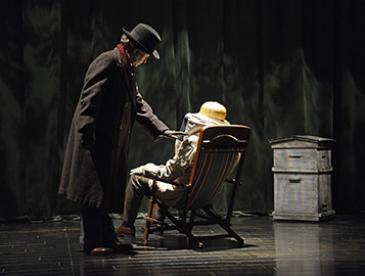
And for all you horror fans out there, there are some seriously Gothic undertones that lend an entertainingly unearthly quality to proceedings. The world’s only consulting detective is called onto examine his own demons as well as investigating the possibility that some supernatural shenanigans are afoot. The name of Professor James Moriarty surfaces more than once, a spectre of Sherlock’s greatest adversary, and There’s also a fair bit of doubling, one of the most effective uses of which comes quite early on and which was so well done it really has to be seen in person. Mary Watson visits Holmes’ seaside abode to see him lounging in a sun chair near his bee hives – only to realise it’s not Holmes at all, but a waxwork duplicate. As the scene goes on, the double sits in the chair between Holmes and Mary, eerily present and unmoving. Does it represent Holmes now, stagnating and useless in his retired life? Or perhaps it represents the other Watson, the one Holmes has distanced himself from, but who remains a stalwart presence in Holmes’ mind? Or does it represent James, the Watsons’ dearly departed son, for whose death his parents are locked in a frozen state of perpetual grief? Again, the play entrusts these questions to its audience, for them alone to judge and decide.
The play likewise leaves the question of heroism up to us: does the intent or the action make you heroic? The short term successes, or the long term lessons? Holmes has always been an enigmatic, complex hero, and his incarnation here is no different. Now, more than ever, he is a hero for our times: the kind who, despite personal trauma and sorrow, keeps fighting the good fight against wickedness, and to hell with the odds.
Thrilling, enthralling and insightful, Sherlock Holmes: The Final Curtain is theatre as it should be. If you’re a Holmes fan, you’ll be enraptured by this new play; if you’re not, you’ll be swept along by the remarkably talented cast and crew the dynamic, haunting mystery at its heart.
★★★★☆
Afternoon tea, Apple, Belonging, Brexit, Cricket. What connects these words and phrases? Well on the surface, not much. In the black box space of the Dance House at WMC, with audience sat in the round and screens at two ends, words from a pre-arranged lexicon flash up in alphabetical order on a screen. With the encouragement of performer Jonny Cotsen we the audience are encouraged to stop the lexicon and discuss anything in relation to these. English is a collaboration between National Theatre Wales and Quarantine and forms part of the Festival of Voice celebration. It is a live performance which is by nature different every night, and blurs the boundaries between creator/receiver and audience/performer.
In typically British fashion, people are initially rather hesitant to contribute to the conversation and instead sit silently in their chairs. For Jonny this isn’t an issue – he is an excellent and engaging storyteller in his own right. As words flash up he regales us with stories from his own life; from planting an apple tree for his daughter, to his time as a shepherd on a kibbutz in Israel, to his struggles during voice therapy learning to make speech sounds by feeling the vibrations on a balloon. As someone who is profoundly deaf and who has only recently started learning British Sign Language Jonny offers a fascinating perspective on the use of English and the ways in which people communicate.
With a strict time limit imposed by the stage manager of 90 minutes, our progression through the words continues apace. As people warm up to the idea of contributing, discussions bounce across the space – from the derivation of the phrase ‘arse over tit’, to a reminder of the poisonous qualities of the ‘daffodil’ Topics of conversation are generally light, with more contentious words such as ‘Brexit’ and ‘de-colonisation’ generally considered the ‘Elephant in the room’ (another phrase on the lexicon) and skirted over.
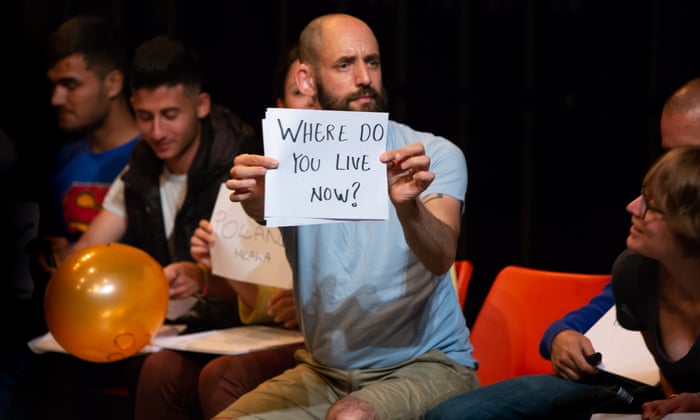
Occasionally the lexicon is interrupted by a filmed segment, or an invitation to contribute to the piece in another way. These range from the wacky to the surreal. This is a great way of breaking up the structure of the piece and ensuring that the performance never feels too much like an empty void which has to be filled with conversation. Towards the end Jonny encourages us to use alternative methods of communication – instead of speaking we use paper and pen to all contribute our ideas and answers. This provides the audience with some fascinating insights, from people’s first language (English, Welsh, Spanish, Dog) to where they consider home (the USA, Wales, New Zealand, Unsure) and many more. These serve as a reminder that while English may be our shared method of communication, we all arrive at it from different perspectives and angles.
Finally it hit me what the connection between the words was. They were all things associated with English/British identity. It is interesting that a production by NTW does not have more of a focus on Welsh heritage or identity, with Daffodil the only specifically Welsh centered word. Perhaps on another evening, with a different audience this may have come up in conversation. When the word ’empire’ flashed up, it is interesting that the conversation turned to the Aztec, Inca and Mongol Empires rather than the obvious choice of the British Empire. This only further highlighted the anglo-centric bias of most of the discussions of the evening.
The main difficulty in reviewing a show like English, is that while the structure and concept of the show will remain the same, the show that happens tonight or the next night will be radically different in content to the show the happened last night or the night before. So much of the show depends on the generosity and openness of your fellow audience members. This type of collaborative method for creating a show may not be to everyone’s tastes. However if you’re interested in seeing something a little different, in becoming part of a conversation about language and identity rather than just a passive audience member then English is a fascinating piece.
English
Live performance/performance art
Dance House, Wales Millennium Centre
20th June 2018
Performed by Jonny Cotsen
Directed by Richard Gregory
Part of the Festival of Voice – more info and tickets here

Luke Seidel-Haas

(4 / 5)
2018’s Festival of Voice, produced by the Wales Millennium Centre builds on previous years’ attempts to unite communities and celebrate voice in all its forms, drawing upon Wales’ wide cultural and musical legacy. This would be my first experience of the festival and it really kicked off in style.
Over the course of a week, I’d be bowled over, discover something new and completely unexpected and leave my typical comfort zone of only watching (and reviewing) theatre. Festivals like these are a smorgasbord of new opportunities to learn something new and develop your palate for new art forms and genres of music.
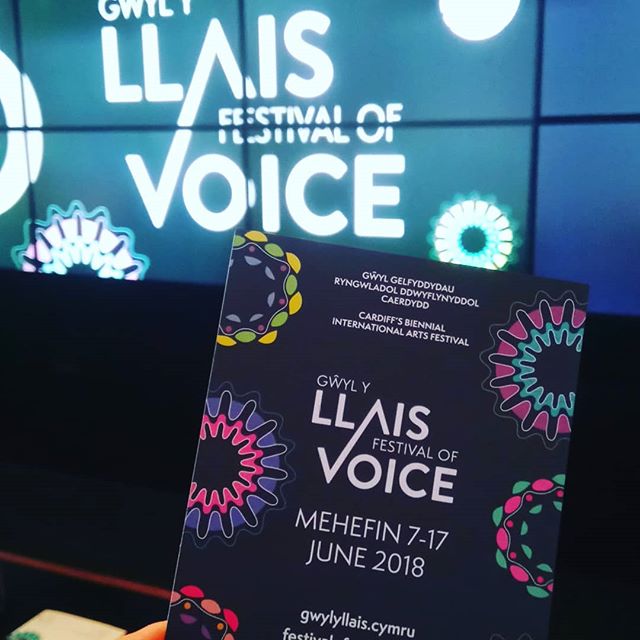
We were introduced to the opening of the festival from the centre’s Artistic Director and team, before being joined by community and advocacy groups – true to the centre’s vision to be inclusive and accessible, but I did wonder how ‘accessible’ it really is that unless you are familiar with the set-up and already know that you can verify your ticket – the £8 parking ticket cost to park in the nearest car park and see a WMC show would be pretty inaccessible to most carers and people on PIPs and other benefits.
I also need to point out the ridiculous set-up of the toilets in the centre. There are disabled toilets, sure – but the two sets of heavy doors, teeny-weeny area to dry your hands and the smallest bins I’ve ever seen in my life are deeply irritating.
But I digress….enough of the nit-picking and on to the main event…
Underappreciated, underpaid and perhaps an unlikely group of people to assemble as a choir, the festival was opened by a multi-generational group of carers, who sang with real spirit and heart. Knowing the obstacles and challenges they face in their day-to-day lives, their positivity shone through and the audience were visibly moved by their version of ‘What a wonderful world’ and ‘Lean on me’.
After rapturous applause, it was time for the Gig Buddy crew to crash into the foyer, clutching signs, banging drums and stamping their feet. They had formed a group to protest the fact that the support they receive does not take into account the fact that they too want to access music and arts performances – and these of course fall outside the typical office hours of supporters and carers. In association with Learning Disability Wales and Hijinx Theatre Company, the protesters delivered a skit about the fact that for most people – not being able to go to gigs, movies and performances like everybody else is not only unfair but naturally they’re quite rightly pissed off about it.
This was a brilliant opportunity to showcase the ‘Gig Buddies’ initiative where volunteers are matched (via their interests) to people with additional learning needs and various disabilities who need a little extra support to access gigs and shows. Bloody brilliant idea and I’m hoping to sign up myself.

The main event for the opening of the festival was ‘Topical singer songwriter’ Billy Brag (he doesn’t like to call himself a political performer in case it puts people off!). I knew the name Billy Brag but barely any of his actual material. This would be a new experience, not least for discovering the awesomeness that was supporting artist Nadine Shah, a Tyneside lass whose basy, punky songs are accompanied by soulful vocals.
Her edgy songs draw upon current affairs, world injustices and the hurt and heartbreak of modern life. Performing songs from her 2017 album ‘Holiday Destination’, she gave a fierce and raw performance. The song Holiday Destination and its refrain ‘How you gonna sleep tonight’ is a polemical nudge and critique on the holidaymakers in Kos who complained of refugees on the island ruining their holidays.
Shah tells the crowd “We need immigration – we make food taste better, we make the place look better and we make music sound better, too!”.

Shah’s heritage is Norwegian-Pakistani, and her Northern accent and humour shines through in her work. Billy Brag is – just like Nadine Shah, a storyteller. In between his songs, he delights the audience with his insights, his banter and his stinging observations about what’s going on in the world. He is unapologetic about his views, honest about his flaws and endlessly witty about politics in general.
He skewers Trump in the finale song based upon Bob Dylan’s ‘Times they are a changin’, which was changed to ‘Times they are a changing-BACK’). He tells the audience he wrote the song in a rage in 2016 when Trump was elected. His stories and rambles include the fact that he was schooled the last time he was in Cardiff for using a plastic bottle on stage at the Tramshed. “I’m sorry…I learned from my mistake. The oceans are full of plastic and shit, we need to do something about it.” Since then he’s used a ‘Gig Buddy’ aluminium bottle.
Of the grumpy artist Morrissey, he tells us “What is happening? He’s turned into a bloody gammon!”. Brag’s songs are clever and his set is largely improvised. He plays a song after an audience member shouts out a suggestion – and his final song is the famous classic ‘A New England’.
The entire audience shouts back the lyrics and it’s electrifying. I couldn’t believe I haven’t been following this chap’s career. Where the hell have I been the last 37 years? He has a new fan in the Rhondda, that’s for sure. The opening acts in the foyer and the main concert in the Donald Gordon theatre were rebellious in spirit and sound.
I don’t know where Carys Eleri has been hiding out but we all need to see more of her. I didn’t know what the show ‘Lovecraft’ was going to be about – something to with science and love, I gleaned from the flyer. But it’s so much better than the event write-up promises.
I can’t praise the producers and director of this show enough for their vision. As sets go, it’s pretty low-tech, a cabaret-style set up within Ffresh bar serves as the set and Carys is accompanied by two screens which form a kind of visual aid and powerpoint for this hilarious one-woman show. The production is a romp through the idiosyncrasies and absurdities of love. What’s the ‘science’ behind love and sex? You’ll get to find out – via Carys’ brilliant stories.
It’s outrageously honest… and completely mental. This show will especially appeal to any women in their thirties who feel the pressure and expectation that society thrusts (‘scuse the pun) upon them.

At times, this feels like you are catching up with one of your girlfriends from Carmarthen who is every bit as outrageous and filthy as you are – and you’ll love her for it. The science narrative is informative, but not the main point of the show. You’ll be drawn in to her off the wall stories, brilliant observations about her Mam (“Carys…can’t you put on a bra..?”) and the dirty and embarrassing secrets we might all experience growing up – ‘fanny gallops’, hallucinogenic trips in the back of a taxi being driven by a unicorn and waking up naked next to another girl. We’ve all been there, right?
The song ‘Tit Montage’ is the highlight of the show, perhaps of the entire festival – and in my opinion would be a credible entry for the Eurovision Song Contest.
The song ‘I brain you’ is pee-your-pants hilarious. If Carys Eleri was running for Prime Minister, I’d probably vote for her. I BEG you to see this show – its been to Edinburgh Fringe already and has attracted a steady stream of adoration from audiences at the Festival of Voice.
There is so much life left in this show – and I hope it tours again (I will be sure to gather as many of my filthy friends as I can to share the experience with). My only negative points are that I could have happily sat through another hour of it before it finished and I now want Carys Eleri to be my best friend/drinking companion even though she has no idea who the hell I am.
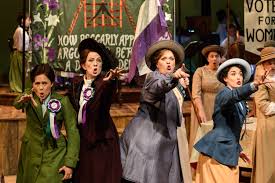
After a somewhat lukewarm experience at my last opera, I wasn’t sure if I was an ‘opera person’. But anyone following the #MeToo movement, who calls themself a feminist or admires the women who took part in the recent ‘Procession’ in Cardiff to mark a hundred years since women obtained the right to vote REALLY shouldn’t miss out on this show.
Led by Emcee Lesley Garrett, this is a look back at the stuffy Victorian era and the legendary Margaret Haig (Lady Rhondda) – a politician’s daughter and activist who led the Newport branch of the Women’s Social and Political Union (WSPU). The indomitable Margaret Haig was an outspoken radical who along with other women, was judged and ridiculed by the Asquith’s liberal government for her efforts.
Played by Madeline Shaw, Lady Rhondda is a fearless campaigner. Along with her friends Edith and Prid (played by Paula Greenwood and Meriel Andrew), the production satirises the ‘old boy network’ of both the government and society at the time and pokes fun at the uptight/prissy way in which women were expected to behave.
I had no idea opera could be this edgy or this level of hilarious. Everything from the choreography, the physical comedy of Garrett and other cast members, the originality of the songs and cheeky/camp way they are delivered is a treat for the audience.
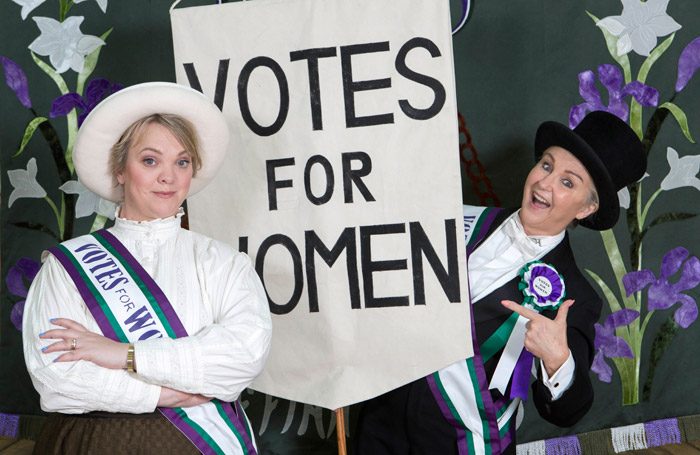
The stand out scenes are the songs ‘My girl’s pussy’ (yes, really!) and the song about the fondant fancies, complete with all the flair and foppishness of the Edwardian music hall tradition. This is Women’s Institute crossed with #MeToo.
There are also guest appearances from the WNO community chorus (who deliver a rousing performance as fellow suffragettes) and a nod to Haig and Helen Archdale’s gay relationship, demonstrating the extent to which Lady Rhondda tore up the rule book and challenged convention, albeit discreetly. There is a telling scene in the show when Margaret Haig and her friend are on the train (with their bomb-making materials) and they overhear a man saying “Suffragettes! If that was my wife, I’d give her a darn good thrashing!”.
Queue a hilariously camp sequence with a bunch of ‘men’ thrashing each other’s behinds with rolled up newspapers in a homo-erotic fashion. Nowadays we’d call this toxic masculinity at its worst – back then, those kinds of attitudes were de rigueur.
I am no opera buff, but WNO have delivered a phenomenal tribute to Lady Rhondda and her contribution as a suffragette and business pioneer.
It was sensitive without being syrupy and witty without being cruel. Not everyone will get the satire, apparently – one audience member overheard in the loo commented she didn’t understand why ‘men were being made fun of’ and that she preferred the WNO community chorus to the production itself. For me, the main feeling I got was one of immense gratitude – that so many women like Haig faced violence, imprisonment and the scorn of society and for their dogged determination to change history for the better.
Their first victory was not a resounding success, the first bill allowing women to vote was only for women over 30 with property. There was plenty more to fight for – and with world events and pussy-grabbing presidents reminding us daily, some might say the battle is far from over. But as the legendary suffragette Emily Pankhurst once said:
“Never surrender….never give up the fight.”
A former member of indie band The Pipettes, Gwenno has already amassed a strong critical following and fanbase after the release of album Un Dydd Olaf in 2015 and Cornish language ‘Le Kov’ in 2018. Her dedication and tribute to Edrica Hughes at the Festival of Voice was a moving tribute to the poet and patchwork quilt artist Edrica Huws (1907-1999).
There was a packed house in the Weston Studio for the one-off performance, entirely created and composed by Gwenno, but this time with the support of a violinist and harpist (Angharad Davies and Georgia Ruth). The stage was dressed like a set – a lived-in parlour with an old-fashioned crib, a fireplace and the markers of domesticity from a time gone by.
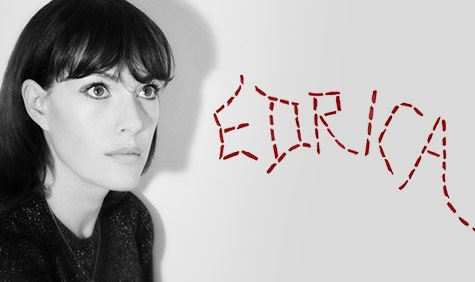
At the foot of the large screen above the stage stood Gwenno’s mixing decks and computer, flanked by a triple harp and wooden toys – the musical set and hi-tec equipment is a curious accompaniment to the ironing board, clothes horse and lamp on stage, denoting the ordinary, humble life of Edrica. On the screen we saw vignettes of slices of history sketched and animated on the screen, accompanying the synthy electric-pop landscape being played and mixed live in front of us.
We saw suffragettes marching in 1907, weaving in and out of the war, a grimy London landscape of the humdrum existence of everyday life, love, relationships and duty stitched together with the dreamy melodies and an almost hallucinogenic quality to the music. I hadn’t known about Edrica’s work or story before. An ordinary wife and mother, she didn’t start expressing herself artistically until age 51.
She became a ‘patchwork pioneer’, breaking the rules and conventions of art and design in terms of subject, material, tone and texture to become a celebrated exhibitor and artist/poet around the world.
Animated by Tad Davies, the on-screen vignettes to not distract so much as heighten the experience for the audience and Gwenno’s gentle vocals, the poppy disco beats, baseline and meandering harp and violin are a thing of beauty.
Gwenno’s soundscape is punctuated by poetic whisperings, especially poignant and beautiful during ‘Anrhefn Pentyndod / The chaos of childhood’ and kooky and marvellous when she donned a cat mask for ‘Y Gath’ / The Cat in tribute to Edrica’s ‘Cat on an ironing board’ piece.
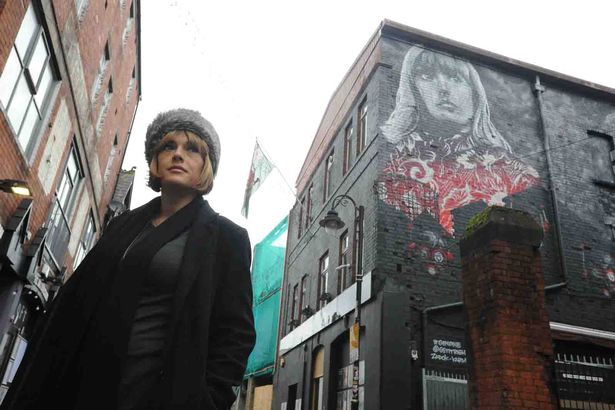
She is not a wild or attention-seeking performer in the sense of other unique artists (like Bjork for example) but she is completely enigmatic – a quiet genius in many senses. She creates riffs and spacey echoes using props – one song loops the sounds made by wooden toys and they are overlaid with a base-heavy disco beat.
It is weird and wonderful and strangely soothing. Edrica is a feast for the senses, the thinking person’s mind disco – and you’ll be richer for having witnessed it.
In between each song, the audience is almost deathly silent for a few seconds – not because the show is bad (because it was clearly bloody brilliant) but because they know they had witnessed something magical and weren’t sure what the rules were. Should we get up and dance? Applaud wildly? Edrica Huws broke the rules during her lifetime and Gwenno is doing the same.
5 stars
Type of show: Music / Theatre / Opera / Performance Art / Poetry
Title: Festival of Voice Venue: Multiple Locations
Dates: 7-17 June
Produced by: Wales Millennium Centre (and partners)
Author: Gemma Treharne-Foose
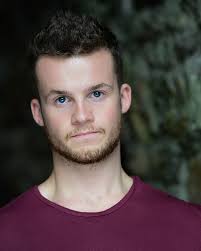
The director of Get the Chance, Guy O’Donnell recently met with playwright and actor Joe Wiltshire Smith.They discussed his background, creative opportunities for young people in Bridgend, his new play Five Green Bottles and his thoughts on the arts in Wales.
Hi Joe great to meet you, can you give our readers some background information on yourself please?
Hello! Good to meet you too! I was born in Bridgend. Primarily I’m a playwright and actor; having graduated from Royal Welsh College of Music and Drama in 2017 and I’m currently studying Creative Writing and English at Cambridge. Most recently, I’ve been performing in “Ghost About the House” at the King’s Head Theatre in London.
So what got you interested in the arts?
A multitude of reasons. My family, my friends, Roger Burnell, dressing up as a ladybird in St Fagan’s? It could be anything. But I’m mostly in love with the freedom that the arts provide. It’s limitless, there’s something equally terrifying and hugely exciting about that… and realistically I couldn’t and still can’t do anything else.
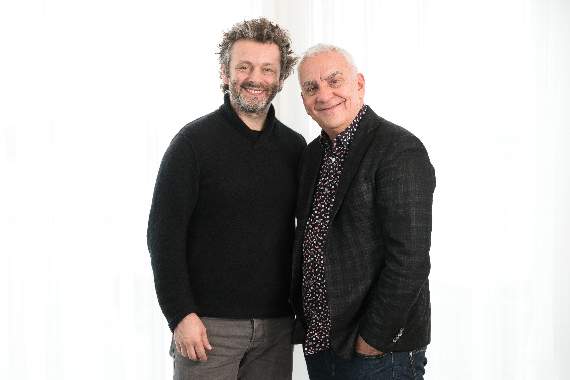
Roger Burnell, Head of Bridgend Youth Theatre and It’s My Shout with Michael Sheen
Your career to date has been supported by local authority funding to the arts, including Bridgend Youth Theatre and It’s My Shout. Was this support important in your development as a young creative artist?
Both It’s My Shout and BYT, both headed by Roger Burnell, are simply the best at nurturing young creatives from across Wales and beyond. I owe a lot to both projects, I would urge anyone to get involved, the opportunities in film and theatre are endless.

You have co written a new play with Kirsty Philipps called Five Green Bottles. The play was performed by Spilt Milk Theatre on Saturday, June 9, 2018 7:00 PM 8:10 PM at Little Man Coffee Co. Can you tell us more about this production ?
Headed by the inspired and talented Becca Lidstone, the development of this play has been a joy. Even from the initial meetings, I knew it was in far safer hands than mine. Combine this with a cast of Angharad Berrow, Olivia Martin, Tobias Weatherburn and Aly Cruikshank, it’s been a dream. The support I’ve had from Spilt Milk Theatre has been truly wonderful and I’ll be forever grateful.
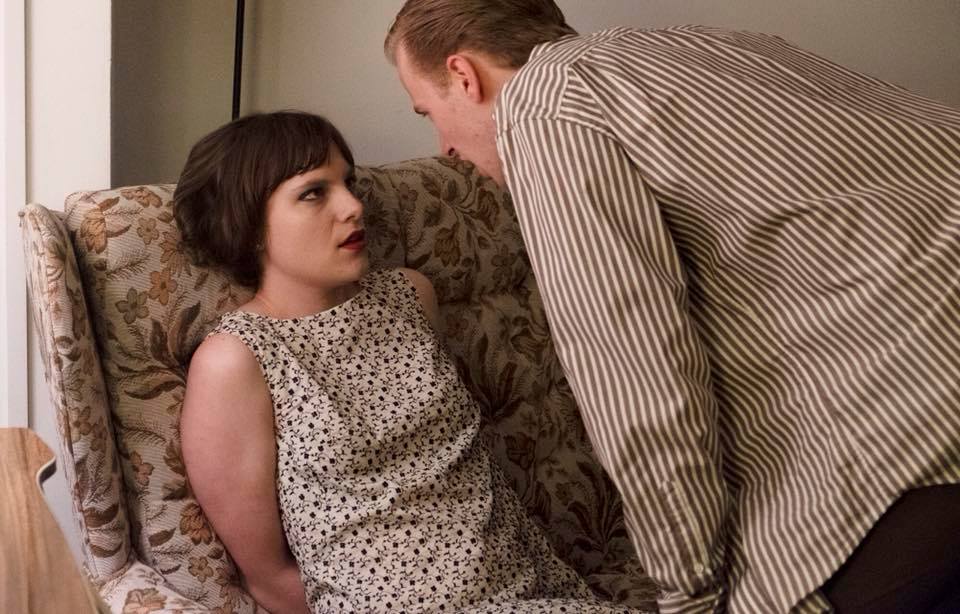
The cast of Five Green Bottles
Image credit TS Photography
The production is described as “A surreal, satirical, carnal-romp of a comedy exploring the sexual awakening of the beat generation in the 1960s.” What drew you to this time period and theatre style?
The early 1960’s has always fascinated me. Especially how the enormous social and political change impacted the Beat Generation in working class areas of the UK. The glamour of American Culture and the sexual revolution really alienated a youth from their conservative elders; creating a lack of direction, a sense of helplessness, cabin fever and disconnection. I believe that influences some of the events of this play, but certainly not all.
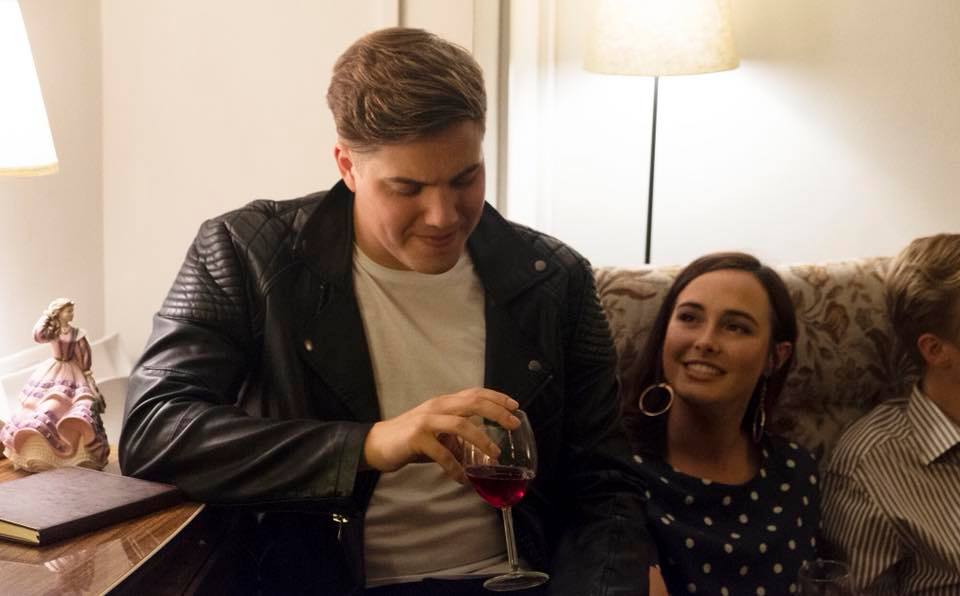
The cast of Five Green Bottles
Image credit TS Photography
Five Green Bottles is part of this years Cardiff Fringe Theatre Festival which was established to make theatre affordable for audiences and artists. Have you been involved in the festival before?
I haven’t been involved before, but the welcome that I’ve had into the Fringe community has been amazing. It’s very exciting to be amongst some of these other innovative and brilliant shows.
Get the Chance works to support a diverse range of members of the public to access cultural provision. Cardiff Fringe are working to “make theatre affordable for audiences and artists. ” Are you aware of any barriers to equality and diversity for either Welsh or Wales based artists or specifically writers?
I’m speaking from a place of a privilege because I’m a Welsh writer that’s white. There are barriers, but I’ve never come against any and it’s my responsibility to be aware of this fact. There can always be more opportunities for BAME Welsh writers, there has to be. However the essential work and opportunities of both Get the Chance and Cardiff Fringe is definitely doing more to change this.
You are an actor as well as a playwright. I wonder if your knowledge of both disciplines cross-pollinates when you are working in both different disciplines?
Yes, they both feed into each other at points. However I make sure to sort my brain and perspectives into compartments, so not to confuse the two. For example, is that particular line really serving the character and driving the narrative forward? Or is the line there because the actor in me would love to say that line? There’s pros and cons. Hopefully with further experience it should get easier. Hopefully…
There are a range of organisations supporting Welsh and Wales based writers, I wonder if you feel the current support network and career opportunities feel ‘healthy’ to you?
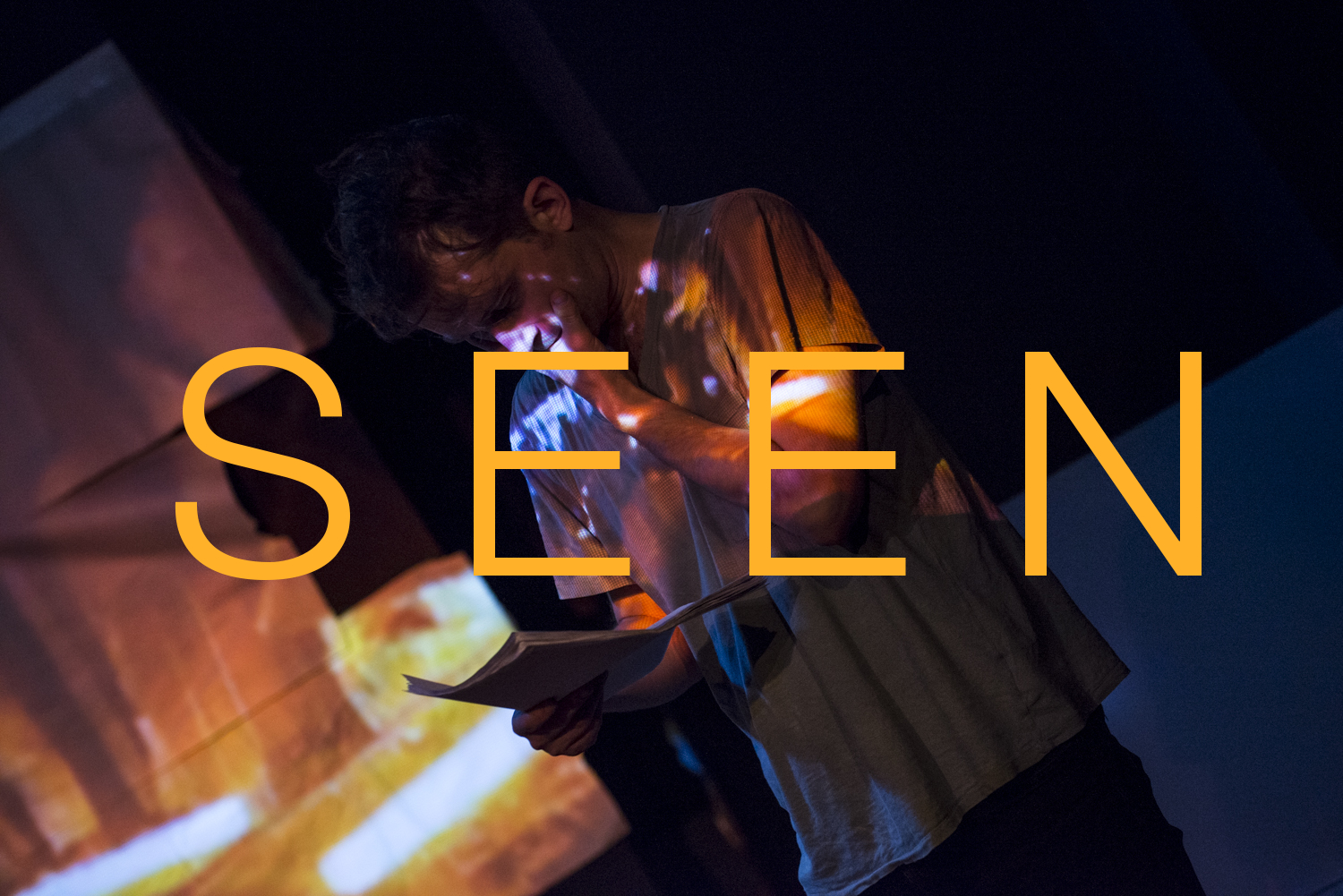
The opportunities have always been there for me. Whether it’s SEEN at the Other Room or Spilt Milk’s Scratch nights, I’ve always had an opportunity to share my voice. However I’m just one person and it wouldn’t do any harm to see some more new writing opportunities for everyone.
If you were able to fund an area of the arts in Wales what would this be and why?
Anything that nurtures young, Welsh, BAME writers. It would be great to see even more of this work in Cardiff and beyond.
What excites you about the arts in Wales? What was the last really great thing that you experienced that you would like to share with our readers?
The fact that its unapologetically WELSH… and here to stay. It’s pride, humour, community, class and passion, I could go on forever.
Thanks for your time Joe.