Category Archives: Theatre

Review, Miss Brexit, Maria Who?, Ed Fringe, By Hannah Goslin

 out of 5 stars (3 / 5)

Think highly British, camp, Miss Congeniality style show case and you get Miss Brexit.

Maria Who? have approached the vote to leave in play form, bringing the liberal view point (well placed in an arts festival) to the forefront, by using comedy and good old fashioned British take-the-mick humour. We, as active participants, join the performers to decide the winner of the contestants to be allowed to stay in the country. We meet four contestants from varying countries, as they try to assimilate in contest-style scenes to British customs, tell us their tales of why they came to the UK and their experiences, and based on this, we make the tough decision who to stay and who to deport. 

Miss Brexit is highly satirical, with contests such as answering genuine questions on the citizenship test which are hard even for a born and bred British person. They provide sarcastic views on British stereotypes such as pouring tea correctly and we are forced to not only agree with how ridiculous the situation is but also how ridiculous we are as a country. 

Our compere is full of energy, quick off the mark with great improv skills and provides much comedy in their performance. Our contestants are notably performantive (think pageant performer style) but at times this feels too hammed up and a bit over the top though their improv skills with us audience members is top notch. 

The narratives are very clever and do well to evoke emotion and complicated feelings, whether it be a positive or a negative story. But they also show varying degrees and moments of resonation; moving to London alone, not only for those who come outside the UK but inside as well is easy to recognise, with the high rental rate and probability of moving in with 5 others to keep the rent down. 

Accompanying the show is awesome background music, giving an impression of Rupaul’s drag race meets Miss Congeniality, changing to fit the character and story of the time, evoking a feeling of their culture. The screen behind helps set scenes, with boarding cards when deported to the logo of the contest. 

Miss Brexit is a unique and interesting take on political and social commentary but felt some distance from a higher starred production.

Review, B*tch, Marty Breen, Ed Fringe, By Hannah Goslin

 out of 5 stars (3 / 5)

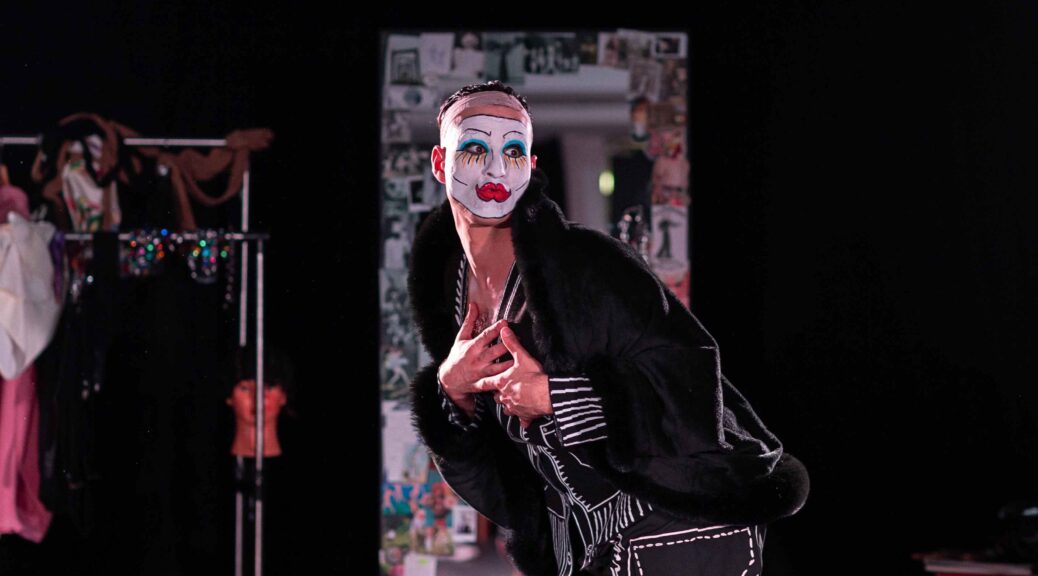
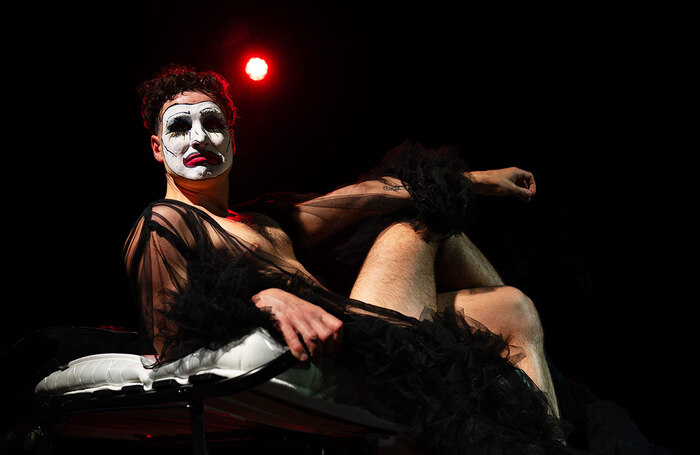
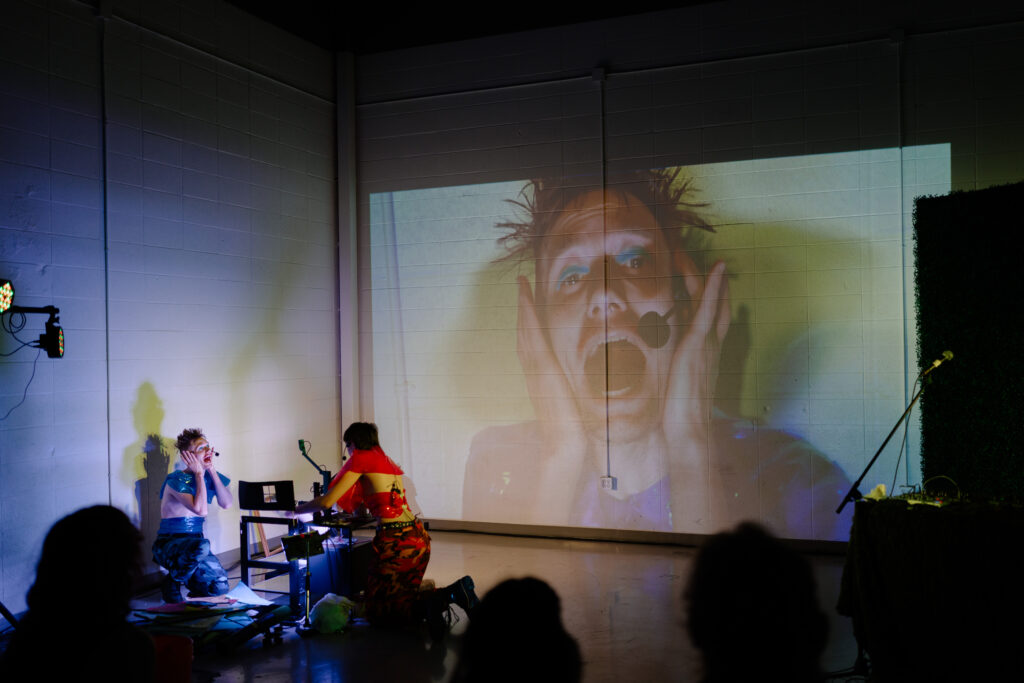
Bitch is a one woman show on a story of finding oneself, of conforming to the norm and this leading to sexual assault. In this production Marty Breen plays multiple roles, showing the sides from all parties in quick change, punctuating it with original music in order to tell a story. 

If you were heavily on Tik Tok (and, embarrassingly I was) during the covid years, it was discovered that certain colours will appear in different coloured lighting. Breen uses this to their advantage, to keep this cabaret club aesthetic but to be able to change characters; by using this theory of colour between their make up and the studio lights, and the addition of key character costume items, they change from male to female (creating a beard and soon being able to transition to female with feminine make up styles) in a quick succession. With this, we are told the story from both sides, with almost stereotypical characters; the man is a stand up comic, and one that is infuriating and Breen approaches this is a sufficiently misogynist way, with commentary that women often hear from cis males on their looks and how they approach life. The female is more complex and within this, as well as the sexual assault, goes on a  journey of discovery and themselves. We actively see them change in persona pre and after the assault, and post assault, isn’t pretty. It takes a dark and uncomfortable approach, not the usual approach of playing the pitied victim but actively noting the imperfectness that can come of trauma. 

Breen peppers this with playing the piano and singing their own compositions to bring the piece together. There’s a TIm Minchin meets Sara Bareillas aesthetic to this, but becomes more complex and breaks down to reflect the story. They are moving, beautifully written and show clear talent in not only creation but performance. 

While this was all an intriguing and interesting approach to a story on sexual assault and identity, particularly with making us not feel completely sorry for the main female due to their trauma and showing another reality of trauma effects, it felt very one noted. The switching between the two characters started as a novelty, but we soon realised that this was the whole pattern and it needed something more to break up the monotony. 

Bitch is a clever and interesting production but sadly falls short in keeping our attention when the narrative sticks to one level throughout.

Review, Daisy Doris May: Big Night Out, Ed Fringe, By Hannah Goslin

 out of 5 stars (4 / 5)

From the creator of Steve Porters (lock up your daughters), comes the shift-shaping, comic drag king that is Daisy Doris May. May this time brings their 3 iconic characters into one Big Night Out. What ensues is chaos, comedy and a whole lot of fun.

Daisy Doris May: Big Night Out creates a linear story-line, featuring their three main characters, who tie together (loosely) in a club. We are instantly part of the action, with Hans Off, the first character, entering the back, through the cabaret seating, setting the scene of a Berghain, cool, exclusive club queue where we are based. Audience participation is a must, and interactions early on form the basis of many plot points throughout the entire night.

Hans is cool, chic, pulling on the cool aesthetic that Berlin has in its queer and electronic communities, and we are quickly made fun of, lovably, for not being this way. The costumes and drag is on point, and the breaking into dancing and lip syncing drives up huge cheering and dancing.

When Hans enters the club, they bump into someone whose “hair cut scares” them, and out comes our next character, in a almost Olympic change of costume. Karen Moonstone is a caricature of both “Karen” culture, where she complains and gives 1 stars for everything and the hippy, yoga community. The blend of these are so opposite but they make it work which only continues to elevate and increase the actual belly laughs. Audience interaction it also increased, and the novelty and improvisation from the audience only adds to the comedic delivery. May has moments of being caught off guard, but, that’s not a criticism. They recover quickly and add this into their performance with ease, continuing to add to the hilarity.

And finally, Steve Porters, our sad love expert joins us, as we begin the stag do. Steve Porters comes from May’s previous shows and therefore has a cult following. Shouting of phrases known from this character are bellowed out, with more audience participation that reaches a peak in the fantastic; a flamboyant “groom” who almost could upstage May, they harness these moments to only continue to create such a fun and mad show.

Daisy Doris May: Big Night Out, is what it says on the tin – a Big and hilarious Night Out. Expect to be a huge part of the fun, but don’t be mad, because it is so enjoyable, you will soon become a convert to audience participation.

Review, Mary, Queen of Rock!, Pretty Knickers Productions, Ed Fringe, By Hannah Goslin

 out of 5 stars (4 / 5)

When you come to Scotland, Edinburgh particularly, and take time to be a bit of a tourist, you’ll realise how much Mary Queen of Scots is such a poignant figure in the history and contemporary culture.

That’s why, a musical production based on her life is so important and appropriate to Ed Fringe. Pretty Knickers Productions has taken a summary of her life and translated it into more modern culture, choosing to change the real-life history of a religious and political reformation into the battle between Rock and Pop.

This clever production, with its original music, evokes the way paved by the creators of Six the musical. Basing it on real history, it is thrown to the current, making it socially resonating yet keeping to the facts and roots.

Set in a classic proscenium arched venue, there is an essence of a rock gig, despite seating not allowing us to push like groupies to the front or start a mosh pit. The music is jaunty, fun and with a touch of punk (until Queen Lizzie gets involved as a pop challenger) and it’s difficult to not bob a head or tap a toe, with a live band to support and give that gig feel.

It pokes fun at itself, making historical and relevant jokes and, with the subject matter, is strongly Scottish in accent, in pride, all the way down to the costumes. It is very well constructed and if it wasn’t for it being at fringe, could easily have been a professional West End production.

History is often about blood and gore, and we often relish in this. However, this production makes fun of this – reaching Mary’s sad conclusion, they poke fun and address us and our thirst for her ending by speaking about her story as a woman and fellow woman at the time. This, again, like Six, changes the narrative and focuses on the women in the tale, making this a highly feminist change to the history we are taught.

Mary, Queen of Rock! is a musical unlike any other, changing the narrative of Mary’s story and propelling it into the modern; it is clearly on its way to a permanent position in theatre popularity.

Review, Pickled Republic, Ruxandra Cantir, Ed Fringe, By Hannah Goslin

 out of 5 stars (4 / 5)

I’ll be entirely transparent – I love pickles. And that was a big reason to see this. However, to not make the choice as simple as that, this production looked and sounded completely bonkers and I was very excited to embark on it.

Pickled Republic is a puppetry, clowning, avant guard, bouffon experience of fruit and vegetables as they slowly decline and are abandoned. On the surface, this is comedic and bizarre and seems simple, but in reality, there’s reflection on loneliness, on love and loss, on consumerism and so much more.

Ruxandra Cantir is a one person production, transforming into different vegetables throughout. The stories do begin to connect, such as the onion who loves a potato, the latter being a cabaret singer/star and this story builds and builds as we are viewing. In a true clown/bouffon style, the use of costumes and changes in their physicality transform these characters into something very abnormal but yet strangely human and relatable, different from one another, and they very much have the ability to make you forget they are only one person on stage.

It is complete madness – it attempts to make you uncomfortable, and the sniggers of uncomfortable laughter make this clear that it has worked. It is genuinely funny as well, with these bizarre little characters with their own quirks, conveying their almost relatable stories; for example, we meet a carrot with a carrot baby and all the initial approach is very stereotypical of motherhood, but Cantir manipulates this effortlessly to be a little sub-human, an alternate reality.

There is plenty of audience interaction (and if you are at fringe and expect to go unnoticed, you’re in the wrong place) which continues to make the atmosphere uncomfortable yet enjoyable. As a voyeur and lover of this style, it’s excellent to see this working so well. Performance art should be enjoyable but it also doesn’t have to be all the positives that traditional theatre dictates.

Pickled Republic is utter madness of the best kind. It is clever, bizarre and all good things of fringe performance art.

Review, Lady Macbeth Played Wing Defence, Crash Theatre Co and House of Oz, Ed Fringe, By Hannah Goslin

 out of 5 stars (3 / 5)

Evoking most people’s school years, a wave of nostalgia comes over me as I enter the room to netball outfits and warming up. I sadly never got to be in bright pink, but the days of my youth suddenly game to the forefront.

Unlike my youth, Lady Macbeth Played Wing Defence is a story of plotting, scheming and sabotage (… well… hopefully not like my youth at an all girl’s school). Approaching the well know Shakespearean tale of Macbeth, Crash Theatre Co and House of Oz modernise this tale and put it in the context of a high school netball team. Macbeth very much wants to be captain but keeps missing the mark, and then she embarks on a series of gossip, physical injury, resulting in a bitter sweet captain-ship. Along the way, she loses friends, respect and ultimately has to confess.

The story slightly divulges from the original – the story has a somewhat a happy ending, zero deaths and a slight misnomer with the name – Lady Macbeth refers to Macbeth as a female, as opposed to the original character. Yes, their approach to this is well constructed and tries to keep to the original tale and it is fun but it felt like a trick was missed with naming it “Lady Macbeth” and not trying to feminist it up, by following her story-line instead. In fact, she sadly doesn’t appear at all.

This is a musical, with original songs, and they are catchy, well performed and certainly evoking an idea and theme presented by Six – a “historical” story, told in a more modern, spicy and musical way. It pokes fun at itself and this is pretty enjoyable. It is professionally performed and choreographed, and feels like the foundation of something that could flourish.

Lady Macbeth Played Wing Defence is a great concept, pulling from the successes that came before it like Six and is one of the modern approaches to Shakespeare that does work. It however feels still as if it has a way to go to become a big success.

Review, John Robertson’s The Dark Room, Ed Fringe, By Hannah Goslin

 out of 5 stars (5 / 5)

For years, at Ed Fringe, at Vaults Festival (huge R.I.P!), I saw adverts for John Robertson’s The Dark Room. It always intrigued me and I always vowed to see it, yet never got around to it. So, this was the time and, boy, am I glad I did.

The Dark Room firstly was fit to burst with audience members. It was soon clear that its popularity was also down to a cult following, when the key phrases were being repeated back, in unison and loudly! And it is easy to see why it is so loved.

I think I expected some horror-based production, with its dark and scary poster, and with me being the biggest horror-wimp, maybe that’s why I was always hesitant. But I was happily and ecstatically surprised. The Dark Room pulls on 80’s gaming culture, with iffy graphics and type based gaming, fondly in us oldie’s memories, but Robertson brings this live, immersive and with strong audience participation. Supported by a huge projector screen, audience members are picked to take part and try to find their way out of The Dark Room. For this, we are encased in darkness, our host lit by a simple torch to his face and his faint outline showing a costume bordering on sci-fi, medieval, goth, fantasy.

Don’t be fooled however; you’re not expected to be a nerd, a gamer or even really understand the occasional specific reference, whether this be to the gaming world or a millennial reference. This production is so full of fun and comedy, that anyone can be part of it and not stop laughing. And that’s what I did – I did not stop laughing to the point of wiping away tears.

Robertson is so quick off the mark – with any audience participation, there’s going to be curve balls and he is so unbelievably quick witted, it’s hard to believe his retorts and jokes are off the cuff. He also uses repetition and his basic narrative to provide these moments where, we know what he is likely to say, but it makes it all the funnier. For example, we quickly learn that each time a new player is picked, they are all to be called Darren. Any attempt to move off this is rebuked and this just becomes funnier each time. Soon, we are as one, with our “oohs”, “ahhs” applause and “hoorays”, which warms us up when we play the democracy round and all get to determine the outcome.

All the potential narratives that come from the selections are so unique that there is no possibility of ever knowing where this will go. When the options offered are repeated, the outcome is still different, giving this the ability to be different every single time, trusting in Robertson’s sheer talent and quick wit to never leave a pause, a beat and never let you come up for air through laughter.

John Robertson’s The Dark Room was worth the wait. It is everything you want from a comedic production and was so much fun and absolute perfection, that through the tiredness of Fringe, it was not only energy giving, but easily one of the best things to see at Fringe.

Creating a Culture of Belonging.

Communities Engagement Partner at Royal Welsh College of Music and Drama, Guy O’Donnell was one of the speakers at the annual Arts Marketing Association Conference, Amplify in Edinburgh in July.

In the role of Communities Engagement Partner, Guy works on delivering a wide range of engagement activity, working across every aspect of the College with potential students, community groups, schools, colleges, audience members, partner organisations, decision makers and the wider public.

Guys presentation is shared below to give an overview of the work of the Department.

The Royal Welsh College of Music and Drama (RWCMD) is in a position to make a significant impact on the cultural accessibility and inclusion of people who may be facing barriers to engaging with live performances.

By actively supporting these audiences to work with their students, and share the creative outcomes on their stages and exhibitions, RWCMD has fostered a more inclusive, diverse, and collaborative environment that benefits both the participants and our students.

In this overview you can learn more about the work RWCMD has supported to develop;

  • Demonstratable techniques to increase the diversity of audiences
  • New ways to curate a cultural programme
  • Ways to work with volunteers to increase attendance and income

After many audience development initiatives, audiences are still mainly white, well-educated, middle-class, and middle-aged. This lack of diversity makes it difficult to demonstrate the value of publicly funded cultural activity. It also raises doubts about how creative and lively the arts sector is and its genuine connection to the broader general public.

In this article I will outline the work of the Communities Engagement Department at RWCMD, to co-create, empower, and support active audiences who face barriers, offering them opportunities to work directly with our students. Our goal is to not only enhance the cultural engagement of these communities but to provide them with a meaningful platform to share their creativity, exchange ideas, and contribute to the training of our students.

The Royal Welsh College of Music & Drama in Cardiff, attracts the best creative talent from across the globe. As Wales’s national conservatoire, we fire imagination and drive innovation, offering training to more than eight hundred actors, musicians, designers, technicians, and arts managers from more than forty countries.

The College’s events calendar encompasses over five hundred public performances every year including orchestral concerts, recitals, drama, opera, and musical theatre. The creative diversity of the College ensures a stimulating environment and broad experience for students of all disciplines.

RWCMD is a space for everyone, through proactive measures, we seek to address barriers, promote diversity in all its forms, and cultivate a culture of belonging where everyone, has the opportunity to reach their full potential.

The mission of college is to be a space for everyone; the role of the Communities Engagement Partner works to support a greater range of students and the public to be aware of college and our work. In order to deliver on this mission When I first came into the role in Sep 22, I spent time learning about our live performance programme and meet with lots of staff and students and members of the public to get their views. What came across most strongly was the potential of our live cultural offer to open up conversations about access to the arts and it is a natural strength as the national conservatoire of Wales.

Using this information one of the first projects we developed was Calypso Jazz with The Windrush Cymru Elders

The Windrush Cymru Elders, led by Race Council Cymru, come from different areas across South Wales. They’re a proactive group of Elders who promote understanding of ethnic minority elders’ concerns and needs while celebrating key milestones and marking the contributions of people of African descent.

The group meets weekly, usually in the College, to enjoy each other’s company and take part in creative activities in and around Wales. The College and Race Council Cymru colleagues, provide support and meeting facilities for the group who use College as a community hub.

They collaborate with us on feedback and input to the What’s On performance programme. A range of colleagues and students from college have presented to the group to foster an understanding of the College’s work and develop links with The Windrush Community. Public performance is central to student learning, as is understanding a diverse range of audiences and their needs.

At the start of the new academic year, we have a large-scale concert led by jazz musician Dennis Rollins, supported by our students. Prior to the performance Dennis and staff, met members of The Windrush Elders to discuss their musical heritage, the conversations led to a co-created concert performance where our students and the Elders shared a stage, to a paying public, to celebrate Calypso Jazz.

The Elders have also been supported by college to join The Tempo Time Credit Network. Tempo Time Credits are an external UK wide organisation. They build local and national networks of organisations, bringing people together in their local communities to conduct valued and important voluntary work. Volunteers earn Tempo Time Credits as part of a reward and recognition scheme for the invaluable work they do within their communities. These Credits can be exchanged for a range of services and activities provided by their local and national Recognition Partners of which College is one.

The Elders earn two Tempo Time Credits volunteering their time as part of their weekly meetings, supporting their community. Most of the group have used their credits to see a college performance. As some of the Elders would find the physical cost of tickets a barrier, this collaboration benefits everyone involved.

Using their Time Credits the Windrush Elders have seen opera, drama and classical music. They have also brought their grandchildren to see Wearable Art, the costume showcase created and performed by Design for Performance students. This introduces tomorrow’s talent from a range of communities to the College and inspires them for future career possibilities in the creative industries.

Karen and Linda two of the Elders have used their Tempo Time Credits to see performances by South African musician Abel Selaocoe

They said of their Time Credit membership

‘Since coming to college, we have had the wonderful ability to earn Tempo Time Credits through volunteering our time to support our group, The Windrush Elders. This has opened up the possibility to use credits as reward payments for different things such as theatre shows or going to leisure centres.

At College, we’ve seen Abel Selaocoe, the jazz cello player twice, last December as part of a quartet and then again as part of an orchestra of violinists & cello players. We thought both performances were astounding and loved every minute.

Being able to attend these performances and be included with Abel’s audience participation was so lovely. We actually felt we were transported to his home country of South Africa! We are looking forward to future performances at college.’

Our Tempo Time Credit spend at RWCMD has increased year on year from,

• Sep 22-July 23 = the annual spend was 87

• Sep 23- July 24 = the annual spend was 184

• Sep 24- July 25 = the annual spend was 230

At College, the average café/bar spend by audience members per individual production is £10-15. If two hundred people spend £12.50 over one year, that is an additional £2,500 over the year. This shows supporting Time Credit spend is a great way to support secondary spend with in most cases no additional outgoings.

The Elders were also one of the groups involved in the RWCMD, Welcome to Wales Exhibition

Audiences from groups including Blind communities. The Homeless community and The Windrush Elders were supported to access a college exhibition called Welcome to Wales. The exhibition from by International theatre designer and RWCMD International Chair in Drama, Pamela Howard OBE was a free installation at the Old Library, in The Hayes in the centre of Cardiff , the exhibition was a unique retelling of poignant journeys and the welcome, Wales gave to so many artists, performers and musicians, including Pamela’s own ancestors.

The community groups attending the exhibition were supported by a diverse range of creative professionals to create their own creative outcomes based on the initial exhibition. The resulting work was exhibited in college alongside the work of our Production Design students. Creative outcomes included creative writing, poetry, songs, visual art, braille art and sculptures. This work was subsequently used as a teaching aid for our students when learning about inclusive programming.

RWCMD hosted the ‘Windrush Cymru – Our Voices, Our Stories’- history exhibition at the College as part of its tour, which also included the Senedd and National Museum Wales.

The project and resulting exhibition directly responded to a call from Elders of the Windrush Generation who wanted to ensure that their generation’s legacy is captured and retained for posterity.

Three of the Elders have received training to act on behalf of College as Community Volunteers. Our Community Volunteers spend time advocating amongst their own networks about performances at college. They have supported new attenders who I or Colleges traditional marketing would have had difficulty reaching.

In the summer of 2025, two of our Community Volunteers independently supported ten of the Elders to attend a showing of the Grenfell installation by Steve McQueen at Chapter Arts Centre in Cardiff. This activity has shifted the traditional hierarchical process of accessing cultural provision, it democratises and empowers the communities we seek to reach. We aim to build on this work in the coming years.

To conclude as we are the College of Music and Drama, an illustration of community activity that brings together our students and members of the public who might be facing barriers in their lives centred around a celebration of musical activity.

The Good Vibrations Chorus is a free signing group targeted at those living with Parkinson’s but open to all. Chorus members take part in vocal exercises, warmups and sing both familiar and new songs with the intention of strengthening the voice to counteract the softening of speech and the loss of muscle tone common in Parkinson’s.

Singing has been shown to reduce Parkinson’s symptoms like tremor, and issues with walking and posture. This is because it helps to relax muscles and release tension in the back and neck. Singing can also help to reduce anxiety and low mood by lowering stress hormones and increases the brain’s ‘feel-good’ chemical (endorphins).

The Windrush Elders are supported to attend the Chorus, we are aware of a lack of diversity in Arts and Health initiatives, the Elders collaborate with us to support members of their own networks to attend.

Our Repertoire is broad and diverse; it contains traditional Choral music but also musicians such as Bob Marley to support the College mission of being a space for everybody.

The Chorus members have shared the comments below in relation to their membership;

It’s great. It’s like a jewel, really, that’s shining brightly. We’ve got the right people in positions, such as Josh and Dora, the tutors. Along with the complimentary package that we have with the students fulfilling their ambitions and their requirements at the same time is wonderful. There’s different layers to all of this, so it’s great. And the backing of the College and Parkinson’s Cymru, it’s great as well.

‘Thursdays are great because that means it’s a choir day! Hurrah! It really is the highlight of my week and I always look forward to our sessions. I sing with two other choirs but what I love about the Good Vibrations Chorus is the relaxed atmosphere and it’s good to get to know other people who are living with Parkinson’s. The choir is friendly and welcoming and Josh, our musical director, balances the rehearsals perfectly between singing and having a lot of fun. We always have a laugh. It’s such a tonic! It’s so uplifting and from a well-being point of view that’s immeasurable. All that wrapped up in a great big ball of joy is such a positive thing.’

Review, Gumshoe!, Christian Dart, Ed Fringe, By Hannah Goslin

 out of 5 stars (5 / 5)

Well, back here we go, on the groupie train. Solo performer, Christian Dart, one part of the trio that is Bad Clowns Comedy, is back at the Fringe again, with his second solo show. And at this point, we’re all going to have to queue for autographs.

Unlike his first solo performance, which focused on the real Dart, this time around he has returned to his roots of character acting, bringing us a film noir in only a way he can. A New York detective has one final case to solve, but is he able to? Drawing on the stereotyped film noir characters, throwing in various comedic styles and involving the audience to develop the outcome, we are thrown into a energetic, sweaty and belly-laughable hour of a production.

While the theme may suggest an obvious story-line, we are none the wiser of where this will go. Partly driven by us the audience, whether intentional or just a lucky case of improvisation and partly well scripted, this whodunnit continues to deliver the guessing game and conclusion that no one sees coming. Dart at no point is safe, with a rambunctious audience hell bent on making this as chaotic and as mad as possible, which, let’s be honest, he almost asks for in his narrative and delivery being just as equally insane. But, as the true comedic performer he is, he rolls with the punches and uses it to create humorous moments that could not have been predicted.

Dart continually breaks the fourth wall, pointing fun at himself and the situation we are in – a hot room at fringe, a hat that has to be split to be able to fit, a moment an audience member almost shuts down the power to the building with a water gun, and his talent with this only builds and builds on the foundations of side splitting he has already created.

Christian Dart: Gumshoe! is one hour of clever madness, leaving your stomach muscles and cheeks sore from laughter and knowing that he is likely the next big thing.

Review, Mind How You Go, Michelle Burke, Ed Fringe, By Hannah Goslin

 out of 5 stars (3 / 5)

Stories of migration, of rich religious heritage, unique and interesting family, and all quintessentially Irish, Michelle Burke brings forward her vibrant family story, accompanied by original folk tales.

Based in a humble suitcase, Burke introduces us slowly but with great detail to her interesting family, some funny, some despairing, with the use of prompts that all come from this luggage. Personal baggage (if you will) but welcomed baggage that varies in uniqueness of her tales. Throughout the production, an underscore of music plays by pianist and composer James Ross, adding to this folky, mystical, deep historical past we associate with Ireland. Each tale is accompanied by an original song, playing on this aesthetic but sung with feeling and immense talent.

Jokes, references and phrasing, specific to Ireland are used throughout, which, could lose some but clearly resonates with others. A moment of singing the national anthem and the invitation to join if known provides a beautiful moment of unity in the audience and, as a non-Irish person, you can’t help but smile at this profound pride. It’s a unique tale, all building to who Burke is today. Burke herself is likeable and personable and holds our attention during her storytelling.

While all interesting and engaging, it felt slightly disjointed, with the stories feeling a little out of place and lacking a connection. The ending seemed to be a reflection on getting older, but this still felt as if a proper ending was missing, a moral of the story, something to draw it all together.

Mind How You Go is heartfelt and enjoyable, with its folktale essence and original music but needs something to draw it together for that clear conclusion.