Category Archives: Music

Interviews and articles from 2018

Please find below a range of interviews and articles from the Get the Chance team published in 2018.

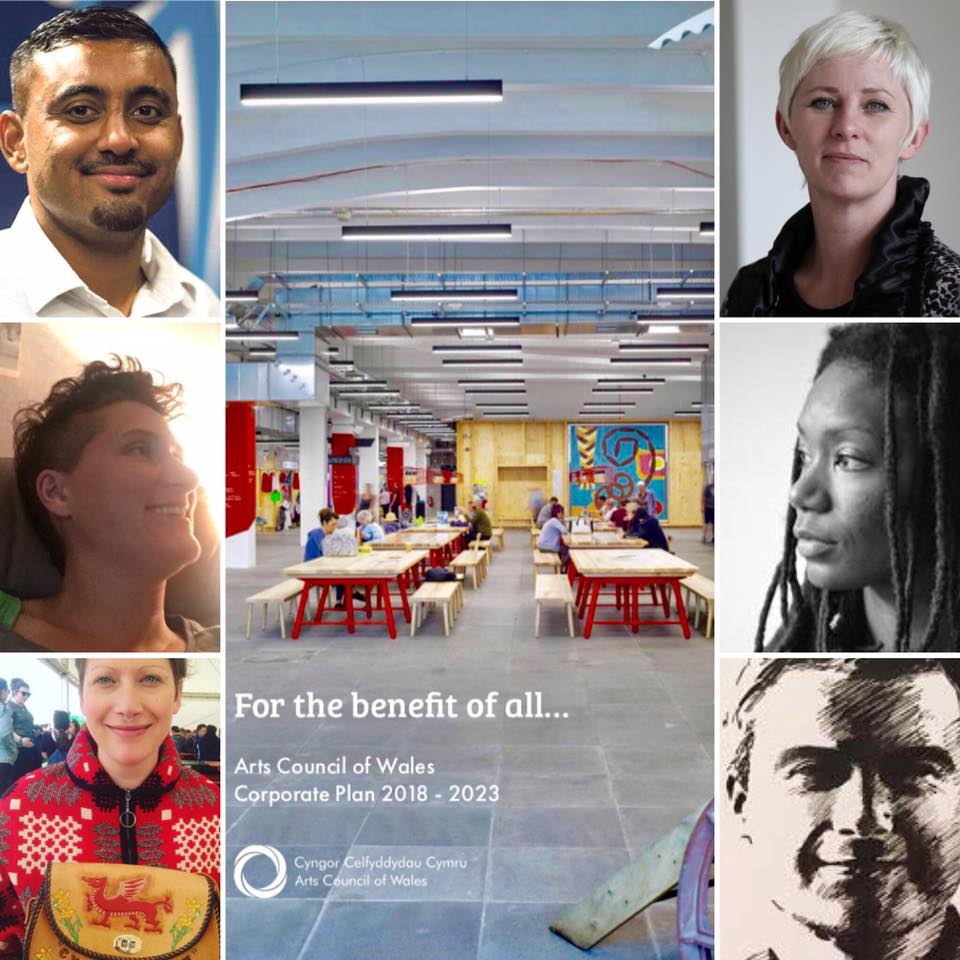
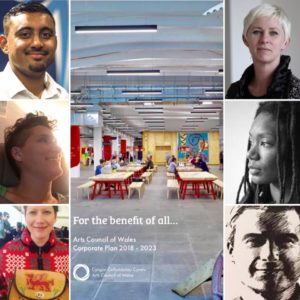
Welsh and Wales based artists respond to the new Arts Council Wales Corporate Plan, 2018 – 2023 “For the benefit of all”  

Guy O’Donnell.

getthechance.wales/2018/11/25/a-response-to-arts-council-wales-corporate-plan-2018-2023-for-the-benefit-of-all/

Ahead of the 2018 Brecon Baroque Festival, Roger Barrington had the chance to chat to it’s Artistic Director, Rachel Podger about what to expect this year and also about her own flourishing career as one of the world’s leading violinists.

getthechance.wales/2018/10/06/gramophone-artist-of-the-year-rachel-podger-in-conversation-ahead-of-brecon-baroque-festival-2018/#more-11470

In this article we interview a range of arts professionals to share good practice in the areas of Access, Inclusion and Diversity.

getthechance.wales/2018/03/25/sharing-positive-action-support-access-inclusion-diversity/

I am going to explore with you the invaluable discoveries and perspective gained from participating in the YANC event held at the Wales Millennium Centre over last weekend.

Beth Clark.

getthechance.wales/2018/05/01/a-response-to-casgliad-2018-nurturing-youth-arts-in-wales-by-beth-clark/

In this article we look forward to a range of cultural highlights in 2018. Thanks to all of the creative artists involved for their own personal response.

Guy O’Donnell

getthechance.wales/2018/01/20/looking-ahead-2018-culture-creativity-change/

The Director of Get the Chance, Guy O’Donnell recently met with Rachel Boulton, Artistic Director of Motherlode, they discussed her background, thoughts on the arts in Wales and Motherlodes new production ‘Exodus’ which premiers at the Coliseum Theatre, Aberdare on the 5th of October before touring.

getthechance.wales/2018/09/21/an-interview-with-rachel-boulton-writer-and-director-of-exodus/

Philip Ridley’s acclaimed one-act 2000 play, “Vincent River” tells the story of a mother whose son Vincent has been murdered in a homophobic attack. In the aftermath, she learns about her son’s homosexuality. An interview with Director Luke Hereford.

Roger Barrington.

getthechance.wales/2018/09/11/preview-with-interview-of-vincent-river-at-jacobs-market-cardiff-19-21-september-2018/

The Director of Get the Chance, Guy O’Donnell recently met with Sarah Rogers, Artistic Director of Ransack Dance, they discussed her background, thoughts on the arts in Wales and her new production ‘Murmur’, taking place on Fri 14th September 2018 at Memo Arts Centre, Barry.

getthechance.wales/2018/08/31/an-interview-with-sarah-rogers-artistic-director-of-ransack-dance/

An audio/subtitled interview with Carole Blade, Director of Coreo Cymru and Creative Producer for Dance in Wales. Editing by Roger Barrington.

getthechance.wales/2018/04/14/audio-interview-carole-blade-director-coreo-cymru-creative-producer-dance-wales/

Top Tunes with Jonny Cotsen

getthechance.wales/2018/01/09/top-tunes-jonny-cotsen/

Get the Chance values the role Welsh or Wales based playwrights bring to the cultural life of our nation. Here is the latest interview in this series with actor and playwright Matthew Trevannion.

getthechance.wales/2018/03/22/interview-matthew-trevannion/

The director of Get the Chance, Guy O’Donnell recently met with playwright and actor Joe Wiltshire Smith.They discussed his background, creative opportunities for young people in Bridgend, his new play Five Green Bottles and his thoughts on the arts in Wales.

getthechance.wales/2018/06/19/an-interview-with-joe-wiltshire-smith/

The director of Get the Chance, Guy O’Donnell recently met with Aisha Kigwalilo. They discussed her background, a new arts project called G.I.R.L. Xhibtion and her thoughts on the arts in Wales.

getthechance.wales/2018/06/06/an-interview-with-aisha-kigwalilo/

The director of Get the Chance, Guy O’Donnell recently met with Aleksandra (Nikolajev) Jones. They discussed her background and training, a current project Gravida and her thoughts on the arts in Wales.

getthechance.wales/2018/05/26/an-interview-with-aleksandra-nikolajev-jones/

An interview with BSL interpreter Cathryn Heulwen McShane

getthechance.wales/2018/04/27/an-interview-with-cathryn-haulwen-mcshane/

The Get the Chance team choose their cultural highlights of 2018

We asked our team to choose their personal three cultural events of 2018 along with a favourite performance and/or organisation. Enjoy reading their individual responses below.

Barbara Elin

2018 has been quite a year; when I submit my thesis on New Year’s, it will be the culmination of four years of intense research, and quite the end of an era (and hopefully the start of a new one). So I’m lucky that, in between the furious bouts of writing and the dreaded editing, I’ve been distracted by some truly brilliant productions, too many to narrow down – from the vicious Motherf**ker with the Hat to the inventively-staged Turn of the Screw and the impressive evocation of character in This is Elvis and At Last: The Etta James Story, 2018’s theatre and dance landscape has provided an embarrassment of riches. So I’m going to cheat a little bit in narrowing down to my ‘top 3’…

3) For ingenuity and fun, Mischief Movie Night/ Murder for Two

No two productions have made me laugh this year more than these two – and though they share a common thread of entertaining ingenuity, they’re vastly different from each other. The former showcased the talent of Mischief Theatre’s on-the-spot improvisational skills, the latter was a tightly-wound machine of script, song and silliness. Both of these productions demonstrated how creative and clever the craftsmanship of theatre is – all while making you laugh too!

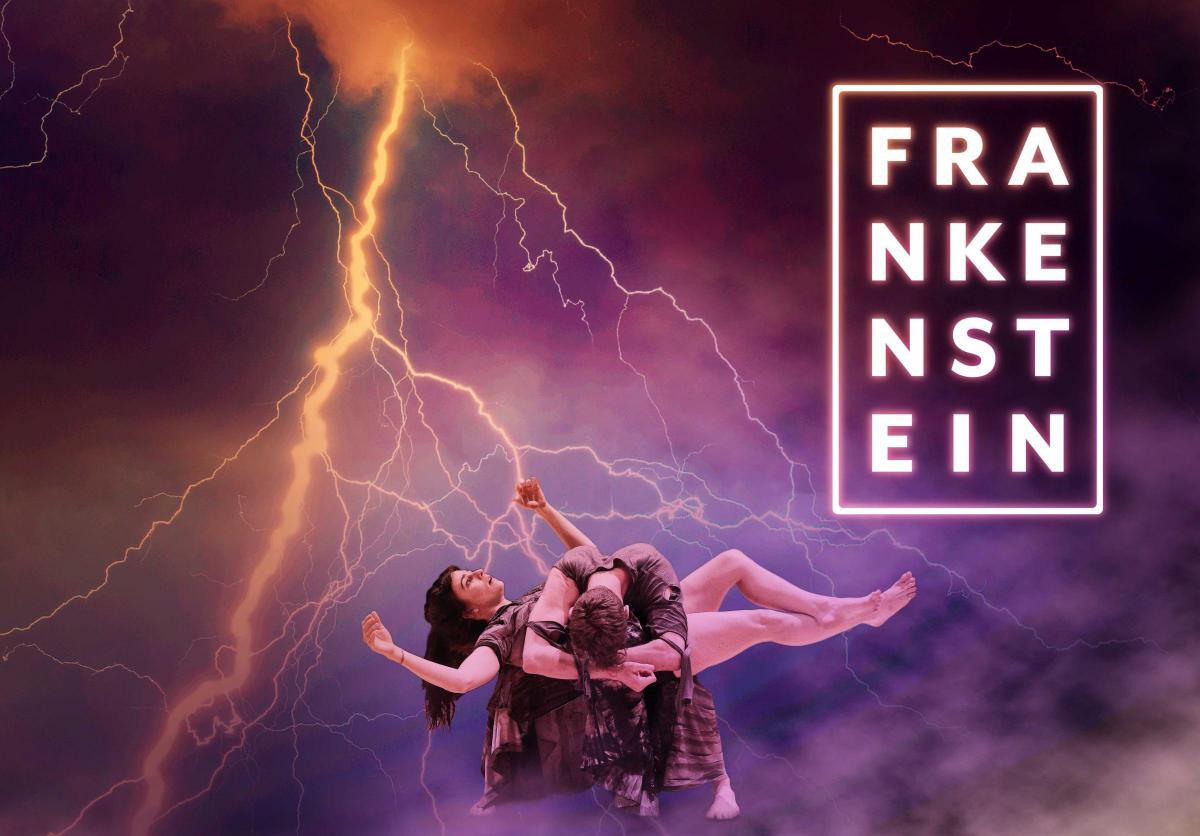
2) For pure, joyous entertainment, Young Frankenstein / Rock of Ages.

I love a good musical, and these are two of my favourites in recent memory. The original Young Frankenstein movie is in my top 3 movies ever, so I worried a musical version with a whole new cast could never do justice to the original – well, it did with bells on! Brilliant songs, spectacular setpieces and an original evocation of that original cast made this a must-see. And I have such special memories of seeing Rock of Ages for the first time, so it always has a place in my heart – it’s also one of the only truly great jukebox musicals I’ve seen, and this new cast reinvigorated an already raucous, rip-roaring ride! Can’t wait to see it a fourth time…

1) For powerful and haunting work,

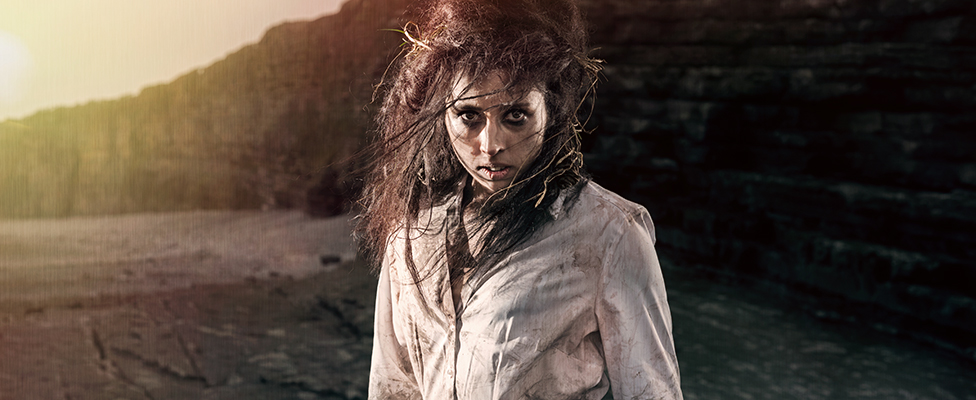
Cascade Dance Theatre’s Frankenstein 

Theatr Clwyd/Sherman Theatre, Lord of the Flies

These two productions utterly blew me away with their beautiful, haunting performances – both reimagined old classics in new, intriguing ways and were utterly gripping from start to finish. There are moments in both shows that I will never forget, and without doubt they are the best productions of 2018 for me.

Personal Highlight: It’s only appropriate, given my research into Frankenstein and the bicentennial of the novel’s publication, that I started and ended 2017 with Frankenstein-related productions – Young Frankenstein on the West End in January and Cascade Dance Theatre’s Frankenstein on the tail end of November. So my personal highlight of this year would be presenting my research in Bologna for the Frankenstein bicentennial conference. I’m so grateful to Prof Anthony Mandal and the CRECS/ RomText team for this wonderful opportunity.

Venue of 2018: The Sherman Theatre’s dedication to inclusivity, accessibility and innovation remains unmatched in my opinion, and their post-show panels are always a joy to be a part of. Many thanks to Tim Howe for involving me.

Company of 2018: Cascade Dance Theatre’s Frankenstein did the impossible – reimagined Mary Shelley’s classic almost wordlessly, in imaginative new ways with stunning moments and dark, modern twists. Bravo!

Gareth Ford-Elliott

For number three I’ll say Cheer by Kitty Hughes at The Other Room. This was fun and alternative and out of the things I reviewed, definitely one of the best.

For number two I’d have to say Humanequin by Kelly Jones at Wales Millennium Centre. This was an important piece of theatre and despite not being the best was definitely the most important piece I saw this year.

For things I’ve reviewed I would definitely have to say Cardiff Boy by Kevin Jones at The Other Room is number one. This was the best all-round show I saw outside of the Edinburgh Fringe this year. Every aspect of it was brilliant and it’s up there with one of my favourite shows I’ve ever seen.

For the cultural events, things I didn’t review, I will say Five Green Bottles by Joe Wiltshire-Smith and Spilt Milk Theatre as part of the Cardiff Fringe Festival. This was an excellent script produced independently. Joe is one of the best upcoming writers in Wales and Spilt Milk are one of the most passionate theatre companies. Together they produced an amazing show which I can’t wait to see again, developed, at the Sherman Theatre in 2019.

Judith Hughes

Exodus by Motherlode

With underlying serious issues about the struggles and problems of working class Valleys people, Rachael Boulton and her team have created a funny, clever, relevant and thought provoking piece of theatre that strikes a chord with its audience; a reaction that can be heard in their laughter and the warmth of their response.  Suspend your disbelief and climb aboard Exodus airways, it’s better than Easyjet!

Passion, NDCWales/Music Theatre Wales

All credit must go to what must have been an incredible amount of hard work from all of the performers, creators and collaborators. I was unexpectedly riveted to the story they told and absorbed in the whole aspect of the show.

Best thing in 2018 overall was listening to Bruce Springstein’s autobiography (actually published in 2017) which I had on Audible and listened to it twice. What an amazing story – and such a fantastic storyteller. All my life I wasn’t a fan until I read this book.

Hannah Lad

My top 3

3.Dick Johns – Lets Talk about Death Baby!-Really enjoyed just watching a truthful story with no pretences!

2.Dirty Protest: Light Speed at Pembroke Dock – A lovely heart warming story that reintroduce play to theatre!

1.Comedy at Howl, International Women’s Day – Just so good to have such a diverse group of women together in one room!

My favourite arts event I have attended this year was Casgliad hosted by Youth Arts Network Cymru! Such a brilliant weekend with so many awesome creatives!

Sian Thomas

Matthew Bourne’s Cinderella 
I’ve only seen two ballets ever and this was the best one. I followed the story and I really liked the subtle changes they made to it and the way it was performed. Lovely show.

Open Mic Night (Cardiff Fringe) 

Had to include the Fringe! It was the most fun thing I did this summer! Because god I just really really adore this event and I really hope it’ll be back next year – I always love testing out my writing on an audience there. It’s such a safe space and such a confidence booster! Lovely atmosphere, people, and always a lovely summery evening!

Ravensong by TJ Klune

Still because he recognised me, the group, and my old review. Loved feeling seen by an author I admire. The story was fab, the representation was great, and it was a lovely book to read to take one’d mind off things. Also ended with a great cliffhanger! I get so excited when he tweets about new books of this series come up. So this is definitely my #1!

My cultural event:

The fact that I wrote 100,000 words of the second draft of my novel!! I’m just super, super proud of myself. There’s not much to be told: I work on it when I can, work on it slow and steadily, make sure everything is okay, and it’s building itself up into something (hopefully) spectacular!

Barbara Michaels

My Three Best of 2018

With such a plethora of good theatre now available to us in Wales, it is difficult to select just three among the cornucopia of events that has been on offer – from the grandeur of Welsh National Opera, up there with the best in the world, to more humble productions working to tight budgets. For my money, here goes:

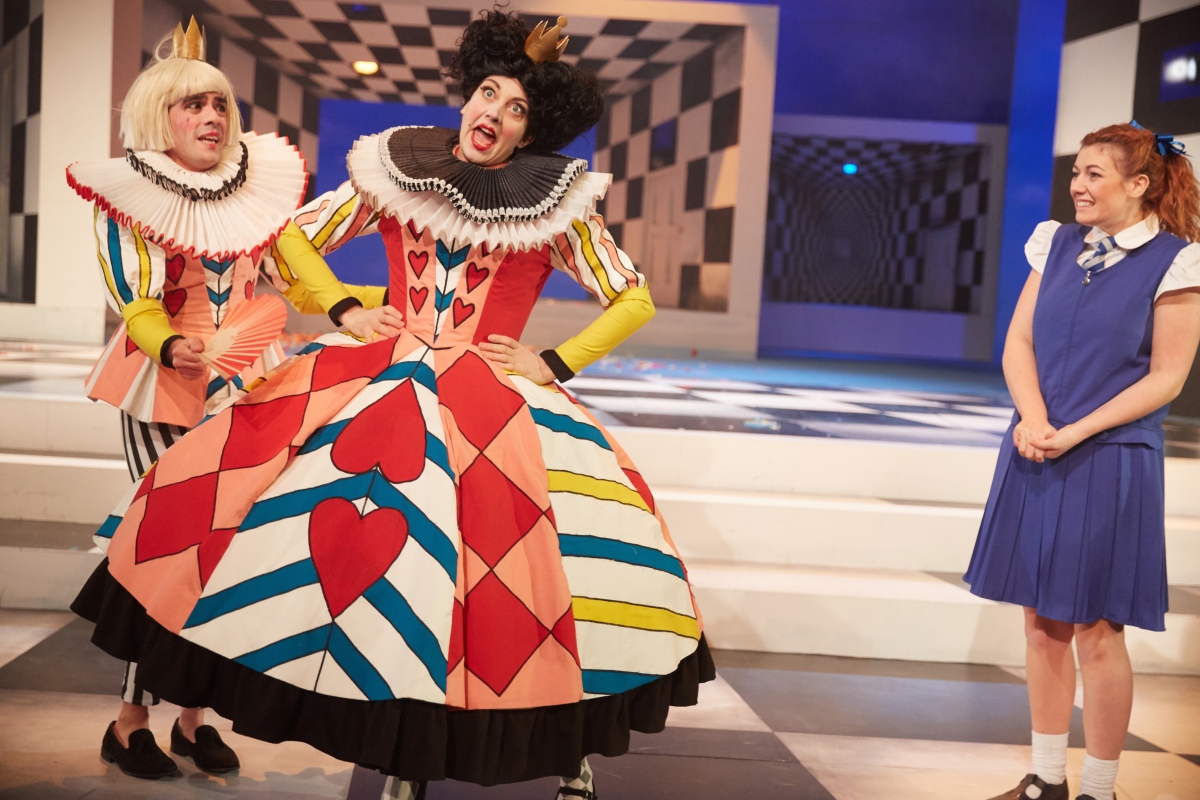
Alice in Wonderland at the Sherman Theatre, Cardiff

The multi-talented Rachel O’Riordan’s last production for the Sherman before departing for the Lyric Theatre in London.   O’Riordan pulled all the stops out, with the result that this was fun – as a Christmas show should be – but also showed the dark side of Lewis Carroll’s well-known story. Musical numbers were a delight, with several of the characters on stage musicians and rising to the challenge.  Not staged as a musical, but one waiting in the wings perhaps?  A cunningly designed black and white set allowed for the full range of Carroll’s famous characters – White Rabbit, Mad hatter and even the Caterpillar – to be displayed to advantage.

Moving on to Number 2:

Evita.  

This new production of a classic breathed fresh life into thetrue-life story of Eva Peron with a brand-new cast who more than justified their selection.  Following in the footsteps of Elaine Paige who made the role her own was never going to be an easy task and Lucy O’Byrne’s heart-rendingperformance of ‘Don’t Cry for me, Argentina’ at what was Eva’s last appearance before her death brought tears to the eyes.  It was also good to see some of the emerging talent coming out of Wales in the shape of Swansea-born Mike Sterling as Peron.

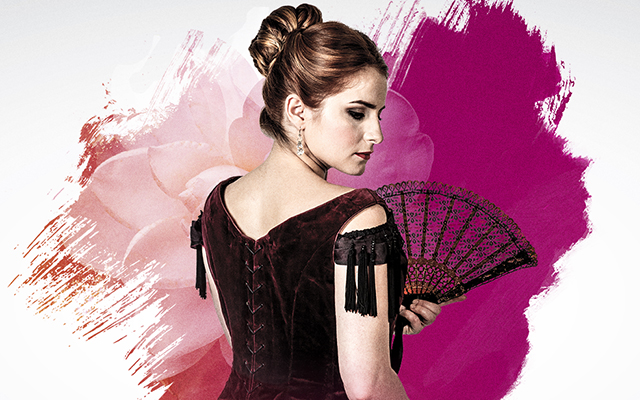
First on my list is WNO’s La Traviata  A revival, true, but excellently staged and performed and with Verdi’s wonderful score rendered with a master touch with two sopranos experienced in their roles and Roland Woods’ sonorous baritone lending gravitas to the role of Germont pater, how could it fail to please? An opportunity for the remarkable WNO chorus to shine and for the ladies among them to enjoy wearing elegant ballgowns. The excellent director David McVicar wisely chose to keep to the traditional, with a sumptuous period setting whose opulence reeked of decadence.

Personal best:

For me, it has to be musical theatre and The King and I, which I saw in London.  A sheer joy from start to finish, with Kelli O’Hara as Mrs Anna and Ken Watanabe as the King of Siam taking on the iconic roles made famous by Yul Bryner and Deborah Kerr and performing them with enthusiasm and expertise. First class.  Enhanced for me, I have to admit, in that I was accompanied by a posse of grandchildren helping me to celebrate a big birthday!


Karis Price

Theatre Clwyd and Sherman Theatre excelled this year with Lord Of the Flies, with its all female savage cast had me jumping out of my skin and seat whilst offering a critical insight to the frailties of humanity.

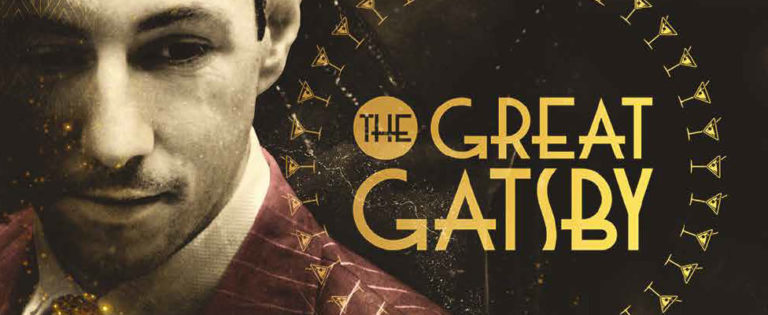
However it is the rip roaring, toe tapping hand flapping Great Gatsby from Theatr Clwyd/Guild of Misrule that topped the bill for me in 2018. This innotive, interactive piece held in a run down pub in town was totally engrossing, a brilliant use of venue and a talented cast not just of professionals but community too. (More of this in 2019 please Theatr Clwyd!)

On the whole 2018 was pretty dull in the cinema however one film stood out as been worth the trip to the big screen ” Marvels Infinity Wars” I am an Averger fan girl and this film ticked all the right boxes, it was the ending to the origional Averngers story arch, all the Marvel films todate were building up to this battle … it was worth the wait and the bitter end just left me wanting more.  Of course this doesn’t see the end of the Avengers, but it will be the end for some of the best loved characters and the begining for some new… I only hope the sad passing of the wonderful Stan Lee does not mean we loose the style and wit the MU has created.


E. M. BLESS’ON III

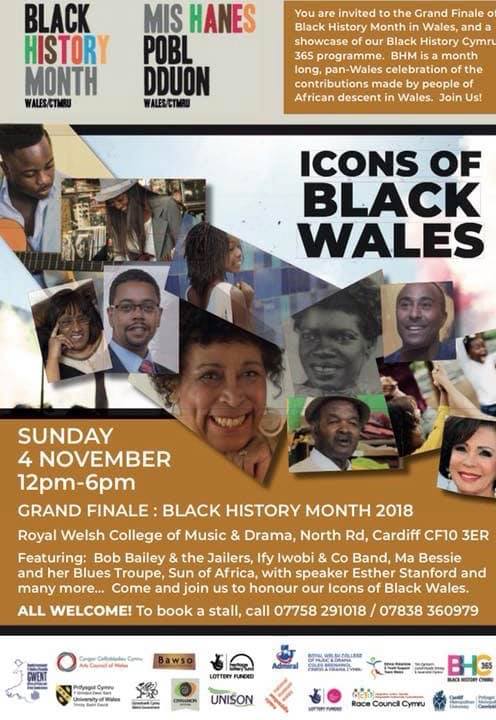
The Black History Month grand finale at RWCMD was my personal cultural event of 2018 because it attracted a broad spectrum of the community. Attended by many dignitaries including the outgoing First Minister – Carwyn Jones AM, newly-elected First Minister – Mark Drakeford AM, Cabinet Secretary for Health, Wellbeing and Sport – Vaughan Gething AM, young people and several elders from various communities in South East, West and North Wales, it was a celebration of diversity in Wales.

Gareth Williams

Keeping Faith

From its humble beginnings as Un Bore Mercher on S4C, I could never have imagined that this drama would prove to be so popular with UK audiences. Subsequently broadcast in the English-language on BBC1 Wales, it would become the most downloaded show ever on BBC iPlayer before being shown on primetime BBC1 in the summer. Deservedly sweeping the board at the BAFTA Cymru Awards, I will be outraged if Eve Myles is not at least nominated for a BAFTA in 2019. Her portrayal of Faith Howells, whose world is rocked by the disappearance of her husband, is deeply emotional and utterly captivating. This is surely her defining role.

Wild Silence – The Wandering Hearts

If I had to pick one album to recommend from 2018, it would Wild Silence by The Wandering Hearts. When I first heard it, it was their incredibly refreshing and genre-blending sound that captured my attention. The more I’ve listened to the album, the more the lyrics have come to the fore and I’ve discovered another fascinating layer to their fabulous array of songs. To finish the year seeing them live in Liverpool confirmed my belief that these guys are destined for bigger things.

Home, I’m Darling, Theatr Clwyd

My theatre highlight this year has been this co-production between Theatr Clwyd and the National Theatre. With its life-size house for a set, its bold and brash set design, and its wonderful costumes, the overall look is enough to pull you into its 1950s world. Starring Katherine Parkinson and Richard Harrington as the couple living it up in a lifestyle of nostalgia, its saccharine exterior slowly melts away to reveal a darker and very pertinent narrative that will have you firmly gripped from beginning to end. Another triumph for Artistic Director of Theatr Clwyd, Tamara Harvey and her team.

Review: Alice in Wonderland, Sherman Theatre by Gemma Treharne-Foose

By: Lewis Carol

Adaption by Mike Kenney

Directed by: Rachel O’Riordan

 out of 5 stars (4 / 5)


Sherman’s Christmas shows are becoming one of my family’s staple events of the Christmas season. For the second year in a row, their main stage show has avoided an overly ‘Christmassy’ offering (last year’s production of ‘The Borrowers’ was one of our stand out shows from 2017) but despite this, they’ve still managed to inject a large dose of festive fun and frivolity in to the production.

Director Rachel O’Riordan has brought together an all-Welsh cast and it’s great to see some familiar faces who you may recognise from other stand-out productions from the last few years. Hannah McPake (who plays the Queen of Hearts) comes from the ‘Gagglebabble’ duo with Lucy Rivers, who also features in the show’s musical line up. Having seen both Wonderman and Sinners Club with Lucy and Hannah, you know you are in for an off-the-wall experience if they are involved.

I’d also recognised Elin Phillips as the Cheshire Cat/Caterpillar (who I saw in Tom Jones the Musical by Theatre Na n’Og), Alexandria Riley the March Hare/Tweedledum who was absolutely incredible in Fio’s production of The Mountaintop in Cardiff’s Other Room pub-theatre, Keiron Self (The Duchess) who also featured in last year’s Sherman Production of The Borrowers along with the hyperactively hilarious White Rabbit Joseph Tweedale.

It’s a familiar cast, but as an ensemble and with the innocence of Alice, played by relative newcomer Elian West, they had wonderful energy and chemistry. I was also glad to see Callum Davies’ debut as the Doormouse, having joined the cast through the Sherman Players and as one of the Sherman’s apprentice actors. It’s great to see new talent being supported by Sherman – and Callum was adorable as the mouse!

Firstly, mad props to designer Hayley Grindle and her team, who created a stunning chequerboard set, which was dazzling and disorientating at the same time! The intimacy of the space in Sherman creates such a lovely, cosy atmosphere and the set and props were clever and creative (the baby pig, the trap doors, the table legs, the ticking clocks, the tiny doors at the end of the corridor, the teacups, mushrooms and roses).

Writer Mike Kinney added his own flair to the show, which did not chain itself to the original book or Disney movie visuals, but found its own voice.

A Duchess with a valleys accent, Tweedledee and Tweedledum with broad Newport accents and a flavour of the Welsh language peppered in dialogue exchanges and songs brought a similar kind of relevance and familiarity that Christmas Panto-goers will know and love.

Having been a life-long fan of valleys Pantomime Dame Frank Vickery who sadly passed away this year, it was lovely to see Keiron Self mimicking the same kind of high-camp, neurotic valleys Mam vibe which always hits home with me!

The littlies in the audience also loved the huge presence and scary-as-hell crazy eyes of Hannah McPake as the Queen of Hearts. Francois Pandolfo’s turn as the hen-pecked, simpering and anxious King was simply brilliant. I hadn’t expected the show to include musical numbers and it added another rich layer to this lovely production, with the cast ensemble vocals (particularly in the ‘Alice’ intro song and refrain) so sweet-sounding and warming.

Another standout song which children will love (and you’ll see them mimicking it in the foyer afterwards, no doubt) was a song about Alice’s baby sister (who it turns out has a head of a pig). It’s possible you may also have the ‘Wah wah wah…’ song in your head for the rest of the evening.

I had two ‘mini-critics’ of my own with me, age 9 – and they are typically the harshest of critics and don’t pull any punches. What were their final thoughts?

“Why did Alice not have blonde hair?!” said one of the littlies, who was completely exasperated with this minor detail. I explained this was a theatre show – not a ruddy Disney movie. Things always change on stage.

“Still – everyone knows Alice has blonde hair…also, I thought the Wah Wah Wah song went on for ages.”

Riiiiiiiiiight – so what would your marks out of five be, I asked them both – dreading the answer.

“I’d give it 3.5 stars.” Mini Critic 2 said.

Sheesh! What about Mini Critic 1?

“Definitely a 4.5 – I thought the singing was lovely and they were really funny.”

Jeez, maybe the Queen of Hearts was right about kids! I also couldn’t believe that these two did not share my enthusiasm for the Jam tarts which the Sherman had so thoughtfully provided for their guests on opening night.

“Look kids – JAM TARTS…WOWWWWW!” It doesn’t take a lot to get me excited, I admit.

“Meh…don’t like Jam Tarts.”

I tried threatening them that if the Queen of Hearts heard their comments, she’d have their heads off but….

Kids today! You can lead them to a finely tuned production of Alice, but you can’t make them eat the Jam Tarts or get over the fact that Alice didn’t have blonde hair.

Ultimately though – we all agreed this was a great little show, which got us feeling very excited indeed for Christmas (oh, and I still have the Wah Wah Wah song circling my head!).

Go see it – you won’t regret it!

An updated response to Arts Council Wales, Corporate Plan, 2018-2023 “For the benefit of all”

In October 2025 Get the Chance published an article titled, ‘The Health of the Arts in Wales.’ The article focused on the new ACW ‘Head Of’ role appointments, their key areas of focus and the WAHWN Manifesto.  The article featured a range of responses from Welsh/Wales based creatives responding to this period in the Welsh Cultural sector, it can be read here

We published a similar article in relation to the Arts Council Wales, Corporate Plan, 2018 – 2023  “For the benefit of all” in 2018.  We asked ACW if they could update us on the Commitments they stated at the time and their response can now be found at the bottom of this article. Thank you to the staff at ACW for taking the time to do this. 

Our mission statement at Get The Chance is “Creating opportunities for a diverse range of people to experience and respond to sport, arts, culture and live events.”

We were very pleased to see some of the priority areas in the new Arts Council Wales, Corporate Plan, 2018 – 2023 “For the benefit of all”

In particular we were interested in Commitment 2 below

We will enable a greater number and a wider diversity of people to enjoy, take part and work in the publicly funded arts.

ACW then go onto make a series of intentions (below) for where they want to be in 2023 (5 years)

We will be able to demonstrate clearly that all our funding programmes promote and contribute to equality and diversity

There will be a narrowing of the gap between those in the most and least affluent social sectors as audiences and participants

We will develop the creative work of disabled artists by funding “Unlimited” commissions and developing a scheme similar to “Ramps on the Moon” operated by Arts Council England

We want to introduce a “Changemakers” scheme placing BAME and disabled people in senior executive positions in the arts

We want to see a doubling of the number of disabled people in the arts workforce

We want to see a doubling of the number of Black and Minority ethnic backgrounds in the arts workforce

We want to have introduced an Arts Council Apprenticeships scheme designed to provide opportunities for people from diverse backgrounds

We will have achieved a trebling of the number of BAME and disabled and on APW boards of governance

We have been in discussion with a number of colleagues in the arts sector in Wales to request a personal response to Commitment 2 and are pleased to share their responses below. Please do get in touch if you would like to contribute.

ACW are currently asking for responses to their Corporate Plan and future Lottery funding priorities from members of the public,  you can make an online response at this link .

Or attended one of the physical meetings. The public meetings associated with the consultation will take place at Tŷ Pawb, Wrexham (30 November), Volcano, Swansea (10 December), Riverfront Newport (7 January 2019), Aberystwyth Arts Centre (11 January 2019) and Pontio, Bangor (21 January 2019).

Further details are available on the Arts Council of Wales website. The consultation closes on 15 February 2019.
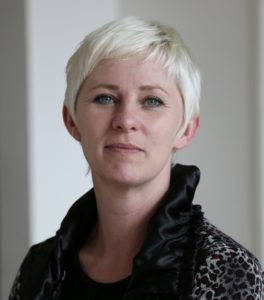
Carole Blade, Creative Producer

Coreo Cymru

During 2019, Bombastic and Coreo Cymru will be hosting Family Dance Festival, a 70-minute entertaining and interactive dance programme for families, presented free of charge in theatre foyers and outdoors during the Easter holidays. Piloted in 2017 and further developed in 2018, Family Dance Festival features three Wales-based professional dance companies and local youth groups at each venue plus taster workshops for all, framed within a bilingual (Welsh/English) context and supported with accessible shows and feedback systems.

Our 2018 programme delivered an accompanying training and seminar event to promote Audio Description, resulting in the first Welsh language audio described live performances. In 2019, we will also offer BSL interpreted shows and focus on developing an audience and appetite for these services by actively forging relationships with members of the blind and D/deaf communities. We will do this through visits to local support centres, clubs and groups, offering programme insight and critically supporting a dialogue, asking questions to inform our deliver methods and to reveal a wider view of general provision, requirements and needs. Working in collaboration with Creu Cymru’s Hynt and the local venue, we will gather data to support general approaches to accessible practice in Wales starting with visits to local clubs and later request feedback relating to their FDF experience.

We will again work with Audio Describer Ioan Gwyn, who benefited from FDF2018 bespoke training programme and toured with the company offering both Welsh and English language descriptions. We will also work with experienced BSL interpreter Sami Thorpe of Elbow Room, to support the text based work and our reach. Their understanding of the target audience and experience within the performing arts, coupled with our plans to consult with individual service users through visits to their respective clubs and groups, prior to the tour, will enable the means and structure for a quality service. Ioan and Sami will work with the Front Of House staff at each venue to ensure quality customer care of our accessible audiences, positioning themselves at the box office to welcome and familiarise. Where possible we will integrate Ioan and Sami into the actual performance to positively reinforce inclusiveness and will create specific feedback forms to inform delivery and methods.
Gareth Coles / Voluntary Arts Wales Director / Cyfarwyddwr Celfyddydau Gwirfoddol Cymru

The second commitment in the Arts Council of Wales’ new Corporate Plan recognizes that the challenge is to increase and diversify participation in the publicly-funded arts. But levels of participation in different forms of creative activity may actually be very high, as people practice their creativity in libraries, church halls, pub function rooms and on kitchen tables and bedroom desks. Voluntary Arts Wales estimates that there are around 4,000 community and amateur creative groups in Wales. But these voluntary and everyday creative activities may not benefit from public subsidy, and therefore may not regularly appear on the radar of public funders.

There is a rich and diverse ecology of the arts in Wales: an ecology that we believe includes amateur, everyday creativity as well as the professional arts, and in which all elements are interdependent and mutually supportive. An attempt to engage more people in the publicly-funded arts might start with an appreciation of the creativity that people choose to practice themselves. Rather than see a deficit of engagement in the arts, we might recognise the cultural assets and activities that already exist within communities across Wales, and build stronger links with the publicly funded arts.

 Diversifying governance

In 2016, Voluntary Arts conducted a project called Open Conversations to improve our understanding of creative cultural activity in Black Asian and Minority Ethnic (BAME) communities across the UK. We convened an Advisory Panel of experts in BAME creative activity, who made introductions, accompanied staff on visits, and met regularly throughout the project to discuss findings. Voluntary Arts staff and Expert Panel members conducted long, unstructured and informal conversations with practitioners across the UK. At the end of the project, we invited the Panel members to become Trustees of Voluntary Arts, and now 5 of our 11 Board members are from BAME backgrounds. As a result of this work, we became the first arts organisation to win a Charity Governance Award for Board Inclusion and Diversity.

We have also sought in recent years to celebrate the excellent work that exists in the voluntary arts sector to champion diversity, through our annual Epic Awards. Get the Chance was a recipient of the Celebrating Diversity award in 2017.

Increasing participation

Our Drawn Together project, a partnership with Coast Lines, has engaged over 2,500 people of all ages in producing over 5,000 observational drawings – creating a collective visual representation of Wales in 2018 (now on display in the National Museum of Wales, Cardiff). The feedback shows that 96% of participants felt happier and more positive as a result, but the majority weren’t creatively active, or involved in any arts or community groups. We believe this worked because we took the project to places where people convene: in existing community groups, libraries, cafes, care homes, workplaces and schools. We worked with Big Issue vendors in Cardiff, residents living with dementia in a care home in Pembrokeshire, RNLI volunteers in Aberystwyth and farmers in rural Denbighshire. A majority of project participants now want to continue their creative practice.
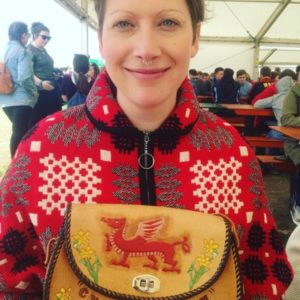
Branwen Davies

Writer/Theatre Maker

I welcome this commitment. We all should. We all benefit from a wider diversity of people enjoying and taking part in the arts.It needs to be ever evolving and new energy and life bought in. We all have skills, experience and stories to share. Quite often I find we are ignorant or unaware of challenges facing others and it needs to be addressed and challenged and become second nature not a box ticking exercise.

In uncertain times socially and politically, especially where people feel threatened and surrounded by divisions and threats, the arts can play a pivotal role in confronting fears and open channels of communication. We are social animals. We need to seek each other out. We need to go knocking on doors and meet face to face and not rely so much on social media to connect.

I constantly bang on about the transformative power of the arts! It’s life-enhancing – music, theatre, images, installations, dance etc in all it’s glorious forms. They enable us to communicate, engage and express ourselves and that positive experience can spill out in to all areas of life. It gives us an emotional literacy and helps us try and make sense of the world and our surroundings. It infuriates me that music and drama and literature are constantly threatened within the education system and that there are less opportunities from an early age to engage and benefit. Mental health issues, anxiety and lack of confidence is on the rise in schools and I am in no doubt there is a direct link. The arts are essential to our wellbeing and the earlier we are exposed the better. It is also vital to ensure that there are opportunities for all ages and that it isn’t all focused on youth but continuous in to old age.

It has to start with a conversation – what are the complex needs of different cultures, genders and abilities in Wales? For a small nation our diversity and needs are huge! There is no one size fits all. What are the present weaknesses and gaps and challenges and how do we approach change and a new model of addressing and implementing things for the benefit of all? It’s essential to give a voice to those who aren’t usually given a platform and we must empower those who don’t think their story is of value. We also need to showcase and showoff what we can offer so that people are aware of the possibilities and the work that is and can be created.

The image of the arts needs to be changed so that people feel that they can take ownership and that it belongs to them. It’s up for the current gate keepers not to just welcome and implement an open door policy and a willingness to listen but to actually do the ground work and seek people out face to face. This connection and nurturing needs to be sustained. We have the talent, skills and expertise in Wales but we need, especially in times of funding cuts to pool resources and collaborate and communicate much better than we already do and to be in regular contact and communicate and share knowledge with each other.

My background is in playwrighting and one positive experiences I have had was ‘The Fresh Ink’ initiative with the Sherman Theatre where over a period of 10 weeks I visited St Teilo School in Llanedeyrn, Cardiff. I worked with a group of students who had never visited the theatre and who had little confidence or interest in writing. Allowing them to step away from thinking and writing academically, encouraging them to find their own voice and to take ownership of their language and rhythms of speech the students grew in confidence and produced extremely moving and passionate short plays that were then performed by professional actors at their school in front of their peers. Their reaction and their pride in their words and stories was empowering. For the first time some of them felt they had created something of worth and value and were proud to share it. The Sherman are currently running a playwrighting scheme for similar students to whom opportunities have been limited. The weekly sessions are free of charge and transport is provided. The students work will be performed at the Sherman in the spring.
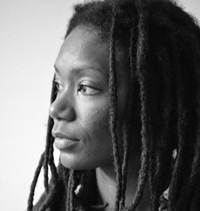
Adeola Dewis

Artist, researcher, academic and TV presenter

I have just read the corporate plan. I feel little excitement although I think the targets are attractive. My main contribution to this goes back to the idea of getting out of offices and on to the streets, into community spaces without an agenda and seeing what one can learn.

This feels like wanting to do research and already knowing the answer. I think its problematic in its genesis.

Of course the key is the youth, the next generation but I also believe that bodies like the ACW already have a public image and in order to broaden its public perception (increase participation and attendance in publicly funded arts), honest work will need to be done from the inside, beyond inviting token BAME individuals to be on their board. This crucially involves getting to know who you are working with and for and perhaps getting your ‘targets’ from the people and what matters to them rather than the governments with their outward facing strategies.

I am struggling to articulate a coherent response to that as I believe the response would need to be rooted in research. What I mean is, we are talking about arts participation, but that is just ‘our’ arts. There are groups and communities making ‘arts’ and doing their thing that get washed over for various reasons. What is at the core of the desire to increase participation? What are ‘more diverse’ communities and groups already doing and how do we foster conversations that facilitate an equal space for voice and visibility and limits the threat of appropriation.
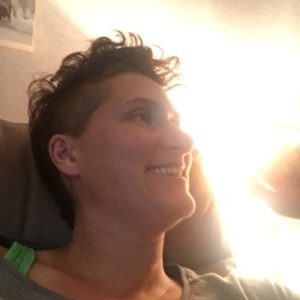
Bethan Marlow

Writer 

First of all, the fact that these goals and priorities have been set is fantastic because it means we’re really acknowledging that this is a problem. There are many, many people still feeling excluded from the arts (not just as audience members but as people wanting to work in it too) so having a goal to change that can’t be anything but a good thing.

How will it actually be achieved?…….. action. Action by all. Everyone, every single one of us currently working in the arts needs to assess our ways of working, our processes and avenues of finding collaborators and we need to really question how inclusive we’re been the past. And if we haven’t been inclusive, or inclusive enough, we MUST, must make change. From hiring to casting to finding audiences we must continuously ask ourselves whether we’re doing enough to make sure that ALL people feel invited. I sometimes feel like I’m the P.C police these last few years (I’m sure my co-workers feel it to!) because I have made a conscious decision to ask the difficult questions and speak up for those not in the room. And it’s not always comfortable. It makes people uncomfortable but the only reason we all feel uncomfortable is because we know there’s a problem. “Have we gone to all lengths possible to find BAME actors that can audition for this part?”, “Our focus should be on finding female musicians”, “have we considered Welsh learners for this part?” I don’t ask these questions to make people feel guilty, I’m doing it so that we can create active change so that we’re not guilty of being exclusive. We need to keep reminding each other of being inclusive until it becomes second nature.
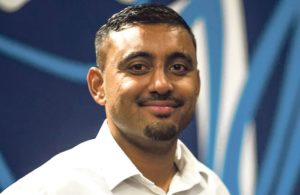

Abdul Shayek

Director of Fio

I guess my major reflection on this has to be that whilst we have a statement being made by ACW which I believe is the right one. What seems to be missing is the response from arts leaders who have the resources to really make a difference. I guess unless a firmer and clearer picture is presented in terms of the sharing of power and resource, the inevitability is that this will remain words on a page. We, have to question how a sector which is led by same people will suddenly decide this needs to be prioritised just because ACW has said so, we need to go further and find other more innovative solutions where power is shared more equally?

Arts Council of Wales Corporate Plan, 2018 – 2023 “For the benefit of all”

Progress Report 2025

Following the launch of our previous Corporate Plan ‘For the Benefit of All 2018-2023’ it is important to note that, in March 2020, the UK went into lockdown in response to the global Covid 19 pandemic. This resulted in the immediate ceasing of all creative activity as the sector had to close its doors to audiences and participants and find new and innovative ways to continue to deliver work in order to survive. Being the last sector to re-merge from the pandemic, the restrictions had a significant and detrimental impact on the sector, further compounded by the cost-of-living crisis that followed in its wake. As a result, many creatives working within the arts sector were forced to seek alternative and more sustainable work in other sectors.

This had a significant impact on the progression of our own key objectives at this time, as we redirected our funding support to provide emergency and stabilisation funding to the sector. We sought to take stock and reset our direction of travel, to allow us to provide a relevant and appropriate response to the crisis the sector was now facing. This is documented in our publication at the time, ‘Resetting the Dial’.

Nevertheless, below are some examples of the progress we were able to make against the priorities listed in our then-published Corporate Plan. Whilst these examples are listed under their separate headings, they would not have been delivered in silo, nor would their impact have been restricted to the particular area of reporting below. The accumulative impact of these actions helped set the benchmark and inform the direction of future targeted activity.

Further detail on our progress against the Benefit of All may be accessed through several of our published reports, in particular our published Annual Equality Plan 2022-23, as this report also provides the benchmarking data for previous years of the plan. These reports may be accessed on our website here.

Work in this area will continue to progress, and is addressed under our current 10 year Strategy and its 6 published principles: Creativity, Equality and Engagement, Welsh Language, Climate Justice, Develop Talent and Transform.

Demonstrate that all funding programmes promote and contribute to equality and diversity

Actions Taken

  • Appointed an Agent for Change to help drive progress in our commitment equalities and improve performance in this area*
  • Embedded equality objectives into all programme guidelines and assessment criteria.
  • inclusion of equality action plans in funding agreements with Arts Portfolio Wales organisations (now referred to as Multi Year Funded organisations post Investment Review 2023)
  • Conducted Combined Impact Assessments on key strategy documents
  • Annual reporting of demographic data on funded projects.
  • Launched our Arts Associates, a cohort of individuals who demonstrate arts expertise and lived experience of under-represented groups, and with who we engage to bring their expertise to our developmental work and grant decision making.
  • In March 2025, we developed and introduced a revised Lottery programme offer that responded to gaps in provision that we were seeing though our data analysis. This work also saw the relaunch of our Creative Steps programme, supporting individual artists and organisations from under-represented backgrounds and who had experienced barriers to accessing our funding.

Outcome

Funding programmes incorporate diversity priorities, ensuring equitable access and representation.

*It is worth noting that the Agent for Change role came to an end on 31 March 2025. The decision was taken by the Executive Leadership Team, which was subsequently approved at Council, to restructure our approach to diversity and inclusion by transitioning from the single Agent for Change position established in 2021 to embedding diversity and opportunity across the whole of ACW.


Narrowing the gap between most and least affluent social sectors as audiences and participants

Actions Taken,

in addition to the above:

  • We implemented targeted outreach and community engagement programmes in low-participation areas. This included increased online activity during the pandemic lockdown including streaming, which allowed for more people to engage with creative activity in a safe way and at a time that suited them. An example of this would be our Sharing Together Fund, which encouraged the creation of new networks and strengthened existing networking opportunities initiatives which focused on promoting and strengthening diversity and inclusion throughout the arts sector, and on widening engagement with diverse communities. Through this Fund we sought to increase participation in the Arts, particularly for those who felt separated or disconnected for a number of reasons – including, but not restricted to, economic, social and geographical considerations, whilst enabling sustainable funding models to deliver this activity. 
  • With our funding support, many organisations introduced subsidised ticket schemes and free workshops for low-income groups.

Outcome

Increased figures for participation and engagement with cultural activity among under-represented communities and groups.

Develop creative work of disabled artists via ‘Unlimited’ commissions and similar schemes

Actions Taken

  • Funded multiple ‘Unlimited’ commissions for disabled artists through Unlimited Connects prior to the pandemic. Further funding for Unlimited 2020 rediverted to the Covid 19 Response Funding for the sector.
  • Designed a pilot programme, RAMPS Cymru, inspired by ‘Ramps on the Moon’ to support integrated productions. However, funding priorities were severely impacted by the pandemic, as funds were redirected to provide emergency support.
  • In our Investment Review 2023 Report and Decisions we included a commitment to offer further support to RAMPS Cymru – a collaboration between Theatr Clwyd, Sherman Theatre, Pontio Arts, Torch Theatre, and the Royal Welsh College of Music & Drama – which aimed to create meaningful and sustainable change to improve the representation of disabled people across the mainstream theatre sector in Wales.
  • Through our Lottery Programme Review in 2025, we restructured our funding offer to transform our approach from reactive funding to strategic allocation that directly addressed documented gaps. This included a comprehensive restructuring of our CREATE funding programme. This work is currently being launched in phases, with the launch of the final phase in April 2026. Once competed this will see a move, from a general open programme to more specialised funding streams better tailored to specific needs.

Outcome

Increased visibility and opportunities for disabled artists to have greater access to funding and platforms, fostering inclusive creativity. This work will continue to progress under our current 6 published principles, which include Equality and Engagement and Develop Talent.

Introduce a ‘Changemakers’ scheme placing people from minoritised ethnic backgrounds and disabled people in senior executive positions

Actions Taken

  • The onset of the pandemic impacted on the finalising of strategic funding programmes, including the Changemakers programme , which sought to provide individuals from under-represented backgrounds with structured placements in leadership roles and provide leadership training and mentoring for participants.
  • we continued to support people from minoritised ethnic backgrounds and Disability-led organisations to develop their businesses in sustainable ways, including through our Creative Steps programme, until we had to pull out of our Lottery funding programmes in March 2020 and repurpose the money to provide emergency funding to the sector in response to the pandemic.
  • We have since relaunched our Creative Steps programme for organisations and individuals.

Outcome

Improved diversity across Boards and Senior Management within the sector, influencing organisational culture and decision-making.

Double the number of disabled people in the arts workforce

Actions Taken

In addition to the above earlier points:

  • Increased our sharing and advertising of recruitment and engagement opportunities across a number of targeted platforms to help ensure we reach a wider audience
  • Set clear targets in funding agreements requiring organisational equality plans that include workforce considerations.
  • Launched our Arts Associates, a cohort of individuals who demonstrate arts expertise and lived experience of under-represented groups, and with whom we engage to bring their expertise to our developmental work and grant decision making.
  • Supported inclusive recruitment campaigns and training pipelines.
  • Commit to increasing diversity across our own staff and Council
  • We are a Disability Confident Employer
  • We publish our own employment data and employment data for the organisations we core fund in our annual Equality Reports that include benchmarking data from previous years.
  • Increase awareness and understanding of potential barriers faced by disabled people through staff training including neurodiversity training.

Outcome

Increase in reported representation of disabled individuals in the arts workforce

Double the number of people from minoritised ethnic backgrounds backgrounds in the arts workforce

Actions Taken

In addition to the earlier points above

  • Increased our sharing and advertising of recruitment and engagement opportunities across a number of targeted platforms to help ensure we reach a wider audience
  • Set clear targets in funding agreements requiring organisational equality plans that include workforce considerations.
  • Launched our Arts Associates, a cohort of individuals who demonstrate arts expertise and lived experience of under-represented groups, and with who we engage to bring their expertise to our developmental work and grant decision making.
  • Supported inclusive recruitment campaigns and training pipelines.
  • Commit to increasing diversity across our own staff and Council
  • We publish our own employment data and employment data for the organisations we core fund in our annual Equality Reports that include benchmarking data from previous years.

Impact

Data reported through our Annual Equality Reports show increased diversity across arts organisations.

Introduce an Arts Council Apprenticeships scheme for people from diverse backgrounds

Actions Taken

  • Initial development of apprenticeship framework postponed due to pandemic and resulting repurposing of funds.
  • Encouraged and supported arts organisations to host apprenticeships and secondment opportunities across disciplines.
  • Commit to and require our funded organisations and projects to offer recognised fair rates of pay.
  • Arts Council offer minimum living wage for entry level opportunities.
  • We will now take this work forward through our principles of Develop Talent and Transform to create sustainable career pathways in the arts

Achieve a trebling of people from minoritised ethnic backgrounds and disabled representation on APW boards of governance

Actions Taken

  • Embedded equality objectives into all programme guidelines and assessment criteria.
  • inclusion of equality action plans in funding agreements with Arts Portfolio Wales organisations (now referred to as Multi Year Funded organisations post Investment Review 2023)
  • Increased our sharing and advertising of recruitment and engagement opportunities, including those for the sector, in our published newsletters to help ensure we reach a wider audience
  • Set clear targets in funding agreements requiring organisational equality plans that include workforce and Board considerations.
  • Supported organisations to access governance training

Outcome

Our Arts Portfolio Wales data for 2022-23 showed an improvement in the representation of people with protected characteristics both as employees and members of Boards of Management. There was a marked increase particularly in the number of disabled people employed within these organisations, up by 20% from the previous year. Those from culturally and ethnically diverse backgrounds also saw modest increases on the previous year. Whilst we have not achieved a trebling of representation across Boards, the data now shows there are general increases in these areas over the years, reflecting a broader range of perspectives, strengthening governance and inclusivity.

Review: Cardiff Boy at The Other Room by Gareth Ford-Elliott

 out of 5 stars (5 / 5)

Kevin Jones’ monologue Cardiff Boy is a nostalgic jump into the 90’s with a story as relevant today as it was in the 90’s. A story of male friendship that explores toxic masculinity with a killer 90’s soundtrack.

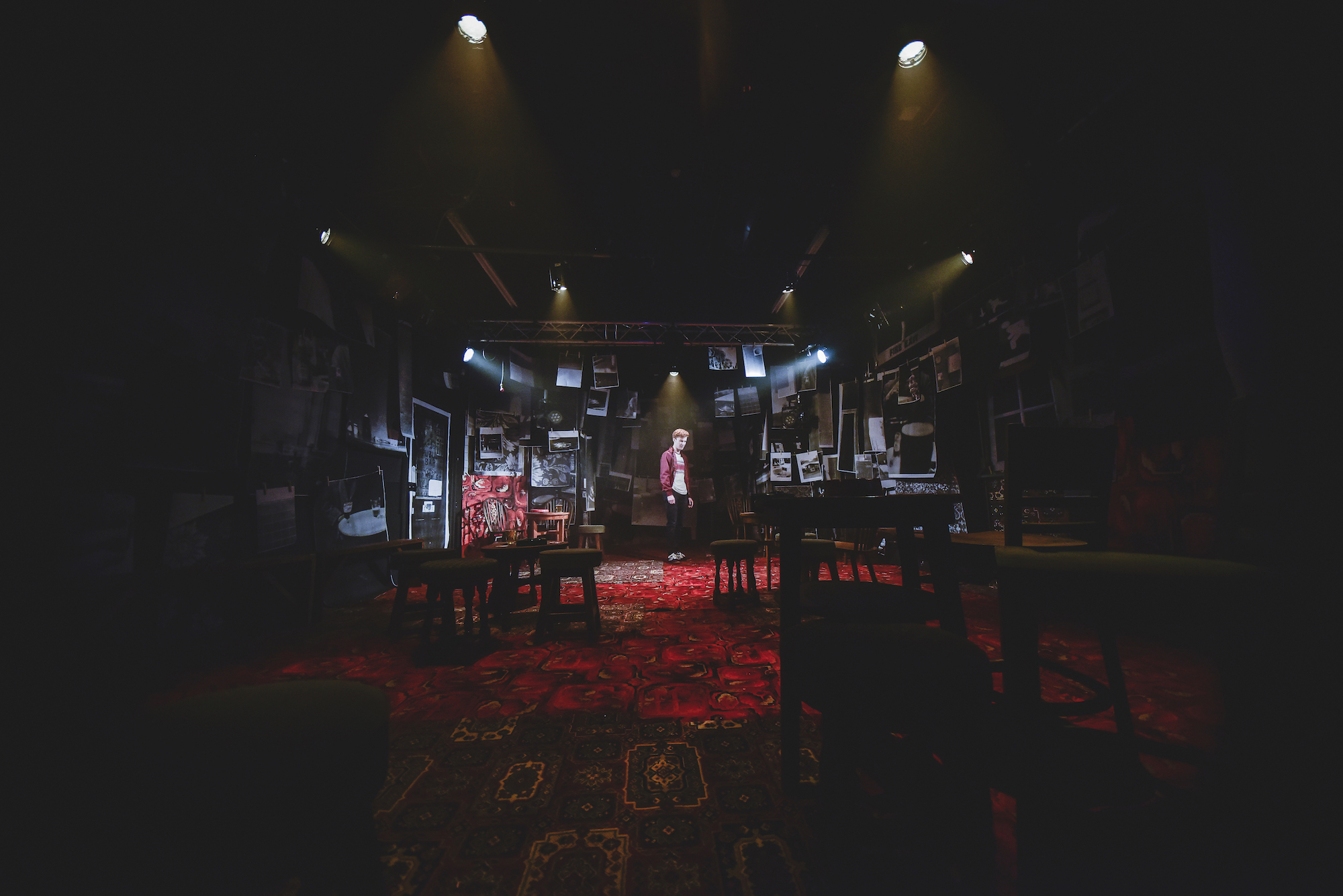
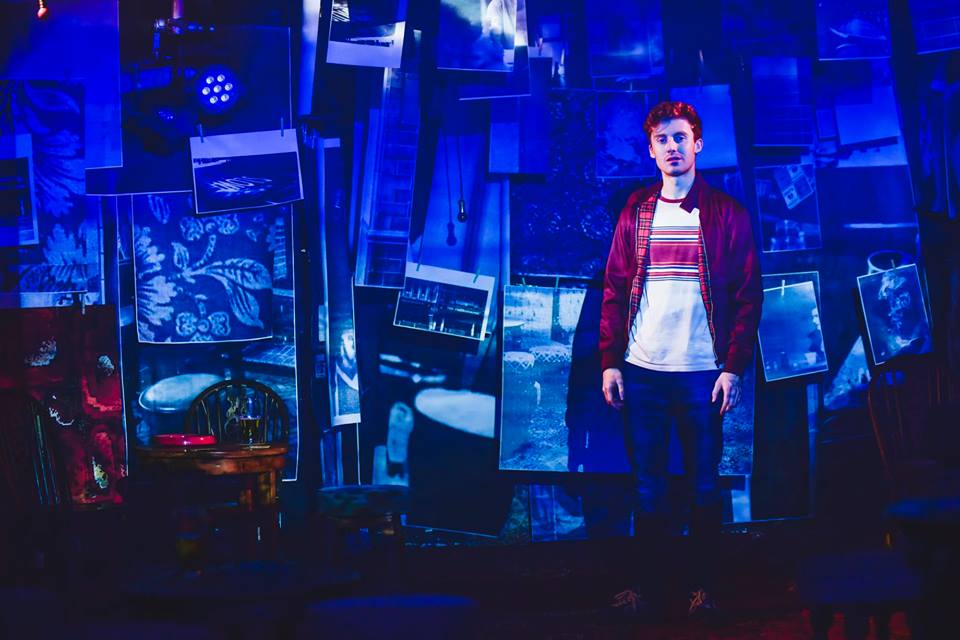
Narrated by “the quiet one” of the group, the story follows a group of young Cardiff lads as we join them on a night out. The use of set, sound and lighting design really add to Jones’ descriptive and emotive piece, which is guided well by director Matthew Holmquist and actor Jack Hammett.

Jones’ writing in this piece has its strength in the language. Whilst the plot is fairly basic, it is the expression of the characters that really stands out. Jones uses a clever mix of comedy and archetypal characters to juxtapose the hard hitting moments of the play. This works very well and makes the play relatable, enjoyable whilst also saying something unique.

There’s more you want to know about the characters and paths that are left unexplored. But not in an unsatisfying way. Details such as the protagonist’s relationship with his father is touched upon, but quickly brushed over by the protagonist. A detail that could be explored, but the lack of clarity of which is harrowingly too real for many young men.

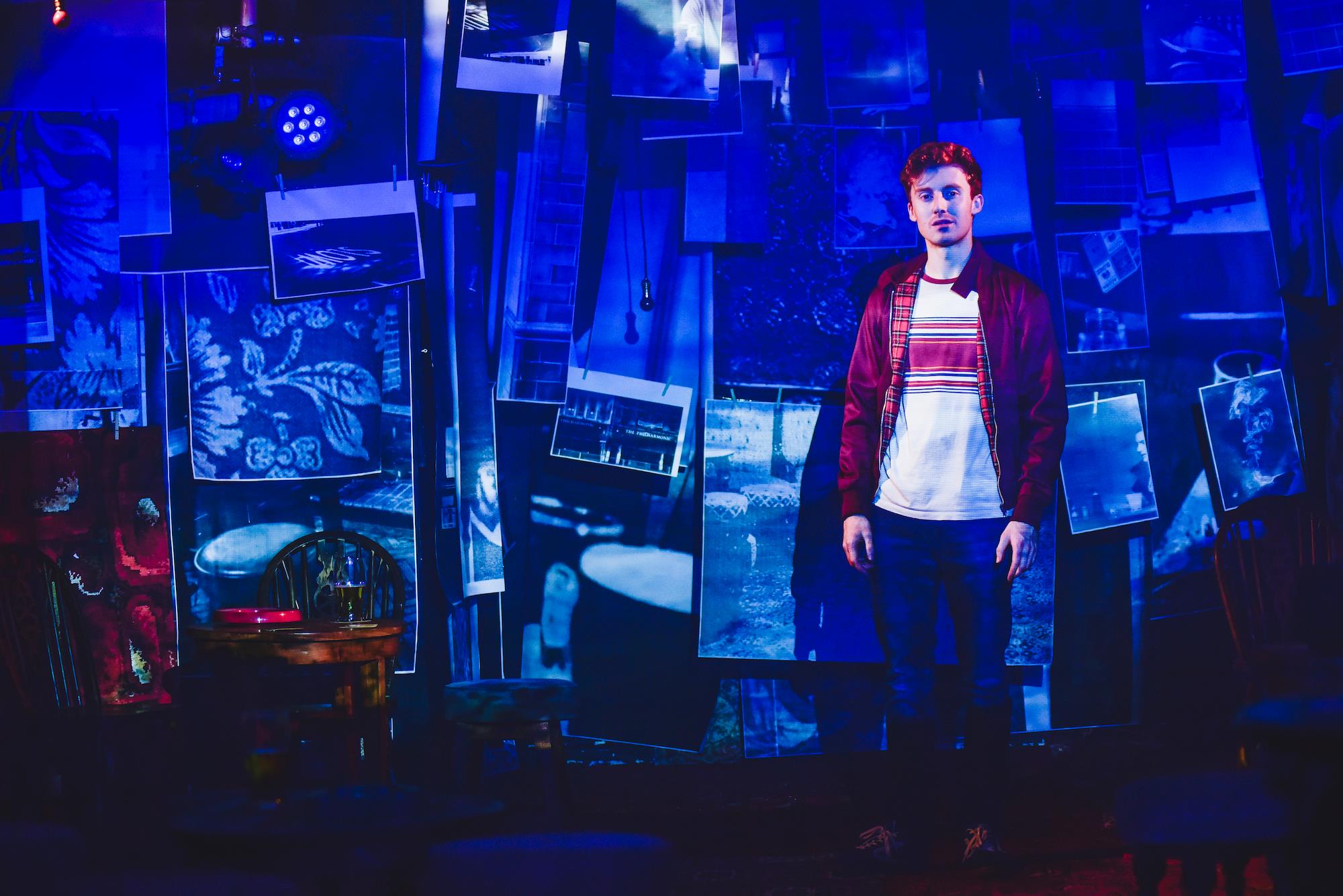
When the audience enter the space of The Other Room, we leave behind Porters, the pub within which the theatre resides. However, with Cardiff Boy, The Other Room literally feels like the other room of the pub, such is the strength of the set design.

photo credit Kirsten McTernan


Sitting down you’re greeted by benches and chairs scattered throughout the room, with tables on which to rest your drinks. And as Hammett wanders between you and the other audience members, it is hard not to feel a strong sense of place.

This is heightened with the hanging photographs of 90’s Cardiff, which act as a sort of scrapbook of the protagonist’s photography collection. Photography and perception is used at various times by the protagonist to set the scene, with the city and locations generally described in great detail. Looking around at these fragments of Cardiff hanging from the ceiling, creates a very evocative feeling that makes it easy to get drawn in.

The directing of Matthew Holmquist is another strength of this piece. Not an easy piece to take on, such is the temperamental nature of the script. Without a brave director, that temperament could easily become a major flaw. But, the tone of the piece is handled brilliantly by Holmquist who allows the moments of emotion time to breath, without letting them take over.

Jack Hammett does a good job of portraying the protagonist and his mates as he bops around the room. In particular moments of vulnerability, which defines his “quiet” character, stand out. Ultimately a play about difference in men, Hammett does a great job in portraying this.

The use of sound is crucial to this play, and it doesn’t fail to impress. The soundtrack is obviously brilliant for anyone who enjoys 90’s music. Often used to comedic effect, the music, like the photographs, has a deeper meaning to the protagonist of the piece. Sound is also key in setting the scene and does so well.

The only issue for sound designer Joshua Bowles to work on would be that the level of the sound often drowns out Hammett’s voice. On occasion this works, for example in the club, where you can never hear anyone anyway, however, probably an occurrence too regular were that the desired effect.

photo credit Kirsten McTernan


The use of lighting from Ryan Stafford is understated. Often going unnoticed until you try to see it, the lighting adds to the overall piece well. A tough play for lighting, as the stage is the entire room, Stafford manages to keep it effective without distracting. Even when there are flashing lights, you barely notice it because the music, direction and acting are all working together with the lighting to set the scene.

Perhaps this is the biggest compliment to Cardiff Boy and Red Oak Theatre as a wider company. A company that views the roles of the designers as importantly as the director, writer or actor. Something that is weirdly rare when you consider how well it has worked in Cardiff Boy and how vital these professions are to the theatre industry.

It’s good also to see that with this in mind, Red Oak are committed and passionate about developing young artists with a paid assistant director (Nerida Bradley) and assistant designer (Lauren Dix). A company no doubt restricted by a budget won’t always do this, so it’s nice to see Red Oak committing to young artists in this way.

Along with this, it is heartening for a piece that started at a scratch night, to grow into such a strong piece of theatre. Again showing Red Oak’s commitment to new work and new artists.

Overall, Cardiff Boy is a wonderful production. It’s hard to say anything stands out in this production as everything works so well together to achieve its aim. However, April Dalton’s design, assisted by Lauren Dix, is phenomenal and deserves recognition.

The play’s greatest strength is the team behind it because with another team, and another company, Jones’ emotive script could be easily forgotten.

Cardiff Boy by Kevin Jones
Presented by Red Oak Theatre
Running From: 30 October – 11 November 2018
Performed at The Other Room, Cardiff
Director: Matthew Holmquist
Cast: Jack Hammett
Designer: April Dalton
Lighting Designer: Ryan Stafford
Stage Manager: Joshua Bowles
Sound Designer: Joshua Bowles
Producer: Ceriann Williams
Assistant Director: Nerida Bradley
Assistant Designer: Lauren Dix

Review Passion, NDCWales/Music Theatre Wales by Judi Hughes


Photo credit: © CLIVE BARDA/ArenaPAL;

Wales Millennium Centre, 23 October 2018

Review by Judi Hughes

 out of 5 stars (4 / 5)


Passion is a work for voice and body, dance and opera, written by French composer Pascal Dusapin. Written in 2008 it is based on the Orpheus legend. This production was created in collaboration by NDC Wales and Music Theatre Wales.

Directors: Michael McCarthy & Caroline Finn

Conductor: Geoffrey Paterson

Him: Johnny Herford (Baritone)

Her: Jennifer France (Soprano)

Design: Simon Banham

Lighting design: Joe Fletcher

Sound: Sound Intermedia

Dancers: Cyril Durand-Gasselin, Nikita Goile, Ed Myhill, Julia Rieder, Malik Williams, Queenie Maidment-Otlet

Vocal Ensemble: EXAUDI

Ensemble: London Sinfonietta

To give some context to this review, I decided to see Passion for several reasons: I like the work of NDC Wales, I have seen some of Caroline Finn’s choreography and feel I like and appreciate the way her mind works; I have seen several pieces by Music Theatre Wales and like the alternative aspect that they bring to their work; I have seen some great dance with live music and more recently I have begun to appreciate opera. A contemporary performance that puts all these things together seemed to be something I shouldn’t miss.

Grateful to the programme for some useful advance information, I was armed with the basis of the story based on the Orpheus legend and the roles that the characters played. I was a bit disappointed with the publicity for the show, which gave no indication of the splendidly staged production that I was about to see.

I sat in the audience waiting for this opera dance to begin and when it began I thought, ‘how is this going to work then?’ Slowly and step by step all the elements grew together and what seemed to be impossible came together to make the whole.

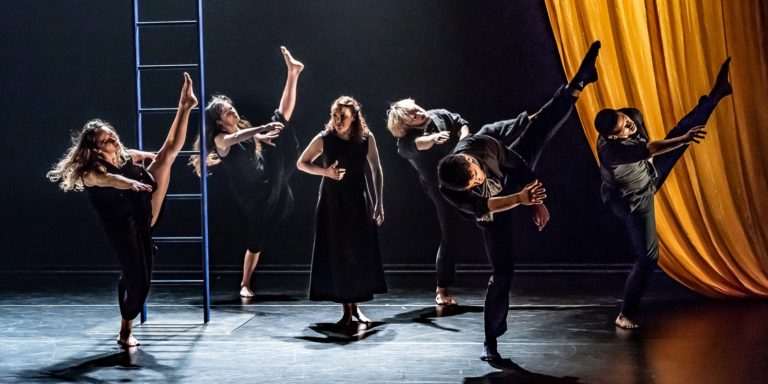
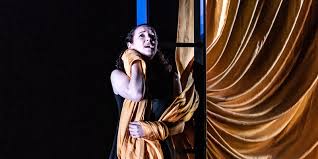
The lighting & design were amazing and essential parts of this production. All the elements of dance, opera, live music, vocals and soundscape worked together and were enveloped by it. The blue ladder was so engaging that it was almost another character and watching the production scene by scene became like seeing a series of beautiful paintings over and over again.

At first the ‘others’ seemed surplus but gradually they were woven into this complex collage, responding to the music and soundscape, giving rhythm and life to the work. The sounds of an intake of breath were haunting, nightmare-like and helped to create the atmosphere of the imagined underworld.

The quality of choreographer and skill of the dancers worked seamlessly alongside the male and female opera singers. Both had strong voices and whilst I couldn’t always make out the words, their interpretation and vocal agility was wonderful to hear. Together they told this tale of lost and dying love, dramatic and ethereal in their presentation.

The stunning imagery created by the set and lighting designers, especially commissioned for this project are absolutely central to the work. Production images by Clive Barda are available on the Music Theatre Wales website: http://musictheatre.wales/productions/passion

‘Lighting always plays a big part in the emotional dramaturgical path…the set is absolutely beautiful. Simon’s work is such a joy to light because it has this wonderful contrast in texture and colour…’ Joe Fletcher, Lighting Designer on Simon Banham’s design.

All credit must go to what must have been an incredible amount of hard work from all of the performers, creators and collaborators. I was unexpectedly riveted to the story they told and absorbed in the whole aspect of the show.

The production is currently touring and can next be seen at

LOWRY, SALFORD

Tuesday 6 November

THEATR CLWYD, MOLD

Saturday 10 November

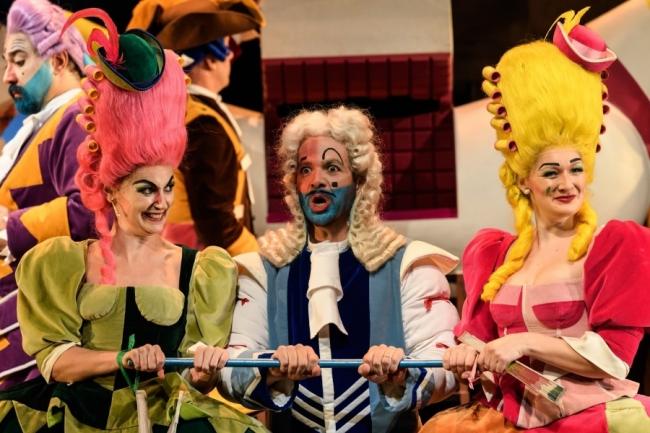
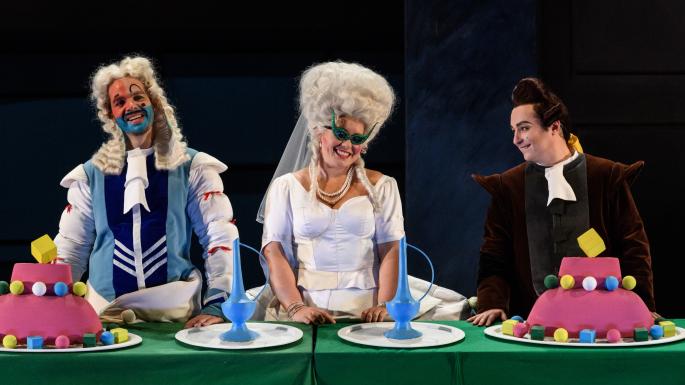
La Cenerentola, WNO Wales Millennium Centre, Cardiff  by Barbara Michaels


 out of 5 stars (4 / 5)


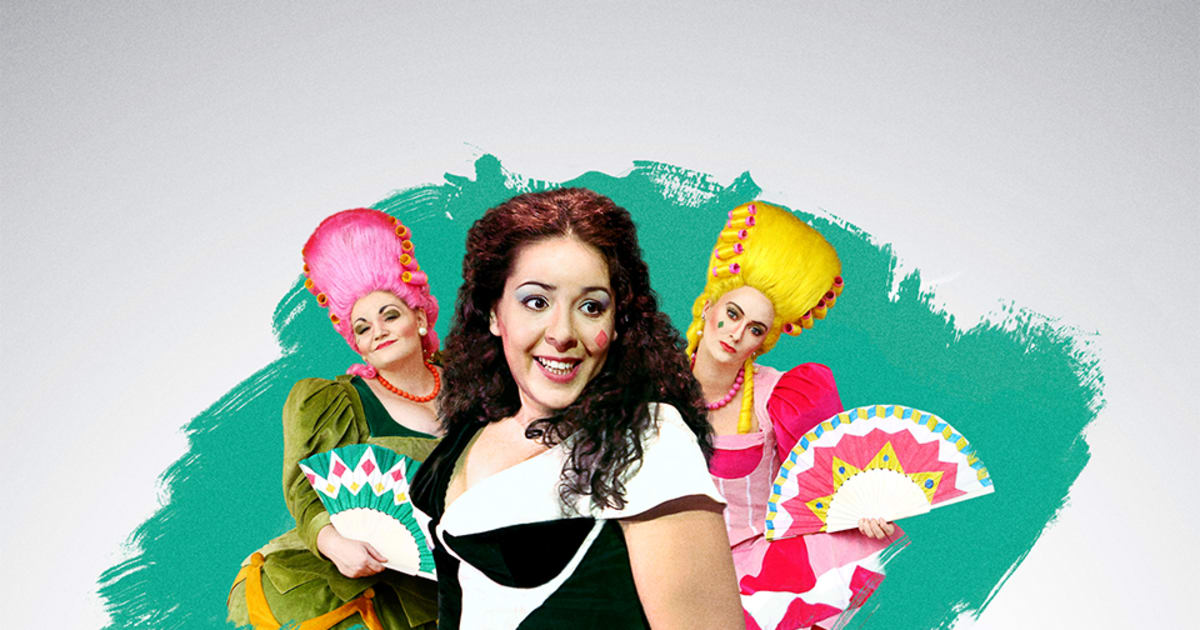
The Cinderella story with a twist, Rossini’s Cenerentola has all the magic of the fairy-tale –and more. The composer’s sparkling score, with the lightness of touch that characterisesso much of Rossini’s work, lifts it up even further. This revival by the WelshNational Opera , first performed back in 2007, cleverly uses a clutch of talented Italian singers performing the central male characters, giving extra appeal when touring to European cities.

This is comic opera at its best. Cenerentola keeps most of the ingredients of the fairytale with which we are familiar, with one notable exception. There is no glass slipper.

Instead we have a sparkling bracelet – two, to be exact. – the reason being that when the opera was conceived, in Rome back in 1817, it would have been considered bad form to show a lady’s ankles on stage.

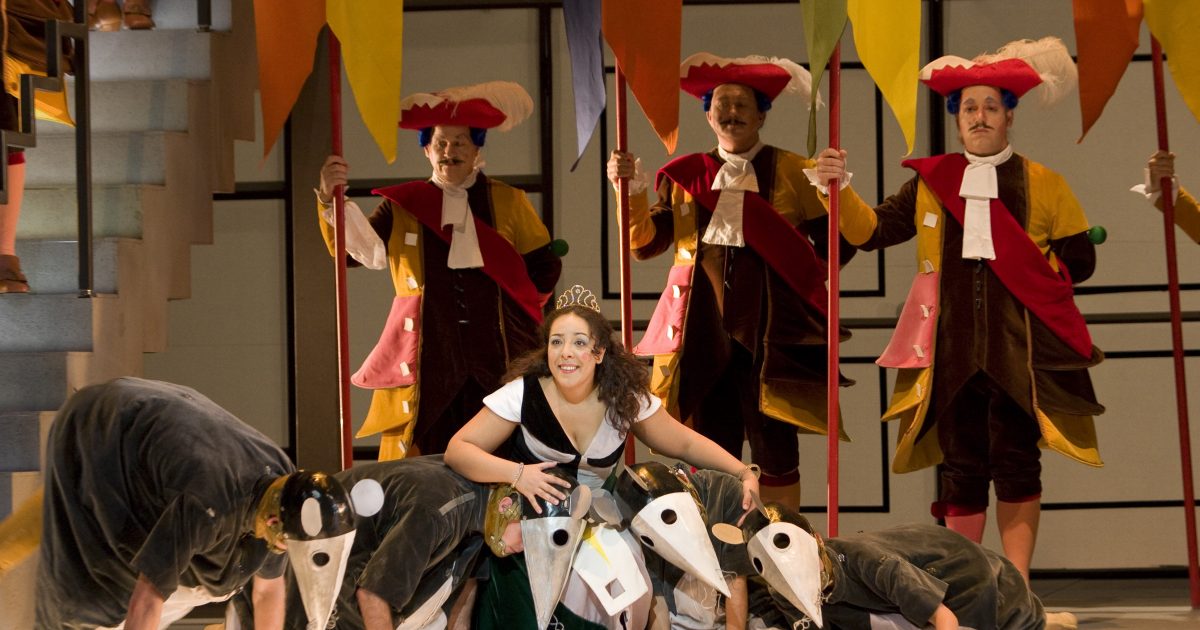
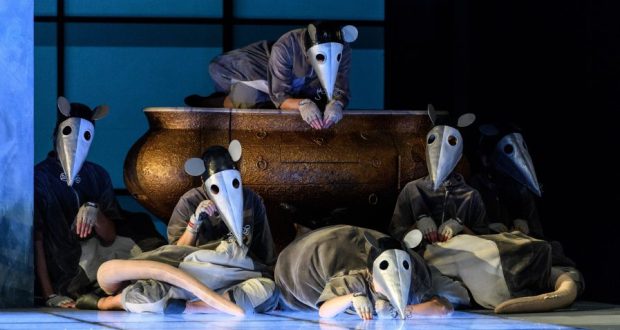
Act I opens with the Cinderella of the story, here named as Angelina, slogging away at the housework, in the crumbling castle overun by mice where she slaves away trying to cope with the demands of her two ugly sisters Clorinda and Tisbe and trying in vain to get some sign of affection from her self-important stepfather Don Magnifico – portrayed with gusto by Fabio Capitanucci. His evident enjoyment of the role, coupled with a sonorous bass, makes this singer a perfect choice for the part.

Irish mezzo-soprano Tara Erraught has a voice of exceptional depth and clarity which calls forth our sympathy as she is vilified and hassled by Clorinda (Aoife Miskelly) and Tisbe                                                                                                                                         (Heather Lowe), both of whom give great performances as the two throughly nasty stepsisters who make Angelina’s life a misery. The arrival of Alidoro (Wojtek Gierlach),officially the Prince’s tutor and mentor but actually a kind of wizard in place of the traditional fairygodmother, disguised as a beggar, hints at the chnages to come. Angelina’s kindness convinces him that she is the bride for his Prince Don Ramiro (Matteo Macchioni). Macchioni’s pleasant tenor blends well with Erraught in their duets, but with the change of identity – his valet Dandini (Giorgio Caoduro) masquerading as the Prince andvice versa – it is the latter whose performance in Act II is of particular note.

Set against a minimalist backdrop presided over by a giant fireplace centre stage, WNO’s revival is notable for its attention to detail – watch closely in order not to miss any of this.

The stepped stage could be hazardous but at Sunday’s performance any possible pifalls were dexterously avoided, not least by the team of dancers that make up the pose of mice that is a feature of this production, swishing their tails and gesturing on stage throughout. So enchanting are the make-believe rodents and so expert their delivery of revival director and choreographer Xevi Dorca’s great choreography that they are at times in danger of diverting our attention from the main action as the story unfolds.There is a cleverly portrayed storm, an overturned coach, and much more to excite as Dandini and the Prince change back to their true persona and Anglina/Cinders dream comes true.

A happy-ever-after ending – although it is rather a shame that Rossini’s Cinders is still in her kitchen dress when she marries her Prince. She does wear a sparkling tiara, but a bridal gown would have been nice. Other costumes – among them those worn by WNO’s legendary chorus – are colourful yet traditional in some respects, so why not keep this one?

There are underlying themes – good triumphs over evil, etc etc – but this pantomimic take on Rossini’s popular comedy is fun and overall should not be taken too seriously.

Now touring

Music: Gioachino Rossini

Libretto; Giacopo Ferretti

Director: Joan Font

Revivial Director/Choreographer: Xevi Dorca

Barbara Michaels 

Review, Kitty MacFarlane, Record Journal Live, Gwaenysgor Village Hall by Gareth Williams

 out of 5 stars (4 / 5)

On a cold Autumn evening, I ventured through the country lanes of North East Wales to the village of Gwaenysgor. It seems a very innocuous place to attend a gig with one of folk music’s brightest upcoming stars. Yet the small village hall, nestled in a corner just off the main road, was the perfect setting for an evening with Kitty MacFarlane. No sound system. No microphone. No fancy stage lighting. This was just Kitty and her acoustic guitar.

Hosted by the Record Journal Live, this wasn’t your average concert. In many ways, this was the epitome of a gig organised and run by people who are passionate about bringing live music to the local community. There’s something quite special about wandering in and finding your name written on a piece of paper, ready to be ticked off; being handed a cup of tea in a random mug that’s been poured out of a stainless steel teapot; entering into a hall whose tables and chairs have had to be laid out beforehand. No technology. No paid bar staff. Just a warm and friendly atmosphere into which MacFarlane’s gentle vocals and whimsical guitar chords beautifully contribute.

Beginning with ‘Only Human’, MacFarlane proceeded with a delectable mixture of stories and songs. It was a fascinating insight into both her songwriting process as well as her wider world. From it, I sensed a deep affinity with nature. There was clearly a deep connection to her local area too – the Somerset Levels. To be given a context to songs like ‘Man, Friendship’, written in response to the 2014 floods, a picture of which adorns the cover of her debut album, gave them an extra dimension. Told with light humour and gentle passion by MacFarlane meant that they became ever more compelling too. Such light humour peppered most of her anecdotes. Her passion was especially evident when it came to ‘Glass Eels’. Introducing the song, she recounted how she’d spent a day with some wildlife conservationists, studying these fascinating creatures. Such an experience clearly left its mark on her, her continuing interest in eels all too evident and somewhat infectious too. It gave a real insight into the careful crafting that has gone into each of her songs. Every one featured in this set had a tale to tell, and was sung with tender conviction.

One of the most captivating moments in this set came during her rendition of David Francey’s ‘Saints and Sinners’. With the guitar placed to one side, this was Kitty MacFarlane truly unplugged. If it wasn’t enough to enjoy the sole sound of her melodious voice, once the familiarity of the chorus had been claimed by the audience, they joined in with her to create a finish to the song that was truly transcendental and awe-inspiring. It perfectly encapsulated the emotion of the whole evening.

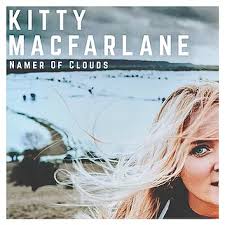
Kitty MacFarlane is as warm and welcoming offstage as she is on. She has received huge commendations for her debut album Namer of Clouds, and rightly so. It is a superb record that deserves your listening ear. In some respects, the twee surroundings of a local community hall is exactly where you expect her to be. To hear her live is a real treat. To be in such an intimate environment when you do is a bonus. The Record Journal has tapped into something here. They’ve kept it sweet and simple. On this occasion, it suited MacFarlane’s performance perfectly. Stripped back and laid bare, this was folk at its finest. A concert that was well worth attending.

Click here for tour dates and further info.

gareth

Audio Information on The Last Five Years by Leeway Productions

https://soundcloud.com/user-763014624/the-last-five-years-audio-flyer

Leeway Productions supported by Wales Millennium Centre, and in partnership with Blackwood Miners Institute presents

THE LAST FIVE YEARS

Written and composed by JASON ROBERT BROWN ­­­­­­­­
A hit both off-Broadway and internationally, The Last Five Years comes to Wales for the very first time.

This ground-breaking production combines an emotionally powerful score with sign language and beautiful movement by award-winning deaf choreographer Mark Smith.

This intimate musical charting New Yorkers Cathy and Jamie’s passionate five-year relationship is an affecting tale of love found and lost. By turns funny and poignant, with catchy tunes and a clever chronological twist, The Last Five Years will keep you riveted from beginning to end… or should that be from end to beginning?

Supported by the Arts Council of Wales, Welsh Government and the National Lottery.
Every performance of The Last Five Years is accessible to D/deaf, deafened and hard of hearing audience members, with open captioning and integrated sign language to be enjoyed by all.

For full tour dates and booking information, visit www.leewayproductions.com

https://soundcloud.com/user-763014624/the-last-five-years-audio-trailer-welsh


Leeway Productions â chefnogaeth gan Ganolfan Mileniwm Cymru, ac mewn partneriaeth â Sefydliad y Glowyr Coed Duon

THE LAST FIVE YEARS

Ysgrifennwyd a chyfansoddwyd gan JASON ROBERT BROWN

Ar ôl llwyddiant eithriadol oddi ar Broadway ac yn rhyngwladol, daw The Last Five Years i Gymru am y tro cyntaf erioed.

Cyfuna’r cynhyrchiad arloesol yma sgôr ddirdynnol gydag iaith arwyddion a dawnsfeydd hardd y coreograffydd byddar mawr ei glod, Mark Smith.

Mae’r sioe gerdd onest yma am gariad a thorcalon yn dilyn hynt Cathy a Jamie, cariadon o Efrog Newydd, gan daflu golau ar bob cam o’u perthynas pum mlynedd tanbaid. Gan blethu’r doniol a’r teimladwy, gyda chaneuon bachog a chronoleg stori glyfar, bydd The Last Five Years yn eich cadw chi ar flaen eich sedd o’r dechrau un hyd at y diwedd… neu dylwn ddweud o’r diwedd i’r dechrau…

Mae pob perfformiad o The Last Five Years yn hygyrch i aelodau cynulleidfa sy’n drwm eu clyw neu’n fyddar, gyda chapsiynau agored ac iaith arwyddion yn rhan annatod o’r sioe.
Cefnogwyd gan Gyngor y Celfyddydau Cymru, Llywodraeth Cymru a’r Loteri Genedlaethol.

Y Daith: www.leewayproductions.com