Category Archives: Literature

Working with Welsh Playwrights at Coleg Gwent

Get the Chance is a strong supporter of Welsh/Wales based Playwrights. Wales as a nation does not have a literary department to support Playwrights. When we found out about the exciting Playwright module from lecturer Viv Goodman on the Extended Diploma in Performing Arts course at Coleg Gwent we got in touch to find out more this new initiative.
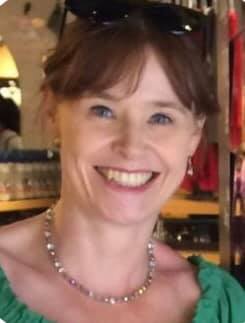
Hi Viv, great to meet you, what got you involved in the arts and education?

I loved Drama in school from a very young age and it was always going to be something I would pursue further. About the time I was in sixth form in Cardiff I decided I wanted to teach Drama; I had gained so much from my own teachers and through provision such as The Sherman Theatre Youth Project. I did the Secondary Drama teaching degree that was run between what is now Cardiff Met and RWCMD, then went straight into working in secondary schools. I’ve been at Coleg Gwent for 12 years now; moving to FE was the best thing for me, I have really loved working on a vocational course with the students.

You are about to embark on an exciting new project with a range of writers, please tell us more!

Certainly, my year two actors are on the Extended Diploma in Performing Arts course at Coleg Gwent. The project is an assignment for two units, Performance Workshop and Exploring Theatre Practitioners.
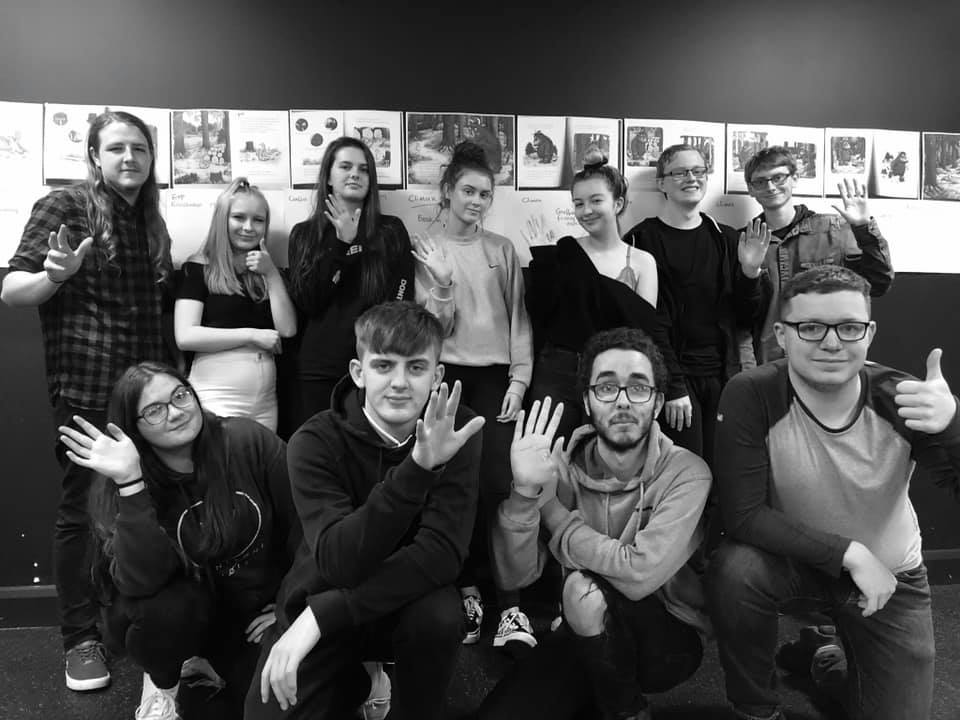
Year two actors on the Extended Diploma in Performing Arts course at Coleg Gwent


We start on 24th Oct when we go to see Pavilion, Emily White the productions writer will be coming to us the following day to do a workshop about the play. I anticipate that some of the students will select an extract to rehearse for performance. Owen Thomas will be able to join us for several workshops during November, we will be exploring extracts from his work Grav, An Orange in the Subway, Richard Parker and The Night Porter. The pieces will all be performed on 11th/12th December at Coleg Gwent and will be delivered as a promenade theatre experience, touring the audience between different locations that create the right mood/atmosphere for each play. Jeremy Hylton Davies will also join us in November, he will be taking a workshop on TV and radio acting/writing and sharing some of his BBC scripts with the students.

Why do you think its important for your students to engage with living playwrights?

I really want the acting students to have interaction with performing arts professionals, it’s something I am currently trying to develop for the Level 3 Year 2 Acting course. Working with these three playwrights will give students the opportunity to understand a bit more about the writing process, but mostly I think it will make the scripts and professional world seem more real somehow; I’m sure that very often a playwright or an author can appear simply as a name on a book and this project will allow them to talk to real people and work with them to bring their concepts, themes and characters to life.

What has been the response from the writers as regards getting involved in the project?

I am genuinely bowled over and delighted by their response to the project! All three playwrights came my way during August while I was considering materials and projects for the new academic year. I knew I wanted to do something contemporary with the Year 2 group during the first term before they go on to a classical/historical project, but I couldn’t decide on a play. I was in touch with Emily first and got swept up in the excitement for Pavilion! I knew that she wanted the play to reach a younger audience and I felt that the students would connect with this. She was thrilled to learn that we were coming to see it at the Riverfront and was really happy to come and see us for a workshop. I then got in touch with Owen, having also read his Get the Chance interview and learned a good deal more about his work.

getthechance.wales/2019/08/13/an-interview-with-welsh-playwright-owen-thomas/

I was really interested to know more about The Night Porter as we had done a ghost storytelling project at Coleg Gwent a couple of years previously. He was also very positive about coming in to share his work with us and it was at this point that the idea of making it into a project occurred to me. I asked to meet Owen, he was involved with the Edinburgh Festival, taking West to NAFoW and then a research and development week on An Orange in the Subway, so by the time we finally managed to catch up I had about 50,000 questions for him… but I managed to rein myself in and keep to the matter in hand! He was very enthusiastic and supportive. I was also delighted to hear back from Jeremy; his writing across the fields of theatre, BBC TV and Radio Drama really interested me and he will be invaluable to our students. He has local connections as well, so it’s great that he is able to come and work with us. Everyone has been incredibly kind.

If you were able to fund an area of the arts in Wales what would this be and why?

I would love to see more funding for youth drama projects. Early opportunities and building self- confidence, self-esteem and a sense of belonging to something are essential to well being and growth; during my time as a secondary school teacher in particular I noticed that the pupils involved with Drama, Music and Sport were usually the most content and fulfilled learners.

What was the last really great play that you experienced that you would like to share with our readers? 

I loved On Bear Ridge at the Sherman Theatre, incredible writing and performances. A number of people have commented on how great it was to see the auditorium full for a new play. I’m glad Jeremy will get a chance to see it at The Royal Court!

Playwright Owen Thomas tells us more about why he got involved in this new initiative.

When Viv first approached me about working with her students, I accepted immediately. As well as writing plays, I have taught Drama for almost 20 years and I have always thought it essential in their development that young people have the experience of working with people making their living and working in the arts. It is vital that people who have experience of making work are able to interact with the next generation. If there is anything that I have learnt in my writing career then I would be glad to share it, be they tips for how to be successful or some of the many mistakes I’ve learnt from.

You will be running workshops during November, where the students will be exploring extracts from your plays Grav, An Orange in the Subway, Richard Parker and The Night Porter. How will you approach this process and what do you hope the students will gain from studying your work?

With a play like ‘Grav, it has only ever been performed by the brilliant Gareth John Bale. I am excited to see how a younger performer will approach it. I would certainly encourage them to be bold and to give it their own unique stamp. ‘Grav’ and ‘Richard Parker’ are the two plays of mine closest to my heart in terms of the doors they opened and the people they introduced me to. ‘Richard Parker’ has been performed by a range of companies over the years, and I am often struck by how different people interpret the play. I have seen it played as an out and out comedy, or as a more darkly sinister piece.
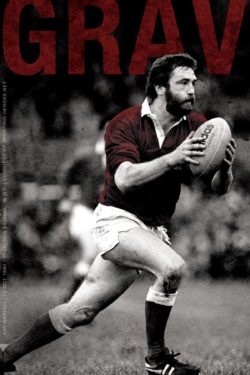
‘An Orange in the Subway’ and ‘The Night Porter’, are new plays of mine, and for my own development I am interested to see how these young performers interpret them. Having had the pleasure of doing research and development on both of these plays in the last 12 months I am always excited to learn new things from actors and directors who always come at projects with their own unique viewpoints. It is great to think that a group of talented performers will be spending time with my words and creating a kind of retrospective. I am sure it will make me feel old. I am excited to see what they do. Above all, I hope they enjoy the project and I am looking forward to meeting them.

Do you feel the role of the Playwright is sufficiently understood by those studying drama?

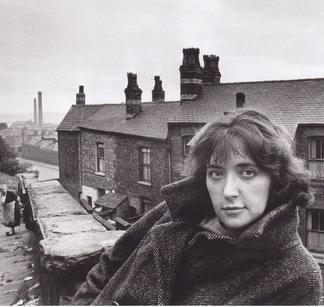
Overall, yes, but a lot depends on how they are taught. One of the good things about GCSE, AS and A Level Drama is that young people are encouraged to study plays. The earlier this can happen in school, the better. Often young people are initially attracted to study drama by the urge to perform. It is important that they learn about the ground breaking writers and directors as well as actors. I have worked with young people who have been inspired to give playwriting a go after studying Playwrights such as Arthur Miller, Shelagh Delaney or Roy Williams. Without the Playwright, there is no play.

What one piece of advice could you share with any aspiring Playwright?

When you are starting out as a Playwright there is nothing more valuable than seeing and hearing your work being performed. With my first play, ‘The Dead of Night’, I roped in various friends and called in favours to help me to stage it. I learnt a huge amount from this process. How what looks good on the page doesn’t always translate into the mouths of the performers, or the fact that what a writer might spend two pages wrestling to communicate, a good actor can communicate with a single look. One of the things that first attracted me to being a Playwright is that, if you have the passion and the time, all you need to stage a play is a script, willing performers and a space. Don’t sit and wait for a theatre to approach you. Get out there and make new work. Trial and error. It is the best way to learn.
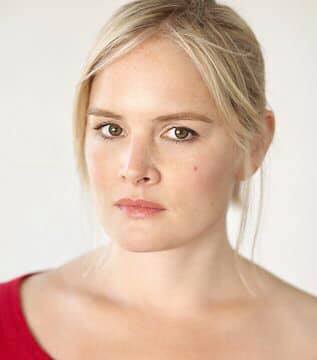

Playwright Emily White tells us more about why she got involved in the new exciting initiative.


I am really passionate about getting more young people coming to the theatre, so I had already agreed to lead some workshops while Pavilion was running at Theatr Clwyd as part of their engagement program, in order to try and encourage some of their younger groups to come and see the show.  So when Viv from the Extended Diploma in Performing Arts course at Coleg Gwent reached out to me on Twitter and said she was bringing her students to see Pavilion and would I consider meeting with them I was totally up for it.  I’m new to running workshops but I think it’s good to push yourself out of your comfort zone sometimes, theatre and dance meant everything to me when I was young if I hadn’t found that calling I’m not sure what I would have done.  I was really lucky to have the opportunities I did, so I want to give something back.

The students will be going to see your play Pavilion at The Riverfront Theatre in Newport. You are then going to run a workshop with the students. How will you approach this process and what do you hope the students will gain from studying your work?


I really feel this play in particular is exciting for young people to watch because there a large number of young characters that they can identify with, it takes place at a bar/nightclub so it’s fun but it also addresses harder hitting issues that they are facing.  Out of all the feedback we’ve received about the show, my favourite comment was that one of our techies brought his 16 year old son to see it, and he loved it so much he went and bought himself and his girlfriend tickets with his own money so he could see it again.  I was really happy to hear that it spoke to him so strongly.  We’ve also had students from Wrexham come along to the show and some members from my old youth theatre MPYT (Mid Powys Youth Theatre) and they have all responded positively to it and wanted to study or perform it, so hopefully the Newport students will feel the same.   Viv and I have talked about a Q&A session and then some work on particular scenes.  I think these workshops will be primarily about performing whereas the ones I lead at Clwyd were writing exercises on developing character.  Although some of those exercises could apply to performers as well in terms of creating a backstory for your character that goes beyond the information given to you in the text.  For example asking the students to list twenty things a character remembers, twenty things they want etc. to help to build a more complex inner world.

getthechance.wales/2019/07/17/an-interview-with-playwright-emily-white/


Do you feel the role of the Playwright is sufficiently understood by those studying drama?

In a word: no.  At least I didn’t fully understand it – I did a BTEC in Performing Arts at Hereford and we did a bit of devising/writing and at RADA we did a little writing but mostly of monologues as a way into characters but I didn’t really start to understand playwriting until I tried to write a play.  Only once you try, and get feedback, and then redraft and redraft and redraft, can you start to understand how much work goes into writing a play.  Acting is in a walk in the park compared to writing as far as I’m concerned.  Even with all the theatrical experience I had as an actor and having read loads of plays (I love reading plays so I buy them more than I buy other books) I didn’t have any idea about how a play is structured.  Characters reveal themselves to me quickly but structure and plot I find much more difficult.  I had no idea how much editing and rewriting went into playwriting. 
I’ve never worked on a play with a living playwright so I had no idea what to expect going into the rehearsal process for Pavilion in terms of what would be expected of me and I’m not sure any of the actors did either.  We were still rewriting bits and adding lines or editing lines out, right up until press night.  Plays can take years to write and then years to get on – Pavilion started four years ago and then right at the end of the process it becomes a collaboration – so I was on my own for years and then for the last few months I’ve had all these other collaborators come in: literary advisors, producers, directors, movement directors, fight directors, designers, sound designers and of course a company of actors and suddenly it’s not yours anymore it becomes a company effort: everyone is there working really hard to make your imagination come to life which is overwhelmingly moving.  It’s also strange and exciting and frightening too because you have no control anymore.  And of course if Pavilion ever receives another full production it would be completely different again, with a different set of people involved, creating a entirely different show.  That’s one of the unique things about plays as opposed to other art forms, it’s never finished, it gets recreated and re-imagined every time… and I’ll probably still be doing rewrites.

What one piece of advice could you share with any aspiring Playwright?


Get some friends together (actors if at all possible) and get them to read your play out loud and then have a discussion about it afterwards.  It is a short cut to knowing what works, what nearly works and what will never work.  You’ll hear what bits are heavy handed and overwritten, you can make notes as you go along and then you can redraft.  This is really helpful even in the very early stages of writing a play and may spark ideas that will help you create new scenes or even new characters.  
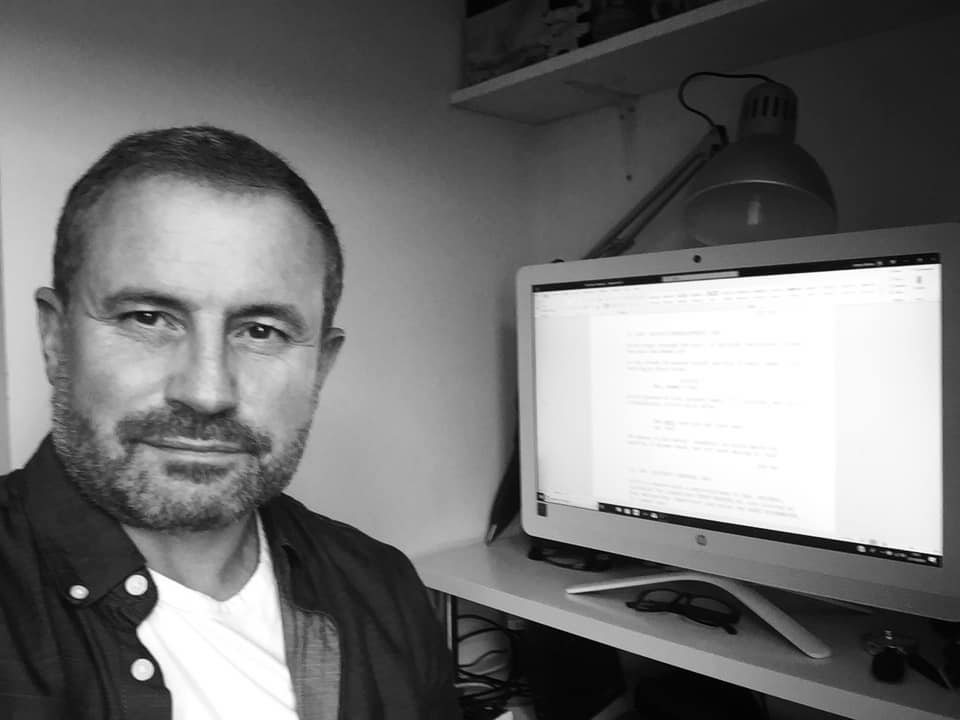
Writer Jeremy Hylton Davies us more about why he got involved in the new exciting initiative.

I think Viv and I bumped into each other online and she found out that I come not so very far from Crosskeys originally and I do often write Welsh themes or use Welsh characters, including in network drama. Viv asked me if I could help out and I was only too pleased to. I think looking at the world of professional theatre and film and TV, it can seem like it’s made by a select club which is difficult to join. I would think all of the professionals involved would say that they want to demonstrate that that’s not the case and you just need the urge and the will to get involved and make it your working life, if you want to.

How will you approach this process and what do you hope the students will gain from studying your work?

Well, by happy coincidence some of my work has just been broadcast on tv and radio and the students will be able to compare the scripts with the transmitted versions. There can be many changes along the way, not least due to demands of budget and schedule (anyone who works in drama or television will tell you all about those!), but reading the scripts also gives a good insight into how to write to the technical demands of a particular medium and how these demands differ, ie with regard to tv and radio. In radio you can say ‘Here we are on Mars’ and the audience is instantly with you on Mars. In tv or film, if the story is set on Mars, it’s pretty much got to look like Mars. And recreating Mars is expensive!

Do you feel the role of the Playwright is sufficiently understood by those studying drama?

If you say ‘writer’, then it’s a broader question. In theatre the writer is paramount (unless they don’t want a writer at all!), but in film and especially in television, you are part of an enterprise that is dictated by schedules and money, as above, ditto technical demands, but also deadlines, deadlines, deadlines, especially in continuing (serial) drama. There’s a cast, crew and back office production team of about 80 waiting for your script to land – so you’d better land it.

In a historical context, playwrights and writers are also subject to social and political forces of their times. So getting the work staged and finding an audience are difficulties in themselves. A novel you can write in isolation, a play needs an audience if it is to come off the page.

The role of the playwright is tied with the role of the theatre. We live in times when journalism, or at least fewer journalists, are really holding power to account. And when opinions are supposed to be binary, my view vs. the other view. What’s missing is the examination of the degrees of experience and the fact that humans are complex and contradictory beings. Theatre and drama can do that.

But, really, the role of the playwright has been debated since Aristotle – and probably before him! So maybe that the question needs to be constantly asked is an indication that the role of the playwright is actually alive and well and continues on.


What one piece of advice could you share with any aspiring Playwright?

Watch all you can, see and hear all you can. Be curious. Don’t be scared. Write what you want to write. But write. Always write.


Review : Lenny Henry in Conversation, Southbank Centre

 out of 5 stars (4 / 5)

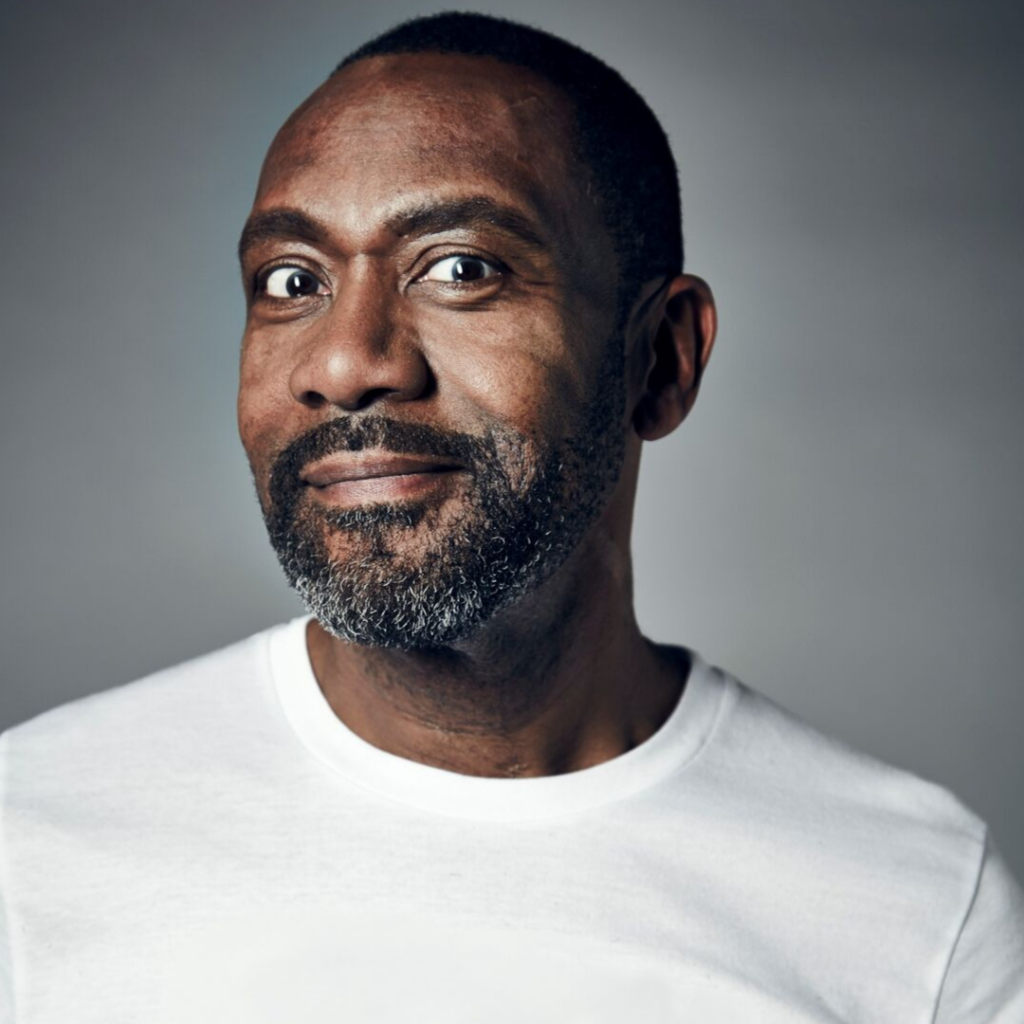
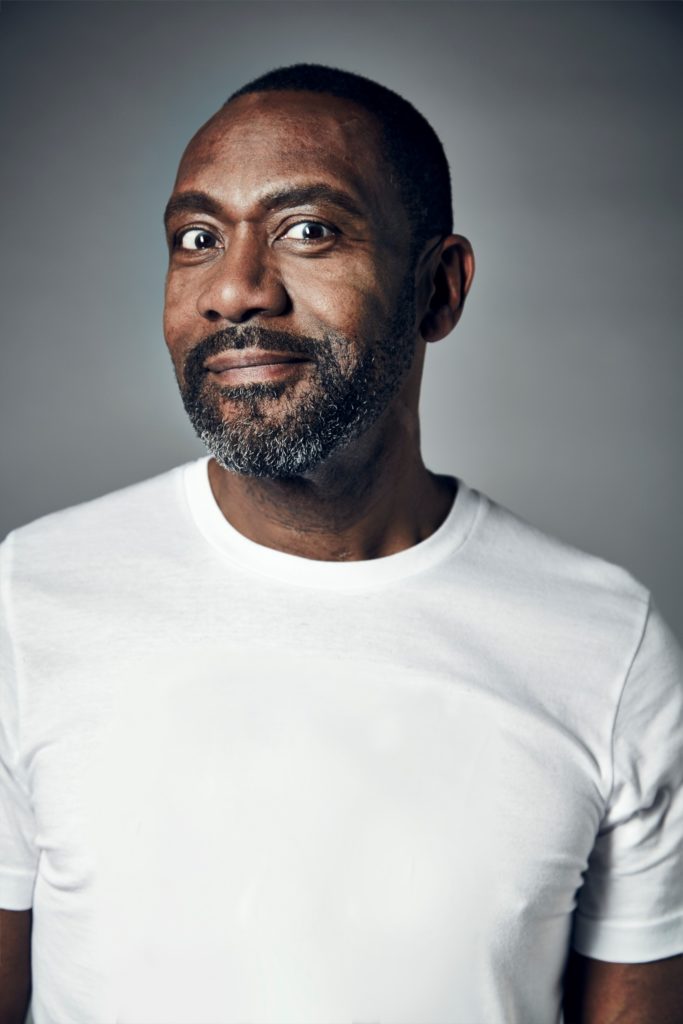
Living legend Lenny Henry, of British comedy fame, has released his much-awaited autobiography. And while we may not have yet read it, there are plenty of hints from this event to the comical, the emotional and the poignant life this man has led.

While part of a literature season – something steeped in stereotypes of a middle class, white community, full of seriousness, this night was nothing of the sort.

Lenny Henry, interviewed by another modern-day comedy legend Romesh Ranganathan, provides only snippets to his life, to what is eluded in his book, but the banter between the two is electric – like old friends having a chat, providing us with a ridiculous amount of laughter.

This was not just an evening of talk show-like comedy – between them, these comedians of Black and Asian ethnicity make a real stomp on the reality of modern-day racism and politics, as well as comparing the years in which Henry grew up, which was just as bad, if not worse for discrimination. They make real important points about how things have changed, what was and is not okay in our society and the changes that are important – and to hear this from one of our most famous Black comedians, a man who grew up in a white, northern British world, you cannot help but feel total admiration for him.

Lenny Henry’s book, is, as previously said, much awaited – and I am eager to hear more from this eloquent and impressive man, not only on his world but also on the importance of his opinions, further in writing.


Review: Glass.Kill.Bluebeard.Imp, Caryl Churchill, The Royal Court By Hannah Goslin

 out of 5 stars (4 / 5)

In true Caryl Churchill style, we are introduced to fine
writing, which is of a naturalistic ilk yet verges on the unusual, hilarious and
subtle in all these attributes.

Seemingly with no other interlink that the same actors, each
play is different from one another, with a different concept, it Is a true
triumph and evidence of a brilliant playwright that she can make such
interesting plays, which last for not long at all.

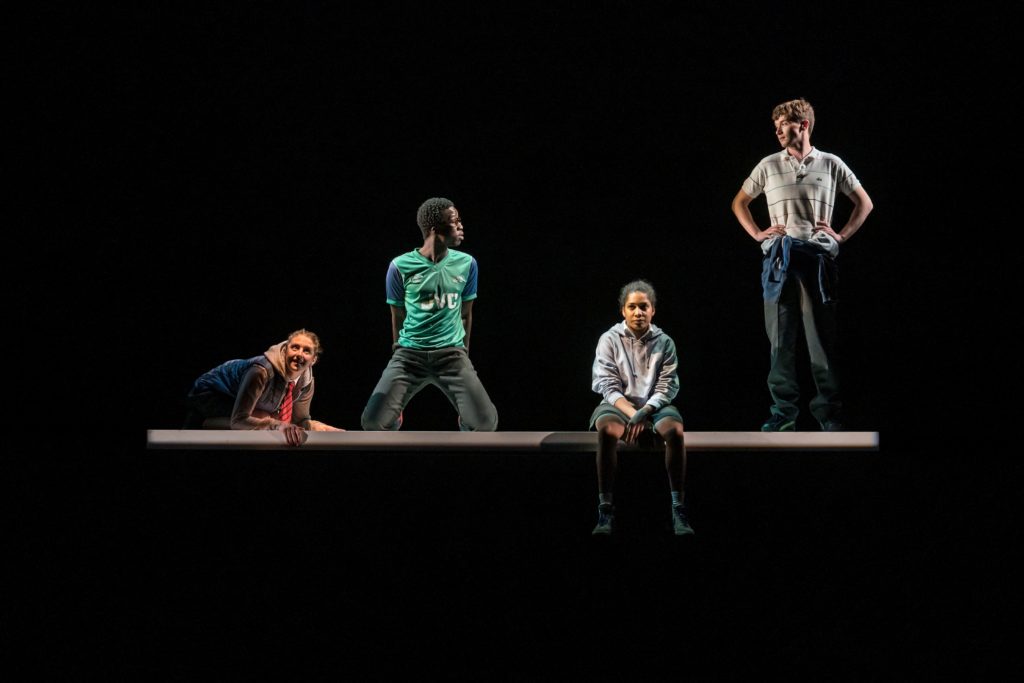
Glass – Is the story about a girl made of glass, her
fragility both physically and emotionally. It is comical, heart-breaking and to
a degree, relatable about young love. While made of glass, we think that she is
the real person who needs care, but when she meets someone going through a lot
worse, it puts in real perspective our own lives and how there are always
someone going through worse. A simple staging, the 4 characters are suspended
high, in amongst darkness, precariously. And this is all it needs – simplicity and
for us to listen to the writing.

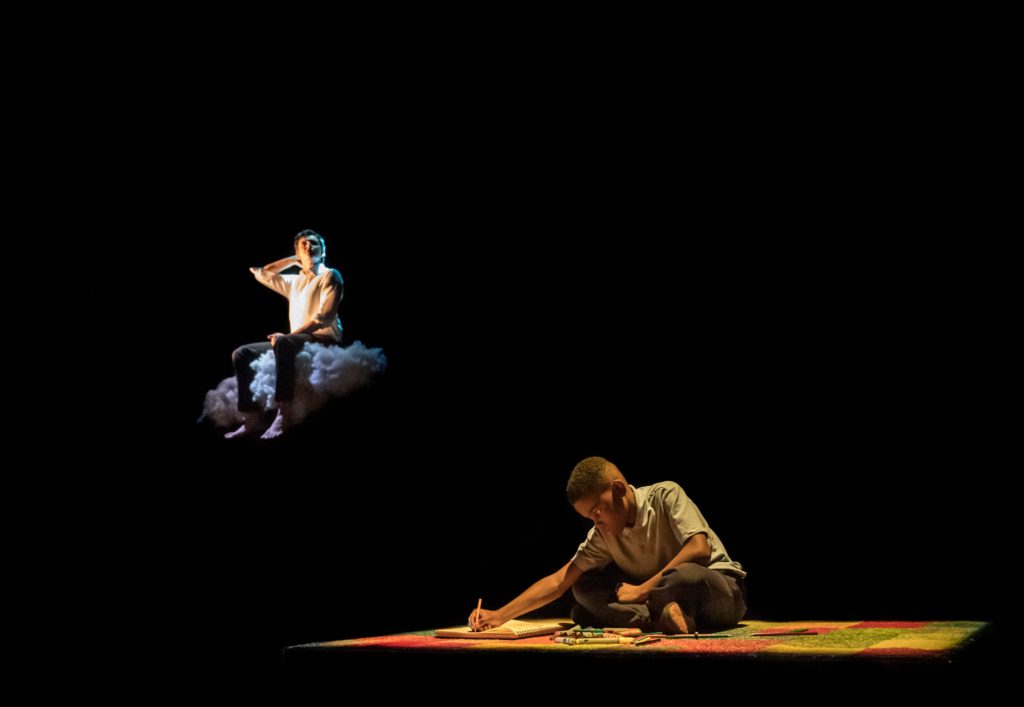
Kill – A story about Gods and Murders. Again, a simplistic
stage, our God is upon a suspended cloud, smoke emanating across the stage,
while the God acts very much unlike a God – smoking and calling out all
religious beliefs. He is funny and the writing draws upon our World and beliefs
with satire. Opposite to him is a little boy, who integrates the God’s storytelling
with comments, increasing in anger, and this all builds to a crescendo. Feeling
almost unfinished, but in this respect very well done. We end shocked, and
confused but in a good theatrical way.

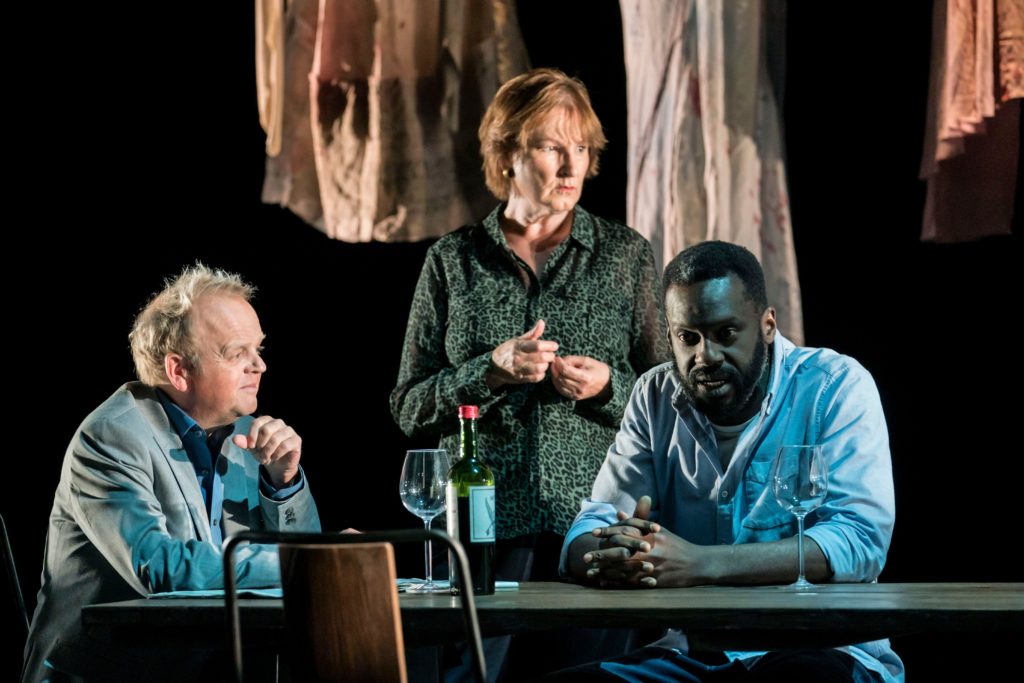
Bluebeard’s Friends – Easily one of my favourite of the
four. Four friends of Bluebeard sit around, slowly getting drunk, as they talk
about Bluebeard and his indiscretions, his crimes and how they felt this was
hidden. In true Royal Court style, the stage is simplistic – a dinner party,
but soon hilarity ensues with the appearance of Bluebeard’s wives bloodied
dresses. It’s almost horror-comedy, and the juxtaposition between the normal
conversation, to the actual stories of Bluebeard and the appearance of the
dresses is something unusual and almost apocalyptic.

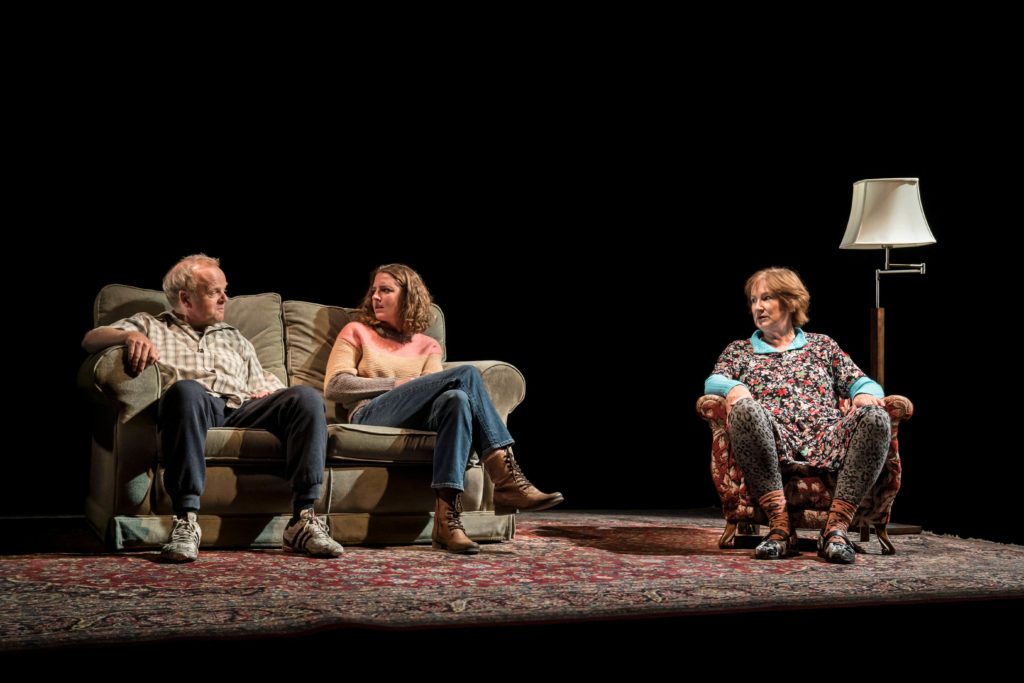
Imp – The longest of the four plays. Imp could have been a
play in itself. While a great production, it felt a little less impactful as
the others. Perhaps this was more theatrically than the writing but none the
less, an engaging piece. We meet two middle aged cousins who live together
after respective partners either die or divorce them. Their removed niece comes
to visit from Dublin, making a life for herself, while being entwined with another
guest of theirs who is down on his luck. This is seemingly standard play, with
comedy, and drawing upon mental and physical health. This is brought in subtly
but very well and relatable. The imp in the bottle however brings the unusual
which can be often found in Churchill’s plays. The idea of belief, of whether
believing in something enough makes it real, and we see them contemplate this –
becoming frightened if it is, scoffing if it isn’t, grieving when it may be lost.
And soon we begin to contemplate its reality. What if it is real? We engage so
much in how the actors play their feelings.

Glass.Kill.Bluebeard.Imp is a series of brilliant plays. It’s hard to really come away without inspiration and astonishment at Churchill’s writing and combination with The Royal Court – it is very much a match made in heaven.

Lenny Henry in Conversation : Preview By Hannah Goslin

One of the many British Kings of Comedy – I will be
attending the Autobiography release and talk by the one and only Sir Lenny
Henry at The Southbank Centre.

Notable for his Stand Up, Sketches, and his huge influence
in Comic Relief, we will be listening to him, interviewed by British Comedian,
Romesh Ranganathan talk about his life in his own words.

With Ranganathan also on stage, it looks to be a night of
complete hilarity!

Review to follow!

Lenny Henry in Conversation

SouthBank Centre

30th September 2019

Photo Credit – Jack Lawson

Review: Total Immediate Collective Imminent Terrestrial Salvation, Royal Court / National Theatre Scotland By Hannah Goslin

 out of 5 stars (3 / 5)

I am going to start off, right off the bat, that it pains me
to write a sub-par review of something from The Royal Court. Usually, I cannot
come away from RC without being astounded, inspired and creatively shocked.
Unfortunately, this just did not happen this time.

Total Immediate Collective […] features the story of a
family, when faced with tragedy, separated, with the Father and Daughter
embarking on a cult-esque ideal about the world, and the Mother fighting back
for her Daughter. There is an essence of many likely groups across the World,
from terrorist groups to religious or cultural groups who create imaginative worlds
and predict the end, in one way or another. Therefore, it is not a strange tale
to believe.

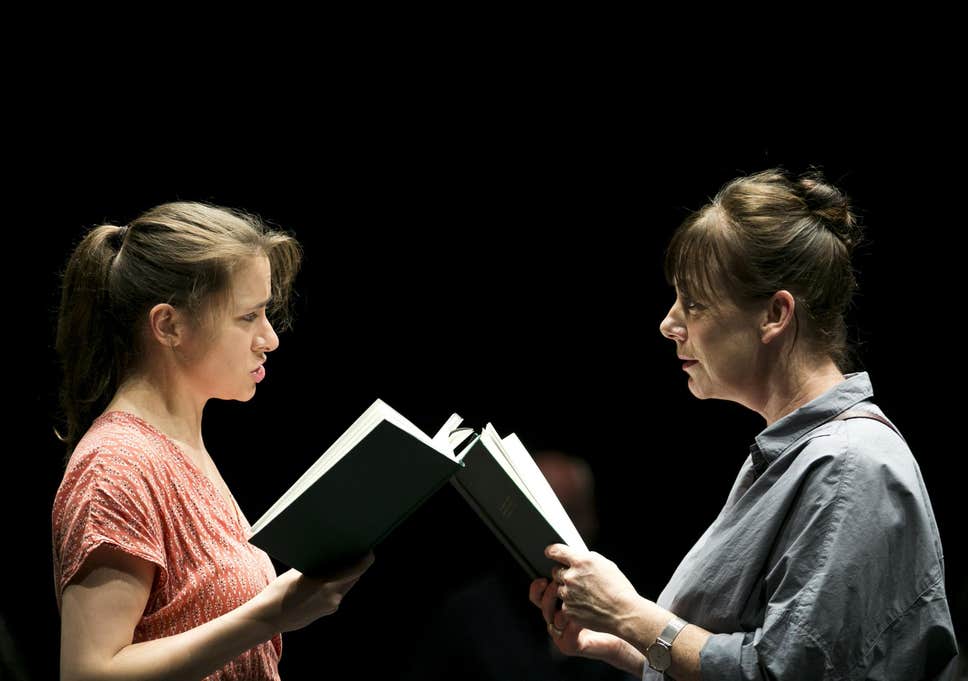
We are asked to sit in a purpose-built circle, with a book
to follow the story. The book itself is full of impactful images and text; the
images tend to be accompanied by a sound scape, bringing it to life and making
it feel recognisable. However, while an interesting concept, the idea of
reading along felt school-like, and for me, provided plenty of distractions
from the play; from reading, to looking at other audience members, to waiting
for the performers to (intentionally) find their place – a lot of pausing, a
lot of waiting, a lot of missed action.

This did not exactly take to a good start of introducing us
to the book – as part of this cult-ideal, we are told with the word “okay” when
we are allowed to read – the Mother at the beginning explains this, however
with the natural urge to move on, the performers gave a strange and imposing
approach to anyone who defied this – leaving a audience member to sarcastically
comment ‘What? Are we in school?” to which the response, maybe not so much in
character, was an equally sarcastic “No, you’re in the theatre”. This made us
all feel quite uneasy, for both the performer and as audience members, and
perhaps tainted the next hour.

The performers themselves are wonderful and obviously very talented,
but rather than an impactful piece of theatre, I felt as if we were in a first
stage workshop.

I really wanted to like Total Immediate Collective[…]; an unusual concept, interesting writing, well performed; but all these elements just did not gel into a Royal Court standard piece.

Review: Nocturnal by Wilder Poetry by Sian Thomas

I heard of this book from a post on Central Avenue Publishing’s Instagram page:
https://www.instagram.com/p/BxKe0Mphhq1/. The look of the book, lighting, and array of stones drew me in to what it might be and what the work might be like, having never heard of the author, Wilder Poetry, nor the book itself before. Admittedly, the book sat in my wish-list for quite some time, as I was wading my way through my university’s reading list and books I had already bought in the mean time, but the minute I could get it, I did. I found out that the book was worth the wait; cover to cover I found poems I really enjoyed, imagery I thought captivating, and turns of phrase I found impeccable.
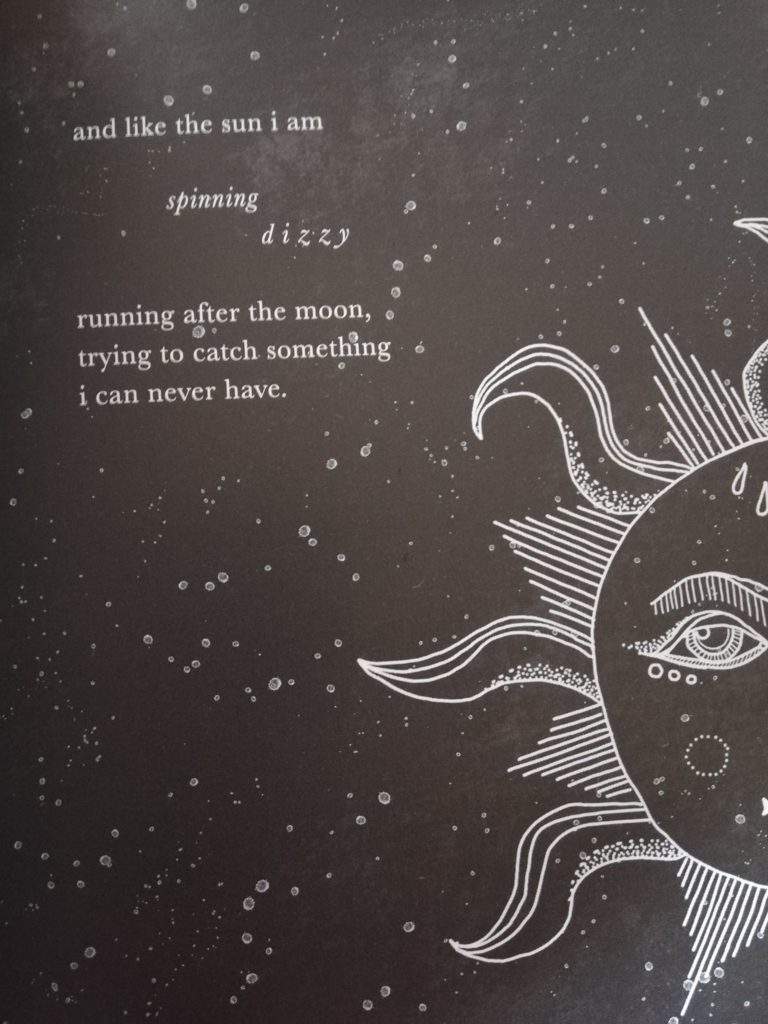
Something I loved quite greatly was the use of grey colours through the book; the blacks and whites, and the dots of silver on each cover and throughout its pages. I enjoyed that these were the only colours that were used, and that they were swapped around frequently. Black words on white pages, obviously, but also the flip-side of just that – it gives a new feeling to the book, and interesting angle is given to me, the reader, and it makes whatever poem is on the page feel much deeper and much, much more eye-catching. For example:

p23.

This is one of the pictures in the book that I loved especially, marking it with a post-it note as I so often do with poetry books. There was something I adored about the circles in the sun’s eyes, matching the longing feeling to the small piece, which is why this stuck out. Plus, “running after the moon” didn’t have to reach far to strike me as a lovely line, making me think about the way the moon follows you when you’re in the car or walking home. There was another, not unlike it, talking about dreams with a small corked bottle. Similarly made up with these white lines on dark pages, with a poem talking about dreams in the everyday lives that we have – not just isolated away in fantasy. They feel uplifting, and definitely boost the meaning of the poetry. I love the way they have a power like this, when they are just illustrations in a book, along with the words I like how it really feels like they mean something.

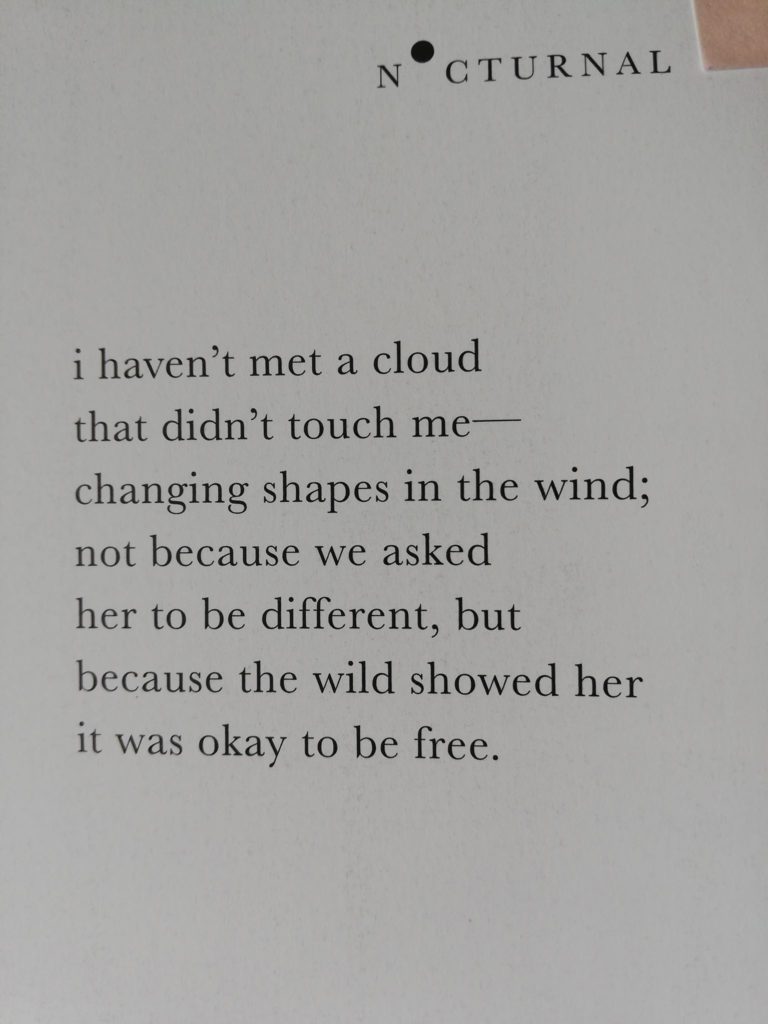
p22.

This is the poem the precedes the image of the sun and its poem, and it’s one of my favourites. It feels timely, while still being gentle and elegant – I am partial to books like this that quietly feed you their ideas, instead of slamming them down in front of you with force. The words in this poem, and in the wider book, are all ones I loved; the sky being very frequent, too, was lovely.
I really enjoyed this book! Wilder Poetry has a knack for writing in this particular and really lovingly articulate way. I’m glad I heard about it, and even happier that I got the chance to pick it up and read it myself.

Sian Thomas

An Interview With Welsh Playwright Owen Thomas

Hi Owen great to meet
you, can you give our readers some background information on yourself please?

I have been a Playwright for almost 20 years. My plays include ‘Benny’, ‘The Wood’, and ‘Richard Parker’. I have a lifelong love of storytelling and the rhythm of words. How the dialogue sounds to an audience is always as important to me as the strength of the narrative. 

The play I am best known for is ‘Grav’, a one-man show about the life of Welsh cultural and sporting icon, Ray Gravell. This year saw ‘Grav’ complete its 100th performance and counting.

I grew up on a farm in Mid Wales where my parents still live and work. I
now live in Tongwynlais on the edge of Cardiff. I am married to Amelia, and we
have twin daughters, Sofie and Brooke. I love swimming and running and, for my
sins, I am a fanatical supporter of Tottenham Hotspur.

So, what got you
interested in the arts?

The
urge to write was always there. My earliest inspiration was my Primary School
Headteacher at Bronllys Primary School, Mr Dave Cooke. He was also a writer and
would occasionally play us a radio play he had written. I was transfixed by the
idea that something you had written could entertain people. This was where the
idea of being a writer took root.

I
went to a secondary school where drama wasn’t taught and with no history of
school shows. One day I asked the Head if I could write a play and put it on.
The result was a rather strange effort called ‘Where Have All the Foxes Gone?’.
It was staged as part of the Christmas concert and the reception to it, as well
as the buzz of writing dialogue for actors, was instantly addictive.

Poetry
was my first love, and I had some poems published whilst at school. I won some
prizes for my writing at local eisteddfods. In my recent writing I feel I am
returning to my poetic roots, and my new play, ‘West’, is certainly the
most rhythmic and lyrical play that I have written.

It
wasn’t until I was living in London that I had the confidence to stage a play
professionally. One day I rang all the Pub Theatres in the phone book
pretending I was a successful writer looking for somewhere to stage my new
play. The Hen and Chickens in Highbury and Islington offered me a weekend in
December 2003 and the result was my first play, ‘The Dead of Night’.

Your background is in education.  I believe you left teaching to
work full time as a writer? This must have meant some risk for you in terms of
you career, why did you feel the need to make this move?

I was a Head of Drama in various schools for almost 20 years and I thoroughly
enjoyed the job. I still do some Freelance teaching at venues such as Welsh
College. But, in my own life, as with so many other people, there had been a
few reminders that your time is finite, and that if there is something you
really want to do then sometimes you just have to go for it. Carpe Diem. I
thought about making the leap for many years, and felt I had enjoyed enough
success to encourage me to go for it. But yes, it was a huge decision and one
that I didn’t take lightly.

Playwriting is my passion. It is the job I have always wanted to do. I
wanted to give myself the opportunity to see how good a writer I could be if I devoted
myself to it. So far, the decision has proved to be the right one. In the past year
I have written two new plays, ‘West’ and ‘The Night Porter’. ‘The
Night Porter’
is a life-long ambition, a good old-fashioned ghost story in
the vein of ‘The Woman in Black’. I am delighted that the Arts Council
of Wales have granted me a large research and development grant to bring the
play to life in January 2020. We have an amazing team lined up I can’t wait to
bring a chill down the spine of Welsh theatre very soon.

You have successfully written plays based around the lives of
Benny Hill and the Welsh Rugby player Ray Gravell. How do you approach
transposing these real lives to the stage?

I have always been fascinated by the lives of real people. The key to bringing a life to the stage is thorough research. There is a huge responsibility in ensuring that you do your homework and present an accurate depiction of your subject matter. When ‘Grav’ was launched at Parc Y Scarlets there was a moment of genuine terror just before Gareth first took to the stage to showcase an extract. The Chief Executive of the Scarlets jokingly said to a room full of dignitaries, ‘well, I hope you’ve got his right, because there’s an awful lot of people in here who loved and knew Ray.’ I went white. Thankfully the reaction to the scene was great.

Finding the voice of a person is crucial. This comes from watching all that you can, and meeting people who knew what they were like. Ray’s widow Mari and his daughters Manon and Gwennan were incredibly supportive. The trust they placed in me to do justice to someone who was so loved by them personally was the primary thought kept at the forefront of my mind.

https://youtu.be/Bk2OVByEeMk

With Ray Gravell it was easier in that he was a well-loved figure. I
chose Benny Hill precisely because he is more of a marmite figure. I wanted to
get under the skin of a more divisive character, and to explore the impact of
society changing around a person. I have always been interested in the lives of
old comedians. With Benny Hill I was intrigued by how a man who was the most
famous comedian on the planet for a time had become airbrushed out of popular
culture. There was some hostility when the play was first unveiled, but
thankfully this dissipated when people saw the play, and Liam Tobin’s skilful central
performance as Benny.

I am just about to start writing a brand-new play about another
much-loved Welsh icon. The team behind it are excellent. It is somewhat under
wraps at the moment so watch this space.

You frequently work with the same collaborators, Peter Doran, Artistic
Director at The Torch Theatre and most notably the actor 
Gareth John Bale. How does this relationship work?

On a personal level we are all good friends with a lot in common, but more importantly there is a huge amount of trust between us. That is essential. As a writer you have to be prepared to hand over your work to a creative team who may well suggest cuts and alterations you may or may not agree with. If you have an open and honest relationship, then this is far less painful. I have worked with people in the beginning of my career who would put a line through writing I had spent hours pondering and shaping. This never gets easier, but if you trust the people share the same vision and passion for the project then these decisions become much easier.

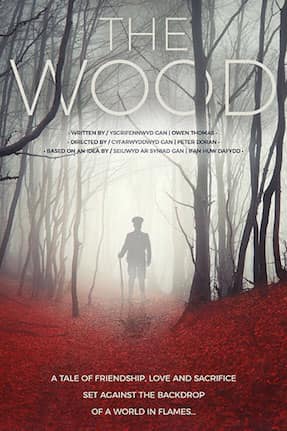
The journey we have been on as a creative team has been incredible, taking us from an initial conversation about ‘Grav’ at the Torch, to New York and our performance this year for the Welsh Rugby team. I can honestly say that throughout this process we have never had a cross word. We all believed in the project and each other. Peter and I went on to work on ‘The Wood’, a play commemorating the Battle of Mametz Wood in World War One. I was incredibly proud of this play and I hope that Peter and I will collaborate on another project in the near future.

Gareth and I have worked together for over a decade. We were first introduced
through the excellent Script Slam at the Sherman Theatre. I had a 10-minute
play called ‘The Window’ in the final and so was randomly paired with
Gareth as the director. We hit it off immediately, and our relationship has
seen us work on a wide range of projects. He is a very skilled director as well
as actor, and we complement each other perfectly in the rehearsal room. My
family often joke about how often I ring him. Usually once a day, often more. We
have lots of plans for the future as Bale and Thomas, and are shortly heading
out to the United States with a new play.

Get the Chance works to support a diverse range of members of the public
to access cultural provision. Are you aware of any barriers to equality and
diversity for either Welsh or Wales based artists? 

Encouraging diverse voices to feel empowered to share their stories on
stage is key to this. People from all walks of life who live in 21st
Century Wales need to feel confident enough to share their individual stories
and experiences. We live in strange and somewhat divisive times at the moment.
Theatre has always had the ability to hold a mirror up to society and pose
questions. In my opinion the importance of cultivating awareness and
understanding of other people’s lives and journeys has rarely been so relevant.
New plays by diverse voices can play a key role in inspiring discussion,
generating understanding and engineering social change.

There are a range of organisations supporting Welsh and Wales based
writers, I wonder if you feel the current support network and career
opportunities feel ‘healthy’ to you?

Generally, yes, but there are a few areas where there could be some improvement. I developed as a writer through opportunities such as Script Slam at the Sherman Theatre, Cardiff.

I think there is room in Wales for more events like these for up and coming writers. Writing is a very insular activity, and the chance to see something you have written actually performed on stage is incredibly important in your development. Seeing actors perform your story and hearing your dialogue spoken aloud, as well as having an audience respond to your work, is key to helping you find your style and voice. These early opportunities were fundamental in teaching me how to craft dialogue, and introduced me to some of the most important people in my writing career.

If you were able to fund an area of the arts in Wales what would this be
and why?

Funding for youth provision is essential. Growing up I never had access
to Youth Theatre or drama lessons. Having taught the subject for so many years,
I fully understand the benefits that drama can have on a young person’s life. I
have set up my own Youth Theatre in Tongwynlais which is great because I also
get to teach my own daughters. There are about 25 members at present, and to
see the growth and development in them over the course of the first year has
been really exciting. It is essential for the lifeblood of our industry that we
nurture our future performers and equip them with the transformative skills
that performance can provide. It is essential that drama continues to empower
and embolden young people.

Can you tell us about your writing process? Where do your ideas come from?

Ideas come from a range of sources. I have always enjoyed people
watching, and indeed was inspired to write ‘The Night Porter’ after
glimpsing a haunted looking man sat behind a hotel front desk through a window
on a gloomy night in Edinburgh. Sometimes, as with ‘Grav’ or ‘The
Wood’
I am lucky enough to be approached. But it has to be something I am
going to enjoy researching or something I am able to give my own unique slant. I
will often research a play for ages before I start writing, building up a
thorough knowledge of the subject in my head.

For ‘The Night Porter’ I wanted to properly get under the skin of
how to make people scared and so I enrolled in some night classes on Ghost
Stories in Literature at Cardiff University taught by the fantastic Dr Juliette
Wood. Through that academic process I was able to improve my understanding of
the genre, and this will hopefully add to the scream count in the audience.

I always begin a new play by free writing, getting a load of ideas down
on the screen before saving it and leaving it for a week or two. I then re-read
and delete the vast majority, but in there I often find the elements I want to
develop and expand. I draft and redraft many times until I am satisfied. ‘West’
has undergone five drafts, with ‘Grav’ it was many more. I always try to
hear an early draft spoken aloud having long understood that something might
look great on the page but sound awful when spoken aloud. Failing that, I read
it to the dog in the shed.

Can you describe your writing day? Do you have a process or a minimum
word count?

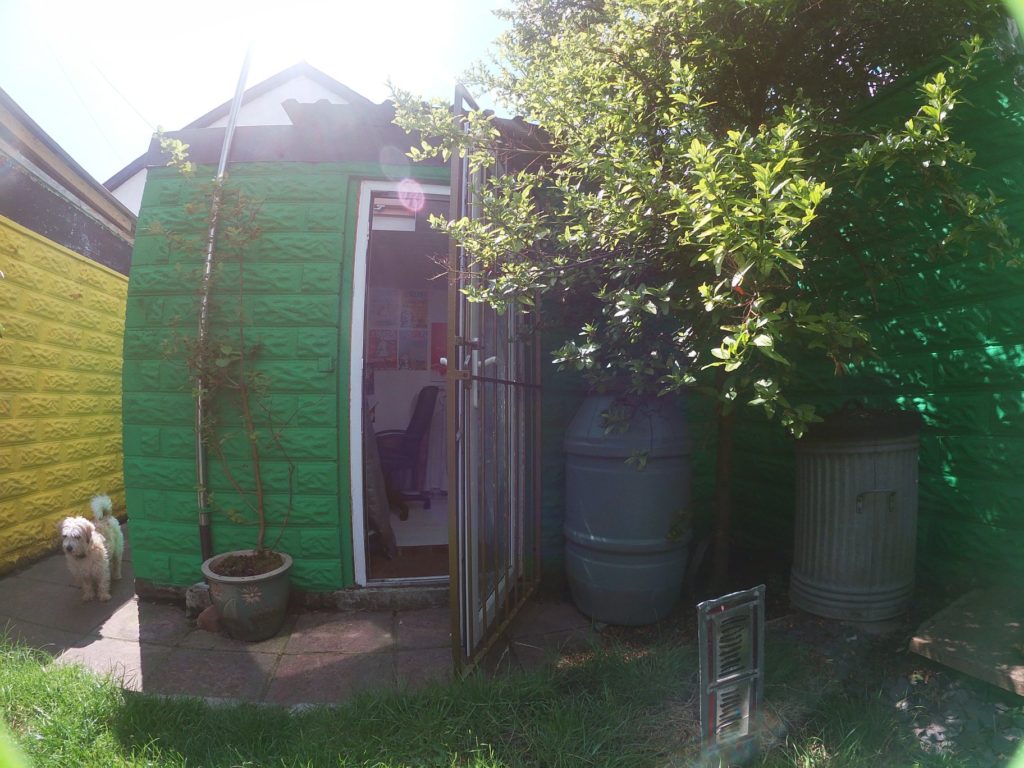
I tend to be at my most productive first thing in the morning. I get up early and go for a walk or a run to clear my head. Then I make a pot of tea and head to the shed for 9. I tend to keep going until ‘The World at One’. The afternoon is often spent reading, researching and editing.

Owen’s Writing Shed

Music is very important, and Spotify is a godsend. The right mood can be created by who you have accompanying you in the background. Richard Hawley is one of my go to artists for this. His lyrics and music are very inspiring, and his latest album, ‘Further’ is just beautiful.

https://youtu.be/HL52vxONCcM

I used to set myself very strict word targets, but after a while I found
I was getting more concerned with the number of words I was writing than the
quality of them. As long as I leave the shed with a scene or some dialogue that
didn’t exist before I went in there then I am happy. A good day could be one
page or five pages – it is the quality of the writing that is important.

Is there a place you go to write?

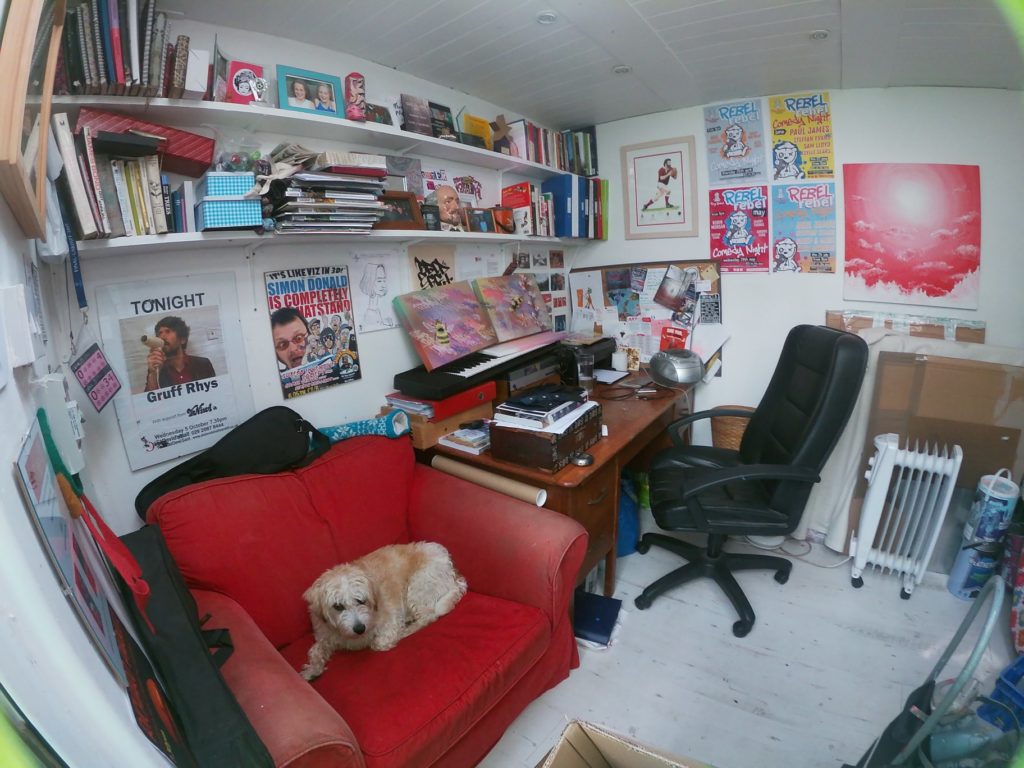
I am lucky in that I have a shed at the bottom of the garden. It has a desk, a chair, bookshelves and pictures all over the wall. I like to be surrounded by postcards, paintings, and photographs, for inspiration. There is no WIFI in the shed which is very important. With a good WIFI connection it is very easy to disappear off into a digital rabbit hole instead of actually writing.

Writing Shed Interior

If I want company then the Park and Dare in Treorchy or Chapter are both
great places. But mostly, and fuelled by a steady stream of tea, I am content
to lose myself for hours in the shed.

What excites you about the arts in Wales? 

I am currently working for ‘Pick of the Fringe’ at the Edinburgh
Festival. It is so exciting to see such a wealth of terrific Welsh companies
showcasing exciting, innovative work across the city. Companies like Dirty
Protest, Clocktower and Volcano, to name but a few, are just superb.

My wife is a graffiti artist and spoken work performer called Amelia Unity. She is part of a collective called ‘Ladies of Rage’ who are working hard to address the lack of opportunities for female performers in Hip-Hop, grime, drum & base etc. To see how inspired and empowered they are as a group, including firing up the imagination of my own teenage daughters, is terrific.

Gareth Bale and I have recently set up ‘Rebel Rebel Comedy’, a monthly comedy night at Tiny Rebel in Cardiff. I’m really enjoying getting to know the stand-up comedy scene in Wales, and through our wonderful MC, Steffan Evans, we are being introduced to the huge depth of talent that is out there. Stand-up comedians are fearless performers and I love watching them work.

Music wise, I am always in awe of Gruff Rhys. His career is so inspiring and organic. I am always excited to see what he does next. From his very early days he has yet to record an album that I haven’t loved, and his imagination is something I am very envious of. To work with him in some capacity is a long-term ambition of mine. That would be a dream come true.

https://youtu.be/8qYSfaNJVic

Finally, after the incredible impact of Rachel O’Riordan at the Sherman, I am very excited to see where the newly appointed Artistic Director, Joe Murphy, takes the theatre to next.

Joe Murphy, Artistic Director, Sherman Theatre.

What was the last really great thing that you experienced that you would
like to share with our readers? 

I grew up in the Britpop era and have always loved going to gigs. I am a big fan of 6 Music and recently happened to hear ‘Kebab Spider’ by the Sleaford Mods. I fell in love with it and them on the spot, and went with my wife to see them at Cardiff University earlier this year. On stage were two men in their mid-40’s, one with a lap top and one with a microphone. It was the most unbelievably visceral, and exciting live experience I have had in years. To lose yourself in a crowd and feel the joy of being in a mosh pit was something I thought I had left behind long ago. I am going to see them again in London in November and I cannot wait. Jason Williamson is far and away the best front man I have seen in years, and I would urge you to check out their documentary ‘Bunch of Kunst’ if you want to know more about them.

https://youtu.be/5uN3n-NjLHc

And finally, I believe you are about to have your new play ‘West’
premier in America. How do you think American audiences will react to your
work?

Last year we were invited to the North American Festival of Wales in
Washington DC with ‘Grav’. The play was well received and so I was asked
to write something original for this year. 

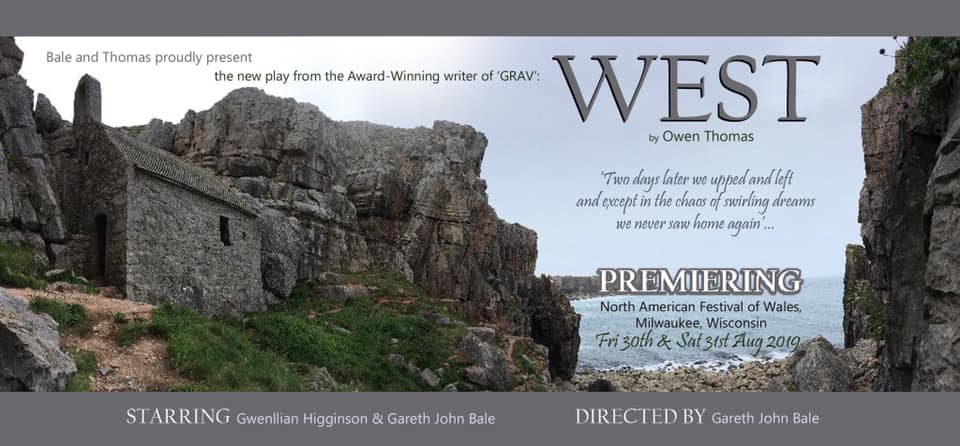
‘West’ explores the lives of the first Welsh settlers who went over to America. It is written largely in verse and stars Gareth Bale and Gwenllian Higginson. On a superficial level it is a love story between two people who make the decision to uproot their lives. On a deeper level I wanted to explore the theme of immigration, and to hopefully show the audience that we all originated from different places. I am very proud of it, and delighted it will premiere in America.

Many thanks for your time

You
are very welcome.

Review: The Grandmother’s Grimm, Some Kind Of Theatre, Edinburgh Fringe Festival, By Hannah Goslin

 out of 5 stars (3 / 5)

In an underground tunnel, it seems like the perfect place to
set the creation and editing process of the famous Grimm Fairy tales, we all
know and love.

However, there is a twist to this tale. The Grandmother’s Grimm
takes a keen look into the women behind these stories; ahead of her time, Frau
Hassenpflug helps the Grimm brothers to edit the horror out of the original
tales, while realising how the females behind these stories are the ones being
edited out. As we delve into their editorial process, we see the championing of
women, at a time that the patriarchy was at full force.

This small cast need little else than their talent and
enthusiasm to bring this tale to us – doubling up as the farcical characters in
the fairy tales, they use little items to help bring the magic across, and this
works well, triggering our own imagination.

The character’s of the Grimm brothers, Frau H and the house
maid are well established and with fierce and conflicting personalities of
their own – keeping to the ‘Victorian’ era that it is set, they continue the
customs and attitudes of the time, filling their language and physicality with
this, yet there is a modern take when Mrs H and the house maid are challenging
the stereotypes and becoming just as involved and as important as the men.

The Grandmother’s Grimm is intelligent, interesting and intriguing – a really enjoyable and unusual production.   

Top Tunes with Neil Bebber

Hi Neil. It’s great to meet you. Can you give our readers some
background information on yourself please?

I’m a writer. It’s taken me a while to be comfortable saying that. Because I’m not from an academic background. My dad was a carpenter and I spent my formative years being led to believe that “the arts” were created by posh people, for posh people. I knew I had something to say, though. And so, after having been overlooked yet again, in favour of the tremendously talented, doe-eyed Derek Allen for the lead role in the school drama,  I decided that, unless I wanted to be “chorus” for the remainder of my life, it was time to take things into my own hands. As a parting “gift” to my school, I produced, wrote and directed the inaugural end of year School Revue, a chaotic sketch show, interspersed with bands and Spike Milligan poetry renditions.

I left that all-boys grammar school, a hellish hotbed of bullying, conformity and privilege, with 6 average O Levels, to join a Youth Training Scheme in Print and Design (having turned down a potentially lucrative, but ultimately soul destroying, banking career). But that Print and Design Training Scheme was good to me, exposing me to a previously unknown world of words and images and allowing me to quickly learn a balance between creativity and commercial viability. But, as ungrateful as it seems now, it was never overtly creative. Expressive. Risky. At school, I remember my English teacher complaining that my stories were too long and that he didn’t have time to read them. Having pointed out, with typical teenage cockiness that it was his job, he reminded me, as others often did, that I’d never amount to anything. But I’ve always found the need to prove doubters wrong a powerful motivation.

I joined poetry groups. And naively welded words together, as a form of primitive catharsis. Short poems, laden with unconscious subtext, created to accommodate my own limited attention span. But these poetry groups so often consisted of the spurned and disenfranchised of the world. Society’s sensitive rejects, confined to the sad, back rooms of usually celebratory places. So I wrote a screenplay. About a man in his late 20s, who leaves a mundane and unfulfilling life, to go travelling. It was rubbish. But I finished it. And then I wrote another. A time travel love story. About a widower who travels back in time to change his wife’s fate, so that she lives. But while he’s there, he falls for someone else. It wasn’t as rubbish as the first one, but, having received polite letters (and they were letters back then), I decided to put my aspirations on hold.

Years later, after wearing a hole in where I was from, it was time to move on. To the medium-sized smoke of Cardiff. Five months, in a city where I knew next to no one, living in the attic room of a shared house, in a sweltering room, with nothing but the sobs of the duped pensioner in the room below to remind me I wasn’t alone. Motivation enough to get out and start throwing myself into the posh life. Seeing posh art, created by posh people, for posh people. And posh theatre, written by posh people, for posh people. And nobody stared. Or looked at me like I didn’t belong. And before I knew it, I was talking to people. About art. And theatre. And they weren’t posh at all. Most of them, anyway.

One night, at the Sherman Theatre, I saw Script Slam. Five plays, by previously un-produced writers. Directed by and featuring proper professionals.

And I thought, I could do this. Seven People, seven monologues delivered by seven people with undisclosed secrets, and my first ever play, not only won the Script Slam heats, it also won the Grand Final. And soon, there I was, on stage, receiving a prize in front of my parents for writing and I thought, this is it…

Ten years later, with
a London-based agent, two Guardian reviews, and countless performances of my
work in Wales, London and throughout the UK, this still isn’t it. Writing the
play is just the start. Then comes the re-writing, the rejections and the
resolve to start all over again. But, like an addiction, you just can’t stop
doing it. Because you know, that the highs of simply completing a new work are
nothing compared to the incapacitating elation created by that elusive moment
of acceptance.

Since making my first short film, BETWEEN, last year, I’ve discovered new ways of telling stories for the screen (big and small), too. Having had a meeting with a TV production company about my play RABBIT, I’m currently working on a treatment with a view to developing it into a six-part comedy drama. I’m also in the process of applying for development funding for my first feature. Like I said, it’s an addiction. You just can’t stop doing it. And every compelling addiction story has a killer soundtrack…

This chat is specifically about music and the role it has played
in your personal and professional life. Firstly to start off what are you
currently listening to?

Music’s always been there. My mum and dad were jivers, rockers and rollers, lucky enough to hear Elvis Presley and Jerry Lee Lewis the first time round. They saw The Beatles in Gloucester in the 60s, in a building which is now a slowly fermenting, beer-sticky Wetherspoons. At every opportunity, they’d jive, perfectly sychronised, at smoke-fogged dinner dances, then play the tunes from the night before, whilst peeling carrots to add to the other overcooked ingredients for Sunday lunch. And, slowly, every one of those anti-establishment lyrics and rhythms started to sink in. So, at the age of ten, I fell for punk. A lamb, in parent-approved, respectable gingham check, demanding 3 minutes of anarchy from the DJ at the family disco at Croyde Bay Caravan Park, so I could pogo, solo, starting with The Undertones’ Teenage Kicks, in 1978. And, though there have been giant deviations in my musical mores, there’s always been something about the energy and attitude of punk-influenced music that energises me and makes me smile.

So, at the moment, I’m listening to Idles, Slaves and Rolo Tomassi. Quick-fix anger hits, to subconsciously energise scenes. Then there’s a bit of Nick Cave’s Skeleton Tree, to help me reflect and introspect. And, though it’s not technically music, there’s the looped sound of the sea, coming in, and going out again, my substitute for the uninspiring sound of silence.

We are interviewing a range of people about their
own musical inspiration, can you list 5 records/albums which have a
personal resonance to you and why? 

Narrowing it down to five is practically impossible. Like asking me to pick my top five artists. Or insects. But rules are rules, right? And, in spite of my urge to rebel against this seemingly arbitrary figure, here goes.

To help me prepare to write this article, I’ve been listening a lot to Desert Island Discs. They get to choose 8 songs. Single songs. I get 5 whole albums. As someone struggled to say once, would that it were so simple. Should I pick based on my short attention span, which would mean that I’d just choose a record by each of my “new favourite bands” for the last 5 years? Or do I consider those who might be reading this, and allow myself to be influenced by my barely latent artistic insecurities? Choosing obscure Krautrock, soundtracks from the Golden Age of Mexican Film Musicals, niche Austrian yodellers and ironic 90s pop, to offer some contrast and help portray a self-conscious sense of fun? Because I’m, like, an artist, but I literally don’t take myself too seriously.

This all seemed so
much easier when I agreed to it…

OK. In no particular order, there’s Number 1 Thirteen Tales from Urban Bohemia by The Dandy Warhols.

https://youtu.be/C5_QC16mWHE

I’m in Melbourne in a record shop, stopped in my travelling tracks, hearing it for the first time.I’m lying in a bath, in my tragic “bachelor” pad, on a midsummer’s night, windows open, staring at a bruised sky, dreading Friday’s “big night out”.

I’m at the Paradiso in Amsterdam, having cycled to the gig, the neon-bright colours from the stained glass window behind the stage fragmented by tears of joy, hearing it live and feeling so elated that, in that moment, nothing else mattered. This album has everything. It’s massive. It’s the soundscape of a parallel earth. A dream-like, soft-focus earth, with its ponds of pristine pop, scattered amongst its rolling hills of hypnotic rock, all floating on a sea of fuzzy psychedelia. And there’s chickens. And trumpets. It’s the friend I go to when I need reassurance about aeroplane turbulence or that the thing I’m writing is worth finishing.

2. Then there’s U2’s The Joshua Tree.

I know every word. I can hum every guitar solo. There’s a song for breaking up, fucking up and getting back up. I had that mullet. And I bought into Bono’s pain, until I was old enough to know better. But their extended performance of Bad (from The Unforgettable Fire), and Bono’s one to one with a bewildered audience member (and Wham fan) at Live Aid, will always stay with me. It’s all at once indulgent, exploitative, calculated, poetic, dramatic and beautiful.

U2 were my first serious band. The soundtrack to my later teenage years and the variety of experiences that came with them. I remember one of my first jobs, as an apprentice in a screen printing company, hunched over a lightbox, white vest, mullet and earphones playing the opening jangles of Where the Streets Have No Name (on my original Sony Walkman), goose-bumped and feeling that everything was going to be alright.

And then, much later, in the aftermath of the break up of a long relationship, wallowing in With or Without You. And, deep down, still believing the same. 

3. There was a time, when the anticipation surrounding the launch of a new release was so great that you could queue outside HMV at midnight to buy the album in the first minute of its release. I’ve done this once in my life. Having pre-warned my neighbour, I returned home with my still warm, shiny, cellophane-wrapped Fat of the Land by Prodigy.

I’m in my early 30s, purple velvet suit, black silk shirt and Musketeer hair, losing it to Firestarter on the dancefloor. In my head, I’m alone. I am a wide-eyed Keith Flint, emerging from his tunnel, unpredictable and scary as hell.

Minutes later, I’m manhandled into a disabled toilet by two bouncers, insistent on performing a full body search for illicit substances. I mean, dancing with such manic intensity, in such heavy and impractical material, on a sweltering dancefloor, could only possibly be the behaviour of a drug-addled lunatic, couldn’t it?

I’ve never taken drugs (“Alcohol’s not a drug, it’s a drink”), but whatever happens to me when I hear certain tracks on this album, must produce similar chemicals. At the time, Firestarter and Breathe almost seemed to possess me. Something empathy-inducing, car-crash compelling, in that combination of primal beats and Keith Flint’s pained pantomime-punk yelps. I remember being out with friends at Clwb. Bored. So I left in search of a new adventure. Just across Womanby Street, at The Moon Club, the pied-piper bass of Diesel Power pulled me closer. Having convinced the bouncers that I was just here for that song, I soon merged into the heaving mass, all sweat and elbows, eyes closed, smiling and lost. Thanks Keith Flint. Rest in Peace.

4. Over the last ten years, there has been less and less music that has compelled me to learn every line. Maybe that’s more to do with how we consume music now. Attention spans increasingly suited to ready-meal playlists of popular hits, without the time or patience to lose ourselves in something more challenging.

And then, along came John Grant’s Pale Green Ghosts. It’s an album of absolute, awkward honesty, overtly biographical and overflowing with painful poetry. Playwrights have to create characters to hide their flaws in, but this is a balls-out confessional. A “forgive me father” you can dance to. And where does this fit into my ongoing, never a dull moment (but sometimes I wish there was) life?

Well, this particular weekend should have been a triumphant one for me. A new play, premiered at a major London venue, with a transfer to a prestigious arts-themed festival. But everything was about to fall apart and descend into one of the worst weekends of my life. Traversing the country, emotional and feeling utterly alone, I arrived at the festival, hoping to shake off the sense of overwhelming helplessness, only to find myself feeling further excluded at a time when I craved connection. Solitary and mentally and physically shattered, music was again on hand to prop me up, wrap its arms around me and send me on my way, with a sense of hope. And this time, it was John Grant who persuaded me that all was not yet lost.

From Queen of Denmark’s “I had it up to my hairline, which keeps receding like my self confidence”, to You Don’t Have To’s “you don’t deserve to have somebody think about you”, I was comforted by empathy before having everything put into perspective by the monumental Glacier, “don’t you become paralysed with fear, when things seem particularly rough…”

5. Seriously, this isn’t fair. Five albums isn’t enough. I feel that, not that they’ll ever read this, I need to use this opportunity to say thanks for the company and inspiration to all of the following, before I mention my final choice (which, as I write this, I’m still not sure of):

Carrie – Fear of Sound

The Teardrop Explodes – Wilder

Bauhaus – Burning From the Inside

Babybird – Ugly Beautiful/There’s Something Going On

The Walkmen – Lisbon/Pussy Cats

Lou Reed and John Cale – Songs For Drella

The Vaccines – What Did You Expect from The Vaccines

Jerry Lee Lewis – Golden Hits of Jerry Lee Lewis

Nick Cave – Skeleton Tree

Tom Waits – Mule Variations

EMF – Schubert Dip

Bruce Springsteen – Tunnel of Love

Bob Dylan’s Greatest Hits

Bright Eyes – Cassadaga/I’m Wide Awake, it’s Morning

Rufus Wainwright – Want One/Want Two

Slaves – Are You Satisfied?

Jane’s Addiction – Nothing’s Shocking/Ritual De Lo Habitual

Oasis – Definitely Maybe

Radiohead – The Bends

Dogs – Turn Against This Land

Rolo Tomassi – Time Will Die and Love will Bury It

Die Antwoord – Donker Mag/Ten$ion

Rammstein – Mutter

Yeah Yeah Yeahs – Fever to Tell

Pantera – A Vulgar Display of Power

Frank – Music and Song From the Film

The Mission Soundtrack – Ennio Morricone

O.K. my 5th and final album (I realise that my approach might suggest a sense of over-inflated self importance, but this is music and it means a lot to me, so be kind!) is…

Rufus Wainwright – Want One/Want Two

This could just have easily been Tom Waits or Nick Cave or
Babybird or Jane’s Addiction and I know, I know, this is technically two
albums, creating a Top 6, but they were repackaged as a double album in 2005,
so no rules broken. And what are rules, anyway, really?

Years before the drive-through ease of Spotify, Later with Jools Holland was my trusted introducer to “new” music. In May 2004, Rufus Wainwright performed Vibrate and, like the beneficiary of a free first crack rock, I was hooked. An incredibly beautiful song, saturated with longing and a barely dignified desperation to be loved, delivered in a voice that wavered between absolute self-assurance and disarming vulnerability. In my mid teens, I was obsessed with Marilyn Monroe. I convinced myself that she might have survived, if she’d had a friend who hadn’t harboured some sinister ulterior motive. Though I was barely equipped at the time to deal with my own issues, I imagined going back in time and unconditionally offering her my smooth, skinny shoulder to cry on.

And now, here I was, in the waistcoat and cravat wardrobe of my mid 30s, listening to Vibrate and reminded of my noble teenage fantasies.I sought out his entire back catalogue, in typically obsessive fashion. I lapped up his earlier stuff, but the theatrical emotional rollercoaster of Want One and Two was breathtaking. From the triumphant optimism of Oh What a World, to the infectiously rousing Beautiful Child, from the unrequited love of The Art Teacher to the grand, sing-a-long heartbreak of 14th Street, these albums reminded me that songs didn’t have to be inspired by rage to make me feel something.

And live, he’s even better. Whether backed by an orchestra or
alone at a piano, these are songs to sing along to, about the collective human
experiences of life, love and loss. All this, and he’s proper laugh-out-loud
funny, too.

There’s also something inspiring about how he seems to have forgone what could potentially have been straightforward commercial success, to pursue his operatic aspirations. Maybe I see a parallel, however truly incomparable, with my shirking of a lucrative graphic design career, in favour of the dogged pursuit of my own creative writing dreams.If I ever meet him, I’ll be torn between the fake bravado of asking him to collaborate on a show and the awe-inspired verbal paralysis of unworthiness.

So, that’s my Top 5. Ask me tomorrow and it might be an
entirely different one.

Just to put you on the spot could you choose one track from
the five listed above and tell us why you have chosen this?
 

Why couldn’t this have been an article about my favourite,
most inspiring cheeses? Which would have proved considerably less traumatic.

Ideally, I’d like to say none of the above. So I could choose
Angela Surf City by The Walkmen or Perfume Genius’s Queen or Nick Cave’s People
Ain’t No Good or Yeah Yeah Yeah’s Maps or Bob Dylan’s Don’t Think Twice it’s
All Right or Idles’ Danny Nedelko. But, far be it from me to, yet again, turn
momentary article-based hellraiser…

The song being chosen…

As my favourite…

From the albums above…

Is…

Solid by the Dandy Warhols. There are so many incredible songs on Thirteen Tales, but the nonchalant, stoner-swagger of this song, conjures images of walking through sunset-lit, excitingly dangerous streets, without a care in the world.

https://youtu.be/-2POhuBLUow

“I feel cool as shit, cause I’ve got no thoughts keeping me down.” While I wait for writing success (and hope that I recognise it when it arrives) and/or untold riches, that’ll be the straightforward, spiritual mantra that I awkwardly (but resolutely) aspire to. Music will always be my empathetic friend, ready to tell me what I need to hear at exactly the right moment. It’s there to laugh with, to cry with and to dance with. It’s being inconsolable at gigs, snubbed by your idols (that’s you, Karen O, but not you, Henry Rollins), comforted after break-ups, reflective at funerals, losing it on dance floors and pushed to do one more press-up, cycle one more lap, write one more scene…. 

Top Tunes with Christian Patterson

Hi Christian, great to meet you, can you give our readers some background information on yourself please?

Born and raised by my maternal grandparents in Clydach, Swansea. I’m an actor, writer and director. I trained at Welsh College of Music and Drama and did what most graduates do after leaving college…moved to London! I missed Wales way too much and now live in Alltwen with my wife (Actress Michelle McTernan) my son Dylan and my dog Dodger.

This chat is specifically about music and the role it has played in your personal and professional life. Firstly to start off what are you currently listening to? 

I LOVE MUSIC! There’s pretty much something playing all the time…whether it’s in the background or something I specifically want to listen to. My wife is going through a bit of a Nina Simone period at the moment so the house is pretty much a Simone Zone! I have to say I’m a big Nina Simone fan (I saw her live at the Royal Festival Hall…she was INCREDIBLE!) so that’s fine by me.

https://youtu.be/L5jI9I03q8E

Left to my own devices my music tastes are incredibly varied and eclectic. I achieved a life long ambition recently and managed to see Nile Rodgers and Chic live! IT WAS ABSOLUTELY AMAZING! So, at the moment I’m pretty much a disco devotee! Having said that I love songs that speak to you or capture a period in time…my son introduced me to a song called ‘Ban Drill’ by Krept & Konan and I found it really moving. It’s a great track. I’ve also discovered something about myself whilst compiling this list…I’m very ‘Riff’ led!

https://youtu.be/nuwcr-M37Do

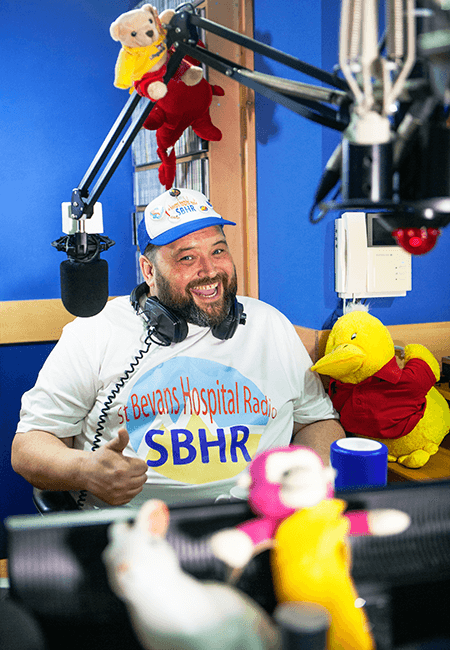
Music is also a big part of my professional career with the forthcoming tour of Peggy’s Song from National Theatre Wales. I was really drawn to this play for 3 reasons…written by Kath Chandler, directed by Phil Clark and the beautiful, bittersweet characters at the heart of it.

I play Danny Walkman, a local hospital DJ who loves him job. Music is so much more important to him that just songs…it’s his friend, his family, his passion and his life. He loves people and he truly believes they feel the same way about him…until he meets Peggy! Danny & Peggy have nothing and everything in common…they are two lonely people who only have each other… and the challenge to figure out Peggy’s Song!

We are interviewing a range of people about their own musical inspiration, can you list 5 records/albums which have a personal resonance to you and why? 

https://youtu.be/jVYQ7wipxtU

 1. Here Comes the Sun – Obviously I love the Beatles version but the Louise Dearman version has a very special place in my heart. We lost our son Harry in a tragic accident when he was just 5 years old. We played Louise’s version as Harry’s coffin entered the church. That song means a lot to me because it is intrinsically linked to my memories of Harry.

https://youtu.be/x0njSOZ5M3w

2. Sweet Home Alabama – I have always LOVED this track! As soon as I hear the counting at the top of the song I’m already getting excited about hearing the guitar riff! It is just AMAZING! It is also linked to memory for me. My father died a few weeks before his 52nd birthday…he loved this song and we listened to it on many car journeys! I remember the journey to his funeral. I was sat in front of the funeral car and even though I was deeply upset I was keeping it together…then…as the crematorium doors open I heard Sweet Home Alabama and burst into tears. Music does that.

https://youtu.be/HvDiD_vbwpg

3. Le Freak – It would be almost impossible for me to not include a Nile Rodgers and Chic song! I think Nile Rodgers is a bona fide musical genius! When I saw him live I couldn’t take my eyes off him! It was a real “You are my hero!” moment! The entire gig was totally magical and I’ll remember it for the rest of my life. I was born in 1972 so disco was a huge part of my youth…I loved it then and I still love it now!

https://youtu.be/9Vjj6J7gXpY

4. Superstition – Stevie Wonder is another one of those people that I think is a true genius! For me the guitar riff of Superstition is one of if not the greatest guitar riffs of all time! I could choose so many Stevie Wonder tracks but Superstition is a real classic!

https://youtu.be/RlNhD0oS5pk

5. Immigrant Song – One word…WOW! The first time I heard this track I felt like I already knew it! The riff (told you…Riff led tastes!) is the absolute epitome of rock, the vocal is incredible…it has it all! It’s only 2m 26s…I can’t listen to it just the once! Jimmy Page and Robert Plant are ROCK GODS! 

Just to put you on the spot could you choose one track from the five listed above and tell us why you have chosen this? 

This is tough. Very tough. They all mean so much to me for so many different reasons. I suppose I’d have to choose a track that I can put on repeat and be happy every time I hear it. I’m going to go with Sweet Home Alabama…I think it is an incredible track…it makes me feel happy. Yep! That’s the one!

Peggy’s Song tour Wales later this year. You can book tickets at the links below

Riverfront Newport – 25 September, 7.45pm BOOK NOW

Pontardawe Arts Centre – 26 September, 7.30pm & 27 September, 1pm & 7.30pm BOOK NOW

Theatr Brycheiniog, Brecon – 1 October, 7.30pm BOOK NOW

Grand Pavilion, Porthcawl – 2 October, 7.30pm BOOK NOW

Theatr Hafren, Newtown – 3 October, 7.45pm

Taliesin Arts Centre,  Swansea – 4 October, 7.30pm BOOK NOW

Theatr Richard Burton, Royal Welsh College of Music & Drama, Cardiff – 5 October, 7.30pm BOOK NOW

Borough Theatre, Abergavenny – 7 October, 7.30pm BOOK NOW

Blackwood Miners Institute – 8 October, 7.30pm BOOK NOW

Torch Theatre, Milford Haven – 9 October, 7.30pm BOOK NOW

Ffwrnes, Llanelli – 10 October, 7.30pm BOOK NOW

Lyric, Carmarthen – 11 October, 7.30pm BOOK NOW