

Category Archives: Film & TV

Review of “Whitney” seen at Chapter by Roger Barrington


 out of 5 stars (3.5 / 5)


On a warm Tuesday evening on 3rd May 1988, a colleague of mine and I spent a couple of hours in the company of Larry Wansey. Wansey at this time, was Operation Director of the Dallas Cowboys, but had taken time out to act as Security Director for Whitney Houston’s Moment of Truth World Tour. When researching for this review, I had no idea other than the Cowboys connection, of the man I was talking to.

A celebrated undercover operative for the FBI, he was involved in the Patty Hearst 1974 kidnapping by the Symbionese Liberation Army. Later, at the time of 9/11 he was Managing Director of Corporate Security for American Airlines, and was heavily involved in the investigation of that tragic event. I remember him as a very affable man with a good sense of humour.

Why did this conversation take place? Well at this time, I was employed in the In-house security team at the InterContinental Hotel at Hyde Park Corner, and Whitney was not only using this as her base for her 8 night stint at the Wembley Arena, but for her Paris gig as well. She stayed about a fortnight at the hotel and Larry wished to discuss security arrangements for her stay, although I seemed to recall, we talked mostly about other things.

Incidentally, at this time, my ultimate Boss was Stephen Mulligan, who lived in a suite in the hotel with his family, including 3-year old Carey Mulligan. But that is nothing to do with this film, so I shall return to my review.

Shortly into her stay, I bumped into Whitney and Larry, in a lift. Taken aback, I entered rigorously chewing gum for which I gave the excuse that I was making my most recent attempt to quit smoking. Larry had introduced me, so Whitney enquired, how long had I managed to go without a cigarette, and checking my watch, I informed her, about 19 minutes. She shrieked with laughter and a few days later, when I was on duty at a press conference she was doing, she recognised me and with a smile asked if I had still managed to quit smoking to which I responded with a sigh. There ended my short conversation relationship with this American icon – totally forgettable for her but the opposite for me.

What emerges from Kevin Macdonald’s worthy but flawed documentary of the life and death of this iconic American pop star, is her sense of humour – which I think is shown above within my own experience. She loved life and it is all the more sorrowful, that her rapid decline and ultimate death was fueled by a combination of drink and drugs and being surrounded by people, both friends and family who brought this on.

I say flawed, because I think this kind of documentary can only go so far on trying to identify the real Whitney. “All the music. All the stories. All the answers” is the movie’s tagline and it doesn’t really merit any of these assertions. A couple next to me were complaining that there wasn’t enough of her singing so left half-way through. Certainly, all the answers was not provided. It is rather like reading an autobiographical book, where the author naturally only writes about what he/she wishes to know about. Likewise here, people interviewed are selective on what they tell you. Her husband Bobby Brown, flatly refused to talk about her drug abuse.

There is reference to their child Bobbi Kristina Brown on record of having said that she wished to kill her mother. ‘Whitney was probably a good mother at first” we are told, but with the tragic 2015 death of Bobbi Kristina in an uncanny similar way to her mother, this topic is left tantalisingly unfulfilled.

Glaswegian Macdonald is a skilful documentary filmmaker. He won an Oscar in this category in 2000, for “One Day in September” that chartered the hostage taking of the Israeli athletes by militant Palestinian group Black September in 1972. He asks searching questions to a wide range of people associated with Whitney. To get an idea of her early life, he interviews Cissy Houston, her mother. Cissy, (who I also met because she was doing a duet with her daughter, and also came across as a friendly person), is a former singer of note. After a successful career as a backup singer to her niece, Dionne Warwick, (there is only 7 years age difference between them), Elvis Presley and Aretha Franklin she is part of a soul dynasty. In addition to her family connection with Dione, she is also aunt to singer Dee Dee Warwick and a cousin to famous opera diva Leontyne Price. From Cissy we learn about Whitney’s gospel singing  upbringing and the way her young life was largely protected from the harsher environment that existed in Newark, New Jersey at that time.

Brother Gary provides insightful comments and there is much attention brought to the Svengali type presence of lesbian and possible lover of Whitney, Robyn Crawford. But there is nothing particularly new here.

Probably the coup of this investigative work is the reference to Whitney being molested by her cousin Dee Dee Warwick.

Macdonald provides an historical aspect as Whitney’s life develops with archival film, using the Newark Riots pf 1967 and images of Ronald Reagan to provide a couple of examples. You do wonder whether this adds to the film, or gets in the way, and, at best, is only moderately entertaining.

This is the third documentary of the life of Whitney. It is a highly watchable film that probably goes as far as it can do at this time, only 6 years after her death. Maybe the definitive documentary on this singer has yet to be completed, and perhaps the passage of time, when others are more forthcoming to reveal material, will make this possible.

“Whitney” is currently showing at Chapter. For schedule and booking tickets, please visit,

https://www.chapter.org/whitney-ctba

End

Roger Barrington
Series Review, Hidden, BBC Cymru Wales by Gareth Williams

 out of 5 stars (3 / 5)

When one looks back over 2018, Keeping Faith is sure to come out on top in the world of Welsh television drama. It has been a huge success. Its latest stop on its incredible journey is primetime BBC One. It goes from strength to strength, and will certainly deserve all the accolades that come its way. In amidst all the hype of this brilliant series however, it has been easy to overlook another Welsh drama that has been airing over the past two months on BBC Wales and BBC Four respectively. Produced by the creator of another Welsh hit drama Hinterland, Ed Talfan, Hidden has been allowed to bubble away below the surface of Keeping Faith’s success. I would suggest that this is primarily because it is a crime drama. And though I would agree, to a certain extent, with some of the groans that accompany the thought of yet another one hitting our screens, it does at least offer something a little different. There is a slight spin on the achingly familiar.

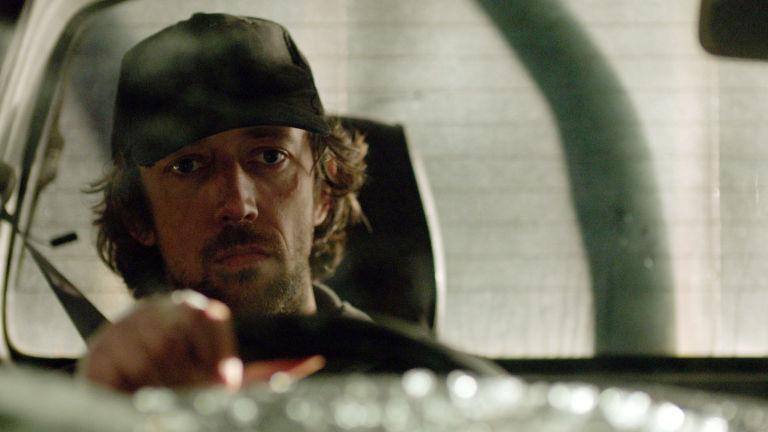
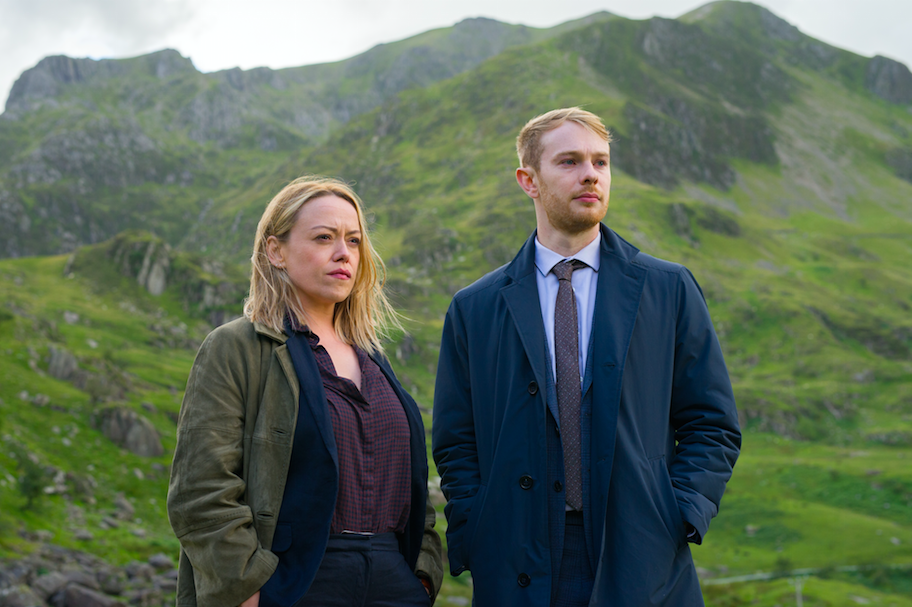
The twist in Hidden’s tale is the revelation of the killer at the outset. The opening scene sees a girl running through the woods, pursued by an unknown man. This girl is subsequently found dead. The investigation that unravels across the whole of the series centres on finding this girl’s killer. Such a task is given to local detectives Cadi John (Sian Reece Williams) and Owen Vaughan (Sion Alun Davies). But whilst they are in the dark over the killer’s identity, the viewer is given unprecedented access into the life of Dylan Harris, played brilliantly by Rhodri Meilir. A strange, sensitive and brutalised figure, Harris lives with his mother and daughter in an old farmhouse deep within a forest of the Snowdonia National Park. It turns out that he is a serial abductor of young women. Having let his latest catch go, we witness his unsuccessful attempt at abducting a local farm girl. Then, as the pieces of the drama’s puzzle start to come together á la The Bridge, he claims the life of long-suffering student Megan Ruddock (a standout performance from Gwyneth Keyworth). What follows is a tense thriller that follows both the police investigation and Harris’ narrative simultaneously. As a result, it involves the viewer deeply in its various twists and turns over the course of its eight episode run.

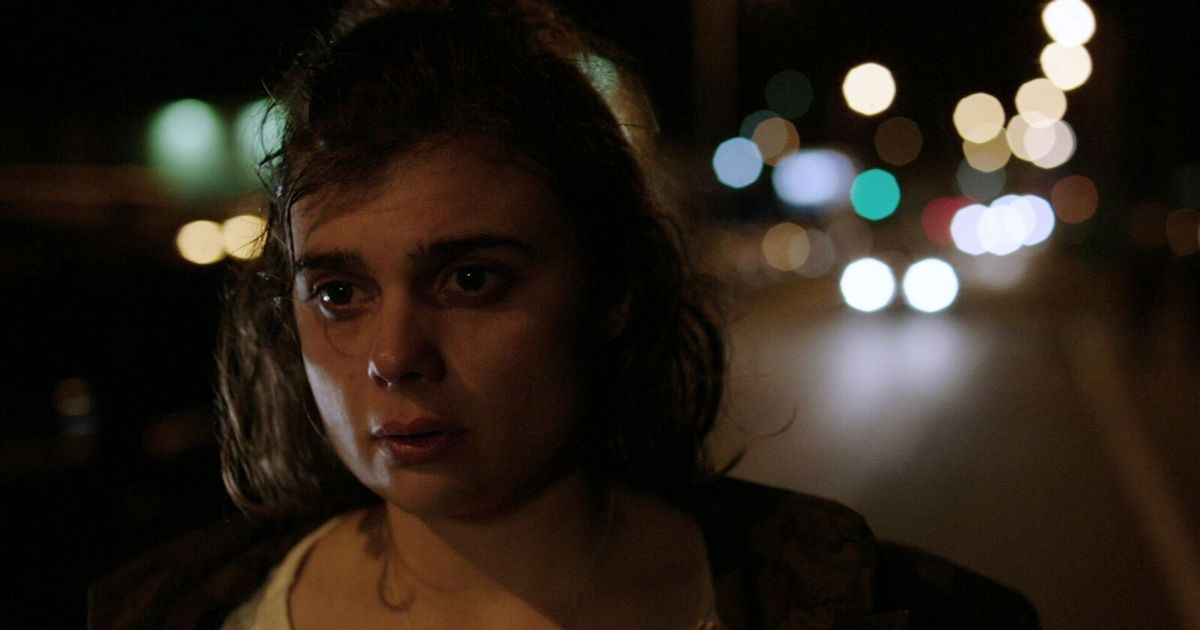
Despite the fact that the central crime isn’t particularly original, Hidden remains worthy of some praise for the performances of two of its central actors: Rhodri Meilir and Gwyneth Keyworth. Episode four in particular, which is wholly focused on Dylan and Megan, is a deeply uncomfortable yet utterly compelling hour of television. It is made so by their noteworthy performances. Firstly, Meilir brings a vulnerability and gentleness to the role of Dylan that will be recognisable to fans of the sitcom My Family, in which he played the hapless Alfie. Yet this vulnerability and gentleness are subverted as a result of the abuse Dylan has suffered at the hands of his mother (Gillian Elisa). As a result, they manifest themselves in an extremely dark and dangerous way, far from the comforting confines of the Harper household. Meilir manages to express such complexity at the heart of his character in such a way that the viewer is both sympathetic yet repulsed by him. To extract such opposing emotions is testament to Meilir and his ability to play such a broken and complex figure. Meanwhile, Gwyneth Keyworth produces an emotionally raw performance as Megan, a student whose mental anguish (outwardly shown in the form of self-harm) is exacerbated by her abduction. It is an incredibly challenging role that Keyworth manages to embody wholeheartedly. As a result, she is powerfully believable as Megan. It is easy to forget sometimes, in the course of the series, that what is witnessed is a dramatic reconstruction. Keyworth plays it in such a way that it seems horribly real. For me, it is one of the most engrossing performances in a British TV drama this year.

With a stunning backdrop that shows off the bleak, mountainous terrain of North West Wales in all its magnificent and austere glory, Hidden may not be revolutionary but it is still worth watching. With some excellent performances from the cast and a slightly different take on the conventional crime narrative, it has enough going for it to keep viewers coming back for more. If you like your crime dramas dark and disturbing, then Hidden is certainly for you. It may not be Keeping Faith but it nevertheless showcases the fantastic talent coming out of Wales at the moment at every level, from production to acting, storytelling to editing. This is very exciting. With hopefully more fantastic ‘Made in Wales’ dramas to come, the Welsh TV landscape looks like going from strength to strength.

Click here to watch the full series.

gareth

The Double FF — Ffabulous and Fflamboyant — Bus Tour

The Double FF — Ffabulous and Fflamboyant — Bus Tour

When do grown ups … get the chance to be that free?”

“I am so glad it was such a buzz for everyone! I am really, truly grateful and very happy.”

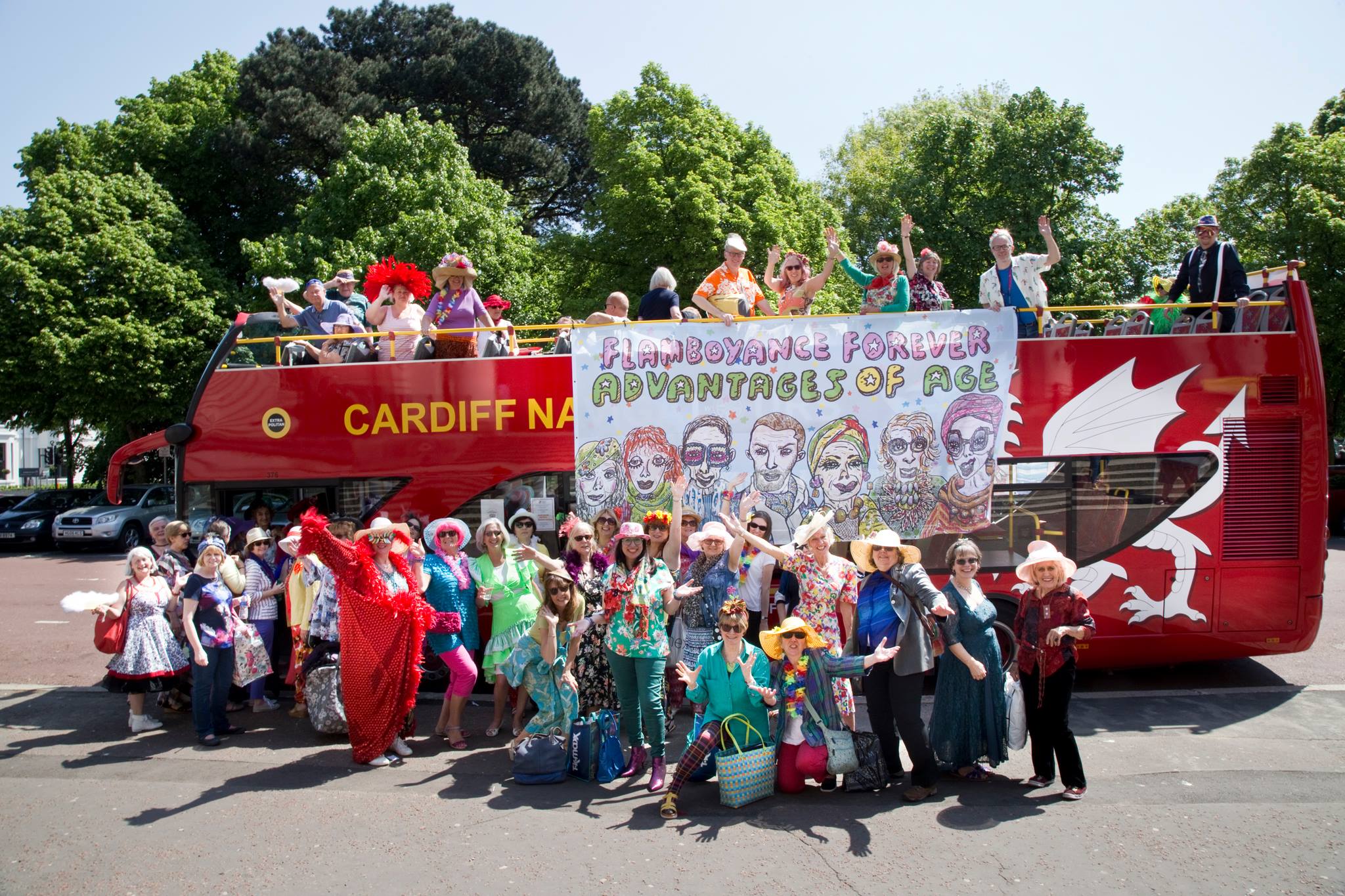
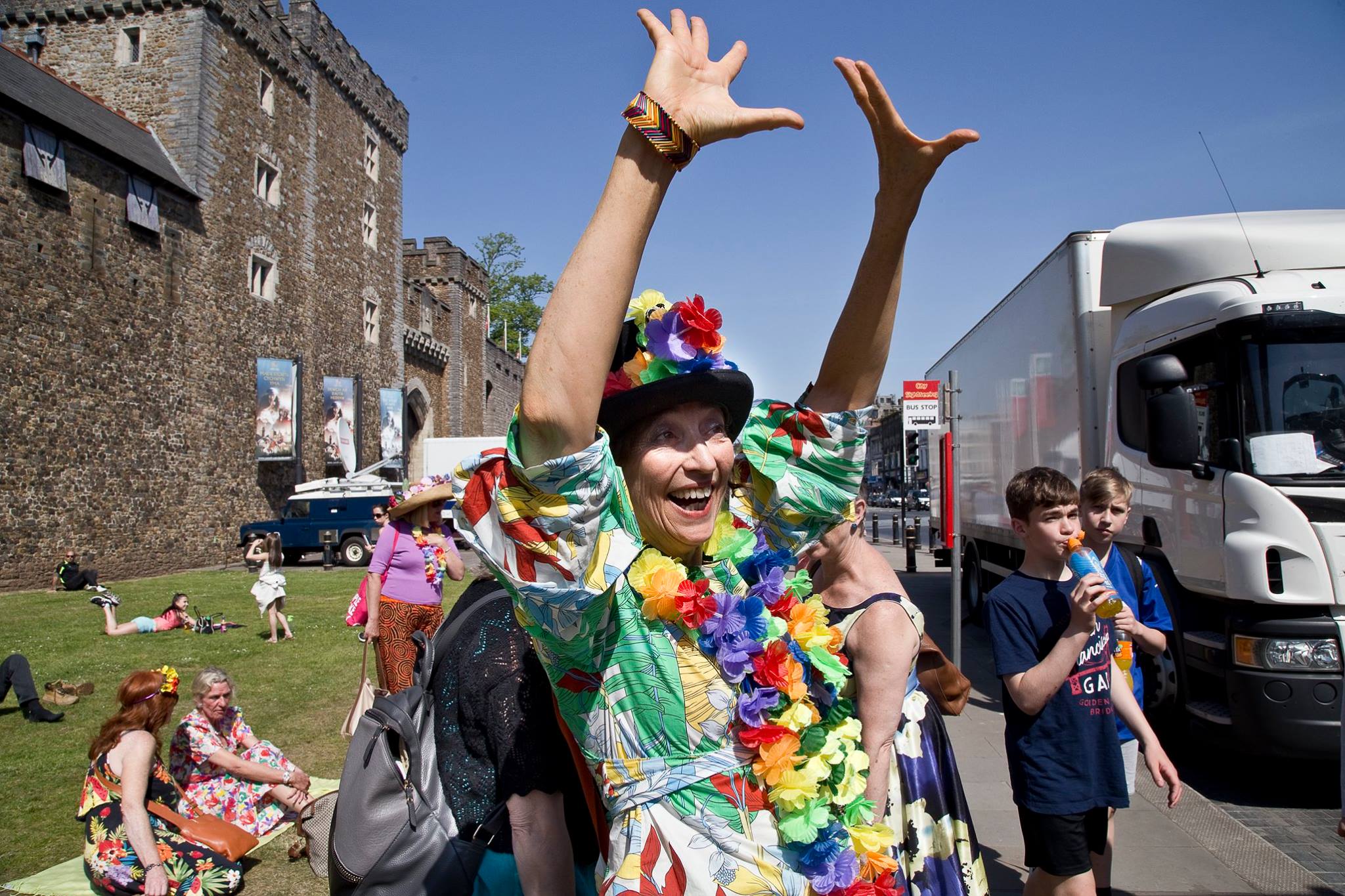
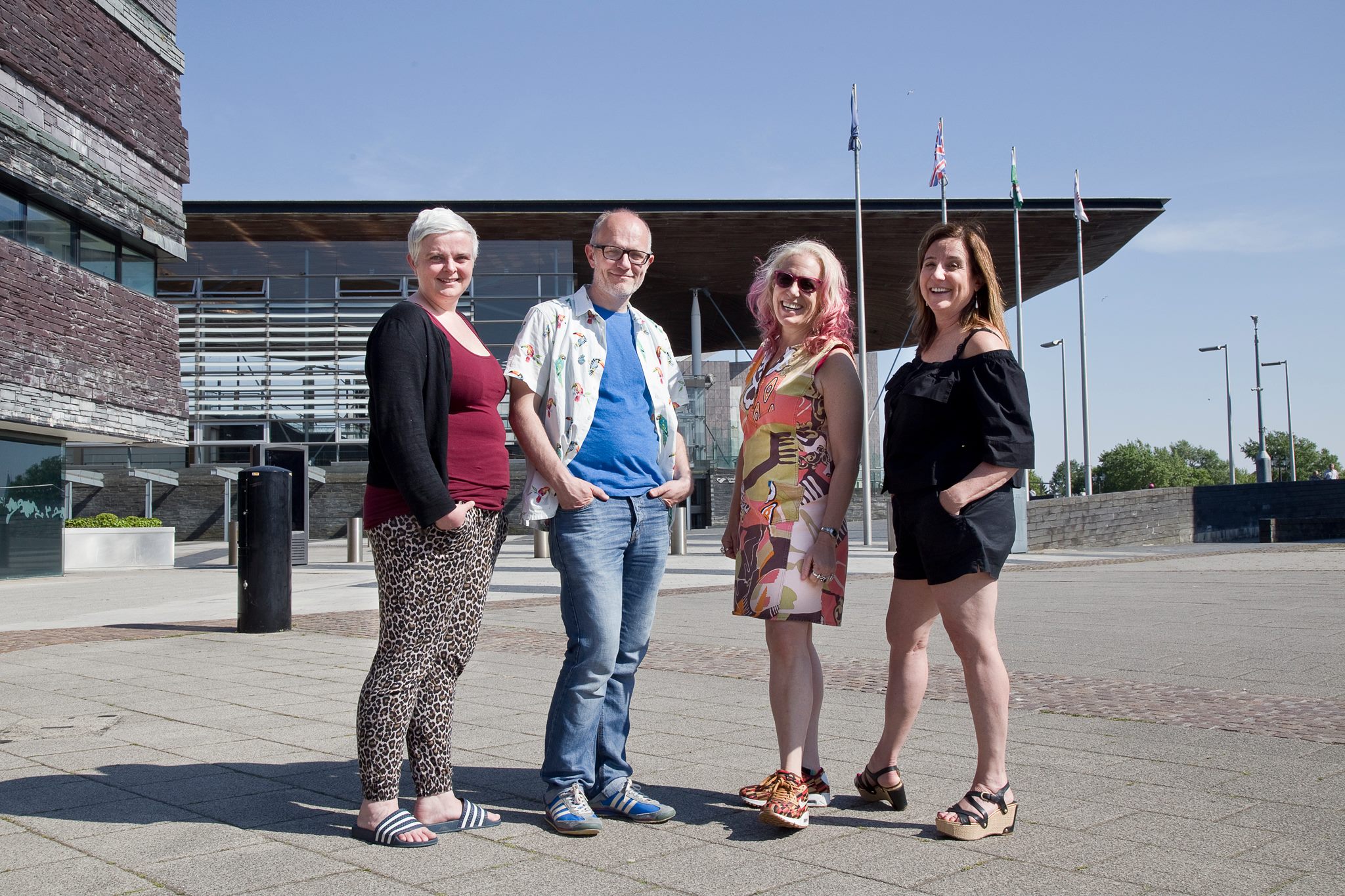
The Ffabulous and Fflamboyant Bus Tour around Cardiff, on Saturday 19 May 2018, was the second consecutive event I produced for Get The Chance during the Gwanwyn Festival of Creativity for Older People in Wales.

Also for the second time, Suzanne Noble, whose Flamboyant Bus Tour in London was the highlight of Advantage of Age’s 2017 events calendar, inspired our Wales-based event.

AofA’s Arts Council of England-funded events drove impressive numbers to their now 3,000 plus members-strong Facebook group, Advantages of Age, Baby Boomers and Beyond and 6,500+ followers-strong Instagram account The London bus tour helped to consolidate the AofA community, and it was the primary driver of human traffic to the group.

Through the power of our partnership with Advantages of Age, Get The Chance’s events have the chance to reach many more people. I was keen to build on the success of my 2017 event, Creative Listening, and to continue to develop this relationship.

Creative Listening could have been perceived as ‘fluffy’ due to it being set in a hot tub. On the contrary, it was quite a cerebral event.

https://youtu.be/bAj7xgrRqYQ

Similarly, AofA’s inspired series of hot tub salons earlier in 2017 were by no means fluffy.

I was pleased to have received another grant and another chance to produce. For many reasons I wanted to mix it up this time, do something different, and I felt that it would be great to do something that was for just for fun for a change, particularly because of how intense the social and political climate in 2018 had been. People needed some levity and an opportunity for some escapism. I had no intention to make light of something that warranted a serious take — but without a doubt a creative event such as a bus tour was a platform to be able to offer such levity, and I loved being in the position to be able to offer people this opportunity.

The Double FF Bus Tour offered participants a chance to express themselves — however the mood took them. There were no dictates, no rules, only to be as flamboyant as they liked — whatever that meant to them, and feel as fabulous as they could — inside and out! A chance to hop on board and be themselves — to come out, enjoy and have as much fun as they possibly could on an open top bus around Cardiff!

So, how did it go?

From a marketing perspective, Facebook was my primary marketing tool. I started to promote the event via the Double F Facebook ‘public group’ in early March —

FFabulous and Fflamboyant Bus Tour

March 12

Gearing up for a great event. It’s greatness will be measured by levity and uncomplicated fun. It will make a nice change. Please come and join us.

The Double F Facebook group page got 75 members; Fabulous and Flamboyant Bus Tour @ Get the Chance page attracted 50 members and continues to get Likes; and the Event page, attracted another 19. Examining the analytics, there is room for improvement on these social media numbers. But before I shoulder any ‘blame’ for these less-than-ffabulous results, I would like to comment on how I felt whilst working on the social media campaign. I felt confused, and somewhat overwhelmed by what was on offer on FB, and I believe the confusion stems from the option to set up a ‘page,’ a ‘group,’ and an ‘event’.

I started by setting up the Double F group,

https://www.facebook.com/groups/1409058989223408/,

which somehow got linked to last year’s Creative Listening page, and then thought I’d better set up a separate page for the Bus Tour, and so I set up The Fabulous and Flamboyant Bus Tour @ Get The Chance

https://www.facebook.com/GetTheChanceCymruWales/,

and then supposed that we needed something to flag up the ‘event’, and set up an Event page:

https://www.facebook.com/events/200768290519952/.

I thought all of these would link up simply and seamlessly and that cross communication would flow, but this was not the case, and as a result, my efforts on FB were split between 3 different places. For the purposes of managing communications with existing ‘members’ and managing promotional efforts to attract more, it became somewhat confusing for me, and I have no doubt that it was not entirely clear to the public either. And so, while Facebook does provide an excellent way to reach the public, I have a feeling that they are now complicating their offer beyond what is practicable. Or, perhaps I need to up my game, and just figure it out! I would welcome comments from others on their experiences with promoting via Facebook.

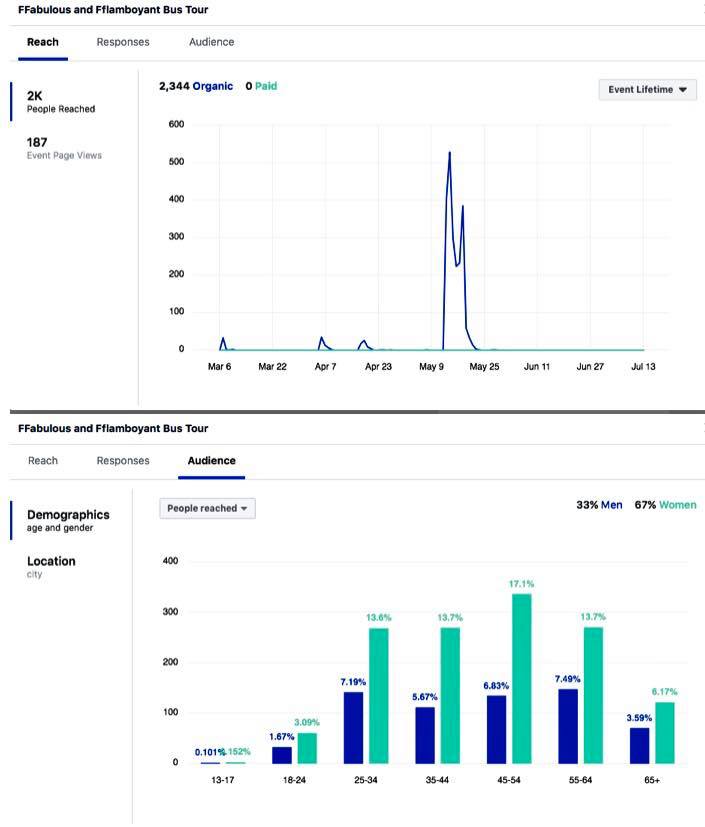
That said, Facebook analytics have provided me with some reassuring and encouraging stats:- We ‘organically reached’ 2,344 people. Reach is defined as the number of people who had info about the event ‘enter’ their screen.

The majority of those reached were females between the ages of 45 and 64 years old. Iam satisfied with these results. Perhaps my next event will attempt to address the imbalance between men and women reached.

Oftentimes the event organizer is too busy to actually participate, but because most of the work had been done in advance, I was able to feel like a participant. I was able to really enjoy and feel part of the day, which was amazing.

Judging the mood on the day of the event — it was high spirited! The weather was ideal — it could not have been better! And the Royal Wedding on the morning of our 1pm scheduled event was quite likely a contributing factor to the sense of occasion that was in the air. The cumulative effect was wonderful.

“The Double FF Bus Tour… ‘…took a great event and made it better.”

As a producer, I am confident the event went very well, and that it achieved its objectives — we had a chance to do something different, be ourselves and have a fun day out with a group of older people. Measuring the degree of levity and volume of uncomplicated fun — our cups were full and spilling over.

The experience also offered me a learning curve — there were things that could have worked better. Logistics were the primary problem, having a starting point in one place — The National Museum of Wales — and an end point in another — Cardiff Bay. The problem this presented only became clear as it was occurring, by which time it was too late to change. And so, after the full loop through Cardiff City Centre, down to the Bay, and back up to the Castle, participants who had parked their cars in the City Centre near to the museum did not want to go back to the Bay for tea and cake. We were only a handful of people at Ffresh. Too bad we didn’t think to start and end in the Bay, that actually would have made much mores sense …..But that is part and parcel of doing something for the first time. You cannot possibly think of everything. The other was that, due to road closures for another big event going on, which we hadn’t been previously aware of, the bus driver had to improvise the route. For example, I don’t think an open top bus would have gone under the rail bridge in Riverside except under these circumstances — and in their feedback some participants said they’d found this scary. I’m very sorry about that, but it was something that was out of my control. I did check back with the bus company on this matter and I am relieved and reassured by their response:-

Dear Leslie,

Yes, we used the route through Riverside due to diversions on the day.

As you can appreciate we have been running the tours in Cardiff for over 22 years, the bridge although appears low, with a very tall person standing, they clear the bridge with a lot of room. 

We have route risk assessments done on all roads covered by our main tour,  and any roads covered due to diversions. We have used the Riverside bridge route many times over many years.

I am grateful to the bus driver, Maria, for her professionalism and for being such a great sport. She really entered into the spirit of the day. I am also grateful for Lynn Hoare’s contribution — she brought along an array of costumes — hats, feather boas, masks, capes, etc., from Marigold Costumes — which were there for the borrowing.

“The costumes were wonderful; you could see people change as they put them on.”

Another big thanks to Lucy Purrington who was our stills photographer and videographer on the day. Please enjoy her photos in the is article! Here is the short video Lucy produced.

I was thrilled to have connected with Bethan Frieze, the conductor of choir Only Menopause Aloud, and for the choir to have been part of the day. Their contribution added a huge surge of energy!

The event could not have happened without the extra sponsorship from Spice! I am especially grateful to Rachel Gegeshidze and her team for helping promote and attract participants to the event.


And, of course, to Guy O’Donnell, Director of Get The Chance, to Emma Robinson at Gwanwyn, and to Suzanne Noble of Advantages of Age.

There was a lot of positive and constructive feedback, amongst my favorites, pulled out and highlighted in this evaluation:-

Bethan Frieze, Conductor, Only Menopause Aloud, captures a special essence with hers:-

‘When do grown ups (who are not performers) get the chance to be that free?’

Suzanne Noble joined us on the day, and her comment makes me feel proud:-

‘The Double FF Bus Tour took a great event and made it better.’

A really happy couple of hours…I suspect that it will stay a very happy memory for all.”

Leslie R. Herman

July 2018


Review The Incredibles 2 by Jonathan Evans

We are now in the renaissance of Superhero entertainment. Every blockbuster is a Superhero, on television, there’s plenty of choice of Superheroes from adult entertainment to kids animation. Many other toys and games as well, they are deeply embedded in our culture at this point. When the first Incredibles movie came out, it wasn’t amongst such heavy competition, when a Superhero movie came out in 2004 it had about one other Superhero movie to compete with as well as probably not another one coming out the year before or after that. Now, how does it distinguish itself from so many other movies of the same genre?

The movie picks up just about where the last one left, with some crazy supervillain, armed with a giant drill wreaking havoc on the city. The Incredibles launch into action, during the pursuit Superheros, are still illegal and the villain gets away, this doesn’t help their case. Fortunately, an enthusiastic fan of Superheroes is eager to bring them into the spotlight. He is Winston Deavor (Bob Odenkirk) the head of a flashy technology company, he’s the face while his sister Evelyn (Catherine Keener) is the idea genius that relaxes behind the scenes.

When it comes to action sequences we need the same thing that’s required in a narrative arc. We need one character with a want and then a but so therefore and then a but again and so on and so forth until it is somehow resolved. Take for example our opening action scene where Mr. and Mrs. Incredible is chasing The Underminer. He has a huge drill and is sinking buildings and robbing a bank. They need to get inside so Mrs. Incredible turns into a trampoline for Mr. Incredible, but it goes underground making is difficult for him to hang on, he gets inside but then gets sucked into the large hose he’s using to suck up all the riches, therefore he must punch his way out of the vault and so on and so forth. Along with this, it must be shot clearly, usually with wide angle shots so we see all of the characters and get a sense of their surroundings, with a few extreme wide angle shots and close-ups so we gauge the bigger scenario and see the characters reaction so we emotionally connect with them. Being that this is animation the camera is allowed to smoothly move along with the characters in long, unbroken shots that would be nearly impossible in live action. Along with all of this, we have people with superpowers so its a case of utilizing their abilities for their situation or against eachother. Director Brad Bird and his team are simultaneously enthusiastic kids playing with their toys and sophisticated storytellers, efficiently utilizing and visualing the different elements at play.

The Parr family is still just the same as they were, only with a new situation to deal with. Mr. Incredible/Bob Parr (Craig T. Nelson) is eager to get back into crime-fighting but is detoured so now must deal with the struggle of raising his family, Mrs. Incredible/Helen Parr (Holly Hunter) is ever concerned for the family but also has a passion for crimefighting and makes the decision to commit to that and trust Bob. Violet (Sarah Vowell), the adolescent with the power to turn invisible and create forcefields, she the constantly questioning her parent’s decisions as well as going through her own personal troubles, she is also my favorite. Dash (Huck Milner, replacing Spencer Fox from the first movie) is the young energetic kid that acts on impulse, add superspeed to the mix and it’s a perfect analogy. Finally, there’s little baby Jack-Jack (Eli Fucile) who in fact has multiple powers, from laser eyes, to teleport, to turning into a literal little devil.

Causing trouble this time is an entity that calls themselves the Screensaver. A plotter that wears a gas mask like mask and takes control over people through the screen using a hypnotic strobe effect. They believe the people have become lazy in this age of television and convenience, so they plan to flat out enslave them anyway. Like with Syndrome in the last movie it seems if you choose to don black and white for your costume, you are the villain.

Later in the movie, more Superheroes are introduced. The Incredibles costumes are mostly red with a sleek, minimal design to them to other heroes all have a unique silhouette and color scheme to their costume so they become instantly recognizable even if you squint your eyes. This is a sign of the clear visual storytelling that animation can allow. But it is peppered nicely with a few scenes that have a majority of the shot in black, adding a threatening nature to the mood and only allowing the bare essential information to be absorbed.

The heart of the first movie is still the heart in this one, family. The Superhero genre is about taking a common emotional problem and greatly escalating it through powers and extravagant situations. The Parr family is a like any other, they drive each other crazy, support one another and when an obstacle come they do what they can to hurdle it, like any family drama, they just have the added spice of powers and villains.

In this time of many other superheroes, the original Incredibles still stands as a slick, punchy action adventure movie with a lot of heart and maturity. But through its unique visual style and interpretation of the Superhero genre is unique among its peers, the sequel is exactly the same.

 out of 5 stars (4 / 5)

Boa Review 

The opening short revolves around food and the emotional connection we develop with it. It is allegorical and has beautiful texturing with the many different types of food is puts before us. You will most likely be hungry while watching it. Though I do believe the ending will have children more confused and asking questions that immediately understand.

 out of 5 stars (3 / 5)

Jonathan Evans

Review of “The Bookshop” by Roger Barrington


 out of 5 stars (4.5 / 5)

“The Bookshop” directed by Catalan feminist auteur Isabel Coixet, is a faithful adaptation of British writer Penelope Fitzgerald’s 1978 Booker Prize nominated novel.

Set in a small Suffolk coastal town in 1959, as with all Fitzgerald’s novels, it is drawn from her own experience, as she worked in a bookshop in that country for a time in the 1950’s.

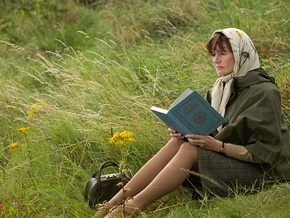
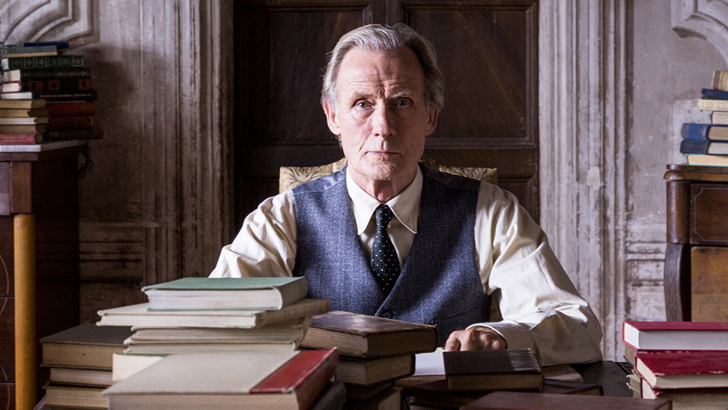
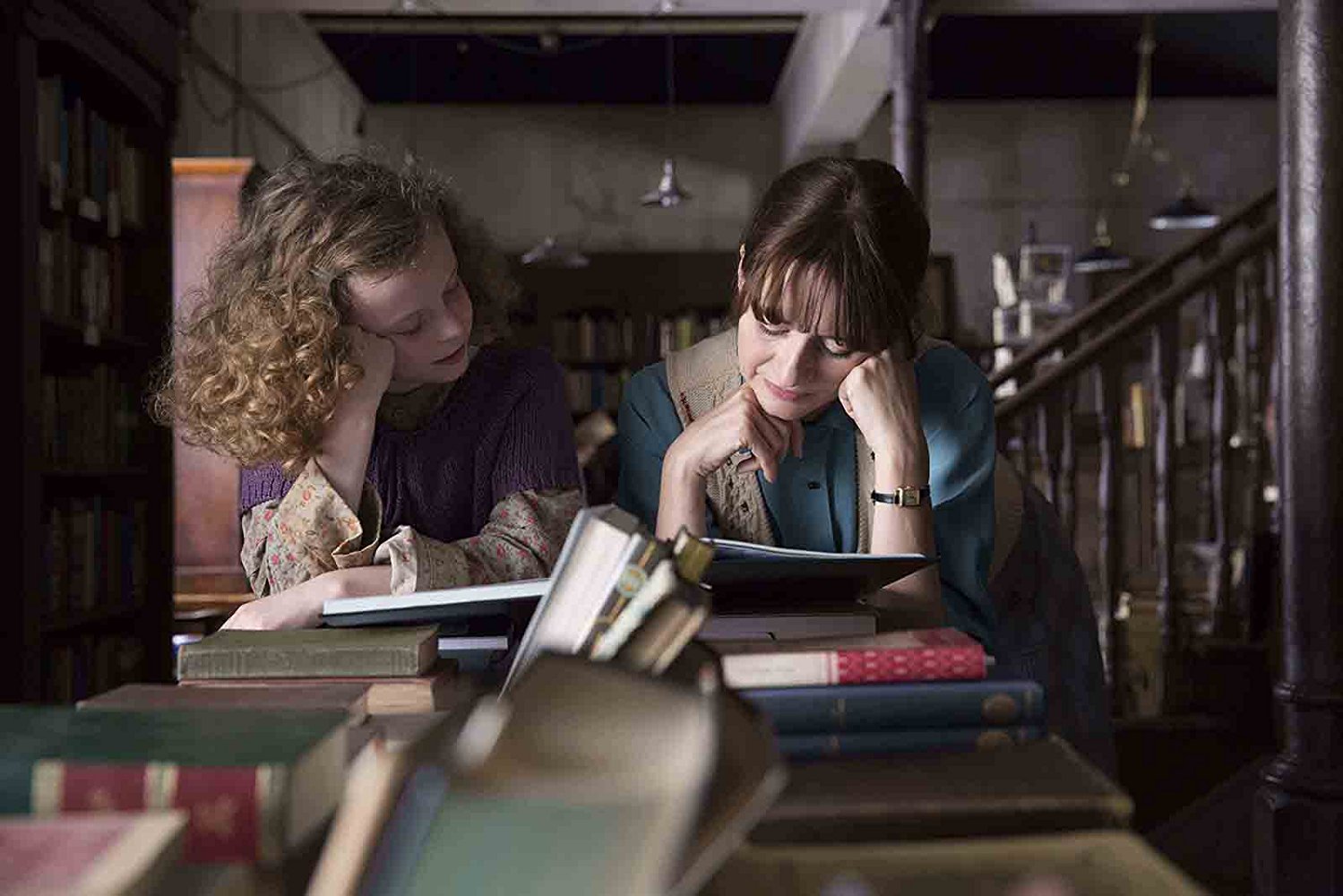
The plot is about awfully nice Florence Green, (Emily Mortimer) as a widowed middle-aged woman who decides to open up a secondhand bookshop in fictionalised Hardborough and concerns her battle with the local bigwigs General and Mrs  Gamart who want to convert the property into an Arts Centre. Also encountering opposition due to small-town small mindedness and ignorant philistinism she garners support from recluse Edmund Brundish, (Bill Nighy) and 13-year old Christine, whom she employs as her assistant. Into the mix comes loquacious rakish BBC man Milo North who Christine perceptively recognises is not a nice man.

The tension arises out of the burgeoning friendship that develops between our heroine and Brundish in opposition to the Machiavellian ruthfulness of the appalling Gamarts.

Isabel Coixet is a multi-award winning Catalan director, who first came to my notice with the superb, “My Life without me”. (2003). She continues to make highly acclaimed film, “Elergy” (2008) and “Endless Night” (2015) and a dominant theme throughout her dozen or so other feature movies is that the central character is a woman who takes control of her life.

Emily Mortimer is ideally cast as Florence Green, the brave and pioneering but vulnerable woman who doesn’t look for confrontation, but will take it on if she has to.


Bill Nighy who plays her ally Edmund Brundish is in usual scene-stealing form. Has there been a British actor since Denholm Elliott ho constantly manages to achieve this? All the best scenes in the film feature him.


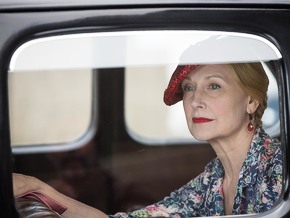
American Patricia Clarkson is a regular feature in Coixet’s films and this is their third collaboration. This underrated actress manages the clipped British accent nicely and subtly provides us with a nasty determined character who is determined to get her way within the small community she resides in, as she always does.


Thirteen-year old actress, (at the time of filming), Honor Kneafsey as bookshop assistant Christine provides a mature performance of the precocious but charming adolescent. A couple of years on, she is already a veteran of nineteen films and looks a rare talent, even though her middle class speaking voice seems a little out of sorts with Christine’s working class antecedents.


Coixet’s Suffolk doesn’t look authentic. In fact, exterior shots were filmed on location in Northern Ireland, whilst interior sets were in Spain.

However, this isn’t really a problem, as Suffolk isn’t key to the story. As I mentioned earlier, it is where author Penelope Fitzgerald resided for a time in the 1950’s whilst she worked in a secondhand bookshop. But the location could be anywhere, and not only in the UK, where closed communities exist.

“The Bookshop” is a story about courage and determination. We  learn late into the film that during WW1, Edmund was an aviator, so he is the ideal person to recognise Florence’s qualities. By contrast, General Gamart, (Reg Wilson) a veteran of the same conflict but who served in The Suffolk Regiment, comes across as the worst kind of army officer of this period, who stoops to levels of deceit to cowardly succumb to his wife’s demands.

This film is also about small town bigotry, in terms of it’s consolidated opposition to a person who doesn’t conform to their small minded way of thinking. If you are brought up in a small town or village, you may appreciate what I am writing.

The time setting of the book and film is significant. The last year of the 1950’s, a period when Britain was coming to grips with the austerity of and aftermath of  WW2, marks a time with the 1960’s, just around the corner,  a decade that transformed society. Also, Arts Centres, that sprung up after 1945, were becoming the trendy venues of the 1960’s and 1970’s, thereby marking a total contrast to the traditional British secondhand bookshop – an institution that in our era of online bookselling and e-books is slowly succumbing to its eventual inevitable demise.

It didn’t pass me by, that I was watching this film at Chapter, an arts centre in Cardiff. I pondered whether I had to give one thing up – secondhand bookshops or arts centres, which choice would I make, coming down in favour of the former. A difficult decision because i love both, but books have always featured strongly in my life. I have always lived in places where books take over the place. Even in the modest flat I live in now, I have upwards of two and a half thousand books. I will never be able to read all of them before I, (hopefully), gain admittance to that great library in the sky, but that doesn’t stop my sense of anticipation when I enter a secondhand bookshop to explore its contents. “You are never alone in a bookshop” is the closing line of this film, and if you feel as I do, then you will identify closely with this.

The satisfying climax works perfectly, but I don’t wish to give the game away by saying more here.

This film will divide the majority of viewers, into those who love it, and those who loathe it. The start is a little sluggish, but if you accept what it is trying to achieve on its own terms, then you will find this an utterly absorbing and memorable film.

Country: U.K., Spain, Germany

Language: English

Running time: 113 minutes

Certificate: PG

Continue reading Review of “The Bookshop” by Roger Barrington

Review Skyscraper by Jonathan Evans

 out of 5 stars (2 / 5)


Skyscraper knows that its concept is pretty darn impractical and plays it as big and overdramatic as it can. It goes for the swooping cinematography and punchy orchestral moments to heighten it.

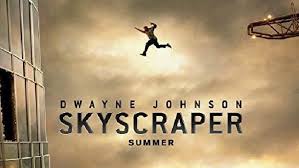
Let’s get the obvious out of the way first, it’s premise is about a man named Will Sawyer (Dwayne Johnson) inside a super high tech building, mercenaries invade said building, with his loved ones inside, forcing him to take down one bad guy at a time and navigate the building inside and out. Yes, it is like Die Hard. Though only in premise, the action set-pieces and other moments of the movie are different. Die Hard is the gritty grounded version of this scenario while Skyscraper is the bonkers, living cartoon.

But time for some more detail. Our first shot is looking up to the sky and seeing a crescent moon, we then move down to a house and then pull back to see it is surrounded by police cars, there is a hostage situation inside. They decide to send in the special forces, they surround the house, bust in and surround the husband that is about to murder his family, but he is holding his son! The leader Will Sawyer talks him down but he has a bomb strapped to him and detonates it. This kills the family and severely injures Will, only really causing the loss of half his left leg. The nurse that treats him is a woman named Sarah (Neve Campbell).

Ten years later Will and Sarah are married and have two children, they are now in Hong Kong for Will’s possible new job of being head of security for The Pearl. The tallest skyscraper ever built. It is a modern, vertical city that will become one of the great tourist attractions. If only the boss didnt make enemies who are now setting the building on fire and storing it with machine guns.

Being that this is Dwayne Johnson and in the opening, he survived taking a bomb just about to the face we don’t really feel to jeopardy in the situation. We know he’ll survive the movie and isn’t going to lose super bad. So this is a movie with only the illusion of stakes. All movies have the illusion of stakes but you understand my meaning.

Not much of the action is about gunfights less fighting and shootouts more like retrieving. Something needs to be turned off/on or there’s a race to get someplace. Dwayne Johnson is a big muscular man and he has punched out plenty of bad guys in his career and will probably go on to punch more. But for here, it is more about setting up the situation and navigating through it. I like this, it shows an action hero be more strategic and resourceful.

The lead is charismatic, he represents an amputee which is very uncommon so that deserves credit, the script implants things and pays them off later and there’s an appropriate amount of self-awareness to this crazed situation. But this is not a good movie, it’s just too dumb at times and there are not enough refreshing bits in between for an honest recommendation. But it could have been so much worse and less memorable so kudos for that!

Jonathan Evans


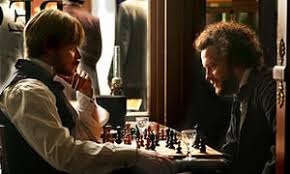
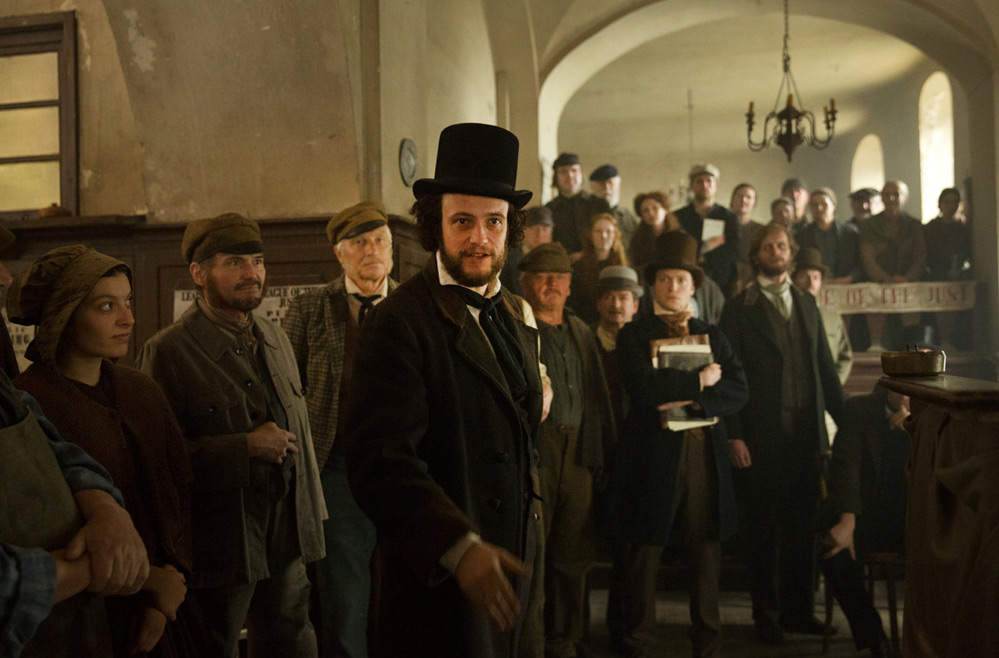
Review “The Young Karl Marx” at Chapter Cinema 1 by Roger Barrington

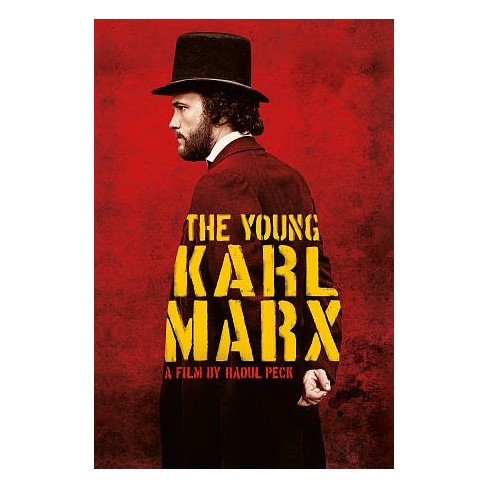
Directed by Raoul Peck August Diehl as Karl Marx Stefan Konarske as Friedrich Engels


 out of 5 stars (4 / 5)


This year marks the the bicentennial anniversary of the birth of Karl Mark, and to mark it, Haitian director Raoul Peck has made a film to commemorate this auspicious event.

When many of us think of Marx, (and I count myself among them), we have some abstract idea of a granite type entity, largely due to his tomb at Highgate Cemetery or his enormous and unfinished Magnus Opus, “Das Kapital”. Unfinished because Marx believed that the subject matter was in a permanent state of evolution. This film introduces us to the human side of Marx.

We are introduced to Marx’s family – his wife Jenny von Westphalen, (Vicky Krieps),  who came from an aristocratic Prussian family, and gave everything up to be with Marx and support his political and philosophical agendas.

In contrast, Friedrich Engels was the son of a wealthy Manchester textile manufacturer, and witnessed the hardships of the workers at first hand. which he wrote about in “The Condition of the Working Class in England” (1845), a work that Marx greatly admired. Engels had a lifelong romantic relationship with Mary Burns, (  Hannah Steele), of which little is known, other than she probably introduced Engels to inside information about the suffering of the working class on which he wrote about.

The two couples juxtaposed represent a kind of counterbalance when you take into consideration their backgrounds. Marx and his family live in poverty, finding it difficult to stay in one country for a length of time due to his radical political ideas.

There is,unavoidably, quite a lot of political and philosophical dialogue in this film. The stunning opening scene which shows a group of peasants, anxiously gathering up dead wood from the forest ground, before being the recipients of a baton charged hussars patrol, leads to a voiceover on Marx’s ideas about class struggles. “To gather green wood, one must rip it violently from the living tree. Yet gathering dead wood removes nothing from the property. Only what is already separated is removed from the property. Despite this essential difference, you call both acts theft and punish them as such. Montesquieu names two kinds of corruption: One when the people do not observe the laws. The other when the laws corrupt them. You have erased the difference between theft and gathering. But you are wrong to believe it is in your interest. The people see the punishment, but not the crime. And, as they do not see a crime…when they are punished, you should fear them, for they will take revenge.”

Marx fiery personality shows him to be an inspiring orator but intellectual bully and in contrast to the more gentler Wilhelm Weitling, the tailor/political activist who as ultimately edged out of The League of the Just, the political Utopian organisation that reorganised into the Communist League under Marx and Emngel’s influence.

In a way, the film is a buddy movie between Marx and Engels. It shows that Marx couldn’t have advanced into the powerhouse he is today without Engel’s assistance – especially his financial help.


The period covered is relatively small, from 1843 to 1848, when Marx and Engels published what is believed by many to be the most influential literary work of the nineteenth century – “The Communist Manifesto”. It’s immortal first line, ” A spectre is haunting Europe — the spectre of communism. All the powers of old Europe have entered into a holy alliance to exorcise this spectre: Pope and Tsar, Metternich and Guizot, French Radicals and German police-spies”.

Karl Marx is vividly brought to life by German actor, August Diehl and his countryman Stefan Konarske portrays Engels as a quieter, more sensitive but equally determined brother in arms. Good support is provided by Luxembourg actress Vicky Krieps as Jenny and British actress Hannah Steele as Mary.

Director  Raoul Peck, working with a pan-European cast and crew, manages to make the film look more lavish than it should do, and the sincerity of the work is unquestionable. You can’t help to be inspired by the energy and commitment shown by these young radicals of a century and a half ago, and it made me wonder whether we will see their like again in the future. Everything today seems so anodyne and people are afraid to speak their minds either due to retribution or fear of political correctness. So nothing much changes and the beneficiaries of this maintenance of the status quo is the bourgeoisie that should remind us that the class struggle is still present and as vital now as it was during Marx and Engels time.

“The Young Karl Marx” is an earnest didactic film, that has enough human interest within it to make it accessible and enjoyable to many cinema-goers.

I shall finish off by quoting Wilhelm Weitling in a line taken directly from the film. “Critique devours everything that exists. And when nothing is left, it devours itself”. On that note, I had better end.

Country: France, Germany Gelgium

Language: German, French, English with English subtitles where needed.

Duration: 118 minutes

It plays at Chapter in Cardiff until 5th July.

https://www.chapter.org/young-karl-marx-ctba

Roger Barrington


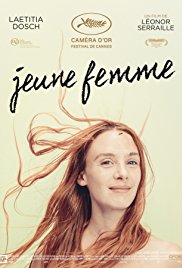
Review “Jeune Femme” aka “Montparnasse Bienvenue” watched at Chapter Cinema 1 by Roger Barrington

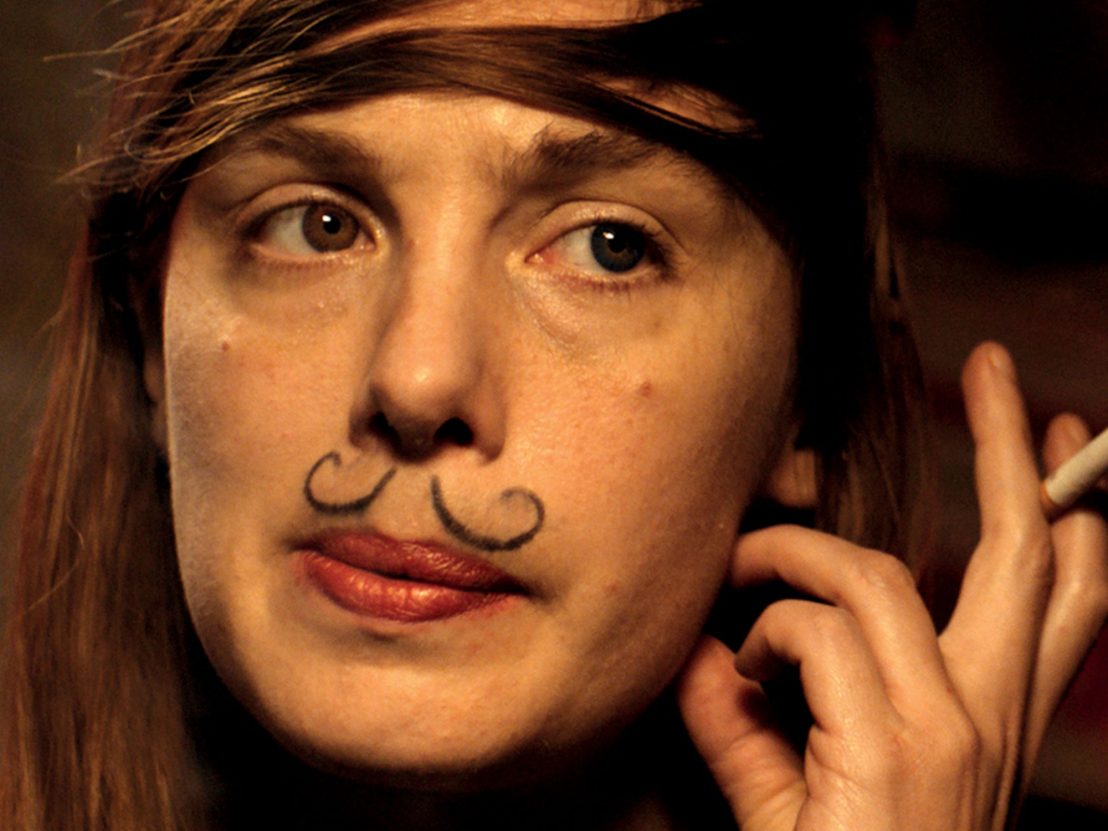
Directed by Léonor Serraille Laetitia Dosch as Paula


 out of 5 stars (4.5 / 5)


Leonor Serraille’s terrific debut film, “Jeune Femme” also known as “Montparnasse Bienvenue” was shown at the 2017 Cannes Film Festival where it won the Camera D’Or award for best first feature.

The titles is a little incongruous in either of its two version. At 31, Paula, the heroine of the story is hardly a young girl. Montparnasse Bienvenue is the name of one of the busiest Metro stations in the Paris underground where a number of lines converge. However, nothing of note in the film happens here.

Maybe “Jeune Girl” is a reflection of Paula’s sometimes immature actions. And Montparnasse Bienvenue(Montparnasse Welcome (you) can be considered ironic, because there is little in terms of cinematography that is particularly welcoming in this film. In fact, for a film made in Paris, the director manages to make it look like any other inner city, with its functionality and ugliness. This represents Paula’s impression of the French capital which she dislikes. “I think Paris is a city that doesn’t like people” .  Or possibly, “Montparnasse Bienvenue” with its confusing convergence of metro lines represents how complicated are everyday life is in the 21st century.

The film starts in a ferocious manner where we see Paula headbutting an apartment door in response to her requests for entry being disregarded.

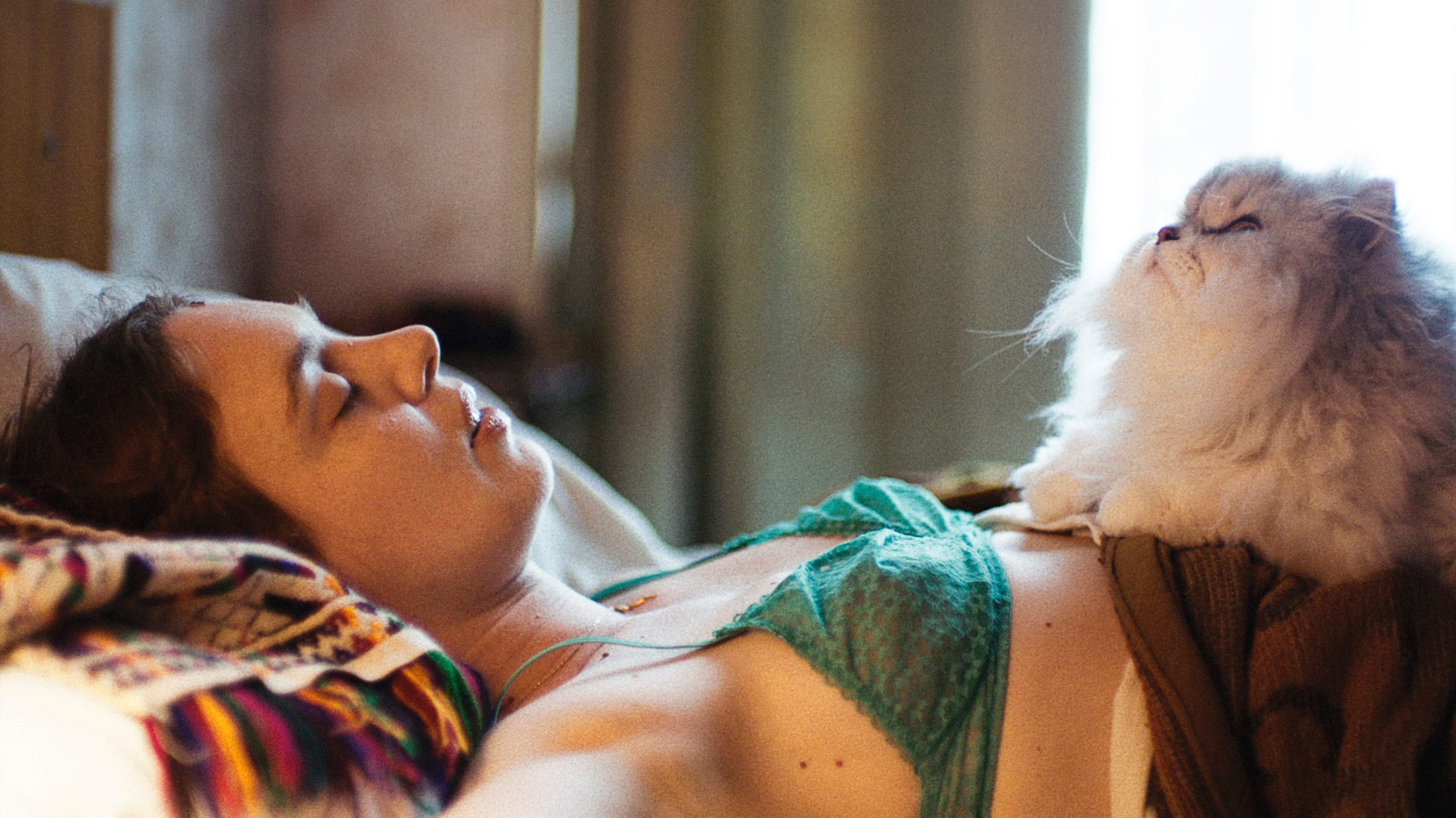
Having injured her head, she attends hospital, and in a rare lengthy scene, we learn that she was trying to gain entry into her lover of ten year’s flat who has obviously wanted to end the relationship. Returning after this event to the flat she notices her ex-lover’s cat and decides to catnap it. Clutching this white furry ball to her chest, we witness Paula’s attempt to rebuild her life and the encounters she has along the way.


In a way, it is an anti-existential film. For Paula lives in the moment paying total disregard for consequences of her actions. Seeking a place to lay her head, (and the cat’s), she calls upon a friend who is prepared to put her up. However, the heavily pregnant friend makes a cutting remark about the cat, prompting Paula to ask whether she thinks she will make a fit mother. So, she and cat get promptly kicked out.

There is a very clever scene at Montparnasse Cemetery, where Paula finds an open tomb to shelter her cat from the rain. I don’t think it is a coincidence that at this cemetery you have buried John-Paul Sarte and his lover Simone de Beauvoir, probably the two greatest existentialists of the twentieth century. So living in the moment, she finds an open tomb a useful place to satisfy her needs at that time, whereas Sarte and de Beauvoir were useless remains – a remnant of the past.

She meets a girl who mistakes her for an old friend due to Paula’s heterochromia iridis – different coloured eyes. Excited by this, the girl takes her home to stay but Paula doesn’t think to tell her that in fact she wasn’t that friend, and this is only learned later on.


Looking for work, she takes on a job as a home help and childminder for a dance company director. At first, the little girl is serious and guarded, so with Paula being her inimitable self, it almost seems like role reversal. But gradually  the girl takes to Paula and they establish a relationship which appears to open up a new world for the strictly brought up child. Whether the reason is that the mother is jealous of Paula’s easygoing relationship with her daughter, or something else, she decides to look for a replacement.

Paula also takes a ship in a Knicker Bar section of a department store. It is only a temporary job, (but that isn’t going to phase Paula). and she takes to it well. She establishes a friendly relationship with an Afro French security guard for the mall whether the store is located. He is a steady guy who you think might act as a rudder for Paula’s spontaneous lifestyle.

Eventually we are introduced to Paula’s ex Joachim, (Grégoire Monsaingeon), who is a professor and intellectual, in contrast to Paula, who by her own admission states that she is not very clever. Joachim is older than Paula and it would seem that she may be attracted to older men due to her father being missing in her life. Joachim  now wants to get back together with Paula, and this desire is intensified when he learns that Paula is pregnant with his child. He comes across as being a supercilious and condescending man who comes close to sexually assaulting Paula when she turns down his advances.

Paula is estranged from her mother – we don’t know the reason other than her mother complains that she is always leaving. She literally pushes her away and when Paula breaks into her mother’s home, there is a poignant scene when she is clinging on to the banister with both arms and legs as her mother tries to push her out.  However, there does seem to be some acceptance after this on the part of the mother, but we don’t know how long this will last.

Along the way, the director provides some social comment. At the knicker bar where Paula works, each girl has to be dress uniformly and provide a branded look in their personal appearance. Therefore they walk around the store like mindless clones. During a lunch break when she is talking to her friend, Ousmane, the security guy, she is reminded in her ear-piece that breaks are for only 30 minutes not 35, reminding us of the “Big Brother” environment that often plagues the modern workplace. Ousmane has a degree in economics but is working in security. Maybe this is down to his ethnic origin.


The film is a triumph for Laetitia Dosch as Paula. She is in every scene of the movie and gives a totally uninhibited and honest portrayal of a woman who just gets on with her life and deals with problematic situations as they arise without guarding against them.

Through the skill of director   Léonor Serraille, we view the movie in the moment also. It is very unusual in that way – it immerses you into Paula’s lifestyle which typifies modern living – especially in the great metropoles of the world. I’m tempted to say that it is a film about alienation and isolation – there is an early references to Barentsburg, a settlement on the Norwegian island of Svalbard, (formerly Spitzbergen) and located north of the Artic Circle. You can’t get much more isolated than that.  Alienation and isolation are a factor, but I think  this film is more a testament of Paula’s ability to overcome her difficulties and it leaves a surprisingly uplifting effect on you.

This movie won’t be to everyone’s taste, but if you like offbeat comedy-drama, in the classic French New Wave style, then I can recommend it unreservedly.

“Jeune Femme” has finished its short run at Chapter Cinema 1, but can still be found at selected locations in the U.K.

County: France

Language: French with English subtitles

Duration: 97 minutes

Cert. 15 for mild nudity and occasional strong language and sexual threat.


Roger Barrington


Review Ocean’s 8 by Jonathan Evans

 out of 5 stars (3 / 5)

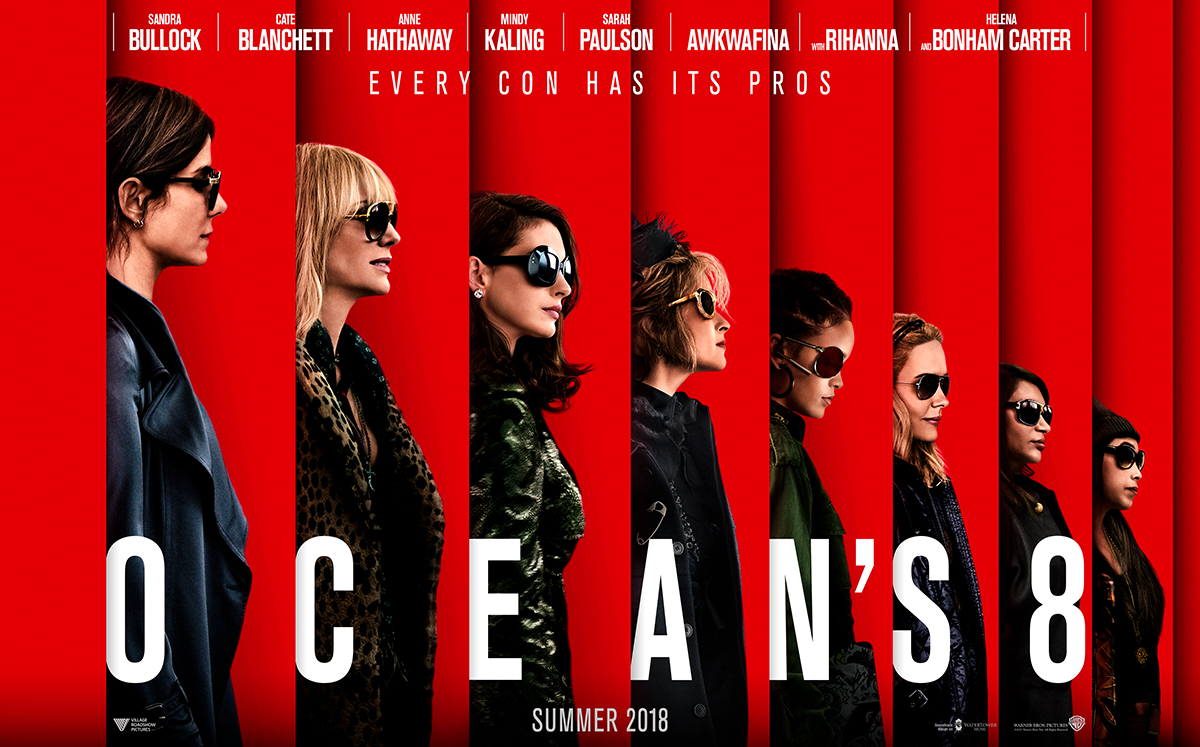
When Debbie Ocean is describing her new plan for a heist to her colleague she says that she doesn’t want to rob a bank simply because that is boring. This describes her character as well as the Ocean’s movies as a whole, a simple heist in a location we all know and have seen before isn’t what these movies were conceived for. They are needlessly complicated and ambitious because that is simply more interesting and attractive.

Said job is getting into a special event and getting a one hundred and fifty million dollar necklace to be worn by a movie star Daphne Kluger (Anne Hathaway) who is hosting the event, stealing the necklace, sell it off and make a profit. Again, just robbing a bank would be so much more simple but also less interesting.

But let’s backtrack. We open with Debbie Ocean (Sandra Bullock) being released from prison and mourning the loss of her brother (who may or may not really be dead), she instantly has a job in mind. She gets in contact with her old buddy Lou (Cate Blanchette), she is enticed and agrees.

In order to pull off the job, a team needs to be assembled, each with a specific set of skills. There’s Amita (Mindy Kaling), an expert in jewellery cutting. Tammy (Sarah Paulson) who is all about shipping hot items. Constance (Awkwafina), a fast-talking, fast hand card player. Nine Ball (Rhianna), a codename for an offbeat hacker. Rose Weil (Helena Bonham Carter), a washed-up fashion designer. Each of them has a purpose to serve and fills in certain character type within the movie.

With movies about plans, a certain chunk of the movie is about explaining the plan to both the team and the audience about how it’s supposed to go. Then it is put into action and either something goes dramatically wrong, something shakes it up, or it only seems to have gone wrong but really it all went off without a hitch. There wouldn’t be much suspense if all went smoothly, at some point, there has to be a piece that isn’t going as they intended.

Director and writer Gary Ross brings a sharp, smooth mentality to the choreography of the camera movement. It slickly moves through the sets and with the cameras and with mostly long takes with a few snappy closeups. This is the way to shoot a movie like this, the characters are confident and talk fast, you want the language of the camera to reflect the well thought out and choreographed nature. If it was handheld and shaky then it would give a rocky, chaotic feel it, which would be a mistake.

You don’t need to see the other Ocean’s movies to enjoy this one. There is a certain amount of emphasis on Debbies brother and if you are at least aware that there are other Ocen’s movies then you’ll get it but seeing them is not mandatory. I myself have only ever seen the first movie (Ocean’s 11) and found this movie stood on its own merits fine.

This movie seeks to entertain by doing things a little grander and with more pizazz. It reinvents nothing and accomplishes nothing to great feats. But there is talent in front and behind the camera and both gel well enough to warrant a watch for fun’s sake.