All posts by Tanica Psalmist

My name is Tanica Psalmist. I'm a spoken word artist, emerging playwright and theatre critic.

It Tastes Like Home, Divergent Theatre Collective, The Bread and Roses Theatre by Tanica Psalmist

 out of 5 stars (4 / 5)

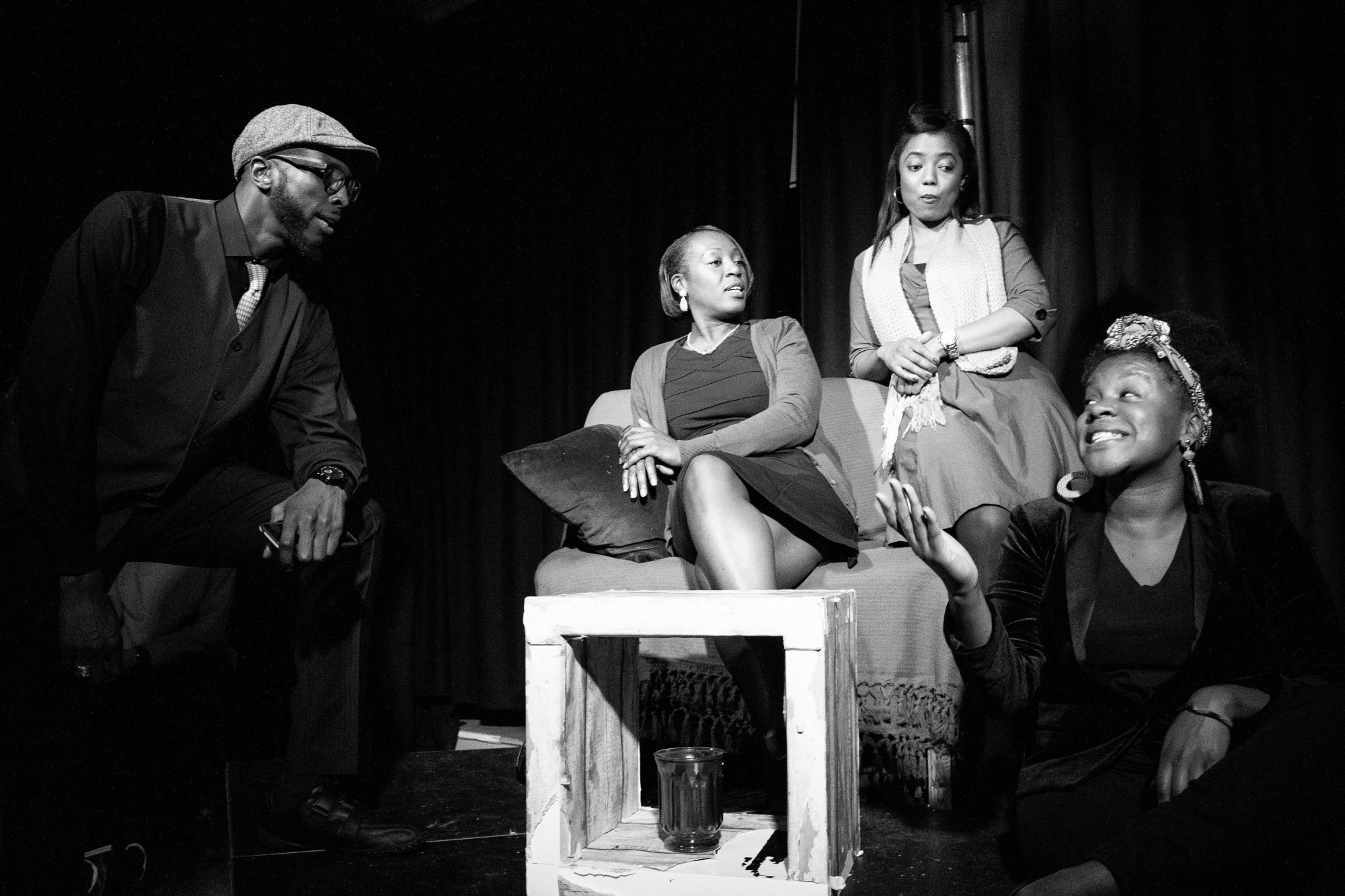
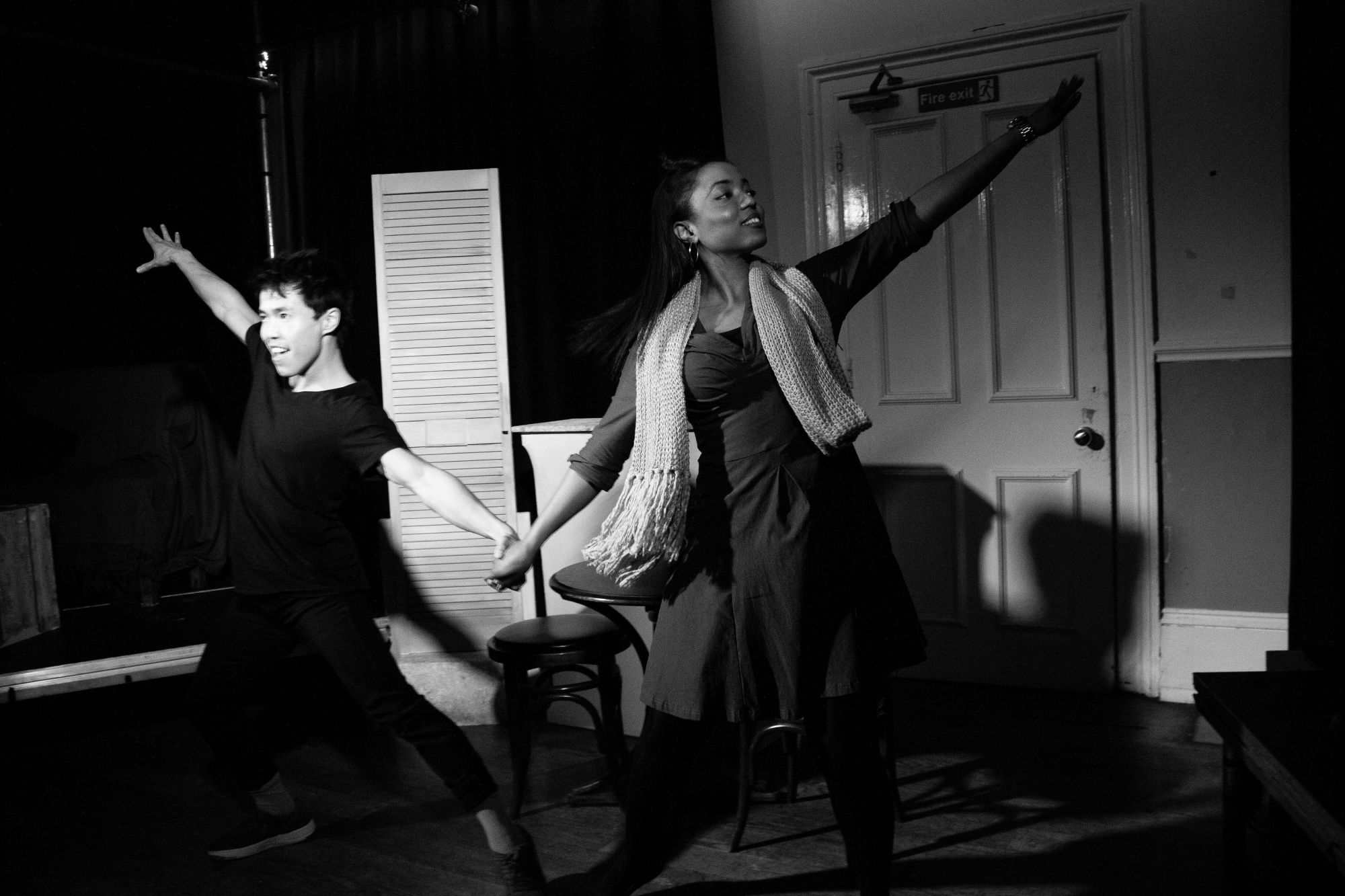
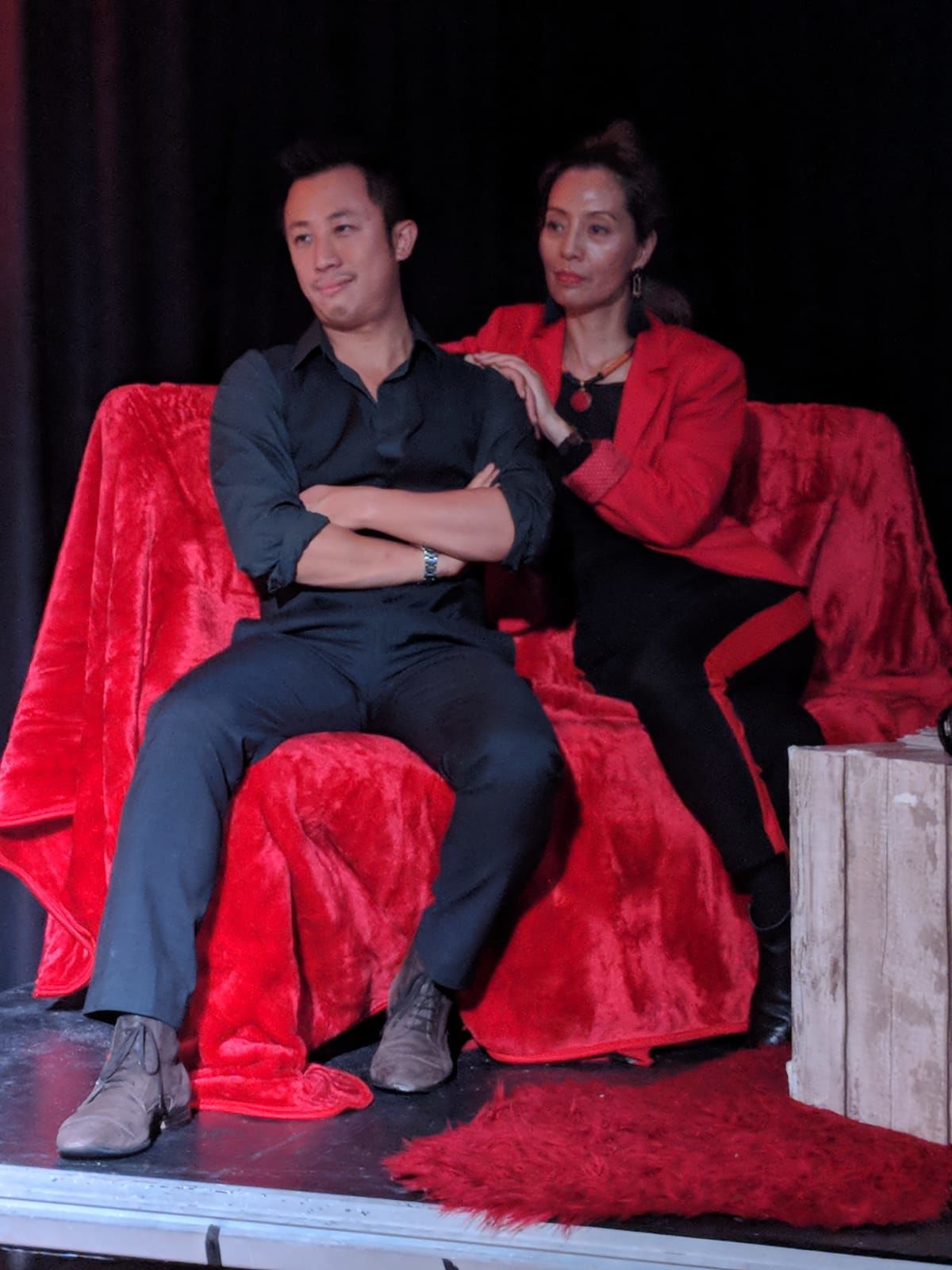
Dim sum dumplings with Jerk chicken, Jerk chicken in dim sum dumplings with Plantain; two different worlds come together with fusions of oriental spices and Jamaican entices. A tale of relatable sacrifices and connections made via online devices.

It Tastes Like Home is written by Lorna Wells, music by Eudora Yutong Qiuo; is fused with Reggae and Chinese influences.

Two well cultured people connect to reflect a cooking career as a chef. Curry goat with egg fried rice sparkles a seasoned, yummy paradise. Inspiring them to exercise their passion for food with the hope to one day see their desires breakthrough. The character Yi who’s of Chinese descent consistently wears a mysterious mask to disguise himself whenever he’s doing his online reviews; meanwhile Camillia from Jamaican descent consistently tunes in to watch his channel whenever he’s online updating the world on his parents new upcoming authentic dishes. Camillia is oblivious to the fact she’s a regular customer to the anonymous bloggers diner; however Yi is aware of who she is, which gives this play an hysterical twist. His attraction to the Island girl increases daily but he decides to remain secretive about it, acknowledging that he may not receive his parents approval. We see an insight into  two different culture’s traditions, stereotypes and complexities.

A beautiful tale of two worlds in one life, themed around interracial relationships, intertwined culture, family standards, biracial acceptance, Identity and family disputes. An emotional cycle of when harmony fulfils happiness and morals and passion are stirred together. A multicultural musical exploiting the first generations of British citizens from different ethnic origins, searching for hope and belonging.

Tanica Psamist

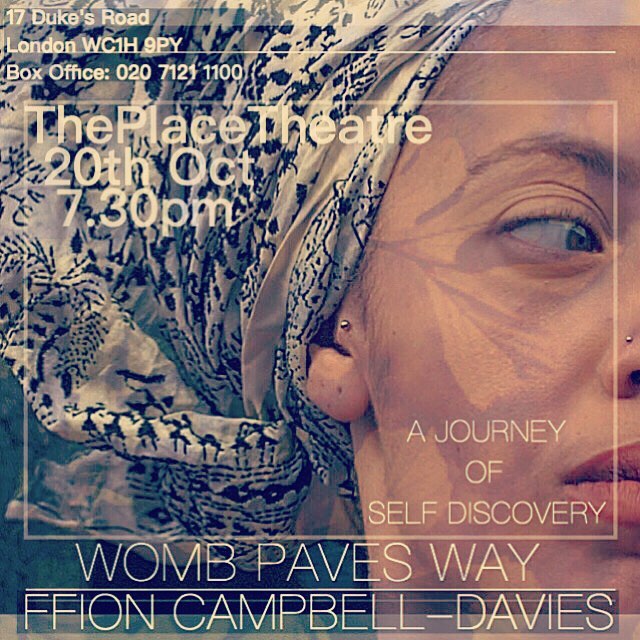
Womb Paves Way, The Place, Ffion-Campbell-Davies by Tanica Psalmist


 out of 5 stars (5 / 5)


During the beginning sequence of this dance piece we saw a tranquil essence of her head carrying a basket. Ffion resembles traditional class, depicting strong and dignified ethnic women. Ffion walks eloquently at ease whilst balancing flawlessly from afar in the dark, gradually getting closer to the moonlit spotlight, elegantly lifting the basket from her head into her arms to hold, scattering what looked like red petals on to the ground to surround her; simultaneously singing aloud ‘wade in the water’.

She was dressed in a white colonial dress, which had a petticoat style, made out of light fabrics consisting of cotton and silk. Ffion dressed in this way conveyed a representation of her ancient character, an ancestor, whose generation would later become an inhabitant of a colony.

She sang in mid-range Soprano, however suddenly her tone of voice swiftly transitioned into trembling unsettling sound effects with heavy gushing, gasp noises. This calm character had now presented emotions of pain, worry, hurt, neglect and sorrow. Her stability, balance and movement were now operating in opposition to her original energy. Her speed, direction of her body exhibited a perceived sense of disturbia in her characterisation leading her body to begin to twist and turn, push and pull, dive and duck, bend and crease as well as crawl and sweep up everything that had fallen out of her basket and lost with no hope of accumulating anything back. She slowly gave up and climbed into her basket whilst looking around her with a sense of burden and struck of darkness and curse upon her.

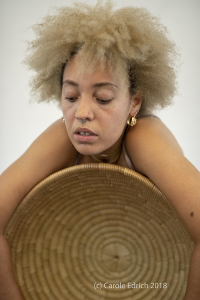
FFion Campbell-Davies in Womb Paves Way, (c) Carole Edrich 2018

Elimination of the torture identified in this woman spiritually came to an end once Ffion stepped out of the basket positioning her body directly to face the eyes of the audience, where we see she had more to say then give. Her soft radiant voice emotionally connecting, stemmed from her strong introductory to her family’s history, background and effects of colonialism. Ffion presented a strong autobiography of her conscious state of mind on her ancestry, with what it conveyed to her being a female on the rope to self-discovery, identity and self-expression. She then took us through an emotional journey, radiating a translucent spiritual longing for connectivity through the expression of dance, her choice of movement is daring, thrilling and resonating as the flexibility of her limbs leads her to strip down to comfortability, taking off her heap-wrap, undoing her braids so that she could caress her hair, she then subtly took of the top layer of her dress to be more free and sensual with her creativity, freedom and openness to the acknowledgment of her body.

Ffion’s sensory of movement is breathtakingly subjective and rational, deeper into her connectivity to her ancestry and acceptance of her women-identity and culture; she submits uplifting, rooted, tribal movements symbolising an unchained, happy and charismatic attitude to her individuality and regenerated mind-set. Ffion’s increased energy and fluidity from her feet travelled through to her arms projecting aspiration, hope, structure, purpose and gratitude.

A heartfelt, passionate, sincere, genuine, deep and fulfilling story told through dance, compelling music and storytelling. Conveying a fusion of emotion and reaching a place of acceptance in your skin and being; as well as having obedience to the fruits of your sprit in order to receive enlightenment, self-love, value and happiness of your nature.

Tanica Psalmist


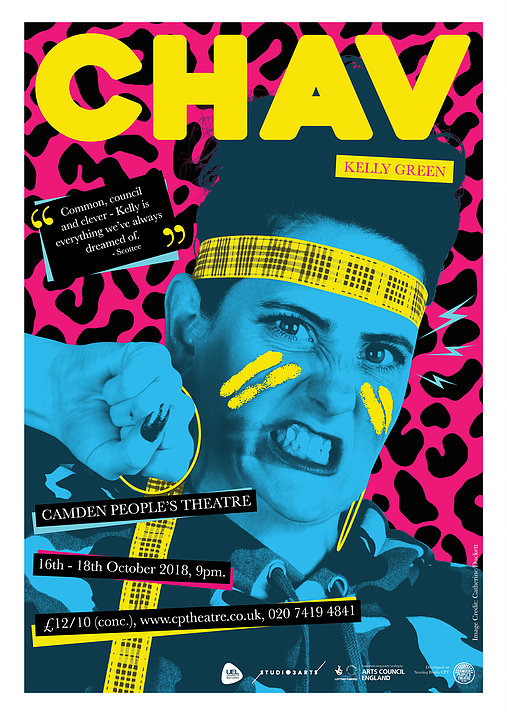
Review Chav by Kelly Green, Camdens Peoples Theatre by Tanica Psalmist

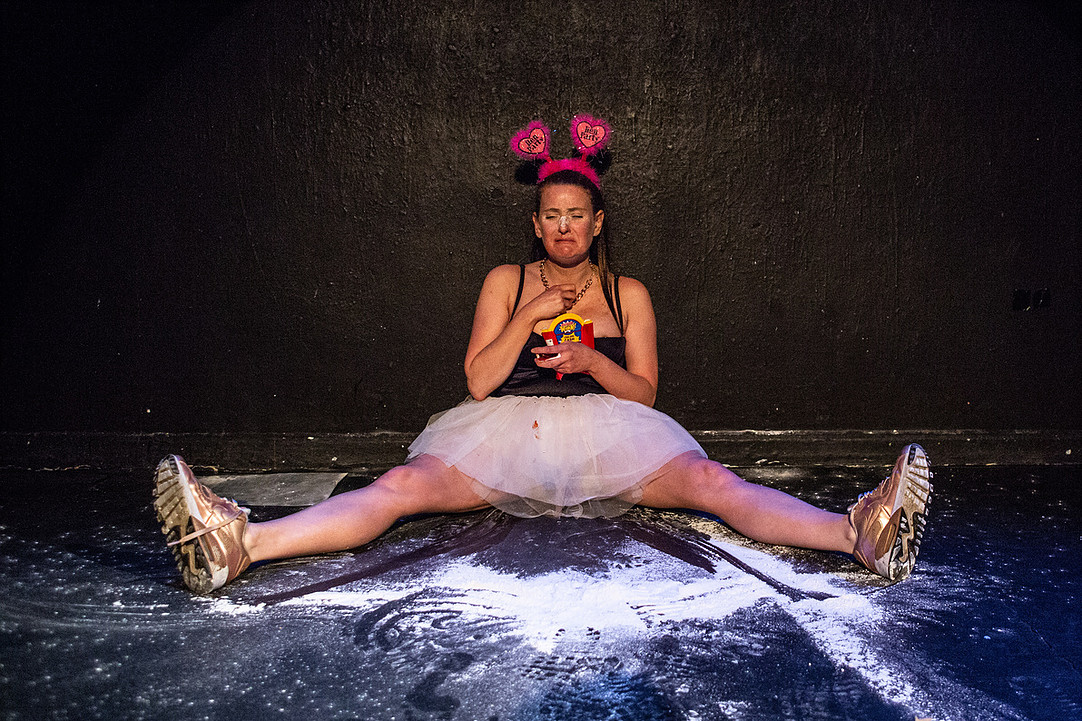
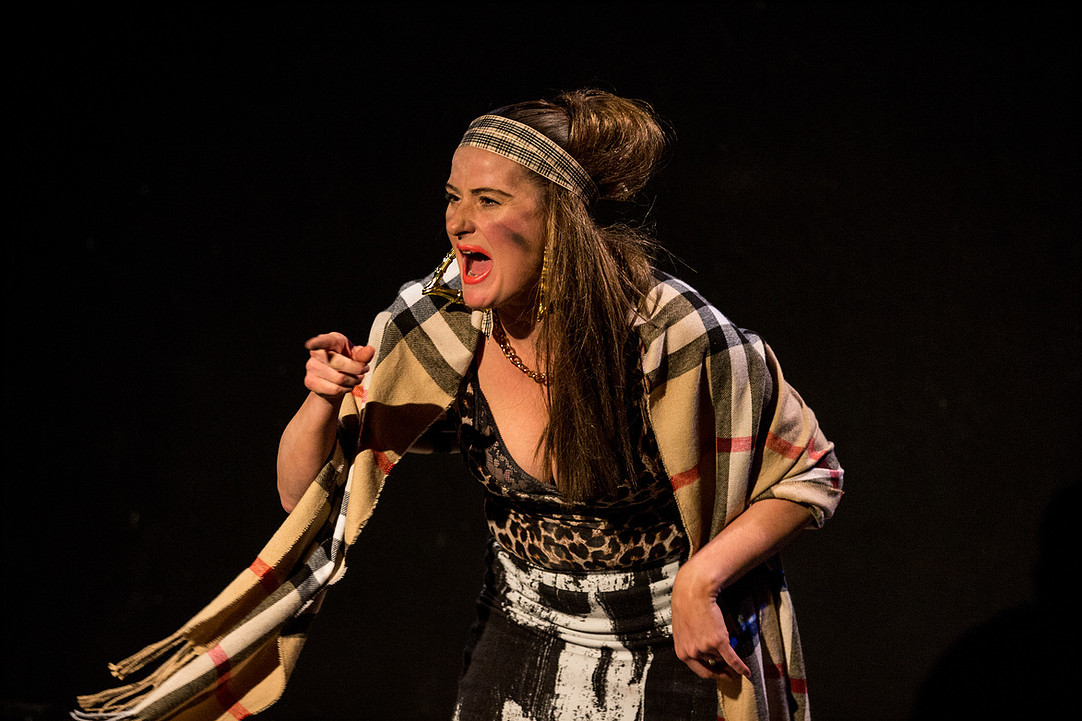
Chav is a performed and written by Kelly Green, the play foretells Kelly Green’s internal story from when she was a girl developing in to a woman finding herself and articulating her voice as a lady, who was a single mum who felt disconnected to society and affiliated to labels by judgmental critics in her community.

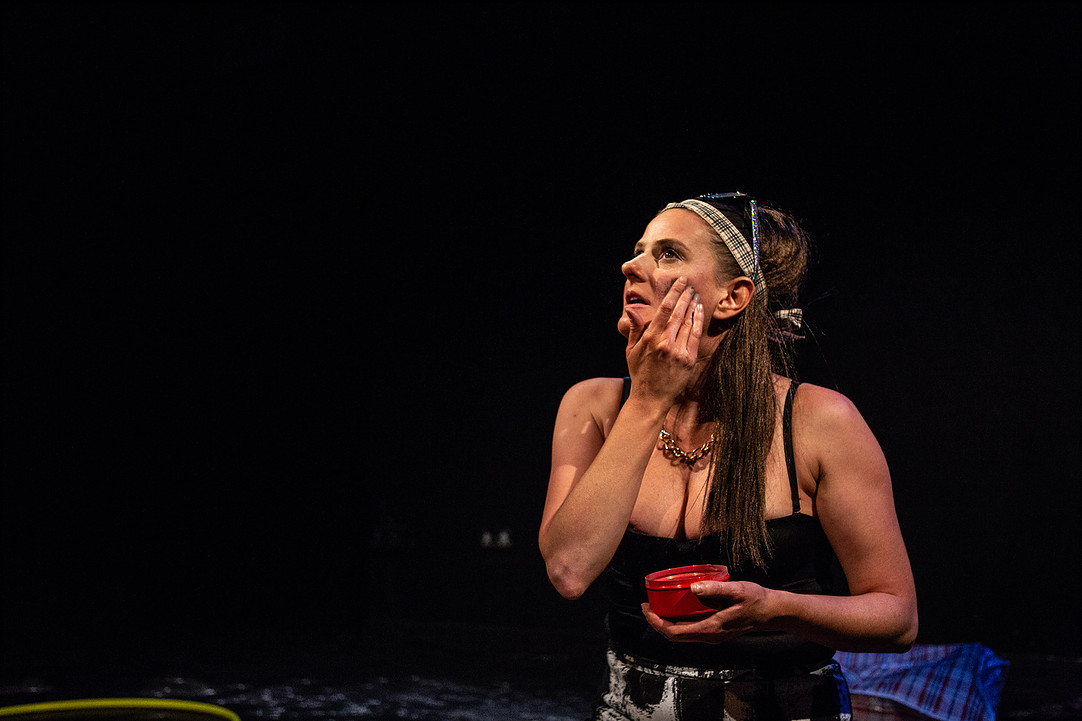
All photo credits Ali Wright

We see how fate was a gateway for her to escape her pain and permitted an escape for her to willingly explore herself as a PHD student, artist and employee. Her performance cultivates awareness of a captivating society that’s held within a social culture, easily lost and withdrawn from the torment inflicted in to young females, who may also be struggling to adjust to life, fitting into the stereotype of a chav.

Chav is an immersive, sticky and engaging solo play; an autobiographical journey expressing academic discrimination, family complexities, class struggles, judgments, political support, working- class female identity and internal conflicts circulated around growing up in anger from not being taken seriously by the masses. This play is a testimonial in to what middle class individuals’ life can detect growing up feeling detached from home, school and portraying a stereotypical chav in their social life.

Chav is fused with breaking fourth wall elements, projections, hysterical clichés and frustrations, exportation of an exact depiction of the struggle. The audience experiences phases of a rave feel with a depiction of the sentimental feelings and the fabrication of England. This production is enticed with expressions and intimate real life moments and powerful emotions which we can all relate to in spite of our class.

Tanica Psalmist

Review The Oreo Complex, Rich Mix by Tanica Psalmist

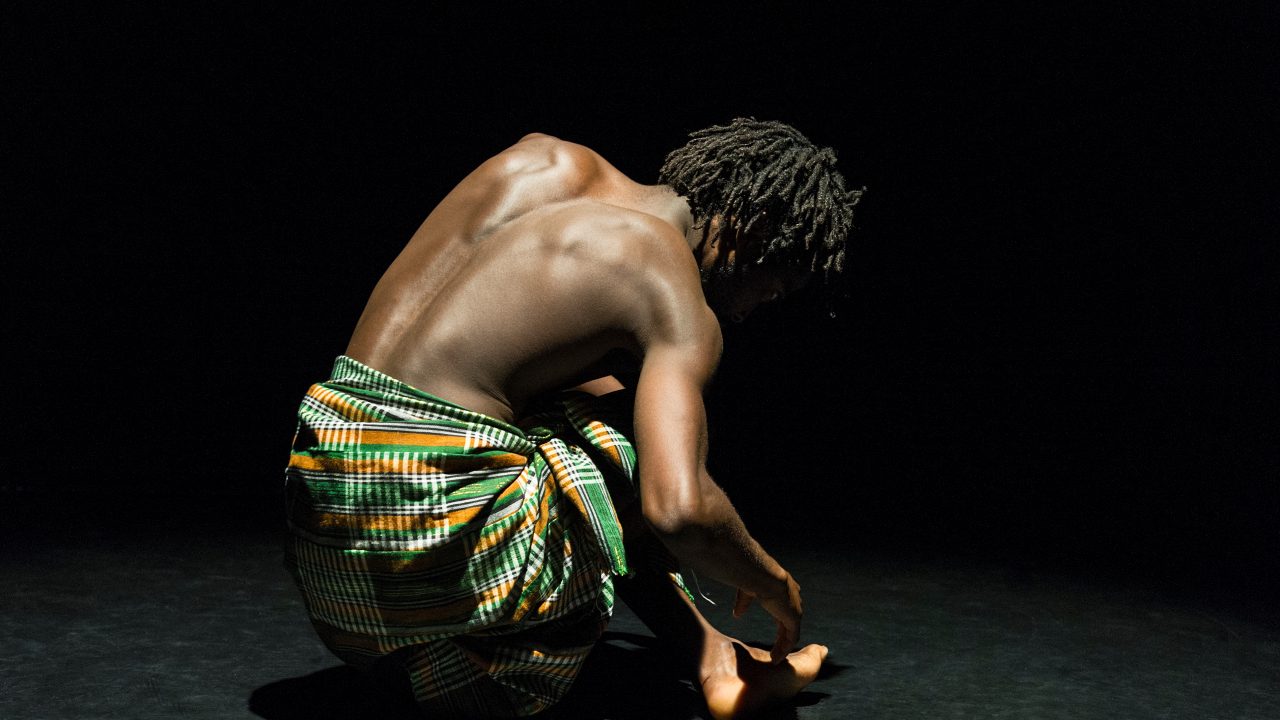
The Oreo Complex is a solo production, written and performed by Isaac-Ouro-Gnao. The beginning starts off with rooted and enchanted African tribal music produced by Ffion-Cambell-Davies. The audience were seated in a circular formation absorbing the subtle, repetitive tribal moves. Isaac positioned in the centre of the space was perfect to capture his worried facial expressions when saying the word ‘Oreo’ to himself, his traditional African clothing as well as the comfortability of him being in his skin; which was conveyed through the fluidity in his movement.

Slowly, Isaac strips down to nothing but a langot, which triggers him to start scavenging in to the audience’s space in search of clothing to ensemble a classic suit to wear. When Isaac finds the elements of clothing he instantly puts them on, a sign of relief and contentment is expressed on his face once fully dressed in to his new outfit. He then breaks the fourth wall by introducing himself where we see he is no longer the born and bred African witnessed in the beginning but a Black British, presenting himself as a spokesman.

It is from that point the play becomes a promenade performance; Isaac becomes a tour guide and invites the audience members into another space in the venue to experience his exhibition. During the exhibition experience, the audience are involved as Isaac interestingly stays in character but interacts with different members to read out transcripts, google search statistics, analyse the photography on the walls of him; which came to life when you got a deeper meaning in to what the imagery displayed. We are then brought in to a different part in the space which contained chairs and beans bags for a cinema experience; playing an audio visual spoken word clip of Isaac, repetitively using metaphorical references to an oreo to express his feelings which got faster as the clip went on. The phrase that stood out in particular was when he says ‘Unleash me, Dip me in your milk, dunken my complexity, white wash my existence’.

As we went around the space, Isaac did a fantastic job dissecting the origin of where the name calling of Oreo stemmed from. The space became an open conversation to those guilty of identifying others as an Oreo or a victim of being called one.

The Oreo Complex is all about unravelling the Oreo label, depicting the negative connotations derived and afflicted, with the effects it can have on the conscious being identified as one; especially when you have come from another culture and have to adapt in a new country, whilst also not detaching from your roots.

The narrative within this play is convincing as Isaac uses his body and poetical skill to reflect the psychological effect society can have on the brain, by derogatory name calling. The Oreo Complex is truly a captivating, unique production; conveying emotion through dance, poetry and film to simulate your thinking.

Tanica Psalmist

Review Everything I Am, Camden Peoples Theatre by Tanica Psalmist.

Everything I Am is played and written by Natasha Simone, the play features a series of events based on her life as a young black women who’s queer, West Indian, feminist, Kayne-West fanatic and a university student finding her identity, contemplating acceptance of her sexuality from her homophobic family and dealing with black stereotypes from ignorantly racist peers.

The play is a solo act theming controversy, members of both the LGBT society and African Caribbean society; the disputes from how being a member of both societies aspired, confessions, ultra ego of celebrity Kanye guiding her through as the king of speaking his mind, whilst applying for the role of student welfare officer at the same time.

Solo act Natasha Simone, does a tremendous job roleplaying via characterisation techniques and giving the audience an insight into what her peers, family members, friends and associates were like. There are cues of her dealing with peer pressure and insensitivity by her privileged peers. The ambience sets the perfect mood when switching in-between characters and transitioning back to herself.

Intensive discussions from opposing peers on feminism arose, during an African Caribbean society meet-up, who described the movement as a white curse to prevent the sisters from sticking by their brothers; stirring rational comebacks from Natasha Simone, escalating to a heated conversation which could either make or break her.

Everything I am is a raw performance that is relatable, debatable and sincere. Natasha Simone is hysterically funny. Her play is deeply original and moving, based primarily on the exploration of identity, celebrity worship and power.

Tanica Psalmist.

Review Freeman, Strictly Arts seen at Canada Water Theatre by Tanica Psalmist

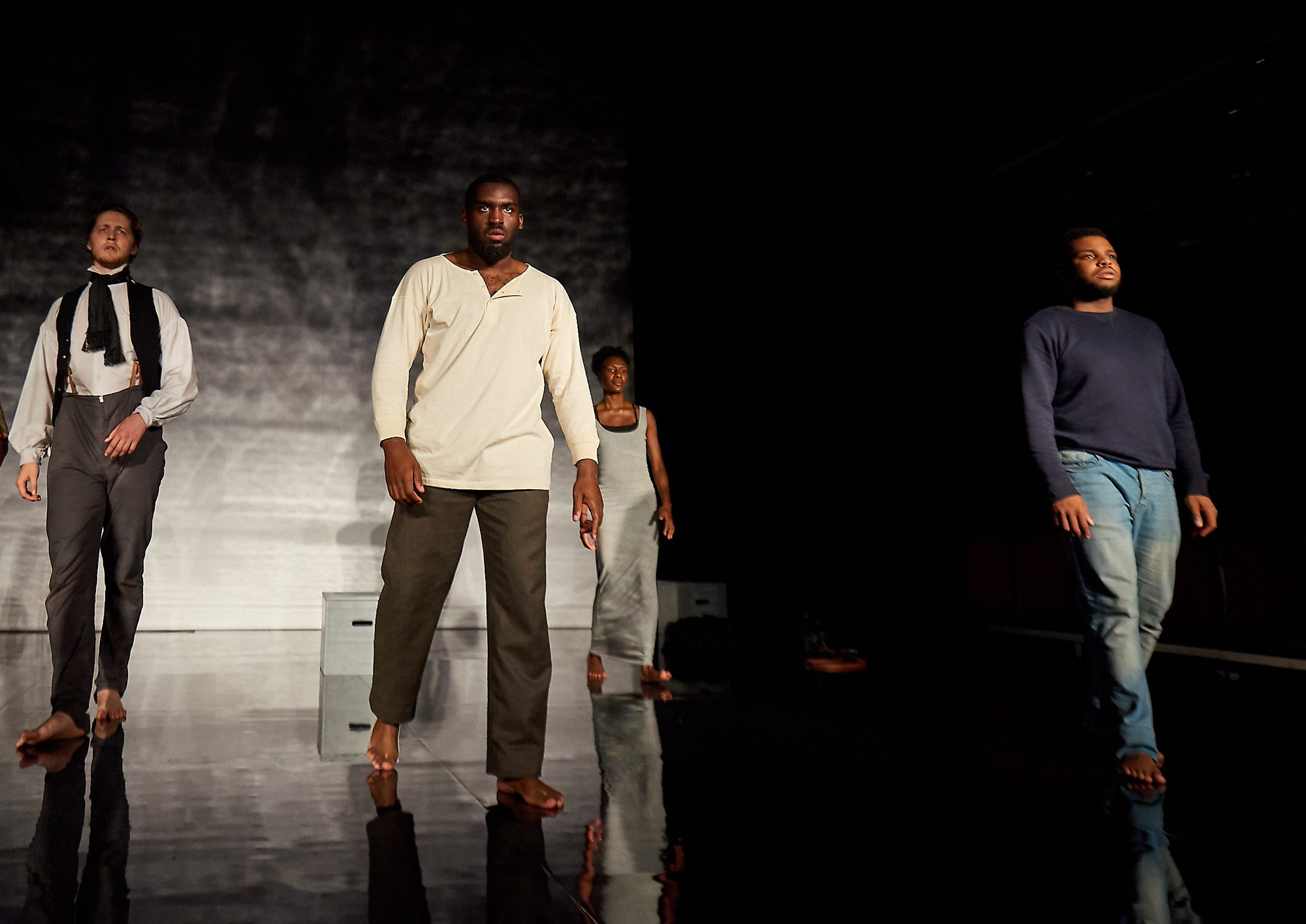
The production Freeman by writer Camilla Whitehall in collaboration with Strictly Arts; is a graphic depiction of past victims who’d had severe mistreatment from the hands of the authority. Freeman re-enacts real life incidences of police brutality and the effects it left behind to the relatives of those lives lost to injustice, taking you as far back as the Eighteenth century to present day where we’re shown sequences of institutional racism permitting these fatal attacks.

Out of the six cast members, there was a solo white performer’ each of them did a remarkably believable job embodying real life people who had existed, uniquely bringing their past experiences and individual perspectives of raw, deep and reflective testimonials in fine detail to the stage.

The intimate space had minimal features of mise-en-scene apart from different music genres and lighting effects. The cast throughout the entire play mainly used their bodies to form moving objects, set a scene or express the type of place they were situated in. Various accents from the casts were used to portray several characters; impersonating English, Southern American and West African which was done perfectly when illustrating a different sense of culture. Some of the characters role-played were Sandra Bland (2015), Sarah Reed (2016), William Freeman (1847) and David Oluwale (1969); victims of Collective failures within society.

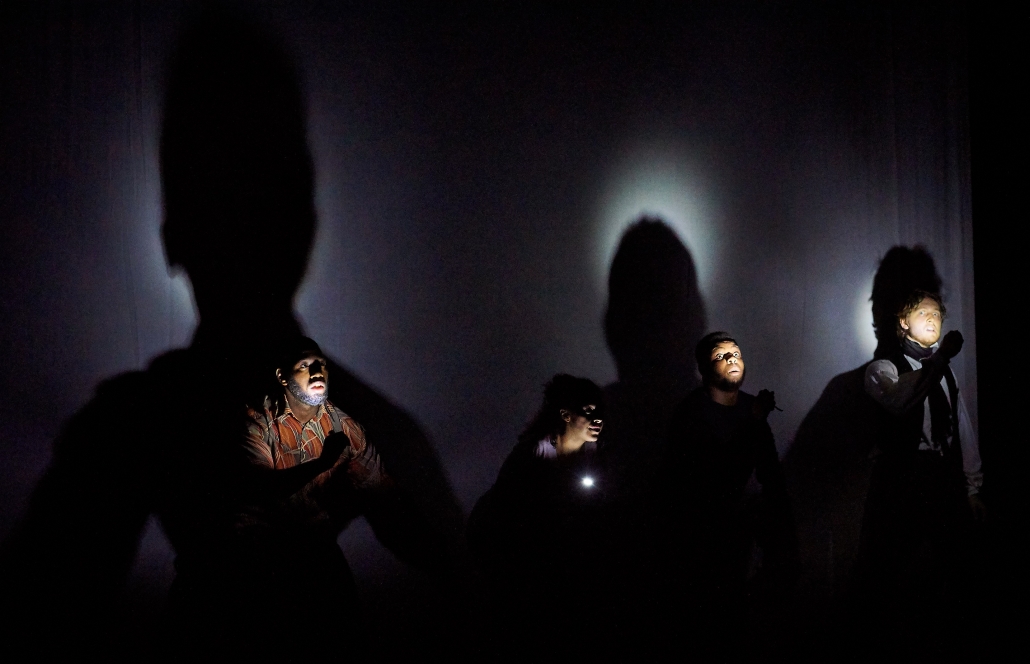
What helped to make Freeman such a powerful play was the projections and the incredible shadow puppetry visually displayed, to create comical effects. The production infused scenes with traditional African moves and Rock and Roll Classic fifties dancing with various styles, stunts and eloquent moves. Exhibiting a night club and times when dance styles from other races would be explored and embraced. Physical theatre techniques were an element incorporated to convey battling, restraining and vulnerability.

Freeman is an educational play, cohering factual statistics and documented information foretelling the incidences of fateful traumatic attacks throughout the years in police custody and on-going suffering which correlated to mental health; provoked from irrationalised victimising and the duration spent incarcerated as guilty under an oppressive system. Freeman is empowering, enlightening and revolutionary, translating history in to a story format.

A deep, emotionally compelling production!

Tanica Psalmist

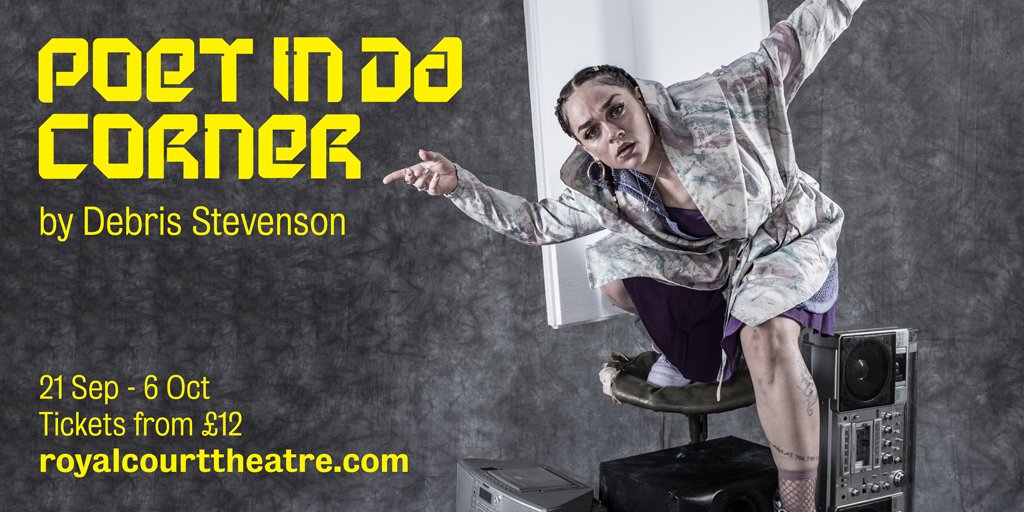
Review Poet In Da Corner, Debris Stevenson, Royal Court Theatre by Tanica Psalmist

POET IN THE CORNER is a production that foretells Debris Stevenson’s internal story from when she was a girl developing in to a woman finding herself and then articulating her voice exclaiming why her and many people within the community, who feel disenfranchised, have connected and affiliated to Grime. We see how Grime was a gateway for her to escape her pain and permitted permission for her to willingly explore herself as a female, artist and individual. It cultivates awareness of a captivating society that’s held within a social culture, easily lost and withdrawn from the torment inflicted in to the young, who may also be struggling to adjust to life so confide in the culture of Grime music.

The surrealism featured in Debris’ play openly expressed learning difficulties, family complexities, Sexuality, mental struggles, exploration of the body, attempting to adjust to religion, family standards, identity crisis, unrealistic devotions, bullying, friendship disputes circulated around pulling each other up and the misunderstood appreciation all manifesting under the same roof. This gave an empowerment testimonial in to what Debris’ life was like growing up feeling detached from home, school and her social life.

The set majestically opened up formulating a moving circular shape; one of the cast members opened up as an open format live DJ, lively and vibrantly creating a gig feel setting in the theatre. Debris brought a taste of her rhythmic, fiery and raw lyrics incorporated in numerous sequences within the play. Immersive techniques were used when artist and lyricst Jammz who was discreetly seated in the audience interacting with Debris on set, smartly causing a scene by increasing tension away from the stage and in to the audience. We then see Jammz eventually being escorted on to the stage, bringing double the heat, radiating from his microphone exhilarating even more speed, energy, passion and insight in to his perspective and elements of his incomparable struggles to hers growing up as a black man in a council estate with limited opportunities with a single mother. Debris Stevenson sparks a rational comeback, which exhibits how her being a Caucasian female doesn’t deflate the fact she also has struggles. Emphasising how both herself and him coming from different worlds, but yet have so many controversial, similar struggles is the emphasis to the value of them respecting each other’s struggle.

Poet in the Corner is fused with breaking fourth wall elements, projections, hot dance moves consisting of basement, krumping and street, exportation of the limitation through commercialised media, power of poetry, physical theatre techniques and a grime concert feel , rave feel and gig all wrapped up in one with a depiction of the sentimental artistic, fabrication of England. This production is enticed with expressions and intimate real life moments, discussions and powerful emotions. It is definitely a production worth seeing, an experience for all!

Tanica Psalmist

Review WOLAB and Theatre N16, Bunker Theatre by Tanica Psalmist

It was amazing to witness WOLAB in partnership with N16 work alongside ten incredibly talented, young actor-writers. The artists involved in the inaugural showcase fused comedy, culture, pleasure, romance, passion and open, homosexual relationship scenes. It wasn’t a space of shyness, politeness, but real lived matters daily presented in our everyday lives.

The diversity of the artists set strong, ethnic and authentic scenes. Some artists had shown they were bilingual and had incorporated traditional elements when exploiting their culture, whether it was an Asian lady eating with chop sticks or a Ghanaian guy imitating his native accent when impersonating his mum, all of these aspects stimulated the power of culture and acceptance of each artist’s differences inputted in to their plays.

The proactivity of their self-created work reflected in their monologues and co-written duologues exhibiting the nature of power when creative voices work together to combine their time, energy and respect for each other. The artists were enthusiastic, contagious and hysterically funny, having the audiences crying with laughter. No-matter how big or small the topics were the artists ability to create an effect or mood to their individual or double acts stimulated feelings that successfully moved the audience one way or another, which was impeccable!

The running order consisted of fifteen mini plays, which transitioned majestically when going in to the next play constructively.   The professionalism, tightness and energy were phenomenal! There was minor props usage so the fact they created engaging, captivating scenes with mostly just their energy was entertaining and fun to watch. ‘WOLAB’ is a brilliant platform for all young, talented artists to create in a space that clearly accept all ideas and offers fantastic opportunities for all emerging artists to perform to the best of their ability. I thoroughly enjoyed watching!

 Tanica Psalmist.

Review Misty, Trafalgar Studios by Tanica Psalmist

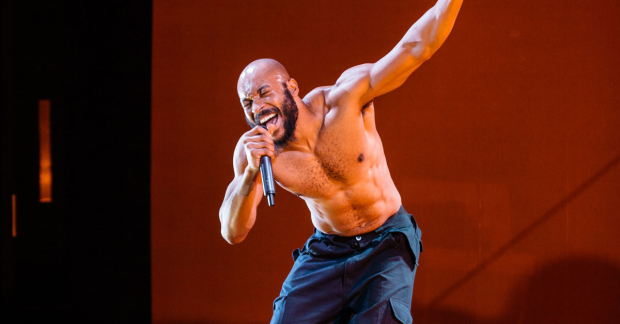
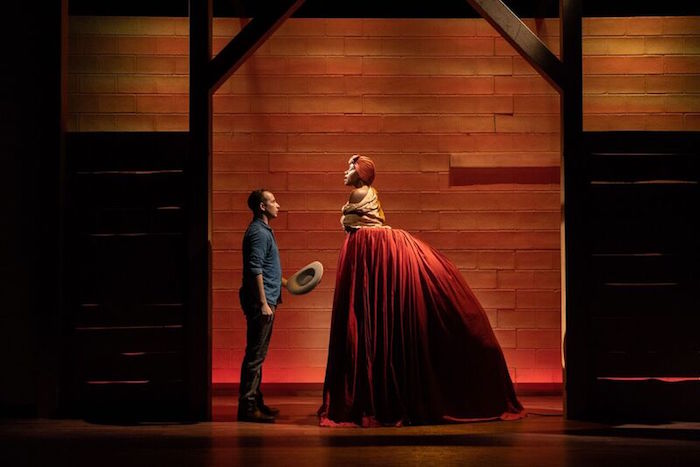
The show began with phenomenal performer Arinze Kene who is also the playwright, centre stage with a microphone in his hand; accompanied by a pianist stage right (Adrian McLeod) and a drummer (Shiloh Coke) stage left. We see the stage radiate a bright light on to Arinze who rhythmically and poetically starts flowing to the fiery melody. The musicians on beat play along to his sonnets.

His vigorous word play subconsciously re-enacts visual imagery of vivid scenes re-occurring within our society that’s familiarised to some, and sensitising to those who’s advantages prevent them from being able to emphasise. This allow them to sympathise to his audible narratives that emotionally express an enchanting variety of themes from,  repossession, gentrification, brutality, inner savagery to then financial difficulties, dysfunctional family, pain, rivalry, conviction and his daily penalty.

His spoken word obtained visual contrasts of the stigma attached to street violence and the road life. The performer metaphorically uses biology when expressing his philosophy. During the first set he makes reference to himself being a virus, while he refers to everyday people as blood cells, red and white. This conveyed that he didn’t identify himself amongst the general public. The first track performed was entitled ‘City Creature’ which contained strong emphasis of a born and bred city liver. The mention of ‘Night bus’ repetitively with increased speed, had given off a deeper sense of a tragedy happening fatally, resonated through his raged energy.

He impressively built momentum as he creatively daunted an epic picture of folks feeling anxious when in the presence of troublesome viruses, entering their way on to the Night bus. Climax is built when focusing on blood temperatures rising due to individuals hesitating in silence. He then increases the intensity where you see his irritancy, not wanting to be benevolent or see the significance until this blood cell physically receives heartless punishment.

That’s when voicemail messages played aloud on set from his friend’s Raymond and Donna are role-played by the musicians. They were stood speaking into microphones behind a booth on stage, but your attention was fixed on Arinze who had his back turned to them listening to their messages, the sound effects smartly made it seem like the sound played from his mobile. Controversial discussions arose from his friends mentioning Arinze’s story fitted in to a ‘Generic angry young blackman’ ‘Modern minstrel show’ stereotype, being a typical ‘Nigga play’, which upset him.

As he makes his way downstage we see him blow in to an orange balloon; placing it in front of him, gazing at the air gushing out, until it deflates. This represented elements in his life he ignored but was conscious of. Balloons were a consistent element appearing in the play, as well as regular meetings with a producer. In the first meeting Arinze’s back is facing the audience, however his face is reflected on to a cubical screen from a hidden camera zooming in to his face. The producer’s presence despite never being shown was strong due to inputs of voiceovers and sound bites smartly used from various movies.

Another consistency throughout the production was the presence of a little girl. Who was first seen speaking upright as Arinze’s elder sister, whilst the band played crescendo. She addresses him reading from a pulpit in a letter style; appreciating his urban gig theatre piece and congratulating him on his writing job but then criticising him for his insensitivity to the black community. Humour is brought to the stage when an assistant stage manager appears to comfort the little girl crying, due to her brother’s comical retaliation to her lecturing him about his playwright.

The entire production takes you on an emotional rollercoaster with Arinze’s desire to take his little sister to the zoo explore the pretty animals like he didn’t get to, finding out a neighbour unexpectedly had left the cultural infrastructure, feeling forced to immune to the systems renovation, feeling homesick after being kicked out from his mother’s house and not welcomed in by his uncle, injustice and terminated relationships from dislikes on the political concept of his playwright.

During the start of the second half, Arinze is heard talking from inside of an orange balloon. When he gets out of the balloon, excitedly he speaks out on his revelation. Breaking down that if viruses invade and raid the body, people like himself can’t be a virus but a blood cell to. After getting this revelation we see him pulling himself out of the balloon which indicates him no longer feeling oppressed and threatened by the system.

As Arinze performs his track ‘Geh-Geh’ he analytically talks on perceptions of gentrification simultaneously, whilst leading in to his experience of police brutality brilliantly. This was achieved by visually intensifying the flashing, lighting effects to create imagery.

During the end of the play after hearing another criticism from another friend about his culturally ridiculous playwright, we see Arinze’s mood change. Expressions on Arinze’s face become hysterical as he repeats the word to himself, stomping his feet and dancing as he performs his final track entitled ‘Jungle Shit’. The content within the song makes his character come alive, free and charismatic proclaiming his identity and breaking-down his interpretation of ‘Jungle Shit’ visualising the exact depiction using rhetorical questions to define what jungle shit really means and why the description ‘Jungle shit’ empowers him.

Misty is truly one of the most out spoken, inspirational, metaphorically excellent, comical and unique productions. Brilliantly innovative and imaginative reflecting real life precautions, live music, mediums plus many more all fused in to make it an exceptionally powerful production as himself.

Misty can be seen at Trafalgar Studios

Tanica Psalmist

Review Underground Railroad Game, Soho Theatre by Tanica Psalmist

Underground Railroad Game created and performed by Jennifer Kidwell and Scott R Sheppard, contains cathartic elements of sexual chemistry, physical attraction and subjective teachings on the history of the American civil war, which was played by two casts throughout the entire play. These two casts interchangeably would switch their roles; black women playing a slave owner and a white male playing a Southern farmer in the 19th century. Who desperately wanted to help this woman he knew, situated in the racist Deep South, escape across the river where she’d be safer, this was shown during the beginning of the play. We witnessed how their intimate relationship grew during various sequences based on this element.

We then saw these casts transition in to the roles of high school teachers after a dress change. They were very immersive, smartly engaging the audience as their pupils at Hanover Middle school, in Pennsylvania. The class sessions they held as teachers were about the project we are about to conduct on the American Civil war that raged through Hanover in the summer of 1863.

Soldiers were smartly addressed throughout the play to help the audience follow the conclusion of the two sided story of the 19th century characters. Different coloured toy soldiers of grey and blue were found underneath the chairs of the audience members, which represented the follow through in the sequences to the overview of the slaves escape from the safe-house ending either fatally, tragically or mysteriously happily.

Interestingly, the teacher’s love affair became guilt and pleasure when they made hysterically funny, direct stereotypical race jokes, whilst touching on sexual innuendo jokes at the same time to one other. This made watching their love affair funny and intriguing.

When they transitioned back into the sequence within the 19th century, the scene was focused on explicit scenes between the slave and the white farmer’s historic intimacy, displaying the sexual image of nursemaids with their white masters. In reverse to this, arose sexual tension with the teachers through domination and humiliation.

Toxic energy kicked off further when a naughty student cheekily in the class wrote ‘niggerlover’ bold and clear, crossing out the word safe-house on a white board.

When the teachers saw this, you couldn’t hear a pin drop in the air. The open space became a playground of hate as the women began fighting with him, whilst he’s restraining her it further angered her; resulting in them aggressively trashing the set, discovering their fate. The effects of the mental state due a controversial political culture became transparent during this stage.

The male teacher in this situation instinctively felt he had to prove his feelings, which left the women re-opening her scars. The pain of her history psychologically made her sexual tension towards the guy sadomasochistic; it left us to question the impact of modern America and the world in its entirety from slavery and its left residue.

The sexual outburst in how the male teacher responded to sadism, triggered thoughts on whether the male teacher erotically expressing his love for her was genuine and sincere; or if his love was out of curiosity to satisfy his fantasy from how the black woman appears. This incident brought their love affair to an end, leaving their feelings hanging in the air. You really got a deeper sense of the systems role on the abolishment of slavery and the psychological scars left behind in this current generation, especially having the election from Obama to Trump in modern day America.

A powerful production!

Underground Railroad Game at Soho Theatre until Sat 13th October.

Tanica Psalmist.