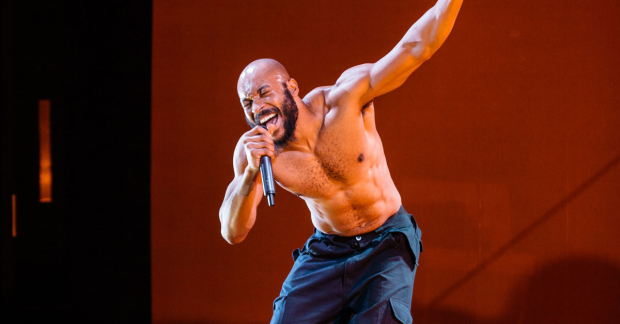
The show began with phenomenal performer Arinze Kene who is also the playwright, centre stage with a microphone in his hand; accompanied by a pianist stage right (Adrian McLeod) and a drummer (Shiloh Coke) stage left. We see the stage radiate a bright light on to Arinze who rhythmically and poetically starts flowing to the fiery melody. The musicians on beat play along to his sonnets.
His vigorous word play subconsciously re-enacts visual imagery of vivid scenes re-occurring within our society that’s familiarised to some, and sensitising to those who’s advantages prevent them from being able to emphasise. This allow them to sympathise to his audible narratives that emotionally express an enchanting variety of themes from, repossession, gentrification, brutality, inner savagery to then financial difficulties, dysfunctional family, pain, rivalry, conviction and his daily penalty.
His spoken word obtained visual contrasts of the stigma attached to street violence and the road life. The performer metaphorically uses biology when expressing his philosophy. During the first set he makes reference to himself being a virus, while he refers to everyday people as blood cells, red and white. This conveyed that he didn’t identify himself amongst the general public. The first track performed was entitled ‘City Creature’ which contained strong emphasis of a born and bred city liver. The mention of ‘Night bus’ repetitively with increased speed, had given off a deeper sense of a tragedy happening fatally, resonated through his raged energy.
He impressively built momentum as he creatively daunted an epic picture of folks feeling anxious when in the presence of troublesome viruses, entering their way on to the Night bus. Climax is built when focusing on blood temperatures rising due to individuals hesitating in silence. He then increases the intensity where you see his irritancy, not wanting to be benevolent or see the significance until this blood cell physically receives heartless punishment.
That’s when voicemail messages played aloud on set from his friend’s Raymond and Donna are role-played by the musicians. They were stood speaking into microphones behind a booth on stage, but your attention was fixed on Arinze who had his back turned to them listening to their messages, the sound effects smartly made it seem like the sound played from his mobile. Controversial discussions arose from his friends mentioning Arinze’s story fitted in to a ‘Generic angry young blackman’ ‘Modern minstrel show’ stereotype, being a typical ‘Nigga play’, which upset him.
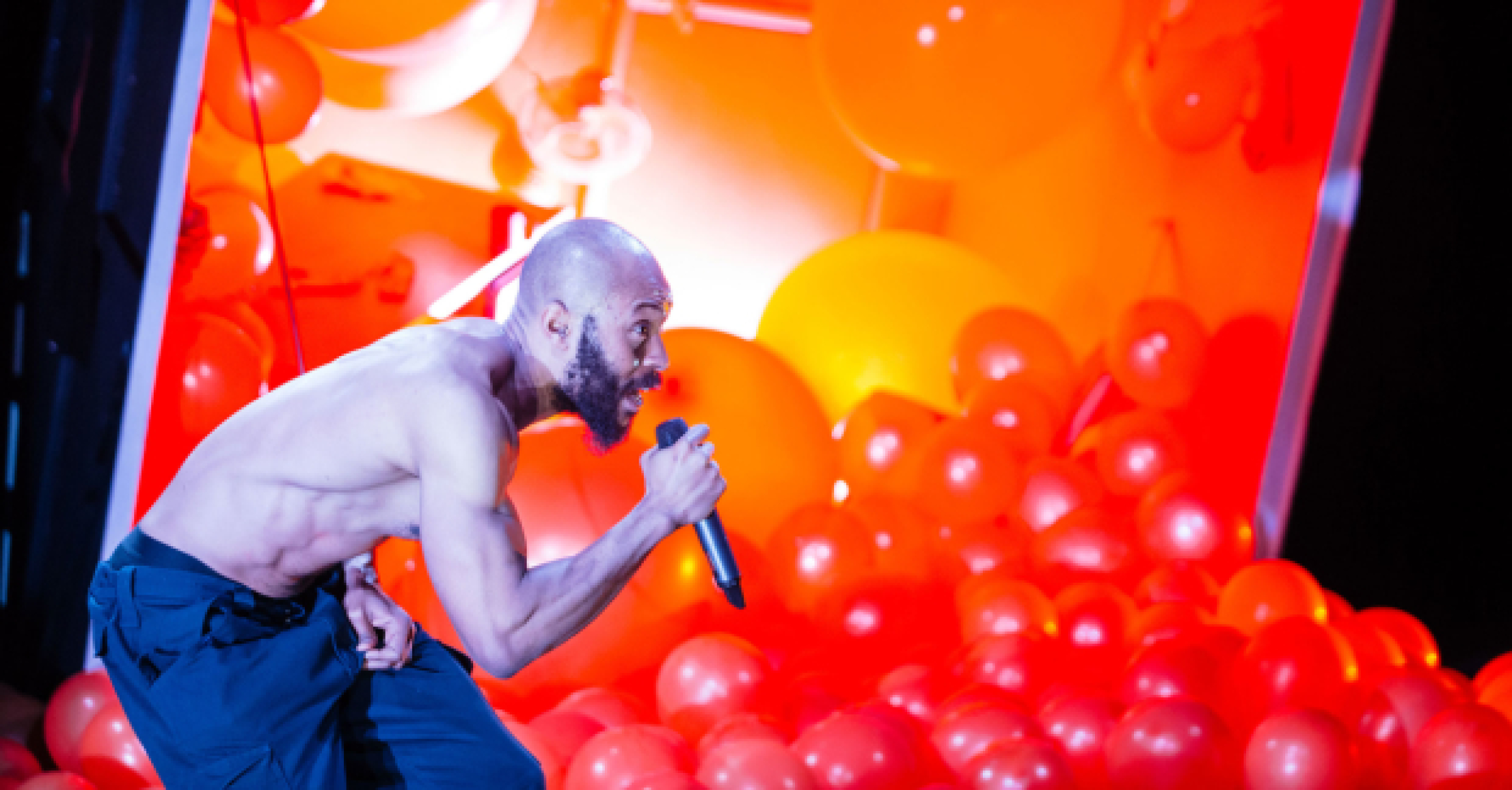
As he makes his way downstage we see him blow in to an orange balloon; placing it in front of him, gazing at the air gushing out, until it deflates. This represented elements in his life he ignored but was conscious of. Balloons were a consistent element appearing in the play, as well as regular meetings with a producer. In the first meeting Arinze’s back is facing the audience, however his face is reflected on to a cubical screen from a hidden camera zooming in to his face. The producer’s presence despite never being shown was strong due to inputs of voiceovers and sound bites smartly used from various movies.
Another consistency throughout the production was the presence of a little girl. Who was first seen speaking upright as Arinze’s elder sister, whilst the band played crescendo. She addresses him reading from a pulpit in a letter style; appreciating his urban gig theatre piece and congratulating him on his writing job but then criticising him for his insensitivity to the black community. Humour is brought to the stage when an assistant stage manager appears to comfort the little girl crying, due to her brother’s comical retaliation to her lecturing him about his playwright.
The entire production takes you on an emotional rollercoaster with Arinze’s desire to take his little sister to the zoo explore the pretty animals like he didn’t get to, finding out a neighbour unexpectedly had left the cultural infrastructure, feeling forced to immune to the systems renovation, feeling homesick after being kicked out from his mother’s house and not welcomed in by his uncle, injustice and terminated relationships from dislikes on the political concept of his playwright.
During the start of the second half, Arinze is heard talking from inside of an orange balloon. When he gets out of the balloon, excitedly he speaks out on his revelation. Breaking down that if viruses invade and raid the body, people like himself can’t be a virus but a blood cell to. After getting this revelation we see him pulling himself out of the balloon which indicates him no longer feeling oppressed and threatened by the system.
As Arinze performs his track ‘Geh-Geh’ he analytically talks on perceptions of gentrification simultaneously, whilst leading in to his experience of police brutality brilliantly. This was achieved by visually intensifying the flashing, lighting effects to create imagery.
During the end of the play after hearing another criticism from another friend about his culturally ridiculous playwright, we see Arinze’s mood change. Expressions on Arinze’s face become hysterical as he repeats the word to himself, stomping his feet and dancing as he performs his final track entitled ‘Jungle Shit’. The content within the song makes his character come alive, free and charismatic proclaiming his identity and breaking-down his interpretation of ‘Jungle Shit’ visualising the exact depiction using rhetorical questions to define what jungle shit really means and why the description ‘Jungle shit’ empowers him.
Misty is truly one of the most out spoken, inspirational, metaphorically excellent, comical and unique productions. Brilliantly innovative and imaginative reflecting real life precautions, live music, mediums plus many more all fused in to make it an exceptionally powerful production as himself.
Misty can be seen at Trafalgar Studios
Tanica Psalmist