
All posts by Helen Joy

Smallholder, artist, aspiring writer

Review The Ghost of Morfa Colliery, Theatr na nÓg by Helen Joy

production_banner_english

 out of 5 stars (4 / 5) Highly commended for welcome and interaction

Here we go. Firstly, what a welcome – the foyer is buzzing with invited guests, there are miners lamps and dolly pegs on lace cloths on the tables, the bar is open and Theatr na nÓg is meeting and greeting all of us, personally. Delightful.

14358900_1179153905474264_7485651546661332055_n

All photographs by Simon Gough Photography

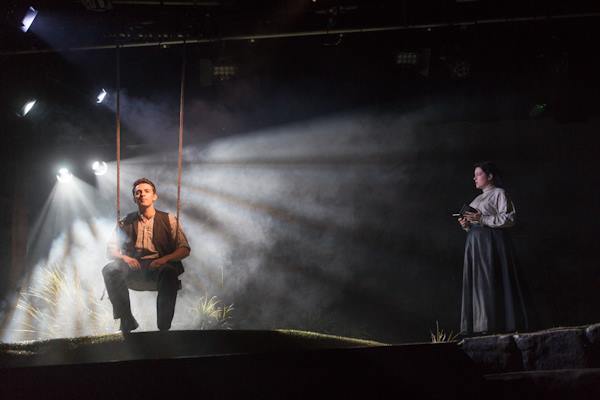
We are ushered into the black womb of the theatre and the magic begins. And there is magic all right! A young man sits on a swing on a green sward, reciting; a lady walks towards him echoing his words. This is a story of mining, community, family, chapel and ghosts. The ghosts tell their tale – all these folk are long gone but alive to us this night. They tell their story of hopes and fears, of aspirations and loss, through clear direction, straightforward acting and an effective stage set.  And with magic.
14354958_1171252076264447_7275458684981519952_n

It makes me sorry that I have not heard of this disaster down a spooky mine part under the sea of the Bristol Channel. It makes me think about the boys and men who worked there and the women who kept the home fires burning. A burning mine too in fact.

The tale is told through 5 characters – some true – a mother, her son, his friend, her brother, his wife and a chapel going gossip. It juggles through truth, fiction and fantasy – diaries, books, monsters and mining reports. It makes us think about the relative powers of the spoken and the written word. What is history other than aversion of events from a point of view?

The classic comedy scene dropped in – the quick change, the drag, the chapel go-ers squashed into a pew and watching us watching them. Joyous!

Magic! Oh the magic makes us jump! Too scary for children? Too scary for grown-ups! We were out of our seats, oohing and aahing as lamps moved, spectres appeared and disappeared, our young hero too.

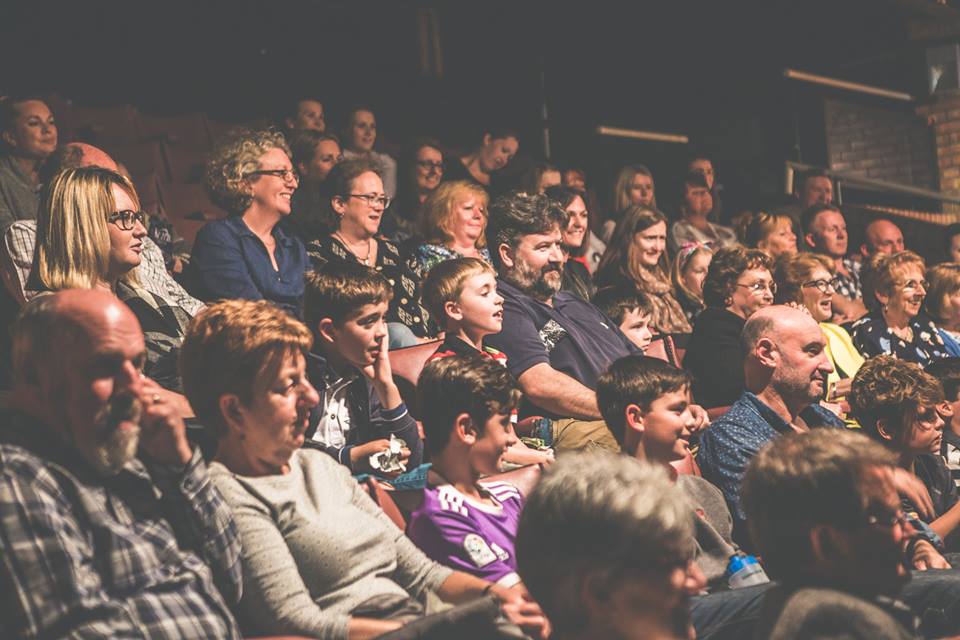
I love it! And I am surrounded by people who love it too.
14433216_1179162898806698_5945810874080757947_n

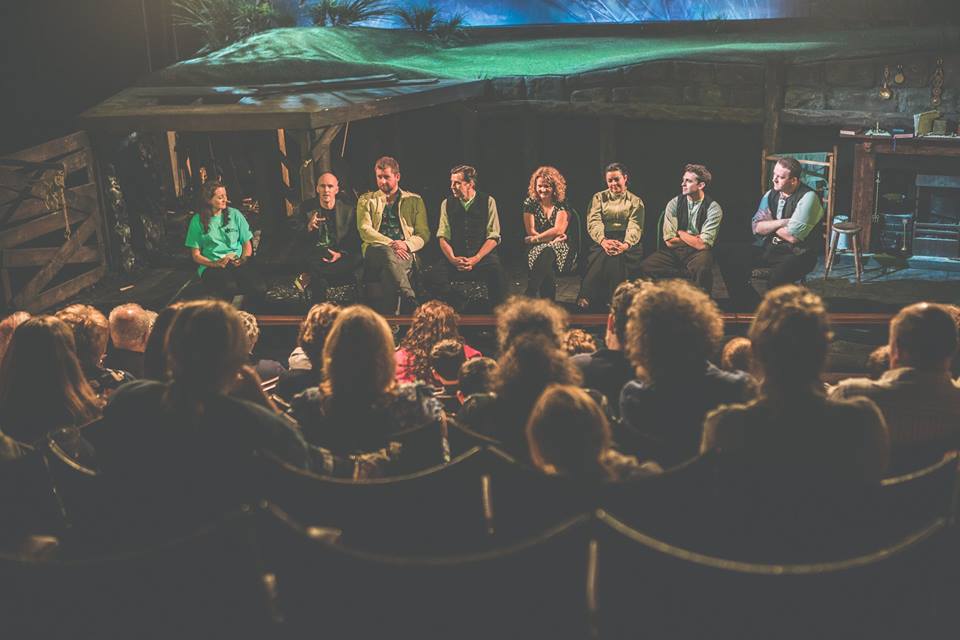
Afterwards, there the cast and crew come to the stage and we are invited to ask questions. Typically, the best ones come from the youngsters in the audience. The best replies come from the magician…what ghost?
14463214_1179153512140970_6475909025591985784_n

We pile back into the foyer where there is a miner’s lunch buffet of local cheeses, bread, pickles, bara brith and Welsh cakes; not sure miners would have had the wine options tho.  Theatr na nÓg again does what it does so well, talks to us and listens.

A memorable evening for many reasons.

Today, I met a friend for coffee and said this: if you have to choose between a ticket for the opera or a seat at The Ghost of Morfa Colliery, choose the latter.
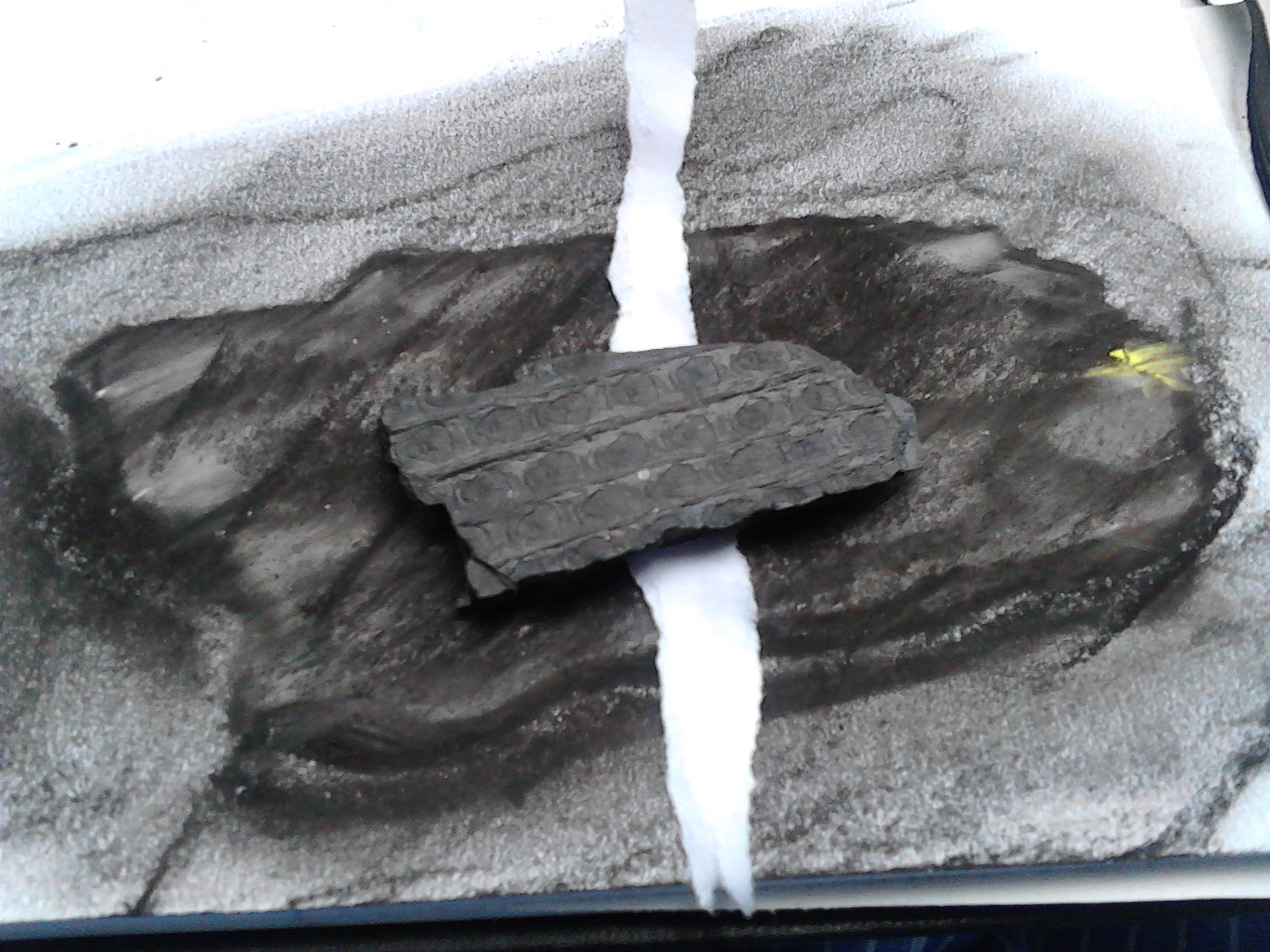
coal

Coal by critic Helen Joy 

http://www.theatr-nanog.co.uk/ghost-morfa-colliery

Enjoyed: 21st September, 2016, at The Dylan Thomas Theatre, Swansea

Running: September to October for schools, see website for details

Cast

Richard Nichols

Aled Herbert

Tonya Smith

Jack Quick

Production Manager

Geraint Chinnock

Designer

Kitty Callister

Lighting Designer

Elanor Higgins

Stage Illusionist Consultant

James Went

Sound Designer

Gareth Brierley

Stage Manager

Sasha Tee

Stage Manager

Brynach Higginson

Assistant Director

Daniel Lloyd

Composer

Jak Poore

Writer

Geinor Styles & Mali Tudno Jones

Director

Geinor Styles


Review Macbeth/Merchant of Venice WNO by Helen Joy

wno-macbeth-main

 out of 5 stars (3 / 5)

Macbeth – an operatic trip

I saw, no, I experienced, no, I what? I tripped. A singing trip through Shakespeare’s tragedy.

I have no idea where to start. What words can do justice to this bizarre and jarring production. This crippling tale of the power of suggestion, the excuses of politics.

The women. Boy. What women.

Lady Macbeth: opulent, passionate, the voice of an angel with the presence of a god. ‘I wouldn’t mess with her’ I overhear. I wouldn’t. Magnificent. An audience is besotted.

The witches: awful, writhing, peculiar, calling like sirens; sexy, funny, raunchy. Wonderful choral singing. Quite wonderful.

The men don’t come close. With Macbeth simpering at his wife’s side and Duncan striding around in turquoise, they were a motley crew. Hard roles to sing, emotionally challenging to act and in unusual surroundings; but then there is a duet between Macduff and Malcolm to die for.

Visually, this is a difficult work to like. Colours clash. The period is unclear. The costumes ugly. Elements are comic – are they supposed to be? Those around me in the audience aren’t sure so the odd titter at an odd moment feels inappropriate. This is Macbeth after all.

The lady next to me closes her eyes. This is a beautiful opera to hear. To see? I’m not so sure. It is very, um, challenging.

I chat with others afterwards: we agree that whilst it has been a most peculiar evening, we expect we will remember it for a long, long time; it has been an entertainment. What are we here for, if not to provide entertainment? So, a huge thank you to all involved for something quite exceptional.

Running time: Approximately 2 hour 55 minutes with one interval

10, 15, 17 & 24 September 2016

Conductor Andriy Yurkevych
Director Oliver Mears
Set & Costume Designer Annemarie Woods
Lighting Designer Kevin Treacy
Choreographer Anna Morrissey
Video Designer Duncan McLean

Macbeth Luis Cansino
Lady Macbeth Mary Elizabeth Williams / Miriam Murphy
Macduff Bruce Sledge
Banquo Miklós Sebestyén
Lady-in-Waiting Miriam Murphy

Sung in Italian with surtitles in English and Welsh.
Co-production with Northern Ireland Opera.
Supported by WNO Partners.

ne619_wno-birmingham-web-images_1800x900_merchant-990x495

Merchant of Venice – an operatic orgy

 out of 5 stars (4 / 5)

This Edwardian extravaganza of a strong story is sung with passion, grace and wit.

Shakespeare would have loved this epic play revived with such clarity and lust for life.

He would’ve loved the stylish eroticism, the flirtations, the overt sexuality of characters hard-pressed against the rugged back of trade. The wimpish Antonio, the love-lorn Bassanio, the women running rings around their men again and again.

Shakespeare’s reputation for relaying the crudeness of man losing to the manipulation of women intact. Portia and Nerissa transforming from girls in town to legal hotshots, the real heroes of the piece. Swapping their dresses and hairpieces for robes and wigs, they must resemble men to use the intelligence of women!

Portia is clear, her voice rings out and we hang on her words. Antonio sings like a bird, beautiful, girlish, self-denying. He lends his money selflessly, he offers his flesh willingly. The scales glisten invitingly.

Shylock is a world apart. He is arresting. He is pathetic. He is the Shylock I see in my head when I read the play. He carries his faith on his shoulders like a giant and he falls under its weight.

This is a difficult tale to tell. Shakespeare forces us to see the trouble caused by bigotry and racial hatred; Tchaikowsky makes us hear it.

This is a sumptuous performance. It is a romp, an orgy and a lesson. ‘My first opera’ says a friend, ‘I love it, it makes me think, it makes me gasp’.

So, what do these productions have in common?

Opera often convolutes and exaggerates a storyline but here, it finds a way through the morass of Shakespeare which is clear and refreshing. It brings characters to life with a pathos I had not expected and with a love for the complexities of the human spirit. Italian for Macbeth, English for Merchant of Venice: the language of the sung word gives depth and feeling where the spoken word cannot.

There is humour, colour and vivacity throughout. The men sink into the shadows of the women as perhaps Shakespeare intended. His leads are visceral, deadly, massive: Lady Macbeth and Shylock are the meat on the bones of these tales.

They contrast and whilst Macbeth often feels disjointed, ugly, unhappily humorous in parts; Merchant of Venice is a comely blend of the bawdy, the raw and the difficult.

See them both, see what you think.

Donald Gordon Theatre

Welsh National Opera:
The Merchant of Venice

André Tchaikowsky | UK Première

16 Sep – 30 Sep 2016

Tickets: £7 – £43 (£8.50 – £44.50*)

Running time: Approximately 3 hours 10 minutes (including 1 interval)

16 & 30 September 2016

Conductor Lionel Friend
Director Keith Warner
Designer Ashley Martin-Davis
Lighting Designer Davy Cunningham
Movement Director Michael Barry
Associate Director Amy Lane

Shylock Lester Lynch / Quentin Hayes
Antonio Martin Wölfel
Lorenzo Bruce Sledge
The Duke of Venice Miklós Sebestyén
Bassanio Mark Le Brocq
Solanio Gary Griffiths
Salerio Simon Thorpe
Gratiano David Stout
Jessica Lauren Michelle
Portia Sarah Castle
Nerissa Verena Gunz

Sung in English with surtitles in English and Welsh.

Supported by the Getty Family as part of British Firsts.

Co-production with the Bregenzer Festspiele, Austria, the Adam Mickiewicz Institute as part of the Polska Music programme & Teatr Wielki, Warsaw.

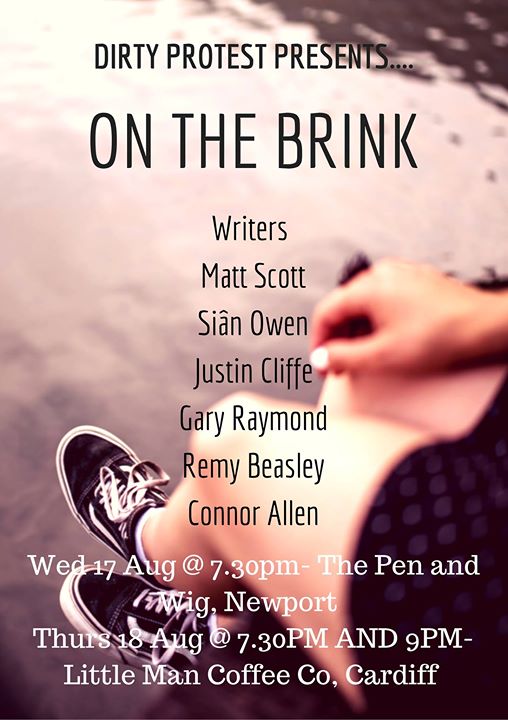
Review On the Brink Dirty Protest by Helen Joy

0c0cb56771

 out of 5 stars (4 / 5)

5 plays held in the basement of a coffee bar in central Cardiff & I am reminded of how much my old town has changed as I wander streets now unfamiliar & ask a dozing homeless person how he is.

This has always been an area where the homeless gathered – public loos & the food-bins of the market & Marksies. One man told me 128 people sleep here sometimes. Change falls out of his hands as he falls asleep. I watch him for a while, concerned, as the night revellers wander by.

Another man, bare-chested & carrying his life on his back, sweeps into the bar as we enjoy our pre-theatre drinks. I am not sure what he says but the crowd is silenced momentarily & once he has gone, someone claims his actions & words as part of the production. I’m not sure I find that funny.

Merlot & speciality beers drunk, we trot downstairs into the basement of the bar & find ourselves in a bright white small room with school chairs & bunting. Very nice neat clever photos of Cardiff streets around us & a feeling of Bohemian comfort pervades.

A bouncy introduction & we’re off.

A rapid monologue performed with the jerky nervousness required of the part. Quick & Dirty, ‘shocking proper shocking, mind’ – it is excellent: a well-written bit of life which leaves us wondering, what are they planning with those nylons?

Then, a couple splitting up. Hard to be different but some good lines here, ‘I don’t like the sound of a world without you in it’ & as the pace picks up & their story unfolds, we feel for them in their, ‘small, lonely & broken’ states.

Ok, so 3 people are sitting together discussing something to do with a college award & it is sometimes satirical, sometimes topical, sometimes political: ‘I do not fuck pigs’ & for some reason, Charterhouse cops it repeatedly. It gets its laughs from an audience who gets it – but I don’t – until the last lines, ‘so, how do you think the interview went?’ ‘I’m going to fucking crucify you’. Difficult to act & a job well done.

So, we have Brian. He apparently takes 19 minutes to produce a stool. This is a seriously clever play. The narrator perambulates around Brian, his date & his life & his life’s end, engaging easily with us, the audience, the inactive voyeurs of a man’s death by fork. I would like to see this again; no, I would love to see this again.

Another play about a couple failing to see eye to eye. Pokemon & pregnancy. There is a really nice use of silence here, a really nice use of few words, gentle body language, excitement, knowledge & heartbreak. Nothing new perhaps but it was moving, it touched me.

Lastly, the builder with the pint glass & the mobile phone. ‘Ah fookin’ needed tha’ & he tells us his story with grace, humour & tremendous pathos. We expect one thing, we get another. I suspect that I am not alone in being upset by this work. It manages to touch on the many angles of life: the dangers in loving someone, the need to keep up appearances, the roles we are all expected to play & the risk of exposure, ‘I knew ah’d look like wha’ ah am’. Brilliant. Truly brilliant.

This is a theatre company well-worth following & perhaps, joining in…

I wander back to my car past the late-night Tesco shoppers & the party-goers, bump into folk I haven’t seen for 17 years & am glad to get home. I wonder how the homeless are faring this muggy night.

 Event:             On the Brink

                        Dirty Protest Theatre Company

Seen:              9pm, 18th August, 2016

Cast:
Non Haf
Hannah Thomas-Davies
Rhys Downing
Richard Elfyn
Directed by Dan Jones
Produced by Angela Harris, Matthew, Catherine and yourself.
The plays in order of appearance:
1) CHIP SHOP DINNER by Remy Beasley
With Non Haf playing Kayleigh-Jade.
2) THE SPLIT by Sian Owen
With Hannah Thomas-Davies playing Ruth & Rhys Downing playing Michael.
3) THE AT SYMBOL by Gary Raymond
With Rhys Downing as A, Non Haf as B & Hannah Thomas-Davies as C.
4) THE SUICIDE OF BRIAN by Justin Cliffe
With Richard Elfyn as Narrator, Rhys Downing as Brian, Hannah Thomas-Davies as Flora & Non Haf as Waitress.
5) WHAT NOW by Connor Allen
With Non Haf as Kate & Rhys Downing as Tommy.
6) ‘THE BOSS’ by Matthew David Scott
With Richard Elfyn as Tony.

Reviewer:      Helen Joy for 3rd Act Critics

Running:        17th August, 2016, at The Pen & Wig, Newport

18TH August, 2016, at Little Man Coffee Company

Cost :                       £6 / ticket in advance, £7 on the door

Links:              http://www.dirtyprotesttheatre.co.uk/comingup/


Review Chicago Wales Millenium Centre by Barbara Michaels

thumbnail_Chicago-medium
CHICAGO
Music and lyrics: John Kander & Fred Ebb
Book: Fred Ebb & Bob Fosse
Choreographer:  Ann Reinking
Musical Director: Ben Atkinson
Reviewer: Barbara Michaels
 out of 5 stars (4 / 5)

Red-hot and sizzling, the multi-award winning musical Chicago, based on real life events in 1920s US, is back at the Wales Millennium Centre and judging by the bookings as popular as it was when it came here four years ago.  With its theme of greed and corruption, the contemporary relevance doesn’t need to be spelled out although the main action takes place on Death Row, where nightclub singer Roxie Hart is standing trial for shooting her lover and the feisty Velma Kelly is up for double murder.  Strong stuff indeed but the dark undercurrent of the story and plotline cannot be ignored, and neither should it be.

But – moving on – this is musical theatre, so let us not dwell on this.  The wonderful musical numbers, toe-tapping and fast, are what makes this show so popular, along with the fast-paced choreography. Chicago is above all a showcase for the original choreography of the legendary Bob Fosse.  The tunes come thick and fast, plunging straight into it with All That Jazz in Act I and never letting up, and the dancers amazing…

Chicago has been performed on stage countless times, plus the memorable film version starring Catherine Zeta-Jones, and every director understandably wants to put his or her own mark on it in terms of character portrayal.   Hayley Tamaddon is a low key Roxie with an air of fragility about her that belies the fact that this is one tough lady who will stoop as low as it takes to escape the death penalty.  Although Roxie’s story is pivotal, it is her opposite number Velma who is the strongest here and Sophie Carmen-Jones give the role her all in no uncertain manner, displaying a versatility and, in Act II, an acrobatic ability that is truly amazing.  While Carmen-Jones has the character to a T, Tamaddon’s Roxie is at times almost girl-next-door in her naivety.

Alternating in the role of Prison Matron Mama Morton, who believes in looking after ‘her girls’ – as long as her favours are reciprocated – are Gina Murray and Sam Bailey. Murray’s Mama threatened to bring the house down on press night as she belted out the iconic When You’re Good to Mama full throttle.  Great stuff!  A clever little cameo too by Francis Dee as ‘Not  guilty’Hunyak.  On the same evening, Kerry Spark took over the male lead in place of John Patrtridge, who was absent, in playing unscrupulous defence lawer Billy Flynn always on the lookout for number one and lining his pockets by defending about-to-be convicted murderers.  Amos, Neil Ditt is an experienced actor who ‘gets’ the role of Roxie’s husband, the pathetic, incompetent and ignored ‘Mr Cellophane’ (to use the title of his song) off pat.

The staging is atmospheric and costumes a delight for the eye with deftly wielded chorus line feather fans in one of the later scenes, while the  onstage orchestra under musical director Ben Atkinson, is superb, providing not only musical backing throughout but continuing to entertain after the show ends.

Runs until Saturday 30 July 2016
 

Verdi’s Requiem, by Matthew Salisbury

VERDI’s REQUIEM
ST DAVID’s HALL CARDIFF 
The conductor, Owain Arwel Hughes’s gesture at the beginning, dedicating the performance of this requiem to those who had died in the Nice atrocity was well received by the audience. It was a fitting and gentle reminder about what a requiem is about.
There is no doubting that this performance of Verdi’s Requiem ticked all the boxes for magnificence and grandeur. The orchestra of Welsh National Opera, the Cardiff Polyphonic Choir, Cardiff Ardwyn Singers and the Llandaff Cathedral Choral Society, superbly conducted by Owain Arwel Hughes, performed with immense energy and gusto.
There was no doubting too that the soloists, soprano Rebecca Evans, bass Jason Howard and the tenor who replaced Dennis O’Neill, were resplendent in their roles, with contralto Kate Woolveridge out doing the others in the expression of the majesty of the music.
Kate, when she is rehearsing the Forget Me Not Choir, is forever telling its members to show the meaning of the words in their expressions. She led the way in this performance, seeming to put that little bit extra into her singing.
Comparisons one imagines are odious, but it was interesting to listen to Faure’s Requiem, performed by Kings College Choir in the Albert Hall the following day. In St David’s Hall the choir and orchestra often drowned the soloists. Also it was difficult to follow. The Kyrie and Agnus Dei were identifiable, but the succession of ‘’ operatic overtures’’ were not requiem like, full of grandeur though they were. Faure’s Requiem is more my idea of a requiem, with more of a religious character. Verdi interspersed magnificence with some gentle passages, and this did in some way convey the sense of launching somebody across the Styx.
1461016758
4 stars
Event:              The Welsh Proms – Verdi’s Requiem
At:                    St. David’s Hall, Cardiff
Seen:               8pm, 16th July, 2016
Reviewer:     Matthew Salisbury for 3rd Act Critics
Running:          16th July, 2016
Links:              http://www.welshproms.com/verdi-requiem.html
Orchestra:  Welsh National Opera Orchestra
Chorus:       Welsh Proms Cymru Festival Chorus
Cardiff Ardwyn Singers
Cardiff Polyphonic Choir
Llandaff Cathedral Choral Society
Soprano:    Rebecca Evans
Mezzo-soprano:   Kate Woolveridge,
Tenor:            Robyn Lyn
Bass:               Jason Howard
Conductor: Owain Arwel Hughes CBE


Lucky Trimmer: Made in Wales! by Helen Joy

3f390b2aae         #luckytrimmer Does Wales! 
As always, a warm welcome to all of us from the National Dance Company Wales as we pile into their building.
A welcome compounded by a delightful duet of introduction from the Lucky Trimmer co-ordinators & we all settle into our seats to watch & wait, excited & curious.
So, piece by piece here we go:
How Should I Explain
Dark stage, thick music, a bright light character in green & white confronts us & we are off to a great start. Dachauer’s punchy performance to the familiar & comforting Viennese Waltz is athletic, energetic & when she smiles broadly at us, as welcoming as our hosts. I do not know the story she is telling perhaps as well as I should but enough to follow, enjoy & find amusement here & there. The relishing of the power of her body controlled through dance is palpable.
Grandmother
Foscarini is incredible to watch. I don’t notice the music. I don’t notice the audience around me or my friend beside me. She is mesmeric. Hard, blunt physicality spot-lit; flashes of memory in dance. When the lights go out, I hear her patter across the stage & we hold our communal breath waiting for illumination. It is beautiful & crippling.
Moments – Performatives Spazieren
Well. Clever clever stuff, Taguchi. A floor unpicks itself in an empty room. Its wooden planking parades around Berlin to music, making music & cutting its own path as is dances through streets & parks & people. It is very funny but we do not laugh much as the inanimate lives & breathes & becomes a floor once more. I am reminded of the first time I saw a pianola. It feels strangely out of place yet perfectly placed.
El Pie (The Foot)
And more on the theme of morphe & matter, resurrection, the bringing of life.
Her body falls in front of us & Marote lies dead to us. One foot revives quickly & playfully, angrily, sadly, cleverly cajoles & bullies its owner back to life. Macabre, hilarious, kind & tear-jerking, this dance plays with us. I think on horror stories of hands having lives of their own, of puppetry, of people painting with their feet & toes holding brushes as well as any fingers. Of electricity forcing body hearts to beat, of the lust in the living to will the dead to live. And the utter joy when breath is taken & the lights come on. I love it.
Floating Flowers
Tsai & Chen – one flower, two dancers; two dancers, two flowers; two flowers, one dancer… pretty, quirky, surreal & complicated, this homage to beliefs & traditions I can easily believe will send away bad luck & bring happiness – how could something so delightful, not?
monoLOG
Lefeuvre is less stripped than the others, faintly lumberjacky, plaid & chappy, clutching his lump of wood. This doesn’t feel like a dance. It feels like a séance, a spirit creeping out of the log & into his arm & into his senses. It is hard stuff. Difficult to watch. A take-over, a trick, a phantasmagoric illusion. I like this least but am sure I will remember it the longest.
Bernadette
I’ve seen this before, recently obviously. I loved it then & I loved it still. Expectation made it a little quicker, less comical & more tragic. She was longer lying on that table this time I thought, a little sadder. Does that say more of me than Bernadette?
Finn is a confident performer, a cool dancer as much at home with her apple pie as with her cold chicken, a story-teller & a mimic, a giver of life.
4 Stars
 
Event:              Lucky Trimmer Does Wales!
National Dance Company Wales
 
Seen:               7.30pm, 16th July, 2016
Reviewer:        Helen Joy for 3rd Act Critics
Running:          16th July, 2016
Cost :                 £10 / ticket
 
Links:               www.luckytrimmer.com
www.ndcwales.co.uk


Review Cabaret (Richard Burton Company) RWCMD by Helen Joy

Cltnv1PWgAAYMyq

 out of 5 stars (4 / 5)

I go into the theatre weighed down by the recent slating on social media: in response to a comment in favour of collaborative working, I was compared to those who did nothing as Hitler rose to power. Troubling from all sides.

I hadn’t seen Cabaret for a very long time, if ever, and couldn’t say that I knew the story. Apposite as it turns out. We all know the songs but few of us know the context.

Partly it’s the space, partly it’s the artistic direction, but this is in your face from the start. And everything is in your face – teeth and tits and hips and all the grotesque of the carnival, smiling, enticing and taking you in. I watch the audience press back in their seats, personal space invaded and we are thrilled.

The story begins and like the train, rattles along happily. Two love stories unfold through song and speech – the older grocer and the landlady, the young American writer and the English show girl – against the light and dark and desperate of mid war Berlin.

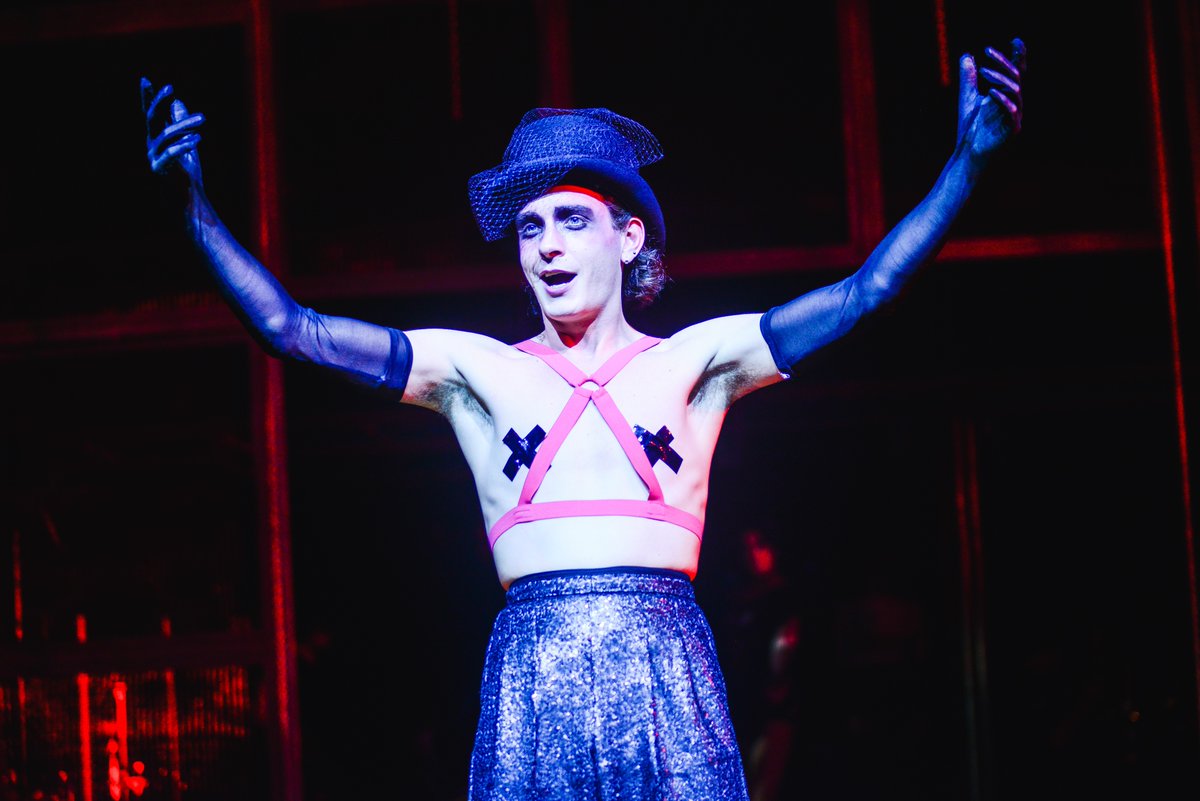
The completely brilliant and mesmeric Master of Ceremonies holds each of us in his stare, winking and steely, welcoming and chilling. Better than Wayne Sleep, says my neighbour, he was evil too but ooh, this one makes me shudder. We all want him to notice us, take us into his lascivious dangerous, oh so colourful world.

Sally is sumptuous. Her voice purrs lines of love and confusion and roars and rises as the cabaret of her life is told. As it all unravels around her and the snippets of intrigue evolve into the political cabaret of Nazi Germany, we want her to leave, go to Paris with her man – but she hates Paris.

We witness the sadly comic and beautifully performed love affair of the Fraulein and the Frau over fruit and schnapps come together and fall apart and he leaves, his Jewish faith unwelcome now.

It ends. Our MC rides out with our battered journalist on his train home. He strips. His pink triangle stitched to his shirt. He folds into stage black.

I wish they sold CDs, says the lady in front of me. Oh, so do I. How much would I have relished hearing it all again on the way home. Brilliant, says another. Shocking, says someone else, hadn’t expected it to be so, well, sexual, not sure some of it was necessary. Wonderful, says a young man, reeling slightly.

I am reeling too. How do you know when it is time to act and when it is time to wait and see what happens? Cabaret.

Type of show: Theatre
Title: Cabaret
Venue: Royal Welsh College of Music and Drama
Dates: 22-30 June
Director: Paul Kerryson
Music: John Kander
Lyrics: Fred Ebb
Musical Director: Nathan Jones
Choreographer: Tom Jackson Greaves
Set Designer: Tina Torbay
Lighting Designer: Becky Heslop
Costume Designer: Jessica Campbell Plover

Review Miramar Trigonl by Helen Joy

Miramar_web_new2
 
 out of 5 stars (4 / 5)
 

I have enjoyed a huge ice-cream sundae in the café and am happily taking my seat, when Enid comes over and has a chat. She tells me about the nasty business with her husband and how she’s had to sell the house.

It is a nasty business too. Poor woman. Homeless. Di gartref. How easily it can happen.

I have no idea how I have become fluent in Welsh. Enid is chatting away and we are all listening and we are all tutting and laughing and commiserating with her. She is exaggerated as a story-teller, she relishes the telling of her tale, she compensates for her loss through her canniness. We like Enid but we see she is a cunning old bird. We are sorry when her home is taken and renamed: Miramar. Awel y Mor is nicer, we agree. We don’t mind her moving back in while the new owners are away, china dogs in another family.

The slapstick comedy of the sausage and mash dinner hidden in the cupboard when the inevitable knock on the door comes. We are encouraged not to like the smart and sassy daughters of Miramar but of course, eventually we do. And the sausages make their mark on all of us.

This is about communication – about showing us that spoken language has just one part to play and so we roll from Welsh into English and back again without even noticing. It is about family, life and death and consequences. It is about different tastes and different times and places. It is about home. It is about shit. Cachu. It happens.

Simple props, careful costume and straightforward lighting. All we need to establish a sense of a house and its people in transition. It is nicely performed. Alice and Georgina make good foils to the characterful Enid. Light and dark, this is a strong play with a tidbit of fiery drama at the end. Y sosejis.

I ask two ladies, who are sitting in the evening sun outside The Red House on a Saturday night in Merthyr, whether they speak Welsh. No, they say in unison. Didn’t need to. Understood every word. We’ll be coming again. So funny. We laughed and laughed. Same here, I say. Finally, my knowledge of Welsh swearwords comes in handy and I share some choice ones. We part and you can hear us all laughing up the street. Am dipyn.

We all know everyone in it – recognise and enjoy!

Play:                Miramar

At:                   The Red House, Merthyr
Playwright:          Rebecca Smith-Williams
Producer:             Rebecca Knowles
Director:               James Williams
Theatre:                Triongl
Cast:                        Enid – Valmai Jones
Alice – Rebecca Knowles
Georgina – Rebecca Smith-Williams
Seen:              7.30pm, 18th June, 2016
Reviewer:      Helen Joy for 3rd Act Critics
Running:        Saturday 18th, Redhouse , Merthyr Tydfil
Wednesday 22nd – The Welfare, Ystradgynlais http://www.thewelfare.co.uk/
Links:               http://www.triongl.com/miramar.html


Review Romeo and Juliet Taking Flight Theatre Company by Helen Joy


r and j banner

 out of 5 stars (4 / 5)

Anna and I are in Thompson’s Park. The last time we were together here we were in school, in single figures and holding hands, plump little girls telling each other fairy stories under the trees.

I can’t get the memories out of my head.

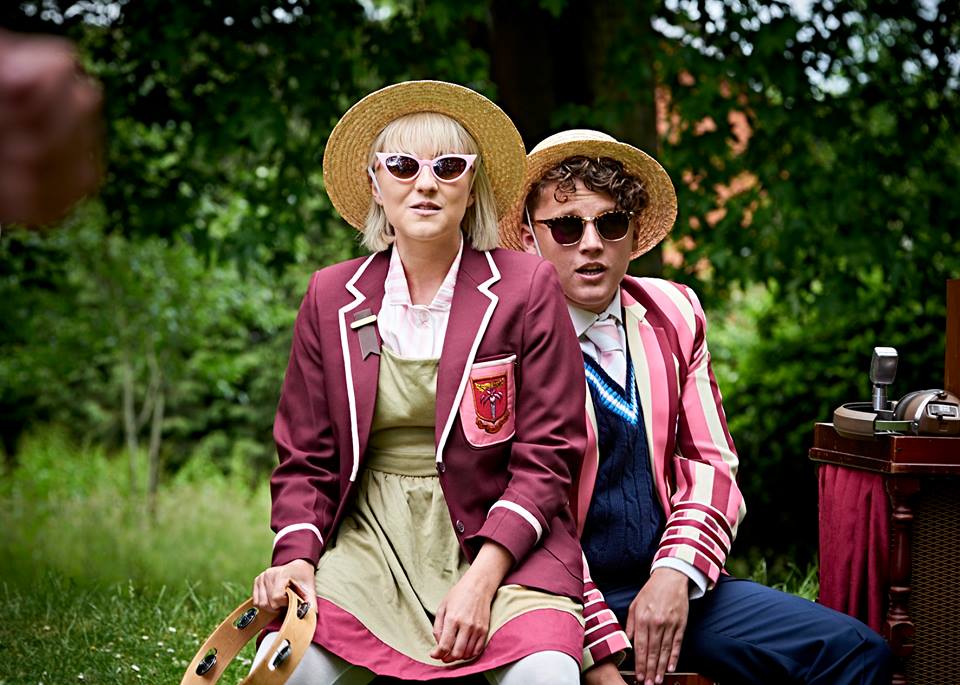
But we cannot reminisce for long as the Verona College classmates of ’63 sport their straw boaters and burgundy blazers and bound across the turf towards us. Rowing, fighting, slipping in the mud, the cast takes Shakespeare’s teenage drama and hurls it into our faces. Narrated , compered, signed, sung and spoken – every aspect is communicated with a robust concern for comprehension.

13435520_1102912623087760_9153556138996735847_n

Tybalt played Toby Vaughan and Ania Davies as Nell your friendly Access Prefect taken by Jorge Lizalde Cano. 

And the compere is masterly. Her hold over events is complete. Perambulatory it may be, drifting it is not. A neat conflation of original text and twentieth century conversation makes for an irrepressible production.

The acting is good. Romeo is ardent; the lads lusty and exuberant; the lasses witty and charming. Juliet is perfect. She is the most expressive and believable Juliet I have seen, maturing easily from silly schoolgirl to tragic heroine.

Lord and Lady Capulet are, in turn, pompous, funny, angry and very married – both to each other and to their roles in life. Lady Capulet, as pretty in pink as the girls in their ballgowns, is a clown – comic and tragic, Mercutio in a frock.

Nurse. Ah. The school nurse of school books and boy, she is splendid in her cape and boots. The buffoon, the go-between and the butt of jokes. Well-played, indeed. We wish her well in her romance with the Friar! We feel for her at the end.

Truly Shakespearean, this multi-talented and multi-tasking troupe of players understand that the more we laugh, the more we will cry; that life is a glorious, terrible muddle, however well-flowered is your pump.

Choose a sunny day and join in! And do buy a programme – and a college sweater!
Event:             Romeo and Juliet, a promenade performance
At:                   Thompson’s Park, Cardiff
Playwright:          Shakespeare, originally
Producer:             Beth House
Director:               Elise Davison
Theatre:                Taking Flight Theatre
Seen:              6.30pm, 17th June, 2016
Reviewer:      Helen Joy for 3rd Act Critics
Running:        Romeo & Juliet will tour all over Wales, in beautiful outdoor spaces
Links:               http://www.takingflighttheatre.co.uk/romeo-juliet/


Review Alternative Routes NDCW by Helen Joy

Alt_Routes_LARGE

 out of 5 stars (4 / 5)

Dance. In a space I didn’t know existed. I am not proud of this fact. I am not proud that I know embarrassingly little about dance too.

We are met at the door by Paul Kaynes and his team and they welcome us with huge smiles and enthusiasm. Everyone chats and enjoys the view over Cardiff Bay from the rooftop of this marvellous building. We are given an introduction to the evening and invited in to the auditorium.

The seats are packed with colour and youth. I become slightly obsessed with wanting to swap this audience with that grey-haired one at the Cathedral earlier in the week. And as the evening progresses, I want to do this more and more. I want the opera lovers to be here, with me, sharing this beautiful experience. Oh to pull it all together somehow!

I confess, I don’t read programmes before I see something. I don’t want to be influenced. I want it to speak to me and me alone. This is about Voice, after all.

It begins with a woman and a man dancing to what feels like Eighties rave music with strobes and UV and hoops and planets and they tell a little love story through dance and gymnastics and ballet and they are so beautiful, just so beautiful. Luminously lovely. And I want to be Degas – I want to capture their shapes somehow. It is not enough to watch them.

Darkness. A spotlight. A man dances through a series of emotions and I feel I am watching his collapse into sadness. He makes me think of the loneliness of communication – the struggle to be understood. It is a deeply moving performance. I am relieved when finally he stands in the centre of the light.

A woman prowls onto the stage. She talks to us through her movements and I am desperate to interpret them. The music is sweeping and classical and it is all very pretty and acceptable and then it changes in a moment, it swells to panther proportions and I am watching a wild animal and the movements become the language of the wolf. Her body is not her own – she is absorbed in her passions and she is perfect in her credibility.

And then we break.

And I sit with Daniella. A student of dance. She looks me straight in the eye and tells me how wonderful it all is, how all she has ever done is dance, she has danced since she was a little child, it is who she is. She is enraptured by the second piece but she has loved it all. In her face I see that the gift of dance is a good one. There is such power in using dance to communicate – no-one else’s story, just your own; no tool as messenger, just your thoughts sent out there through your body.

It feels so loose, so uncontrolled, so unrepeatable. What an ability these people have and what a task to choreograph and to make it seem so easy every time!

We are asked to stand around the stage. It is a big space but we are shoulder to shoulder forming a square around a Crossword of 4 dancers. Each performs within a square, a battenburg cake of dance. Singly, together, this is an argument, a joke, a party, a series of opinions agreeing and clashing. I want to see it from above, see the patterns they make. It is gorgeous to watch and to be so close. I can see that I am not alone in wanting to join in – we all want to be part of it, to be understood.

We return to our seats. What now? Well. We get more cake, we get Nigella. We get a menopausal woman breaking the bonds of housewifery – as well as a few eggs! It is quite the most unusual performance I have ever seen and it is brilliant. I laugh! It is me!

I chat to others as we leave – what did you think of that last one? Oh yes, I do that – well, I want to do that…

I have loved it. Every minute of it. It has been challenging, beautiful, sad and funny. A novel in dance. And I still want to swap those audiences – bring those different voices together somehow and we will all be the wiser for it.


Event:                                       Alternate Routes
At:                                               National Dance Company Wales
Production:                           WMC, RWCMD & National Dance Company Wales for Festival of Voice
Artistic Director:               Caroline Finn
Choreographers:                Matteo Marfoglia, Camille Giraudeau and           Josef Perou
Chief Exec:                             Paul Kaynes
Seen:                                          6.45pm, 9th June, 2016
Reviewer:                                Helen Joy for 3rd Act Critics
Running:                                   09 Jun – 11 Jun 2016
Links:
http://www.ndcwales.co.uk/en/what-s-on/alternative-routes-20161/
http://www.ndcwales.co.uk/en/about/latest-news/national-dance-company-wales-and-royal-welsh-college-of-music-and-drama-inspires-the-next-generation-of-choereograghers-and-designers-through-alternative-routes/
 
Star rating:                4