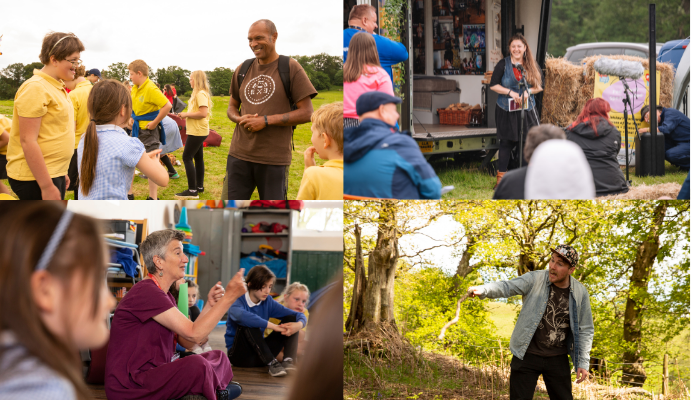
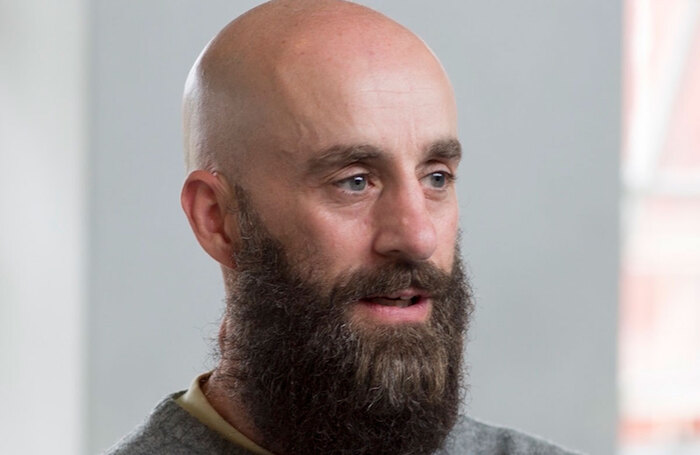
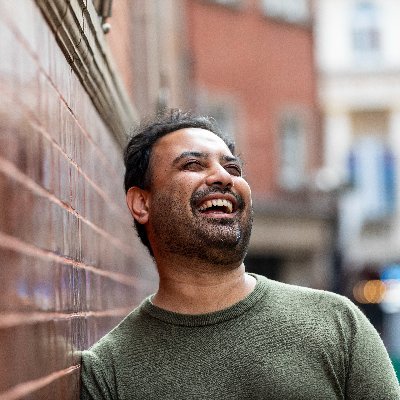
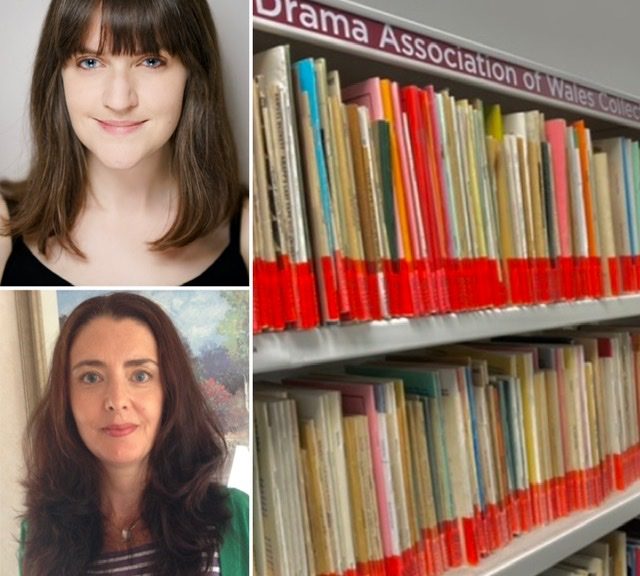
Hi I am Guy the project coordinator for Get The Chance. I am a trained secondary teacher of Art and Design and have taught at all Key Stages in England and Wales. I am also an experienced theatre designer and have designed for many of the theatre companies in Wales.
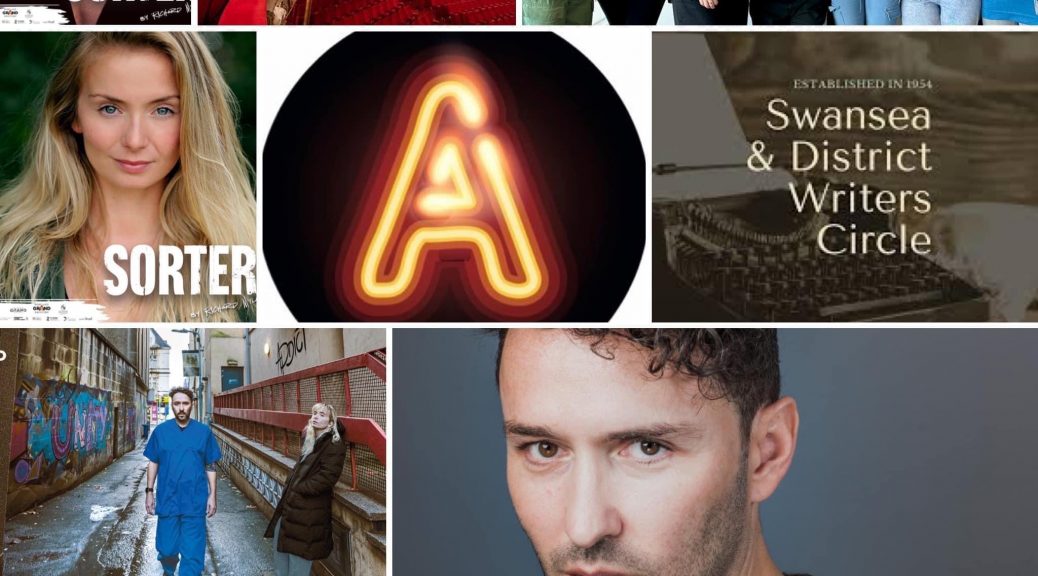
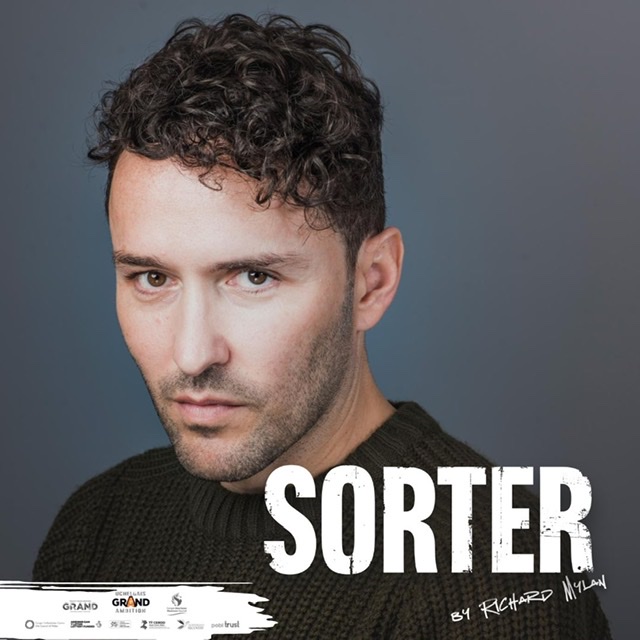
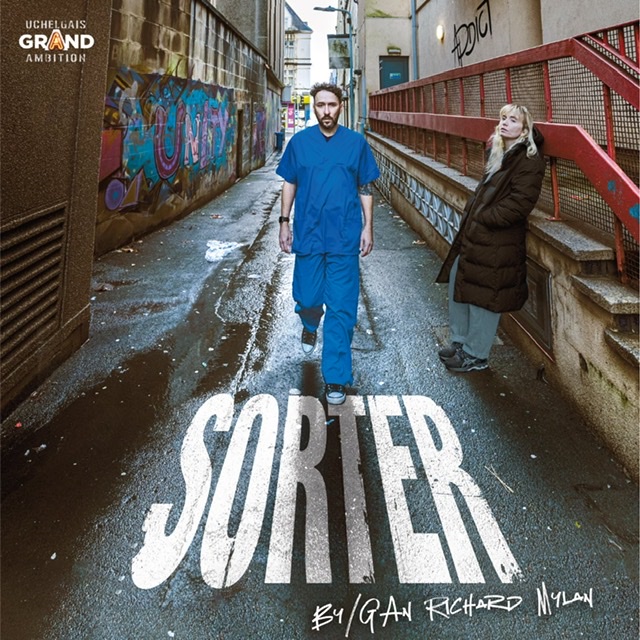
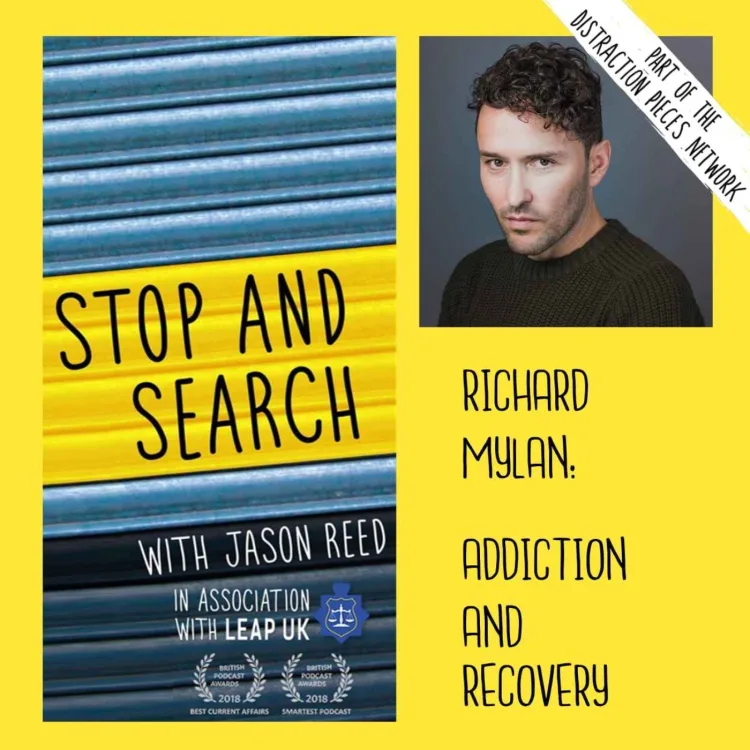
In our latest Playwright interview the Director of Get the Chance, Guy O’Donnell meets Actor and Playwright Richard Mylan, They discuss his career to date, his first play Sorted for Grand Ambition, the companies focus on creativity in Swansea and Richards personal approach to creativity and sharing his life experiences with the wider world.
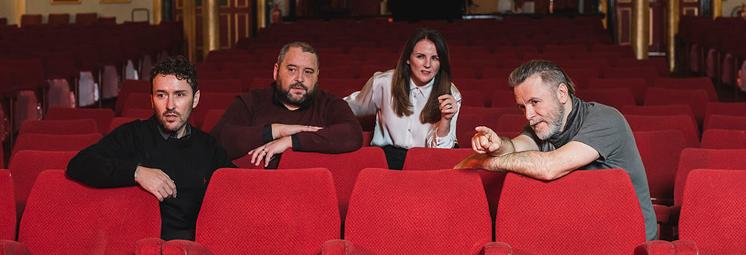
Hi Richard, great to meet you, many audiences in Wales know you from Theatre or TV, can you tell us how you got started in the arts? I originally trained as a dancer, got into a Lloyd Webber musical where I spent 4 years (which was very much my schooling). Started dipping my toe into acting, loved it- I’ve been an actor over 25 years. Now I co-run the resident theatre production company Grand Ambition at the Grand Theatre, Swansea along with fellow creatives: Michelle McTernan, Steve Balsamo and Christian Patterson.
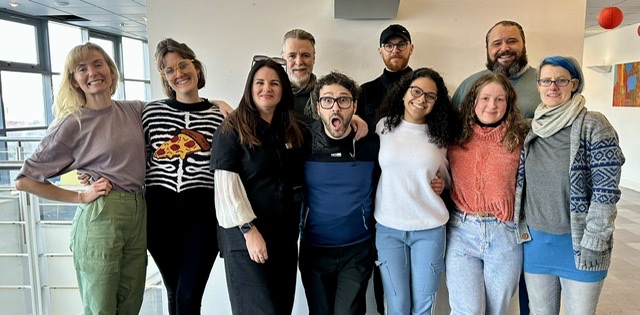
Richard Mylan, Christian Patterson, Michelle McTernan and Steve Balsamo.
We’ve had an incredible first year, we produced a Gala performance to celebrate 125 years of the theatre and ‘A Number’ by Caryl Churchill.
As well as many community outreach projects and the formation of TAG (The ActorsGroup). We’re currently in rehearsals for my debut play Sorter our first original production.
So, what got you interested in the arts?
Rubbish in school- got positive attention for dancing so went with it… It was the gateway really, once I discovered the different forms of dance, choreography- I was hooked. It was my first glimpse of creativity as apposed to learning.
Why do you write?
Sorter is my first attempt at writing. I wrote it to make sense of 20 years of my life as a heroin addict. I was originally going to write it in diary form- just to get it documented & out of my head. But I struggled to write in the first person. Probably because I felt disconnected from it all… or in denial. So I went to a very familiar place as an actor – play form, my lived experience through two characters and when I did that, 20 years flew out of me in three weeks. It was a very cathartic experience.
Can you tell us about your writing process? Where do your ideas come from?
For me it came from real life. Before I began writing I knew the basic structure. I also did A LOT of research. Before I attempted to write real life vicariously, I made sure I was heavily informed. That way, I could deviate from the structure if I wanted to…go with it to a certain extent. Sometimes it was a blind alley, sometimes it was a welcome discovery.
Can you describe your writing day? Do you have a process or a minimum word count?
It’s just structured writing time, but I don’t really have a process as such- or a word count. I’m far more productive if I don’t put pressure on myself.
Do you have a specific place that you work from?
Not really. I can work anywhere as long as it’s an environment where I can focus, but that could be at home with the TV on in the background or a busy cafe. Sometimes life going on around me can put me into a rhythm.
You first play Sorter will premier at Swansea Grand this March. The marketing information for the production states that you wrote Sorter, to “come to terms with your battle with heroin addiction & hope it can lead to a bigger conversation with addictions treated with empathy, dignity & understanding.” has it been difficult for you to share so much of your own personal journey on the page and stage?
I’ve been in recovery for over 10 years so I feel safe enough to explore it all. I’m also incredibly supported by the Grand Ambition team, the staff at the theatre and Swansea Council.
As well as your professional writing debut, Sorter marks the premier production for Grand Ambition a new and exciting creative collective based at Swansea Grand Theatre focusing on a new perspective to capture the arts through the Swansea lens. It’s a collaboration with Swansea Council and Swansea based professional artists – Richard Mylan, Steve Balsamo, Michelle McTernan and Christian Patterson.Why did you and the other creatives involved decide to launch this new company now and what has been the reaction?
We felt that Swansea people should see themselves on stage at the Grand Theatre, their lives and communities reflected in quality work. We also felt very strongly that we could help to create opportunities for those living in/from Swansea. Historically we’ve haemorrhaged creative talent as a city and when you look at our incredible cultural heritage that doesn’t make sense. So we want to add to the brilliant work from theatres & companies like Volcano, Lighthouse, Fluellen etc. We want to bring our collective experience and help to enrich the ecology of venues and output.
What are your future plans for this new company?
To tell Swansea stories, bring new footfall into the theatre, build opportunities for Swansea talent and inspire the next generation of theatre goers and theatre makers.
As well as being a Writer and Actor the public also know you through your documentary Richard and Jaco: Life with Autism. The documentary provided a fascinating insight into your and Jaco’s relationship and the form of autism Jaco lives with known as Pervasive Developmental Disorder (PDD) Both the documentary and Sorter share aspects of your personal life with the wider world, beyond your professional work. Why is it important for you to work in this way and have there ever been times when it’s caused you any doubt?
I’ve always had doubts about sharing my personal life. But its always come from a genuine desire to change the common narrative. It was a joint decision to share Jaco with the world and he’s very glad that we did. But ultimately it was because our experience with Jaco is one of joy, hope and personal learning and growth. I’d not seen any documentaries that reflected that autistic experience.
With my addiction issues it was different because I was carrying it around with me. A huge negative weight that was affecting my mental health. So going public was really about unburdening that weight. But also it was because professional addicts are not generally known about because stigma and the fear surrounding it stops anyone sharing their experiences.
You can listen to Richard sharing his personal journey in the Podcast below from the Stop and Search series. He shares his battle with addiction in hopes that he can raise awareness for other people who may be struggling, and to wipe away the stigma that can often come with addiction. In this special episode we have a very intimate conversation with Richard about his heroin use which lasted twenty years – how and why he got to that place of addiction, and his advocacy for a change of attitudes.
There are a range of organisations supporting Wales based writers. I wonder if you feel the current support network and career opportunities feel ‘healthy’ to you? Is it possible to sustain a career as a writer in Wales and if not, what would help?
It could and should be better. It’s healthy in terms of output but not so healthy in terms of support. Output- because freelance writers are resourceful, determined, used to fighting to support their own ambition by any means. But that’s not sustainable. I think organisations realise this in general terms, but more needs to be done to support our network of writers, from budding to established. I learned a lot from my time with Swansea & District Writers Circle. We can all learn from support networks such as these.
If you were able to fund an area of the arts what would this be and why?
There are many areas of the arts that need funding but In Swansea right now and in Wales, there is a real shortage of technical talent, designers, set builders, stage managers, lighting designers and stage technicians. The infrastructure to nurture talent is there so I would fund grassroots and pathway opportunities.
What currently inspires you about the arts in Wales?
The quality of work currently being made in Wales is a huge inspiration to me. Companies like Theatr na nÓg, Leeway Productions, Sherman, Clywd and then creatives like Hannah McPake, Seiriol Davies, Tracy Harris, Dan Lloyd, Francesca Goodridge, Sophie Melville- the list is long!… they’re all smashing it and inspire me.
What was the last really great thing that you experienced that you would like to share with our readers?
Yesterday during rehearsals. The process of bringing Sorter to the stage is blowing my tiny mind! Every day is a great experience at the moment & I can’t wait to share it with our audiences.
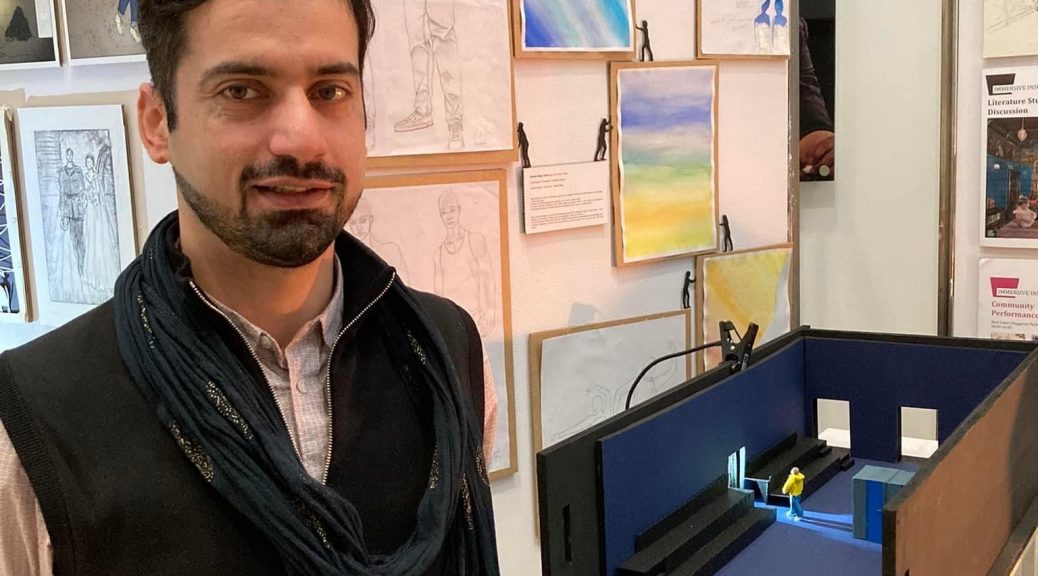
In this interview Mehdi gives an overview of his career to date and shares his experience as part of Fio’s Arise Wales Creatives programme for Emerging Directors at RWCMD.
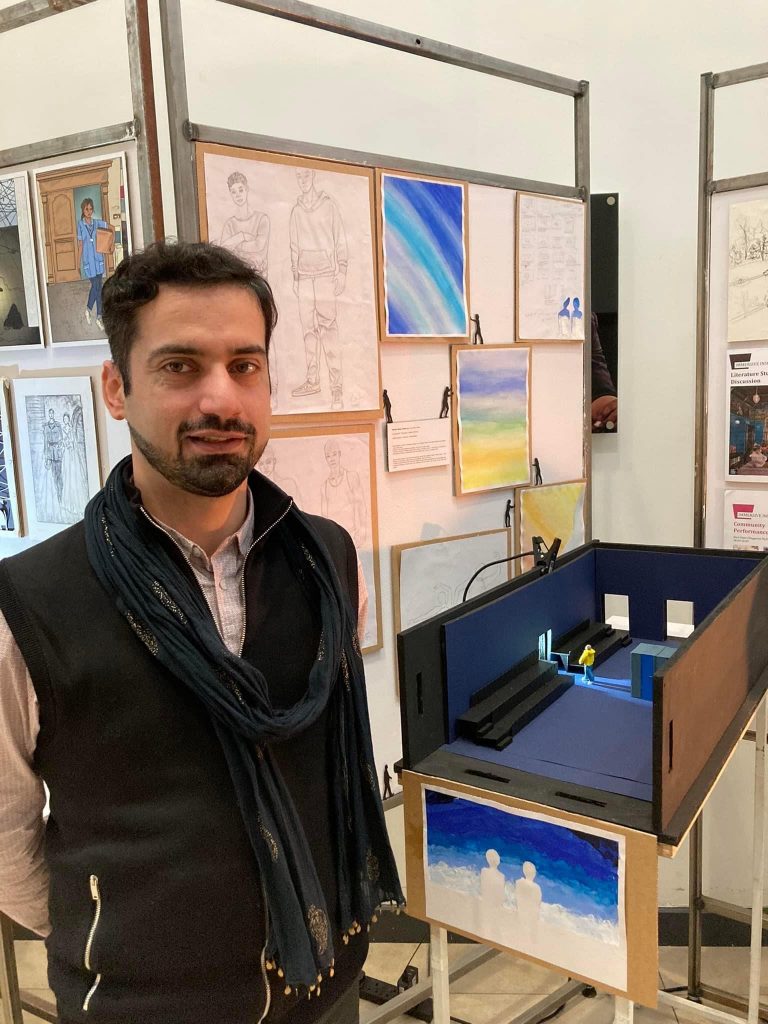
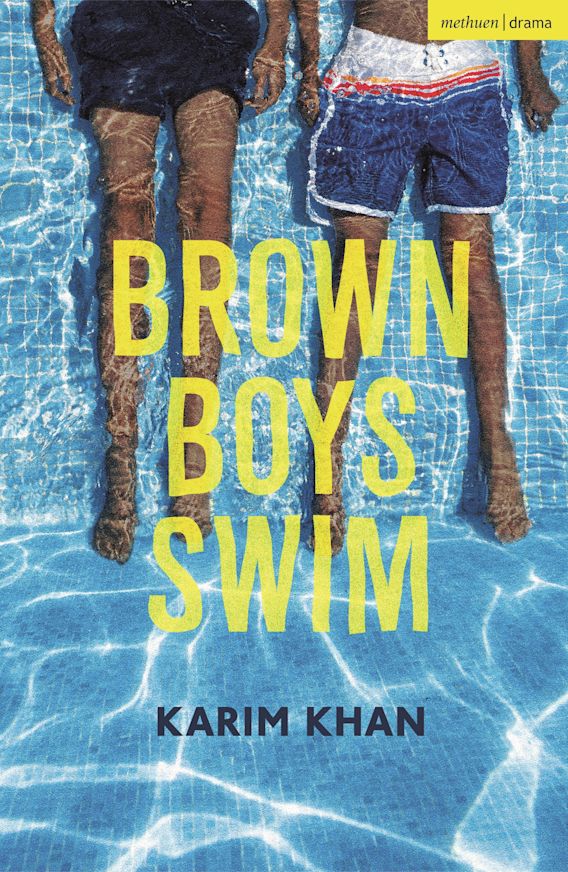
Director Mehdi Razi in front of the model box and designs by Kathryn Brown of Brown Boys Swim by Karim Khan
Hi I am originally from a Shiraz in Iran I first came to Wales in 2015 for a Masters in Product Design at Cardiff Met. During my time as a student I found Cardiff to be a very welcoming city. After completing the Masters I worked for two years in the Design Industry, based in Splott.
I was always interested in the performing arts and after moving to Wales a few things changed in my life, offering the opportunity to focus on the performing arts as a career. Initially I started ushering and volunteering through Sherman 5 at the Sherman Theatre and National Dance Company Wales on the Dance for Parkinson’s programme
Volunteering helped give me an insight into the possibilities of different areas I could work in the arts. This alongside shadowing and then later assisting on performances gave me an option to see things in detail and how I could invest in these areas as a career.
I developed my experience as a Producer about 5 years ago with WNO on a placement and shadowing on productions. I produced an R and D project called Beyond the Rainbow with Oasis (who support Refugees and Asylum Seekers) and the Refugee Council for Wales, this resulted in an informal sharing at the Wales Millennium Centre.
I then started on small assisting roles with the company and also enjoyed working as an emerging producer for Theatr Clwyd. During lockdown I worked on some projects of my own with support from ACW
Thankfully as Lockdown eased, work opportunities opened up and I assisted Joe Murphy as trainee Assistant Director on Christmas Carol in 2021 at The Sherman Theatre, Cardiff.
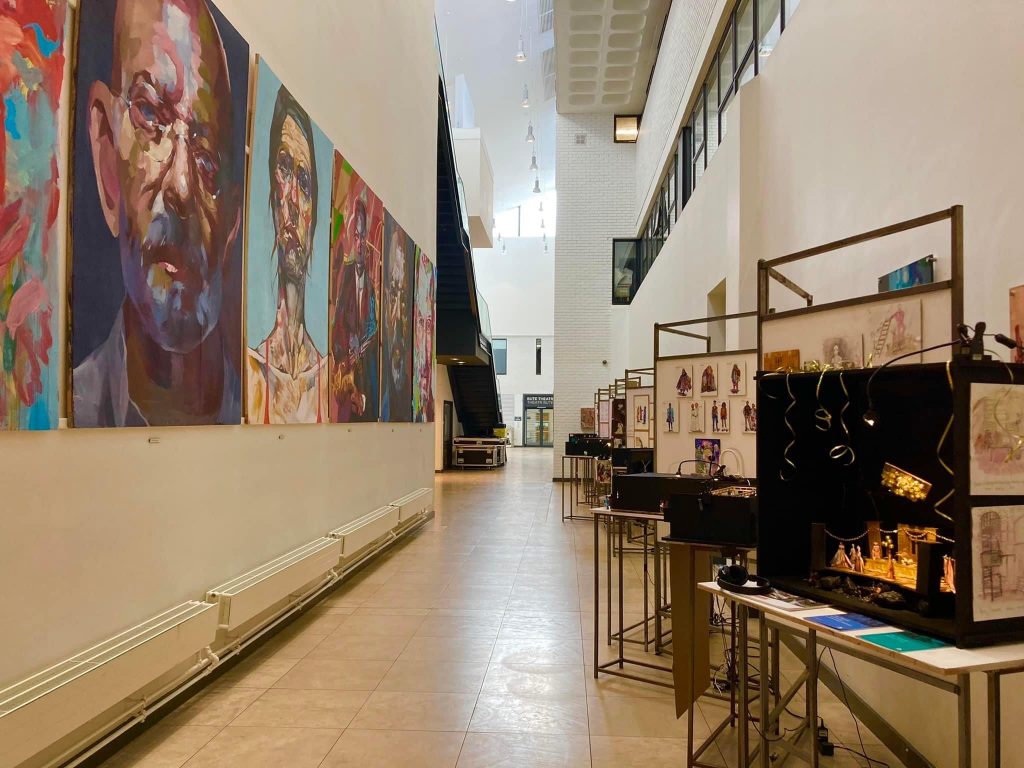
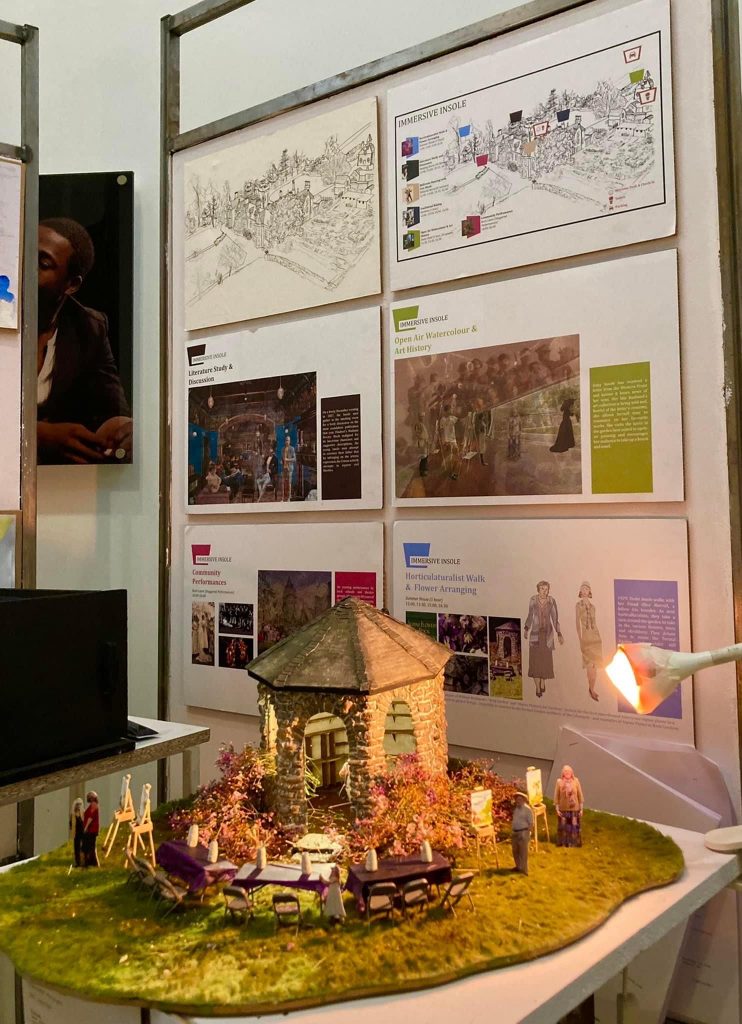
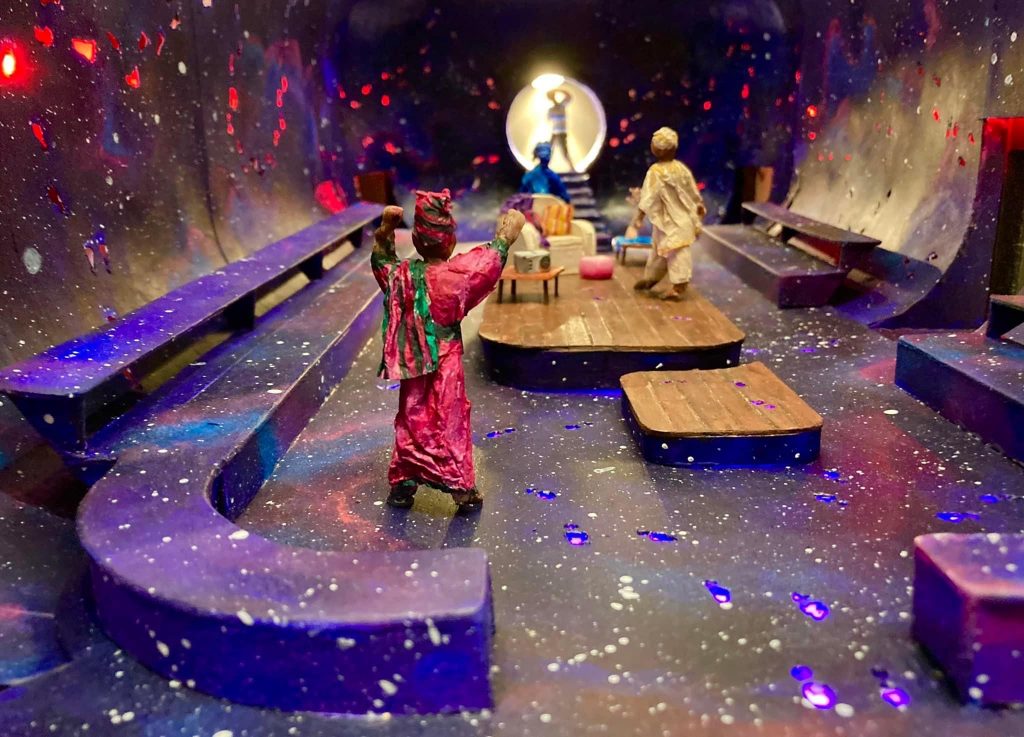
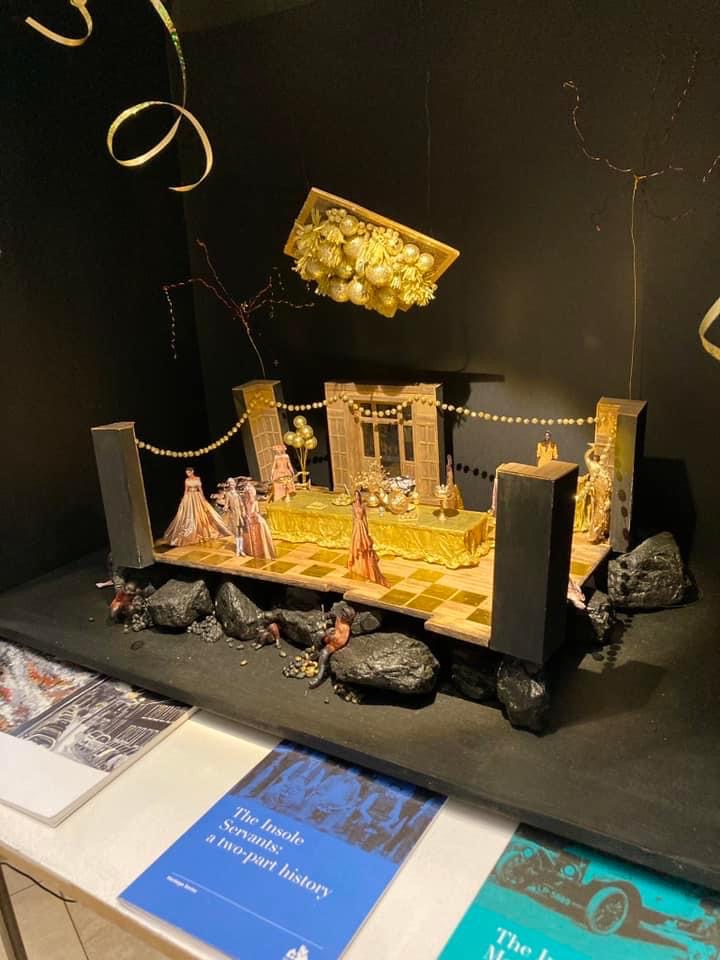
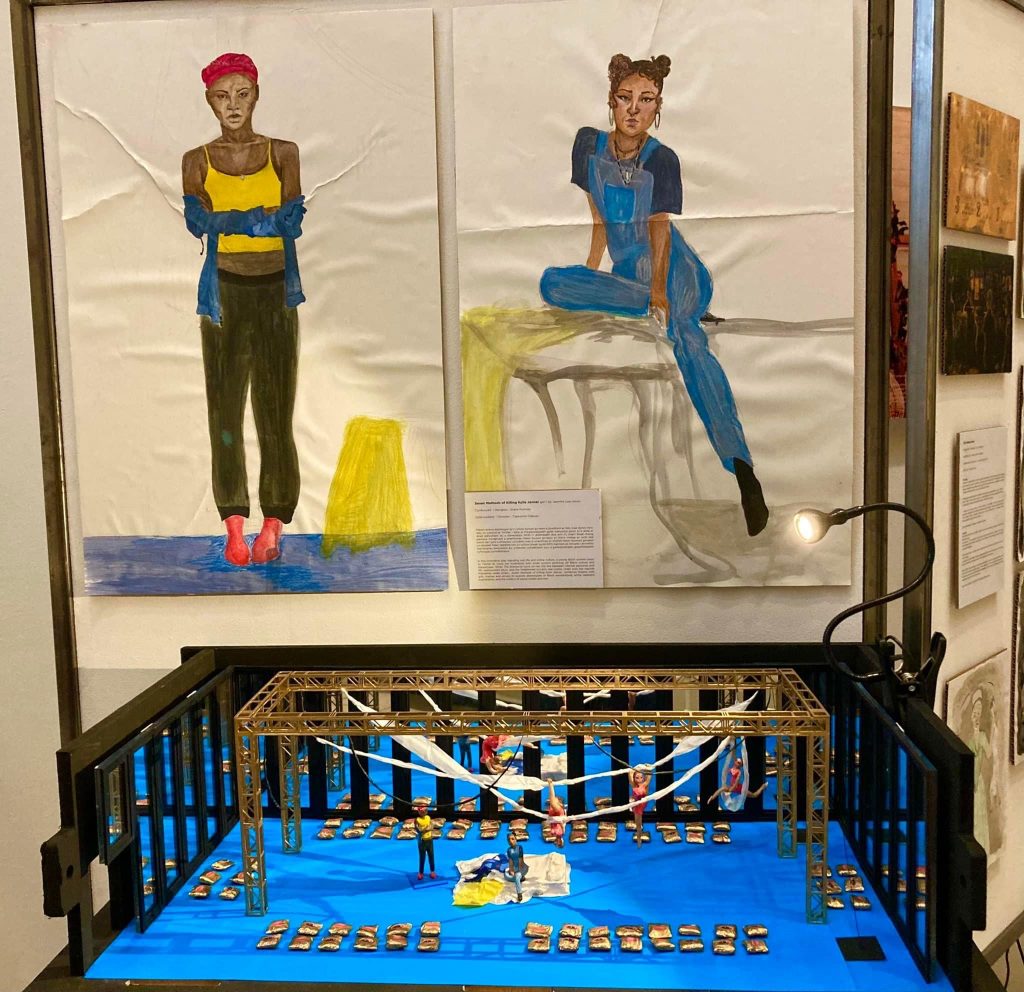
The Design for Contemporary Drama Exhibtion at RWCMD
We were then put in pairs and given some plays to work on in order to help develop our working relationship. I was partnered with a RWCMD Design Student called Kathryn Brown.
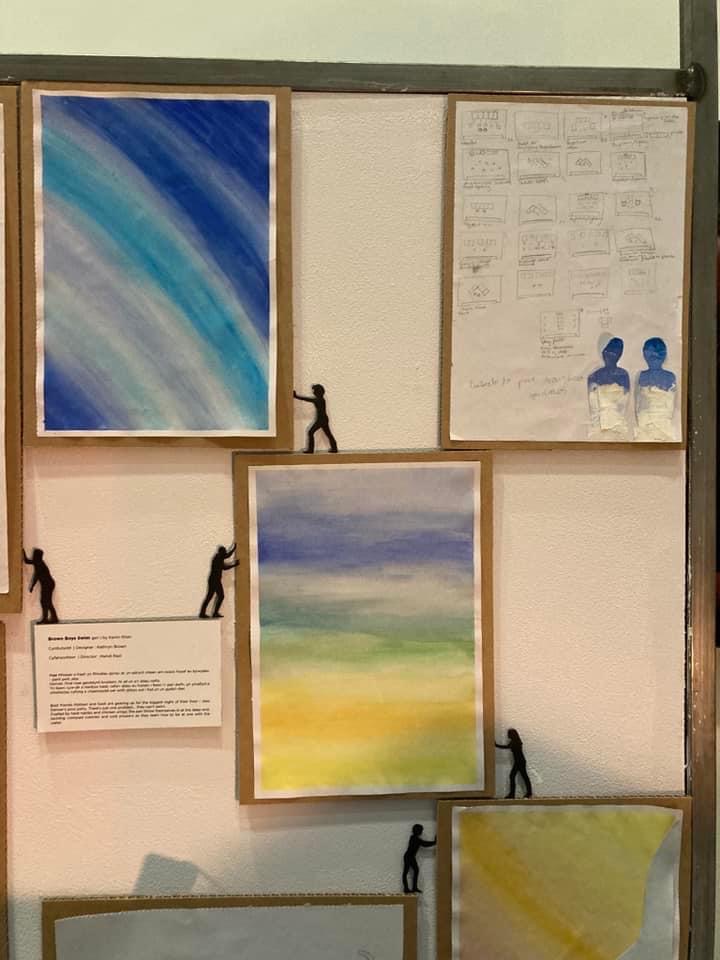
Kathryn created a mood board and we discussed the different elements of the production. We worked on the core idea of movement and cubic elements, The play interrogates feelings of oppression and the individuals place in society. Kathryn found that the traditional changing cubicle in the swimming pool would be great metaphor for the boys lives, sharing and then isolation so we played with this element.
Kathryn’s designs
We then worked on choreographic elements for the space. We had a few creative meetings, and considered what the change of position of the cubicles in the work would this mean to the audience and storyboarded the development of the play together.
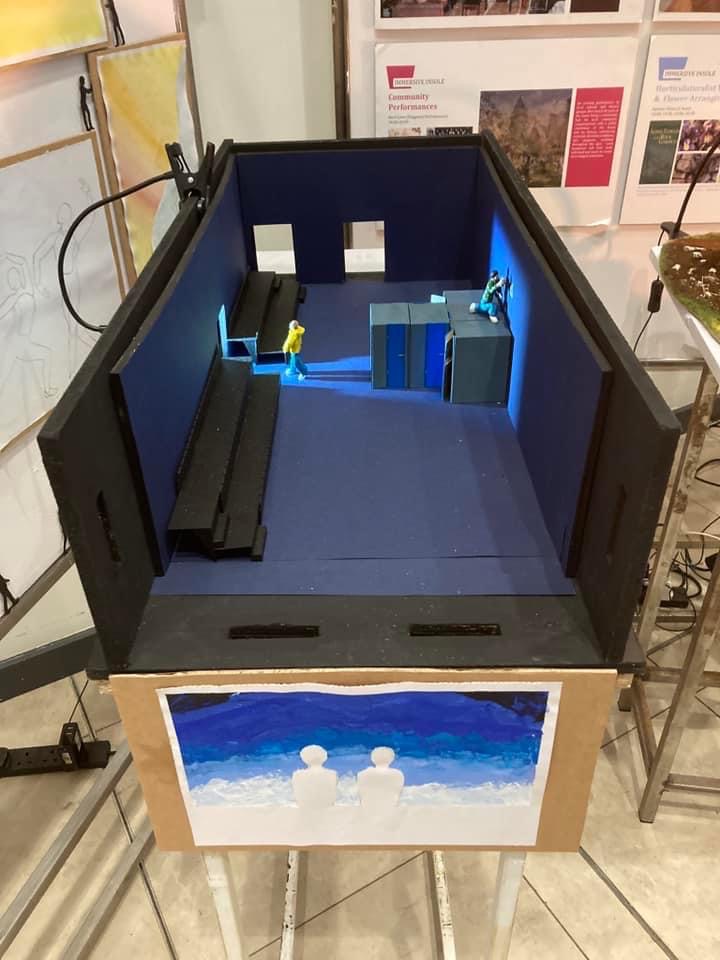
A rough design was presented to me and we then looked at the blocking and the choreography was clear, we focused on the visual details, lighting, colour and transitions in the space. We focused on design details and construction, how scenery might be moved around the space and considerations of construction. A more detailed version of the model box was presented to me, we then finalised the design details and the practicalities of the sightlines for the audience.
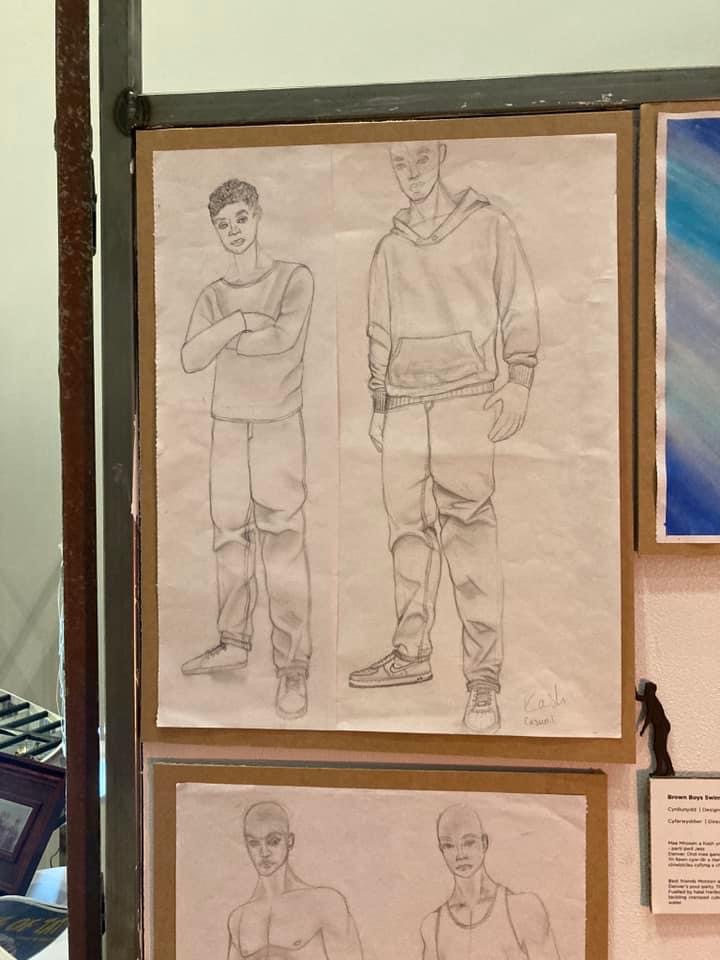
Kathryn’s costume designs
Our brief was based on a specific space called The Studio at Chapter Arts Centre so we went on a site visit to the venue.
Kathryn’s finished model box
This was my first project at College I really enjoyed going into the design studio as I have a design background myself. Everyone involved was very inclusive, it was very collaborative. The RWCMD Tutors would often come in to chat, it was great to see such a high level of support.
I enjoyed being around the students, RWCMD is comfortable and homely, its a welcoming campus you can have lunch and work its such a pleasant environment.
The exhibition at RWCMD runs until the 10 Feb you can find more information below with a selection of images from other RWCMD Designers.
In this latest in the series of Playwright interviews Peter Cox gives an overview of his career to date, his time working for National Institutions, access to the arts for all and his hopes for the future. Interview by Director of Get the Chance, Guy O’Donnell.
Hi Peter great to meet you, can you give our readers some background information on yourself please?
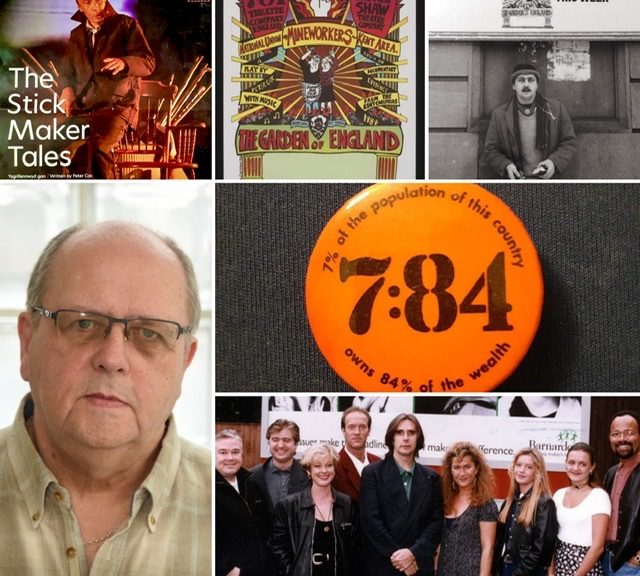
I began my writing career at the Royal Court Theatre in London where I won the George Devine Award for most promising new playwright in 1983. My stage plays have since been commissioned and performed by companies throughout Britain – including 7:84 Theatre Company, the Royal National Theatre, Belfast Opera House, the Wales Millennium Centre and National Theatre Wales.
I’ve written and developed film and television drama for the BBC and various independent companies. My radio drama has been broadcast on BBC Radio 3 & 4 but I’m maybe best known as the writer of 227 episodes of the acclaimed Channel 4 drama serial, Brookside, between 1986 and 2003. During this time, I was a lead member of the writing team that created multiple-strand stories for more than 2,400 episodes.
Throughout my career writing drama for theatre and television I’ve been privileged to work alongside, and with, masters of these forms including Samuel Beckett, Edward Bond, Billie Whitelaw, Michael Bogdanov, Danny Boyle, and Sir Phil Redmond CBE. The experience of learning alongside people who are working at the top of their profession is unbeatable and led me, in turn, to a commitment to mentoring theatre makers and writers.
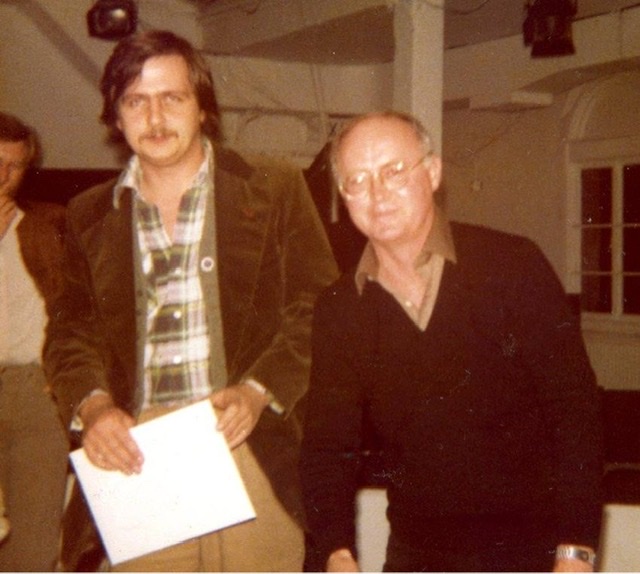
Peter (left) working as Assistant Director with Edward Bond on the play The Worlds, performed by the Royal Court Young Peoples Theatre (AKA The Activists) in the Theatre Upstatirs.
Alongside my writing work I’ve been very active in the Creative Industries sector in Wales including creative leadership and advocacy in community arts, cultural policy making, economic and cultural regeneration, broadcast radio and television drama production, professional theatre, youth theatre, live music promotion, carnival, and cultural tourism.
I’m a founder trustee and ex-Chair of CARAD(Community Arts Rhayader and District), a Registered Charity that has developed a regionally significant Rural Community Arts and Heritage resource that’s brought more than £5 million of inward investment into Mid-Wales. During my leadership term CARAD facilitated the active engagement of more than 118,000 members of the community and helped to inspire and deliver over 650,000 hours of community participation and engagement in arts, heritage, and media projects.
In the 2010 New Year’s Honours list I was awarded an MBE for services to community arts – in essence, an acknowledgement of the amazing vision and hard work of many local people.
So, what got you interested in the arts?
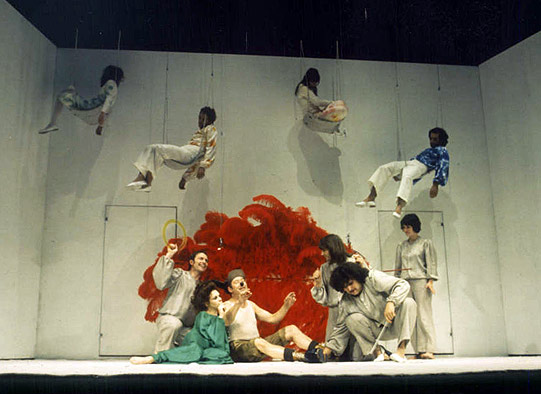
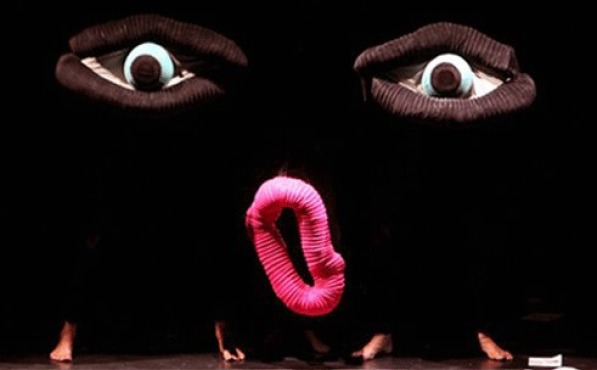
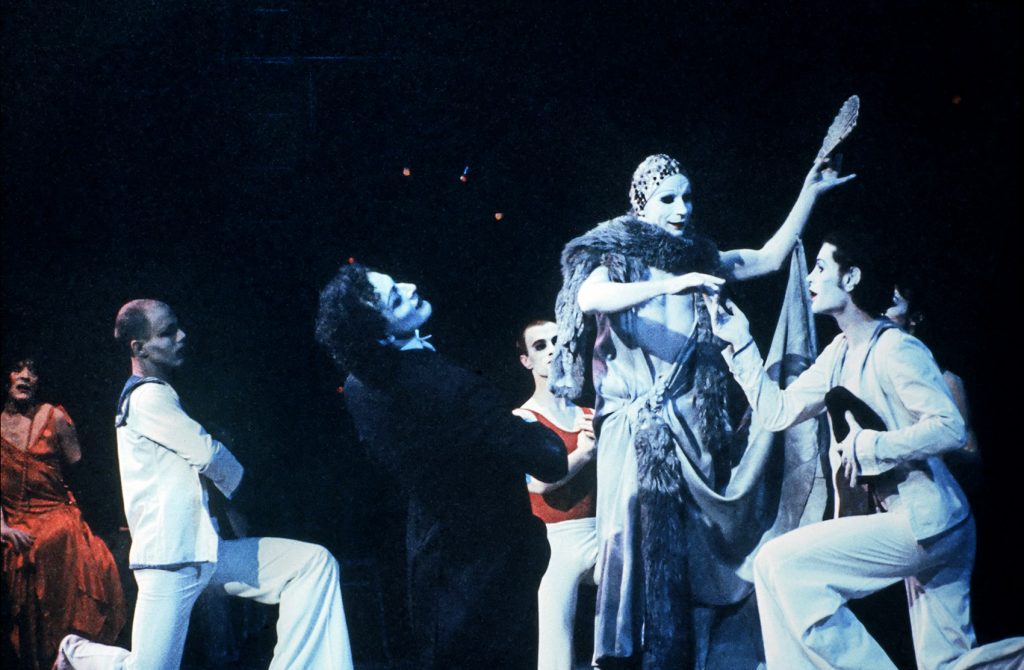
My earliest theatre-going experiences fuelled my desire to pursue a career in the performing arts. My first, on a teenage school-trip, was watching Peter Brook’s ‘A Midsummer Night’s Dream’, with its rock-circus staging and Bottom being given a clown nose rather than an ass’s head. A few years later, as a drama student, I was awestruck watching the fabulous giant puppetry of Swiss theatre troupe Mummenschanz. Soon after I was deeply moved and inspired by Lindsay’s Kemp’s extraordinary, ‘Butoh’ influenced, movement-theatre production of ‘Flowers’ at Sadler’s Wells. There are visual stage images from all three productions seared into my memory to this day.
Peter Brook’s ‘A Midsummer Night’s Dream’,Mummenschanz‘Flowers’ at Sadler’s Wells.
In each of these shows, the non-traditional theatre techniques and visual language used were incredibly powerful and profoundly enhanced the storytelling. Primarily though, I was conscious of the way my emotions, imagination and creativity were provoked by these vividly effective, stylised, and subversive theatrical approaches. I was hooked.
Why do you write?
I write to try and harness the vast numbers of ideas that just keep bursting out of my sub-conscious mind. I write to try to capture and express moments of extreme crisis, of powerful emotions, from rage and hate to love and grief. I write to make an actor’s blood run faster and to make audiences laugh and cry.
As both a playwright and screenwriter, I’ve researched in, and written about, many socially and politically challenging environments, including: the Bogside in Derry in 1982/3 just after the Hunger Strikes, across British coalfields during the 1984/5 Miners Strike, in Southern Sudan – a war and famine zone, during the Troubles in the Falls Road Belfast 1988/89, and so on. At the heart of all this work there are real people facing very real, and serious, crisis points in their personal and community lives.
Those are stories that need to be told.
Can you tell us about your writing process? Where do your ideas come from?
I watch the world – politics, journalism, human behaviour and frailty, social trends etc… and generate ideas on a daily, if not hourly, basis. I never block any of my own ideas – I note them down, then they either get used or not. Sometimes they might resurface years later in an entirely new context.
I use a diverse range of process techniques, like T Cards and colour coding for structure, but my approach to storytelling is always the same, whatever the form… find a compelling character, or group of characters, and put them into a story that pushes them up against and beyond their own boundaries. The challenges they face, both mirror and echo the challenges that audiences face every day.
Can you describe your writing day? Do you have a process or a minimum word count?
Getting into my ‘writing zone’ is crucial. Blanking out all the extraneous noise from life and the world around me. Once there I honestly can’t say how the magic happens – when the words flow it’s an alchemical process. Researching and note-gathering are replaced by something akin to ‘channelling’ as characters, action, dialogue and images form in a kaleidoscopic visualisation.
I never judge or edit as I go – that comes later. I’m completely committed to revising and re-writing and I’m not afraid to write twenty or thirty drafts or more. I’m a strong advocate of the strength and power in a good relationship between writers, directors, and dramaturgs. I work on the understanding that writing is a form of improvisation on the page. I never ask, ‘Do you like what I’ve written?’ Always just, ‘How can it be better?’
Do you have a specific place that you work from?
When I worked as Writer in Residence with No Fit State Circus – on three site specific shows -my ‘standing-desk’ was a wheelie bin, out in the open air, with my writing files and laptop perched on top of it. I wouldn’t swap that experience for the world, but when it comes to writing every day, often for very long hours, I prefer my desk in my office space at home.
You began your writing career at the Royal Court Theatre and won the George Devine Award for most promising new playwright. We recently interviewed playwright Diana Nneka Atuona about her play Trouble in Butetown. Her script was recipient of the 2019 George Devine Award for her play then titled, ‘The Boy from Tiger Bay’. What role do awards and prizes play in a writer’s career and what difference, if any did it make to yours?
Huge congratulations to Diana. Winning the George Devine Award opened many professional doors for me, and I still place it high on my CV. Just as important though – was that it gave me a huge confidence boost and a validation of my writer’s voice.
I think it’s important that all ‘competitions’ should take the process very seriously. They need to be run with integrity and with good, sensitive communications. Giving thoughtful, considered, and professional feedback should be at the heart of the process – that way, everyone who enters is a winner.
I was fascinated with some Tweets you shared recently on a commission from The Royal National Theatre touring Welsh Miner’s Welfare Halls, where you also worked with 7:84 Theatre Company. How do you come to be involved in this project?
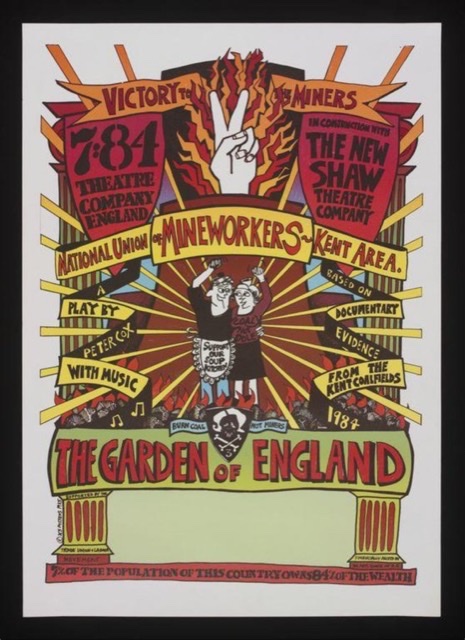
Just after winning the George Devine Award, I was commissioned by Peter Gill, Associate Director at the Royal National Theatre, to go into the Kent Coalfield to live with a militant striking miner – and then to create a verbatim play taken from interviews with miners for the duration of the strike. I travelled to every coalfield across the rest of the country, interviewing and researching on picket lines, mass demos, in soup kitchens etc.
After the first version of the play was done at the National, (The Garden of England, directed by Peter Gill), I was asked to write a touring show with songs – inspired by that verbatim research – for 7:84 Theatre Company (England). We played some amazing huge venues to thousands of striking miners and their families – with the buses that brought the audiences being sponsored by other trade unions and using volunteer drivers. (Opening night in front of 2,500 in Sheffield City Hall, second night another massive audience in Newcastle City Hall, then Manchester Town Hall.) Our Wales venue was the Parc and Dare and it was an extraordinary night, as was the rest of the tour!
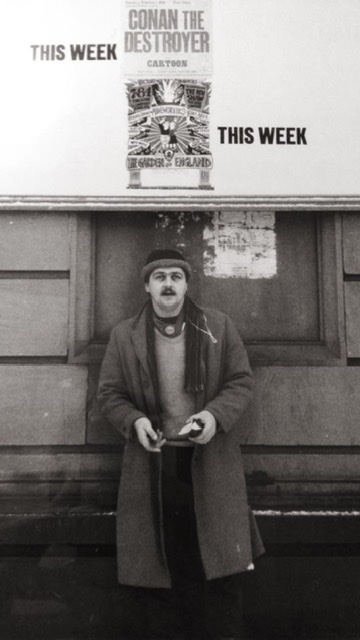
Peter outside of the Parc and Dare 1985.During the tour of Garden of England.
Then, in a strange turn of events, once the strike was over, Peter Gill commissioned me to go back to Kent to conduct another whole sequence of interviews in the defeated mining community. Once again I created a powerful piece of verbatim theatre, but one which was very different in tone to the first two. The two verbatim pieces played in the Cottesloe Theatre at the National Theatre.
My connection with 7:84 was a big influence on me. I was very lucky to get picked up as a young playwright by such a theatre visionary as the late John McGrath who founded the company. John was extremely encouraging to me and gave me various opportunities. He enabled me to go on the road with the company in both England and Scotland, as a form of apprenticeship. He commissioned me and I wrote several plays for 7:84. He put me on the 7:84 management committee. I owe him a lot. He had a fierce intellect and was extremely shrewd and analytical – always pushing societal boundaries and hierarchical cultural constructs. Working so closely with him inspired me to do the same – something I try to do with every new project I undertake.
What role do you think National Theatres and Playwrights have in telling the narratives of the citizens of their respective nations?
To be a good playwright you must care in equal measure about your characters’ and your audience’s lives. You need to be adaptable and flexible to create a wide range of characters and stories. You need serious commitment, stamina and staying power. You need to be ready to shed tears as you dig into the depths of your own life experience to bring those emotions to life in your characters. You need to love drama, and the power it has, to affect people’s lives. All these things apply to being a good National Theatre as well.
A large part of your career was spent writing episodes of the Channel 4 drama serial, Brookside, between 1986 and 2003. During that time, you were a member of the writers’ team that created multiple-strand stories for more than 2,400 episodes. You have said about your work on Brookside that “As you might guess I love story and the power of story metaphor in people’s lives.” We often see the term, “Writing Team” on long running serial dramas, can you share how this process works for the writers involved?
A Writers Room, or being on a Writing Team, is most commonly associated with American TV Drama Series & Serials. Breaking Bad for example, has a formidable reputation for the strength of its Writers Room – one of the reasons it has been so globally successful. Brookside story-lined with the Writers Room model – right from the day it started in 1982.
During my time on Brookside there would be twelve to fourteen writers on the team at any one time. We’d meet with the producers every six months to determine long-term story potential for all core characters. Then we’d meet for two days every month, in storyline sessions led by the Producer and / or the Exec Producer, where we’d intensively thrash out a block of twelve episode outlines at a time. We’d then go on to be commissioned individually to write single episode scripts – or possibly two or three for more experienced writers. While in the Writers Room we’d fight for stories, find twists and turns, generate the drama, seek out the humour and push the political and social boundaries as far as we could. We’d argue fiercely about politics, sex, religion etc… to the extent that, on one occasion, Security was called to attend as someone had reported a fight was taking place!
Writers Rooms don’t suit all writers, and they can be quite attritional places. Often there’s a high fall-out rate, and on shows like Friends they’ve been identified as being brutal and unforgiving. All of that said, when they work well, and when they suit you, it can be a fantastic system to work within. I had the great fortune to write for Brookside for eighteen years and my time in the Writer’s Room was like a monthly injection of the best drug going – intensely focused and collaborative creativity. I developed huge respect for my colleagues and for their commitment to driving our series to be the best that it could be. The fact that people still stop me, and talk about stories from over twenty years ago, is a great tribute to the effort we made at the time to tell the best stories we could that viewers would identify with.
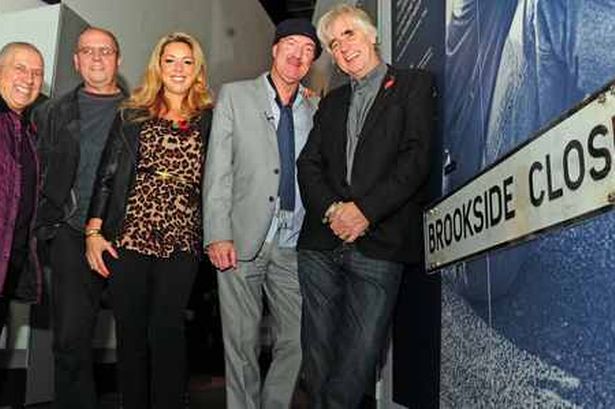
Peter with the cast and creatives from Brookside
In news just announced this week I’m very pleased to see that all episodes of Brookside have been digitally remastered and are due to be shown on STV – a free to air streaming service. I’ve no doubt that many of the stories that we told across the 80s and 90s will still resonate in the viewer’s lives.
Are there any particular storylines that you are most proud of during your time on Brookside?
Tough question. I was part of the Writers Room Team that generated storylines that ran through more than 2,400 episodes. I wrote 227 episodes which is a huge amount of broadcast television drama. To give you some idea of scale… just writing my episodes alone would be around three million words. By the time the team has story-lined and scripted over 2,400 episodes you are well into the tens of millions of words!
Brookside was conceived to bring real issues and real lives to the British television screen, through an ongoing drama serial. It was brave and ground-breaking. We prided ourselves on being ahead of social, political and legal issues and trends. Our audience looked to us to be challenging the boundaries of British politics through the eyes of ordinary people. We gave a voice to the genuine concerns, fears, and aspirations of our viewers – people with little or no power over their lives and their futures. Brookside was recognised from its first episode as ‘gritty social realism’, but we weren’t afraid to make people laugh along the way.
It was very important to us that we moved with the times. In the 1980s there had been a major national focus on Trade Union politics, and this was reflected in the programme. As we moved into the 1990s other social issues began to dominate, including LGBT+ issues, drug misuse, rise of feminist politics etc. Brookside further explored all these issues and many more.
So, having created hundreds of Brookside stories, it’s very hard to pick out a favourite – although the three-year-long ‘Body Under the Patio / Jordache’ story of domestic violence and child abuse is high on my list.
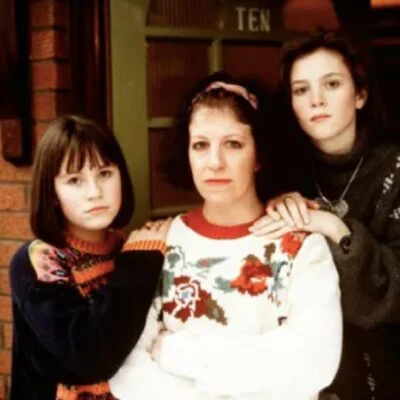
The Jordache Family
Maybe an easier way to frame it is to recognise that I have four favourite Brookside characters who were iconic soap characters played by outstanding actors who were great to write for: Sheila Grant, Jimmy Corkhill, Sinbad the Window Cleaner, and Mick Johnson. (Sue Johnstone, Dean Sullivan, Michael Starke, and Louis Emerick).
Sheila GrantJimmy Corkhill,Sinbad the Window Cleaner,Mick Johnson
Each of them was a working-class character who grew in strength and influence over many years from essentially the same starting point – as one of life’s underdogs – people with no power or agency in wider society. Each of them showed great resilience, courage, and human spirit to overcome all the adversities they faced, and a political system heavily weighted against them.
Throughout your career you have often worked with the general public and young people in particular devising work together, how does this process differ from being commissioned to write a script by yourself? Can you make any suggestions for good practice in terms of this method of creativity and writing?
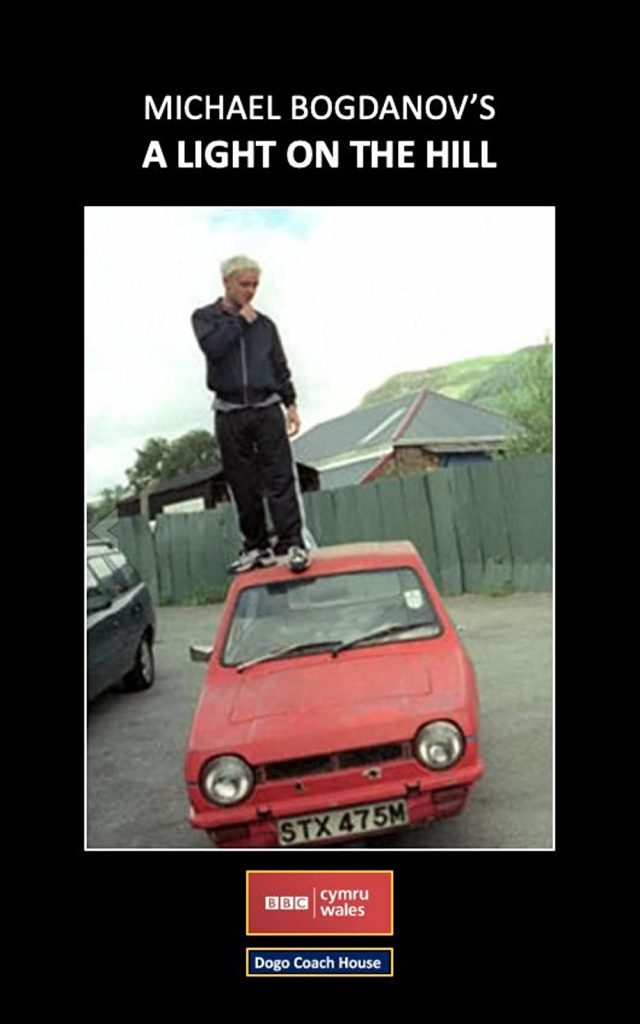
I’ve had extensive experience creating drama with communities including large-scale community plays in Wales and London, youth theatre in Belfast, youth and community film for the Rural Media Company and the BBC Wales Millennium Film, ‘A Light on The Hill’, commissioned and directed by Michael Bogdanov.
In all instances I aim to balance the process and the product equally. I always set the bar as high as possible, and ensure the whole project is delivered to the highest professional standards. This has an immense impact on the participant’s self-esteem and sense of achievement and can have a profound effect on people’s lives, including those in the audience. Best practice includes providing good access that removes barriers of all kinds, good listening and learning skills, honesty, respect, and integrity. With those basic principles in place everything else is about creating supportive systems and logistics that give people the best chance to grow in confidence and deliver at a level that they never thought they would be able to achieve.
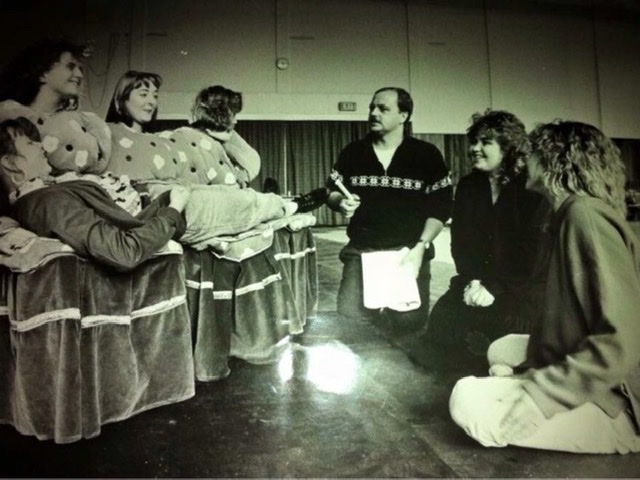
Peter (centre) working in 1989 with with a group of young women from the Falls Road in West Belfast on his play Ma Hat Ma Coat and The Ghandi Girls
There are a range of organisations supporting Wales based writers. I wonder if you feel the current support network and career opportunities feel ‘healthy’ to you? Is it possible to sustain a career as a writer in Wales and if not, what would help?
It’s difficult to envisage a time when it will be genuinely ‘healthy’ as demand far outstrips supply. For example, the National Theatre Wales Community has four hundred and eighty-two members in its Writers Group. Let’s say half of them are active and wanting to write plays and get them performed. That’s over two hundred writers, while the number of commissions via companies like Theatr Clwyd, NTW, Sherman etc, will come nowhere near that in any one year.
This makes sustaining a career through theatre writing extremely difficult, except perhaps for a handful of playwrights. I’ve always thought of myself as a dramatist, not just a theatre playwright. This means in practice that I’ve gone out of my way across my career to find opportunities to deploy my core skills in a wide range of performance settings – radio, TV, film, circus etc. I would estimate that probably over 90% of my career earnings have come from working outside Wales.
If you were able to fund an area of the arts what would this be and why?
My ‘wish list’ would include: a Rural Region of Culture, youth theatre, touring theatre, new writing by writers of all ages, opportunities for women playwrights, mentoring… it could go on to be a very long list!
What currently inspires you about the arts in the Wales?
I’m hugely inspired by the number of young people coming through high-quality training and their determination to find all kinds of opportunities to tell diverse stories through drama. Their belief in what they do, and their love of it clearly transcends all else. But it’s very clear that, although financial remuneration doesn’t drive theatre makers on – poor financial rewards work against theatre makers from poorer backgrounds, so we risk those voices not being heard.
What was the last really great thing that you experienced that you would like to share with our readers?
Just before COVID, I worked with Sue Parrish, Artistic Director of Sphinx Theatre Company, a long-standing collaborator. The project we created was Words as Weapons – in partnership with Tom Kuhn of the Writing Brecht Project at Oxford University, Rowan Padmore from Arts at the Old Fire Station with CRISIS, the homeless charity, in Oxford and a group of participants with lived, often current, experience of homelessness.
As part of my preparation to run a sequence of writing workshops I read nearly one thousand Brecht poems, newly translated into English by David Constantine and Professor Tom Kuhn. It was a great privilege to be given access to this work, pre-publication, and what a journey of discovery it proved to be – page after page of surprising subjects and diverse styles. I’ve always believed Brecht had a voice that speaks to our lives today, but the more poems I read the stronger this conviction became.
Our writing group would meet every Monday afternoon and I’d use some of these Brecht poems as triggers for creating new work – in whatever form each group-member wished to try; poem, lyric / song, monologue, scene etc. When we read the Brecht poems aloud and discussed them, we found that their contemporary resonance and relevance was often quite extraordinary. He wrote some of these poems one hundred years ago, but he could easily have been writing directly about today.
Brecht’s words, his weapons, proved to be a fantastic catalyst for generating some exceptional new writing. Our workshop approach encouraged and nurtured each writer’s own voice. As each member of the group grew in confidence, they found themselves liberated and they pursued their own new writing with real energy and purpose. Each of their voices became clearer and stronger. I’ve no doubt Brecht would have genuinely celebrated this spate of creativity and commentary. As they created each new piece their hunger to express themselves matured, their words demanded to be shared and their voices demanded to be heard.
When we all stepped out onstage, in our live Words as Weapons performances, the packed houses listened intently and were moved and entertained as well as intellectually stimulated and politically provoked. But at the same time, these audiences were struggling to get their bearings.
This was two worlds colliding: 1920s Berlin v Oxford 2018.
They understood that they were listening to new writing – but they also knew we were sharing some Brecht poems – and at times they found it impossible to work out who had written what and when! That was a great project on so many levels.
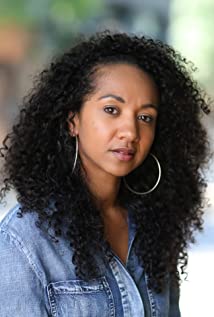
Hi Diana, great to meet you, what first got you interested in the arts?
As child, I was always into creative writing and storytelling. I wanted to be a song writer (still kind of do) and I would also write short stories. I wrote my first play when I was around 11 or 12 for my church and just loved the idea of entertaining audiences.
Can you tell us about your writing process? Where do your ideas come from?
Ideas come in a variety of ways for me. Either I go looking (which rarely yields results) or I just get flashes of inspiration. It has to be said though, that it is pretty rare for me to find an idea that I fall in love long enough to want to work on but when I do, there is no greater feeling. I often start with finding the world first then, figuring out a premise before populating the world with characters. In terms of process, I now understand the importance of planning and structuring where I can so I try to complete that first before I start scripting.
Can you describe your writing day? Do you have a process or a minimum word count?
I definitely don’t have word count. On a good day, I’d have been doing some writing in my head the night before so I really try and put that down until there is nothing left in my head or until I have to get on with life duties. I do try and write from the beginning of the story until the end but if there is a scene I am struggling with, I’ll just skip it and focus on one that’s strongest in my mind.
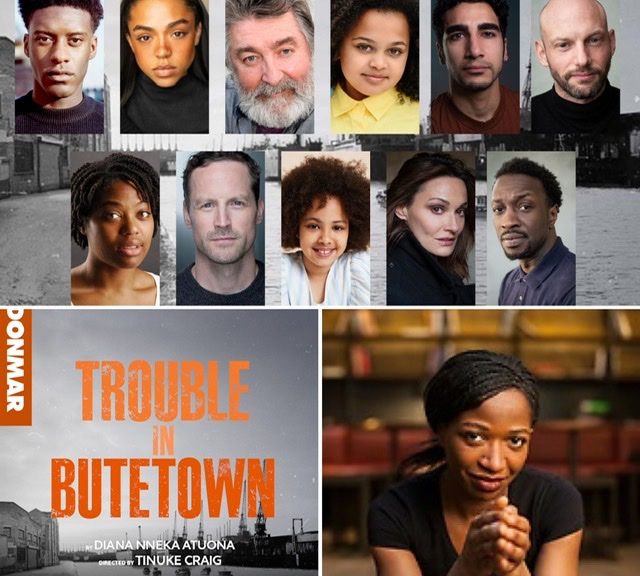
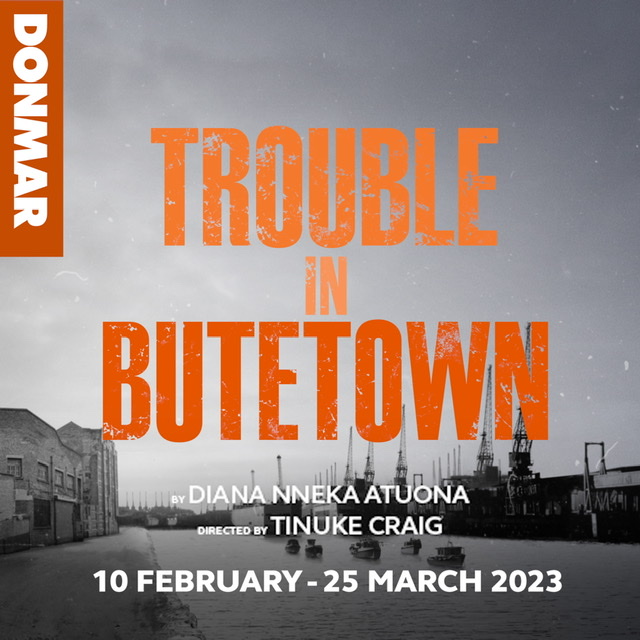
Your latest play Trouble in Butetown plays at The Donmar Warehouse, London from the 10 February. The production takes place in an area of Cardiff Docks, called Butetown or Tiger Bay during World War Two. The production information describes the area as “home to souls from every corner of the globe” What drew you to this location and period for your play?
I fell in love with the history. It’s strange as, prior to writing about Tiger Bay, I knew very little about its history so I cannot explain what led me to go down that path but I’m glad I did. The more I researched, the more I fell in love with it. As a girl from Peckham in south London, I know a lot of people would be surprised to hear that I would choose to write this story but actually, there are elements of Tiger Bay’s history that I can relate to. I grew up in London, so I understand the world of racially diverse communities first hand. As a Peckham girl, I know what it’s like to grow up in a town that has a negative reputation that is not completely deserved, neither is it completely undeserved (we’re also both experiencing massive gentrification).
I also grew up around people like the characters in my play, salt of the earth types who would take the mick out of you but also have your back if you were ever in trouble. Tiger Bay’s cultural identity is also made up in part, of the West African culture. Being of West African descent myself, I felt I could easily relate. There were many periods I could have set this play in but I chose WW2 as the world of Jim Crow that the black American GIs who arrived in Cardiff suffered under, contrasted very nicely with the diversity and inclusion of Tiger Bay. I also felt that we have seen a ton of WW2 stories depicting the life of white Britain. I don’t believe I have seen anything that depicts the life of British people of colour.
Do you think the plays period and themes will resonate with contemporary audiences?
I think it will. This is a time where people are very open to forgotten histories. I also think that the themes of race and identity are very pertinent today. Essentially, this is a human story and I don’t think they ever really go out of style.
Most definitely. The George Devine is a very well regarded theatre award and it was a real privilege to win it. It got the play in front of many venues, the Donmar being one of them and the rest, as they say, is history. The TRHW award was really important as it provided the necessary funds for me to develop the play and also provided support for the production as a whole. I am very grateful to have received both.
There are a range of organisations supporting UK based writers. I wonder if you feel the current support network and career opportunities feel ‘healthy’ to you? Is it possible to sustain a career as a writer in the UK and if not what would help?
That’s a pretty tough one for me to answer as historically, I never wrote fast enough to make a consistent living as a writer. I have however found that there has often been support when I needed it most, I am thinking of amazing organisations like The Peggy Ramsey Fund or the Fleabag fund. I think there can always be more support for writers especially due to the precarious nature of our jobs.
If you were able to fund an area of the arts what would this be and why?
I would probably say that I would fund new writing from under represented voices. In order for this industry to remain fresh and vibrant, we need a diversity of voices.
What currently inspires you about the arts in the UK?
The landscape has changed so drastically since I started on this journey. There is a real appetite for new stories and there does seem to be a willingness from a lot of organisations to support new talent. It does feel like it’s all for the taking now.
What was the last really great thing that you experienced that you would like to share with our readers?
My daughter turning three years old. She is the love of my life and to be surrounded by all our friends and family meant the world to me.
You can find out more about Trouble in Butetown and book tickets here
Interviewed by Guy O’Donnell, Director Get the Chance
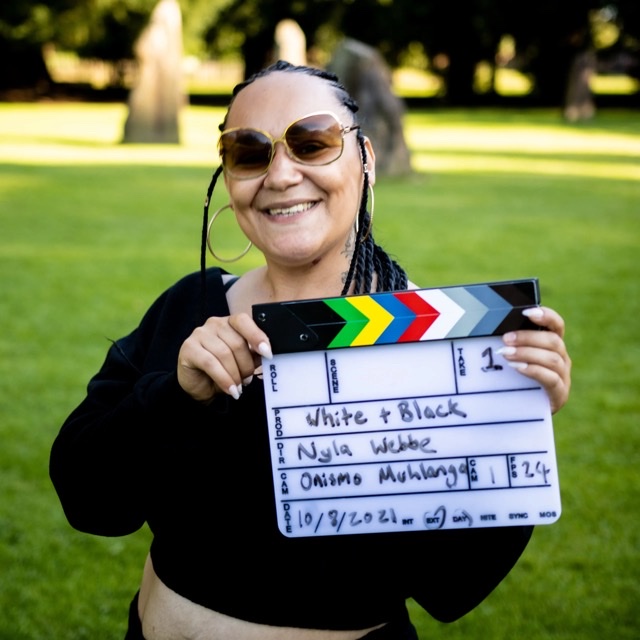
Hi Nyla great to meet you, what got you interested in the arts?
For as long as I remember I have always had a love for performing. My parents said that they would watch me with my teddies in the garden pretending I was in another world and talking to myself, I was always creating stories and living in my own imagination. I also attended a very creative church growing up and from the age of 6-12 I was involved in productions, always singing, dancing and acting.
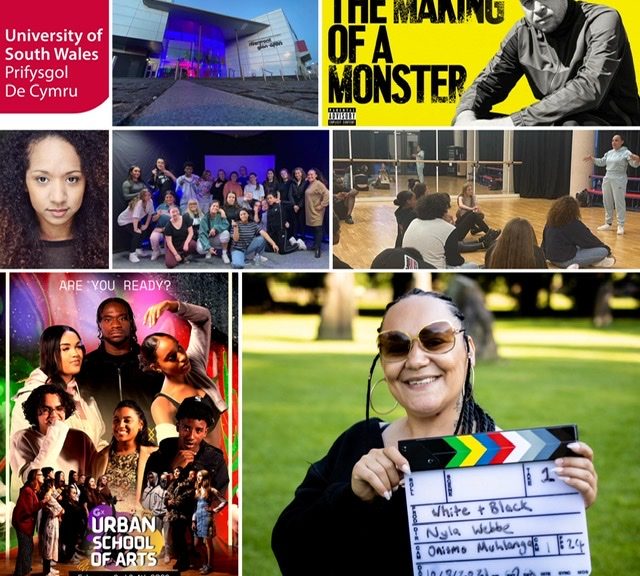
You are the Creative Arts Development Officer for G Expressions based in Newport, the organisation “works to support young people aged 10-25 to dance develop and achieve their dreams. Through dance, theatre, and leadership activities , giving young people the confidence, tools and skills to achieve their goals.” How did you come to be involved in the organisation and why is its work important?
My family members run the organisation and since it began in 2010 I have always been involved in some shape or form. I was a young mum, therefore my children were my priority and my personal dreams of performing were put to the side but I assisted with G-Expressions on projects and would help out with dance at their previous studio ‘Bella Bella’. When they started doing theatre shows in 2014 I was keen to help out and began shadowing and assisting the writer and director of the shows, which happened to be Alexandria Riley.
Alexandria Riley
I then made my debut as a starring role in their production of ‘Sisters Acting up’ and felt such a buzz, even being at the age of 28 it was an amazing feeling and seeing how G-Expressions facilitate all their service users and staff, giving them a platform to achieve their dreams was such a great feeling. I then became an assistant director on their last show ‘Hard Knock Life’ and also got my job as Creative Arts Development Officer.
Being able to support young people in exploring their creative gifts is like a dream job for me. Giving them a safe place where they don’t feel judged and can be who they want to be, with the encouragement and guidance to do so gives them confidence and self-belief to reach their full potential.
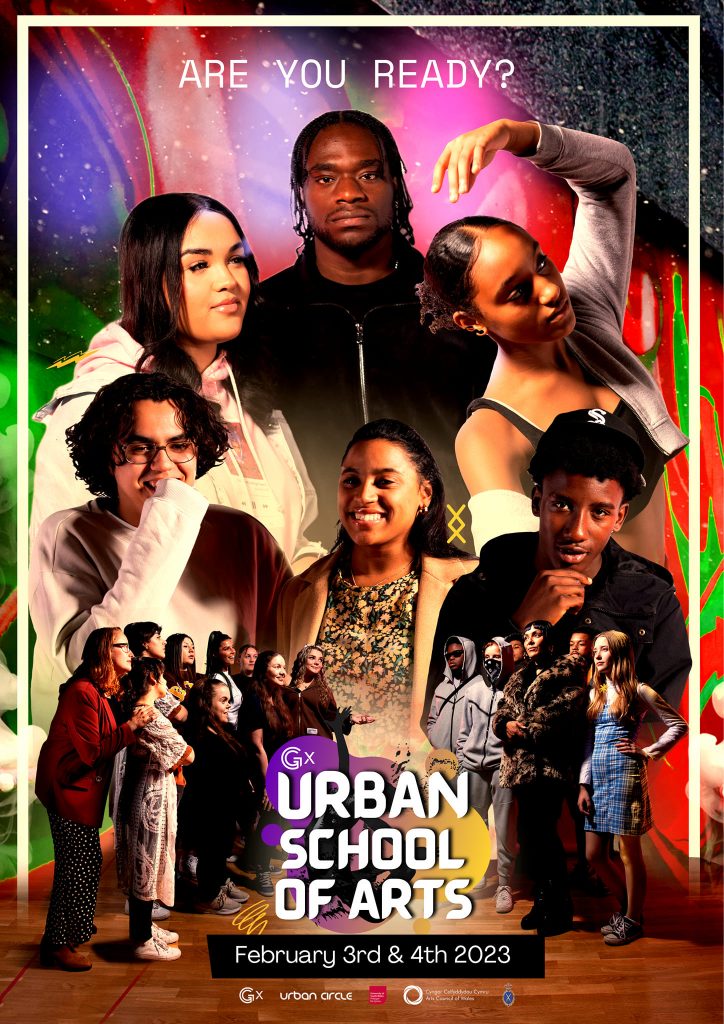
You have written and are currently working on a new live production for G Expressions called Urban School of Arts. The production is described as “An original story filled with dance and drama about young people surviving their journey through performing arts school, all in hopes of pursuing their dreams of becoming artists” Can you tell us more about the creative process for the production and your intentions for it?
I began writing the story line during the Pandemic, after discussions with young people during a podcast I had set up through G-Expressions called ‘Say it How it is’. It was a great opportunity for young people to talk about different topics that they felt they were affected by and allowed them to talk openly and honestly, as most had said that they don’t feel listened to or even understood by authorities and adults. The stories came from real life topics and made me want to raise awareness about these topics that young people face, to help them talk more about it but to also give them a platform to express themselves in a creative way where they can be heard. I always wanted it to be an original as in the past we have used music that people know but have always had the issues of copyright, but I felt that we were in a place where we could offer more opportunities for artists to be recognised for their talents. I worked with some local young artists who love to write and produce and we managed to get funding from the High Sheriff to bring in a professional producer and work in the studio to record these songs. We now have a soundtrack alongside the show and I would love to see this tour and possibly see other drama schools put it on, who knows?
Urban School of Arts can be seen at The Riverfront Theatre, Newport from 03-04 Feb, tickets can be booked here
Much of your work takes place in Newport and is supported by The University of South Wales and The Riverfront Theatre, what more can be done to create opportunities for young creatives based in Newport?
We need more funding and buildings, it’s a simple answer really. G-Expressions are fortunate to have such a great partnership with USW and are now building on their relationship with The Riverfront Theatre and I am hoping that more opportunities come from this show. Access for young people interested in the arts is difficult, especially the young people we work with who don’t have the right backgrounds or finances. There needs to be more training and projects for them to be involved in.
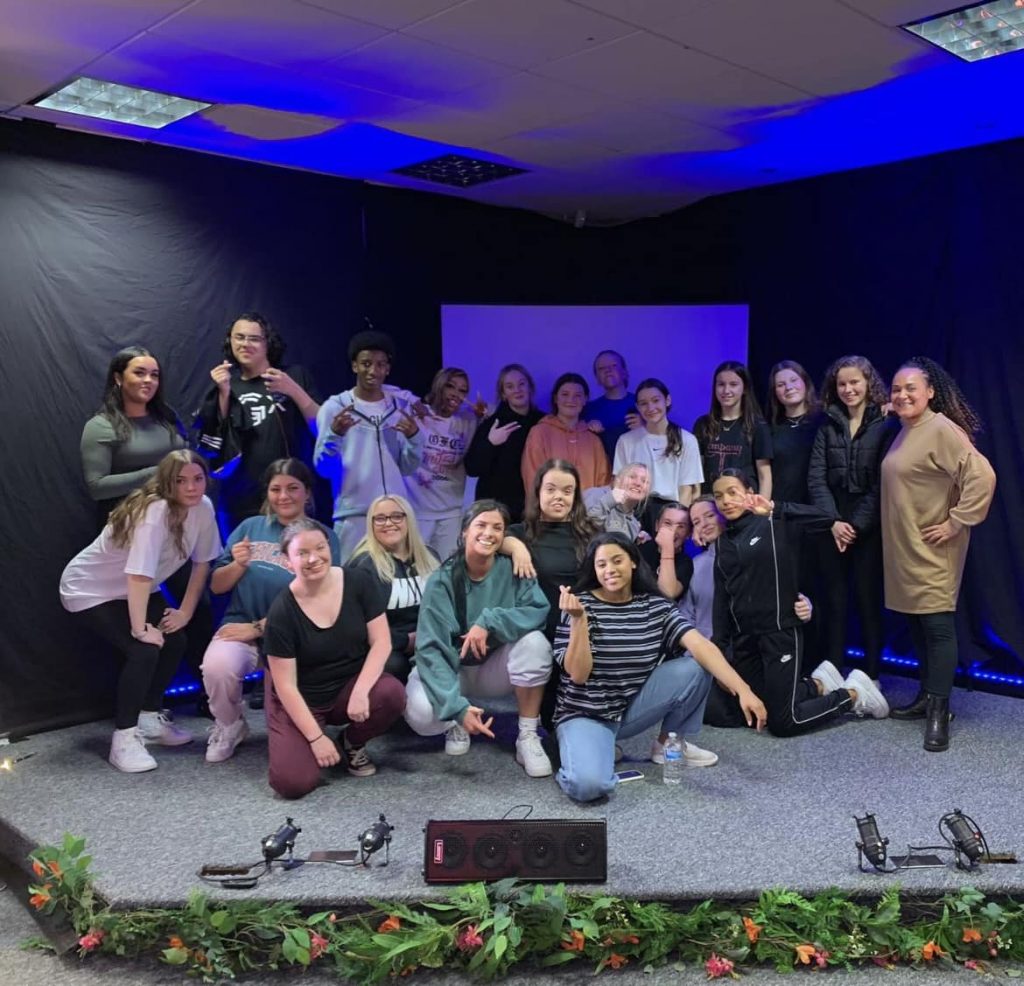
The Urban School of Arts company.
If you were able to fund an area of the arts what would this be and why?
Training and development for artists who are new and need that bit of support. For myself, giving opportunities is so important.
What currently inspires you about the arts in the UK?
People who are doing things their way and making their mark. I feel that there is so much talent out there that people don’t know about, but they are creeping through the gaps and slowly getting noticed. I am inspired by those who don’t quit, those theatre groups and artists who are doing what they love despite the challenges they face is inspiring.
What was the last really great thing that you experienced that you would like to share with our readers?
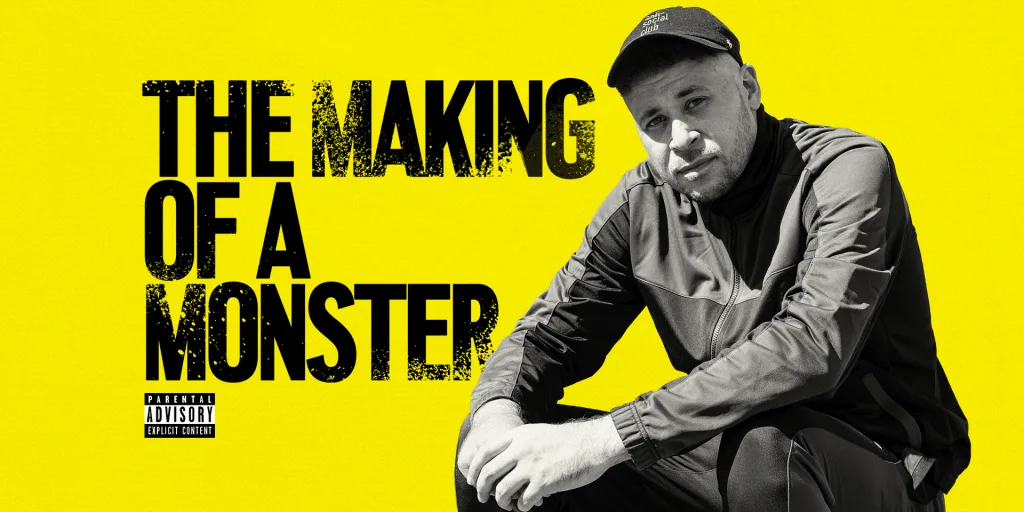
‘The Making of a Monster’- Connor Allen’s raw talent and vulnerability to be brave and so in your face was a true example of an all-round creative. It was a brilliant show that I hope continues and is recognised for its genius way of writing and performance.
In our latest Writer interview Director of Get The Chance, Guy O’Donnell chats to Bethan James. They discuss her development as a writer, her career to date, being shortlisted for the Rhys Davies Short Story Award and a future free workshop ‘Storytelling for Beginners: Retelling Welsh Myths for a Greener Future’
Hi Bethan, you and I have known each other for some time as you were one of the original Young Critics supported by Get The Chance, since then you creative career has blossomed, can you give our readers some background information on yourself please?
I grew up in South Wales, and getting involved in The Young Critics scheme nearly a decade ago ignited my creative industries career journey. This enabled me to see world-class productions like Belarus Free Theatre at the Sherman for free, and get my work published in stellar places like Wales Arts Review. That experience launched me into freelance work at National Theatre Wales, then a Marketing & PR role at Oxford Playhouse theatre.
My love of writing led to a comms job at a Welsh publisher, then a career as a Senior Book Publicity Manager in London, but the written word has always been my calling. This month, I was shortlisted for the Rhys Davies Trust Short Story Award. I moved back to Wales recently, and I’ve just submitted my debut historical mystery novel to my literary agent. Fingers crossed for a tidy book deal!
Fast forward to October 2022, and I’m halfway through an Arts Council Wales ‘Create’ grant for a storytelling project. My project includes time to write, mentoring with amazing storyteller of over 25 years Fiona Collins, and training at Ty Newydd Writers’ Centre.
Fiona Collins
A dream come true. It culminates in delivering accessible and free virtual storytelling workshops on theme of climate change and Welsh myths. More on this later in the Q&A, and I hope your readers can join us for a free workshop on the 1st November.
So, what got you interested in the arts?
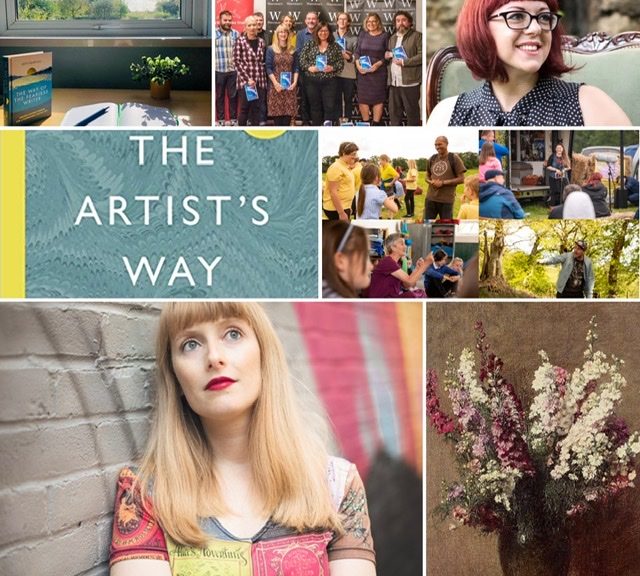
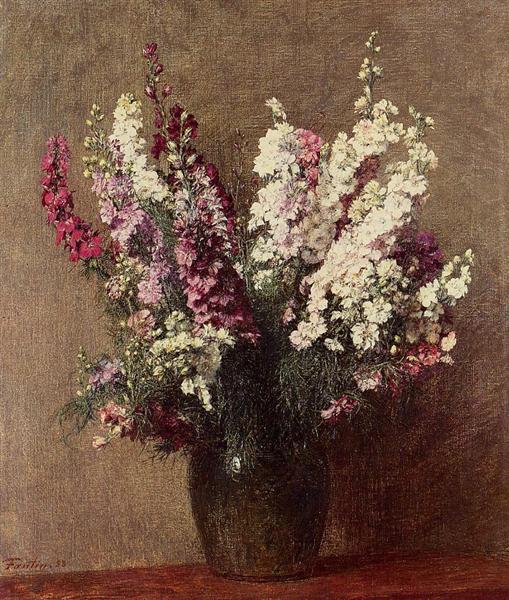
I remember when I was about 7 years old, the National Museum of Wales did a competition for children to choose a painting in their collection and write a piece of art criticism about it. Larkspurs by Henri Fantin-Latour drew me to it – a still life with a vase of flowers.
My review was basic. A few lines about pretty pastel colours and how it made me happy. But it got published in the competition booklet. That made me feel listened to, and I realised that I had a voice in the artworld despite being a child.
I’m also lucky that my parents read me bedtime stories and took me to the library every week. That seeded my love of storytelling for life. I was about 18 years old before I visited a bookshop for the first time and bought a book, which people in the publishing industry find odd!
The other gamechanger was a scheme called ‘A Night Less Ordinary’ when I was a university student at Southampton University, a world away from the little Welsh village I grew up in. That enabled me to see a play every week for free. My passion for theatre was cemented. Prior to that, I’d only really been exposed to panto (which I love by the way, but I appreciated my eyes being opened to new and classic works).
Can you tell us about your writing process? Where do your ideas come from?
Great question. One of the best – and strangest – tips I’ve ever had for getting ideas when you’re stuck is to find water, because water makes you feel inspired. Wash dishes, brush teeth, have a shower, or walk by a river, and ideas will probably flow!
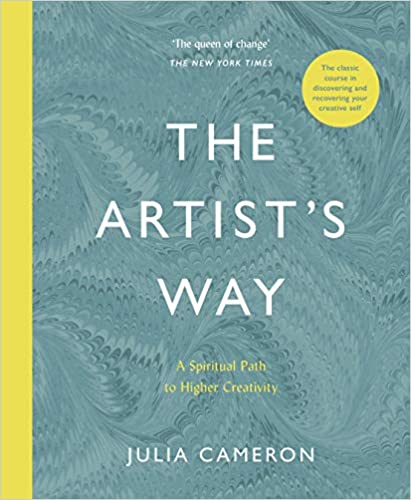
On a more practical level, I recommend the book The Artists’ Way by Julia Cameron to everyone. It takes you on a 10 week journey of creative discovery and inspiration. Some aspects are a bit spiritual for me, but her advice such as doing a few minutes freewriting to start your day – a subconscious brain dump where you don’t edit yourself – is invaluable.
The way stories often appear to me is as lines of dialogue popping into my head at random moments. I start writing to try and work who’s saying those lines? Where are they? What happening? It’s like getting a line of script, and then you’re a director and the TV episode or film starts taking shape. Eventually, I can sit back and the scene plays out in my mind’s eye.
I just have to type quickly enough to catch everything I can see before me, and what’s being said.
Always carry a notebook with you to jot down the quirky things you overhear, or sights that catch your eye, or strange encounters. Keep it by your bedside too for scrawling down your dreams after you wake. You’ll never remember afterwards otherwise!
Things like ‘story cubes’ dice with pictures can help writer’s block, or using Tarot cards as visual prompts.
The other top tip is to read a lot in the genre you’re writing in. You’d be surprised how many writers I know say they’re too busy writing to read, but how can you fill up that well of ideas otherwise? For example, writing my Victorian crime novel, I binged on Sherlock Holmes stories to immerse myself in the atmosphere, voice, details of the era.
I love this quote from Sylvia Plath: ‘everything in life is writable about if you have the outgoing guts to do it, and the imagination to improvise. The worst enemy to creativity is self-doubt.’
Can you describe your writing day? Do you have a process or a minimum word count?
I’m definitely not a ‘get up at 6am with the sunrise’ writer! Because of my thyroid disorders, I get brain fog first thing. On a day I’ve carved out for writing, I take my time to get going. I’ll clear my email inbox, check social media, and have a some porridge, do a little walk outside, and try to be at my desk by 9.30am. Earl Grey tea fuels me.
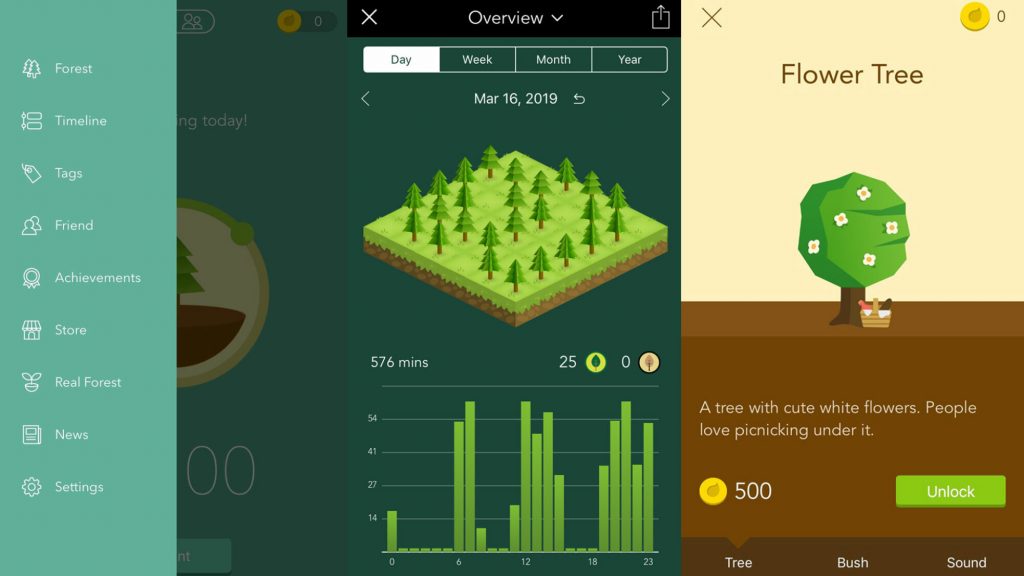
Throughout the day, I write in 25-minute sprints followed by 5 minute breaks (known as the Pomodoro method). The game-changer for me was discovering a free productivity app called Forest. For every stint of focused work, you can plant a beautiful virtual tree. Once you’ve planted enough, the app plants a real-life tree for you to help the environment. Rewarding myself for sitting down at that blank page works for me.
Unusually, I have a “no wordcount” rule on my writing days. I never track or count words on a project – only time. But the reason is, writer’s often get demoralised by not hitting a wordcount target, whereas maybe that 8-hour wordless day was the most important one all month, because they sat back, stared out the window, and solved a huge plot hole. Mindset over wordcount any day: one you carry across projects, the other ends when the story does.
I’ll have another little walk at lunchtime, then work intensively until late. I’m a night owl so my best time to write is evening from 8pm to midnight. I enter the state between wake and sleep and the ideas flow.
I end the day filling in my bullet journal – a tip from author VE Schwab. You think of things you want to do that month: maybe yoga, novel writing, and cutting down on caffeine. Then you colour in a journal square for each day you achieved it. Whether you did 1 hour of writing or 10, you colour it in and feel a sense of achievement.
VE Schawb
Why and where do you write?
The simple answer is I write because I can’t not write. Creative expression is up there with food, water, and oxygen as an essential.
There’s a brilliant Seamus Heaney quote on poetry: ‘I rhyme / To see myself, to set the darkness echoing.’ I suppose writing short stories and novels is the same for me: an act self-reflection and understanding myself better.
It also helps me make sense of others and the world around me. Writing can be an act of empathy and connection, or a form of escapism and freedom. Sometimes my underlying health issues makes me tired, but when I’m in the flow of writing, I enter the realm of imagination and can forget all about that.
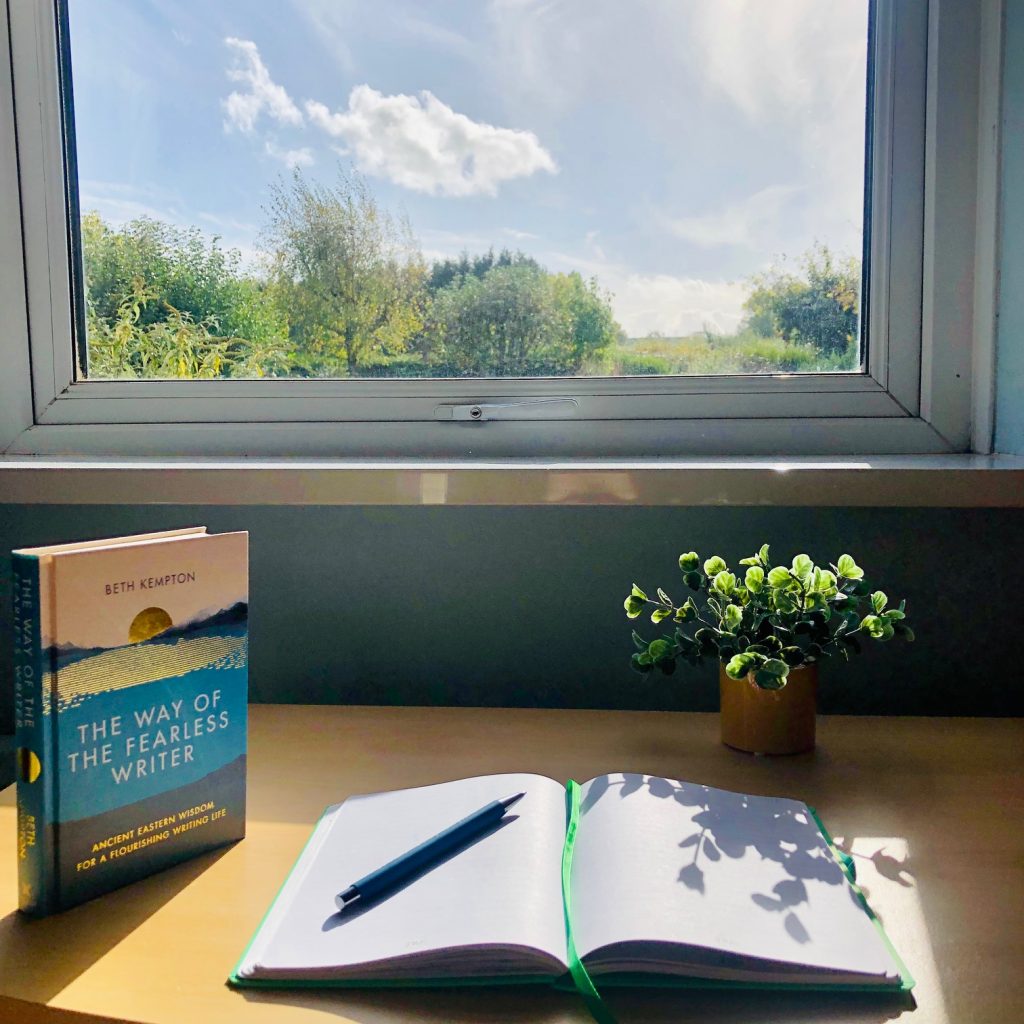
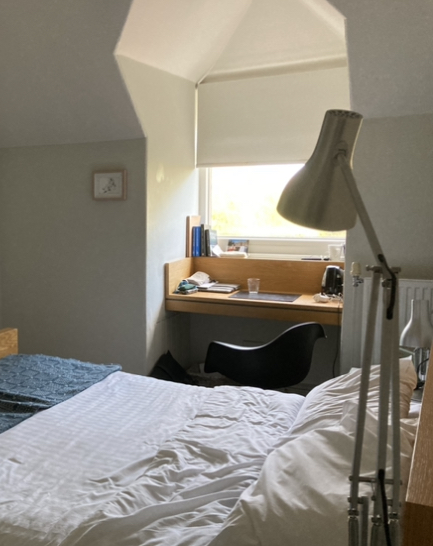
As for where I write, I find it hard to focus in noisy cafes or on a train. My ideal setting is a desk in my bedroom surrounded by snacks, with peace and quiet for hours, and a window with a view of nature. How often I achieve that is another matter!
Bethan’s ideal writing space
It was harder when I lived in a house share in London and worked exhausting 12 hour days in a busy book PR job. It’s easier now I’m back in Wales and working on my Arts Council Wales storytelling project.
Yes, Welsh myths are rich with nature imagery and themes. My initial approach to re-interpreting these was to work with my mentor Fiona, and explore different tales that resonated with the climate crisis and ecological issues. Then we’d pick one to make the focus our Zoom workshop.
For example, in the Third Branch of the Mabinogion, magic lays waste the kingdom of Dyfed and all agriculture, domesticated animals, and humans vanish. The only four people left behind must find ways to survive and restore the land.
But the story that most resonated with me is The Tale of Taliesin, because it features the powerful woman and sorceress Ceridwen. She uses ingredients from nature like herbs in a spell to help her son gain knowledge and become accepted by others. In the story, he’s described as deformed and crippled, so it’s also a gateway to address current issues like eco-ableism.
The narrative has an incredible chase scene when Ceridwen transforms into different animals like a hare, otter and bird of prey. It brings nature to life and creates a strong connection with the environment and local species in listeners. This was important to me, as according to a Welsh Government July 2021 report, only 15% of the population believe climate change affects them. But issues such as extinction and habitat destruction are happening right under our noses in Wales.
Our workshop begins with a short present day re-telling of Ceridwen’s tale, where she’s a scientist instead of a sorceress. She mixes medicines in her lab instead of potions in her cauldron. Then participants can plant their own stories by taking part in creative activities with a green twist, to help them grow as a storyteller.
I believe if people can imagine stories where Wales has a greener future, then it can become a reality. Myths speak to us with powerful truths, and can be tools for planting the seeds of change, and for challenging narratives. The Welsh Government’s net zero goal by 2050 won’t succeed if people don’t believe in hopeful possibilities and get behind it.
The workshops are offered with access support including, “live captions and bilingual Welsh/ English workshop slides. You also state If you require sign language interpretation, or other access requirements, please let us know in advance. We will do our best to accommodate.” Is access provision important to your delivery as a creative writer?
I live with chronic illnesses, and seek to support new writers and aspiring storytellers who are disabled / chronically ill/ neurodiverse/ or D(d)eaf. I understand first-hand how many barriers are out there. Now Covid lockdowns are over, it’s frustrating to see creative workshops and events becoming 100% in person only again, with no virtual offering or hybrid models.
Disabled people are underrepresented in publishing. The U.K.’s Publishers Association’s 2021 diversity survey found that 13% of respondents identified as having a disability. Few stories are told by disabled voices. I’m keen make sure my workshop is as accessible as possible to this community, so everyone feels welcome and can participate.
This also links to the ecological theme of the session. Disabled people are among the groups most affected by climate injustice. According to a World Health Organisation 2021 report, climate change is “the biggest health threat facing humanity”.
Likewise, I’m keen to make sure Welsh speakers have bilingual workshop slides and can access the activities in their preferred language. Although the workshop is in English, Fiona who co-delivers it, is a Welsh speaker who will do a reading in Welsh during the session. Afterwards, participants also receive a bilingual storytelling and climate change PDF resource pack.
How do we take part in the workshops and is there a cost?
The workshop is totally free thanks to funding from Arts Council Wales and National Lottery Good Causes. We’d love you to join us on Tuesday 1st November via Zoom from 6.30-8.30pm!
It will be a 2-hour breath of creative fresh air, and we welcome anybody who wants to have a go at telling a story and exploring Welsh myths.
There are a range of organisations supporting Welsh and Wales-based writers. I wonder if you feel the current support network and career opportunities feel ‘healthy’ to you?Do you think its possible to sustain a career as a writer in Wales and if not what would help?
I’ve recently moved back to Wales after five years away in London, so I’m still trying to find my feet with exactly what support is out there for Welsh writers!
I’d struggle to support myself as a writer right now if not for my Arts Council Wales Create grant, which I’m extremely grateful for. They have a host of funding opportunities. I also recommend writers check out the Literature Wales website resources section.
As for storytelling in Wales, Beyond the Border organisation are doing great work, and their Mycelium Hub opens up opportunities for freelancers across the country.
That said, with risings bills and living costs, it can feel like a pipedream for many writers to sustain a career. The Society of Authors’ calculated that the average full-time professional author only has an income of around £10,500 a year. Most have to do a part-time job, or things like teaching or freelance editing/copywriting, to make ends meet.
I believe a key step to transform the lives of writers in Wales is introducing a Universal Basic Income for artists, like the trial scheme that just launched in Ireland. A total of 2,000 musicians, painters and writers in Ireland are set to receive a weekly basic income of €325 ($330) per week under a new 3-year pilot by Ireland’s government. Imagine how much more incredible work writers in Wales could produce if they weren’t exhausted from juggling two or three jobs to make ends meet?
If you were able to fund an area of the arts in Wales what would this be and why?
Obviously I’m biased and would love to see storytellers, creative writers, and the literary world fully funded and thriving! But I see the arts as a bit like an ecosystem, or a garden. When the plants, trees, flowers, soil and so on are all nurtured, it blooms. If you only focus on one flower bed, the garden won’t flourish. That’s partly why I feel the above creative industries’ pilot scheme in Ireland is so exciting – imagine how much collaboration and support between disciplines will grow there now? Not to mention how much the health and wealth of the nation as a whole will bloom when you invest in the arts.
What excites you about the arts in Wales?
I’m particularly fascinated by the work going on in the Welsh cultural sector to tackle the climate crisis. For example, Arts Council Wales have funded a series of fellowships for artists, and are commissioning a ‘Strategy for Climate Justice and the Arts’ with Natural Resources Wales. I’m part of the Wales Climate & Culture Working Group, which has opened my eyes to the many incredible freelancers and organisations pushing tirelessly to make an impact in this area. It fills me with optimism for the future.
I also find the increase in social prescribing and utilising arts projects for well-being in the community a marvel. I was speaking to a Welsh storyteller the other day, who told me about her care home workshops and events with people living with Alzheimers. A promising development in the arts, and it opens up even more opportunities for freelancers.
What was the last really great thing that you experienced that you would like to share with our readers?
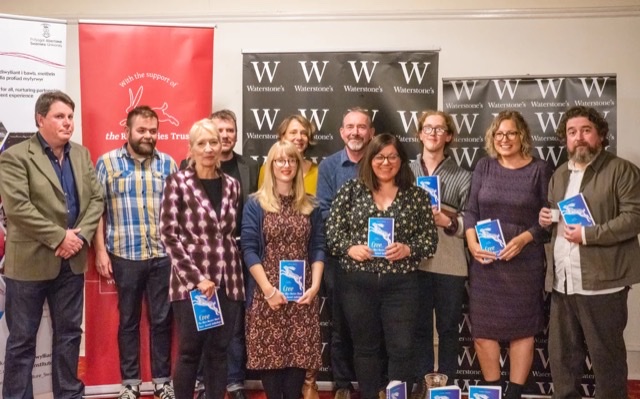
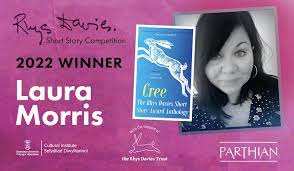
Yesterday, I attended the book launch for The Rhys Davies Short Story Award anthology published by Parthian Books. It was a buzzy night of Q&As and readings. I’m always intrigued to hear what inspires and moves writers. I was thrilled to get my hands on a copy. It was wonderful to be shortlisted for this, and Laura Morris is a worthy winner – her story Cree, inspired by her job as a school teacher, is astounding. Grab a copy if you can.
Thanks for your time Bethan
The free online workshop ‘Storytelling for Beginners: Retelling Welsh Myths for a Greener Future’ takes place on Tuesday 1st November at 6.30-8.30pm UK time. Email storytellingwales@gmail.com to secure your free place and receive a Zoom link.
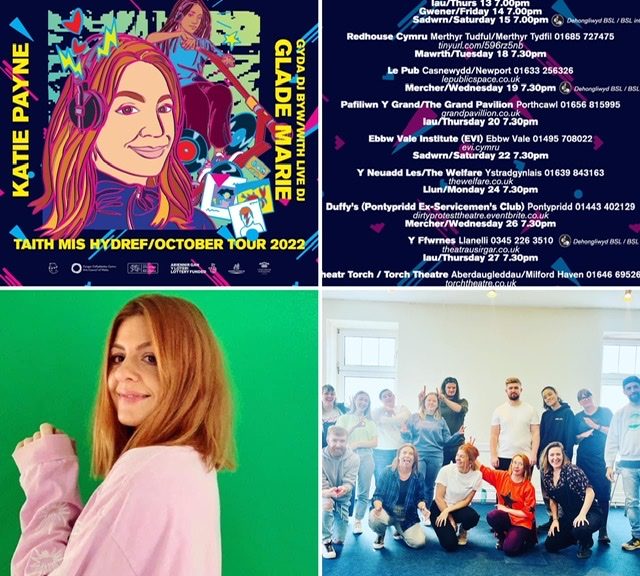
In our latest Playwright interview Director of Get The Chance, Guy O’Donnell chats to Playwright and Actor Katie Payne. Katie discusses her career to date, her play My Mix(ed Up) Tape which tours the South Wales Valleys this October, her writing process and thoughts on opportunities for Playwrights in Wales.
Hi Katie, great to meet you, can you give our readers some background information on yourself please?
Absolutely. My name is Katie Payne – I am a writer / actor born and bred in Pontypridd, South Wales. I moved to London at 18 to go to Rose Bruford Drama College and gained a BA in Acting. Since graduating, I have been acting in theatre, TV and film professionally for the past 15 years and I have been writing for the last 3 years. I was living in London for a long time and only moved back to Wales in the last few years, hiraeth is an actual thing.
So, what got you interested in the arts?
Debbie Reynolds! Well, more specifically Singing In The Rain. I come from a family that also encouraged me from a young age to enjoy the Arts, whether it be film, comedy, dance or music. My Dads the family comedian so I definitely got my funny bones from him, even though my mother swears the dryness is her. My friends helped too, any encouragement as a youngster – whether it be a laugh or a clap makes you feel good – this current climate it translates into likes and comments but back then I loved the feeling it gave me to make people smile or laugh. But yes, Singing in the Rain or Calamity Jane or Meet me In St Louis.
Spending time with my Grandparents meant I got to watch a lot of old musical films and the way they transported me – made me feel magic. I always thought that’s what I want to be. I want to do THAT. That triple threat. But after getting into the National Youth Theatre of Wales, it transpired I would only dance, sing and play piano for the joy of it and acting is where I would revel. Albeit – I do have a tendency of working with music and physicality in most plays that I do… I can’t get away from it and wouldn’t have it any other way.
Can you tell us about your writing process?
I haven’t been writing long. But I am currently writing two TV scripts as well as finishing this play, my first play. My Mix(ed up) Tape was the first thing I ever started writing (except for a little monologue in the play Little Dogs that I performed with Frantic Assembly and National Theatre Wales a few years back).
Little Dogs, Frantic Assembly and National Theatre Wales
I always knew I could write, somewhere, but it took confidence. That’s all. And Encouragement from my peers. I had to find confidence in my voice, in what I have to say, in how I want to say it. Listen, I have always been a creative – I was never one of those actors that can just turn up, do the lines, do what they have to do, get paid and leave. I always took it upon myself to get involved creatively in the process. I know that’s where my strengths lie. I love acting, but I also love creating. Collaborating. Writing on your own is safe. Writing with people is scary but it also allows you to talk through ideas, figure things out.
Where do your ideas come from?
Ideas? Writing the play is a very different idea process to when I write TV. The play is a personal project – it’s a love letter to Pontypridd, to Wales, to the Valleys. It’s rich with characters and voices and themes that I have encountered or discussed or researched, about a place in which I feel very confident to dive into. I knew I wanted to chat about anger, ADHD and being from the Valleys and what comes with that – but the way in which the ideas go from there on to the page? Well, for this project – it’s music. I find a track and I write. I know these characters or I might start with one character – a voice I know. Then I write and write. I don’t stop to think about it, I just write. Andi Osho (actress, writer) once offered me a great bit of advice when I couldn’t get through to the end, she said “Just write and don’t stop to think or judge it, do that tomorrow or after you’ve finished. The writing/ideas part of your brain cannot work when the judgey part of your brain is making comments” – my advice is JUST WRITE. It’s a lot easier when you take that pressure off and if it’s shit – move on and start again. Writing isn’t easy until you start. Catherine Paskell and Alan Harris have been the guides for My Mix(ed up) Tape, my dramaturgy Angels in helping me make this the play what it is. They are insanely talented at dramaturgy and without them I wouldn’t have been able to find my writing voice.
Catherine PaskellAlan Harris
My TV ideas, I write with a writing partner Layo Akinlude, the process is very different – we are very different, from different backgrounds and it works! Trust me – she teaches me on a daily basis and I her, that’s what makes that writing process a proper joy! One of us has an idea – we relay it – if the other likes it – we run with it – then we chat and chat about it until the idea is solid. Then we create a page doc: a document that is a sort of synopsis – beat by beat of what the first ep might look like. We get this as tight as possible and sometimes a production company will buy that idea – just from that pitch doc – we then follow than pitch doc. Sometimes I take a scene, or she does or we write them together. I am a visual person so I have to feel and smell and see a place on the page before I can write it – that’s why describing visuals are really important to me, so I can transport the actor, audience, director right to that place. I think the best thing about writing is collaboration, but also having confidence in what you want to say and how you want to say it.
Can you describe your writing day? Do you have a process or a minimum word count?
I am at my best writer early in the morning or really late at night. When the world is quiet and all that is left is me and my thoughts. I don’t tend to spend a whole day writing. You can bang out a tv scene in literally 10 mins if you’ve plotted it out beforehand. I’ve always got headphones in – I might have the same track on repeat for an hour while I write. I stop when the flow stops. Writing is unlike most jobs – you can’t just keep going. Some days the flow and the ideas are there, sometimes they aren’t and that’s okay. They will come.
Why and where do you write?
I have recently had a baby (well, I say recently – he is almost one) and Jesus, that’s been wild. You don’t have hours and hours to think about characters and ideas – you have small windows and you’re also knackered but I do think in a way, since having him, I am a lot more pro-active. I have a few hours in the morning or late at night and I just hit the ground running, I try not to waste too much time thinking. Where I write? I’ve bought my first house and there is a little room in it that’s snug but has a great window looking out – I either write in front of there or I turn round and write looking a big blank wall. I know that sounds a bit weird – but I find the nothingness of the wall a great place to plot things out. It gives me a sort of blank canvas to place my ideas.
I write because I truly believe not enough stuff is being written by women for women in Wales. Especially the Wales I know. I also want to create more opportunities for young people in Wales – I thought I had to get to London at 18 years old to get into the industry but
1. I was really lucky
2. I don’t want that to always be the case.
The long-term goal is yes, to make stuff that people relate to and give those voices a proper platform but it is also to connect with the next gen and inspire them to get writing, creating, making more work in Wales. There’s a mad amount of talent here and I think sometimes we get forgotten about.
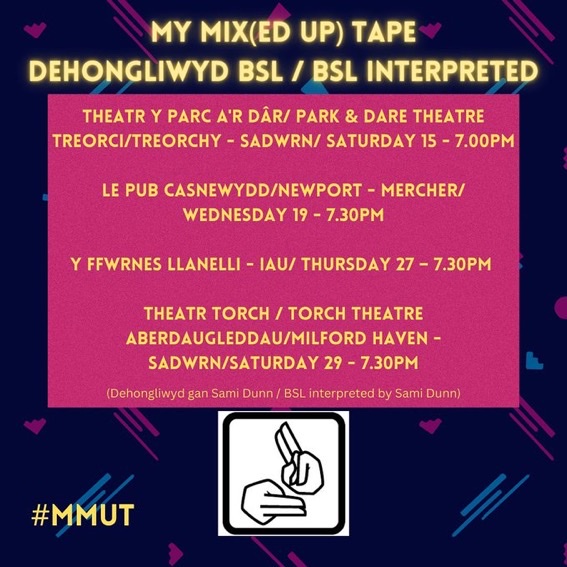
Your latest play My Mix(ed Up) Tape tours the South Wales Valleys this October, I believe the script has been in development with the support of Dirty Protest for some time. Is it possible to give us some back ground on the development of the play and your hopes for the tour?
This play started out with an idea with Catherine Paskell – director of My Mix(ed up) Tape and Dirty Protest about me wanting to create a play with a Live DJ. Cath guided me through all my Arts Council applications and we got the funding to test out the ideas and script in R&D 1 back in 2019 and then the music, visuals and access in R&D 2, during Lockdown. The play has developed into a one-woman comedy/drama with a live DJ – it discusses themes around anger and ADHD and is a love letter to anyone who is a bit of a complicated person trying to navigate “this thing we call life” – bit of a Prince ref there, he features heavily in the show, well not physically the budget couldn’t quite stretch to the afterlife.
You have described your ambitions for the production to be “to make something in the Valleys, that’s relatable, fun, and accessible” What does the Valleys contribute to your creative process and is theatre accessible for people living in these areas?
The best thing about this play is the way it has connected to the audiences it is supposed to serve. There is a lot of anger right now, for a number of different reasons, which I know I don’t have to point out. It was really important for me to make this play in the valleys for the valleys – Pontypridd and RCT have been the muse for the process and I feel like I have only just started, only just scratched the surface. I have had a lot of messages off people thanking me for bringing this form of theatre into the community. It’s a working-class story that I hope is told in a different form. The play has access embedded into it which means it’s accessible to the D/Deaf community – which was very important to me. The BSL interpretation is provided by Sami Dunn.
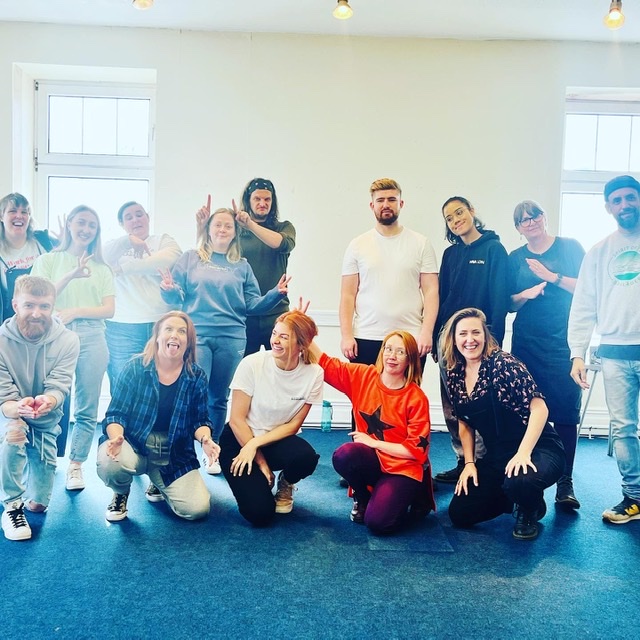
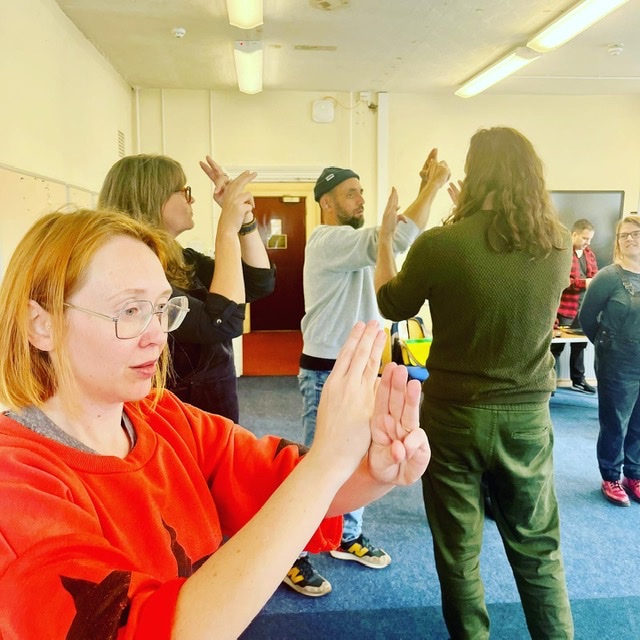
The team in rehearsalsThe team in rehearsals
It has a live DJ element – which helps drives the story along and makes it current, it’s fresh new-writing and it has physical theatre / Visual Vernacular embedded into the piece – which a lot of people in the Valleys haven’t have experienced before. I am super proud of the team and what we have managed to bring to RCT.
RCT Theatres have supported the plays development, how did they come to be involved and what’s your relationship with these venues?
Angela Gould at RCT Theatres strive to tell the stories of unheard voices from their communities. They found My Mix(ed up) Tape to be a unique take on storytelling from the prospective of a female Valley’s voice. I have known Angela since I was 13 years old, she used to teach me drama in a local drama club in the YMCA in Pontypridd and I know it made sense to connect her and Dirty Protest together to make this show.
Angela Gould
Angela was keen to tell this rollercoaster of a story that is driven with a sick soundtrack by DJ Glade Marie and how it helps underscore a tale of how heartache, tenacity and determination will always win the race. It felt like a homecoming. Our tour starts at the Parc and Dare’s new studio theatre space, Treorchy – which is honestly an incredible space. We then go on tour to a mixture of theatre and community venues around South and West Wales.
The production features a live DJ called Glade Marie, with music featuring so strongly in the play this seems a great choice how has music influenced your writing process and how did the relationship with Glade Marie develop?
I’ve already mentioned how important music was to the writing process, each scene was written to a particular track on repeat. However, the integration of Glade the Live DJ element is something that we explored and figured out during the R&D’s. The relationship in the beginning began as separate, between DJ and music but during the R&D process we developed the language for the DJ as the conscious for the main character Phoebe. The play could not be without the music. We almost had to write two plays – one for the text and then one for the music. The score in which Glade has created with collaborative effort from everyone in the team, truly makes the show shine. I am just so proud that we made it happen.
DJ Glade Marie
There are a range of organisations supporting Welsh and Wales-based writers. I wonder if you feel the current support network and career opportunities feel ‘healthy’ to you? Is it possible to sustain a career as a writer in Wales and if not what would help?
Quite frankly, I don’t know how to answer this question as I am still quite new to the writing scene in Wales. I don’t know if these organisations and the support they offer are as well advertised as they could be. I also feel that a lot of the same content is being created and a lot of the same people are being used, that’s not a bad thing – but it definitely means things don’t quite progress as much as they could do in Wales. New voices. Money and energy being put into these new voices is how the next gen of greatness is made. I really want to use this play to connect to an audience of makers and doers and hopefully create more work with them.
If you were able to fund an area of the arts in Wales what would this be and why?
Development of New Voices. Have I mentioned New Voices enough?? New plays, new text, new theatre, new writing, new TV ideas. New New New.
What excites you about the arts in Wales?
I am excited about the talent. The people in Wales are the greatest – I just think we need to keep trying to get these voices heard on a bigger scale. Making more stories that push boundaries, that are told through rich real characters – let’s see where we can really go with Welsh Theatre, TV and Film. Let’s take more risks and give a chance to fresh voices.
In our latest Playwright interview Director of Get The Chance Guy O’Donnell chats to Playwright Jennnifer Lunn. Jennifer discusses her career to date, her writing process, working for Read For Good and her thoughts on opportunities for Playwrights in Wales.
Great to meet you Jennifer, how did you first get interested in the arts?
I was very lucky that my parents were both very active in amateur theatre and so my brothers and I grew up making theatre from when we were very tiny. I was in my first production at 12 weeks old!! I absolutely loved the communal experience of it, the stories and the magic – and I could never really imagine myself doing anything else. I used to say that if I ended up just sweeping the stage in a theatre I would be happy! (And I’ve done a lot of stage sweeping in my time!!)
Can you tell us about your writing process? Where do your ideas come from?
My ideas mainly come from injustices or inequities that I want to address. Things I’d like to be able to change. My first play, Es & Flo (which was set to premiere at Edinburgh’s Traverse theatre before the Covid-19 pandemic led to the fringe’s cancellation. It won the Popcorn Writing award 2020 for new work. An extract can be seen below) is about an older lesbian couple who risk being separated because their relationship isn’t official. I wanted to show the places where work still needs to be done in the journey towards equality. My plays Core and Terroir are both about the climate emergency and how we, as humans are responding to it.
There is also something about the characters I want to put on stage. I want to give space to voices and characters who we don’t often see. My plays often centre around queer women and non-binary people. My characters are intersectional – For example in Core, Clem is a Deaf, queer polar scientist and Jules is a Black, queer politician. The play is not about them being Deaf or Black or queer. It’s about their relationship with each other and the future. I wanted to show that these characters’ stories shouldn’t focus on their ‘protected characteristics’.
I’m excited to announce that a fully staged production of Es and Flo will premier at The Wales Millennium Centre, Cardiff on the 28 April and runs until the 13 May.
I started writing the play about ten years ago. A queer love story with a cast of 5 female characters from 8-71!! A story of secrets, memories, female solidarity and chosen families… A play I wasn’t sure I could write and never imagined would make it to the stage. But people liked it. It won a couple of awards and today… tickets went on sale for its premiere in Cardiff in April!!. I am SO SO grateful to everyone (and it really has taken a village) who has supported this play over the last ten years. From the first readings of scenes in the back room of a pub with Shake it Up, to readings and workshops, through postponements and Covid and finally now… with the best team I could ever have asked for! Not least the wonderful Susie McKenna who is directing it with such care and love. I am a very lucky writer! I am very proud of this play and I cannot wait to see how our incredible creatives and cast bring it to life.
Can you describe your writing day? Do you have a process or a minimum word count?
No writing day is the same for me. It absolutely depends on what I’m working on. One of the things that took me a while to realise was that a lot of “writing” isn’t actually writing. It’s thinking, watching, reading, going for walks, researching, talking. It’s all vital and absolutely part of the work even though it often feels like procrastination.
A lot of my writing time is spent scrawling on a whiteboard in different coloured pens trying to figure out structure and plot and then sitting on the floor staring at it!!
Why and where do you write?
I write because I want to tell important stories which present voices and characters we don’t get to see enough of. I write to provoke conversations and promote change. I write because I want to try and make sense of the world for myself and others.
Jennifer’s desk at home
I have an office at home with my big whiteboard on the wall and a lovely stand up desk. But there are some days where I need to be under a blanket on the sofa or on a coffee shop. One of my favourite places to work is Gladstone’s Library in North Wales. It is a silent library and it is an amazing place to research and read and write.
Gladstone’s Library in North Wales
Jennifer’s room at Gladstone’s Library in North Wales
Your latest play was shortlisted in the Papatango New Writing Prize congratulations! Where did the initial spark for the play come from and can you update us on its development?
About ten years ago I had an idea for a play that asked the question “Why don’t we make the obvious choices to save the planet?” The idea was to look at a couple’s relationship falling apart because of choices, sacrifices, efforts that they hadn’t made for each other set against a backdrop of climate change. The idea was to highlight our brilliant ability to sabotage our own futures in both or personal and global lives. The play went through several iterations and finally, when I realised that what I really wanted to say was that we should be listening to the younger generation, I discovered what the story should be.
Because the play was shortlisted for the Papatango Prize, I was incredibly lucky to have the chance to have a filmed reading of the play produced. The play is written to be performed bilingually in English and BSL so I worked with the brilliant Director Emily Howlett and a wonderful cast of Deaf and hearing actors who all speak BSL to work to create the translations and to make sure the communication between the Deaf and hearing characters feels believable.
Director Emily Howlett
I’m now working with the wonderful Jafar Iqbal and we’re raising funds to do a longer R&D of the play and to work with Emily and a Deaf video designer to develop the visual aspects and creative captioning for the show.
Jafar Iqbal
In your spare time you are a Read for Good team member, the project supports young people in hospital to access reading , how did you come to be involved?
About 13 years ago I did a bit of volunteering at a children’s hospital school and from that I developed some projects to collect stories from children in hospital. Read For Good then approached the hospital, offering them visits from a storyteller and the hospital school headteacher recommended me. I started with one hospital and now regularly work in three hospitals, visiting children and their families, giving away free brand new books and also spending time telling and creating stories with them. It is an absolute privilege to spend time with these families often at really difficult times, hopefully bringing a bit of a smile. I would also say that I learn the best lessons about story from the young people who tell me stories. They are fearless in the creativity and it is very inspiring as a writer!!
There are a range of organisations supporting Welsh and Wales-based writers. I wonder if you feel the current support network and career opportunities feel ‘healthy’ to you? Is it possible to sustain a career as a writer in Wales and if not what would help?
There are some wonderful people and organisations supporting writers in Wales. The brilliant Branwen Davies and Alice Eklund who have just finished their time as the literary team at The Sherman were extraordinary and I look forward to seeing who steps into their shoes. Tamara Harvey and Liam Evans-Ford at Theatr Clwyd, along with Literary Associate Raphael Martin have been an incredible support for writers – especially since the pandemic. I was really fortunate to be part of their Writers in Residence scheme and to be commissioned to write for Curtain Up last year which commissioned 15 Welsh/Wales based writers to write short plays as soon as the theatre reopened. Angharad Lee of Leeway Productions is offering brilliant opportunities to writers wanting to develop musical theatre here in Wales and it’s been wonderful to watch the fruits of that these last two years.
Branwen DaviesAlice EklundTamara HarveyLiam Evans-FordRaphael MartinAngharad Lee
That said… there aren’t enough opportunities for commissions right now. I was lucky to be commissioned by WMC back in 2018 and to be commissioned by RWCMD/The Sherman to write for the NEW21 season but there are very few theatres in Wales commissioning new plays or even staging mid or large scale productions.
Terroir, Jennifer Lunn NEW 21 RWCMD/Sherman Theatre
The Play On scheme set up by Theatr Clwyd, NTW and Theatr Genedlaethol Cymru means plays are being read and writers getting feedback but whether/when any of these plays will reach out stages is unclear.
I would love to see Wales generally producing more work and that work touring Wales and beyond.
If you were able to fund an area of the arts in Wales what would this be and why?
Audience development. Without some big steps forward in cultivating audiences, theatre in Wales will never be able to grow and therefore become somewhere that can sustain artists.
I would love to see a huge investment in audiences – whether that be a subsidising of theatre tickets or schemes to offer free tickets. We are entering a time where people are struggling to pay bills and eat. Theatre tickets are, for many, a luxury they can’t afford. But we know that the arts are a vital part of people’s social engagement and well-being and I would love to see us really make it possible for people to see and participate in more.
What excites you about the arts in Wales?
The people! I am always inspired and energised by the artists I know and have the pleasure of working with. There is such an incredible creative energy in Wales and I am loving seeing a new generation starting to come through with exciting new ideas and ways of working.
I am also excited by the work we are doing here developing and championing accessible work and how creative captioning, BSL and audio description are becoming more and more embedded in our work. We definitely still have a way to go but it’s a great journey to be on.
What was the last really great thing that you experienced that you would like to share with our readers?
I saw WMC’s A Boy With Two Hearts at the National Theatre in London last week. So wonderful to see a Welsh-made show about an immigrant family using English and Farsi and with wonderful creative captioning. And to see that having transferred and reaching an audience beyond Wales after two successful runs in Cardiff was brilliant!
The show is beautiful and political and important and made me feel proud to live in Wales.
In this interview, Director of Get the Chance, Guy O’Donnell chats to Judith Dray, Head of Library Services, Royal Welsh College of Music and Drama and Mandie Garrigan, Libraries Assistant, RWCMD. We discuss their roles at the College, access to the library, the Drama Association of Wales Collection and their latest recommendations!
What got you interested in the library service?
MG: I have a background in the performing arts and managing bookshops in Hay-on-Wye but more importantly my jobs have been customer serviced based which is required for this role. The library service here is a little different, it allows me to interact with our staff and students, but I’ve also been working with our archives and special collections (mostly the College Archives and The Foyle Opera, Rara Collection).
Working in the library also involves helping on projects, creating working systems and generally having a go at anything! I started managing the DAW (Drama Association of Wales) collection when I covered for a maternity post 5 years ago. I manage all the memberships, orders, invoicing and have catalogued the sets in the past.
JD: Like Mandie, I have a background in performing arts. I also have lots of experience working in higher education, both working with research collections and supporting learning. I originally came to the Royal Welsh College of Music & Drama (RWCMD) as an archivist in 2018 and then was seconded to Head of Library Services during the pandemic and became permanent in 2022. The role marries together my background in the performing arts with my passions for libraries and higher education. We have lots of fascinating, unique, and distinctive collections here: I’ve loved finding out about them and I’m excited to share them with new audiences.
The RWCMD library houses the Drama Association of Wales (DAW) collection. This is the largest lending collection of scripts in English in the UK and is available for hire to individuals and groups.Can you tell me more about the collection and how it’s used?
JD: The Drama Association of Wales formerly housed the largest lending collection of scripts in English in the UK. In 2014, the play text collection transferred to the RWCMD Library and is available for hire to individuals and groups. Mandie is the person who works most closely with the collection and the people and groups who borrow from it.
MG: The collection inherited some members when it came here, so when it arrived a membership scheme was set up where groups or individuals pay to become members. This allows them to have access to the collection and borrow plays. We have some University of the Third Age members, amateur drama groups, play reading groups and individuals who enjoy our plays. Over the last few years, Covid has changed the way people meet and groups are only just getting back together, so the service is now running again. We would like to develop the service over the next few years, and it is currently under review.
Michael Sheen patron of Drama Association of Wales and International Chair of Drama, RWCMD said of the collection “This drama collection is of hugely significant cultural value. It’s imperative that it’s saved for the nation. It seems fitting that it’s been rescued by the Royal Welsh College, and found its rightful home at the National Conservatoire of Wales.”
JD: We welcome community members to the RWCMD Library. It’s free to browse and members of the public can join in order to borrow items. There’s more information about joining online here and we welcome enquiries by email (library@rwcmd.ac.uk).
MG: Yes, anyone can join as Judith says, and you can now browse a portion of the DAW collection online. I think around 2,800 of the DAW plays have been catalogued now, mainly the sets.
With increased pressure on public funding many Library services have been cut or are under threat, why are libraries important to you and wider society?
JD: As an academic library, we are not facing the same existential threats as many public libraries have faced in recent times, but it is a worrying trend. Libraries are not just about lending books. At their best, libraries can foster communities; they can provide safe spaces; and they can promote equality and inclusion by giving free access to resources, computers, and equipment.
What was the last really great book that you read that you would like to share with our readers?
JD: Earlier this year I read Whole Notes: Life Lessons through Music by Ed Ayres. I’ve been recommending it to everyone and bought a copy for the RWCMD Library. It is about music, healing, the lived experiences of a transgender musician, teaching, learning and so much more. It also includes Spotify playlists which enable the reader to share in some of Ed’s experiences which I thought was a lovely touch.
MG: Not my last but I am reading Breath: A New Science of a Lost Art by James Nester which is also available in our library. I’m only on the first few chapters but it’s one of those books that can challenge your perception on something we all do. I enjoy books that question the way we think about our bodies and mental health. I am also very keen browser of our art and design books, one of my favourites being Stages of decay by Julia Solis, a book depicting various theatres/performing areas in dilapidated conditions which are strangely beautiful.
In our latest Playwright interview Director of Get The Chance Guy O’Donnell chats to Welsh Playwright and Director of Chippy Lane Productions Ltd, Rebecca Jade Hammond. Rebecca discusses her career to date, her latest play Right Where We Left Us and her thoughts on opportunities for Playwrights in Wales.
Hi Rebecca, great to meet you, can you give our readers some background information on yourself please?
Born in Cardiff, I am a Welsh writer, dramaturg, actor, lecturer and Artistic Director/Founder of critically acclaimed Chippy Lane Productions Ltd.
In the last few years I have been shortlisted for the Papatango Writing Prize, placed in the top 10% for both the BBC Writers Room and the Verity Bargate Award, and longlisted for Theatre Uncut and the Traverse Theatre. I recently worked with National Theatre Wales and Lagos Theatre Festival on a Writers Exchange. I am published by Methuen Drama and represented by The Haworth Agency.
Academically I lecture at Royal Welsh College of Music & Drama, Mountview and Italia Conti.
As an actor, I trained at Royal Central School of Speech and Drama and have appeared in several big television series including Bafta Cyrmru-nominated comedy The Tuckers (BBC), Silent Witness (BBC) and Trollied (Sky One), Mrs Sidhu Investigates (ITV) and I’m currently filming The Wet Look (Channel 4) starring Iwan Rheon and Steve Speirs.
So, what got you interested in the arts?
The first formative experience I had at the theatre was The Snow Spider (Sherman Theatre, 1993). I had no idea what I was watching but I knew I wanted to be part of it more than anything else in the world.
Credit John Angus
I think I’ve always gravitated towards the arts. Though none of my family have ever been interested in the arts, the idea of building and making something artistic was always something that felt natural to me. At a young age dancing was my life, I was obsessed with ballroom, disco, tap, ballet and cheerleading, until I realised I could sing. I remember being part of West Glamorgan Children’s choir and singing on my own at St David’s Hall at ten years old with a 120 piece orchestra and a full house and thinking, ‘This is magic! More please!’. That led me into Sherman Youth Theatre, Everyman Theatre and Orbit Musical Society. Then to University and Drama School at Royal Central School of Music & Drama. It is a path none of my family have walked, and at times has felt lonely but I have always taken what I do incredibly seriously.
Can you tell us about your writing process? Where do your ideas come from?
The play I have in production at the moment, Right Where We Left Us, is actually my fourth play. My first never got beyond a second draft, I hope to bring that back one day. It’s set on Gwaelod-Y-Garth Mountain and it felt so powerful finishing it. My second did very well in lots of literary competitions, and is another I hope to return to. My third is in development with a London theatre, so we hope and pray that it goes somewhere but one never really knows. You have power in your pen but beyond that you need to find an advocate and believer in your work to take it to production.
I have written about grief, grooming, county-lines, ambition, war, death, PTSD, youth, mental health and love. An eclectic mix but on reflection what binds them altogether is the human heart. The human reaction to these epic themes. I am consumed with how we pick ourselves up from the rubble of trauma and try to get back to life, back to home, back to some form of peace and solace.
In terms of my process, ideas and inspiration come to me in freefall, and get noted on my phone. The list is seemingly random and pretty extensive, a snippet would include:
Bricks
Reckoning
Patterning
Horn – Nick Drake
The ecstasy of quietness
I look at these concepts and ideas as seeds that I can come back to later when I eventually get back to writing something new again.
Can you describe your writing day? Do you have a process or a minimum word count?
My process usually consists of mornings in my writing shed or at my desk with a Spotify playlist. Or in Cafe Nero in Wimbledon (the staff even know my ideal spot now!) – I need background hum as I can’t work in silence and I love a little bit of chaos and life. I then walk the dog in the afternoon to debrief with myself. I tend to take more time on things than I used to. Allowing more time between drafts to digest and move forward. Things always come out in the wash when you give it the time and space to breathe. I don’t have a word count or page count. I tend to write for as long as I can handle it and have been known to write for twelve hours without eating if I am in the zone, but wouldn’t recommend this!
Rebecca’s Writing Desk
Your latest play Right Where We Left Us , is described as “a heartfelt examination of what happens instead of “happy ever after” Where did the initial spark for the play come from and can you update us on its development?
This play is an acknowledgement of the fragile nature of creative minds and a reminder that our industry is always in a state of delicacy. If the past few years have taught me anything it’s to keep the people you love close and to rid yourself of negative energies.
I wanted to write a piece that explored the murky world of creative collaboration and navigating professional and personal relationships. Right Where We Left Us explores the darkness of ambition and jealousy and how the healing of time can change your priorities and future plans. I long for it to resonate with so many and provide hope for anyone struggling to move forward. To know that you have the power to be ok. You have the power to change the narrative.
This play was born from the shock of having everything put on hold. As the third wave of the pandemic made it seem impossible to ever get back to the stage I wanted to write a love letter to creative collaboration and the great American memory plays.
The script has been honed throughout various development periods with support from The Bush Theatre, Paines Plough, Theatre503, Sherman Theatre, Chapter Arts Centre and The Carne Trust.
At every stage of development our audiences have seen themselves in the characters, feeling the frustration and longing of lost opportunities and lost love. Our urgency comes from the vulnerability and fear we are all experiencing as hundreds of us are forced to walk away and try to find a new path. We ask if it is ever possible to find fulfilment once the creative drive is gone? Are lost loves better left in memory? Can someone else ever give you closure? Will you alone ever be enough?
This production will reunite the Welsh creative team from sell-out show Blue, which The Guardian described as “smart and superbly acted” (4 Stars, 2019). Chippy Lane Productions are fast becoming one of Wales foremost new writing companies, at our core is a drive to champion underrepresented emerging talent. Methuen Drama have also agreed to publish this play.
The play will be performed by 2 alternating acting companies, this sounds fascinating, are you able to tell us more about this choice? Are they both performing the same play each night or will it be different?
While the show will be performed by 2 alternating acting companies, the character of T will work across both casts. The companies will alternate shows and while the script will be the same for each, it’s up to an audience to discover the differences!
In the script, the characters have no assigned gender. So as we developed the play we workshopped the characters with actors of all genders. We soon found that the play resonated differently depending on who the performers were. The power dynamics across age, gender and class all changed the experience of watching the play and added nuance and detail in different sections of the story. We wanted to give the audience the opportunity to experience these different versions of the play as we are sure they will be able to see themselves reflected in the characters at different moments. Joyfully, it also means we were able to offer employment to two more actors, which after the past few years feels like a small win for a company who wants to champion Welsh and Wales based voices.
There are a range of organisations supporting Welsh and Wales-based writers. I wonder if you feel the current support network and career opportunities feel ‘healthy’ to you? Is it possible to sustain a career as a writer in Wales and if not what would help?
I wrote about this recently for The Stage as I feel really strongly about it.
The lack of funding across Wales for the arts directly affects a lack of development schemes that go beyond the beginning stages of playwriting. This means that the same canon of (mainly male) Welsh playwrights receive those rare opportunities of having work commissioned. This stunts the progress of more diverse writers, limiting opportunities to have their voices heard on Welsh stages and on stages across the UK.
In 2018, I set up the Welsh Female Writers Group in response to the lack of female voices being commissioned. My hope was to create an inclusive space for female and non-binary creatives to write, no matter their level of experience. More than 120 writers have joined our workshops. Some have gone on to work professionally for stage and screen, set up companies and collaborate together to make work. However, there are still many more voices struggling to get opportunities, commissions, productions and publishing.
I can’t control the future of funding in Wales, or improve the lack of programming opportunities at venues. What I can do is continue to shed light on this vital issue and keep the door open for any Welsh playwright wanting support from Chippy Lane to champion their developing careers. Chippy Lane prides itself on inclusive practice and will do everything we can to affect change in our sector.
If you were able to fund an area of the arts in Wales what would this be and why?
Writing initiatives and development funding for grassroot companies to pair with venues across Wales to make work and tell new regional stories that connect to the respective areas. We need initiatives that take playwrights through to productions. We need venues and companies to take the leap into programming newer / younger writers and supporting them with commissions so our cannon is more diverse and not the same voices heard yearly.
What excites you about the arts in Wales?
There is a wealth of exciting new talent coming through Wales. Whether born here or settling here to train, I truly believe it is an exciting time of positive change.
With the appointment of Chelsey Gillard at The Torch and Steffan Donnelly at Theatr Genedlaethol Cymru it feels like the theatrical keepers of the major buildings and companies are beginning to shift and change for the better in Wales. Along with new work being made by Mari Izzard and Nia Morais at Sherman Theatre, Katie Elin-Salt and Eleri Jones’ show at Theatr Clwyd in the summer. Emily White won the George Devine Award and Faebian Averies won the BBC Audio Drama Award and Connor Allen’s show at Wales Millennium Centre. It feels like the rumblings of more diverse theatre being made is happening and it’s exciting to see.
What was the last really great thing that you experienced that you would like to share with our readers?
I visit the theatre a lot. In 2019 I saw 147 shows and kept a spreadsheet of all of the productions I saw. For what? I have no idea, but for me one of the most difficult things about the pandemic and in particular 2020 was inability to frequent the theatre. In many ways the theatre is my church, a sanctuary for me to learn, laugh and weep. However, since coming back to my usual theatre-going habits I’ve felt like something was missing. I’m not certain whether it’s the heavy weight of the outside world seeping into the auditoriums, but nothing has really cut me deep or moved me since The Passover in early 2020 (pre-pandemic) until now.
The Normal Heart at The National floored me, it will be one that amongst the mountain of shows I’ve seen will sit with me always and I feel privileged I got to see.
After it finished I felt like I’d come through a war. I could feel the anger of Kramer’s pain in writing it. I felt helpless and powerless and thought about all the lives lost unnecessary. How they fought so hard for acknowledgement and support. It actually haunted me so much that I wrote to the Welsh government to ask if this could be considered as a key text on the curriculum for English and Drama.
“Don’t lose that anger. Just have a little more patience and forgiveness. For yourself as well.” (Kramer, L. 1986)
Creating opportunities for a diverse range of people to experience and respond to sport, arts, culture and live events. / Lleisiau amrywiol o Gymru yn ymateb i'r celfyddydau a digwyddiadau byw