All posts by admin

Irlen Awareness Week by Jennifer Owen

Irlen Awareness Week is a worldwide week to increase awareness of Irlen Syndrome and to educate the public about Irlen Syndrome, this year it is the 18 to 22 October, 2021 so please join us this year. This years event will take place online due to Covid 19.

It’s a very special week for people with Irlen Syndrome and their families

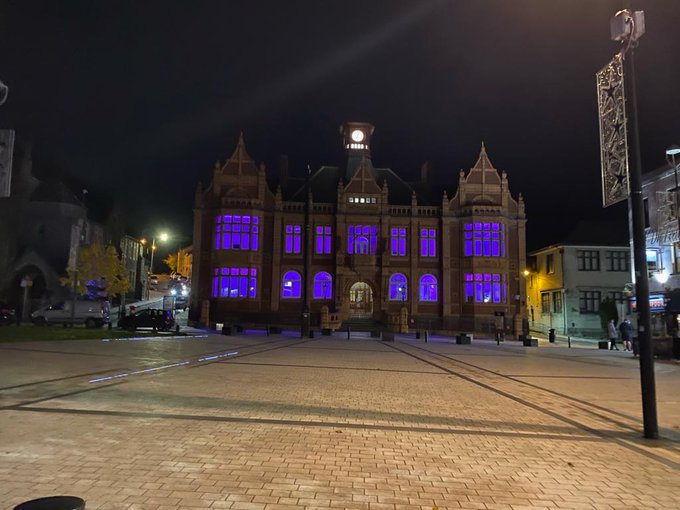
Here are my plans, I have written a blog series about all things about Irlen syndrome, and I have got the Red House in Merthyr, lit up in Purple again this year and shared information about Irlen Syndrome on my own blog too.

If you want to get involved please visit HERE

Welsh Theatres face huge programming challenges as they prepare to reopen in uncertain new climate

Balancing the long established financial pressures to reopen at full capacity now that Welsh Government regulations allow, brings many considerations and challenges for Welsh theatres and performing arts venues who at their heart know building audience confidence is imperative for the sector to survive.

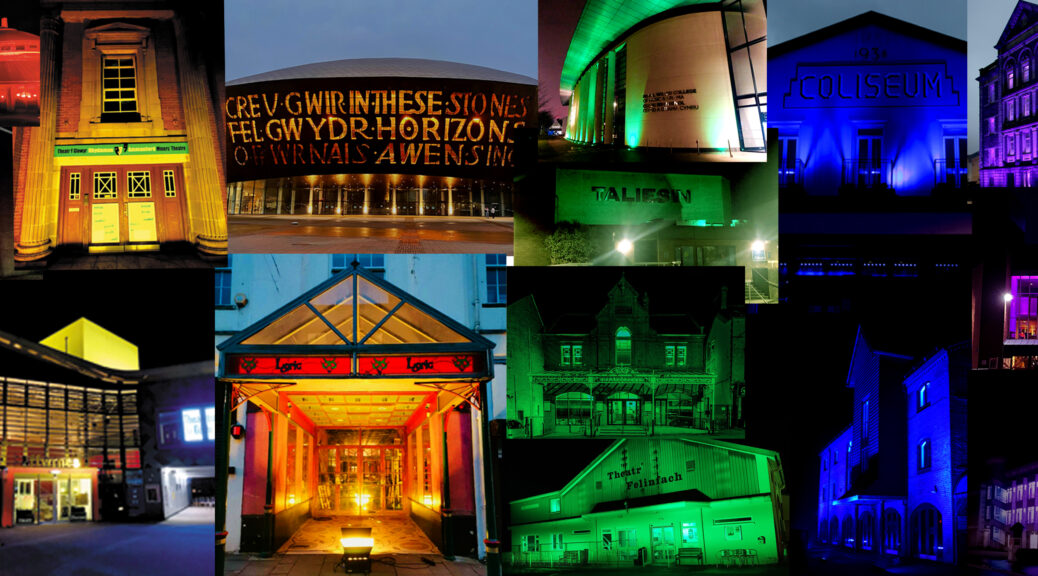
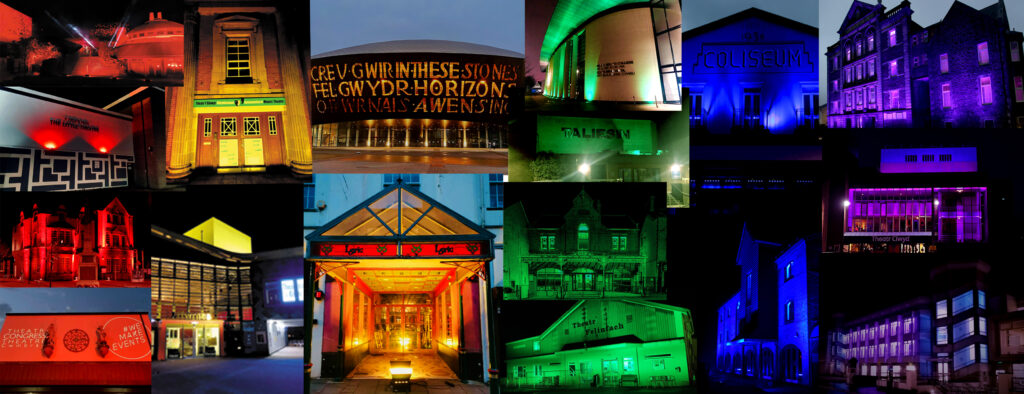
Creu Cymru, Wales’ Performing arts sector alliance that champions and connects people, audiences and communities, is clear that the vast majority of its members, who represent virtually all of the nation’s professionally run theatres, arts centres and producing companies are facing complex commercial, programming, staffing and health and safety challenges as they prepare to fully reopen for the first time since the March 2020 nationwide, pandemic-enforced closures.

Louise Miles-Payne, Director, Creu Cymru explains “While most theatres across Wales are delighted to be preparing for their long-awaited reopening, our recent poll showed that venues of all scales unanimously reported their concerns around the competing financial pressures to reopen at full capacity as regulations allow, while many feel continuing with social distancing and therefore lower audience numbers is likely to remain the only viable route to achieving vital audience confidence. As we represent the sector in Wales, encouraging customers to make use of the free to access lateral flow tests that can be sent to your home and carried out in your own time. Knowing that you are safe before you go to a performance helps protects those around you and will keep the magic of theatre alive. We will be promoting this message through our ‘Testing, Testing 123 campaign’ launching Tues 31 August.”

However, historic commercial arrangements with promoters often means the venue is in a difficult position. Angela Gould, Programmer and Audience Development Manager, RCT Theatres said “Trying to reschedule previously cancelled shows that had sold out at full capacity is difficult as many venues may still feel a way off fully reopening their spaces. They need to honour contractual agreements while doing what they feel is best for their audiences while still making the show financially viable.”

Adapting to need for fluid planning is problematic as theatres have to continually plan for different scenarios. The marketing of performances is a particular challenge as many Creu Cymru members reported that ‘shows keep dropping out for various reasons such as ticket sales are not where they should be, there’s not enough lead time to market shows properly, a feeling we can’t market shows confidently as we can’t guarantee they’ll go ahead and are wary of losing the trust of our audiences.  Some promoters decide there is too much of a financial risk, for example will Christmas pantomimes go ahead or not.’

Managing differing public opinions is something many theatres reported. Louise Miles-Payne, Director, continued “Welsh theatres told us they anticipate some audience members will want the freedom to remove masks when seated while that may deter others from returning. Managing perceptions of both promoters and the public will be unchartered territory for many venues as some people will have an expectation that everything is resuming and working to normal, and at the same time some audience members may be shocked when performances are not going ahead and can’t understand why things get rescheduled. Therefore theatres are in a difficult position managing the different expectations and realities of all parties.”

Producing companies in some respects have greater control and flexibility over their choice of space for performances and how they can create a solution they feel best works for their performers and audiences. Paul Kaynes, Chief Executive, National Dance Company Wales said “It’s clear we need to continue to be agile in this period, so we’ve offered venues outdoor performances option. Many were building stages in their car parks and green spaces and we had an exciting programme to offer outdoor audiences, especially those new to dance. This is the stepping-stone for many audiences to access live performance again before we ask them to take the leap back indoors. We’re planning to make that leap in the autumn, mostly performing twice in an evening instead of once, to enable at least some socially distanced performances for those who are seeking them.”

The first show to welcome back a full capacity audience in Wales will be Jimmy Carr at St David’s Hall Cardiff on the 31st August. Cardiff Council’s Cabinet Member for Culture, Venues & Events, Councillor Peter Bradbury said: “We are delighted that the first live show with a full indoor capacity audience in Wales will be at St David’s Hall, and especially with such a high-profile name in Jimmy Carr. Over the last 18 months, we have missed live entertainment so much and come to realise what a crucial part it plays in our social lives

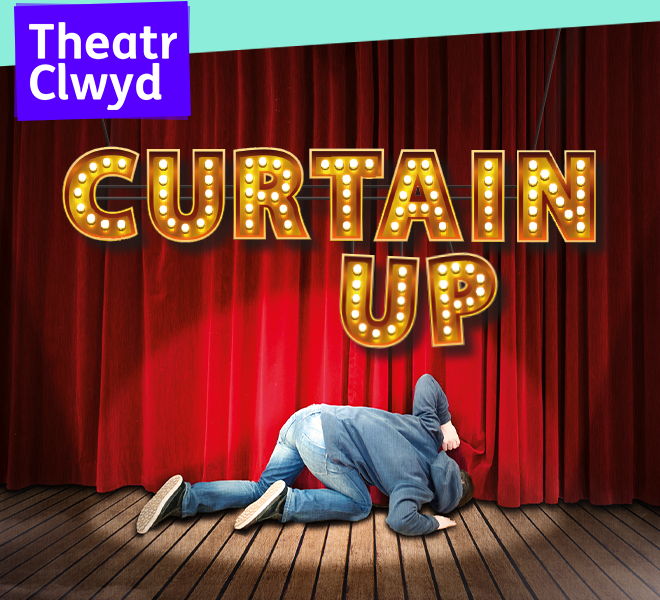
Review Curtain Up – Week 1, Theatr Clwyd by Alicia Jelley

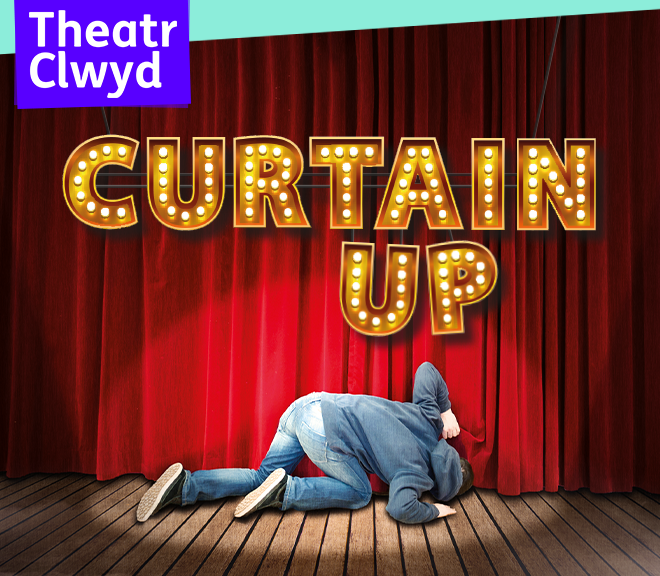
Boy is it good to get back to the theatre, and new production ‘Curtain Up’ at Theatr Clwyd certainly didn’t disappoint!

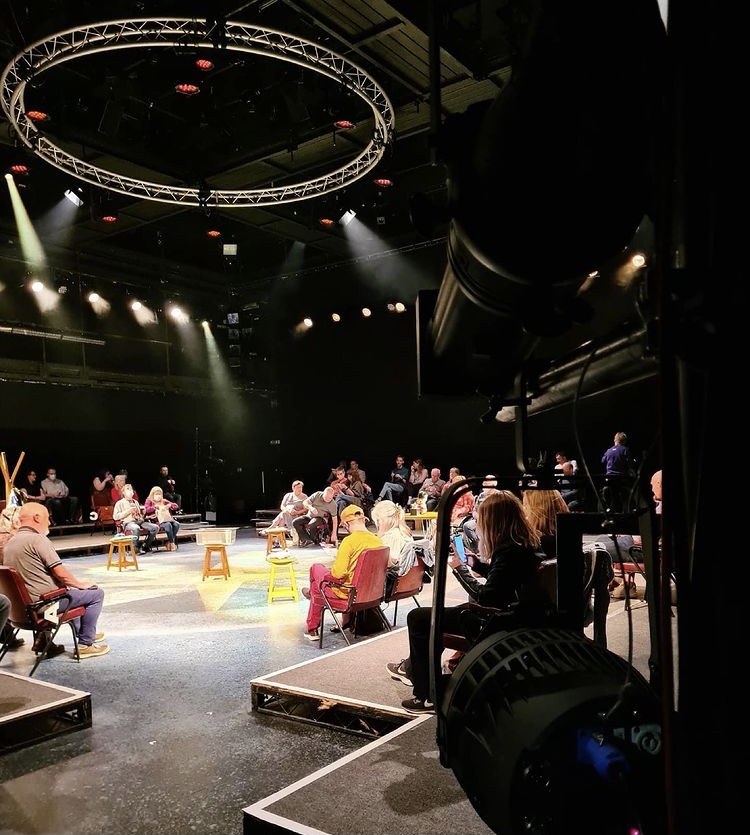
it took me back to my A level Drama days with it’s intimate theatre in the round setting. 5 short plays commissioned during Lockdown, with 10 different actors, playing different roles and using props selected by audience participation. Very random but added to the comedy highlights!

You could see the sheer joy the actors got out of performing again and it felt quite emotional to see them do their thing and applaud their efforts after such a troubling time for all artists.

Curtain Up will be at Theatre Clwyd until 4th September, with each week a different 5 plays being performed by different actors and of course different props, meaning you’ll get a new show every time! If you love old school dramatics, you’ll love this!

Announcing a year of activity with Ar y Dibyn for people affected by addiction

Theatr Genedlaethol Cymru – in collaboration with Literature Wales, Adra (Tai/Housing) and the lead artist Iola Ynyr – are delighted to announce a year of activity for people affected by addiction through the project Ar y Dibyn. This new development has been made possible thanks to the support of the programme HARP ( Health, Arts, Research, People), financed by the Arts Council of Wales, and Y Lab (Cardiff University and Nesta).

Ar y Dibyn gives people affected by addiction  – whether they themselves are living with addiction, or supporting other people with their addiction – the opportunity to come together and share those stories in a creative way and through the medium of Welsh. With the artists Iola Ynyr and Mirain Fflur at the helm, the aim of the workshops is to promote creativity to celebrate the possibilities of addiction, rather than the obstacles it presents, and to develop heart-felt creative work to share more widely. Iola Ynyr, lead artist and founder of Ar y Dibyn, said:
“It’s a pleasure to begin another series of Ar y Dibyn workshops within a year of activity funded by HARP. It takes great courage to participate in activities such as these after periods of isolation in the grips of addiction. But we offer an environment of acceptance without having to reveal any details. Creativity is the tool we will be using to open the door to our inner treasure. We look forward to discovering what will be created by our participants over the coming year!”

This year of activity will expand on earlier projects held face to face at Galeri, Caernarfon, and on-line during the lockdown periods. One participant who took part in a workshop at the end of 2020 said:
Fear held me in a tight grip, and I didn’t mention to a living soul apart from my husband that I was attending the workshops. Fear, shame, nervousness… but by the end I was looking forward to the next session. I hadn’t realised that there was an intention to create a film or script or anything – I had no end goal in sight, I just wanted to give myself some time and space to recover, to be in a room with people who were similar to me, people who understood, and to have the opportunity and the permission, in a way, to be myself, in my own language.”

With support from the North Wales Area Planning Board for Substance Misuse, Adferiad Recovery and Stafell Fyw, Ar y Dibyn also highlights the importance of the relationship between the arts and the fields of health and well-being, and responds to the need to develop the support that is available through the medium of Welsh. Professional health specialists are at hand in every creative session to give support as required. Rhian A. Davies, Theatr Genedlaethol Cymru’s Executive Producer, said:

“We are very grateful for this grant provided by Nesta, as part of their HARP (Health, Arts, Research, People) scheme, to develop the Ar y Dibyn project that gives people throughout Wales living with addiction an opportunity to come together to share their stories in a creative way and through the medium of Welsh. Our ambition is for the project to become permanent – in collaboration with partners in the health, care and third sectors, both current and new – and to show the importance of the role of the arts in recovery and health, and the health and well-being of Welsh-speakers.”

The HARP programme also focuses on giving the arts an opportunity to play a leading role in the health and well-being of the people of Wales. Rosie Dow, HARP’s Programme Manager for the Arts and Health, said:

“We’re delighted to be working with Theatr Genedlaethol Cymru, Iola and their partners to explore how Ar y Dibyn can reach as many people affected by addiction as possible. We know that there is a need for Welsh-language creative interventions to support people’s recovery and wellbeing, and the team’s combination of passion and expertise will really help to change peoples’ lives for the better. HARP is all about how innovative projects like this can grow and become embedded in health and care in the long term, so we look forward to exploring with the team how that might be possible.”

The first series of Ar y Dibyn workshops in this new year of activity started on 6 July 2021 – but a warm welcome is extended to any participants or artists who are interested in joining the project. Go to theatr.cymru/arydibyn for information.

Review Hamilton by Ethan Clancy

My name is Alexander Hamilton. My name is Alexander Hamilton. And there’s a million things I haven’t done. But just you wait, just you wait”

That is the very first line spoken by Alexander Hamilton, and in it, we can see his character, he is nervous, repeating what he say in two instances, but yet, their is a era of confidence in his words, telling the world what he is going to do, and for them to just wait. Written, acted and published by musical genius Lin-Manuel Miranda, who was able to provide a boost of energy to perhaps an extremely boring subject. With a record breaking 16 nominations, and 11 awards. He clearly did something right. This particular version was uploaded onto Disney+, the show being filmed in the Richard Rodgers Theatre, over a course of three shows, each edited together in order to give a cinematic feel to this musical. Despite it technically not being a play, more of a film (Being nominated for the Best Motion Picture in the Musical or Comedy section) the editing is seamless, and it goes out of it’s way to make you feel like you are actually there. First performed on the 20th of January 2020, this version was released on the 3rd of July 2020, despite the original 2021 release, with the effect of the Covid-19 pandemic, the release was boosted by a year. Telling the story of the Founding Fathers of America, Miranda was inspired by the 2004 novel Alexander Hamilton by Ron Chernow, it took him six years to write this, performing the first song at the White House, directed by Thomas Keil, this production combines the generations of music, in a masterpiece that is Non-stop. 

In Act I, orphan Alexander Hamilton (Lin-Manuel Miranda) makes his way to 1771 New York from his island of Navis, with dreams of joining the American Revolution, as opposed to Aaron Burr (Leslie Odom Jr) who prefers to wait until the opportunity to come to him, advising Hamilton to do the same. However Hamilton disagrees, as he speaks his mind to the world of New York, impressing fellow revolutionists, the anti slavery John Laurens (Anthony Romos), the French Marie-Joseph Paul Yves Roch Gilbert du Motier, Marquis de La Fayette (Daveed Diggs,) and the tailor Hercules Mulligan (Okieriete Onaodowan), however, as they sing to the revolution, King George the III (Jonathan Groff) insist on his authority, as the true war starts, and after impressing General George Washington (Christopher Jackson), Hamilton becomes his right hand man, and later at a ball, he meet’s and later marries Eliza Schuyler (Phillipa Soo), whilst her sister Angelica Schuyler (Renee Elise Goldsberry) supresses her own feelings for him, as conditions get even worse for the American’s, La Fayette and Mulligan leave, whilst John Laurens enters a duel with Charles Lee (Jon Rua) who speaks against Washington leadership, after this incident, Washington orders Hamilton to return home, where he discovers his wife is pregnant with his son. La Fayette returns to the battlefield with French aid and convinces Washington to call Hamilton back, as they engage in the battle of Yorktown, which they win due to Mulligan acting as a spy. With this victory, and their newly secured freedom, Hamilton son Philip is born, but he hears word that Laurens has be killed and he and Burr (Who is still waiting for his opportunity) plunge themselves into their work, as the now President George Washington invites Hamilton to join him as Secretary of the Treasury.                                                                                                         

In Act II, Thomas Jefferson (Daveed Digs), who was acting as the ambassador of France, which has now entered its own revolution, returns alongside his friend James Madison (Okieriete Onaodowan) and immediately clashes with Hamilton. Under stress from his work, Hamilton enters an affair with Maria Reynolds (Jasmine Cephas Jones) whilst Eliza is away on a visit to her father. The affair is later discovered by her husband James Reynolds (Sydney James Harcourt) who blackmails Hamilton into giving him money, in exchange, he keeps quiet about the affair. Later, Burr, who watches Hamilton, Jefferson and Madison come to an agreement about the nation’s capital, becomes envious over Hamilton power, and finally begins to gain power, taking the role of Eliza’s father. Jefferson and Madison Agree to work with burr in order to find a way to discredit Hamilton, as George Washington steps down from president, as John Adams (Who does not make an appearance in the show) becomes president, firing Hamilton, who in retaliation, publishes a letter to the press, insulting and discrediting Adams, convincing him to one term. Jefferson, Madison and Burr discover the checks sent to James Reynolds and accuse Hamilton of embezzling government funds, forcing Hamilton to admit his affair with Maria Reynolds, ending his political career. Hamilton son’s, Philip (Anthony Romos defends his father’s name, however he is later shot and killed in a duel for this, leading Hamilton into a depression, however when the election of 1800 arrives, between Jefferson and Burr, he chooses to support Jefferson, stating that he would rather have somebody with disagreeable beliefs than no beliefs as president, leading to Jefferson winning. Butt insulted by this, challenges Hamilton to a duel, which he agrees to prostate, Hamilton however in his last moments, aims his pistol at the sky, resulting in him being shot, leading Eliza to tell his legacy, starting up a orphanage for children, like Hamilton, until she dies, like we all do eventually.

The death of Hamilton, in fact, is set up from the very first song, entitled “Alexander Hamilton” (Happening right after Jonathan Groff’s King George welcomes the audiences, kindly asking them to switch their devices off and telling them to enjoy his show, already telling us that this character is self indulgent), this song summarizes the first two decades of Hamilton’s young life, growing up as a son of wedlock, in the slums of a poor. In the very first line he is called a “Bastard”, “Orphan and “Son of a Whore”, these quotes are later used again in the musical, often as a motif to remind the character of his upbringing, the song is sung threw many of Hamilton’s friends and enemies, and Hamilton only speaks when he is asked to identify himself, which makes us familiar with each of the actor. However the song is primarily sung by Aaron Burr, the main antagonist of the show, and he even tells us at the end, when each character tells the audience their connection to Hamilton, he informs us that he is the “damn fool that shot him” his words echoing through the stage, effectively giving away the ending. However, it is much like the Titanic, it focuses more about how they got there, rather than the end result. The pace of the song also reflects the character of Hamilton, specifically his mind. The song starts off slow, however, as Hamilton slowly realizes that in order to live, he must work, it picks up as we can see him writing and writing. 

Another thing that is reflected in these characters is the costume. Every actor is dressed in white at the start of this number, with the expectation of Hamilton, he is the only one left out, showing us his loneliness which he did not conquer until “My Shot”. However, as the play goes on, as Hamilton gives more and more ideas, we see that colour is used significantly much more, and in Act 1 they start of rather grounded and darker, the majority being darker browns, but as the revolution stars, we can see that they are getting more colourful, until they are final their own colour, signifying that they are finally broken free, the costumes themselves are reflective of their times, as well as their different personalities. Hamilton’s primary colour is green, which is fitting since he was the secretary of the treasury. Whilst Thomas Jefferson appears to wear right and much more out tier costumes, showing us his own the top nature. Maria Reynolds wears red, the colour of love, as well as anger, which is what her presence in the show shall later provide. The historical accuracy of the costumes themselves are clear, and when it comes to the fight between Britain and America, we are able to clearly distinguish them. Britain’s uniform appears to be much more old fashioned, and royal, in comparison to America’s scruffy and messy outfits.

The portrayal of Britain is seen mostly through the eyes of America, as a tyrant, however, the few instances we have with Britain, come with the hilarious and light hearted King George the III. In his song, they provide a change of face, in opposition to the fast paced ripping of the Americans. Out of the three songs he sings, each song represents a stage in Hamilton’s life, His first song “You’ll be back” he sing his views on the revolution and how America will be lost without him, and not to fight, otherwise they will die, this song signifies the rise of Hamilton, how came from a gutter rat, to the right hand man of George Washington, whilst the second song “What comes next?” comes after America has won its freedom, King George does not stand around complaining about how they have left him, but instead informs them of the challenges about how hard it is to lead, and that, from now on, they are on their own, this announces respects the start of Hamilton’s political career and the many challenges he shall face. Whilst his third and final song “I know him” he sings about how George Washington is stepping down and his assessment at John Adams is the new president, making fun of him, and claiming that it is going to be fun. This song tells us about Hamilton’s downfall, as well as the basement people shall have at it. His character provides a piece of light hearted comic relief to the audience, and the style and the way he sings represents the old idea’s, whilst the new ideas that the American revolution fight for, are sung thru rap. There is a clear difference between the two, allowing people to easily distress the two countries. I would also like to note that in his final song, King George dances along to the rap, perhaps signalling that he has come to expect America’s freedom, and even ideas. 

The idea that the new ideas are represented is perhaps seen most clearly in “My Shot”. After Hamilton arrives in New York for the first time, he meets with Aaron Burr, and tells him that he wants to join the revolution, but Burr rebuffs him, disappointing Hamilton. Burr prefers to wait by the side, until an opportunity becomes clear, the safest opportunity, keeping his ideas to himself, but Hamilton chooses to say his mind to the word, and daring anyone to challenge him. From their very first introduction, the rivalry of these two characters is clear, from their opposing ideals and it shall keep creating tension between them for the rest of the play, however Hamilton chooses to point of the similarity between Burr and himself, stating that they are both perhaps, but they have gone down different paths. Burr attempts to give each Hamilton a lesson, taking him to a bar where we meet key players for the first act. John Laurens, Marie-Joseph Paul Yves Roch Gilbert du Motier, Marquis de La Fayette and Hercules Mulligan, who sing their praises of the revolution an why they are doing it, Laurens in order to end slavery, La Fayette, in hopes that it shall lead to unrest in France, leading to their own freedom and Mulligan in order to advance his social status, they all sing independently, in their own tunes and styles. The only thing they sing together is the revolution. Until Hamilton steps in, no longer able to keep quiet after Burr shuns them, asking him “If you stand for nothing Burr, what will you fall for?” A question that shall haunt Burr for the reminder of the play. Hamilton immensely impresses them with his quick thinking and confidence, and they all join in with him, for once, all their tunes are both together into one voice, no longer disconnected, they are stronger in numbers, which is why the British attempt to break them apart. It also subtly sets up the idea that each character has their shot, and foreshadows later in the play that Hamilton will literally throw away his shot, and the song frequently makes a return whenever a shot arrives for a character, and whether they will take it or not. The song however also highlights the nervous side to Hamilton nature.

Throughout the play, every song is a form of narration, and the characters often break the fourth wall, sometimes for comic relief, or some time to serve as a history lesson. Whenever they do this, the lighting becomes darker, and everything else stops, to show that they are alone, this is most prominent whenever Hamilton sings in the “Eye of a Hurricane”, as he tells the story of how a Hurricane came to his town, destroying it, but he lived. The stage is painted in a blue mess, surrounding Hamilton as only when he amidst the truth to his affair, does sit vanish, for he is no longer alone. It has also been used in smaller ways, such as in “What comes next?” King George is surrounded by a red light, until he says that “I am so blue” stomping her foot to the ground, as it quickie changes to blue, reflecting his mood, however it has deeper meaning, representing where Britain was politically, surrounded by America, which took the colour of blue, whilst Britain was red.  Another instance when the lighting is used is whenever they need to create a room, due to the fact they did not redo each set, it is nothing more than a plain dock, with stairs that move around. This is most noticeable in “The Room Where It Happens”, as Burr sings his heart around, moving from place to place, as he attempts he wants to get into the room where it happens, however. Hamilton, Jefferson and Madison stand in the yellow light, representing the room, but Burr nearly steps on it, staying in the blue, showing that he has not been able to join. 

Aaron Burr serves as, in my opinion, a sympathetic antagonist, and he even states that history shall remember him as the villain in Hamilton’s story. His differences from Hamilton himself are present from his very first song, but whenever he sings with somebody, he is forced to the background, until he is on his own, where he sings his mind, and his reason, and why he shall wait. In the song “Wait for It” Burr sings his heart out to the world, explaining why he waits and waits, for he has too much to risk, and that he doesn’t do it because he is lazy, but because he has to, and this all changes. This all changes in “The Room Where It Happens’ ‘, which in my opinion, is perhaps one of the best, and most unique songs, with the tune of the song having a jazz feel to it. Burr has now stopped waiting, he has faintly found what he is waiting for, but it is motivated out of jealousy for Hamilton rather than his own feelings. The end of the song seven foreshadows where this design shall lead Burr to, with the last word being “Click boom!” I commend the musical for giving Burr a personality, rather than making him a dislikeable evil man, all his choices have firm motivation. However he lacks a physical presence to him, due to the fact he doesn’t commit any violent crimes, until the very end. I will say this though; his method of waiting until he chance arrives is effective. If you look at every other character who is introduced in Act 1, John Laurens, Marie-Joseph Paul Yves Roch Gilbert du Motier, Marquis de La Fayette and Hercules Mulligan all disappear, simply because Marie-Joseph Paul Yves Roch Gilbert du Motier, Marquis de La Fayette (Daveed Diggs, and yes, that is his full name) and the tailor Hercules Mulligan hey speak their opinions. Laurens is killed for his, La Fayette returns to France, and whilst it is not clearly stated in the play, he was imprisoned for 5 years for following the Americans into revolution, and Mulligan, well nothing particularly bad happens to him, in fact after the war, he became a full time tailor. But if you look at all these people, after Act 1, they are gone, whilst Burr remains, because he waited, like Thomas Jefferson and James Madison, who waited during Act 1, have taken their opportunity. That, or the same actors acted different characters in Act 2.   

Burr and Hamilton’s relationship is perhaps the most in depth of the play, as their contrasting ideals are present almost since the beginning, however we see that they share the same motivation, they are both doing this for their children. The song “Dear Theodosia” highlights this, as they both sing the same on to their children, saying that they will attempt to make the world a better place for their children no matter what. Conveniently, the two characters eventually meet their duel, as they have become more like one another, near the end, Hamilton has became to walk in straight lines and only speaking when it is needed, due to the harshness of the world shaping him like this, as opposed to his emphatic quick witted character for would not waste a single second. Burr however, ends the play, being loud; he walks in all different directions, which is different from his walk at the start of the play, walking only in straight lines. This small and to be honest, quite misable detail, shows the character how they have become more like one another, and it is equated to that, they have reached their downfall. Burr reached his downfall due to his lack of action in Act 1, in fact, he barely has any impact in Act 1, but in Act 2 he has became more active, due to the fact he was not active enough in Act 1, he no longer want to be ignored, even if he refuses to state his ideals. Another reason he may have started to distrust and dislike Hamilton, was the fact he started to dislike Burr, at the start of “The Room Where It Happens’ ‘ he reuses Burr exact words, inferring that Hamilton does not take Burr seriously. 

Hamilton’s relationships to other characters appear to be a major thread, for example, his relationship to President George Washington, appears to be a father to son relationship, it is flawed, but it is meaningful. His relations to his friends are strong, it was in fact the death of John Laurens that puts her mind back into focus, but all in all, the relationship that I think is most penetrating is, his and Thomas Jefferson relationship. Introduced at the very start of Act 2, Thomas Jefferson is given a similar introduction to Hamilton himself, except, instead of being about how he came from a poor background, we see Thomas bright, colourful, and most of all, rich. In his song “What I’D Miss” near the end, Hamilton arrives and cut’s his own medley into Jefferson’s, further creating tension, and later in “Cabinet Battle” which appears to be a parody of a rap battle, providing a douse of energy into what most people would consider boring. The song becomes more of a personal attack on Jefferson, however, despite everything Jefferson does, with his more sinister nature coming out in “Washington on your side” where we can see his pure hatred of Hamilton come into play. But in “The Election of 1800” Jefferson becomes president, and perhaps, finally a respect has been shown.

Despite all these relationships he has had, the most heart breaking is his relationship with the Schulyer Sisters. Mainly Angelica and Eliza. It is at this point in the play that I feel the pace slows down. Every time a more serious subject is brought in, the songs change from rap to more romantic. For example “Helpless” paints the image of how Eliza and Hamilton met, it is upbeat, and rather sweet, in contrast to the Helpless that Eliza will later experience in the play. The same could be said to “Satisfied” which is in my opinion, a ground-breaking song, not just for the technical feats it is able to achieve, but also a serves as a look into the character of Angelica, during the wedding toast, Angelica rewinds the events to witnesses them from her point of view, as we are told that she falls in loves Hamilton, and she gave up her love for him for her sisters own happiness. These songs are often more emotional than any other song. This emotional tone is not just restricted to love, but friendship, as shown in “The Story of Tonight” which is reprised three times. The first time we hear it, it comes after “My Shot” where the characters have finally shouted their beliefs out into the world. This time, it is quieter, and more personal, sharing and celebrating the revolution, as well as their newfound brotherhood, and the performance reflects this. 

I find it quite disappointing that, whilst the director was able to create these two strong plotlines, that being the more face paced Politics storyline, and the more slowed down romance story line. The two storylines are perfect, however they fail to connect the two together, as, up until “The Reynolds Pamphlet” were they attempt to connect the two together. The transition between the two also spoils the effort of some. For example, during the “The Reynolds Pamphlet” after Hamilton has published the story about his affair in order to end rumours, his enemies, most notably Thomas Jefferson, celebrate and dance in glee, however, the song swiftly changes into “Burn” showing how Eliza has taken the news, the transition feels rushed, they feel disjointed, the tone has significantly changed as well.

There are times that I feel the aspect was effective. “Non-Stop” the final song of Act 1, especially. Whilst I am biased, due to the fact this was my favourite song. The song is fast paced, to the point, and informative, and the final line is a combination of songs, which we have previously heard. The song takes place after the news of John Laurens death, sending Hamilton into his work, where he begins to climb to the top, Angelica moves to London as she is getting married, Eliza beg’s Hamilton to stop working in order to spend time with her, Burr jealousy of Hamilton only grows and Washington invites Hamilton as the Secretary of the Treasury as well as History has his eyes on him, each character sing’s their theme, surrounding Hamilton, Eliza and Angelica more romantic themes of “Helpless” and “Satisfied” by both his eyes, whilst Burr walk around, yelling “Non-Stop” whilst Washington stands above them all, reminding him that “History has its eyes on you” they overwhelm him, (I will note that their are call-back to song’s are present throughout the play, for example, “Blow Us All Way”, Philip sings about his achievements as well as his mind, similar to what Hamilton did at the start of the play, only this time, he does not get the same glory as his father, I would like to point out that the particular song has a child like Lytham too it) until Hamilton own theme of “My Shot” cut through all of them, as he joins Washington, whilst everyone tells him to wait, foreshadowing the conflict he shall face in the form of Thomas Jefferson, as well as the Reynolds. It surprises me that, in smaller instances, this effect has been achieved, but on a whole the show fails to combine the both storylines. 

Another thing I love about the song is the use of the set, as Washington stands above them all, at the side to begin with, however, the stairs then move to the centre of the stage. The use of a movable set is interesting, allowing characters to move without even walking. The set itself is extremely bland however. It has a state, but to both sides, there appears to be a stairwell up on both sides and a raised platform. The use of the raised platform is often used when characters are in different locations, for example in “Yorktown,” Eliza stands up there, as Hamilton sings about how he has to live in order to see her again, the stage itself is different to others due to the fact it is a Revolving Stage, in fact it uses a double rotating stage, which is comely referred to as a Concentric Revolve, allowing for them to have more flexibility, either by spinning in two directions, or at different speeds. This is used again in “Non-Stop” when Angelica fades into the background, the sage taking her to the back whilst Eliza comes into view, and during “Hurricane” as well as “My Shot” whenever Hamilton freezes as we hear the inside of this mind, the remaining actors stand upon it, as it slowly moves around, some holding objects, but as Hamilton speaks louder, it goes faster and faster. 

The pace of some of these songs is extraordinary. In fact the world’s fastest Broadway rap is featured in the number “Guns and Ships’ as La Fayette returns to the battlefield with French aid, and at the fastest speed, he is singing 6.3 words per second. This song is also notable for focusing on one of Hamilton’s friends, as well as highlighting the fact that the war was not only fought through America, but the French as well. Daveed Diggs is by far the most physically active actor, doubling as La Fayette as well as Thomas Jefferson, adding a boost of energy into every scene he is in, La Fayette event foreshadows the fact he will leave in Act 2 in order to fight for freedom in France in his final line. The use of foreshadowing is painfully clear though both acts. Some more obvious than others, as well as seen as a call-back, for example, near the beginning of Act II, Hamilton son’s Philip learn to play the piano as well as speak in French, however he struggles of number seven, which is late the number he shall be shot on during his duel, but perhaps the biggest use of foreshadowing is threw the character of the bullet. Portrayed by the ensemble cast member, Ariana DeBose, she acts as the personification of death. With the expedition of Hamilton mother, she is the first character to die, and every time after, every character she interacts with, will die. For example, she is the last character to be intact with John Lauren’s before his death, as well as informing Philip where the man who has insulted his father has been, and she is the one to hand Aaron Butt the letter he shall write to Hamilton, sealing his fate. 

The use of letter is by far the most commonly used prop. Their are in my opinion, no notable props, but the use of letters as a symbolic thing is seen, every time a letter is sent, it shall either bring good news or bad news, for example, the letter containing the affair shall later end Hamilton career, as well as the letter informing him of John Laurens death, and they bring news as well. “One Last Time” especially. The letter tell the actual evidence of what George Washington said as he stepped down as president, the song itself is wonderful as Washington sings about everything he had learned as he asks his friend to write it down, and as his declaration is read to the public, starting in Hamilton voice, he slowly goes into the background as Washington takes control of the letter, telling them about his choice, until he is the only voce. It is starting however, that Washington is the only character who is treated with any respect by all members, Jefferson claims that Hamilton is nothing without Washington, however he is immediately disproven after Washington steps down as president, and he even uses the same lyrics when he needs Hamilton aid.

George Washington’ s presence is not just physical, but mental, as he is the character to inspire Hamilton to live past tomorrow, giving him motivation, telling him that history has he eyes on him, and during the final number of the show, it starts with him repeating these lyrics. 

“Let me tell you what I wish I’d known

When I was young and dreamed of glory

You have no control

Who lives, who dies, who tells your story?”

And rather appropriately, in the final song, Hamilton does not get a word to say, as it is in fact, Thomas Jefferson, James Madison, Angelica and Eliza who take the lead, singing about Hamilton amusements and seeds, as well as the stories of the soldiers who fought with him, as well as Washington, and themselves, with Eliza proudest accomplishment was her orphanage she opened up, for children like Hamilton. The last time Hamilton sings, he sings his mind, there is no beat or medley, like he previously wondered in “My Shot” singing about why he should waste his shot and how history shall remember him. The musical is a combination of excitement and non-stop musical genius, every song has its purpose, and no matter how long or how small it is. I have always loved musicals, and I love the way they have been able to make a rather bland subject into a 160-minute musical.  I will not be long, but in conclusion: I love it. 

Mae Cwmni Dawns Cenedlaethol Cymru (CDCCymru) yn eich gwahodd i ymuno â nhw am berfformiad awyr agored 45 munud o hyd ac i ailddarganfod llawenydd dawns yr haf hwn.

Kirsten McTernan

Coreograffwyr yng Nghymru yn creu darnau dawns byrion
i’w perfformio yn yr awyr agored yr haf hwn.

Mae Cwmni Dawns Cenedlaethol Cymru (CDCCymru) yn eich gwahodd i ymuno â nhw am berfformiad awyr agored 45 munud o hyd ac i ailddarganfod llawenydd dawns yr haf hwn.

Bydd CDCCymru: Perfformiad Awyr Agored yn cynnwys dau lais dawns cyffrous. Mae dau o ddawnswyr cwmni CDCCymru, Ed Myhill a Faye Tan, wedi bod yn datblygu eu lleisiau coreograffig dros y blynyddoedd diwethaf ac wedi bod yn archwilio’r syniad o greu darnau ar gyfer yr awyr agored mewn gwahanol leoliadau yng Nghymru. 

Mae Faye Tan wedi bod yn gweithio gyda dawnswyr CDCCymru i greu darn dawns newydd, llawn egni – Moving is everywhere, forever. Dyma gerdd foddhaus i’r weithred o ddawnsio; gwahoddiad i ildio i’r awydd cryf i symud i gerddoriaeth y trac sain gan y ddau artist cerddoriaeth electronig o Gymru, Larch.

Dywedodd Faye, “Dechreuodd ‘Moving is everywhere, forever’ fel gwaith ymchwil i’r syniad o ddawns o foddhad a chatharsis fel ffordd o wahodd cynulleidfaoedd i symud gyda’r dawnswyr, ac ildio i’w greddf naturiol i symud i’r curiad. Roedd hefyd yn archwilio’r syniad fod dawns yn gallu bodoli ar unrhyw adeg, yn unrhyw le.

Wrth feddwl am osod y darn yn yr awyr agored, roedd hynny’n rhoi rheswm cryf i’r darn fod yn fentrus o ran y ffordd mae’r perfformwyr yn cysylltu â’r cynulleidfaoedd a’r ffordd maent yn croesawu elfennau newidiol amgylchedd awyr agored yn hyderus ac yn naturiol; cadarnhad nad oes rhaid i ddawns fod wedi’i gyfyngu i amgylcheddau rheoledig, dan do, nac i amser penodol o’r dydd.

Mae wedi bod yn brofiad anhygoel o dwf a llawenydd i bawb sydd wedi bod yn rhan ohono, ac rydym wedi cyffroi o gael cyfle i gyfnewid egni â chynulleidfa yng ngolau dydd yn ystod ein perfformiadau.”

Yn ogystal â chreu perfformiad dawns newydd, mae CDCCymru wedi bod yn ailwampio eu darn poblogaidd, Why Are People Clapping!?ar gyfer yr awyr agored.  Mae ‘Why Are People Clapping!?’ gan Ed Myhill yn ddarn dawns calonogol, digrif a chlyfar tu hwnt sydd wedi’i osod i ‘Clapping Music’ gan Steve Reich, ac mae’n defnyddio rhythm fel grym ysgogi. Mae’r dawnswyr yn clapio, stampio a neidio i greu’r trac sain byw.  Mae’r cyfan yn 13 munud hwyliog, llawn tynnu ‘stumiau a thapio traed.

Dywedodd Ed Myhill, un o ddawnswyr CDCCymru a’r un a greodd Why Are People Clapping!?, “Mae addasu Why Are People Clapping!? ar gyfer yr awyr agored wedi bod yn broses heriol ond cyffrous. Rydyn ni wedi gorfod ail-fowldio ein hunain i weddu i amgylcheddau mwy agored ac ansefydlog. Heb ein gallu arferol i ddefnyddio golau a sain, yn ogystal ag agor dwy ochr ychwanegol ar gyfer y gynulleidfa, mae’r gwaith creadigol wedi bod yn heriol o ran ystyried sut i ailddychmygu’r darn hwn. Er bod cyfyngiadau wedi codi mewn mannau, rwyf wedi cael fy ngorfodi i fynd ar drywydd gwahanol sydd wedi datgelu posibiliadau eraill gwych, ac mae’n deimlad cyffrous gallu cydweithio â’r dawnswyr i ddatgelu’r syniadau hyn. Rwyf wrth fy modd gyda’r llwyfaniad newydd hwn ar gyfer yr awyr agored, sydd hyd yn oed yn fwy egnïol a hwyliog.”

Ar ôl y ddau berfformiad, bydd cyfle i’r gynulleidfa ymuno a dysgu ychydig o symudiadau o’r ddau berfformiad.

Bydd Cwmni Dawns Cenedlaethol Cymru: Perfformiadau Awyr Agored yn Chapter (Caerdydd) – 6 a 7 Awst; Canolfan y Celfyddydau, Aberystwyth – 10 ac 11 Awst; Theatr Clwyd (yr Wyddgrug) – 13 Awst; a Pontio (Bangor) – 14 Awst.

Mae CDCCymru yn cydweithio â lleoliadau a phartneriaid ac yn dilyn Canllawiau Llywodraeth y DU a Llywodraeth Cymru ar weithgareddau Perfformio a Chyfranogi, ynghyd â chyngor gan Iechyd Cyhoeddus Cymru ynghylch lledaeniad COVID-19.

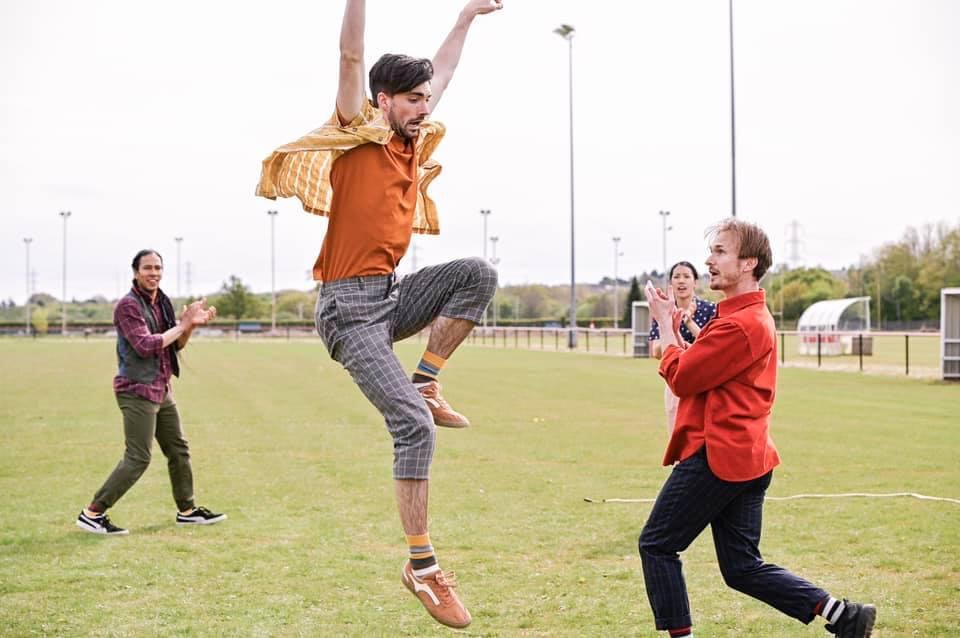
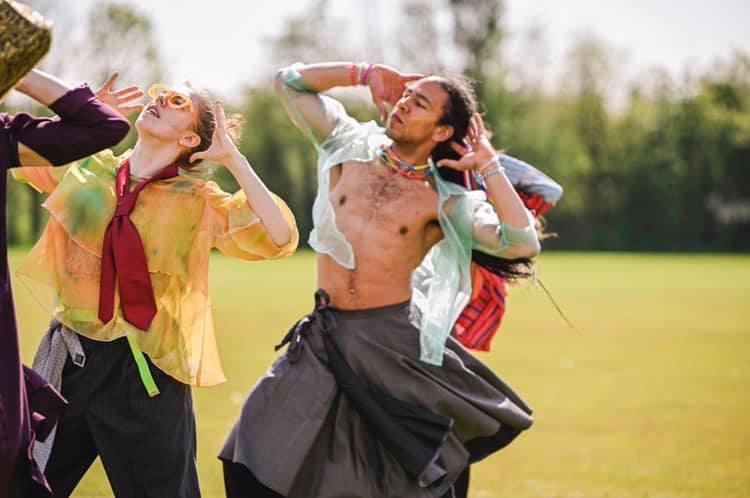
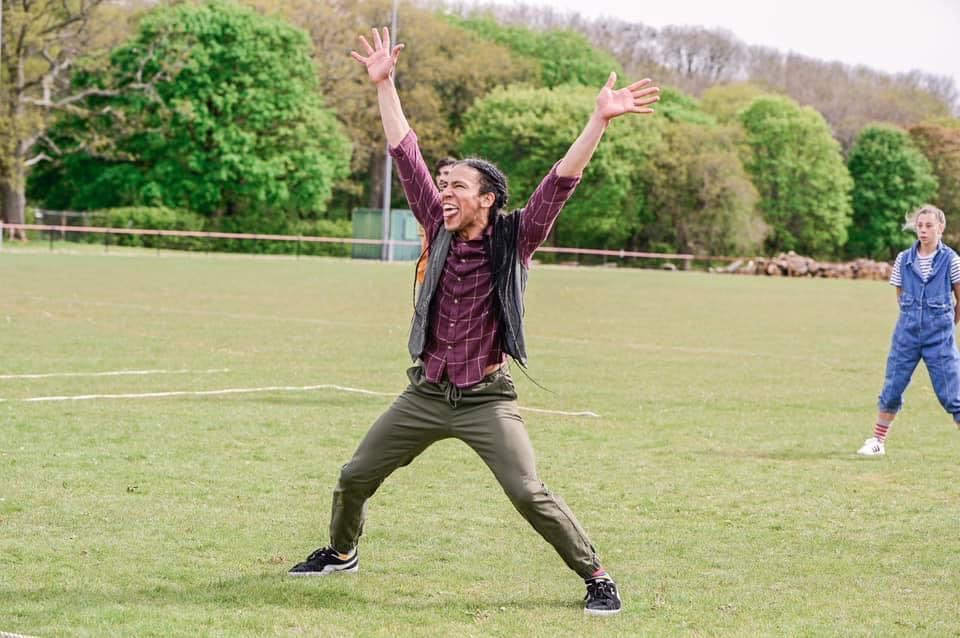
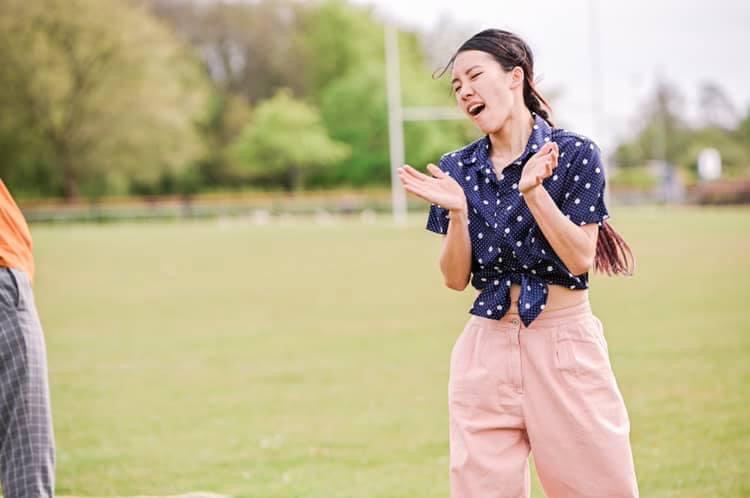
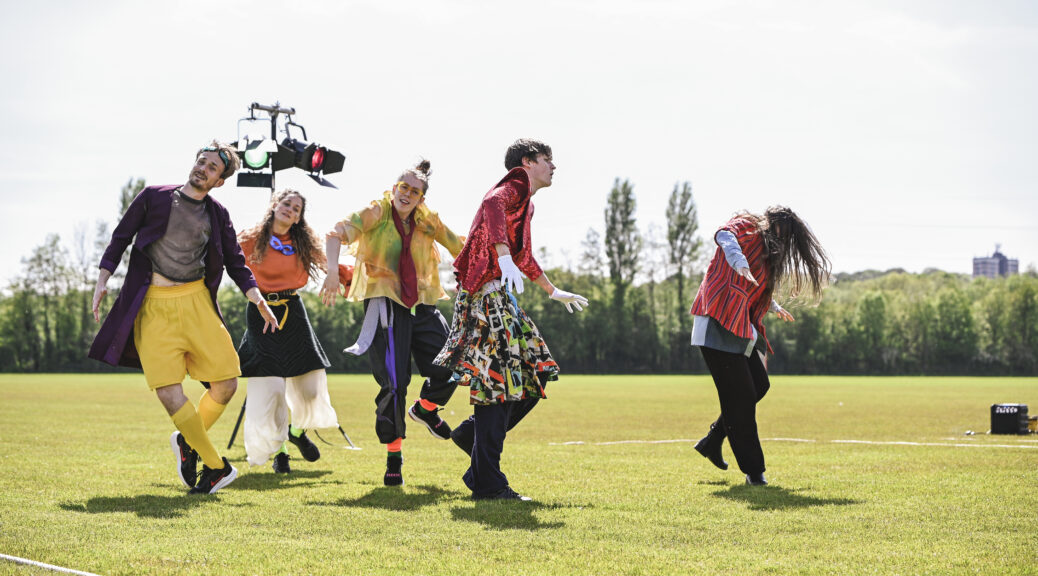
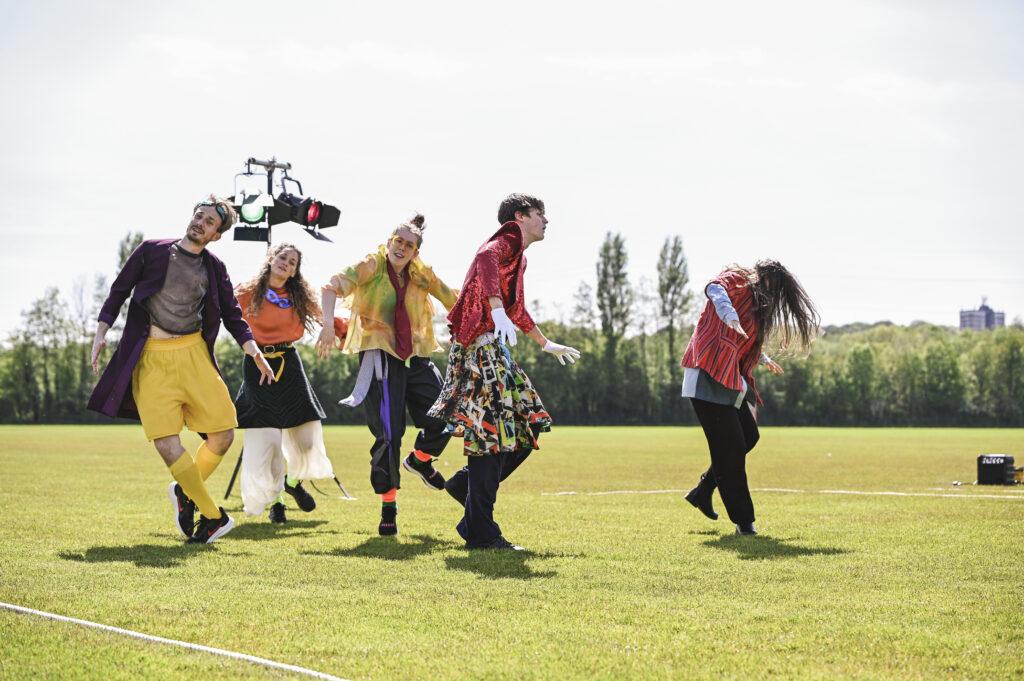
National Dance Company Wales (NDCWales) invites you to join them for a 45 minute open-air performance and to rediscover the joy of dancing this summer.

All image credits Kirsten McTernan Photography

Wales based choreographers create short dance performances
for outdoor performance this summer.

National Dance Company Wales (NDCWales) invites you to join them for a 45 minute open-air performance and to rediscover the joy of dancing this summer.

NDCWales: Open Air Performance will feature two exciting dance voices. NDCWales company dancers Ed Myhill and Faye Tan have been developing their choreographic voices over the last few years and exploring creating pieces for the outdoor in various locations across Wales. 

Faye Tan has worked with the NDCWales dancers to create a brand new energetic dance piece – Moving is everywhere, forever. It’s a satisfying ode to the act of dancing; an invitation to yield to the irresistible impulse of grooving, to the soundtrack by Welsh electronic duo Larch.

Faye said, “Moving is everywhere, forever’ first began as a research into a dance of satisfaction and catharsis as a means to invite audiences to groove along with the dancers, yielding into their own natural instincts to move to the beat. It was also an inquiry into the proposition that dance can exist at anytime, anywhere.

Thinking about situating the piece outdoors immediately gave the piece a strong reason to be bold with how the performers connect with the audiences and how they embrace the ever-changing elements of an outdoor environment with confidence and spontaneity; A reaffirmation that dance does not have to be confined to the indoors, in controlled atmospheres, or a particular time of day.

It has been an incredible experience of growth and joy for everyone involved, and we are so excited to have a mutual  exchange of energy with an audience in broad daylight during our performances.”

As well creating a new dance performance, NDCWales have also been reworking their acclaimed piece, Why Are People Clapping!? for the outdoors.  ‘Why Are People Clapping!?’ by Ed Myhill is an uplifting, funny and ridiculously clever dance piece that is set to composer Steve Reich’s ‘Clapping Music’ and uses rhythm as a driving force. The dancers clap, stamp and jump to create the live soundtrack.  It’s a face-pulling, toe-tapping 13 minutes of joy.

NDCWales dancer and creator of Why Are People Clapping!?, Ed Myhill said, “Adapting Why Are People Clapping!? for outdoors has been a challenging but exciting process. We have had to remould ourselves to fit into what will be more exposed and temperamental environments. Without our usual lighting and sound capabilities, as well as opening up two more sides for audiences to observe from, our creativity has been tested in how we want to reimagine this piece. Despite finding restriction in some areas, it has forced me to go in a different a direction that has revealed some great alternative possibilities and it’s exciting to work together with the dancers to unveil these ideas. I am thrilled with this new staging for the outdoors which has become even more vibrant and joyous.”

After the two performances there will be an opportunity for the audience to join in and learn some moments from the two performances.

National Dance Company Wales: Open Air Performances will be going to Chapter (Cardiff) – 6 & 7 August; Aberystwyth Arts Centre – 10 & 11 August; Theatr Clwyd (Mold) 13 August and Pontio (Bangor) 14 August.

NDCWales are working with venues and partners and taking guidance from the UK and Welsh Government Guidance on Performing and Participation activities and advice from Public Health Wales regarding the spread of COVID-19.

National Dance Company Wales (NDCWales) is pleased to announce Matthew Robinson as the Company’s new Artistic Director.

Credit Genevieve Rogers


Matthew will join the company in the Autumn direct from his role as Artistic Director of VERVE, the postgraduate company of Northern School of Contemporary Dance (NSCD) where Matthew has led the company for five years. Matthew is a practising artist having worked as a dancer, choreographer, facilitator, Rehearsal Director and Artistic Director.


Matthew was appointed Artistic Director of VERVE in 2016, under his direction VERVE became known for its bold commissioning, collaborating with world renowned and fresh choreographic voices like Botis Seva, Maxine Doyle and Sita Ostheimer to create distinct, engaging programmes of dance work, reaching thousands of people each year, onstage, online and in outreach work.
Matthew is excited about sharing his vision for what dance can do with audiences and participants in Wales and beyond.


Matthew said: “I grew up in a small Devon town, a young gay person. I did not know how to identify myself. I did not see myself in the media or in my community. Dance offered me an inclusive space where my identity could flourish, I lead with this in mind every day, seeking to develop dance as a safe and ambitious space for all.


Watching or participating in dance can have a profound effect on somebody’s life, it can change how we see ourselves, others, and the world around us. I believe this because I have lived it. Seeing yourself represented on stage, feeling your life experience translated in front of you, or being swept away by an immersive world created before your very eyes. Dance, at its best, is transformative, inspiring, entertaining and provocative. We can challenge and be accessible, be physically thrilling and politically powerful. I believe in engaging, ambitious programming reflective of 21st century society in all its diversity and beautiful complexity. I bring my ambition to reach beyond core dance audiences, to be a catalyst for the change we seek in our world.


I look forward to gaining insight into the unique ecology in Wales. I am eager to learn about and work with the Welsh dance scene. We all have our stories to share, and our perspectives to reveal, and I look forward to having these conversations and collaborations. I look forward to sharing my vision for what dance can do for audiences and participants in Wales and beyond.”


Jane McCloskey, Chair of the Board of Trustees said:


I’m delighted our search for a new Artistic Director attracted such a talented national and international field. Matthew stood out as an exceptional and exciting candidate for the role and will help us reach new audiences, new participants and new heights.”


Paul Kaynes, Chief Executive of National Dance Company Wales said:

“We had an exciting and international field of applicants, but Matthew captured the opportunities to work in new ways to create change in our world, putting the communities of Wales at the heart of his artistic plans, and telling the stories of Wales around the world. His deep commitment to inclusion and diversity in his work and the artists he works with, will enable the Company to continue to present world-class dance made by artists from many backgrounds. We’re incredibly excited to be welcoming him to Wales.”


Matthew is a graduate of London Contemporary Dance School and danced for many years for Scottish Dance Theatre, performing work by a diverse range of international choreographers, including Sharon Eyal, Damien Jalet, Hofesh Shechter, and Victor Quijada. In 2013 he took on the responsibilities of Rehearsal Director, supporting the dancers and guest artists in their creative process, and the company on multiple international tours.

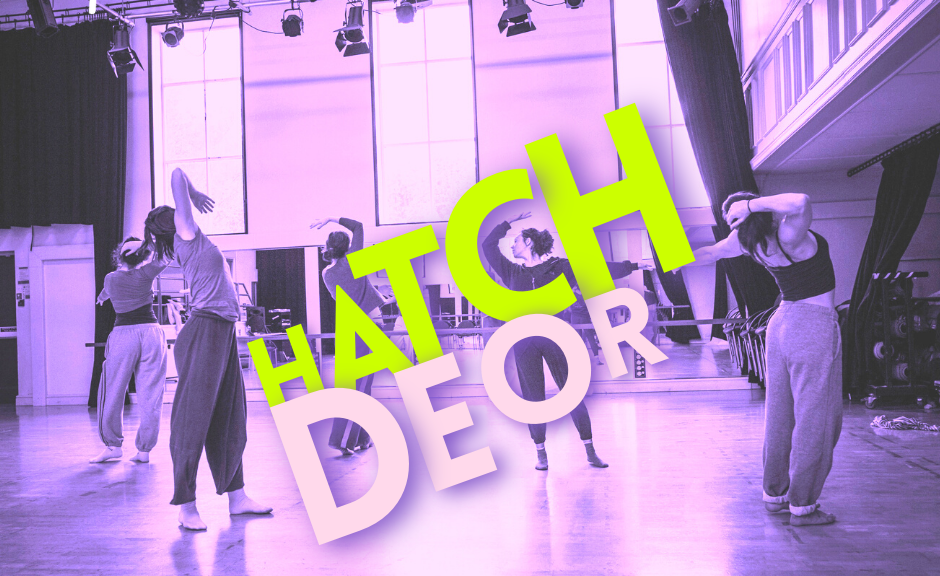
HATCH

Impelo is a charitable organisation that seeks to share the transformational power of dance as far and wide as possible, connecting people of all ages and walks of life in joyful expression. Everybody dancing – for themselves, each other and a better life.

At Impelo we create projects, programmes and productions which explore how dance can respond to health and social inequalities, creative learning and sustainability.  Based in Powys, rural mid Wales we have a great reputation as an innovator of participatory dance practice https://www.impelo.org.uk

Through funding from Foyle Foundation we are delighted to be able to offer 4 collaborative incubation residencies, pairing up Impelo dance associates with recent graduates, or people considering returning to dance, over a 2 week period this Summer. We think this will be a great way of supporting our existing dance associates and bring new dancers to Powys to evolve their practice through a collaborative process.

We want to bring fresh creative energy into Powys by getting to know new dancers at the beginning of their careers and explore how we might work together in the future.

The programme aims:

  • To nurture recent graduates (2019, 2020 and 2021) and those returning to dance or moving from professional performance to community dance practice through a bespoke programme of workshops, classes and advice surgeries;
  • To raise awareness of the community dance landscape in Powys and to develop the ecology through building new relationships with new dancers in or around Powys.

We will select dancers who are interested in developing their community dance practice and connect with the region.  We hope HATCH will contribute to a sense of community with the talented dancers here. 

What we are offering:

  • A ten day incubation residency (online or at our Dance Centre in Llandrindod Wells, subject to Covid restrictions) and collaboration partner from the Impelo team;    ;
  • Shadowing opportunities;
  • Practical workshops on delivering inclusive community dance sessions and making dance performance for specific audiences and communities;
  • Career development support and one to one advice surgeries;
  • Company class;
  • An opportunity to share current work in development or developed during the residency;
  • £700 fee

Who we are seeking:

  • Recent or about to graduate dancers who are curious about developing their careers in Powys as community dance practitioners and dance makers – either currently or planning on living in Powys, Wales or the Borders, or having grown up in Powys;
  • Dancers seeking to return to dance, or curious about community dance practice;
  • We particularly welcome applications from currently underrepresented dance practitioners deaf, disabled, neurodivergent, Welsh speakers and POC (and we understand and appreciate that these dancers may not have come through traditional dance training routes);
  • Dancers who can demonstrate how the incubation will benefit them in developing their careers;
  • Dancers who are ambitious to challenge themselves, their collaborators and us;
  • We especially encourage applications from people who come from a background that is under-represented in dance.

When:

The incubation residency will run from Monday 26th July and end on Friday 6th August 2021.

To apply:

Send us a recorded (audio or video) or written statement telling us about yourself, and how you think the incubation residency will help to develop your practice by 9am Monday 28th June 2021.

Via email: amanda@impelo.org.uk

Interview date

30th June – Zoom Interviews

2nd July – Notified

Deor

Sefydliad elusennol yw Impelo â’r nod o rannu grym gweddnewidiol dawns mor bell a mor eang â phosibl, gan greu cysylltiadau rhwng pobl o bob oedran, o bob lliw a llun, mewn hunanfynegiant llawen. Pawb yn dawnsio – er eu lles eu hunain, er lles ei gilydd, a thros fywyd gwell.

Yn Impelo rydym yn creu prosiectau, rhaglenni a chynyrchiadau sy’n archwilio sut gall dawnsio ymateb i anghydraddoldebau cymdeithasol a mewn iechyd, dysgu creadigol a chynaladwyedd. Ledled Powys yng nghefn gwlad canolbarth Cymru, lle rydym yn gweithredu, mae gennym enw da fel arloeswyr ym maes ymarfer dawnsio cyfranogol https://www.impelo.org.uk

Diolch i gymorth ariannol y Foyle Foundation rydym yn falch iawn o allu cynnig pedair preswylfa fagu gydweithredol, lle byddwn yn paru dawnswyr cyswllt o Impelo am ddwy wythnos â graddedigion diweddar neu bobl sy’n ystyried dychwelyd i fyd dawnsio. Credwn y bydd hyn yn ffordd wych o gefnogi ein dawnswyr cyswllt presennol a dod â dawnswyr newydd i Bowys fel y gallant ddatblygu eu hymarfer trwy broses gydweithredol.

Rydym yn awyddus i ddod ag egni creadigol i Bowys trwy ddod i adnabod dawnswyr newydd ar ddechrau eu gyrfa ac archwilio sut gallen ni weithio gyda’n gilydd yn y dyfodol.

Nod y rhaglen yw:

  • Meithrin graddedigion diweddar (2019, 2020 a 2021) a rhai sy’n dychwelyd at ddawnsio neu’n symud o berfformio’n broffesiynol at ymarfer dawnsio cymunedol trwy gyfrwng rhaglen bwrpasol yn cynnwys gweithdai, dosbarthiadau a chyngorfeydd;
  • Codi ymwybyddiaeth o dirwedd ddawnsio cymunedol ym Mhowys a datblygu ei hecoleg drwy fagu cysylltiadau newydd â dawnswyr newydd ym Mhowys a’r cyffiniau.

Fe ddetholwn ni ddawnswyr sy’n awyddus i ddatblygu eu hymarfer dawnsio cymunedol a chysylltu â’r rhanbarth yma. Ein gobaith yw y bydd HATCH yn cyfrannu at greu ymdeimlad o gymuned gyda’r dawnswyr talentog sydd yma. 

Yr hyn rydym yn ei gynnig:

  • Preswylfa fagu dros 10 niwrnod (ar-lein neu yn ein Canolfan Ddawnsio yn Llandrindod, yn amodol ar argyfyngiadau Cofid) a phartner cydweithredol sy’n aelod o dîm Impelo;    ;
  • Cyfleoedd cysgodi;
  • Sesiynau gweithdy ymarferol ar gyflwyno sesiynau dawnsio cymunedol cynhwysol a chreu perfformiadau dawnsio ar gyfer cynulleidfaoedd a chymunedau penodol;
  • Cymorth datblygu gyrfa a chyngorfeydd un ag un;
  • Dosbarth gyda’r cwmni;
  • Cyfle i rannu gwaith cyfredol sy’n cael ei ddatblygu neu a ddatblygwyd yn ystod y breswylfa;
  • Ffi o £700

Pwy rydym yn chwilio amdanynt:

  • Dawnswyr a raddiodd yn ddiweddar neu sydd ar fin graddio, sydd â diddordeb mewn datblygu eu gyrfa ym Mhowys fel ymarferwyr dawnsio a chrewyr dawns cymunedol – a sydd yn byw ar hyn o bryd, neu’n bwriadu dod i fyw ym Mhowys, Cymru neu’r Gororau, neu wedi tyfu lan ym Mhowys;
  • Dawnswyr sy’n awyddus i ddychwelyd at ddawnsio, neu’n chwilfrydig ynghylch ymarfer dawnsio cymunedol;
  • Rydym yn croesawu’n arbennig geisiadau oddi wrth ymarferwyr dawnsio sydd ar hyn o bryd heb gynrychiolaeth ddigonol – rhai B/byddar, anabl, niwroamrywiol, siaradwyr Cymraeg a Phobl Groenlliw (ac rydym yn sylweddoli ac yn deall nad yw’r dawnswyr hyn efallai wedi dod trwy lwybrau dawnsio traddodiadol);
  • Dawnswyr sy’n gallu arddangos sut bydd y breswylfa fagu’n fuddiol iddynt wrth iddynt ddatblygu eu gyrfa;
  • Dawnswyr sy’n awyddus i’w herio eu hunain, eu cydweithredwyr, a ni;
  • Rydym yn croesawu’n arbennig geisiadau gan bobl sy’n hanu o gefndiroedd sydd heb gynrychiolaeth ddigonol ym myd dawnsio.

Pryd:

Cynhelir y breswylfa fagu o ddydd Llun 26ain Gorffennaf tan ddydd Gwener 6ed Awst 2021.

Sut i ymgeisio:

Anfonwch inni ddatganiad wedi’i recordio (sain neu fideo) neu ysgrifenedig i ddweud wrthym amdanoch chi, a sut yn eich tyb chi y bydd y breswylfa fagu hon yn helpu i ddatblygu eich ymarfer erbyn 9 yb Llun 28ain Mehefin 2021.

Trwy ebost: amanda@impelo.org.uk

Dyddiad cyfweliadau

30ain Mehefin – Cyfweliadau ar Zoom

2il Gorffennaf – Cewch eich hysbysu am y canlyniad