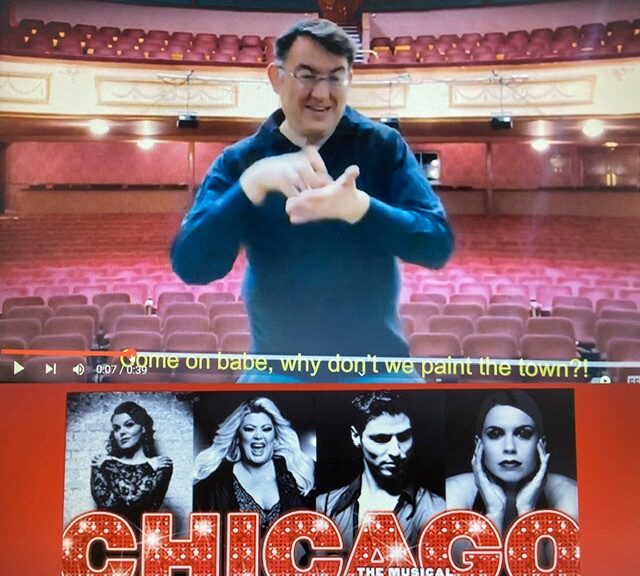
A BSL Interpreted trailer for Chicago at New Theatre, Cardiff.
If you are a BSL user and would like to review this performance please email info@newtheatrecardiff.co.uk to find out how to get involved.
A BSL Interpreted trailer for Chicago at New Theatre, Cardiff.
If you are a BSL user and would like to review this performance please email info@newtheatrecardiff.co.uk to find out how to get involved.
 (3 / 5)
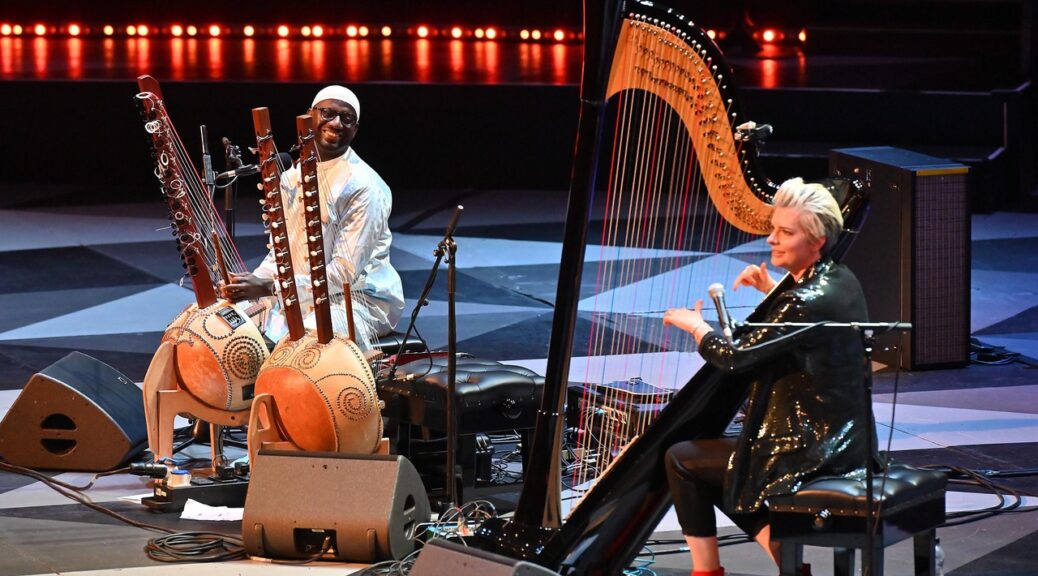
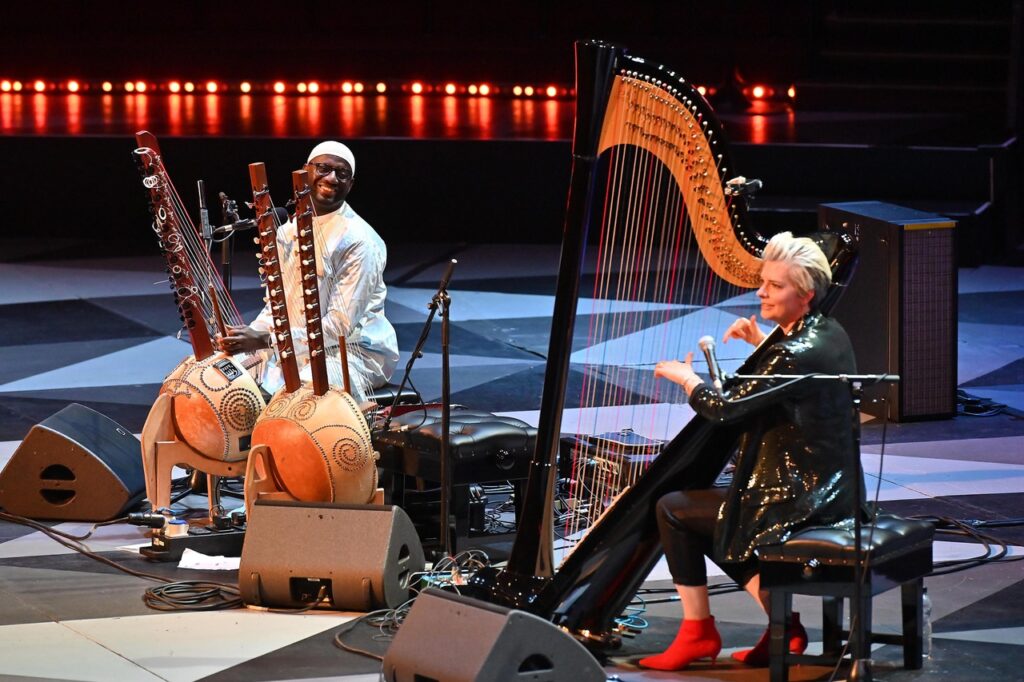
One of the fond memories of the brief window of live performance in 2020 was Catrin Finch with the Columbian band Cimarrón. Welsh harpist Catrin seems to hold the whole world in her hands, with a versatility in essentially any genre of music. Knowing her from classical circles, her time with Cimmarrón made for a sizzling and dazzling concert, something I haven’t forgotten in a hurry.
A duet with Seckou Keita from Senegal is another giant leap in taste and mileage. Keita, who plays the kora (a large string instrument made from a giant root vegetable) beams for most of the night, his vibrant energy on full display. Catrin, ever the wry talent, gave humour in speech and simply beautiful playing on her large harp. Together, Wales and Senegal does not seem that far apart, the break down of musical cultures dropping with a huge reverb, its sound a towering influence over the night.
I’ll confess the music here is on a more chilled level, a breezy ambience that never lets up. I found myself craving something with more of a meaty bite, though the eloquence of both players never wained. The kora is a rather subtle instrument, somewhere between a harp, guitar and the strings of a piano. They usually played in harmony, each instrument clear during these moments.
Seckou also shared insights from his country, the idea of the children’s rite of a “standing stick” was amazing. A frustrating moment came later when his mic fell and not a single technician came to assist him. Along with Catrin’s deadpan, they made quite a comedy double, as well as musical bed fellows. The unending, shameless amount of plugs to their new CD started to get absurd as the night went on.
We really should place bets for where Catrin goes globally and who she plays with next. Her journey remains quite the adventure.
 (4 / 5)
Take one charming leading lady, a dollop of catchy songs, a ballad or two to pull on your heartstrings, sprinkle with silliness and mix with loveable characters to create the perfect recipe for a feelgood musical.
The ingredients were expertly balanced at the performance of the Tony Award nominated hit musical Waitress in Cardiff’s Wales Millennium Centre on Tuesday evening.
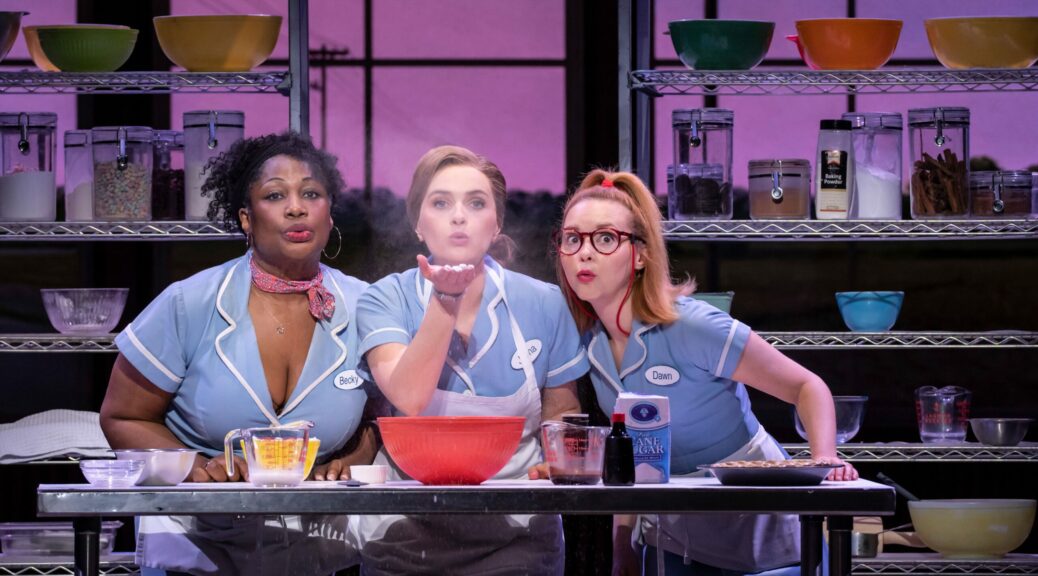
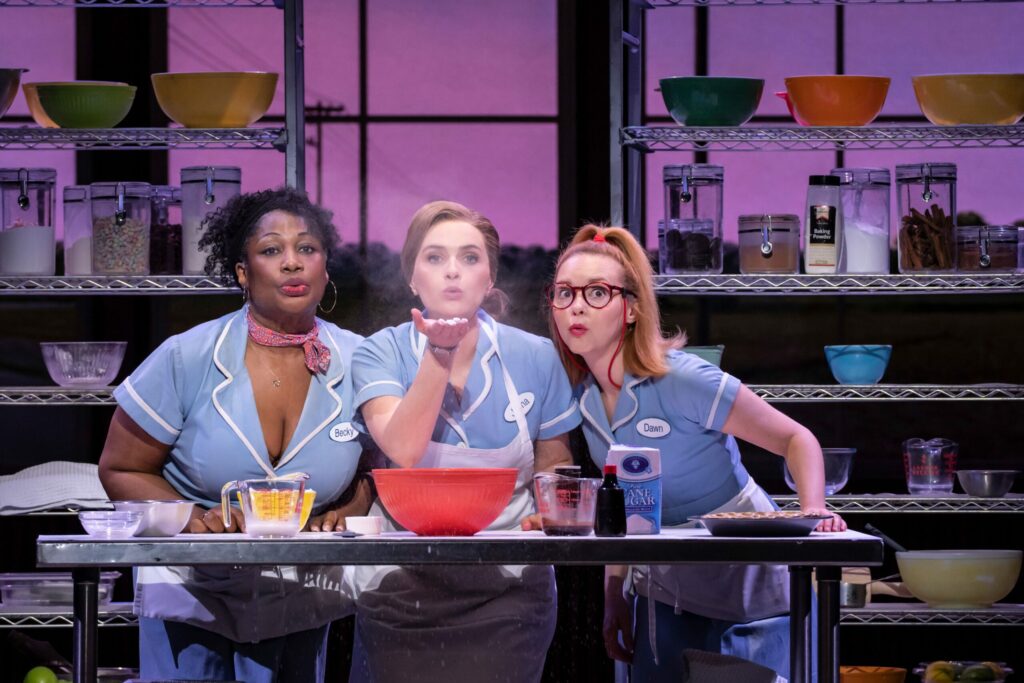
Based on the 2007 Adrienne Shelly film, Waitress tells the story of Jenna who works in Joe’s Pie Diner in the Deep South. Jenna is unhappy in her marriage to the controlling Earl and feels trapped in her mundane life where every day is a carbon copy of the last. To make matters worse, as the show opens, Jenna discovers that she is pregnant, expressing her disappointment during “The Negative” where she is consoled by her colleagues Becky and Dawn. Jenna finds solace in baking and, in particular, in making pies – she makes a different pie for every day of the week and there isn’t an occasion that she can’t think of the perfect recipe, including “my eggs failed me pie” and “in the pursuit of happiness pie”. Even though she knows it’s a “Bad Idea” Jenna embarks on an affair with her hunky gynaecologist Dr Pomatter. We follow her journey as she tries to escape her hum drum life.
On the face of it the storyline is fairly predictable but as it develops we realise there is more to the characters than meets the eye. Jenna is a complicated leading lady, describing herself as being “imperfect but she tries” – she has an affair, she is unmaternal and she lies to her husband. In fact, in a turn from traditional musical theatre, all the characters are in some way flawed and morally ambiguous, making them more relatable to the audience.
The cast are impressive in portraying these characters and all give strong performances, approaching their roles with sensitivity. Chelsea Halfpenny is particularly noteworthy as Jenna, bringing the house down with her vocal ability in the heart wrenching “She Used to Be Mine”. Evelyn Hoskins and George Crawford pitch their performances of goofy couple Dawn and Ogie just right, providing plenty of laughs while still making the audience believe in their love story.
The production, directed by Diane Paulus is incredibly slick with effortless scene changes supported by the ensemble. The majority of the action takes place in the diner which has a view of the open highway projected through the windows. The performance space is reduced in Jenna and Earl’s home, with the ceiling being lowered and the walls drawn in, giving a visual representation of her claustrophobic life.
The band, which does an excellent job of executing Sarah Bareilles’ Nashville worthy score, is situated on stage and form part of the action as patrons of the diner. Although this is a nice effect, it is distracting at times.
There are moments when the show touches on darker, more gritty themes; Earl is abusive towards Jenna and it is suggested that she witnessed domestic violence as a child. Jenna’s attitude towards her pregnancy is controversial and Becky is clearly struggling in her role as a carer for her husband. The show only mentions these issues on a surface level and shies away from exploring them in any depth. Instead, it reverts to lighthearted humour, opting for a “life must go on” attitude.
The influence of Waitress’ female-led creative team is clear to see – the show is ultimately a celebration of friendship and femininity. Jenna’s transformation is inspired by the birth of her daughter and the support of her friends rather than being influenced by the male characters in her life.
Just like a slice of freshly baked homemade pie, watching Waitress the musical leaves you with a warm, comforting feeling. This sweet story isn’t necessarily ground-breaking but it will leave you with a smile on your face, a song in your heart and a skip in your step.
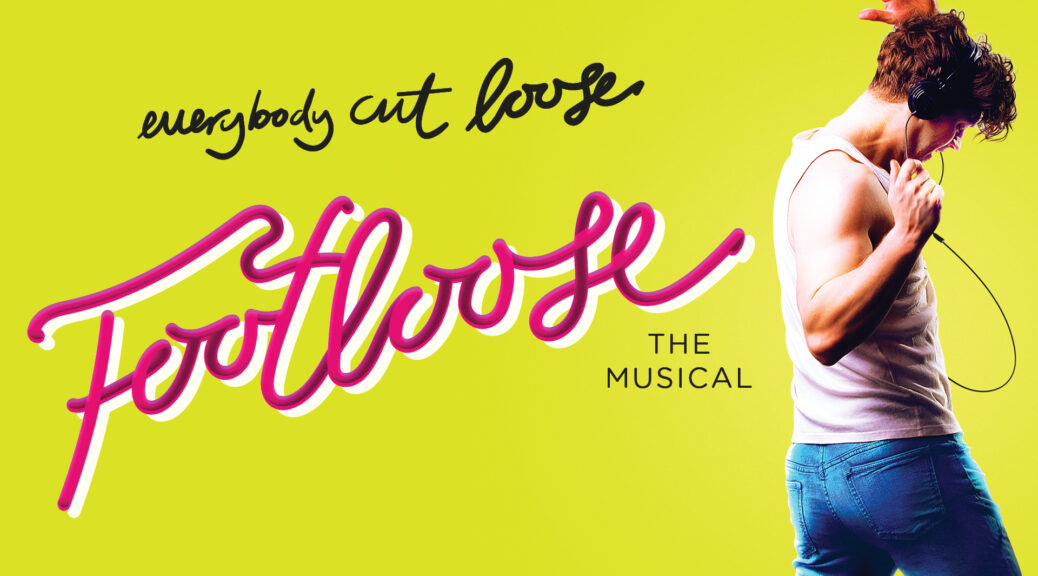
In the Year of our Lord 1984, a hero rose from obscurity to show a nation – nay, a world – how to lose its blues. The hero was Kevin Bacon, the movie was Footloose, and the story of a teenage boy who convinces a small town to dance again became legend. Now, the creatives behind the ultimate 80s feelgood film have brought it to the stage in a brilliant new musical: a blood-pumping, barnstorming thrill ride that’ll get you out of your seat and onto your feet!
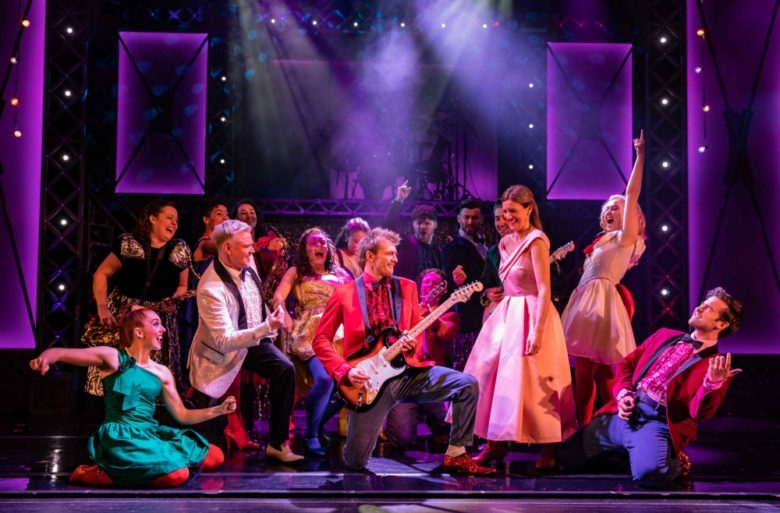
Daniel Miles (filling in for Joshua Hawkins) is fantastic as the rebellious Ren, stepping into Kevin Bacon’s dancing shoes with ease. Star of stage and screen Darren Day does a superb job as the Reverend Moore (his interactions with the crowd are a highlight) and Lucy Munden makes a very impressive stage debut as his daughter Ariel.
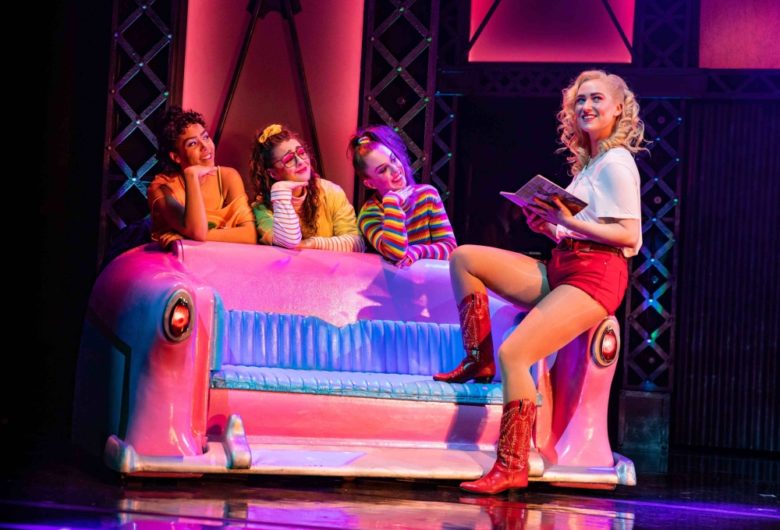
Every single person on the stage gives a 5-star performance and no-one misses a step, a note or a beat – no small feat, given that the actors are constantly having to swap between costumes, props, and instruments. The multitalented ensemble is on top form, bringing fun and flair to 80s classics like Holding Out for a Hero, Almost Paradise, and Let’s Hear it for the Boy – not to mention the riotous title track, brought to bubbly new life here – but X Factor star Jake Quickenden might just run off with the whole show.
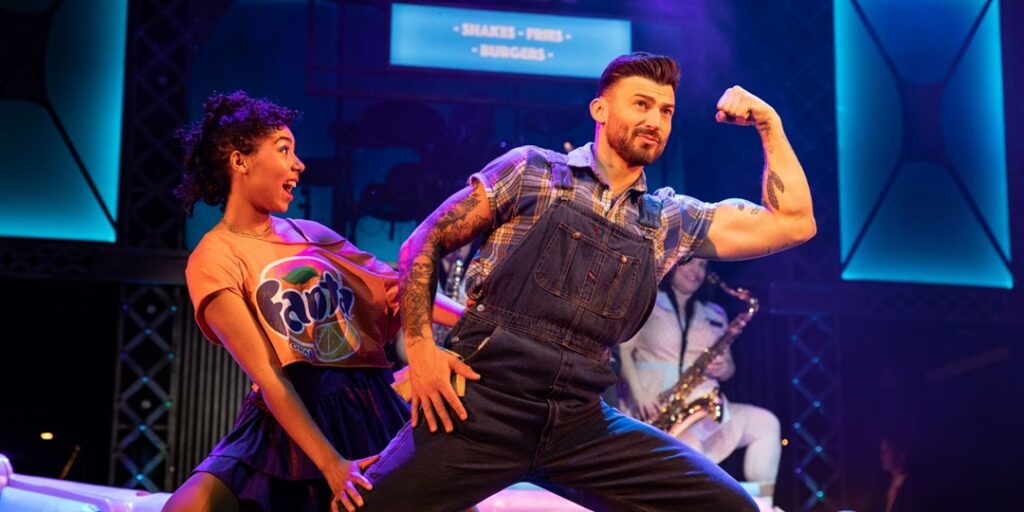
Playing Ren’s redneck wingman Willard, and simultaneously making the case for Magic Mike: The Musical, Quickenden has the charm and the chops to land every comedic curveball that’s thrown at him. I won’t spoil the best musical number but let’s just say if you’re holding out the a hero, you won’t be disappointed (Kylie Minogue, eat your heart out…)
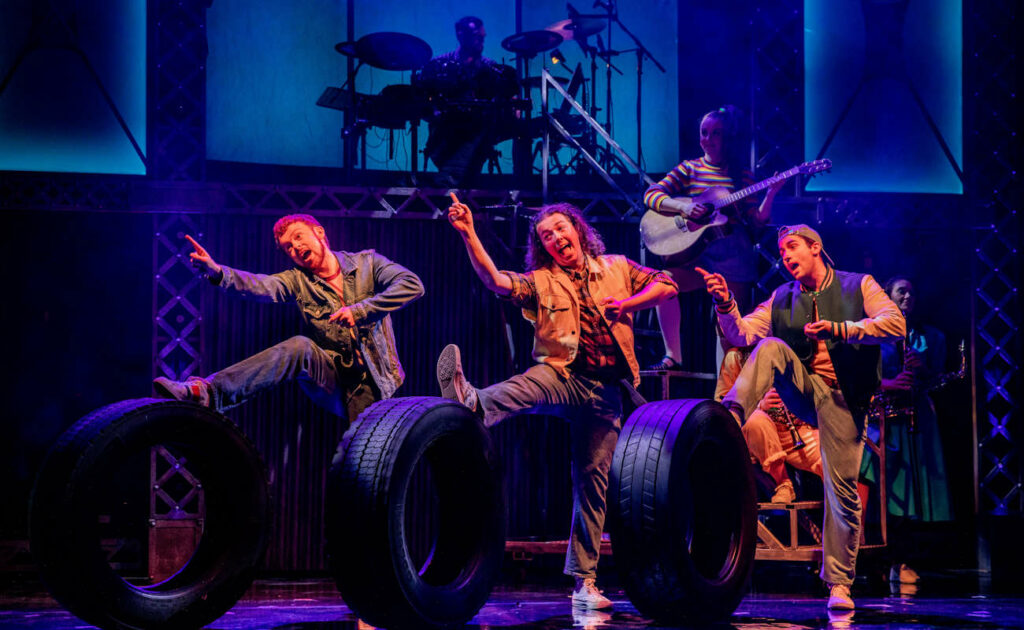
Fun, frothy and fabulous, Footloose The Musical will truly get you to kick off your Sunday shoes and lose your blues!
Footloose The Musical is playing at the New Theatre Cardiff through Saturday 4 June
You can follow on social media @FootlooseTour #EverybodyCutLoose
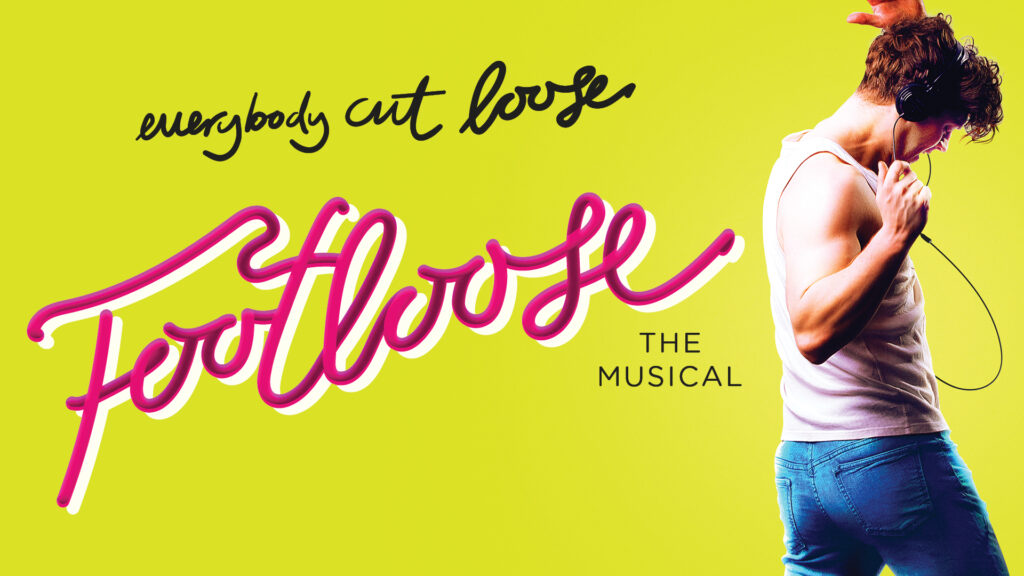
Review by
Barbara Hughes-Moore
Get the Chance supports volunteer critics like Barbara to access a world of cultural provision. We receive no ongoing, external funding. If you can support our work please donate here thanks.
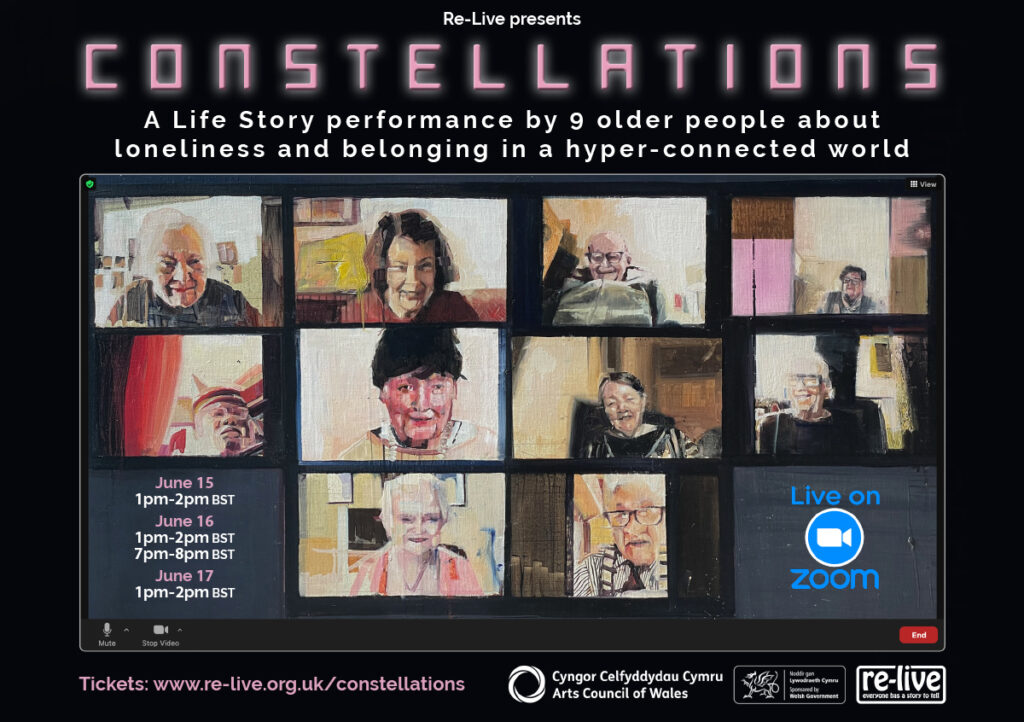
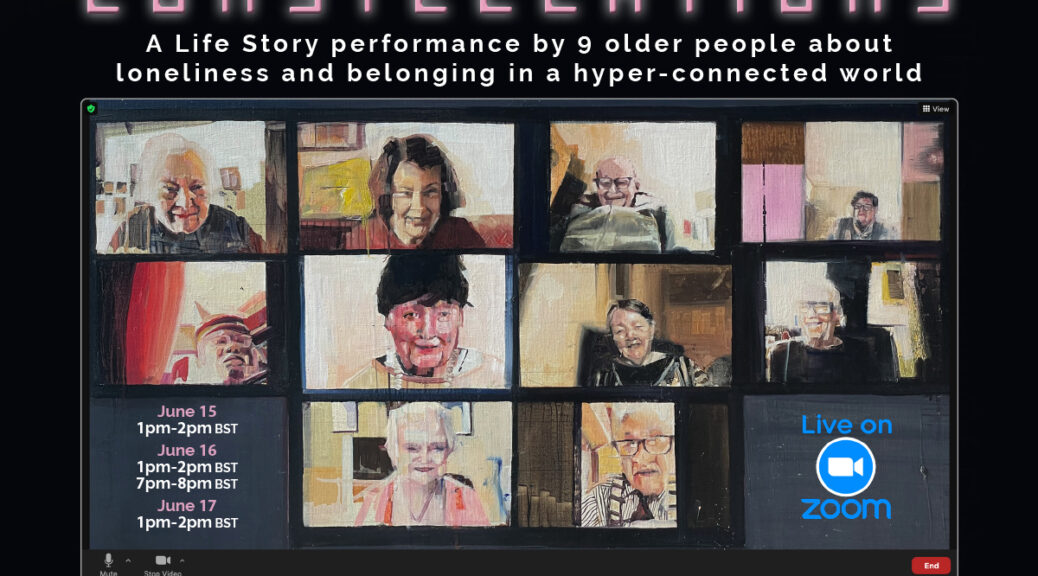
Constellations is an honest, moving and at times humorous exploration of the impact of loneliness on our older generation, and the power of community
Devised and performed live over Zoom, Constellations will premiere 15 – 17 June 2022
Welsh Arts in Health charity Re-Live have announced the premiere of their latest creative ageing theatre show – devised and performed by a diverse cast of older people living across Wales, aged between 72 and 95.
Constellations is a candid and urgent exploration of the impact of loneliness and isolation on our elderly community. With playful humour and refreshing honesty the nine members of Re-Live’s Company of Elders explore the stigma of loneliness and how the arts can build resilience to cope and respond to this issue.
In the post-pandemic world, whilst theatre productions are now back ‘in the room’, working with an aging cast presents unique challenges that makes Zoom performances the perfect medium. For some of the cast, ill health means that leaving the house is difficult, for others their geographical isolation keeps them apart. By rehearsing and performing live on Zoom, the pan-Wales cast (from Cardiff to Caernarfon) are able to create together and share their experiences from their homes.
The cast of Constellations includes:
Julian Moyle, an opera singer who at the age of 95 has recently married for the first time making headlines around the world.
Nicky Delgado, 74, who had a stroke during lockdown, is rehabilitating his speech and movement through taking part in the project. His stroke has left him unable to leave the house, but in the digital world he can express his poetic soul from his armchair.
Jill Grey, 82, received a scam phone call and shares its devastating impact on her confidence and desire to connect with others. Jill uses the arts to boost her wellbeing, through summoning memories of Jive nights in 1950s Cardiff.
Nora Jones, 76, is living with Parkinson’s and shares how despite the challenges she faces in her life as an older person, the greatest challenge of her life was combating isolation when living in London. Since she moved back to Wales in later life, she has found a new sense of community and loves nothing more than speaking Welsh again.
The performance is in memory of Company of Elders member Michael/Michelle O’Neil, 84. During their time in the group Michael/Michelle was able to share their transgender identity, and how living with the secret had prevented them from finding real belonging. Michael/Michelle died in April, but they found total acceptance within this group of creative, non-judgemental older people.
“Digital exclusion can have a hugely negative impact on an older person’s life, leading to an increase in loneliness and social isolation.” says Karin Diamond, Artistic Director of Re-Live.
“Since Covid we all understand how vital it is to be connected digitally, but it’s a myth that most older people in Wales are online. Re-Live are delighted to partner with Welsh Government to enable this incredible group of inspirational elders to connect online and get creative together.
“Older people have so much to share, and we all miss out when we don’t hear directly from them. The Company of Elders are paving the way to inspire older people across Wales to get creative online. They are crossing the digital divide, in some style.
“It’s been amazing to discover how much you can do on Zoom with a group of older people who are all in different places around Wales. The level of intimacy and connection in a shared online space is remarkable. It can also be deeply frustrating when someone has logged off accidentally, or their computer is suddenly restarting. But despite the technical hiccups every member of the Company of Elders is a star, and though they live far apart they come together online to form a bright new constellation.”
Constellations will premiere live over Zoom at 1pm on 15, 16 and 17 June 2022, with an evening performance at 7pm on 16 June. Tickets are priced as pay-what-you-can and are available from http://www.re-live.org.uk/constellations
What follows is a syndicated interview with Footloose designer Sara Perks
Following two critically acclaimed tours and huge popular demand, Footloose The Musical is back and better than ever! Touring the UK until August.
This brand-new production of Footloose is created by Sara Perks who has designed in the region of 250 productions. Sara has been nominated for Broadway World Awards, a Whats On Stage Award and an Offies Award. She holds an Edinburgh Fringe First; The John Elvery Theatre Design Award and a Vision Design (Costume) Award from the BBC.
We spoke with her to find out more about the life of a Theatre Designer and to find out more about her inspiration for the Footloose Uk Tour.
Can you tell us a little bit about life as a theatre designer – what made you go into this field and who or what were your inspirations
At the moment it’s very busy but it tends to be a bit ‘feast or famine’. Currently I’m working on four shows which are all at different stages in the process. For me Covid has meant that all my work suddenly got bunched up together which makes for a lot of plate spinning and juggling of schedules.
My inspirations were and still are the ability to create a live experience that an audience is able to experience together and enjoy together in the same room. To be connected to something visceral that is happening in front of them – nothing will ever replace that.
You have designed both the costumes and the set for this brand-new production. What is the process of making this happen?
A designer’s process follows a set of deadlines really. I discuss the needs and wants of the production with producers and the director initially, then filtering in what the choreographer, musical director and lighting designer would like to achieve.
All of this along with my own creative reaction to the piece results in a preliminary design – a ‘white-card’ model box which is a scale model of the proposed design at 1:25, with technical drawings. This is then commented upon by the creative team and producers and roughly costed, because of course there is a budget attached to every production that needs to be considered as well.
I would then take the design and model to the next stage – a final. This would be in full colour with all the chosen finishes and renders. This is then costed and signed off precisely.
An independent scenic workshop is selected on tender to build. From that point I work between them, the production manager, the rest of the creative team and rehearsals to try to ensure everything is on track, and make sure information and alterations proceeds as required
And that is just the set. What about costumes?
Amongst this whole process (which can span over years or just weeks depending on the size of project) I’m busy designing costume. There are similar deadlines, but these tend to be a bit more fluid especially if it is a show that is more based on sourcing vintage items to buy, rather than having a lot of costumes made.
Footloose being set in the 80s was almost all vintage sourcing so I worked very closely with a costume supervisor, my right hand really when it comes to costume, to make that happen. We shop, buy online, fit and alter, adapt and repurpose all through the rehearsal process and well into the technical rehearsals in order to create the right looks.
It’s a big cast – how many costumes were sourced and created?
After we got past 80+ we stopped counting!
Can you tell us about what audience expect to see in terms of design and what helped to influence this. Can we expect a real 80’s vibe?
When we started the process (over 2 years ago – a small thing called a pandemic got in the way!) the restyling 80s retro look was very in vogue.
We looked at shows like Stranger Things and 2 years later – Sex Education, in the way that they are clearly 80s but restyled with a modern eye, and not completely slavish to period. It was all about looking cool and right for character.
However I’m old enough to the remember the film when it came out and was the same age as the characters in the 80s so my own experience went to some of the costume and hair inspiration!
In regard to the set the inspiration for it really is the classic iron rivetted bridges that you find all over America spanning rivers and gorges. Like the Potanwey bridge that is mentioned by Ariel in relation to her brother. The Williamsburg bridge in New York is another example.
The bridge and town limits are central to the plot of the show and why the town of Bomont is under restrictions on socialising, so it seemed a good metaphor to use as a frame for the whole concept.
Do you have a favourite costume in the show?
I love Wendy-Jo’s yellow jumpsuit; and there are several great classic 80s prom dresses in purple; green and cerise, but I think the Rev’s white sequin jacket for the mega mix would have to be the favourite. And Darren Day wears it so well!
Many might say ‘the gold pants’ (and those who see the show will know why!) Tell us a bit about the gold pants! Although most of the design is new they’ve been revived from previous productions is that right?
These are a bit of a ‘surprise’ in the show – I won’t give it away completely – but they always go down a storm with audiences so we decided to keep it in for this new production. For me it’s the highlight of the show!
Finally, what would be your top tip for audience members who might come along dressed up for the show – how do you create the perfect ‘Footloose’ outfit?
It’s not just a pair of legwarmers or neon socks. You could choose to go full ‘cowboy’ and join in with some line dancing at the ‘bbq’ at the start of the 2nd half; or grab a taffeta block colour party dress or ra-ra skirt for the prom. If you want a more tailored look a velvet or sequin tux with jeans would fit right in as well.
Based on the 1980s screen sensation which took the world by storm, Footloose The Musical sizzles with spirit, fun and the best in UK musical talent. With cutting edge modern choreography, you’ll enjoy classic 80s hits including Holding Out for a Hero, Almost Paradise, Let’s Hear It For The Boy and of course the unforgettable title track Footloose.
Everybody cut loose for a night of dazzling excitement music and dancing!
For full listings visit www.footloose-musical.com follow on social media @FootlooseTour #EverybodyCutLoose
What follows is a syndicated interview with Footloose star Darren Day
Following two critically acclaimed tours and huge popular demand, Footloose The Musical is back and better than ever! Touring the UK until August. TV star and musical theatre favourite Darren Day joins the cast of the tour as Rev. Moore and we caught up with him to find out a little more about the tour and his role in the show.
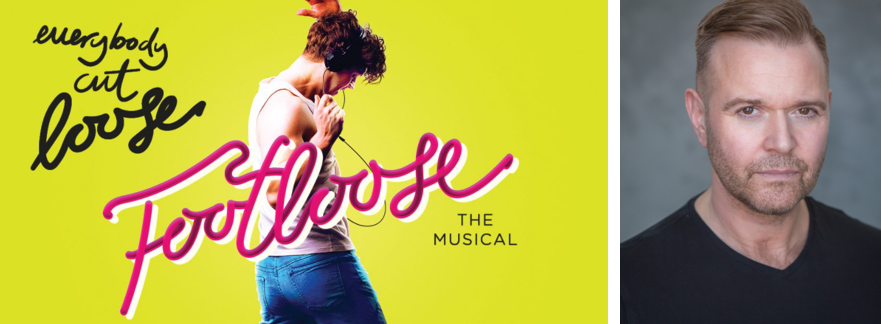
You’re back on the road In Footloose The Musical how does it feel to be back on tour?
We were about to go into rehearsals for Footloose when the Pandemic hit and the tour was rescheduled a few times before dates were set for our 2022 opening, almost a full two years later than originally planned and it is amazing to be back out there with the show.
2020 was devastating for us all. But coming out of the other end things have really started moving quickly for me. Having not been able to perform during the pandemic, going back on stage and being part of a big musical feels so magical, in the way it felt when I landed the role of Joseph at the Palladium at the beginning of my career.
I recently finished the UK tour of Chicago which was brilliant and during that tour I saw a genuine thirst for live theatre so couldn’t be more delighted than to move straight into another tour with Footloose.
In all of my years as a performer in Musical Theatre I don’t think I have jumped straight from one tour into another… I feel very lucky.
Can you tell us a little bit about this tour of Footloose?
This production of Footloose is particularly a special, even if you have seen it before you will want to see it again… and this new version will blow you away. It’s been reworked with a new set, new costumes. The lot.
Racky Plews, who’s directing, has brought an edgy and exciting new take on the show. She’s been working closely with the writer of the original movie and songs, Dean Pitchford and his input into this new production has been invaluable.
The cast and the whole team on this are truly ‘the cream of the crop’ a really gifted bunch of performers. Acting, singing, dancing and playing instruments throughout the show.
And what about your role as the Reverend?
I’m so happy to be playing the Reverend. Over a decade ago I met with the producers for Footloose and Chicago within about three months of each other. I was told I didn’t look old enough! So … the only downside of me playing these two roles back-to-back is that I must now look ‘old enough!!’
Since those meetings all those years ago Billy Flynn and the Reverend have been on my bucket list of roles I desperately wanted to play, so to get the opportunity to play them both in one year is incredibly exciting for me and I feel deeply grateful.
Having a teenage daughter myself (in real life!) I have a lot of ‘method’ experience to draw upon! It’s tough letting your ‘little princess’ out into the big bad world!
What do you think keeps Footloose so fresh and keeps audiences coming back for more?
The great thing about Footloose which I think separates it from other ‘jukebox’ shows is that Dean Pitchford wrote the songs specifically for the movie. So, not only are these songs instantly recognisable the second the intro to them begins. they also carry the plot forward in a very truthful way. Apologies for that sounding incredibly ‘arty’ and ‘theatrical’ But they do!
In the show there are these massive hit tunes that everyone recognises along with a strong and beautiful storyline. It’s a really feel-good show – no doubt about it.
Do you have a favourite moment in the show?
I guess one of my favourite moments in the show is my solo song ‘Heaven Help Me’ It’s a brilliant tune with beautifully written lyrics. Also the poignant moments with the Reverend’s daughter are lovely to play – and the revelations that happen to him.
My favourite moment in the rehearsal room was when I sat and watched the cast perform the opening number of the title song. I got goosebumps and thought to myself if this is how it feels in a rehearsal room the way it’s going to feel with a set, costumes and on a stage with an audience will be breath-taking.
Finally – why do you think people should come and see Footloose this year across the UK?
You are going to have the most incredible night. You’re going to hear songs that are instantly recognisable, and I challenge you not to sing along to them. There are big numbers, there’s a beautiful story going on, the cast are ridiculously talented. You’ll leave the theatre buzzing after having a very special night out. We will have a ball and I can’t wait to see everyone up on their feet at the end to cut loose!
Based on the 1980s screen sensation which took the world by storm, Footloose The Musical sizzles with spirit, fun and the best in UK musical talent. With cutting edge modern choreography, you’ll enjoy classic 80s hits including Holding Out for a Hero, Almost Paradise, Let’s Hear It For The Boy and of course the unforgettable title track Footloose..
Everybody cut loose for a night of dazzling excitement music and dancing!
For full listings visit www.footloose-musical.com follow on social media @FootlooseTour #EverybodyCutLoose and follow Darren @DarrenDayOfficial for a peek behind the scenes of the tour!
(4 / 5)
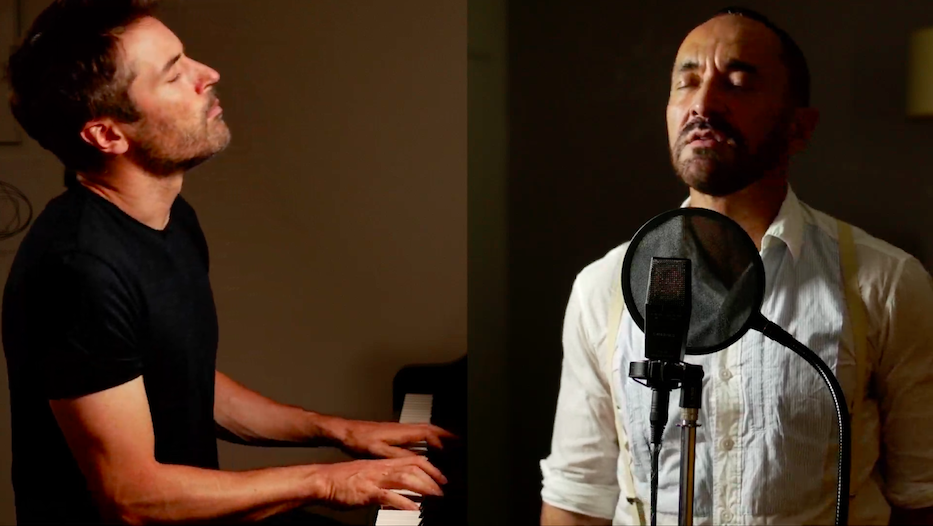
It looks like livestreams have not entirely left us. Though when one is as good as this, I shouldn’t moan. Theo Bleckmann is familiar to me with his extensive collaboration with Meredith Monk, though a Grammy winner, his jazz career should also be recognised.
In this midweek livestream, Theo along with Dan Tepfer on piano gave a warm, welcoming recital of Weimar songs, later German work and his own creations. The names of Kurt Weill and Bertolt Brecht need little introduction, their cabaret numbers some of the best in the canon. Theo, with his perfect German, offered up rowdy numbers, tinged with a sharp irony and camp sensuality. As a singer, he is light and bright, though has a rounded lower range, perfect for these songs. The Alabama Song from The Rise and Fall of the City of Mahogany may be best known for The Doors’ cover, yet here it is brought back in a stripped down shot. You can feel the clamour of this drinking song, one that really gets in your head.
As accompanist, Dan Tepfer is everything a singer could want for. An deeply rooted understanding of the music, he displays an easy going, quiet persona, broody and subtle on screen. Unafraid to grapple with the score, his animation makes the experience all the more enjoyable. Dan was more than happy to answer questions from the livestream, pressing some of these onto Theo in an informal way to please this attentive audience at home. The highlight for me came in the middle with Hanns Eisler’s Friedenslied (also written by Brecht), an unashamedly melodic and sincere please for peace written in the composer’s time in East Germany. Well needed in this difficult year. A lovely moment came when they were both making sure they were in the right key before a song (turns out it was E flat), due to the jazz modulation changing that aspect of the song.
Theo’s own songs are a new discovery for me. You could easily compare his to Meredith’s work, though there is a telling sense of the lyric and the musical per se. Singing both Easy and Reason, they both demonstrated his talent in both approachable and experimental bands, one minute crooning, the next grunting and guttural. The amazing, free wheeling quality of Reason ended things with aplomb. Theo promised to do the classic Useless Landscape next time and his own Alphabet of Paints. Tantalising stuff!
Theo Bleckmann & Dan Tepfer perform at the Neue Galerie, New York on Thur 26 May 2022.
Being a huge fan of the jukebox 2001 blockbuster movie Moulin Rouge, I cannot begin to tell you the excitement when I discovered that the musical adaption was making its way to the Piccadilly Theatre London UK after a successful opening in both NYC and Sydney.
Like the movie, the musical’s score weaves together original songs with popular music, including some of the original songs written in the film’s premier 17 years ago, songs such as Sia’s “Chandlier”, Gaga’s “Bad Romance” and Katy Perry’s “Firework” , just to name a few.
THE PLOT
Moulin Rouge! is set in the Montmartre Quarter of Paris, France, at the turn of the 20th century also referred to as the birthplace of the bohemians that believe in Truth, Beauty, Freedom and Love.
The musical is similar to the movie in plot which tells the story of Christian a young composer, who falls in love with cabaret “Sparkling Diamond” actress Satine (played by the talented and stunning Lissi Lafontaine), who’s paths cross by a fortunate misunderstanding one unforgettable night at the red windmill sparking a secret romance behind the Duke ( Simon Bailey) a jealous and wealthy gentleman who wishes to “own” Satine and the deeds to the Moulin Rouge which is currently run by Harold Ziedler (Clive Carter).
BECAUSE YOU CAN CAN AND MUST MUST
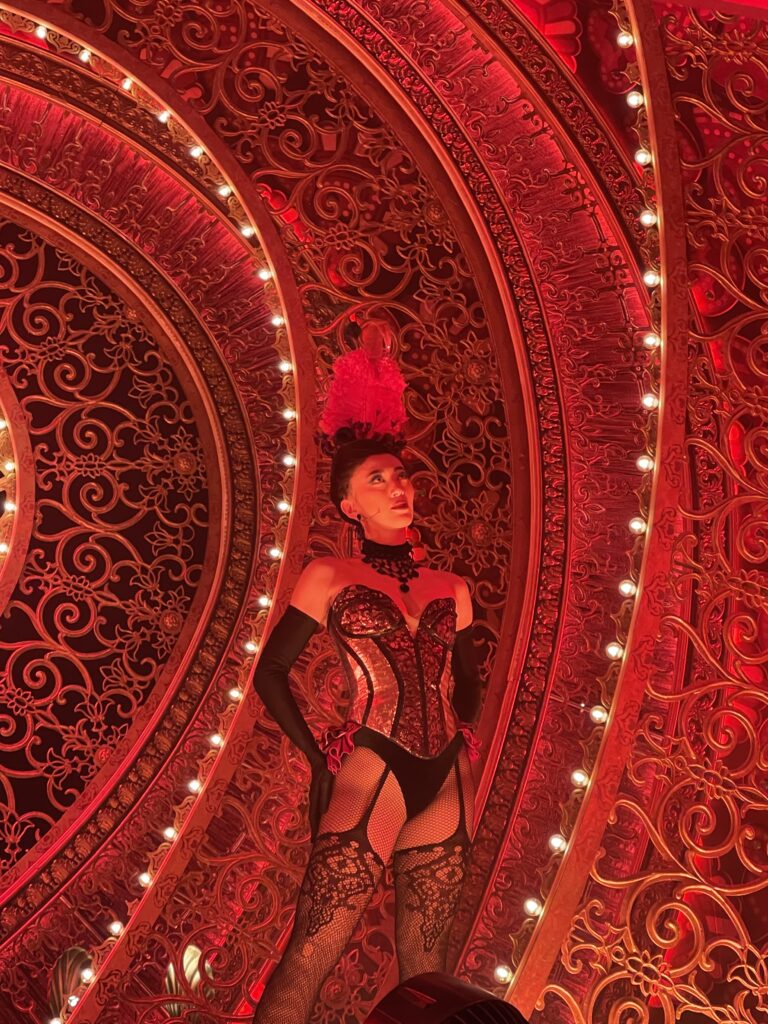
Thankfully I was fortunate enough to purchase the irresistible “Can Can” seats which is a collection of 16 decorative chairs and tables placed right at the front of the action (essentially where the band pit would have originally been), allowing for a fully immersive and interactive view of the show so close to the cast and the extended stage you could see every breath, feel very dance move and spot the intricate details of the set and costumes, this was a theatre experience unlike any I had encountered before.
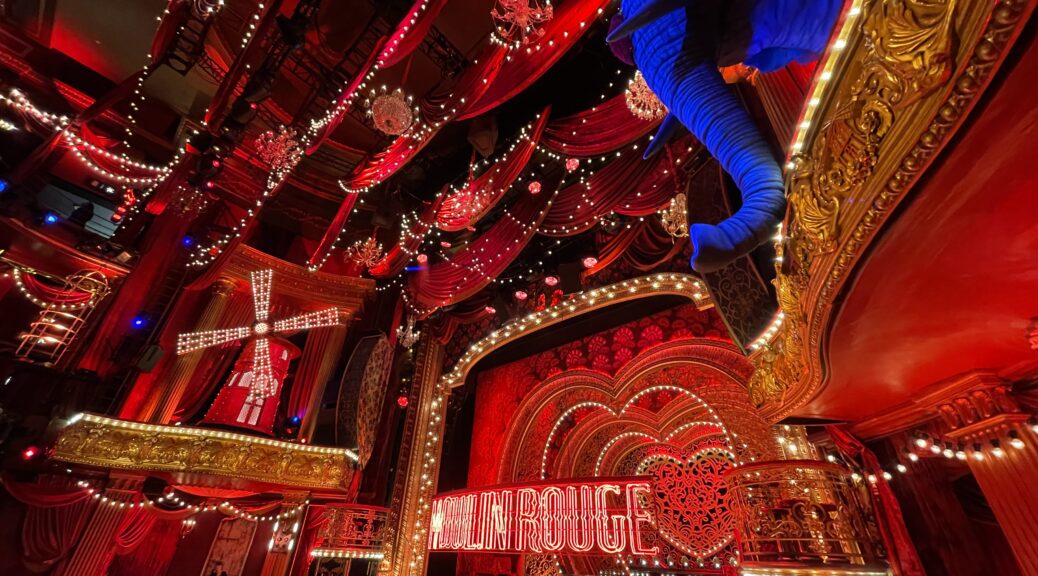
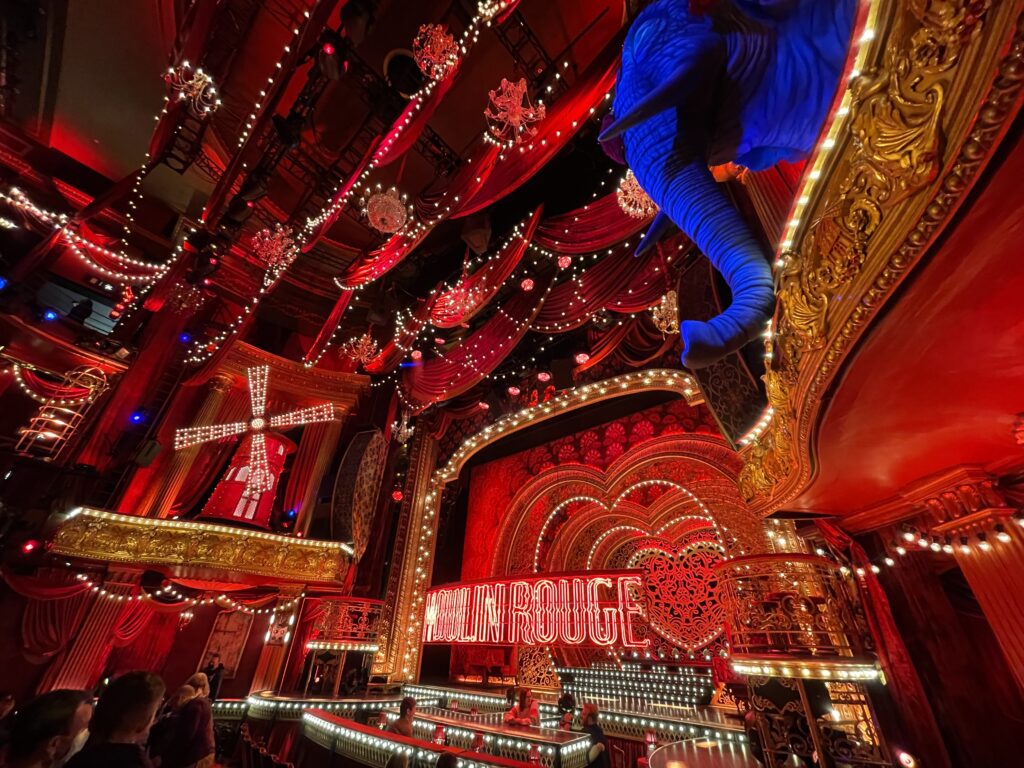
As you descend into the auditorium you are instantly transported to the Moulin Rouge, Paris 1899 with thick red velvet curtains, dim lighting draped throughout the seating areas held by ornate gold cherubs and a subtle murmur of French instrumentals playing in the background.
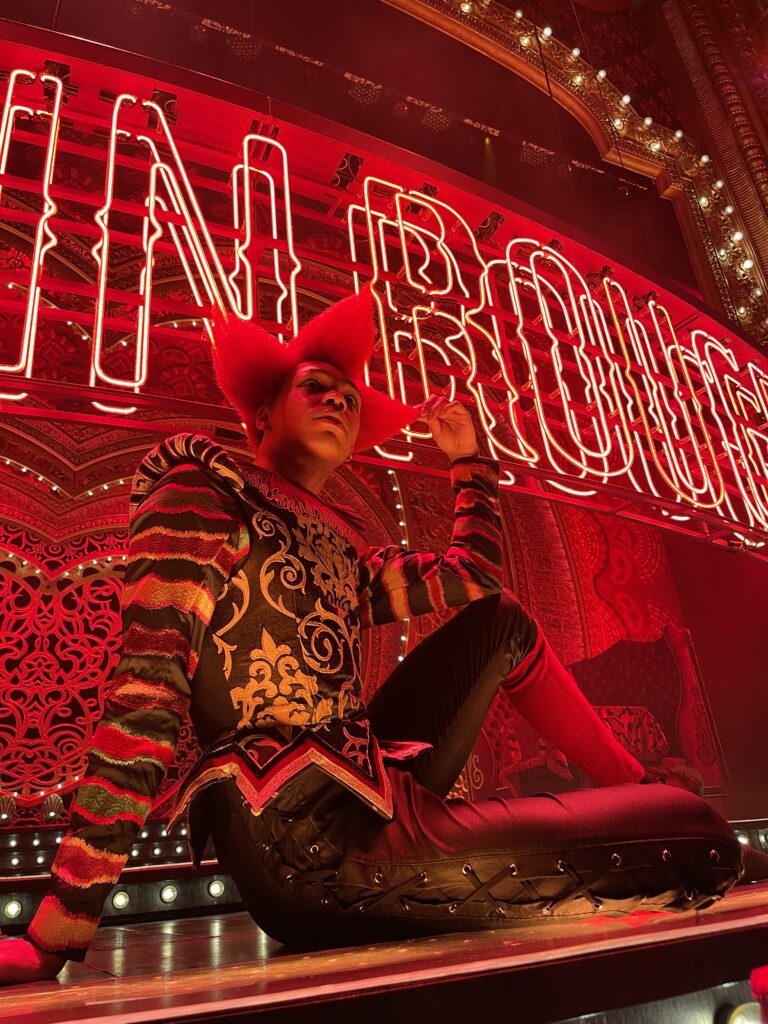
As you find your way to your seat you look up at a collection of glittering chandeliers and an elegant elephant to your right followed by a mechanical red windmill to your left all perfectly lit in the rich colours of the Moulin Rouge. If this wasn’t enough to set the scene then maybe the various characters that emerge slowly from the stage will help, each with a story and costumes from rich men in top hats with smoking cigars to dancer girls seductively looking for attention and interacting with anyone in their path.
ACT ONE – SPECTACULAR SPECTACULAR!
Act one opens with an explosion of energy, high kicks, backflips and can can lines as Harold Zidler (played by the charismatic Clive Carter who you instantly adore) welcomes all from “aristocrats” with “quail eggs and caviar” to “the rats of the latin quarter, The starving artists and thieves of Montmartre” in an electric mash up of classics before he announces his main act, the sparkling Diamond. At this point it then cuts to an introduction to how song writer Christian (American actor with flawless vocals Jamie Bogyo), meets, artist and play write Toulouse-Lautrec ( a lovable key character played by Jason Pennycooke ) and Santiago ( a Latino legend with excellent precise dance moves played by Elis Lo Tauro ) who share a mash up of T.Rex’s “Children of the revolution”, Lorde “Royals” and Satellites “Tonight We Are Young” explaining their desires to pitch Christians talents as a composer to Satine in the hope that the Moulin Rouge will fund the production.
Scene change back to the moment that Harold announces Satine and ( spoiler alert ) the sparkling diamond descends from above following a trail of glitter as she seductively sings Shirly Bassey’s “ Diamonds are forever” leading to a whole mash up of songs such as Marilyn Monroe’s “Diamonds are a girls best friend” , Madonna’s “Material girl” Beyonce’s “Single ladies” and Rhinanna’s “Diamonds” all brilliantly hyped by backing dancers and excellent vocals.
ACT TWO – MORE MORE MORE!
Act one transports you backstage of the Moulin Rouge set with black brick wall and various levels as the cast prepare for rehearsals for Christians show (which is being funded by the Duke) unlike any other. It opens with Santiago (Played by Elia Lo Tauro who really does do an incredibly good job with this role with his deep voice and cultured presence) he flirts with Nini (the beautiful Sophie Carmen Jones) and begins to seductively dance and entwine with one another in an intense precise and passionate set of choreography to a medley which begins with Lady Gaga’s “Bad Romance” eventually joined by the whole cast, this was spine tinglingly incredible and one of my favourite scenes in the whole show, the precision of each move was perfectly placed and in controlled unison.
PUTTING ON THE RED LIGHT – MY HIGHTLIGHTS
The sparkling Diamond herself, Satine – with an epic entrance that was beautifully executed by Lissi Lafontaine who does such a wonderful job portraying this character. If you do not love her by the end of the show will leave with a full pack of tissues, unlike most of the auditorium.
Bad romance – Nini and Santiago and their seductively electric, heart pounding number.
Chandelier – no spoilers but this is a fantastic mash up and makes you want to go purchase some lights for your cocktails.
So to summarise – Go watch Moulin Rouge the Musical, This truly was an experience I could not recommend more and a new style of theatre which interacts with its audience and enhances their visit leaving them dazzled for weeks after and believing that “the greatest thing you’ll ever learn, is just to love and be loved in return” (sorry, couldn’t resist).
And if you wish to continue your Parisian style experience, head over to Zedels which is literally across the road from the theatre for Moulin Rouge themed cocktails.
BOOK HERE NOW
‘One Another’
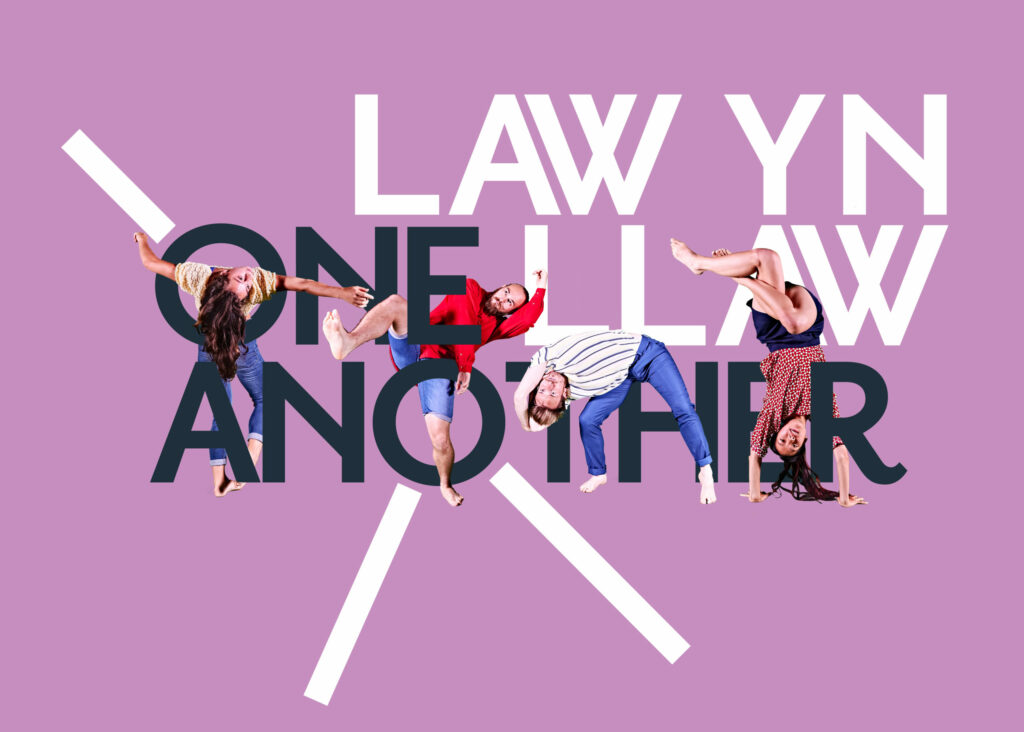
National Dance Company Wales advertised that this piece would be ‘three dances to reconnect us’ and this is exactly what they did when the Pool Hayes Academy Sixth Form dancers travelled to Shrewsbury for their first Dance Aspirations day.
The first part of the day we watched the NDCW open dance class in the auditorium where we observed an independent warm up then a technique class led by Victoria Roberts, the rehearsal director of the company. This insight into a usually private company warm up showed us how a professional company prepare and the importance of ballet even within a contemporary company.
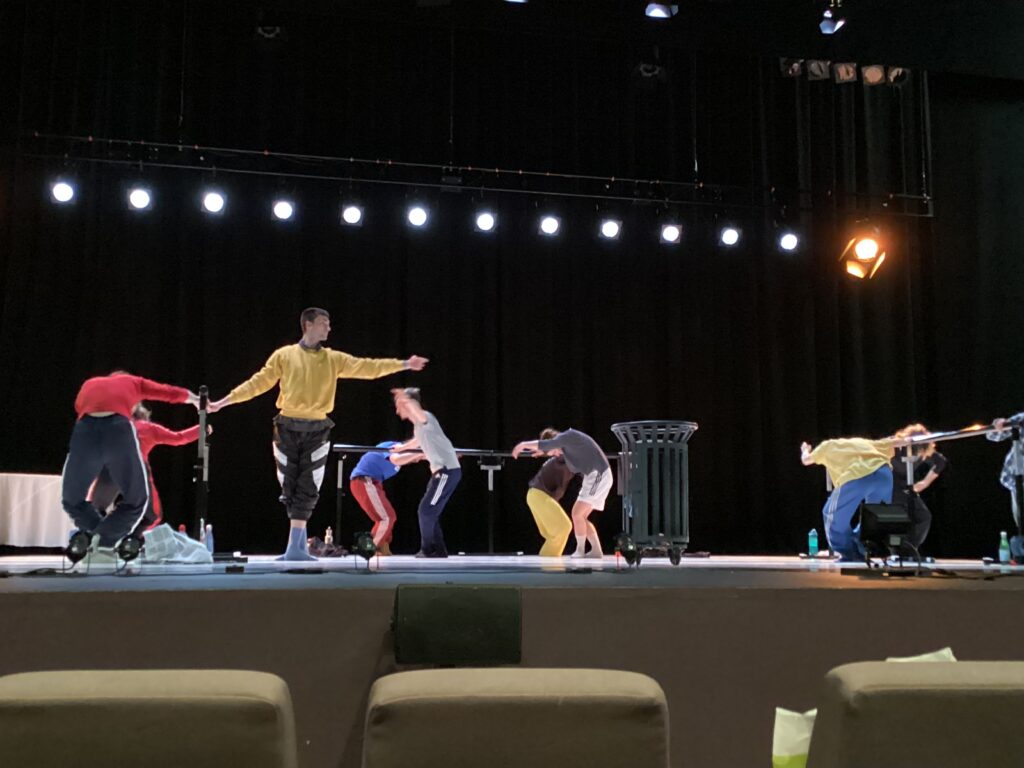
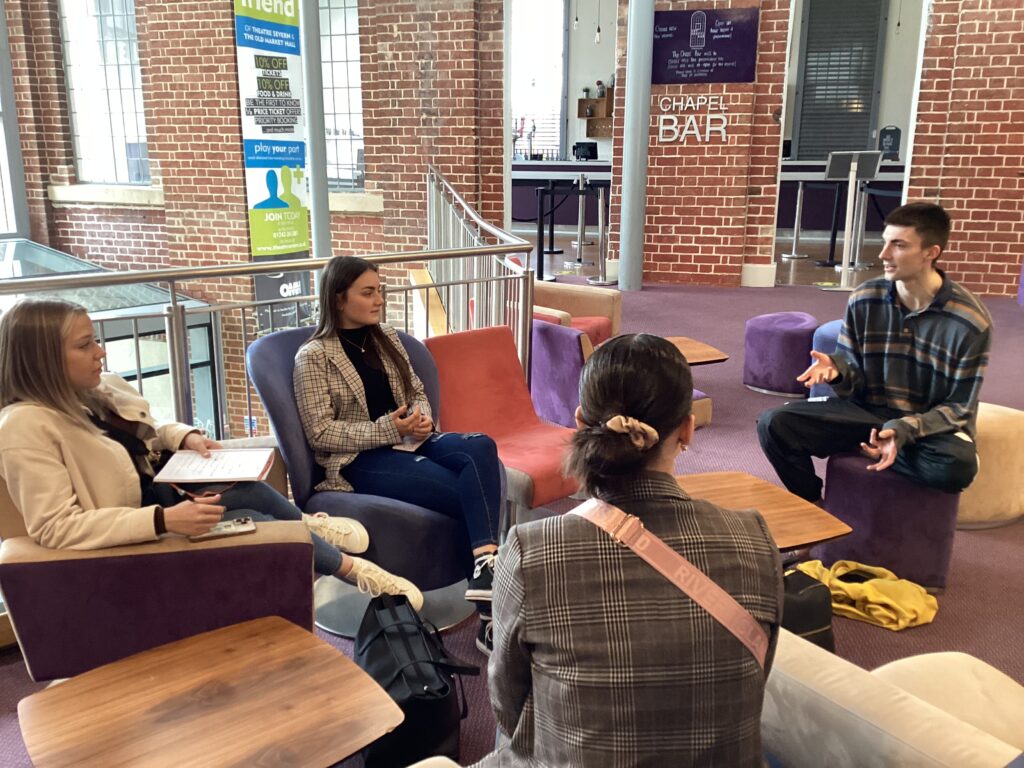
After this we were lucky enough to get the opportunity to interview company member Josh Attwood, who was a previous student of our teacher. He explained what it was like to be a professional dancer and described a day in his life. The opportunity to speak to a professional dancer really helped us to understand how much hard work and dedication it takes to successfully work as a professional dancer and has inspired us to consider our next steps towards this after sixth form very carefully.
A few hours later we returned to the auditorium to watch the performance of ‘One Another’ which is a triple bill.
‘Wild Thoughts’ by Andrea Costanzo Martini
We saw this piece as a celebration of the body because of the way the dancers explored their use of body, in combination with voice and movements. This choreography used animalistic movements with all dancers using contact to explore relationships. The block colour costume worked well for this dance as we felt that this could have been to emphasise the abstract nature of the piece and highlighted a lot of different gestures. The costume was abstract enough to support but not overpower the original theme of the dance. The dancers used a dynamic contrast and projected their voice to the audience with different facial expressions, which was effective to the audience as the combination of voice with movement is something that us students have not seen before and left us excited for what was to follow, having pushed us out of our comfort zones and left a lasting impression.
‘Codi’ by Anthony Matsena
‘Codi’ explores a narrative about the Welsh mining community. In this piece the lighting was key throughout the performance, with the use of headlights giving the audience an insight into working conditions for the miners and setting the scene effectively. This was also supported with the choice of costumes. The props used gave a sense of drama and highlighted how dangerous conditions in the mine were for the workers. Throughout this piece we could really feel the level of emotion conveyed to the audience, where it goes from being excited and energetic at the beginning to sorrowful at the end. The use of voice effectively conveyed the passion of the community. Overall, this was our favourite piece because it taught us about an important historical event, helped us to empathise with miners and understand their dangerous conditions and inspired us to research more widely for our own choreography stimuli.
‘Ludo’ by Caroline Finn
The final piece in the triple bill was about transitioning into adulthood and revisiting fond memories of childhood experiences. The choreographic use of experimenting with games explored as a child was very entertaining as we tried to spot the various inspirations and witness how these had been turned into movement material. The clever use of props, such as the benches that were originally sat at the side of the stage that turned into a merry-go-round has inspired us to experiment with props in different ways back in lessons. It was interesting to see the clear characterisation within the different dancers, allowing us as the audience to explore these childhood memories through the eyes of each character all the way through. The personalised, multi purpose costumes also allowed each dancer to be playful with their character. This piece was placed perfectly at the end of the triple bill to leave the audience on a high.
After the performance we were lucky enough to be able to sit in a Q&A with members of the cast and learn which piece was their favourite, understand more about the development and rehearsal process for the show and understand how some of the pieces were created over Zoom due to Covid restrictions. Having this opportunity really helped us to develop our appreciation of the pieces and inspire us to try new approaches and push ourselves to explore movement material in different ways in our choreography lessons.
Overall, we loved all three pieces that NDCW performed; particularly how different each of them were and how the use of voice was incorporated. The performance style and characterisation of each piece was so different, which I don’t think we were expecting. We also loved seeing different props used in different ways throughout the three pieces and how the lighting was used effectively, especially in our favourite ‘Codi’.
We would like to congratulate NDCW for a fantastic show but really thank them, Josh especially, for opening up previously unseen elements of the rehearsal and preparation process for audience members to immerse themselves in – the impact the whole day has had on our lessons now we’re back in school is very clear to see and we are all better dancers for the whole experience.