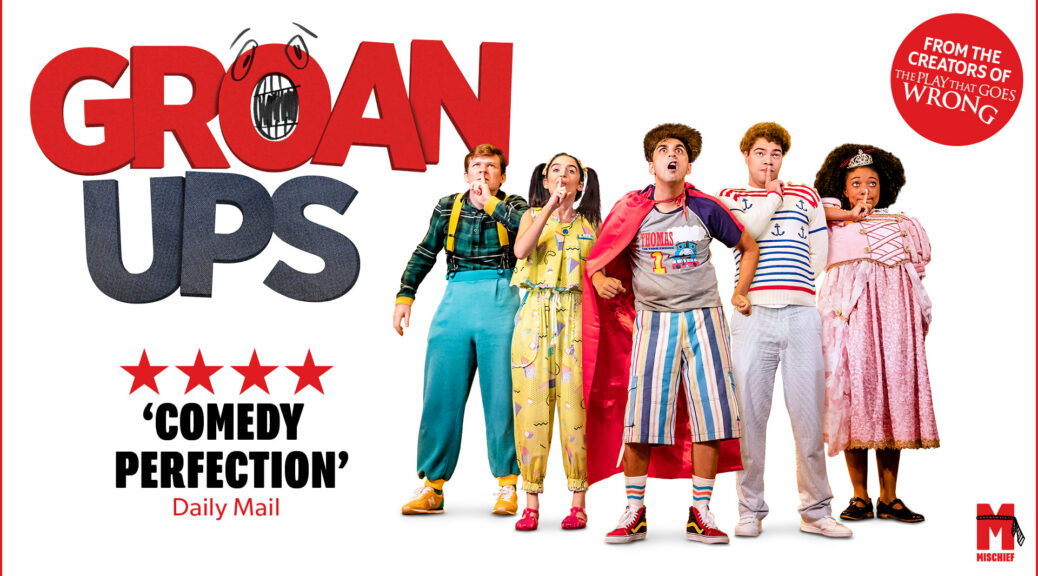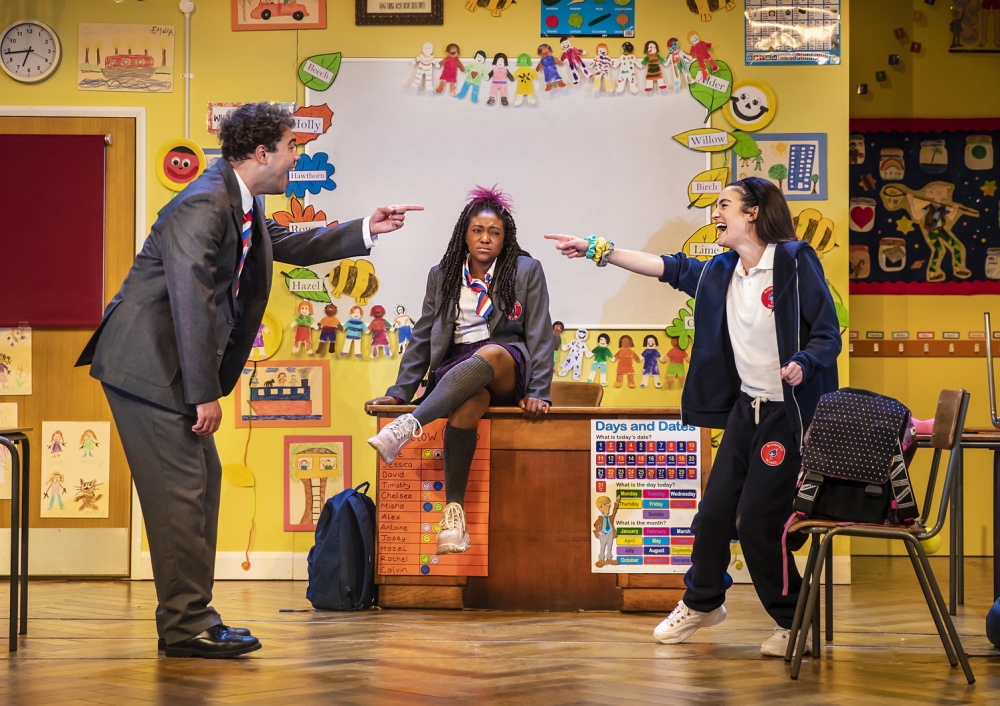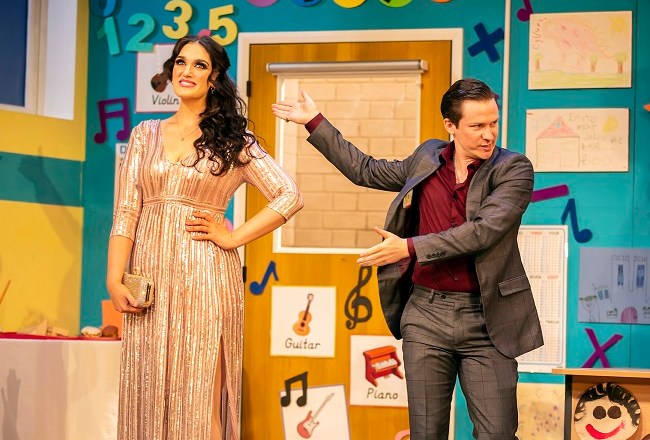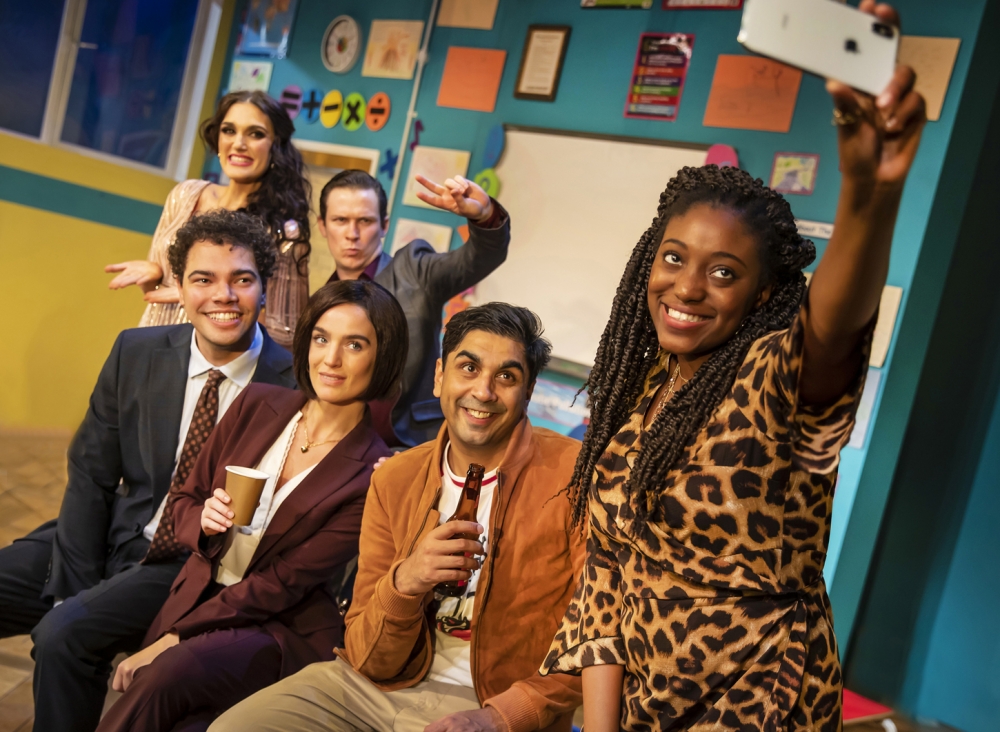
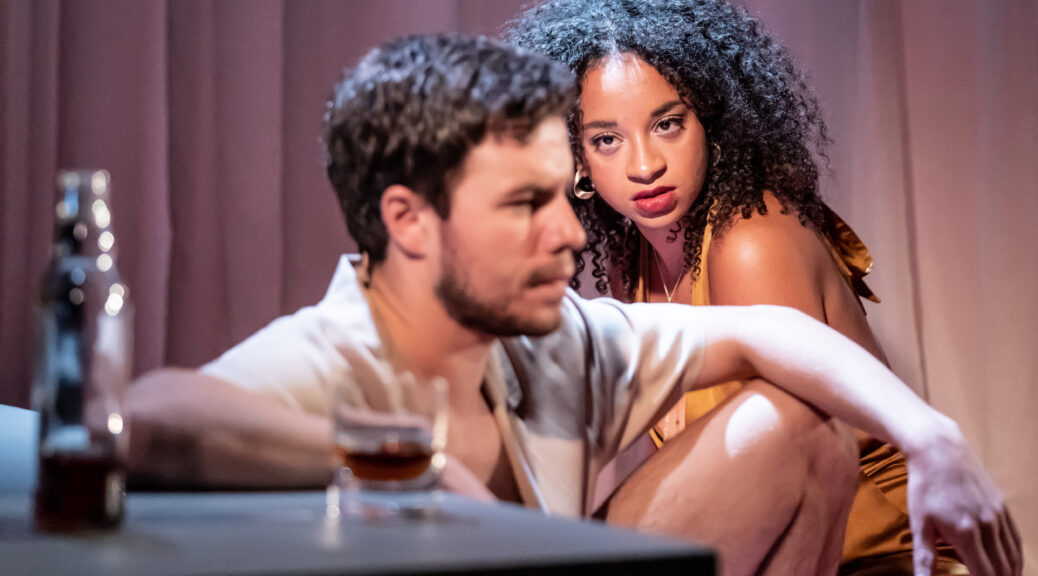
Curtain Up is a celebration of creativity, live theatre, and Welsh talent.
Over the course of three weeks, three companies, comprising of ten actors each, will perform 15 new plays – five each week – by 15 Welsh playwrights. That’s 15 voices with 15 very different stories to tell.
Associate Director Francesca Goodridge took some time out of her busy schedule preparing for week one to tell us a bit more about this exciting new project from Theatr Clwyd.
How would you describe Curtain Up?
It’s like a conveyor belt of theatre. So we start week one with a group of ten actors who work on five new plays, about 10-15 minutes long each, written by five playwrights who were specifically commissioned for this project. They have one week of rehearsals, one week of tech, and then open the following week. Meanwhile, during their tech week, a second company of ten actors come in and start rehearsing another five plays, with the third group of ten actors coming in to rehearse another five plays a week after. So that’s 15 new playwrights that have been commissioned for a project involving 30 actors in total.
How did the idea first come about?
It was borne from a series of conversations that Tamara (Artistic Director) and Liam (Executive Director) were having during lockdown with freelancers. They just asked, ‘What can we do to support you guys? What do you need?’ and the general consensus was that creative people can only live when they’re being creative – we’re just such strange beings, aren’t we, that nothing else really feeds our soul – and so Tamara and Liam came up with this concept, this conveyor belt of theatre, which allows us to give as many freelancers as possible the opportunity to be creative. It gives 15 writers a paid commission to write something after what might have felt like an age; to write something that is going to be seen, and hear people saying their words. It gives actors a space where they can just play and learn lines and be silly again. And it allows design, stage management, lighting, all of these freelance jobs, an opportunity to use their craft again after so long; to be creative on a huge scale.
And I’ve heard there is an opportunity for the audience to get involved as well…
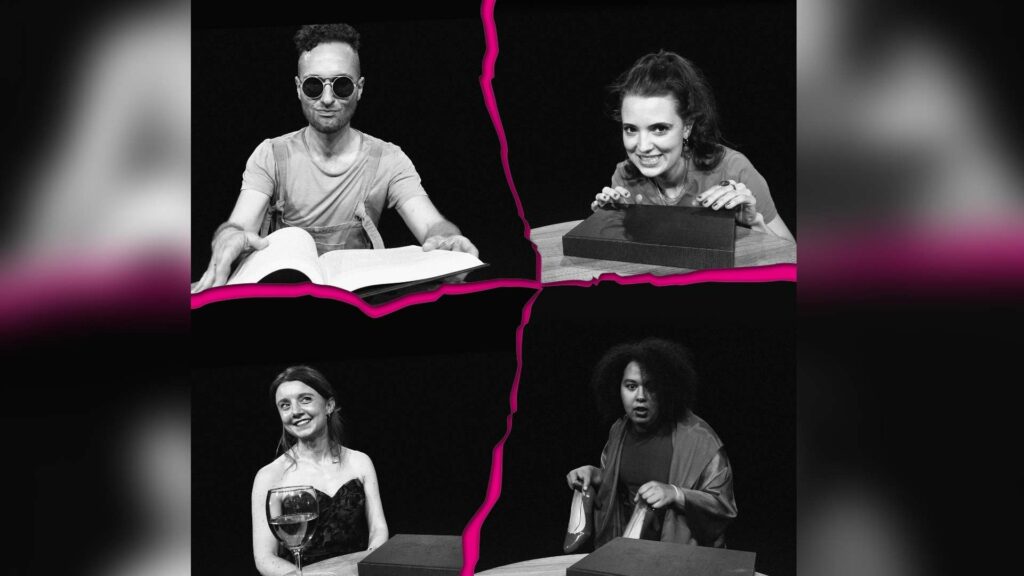
So not only do the audience have the opportunity to see five new plays each week but the really good thing about Curtain Up is that an audience member can come every night and see something different. We’ve cast it in such a way that two actors learn every role, and at the start of the show we “rock, paper, scissors” it to see which actor will do which show that night and what part they are going to play. (So that’s the fun and excitement we’ve really been missing; the chance to not just be creative in rehearsal but for that to still live and breathe in the production.) Also, the writers were asked to include an unspecified prop in their play so the actors don’t know what that prop will be. The audience chooses the props at the start of the night and the actors are only handed the prop as soon as the play starts so there’s some improvisation: they have to react differently, which can change the course of the play. It’s all about having spontaneity again and feeling that excitement of live theatre. Every night is super-charged because things change, props change, the costumes change, an actor might do the scene opposite one actor one night and then do the scene opposite a totally different actor the next, so every night it’s something different.
Has it felt like an explosion of creative energy being back on stage after so long?
I think everyone has felt the same, me included. On day one, going into a rehearsal room and thinking, ‘Oh my gosh, can I even do this anymore? I haven’t done this for so long. Can I still do this?’ But I feel so lucky right now to be sat on a stage, and it’s the same for the whole company, not just the actors but stage management too, to be able to do the things that we love and we’ve really missed. I think an explosion is a great way of putting it because I think that’s what it will feel like every night. It is going to be different; and I think, in a world where nothing really feels steady at the minute, it’s kind of nice to have that little bit of tension on stage as well, that little bit of no one knows what’s going to happen, and the excitement and energy that comes from that.
Was it a conscious choice to perform the plays in the round?
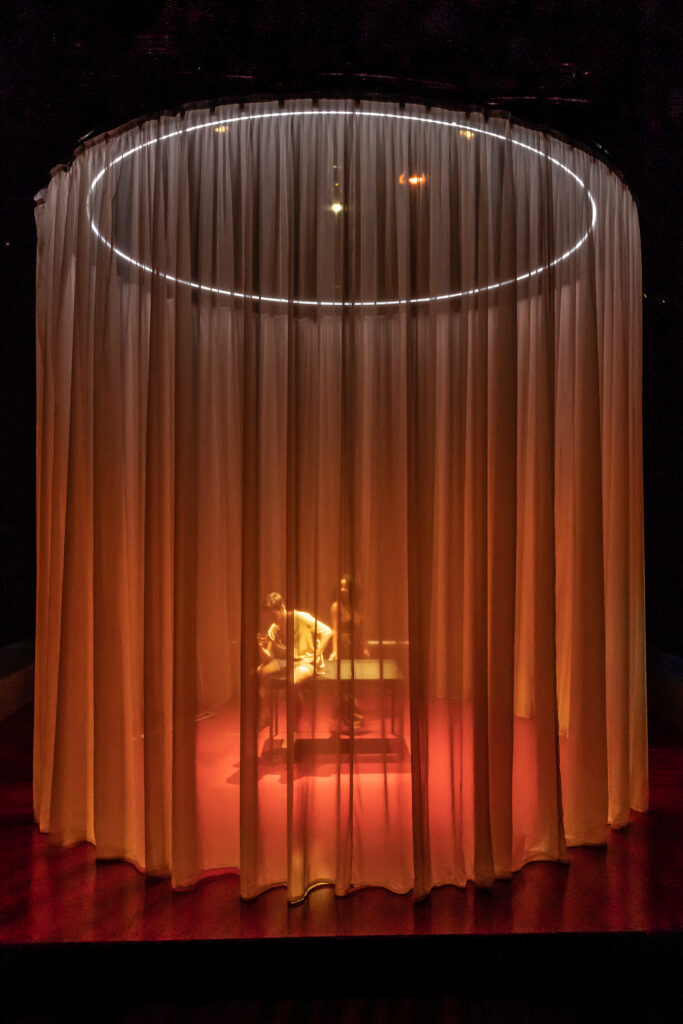
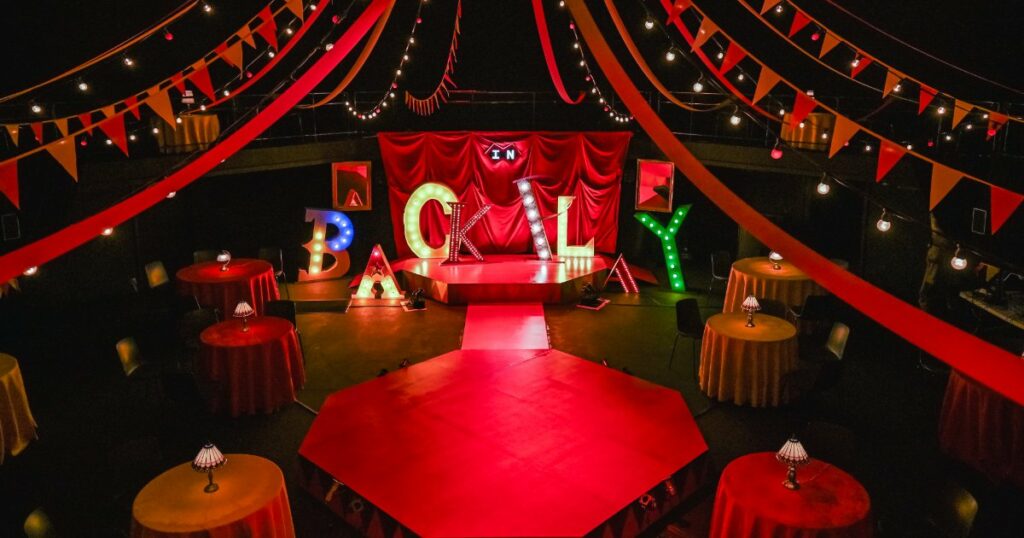
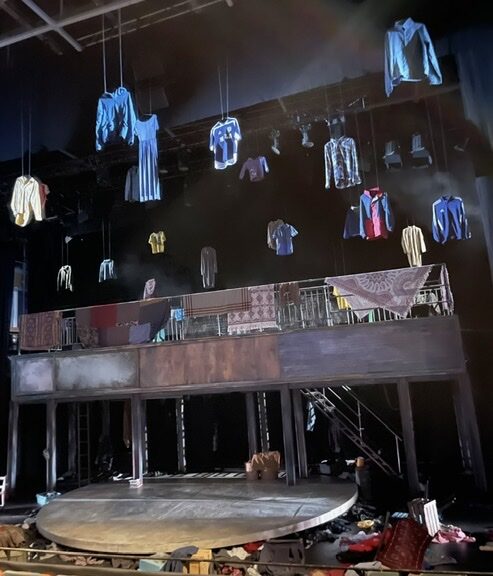
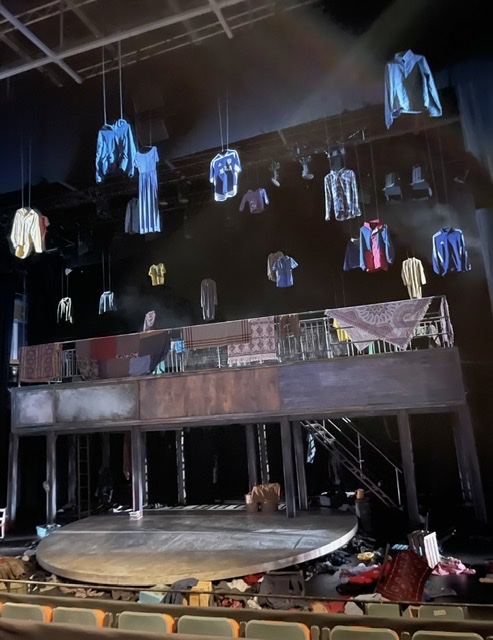
It was a conscious decision because it’s about bringing people together again and, ultimately, the reason why this project is so special is because we aren’t flying in sets or have a huge budget. What is at the heart of it is storytelling and actually hearing stories again, which is what I’ve missed so much. I think being in the round is so much like sitting around a campfire and telling a story – that is where we come from and how we tell stories. It also allows the actors to have real fluidity. They can move; and with it being double cast, it opens the space and it becomes like a big playing field for them. We want the audience to feel like they’re in this bubble and to feel like we are all united again in being together.
How important do you think it is that there is such a diverse range of writers with such a diverse range of stories to tell here?
You can’t tell a story the same, and what is so exciting about this is having five stories from five writers with five different backgrounds – totally different people, totally different identities, with totally different upbringings, from totally different homes – so every single play is different. One of the plays is set on a spaceship, for example, and then for another we’re in someone’s living room. And that is the beauty of theatre: that we are transposed from place to place and we totally believe that. It’s so imaginative.
But though each of the play’s are different, each of the five writers was given a theme – so the first one is new beginnings, the second is finding feet, and so on – so that every night has got an arc that will take us through the night. So although the audience will see five different stories each week, they will have gone on a journey on the night through these themes. And to add to the diversity, we have some Welsh language stories too, which was a bit of a logistical challenge to make sure that four of the actors were Welsh speakers, but it’s been really great to have these Welsh language plays as well and to have Welsh language theatre included. I know that this was one of the most important things for Tamara and Liam, to make sure that it was truly diverse and was championing many different voices in Wales.
How excited are you about the writing talent coming out of Wales at the moment, and the opportunity that something like this affords them?
The thing that excites me most is working with a writer and sitting down to work on a new play and having that seed of an idea and seeing it through. It is one of the best things in the world. But aside from these sorts of opportunities, what Curtain Up has done is given 15 people a chance to write – how many of these writers may have come out of lockdown and lost their love for it, or not had the opportunity to do it, or were working elsewhere and had no time to fit it in – so as much as it’s about wanting to commission new writers, it’s also about giving people time and space to just write, without them feeling like they have to come up with anything. Yes, this is a commission, but more than that it has given them a bit of time and a bit of space to just do what they love. If that then ignites something in them to then write something else, great. But it’s about letting people have time and space to just do what they love without having to produce something all the time; where there’s no pressure to write. That’s hard when it’s something you might be doing alongside another job because you need to live. So, yeah, I think more of that would be great because that is where some of the best work is made, when there’s no pressure to have something in by a deadline, as you can make what you want when you have time and space.
We recently published a new article on the return to physical Theatre performnces. In response to this article Get the Chance critic Kevin Johnson shares Theatre means to him.
Theatre was never part of my life growing up, only books, television, music & cinema, and the nearest one was ten miles away. Then one day I read in a newspaper that Ben Kingsley, who’d just won the Oscar for Gandhi, was going to do a one-man show in London. For some reason I decided that I wanted to see that. A trip to London back then wasn’t simple, tickets had to be booked either by post or over the phone, months in advance in the days before the internet, and it meant an overnight stay, but luckily I had family there, so at least I didn’t need a hotel. I couldn’t have picked a more intimidating venue for my first play: The Theatre Royal Haymarket is the third oldest in London, built in 1720, and unlike most theatres in the capital which are huddled together in busy streets, it stands alone on a major thoroughfare, giving it plenty of space to be appreciated. This was due to a massive renewal scheme in 1820 sanctioned by the Prince Regent and overseen by architect John Nash. The buildings on either side are painted white, and although not part of the theatre itself they make it look much bigger than it is, while six giant Greco-Roman columns hold up a portico above the door like a temple. Inside it is even more intimidating, with murals on the walls and ceiling, and the main colour throughout is gold.
The Haymarket is on the upper scale of London theatres, both in its appearance, capacity and in the quality of plays and actors performing there, and this permeates most aspects of the venue. During the interval, for example, as well as drinks from the bar, staff roam around with trays offering small bottles of wine and champagne, and the programmes for the plays are the classiest I have ever seen: the covers are a shiny black with the names picked out in – what else – but gold.
The play was based on the real 19th century actor Edmund Kean, whohad also appeared at the Haymarket in his heyday. He was an actor of great renown, both for his talent and also his scandalous lifestyle. The poet Coleridge said that watching Kean act was like “reading Shakespeare by flashes of lightning”, for me, watching Ben Kingsley act was similarly mesmerising. I had always liked comedy, and there was plenty in this play, but what I had never experienced before was the sheer weight of silence, the heaviness of pause that a great actor can bring to a performance.
It wasn’t just me, the whole audience was enthralled, and you really could have heard a pin drop. That was the moment I became fascinated by the theatre, and I still am. It has brought me so many incredible memories over the years.
I was soon a regular at my nearest theatre, the Grand in Swansea, which actually has a bigger capacity than the Haymarket. The ‘Royal’ in its name I later found out meant that the theatre had received a licence from the reigning monarch to perform serious drama, whilst others could only perform lighter plays, comedies and variety.
The Grand has a pedigree too, founded in 1897, and I’ve seen many amazing moments there: Timothy West in Death of a Salesmen holding a whole audience in the palm of his hand. Other great memories include Anthony Hopkins in Pravda at the National Theatre doing an entire play with his voice in a much deeper, gravelly tone than I would have thought possible. His two Oscars notwithstanding, he is one of the finest actors I have ever seen. The National Theatre of Scotland touring with Black Watch at the Barbican, a play about the Scottish Regiment in Iraq, with songs, routines, even a mime, seemed to have everything but the kitchen sink yet was phenomenal, and one of the best live shows I’ve ever seen. Billy Piper in Yerma at the Young Vic, giving one of the greatest portrayals of human pain and the desire to be a mother ever seen onstage: Sophie Melville at the Sherman in Cardiff in Gary Owens’ Iphigenia In Splott, a searing one-woman monologue which put her in direct competition with Billy Piper for the Evening Standard Award.
But ironically the best play I’ve ever seen occurred much closer to home than any of the others, in fact I was even a member of the cast: that was The Passion in Port Talbot. Performed over three days in Easter 2011, it was a passion play with a cast of nearly a thousand locals, a small band of professional actors, and Michael Sheen in the lead. It had an audience of nearly 20,000 in total, plus many more watching online, and was described by the Guardian as ‘one of the outstanding theatrical events not only of this year, but of the decade’. Sheen co-directed it with Bill Mitchell of Cornish company Wildworks, and they did an award-winning job. Written by Welsh poet Owen Sheers, it was simultaneously filmed as ‘The Gospel of Us’.
So if you haven’t already, give theatre a try, you may be as pleasantly surprised as I was and it could lead to a lifetime of great memories.
Get the Chance supports the public to access a world of cultural provision. We receive no ongoing, external funding. If you can support our work please donate here. All and any contributions are greatly received, thank you.
It’s been a while since many of us were in a big top, and I for sure missed the element of being in a field, walking into a giant tent and being wowed from start to finish.
The Wing Scuffle Spectacular takes the elements of fear and laughs in the face of it. Along with what we all expect – spectacular stunts, comedy and those ooh and ahh moments, there is also a narrative where the performers face danger but really, there is no real danger. For example, flawless rope acrobatics over broken glass has its illusion shattered (pardon the pun) when the performer stands on them on the end and it isn’t really glass. Despite these illusions being dropped cleverly, we never expect it as they intertwine this will real death defying stunts. There’s a comedy to it when your heart is in your throat and suddenly it is all a farce – Revel Puck are showing us to face our fears and make light of the danger.
Traditional Circus is always in play when we have our resident clown bringing the comedy between each stunt, with his own talented tricks and skills. He has his own narrative – a budding friendship between him and the… Lion! Don’t worry, there’s no real animal here but the development of a stuffed toy that gradually gets bigger throughout the show. From terrorising him, to becoming friends, to a romance, the clown and the Lion made the children and adults alike scream with laughter.
What I love about Circus is that the tricks and stunts tend to be similar or on the same path, but the way they are executed along with the narrative is what really makes it. And this troupe certainly bring their own performance, comedy and personalities which really adds to the general theme.
The only elements that felt awkward and with a need to fill were times when there was no silence or dialogue. It felt, well, a little static – some I could see the reason behind it, to create some tension, but I think with children in the audience still making noise, it lost this atmosphere and felt like we were intruding as they set up or began a trick, or even when they were performing; as if we walked into their warm up or training session.
Overall, I had SUCH a brilliant time at The Revel Puck Circus. It felt light, it felt fun, it felt normal and felt so good to be back seeing Circus performance again. The Wing Scuffle Spectacular has something for all ages, keeping to the tradition of Circus but bringing a youthful and unique take on it.
If you go up to the woods today, you’ll be in for a great surprise. Open your eyes take a deep breath and let Mother Nature take you on a tour of her wonderland.
Amidst the spectacular and historical Rhondda Fawr Valley lies an environmental organisation that is open to all. It is called “Welcome to our Woods/Croeso i’n Coedwig” incorporating the Skyline Project.
It is surrounded by the drama of Pen Pych Mountain and the majesty of the Cwmsaerbren Woods Treherbert. With the legacy of Nant Saerbren powering the micro hydro electrical resource which channels the supply to the area.
Avant Cymru, in partnership with the organisation brought the Hydro Jam event to Treherbert over several weeks during June and July. The event proclaimed a collection of creativity and activities, so many to note here. Marquees were erected to enhance the surroundings and supply covering in the event of changeable weather conditions, with refreshments and seating accommodated by hard working volunteers.
The event began with a dancing session bringing ballroom dancing to the forestry of flora and fauna, all taught on an outdoor dance floor and stage; then the BeatBox Boys added their specialty to the prize-winning Lewis Merthyr Band, combining the band’s brass instruments to the sound of the beat. “Cwm Rhondda” was never so melodic, with the ‘beat box’ technique adding to the enjoyment for both sets of performers. The event continued during the week with Sewing demonstrations, courtesy of Julie the Stitch, make up demonstrations, Zumba on Zoom, Pilates, BeActive, the Vogue group performed, there were Swing Sessions, plus demonstrations from young dancers all leading up to the eventual Hip Hop Jam Competition held on the very last day of the event.
It was an eagerly awaited eco-friendly attraction of entertainment from local Rhondda Artists which included BAGSY, LLOYD the Graffiti master, SUZI JOSHI who produced some fantastic paintings on Perspex, Rap Cyphers presented by Larynx, together with the support of James and Bridie DOYLE-ROBERTS of Citrus Arts. The Bella Vista Coffee Club brought their folk and easy listening music to the event, performed by Helen Probyn-Williams, Sally Churchill, Gerhard Kress, Jim Barrett and Ann and Paul Hughes.
Members of RCT Creative Writers Group read their poems and short stories – who can forget the poet’s admission of being “A Naked Gardener”? (All said in fun highlighting the creativity of words).
On one night there was a battle scene performed as a rehearsal for Avant Cymru’s forthcoming performance of Shakespeare’s Henry V.
The last day was the culmination of much planning, hard work and ingenuity during this time of Pandemic. Welcome to the Woods arena, courtesy of Avant Cymru, saluted the UK Breakin’ scene with BBoys and BGirls from across the UK participating in the UK Breakin’ competition. How can I describe such enthusiasm flexibility and sheer joy of expression in one sentence? Enough to say I didn’t quite know what it was all about until this day, I now know I’m a fan. An incredible intergenerational gymnastic dancing spectacle (how the heck did they get into that position?) and what was more, everyone – and I mean every entrant was happily encouraging and congratulating each other on their routines. Let us just say it showed what taking part is supposed to mean.
The final came down to BBoy Nene who had travelled from Birmingham and BBoy Callum from Cardiff with the ultimate winner being BBoy Callum who was a student of Emma’s Motion Control Dance Group of Barry. Representatives of the Breakin’ Organisation WOOSH had a lot to consider, (one had to be in quarantine for a fortnight as he had travelled from the Netherlands to be at Treherbert for this competition) there were three judges (who each performed their own routine to much appraisal) plus DJ Jaffa from Cardiff and DJ Silence. The anchor woman was BGirl Sunanda Biswas a Choreographer and Teacher from South London.
With thanks to all who provided the entertainment refreshments accommodation and an especially warm welcome to those who came to assimilate just who or what was where at Welcome to Our Woods.
Appreciation to Rachel and Jamie of Avant Cymru for the invitation to contribute as RCT Creative Writers Group Members to this event. To Gavin Owens for the media film and Lee Williams for the photographs.
The Valleys were alive with the sound of a community enjoying life and being entertained at the same time!
With the roll out of the Covid-19 vacancies, the arts sector is hopeful audiences will return to venues. If venues want to attract audiences, what do you think they should do?
Put on shows. There is a spanner in the wheel called R & D. It’s like an insurance policy against bad theatre, but all it does is clog up the system, and nothing gets produced in fear of it not succeeding. Companies funded as part of RFA have a track record of creating great work, and there should be a level of confidence in those companies to do that. The development of new writing or a seed of an idea is different, but still, there should be places for that work to be seen and tried out; otherwise, there will be nothing on our stages. No product, no audience, no data to be collected for future strategies. Invest in the art.
Which venue has a special place in your heart and why?
There are so many in Wales to mention. Places like The Muni, The Gwyn Hall and the Met, these venues had the nerve and the guts to produce two productions of ours that then toured No1 venues in the UK. But also, how the entire staff bought-into being part of the production from the box office staff to the people working in the café, to those that made sure the venues were clean and safe and comfortable places for people to enjoy a good night out. They felt pride in being part of something exciting, which brought in audiences. I will always be grateful for their generosity and humour in making those shows a success.
The Muni
The Gwyn Hall
The Met
Our current collaborations with our Consortiwm Partners Soar in Merthyr; The Welfare in Ystradgynlais and The Town Hall in Maesteg, are perfect examples of venues at the heart of their communities, their knowledge of their audiences are intrinsic to a successful thriving theatre culture.
The Soar
The Welfare
Maesteg Town Hall
Our co-production partnership with Aberystwyth Arts Centre is joyful. We have been in discussions and pre-production for Operation Julie since 2017, and when it does finally get to the stage next summer will be one of the most thrilling experiences I have had in co-producing a show.
Aberystwyth Arts Centre
The National Youth Theatre on Great Britain planned to produce The Masters House on the 14 -17 July. On the 10 July they announced that due to Covid-19 isolation requirements they have had to cancel the performance. One of the plays directors Chris Sonnex tweeted in response.
“We can’t forget it’s also a reminder of the incompetence of this government, Johnson acted too late over & over, the people in charge hired their incompetent friends & they’re systematically letting down the arts. The disregard they give artists and theatre is because they are scared of the power we have, the opposition we send, the empathy we encourage. We weren’t working with young people, we were working with artists and activists, who will not forget this governments shit. I don’t want to hear anyone chatting about talking Tory or being apolitical. I want you all to hold these incompetent pricks to account. They’re letting your parents down, you are down and the younger generation down. Artist must revolt. Create. Revolt and fight.”
Is Chris correct?
Yes. In recent meetings with young creatives – that is very much what they want to say. Our responsibility is to support them in saying that. To make a change.
In response to Covid-19 Many theatres and arts organisations have developed work to be performed outside. Have you seen any work created in this way and can you see audiences having an appetite for it to continue?
Yes, Theatr na nÓg and Theatr Brycheiniog were involved in a test event for Welsh Government. Although our experience of outdoor theatre is minimal, it was joyous and a great way to be back in the world of producing and performing live.
I think it is a way forward to keep theatre in the public eye in this weird world. However, as we know, it is so weather dependent, and I think the consequences of the climate crisis make it impossible to predict any dry season with certainty. A discussion is needed on insurance, especially for smaller companies and venues with so much more at risk of cancelling performances—also, a dialogue between local authorities, companies and venues to have a consistent message on rules and regulations.
Prior to Lockdown many venues did not stream any pre-recorded or live performances should they continue to do so and if so, how can they do this without harming their physical performance offer?
Needs must. However, it is not theatre. It is not a shared experience. Without the incredible investment needed in creating quality digital productions that you can monetize effectively, it will be the death knell of live performance. Obviously, as an added resource that sits alongside a show for audiences to access, it is and has been of benefit for us to widen our reach and to get our work seen not only in South Wales but all over the world. But, engagement, real engagement is vital. Never underestimate the power and impact of live theatre.
Chris Sonnex, Director
With the roll out of the Covid-19 vaccines, the arts sector is hopeful audiences will return to venues. If venues want to attract audiences, what do you think they should do?
Be better, don’t bet on what you think is a sure bet. Innovate, listen to people, stand up for people, make something exciting. Remind people what they were missing out on all this time, I don’t need to see Romeo and Juliet again, and if I did I could watch it on streaming services, give me something else. STOP MAKING ALL WHITE PRODUCTIONS, HIRE ARTISTS OFFSTAGE AND ONSTAGE FROM THE GLOBAL MAJORITY
Which venue has a special place in your heart and why?
The Royal Court, if it wasn’t for that family led by Vicky Featherstone, I wouldn’t be where I am now, wouldn’t have a career, wouldn’t have learnt all the things I know now. Also the upstairs space is the best theatre in London, changes every damn time.
Vicky Featherstone
The National Youth Theatre on Great Britain planned to produce The Masters House on the 14 -17 July. On the 10 July they announced that due to Covid-19 isolation requirements they have had to cancel the performance. Yiu wer to Direct this production and tweeted in response.
“We can’t forget it’s also a reminder of the incompetence of this government, Johnson acted too late over & over, the people in charge hired their incompetent friends & they’re systematically letting down the arts. The disregard they give artists and theatre is because they are scared of the power we have, the opposition we send, the empathy we encourage. We weren’t working with young people, we were working with artists and activists, who will not forget this governments shit. I don’t want to hear anyone chatting about talking Tory or being apolitical. I want you all to hold these incompetent pricks to account. They’re letting your parents down, you are down and the younger generation down. Artist must revolt. Create. Revolt and fight.”
Are you correct?
Yes. Yes I am. Some people might not think I am. And that’s fine. Because that’s a democracy. You know what a democracy isn’t, putting in bills that silence journalists, stifle, and ban protests, decimate the arts education, lets poor people starve to death, tries to destroy the national health service, and sells everything that’s publicly funded off. That’s closer to fascism. So, you might not agree with me, but that’s a right you currently have. If you don’t fight this government, in years to come you might not have that right anymore.
In response to Covid-19 Many theatres and arts organisations have developed work to be performed outside. Have you seen any work created in this way and can you see audiences having an appetite for it to continue?
Theatres more than four walls, it’s a movement, its art that cant be contained (at the best of times). Arts organisations, especially people that deal with community and youth work, have been utilising outside work for years. Audiences have an appetite; it’s been there forever. It’s not new. It is bringing theatre to the people. Long may it continue, but let’s not forget the wonderful organisations and individuals that have been doing that forever.
Prior to Lockdown many venues did not stream any pre-recorded or live performances should they continue to do so and if so, how can they do this without harming their physical performance offer?
Don’t let the necessity and the medium dictate the work you make. If it’s just to make sure your relevant and to be seen like you’re doing something, then we don’t need that. If its interrogating the art, if its pushing the art form, keep doing it. Having said that Zoom shows aren’t my cup of tea, and a static shot of a theatre space bores me, (filming theatre reminds me that I don’t have a choice over where my gaze is, that you’re telling me where to look, not earning it. Which annoys me somewhat.) However I will say, the scope and reach that you can get when you do it well, is spectacular, there’s a real diversification of who you are reaching, it means people that can’t leave their house for whatever reason can see it, that people that can’t afford nights out can see it, that people not based in the city or town that its put on can watch it. That’s great. That audience deserve that you give them something really good, so don’t half ass it.
Get the Chance supports the public to access a world of cultural provision. We receive no ongoing, external funding. If you can support our work please donate here. All and any contributions are greatly received, thank you.
Louise Miles Payne, Director, Creu Cymru
With the roll out of the Covid-19 vacancies, the arts sector is hopeful audiences will return to venues. If venues want to attract audiences, what do you think they should do?
I think the main thing is to make sure that audiences feel comfortable and know that venues are doing all they can do keep people safe.
Enhanced cleaning.
Hand-sanitiser stations.
Wearing of face coverings.
Modified routes around the buildings to avoid overcrowding.
Possible contactless ticketing, possible staggered arrival times and security checks.
Restricted stage-door activities post-show.
Some socially distance performances may still be available (where possible).
Staff and performers will take part in lateral flow testing.
Audiences will be encouraged to do their own lateral flow tests prior to attending.
Audiences should not attend if they have any Covid-19 symptoms or have been asked to self-isolate by Track, Trace and Protect.
Refunds will be available to patrons not able to attend for these reasons.
Audiences recommended to bring minimal possessions.
We really want to see audiences back in our venues. Some have already reopened with live performance and cinema with limited capacity and are a great example of how it can be done safely.
Which venue has a special place in your heart and why?
That’s tough one as the majority of venues in Wales are Creu Cymru members so I wouldn’t want to favour any one place! I’ll cheat and choose a non-member. Parc Hall in Cwmparc, just outside of Treorchy in the Rhondda. This was the first venue I worked in after University and I did everything from book the shows, box office, technical, marketing and teaching drama classes! It’s a beautiful example of a miners hall and was just a joy to be at.
Parc Hall
The National Youth Theatre on Great Britain planned to produce The Masters House on the 14 -17 July. On the 10 July they announced that due to Covid-19 isolation requirements they have had to cancel the performance. One of the plays directors Chris Sonnex tweeted in response.
“We can’t forget it’s also a reminder of the incompetence of this government, Johnson acted too late over & over, the people in charge hired their incompetent friends & they’re systematically letting down the arts. The disregard they give artists and theatre is because they are scared of the power we have, the opposition we send, the empathy we encourage. We weren’t working with young people, we were working with artists and activists, who will not forget this governments shit. I don’t want to hear anyone chatting about talking Tory or being apolitical. I want you all to hold these incompetent pricks to account. They’re letting your parents down, you are down and the younger generation down. Artist must revolt. Create. Revolt and fight.”
Is Chris correct?
Probably. I’m slightly sick of hearing terms like ‘non-essential’ and ‘unskilled’ when it comes to the arts. I’m sure people have been enjoying lots of TV, streaming services, books, online events etc over the last few months. These were all made by highly skilled people who deserve respect. Either that or just turn everything off. No TV, no streaming, no You Tube, no radio. See how they like it then.
In response to Covid-19 Many theatres and arts organisations have developed work to be performed outside. Have you seen any work created in this way and can you see audiences having an appetite for it to continue?
Until recently I was lucky enough to live near Chapter so I went to see both the Theatr Iolo shows there last year (Baby, Bird and Bee and Hoof) and it was fantastic to see live theatre again. There is a fantastic history of outdoor theatre in Wales so I see no reason why it shouldn’t build and continue after the pandemic.
Chapter Arts Centre.
Baby, Bird and Bee
Hoof
Prior to Lockdown many venues did not stream any pre-recorded or live performances should they continue to do so and if so, how can they do this without harming their physical performance offer?
The upside to streaming has been the accessibility of it all. Audience members who may not have been able to attend in person have been able to watch and experience performances normally out of reach. I know that there is a call to try and continue with some kind of hybrid but I just worry about this might work. Personally, I’ve enjoyed the live stream performances made especially for online such as Daniel Kitson performing live on stage at the Torch Theatre in Milford Haven or Sherman Theatres ‘Merthyr Stigmatist’, over the ones that just broadcast a live show. Watching some of the NT Live shows at the start of the pandemic just made me think about what I was missing. Although not paying the ticket fee and travel costs were a massive bonus.
Daniel Kitson
A mix is probably the answer but a smarter way of doing both would be great.
Viv Goodman, Performing Arts Lecturer, Coleg Gwent
With the roll out of the Covid-19 vacancies, the arts sector is hopeful audiences will return to venues. If venues want to attract audiences, what do you think they should do?
Looking at this purely through the lens of drama education, venues have been a key issue for Performing Arts courses throughout the pandemic. When the prospect of face-to -face learning returned there were considerable restrictions over the number of students who could be in our rehearsal rooms at any one time and -with around 100 students across four different courses at Coleg Gwent -this was very difficult to accommodate in a practical way that was meaningful and workable. The real turning point came when we were offered financial support from Welsh Government that would enable us to hire venues off campus so that all our students could re-commence practical work safely. At that point I was working with our USW degree students on Tracy Harris’ play ‘Ripples’ , which had been written for the final year BA hons and Masters degree students at RWCMD in 2020.
Having spent the entire rehearsal period remotely, with students auditioning for Tracy online and working with original cast members Shannen McNeice and Mark Henry Davies over Teams, we were then able to hire a rehearsal space at RWCMD to workshop and film the students’ performances. It felt both apposite and a privilege to take the play back to its roots and the funding meant that I could have Tracy and Mark with us to develop the students’ work further. So, for us , something incredibly positive had emerged from such challenging circumstances and the student experience turned out to be above and beyond what I had originally hoped for them. As a Drama educator I feel very fortunate to be teaching in Wales and to have had this support for missed learning made available to us; in recent months it has been dismaying to read of proposed funding cuts to Performing Arts education in England and I hope very much that this is an indication of greater support and encouragement in Wales.
In response to Covid-19 Many theatres and arts organisations have developed work to be performed outside. Have you seen any work created in this way and can you see audiences having an appetite for it to continue?
This was, of course, an obvious solution to proposed performances over the last 18 months and it is so encouraging to see some exciting productions happening again. I remain a little concerned by this, however, as is an option that is only really available to specific styles of performance and can therefore only solve the problem in a limited way. At one point during remote learning it was suggested to me that we perform student pieces outside but this option is at its most effective in more expansive performance styles such as classical plays or family entertainment. I had already made careful selections of material for the students to explore, and of course this is always done with their specific learning and training needs in mind, and I really didn’t feel that an outside performance would meet the needs of the piece or the students. In addition to this point, I feel that outside performance exists quite within its own right and to mis place styles within it or to over-use it could take away from its uniqueness.
Lisa Parry, Playwright
With the roll out of the Covid-19 vacancies, the arts sector is hopeful audiences will return to venues. If venues want to attract audiences, what do you think they should do?
I think it basically comes down to clear communication and theatres are very good at communicating with their audiences. We’re used to living in a Covid world now, so simply making everyone aware of the rules and regulations before they arrive will help people’s stress levels I think. I think theatres need to cater for people who are nervous about returning though, and people who are clinically vulnerable too. Will theatres have special performances where social distancing is maintained for example? I think the emphasis needs to be on welcoming people back and accommodating them rather than excluding them if they haven’t had both jabs for example.
Which venue has a special place in your heart and why?
I’m going for two. Theatr Clwyd because the care it has shown for its audiences, community and freelancers has been second-to-none and I can’t wait to get inside the building again. And also the Sherman, because that’s my local, the theatre which has helped develop me as a writer and a place where I’ve seen life-changing productions and made lifelong colleagues and friends.
Theatr Clwyd
Sherman Theatre
The National Youth Theatre on Great Britain planned to produce The Masters House on the 14 -17 July. On the 10 July they announced that due to Covid-19 isolation requirements they have had to cancel the performance. One of the plays directors Chris Sonnex tweeted in response.
“We can’t forget it’s also a reminder of the incompetence of this government, Johnson acted too late over & over, the people in charge hired their incompetent friends & they’re systematically letting down the arts. The disregard they give artists and theatre is because they are scared of the power we have, the opposition we send, the empathy we encourage. We weren’t working with young people, we were working with artists and activists, who will not forget this governments shit. I don’t want to hear anyone chatting about talking Tory or being apolitical. I want you all to hold these incompetent pricks to account. They’re letting your parents down, you are down and the younger generation down. Artist must revolt. Create. Revolt and fight.”
Is Chris correct?
No one will forget the way the government has reacted to Covid – certainly not the younger generation. I was on the school run the other day when a friend said to me how the generation coming through will remember it in a similar way to how he does the miners’ strike and how it’ll affect how they vote as a result. In terms of the work they make, of course it’ll be there.
More widely, is it theatre’s place to revolt and fight? It’s difficult to say it’s not when you look at the legacy of Brecht and Boal. My worry is how the government is already heading that opposition off. Freelancers and buildings which join together to make that kind of work are on their knees because of Covid and a lack of support from the government. Yet at the same time the government has dangled £120 million in front of companies from across the UK as part of its Brexit Festival, now named Festival 22, and some have embraced it as a funding source, despite the outcry from freelancers because of its political origins. If it’s our job as an industry to create, revolt and fight – is that fighting? Can state-sanctioned projects ever really be in opposition to the agenda of the state, however arms-length the organisers’ claim it will ultimately be? Should those companies have refused the money and called on the government to reassess the entire thing after Covid wreaked so much havoc? This debate is hurtling towards us but if you even think Chris might have a point, it’s difficult not to start thinking about what your approach to the festival might be and what the legacy of it will be in terms of artistic opposition across the UK.
In response to Covid-19 Many theatres and arts organisations have developed work to be performed outside. Have you seen any work created in this way and can you see audiences having an appetite for it to continue?
No, not yet. I’m hoping to catch some things later this year. I’ve seen the sets for work outside Chapter and it’s lifted my spirits. I don’t see why that wouldn’t continue – it makes complete sense, especially if audiences feel safer outdoors. Theatre is a relationship between creatives and audiences. If outdoor work will get an audience – why wouldn’t we make it?
Prior to Lockdown many venues did not stream any pre-recorded or live performances should they continue to do so and if so, how can they do this without harming their physical performance offer?
Yes, I really think they should. We have the technology. The National Theatre even has a sharing platform. Is there a way to establish some kind of UK-wide platform, or piggyback onto the NT’s? Theatre is a live medium and live will always be the best experience but it feels really unfair to see London companies getting more cash because they have a UK remit, and then keeping all of that work in London when they could so easily stream it. Streaming after the show has gone down is one way to allay fears re people not going in person because they know it’s going to appear online, but I genuinely can’t see it affecting ticket sales, especially after the time we’ve all had apart. People want to be physically together again. I just think if this experience has taught us anything, it’s that we have a responsibility to each other and as a theatre community that means thinking about audiences who can’t, for whatever reason, see the show in the building. I also think it could bring audiences to theatre too, although there are huge issues in all of this regarding online access etc.
Tafsila Khan, Theatre Director, Access Consultant and Creative Associate, Wales Millenium Centre.
I feel as a disabled person, the last 18 months have given us the time and space to think about what venues offer to their audiences. I believe as venues start reopening they should have their audiences at the center of all decisions. I think something else we have learned is that there is more than one way to engage audiences, for example through digital works.
Scott Arthur, Actor and Co-Director, The Far Away Plays
With the roll out of the Covid-19 vacancies, the arts sector is hopeful audiences will return to venues. If venues want to attract audiences, what do you think they should do?
First and foremost, venues need full support so that they can be as ambitious as possible. Over the last 18 months people have become so accustomed to staying in that it might take a while for them to even realise that theatre is an option for a good night out again. Of course, lots of regular theatre-goers will be chomping at the bit to get back into venues, but in order to attract a diverse audience too, who might not think theatre is for them, the prospect of going to the theatre needs to seem as exciting as possible. Venues also need a little bit of help from artists who can guarantee a high audience turn out too. It would be great to see well established actors, writers, and directors from Wales, who’ve made a bit of a name for themselves and carry a bit of clout, commit to being part of a play at a venue in Wales that badly needs the support and attention. This would also be a great opportunity to make sure lots of recent drama school graduates are part of a production too, many of them having the most difficult start to their careers.
In regards to venues feeling COVID safe, it’s a relief to see the Welsh government has a little bit of sense, compared to those in Downing St, when it comes to face masks and social distancing. The main priority is making sure all audience members feel safe, and I’m sure Welsh venues will lead the way in doing so. regards to the venues feeling COVID safe, it’s good to see the Welsh government has a little bit of sense in compared to those in Downing St, when it comes to masks and social distancing. The main priority is making sure all audience members feel safe, and I’m sure Welsh venues will lead the way in doing so.
Which venue has a special place in your heart and why?
Theatr Elli, Llanelli. Sadly, it closed its doors back in 2012 due to the opening of Ffwrnes, but it’s this beautiful, old Art Deco theatre on the inside, whilst on the outside it’s an almost dystopian looking building that’s bang in the middle of the town. It meant so much to so many artists from the area. Word on the grapevine is that a private investor is trying to restore it to its original glory and for it to become an all round arts centre once again. That would be truly special.
Theatr Elli
Taliesin Arts Centre, Swansea, has a special place in my heart too. It’s such a beautiful theatre and an incredibly vital arts venue for South Wales too.
The National Youth Theatre on Great Britain planned to produce The Masters House on the 14 -17 July. On the 10 July they announced that due to Covid-19 isolation requirements they have had to cancel the performance. One of the plays directors Chris Sonnex tweeted in response.
“We can’t forget it’s also a reminder of the incompetence of this government, Johnson acted too late over & over, the people in charge hired their incompetent friends & they’re systematically letting down the arts. The disregard they give artists and theatre is because they are scared of the power we have, the opposition we send, the empathy we encourage. We weren’t working with young people, we were working with artists and activists, who will not forget this governments shit. I don’t want to hear anyone chatting about talking Tory or being apolitical. I want you all to hold these incompetent pricks to account. They’re letting your parents down, you are down and the younger generation down. Artist must revolt. Create. Revolt and fight.”
Is Chris correct?
Absolutely. Theatre’s been in need of a revolution for far too long now, even way before the pandemic.
Prior to Lockdown many venues did not stream any pre-recorded or live performances should they continue to do so and if so, how can they do this without harming their physical performance offer?
It’s difficult. Streaming performances have given a whole load of people the chance to see a production who wouldn’t normally get the opportunity to watch that particular piece. Perhaps the way forward is to stream the production for two/three nights only, right at the end of the run, or after the play has finished? The physical performance element has to be prioritised for sure.
Elise Davison, Artistic Director & CEO, Taking Flight Theatre
I went inside a theatre today to start planning a project that should have been delivered in 2020 and is now scheduled for 2022. Most of our discussions centred around all the things we used to talk about pre pandemic. But there was one major difference, we were not only focussing on what would be happening in the space but also about how we could make that available in a creative way to an audience watching from home.
As we re emerge lets not forget that for some people coming to a physical theatre building is still not a possibility, maybe it never was. Lets not unlearn the lessons we learnt out of necessity ‘because we had to’ when we don’t ‘have to’ anymore. For some of our audience will still want the option to enjoy theatre from home and we now have the tools to do this.
Lets not forget about flexible working, remote recruitment and meetings. Lets explore a hybrid approach to making work, for the audience but also for the creatives.
Lets keep our spaces open, experimental and welcoming and please lets continue to work collaboratively. As we press reset lets use this as a chance to keep removing barriers to keep thinking outside the box.
Avant Cymru gave a response based on how their organisation has embraced the challenges of working outdoors to create new work for and with the public.
Avant Cymru are a forward-thinking company from the Rhondda Valleys. We have been living and engaging with our community throughout lockdowns and through conversations around recovery. Planning the events which have taken place though live social distance events or through digital showcasing; Rooting Hip Hop Theatre in Wales workshops, Hydro Jam, Henry V, Cyber Jam, Coming of Age, Hip Hop for Better Mental Health evening, Twelfth Night and Dark Thoughts R&D as shows and we have been involved in newsletters #OurStreet, graffiti pieces #PositivePorth, Stage Combat courses, regular dance session and engaging with others events.
We have key collaborators who co-design our work in the local community and with people from our community of interest. Co-designing, listening and being inspired by our communities needs and ambitions are our shared goals. We believe that there is room for everyone to access the arts and listening to everyone is the most relevant way to create cultural provision.
Our work is still a hybrid between digital and live/in person. We featured work in last years C Venues Ed fringe and we are preparing work to do the same this year. As well as other exciting work which we are going to be testing and trailing using zoom read throughs and continuous conversations with both local communities and communities of interest.
Outdoor work has always been a part of our repertoire. Jams, festivals and shows made and adapted to fit in many types of outdoor spaces. The outside work has been sometimes out of necessity, the doors have not always been open for disabled, working class or hip hop artists all elements which are relevant to the work we create. But also through choice, because the Rhondda provides, green (eco-friendly) and beautiful spaces, where the work we creates sits perfectly in these settings.
We are really grateful to Porth AFC and Welcome to Our Woods who offered us Outdoor space during this time. To Welcome to Our Woods for providing us with the opportunity to create in a place an amazing space, where the wood used to build to build the stage will be relaced, through new trees being planted and hydro electricity from the water running off of the mountains, and only a short walk from the train station, a place where the planet and the people could be healthy. Greener ways of working will be involved in all projects going forwards.
As well as amazing venues, we have been able to collaborate with over 114 freelancers; freelancers from RCT, and from drama, dance and Hip Hop communities. We have been able to work together to support not only creative work but each others mental health and well-being. It has been a hard time for many and the opportunity to come together either digitally or in times in person, has been invaluable. We are grateful to each and every freelancer who has collaborated with us at this time, we cannot wait to start planning the next projects together.
Avant have upcoming digital shows, live classes opportunities already on our website www.avant.cymru with more opportunities coming soon.
We have 5 spaces on the next stage combat course from the 30th of Aug, if anyone is interested in getting involved email us at hello@avant.cymru or follow us on social media.
You can read more about HydroJam in this article by Ann Davies here
Cory Shipp, Theatre Designer
With the roll out of the Covid-19 vacancies, the arts sector is hopeful audiences will return to venues. If venues want to attract audiences, what do you think they should do?
I think they need to advertise what they are doing to make audience safe, which is ultimately our biggest problem at the moment but honestly we could have done with higher audience numbers anyway! I’d love to see more theatres doing Pay What You Can, advertising better prices for single seats for those of us who go it alone as well as better access.
Which venue has a special place in your heart and why?
Oooh tough choice! I have so much love for The Orange Tree in Richmond as they did such a huge amount for me as a designer when I was starting out and are incredibly welcoming and supportive with a real focus on artists well being. In Wales, it’s always going to be Theatr Clwyd. I’ve only been lucky enough to work their once, just before the pandemic, but they really opened their doors during the closure to freelancers, with regular check ins, bursaries for those of us who were struggling financially and generally are a great advocate for wells talent which I really admire.
Orange Tree Theatre, Richmond.
Theatr Clwyd
The National Youth Theatre on Great Britain planned to produce The Masters House on the 14 -17 July. On the 10 July they announced that due to Covid-19 isolation requirements they have had to cancel the performance. One of the plays directors Chris Sonnex tweeted in response.
“We can’t forget it’s also a reminder of the incompetence of this government, Johnson acted too late over & over, the people in charge hired their incompetent friends & they’re systematically letting down the arts. The disregard they give artists and theatre is because they are scared of the power we have, the opposition we send, the empathy we encourage. We weren’t working with young people, we were working with artists and activists, who will not forget this governments shit. I don’t want to hear anyone chatting about talking Tory or being apolitical. I want you all to hold these incompetent pricks to account. They’re letting your parents down, you are down and the younger generation down. Artist must revolt. Create. Revolt and fight.”
Is Chris correct?
100%. I admire Chris Sonnex so much as a director and a human – he’s a great person who has passion and fight in all the right places, and he’s determined to make change. It is no secret that a Conservative government doesn’t support the arts – I don’t know why, they just don’t. As much as I admire people who don’t want to make art political I don’t think we have a choice anymore if we want to survive and make change. It is thanks to the choices this government made that a lot of us have ended up with very little income, grants or any level of financial stability mainly because they put the needs of themselves over others, and failed to listen to our industry leaders who were telling us this wouldn’t work. We shouldn’t be taking this lying down anymore.
In response to Covid-19 Many theatres and arts organisations have developed work to be performed outside. Have you seen any work created in this way and can you see audiences having an appetite for it to continue?
I think outdoor work is incredible and should be seen more. Its a shame it took a pandemic to bring back the wonderful outdoor touring circus/festival vibe that appeals to so many people! I don’t think its a replacement at all for indoor theatre, but a complete alternative experience – although I think people avoid it due to the terrible unpredictability of British weather….
Prior to Lockdown many venues did not stream any pre-recorded or live performances should they continue to do so and if so, how can they do this without harming their physical performance offer?
I don’t think it will ever harm the physical performance! Surely it just increases audience numbers and improves accessibility chances. A lot of us will still always prefer to see it physical, but perhaps cannot because of travel, financial ability and a variety of other reasons. You don’t see the NT struggling with audience numbers because of NTLive….
If we open up smaller performances to a much wider (and sometime international!) level I cannot see any reason that that wouldn’t be more successful than none at all once the initial costs were dealt with – which I appreciate is expensive but ultimately we’re improving access and that is so important and is the way we need to look at moving forward.
Dan Jones – Artistic Director, The Other Room Theatre
With the roll out of the Covid-19 vacancies, the arts sector is hopeful audiences will return to venues. If venues want to attract audiences, what do you think they should do?
In the first instance I think some joy is needed, a celebration of the shared live experience that has been out of reach for so long. A reminder that when humans connect, creativity leads to magical and enriching experience. But that is not to say that it should all be sunshine and roses. I believe we have a duty to be honest. But if we can find hope in the truth it would be a much-needed remedy.
Which venue has a special place in your heart and why?
The Other Room of course. I have quite literally given my 20s to it and traversing the next 12 – 24 months to secure the legacies of Kate, Bizzy and everyone else this theatre has touched is very important to me.
The National Youth Theatre on Great Britain planned to produce The Masters House on the 14 -17 July. On the 10 July they announced that due to Covid-19 isolation requirements they have had to cancel the performance. One of the plays directors Chris Sonnex tweeted in response.
“We can’t forget it’s also a reminder of the incompetence of this government, Johnson acted too late over & over, the people in charge hired their incompetent friends & they’re systematically letting down the arts. The disregard they give artists and theatre is because they are scared of the power we have, the opposition we send, the empathy we encourage. We weren’t working with young people, we were working with artists and activists, who will not forget this governments shit. I don’t want to hear anyone chatting about talking Tory or being apolitical. I want you all to hold these incompetent pricks to account. They’re letting your parents down, you are down and the younger generation down. Artist must revolt. Create. Revolt and fight.”
Is Chris correct?
I think there is a lot of truth in that, and many ideas chime with my own. A word of caution on revolution, however. Access to opportunity in the arts is a colossal issue for the sector. Revolution requires sacrifice. It must be those with privilege that revolt, those who can shoulder the sacrifice, but at all costs they must protect fair and equitable conditions for those starting out and those from marginalised and less fortunate backgrounds.
In response to Covid-19 Many theatres and arts organisations have developed work to be performed outside. Have you seen any work created in this way and can you see audiences having an appetite for it to continue?
To my shame, no. This isn’t an offering that has found me in my current circumstances. I think if the decision to be outside is earned creatively, that is to say it enhances the story that is being told, then I think audiences will lap it up. Meaningful and rich story telling can take place anywhere. The famous words of Peter Brook are the foundations of The Other Room, and with the uncertainty of our future I predict some exciting adventures that will expand our brand and creative horizons.
Prior to Lockdown many venues did not stream any pre-recorded or live performances should they continue to do so and if so, how can they do this without harming their physical performance offer?
Personally, I do not think digital offerings pose a great threat to theatre as we know and cherish it. I suspect a lot of people like me (who worked on and offered digital content) became fatigued by the offering pretty quickly. We are not filmmakers; we are theatre makers, and the live shared experience is the cornerstone of the medium. To me, digital offerings cannot compete with that. That isn’t to say elements of the digital experience cannot be incorporated. They just need to be earned creatively.
There’s no denying though that the digital offerings seen over the past year or so have made a lot of work accessible to those who would otherwise not have been able to consume it. Asking questions of all access barriers is only a good thing. For me that is what theatre can do, view digital offerings as a weapon to wield against access barriers and inequity. I keep faith that the commercial potential of digital theatre is capped and will not pose a meaningful risk to the live “physical” performance. This is a belief and opinion though, so perhaps as a contingency, if we all view the digital form as a tool for structural change maybe we will stay on track.
With the roll out of the Covid-19 vacancies, the arts sector is hopeful audiences will return to venues. If venues want to attract audiences, what do you think they should do?
I think venues, despite the complications and hardship of Covid, had a responsibility to keep in touch with their audiences and their freelancers during lockdown and to find a way to nurture and provide during the long months of lockdown. It’s been interesting to see how different venues and companies have done this and adapted and reacted as months went on. Dirty Protest for instance have been holding weekly ‘Writer Gyms,’ Pontio held a series of workshops and Theatr Clwyd had their outside stage and online play readings. I think the venues who have been successful will see a sense of loyalty and these audience members readily return and support. Some venues and companies have discovered that maintaining an online relationship and communication has enabled them to connect with new audience members and I hope that the ease and practicality of connecting online won’t be lost when venues re-open. Not everybody will be jumping at the chance to return to the auditorium and venues will need to be sympathetic to different needs and provide variety and options and to communicate with audience members. I strongly believe also that there needs to be a celebration of being able to reunite and return to venues and that venues provide joy, escapism, comfort and connection.
Which venue has a special place in your heart and why?
I was recently appointed as the new Literary Manager of the Sherman Theatre so perhaps biased but the venue does have a special place in my heart! I first performed at the Sherman in 1997 when I was a member of National Youth Theatre Wales and performed there as a RWCMD acting student. I have also had various plays performed at the Sherman (‘Dominos’ and ‘Gwagle’) and the opportunity to direct Criw Brwd’s ‘Yn ei Blodau’ in the studio theatre. I have led on the ‘Fresh Ink’ projects and the ‘Young Writers’ programmes in the past and benefited in taking part in writer groups at the Sherman led by Alan Harris and Brad Birch. I am very excited about the plans and productions in the pipeline and the voices and stories the Sherman are nurturing, celebrating and supporting. There is a breath of fresh air to the work and I am really looking forward to seeing how the Sherman can grow and evolve in this new theatrical landscape.
Sherman Theatre
The National Youth Theatre on Great Britain planned to produce The Masters House on the 14 -17 July. On the 10 July they announced that due to Covid-19 isolation requirements they have had to cancel the performance. One of the plays directors Chris Sonnex tweeted in response.
“We can’t forget it’s also a reminder of the incompetence of this government, Johnson acted too late over & over, the people in charge hired their incompetent friends & they’re systematically letting down the arts. The disregard they give artists and theatre is because they are scared of the power we have, the opposition we send, the empathy we encourage. We weren’t working with young people, we were working with artists and activists, who will not forget this governments shit. I don’t want to hear anyone chatting about talking Tory or being apolitical. I want you all to hold these incompetent pricks to account. They’re letting your parents down, you are down and the younger generation down. Artist must revolt. Create. Revolt and fight.”
Is Chris correct?
Chris is correct! We need to be vocal and honest at how atrocious and incompetent the government in Westminster have been and continue to be. Theatre is powerful. It does have the power to transform lives and choosing not to support freelancers, artists, community and young people’s projects will have a long lasting and devastating effect on society. Yes, many sectors have been affected and yes the pandemic forced many difficult decisions but the Arts have suffered blow after blow and yet it was the Arts and artists that people turned to to survive during the lockdown! This is an industry that can adapt and respond and make things happen safely and effectively (have you met stage managers?!) but also an industry that has the power to heal and help make sense of it all as well as the ability to unite and bring people together. If we remain quiet, if we are not willing to speak up then we are in danger of losing a vital cog in what makes society work.
In response to Covid-19 Many theatres and arts organisations have developed work to be performed outside. Have you seen any work created in this way and can you see audiences having an appetite for it to continue?
Outside work is nothing new but seems to be another alternative currently with our theatres closed. Theatr Iolo have created beautiful work for babies and young children – Baby, Bird & Bee and Hoof for instance. I’m excited that Os Nad Nawr, a company Wyn Mason and myself set up are currently co-producing a new play ‘Gwlad yr Asyn‘ (Donkey Land) with Theatr Genedlaethol Cymru. The play opens at the WMC on August the 10th and then tours outside venues including Theatr Clwyd, Plas Glyn y Weddw, Pontio, Pembrey Country Park and Aberystwyth throughout August. This has been made possible by venues collaborating and a real need and want to reach out to audiences starved of live theatre. The production is a part of a series of open-air shows at the various locations. There is a real festival feel to the productions and I think that we are hardy and experienced enough to enjoy outside entertainment whatever the skies throw at us!
One of my main joys regarding theatre is the ability to share the experience live with an audience. That is what I’ve missed the most. Sitting in the dark with strangers experiencing something in the moment and being moved and enthralled together and then discussing what we’ve experienced in the bar or the queue to the toilet after! However, I have enjoyed watching online theatre during lockdown, especially productions that were created specifically for an online platform and devised and experimented with the platform or retained a theatrical feel. Eddie Ladd’s ‘Fy Ynys Las’ was a great example as was Dirty Protest’s ‘Kill Me Now’ (which can be enjoyed again at the Edinburgh Festival – Summer Hall events) and Frân Wen’s ‘Faust + Greta.’
I’ve also enjoyed online productions streamed from venues and locations I probably could never have travelled to and I know venues have been able to attract new audiences by providing online streaming. I feel venues need to continue to develop online streaming and provide online options as it has huge implications with accessibility and attracting audiences who can’t or are uncomfortable travelling to the venue.
Zara Mader, Artist
With the roll out of the Covid-19 vaccines, the arts sector is hopeful audiences will return to venues. If venues want to attract audiences, what do you think they should do?
I think they should make ticket prices more accessible regardless of where you sit in the theatre, consider the programming and who and what is commissioned.
Which venue has a special place in your heart and why?
I am quite fond of The New Theatre. Although the seating is snug, I’ve seen an array of plays there and I always feel like it’s a bit special.
The National Youth Theatre on Great Britain planned to produce The Masters House on the 14 -17 July. On the 10 July they announced that due to Covid-19 isolation requirements they have had to cancel the performance. One of the plays directors Chris Sonnex tweeted in response.
“We can’t forget it’s also a reminder of the incompetence of this government, Johnson acted too late over & over, the people in charge hired their incompetent friends & they’re systematically letting down the arts. The disregard they give artists and theatre is because they are scared of the power we have, the opposition we send, the empathy we encourage. We weren’t working with young people, we were working with artists and activists, who will not forget this governments shit. I don’t want to hear anyone chatting about talking Tory or being apolitical. I want you all to hold these incompetent pricks to account. They’re letting your parents down, you are down and the younger generation down. Artist must revolt. Create. Revolt and fight.”
Is Chris correct?
Yes I think what Chris says is fair and correct. The arts offer so much to people and bring so much money in to the economy and this government’s flippancy and incompetency is jaw dropping.
In response to Covid-19 Many theatres and arts organisations have developed work to be performed outside. Have you seen any work created in this way and can you see audiences having an appetite for it to continue?
I have been to a couple of offsite film screenings and have been to the wonderful Minack Theatre in Cornwall so yes I could see audiences wanting it to continue. It adds another dimension to the theatre going experience.
Prior to Lockdown many venues did not stream any pre-recorded or live performances should they continue to do so and if so, how can they do this without harming their physical performance offer?
Yes I think venues should continue streaming performances if they can. It is particularly good thing to offer other theatres and possibly cinemas particularly if audience members cannot make the physical performances when and where they are originally on. These types of performances could bring new audiences in to the theatre and possibly give the idea that a job in the theatre is an option.
Owen Thomas Playwright
With the roll out of the Covid-19 vaccines, the arts sector is hopeful audiences will return to venues. If venues want to attract audiences, what do you think they should do?
It is primarily going to be about restoring the confidence of the audience in the first instance. Things aren’t just going to pick up where they left off, so a cautious, pragmatic approach is key. The thing that makes the theatre so special, namely sharing a unique experience with a group of strangers, is the thing that has also made us vulnerable. I was lucky enough to see ‘Under Milk Wood’ at the National Theatre recently which showed me how it is possible to see work safely indoors. We sat in distanced pairs, we were safely marshalled in and out of the theatre and we all respected the Covid requirements. It felt a little odd, if safe. But when the lights went down and the show began we were all able to forget the world for a while. It was a profoundly moving experience and for the first time in a long time it gave me a sense of hope.
Which venue has a special place in your heart and why?
There are many venues in Wales that have a special meaning for me. Theatr Brycheiniog is where my theatrical career began, and the Sherman Theatre, Cardiff is where I was given the opportunity to develop. But because of the huge impact the building has had on so many aspects of my life, then The Torch Theatre in Milford Haven is incredibly special. Working with Peter Doran on both ‘Grav’ and ‘The Wood’ ultimately gave me the confidence to become a full-time writer, and for that I will always be grateful. I will always carry a torch for the Torch.
Theatr Brycheiniog
Sherman Theatre
Torch Theatre
The National Youth Theatre on Great Britain planned to produce The Masters House on the 14 -17 July. On the 10 July they announced that due to Covid-19 isolation requirements they have had to cancel the performance. One of the plays directors Chris Sonnex tweeted in response.
“We can’t forget it’s also a reminder of the incompetence of this government, Johnson acted too late over & over, the people in charge hired their incompetent friends & they’re systematically letting down the arts. The disregard they give artists and theatre is because they are scared of the power we have, the opposition we send, the empathy we encourage. We weren’t working with young people, we were working with artists and activists, who will not forget this governments shit. I don’t want to hear anyone chatting about talking Tory or being apolitical. I want you all to hold these incompetent pricks to account. They’re letting your parents down, you are down and the younger generation down. Artist must revolt. Create. Revolt and fight.”
Is Chris correct?
Without question the Arts is one of the sectors that has been most overlooked in this pandemic. It is worth noting that one of the things that kept most people going during the lockdown periods was the arts in some shape or form, be in boxsets or podcasts or plays or music. We are a resilient and creative sector, but I do agree with the sentiment that it is time to fight for what we love. The thought that there are young people who have decided against a career in the arts because of this pandemic is very worrying as we depend on the talent and innovation of the next generation of artists. Before becoming a full-time writer, I was a Drama teacher for 20 years and I saw year in year out the enormous benefits that the subject, and other arts subjects has on the lives of young people. I find the governments plans to cut funding for Arts subjects in Higher Education to be yet another worrying sign of their attitude to us as a sector.
In response to Covid-19 Many theatres and arts organisations have developed work to be performed outside. Have you seen any work created in this way and can you see audiences having an appetite for it to continue?
This week I am very excited to be going to see some outdoor theatre, namely ‘Hoof’ by Theatre Iolo. They are a brilliant company who I am incredibly excited to be developing an outdoor show for at the moment. Open air theatre can be an amazing experience, if somewhat restricted by the tempestuous British weather and the turn of the seasons. But there is clearly an appetite for people to see theatre outdoors. It can be an excellent way of keeping audiences engaged and another step on the road to building up their confidence to come back into a theatre again. There is a great tradition of outdoor theatre in the UK and some brilliant, innovative companies and performers out there, so yes, I think the appetite will remain strong.
Hoof
Prior to Lockdown many venues did not stream any pre-recorded or live performances should they continue to do so and if so, how can they do this without harming their physical performance offer?
I think streaming is going to be a part of theatrical output for the foreseeable future. As people’s confidence rebuilds, this is a good bridge between the audience and the theatre. We recently filmed ‘The Wood’ and one positive was attracting audiences from further afield to the play.
The Wood
In my opinion it will never replicate the feeling of being in a theatre, as the lights fade and the audience settles. But if it keeps work being developed and enjoyed by audiences then that can only be a good thing. Revenues are going to take a while to return to what they were pre-pandemic, so streaming becomes not only a way of continuing to engage with your audience, but also a source of much needed finances as the theatre begins to find its footing once more.
Alétte Fontaine, Playwright
With the roll out of the Covid-19 vaccines, the arts sector is hopeful audiences will return to venues. If venues want to attract audiences, what do you think they should do?
With the success of the vaccination programme against covid-19, we are starting to see a positive shift in attitude from the arts sector in regards to reopening venues. For a majority of people, the wearing of masks has become commonplace, though the government’s plans of asserting new “freedoms” and lifting restrictions has stirred inevitable concern for some members of the public, amid fears of spreading and catching the virus. In conjunction with the cautiousness and protection of perhaps the most vulnerable members of our society, would it not be sensible to continue the wearing of masks in enclosed spaces, if not so to decline the sheer volumes of people being required to self-isolate?
Furthermore, in order for theatres amongst other venues to reopen successfully, it may be worth reflecting on the pilot testing schemes such as the World Snooker Championship held at the Crucible earlier this year. The event held just under 1000 spectators, at full capacity during the final between Mark Selby and Shaun Murphy. Within this pilot testing scheme, 28 cases of Covid-19 were detected and tracked which helped to prevent further spread.
As always, the risk of infection is on the tip of everyone’s tongue, and to allow full-capacity audiences back into our venues, matching pre-pandemic conditions, could be a step too far. To welcome people back safely, providing evidence of a negative test is arguably one of the better ways for reassurance of both performers and viewers alike, and I believe being cautious with numbers as we slowly ease back into “normality,” may be the most suitable option moving into autumn and winter.
Which venue has a special place in your heart and why?
A venue I believe warrants a special place in my heart is the Sherman Theatre, based in Cardiff. Since 2016, I have undergone two minor shows as a young performer; now moving onto producing original work as part of their Introduction To Playwriting programme, led by Tim Howe.
Sherman Theatre
The team have always been fully committed to producing new writing as well as elevating voices which have not had the platform they deserve, to share work and build relationships with the theatre. As a young playwright, it can be difficult to gain representation and respect in such a competitive industry, with many arguing you’re too inexperienced to be given a moment of presenting your work onstage. As such, I am beyond grateful for my local theatre to have supplied me with the chance of producing a monologue for online viewing, an audio drama and now being able to showcase alongside four professional writers as part of their autumn festival for new writing. With numerous guest speakers including but not limited to Tim Price, Catherine Paskell, Nerida Bradley, instructive tutors such as Branwen Davies, Matt Hartley, Katie Elin-Salt, Tim Howe, I have equipped authenticity and insight into honing my craft and knowledge about how the industry works.
Prior to Lockdown many venues did not stream any pre-recorded or liveperformances should they continue to do so and if so, how can they do thiswithout harming their physical performance offer?
Pre-pandemic, it was uncommon to see shows streamed online, as theatre has predominantly, and will continue very much to be about the live aspect and atmosphere built in intimate venues. Taking away this live, physicalised aspect of theatre can also remove its integrity and emotional impact on an audience, as we often struggle to regain this sense of feeling from looking through a screen.
Despite this, earlier in the year I witnessed an online production of Rhiannon Boyle’s “Kill Me Now,” which was hosted by Dirty Protest theatre group. This was featured live via Zoom. Overall, I felt the formatting was successful and engaging with its audience, with the play’s subject matter of promoting funeral services bonding well with its webinar style.
After seeing this production, I now believe that physical theatre can work in collaboration with online performances, without hindering their physical performance offer. It may also be a good idea to suggest the recording of live productions in an archive which people can pay access to view, as with National Theatre’s “at home” platform.
Additionally, I believe after an introduction of my work being digital and the increasing number of digitalised performances, we should continue to explore theatre in all mediums, and often these online performances allow for better connectivity and accessibility, such as the use of closed captions, interpreters, audio descriptions, versus live theatre.
One can only imagine persecution, domestic violence, other awful circumstances that lead you to leave you home, to flee all you know just for protection.
Refuge by Katie Duncan brings these feelings to the stage. Featuring the story of 3 women, this production tells their tale in a Woman’s refuge. All stemming from different backgrounds, different ages and with different reasons for being there, we get to see their relationships, good and bad, their fears, their life progressions and what those working and helping them also have to deal with.
Usually at The Space, everything is on the one stage but for Refuge, they have spread out to the sides, creating the kitchen and bedrooms. They effortlessly make the set feel like a hostel-like home, with the small amount of characters still being in and out of each other’s pockets, the stress of living with one another palpable over the niggling issues and in a way, the small scale of the venue helps create that atmosphere and let the narrative fill the room.
With the different backgrounds, religions, cultures, ages and so on, the stories brought are vast and so different, but still so similar with how they have reached out for help from the refuge. Each story is taken with real respect, and shows that the relationships that can be created, no matter how different you are from one another, are also so special. But it also doesn’t shy away from conflict. Even with things in common, not everyone gets along, not everyone lacks judgement to and from others and so while they flee from conflict, it can also be found in their refuge.
Each performer brings their character effortlessly for the stage that it does feel as if you are interrupting, breaking the fourth wall. They interact with each other as people who have known each other for ever, and so the naturalism is completely felt.
Refuge is a really interesting, microscopic look at Women’s Refuge, the troubles that woman face from all over the world but also how important support of other woman in this is, how important friendship is, and how both of these help in the safety of woman who unfortunately face these awful circumstances.
The best critic for a children’s show, are the children themselves. I was lucky enough to take my 3 year old nephew, an avid reader and Julia Donaldson fan, to see What The Ladybird Heard at the West End located, Palace Theatre.
Walking up to the theatre, the original book in his bag, he pointed out the poster on the outside in complete excitement. A rainbow ballooned archway was set up for the queue and ticket check, and straight into the auditorium, the stage was set out already ready for our viewing. His eyes were wide and so was his mouth in awe.
What The Ladybird Heard is a wonderful show about a farm yard with an array of the usual animals, including a prize cow. Two local thieves devise a plan to steal the prize cow, but their plan is foiled when the, usually silence, Ladybird hears their plan and involves the animals to scupper their attempt at stealing the cow.
My nephew has read the book many times, but I, myself, had no idea the premise of this production. As an adult, I loved the concept – it was easy to follow, it was fun and full of mischief and learning opportunities for children. The production takes the book and changes some of the written to a song, adds other songs, with dance and jaunty movements across the stage. This is fun and you find yourself often dancing along.
The Ladybird, Cats and prize Cow are already there and available, but a wonderful sequence occurs when the farm hands use bits and pieces on the farm to create the other animals for the tale. This is so fun when you try to guess what they are developing, what noise the animal may make, and this makes it full of magic and curiosity.
There are plenty of opportunities for audience engagement, with the encouragement for children to sing, to make the animals noises, to boo and hiss and cheer. As for my nephew, he stared in awe the entire time, my sister informing me that this means he is really enjoying it – a brilliant sign. Even offering him a drink and snacks throughout meant putting it in his eyeline because nothing else could take him away from the stage.
The set and props are so well thought out, with great attention to details. The paper flowers grow up the wall when they are watered, the sun and moon come up and down in the background, while most of the animals are moved by the performers, you soon forget this as they are so cute to look at and so funny when they get involved.
The performers themselves are so talented – at no point did they corpse or lose focus, when at times it could have been easy to do so with the silly, funny additions made. Along with recorded music, the performers add music and soundscapes using live instruments which I always think is a great thing to add to a children’s show, giving them a chance to see something they may have never seen or heard. They also sing live, with great voices and well thought out harmonies, the songs themselves are easy to pick up and after a sentence or two, you find yourself singing along yourself.
What The Ladybird Heard is perfection. It is funny, it is colourful, witty and well paced. As an adult, I found myself encapsulated, singing along, and enjoying every aspect, even guessing what would happen next. My nephew, was stunned into silence and when it finished, could not stop talking about what he saw on stage. It is the perfect production to watch with theatres opening up and to get children into theatre.
I’ve noticed over the last few years, along with celebrating bodies more, plus size being more accepted, and the new term I found this year of “mid-size”, there have been more and more productions about fatphobia, body acceptance and the mental health surrounding this. Which is important and necessary.
This production comes at a special time in my own life. After personal trauma, I found myself over a year ago having put a lot of weight on and being very unwell. When the pandemic hit, my life changed, and after losing a lot of weight, I currently sit at where I had always been on the scale, although yo-yo-ing to slimmer and back to this weight, most of my adult life until 5 years ago. Therefore, the talk about body positivity, health and weight is a big part of my life, and always has been as someone who has been on a diet since they were 8 years old.
I fear I have to a degree of subconscious bias in this review and how I felt about it as someone who has been “average”, severely overweight and unwell with it, and unhealthily thin.
Labyrinth Diet is set at a clothes swapping party, where the main character goes through her inner thoughts and feelings while battling her “friends” and their “perfect bodies”. In a sort of caveat, there is a line where the character makes it clear that she is not overweight but of an average size. And while this is appreciated as the actress clearly reflects this physically, therefore we are not at a “I’m obease” but actually, the actress is average which is frustratingly shown in media and body positivity plays I have seen, I struggled overall with this approach.
This is not to say that no one on any weight spectrum does not have the right to be self conscious, have hang ups and be upset with their body, but while the character goes on about her thighs, her belly, chub rub, not touching food in front of these shallow other character’s, it just feels hard to accept and to see yourself in, when, from a personal experience, you have been at all spectrums but know that at the unhealthy weights (overweight or underweight) these thoughts are so much more, with the points trying to be made in the writing lacking support and often being shallow, not trying to bring across how it effects a person mentally and physically.
The direction of the play chose to go with the one actress playing her main character but swapping into the other characters. Anjelica Serra is a brilliant actress; the ability to change into at least 5 other characters, all clearly being different, physically jumping from spot to spot on stage, i’m in awe at how she didn’t just pass out half way. However, I couldn’t help but feel like this was something you try in acting training, making it feel slightly unpolished and unnecessary. Either other actors could be involved, even just 1 to play the other characters or the writing itself could have had the main character speaking into the void, and responding to silence. At one point when the character/actress is exhausted from jumping side to side, it does mirror the exhaustion of how she feels in society with herself but that is where it stops. This concept needed to run through the entire play.
What I did appreciate is the elements when the character plays out these fictious scenes of euphoria, or conversations that feel like the “happy ending” only for her to be honest and say, it never happened. It’s too easy for the characters to become perfect people and for the ending to be what you expect. But to be honest, who out of us doesn’t really follow through with those moments of being courageous and confident? Hands up people.
In conclusion, Labyrinth Diet has all the basis to be a poignant play but is still quite far off reaching that goal. It feels like it still needs a clear picture on what it really is about and what we, as audiences are to get from it.
Theatr Genedlaethol Cymru – in collaboration with Literature Wales, Adra (Tai/Housing) and the lead artist Iola Ynyr – are delighted to announce a year of activity for people affected by addiction through the project Ar y Dibyn. This new development has been made possible thanks to the support of the programme HARP ( Health, Arts, Research, People), financed by the Arts Council of Wales, and Y Lab (Cardiff University and Nesta).
Ar y Dibyn gives people affected by addiction – whether they themselves are living with addiction, or supporting other people with their addiction – the opportunity to come together and share those stories in a creative way and through the medium of Welsh. With the artists Iola Ynyr and Mirain Fflur at the helm, the aim of the workshops is to promote creativity to celebrate the possibilities of addiction, rather than the obstacles it presents, and to develop heart-felt creative work to share more widely. Iola Ynyr, lead artist and founder of Ar y Dibyn, said: “It’s a pleasure to begin another series of Ar y Dibyn workshops within a year of activity funded by HARP. It takes great courage to participate in activities such as these after periods of isolation in the grips of addiction. But we offer an environment of acceptance without having to reveal any details. Creativity is the tool we will be using to open the door to our inner treasure. We look forward to discovering what will be created by our participants over the coming year!”
This year of activity will expand on earlier projects held face to face at Galeri, Caernarfon, and on-line during the lockdown periods. One participant who took part in a workshop at the end of 2020 said: “Fear held me in a tight grip, and I didn’t mention to a living soul apart from my husband that I was attending the workshops. Fear, shame, nervousness… but by the end I was looking forward to the next session. I hadn’t realised that there was an intention to create a film or script or anything – I had no end goal in sight, I just wanted to give myself some time and space to recover, to be in a room with people who were similar to me, people who understood, and to have the opportunity and the permission, in a way, to be myself, in my own language.”
With support from the North Wales Area Planning Board for Substance Misuse, Adferiad Recovery and Stafell Fyw, Ar y Dibyn also highlights the importance of the relationship between the arts and the fields of health and well-being, and responds to the need to develop the support that is available through the medium of Welsh. Professional health specialists are at hand in every creative session to give support as required. Rhian A. Davies, Theatr Genedlaethol Cymru’s Executive Producer, said:
“We are very grateful for this grant provided by Nesta, as part of their HARP (Health, Arts, Research, People) scheme, to develop the Ar y Dibyn project that gives people throughout Wales living with addiction an opportunity to come together to share their stories in a creative way and through the medium of Welsh. Our ambition is for the project to become permanent – in collaboration with partners in the health, care and third sectors, both current and new – and to show the importance of the role of the arts in recovery and health, and the health and well-being of Welsh-speakers.”
The HARP programme also focuses on giving the arts an opportunity to play a leading role in the health and well-being of the people of Wales. Rosie Dow, HARP’s Programme Manager for the Arts and Health, said:
“We’re delighted to be working with Theatr Genedlaethol Cymru, Iola and their partners to explore how Ar y Dibyn can reach as many people affected by addiction as possible. We know that there is a need for Welsh-language creative interventions to support people’s recovery and wellbeing, and the team’s combination of passion and expertise will really help to change peoples’ lives for the better. HARP is all about how innovative projects like this can grow and become embedded in health and care in the long term, so we look forward to exploring with the team how that might be possible.”
The first series of Ar y Dibyn workshops in this new year of activity started on 6 July 2021 – but a warm welcome is extended to any participants or artists who are interested in joining the project. Go to theatr.cymru/arydibyn for information.
Some say that we are asking children to grow up too soon. We open the World to them at too young an age and expect a lot from them. But in some instances, it is so important for children to learn the ways of life.
It is an age old saying that families think it is important to have pets in a child’s life to learn many important lessons of responsibility or love, but mostly to learn about death and losing someone.
Finding Percy Erebus is a different way of explaining this fact of life. An 8 year old child’s friend Percy passes away, and we go through a mysterious World, with many mysterious characters on the search for Percy. Really this is a tale teaching children about love and loss, about growing up and how the world changes.
There’s no messing around with this play. We are introduced to the loss of Percy straight away, leaving the rest of the play to develop from the child’s mind and how they are coping. This is punctuated with comical characters, magic and a complimenting score. Music is often upbeat at the beginning, and with a plink and a plonk; very child like and easy. But soon the music turns dark or into a soundscape to signal the more grown up aspects and the learning moments.
Elephant Talk Theatre have chosen for all voices to be prerecorded. This is helpful for children when they can hear a child’s voice instead of an adult mimicking; the same with adult voices that perhaps mirror their parents or people they know.
The set and props are really simple, which is nice to see in a children’s play. Usually these genres feel the need to fill the stage with colours and sounds and objects that they recognise. However, the minimal bits represent important parts of the story, and the rest are mimed, allowing children to use their imagination but remember the really important items for later on.
Finding Percy Erebus is fun, it is magical, but most importantly is bringing the facts of loss to children in an easy way to understand.
Creating opportunities for a diverse range of people to experience and respond to sport, arts, culture and live events. / Lleisiau amrywiol o Gymru yn ymateb i'r celfyddydau a digwyddiadau byw