It was never going to be easy. The task of staging the celebrated 1982 Stephen King novella Rita Hayworth and Shawshank Redemption and the 1994 film version starring Tim Robbins and Morgan Freeman, would be marked by the setting of a very high bar indeed. With this production, writers Owen O’Neill and Dave Johns have met the challenge with aplomb.
The story centres around the miscarriage of justice meted out to Andy Dufresne, who is now serving a double life sentence for murdering his wife and daughter, at the Shawshank Maximum Security Penitentiary (“The Shank”). Narrated via Andy’s friend Red, we learn the fate of the protagonist told over two decades of incarceration, creating a vivid depiction of corruption, bullying and violent abuse.
Joe McFadden (Holby City; winner, Strictly Come Dancing), shines in the role of Andy. Capturing his obvious intelligence and skill in accounting, desire to do anything he can to make the lives of (most of) his fellow inmates a little more tolerable, while at the same time delivering a steely character and a fastidiousness many on the outside would fail to achieve, McFadden manages to inject a boyish charm into the role, difficult to achieve when portraying an alleged double murderer.
The role of Ellis “Red” Redding is played by Ben Onwakwe (London’s Burning; Professor T). Drawing the audience in to the narrative with his witty, sardonic storytelling, Onwakwe is a fitting contrast to McFadden, portraying Red as a world-weary prison fixer who has seen it all. Shout-outs must also go to Kenneth Jay as poor old Brooksie, terrified of gaining parole as he feared lack of purpose on leaving his role as prison librarian, and Bill Ward as Warden Stammas, a frightening figure open to corruption and intimidation with a vicious cruel streak thrown in.
The prison setting worked extremely well in being versatile enough to depict the prisoners’ cells, the courtyard, the refectory and the library with a few deft adjustments. A one-colour greyness enveloped the stage, which is only augmented by the blue denim of the inmates and their drab shirts. With a few more switches of furniture, we are transported to the parole office, all carried out seamlessly and with conviction.
And what a joyous scene to end the play, with Red leaving the prison then a clever switch of scene (kudos here to the lighting team) to a full backdrop of Andy on his long-dreamt-of Mexican beach at sunset in Hawaiian shirt, shorts and sandals. Reminiscent of a Martin Parr colour-saturated photograph, the contrast with, and relief following, the dreary prison interior, was palpable amongst the audience members around me, and a fitting ending to a glorious production.
The productions runs till the 17th Jan. You can find out more and purchase tickets here
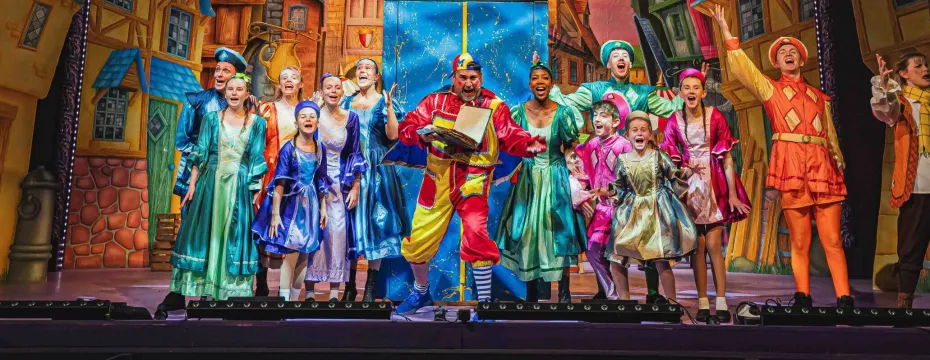
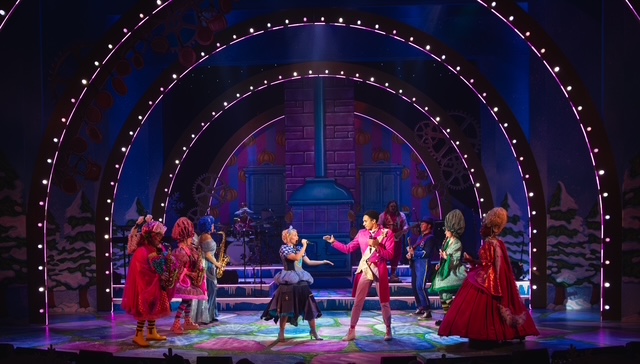
The Riverfront in Newport presents its 20th year of pantomime and invites the audience to ‘let their hair down’ with the classic tale of Rapunzel! This is a great, bang up to date, version of the fairytale, with some fantastic song choices, hugely energetic dance routines and a super talented cast and ensemble.
I loved the use of the full stage area, including the side balconies to introduce Rapunzel’s parents, the king and the queen, and for our first view of Rapunzel herself. The set is impressive; the transitions between scenes are also particularly slick. I loved the village with its bright colours, the bottom of the tower and the internal of Rapunzel’s tower. There are some lovely touches, including a swing made of plaits for Rapunzel to sing ‘Unwritten’ on and at one point the evil Ceridwen bounds onto the stage from a trap door.
I really enjoyed the traditional mixed with the modern. There were so many 2025 trends in this pantomime, I could barely keep up! Of course, the ‘6, 7’ obsession makes an appearance, we have ‘Golden’ sung by Ceridwen and Gruff, Jet 2 Holidays gets an outing of its jingle and many more. There’s plenty of the traditional too, which are performed with precision and expertise. There was a great ‘ghost’ scene, but featuring a bear, and the songsheet also utilised the ‘bear’ theme and was led with aplomb by Muddles (Richard Ellis).
The cast are full of vigour and the joy of Christmas as they each hold the audience in the palm of their hands. I especially enjoyed Gareth Tempest as Dame Winnie Wiggins, though I must say, my favourite part was the rather unscripted section where his wig fell off! He is an hilarious dame though, exactly understanding the brief. Delivering inuendo that goes straight over little ones’ heads one minute, and bringing delightful family humour the next. I don’t think I’ve ever laughed so hard as I did during the quick costume change for ‘Pink Pony Club’ which was a moment of pure panto magic.
The cast is brilliant all round, each bringing their own unique spin to the characters. I also thought the ensemble were excellent, including the children. The dancing was high quality and delivered with such passion and sheer enjoyment that it was a joy to behold. The children’s ensemble also held their own and it was nice to see them have a good deal of involvement with the plot.
In its 20th year of producing pantomime, it’s safe to say that The Riverfront continues to deliver pantomimes that are punchy, energetic, incredibly humorous, traditional yet with a distinct modern flavour. There’s definitely something for the whole family here, which means that everyone, no matter how young or old will have a fabulous time at the Newport pantomime!
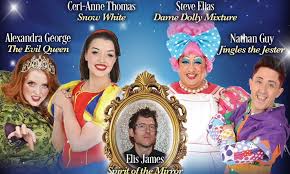
Snow White at the Lyric Theatre, Carmarthen, certainly earns the title of the ‘fairest pantomime of them all.’ On a cold, wet evening in West Wales, this pantomime certainly blew away the winter blues and had us in absolute stiches!
Theatrau Sir Gar, in association with Imagine Theatre, present a beautifully colourful, lively pantomime, which is strong on plot and all the classic pantomime tropes. The set is lovely, light by Jonny ‘JR’ Rees and sound by Alun Walters all make the stage pop and create a gorgeous stage for the performers to present the classic tale. I was also really impressed with the costumes! In particular, I loved Dame Dolly Mixture’s stunning array of costumes, with so many fast-paced changes that I could barely keep up! I also adored the puppetry design used for the Dwarfs, which was really magical.
The ensemble/dwarfs were one of the best I’ve seen in pantomime. They delivered fantastic, high energy dance routines and created loveable, believable characters in their respective Dwarfs. We saw Team White, the ensemble of children, and I must say, they also performed admirably. Ceri-Anne Thomas makes a picture-perfect Snow White, capturing the essence of the original fairytale character with lovely vocals and a great relationship with Abe Armitage’s Prince Michael of Monmouth. Abe plays Michael fantastically, a picture book prince with lovely vocals, which mix really well with Ceri-Anne’s. Alexandra George is a delightfully sassy Evil Queen, revelling in the boos of the audience and owning the stage whilst singing Poison surrounded by an ensemble of evil cockroaches!
Elis James appears ‘in spirit’ as the Spirit of the Mirror, bringing loads of local flavour and humour in a performance that is pre-recorded but is so well rehearsed that it really seems like he’s in the theatre with us! Our comedic pair are Nathan Guy as Jingles the Jester and Steve Elias as Dame Dolly Mixture. Jingles is delightfully hapless, clumsy and of course, head over heels in love with Snow White. Nathan is an adorable Jingles, taking everything in his stride, even sliding, without control across the slosh scene! He is paired with his ‘mam,’ Dame Dolly Mixture. Steve Elias was a fantastic Dame, ad libbing at the speed of light, the audience were in absolute stitches. He mixed exactly the right level of inuendo, naughtiness and family friendly humour to make a really fantastic Dame.
Some great song choices, (including the inevitable 2025 favourite, Golden), a great script that was packed full of local references, hilarious slapstick, naughty bits for the adults and a whole shed load of traditional pantomime tropes, Snow White was an absolute delight and really put us in the Christmas spirit. Snow White at The Lyric, is the perfect balance of well-rehearsed, slick pantomime, mixed with the crazy, silliness that makes pantomime such a perfect family treat.
We last interviewed Tracy in 2020, In this new interview she updates us on her work with Coleg Gwent and thoughts on the Creative industries today.
Hi Tracy You recently worked with Viv Goodman, lecturer on the AS and A Level Drama & Theatre Studies course across Coleg Gwent supporting the delivery of the Unit 3, A level Drama & Theatre Studies unit called Women in Drama. What did this entail?
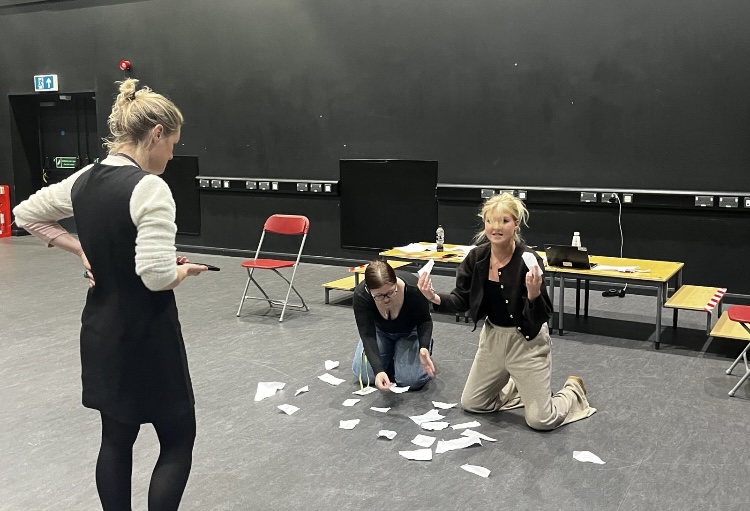
I spent time with the students sharing my experience as a female playwright working in Wales and talking honestly about what it means to write women’s stories today. I introduced them to my two current projects; Girls, Girls, Girls, a verbatim piece exploring five decades of stories from one of the last all-girls schools in Wales, and Divas, a pop-opera based on Adelina Patti and the divas that followed, that I’m co-writing with Cath Dyson. We also worked on their devised pieces, encouraging them to make brave, truthful choices about how they represent women on stage.
Viv often supports practising creatives to deliver activity with her students; do you feel this has value?
I think it’s absolutely essential. When students meet people who are actually out there making work, the industry suddenly feels more real and reachable. They get to ask proper questions the “How do you do this?” kind. They see the messy, exciting, problem-solving side of creativity. And representation really matters. For young women, especially working-class young women, seeing someone like them forging a path in theatre can be a game-changer. It tells them they belong here too.
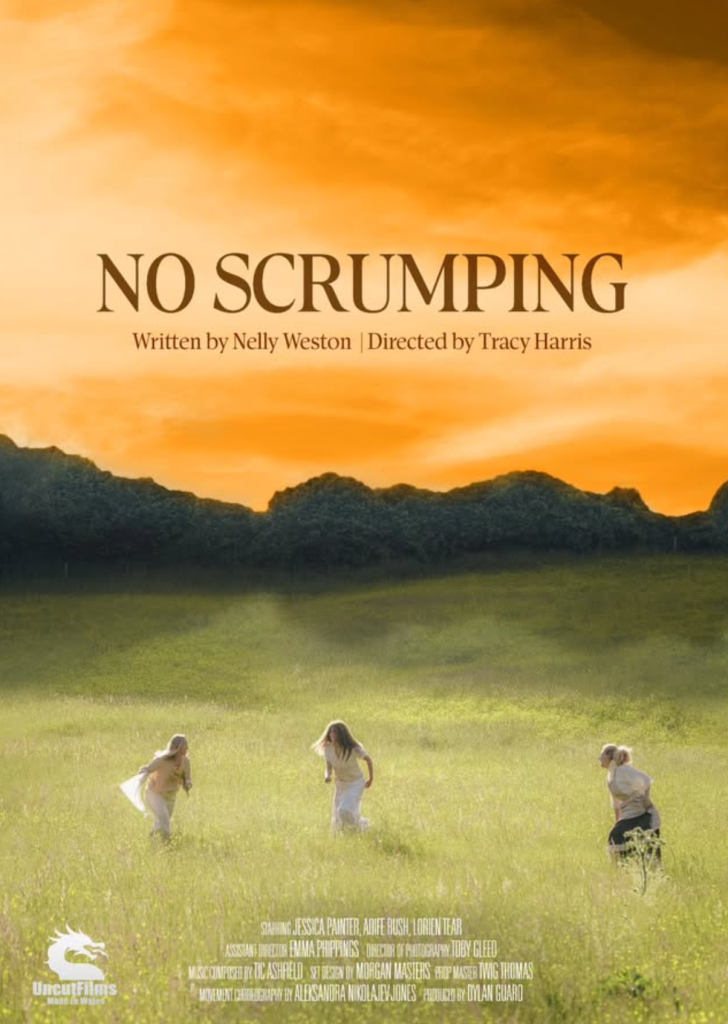
Viv creates such a vibrant, inspiring environment by bringing creatives in. I genuinely love working with her students, and many of them stay in touch after. Dylan, that I met back in 2020 has just produced a short film No Scrumping, which I directed and which comes out next year. Watching the next generation step into the industry is honestly one of the most rewarding parts of what I do.
We asked Viv Goodman about the Unit , Viv, How did you come to involve the professional playwrights in the Women in Drama unit and how did you choose them?
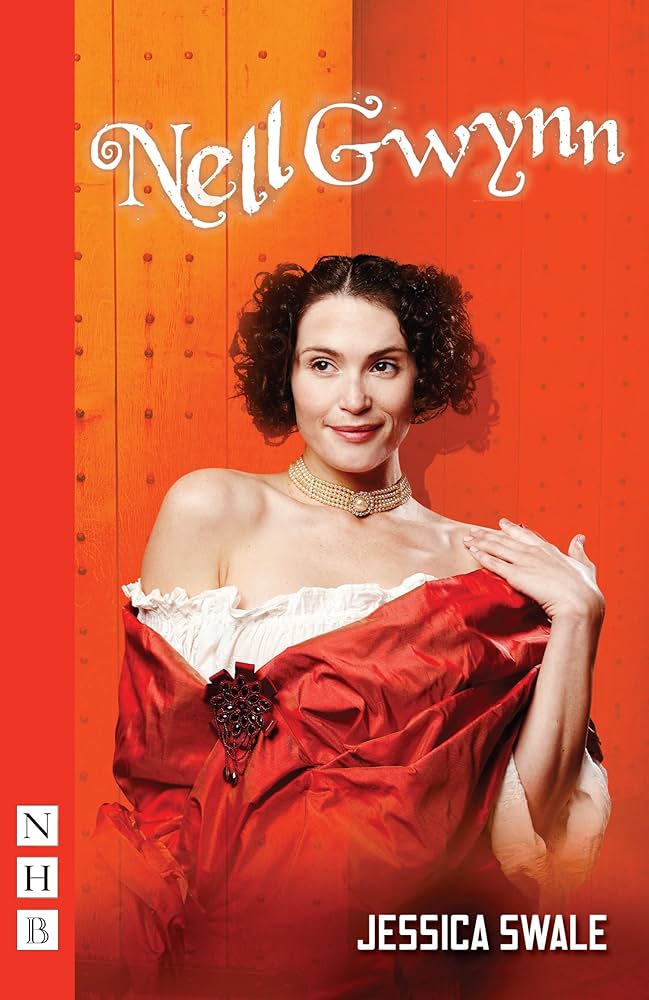
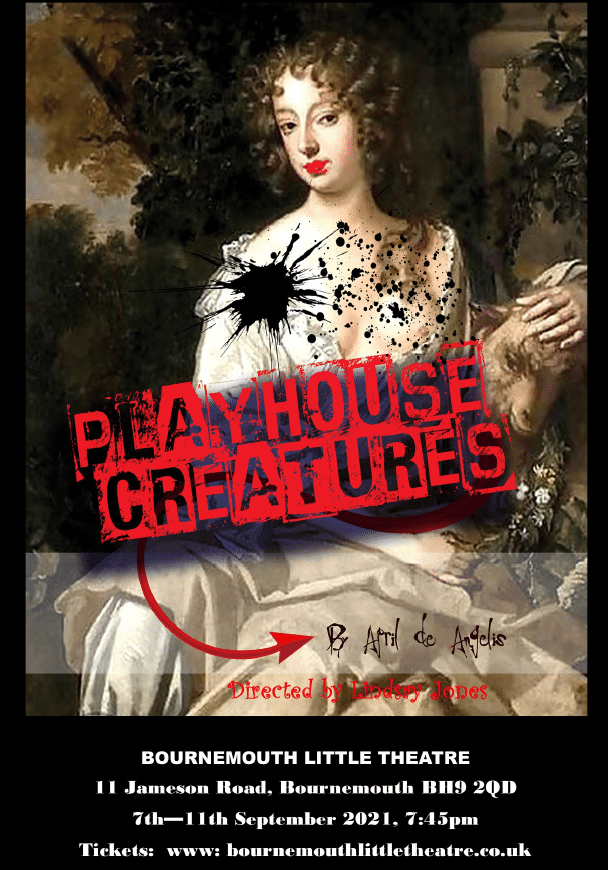
The Women in the Performing Arts project has emerged from the learners’ choice of stimulus for their Unit 3 A level Drama & Theatre Studies exam ; they selected the Rob Burrow quotation ” in a world of adversity we must dare to dream” which, as an all female class, prompted discussions about the difficulties women in the performing arts have faced in order to pursue a respected place in the profession. We explored the lives of the first actresses in the Restoration era through workshopping Jessica Swale’s ‘Nell Gwyn’ and ‘Playhouse Creatures’ by April de Angelis and we wanted to work from these plays for their scripted pieces.
We then wanted to look at the journey that women have made from that time to now and so I asked Playwrights Tracy Harris, Lisa Parry and Gwenllian Higginson for help! I really wanted the learners to meet them and work with them practically, but also to be able to discuss the industry and find out their views about women’s place in the theatre today.
Tracy working at Coleg Gwent
A part of their devised theatre style is to use verbatim and we will be taking their views and reflections to use in the pieces as well as having the benefit of their practical expertise as playwright and actor respectively. It’s fantastic to have them on board with our work; some fascinating views and experiences have been shared and it’s both alarming and necessary for us to acknowledge that female performers are still faced with issues that April de Angelis depicts in her 1660s set play. I’ve been lucky to work with so many brilliant industry professionals in the classroom, but I must say that there is something unique and special about this project; it’s all about the girls!
The cultural sector is dominated by middle-class, white men. Has the work to improve diversity for women had an effect? What more needs to happen?
There’s definitely been some progress, conversations are finally happening in the open. But let’s be honest real structural change is still lagging behind. Women continue to face barriers in funding, opportunities, confidence, and access. If we want things to genuinely shift, we need more, sustained investment, not one-off projects, Proper access routes for young women who don’t already have cultural or financial privilege, Fair, open commissioning processes that don’t favour the same voices over and over. Long-term mentorship; This year I have mentored two young female writers; Lorien Tear on her first play; ‘Breeding ‘and Ceri Ashe on her verbatim play about motherhood, and it’s been one of the most rewarding experiences to be able to work with new bold female voices and see them shine. Representation is important, but it’s just the start. The goal is an industry where women don’t just enter, they stay, they grow, they support each other and they lead.
I am also working on a festival celebrating Jane Arden. She was one of the leading figures in British theatre and Cinema and one of the most radical feminist voices in the 60’s and 70s. My aim is to create a celebration of this forgotten Welsh artist showcasing her plays, films and talks with leading academics. She is a major inspiration of mine and her work should be celebrated far and wide!
Is the decline in A-level Drama affecting who goes into performing arts training?
Yes, and it’s already having an impact. When Drama disappears from schools, whole groups of young people lose the chance to discover that the arts might be for them. Drama gives young people confidence, imagination, and a sense of belonging. Without it, so many potential creatives simply never get lit up by that first spark. It’s particularly damaging for working-class students, who often don’t have access to theatre outside of school. And this isn’t just about training actors, it’s about writers, directors, designers, technicians, producers, and audiences. The whole ecosystem suffers. Early exposure to the arts shapes lives. If we want a diverse, vibrant cultural sector, we have to fight for Drama in schools. It matters culturally, creatively, and for the future of our industry.
Tell us about your writing process. Where do your ideas come from?
My writing process varies depending on the piece, but most of my ideas are rooted in real experiences or stories I feel compelled to tell. Before I begin writing, I usually fall down a research rabbit hole, collecting anything that sparks something to do with the story: snippets of text, pieces of music, images, fragments of conversations. Once I’ve gathered enough material, I write the first draft instinctively. I try not to overthink it; I just get the story out and shape it later.
Can you describe your writing day? Do you have a process or a minimum word count?
My process is more instinctive. When I’m working on a play, I give myself the time and freedom to write the first draft quite freely, then I go back and refine, reshape, and more often than not cut anything that isn’t serving the piece. I’ve learned to trust this process rather than force something on days when the urge simply isn’t there. Ideas often arrive when I’m out and about, far more than when I’m sitting at my desk. I’ve stopped putting pressure on myself to hit a word count. When the writing is ready to come, it always does, and it’s often in the middle of the night or when I least expect it. Once I’ve taken it as far as I can on my own, I’ll share it with friends I trust before moving on to the next draft. That stage of honest feedback is invaluable to me.
Do you write from a certain physical space? Do you have a writing room?
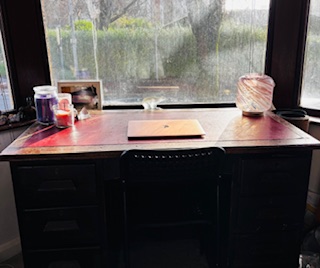
I usually write at my desk in my office. It’s by a window overlooking a busy road, which I actually love, it reminds me that life is happening outside while I’m tucked away creating something. I’ll sometimes work in cafés, but never when I’m starting a first draft. At the beginning, I need the quiet space to let ideas come without distraction.
Which Welsh writers have inspired your work?
Welsh writers inspire me constantly, and there are too many to do justice to in a single list. But I always return to the greats; Jane Arden and Dylan Thomas have been lifelong influences. I’m also deeply inspired by the work of Ed Thomas,Gary Owen, Alys Conran, Katherine Chandler, Gwyneth Lewis. I love the unique voices of Catherine Dyson and Katie Payne, whose plays ‘The Last Picture’ (York Theatre) and My Mixed up Tape (Sherman) are on next year.
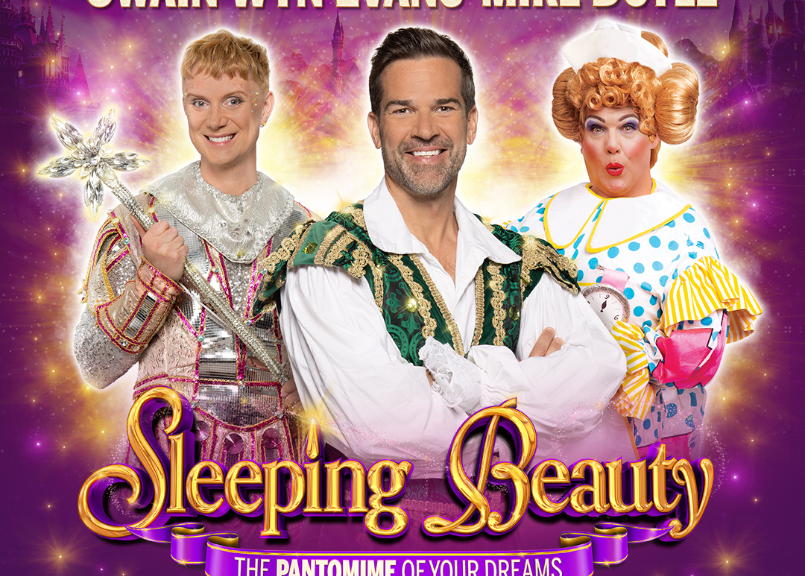
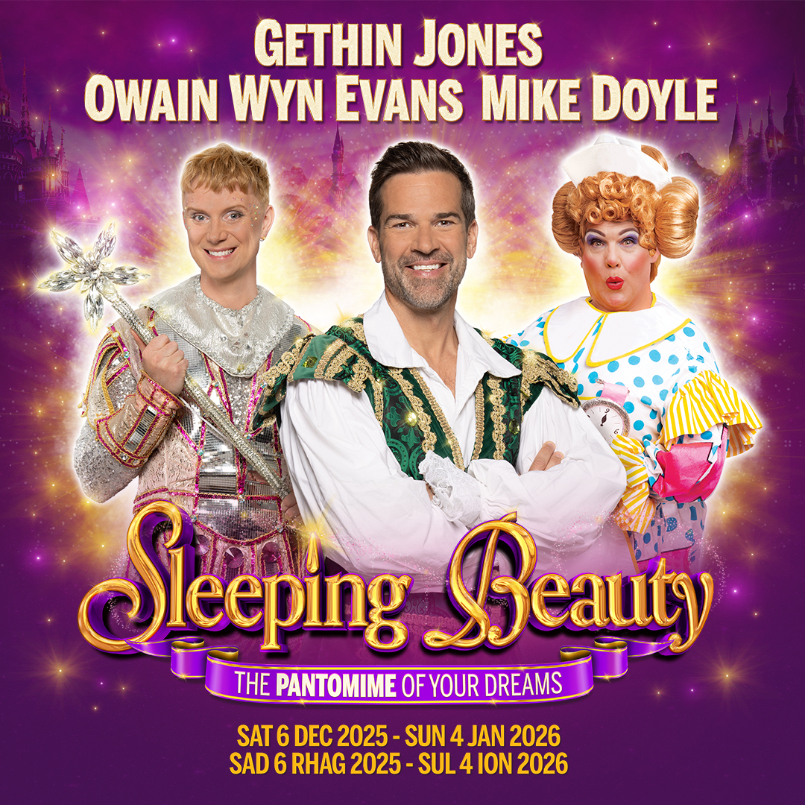
It’s a great big festive, ‘How’s it going, alrigh’?’ from the annual Christmas pantomime at the New Theatre, Cardiff. Sleeping Beauty is packed full of inuendoes, fast paced slapstick, fabulous musical numbers and a fabulous, mostly returning cast who brought the house down with ease.
It’s the classic fairytale, but with plenty of Welsh flavour; Aurora has been cursed by the wicked, Carabosse, but not to fear, the Spirit of the Pantomime has protected her until the eve of her 21st birthday! When she pricks her finger on a spinning wheel, it’s up to Nurse Nelly, Muddles and the Spirit to rescue Prince Gethin (of Gabalfa, of course…) and return him to the castle in Cardiff so he can bestow true love’s kiss and awaken the princess! Will true love save the day? Will Aurora ever awaken? And will we all be going ‘alright!’ all the way home? Oh yes, we will!
It’s a spectacular affair, as we’ve all come to expect from the New Theatre pantomime; the set is beautifully done, I loved the slick lighting and sound, and the orchestra perform toe tapping numbers with ease, led by Musical Director, Michael Morwood. The special effects are definitely special; the ending of act one takes the audience’s breath away…all I’ll say is that it was definitely gravity defying for Muddles! The choreography by James Bennett is slick and delivered with much aplomb by the talented ensemble and director Matt Slack clearly has a flair for slapstick and comedy, there’s laughs and heart aplenty here. The script by Alan McHugh is delightfully naughty in places, with plenty of jokes for younger and older ears alike!
The all star cast is led by Gethin Jones who is delightful, with a heartfelt performance as Prince Gethin of Gabalfa. He is joined by Emma Kirk as Aurora, who delivers the role with huge enthusiasm and energy. Aurora is usually a smaller role in the pantomime, but Emma really makes her presence felt with great personality, immediately earning her place in the hearts of the audience. Owain Wyn Evans is a force to be reckoned with for Carabosse and delivers fast paced weather puns with ease. Jalisa Phoenix-Roberts is a delightfully evil, but likeable Carabosse, with vocals and sass to die for. Jack Ryan is instantly loveable as Muddles, often at the butt of many jokes and much slapstick. I particularly loved his interaction with Nurse Nelly in the ‘Wonder of You’ section, which was delivered exceptionally well. My personal favourite was Mike Doyle as the fantastically naughty Nurse Nelly. His speech delivered so many fast-paced innuendos, it was hard to keep up! His voice is excellent, and he holds the audience in the palm of his hand throughout the whole production.
All in all, it’s a slick, well-oiled pantomime, full of laughs aplenty, tight dance routines, toe tapping musical numbers and a great deal of heart. It’s guaranteed to have something for every member of your family and is a great night out over this Christmas period. It’s a spectacular show which needs to come out of your dreams and become a family tradition this Christmas time!
You can find out more about the production and book tickets here
Jack Frost is a brand new, family musical for the Cardiff Christmas Festival, which bursts onto the Spiegel Theatre Stage with boundless energy and fun. It’s a show that is great for all ages, but the magic will especially capture the imaginations of the youngest theatre goers, with a magical tale, larger than life characters and toe tapping musical numbers!
There’s no let-up in this high-octane production; I lost count of how many times Jack and Gwen Frost did laps around the theatre! The plot is an apt one for parents currently drowning in Christmas presents! The evil Kringle the Toy Tycoon is trying to steal Christmas and force parents around the world to buy his cheap plastic toys, which only last a day before breaking. To do so, he’s stolen the power behind the Northern Lights, the very thing which powers the reindeers to pull Santa’s sleigh! Enter the mischievous Jack Frost, joined by a cohort of colourful, magical friends, to thwart Kringle’s evil plans and bring back Christmas joy for all the children of the world!
The whole cast work exceptionally hard and give stellar performances all round. Logan Burrows is an instantly likeable Jack Frost; as charming and boyish as Peter Pan, with balletic grace and an instant rapport with the audience. James Rockey is malicious and spiteful as Kringle, and his song is delightfully evil. I adored the sassy Mrs Claus played by Kate Powell, especially her musical number, which brought the house down! Mia Jae plays a loveable, hilariously dry Gwen Frost; the delivery of her lines in a thick Cardiff accent brings lots of comic relief to the dramatic moments! Molly Mae Fisher multi roles and is a beautiful dancer, her pirouettes were to die for! Finally, Bryn the Bear is brought to life by David Morgan-Harding with voice by Mathew Preece. I must say, Bryn was a particular favourite of mine; a 6-foot, Welsh accented Polar Bear has got to be a highlight for anyone! I loved his dry humour, and I was very impressed with Bryn’s dancing ability!
The show is really immersive with the cast bounding amongst us all, engaging with audience members, and even taking the time to give high fives and hugs. There are some good moments for the adults in the audience with some knowing jokes in a script penned by Richard Tunley and there’s some lovely musical numbers, with music and lyrics by John Manders.
Although the set is simplistic, there’s some lovely moments, including some aerial work from Jack, soaring high above the stage, some great dance numbers which make the best use of the thrust stage, (choreographed by Holly Corsi) and some great use of the entire space which really makes the audience feel like they are a part of the magic.
If you want something to get the entire family into the Christmas spirit, from the very youngest to the vert oldest, this is a great option. There’s always a plethora of pantomimes available over the Christmas period so it was nice to see something a bit different; still full of pantomime charm, but with original songs and a plot that’s still full of fairytale charm but is a bit different from the usual Christmas theatre offering. Grab a ticket to help Jack Frost save Christmas, and you’ll leave feeling full of festive fun and cheer, whether you’re 6 or 106!
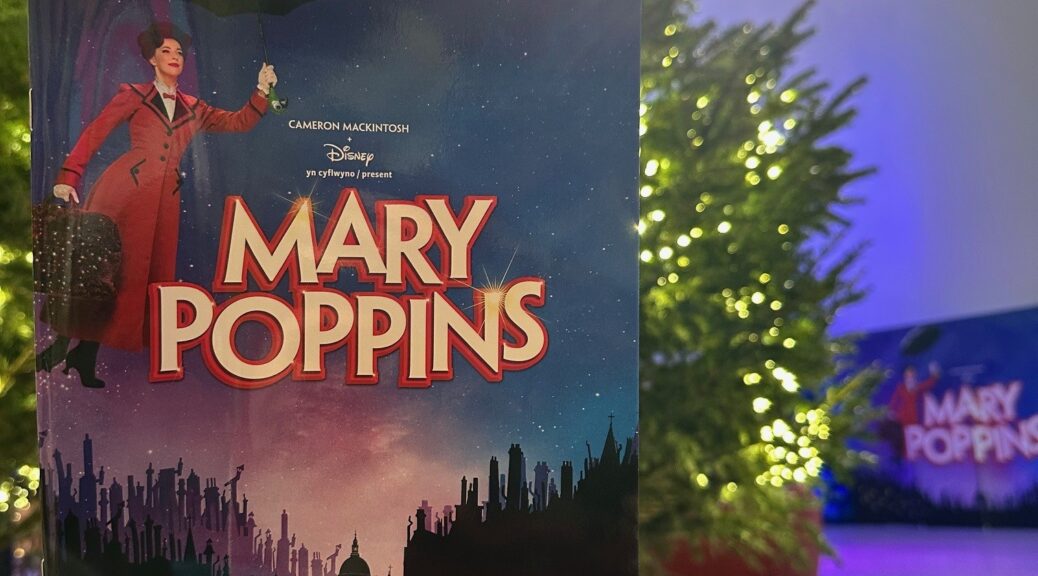
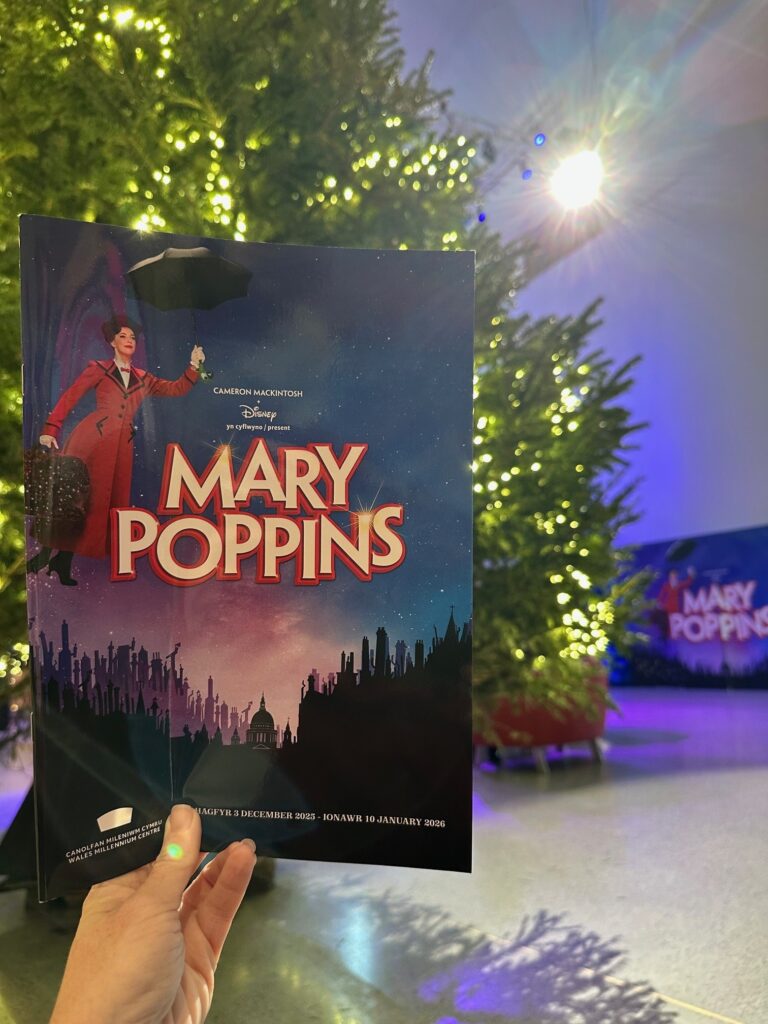
Mary Poppins makes a triumphant return to the Wales Millennium Centre, marking their first visit to Cardiff since the 2009 and 2016/2017 tours – and the wait has certainly been worth it. This production captures everything audiences love about the classic musical, while elevating it with bold design choices, clever staging, and exceptional performances. One of the standout qualities of this production is the striking contrast between the lighter, whimsical moments and the darker, more emotional undertones of the story.
The set design moves effortlessly from bright, colourful landscapes bursting with magic to shadowy, atmospheric scenes that carry real narrative weight. These transitions feel seamless, thanks to clever set changes that keep the story flowing with energy and precision.
The casting is uniformly excellent, but Stefanie Jones shines brightest. Her portrayal of Mary Poppins is, quite simply, practically perfect. She anchors the show with warmth, sharpness, and effortless charm.
The production also adds a delightful touch of audience participation – a spirited reprise of “Supercalifragilisticexpialidocious” immediately after the main scene, which brings an infectious burst of joy to the theatre. Visual surprises abound, including Punch the toy startlingly appearing above the house during “Playing the Game,” heightening the darker edge of the scene. In contrast, the ballet sequence featuring Neleus and the living statues is graceful and dreamlike, while “Step in Time” delivers tap-dancing brilliance, supported by fantastic choreography and thrilling acrobatics as Bert, played by Jack Chambers, scales the sides of the stage.
The star and laser effects that reach out over the audience during “Anything Can Happen,” creating a moment of pure wonder. And of course, Mary Poppins’ iconic flights – at the end of Act 1 and again at the finale — remain breath-taking theatrical magic.
From start to finish, the show is energetic, beautifully paced, and visually impressive. Every department contributes to its success: the cast, the production team, the creative team, and the musicians all deliver work of the highest calibre. This Mary Poppins isn’t just a return – it’s a soaring celebration of everything that makes musical theatre magical.
If you’re undecided on a last-minute treat or festive gift, consider giving yourself – and the whole family – the magic of Mary Poppins.
Performances run from December 3rd 2025 to January 10th 2026.
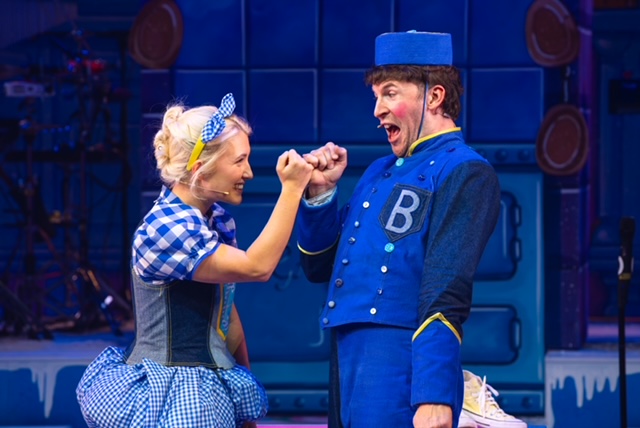
As Theatr Clwyd’s panto rock ‘n’ rolls in for another year, it’s a treat to be back in the Moondance auditorium, its surroundings now fully refurbished as planned. This time round, I even booked Bryn Williams’ new restaurant for pre-theatre dining- what a wonderful way to kick off proceedings. And despite this not being a food review- I can highly recommend it…oh yes, I can!
On entering the auditorium, the scene for this well-known fairytale is immediately set. The proscenium arch is adorned with warm, white lights and, as always, the show’s title is displayed proudly in the centre, this year decorated with snowflakes on a blue background, reminiscent of the ballgown we’re all familiar with from the classic story. These astute, clever touches are exactly what give Theatr Clwyd’s pantos their irresistible freshness.
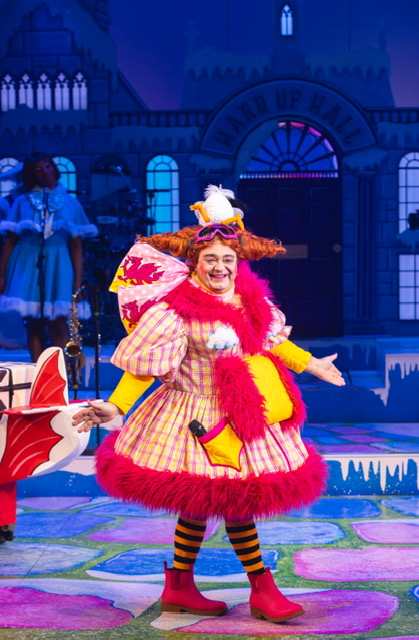
As usual, Adrian Gee’s costume designs are superb. Particularly stand-out are Heathers inspired ugly sisters Samantha and Ella Hardup (Sam and Ella…. see what they did there?!)- sharp and stylish with wigs to make Marie Antoinette jealous! Celia Cruwys-Finnigan and Alice McKenna absolutely dazzle in these roles- their slick mannerisms, hilarious physicality, and standout vocals peak in a fabulous rendition of ROSÉ and Bruno Mars’ APT. (the infamous ‘kissy-face’ song!).
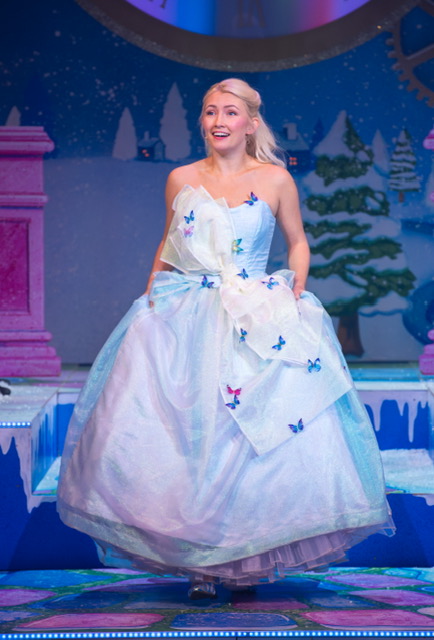
Also noteworthy is Theatr Clwyd’s commitment to sustainability- in this year’s production, Cinderella’s clothes are crafted primarily from recycled jeans! And the transformation from rags to riches is commendable- as Cinderella (perfectly portrayed by Rhianna Goodwin) twists and turns whilst the Fairy Godmother (multi-talented Georgina White) casts her spell, she reveals her gorgeous gown, appearing from the ruffles of her skirt- so clever, blink and you’d miss it! Phylip Harries once again shines as the Dame and with Steve Simmons as Dandini, we have the perfect double act- both performers driving the show with incredible energy and fizzling chemistry!
There is something for everyone when it comes to the music and choreography in this production. We’re treated to a wonderful version of Lorde’s Royals by the King and Queen, played beautifully by Joe Butcher and Chioma Uma, a powerhouse vocalist- Elliot Parchment-Morrison as Prince Charming gives a memorable performance of Every Little Thing She Does Is Magic and Steve Simmonds gets his ‘Kiss’ on as he decides he wants to Rock n Roll All Nite and ‘party every day’ at the Ball!
This production is superbly cast yet again. The standout performance for me this year, however, is Robert Wade as Buttons. He brings his character to life with boundless energy (bringing to mind Michael Crawford as Frank Spencer in Some Mothers Do ‘Ave ‘Em)! With cracking comic timing, brilliantly animated expressions and great vocals, Wade is the star on the top of the glittering Theatr Clwyd Christmas tree!
The cast enthrall us with their capabilities as performers; dancing in a full musical number one moment then rocking out on keyboards the next, tackling some tricky dialogue before heading off for a costume change- writer Christian Patterson even pays homage to this in the script this year; when Hettie asks Dandini where he’s been, he cleverly answers ‘I was playing the drums’! Assuming, of course, that this was in the script and not ad-libbed… you never can be sure!
Theatr Clwyd never fails to impress with their panto recipe- a huge dollop of talent (with no need for ‘celebrity’ names), a mix of wit, sincere emotion and jokes (which push the child-friendly boundaries!) and a wealth of clever designs from costumes, lighting, sets and special effects. If you want to start the festive season in the right way, head to Theatr Clwyd’s Ball- just make sure you’re home by midnight!
As schools across the UK — and Wales in particular — see a significant long-term decline in students taking A-level Drama, concerns are growing about the future of the performing arts pipeline. The number of A-level drama students across the UK has plummeted by over 50% since 2010
Organisations, such as the Campaign for the Arts, have expressed concern about this trend, highlighting the importance of creative skills for the growing creative industries sector in the UK. The Welsh Government has indicated an interest in redressing this balance through the new Curriculum for Wales, which places importance on creative and expressive arts, but the impact of this is still developing.
To explore what this means for young people, training providers, Welsh Actors and the wider creative sector, we spoke with Viv Goodman, lecturer on the AS and A Level Drama & Theatre Studies course across Coleg Gwent. Viv sheds light on she thinks might be driving the decline — and what might be done to reverse it
Hi Viv great to catch up again after our previous interview which focused on your work with Welsh Playwrights and your students on in your previous role as a lecturer on the Extended Diploma in Performing Arts course at Coleg Gwent. Why do you think fewer young people in Wales are choosing Drama at A-level, and what misconceptions do you hear most often?
I think that prioritising and promotion of STEM subjects has certainly become detrimental to the Arts, it feels as if we’re back to the days of defending our place in the curriculum, whereas that hasn’t always been the case. I find this frustrating as I have worked with so many incredible creatives at Coleg Gwent over the years and the difference they have made to learners in terms of their skills, aspirations and personal development is immeasurable.
We are very strong here across vocational and A Level creative subjects (I have been lucky to teach in both areas) and it’s left me with enormous admiration for tutors in the areas of Performing Arts ,Music, Art, Photography, Media and Film. I’m also uncomfortable with the feeling that we are in competition with STEM subjects, when really, the breadth of subjects and the opportunities they all bring is surely the ultimate aim for education and employability. I think in terms of Drama that it’s left many comprehensive school timetables or been reduced, and so it is possibly not perceived as an option going forward. The A level course can be taken without having studied GCSE Drama and this is perhaps the message that needs to get out there now.
Is the decline in A-level Drama having a visible impact on who enters performing arts training — in terms of skills, confidence, or diversity of backgrounds?
I think if it isn’t already having an impact then it certainly will do; I feel that there are potential industry professionals who are not getting early access to theatre and Drama and this embedding of the arts is crucial to it becoming familiar and comfortable for pupils; from that early stage, they are more likely to see the arts as viable career options. Equality and Diversity are thankfully being promoted in lots of ways, but in terms of real opportunities, we’re not actually creating enough of them. Early experiences of theatre will also, crucially, create the audiences of the future and we should also be thinking about that.
How do you see the Welsh context specifically shaping this issue? Are there barriers or opportunities unique to Wales?
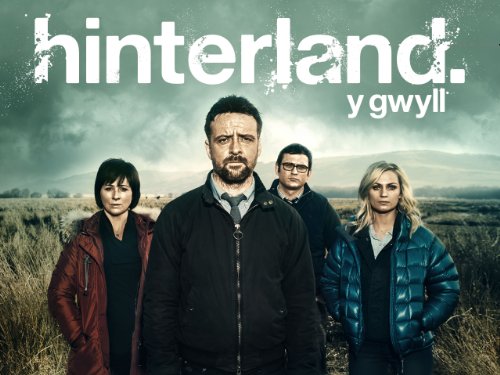
There are opportunities that are unique to Wales in terms of our place in TV and Film production in particular: it’s a real string to our bow that courses in Media, for example, use Welsh crime drama Hinterland/y gwyll as a case study.
I make a lot of connections to the Welsh theatre industry in my teaching , not only going to see productions, but also discussing the international success of some of our theatre pieces. Grav, created by Owen Thomas, Peter Doran, and actor Gareth John Bale, and first performed by the Torch is an excellent example. I have worked with the Grav team so much and used the play/production in a number of lessons, its a brilliant example of Welsh Theatre.
I think that Welsh theatre is becoming more confident and ambitious with the recent launch of the Welsh National Theatre and Fran Goodridge’s, Sherman Theatre, Artistic Director plans to connect the Sherman Theatre, Cardiff with The Royal Court, for example. My hope is that opportunities for future industry professionals will grow from the impact of these changes.
What risks does this long-term decline pose for the future of the performing arts workforce in Wales — both onstage and backstage?
I think that we need to address the issue in education quite quickly and promote the fact that the creative industries are essential to the economy; I feel there is still a misconception that the arts are a luxury. Without training and opportunities for young people in theatre, film and tv the industries will struggle further in future and I don’t think this is taken seriously enough at the moment.
What would you say to a student, teacher, or parent who believes Drama is ‘less valuable’ than other subjects?
I would say that any accredited qualification will have had to jump through hoops to attain the accreditation in the first place, so they are all viable from that point of view. There are so many reasons to study Drama other than wanting to enter the performing arts professionally: the transferable skills of team work, problem solving, working to group deadlines, communicating meaning through creative decisions are all essential in other professions. Every year I have A Level Drama learners who study the subject alongside the sciences and the experience equips them with excellent interpersonal skills that become evident when they present themselves to universities. Also, we’re in a place where mental health and well being are a significant issue for young people and the experience of Drama is enormously helpful for processing emotions and fostering a sense of belonging.
What actions from policymakers or education leaders would make the biggest difference in reversing the decline?
From a UK and Wales wide perspective, I think we need to present STEAM rather than STEM as the tagline and go back to reinforcing the ‘broad and balanced’ approach towards education. As I mentioned earlier, I have now worked with vocational and A level teams across three sites of Coleg Gwent and the experience has opened my eyes to the expertise and inspiration that teachers offer learners across the curriculum. I really think that education leaders and policymakers need to promote all opportunities with equality if we are to create a workforce that is fully prepared in terms of skills and well being; that’s what makes people fit for work.
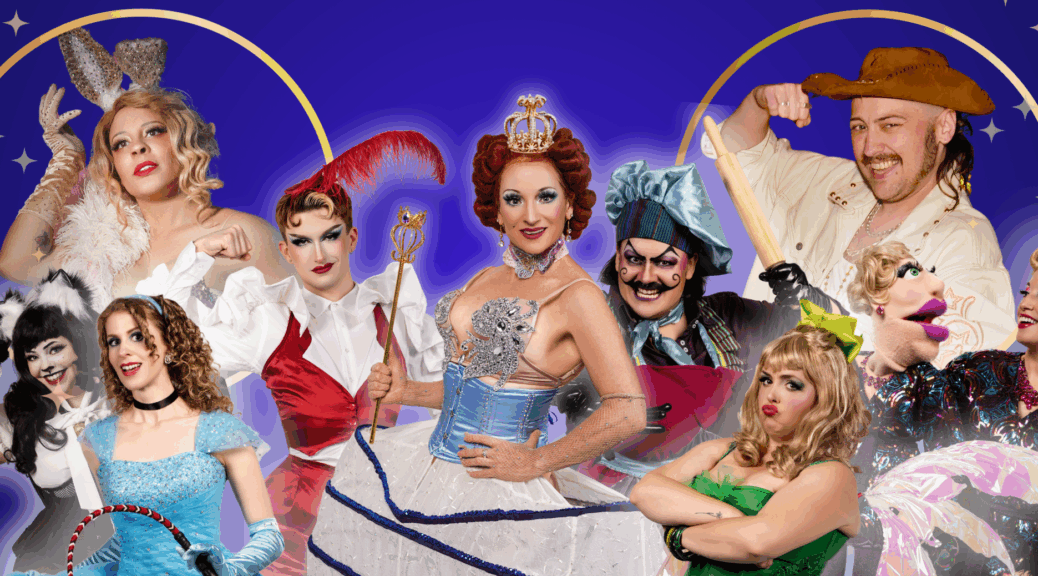
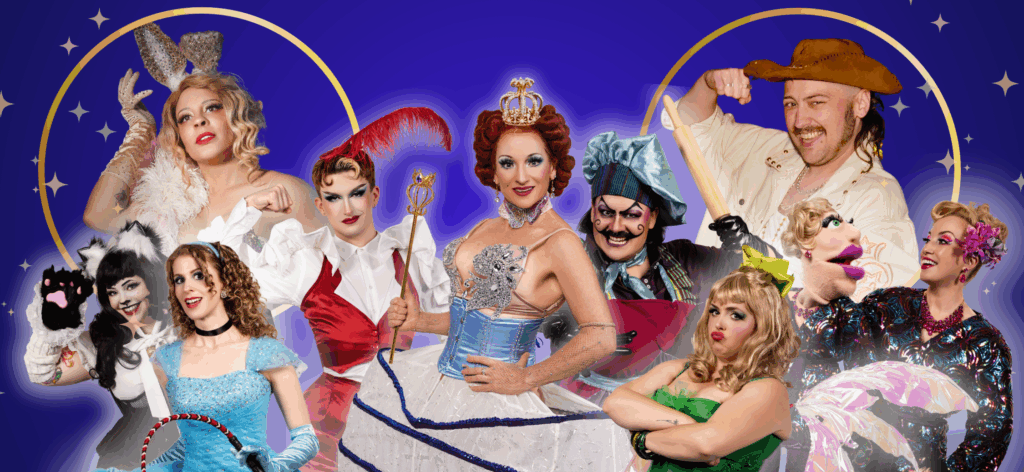
Mae pantomeim bwrlésg ar ei ffordd i Ganolfan Mileniwm Cymru dros gyfnod y Nadolig, gyda pherfformiadau gyda’r nos o 17 tan 20 Rhagfyr, a matinée ar Nos Galan. Caiff cynulleidfaoedd brofi Nadolig chwareus gyda pherfformiadau pantomeim, gan gynnwys cân, drag, comedi, dawns, perfformiadau beiddgar, a bwrlésg hudolus.
Bydd y rhai sy’n dwlu ar bantomeim yn cael mwynhau eiliadau panto clasurol (o na, fyddan nhw ddim, o iawn, byddan nhw!) wrth brofi natur befriog, rywiol a gwirion cabaret.
Mae’r sioe newydd hon gan Glwb Cabaret Caerdydd yn cynnwys rhai o sêr cabaret mwyaf poblogaidd Cymru a thu hwnt – gyda sgript wreiddiol wedi’i hysgrifennu gan FooFoo LaBelle.
Bydd y digwyddiad yn tywys cynulleidfaoedd ar daith i gwrdd ag arwyr a dihirod ‘ffabiwlws’ byd y straeon tylwyth teg. Bydd gan bob un dalentau unigryw, o daro â chwip i ddawnsio ffan a phypedwaith.
Enillodd y canwr, Wolfy, wobrau yn ddiweddar yng Ngŵyl Ymylol Caeredin, ac yn ymuno ag arweinydd y sioe fydd Ebony Silk, Sandy Sure, FooFoo LaBelle, Goldie Luxe, Lili Del Fflur, It’s Llywelyn, a Matt Hazzard.
Daw’r cwmni â pherfformwyr cabaret o fri cenedlaethol ynghyd wrth roi llwyfan i rai o berfformiadau mwyaf cyffrous Cymru. Bydd criw Clwb Cabaret Caerdydd hefyd yn ymuno â’r grŵp disglair.
Dros yr 16 mlynedd diwethaf, mae Clwb Cabaret Caerdydd, a reolir gan FooFoo LaBelle, wedi cynhyrchu cannoedd o sioeau poblogaidd ledled y brifddinas, gan roi Caerdydd ar y map fel cyrchfan am sioeau bwrlésg a chabaret.
Fel rhan o Glwb Cabaret Caerdydd, mae FooFoo yn cynnal dosbarthiadau bwrlésg i bobl o bob rhywedd, oedran (dros 18 oed) a math o gorff, i ddysgu dawnsio a pherfformio mewn sioeau fel hon.
Mae’r Pantomeim Bwrlésg Mawr yn berffaith i bobl sydd erioed wedi gweld bwrlésg, yn ogystal â selogion. Bydd y sioe wedi’i phlethu â naratif stori dylwyth teg, a bob pum munud, bydd cynulleidfaoedd yn cael gweld act newydd, a fydd yn aml yn syfrdanol, yn peri syndod neu’n ddwl, ond bob amser yn ddifyr!
“Mae bwrlésg a phantomeim ill dau yn cyfeirio’n ôl at ddyddiau’r vaudeville a’r neuadd gerdd, lle roedd pobl yn mynd i’r theatr am eu hadloniant. Y nod oedd cael amser da! Dwi wedi ceisio cofnodi’r llawenydd hwnnw yn y ‘Pantomeim Bwrlésg Mawr’ a rhoi’r sioe hon at ei gilydd i arddangos ehangder gwych y dalent sydd gan berfformwyr cabaret. Bu’n hwyl cymysgu dau fyd y pantomeim a chabaret ar gyfer llwyfan fodern, a dwi’n gobeithio y bydd cynulleidfaoedd yn llamu’n eiddgar i’r byd pefriog hwn gyda ni.”
Mae tocynnau’r Pantomeim Bwrlésg Mawr bellach ar werth yng Nghanolfan Mileniwm Cymru, ac maen nhw’n diflannu’n gyflym! Mae’r digwyddiad hwn yn addas i rai dros 18 oed ac mae’n berffaith i’r rhai sydd eisiau rhoi cynnig ar rywbeth gwahanol, neu grwpiau o ffrindiau sy’n chwilio am noson allan dros y Nadolig.
Gall y rhai sydd am roi cynnig ar fwrlésg cyn y sioe ymuno â FooFoo am weithdy rhad ac am ddim ddydd Sadwrn, 12 Rhagfyr, o 15:00 i 16:30, yn Ystafell Preseli yng Nghanolfan Mileniwm Cymru.
Creating opportunities for a diverse range of people to experience and respond to sport, arts, culture and live events. / Lleisiau amrywiol o Gymru yn ymateb i'r celfyddydau a digwyddiadau byw



 (4 / 5)
 (4.5 / 5)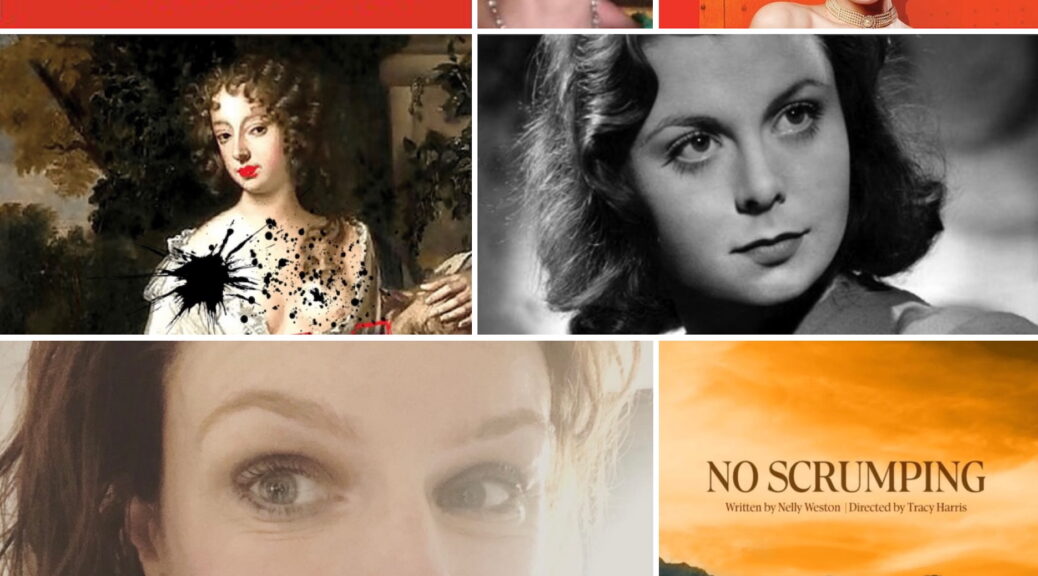



 (5 / 5)