Category Archives: Theatre

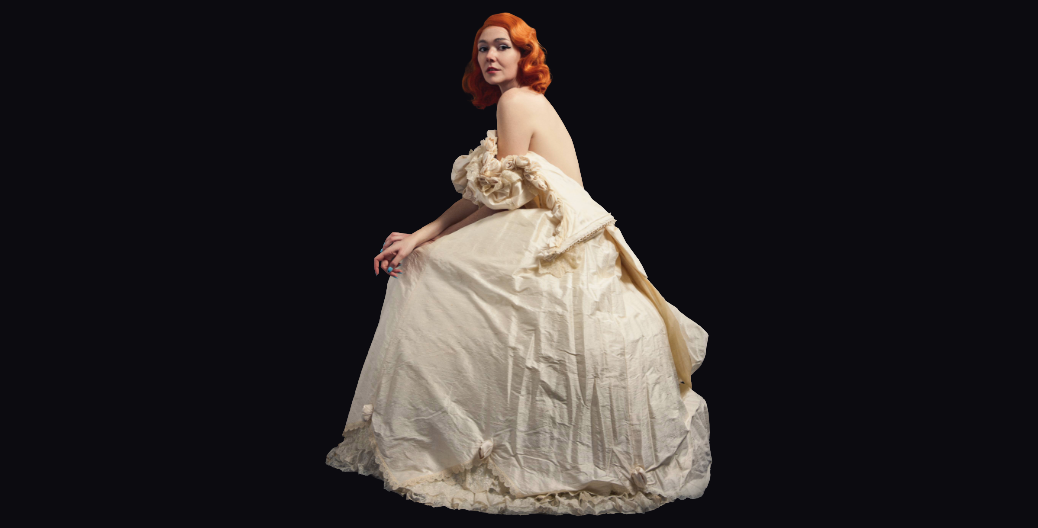
Review, Elf Lyons IS The Woman On The Edge, Edinburgh Fringe, By Hannah Goslin

Elf Lyons has got to be one of my favourite artists. She’s one of those artists that you want to see everything they do and scramble to be able to. When I knew she was doing another show, I had to run to get on the press list for this.

Previously, Elf has produced shows, mostly with an animal inspiration to them: think horses, birds, and yet all with something underlying and personal about them. Whether it be on her favourite films or something a little deeper. However, The Women On The Edge is the most personal and vulnerable to date. Based on her failed engagement, Elf using old Hollywood movies, inspiration of one of her favourite films and tales, Apollo 13 and the impact of toxic males while dating in your 30’s to bring this production about picking oneself up and getting through the hardest times.

Elf in herself is a tour de force. She is unlike any performer you have seen, combining clowning, comedy and something quite meta about being an artist. She isn’t afraid to call a spade a spade, particularly when it comes to calling out men or the closed minded people in press and this confidence in itself is inspirational. She has this amazing ability to move from character to character, sometimes even with the simplest of comedy but also with something sometimes darker and sometimes controversial. She cleverly manages to seamlessly flit between these and therefore the comedy is constant, with impeccible timing to let yoy digest before the next laugh.

It makes it all the more surprising when we get to the real intense, vulnerable parts. She bares her soul, supported with verbatim recordings by loved ones, where we get the sense of the real impact this life changing event had on her. Of course, we begin this, knowing she is a comedian, and thinking that this is likely to be a very funny and unserious view on this event. But she doesn’t let us get too settled in this. And by the end, she delivers a rousing speech of self love, of getting through the hard times, and speaking to child Elf to let them know they are loved and wanted. For anyone who has really struggled with anything touching upon feeling worthless, this hits really hard and you unexpectedly end in tears and in a place you really weren’t expecting from a trained clown.

Elf Lyons Is The Woman On The Edge is a fantastic performance, where her soul is bared for all of us to see, to give you that support that you weren’t expecting if you’ve ever hit rock bottom and along the way, somehow, making you constantly laugh.

Review, Two Little Pigs, Patrick Bones Production, Edinburgh Fringe, By Hannah Goslin

 out of 5 stars (3 / 5)

Sadly, the world seems to be progressing further and further backwards. With most people addicted to being online and seeing an increase in misogyny, the women are becoming more and more at the peril of “Andrew Tate” style opinions.

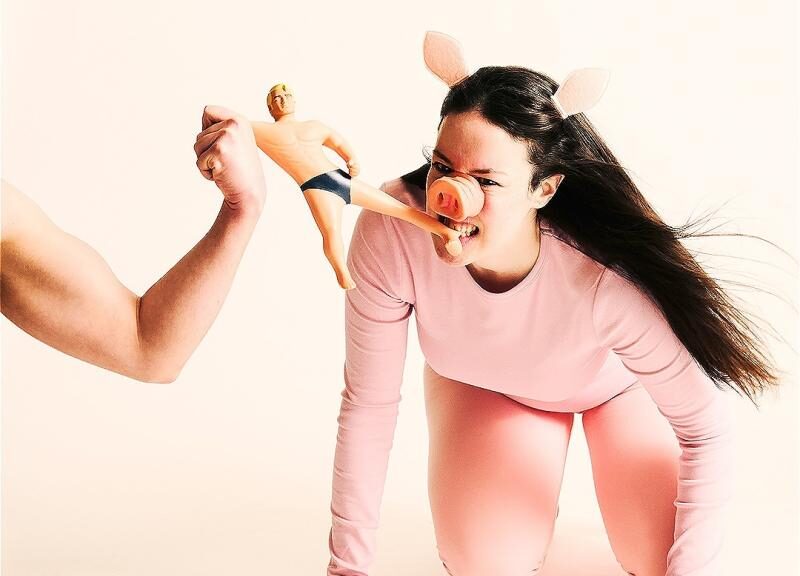
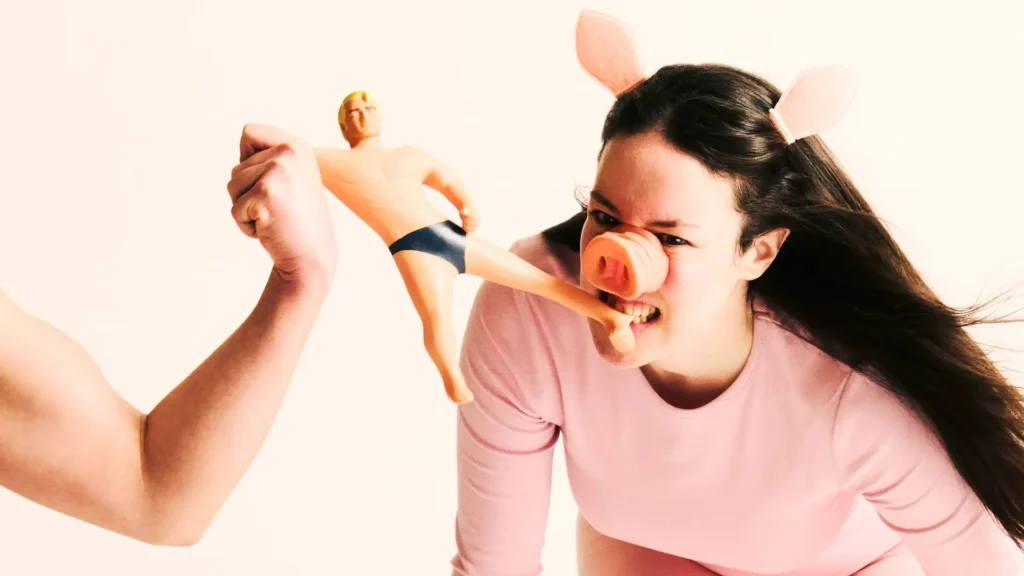
Two Little Pigs, written and performed in part by Cailtlin McEwan, the story shows the impact of toxic masculinity in an absurdist, Utopian world. When Mark and his long time girlfriend break up over his partial descent into misogyny, he begins to hate all women. In ensuring he is meeting his “protein goals” and, for some companionship, he buys a highly intelligent pig who was raised with farm hands who were hot on feminism, with the goal to feast on her from cells collected and incubated to make “cruelty free” meat. Pig tries to teach him the error of his ways, but lines blur and it becomes all too much.

The concept has an essence of Animal Farm about it. A hyper aware animal who is learning the ways of humans is beginning to infiltrate somewhat and point out what’s wrong with them. But they are still “new” enough to not really understand a lot of things. Cleverly, this allows Mark to rethink and reevaluate things and there’s a mutual learning between the two on life and what has gone wrong.

By using the same performer for both the ex-girlfriend and the pig is an interesting concept. It blurs the lines and triggers these moments of introspective thought for Mark and makes this all uncomfortable. This is a clever approach but at times wasn’t always clear – there’s a difference in physicality to try and determine this strange cross between the pig and the ex but sometimes it took a bit of time to suddenly realise this change.

The production is mainly from Mark’s perspective. The ex disappears quite soon into the show, only being around to ultimately set the scene. And while this is meant to be a learning curve for him as a male, the feminist part of me didn’t want to give him air-time. Maybe this approach and uncomfortable-ness is a clever ploy to teach us something, and maybe the male audience members and , sure, we don’t like him. But I couldn’t get on board with him being the centre of things. I guess it would have had more impact if he maybe learned a lesson by the end but he doesn’t. Again, perhaps this is intentional and we are meant to see that there is likely no redemption in truth but really, I wanted some character arch moment after all we had witnessed.

Two Little Pigs at the root of the concept is really interesting and its attempts to make you feel uncomfortable and question everything is certainly successful. Unfortunately, without a real turn around in the story, it felt slightly flat and wanting.

Review, Tale of the Firebird – Concerto for Violin, Fire & Acrobatic Orchestra, Edinburgh Fringe, By Hannah Goslin

 out of 5 stars (4 / 5)

It’s nothing new to combine classical music with acrobatics. In recent years, the Southbank Centre have embarked on combined multi-disciplinary acts together, often with classical or orchestral music with another art form. The blend of these goes well together and very complimentary art forms.

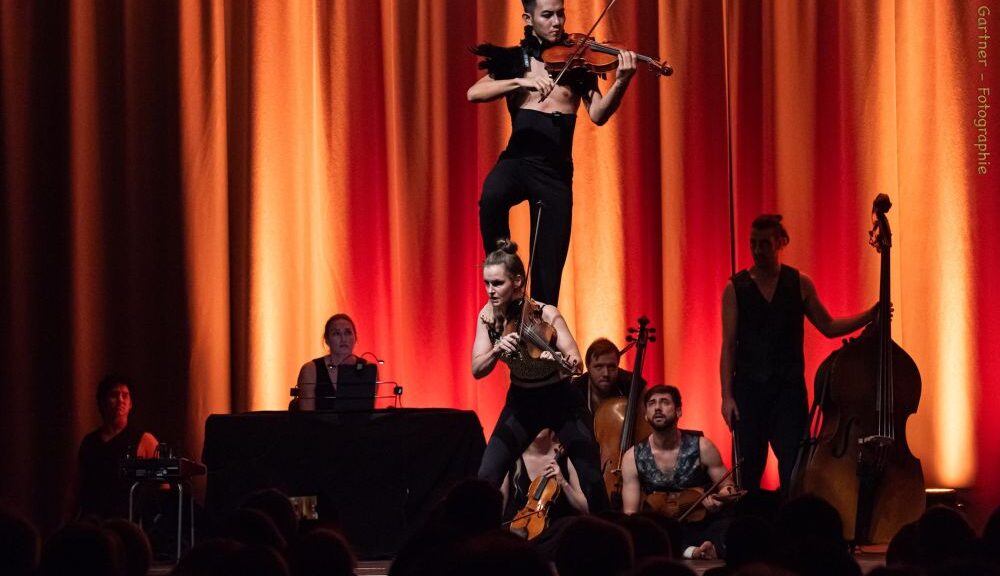
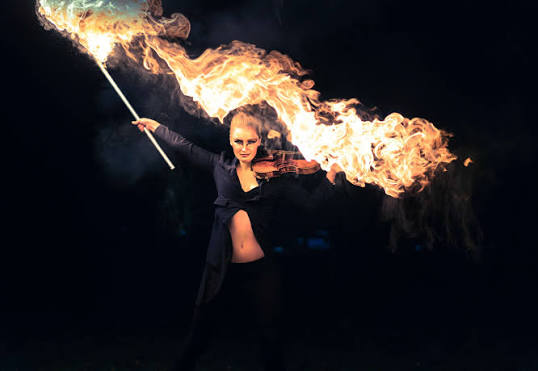
But what if I told you that the acrobatic performers were also the musicians? I hope the news of this blows your mind as much as it blew mine to see. Tale of the Firebird takes on the fairy-tale story of the Phoenix, delivering this through music and physical theatre alone. The greatest achievement in this is the ability to play the instruments perfectly through mid-contortion or being propelled into the air. The music and performance already does well to bring the story to life, making it easy to follow and understand, even if you’re not aware of the tale.

The awe inspiring performance nicely builds throughout… we start with the performers playing music but soon, the odd trick in thrown in, separate to the instruments until they combine these, then fire, then even more intricate techniques. This gentle crescendo warms us up – they don’t try anything complicated or fancy with this but the simple build is enough to shock us and be open-mouthed at their incredible abilities.

While there is a protagonist and a villain who occupy the narrative, all the performers have their moment in the light and are all as clearly talented as one another. This isn’t just a commentary on their circus skills but the fact not a single note was out of place, while upside down, mid-air, whatever it may be, was just amazing to watch. What was even more incredible was a mini-harp – I never knew this existed! With plenty of children in the audience, the audible noises of excitement and awe was only vocalising what we were all thinking.

Tale of the Firebird is unlike anything I have seen before – the existence of performers with the ability to not only perform music but to also perform body-defying tricks at the same time is so unique and so impressive to see – it has to be seen to be believed.

Review, MAN!FEST: The Drag Boyband Musical, OnTheNose Productions, Edinburgh Fringe, By Hannah Goslin

 out of 5 stars (3 / 5)

If any of you were a teenage girl, you will have had a “boyband” moment – the moment where you were obsessed to some degree with their music, their looks and were convinced you were destined to marry one of them. For me, this was punk and emo bands but I definitely get the hype and we all know the “Take That” euphoria stereotype.

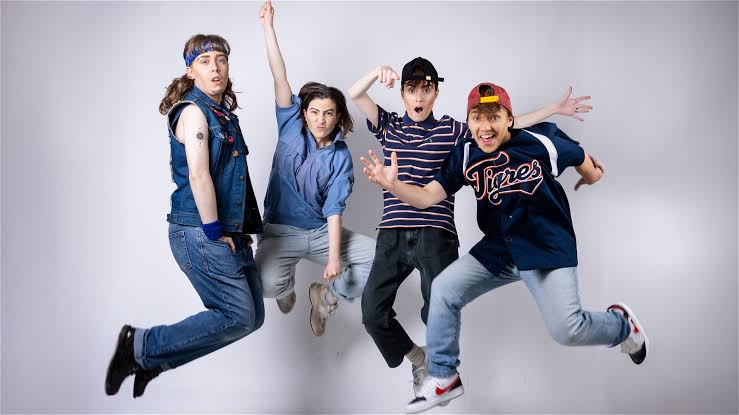
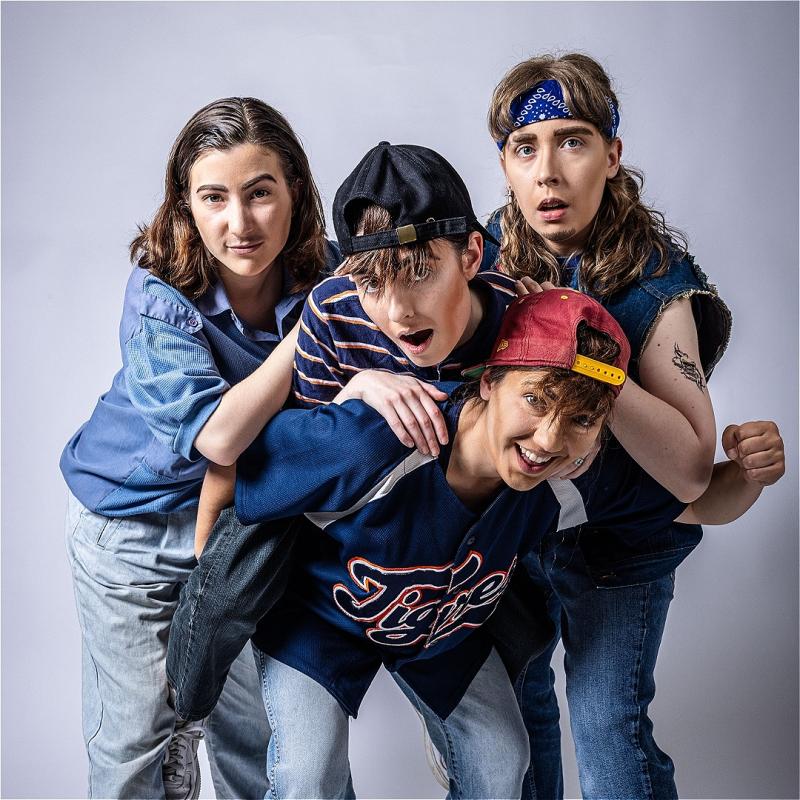
MAN!FEST: The Drag Boyband does exactly what their production company says on the tin: they provide a production that is very on the nose about boy bands. We meet the group, comprising of 4 very different characters, but ones we all recognise in a boy band: the quiet shy one, the athletic girl-mad one, the bad boy and the posh boy. Together, they provide unique songs, all perfectly catchy but, when you listen closely, the lyrics reveal something a little darker or highlighting male stereotypes. Think, a song about leaving you on read, or telling you everything you want to hear as a teenage girl about your attractiveness and worthiness. But between interpersonal relationships and the dodgy demands of their production company, the cracks start to form and chasm. And soon, this boyband aren’t the perfect men after all (not that they ever were).

The production is full of unique and one off songs. They are so quintessentially boyband-esque, with toe tapping beats and a catchy-ness you would find hard to forget. When you listen closer, the lyrics are something unsavoury, reminding me much of my adult years of listening to old songs and suddenly knowing what the lyrics now mean. Their ability to pull this off and put thought into it is commendable and the attention to detail is fantastic. This is accompanied by impeccable choreography that N Sync would be jealous of. The performers have a great ability to show the tension in the group while still being able to “perform” and we can then see the trajectory of this demise woven throughout.

While entirely enjoyable, there felt like there was something missing. It was easy enough to get involved and at no point did I feel boredom. I was invested. And I will always be impressed with anyone who can sing, dance, break dance and still sing without gasping for breath . But the story-line over all hit a flat note for me. I know it’s a slight cop-out to not give more reason but maybe, for me , it just missed the mark.

MAN!FEST: The Drag Boyband is an enjoyable production, harking to all our inner teenage girls and our unobtainable idolisations. But something was just missing to give it the wow factor.

Review, Bi-Curious George: Snail Trail, Edinburgh Fringe, By Hannah Goslin

 out of 5 stars (3 / 5)

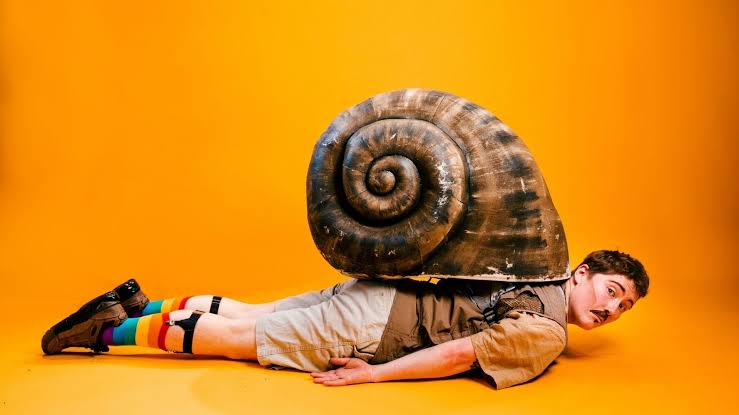
Bi-curious George the drag king, is back again with more theatre based on nature. This time, moving on from an array of animals, George has decided to focus on the humble Snail and I for one came away well informed!

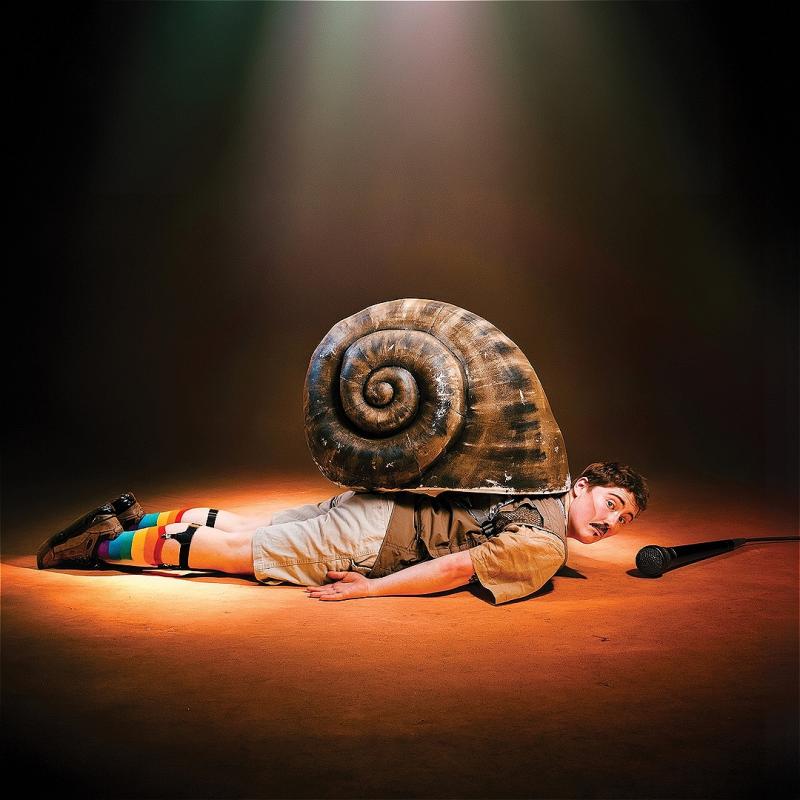
Bi-Curious George: Snail Trail in a comedic drag king act meets reflective piece on transitioning. We firstly expect this to be a full-blown cabaret/drag king act, with the snail as the main focus, as they come on the stage, sllloowwllyy and with a giant snail shell on their back. They interact with us throughout, telling the story of the snail but also themselves, in the most endearing and friendly fashion that we soon feel like close friends. 

George does well to change the tempo and play with our feelings from comedy, to camp cabaret and then personal and very vulnerable moments. We learn intimately about the formation and life of the snail, which I never thought I would be so fascinated by. Thrown in are some exaggerated and humanised elements to bring humour and relatability. But soon there are moments when the shell comes off and they unveil themselves and their journey through transitioning. George is entirely loveable and these moments connect us, whether we can resonate or not. Soon, the comparison to the snail, the “coming out of your shell” phrasing, all makes sense and we soon see why George loves this little creature so much, especially through their personal journey. 

This is a relatively new show and some honing is still needed. Moments which could have been cut down or sharpened slightly but this is all part of theatre and creating art. We already know that with a bit more time, George will have this as sheer perfection like their last show. 

Bi-Curious George: Snail Trail is a raw and honest production, with moments of comedy and one hell of a giant handmade shell.

Review, Mysteries of the Picts, Sauna Sessions, Sauna Theatre, Edinburgh Fringe by Hannah Goslin

 out of 5 stars (5 / 5)

If you had told me that there was a theatre in a sauna… I would have been confused and told you you were lying. Why would anyone think that (albeit genius) idea up? Well, in come Sauna Theatre, who have done just that and triumphed beyond anything. 

I love a sauna like anyone else, but it’s usually just a place you relax as a spa or post gym workout. Not somewhere I really thought of theatre being positioned. How would it work with the intense heat? How does a performer even get on with this environment? But my expectations were by far surpassed with actually how genius an idea this is. 

Sauna Theatre has set up at the wonderful Summerhall, with a huge circular sauna built in their courtyard. Everything is thought of – changing rooms, lockers, places to dry your hair after, spare flip flops, costumes, towels, the whole lot! Comms beforehand with all the things you need to bring as so clear but still, if you need anything or forget anything, it’s all there for you. 

There are a range of sessions you can join – some look like they pull on the traditional sauna, with relaxation sessions in the morning, but there are also raves, night time activities and, what I chose, Mysteries of the Picts – a storytelling, theatrical session where you are immersed in the sauna and the history of the Scottish lands. Anyone who knows me knows my deep love of Scotland, its history and everything in between and beyond. So to know more about the picts in such a setting was truly exciting. I couldn’t anticipate exactly how brilliant it was. 

Set in 3 sessions, there’s enough time to have a short break from the heat, quick cold plunge, drink and back into it. The acts felt like no time at all – I found out later that these were 15 mins each but they were so enjoyable and I was so involved that it felt like no time at all. It was only noticeable when the heat became ever so slightly uncomfortable, meaning the break was well needed and timed. This isn’t a criticism – this would happen at a normal sauna, but part of me never wanted to leave, another desperately needed some cool air. 

The sessions were broken up from the beginning to “the end” of the Picts, picking up on archeological finds and theories, with verbatim voice overs but mainly wonderful storytelling from two actors. They were supported by our Sauna gurus, who equally took up space, adding ice balls filled with beautiful scents of lavender, mead, thyme and then performing intricate and traditional fan and towel movements to circulate the air and smells. It was a wonderful equal measure of relaxation, awe and invested learning. It was absolutely perfect. It evoked the feeling of days gone by of swapping stories across a fireplace and potentially in sweat lodges such as this. It felt tribal, traditional and ancient. We felt part of something more earthly and worldly. 

The end really leaned into the relaxed lifestyle, when our sauna guides really became playful – water and scents dripping from immersed leaves were artfully moved around the space, around us and then, deeply submerged and playfully thrown across us. Cue laughter, an intense coolness and then increase in heat, smiles all around from participants and performers – it really was a beautiful ending to such a fantastic experience. 

Sauna Theatre, Sauna Sessions and especially, Mysteries of the Picts is a tour de force in immersive theatre. An experience like no other, I could do this over and over again, never tire, and only want more. It was total perfection.

Review, Boyking, Lil Wenker, Edinburgh Fringe, By Hannah Goslin

 out of 5 stars (4 / 5)

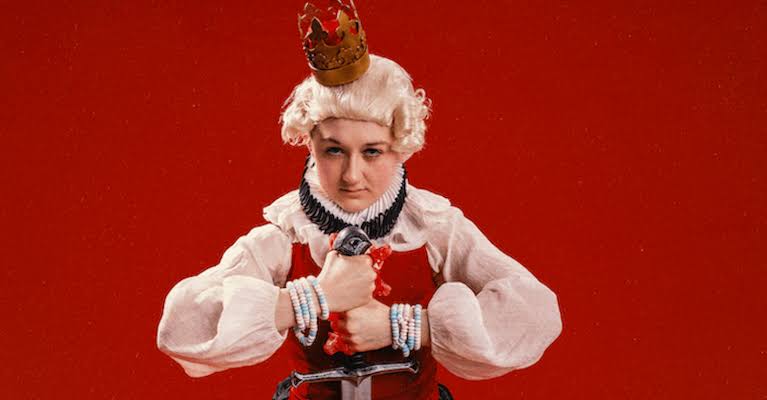
Take all the typical royal stories you hear of succession, throw in a drag king and a whole heap of humour and you have Lil Wenker’s Boyking. 

I was introduced to Lil Wenker last year with their western cowboy turned accountant act and instantly knew I needed to see more of them. This year, they bring the story of 8 year old Prince Wilfred who is 14th in line to the throne and very unhappy about it. What ensues is a catalyst to trudging up his deep and dark evil side, as he embarks on becoming King through any means. 

Boyking is rude and crude from the start. We get multiple characters out of Lil Wenker, from the court jester, to snippets of his father and the odd brother. His mother appears but only as a giant boob, manipulated and grotesque in a Bouffon style appendage that appears from off stage and breast feeds the Prince. The characters are distinctive and prompted with different voices, mannerisms, physicality and associated props which are all very clever to bring the story forward. They’re not deep characters and that works perfectly; enough to give shock but also enough that you’re not emotionally invested. 

Everything is highly elevated and exaggerated. A large crown that allows Lil Wenker to provide some hilarious physicality with audience interaction that could border on too much for anyone else but who for Lil Wenker pulls laugh after laugh from it the more it goes on. There’s also to say that we are all involved throughout; don’t think that you can go without being interacted with or asking for some involvement. And this is always welcomed – it adds to the hilarity and, when audience interaction is unexpected, Lil Wenker is skilled enough that this doesn’t throw them – they go with it and it only adds to the fun. 

There are really dark, black comedy moments however – when Boyking is evil, the grotesque boob, to name just a few and this is a level more than their last show. Without the traditional physical aspect of Bouffon, it still touches on this dark and taboo humour which makes you occasionally gasp-laugh with the shock factor but also, with great intellectual comedy.

Boyking is dark, naughty and ever so funny. Prepare to be hilariously shocked and belly laugh throughout.

Review, Francisco de Nata, Edinburgh Fringe, By Hannah Goslin

 out of 5 stars (4 / 5)

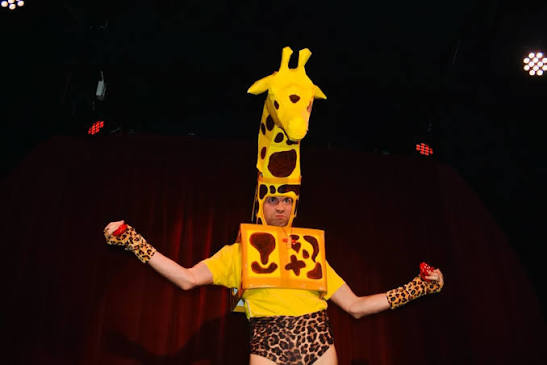
It’s hard to miss a large giraffe head across the fringe. I heard of Francisco last year and sadly never got the chance to see him. But that yellow and brown pattern has haunted me ever since – haunted me for a missed opportunity. 

What transpires is one hour of complete and enjoyable nonsense. I’m not sure if there was a story per se but little small sketches throughout that seamlessly linked into one another or slightly circled back.. The majority of the narrative is to enable a healthy dose of audience interaction and it works very effectively. So, easy to say, if you’re the shy and retiring type, this is not for you – but nothing to fear, Francisco is nothing but friendly, even if his visible bum cheeks feel slightly daunting at first. 

Francisco has made a very impressive headdress, something from Lion King comes to mind. Made out of cardboard and not entirely accurate or anatomically correct, the small hole for his face allows him to make confident and hilarious eye contact, sound and facial expressions. This all adds to the ridiculous humour and there’s no rhyme or reason to why the giraffe’s interactions are sometimes from his face or the giraffe’s inches above him. We don’t question it as it only adds to the humour and ridiculous nature. 

I’ve alluded to it but moving down, we are often treated with a full view of his bottom. There’s nothing sexual or necessarily crude in this, but only elevates the nonsense more and adds to the overall costume – with slightly mismatched patterned accessories, verging on leopard rather than giraffe. It might seem like something that a starting out act might do in absence of funds but this is actually a very clever approach and weirdly goes together. 

There’s a little bit of Mr Bean about this act. Very little actual speech is uttered, and if it is, it’s almost mime. But we entirely get what he means. Slight, more obvious prompts are made to help the audience along but he fully embodies his act through physicality which is innately funny. His interactions with the audience are abundant but nothing terrifying. There’s some slight crude-ish humour – think sniffing his ever growing quantity of g-strings on a washing line, but mostly it has a tinge of slapstick and a touch of flirtation. 

Francisco de Nata is just pure nonsense of the best kind. It’s one hour of surprising comedy, evoking the naughtier side of Rowan Atkinson and providing humour that trails one after the other in perfect succession.

Review Owl at Home – Theatr Iolo at Sherman Theatre by Billie Ingram-Sofokleous

As someone who spends much of my time thinking about stories: How we tell them, who gets to access them, what makes them unique and why they matter.

I often leave the theatre asking myself one question: How did this make me feel? With Owl at Home, the answer was simple. I felt held.

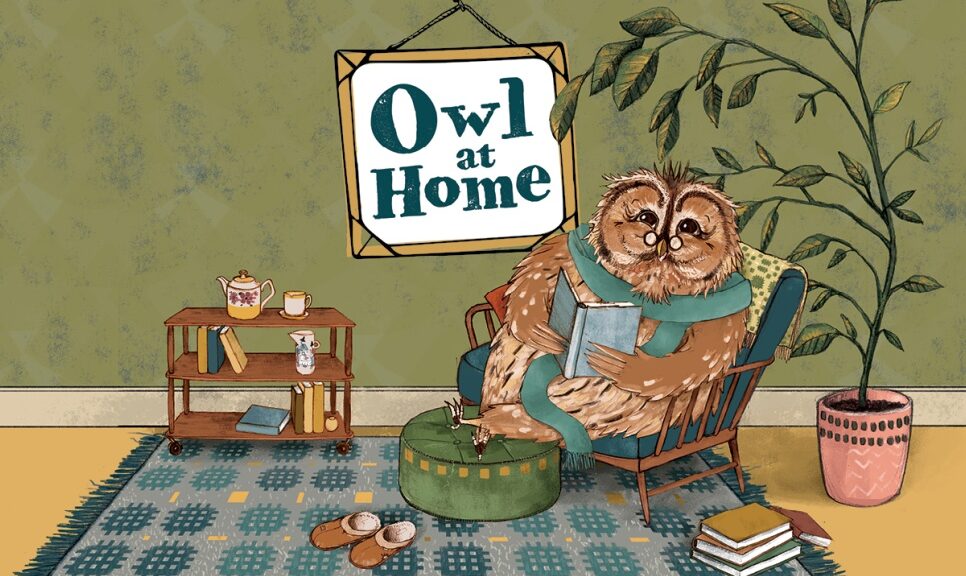
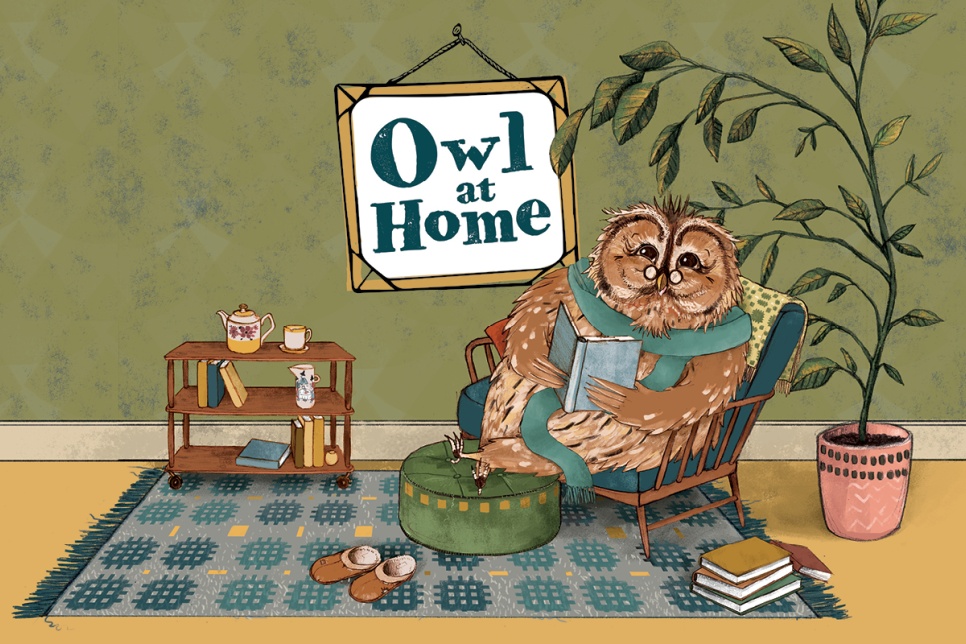
Theatr Iolo has long understood that theatre for young audiences should never talk down to them. Instead, Owl at Home invites us into a gentle, imaginative world where stillness becomes a strength and curiosity is something to celebrate. Based on Arnold Lobel’s much-loved stories, the production reminds us that the smallest moments can often carry the greatest emotional weight.

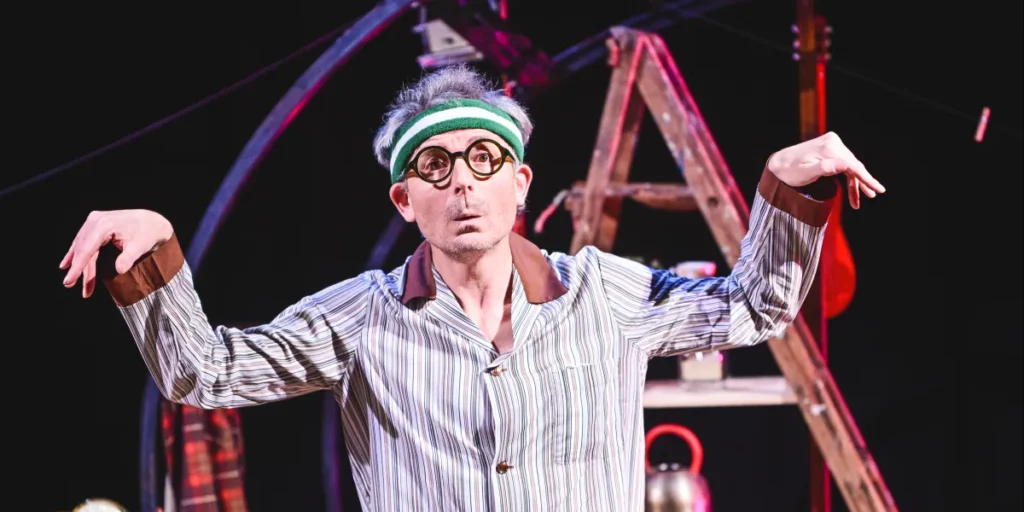
From the moment the performance begins, George Williams fills the stage with warmth, humour and boundless curiosity. His Owl is thoughtful, eccentric, playful and quietly vulnerable. He finds joy in the everyday, creating adventures from ordinary objects and conversations from silence. It is a performance built on trust; by trusting children to understand emotion without needing everything explained, and trusting adults to reconnect with the child that still exists within them.

Williams’ experience in clowning shines through every movement. His physical comedy is beautifully judged, allowing the humour to emerge naturally from Owl’s curiosity rather than from exaggerated performance. He throws himself around the stage with incredible commitment, making every stumble, leap and playful interaction feel effortless. Every inch of the performance space is explored, and every prop has purpose. Nothing feels decorative or unnecessary; each object becomes another opportunity for storytelling, surprise or laughter. It is a masterclass in making a seemingly simple set feel limitless.

What resonated most with me was the production’s commitment to visual storytelling. As an audio describer and storyteller, I spend a great deal of time considering how stories can exist beyond spoken language. Owl at Home demonstrates this beautifully. Movement, rhythm, music and expression become languages in their own right, proving that powerful storytelling is as much about what we see and feel as what we hear.

Music gently threads the production together, adding warmth without ever overwhelming the story. Since leaving the theatre, I have caught myself repeatedly singing Cosy, one of the show’s original songs. It is deceptively simple, wonderfully memorable and perfectly captures the feeling of Owl’s world. To me, that says something about the quality of the writing and composition. The best theatre doesn’t always leave you quoting dialogue; sometimes it leaves you humming a tune that quietly follows you home.

The production also reminded me why I continue to advocate for accessible, inclusive arts experiences. Accessibility isn’t simply about removing barriers; it’s about creating opportunities for everyone to feel welcomed into a story. Before the performance had even begun, this commitment was already evident. A resource table outside the auditorium offered audiences access to song lyrics, a stage layout and background information about the production. These thoughtful additions allowed people to familiarise themselves with Owl’s world in advance and demonstrated that accessibility had been considered as part of the creative experience rather than added afterwards. As someone working in accessibility, these details mattered, and they reflected the care that ran throughout the production.

There is a tenderness running through the entire performance. Owl spends time alone, yet the story never frames solitude as something to fear. Instead, it becomes a place where imagination flourishes. At a time when so many of us feel pressure to move faster and do more, Owl at Home gently reminds us that there is beauty in slowing down, noticing our surroundings and finding comfort in our own company.

Watching the audience was one of the evening’s greatest pleasures. Children laughed freely, leaned forward with anticipation and became completely absorbed in Owl’s adventures. Adults smiled just as often, perhaps recognising something of themselves in Owl’s quiet rituals and gentle optimism. It is rare to witness a production that speaks so honestly across generations without compromising either audience, but Theatr Iolo achieves exactly that.

The production plays 15 – 30 August 2026 Edinburgh Fringe, find out more here

Image Kirsten McTernan

Theatr Clwyd – One gap year later…

Richard Evans talks to Liam Evans-Ford and Kate Wasserberg at Theatr Clwyd, now in the middle of the theatre’s 50th anniversary year following a full year out for a £50million refurbishment.

Reproduced here with kind permission of Theatre Reviews North

Regular theatre-going can be habitual, so there is a potential problem for theatres obliged to alter their familiar plans. Disrupt audience routines and you take the risk of seeing regular theatre visits become occasional visits, with falling audience numbers the potential result.

On the other hand, there is the chance that you will create a general longing for what is being missed – and by all accounts Theatr Clwyd definitely falls into that latter category. 

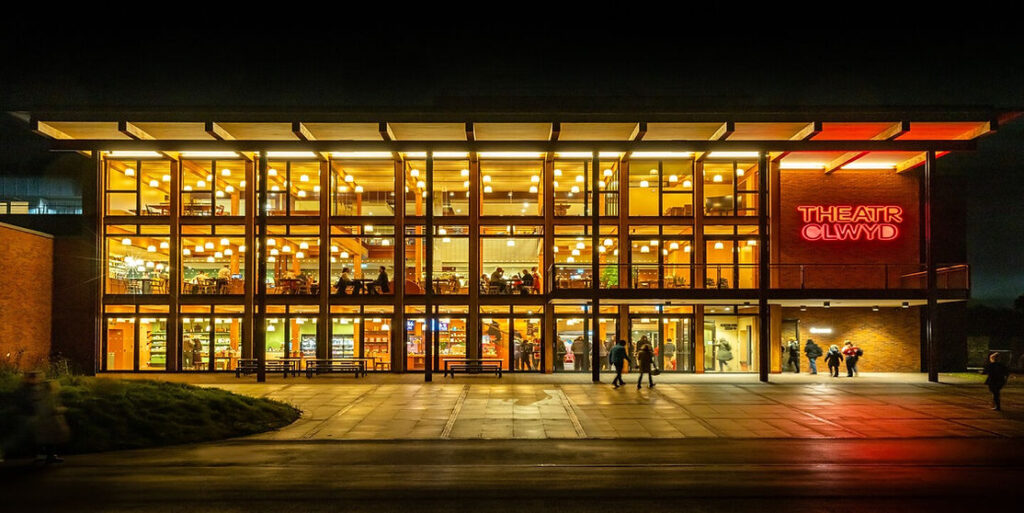
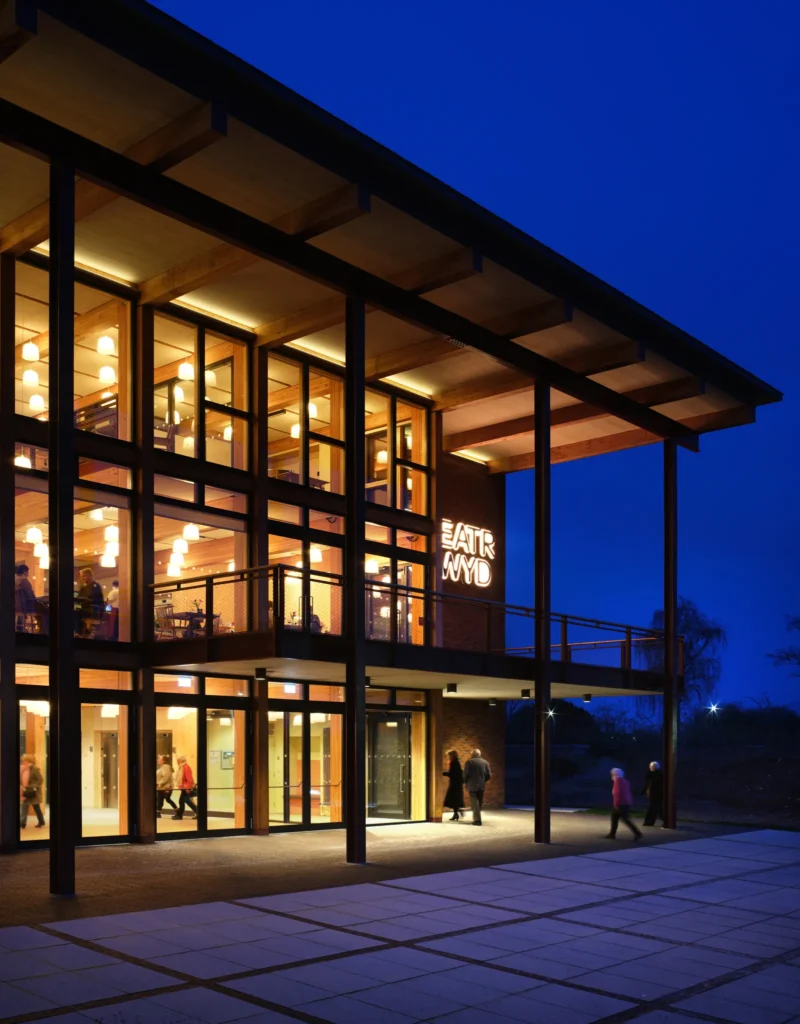
Not long after Covid, the theatre embarked on a huge, £50 million renovation project to revive the crumbling building. Apart from its pantomime, the theatre closed its doors for an entire year, reopening partially in June 2025 and fully that October, ready for the theatre’s 50th anniversary this year. How would the closure disrupt the venue’s operations and followers?

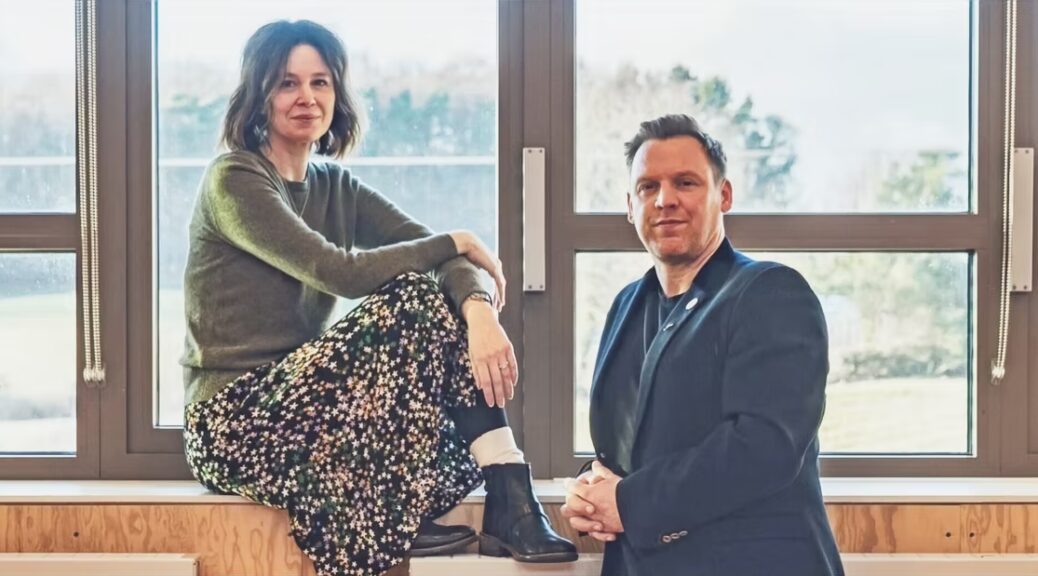
At the centre of the work were Liam Evans-Ford and Kate Wasserberg: the former the theatre’s executive director since 2016 and instigator of the renovation, alongside previous artistic director Tamara Harvey (now at the RSC); the latter the theatre’s current artistic director, appointed in 2024. 

It must have been a little unusual, starting a new post at a theatre doing fewer productions than usual: “It was a slightly chaotic time,” admitted Kate, “but it gave me something most new artistic directors don’t get – the luxury of time to plan. It was also like coming home, as I fell in love with this place when I first joined the theatre in 2008.”

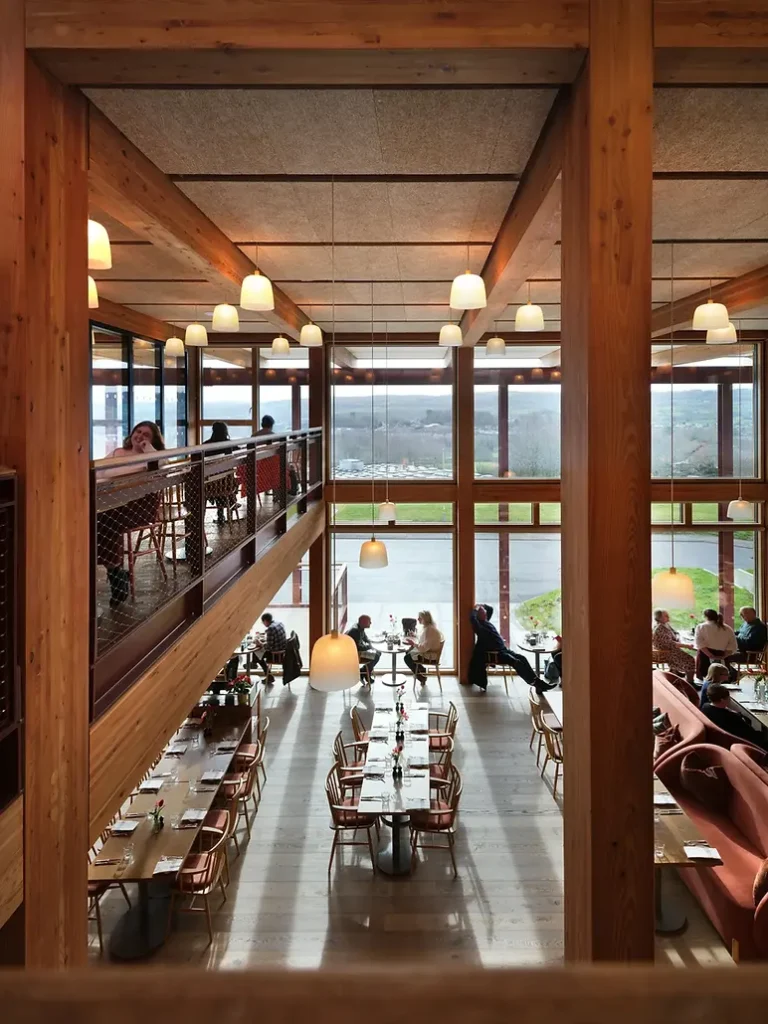
Fears of an audience dip proved unfounded: this anniversary year has so far been a genuine success, with 150,000 people through the doors – matching pre-refurb levels in less than a full year. The theatre has also counted 25,000 covers for the new Bryn Williams restaurant – a substantial improvement on the small, limited cafe that preceded it. The restaurant at last offers the full dining-and-theatre night out, as well as offering an income stream independent of theatregoing, helping to re-establish and build stronger links with the community.

The raw figures don’t do justice to the reach of the work. The theatre now has a core company of 200 people – a substantial increase on 2016, with a strong “team” ethic and a collection of talented individuals engaged in a wide variety of activities. 

“In truth the theatre kept more than a tickover pace during Covid and the refit,” explained Liam. “We used temporary venues and the marquee to keep the theatre working, while community group users of the building met elsewhere in town. 

“But since reopening, the work has blossomed. It’s been a great experience to see people filling the building again, and a reminder that we now have one of the largest, best-equipped theatres in the country. Spaces that we planned, fretted-over, gutted, then saw return to full life, now have people milling around them, making the space their own and enjoying it.” 

There have been teething problems, as might be expected with such a large project – including a major flood that had people in wellies and pyjamas baling water from the building. But even these were considered mere blips along the way.

“It was an excellent illustration of the strong team spirit here,” Kate said. “Many came late at night to help with the flooding, and stayed to make sure the place was cleaned up.”

Liam is proud of the fact that the public consultation held before and during the refurbishment gained responses from more than 8,000 people – meaning the new building isn’t a dry bricks-and-mortar exercise conducted in an architect’s office and the boardroom, but the expression of a mass of people – some professional, but most just keen to have their say. 

The result is a familiar but imaginative space that promotes theatre in its widest sense. Theatr Clwyd now has more diversity, even though the function room, the children’s play area and the wellbeing garden have still to be completed; there is an increase in casual visitors, and the community groups have returned; everything from amateur theatre for all ages to groups working with young people at risk and families in areas of high social deprivation, early-onset memory loss and even the menopausal now call Theatr Clwyd home. The theatre also holds storytelling experiences in local libraries and has taken responsibility for delivering music lessons to Flintshire schoolchildren; Theatre Clwyd is much more than a stage, it’s a community hub.

Having said that, an ambitious, forward-thinking programme is at the heart of the theatre. The building reopened with Tick Tick… Boom! and went from that slick, modern American musical to The Red Rogue of Bala – a decidedly local tale of a Robin Hood-like outlaw, as well as productions such as Our Town, Under Milk Wood and Twelfth Night – universal stories, but with a local, human feel. And there was also, of course, the pantomime centrepiece, bigger than ever…

When asked about the key things she wanted to see, Kate was clear; “I want to promote the wealth of talent we have in Welsh theatre, and lead with new Welsh work, while continuing to offer huge variety,” she declared. 

“I also want us to be representative of the entire community, even those currently marginalised in society. That was one reason behind our distinctive LGBTQ take on Twelfth Night, and the prominence given to deaf, disabled and neurodivergent people in Under Milk Wood. It‘s important for people to see themselves represented on stage. It also helps to start conversations that cause people to consider their values and those of the people around them”. If this approach proves successful, it moves theatre into the education field, as well as that of entertainment.

The presence of two renamed stages: the main auditorium, Theatr Moondance and the smaller, more intimate Theatr Weston allows for highly popular productions and also smaller, niche presentations not chosen for their profit potential. The smaller theatre has a full-sized stage and adaptable seating, permitting theatre in the round or an apron stage, and its intimacy brings an immediacy that is hard to capture in a big theatre. Most recently, Theatr Weston hosted Atlantis, a new play by Welsh writer Emily White, that picked up on the experience of Fairbourne in West Wales, where a decision was made to stop reinforcing sea defences and allow the global warming-induced rising sea levels to overwhelm the town from 2052. Not a play expected to draw big crowds, but a distinctive, thoughtful addition to the Theatr Clwyd programme. 

Liam is grateful for the Arts Council Wales funding that makes such productions possible: “There’s a two-fold benefit,” he explained. “The theatre can promote less popular, more thoughtful productions – where performance is more important than profit; and it allows ticket prices to be kept lower.” 

Some price rises are inevitable, given current political and economic pressures, but Theatr Clwyd’s regular theatregoers can still buy a ticket for less than £20, with further discounts on season tickets. 

“That makes us more accessible to nearly every section of the local community,” he said. “It allows people to choose a more unusual show, one not to their usual taste. We hear all the time from people who say they went to something they wouldn’t normally go to, and thoroughly enjoyed it.”

At a time when some theatres are struggling, Theatre Clwyd has had a highly successful year with a lot to be happy about, but of course that need not have been the case. Big-name, big-budget productions in London are often very successful, but the number of West End productions touring is falling, and some regional theatres face hard times. Many theatres, especially subsidised regional ones, must work ever-harder to build their audience, which means taking an active role in the local community. This is where Theatr Clwyd scores: two highly impressive aspects of its work are its distinctive programming and its commitment to the local community, the latter supported by local authority funding.

Having opened in 1976, the presence of the principality’s major producing theatre in a market town of only 10,000 people has made a significant contribution to the local economy, and is one of the factors that makes Mold a thriving town when others nearby have suffered the closure of vital amenities. 

Despite facing challenging circumstances, there is an optimistic, ambitious vision driving the management, one that intends to maintain the legacy of 50 years of well-loved, distinctive theatre and strives to become one of the arts world’s best employers.

“The last 10 years have been a bit of a roller coaster, to say the least,” said Liam. “The realisation that the theatre as it stood was unsustainable, then Covid, then moving the theatre to temporary accommodation, closing the building, then a reopening; it wasn’t the easiest of rides!”

“But the place is alive again,” said Kate. “We did our best to keep people coming to theatre activities during the closure, so the hiatus was less of a blow. Now there is a revitalised theatre, inhabited by a group of people who couldn’t wait to return to make it thrive again, visited by audiences who have returned to make Theatr Clwyd something of a cultural home from home. 

“We have every intention of keeping that feeling going for another 50 years.”

More info here