
Everyone loves a good murder mystery. Popularity of this genre has increased with Hollywood films such as Knives Out and The Thursday Murder Club, so it feels fitting that it comes to and is popular at the world of Ed Fringe.
As the title suggests, this production takes all the combos of the quintessential murder mystery, but puts the plot into our hands. Murder mystery meets improv – there are prompts and certain things in place to help, but with the help of the audience, how this actually transpires is completely unplanned. In our scenario, this is the case of the big sausage, set in a p*ss up in a brewery, which already gives us giggles and that typical British humour. There are often little innuendos and suggestions that continue the typical British humour in that wink wink nudge nudge kind of way.
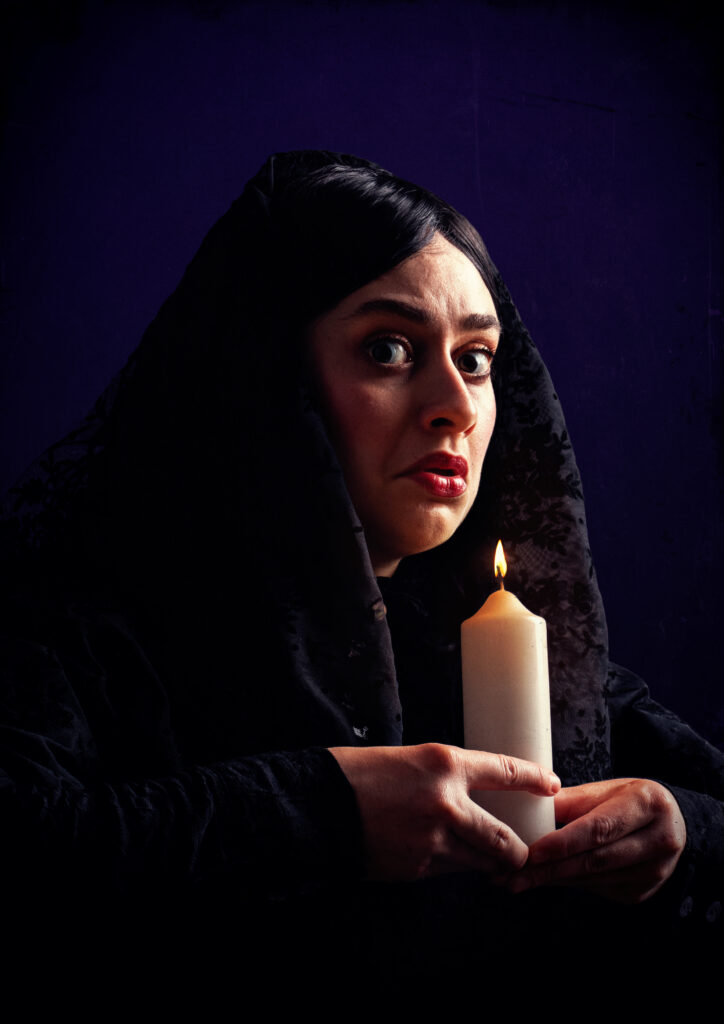
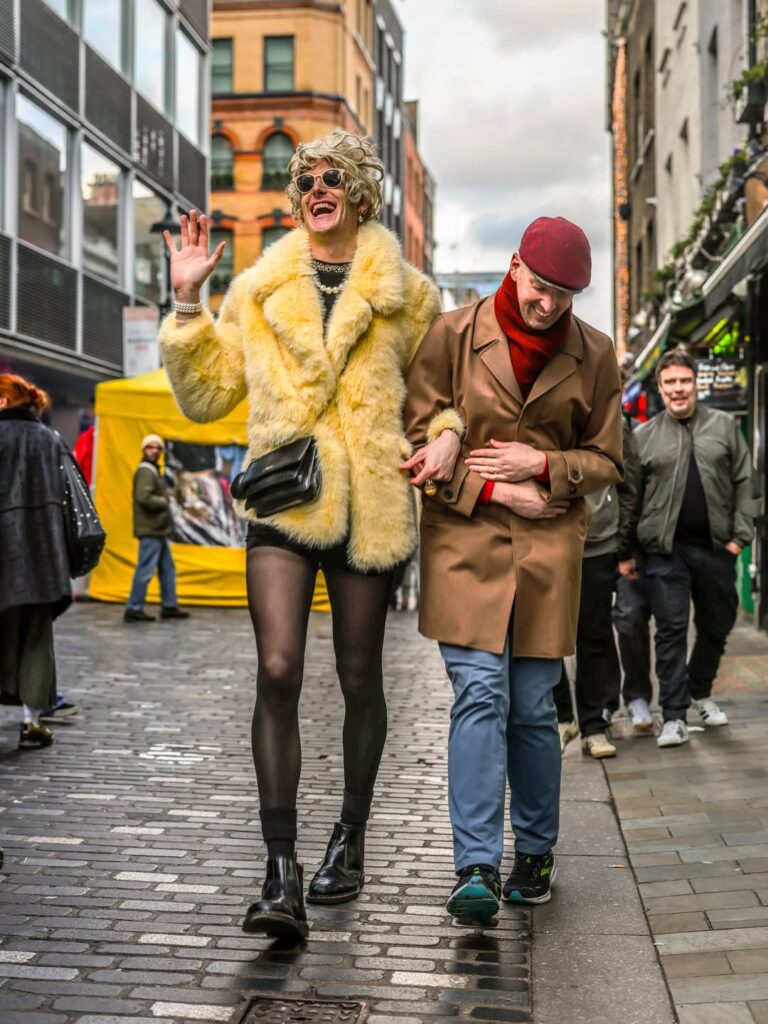
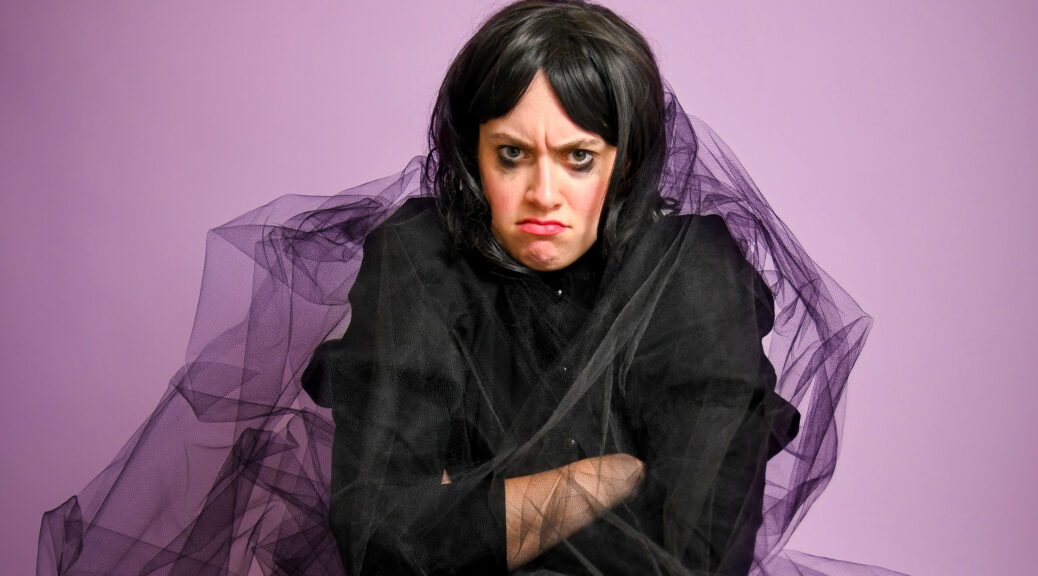
The set itself is resplendent – very well made, featuring on quite a large stage with sold out seats. There’s a great sense of “Cluedo” with the chosen aesthetic and the monochrome colour choices – one character is all in yellow, one in green e.t.c. Our host has a essence of Miss Marple meets Jessica Fletcher, with slightly stereotyped and exaggerated elements in her dress and conduct. She has the power to stop and start and entice certain moments, with a tongue and cheek essence that clearly shows a great relationship and banter culture with her fellow actors by cheekily making things a little harder for them. Moments of corpsing comes from all of them; silly suggestions, recognition of Jessica Marple’s attempts to throw them, the comedy that comes from the minds of their colleagues as they improvise and, in this big space, this lets us warm to them and be part of their group.
Overall, Murder She Didn’t Write is a brilliantly and professionally constructed audience participatory improvisation show. It effortlessly links all the stereotypes of a murder mystery, engaging with us for prompts to continue the comedy and showing a real skill in creating a whodunnit on the spot.
More than ever, we are concerned about how the world is. It is slowly decaying and the extinction of wildlife continues. In this one man performance, we really take a look at this on a mass scale in a clever piece of performance art.
Tom Bailey is already in full performance mode. With a basic presentation on the wall behind and accompanied by a vocal announcement, there are bizarre names, latin, some are comical, some unusual, some complex, this prompts Bailey to attempt to impersonate the animal. As soon as we are sat, he interacts with us, climbing amongst us, or encroaching on our personal space, in a way animals would. We are also asked to take a card and later think about what the animal may be, how they may hunt and live. This is all very comical and fun, full of energy and changes in movement.
However, once we are lulled into this comfortable state, we are starkly hit with the reality. A almost pre-show, durational performance, Bailey trekked across miles, with a sheet listing the hundreds of thousands of animals extinct, creating photography pieces in these landscapes. In person, this is accompanied by an explosion of bones across the space, which he continues to perform physical theatre amongst, changing the comical dynamic to something blunt and dark. This combination has not only made us comfortable to accept the change, but puts us in a position of realising reality in a in-your-face way. It is clever and ever so moving as well as highly performative.
Wild Thing! sets out to make a serious point about the state of the world and its demise, with the use of clever comedy to soften us until hitting us with the dark reality. It is fantastically performed and curated to be not only a piece of theatre but performance art with a host of supporting media, making very important commentary on the destruction of the environment.
The opening, show stopping number, ‘There’s no business like show business was lively, passionate and well coordinated and indicated that it was the former, a musical. One would then expect the stage to clear and the acting to start, but instead the ensemble sat down in serried rows and the action took place in front of them, indicating it was more of a concert. In this way the production was neither one nor the other.
The story of Annie is loosely based in history. Annie is a poor girl who traps and shoots animals to feed her siblings. She is set up to challenge Frank Butler, a sharpshooter in Buffalo Bills Wild West show and wins. She then joins the troupe and falls in love with Frank but he will not accept Annie’s new found fame and leaves for a rival troupe, run by Pawnee Bill. Buffalo Bill’s show tours Europe to great acclaim but little financial gain so has to come home and merge with Pawnee, thus bringing the two stars together again. When Annie loses a shooting match to Frank on purpose, they are reconciled and get married.
The company are enthusiastic in their endeavours despite being self conscious at times. Jade Pritchard is well cast as Annie and has a great voice. She has a good rapport with Gareth Hughes as Frank especially when they are acting as rivals. Their duet with ‘Anything your can do I can do better’ was memorable. Annie’s young siblings, Grace Hill as Jessie, Abigail Garner as Nellie and Arlo Lucas as Little Jake were a bundle of energy. The action though was static at times, limited by the staging where the action took place behind four microphones at the front of the stage. The production also lacked attention to detail especially in costuming, with some 20th Century shoes on show and the odd suit that seemed straight out of the 1970’s.
The musicals main characters in real life, Annie Oakley and Frank Butler were indeed natural sharpshooters. Annie came from an impoverished background until she won her shooting contest with Frank. They married and formed a performing partnership with great success. Annie, in a long career went on to support women’s rights and to teach self defence lessons. The Hollywood version is a more saccharine coated, sanitised version where Annie has to lose a second shooting match with Frank in order to win his heart, indicating perhaps that the male ego could not stand the prospect of being less successful than a female.
The musical raises a question, what does a man look for in a woman? According to the song, ‘The girl that I marry’ she will be ‘as soft and pink as a nursery’, wearing satin, laces and cologne and having polished her nails. And that is what Annie had to change to be in order to get her man. This seems a world away from the real life Annie, and out of kilter with many women today. However, this should not stop us enjoying what is a feel good show with great Irving Berlin songs and which was enthusiastically and competently performed by the company.
Welcome to the wild, wild west, run by your fearsome and hysterical local cowboy, Bangtail, where no one is safe, no matter where you sit.
Lil Wenker brings the character of Bangtail, the rootingist, tootingist, bad boy around. Unable to be shot, and a riot with the ladies, it all soon crumbles, when his audience-based nemesis manages to injure him. What is his calling now? Why that of accountancy of course! But is either his true calling?
Bangtail can almost be seen as a two parter: we begin being introduced to Bangtail, with his western tropes played on for satire (think spoons instead of boot spurs), where he immediately gets down to business of interaction with us. We are soon barn animals, a select few becoming key characters such as the nemesis or local drunk lady, and his interactions with not only them but us is full of comedy, with smart writing, slapstick and clowning skills. He’s not afraid to prolong the laughter, ignoring the rule of three and pushing the boundaries, leaving us in hysterics.
This continues when changing to the next part, his accountancy era. With clever writing and direction, the comedy and clowning is still there, new and fresh but old ideas are newly presented, almost as a satirical flash back to the past. The audience characters continue but in different guises and so we continue to find hilarity in the basics already set for us. The physical comedy continues, with gusto and high energy and we almost become delirious through giggles. However, the accountancy part felt more into a thought provoking part of the narrative and, while still with moments of comedy, lost a little of the giddiness we felt in the first part.
Bangtail is smart, it is high-level comedy and clowning, with very clever writing and overall concept. Lil Wenker is nothing but a fantastic performer, holding our attention and with instant ability to make us laugh.
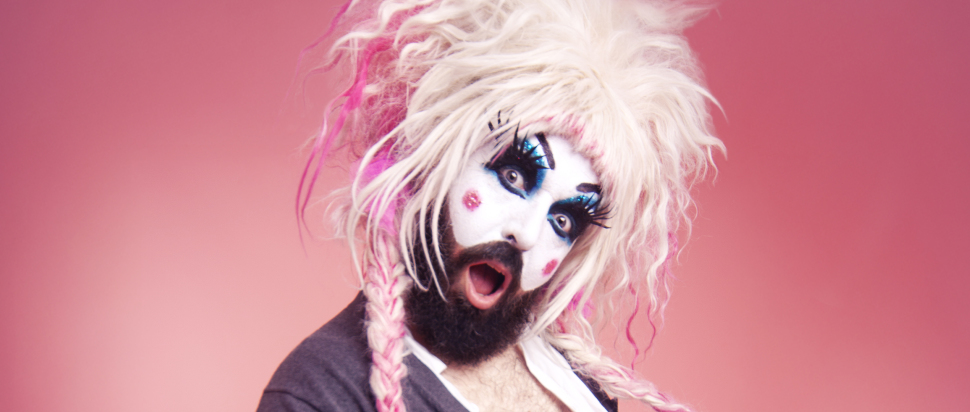
If you are looking to have a riotous fever dream of a time, please see SLUGS. With no idea what I was going into, I fell into an absurdist pit of chaos and colour.
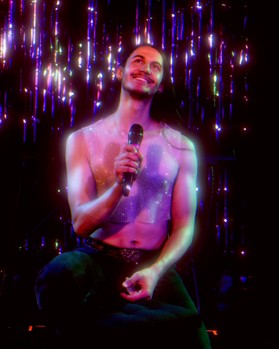
SLUGS is a show about nothing. Nothing at all. Or that’s what they want you to believe. In fact its deep commentary on art, artists, the queer community and the quest to bring back the bonkers to the theatre scene. Think clever puppetry projection, bizarre and sometimes grotesque scenes featuring being nude and some beans (separately), high audience interaction and interjections of electronica. Think of a more adult version of The Mighty Boosh, and you will be somewhere near.
The Creepy Boys have no filter, no boundaries and this is what makes this such a hilarious and bizarre show. It is absurdist at its highest and is so unbelievably funny, you struggle hard to breathe. Kruger and Grummett are a fantastic pair, bouncing off one another and following as one mind into the chaos. Two peas in a pod in every sense, one cannot do without the other to propel their high concept and strange art directly into our faces. They equally have little boundary with us, involving us and not being afraid to offend – luckily, their audience is of the same mind. They are highly energetic and the pace of the show is at its top velocity consistently, one can only imagine the weeks of sleep they need after.
They use every inch of space and multimedia available to them – from basic theatrical and performance art skills, to projection on the back wall where they produce skilled and mad puppetry scenes, as well as climbing into the crowd and across seats, not one bit of the room is unexplored.
SLUGS is almost hard to put into words, but in all the best ways. It is utter brilliance and complete insanity and completely what fringe is about.
Set in Summerhall’s anatomy lecture theatre, we spend an hour speeding through, almost at the speed of light, feminist history of the known and unknown.
Aether, performed by TheatreGoose and written by Emma Howlett explores our human fascination with the scientific. We are propelled from modern day to ancient history to more recent centuries, where discoveries and investigations are made to try to understand the unknown. All with a female at the centre, we see how science is conceived into other ideals such as witchcraft or magic.
TheatreGoose have almost made this play specifically for this space. Arming us with whiteboards and pens, we immediately feel as if we are part of a lecture, engaging with us later in just that fashion. The circular space in front of us features only a blue curtain that is played with throughout, but still managing, with the use of a handy projector (if you’re old enough to remember the ones with the plastic film that you swapped in and out), to utilise the small space by projecting onto the ceiling above – although, blink, and you may miss it!
The performers are all brilliant in their own rights, each with their own unique take, whether this is within the ensemble or in individual characters. With very little props or pieces of costume, they add these subtleties to try and make it clear the change along with their own changes in movement or voice.
While it’s well performed and looks the part, for me the story-line felt slightly disjointed. Whether it’s my own lack of knowledge in the science sphere, I struggled to find what the connections between the stories were and how this related to the modern character. There is maybe one or two moments of her investigating this but it doesn’t cover them all. Each story in their own right was interesting and well presented, but as a whole, they did not feel as if they quite knitted together.
Aether is a really interesting approach to joining science and art, with a great use of the space and wonderful performances. However, the stories themselves seemed separated with no clear conclusion of how they were to come together.
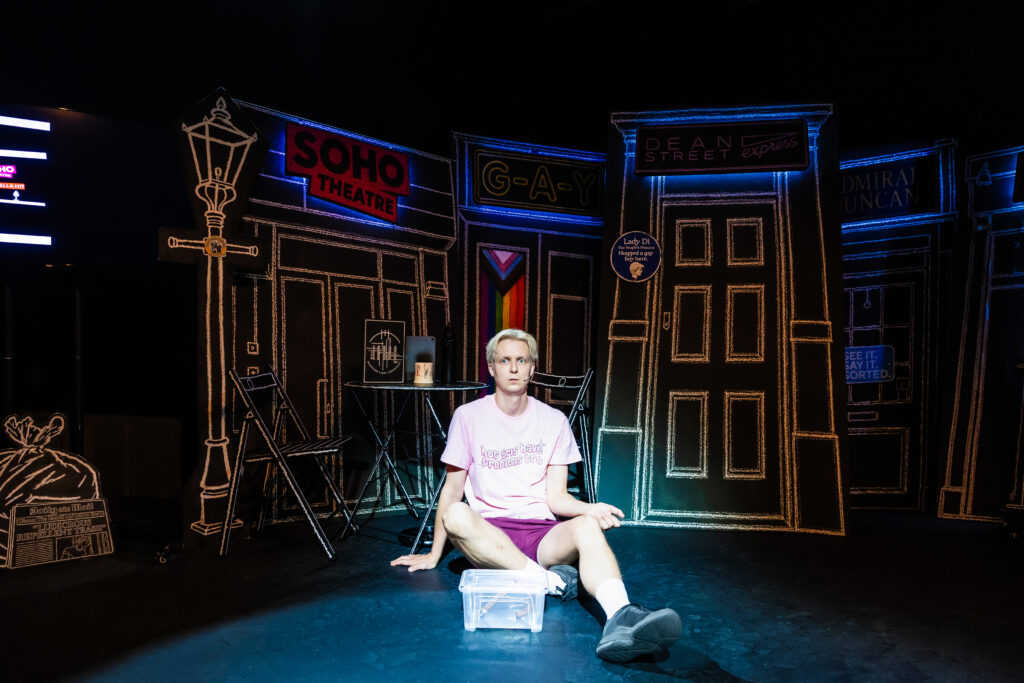
It’s clear after seeing all their productions so far, Awkward Productions have conceived and executed well their own take and blueprint for comedy, queer theatre. Just like Diana: The Untold and Untrue Story and Gwyneth Goes Skiing, The Fit Prince […] approaches the story with gusto, humour and using a range of theatrical techniques.
Pulling upon hallmark Christmas-style movies that have recently blown up amongst the Millennial and Gen Z generations (and often starring stars of Millennial’s youth) Awkward Productions have taken these cheesy and purposefully fanciful tales and approached with a loving satire.
The Fit Prince […] features the story of a Swedonian Prince who must marry in the next two weeks as the heir after the King has suddenly died. In his quest to find someone to marry, a New York baker is enlisted to come and make the wedding cake, soon becoming close to the Prince where they fall in love with one another. In amongst this, there are plots to overthrow the Prince and random but well conceived plot points, providing endless comedy.
Awkward Productions clearly know they are fast becoming a cult following. References to previous shows, such as a Diana look-a-like in the Queen, a prop from Gwyneth goes Skiing making a guest appearance, they are not only creating new comedy but adding references that only the true followers will know. This provides such smart and hilarious moments that you can’t help but guttural laugh at.
The staging, props and multimedia used is so professional and well constructed, they effectively set the scenes but also help to support their unique humour and theatrical approach. At the same time, there isn’t any attempt to be “perfect” or serious; our guest stars appear on a screen with dubious backgrounds such as found in a zoom call, a very well made prop cake is carried around but referred to in a moment as “fake”, showing that they by no means take themselves serious and this is entire satire.
As well known by their comedy, a lot of their “support acts” are members of the audience and this brings its own moments of comedy that our main performers and creators, Linus Karp and Joseph Martin (now an official married couple as took place on stage for real this year!) do fantastically to improv on when it doesn’t go to plan or further add to their comedy performances.
And during this, they have fully lent into their puppetry skills; Diana and Gwyneth both had a bit of this but these have been brought back as subtle nods and as supporting cast, with a newbie amongst the group; the Orphanage’s matron, played by Martin in a cloak and an amazingly constructed head and arms, bringing a almost Roald Dahl-esque figure that is purposefully imposing and so well performed.
The Fit Prince (who gets switched on the square in the frosty castle the night before (insert public holiday here)), is a totally bonkers, highly comedic and ridiculous (in all the best ways) production, continuing Awkward Productions firm stomp of unique theatre on the scene.
“Brainsluts”, a term apparently used for those taking part in a clinical trial, titles this production of a similar context.
Following five clinical trial participants and a Doctor, we watch as their relationships build and change from strangers to something else over 5 Sunday sessions. Love blossoms and dissipates, vulnerability is shared and friendships are formed.
This production is a very simple set up. We encounter the same room with a set up like a waiting room meets clinical room with furniture and props to support. Times when the fourth wall is broken for the Doctor to speak directly to us is simply set up through freeze frames and a lighting change. It is all effective and works well for this straight forward piece of writing.
It is a humorous narrative, with very different and, at times, stereotyped characters, their interactions provide their own comedy with the help of the well constructed narrative. Their interactions with one another feel genuine and flow easily, with no trips, stumbles or lack of confidence. We utterly believe each character and their relationships with one another. Comedy is also found in awkward moments constructed and feels very “British” in its approach to these. Generally, the story is very well constructed and gives the sense of a sit com on stage.
Brainsluts is an enjoyable and well written production, with moments of well constructed comedy and plot points, all executed very well by the performers.
In collaboration with the Alzheimer’s Society and Neuroscience Professor Kate Jeffery, Theatre Re bring a heart warming and breaking tale of dementia in physical theatre form.
Based in one of the Pleasance Courtyard’s biggest spaces, the stage is taken up by a skeleton stage, with all the props, costumes, staging for ever changing scenes on bare display. Throughout the production, changes in costume and set happen in front of our eyes, bringing a no-secrets and vulnerable view to the production, perfect for such a touching and vulnerable tale.
The Nature of Forgetting is the story of Tom, 55 years old, living with dementia. As his birthday approaches, he is soon triggered into viewing past memories and reliving his former years. This includes childhood all the way to the present, with relationships with his mother, his budding romance with his school sweetheart and the birth of their daughter and his best friend throughout all this time.
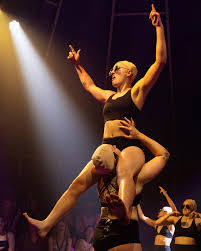
On a square piece of platform is where the majority of the action takes place. Supported by a live band at the back, little speech is heard but perhaps the occasional name or murmur of interaction. This is mostly physical theatre and dance and is very high energy. It is beautiful and fluid and happens so effortlessly. It is playful and highly interactive between the performers. It clearly and artfully tells Tom’s tale, with plenty of room for simple interpretation. As any physical theatre or dance requires, there are feats and movements that are only possible through brilliant skill but somehow are made to look completely easy. They do this and successfully evoke the roller coaster of emotion we feel through the highs and lows of Tom’s life.
While the performance needed a big-ish stage and was highly popular, therefore needing plenty of seating, it felt a little lost in this space. No matter how big the performers movements, it felt a little diminished in such a large space. The beginning began with Tom and his daughter, not mic’ed up (and usually I am actually against mics anyway) but their vocal interaction, no matter how brief, got lost in the vastness.
The Nature of Forgetting is a touching and heart breaking tale of dementia, the ease of confusion and how it can propel one into the past, all elements that people with dementia likely experience. It takes us through the love and loss through a normal life and one affected by dementia and is energetically and effortlessly performed, resulting in a beautiful piece of work.
The noisy member for Ebbw Vale. The stuttering orator. The father of the National Health Service. Growing up as a Valleys girl I was always told that the NHS was created by a Welshman;, but I never truly knew the full story behind the man, Nye Bevan, whose vision for a better, fairer world, was the driving force behind creating the National Health Service. I first encountered Nye at the Wales Millennium Centre in its previous run in 2024. It’s safe to say that my visit to the revival version in 2025 still left me reeling with emotions; high with laughter one moment, face wet with tears the next.
In a time where the NHS is under much scrutiny; undervalued, understaffed, underfunded, Nye takes us back to its infancy, with the opening pages revealing Aneurin Bevan recovering from an operation in one of the very hospitals he built. The staging here is a thing of beauty, the set and ensemble create a budding National Health Service, the hustle and bustle of the ward’s essence captured perfectly. From there we enter Nye Bevan’s dream and his journey from a Miner’s son in Ebbw Vale, through school, endless tribunals and countless committees, to the Houses of Parliament and eventually to his role of Minister for Health (…and Housing) and his ‘vision’ come to life in the creation of the National Health Service.
Nye is, to my mind, a masterclass in writing. The scene in Tredegar Library is a particular favourite of mine, delivered with a deftness of touch but an undeniable Welsh Valleys flavour. Another is the ‘seam’ with Nye’s father, David; a poetic explanation of what it truly meant to be a ‘learned miner’ with the ‘one true blow’ counterbalanced perfectly with the undeniable voice of the Valleys Welshman. The writing throughout truly captures the lives, the spirits, the souls of the people of the coalmining town that Nye Bevan called home and the wider political world he came to inhabit. Tim Price’s pen brings the Valleys to life before my eyes and it is a Valleys that is achingly familiar to me.
The set is striking and with a swipe of a hospital curtain we are transported throughout the world of Nye. Vicki Mortimer’s striking set with its various levels of green ward curtains move us effortlessly throughout the tableaus, and when they are fully removed, the stage is all the starker and bleaker for it. The emptiness of the stage with the single hospital bed at the end of Act One is stunning in its emptiness and simplicity, and shows the audience, with brutal honesty, that the end of a life is just a son holding his father in his arms and telling him not to fight anymore. The projection design by Jon Driscoll is one of my favourite parts of the production, in particular the scene where Nye first takes up the mantle of Minster for Health and crowds of people in need start walking towards him in desperation. It’s so simple but the execution is flawless. Lighting, sound and music are also excellent, designed by Paule Constable, Donato Wharton and Will Stuart respectively.
Director Rufus Norris is joined by the Revival’s Co-Director Francesca Goodridge, alongside Co-Choreographers, Steven Hoggett and Jess Williams. The way the cast and ensemble move and flow in this production is beautiful; humorous and heartbreaking. The flow and creation of tableaus in Nye, quite frankly, takes my breath away and is an absolute testament to the direction and choreography of the piece.
The cast of Nye is, without exception, phenomenal. There are very few changes from the production in 2024, and you can feel the trust and security that the actors feel in one another. The physicality as they swap and change from various ages in some cases, and roles in others, occurs without fault and without ever jarring the audience’s imagination, morphing from nurse to sister, doctors to politicians (and back again). I would be remiss, of course, not to mention, Michael Sheen in the titular role. He truly embodies Aneurin Bevan; never shying away from his flaws and human condition, with a healthy tot of charm thrown in. The physical wrench of his stutter is painful to watch, juxtaposed with his burgeoning confidence as he first meets Jennie Lee (played with great poise by Sharon Small). I never thought I would get to see Michael Sheen musical performance, full of vigour and swagger; and only a heartbreaking few moments later we see him clutching his dying father in his arms, in a moment which left the audience reeling. What a huge weight to fall on an actor’s shoulders to portray, not only a real person, but one so universally revered and admired, even idolised in his hometown. The respect, poise and gravitas that Michael Sheen brings to this role is nothing short of breathtaking.
Nye truly is a love letter to the National Health Service, in a time where it needs OUR care and attention after years of giving so much of that to us. The play is not so much a ‘call to arms’ as a reminder of all it took to get Nye’s vision to be realised and of the utter travesty it would be to lose that now. But Nye is more than a story of the realisation of the health service; it’s the journey of a man, his life, his triumphs, his flaws, and the people who touched his life along the way. Nye is an absolute triumph and a testament to every single person who has brought Aneurin Bevan back to our minds and our hearts.
Creating opportunities for a diverse range of people to experience and respond to sport, arts, culture and live events. / Lleisiau amrywiol o Gymru yn ymateb i'r celfyddydau a digwyddiadau byw