Category Archives: Film & TV

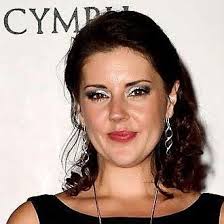
Review, Parch, S4C by Gareth Williams

 out of 5 stars (4 / 5)

Last Sunday evening, I spent a good ten minutes with my hand firmly placed over my mouth. In the final episode of S4C drama series Parch, there was such an unexpected twist that I simply hadn’t seen coming. In my own words, ‘Well, that was a bombshell and a half’. To think that this is it, that we will no longer be following the crazy and chaotic life of the Reverend Myfanwy Elfed, is more than a little sad. Yet writer and creator Fflur Dafydd has reached the conclusion that this is a good time to say farewell to this most lovable of protagonists. It’s a little frustrating. Carys Eleri has brought such warmth and wit to her character that it has always been a pleasure to share in her company of a Sunday evening. But if she must go, then she has gone in the most beautifully tragic of ways. It felt like Dafydd always knew how this series was going to end. It made the final scenes no less surprising though. And for someone who has journeyed with Myfanwy through all three series, the emotional impact of this final section certainly hit hard.

It is only retrospectively looking back at the narrative arc of the main character that you begin to see the full artistic vision of Fflur Dafydd for Parch. As such, although gutted that this is the end of the road, I applaud her for having the conviction to draw a natural line in the sand and stick to it. So many TV drama series’ these days have a tendency to drag on a bit too long, remaining on our screens on the basis of their initial commercial success. What would have been the right time to stop is made into a springboard in an attempt to give fans more of what they love. Yet for so many it is like carrying on after reaching the edge of a cliff. Few fly. Many fall. As a result, I’m rather glad that Dafydd has refused to bow to the desires of people like me who want to see Parch continue. Instead, it will remain an ever-affectionate drama in my mind rather than a hoped-for return to a glorious past. Not that the series has to end due to Myfanwy’s absence. It is testament to the strength of Fflur Dafydd’s writing that, over the course of these three series, the focus has been as much on the other characters as the cleric of the title. As such, although initially a contemporary representation of a female priest within the Church in Wales, the series has also seen a broader focus on the trials and tribulations of the Elfed family and those around them. We have been involved as much with Gwenlli (Non Haf) and her struggles with her sexuality, for example, as we have been with Myfanwy and her faith. This final series, in particular, has been such an enjoyable watch in part due to Dafydd’s ability to hold the various storylines onscreen together. She has woven romance, mystery, fantasy, and family drama together so brilliantly that, in the end, it has become an ensemble piece. But, ultimately, it would be odd to continue in her absence. Even if she were to be like the ghostly visions that have accompanied her throughout the series’, somehow it wouldn’t be the same. In the end, Fflur Dafydd has made the right decision to bring Parch to a close.

Parch is another example of the high quality television drama that is currently being produced in Wales. As I’ve said recently, I think this is something a golden age for Welsh television drama. Having watched it alongside Keeping Faith, I can honestly say that Parch ranks just as highly in my view. It may not have won the plaudits that Keeping Faith has, but it has shown a quiet strength, epitomised by Carys Eleri’s performance. Whilst Eve Myles showcased her bold and brash physicality in Keeping Faith, Eleri has brought a humorous vigour and subtle power to her character in Parch. In doing so, she leaves behind an indelible mark of a veracious female lead who will be sorely missed.

So thank you, Fflur Dafydd. You may have left me in tears at the end, but the past three series have been a joy to watch. Parch will be missed.

Review Mary and the Witch’s Flower by Jonathan Evans

 out of 5 stars (3 / 5)

With the fate of Studio Ghibli still uncertain, what are all the talented artist and storytellers to do that worked there to do? Get up, form their own studio and make a movie. Good for them!

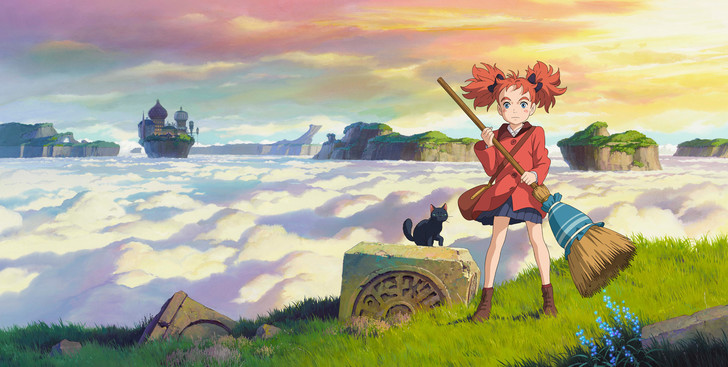
Mary and The Witch’s Flower is the movie debut of Studio Ponoc and they take it upon themselves pick up the baton to create accessible movies for children that are just as filled with whit and inspiring images that would wow an adult.

From its first scene, it is here to intrigue and impresses. A hooded figure runs away from other hooded figures, they carry something. They grab a broom and fly away on it, grey, blobby being chased them and the tree city they came from explodes. While being pursued what the hooded figure has is dropped into a forest and so is their broom. We instantly have many questions and there is a lot of color, sound, music and beautifully realised animation to kick off the movie already.

We then see a little house in the countryside and a young girl by the name of Mary (Hana Sugisaki) is moving in. She wants to help but she is a terrible clutz, not even being able to tie a flower or pick of a box of her stuff without causing a mess. While exploring her new home she comes across two cats, one grey one black. They lead her into the forest and there she finds a broom held by a tree with vines and a flower that is so blue it seems to be glowing. One night the broom starts moving by itself and takes Mary through the clouds and to a place like no other, Endor College for witches.

It is the sequence where Mary is introduced to the headmistress Madame Mumblechook (Yuki Amami) and is shown all the facilities of the college that is easily the best part of the movie.

The animation is just like that of Studio Ghibli, with thick lines, blobby movement, and simple but expressive character designs. Being that the new studio is composed of almost entirely former Ghibli staff this isn’t really a surprise.

There is a wealth of generosity paid to the animation. Sure it’s pretty and smooth but the generosity comes in little things that most people wouldn’t even notice but they did and put in the extra effort. Take a moment where Mary is being guided through the school, we see the big establishing shot and when the camera is closer to her face we can still see something going on with someone else. Animation, particularly hand-drawn animation requires one drawing at a time to be produced to create the illusion of movement and when it’s done must be colored in, which is also time-consuming. These little things which take up much time and go by so unnoticed shows that the people working there are passionate about bringing the whole world to life.

Eventually, sinister intentions are revealed, our hero must use her wits and bravery to overcome them and we are left with a satisfying ending.

The movie is the tale of a normal person being swept up into a world of magic and having to maneuver this new world where there are stakes and plenty of creative visuals along the way. It will entertain your children with it’s easy to understand plot, likable character and vivid color pallet. Adults will also be sucked in.


Review Peter Rabbit by Jonathan Evans


 out of 5 stars (1 / 5)

Ow, my. What a waste of talented animators time and effort. Such a shame that pretty cinematography would be used to portray such pandering material. A cast that could lend itself to much better material yet is stuck in this feature that is trying so hard to impress yet comes off as desperate in the end.

Is this really the hardest thing to get right? A family of rabbits need to survive and there is a source of food in a nearby garden, so they go and take what they need from it, but the owner of the garden is the mean old Mr. McGregor. This is essentially a tale of Tom & Jerry but with a rabbit and a human.

We have the titled character Peter Rabbit (James Corden) getting up and getting ready for another day of stealing from old Mr. McGregor (Sam Neil). He takes his triplet sisters Cottontail (Daisey Ridley), Flopsy (Margo Robbie) and Mopsy (Elizabeth Debicki) and their cousin Benjamin (Colin Moody). Instantly the problems start, Peter, is a motor-mouthed, obnoxious twit that believes themselves to be so great and even speaks right into the camera and addresses the audience telling them about how smart, fast, well dressed etc. he is.

The special effect people really have created good work in bringing the animal characters to life. They do look like the actual animals they’re based on and have found a way to have them stand on their hind legs and emote their faces without looking off or ending up in uncanny valley territory. The rendering of the fur and the denim jackets they wear are also rather convincing. It’s such a shame that all this effort was wasted on pandering, obnoxious characters.

One day, in the midst of a conflict old Mr. McGregor, dies of a heart attack and with his dead body laying there Peter repeatedly pokes him in the eye. Survearly distasteful. So with him gone his great-nephew Thomas McGregor (Donmhall Gleeson) has inherited him home. So now the rabbits have a whole new McGregor to deal with.

The dynamic between a hero and a villain is simple really. We root for the hero because they inhabit goals and morals we connect with while the villains oppose them. So through experiencing the story playout we root for our hero and hope they overcome the villain. There are variations on this but this is a basic staple. I more morally complex material we can understand the villain and why they do what they do but a sign of failure is when we agree with the villain. Thomas McGregor is uptight and quite odd but it is shown that he is indeed a hard worker and is capable of being considerate as well as having a reasonable goal. Now, these obnoxious rabbits break into his property and give him such a hard time. Sure the argument is made by Bea (Rose Byrne), the neighbor, that they’re animals following they’re basic instincts, but they’re not, we see that they talk and discuss and wear clothes, they are aware of their actions. So I’m rooting for the “mean” human that has a dream and is willing to put in the work while the hero is selfish and would support cooking him into that pie.

How is it that the moments with the human characters are so much more concise than the moments with the animated animals? It costs a lot of money and takes a lot of time to render these talking animals on-screen and yet the filmmakers seem to fall in love with the material the actors were either improvising behind the microphone or reading from the script and decided none of it need editing down or being cut out. It does, so much of this, a waste of time or isn’t funny and sometimes both.

When I was sitting in the theatre one child was laughing and the adult next to them was on their phone, I can’t say I blame them. This will probably make the children laugh but it won’t make them any smarter by the end of it and when they’re older they’ll probably realise it’s tripe.

If we took out all the animated rabbits and had an off-beat story about a city slicker coming to the country and being charmed by someone then we might have had something here. Yes, I know that that formula has been done to death but at least it would have been something stomachable. I have no patience for these rabbits.

For a well made, charming, intelligent children’s movie based on a British series of books, I point you towards Paddington.


Review A Quiet Place by Jonathan Evans

 out of 5 stars (5 / 5)


You can go outside, you can eat, bathe, all the other things, just don’t make a sound, for then the monsters will get you!

This dark tale picks up after what would usually be the in-sighting incident. The monsters have already come and wiped out a lot of other people. A family is surviving fine, they all go out into an abandoned town and enter a mostly empty abandoned store, they gather what they need and leave. While walking home the youngest boy puts batteries in a toy plane he found, it lights up and makes noises. Dread instantly fills the faces of the others, the Father races to him, all the others can do is cover their mouths so not to make any noises themselves, the father races and races, something moves in the trees and before he can get to his son something has leaped out and taken him.

We gather through careful and skillfully placed visual information that monsters have come and they are blind but are very sensitive to and instantly attack sound. So all they need to do is not make a noise.

What cinema offers as a medium, is to show you things through movement. Not tell you things, if you want to be talked to you can get that in comics, books, or radio plays. Cinema is about expressing its story or message through the image and the movements on the screen, that is what Hitchcock referred to as “Pure Cinema” which is what is present here.

The best visuals require no dialogue. If the dialogue is good then great, but the truest essence of something visual should not require an explanation. All the actors are rendered mute for approximately ninety percent of the movie, yet through body language, they are able to convey their fear, determination, even a little bit of humor into their existence. Emily Blunt as the mother, Millicent Simmonds as the deaf daughter (who is deaf in real life)

https://youtu.be/ybZUX6kxrgc

Noah Jupe as the young son all brings to life people that must feel many things through this story and with virtually no words. Special credit goes to John Krasinski who plays the father as well as serving other duties as director, writer, and producer, this is clearly his vision that he has worked very hard to create.

Immense care has been given to constructing the families lifestyle to living without making a sound. They use sign language to converse (which is accompanied with subtitles), they pour powder down on a path where they walk to soften the sound of their footsteps, the house where the floorboards creek have paint marking where it is safe to step. They play board games and have to roll the dice onto a cloth and the game pieces are made of foam, plush or sponge. Such details like these show how well the concept has been thought through and help us connect with the characters living situation.

The creatures themselves are of course a major focus point. We don’t really know if they are aliens, a science experiment went wrong or demons. But such knowledge is out of the characters to reach and is superfluous anyway. What matters is the situation they have put the character in. They are very threateningly designed, though I will forgo a description and let you watch the movie for yourself. What truly matters is the skillful way in which they are not seen, when a loud noise is made there is so much dread that fills the scene, before anything of them can be seen or heard we register that these things mean death, pure and simple. For most of it, we only get flashes of them as they strike lightning fast and they disappear. Don’t worry, we get a good, full look at them, but these early scenes serve to wet our appetites.

Whilst it is built on a very intriguing premise, one that could fuel a classic literary work or a very memorable episode of The Twilight Zone or Outer Limits, it is in the thinking through and execution that makes A Quiet Place one of the most well made and striking horror movies to come out in a while. It is minimal in exposition details but deep in thinking through how to deal with the situation and masterful in crafting it’s scares.


Audio Description for Welsh Dance with Owen Pugh

The Director of Get The Chance Guy O’Donnell recently got the chance to meet with actor, facilitator and audio describer Owen Pugh. We discussed his career to date, recent audio description training with Coreo Cymru for The Family  Dance Festival and his thoughts on the arts in Wales. 

You can listen to this interview through the sound file below

Hi can you please tell us a little about yourself and your practice?

Hello! Right, well I am an actor and facilitator based in North Wales, originally from Penarth, via London now living with my family in Mold. I’ve been a performer for quite a few years now and worked on numerous theatre tours, film as well as radio and voice over. As a facilitator I’ve worked with young people on various topics as well as in more corporate environments.

You have recently received audio description training from Dr Louise Fryer, BBC Radio 3 Presenter and Audio Describer, and Anne Hornsby of Mind’s Eye, both pioneers in UK audio description as part of the Family Dance Festival. The training was organised by Carole Blade, Creative Producer for Dance in Wales with Coreo Cymru. Can you give us more information on this training?

Certainly, well I heard about the training after going to Taking Flight’s ‘Breaking out of the Box’ symposium at Theatre Clwyd a couple of months ago and I jumped at the opportunity. The theme of the symposium was Access and how can access across the board be improved by the industry in Wales. Audio Description was brought up in the conversation briefly along with many other access issues. I’ve always had an interest in radio drama and have done a couple of radio plays myself, that I was really intrigued by the idea of potentially using skills I have as an actor and applying them to a role I didn’t know too much about. We started with introductions meeting Louise, Anne and Carole, from whom I heard of the training via her company Coreo Cymru. We then flew into the training, learning about various sight afflictions and what effect the have; to get an understanding of how vast and varied the pool of people are who require AD services. We also discussed the possibility of how you could incorporate AD into a performance, making it more of a fluid form of access, which really appealed to myself. We learnt about scripting the action; this was particularly hard in the medium of dance as it is so visual that you feel you are describing absolutely everything. Through the company’s dress rehearsals you’re looking out for everything; subtle movements or the environment or specific dance moves. It was incredibly challenging, yet highly rewarding.

We then took part in a seminar where we heard from representatives from the Cardiff Institute for the Blind about their experiences; positive and not so positive, in theatres and other cultural venues across Wales. As well as hearing from Megan Merrett from HYNT who represent Welsh cultural venues that push for better access in their buildings as well as getting people who have additional access needs into cultural venues. It was particularly key to hear from the people who actually use this service, I definitely picked up some good tips! On the final day we took a performance each and Audio Described the whole piece. It felt great to be chucked in at the deep end, you really learn to understand the challenges that are faced in a live performance. The whole process was really rewarding, it has definitely encouraged me to explore AD as a career path, I’ll definitely be looking for future opportunities.

Prior to this did you have any knowledge of audio description for theatre/dance?

Very, very basic. As I mentioned before it was briefly mentioned in the symposium I attended earlier in the year. I have also seen it is available to use at numerous cinemas as well as TV channels and streaming services, but hadn’t much prior knowledge of it in regard to live performing art at all.

Get the Chance works to support a diverse range of members of the public to access cultural provision Are you aware of any barriers to equality and diversity for either Welsh or Wales based artists?

Speaking from experience I have seen first hand at castings the lack of diversity, or perceived lack of diversity and equality. It’s a hard industry to get seen for projects in general: work is of a premium. I feel gatekeepers at organisations have the biggest responsibility to how wide they spread their nets, as well as more encouragement from producers to new writers that demonstrate something that represents the wonderful diversity that is available in Wales so that their voices are heard in the places that matter. And I really hope we are seeing a shift toward that.

If you were able to fund an area of the arts in Wales what would this be and why?

I would give it to the Arts Council and encourage them to back every company that has strong beliefs in promoting their work in communities all over Wales, not just the popular spots!

What excites you about the arts in Wales?

It is a forever growing menagerie of talent across the board. Such brilliant new writing, acting and directing. Such exceptional theatres and companies producing top quality, award winning work. We are pretty spoiled really!

What was the last really great thing that you experienced that you would like to share with our readers?

‘Black Men Walking’ was a brilliant piece of theatre from Eclipse Theatre Company that I saw at Theatr Clwyd, a bold and diverse piece that struck you in your soul. A great mix of storytelling, music, rhythmic poetry. Loved it.

There will be Audio Description at The Family Dance Festival at the Wales Millennium Centre on Saturday the 14th April.

Audio Described performances and Touch Tours Sat 14 April @ 12.15 for Welsh show and 15.45 English show.

Welsh language taster workshop led by Cêt Haf, (S4C’s Nansi in Follow M) following the 12:30 shows each day.


Review Isle of Dogs by Jonathan Evans

 out of 5 stars (4 / 5)

What connects Wes Anderson’s work? His style is instantly recognisable as having characters center framed and facing the camera, staging most of the shots like a play and quirky characters that talk fast. But what does he have to say as an artist? They are all so him while being so different. Isle of Dogs is unlike anything else but at the same time could only have been made by Wes Anderson.

A tale about a time in Japan where a virus has spread among dogs so all the dogs in Japan have been dumped onto a remote trash island and left there. While there, a pack has formed between Chief (Bryan Cranston), Rex (Edward Norton), King (Bob Balaban), Boss (Bill Murray) and Duke (Jeff Goldblum). This pack is a democracy, no single dog is the leader so every decision must be voted on. This leads to it being used three times and the third time is the true punchline. One day a little plane fly’s over and crashes on the island. From it, a little pilot emerges. It is a boy named Atari Kobayashi (Koyu Rankin), he is looking for his lost dog Spots, so begins this quest to find this little boy’s lost dog, that he loves so much and face obstacles and meet other characters along the way.

I don’t know how Wes Anderson continually gathers the most impressive cast anyone can possibly have in a movie. There are his usual collaborators here like Tilda Swinton, Jeff Goldblum, and Bill Murray and there are high profile actors that have never worked with before like Bryan Cranston, Greta Gerwig and Yoko Ono. Some of it is surely helped by the fact that he is a high-profile director and working with him would be a rewarding endeavor. Maybe because when he asks these actors to play these characters they would never get asked to play anything like them again so they jump at the chance?

This is one of Cranston’s best roles and performances. We have seen that he is capable of being funny, dramatic and very threatening. Chief gives him the ability to be all. He is a stern leader, a tough fighter that nobody should mess with, the comedic straight-man and tenderly emotional. Through the microphone, Cranston delivers these adjustments in the character in the most controlled way.

This is Andersons second stop-motion movie, the first one being Fantastic Mr. Fox. He enjoyed the process so much that for a while this movie was simply known as “Untitled Stop-Motion movie.” There is something about the texture and mentality of the exact medium of stop-motion that Anderson is suited for. Perhaps it is the mix of cutting down on frames so you can see the skips in the movement? Perhaps it’s how precisely envisions things that animation allows him to execute said vision to a tee? Maybe the handmade quality which makes it more organic? Whatever it is exactly this is an artist working in a medium they revel in.

Usually, with a movie about humans and animals going on a journey the humans are the ones we can understand and its the animals we interpret through behavior. Here, in a delightfully refreshing switch up it is the other way round. I do question how this will translate for the Japanese audience, part of the point is that they cant understand the language but understand them through tone and gestures. In other scenes with just humans, other things like tone and visuals help us understand the information. Will they just bite the bullet and have both dogs and humans speaking the same language? Or will they translate the humans into English or another language? Either way, it will seem odd.

Being that the movie is set in Japan this movie marks a big aesthetic shift for Anderson. His movies have been heavily western focused but now with the large location change he has immersed himself in the culture and narrowed in on the most beautiful aspects that he can also utilise into his own work. The human faces are sculpted to look Asian (and are not offensive), he embraces having kanji over most things and utilized more classic Japanese imagery like Hokusai’s The Great Wave off Kanagawa. Also, pay attention for a Seven Samurai reference.

Anderson isn’t so much interested in plotting his movies as is traditional (actually nothing about Anderson is traditional). He really delves into settings and scenarios in which he is allowed to highlight character moments and indulges in visuals. The plot doesn’t really play out, more unfold.

So what is the connection with all of this and the others of Anderson’s work? Well, I’m pretty sure he’s pro dog, he really loves people and giving his character’s quirks. They all go on journey’s of some kind of self-discovery but that’s just one of the hallmarks of storytelling. I guess he’s just a man that loves to make things and has a certain style of going about it but allows variation.


Review Ready Player One by Jonathan Evans


 out of 5 stars (2 / 5)


“Hey, that’s *blank from so-and-so. I love that movie/game” “Ah! They quoted/referenced that movie/TV show I love!” This is the reaction that Ready Player One seeks to get out of you with every moment it has onscreen. It pulls from so many pieces of instantly recognizable pop culture that there will be something that everyone will be able to recognize, whether it be a character walking by, a vehicle, or a line of dialog. Yet it has almost nothing to say or do anything inspiring with said big toys at its disposal. The experience is only surface deep.

We see a future where the rich have gotten richer and the poor are indeed poorer. Trailer park neighborhoods are in abundance but so much so that they are stacked up high on top of each other. It is a gray, muddy place to live and is not the hardest thing understand that people would want an escape. So they go to The Oasis, pretty much the internet that you can virtually enter. Our guiding character for the story is a young man named Wade Watts (Tye Sheridan), that just wants to get to The Oasis as fast as he can each day and search for the great McGuffin that exists there.

The Oasis was created by a man named James Halliday (Mark Rylance) and the great programmer was also a big aficionado on pop culture and hid three keys in this world that will allow the owner of all three to take a final test and become the owner of The Oasis.

An undeniably strong element to the movie is its worldbuilding. Worldbuilding is the construction of a fictional world and how it operates. In bad worldbuilding, it doesn’t make any sense and you are just left with questions, good world building you understand how it operates and has a solid grasp on how you would live in it. Because The Oasis has become so integral to life everyone logs in and when they win games they earn coins in the game that earns them money in real life. They can buy equipment that allows them better reflexes in-game and feels the touch of the world itself, also ordering stuff.

What bothers me greatly about the way the world is conveyed is that there doesn’t seem to be anything nourishing to the art. I believe that real art, be it cinema, literature or music exists to enrich those who consume it in some way. The world portrayed before us it seems like it’s just about seeing all high-status pop-culture movies out there and memorizing every facet of it, nothing about what it means or how it has shaped them as people. This is a world where the people can make anything, yet they all they do is recreate someone else’s creations.

A fundamental flaw as the movie was playing out is that Halliday is revered amongst the people in The Oasis, they have learned everything they can about him, his favorite movie, favorite pizza topping, quotes he lived by. He made a list of every movie he ever saw and when. I don’t think they realise how sad this man is. He lived his whole life alone, apart from one friend who he eventually kicked out. This is a man to learn from by avoiding all his mistakes.

As a movie what this offers is the chance to have nearly everything that is classic popcorn, crowd-pleasing entertainment. There is a race scene, martial arts fight, shootouts, dancing, sneaking around etc. Of course Speilberg is one of, if not the, greatest living visualiser working today and he clearly and effectively brings them to life. It’s just that it lacks a should because I feel how empty it is, I wasn’t invested in the characters goals because I just wanted them to log out, get outside and read a real book, see the sights and interact with actual people.

If this was an episode of Black Mirror or handled by Satoshi Kon then it would probably be taken to a much darker and interesting place. Truly examining why humanity rejects the real and takes comfort in the artificial. But this isn’t either of those and is only here to push your joy button.

Going into the big battle near the end I did start to feel a connection for the characters and understood that there were real stakes. Remove all the characters from movies, TV shows and video games and what you have is a well-composed battle where you understand the geography and key players bring contribute different things to it.

In the end, the message for this movie is that you should maybe spend a little less time dwelling on pop culture and spend some time in the real world and form actual relationships with people. Duh! I don’t need a movie to tell me that and it should be so intrinsically built into us that we shouldn’t need to spend over one hundred and fifty million dollars to make a movie to project that message.

In the end, I want so much more. I’m not against or even above being charmed by references, far from it. But I want them to take the essence of those precious moments I love and channel them into something that can stand on its own. This shows a world where originality seems to have fizzled out and all we can do is regurgitate the same.

For a movie with a similar premise but with much more depth and heart, I point you towards Mamoru Hosada’s Summer Wars. This, there is a good chance you’ll be tickled by all the appearances but everything else is so shallow.


Review Love, Simon by Kevin Johnson


⭐⭐⭐

I’ve seen plenty of teen High School movies, and plenty of rom-coms, but this is a first, a GAY teen High School rom-com!

The times they are a-changing.

Before anyone says there have been other films covering the subject, this is the first major studio backed film that has, and it deserves praise for doing so. The fact that it’s actually quite good is a bonus.

Simon is a popular, handsome 17-year-old, with loving, liberal parents, a younger sister he actually likes, and three friends who are always there for him. There’s only one  problem: he’s gay.

Then another boy at school posts anonymously on the web that he’s gay too. ‘Blue’, as he calls himself, strikes a chord with Simon, who, replying as ‘Jacques’, befriends him.

Friendship turns to something deeper, until another student, Martin, discovers their emails and blackmails Simon into helping him win the heart of Abbey, one of his closest friends…

Despite the dark premise, this is a sparkling gem of a film. There are good performances all round, and the writing captures the pain and selfishness of being a teenager. There are some good lines and scenes, such as Simon imagining himself coming out at college as a musical number, or when his John Lennon fancy dress costume is mistaken as ‘Cool Jesus’.

Tony Hale from Veep is also funny as the Principal who is ‘down with the kids’, while still confiscating their mobile phones for texting in the halls.

It’s not without faults though. Simon’s life is just TOO perfect, his family too nice. No gay-bashing or hate-crime here, but to be fair, rom-coms aren’t about reality.

Some of the characters could be developed more, such as his parents, Martin the nerdy blackmailer, and also the Principal, who becomes a little wearing towards the end.

It’s to the film’s credit that it doesn’t flinch from making Simon’s actions selfish. He manipulates his friends own blossoming romance so as not to be outed.

The ending is, well, it IS a romantic comedy, so I’m sure you’ll work it out long beforehand. Another plus is the awesome soundtrack, with songs old and new, which totally won my heart with its sublime use of Waterloo Sunset by The Kinks. This film is definitely worth a look in my opinion.

‘As long as I gaze on Waterloo sunset, I am in paradise….’

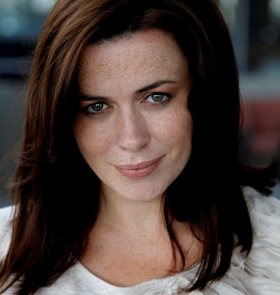
Series Review, Keeping Faith, BBC Wales by Gareth Williams

 out of 5 stars (4 / 5)

Having just watched the final episode of Keeping Faith on BBC Wales, I’m asking myself: Is this a golden age for Welsh television drama? Hinterland was critically-acclaimed. Bang featured in the national press. Gwaith/Cartref continues to be a marker for quality Welsh-language drama. Parch has just entered its third series. And Craith will be broadcast in the English language later this year as Hidden. It appears that one cannot move for drama made in Wales. And it’s about time too. Gone are the days when S4C was presumed to be solely for first-language Welsh speakers. Once, BBC Wales-backed dramas were so few and far between that their broadcast almost felt like a national event. Now, subtitles are no longer a barrier, in large part thanks to the phenomenal success of The Killing. Meanwhile, BBC Wales will be following up Keeping Faith with Hidden later this year.

Of course, quantity does not automatically mean quality. However, in the case of the above, quality most certainly matches the output. In terms of Keeping Faith, this has not only been reflected in its incredible cast of Welsh actors but in the gripping storyline and its atmospheric soundtrack. So, if you haven’t managed to catch it yet, here are three reasons why you should go to BBC iPlayer and download the series:

Eve Myles

Fans of Torchwood and Broadchurch will already know the brilliance of Eve Myles. Personally, I’ve run out of superlatives to describe her acting skills. Here, she plays the lead character Faith, wife to Evan (Bradley Freegard), mother to three children, and a lawyer in her husband’s family firm. One Wednesday morning, her life is turned upside-down when Evan leaves home and disappears without trace. Over the course of the next eight episodes, we see this strong, no-nonsense woman face the most challenging emotional, professional and personal pressures of her life. In doing so, Myles produces a character of incredible complexity with seeming simplicity. She manages to wholly embody her character and, as such, Faith’s every expression is drenched in meaning. There is a moment in episode two, for instance, when her vacant stare manages to reveal a plethora of internal emotion. We see her frustration, pain, anger, sadness and confusion all packed tightly into that single expression. Only the best actors can convey so much through doing so little. This is not to say that Myles’ natural physicality does not also enhance the strength of her performance. There is a wonderful moment in episode six, in the boardroom of the law firm, where Faith’s frustration and joy is brilliantly conveyed through the movement of Myles. In this same episode, when Faith is in conversation with Gael Reardon (Angeline Bell), Myles moves so quickly from a smile to a frown that it adds a light humour to the serious nature of the circumstances. In so doing, we learn so much about her character. It is these small moments, in which so much is communicated, that make this such a standout performance. She really is one of the best actresses of her generation.

The Music of Amy Wadge

Alongside Eve Myles, the music has got to be the star of this show. It is beautifully constructed, weaving in and out of the series like the ripples of water in the opening titles. Written, composed and performed by Amy Wadge, it is gorgeous in its simplicity and captivating in its tone. It is a bit of a coup to land a woman who has written songs for some of the biggest stars in the music industry (Ed Sheeran and Kacey Musgraves among them). Yet her star quality is surely what elevates this soundtrack to become a powerful narrator within the series. Wadge has clearly spent time with the character of Faith, connecting so deeply with the character’s emotions that at times the music speaks what no dialogue could. As such, it perfectly complements Myles’ performance, even enhancing it at times. Before going out to buy the soundtrack however, I would recommend a listen to the Welsh translation, sung by Ela Hughes. If you like the originals, you will love these Welsh-language versions.

The Story

Keeping Faith is first and foremost a drama about family. The mystery of Evan’s disappearance may be the hook, but the central focus is on the family. To this end, Matthew Hall has enabled the series to steer the course of eight episodes without ever overstretching the plot twists or exhausting the narrative threads. It enables us to remain intrigued by the disappearance of Evan whilst giving us a fully formed world of characters all with secrets of their own. As a result, the central mystery becomes laced with other mysteries as the web of family affairs widens. It is not only the marriage of Faith and Evan that is put under the microscope, but those of Tom and Marion (Evan’s parents) and Terry and Bethan (Evan’s sister) too. Add a cast of corrupt police officers, a criminal underworld and a client that has feelings for Faith and there is no shortage of action. All that is left is to give a nod to some of the cast for bringing Hall’s intriguing narrative to life so vividly, among them Mark Lewis Jones (Stella), Aneurin Hughes (Hinterland) and Matthew Gravelle (Broadchurch).

What do you think? Is this a golden age for Welsh drama? And what are among your favourites? Answers on a postcard (or in the comments below).