All posts by Guy O'Donnell

Hi I am Guy the project coordinator for Get The Chance. I am a trained secondary teacher of Art and Design and have taught at all Key Stages in England and Wales. I am also an experienced theatre designer and have designed for many of the theatre companies in Wales.

Top Tunes with Lorne Campbell, Artistic Director, National Theatre Wales.

Hi Lorne, great to meet you, can you tells us about yourself and your work?

I am the Artistic Director of National Theatre Wales, a role I have been in for all of three weeks. Before this I was AD of Northern Stage in Newcastle. I’m from Edinburgh, I started out in theatre as an actor but fairly soon figured out I was in the right room but standing in the wrong place and started directing. Throughout my career I’ve made a range of work from New-Writing, Classic text, devised and collaboratively written pieces and over the last couple of years a lot of work with music and video elements at the core. I am obsessed with liveness and the ability of actors to be utterly present in a moment, in making theatre that knows it is in the same room as its audience and cannot take place without their complicity and imagination. It is so exciting to be at the beginning of a journey in Wales, meeting new communities and makers from all walks of life, everything feels full of possibility. 

Firstly to start off what are you currently listening to? 

I am mostly listening to two Albums at the moment: ‘The Koln Concert‘ By Keith Jarrett, and ‘3.15.20’ By Childish Gambino. The Koln concert is one of my favourite records of all time and I always return to it in testing times and ‘3.15.20’ is just straight up remarkable, it takes not only bears but demands real concentrated listening to and I’m loving getting to know it. 

Can you list five records/albums which have a personal resonance to you and why? 
So hard to pick just 5 but here we go:


1: The Koln Concert –  Keith Jarrett.

It’s a totally magical transformative bit of music. The story of how the record was made is fundamental to the music itself. It is a live recording of a concert played on a totally unsuitable piano, the full story is here In short, the piano had virtually no bottom or top end meaning Jarrett had to play with huge force and rolling pattern of ostinatos to maintain the bass resonance and limit himself to the middle register of the instrument, in addition was in huge pain from a back injury so couldn’t sit. In these entirely unsuitable conditions he improvised one of the greatest jazz records ever recorded. It is a piece of pure creativity and beauty you can get totally lost in. 

https://www.youtube.com/watch?v=UJ29irNzKds&list=PLP_l8HApDerGCwJV3tJR66ZJHK2GqEAKO

2.Three Feet High and Rising – De La Soul

This was one of those mind blowing, what-is-this,-I’ve-never-heard-anything-like-this-what-else-can-I-hear-like-that-passing-of-a-many-time-copied-pirate-tape moments. Released in 1989 It is amazing how fresh it feels today, it’s a lyrical, passionate, agile and deeply humane album. It has that amazing quality that even after all these years it still surprises and delights you, there is nothing taken for granted in its construction, every choice in it is made, nothing is default.

3. If You Ever See Me Talking to a Sailor By Sting (Performed by Frances McNamee) The Last Ship.


Specifically this version captured this spring on the U.S. Tour of ‘The Last Ship’: Working on ‘The Last Ship’ as director and book writer has been the huge creative endeavour of my life over the last two years. I have never known any music as well as know this score and this track embodies the show. Frances is an unbelievable performer blending bottomless skill with idiosyncrasy and passion and she totally meets the challenge of this incredible song from Sting. In his composition, influence, harmonics and phrasing Sting’s music asks so much of its performers, it is really remarkable to make it feel this effortless.

https://www.youtube.com/watch?v=NQHW2PQx42w


4: Midnight Train to Georgia By Gladys Night and The Pips

I’m a huge Soul and Funk fan, it is impossible to pick only one album artist or track but if I must, it’d have to be this one. It is that faultless four minute song that seems so simple, clear and direct yet bears a thousand hearings. Perfect. 

5. The Goldberg Variations By Bach

There is a deep and mysterious magic in this music. I listen to it when I need to do something very hard. It does something remarkable to your mind, a sort of stilling, focussing and opening that permits a special sort of concentration. You can sit and purely listen to it or you can listen to it and think at the same time. It’s magic, I don’t even begin to understand it, but I know it works. There are of course many amazing recordings, Gould, Turuck, Schiff but the one I return to the most is Kimiko Ishizaka’s  It is very pure, very clear, it seems to me to have almost no ego in its playing.

 Just to put you on the spot could you choose one track from the five listed above and tell us why you have chosen this? 

What a spot to be on. I think it would have to be the Bach as it is the one that I would miss most deeply if I couldn’t hear it.

An Interview with Wales based Dance Artist Becky Johnson

Hi Becky great to meet you, can you give our readers some background information on yourself please?
Hi, thank you for meeting with me. Well, I’m currently a freelance dancer/ choreographer/ teacher based in Cardiff. I’m originally from Huddersfield (Yorkshire) and moved to Cardiff to train in Contemporary Dance at USW. I graduated in June 2019 but have stayed in Cardiff since. Since then, I have really found myself invested in the arts scene here in Wales. 
 So, what got you interested in the arts?

I’d like to say I’ve always been creative but that would be a lie. I started dancing quite young at my local dance school and loved the competitions and team dances that we’d do together. It wasn’t until I was much older and was exposed to more of the arts scene, that I started to see the beauty within the arts sector and understand how collaborative it can be.

Can you tell us about your dance process? Where do your ideas come from?

My creation process with making dance varies. I take great influence from the things around me. Being that, things that inspire and intrigue me or something I want to understand further. Either that or I use my personal experiences of my interactions with the world; things that I believe should be highlighted to others or need to be understood more widely.

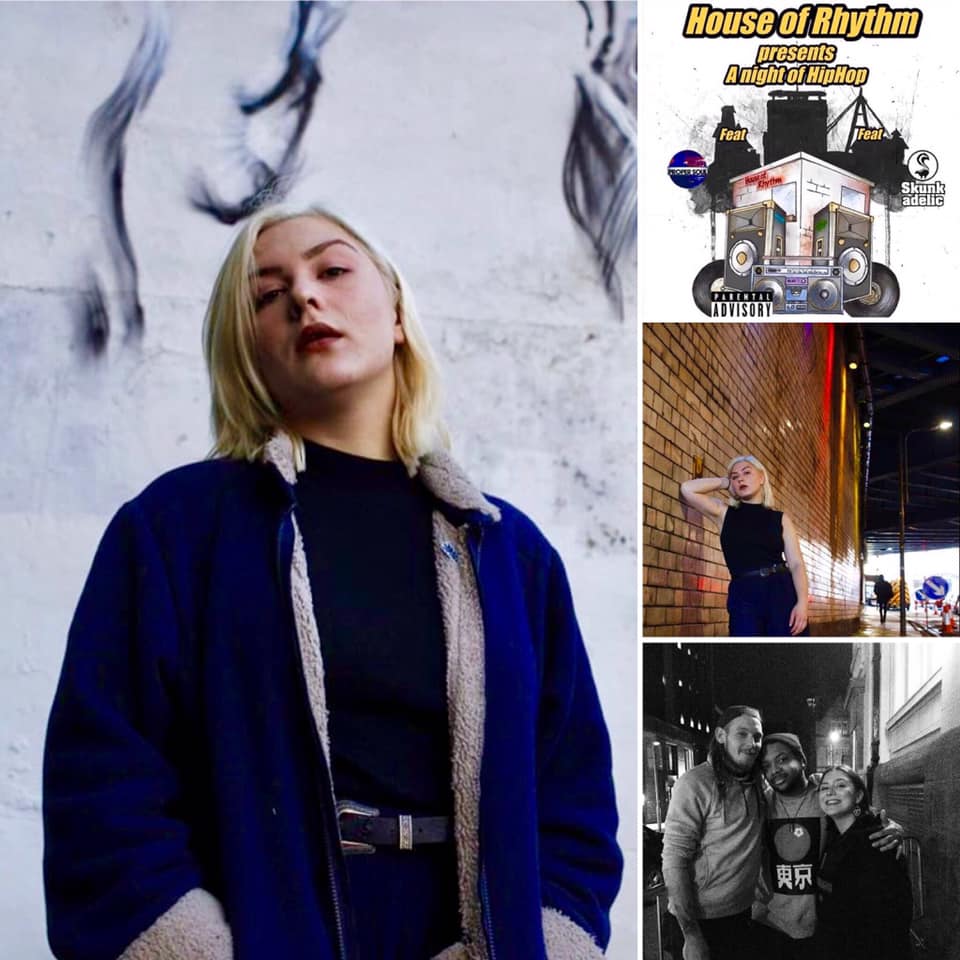
You were recently involved in curating, House of Rhythm presents… A night of Hip Hop which took place at Kongs Cardiff on Thursday, March 5, 2020. The event is described as “A celebration and discovery of all that is Hip hop and is in partnership with Kellys Records and Grassroots Cardiff” How did you get into Hip Hop and Streetdance. How supported is the scene in Cardiff?

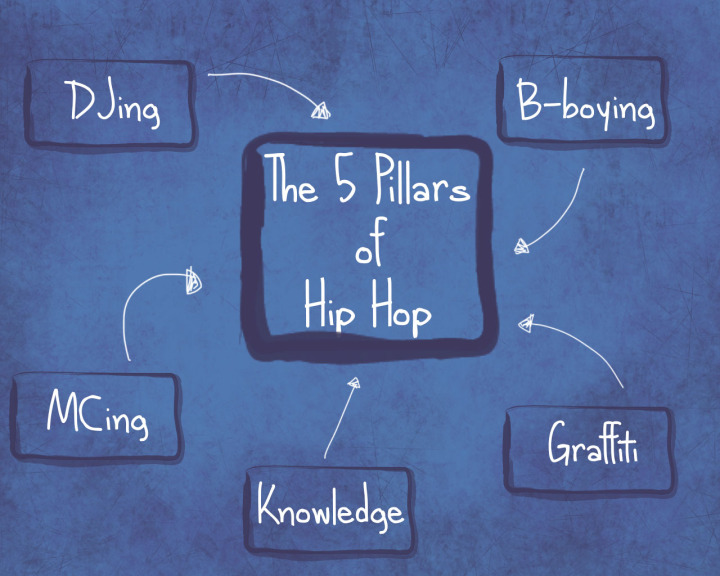
One of the dance schools I was involved with as a teenager, “Fidget Feet”, prioritised teaching the true foundations and principles of HipHop. This touched upon all five pillars of Hip-Hop as well as the various styles of dance within Street Dance culture.

That, alongside growing up with two brothers who thought they were destined to be the next Notorious B.I.G, meant I was immersed within the culture and that it’s been a pivotal part of my upbringing and even in my attitude and approach to movement (and life in general) now.

This series of events is an opportunity to provide a gateway into HipHop culture and not just the music form. I feel this sense of community within HipHop, especially in Cardiff, is lacking and hence why we have decided to partner with Grassroots.

By doing so, we are working with up and coming artists and providing them with opportunities to meet people they wouldn’t otherwise. Also, with the inclusion of workshops within different pillars of HipHop, we are combining the culture as a whole and not just focussing on one part.

There are a range of organisations supporting Welsh and Wales based dancers, I wonder if you feel the current support network and career opportunities feel ‘healthy’ to you? Is it possible to sustain a career as a dance artist in Wales and if not what would help?

I’ve been extremely fortunate in the fact that as soon as I graduated, I found work that was within my field of practise. This has kept me financially stable and allowed me time to fulfil my own projects outside of my teaching work. I believe Cardiff and Wales has an extremely supportive network of artists, all willing to share their own knowledge and craft. Throughout my degree, I worked extremely hard to network and to meet the right people with the suiting opportunities to help me develop within my career. If it wasn’t for me outsourcing my own network of people (from all fields of the arts sector), I would’ve struggled to get to the place I am now, never mind the place I want to be by the end of the year.

I do feel there is an absence of ongoing opportunities, especially for recent graduates that are new to the sector. However, if we are willing to make our own work and source our own opportunities, making our own projects, yes, there is work but we must be prepared to pave this path for ourselves. This isn’t disregarding help and assistance from other creatives/ professionals, but the help is more to kickstart our own ideas rather than to flourish with other people’s.

 If you were able to fund an area of the arts in Wales what would this be and why?

Wow, tricky question. I’d probably have to say spacing. Providing space for artists to develop their own practise and ideas, whether that be, musicians, dancers or visual artists. As not only is there a lack of creative and accessible space in Wales, there’s a huge lacking of funded space. If there were more funded residencies around Wales, we would see a lot more new work being developed and a much more diverse community engagement from artists in the area.

 What excites you about the arts in Wales?

I feel like this is such an exciting time for collaboration within Wales. There are more opportunities coming to bridge the divide, whether that between artistic practises or between bodies of dancers. There are some exciting opportunities in the works for disabled dancers which I can’t wait to be involved in as well as new pools of artists moving to Wales from areas such as London bringing new skills and assets.

 What was the last really great thing that you experienced that you would like to share with our readers?

Well there’s nothing like a little bit of shameless self promo but this is honest and genuine. It would be The House of Rhythm event which we had on the 5th March. There were people from lots of different communities and backgrounds all coming together to support the artists performing. We had people involved in the workshops that would never normally be in those sorts of social experiences. I also had talks with participants on how we can make our events more autism friendly and accessible for those suffering with social anxiety etc. It was this coming together of people which was really beautiful to witness as all of the participants were supportive of each other, regardless of background and experience.

Thanks for your time

Thank you very much for getting in touch!

An Interview with James Wilton

Wales braced for further tempests as James Wilton Dance whips up The Storm across the country. High energy dance at Ystradgynlais, Holyhead and Pwllheli in return visit for critically acclaimed company.


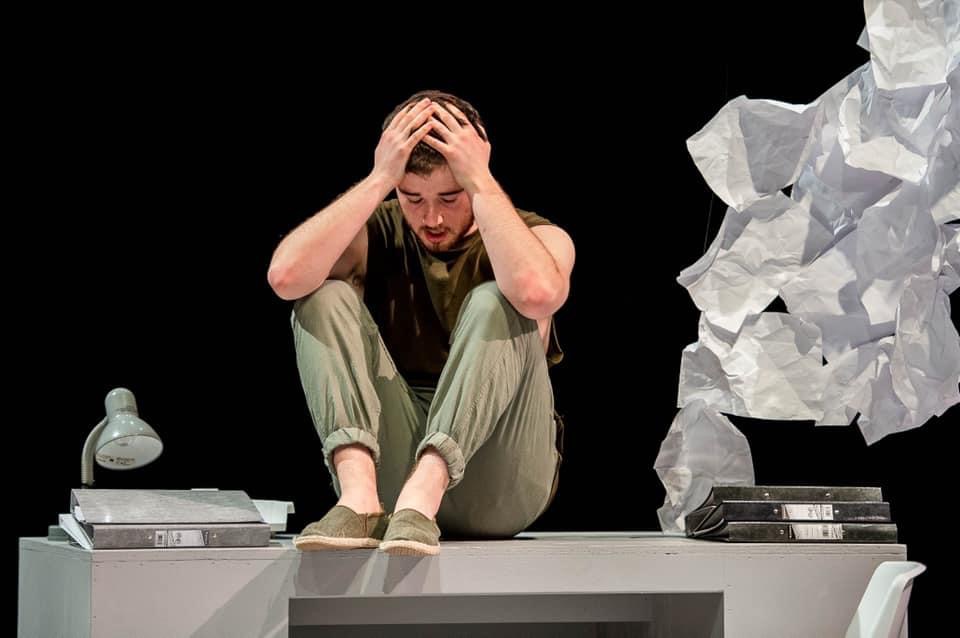
James Wilton Dance, one of Europe’s most in demand dance companies, brought their last show, Leviathan to Wales as one of the first Dance Across Wales productions. This season, they are back country with The Storm, a whirlwind of lightning fast, athleticism, where acrobatics, break-dancing, martial arts and contact work fuse to form dance that promises to blow audiences away. Seven dancers, a soundtrack of thundering electro-rock specially composed by Amarok and thousands of pieces of paper combine to create a work that astounds with its athleticism and touches audiences emotionally in a way that words simply can’t.

The Storm visits Wales this March, with performances at The Welfare, Ystradgynlais (25th March), Canolfan Ucheldre, Holyhead (27th March) and Neuadd Dwyfor Pwllheli (28th March).


The performances form part of the programme for Dance Across Wales, a Creu Cymru project aiming to give venues in non-urban areas of Wales more confidence in bringing dance to their audiences.


Creu Cymru is working with the National Rural Touring Forum (NRTF) in an Arts Council of Wales funded project to enable five theatres in Wales who currently programme little or no dance, to engage with and develop local audiences for dance. The idea of the project is to encourage people to ‘Give dance a chance’ at their local theatre.


Each of the five venues have chosen work from the NRTF’s Dance Menu. The Dance Menu (curated by NRTF, China Plate and The Place) contains existing dance pieces from established artists and companies which have been re-choreographed for small-scale presentation.


The project is funded by Arts Council of Wales and has been running from October 2018. The participating theatres, (Ucheldre Centre Holyhead, Neuadd Dwyfor Pwllheli, Parc and Dare Theatre Treorchy, The Welfare Ystradgynlais and Ammanford Miners), are all located in rural areas or small towns, have been able to select two to three dance pieces to present at a subsidised rate. As part of the project the theatres also receive marketing and outreach support to share ideas and strategies, marketing approaches and evaluation.


Creu Cymru’s mission is to develop a vibrant and progressive sector of theatres and arts centres for the people and communities of Wales.

Choreographer James Wilton discusses his work in the interview below

What is The Storm about?

The Storm is essentially about how we process emotions and happiness. It occurred to me that there are many parallels between weather and psychology. For example the word tempestuous can mean either an overwhelming emotion, or a storm. Before a hurricane there is what is referred to as a depression. When people are sad others say “it will all blow over”. How you can’t see wind but can see how it changes objects and how you can’t see emotions but can see how they change people. I also likened the world to a storm. We are surrounded by this turbulent, challenging world, where danger, injustice and suffering are all around us. In this world how can we manage to remain happy? How can we not get swept up in the world around us and how can we be the quiet, calm eye of the storm.

When did you first have the idea?

I am a generally very happy person, and I’ve always wondered why. In 2016, shortly after creating LEVIATHAN, I had a term of relative unhappiness, where I was swept up into some of the problematic things around me. At this point it occurred to me how important, and how beautiful happiness is, and how the world would be a much better place if people understood emotions and complex psychology more deeply.

What will be different physically?

We’re going bigger, faster and more fierce than ever with The Storm, but we’re going to be contrasting that with more subtlety, texture and softness than ever as well. As well as the earthy physicality we usually bring to the table, there will also be a greater sense of line and shape. Of course, we’re not going to be going too classical, however we are adding some elements from those techniques in order to push our physicality somewhere new.

What does Dr. David Belin, lecturer in Behavioural Neuroscience at Cambridge University, add to the piece?

I wanted to make sure that the work had a foundation in genuine science. I think so often people think they understand psychology, however we really don’t. Dr. Belin is a world expert in his field, with over 50 peer reviewed publications, and has taught me a great deal about the human mind. The most interesting thing being about dysregulation, and how people attribute the wrong feelings to the wrong emotion.

What excites you about the music of Amarok the composer?

In 2017 Amarok, aka Michal Wojtwas, released an album called Hunt, which received many nominations for prog-rock album of the year. It was through a “top 30 of the year” list that I discovered his work and I’ve been hooked ever since. I used three tracks off of his album for my creation “Hold On” for Theater Münster, and once I saw how well the music gelled with my choreography, I knew that I had to get him to write something especially for The Storm. There is just so much power and depth in the music that Michal writes, and it is emotive in some indescribable, other-worldly way.

Finally-What can audiences expect?

In short-to be blown away by the physicality, the storytelling and the raw emotion of the dance, set, music and light. We want audiences to feel the piece, as well as see it.

An Interview with Writer Tracy Harris

Hi Tracy great to meet you, can you give our readers some background information on yourself please?

Hello. I’m from Swansea. I went to an amazing creative primary school where we were taught Beatles songs, bombarded with the chronicles of Narnia and where I met some of my closest friends. I then went to a pretty tough all girls school where I met girls from all walks of life and then I went to Gorseinon College where under the brilliant Simon Pirotte, my love of theatre grew. I then went to Lancaster Uni to study Experimental Theatre after being highly influenced by Volcano, and as part of that course I did a playwriting module where I wrote my first play ‘past away’ which was commissioned by Sgript Cymru, on my return to Wales. I then went on to write a number of plays for the Sherman and other companies. Alongside writing,I started making TV Documentaries and set up ‘Gritty Productions’ with Chris Rushton. We make hard hitting films and radio programmes for BBC about homelessness, prostitution, and the benefit system.I also make my own performance work, writing and performing and collaborating with other artists, which is more experimental/ autobiographical.

So, what got you interested in the arts?

Well there’s definitely been a number of inspirational teachers along the way. Then my Dad used to make up silly bedtime stories and I’d always loved dressing up and making up songs, so I guess it secretly was always there. My sister whose an English teacher now, definitely passed on to me the love of words and stories. I never really went to the theatre growing up other than the Christmas panto at the Grand Theatre with the social club, my parents used to go to. The earliest memory I have of theatre was when I was 6, my infants school were doing a production of The Wizard of Oz. The teacher’s asked for people to volunteer to sing and my friend Lucy literally pushed me on to the stage. I was terrified but I did it, and I got the part of Dorothy, that moment actually propelled me into theatre and I’ve loved it ever since.

Can you tell us about your writing process? Where do your ideas come from?


Ideas come to me randomly, often when I’m out and about, sometimes from images, sometimes from conversations I’ve heard or had or something I’ve read. I’m a bit of a hoarder, so I often keep postcards, photos, bits of text etc and they get recycled. I’ll often think of visual moments first and write from images/ photo’s as starting points and then plays start to build from there. I also like to think about what I’m scared of, or what questions I want to ask about the world right now and that often starts my brain ticking.

Can you describe your writing day? Do you have a process or a minimum word count?


Since having Hartley, my 4 year old, my writing process has changed (for the better I think) Now, because of time restraints, I write for a few hours in the morning while he’s at nursery and then at night when he’s gone to bed. I have to be much more structured and give myself deadlines and tasks, like to complete a scene in a morning, but I think that definitely has made me procrastinate less and value my writing time more.

Why and where do you write?


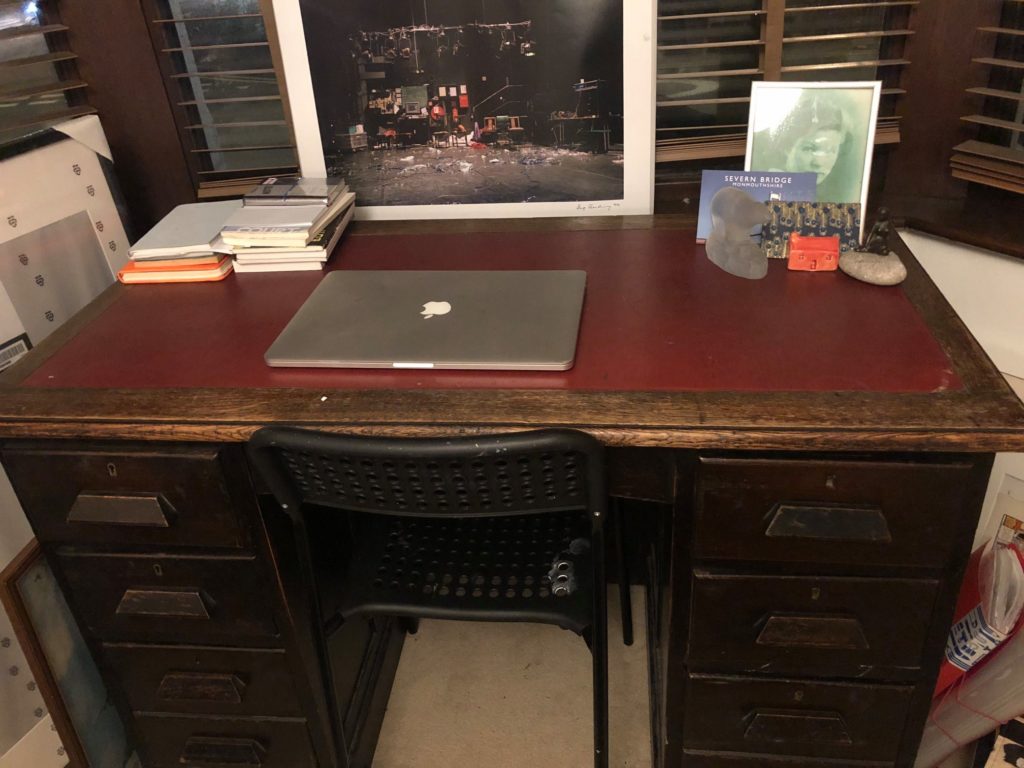
I write because I often find that’s the only way I can express what I really want to say about the world. I often write when I have a strong feeling or instinct about something that I really need to say and don’t know how else to articulate it. Normally I write on my desk at home. It’s an old-fashioned writing desk, which we’ve named William! I like to think about the stories that were created on it previous and the people who sat at it. I also have a few little inspiring things on there and things that are important to me- they keep me going when I get stuck. I also often have music that I rely on for the play and will listen to that constantly through the process. (I tidied it for this photo!)

Your latest play Ripples, co-produced by Royal Welsh College of Music & Drama in collaboration with Sherman Theatre takes place in a group rehab centre in Bridgend. It “compassionately explores what leads us to seek help.” How did you come to tell this story?

I think every play is different and therefore has a different approach. With Ripples the commission and challenge was to write a play for 8 people, which is both terrifying and exciting. I did a lot more planning with Ripples at the start of the process, thinking about where 8 characters may be thrown together in a dramatic situation. I also really wanted to challenge myself to write a play where the 8 characters are on stage for the majority of the play together- That was a big challenge I tell you!


As I mentioned, as well as theatre, I make Documentaries and a few years ago, I had been doing a lot of research about Rehabs and found a brilliant one in Bridgend and that place always stuck with me. Then I had questions about how I felt about the world right now- I was thinking a lot about ‘How do you fix people in a world that’s broken?’ Where are the safe places? and also personally about how I felt overwhelmed by the constant bombardment of bad news stories and out of the combination of all those seeds, Ripples started to grow.

Why did you choose Bridgend as the location of this play?


I chose Bridgend as that’s where the original rehab I had been researching was, but spoiler alert- this isn’t a play specifically about Bridgend and it isn’t verbatim either, although I have done a lot of research to make sure the stories are authentic and true to what might go on there. I think with every play, you have to find the right form and story for that play, so the actual Rehab and Bridgend as a place was just a starting point. I then starting thinking more about the technique I wanted to explore in the play and the characters I wanted to create. I was drawn to psycho-drama as I felt this was the most dramatic and instinctive technique that I could play with. The great thing about the New season is that you get to work with the actors and director early on in the process to workshop the script, so they have been involved and invested right from first draft stage and this has been invaluable, as I’ve been able to bounce ideas around with them and really flesh out the characters and stories collaboratively- and they are a really talented bunch- so that’s such a treat!

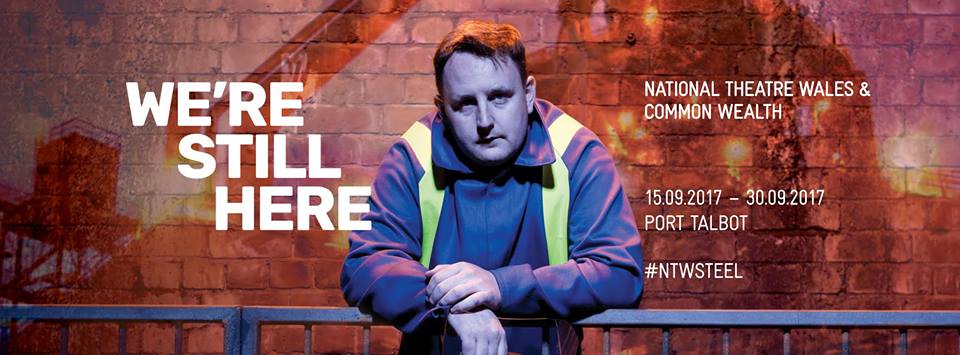
With productions such as We’re Still Here by NTW portraying the lives of Neath Port Talbot Steel Workers. Theatr na nOgs production Nye and Jennie examining the political background and personal inspiration of Aneurin Bevan and Jennie Lee, and your new production based on the real lives experiences Bridgend residents do you feel that Welsh Theatre is presenting representative stories of its citizens on our stages?

I think it’s important to tell welsh stories that have a universal reach, so for me the themes of the play; Trauma, Survival, Empathy and Compassion can all relate to Wales but also have bigger resonances in the world right now.
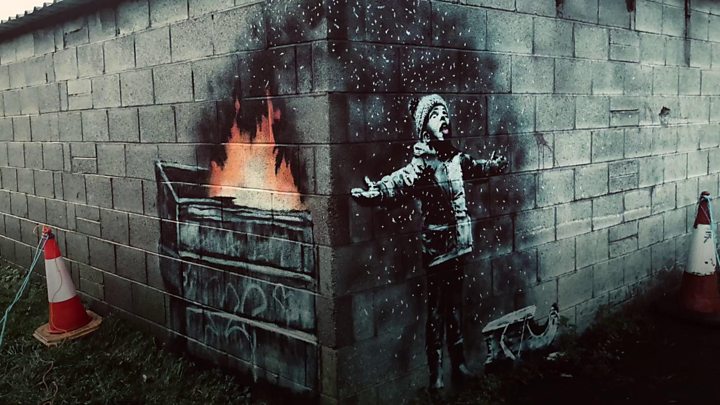
The next project that I am working on with Paul Jenkins is wholly a verbatim play about the Banksy that appeared in Port Talbot and this is specifically a Welsh story, right from the heart of the community in Port Talbot, but again it raises universal questions about community, art, money and values and I think I’m drawn to projects that do that.

There are a range of organisations supporting Welsh and Wales based writers, I wonder if you feel the current support network and career opportunities feel ‘healthy’ to you? Is it possible to sustain a career as a writer in Wales and if not what would help?

This is a tough one. I think there are opportunities in Wales, but they are few and far between and often there a lot of people fighting for those opportunities and commissions, so you have to keep proving yourself or have someone fighting your corner. I couldn’t survive just writing plays, but I also wouldn’t refer to myself as wholly a playwright as I love working in TV and film and creating my own work. I find that I need that variety to keep my creative juices flowing I feel extremely lucky and thankful to Simon Harris, who took a massive chance on me (back in the day as a young 22 year old, first time writer) and more recently Wyndham Price who last year commissioned my first feature film and Philip Carne who has supported my last 2 plays, without those people I definitely wouldn’t be writing now. Also I feel it’s great to have development schemes, readings and competitions, but playwrights need productions and I wish there was more money being thrown at dramaturgical support and development that could lead to this.

Sherman Cymru have recently announced the reinstatement of their literary department, on a one year pilot basis funded by ACW. What does this say to you as a Playwright as regards the venues intention to support your craft? What change do you hope will be realised with this new department at Sherman Theatre?

The news of a new literary department at the Sherman is really exciting as I feel there has a been a big gap in Wales in this area. Hopefully this will mean more plays will get read and developed so more voices will be discovered and produced, which is really a brilliant thing. Joe Murphy at the Sherman, Paul Jenkins and Adele Thomas have been great dramaturgical support and I think it’s important for writers to have that support early on in the process, from people that they trust. I think I need to be challenged as a writer. I need to be able to talk about my work and have people really interrogate me about my ideas- this has been invaluable for me to progress further.

If you were able to fund an area of the arts in Wales what would this be and why?

There are so many things I would like to fund, but if I had to choose one, I would fund writing/theatre workshops for younger people. I think we really have to nurture that next generation of welsh talent, support them and encourage them to get their voices heard

What excites you about the arts in Wales?

I love the network of artists in wales. I often rely on my fellow artists to bounce ideas around and give me feedback on scripts. I also like to repay the favour when I can and I think that that critical eye is crucial in order for us to keep upping our game and challenging ourselves to be bolder and braver. The Playwrights programme and the JMK directors programme at Sherman Theatre were both brilliant as I feel from that I have developed a great network of writers/directors who I can now call upon and trust; Working with Hannah Noone on previous plays and Matthew Holmquist on ‘Ripples’ has been such a joy.

The new Unheard Voices scheme the Sherman has just launched is a brilliant step in the right direction- we definitely need more female voices on our stages! and the literary department is such an exciting thing too and I really hope it will encourage the next generation to get writing, and all those writers with plays in their bottom drawers to dig them out and develop them further.

I think there’s some great companies doing exciting things and supporting new work; Theatr Iolo, Mr and Mrs Clark, Good Cop, Bad Cop, Chippy Lane, Dirty Protest, The Other Room to name a few.

What was the last really great thing that you experienced that you would like to share with our readers?

The last show I saw that really hit the emotional button for me was; I’m a Phoenix Bitch by Bryony Kimmings at BAC. I’ve always loved her work it’s honest, raw and emotional and she’s one of my biggest inspirations. It’s on at Mayfest in Bristol, if you get chance to catch it- I’d highly recommend it.

Thanks for your time Tracy.

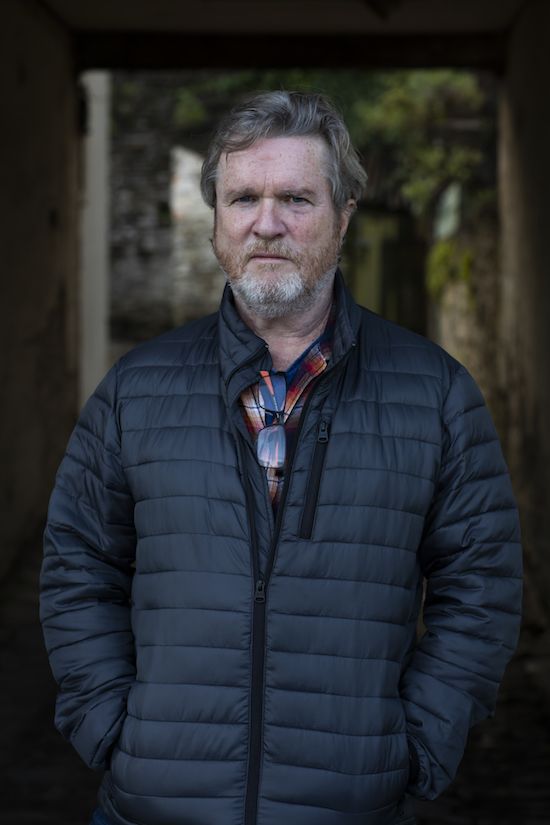
An Interview with Playwright Jon Tregenna

Hi Jon great to meet you, can you give our readers some background information on yourself please?

I was born in Llanelli, acted in Cardiff, in various bands in London, back to Llanelli to write TV and moved to Laugharne in 2012. I live in a house where a murder was committed in 1953 and a friend of Dylan Thomas was arrested. Dylan called Laugharne, ‘…the strangest town in Wales.’ He wasn’t wrong. I’ve written the Dylan Thomas ebook for the BBC, TV comedy drama for BBC & S4C and the David Garland Jones Youtube channel. Hail Cremation! is my fourth play after two plays for Llanelli Youth Theatre; Raw Material: Llareggub Revisited for NTW (co-created with Marc Rees) in 2014, and I’ve have been working on Hail Cremation! since 2016.

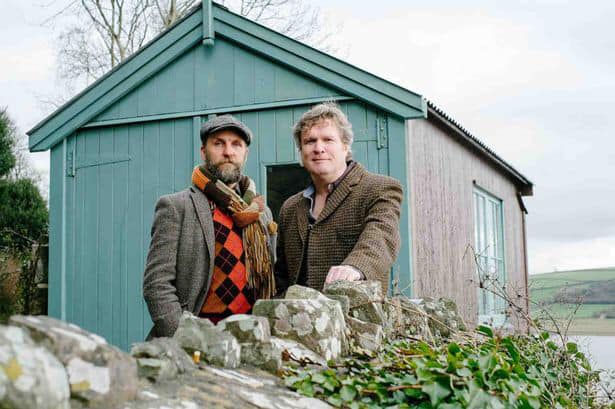
Marc Rees and Jon Treganna, Co-Creators,Raw Material, Llareggub Revisited, NTW.

 So, what got you interested in the arts?

My Dad read Dr Seuss and Charles Dickens to me when I was very young which I loved. I later raided Dad’s bookshelves and his Anglo-Welsh poetry, and became big fan of poet and polemicist, Harri Webb. In school I got into acting after seeing a performance of Wind In The Willows and later trained as an actor in the (Royal) Welsh College of Music & Drama. I’ve been in bands and written songs since I was a teenager, and once I started creative writing around twenty years ago, a musical was a logical step, tho’ it took me some time to realise it.

Can you tell us about your writing process? Where do your ideas come from?

My ideas seem to percolate for years. I try to create something I’d like to watch, and that I don’t think I’ve seen before… but those ideas are often outside the bounds of what people are prepared to commission. In terms of ideas, thinking about it, most of my writing is about real life stuff but then I like to drag it into left field.

Can you describe your writing day? Do you have a process or a minimum word count?

I don’t like staring at a screen for too long. I have a young daughter so writing time is precious, and when I do have time to sit and write, I throw everything at the screen. Sometimes it’s better to clear your head by writing 1000 words of rubbish rather than nothing at all. It’s all in the editing. I find a good walk, or a drive, is often beneficial, recording ideas into a phone ready for those gaps in real life when writing happens.

Why and where do you write?

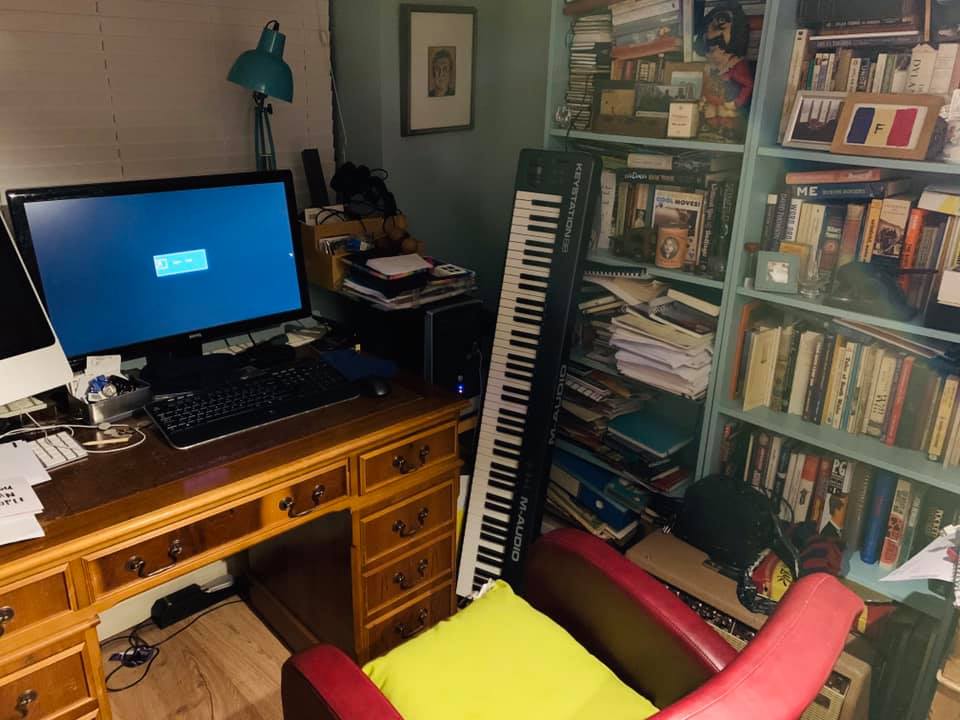
We live in an 18th century cottage in Laugharne and my office is downstairs with a view of the street. I’m surrounded by books, cards, pictures, ornaments – or ‘junk’ as my partner calls them – and often scan the shelves when I’m stuck. It looks a bit of a mess, but you should have seen it before I tidied up.

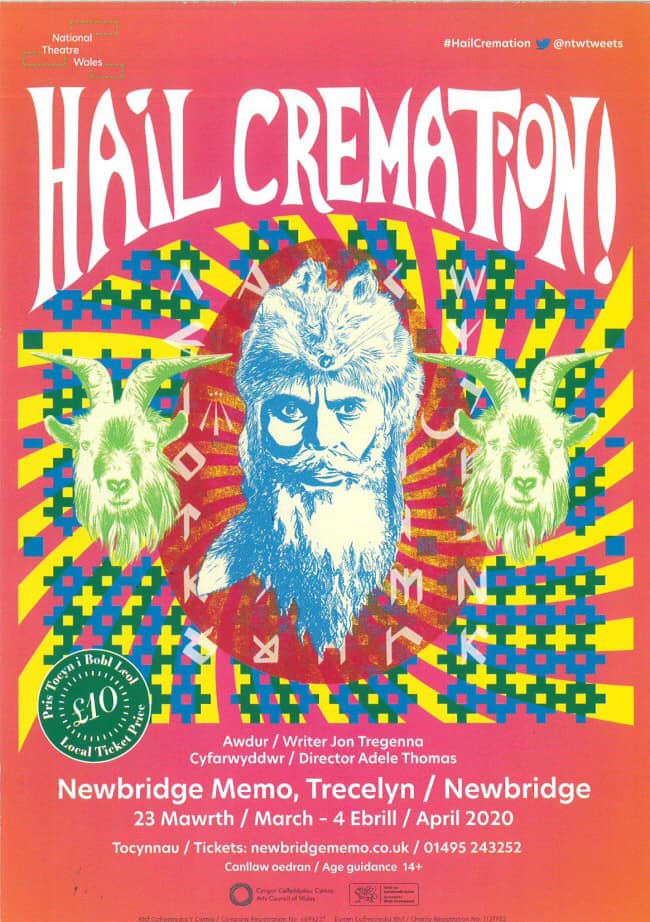
Your latest play Hail Cremation will be produced by National Theatre Wales at Newbridge Memo from the 23 March- 04 April. The production is described as a musical odyssey through the life of cremation pioneer, Dr William Price – a complex and extraordinary Welshman. What drew you personally to telling your interpretation of Dr William Price?

Like many I knew about the infamous cremation, but initially I wasn’t aware he was a ground-breaking surgeon, vegetarian, feminist, nationalist, radical, a dandy and clearly a genius. However, his eccentricities in later life meant that many of those elements were ignored. If Price was around today, he’d be an inspiring leader, passionate about history, language and culture and I wanted to celebrate him with a spectacle that he would have enjoyed. On reflection most of my work is about Welsh identity, and Price was probably the person who tried to define it more than anyone else in the last two hundred years.

National Theatre Wales describe the nation of Wales as their stage. Their productions have ranged from We’re Still Here portraying the lives of Neath Port Talbot Steel Workers. On Bear Ridge which took place in “a lost village, blurred by redrawn borders” to this new production taking place at Newbridge Memo. Do you feel that Welsh Theatre is presenting representative stories of its citizens on our stages?

I’m interested in stories and legends that are uniquely Welsh. Wales is definitely the ‘secret Celtic nation’, and yet we have one of the oldest literary traditions in Europe. There is an ancient, supernatural, magical, mythical, witty, wild and wide-eyed side to Wales – Wales on mushrooms if you like – which is unique to us. I think more plays in this area would help establish, and then cement a Welsh theatrical identity not only in Wales but around the world.

Why do you think audiences should see this new play?

It’s part gig, part catwalk show, part cabaret. It has a wonderful troupe of dancers and actors, a rock band, incredible costumes, mad props, druids, goats, punk toads, wall to wall video projections, and an astonishing creative team lead by director, Adele Thomas. Yet at its heart is the story of a man who wanted his people to thrive. Dr Price met a woman called Gwen who was sixty years his junior, and they were a very loving, if highly unusual couple. They’d be unusual now, so it’s hard to imagine what 19th century non-conformist Wales would have made of them. Price and Gwen lost a child, and I nearly lost my daughter, so I had a small understanding of the grief they must have gone through. Then when Price’s powers started to wane and he went through a number of ordeals, he continued to charge on with Gwen at his side. He lived for ninety-two years and it’s still amazing how he crammed so much in. People should see this play because it tells a story of a dynamic couple in a wild theatrical arena, is both fun and emotional, and has something to say about Welsh identity.

Is it possible to sustain a career as a writer in Wales and if not what would help?

If the question is: ‘Can someone who writes plays about Wales and Welsh issues sustain a living in Wales, or indeed, anywhere?’ Then apart from maybe one or two exceptions, the answer is probably no. There are a lot of playwrights in Wales chasing a small pot of money and Welsh writers probably need working partners, day jobs, lecturing posts, etc., to survive. What would help? I don’t really know. We’re unlikely to see more arts funding for a while as the Welsh Government is looking to reduce public subsidy. Trying to be positive, successful and profitable shows that reach beyond Wales, and that couldn’t come from anywhere other than Wales, would help. We need to find our voice.

If you were able to fund an area of the arts in Wales what would this be and why?

There should be more development deals, so that writers are nurtured in plays, poetry, TV scriptwriting etc. More people need to feel they have a chance, get some feedback, be part of a dialogue, even if the ideas end up uncommissioned. There could always be more arts, but we also need to build and educate audiences too. It’s tough in this era of Netflix, deadly diseases, Just Eat and smartphones, but the more people that take an interest in the arts, the better off we’ll all be.

 What was the last really great thing that you experienced that you would like to share with our readers?

My daughter, Sylvie, has had two heart operations and spent five days on life support, so seeing her enter a pool for the first time in Butlin’s Minehead last weekend was a truly great thing.

Many Thanks for your time Jon.

Top Tunes with Luke Seidel -Haas

Hi Luke, great to meet you, can you tells us about yourself and your work?

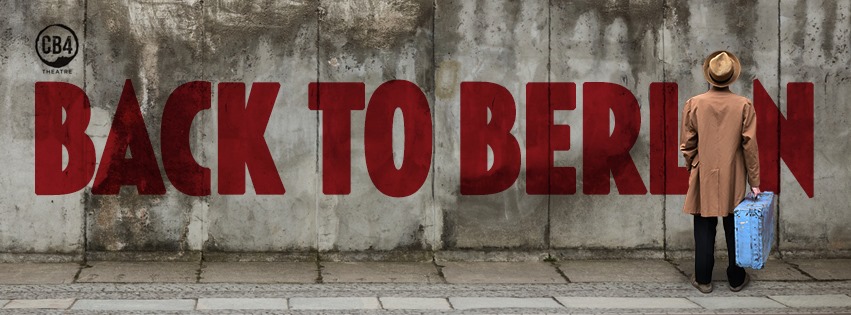
I’m Luke Seidel-Haas, I’m a Cardiff based theatre maker and one of the founding members of new theatre company CB4. CB4 Theatre was founded a couple of years ago; we’re all Drama graduates of the University of South Wales and having done our separate things for a few years we found ourselves gravitating back to Wales and wanting to create theatre together. Right now, we’re about to perform our debut show “Back to Berlin” at The Other Room at Porter’s Cardiff. It’s a show that I’ve written and am performing in and is inspired by a true story my dad told me, about when he travelled back to Berlin to see the Berlin Wall come down in 1989. The more we spoke about his story, the more we realised how many parallels it had with what’s going on at the moment across Europe and around the world; while the story is set 30 years ago, so many of the themes feel just as relevant now as they did back then.

 This chat is specifically about music and the role it has played in your personal and professional life. Firstly to start off what are you currently listening to? 

Right now I’m listening to Kanye West’s most recent album Jesus Is King. It’s quite different to his previous albums, and is more influenced by gospel than his rap/hip hop roots. Kayne is often unpredictable, and I love that with every new album he releases you never quite know what you’re going to hear next – Jesus is King is no exception.

When I first heard it, I wasn’t sure about it, but after a couple of listens I think it’s a really interesting album which uses a type of music not often heard in the mainstream. I saw Kanye headline Glastonbury in 2015, and it was one of the most bizarre, intense but unforgettable performances I’ve ever been to.

We are interviewing a range of people about their own musical inspiration, can you list 5 records/albums which have a personal resonance to you and why? 

 I Choose Noise by Hybrid

Hybrid are a Welsh electronic music group who blend electronica and house with cinematic and orchestral stylings. Most of their music doesn’t have words, and so is really useful to use in a rehearsal studio to help devise or work on physical or movement based sections of work. Their music is often used by companies like Frantic Assembly, as well as on movie soundtracks. I could have chosen from a few albums, but “I choose Noise” is just a really varied album which has often helped me out of a rut when devising.

Volume 3: The Subliminal Verses by Slipknot

This album resonates with me more for personal reasons. As an angsty teenager whose wardrobe had a distinct lack of colour it was probably one of the albums I had on repeat more than any other. To some people Slipknot just sounds like angry noise, but I think this album manages to mix that aggression and anger with amazing hooks, guitar solos and powerful choruses. There are also a few tracks like Circle and Vermillion Pt. 2 which are unexpectedly melodic and emotional.

The World of Hans Zimmer by Hans Zimmer

Okay I’ll admit, this one is a bit of a cheat – I couldn’t choose just one album by this legendary composer. Hans Zimmer has written some of the most iconic music in modern cinema including The Dark Knight Trilogy, Inception, Interstellar, Pirates of the Caribbean, True Romance and so many more. His scores are so emotionally evocative, and to me they resonate because of how they help to drive plot, develop tension or reflect the underlying emotion of the scene. With a lot of films, the soundtrack ends up feeling like an accompaniment – something which adds a bit more flavour to the film, but that they could manage without.  Zimmer’s best soundtracks rise far above this and become a vital part of the whole experience.

Angles by Dan Le Sac Vs Scroobius Pip

This album resonates with me because of its mix of the deeply political with the outright silly. “Angles” manages to go from a reflection on the death of Tommy Cooper, to rapping the periodic table, to A Letter from God to Man, to a film noir style existential rap. Hip hop often unfairly suffers with the stereotype that it’s all about “guns, bitches and bling”, and before listening to this album I was probably wrongly was under that impression too. This album opened my eyes to how different genres can be used to make a political point. Scroobius Pip also has a fantastic beard.

A Brief Inquiry Into Online Relationships by The 1975

The 1975 are a band that have really developed their sound over the course of each album. As a left-wing millennial, I think A Brief Inquiry… manages to brilliantly tap into a lot of anxieties that people of my age have. Songs like Love It If We Made It and Give Yourself a Try are on the surface catchy pop tunes, but the political and social messages they carry are a testament to the strength of the song writing. They are also a band that seem to (as much as possible) practice what they preach and are leading the way in terms of making live music and touring as eco-friendly as possible.

Just to put you on the spot could you choose one track from the five listed above and tell us why you have chosen this? 

Love It If We Made It from A Brief Inquiry Into Online Relationships by The 1975

To me, the lyrics of this song are some of the most powerful of any pop song released in recent years. The song leaps from talking about Donald Trump and Kayne West, to Heroin addiction via the Jonestown massacre and dead migrants washing up on beaches, but despite its rather bleak lyrics and content, its refrain of “I’d love it if we made it” makes the piece feel hopeful and optimistic. It’s a great piece of music if you want to get yourself angry about the state of the world, but in a way that makes you want to take action to make things better.

Thanks Luke

Back to Berlin By CB4 Theatre is running at The Other Room @ Porters from 3-6th March 2020. Tickets are available here

Review Carmen, WNO by Barbara Michaels.

CARMEN Wales Millennium Centre, Cardiff

Opera: Georges Bizet

Libretto: Henri Melham and Ludovic Haley

Director: Jo Davies

Reviewer: Barbara Michaels

⭐️⭐️⭐️⭐️

Opera aficionados are fortunate to have seen Jo Davies new production of Carmen for WNO when it was first staged here in the Donald Gordon theatre last year.  Now there is another chance to see this production again, with different artistes in the main roles. 

Davies’ take on the popular opera retains all the drama of the original, despite being transferred from Spain to 1970s Brazil., the girls from the cigarette factory being clad in boiler suits and machine gun toting soldiers in khaki guarding the garrison. Some excellent performances. Including that of young Welsh soprano Elin Pritchard, are a major feature but what this production – emphasising the power of women in tune with the ‘woke’ attitudes and mores of today’s world – lacks is colour.  Although we are treated to a fore screen of garish oranges and reds, pretty well everything else is monotone until almost the end. Drab grey army uniforms and American-style bucket helmets versus the traditional colourful gear of the Spanish soldiers in Bizet’s original make it hard to see the raison d’etre for the sexual chemistry and passion which lead to the downfall of the free spirit that is Carmen and the soldier Don José, whose love and jealousy erupt to cause the tragic finale.

Making her UK and WNO debut, Julia Mintzer plays Carmen as callous and calculating, using her wiles to ensnare anything in trousers.  A prostitute with a heart she ain’t, but Mintzer’s portrayal does not prevent some stunning performances in her singing of the wonderful Habanera and in her duets with Carmen’s soldier lover Don José, sung with skill and empathy by Peter Auty, one of Britain’s leading tenors.  

Auty’s performance, both in his duets with Mintzer and with Pritchard, as the naïve country girl Micaela whose innocence is no match for Carmen’s wiles, is outstandingly good.  The same can be said for Pritchard, a heart-breaking and totally believable Micaëla.  Pritchard’s pure soprano soars into the realms of absolute joy.

The third side of the triangle is the bullfighter Escamillo, sung by Italian baritone Giorgio Caoduro.  Caoduro has performed leading roles with major opera companies, including singing Dandini in Cenerentola with WNO. Caoduro’s baritone, andstage presence are great for the role, with the caveat that a tad more swagger wouldn’t come amiss.

As Carmen’s friend Mercedes, who does her best to stop Carmen in her tracks, young artiste 
Angela Simkin, who has also sung the role at the Royal Opera House, Covent Garden, is a great fit and a young singer to watch, as is Korean singer Haigeee Lee as Frasquita, another friend.  Some superb dancing is choreographed to include sultry and sexy Argentinian tango steps, a cape-swirling Paso Doble, a mock-up of a bullfight – and more.  Ole!

As for the setting: inspired layering replicating a tenement block allows for interaction beyond and above what is happening on stage – on the whole an overall benefit, but at times irritating, as well as detracting attention from the main onstage action.

Under the baton of the young and immensely popular conductor Harry Ogg, Bizet’s superb music is done full justice from the stirring overture with its hint of tragedy to come right until the curtain comes down.

Run:  Saturday 29 February, 2020 then touring.

An interview with Playwright Andy Evans

Hi Andy great to meet you, can you give our readers some background information on yourself please?

I’m a Welsh playwright currently living in Lincolnshire and studying an MA in Theatre at the University of Lincoln. I was born in Cardiff and raised in Penarth, where my love of drama and theatre was nurtured. I left Wales to train as a teacher in 1988 and went on to work as a teacher of Criminal Law for 25 years, before redundancy made a switch necessary and I became a primary teacher, with responsibility for Literacy in the school. After six years I decided that the time had come to move on and to pursue my passion, so I left teaching and began running Breakwater Theatre Company full-time. I also wanted to look to improve my knowledge and understanding of theatre and chose to study for an MA in Theatre, in order to validate the years of work I had done to date.

During my time as a teacher, I began writing plays for a youth theatre I ran as a volunteer in Grimsby. My first play was published by a small publisher in Essex in 1999 and in 2001 my play Moonlight Marionettes was published in the USA by playscripts.com. I joined Hull Truck Theatre Company where I was commissioned to write a full-length play entitled, Taking a Bullet. I also got involved in Stories of the Streetz, with the National Theatre of Wales, the Sherman Writers’ Group and Dirty Protest, for whom I have written twice. I also worked with Middle Child in Hull and Slung Low in Leeds among others. All of which led me to establish my own company, Breakwater, which specialises in new writing for the stage and has worked in conjunction with New Perspectives, in developing scripts and writers nationally.

So, what got you interested in the arts?

I went to St Cyres Comprehensive in Penarth; a school where I feel the arts were championed, and we had some really dedicated drama and music teachers. My inspiration was drama teacher Joy Nubert, she was a passionate advocate for drama education and ran extra-curricular workshops and productions. I performed in West Side Story and Oh! What a Lovely War, as well as workshopping scripts by Pinter and Orton.

St Cyres School, Penarth

We also had an amazing music teacher called Anne Harris, who led the school Music Department with passion and vigour. I guess my passion for performing arts was born there. Their love of the arts was infectious and inspiring. The arts help an individual to learn about themselves and to discover what makes people tick, to encourage support and inspire That is something I still see as important and influenced my choice of University for my MA. The University of Lincoln is championing a campaign to say #WhyArtsMatter a hashtag I fully endorse.

Why and where do you write?

I write at home and tend to write in the corner of my living room, though not exclusively. I enjoy being surrounded by my books and videos, with easy access to the internet to help me gain inspiration if I start to dry up. I also have two Dalmatians, who hate being left home alone and enjoy cwtching up as I write. I tend to write extremely quickly, which is a habit born out of necessity back when I was teaching. I would never write during term time and would get the majority of my writing done during school holidays. I tend to spend a lot of time preparing to write, mentally planning the plot and the structure and so on, before I ever open a Word document and beginning to write. The first draft of a play is often written in a very short window of opportunity and I re-write at leisure thereafter.

As to why I write, I write because I can’t help myself. I love writing and my brain loves contemplating things that would be interesting dramatically, which I could put on stage to entertain others. There is no “Go To Book of Ideas” it could be a picture, a documentary, an overheard conversation. The only rule is to ask “Would it make an interesting story?”

There are a range of organisations supporting Welsh and Wales based writers, I wonder if you feel the current support network and career opportunities feel ‘healthy’ to you? Is it possible to sustain a career as a writer in Wales and if not what would help?

I feel bad saying this, but I have received very little help or support from within Wales. As mentioned, I was a member of the Writers Group at the Sherman many moons ago, and that was useful for meeting and networking. My favourite support network within Wales is the small but mighty Dirty Protest, especially working with Catherine Paskell. The work done by DP is astonishing and they are, by far, the primary advocates for new Welsh playwriting. I love them and wish I could always write for them.

Catherine Paskell

And when John McGrath was in charge of the NTW, I felt that I had support and was welcomed with open arms to discuss my work and what I was doing. John even messaged me from Japan to ensure I was going to be able to discuss my work with someone from his team.

However, following the subsequent regime change, I felt edged out and during a meeting, was given the impression that it was unlikely I would be considered as I am not based in Wales. There are those of us who still qualify as “emerging artists” who are more mature and there are far less opportunities for us to market and stage our work. I would like to see schemes specifically aimed at mature writers. Their work can have just as much resonance as somebody a third of their age.

In addition, if a Welsh writer has chosen to work and reside outside Wales but then offers to work within Wales and Welsh theatres, it should not be held against them as there are such things as cars and trains. I get back to Penarth regularly and can always be available through a base in my family home. Its just another excuse for excluding someone. Let me decide if I am willing to drive back and forth, or stay in Wales for an extended period, don’t assume it won’t work in advance.

One reason I have chosen to remain in Lincolnshire for now, is that I get more work as a writer here. I am unsure that a move home would increase work opportunities and may lose some. During 2019, I was able to write and produce two newly commissioned plays and would not have the ability to see such work through to fruition at home, as there are far fewer opportunities offered and more writers chasing them. Ironically, one of my new plays. Indomitable, was about the life of Welsh author and disabled rights campaigner Elisabeth Sheppard Jones. I worried that the slightly parochial setting (Penarth in the 1950s – 70s) wouldn’t play well, but the play was a resounding success here in Cleethorpes.

Indomitable

I try to familiarise myself with the available work and career support in Wales, I am part of the NTW Community and I am on the mailing list for the Welsh branch of the Writers Guild of Great Britain, but I do still feel isolated from the theatre scene and hiraeth draws me home to watch others making work repeatedly. I would love to make more work in Wales, especially within Cardiff.

If you were able to fund an area of the arts in Wales what would this be and why?

I would love to offer a bursary to an emerging writer of mature years, giving them the freedom to write without worrying about how it would affect their income. Youth is often the only form of “new” considered by many in theatre. I staunchly believe that there are other writers out there who could benefit from career development but are discouraged by perceptions of ageism. Allow more mature people to explore and to be creative; fund them and then give them an outlet to share their work. It doesn’t have to be, and should not be, at the expense of opportunities for younger writers, but there are some amazingly creative people out there who think they have lost the chance to make a mark creatively. I would seek to encourage precisely that. 

Can you tell us about your writing process? Where do your ideas come from?

As I mentioned earlier, I am constantly thinking about what the next idea will be or where the idea will come from. I don’t try to force creativity; I pay attention to the word around me. Moonlight Marionettes was inspired by a photo I saw on the internet. I wrote Indomitable about Elisabeth Sheppard Jones after reading about her on a Facebook page for local memories. The other play I wrote this year, was entitled With Love From Ruhleben.

I was commissioned to write it as part of a project funded by the National Lottery’s Heritage Fund and Lincs Inspire Libraries. Ruhleben was a civilian internment camp in Spandau, just outside Berlin at the outset of WW1. Any foreign nationals in Germany at the outbreak of hostilities were rounded up and the males were interred. For 5000 men that was their war. Many men from Grimsby were imprisoned as they had been in German waters at the time. So, I interviewed relatives of men who served and created a fictionalised story that forms part of an educational resource sent out to all secondary schools in the area. A filmed performance of the play on DVD and a copy of the script, accompanies a teacher’s pack for each school.

Can you describe your writing day? Do you have a process or a minimum word count?

No two writing days are ever the same for me. I will often have spent months thinking about, researching for or plotting a play before I commit to writing and I outline the story before I start writing. I talk about that as a gestation period. Then, eventually, I will sit down to write. I pour myself a cup of coffee and open up my laptop, then I begin to write “Act One, Scene One”.

Generally, I write in a traditionally, linear fashion. I start as early as I can, after feeding and walking my dogs. I don’t set myself a word or a page count, I write everything that comes and finish when it feels right to do so. When writing the Ruhleben play, I sat and wrote for a full twelve-hour day and hammered out a complete full draft. I’m not proud of that as it went through a lot of rewrites, but I was at least able to see exactly where I wanted the story to go.

I don’t use a dramaturg, which is ironic as I am hoping my MA will allow me to offer my services to others in precisely that role. Instead, as I often direct my own work, the rehearsals help to re-shape a script. I do sometimes send a script to a trusted colleague, or fellow writer to give it a once over. If it has any detailed, technical requirements, I do try to check with an expert, that I haven’t made any glaring errors.

However, it often depends on which company I am writing for. I have found that different companies employ different methodologies and so I may work with a literary manager or a director on tweaking the final script. I really enjoyed working with the (then) Literary Manager at Hull Truck Theatre, Nick Lane to develop scripts and to shape them for performance. This in turn, also led to me joining the Literary Department as a reader at the time as well.

Hull Truck Theatre

You have recently started a new project Review Culture reviewing events across Lincolnshire. Does your theatrical knowledge impact upon your role as a critic?

Review Culture was set up as a direct response to the death of local news reporting and reviewing in the area I live. During my MA, we have been encouraged to write ABOUT theatre as well as FOR theatre. Dr Sue Healy led some sessions about the work of a reviewer or critic, and I found myself drawn to the work. I love going to see work in performance, be it amateur or professional. I decided that if I offered an online portal that reviewed work free of charge and yet which helped to publicise what is happening across Lincolnshire, it could only be a good thing. As a keen photographer, I also shoot production photos which are featured on the site too. I think that my background does impact upon the review process and upon the final product. We don’t use a star-rating system, the reviews merely reflect the good that we see presented in a show. I know its possible to rip some shows to shreds but that is not our mission. We review a lot of amateur productions and I recognise how much time and effort will have gone into staging work. Our reviews respond to their love and enthusiasm of the form. If a review is somewhat thin, we may not have enjoyed a show quite so much. But if we issue praise, it is because we believe it is well-deserved. After all, if audiences attend a show on our recommendation and it is a dud, they won’t trust us, or keep using our site to check out the reviews. We will become redundant very rapidly.

 Andy, I know you are currently engaged on a course of study and are specifically focusing on Welsh Playwrights I wonder if it’s possible to tell me some more about this please.

This is my pet subject, when I was offered a place on the course, many assumed that I would choose to write a play as my final project because it is an option available to me. Even I thought I would most likely choose that option. But fate stepped in and showed me how much I love research. The Library facilities at Lincoln are awesome. They run a scheme which allows students to request book purchases that will assist their studies and I have made great use of the scheme. I have persuaded them to order plays by a number of Welsh writers including Matthew Bulgo, Alun Saunders, Dic Edwards and Neil Anthony Docking. All of which feed into my intended topic for a dissertation.

Tutors within the school are supportive and have encouraged me to pursue my interest as a full study for my final project on the course. I intend to research and write about the way in which Welsh playwrights present nationality and nation in their plays. I have already spent time reading some of the earliest published plays written in English, considering the likes of Jo Francis, Caradoc Evans and latterly, Emlyn Williams, to contrast with the contemporary writers. As yet, I haven’t formulated a question for my thesis, and I am merely reading as much as I can. I hope to refine my field of study and hone the work down to relevant texts over the next two months. Once I have a specific research question sorted, I shall be making contact with as many writers as I can manage, and I hope that they will all have an opinion to share.

My tutors have warned me that I may be taking on a study that could be better suited to PhD and will need to be cautious to narrow my work, but we shall see what comes. Either way, my dissertation will need to be written and submitted by September 2020.

What excites you about the arts in Wales?

I find the arts scene and the theatre scene, in Wales fascinating. It’s a brilliant community to be a part of and it is remarkably generous, giving and supportive in my experience. I love the diversity of the work created and the themes explored by writers such as Gary Owen and Katherine Chandler. The work of Tim Price continues to inspire me, and I only hope that I can gain a tiny sliver of the success that each has had. I continue to proselytise for Welsh playwriting in the realm of English theatre. I desperately want to ensure that exiles are not forgotten among the ranks of Welsh writers. That is why I love the work being led by Rebecca Hammond of Chippy Lane, championing those of us who are no longer based in the Land of Our Fathers. Cool Cymru has made an impact on the world and it would be great to think that it will continue, and the work of Welsh playwrights, resident and ex-patriot, will continue to thrive.

What was the last really great thing that you experienced that you would like to share with our readers?

I know I bore anyone who knows me when asked a question like this, but the single, most influential piece of theatre I have seen in recent years, from my perspective, was Iphigenia in Splott by Gary Owen, starring the powerhouse that is Sophie Melville.

Sophie is one of the greatest “undiscovered” gems of British theatre and I will fight anyone who says otherwise. What she, Rachel O’Riordan and Gary Owen achieved in that production, has really helped to lift the level of respect for Welsh plays in the eyes of those who are not from, or based in Wales. The whole team responsible for bringing that production into the world deserves praise from designers and tech to the final performance. The work of the Sherman is the last REALLY great thing I experienced, and I hope to experience even more from Cardiff’s premier producing theatre.

Sherman Theatre, Cardiff

Galwad am Adolgwyr / Call-out for Reviewers

Helo ffans ifanc o’r theatr! Mae Criw Brwd a Theatr Genedlaethol Cymru yn chwilio am adolygwyr theatr 14 – 21 oed i adolygu eu drama ddiweddaraf, Pryd Mae’r Haf? yn Theatr Soar, Merthyr Tudful, neu The Other Room, Caerdydd, fis Chwefror. Dyma ddrama dyner am gyfeillgarwch, gobeithion ac ofnau pobl ifanc a byddem wrth ein bodd yn clywed eich sylwadau chi. Cysylltwch â Ceri Williams am ragor o wybodaeth: ceri.williams@theatr.com / 07903842617

Calling young theatre lovers! Criw Brwd and Theatr Genedlaethol Cymru are looking for theatre reviewers aged 14 – 21 to review their latest play, Pryd Mae’r Haf? in Theatr Soar, Merthyr Tydfil, or The Other Room, Cardiff, this February. We’d love to know what you think about this touching play about friendship and the hopes and fears of young people. Sibrwd, our language access app, means that you can enjoy the play whatever your level of Welsh. Get in touch with Ceri Williams for more information: ceri.williams@theatr.com / 07903842617

14 Months On A Response To Arts Council Wales, Corporate Plan, 2018 – 2023 “For the benefit of all”

In November 2018 we published an article in response to the new Arts Council Wales Corporate Plan “For the benefit of all..” with a range of contributions from Creatives in Wales. We revisit this area in the updated article below with responses from one of the creatives featured in the article as well as an additional contribution.

Our mission statement at Get The Chance is “Creating opportunities for a diverse range of people to experience and respond to sport, arts, culture and live events.”

We were very pleased to see some of the priority areas in the new Arts Council Wales, Corporate Plan, 2018 – 2023 “For the benefit of all”

In particular we were interested in Commitment 2 below

We will enable a greater number and a wider diversity of people to enjoy, take part and work in the publicly funded arts.

ACW then go onto make a series of intentions (below) for where they want to be in 2023 (5 years)

We will be able to demonstrate clearly that all our funding programmes promote and contribute to equality and diversity

There will be a narrowing of the gap between those in the most and least affluent social sectors as audiences and participants

We will develop the creative work of disabled artists by funding “Unlimited” commissions and developing a scheme similar to “Ramps on the Moon” operated by Arts Council England

We want to introduce a “Changemakers” scheme placing BAME and disabled people in senior executive positions in the arts

We want to see a doubling of the number of disabled people in the arts workforce

We want to see a doubling of the number of Black and Minority ethnic backgrounds in the arts workforce

We want to have introduced an Arts Council Apprenticeships scheme designed to provide opportunities for people from diverse backgrounds

We will have achieved a trebling of the number of BAME and disabled and on APW boards of governance

You can read the full article from last year here

Adeola Dewis

Artist, researcher, academic and TV presenter

I struggle to fully engage this as a response. My recent experience has revealed that there is certainly a surge to include diversity in all its forms on boards and in creative spaces and projects. However, this new ‘interest’ feels more like organisations ‘needing’ to diversify rather than ‘wanting’ to diversify, in order to secure their future and funding. I am hopeful though.

Elise Davison

Artistic Director, Taking Flight Theatre Company

What a year of change 2019 has been.  For Taking Flight it has seen the company move away from the annual Shakespeare production to more indoor, venue-based work.  

peeling by Kaite O’Reilly, opened on International Women’s Day in March at The Riverfront, Newport and then toured Wales and England and was a huge success earning 4 and 5* reviews.

The Guardian stating “Accessible theatre? Do it properly – do it like this”.  Following this Taking Flight was invited to Grenzenlos Kulture festival in Mainz, Germany as an example of best practice in accessibility.  It was a huge tour and highlighted once more the inaccessibility of much of Wales; accessible accommodation is very hard to find, and some venues struggled to meet our access riders.  However, this did lead to some very inventive solutions involving temporary dressing rooms created with flats, curtains and even a marquee! Obviously not the ideal but with our hugely creative stage management team always looking for solutions rather than the problems and the support of venues we made it work. High applause to Angela Gould at RCT Theatres for her work in this department. 

Angela Gould, Theatre Programme and Audience Development Manager, RCT Theatres.

One of our lovely actors toured with her dog who was a lovely addition to the team. Max is a therapy dog; many places we visited were only familiar with guide dogs, which made us realise how much there is to learn about the different types of assistance dogs.  

Everything we learnt during this extensive tour will feed into the work we have been developing towards a scheme like the Ramps on the Moon initiative.  A scheme like this can never be replicated, but the interest and passion from venues in Wales to be involved is overwhelming.  Creu Cymru, hynt and Taking Flight have been in ongoing discussions about ways to make this happen.  We read with interest that it was also a priority for ACW and have begun conversations with them around a similar scheme. As we have been researching and pushing for this to happen since ‘Ramps’ began in 2016, we are passionate that this becomes a reality.  Taking Flight has just received funding for their next production, Road, at Parc and Dare, RCT Theatres and we hope this partnership will be the first step.   Taking Flight will give support to participating venues to be confident to manage and produce inclusive work, to provide excellent access and a warm welcome to all- both audiences and creatives. 

While peeling was out on the road in the Autumn, we also remounted the hugely successful and totally gorgeous You’ve got Dragons.  After a run at WMC we hit the road again for a UK tour including a week run at Lyric Hammersmith which was almost sold out and incredibly well received. The desire for inclusive and accessible work for young people is growing.  Watch this space for more news on You’ve Got Dragons next adventure.

getthechance.wales/2017/04/25/review-youve-got-dragons-taking-flight-theatre-company-ysella-fish/

Taking Flight has often dreamt of setting up a Deaf- led Youth Theatre for D/deaf and Hard of Hearing young people and with funding from BBC Children in Need we have finally done it. Led by the tremendous Stephanie Back in BSL and English, the youth theatre began last week and the results are already fabulous. The Wales Millennium Centre are our amazing venue partner and host the weekly sessions for D/deaf children aged 4-18. We have been overwhelmed with interest in this project, demonstrating that this has been needed in Wales for a long time.     

There has also been a surge in interest from companies and individuals wanting to consider access while writing funding applications.  There is a general excitement around making work accessible. There are some brilliant intentions and I’ve had exciting conversations with companies about different types of access and have been able to recommend consultants and access professionals.  

The ground has been fertile for change for some time and there is much more inclusive and accessible work being created here than when we first started 12 years ago.   Theatres are also much more interested in programming diverse work and many have invested in Deaf Awareness training with Taking Flight (Led by Steph Back). 

Steph Back

 There is a real desire to diversify audiences and welcome them to theatre spaces.  Taking Flight’s next symposium on 28th Feb at Park and Dare RCT theatres on Relaxed Performances brings the brilliant Jess Thom, Touretteshero to Wales to discuss ways to provide the warmest possible welcome to those who may find the traditional etiquette of theatre a problem.   

Jess Thom, Touretteshero

There has been a surge of work featuring D/deaf and disabled performers, productions like Jonny Cotsen’s Louder is Not Always Clearer, Leeway Productions Last Five Years and Illumine’s 2023 really engaged new audiences and the venues have really built on this success.    There have been more productions that embed access in a creative way, a gorgeous example in Gods and Kings by Fourinfour productions with integrated BSL from Sami Thorpe.  I had lots of fun working with Julie Doyle and Likely Story integrating BSL interpreter Julie Doyle into Red. Companies are choosing to interpret, audio describe or caption all the shows in a run rather than just one which is really encouraging and promoting more equality of access to shows.

So, the will to make accessible work is absolutely there, the best of intentions are definitely there and, now the funding for access is factored into budgets, the funds are usually there. However, why is it still access that falls through the cracks, gets pushed aside or forgotten as a production approaches opening night?  I hear stories of interpreters and audio describers who can’t get into a rehearsal space to prep or are placed somewhere on stage that is neither aesthetically pleasing nor practical.  It can still sometimes feel like access is something that needs to be ticked off a list in order to fulfil a funding application.  

I am absolutely sure that this is not the intention; but we are all so overstretched, one person is often doing multiple jobs (especially in small companies) and when no one is directly responsible for access or it simply forms ‘part’ of someone’s role. So those best intentions and exciting plans are really hard to fully achieve.  Taking Flight are exploring this lack of provision for access co – ordination with Bath Spa University so watch this space for the results of our research… The next generation of theatre makers are coming, and they really care about making work that can be accessed by all – that makes me happy.