
All posts by Barbara Hughes-Moore

An Interview with Director Alison Hargreaves by Barbara Hughes-Moore

Director and Producer Alison Hargreaves

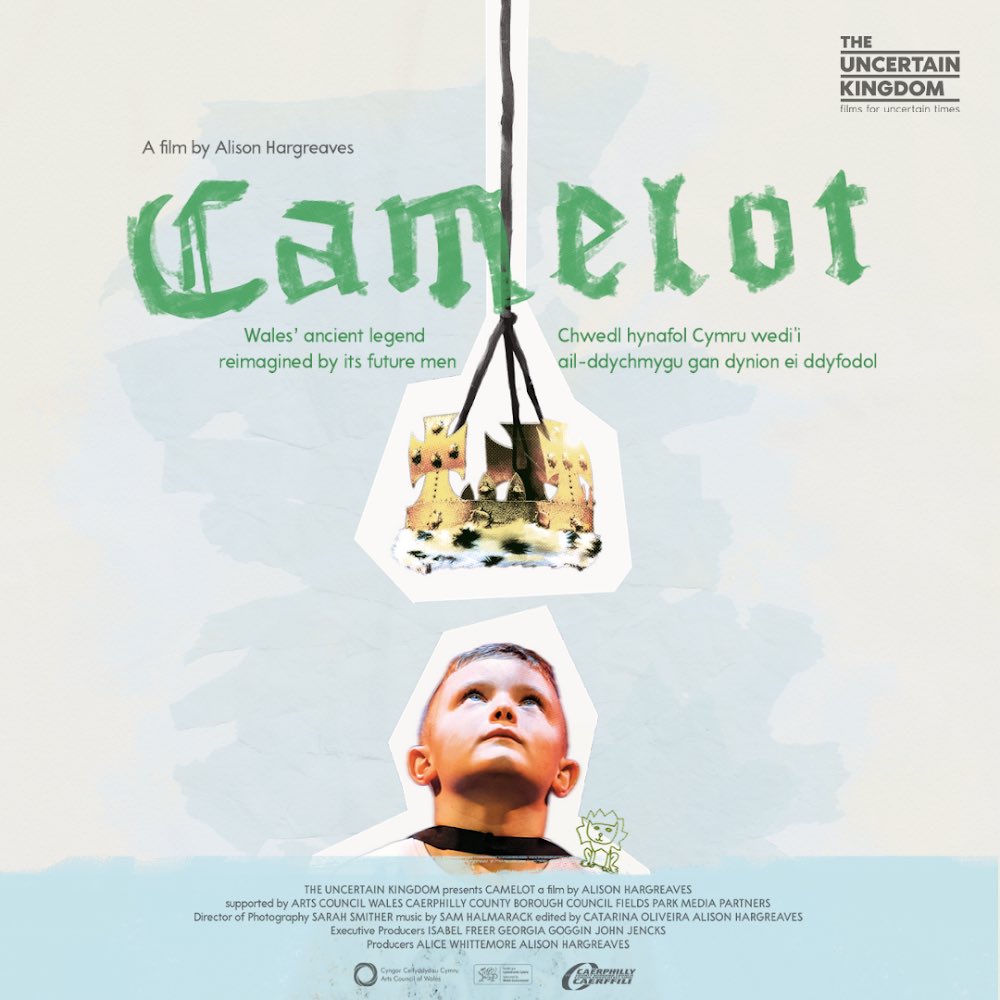
In our latest interview, Get the Chance community critic Barbara Hughes-Moore chats to director Alison Hargreaves, whose latest short film Camelot features in the anthology The Uncertain Kingdom. Produced by John Jencks, Georgia Goggin and Isabel Freer, the anthology assembles twenty visionary filmmakers to paint a portrait of post-Brexit Britain. Alison discusses her career, the urgent need to invest in the arts, and why it’s so important to give children the opportunity and the control to tell their own stories. Camelot was creatively led by a group of pupils at Idris Davies School in the Rhymney Valley in collaboration with professional theatre practitioners from May-July 2019, and is described as ‘Wales’ ancient legend reimagined by its future men’ .

This interview has been for edited for ease of reading.

Hi Alison, thank you for making the time to speak to me this morning. Can you give our readers some background information on yourself please?

I’ve been moving into film in the last 5 years, but my background is mainly in theatre. I’ve worked for organisations like Bristol Old Vic and Clean Break Theatre Company and other companies that have tried to find ways to reach people who didn’t necessarily have access to quality creative engagement and finding ways to democratise resources so that more people can have their voices heard and be represented. I’ve worked in criminal justice settings, in prisons, in different communities, different vulnerable groups, and in schools.

As a theatre fan, it becomes more interesting if going to the theatre teaches us something about our society that we didn’t know, and that means not telling the same stories again and again. Theatre and film should help you understand the society you live in and what you have in common with other people. That’s always been where my creative interest has been because the most impactful and exciting work has been made that way.
How important is it to support the arts?

We live in a country that doesn’t necessarily support the arts properly, and especially in education, so when I started to make films I was interested in documentaries that would give a platform for people who might have been under-/mis-represented. With a film, you can frame something in a new way, you can help people to feel a kind of complicity, and feel a connection to or empathy for people who they might otherwise have never really felt connected to. A film can take you inside someone’s inner life; it can help you understand the way someone thinks, whereas in the course of everyday life we sometimes live in bubbles and don’t always reach out to each other.

I think that the process of theatre-making is that it’s beneficial not only for training children for the creative industries (although it can often spark that interest); theatre-making is about working together, respecting ideas, having your own ideas respected, having a safe space to experiment and imagine new things, to support each other, to be supported, to tell a story, to connect with people and to learn and develop skills like devising and reinventing a story and making it your own. The devising process in particular is brilliant for children because its enables them to understand that they can rewrite a story, meaning they can have an influence not only in the way that a story is told but in the way that their story is told. This means they take some ownership, and have some control, over the story, which I think is huge for children who may not have the opportunities and role models; some people feel they are on a  conveyor belt and the only thing they think they’ll end up doing are the things people around them are doing.

Engaging them in constructive creative process gives them an opportunity to really understand that the world is their oyster. What I was really interested in doing for Camelot is using theatre to engage the imaginations of those children so that a film audience could step inside their imaginations and see what was inside their heads, and for those children to be taking ownership of ancient stories, the sorts of stories that underpin our culture. These stories are handed down to us and they repeat ideas about who we are as a country, as people, and I think it’s really important that we don’t treat those stories as set in stone; that they come with their own biases and it’s important that everyone has their own interpretation and has an opportunity to decide for themselves what the story could mean and how its relevant to them. I was really interested to see what the children came up with – they’re at an age where they’re not self-conscious, where they are complete free-thinkers, but not given a huge amount of opportunity to do constructive creative work that doesn’t get graded. We tried to find a way to make sure every set of abilities could find a contribution to make.
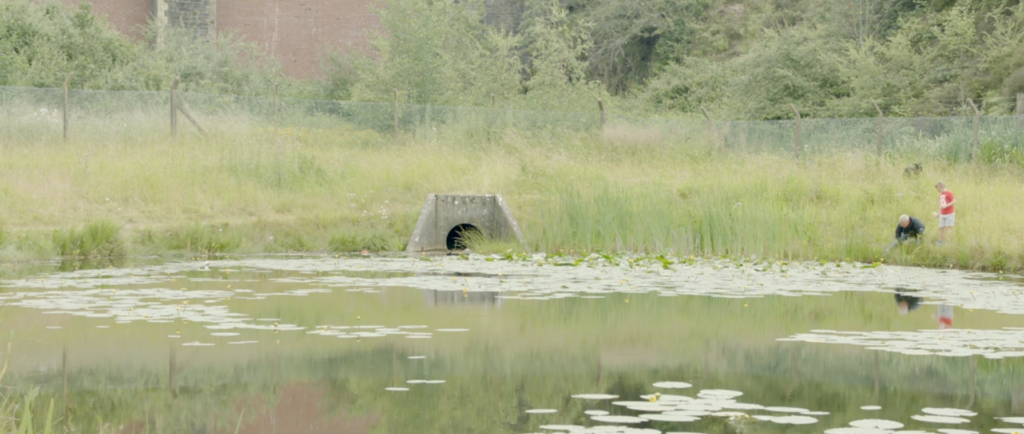
This idea of reclaiming the narrative came across so strongly in the film – do you think it applies to the community as well, because the interconnectedness of people and the place they inhabit seems to be at the core of the film. The Pit Pond seems to be the axis of that. Is that an image that realty stood out to you?

Totally – I’m so pleased you got that! What’s interesting about the Camelot story is that it’s about building a kingdom of your own, creating a space for yourself. A lot of the rhetoric in Wales’ Leave Campaign was about a mythical idea of reclaiming your land – and those kinds of themes must be interrogated. It was time to reinvent the story rather than just repeat the tired tradition way these things are told. Communities are shaped by their landscape; their history has been shaped by their landscape. The landscape itself has been changed by their lives, by their industry; the actions of people in the Valleys have literally shaped the landscape around them, so they’ve got a very interesting connection to the land. It’s a timeless and extraordinarily beautiful landscape, and King Arthur was said to have passed through Gelligaer common, which is located immediately above the school.

There are many myths in South Wales that connect to the Arthurian legends, and there is a sense of the land holding all these stories, all these histories, but it’s changed so much and now these boys are living in a moment where their fate looks so different from the fate of their grandfathers because of the way their worlds have changed. Bringing in the grandfather I hope gave this sense, because he was able to share his perspective on how things have changed, and how his grandson’s life is different to his was when he was his age. You’ve got this really interesting moment where, because they’re not going to be sent down the pits, these boys have freedoms in some ways that older generations didn’t have, but they’ve lost some of the certainties that those older generations had, so it’s not as simple as saying it’s either good or bad. It’s complex.

King Arthur discovered his destiny and achieved something unexpected, and he did that with the support of Merlin as a role model, and I was interested in role models for the boys and who they look to in their lives, and one of the boys discussed frog hunting with his grancha, and he brought that element to the character of Arthur. Then they took me to the Pit Pond which just happens to be the world’s most beautiful place – lots of young kids go angling there in the summer, and it was such a gift. It felt like the perfect connection between the world of the play and the real world.
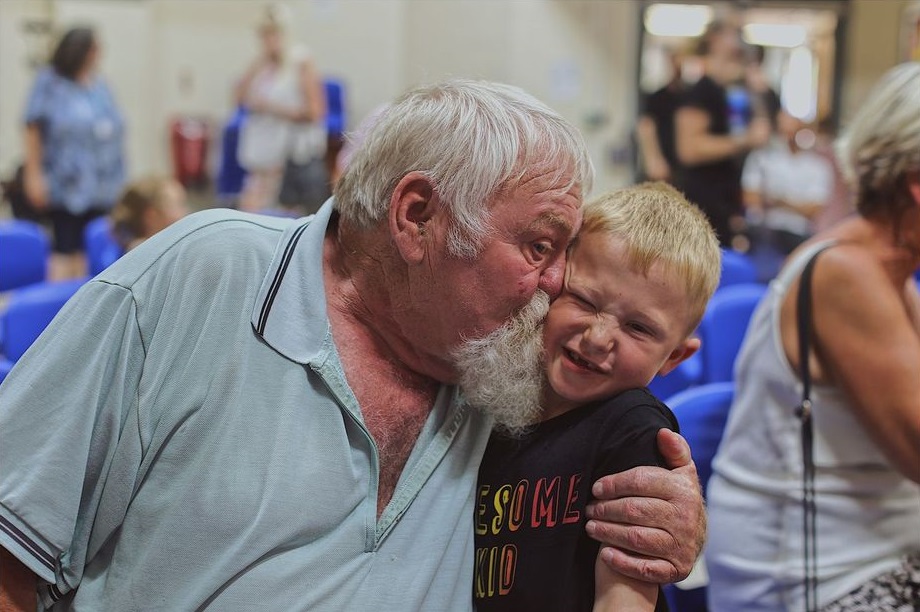
Photo credit: Anna Jones

There seem to be two opposing views on destiny in the film: the young ‘Arthur’ believes that ‘destiny wins your future and how you want to live’ whereas his grancha doesn’t believe in destiny and thinks that ‘what you get out of life is what you put into it’. Which side of that debate resonates with you most?

I’d have to side with grancha on that one! I think it is what you make it, and understanding that it’s in your control is really important. It’s positive if you can believe that unexpected things are possible, that change is possible, that there can be these moments in life where even someone with not many prospects or who doesn’t know who he is can learn something surprising about himself. But I also think that you have to understand the influence you can have over your own life. Of course there are circumstances that impact on our lives, but you always have a choice – even if you can’t choose everything, there are always things you can choose and exercise some control over.
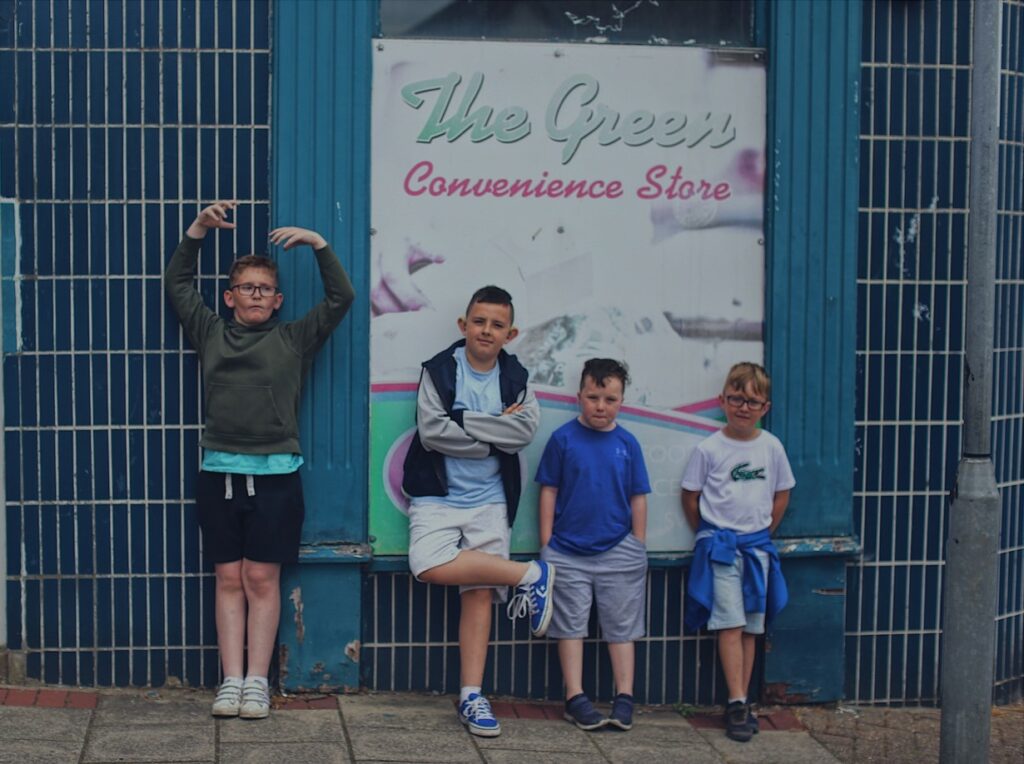
Photo credit: Anna Jones

You’ve given these boys a real gift in giving them this opportunity. They seem like directors in the making!

Arts and education have been whittled down to nothing, and these boys have never done anything like devising a stage production in their lives. We had this amazing moment when we’d been developing the story with them, and we came back one day with a script for us to sit down and read together, and the boys took it so seriously. It meant that they cared about it, and they felt like it was theirs, because they’d never have showed it the same amount of respect. They were so keen about finding their lines on the page, they gave their characters personalities, and were really invested in the story. I knew then that the whole concept was going to work because they’d made it their own.

Some of the boys had specific skills, and we needed to channel them into particular roles. One boy was obsessed with drumming and he never expected them to get a beautiful orchestral timpani drum from the RWCMD, but we did – we really invested in where their areas of curiosity were. They were drawing their own costumes and we brought them back made as they’d specified. One boy took a while to come out of his shell. He was one of the shyest boys at the start, and then he turned up on the day before the performance with a remix he’d composed on garage band, specifically for particular moments in the story. Giving them an experience where they’d been taken seriously and their ideas had been made real, hopefully is a really positive memory for them, that they were taken seriously, they contributed, and were celebrated. The show was such a hit with the community and it was such a proud day for them. I hope it’s something they remember for a really long time.
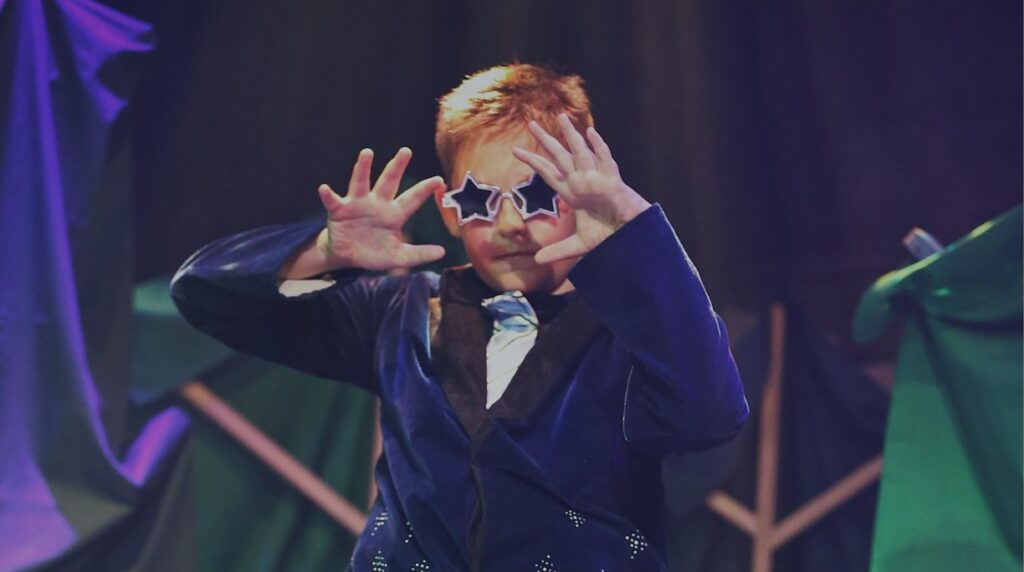
Photo credit: Anna Jones

There’s a real sense of joy and exuberance in the film, which I think comes from this particular way of working. Is this a method you’ve used before?

I’d never combined theatre and film in this way before, so I took a chance on a new way of working; something I’d been curious about for a long time but hadn’t done in exactly that way. I knew that it had to be a positive story, as it was genuinely my experience of that community. They’re used to having a lot of lazy journalism that repeats negative stories about the valleys. When they found out we were going to tell something positive and creative with the kids, they were so accommodating and supportive. I’m interested in not repeating tired, narrow judgments of what communities are like. It’s a close community, and those children are adored by their families; they’re living in a little bubble where they are safe and can explore both their landscape and their imaginations. Before life gets a bit more complicated for them, there is joy in their lives, and there is something lovely about where they live and who they are.
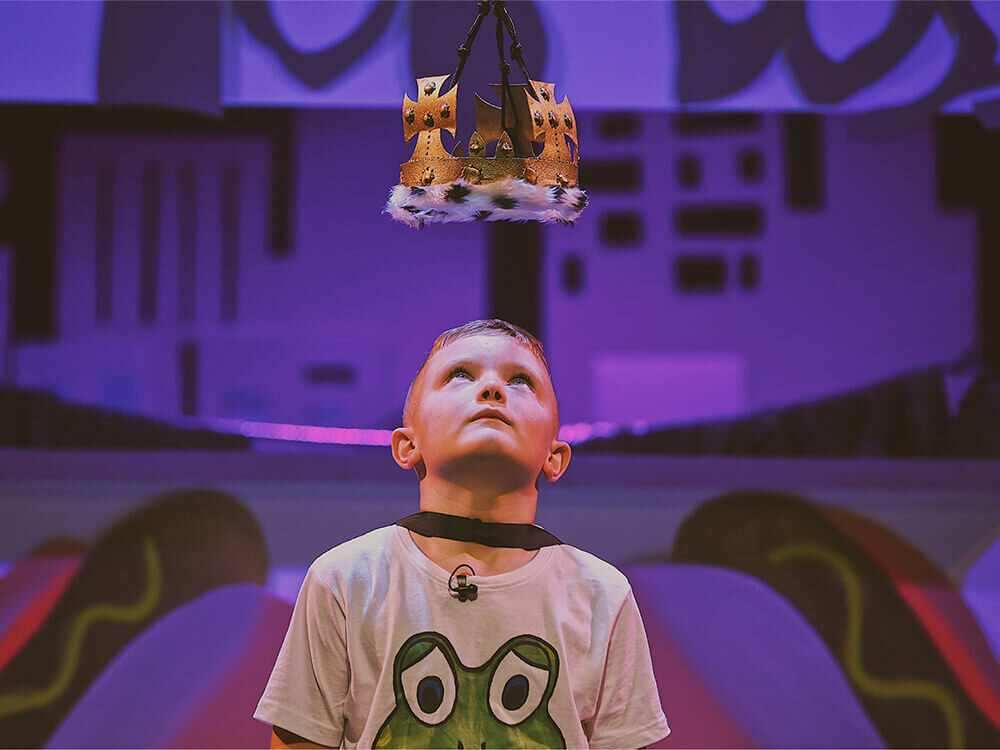
Photo credit: Anna Jones

Was the school already putting on an Arthurian play or did you approach them with the idea?

I approached them. I had supported another director on a project a few years ago who had worked with the Head4Arts organisation. So Head4Arts introduced me to Caerphilly Borough Council, who then introduced me to the parents’ network, who introduced me to the school – the parents’ network knew the schools very well and had an idea about which schools would be up for it. After I won the commission for the film, I sat down with the team at Idris Davies [primary school], and then I applied for a specific strand of funding (which no longer exists) for collaborations between schools and artistic practitioners from Arts Council Wales. The Council invested money in the film too, and the Area Regeneration Team in Rhymney made that first step in investment, as it was positive for boys and looks for role modelling which they wanted to prioritise, as well as anything that would bring the community together. So, it started completely from scratch with me saying we want to devise this show with boys in the school, and make a film that tells the story and paints a portrait of the community.

What does Camelot as a concept mean to you?

Camelot is an aspirational place that brings to mind this idea of wealth, health, opportunity, safety, a sense of peace – but also it doesn’t exist. It’s a place that was spontaneously made by someone, and when we think about the idea of Camelot we’re thinking about how we could change the world if we could, and what kind of world we want to live in. Camelot is an idea, a utopia; where we would want to live and what that would look like. It’s a man-made kingdom that was an improvement on what came before. I’m interested in that kind of engagement, productively moving together towards building a better society. An idea like Camelot is a way in to that kind of conversation.
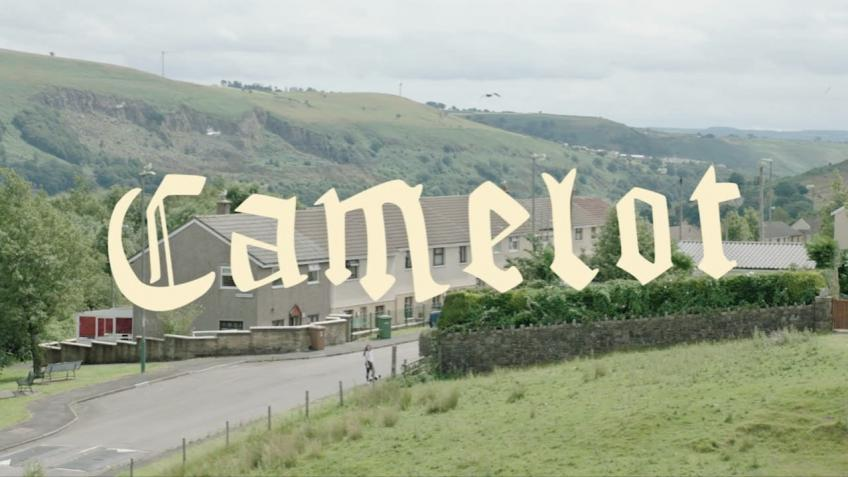
Camelot builds on the idea of the anthology being titled The Uncertain Kingdom – is Camelot that uncertain kingdom?

Yes – and if you’re sat in an uncertain kingdom, it’s where you might be hoping to be. It’s what you might be dreaming of while you’re sat in your uncertain kingdom. I suppose I wanted Camelot to be this moment of unbounded opportunity for these boys, a moment where they are safe, happy, free and unburdened by the world. This sort of perfect moment, when it’s summertime in the Rhymney valley, they’re hunting for frogs and they’re enjoying their childhoods.

How was the anthology put together?

The Uncertain Kingdom was thought up by three producers who were responding to the ways in which the political landscape felt last year. They wanted to empower filmmakers to make a comment on events and they wanted a fast turnaround so that the moment wouldn’t pass. They always intended to make 20 films; they reached out to 10 filmmakers and had an open call process for the other 10 – it was a really open brief, you just needed to pitch for an idea that would provide an insight into life in the UK now and connect with the questions they were asking about uncertainty. We had to write an application, submit a treatment once shortlisted and then pitch it in person. I understand that there were over 1400 applications, so it was really popular.
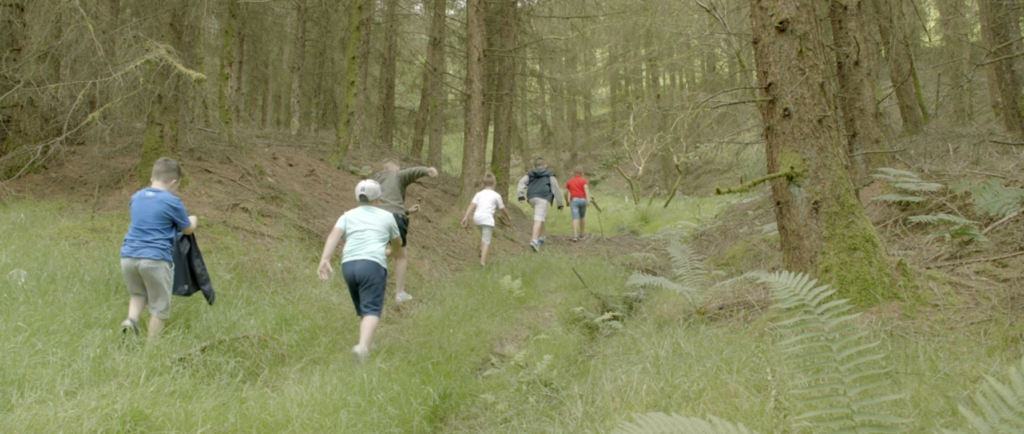
How do you think the experience will stay with you? How will it impact how you work in the future, the projects you align with?

I’m just thrilled that it worked! It was always going to be quite complex and difficult in some areas, so you have to accept that of all the elements you can expect one or two to be tricky. The only thing you hope for is that the tricky things aren’t in the important areas. I was lucky they weren’t. When it came to relationships with the boys and the community, there were no tricky areas; it felt like everything that really mattered went well, and all the tricky areas were in the boring financial areas. In a way, I feel like I got the problems I wanted.

You can never expect to make perfect work and I’m still learning a lot, but what I’m satisfied with was the tone of the film. The approach was what I wanted it to be, and the heart of the film was where I wanted it to be. It gave me confidence that it’s possible to connect a theatre project with a film project and tell a story that weaves between an imaginary world and a portrait of the real world. I want to make films that are revealing of our society, but our imaginary lives are important and can be revealing in themselves; I’m interested in the kind of documentary that wraps around something that might be imaginary, so I’ve left with some confidence that that sort of project works, and that people understand what I’m trying to do when they’re watching it.

Part of you always thinks is this just in my head, but it’s lovely that what you’ve made has communicated what you wanted it to. I’m hoping to develop it even further and continue to work in that way for sure. It’s also made me really appreciate how important relationships are in any project, that the collaborators you work with are so important, and that you never make anything like that on your own. I’m extremely grateful: I worked with lots of people I hadn’t worked with before, had some fantastic collaborators, took a few risks, and I’m so pleased they paid off.
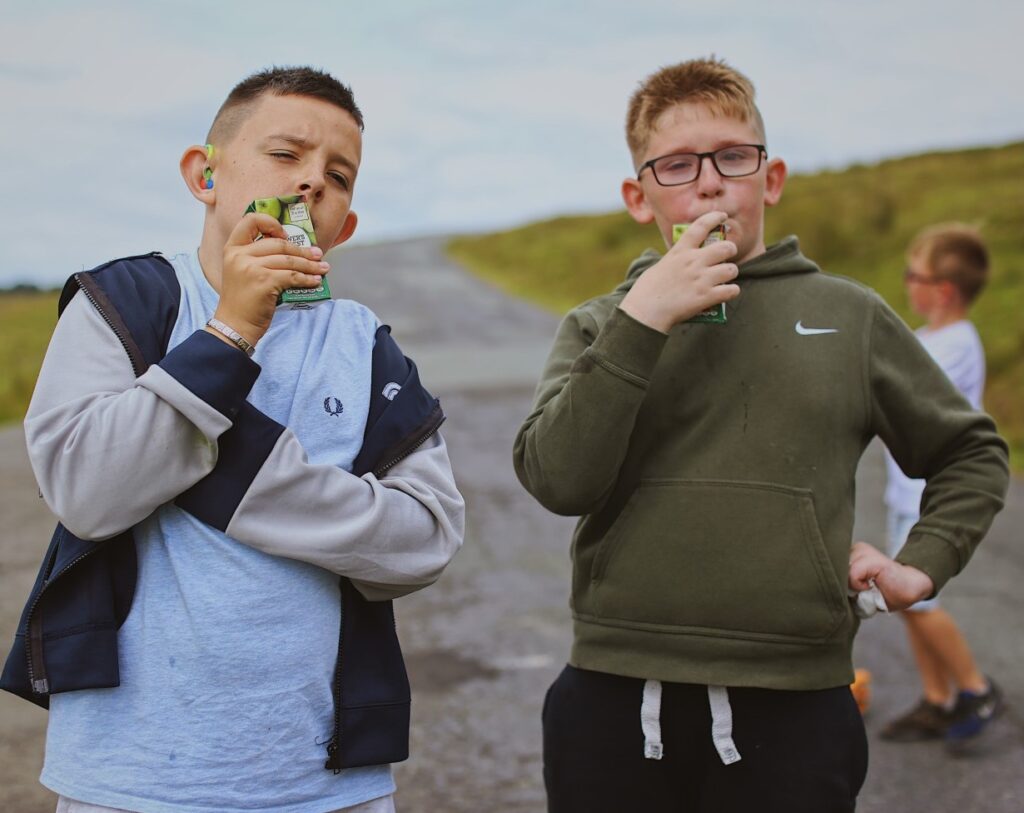
Photo credit: Anna Jones

The notion of collaboration is so important in an age of lockdown, which can be extremely isolating.  Is the arts sector having to change fundamentally in light of this – and is collaboration the answer?

I think it is, you have to be quite inventive now with how you find your support for projects. I’ve always had to resource my projects from a real mixed bag of grants, private help, and volunteer support. You have to think really creatively about how you get things off the ground now. In recent years there’s been a lot of attention on how you make things and who you involve and how you involve them, and it’s not just about what you come out with at the end, it’s about who is represented in that process – it’s crucial that people are trying to think about the methods of working as being as important as the outcome.

People are recognising that you can’t tell certain stories unless you involve certain people – if you’re talking about the experience of certain communities or people of particular identifies, there’s a very specific way you have to go about that. People are creatively understanding how the who is just as important as the what, and just how connected those two things are. You have to think on a case-by-case basis what a project specifically needs, and who would be interested in it. You’re having to work out who your audience is before you get going because you’re having to find support to make it possible. Private funding is going to become more and more important now with creative projects, and filmmakers/theatremakers are needing to become effective fundraisers in order to stay in the game. I think the relationship between business and creative industries needs to be a closer one. I’d love to see more public funding for the arts.

In the same vein as you discussed earlier, it’s not just about humanity coming out the other side of this, it’s about what keeps you going along the way.

And to remind us what we’ve got in common, remind us that it’s what we’re working towards, why it’s worth looking after each other in the first place.
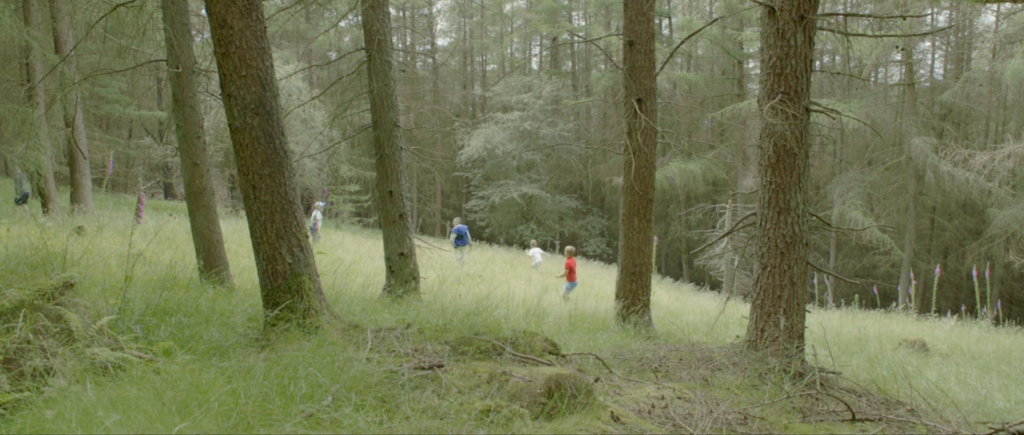
Giving people control of their own stories, as you’ve done here, is one of the most beautiful and important steps so that we can make a better world. The optimism of your film is so necessary.

I really agree. If you can’t imagine it, you can’t make it.

What’s next for you?

I’m lucky to have a side hustle in producing projects that inspire me, so I’m helping Cargo movement right now. They’re a really inspiring company that’s making innovative teaching resources and exhibition design that tells new stories from Black history. Creatively, I’m writing another short film, and I’m working with a production company to develop the Camelot concept into a miniseries for TV, which I’m very excited about. It’s a long road, and it’s very early days, but I’m pleased at least to be having intentional conversations

Wonderful! Thank you so much for your time, Alison – it’s been an absolute delight to talk to you!

I’ve had a lovely time! I can’t tell you how lovely it is to hear you loved the film, and that everything came across in the way I hoped it would. It’s like music to your ears. It’s been a long process – we met the boys in May 2019, but I’d been working on it from January 2019, so it feels now that people are starting to see it. We had to wait a long time for people to see it, and now that they are, it feels like a lovely end to the process, and it’s such a huge reward when someone has taken from it as much as you have. Thank you so much, I really am grateful.

The Uncertain Kingdom is available to watch on demand from Apple TV, Google Play, Amazon Prime, BFI Player, and Curzon Home Cinema.

Alison Hargreaves: Twitter – Instagram – Creator Site

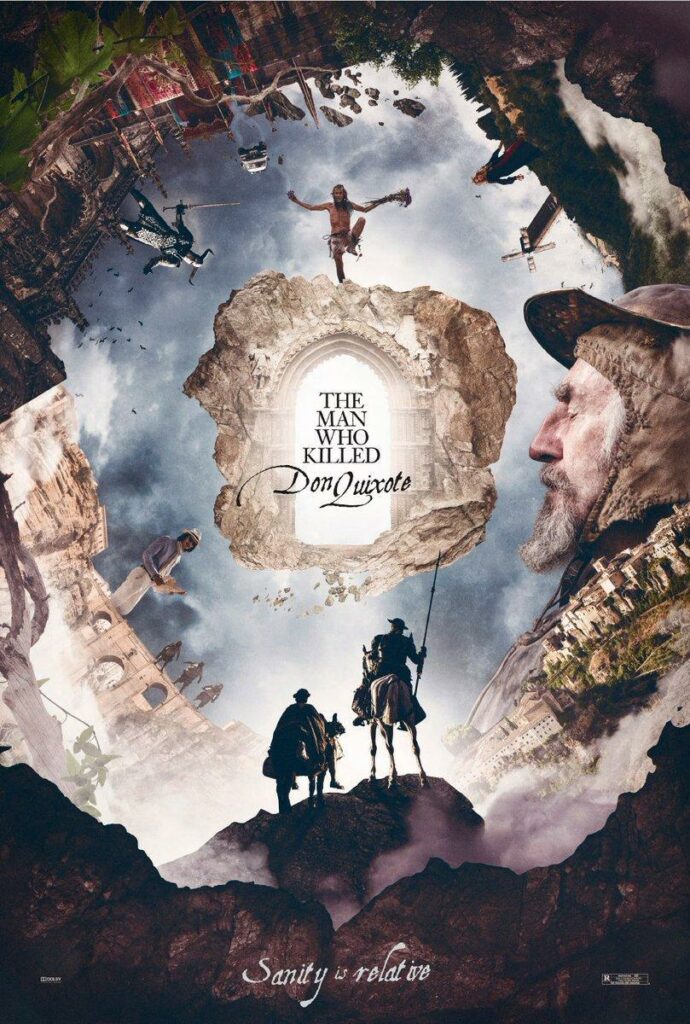
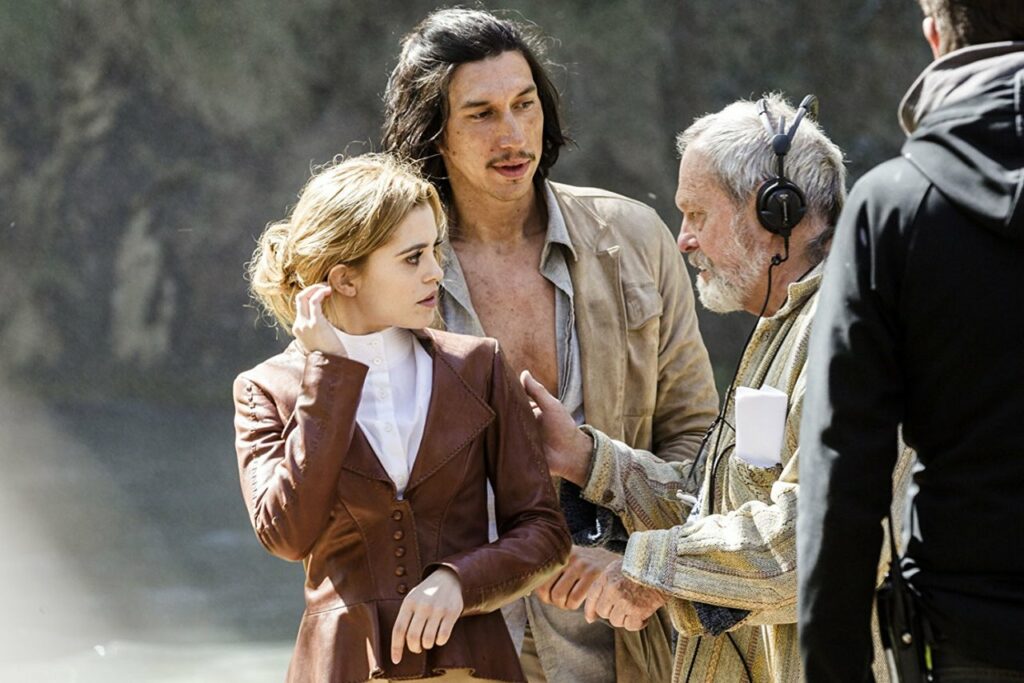
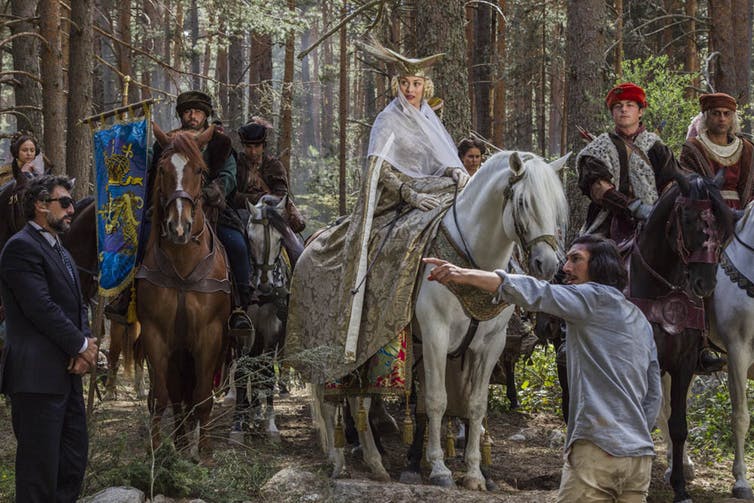
REVIEW The Man Who Killed Don Quixote (2018) by Barbara Hughes-Moore

Terry Gilliam’s three-decade-long struggle to bring Miguel Cervantes’ seventeenth-century novel Don Quixote to the big screen is an epic saga worthy of its knightly hero. Everything short of divine intervention seems to have scuppered the Monty Python alum’s numerous attempts, including lost financing, flash floods, legal disputes and personal injuries. The film took so long so produce that the two main roles, Don Quixote and Sancho Panza, were recast numerous times, with the likes of Robert Duvall, Michael Palin and John Hurt for the former and Johnny Depp, Ewan McGregor and Robin Williams for the latter. It was such a chaotic production that it’s intended ‘making of’ featurette, 2002’s Lost in La Mancha, turned into a documentary of its quixotic plight, predating the actual film’s completion by some fifteen years.

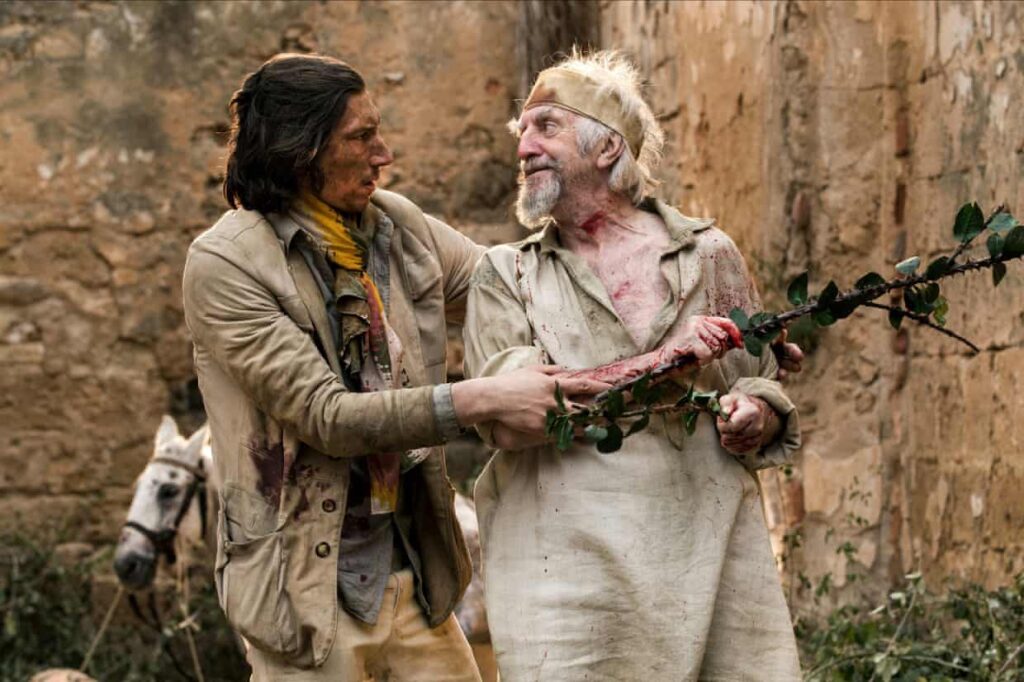
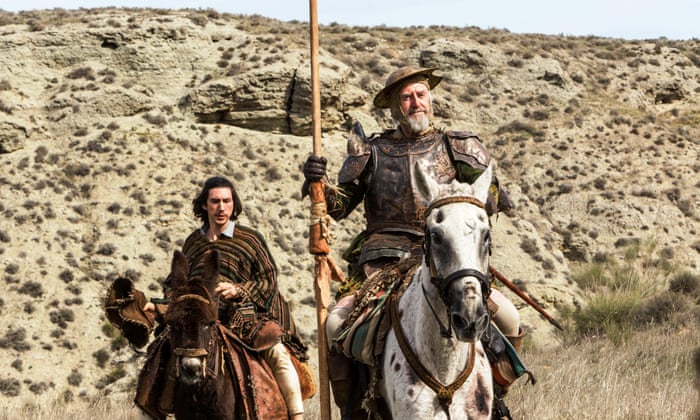
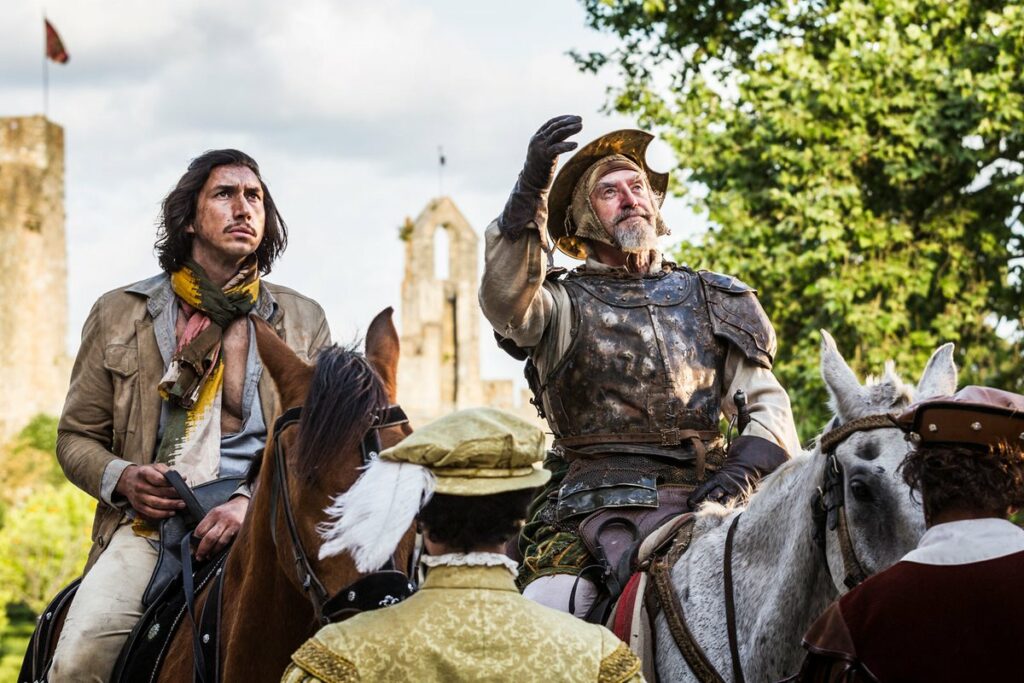
That the film finally got made is nothing short of a miracle. That it’s not particularly great is unsurprising, though it’s a triumph that it’s anything resembling coherent at all. Here’s the gist: while shooting a vodka commercial in Spain, Toby Grisoni (Adam Driver) comes across his first student film, an adaptation of Don Quixote he shot in a nearby village, Los Sueños (which aptly translates to ‘The Dreams’). Having long abandoned his scruples in pursuit of the big leagues, Toby ditches the shoot in an attempt to rekindle any artistic integrity he has left by revisiting the place where his love for movies began – only to learn of the collateral damage he unwittingly caused to the village where he shot his first feature. This is embodied in the fate of local cobbler Javier (Jonathan Pryce), whom Toby cast as the titular hero in his movie, and who now believes he is Don Quixote and that Toby is his loyal squire, Sancho Panza.

That synopsis alone may give you an idea of how convoluted the film is, but despite its over-complicated premise, its execution is often too simplistic. Most of its drawn-out run-time is spent on watching our odd couple traipse around the countryside with no real aim (or end) in sight – it’s even referenced when Toby breaks the fourth wall to exclaim, ‘There’s a plot??’ And while rural Spain looks utterly beautiful thanks to Nicola Pecorini’s sumptuous cinematography, the visuals mean little without some kind of plot to back them up. Perhaps it was meant to play like a nightmare, but it’s lacking even the dreamy coherence of a fairy tale. Many scenes feel superfluous, but none is quite so poorly handled as the grand ball, an exercise in exasperation which plays a lot of casual xenophobia and misogyny for laughs, and which features a truly abysmal scene where Quixote is fooled into ‘going to the moon’ to save fair maidens.
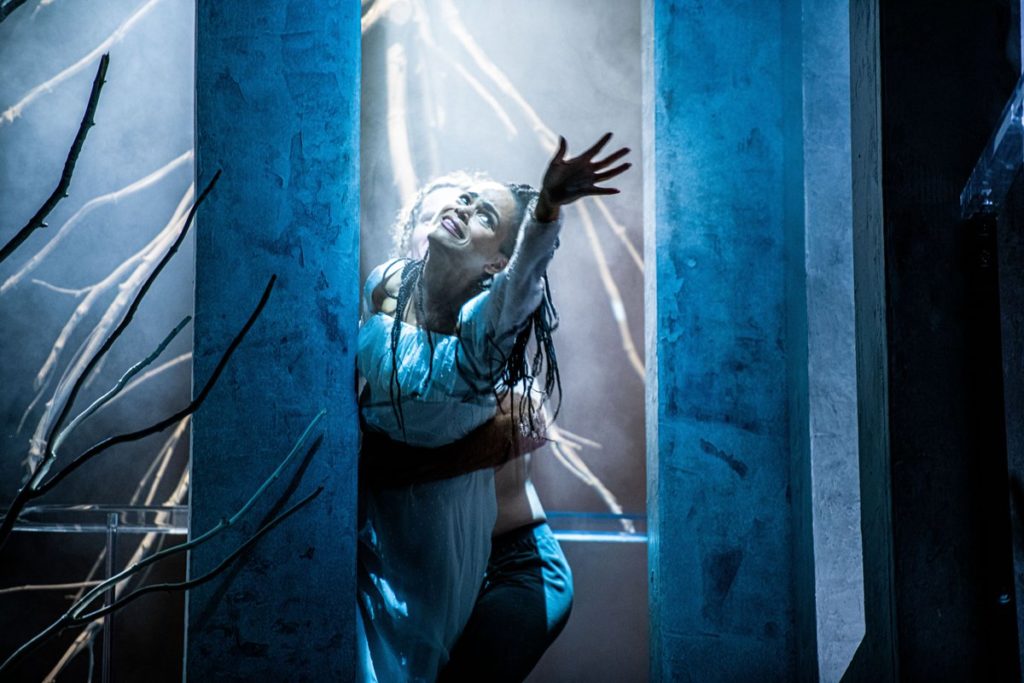
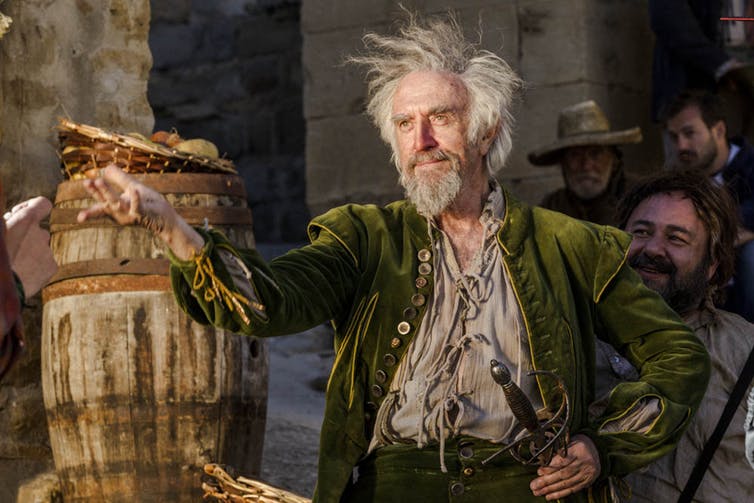
But at least the acting here more than makes up for the shaky narrative. As sardonic ad director Toby Grisoni, Adam Driver turns in yet another excellent performance. His character is supremely unlikable practically from start to finish, but his arc wraps up an interesting and not entirely predictable way. He’s a lightning bolt of smarmy charisma and manic energy, and any strength the film has traces back to the strange and spiky chemistry between Driver and his onscreen partner in crime: Jonathan Pryce, as the charmingly delusional Quixote. Pryce is absolutely wonderful here – he feels simultaneously ancient, chivalrous, masterful, adorable, mad, sane, wise, foolish, otherworldly and mischievous. Perhaps something magical happens when Pryce and Gilliam collaborate, given that some of their best work can be found in their last collaboration, 1985’s Brazil. There are shades of Midnight Run in the scenes where Driver’s sweary Millennial tries to cart around Pryce’s endearingly doddery oddity like an exasperated babysitter. Their interactions are funny, chaotic and sometimes moving, and they are easily the best part of the film. Even Óscar Jaenada and Jason Watkins excel in small roles.

It’s a shame they’re saddled with such scant material. Don Quixote may be Gilliam’s best work since 1995’s Twelve Monkeys, but it’s still a haphazard scrawl of a movie with way too many eccentric sojourns that makes it feel like ten different versions smushed together. Its despicable portrayal of women is easily its worst element, though, throwing Gilliam’s Madonna-Whore complex into stark relief. Jacqui, the character played by Olga Kurylenko (a supremely multi-faceted actress who excels across multiple genres from drama to action to romantic comedy) is portrayed as a nymphomaniacal harpy who throws herself at Toby any chance she gets. When Toby gropes a woman on his crew, it’s played as some kind of joke; in fact, it’s Toby’s inability to remember her name that is played for laughs – his casual groping of her is completely brushed over. And Angelica (Joana Ribeiro) caught Toby’s eye on the set of his original film when she was fifteen years old. They never progressed past innocent flirting at the time – thank god – but it’s uncomfortably specific, especially as Toby and Angelica do become romantically involved during film.

It’s a difficult film to review because, in a way, it feels as if it involves appraising Gilliam’s soul. Gilliam has long been likened to Quixote, both dreamers who defiantly live a fantastical existence in the face of orthodox society. Watching his finally finished treatise to the elusive knight errant feels like a trip into the windmills of his mind. He even gets to wreak cinematic revenge on the producers who dashed his hopes for decades by framing Stellan Skarsgård’s producer character as the embodiment of all evil in a way that resonates with M. Night Shyamalan’s decision to write the gruesome death of a callous film critic in Lady in the Water. It’s a fittingly metatextual adaptation given that the novel played with those kinds of elements, branded as a relic from the ‘archives of La Mancha’ in order to enhance its credibility. And though the line between fantasy and reality remains, as in much of Gilliam’s filmography, blurred, its period features seem to comprise a fantastical gloss over the modern world – modern-looking security guards with shades and earpieces line the castle walls, and Kurylenko, resplendent in gaudy medieval finery on a horse, taps away at her smartphone.

The narrative may be rickety, but the film’s presiding theme decidedly isn’t. Gilliam expresses it through one of the film’s tertiary characters – Rupert, Toby’s agent (Jason Watkins) – who tells his client that ‘we become what we hold on to’. It’s sneaked in so early in the film, and spoken by such a minor character, that it almost slips under the radar, but it’s essentially the mission statement of the movie, which goes on to literalise it in many ways, not least through Pryce’s Quixote, and of course through Gilliam himself. A significant portion of his personal and professional life has been tied up in this movie’s making (and ‘unmaking’, as he memorably states in the title credits); to even conceive of its completion was viewed by many as Gilliam tilting at windmills, so of course he feels justified in a little self-indulgence. But Gilliam does seem acutely self-aware of his own impractical endeavour, as the film directly tackles the notion that collateral damage always accompanies obsession, and that a singular artistic vision may take its toll on many.

I think Mark Olsen of the L.A. Times said it best: ‘For anyone struggling with whether to give up, concerned that the result will not match the effort, Gilliam seems to be planting a flag — or more accurately charging a windmill — to say the effort is the reward.’ Having seen the film while I was in the final weeks of my PhD corrections, I felt rather warmly towards it – like Gilliam, I too just wanted to get the thing done at last. There are moments of brilliance here, when Gilliam considers the social cost of filmmaking, the melancholy of growing old, of losing hope, and becoming set in your ways. But the power of transformation, for better or worse, also remains. There’s merit in watching a filmmaker produce something so bizarrely incoherent that only about three people will enjoy it – and though it makes The Adventures of Baron Munchausen look as finely crafted as Memento in comparison, I was grateful that Gilliam still has windmills at which to tilt.

REVIEW The IT, Sherman Theatre by Barbara Hughes-Moore

Written by Vivienne Franzmann and directed by Tim Howe, the Sherman’s own Creative Engagement Manager, The IT follows Grace Freemantle, a high schooler whose rage and powerlessness at an eroding future seems to have manifested as the insidious IT of the title. The creativity of the Sherman Youth Theatre is out in full force here, not only as actors but contributing to the artistic choices of the production, from the set and music to costume and movement choices, and their confidence and passion for the material lends a significance and immediacy to an incredibly timely play.

There’s a lovely sense of movement throughout, thanks to Tim Howe’s vibrant direction and the cast’s dynamic performances. It’s a credit to the skill on show that they maintain a consistent tone even as the show builds tension and shifts between comedy and horror, channeling John Hughes and John Carpenter in equal measure. It’s also wonderful to see a bilingual production, with the actors saying many of their lines in both English and Welsh. The central performance is wonderfully melancholy, painting an image of Grace Freemantle as someone who seems to be out of focus in everyone’s life, including her own, and the rest of the characters are similarly finely drawn, also acting collectively as a Greek chorus that plagues Grace’s existence.

The central motif of the rage monster is insidiously evocative – it’s something you truly should see for yourself, and it perfectly encapsulates the gnawing dread of horror caused by even the briefest glimpse at the news. The IT is the roaring into the void; the primal scream of a generation whose predecessors have ruined their world before they’ve even got a chance to make their place in it, because how can you plan for a future that could change at any moment? In many ways, the future of the world is faced with the same uncertainty and peril as the young people who are trying to fight for it.

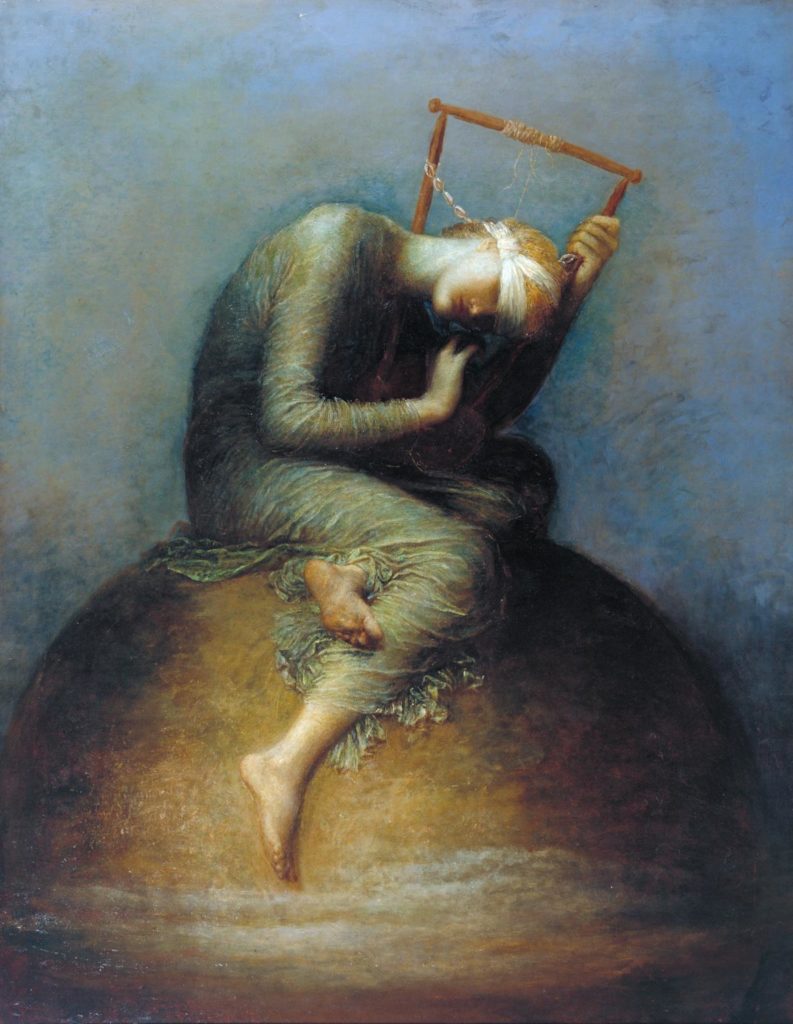
The IT, whether a literal monster or a metaphorical rage at the imperilment of the planet, is a poignant expression of the terror we all feel when everything we once relied on seems to be crumbling before our very eyes. The story called to mind the painting Hope, by George Frederic Watts, in which everything seems lost, but one string remains. Hope is the last string – and even against seemingly-insurmountable odds, that single string is worth fighting for. Anger can paralyse, but it can also propel, and the Sherman Youth Theatre brilliantly convey both the righteous rage of Generation Z and the promise of a future worth saving. The IT is playing at the Sherman Theatre through Saturday 29th February.

Hope 1886 George Frederic Watts 1817-1904 Presented by George Frederic Watts 1897 http://www.tate.org.uk/art/work/N01640

Ghost Stories UK Tour, New Theatre by Barbara Hughes-Moore

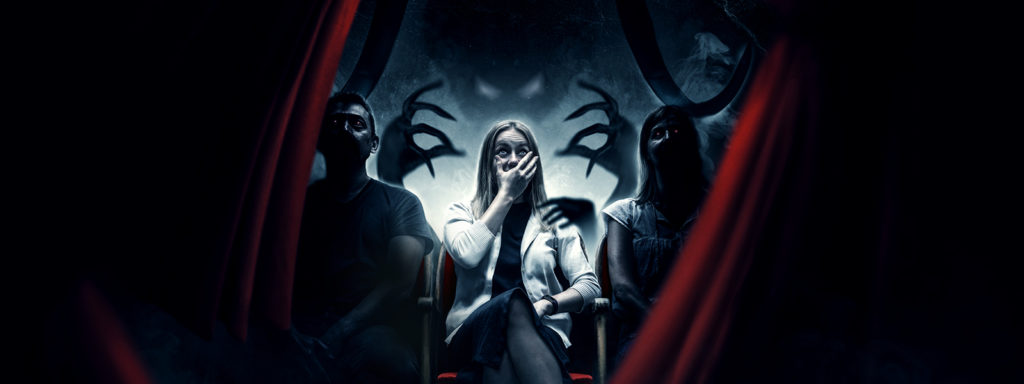
Written by Jeremy Dyson and Andy Nyman, Ghost Stories has captivated and creeped out audiences worldwide since it opened to roaring success in 2010, even making its way to the big screen in an adaptation starring Nyman alongside stalwarts like Paul Whitehouse and Martin Freeman. It’s also perhaps the first major horror production since Paranormal Activity to market itself primarily through audience reactions. Having experienced several so-called horror shows in the theatre that either spooked me or didn’t even raise a hair on the back of my neck, Ghost Stories delivered on its promised frights and then some. Forget sleeping with the light on – I may never sleep again.

We’re urged, first by the programme and then by creepy voiceover as we take our seats, to preserve the twists of the show in a bid for secrecy the likes of which I hadn’t seen since Harry Potter and the Cursed Child compelled its audiences to #KeepTheSecrets – but to be honest, I don’t think I could spoil this show even if wanted to, because I saw most of it through my fingers. It is simply the most frightening ninety minutes I have ever experienced; I barely breathed for most of it, because the show conjured a sense of dread so unrelenting and oppressive I’m still reeling from the shock of it now.

It might seem like a negative reaction to any other show – but this is the kind of production for which such a response must be music to the creative team’s ears. The marketing warned those of a nervous disposition to stay away but, as our master of ceremonies Professor Goodman (Joshua Higgott) observes, there’s a reason we came here to be scared, and the show confronts you with your own fears as much as it conjures up new ones to haunt your dreams. And once you’re in, you’re locked in – latecomers are not admitted, there’s no interval, and if it gets too much for you, you have to either stick it out or leave the story for good, because if you go there’s no coming back. You feel as if you’re trapped in a living nightmare with no way out.

There is real ingenuity on display here, the kind that Alfred Hitchcock used to draw frights out of chocolate syrup. The performances never stray into melodrama or pastiche; instead the superb ensemble – Higgott, Paul Hawkyard, Gus Gordon, Richard Sutton and Lloyd McDonagh – anchor the escalating strangeness and bring a lightness of touch that blends comedy and horror without damaging the integrity of either. (Though, make no mistake, this isn’t Shaun of the Dead – the laughs are mainly there give you a brief reprieve from the torturous tension). But the real unsung heroes of the show are the team responsible for the production design, lighting and sound – while the story and characters compel, it’s the creative team’s peerless work that will haunt you long after the shocking denouement.

This is perhaps the first show I couldn’t find fault with that I also could never bring myself to see again. I can never unsee many of the horrifying images that kept me locked in my seat even when my fight-or-flight instinct was telling me to leap over the back and make a break for the exit. At one point, Professor Goodman laments how the oral tradition of storytelling has been supplanted by the hyperbolic immediacy of our Twitter-centric age. What Ghost Stories does it to rekindle the smouldering ember of this ancient tradition, gathering its rapt audience around the fire of its singular vision in a way that only theatre can truly capture. The secrets of this show are worth unravelling – but are you brave enough to find out for yourself?

REVIEW Cinderella, New Theatre by Barbara Hughes-Moore

Pantomime is such a fantastically British art form; a sarcastic blend of slapstick, farce and musical comedy that feels inextricably interwoven with the festive season, brimming with daft jokes for the kids and innuendo for the adults. But panto and I haven’t always been on the best of terms. Our conscious uncoupling resulted from the traumatizingly formative pantomime experience of my youth where everything was too loud, too overwhelming, and too upsetting because one of the ugly stepsisters hit on my grandpa – while my grandma was sitting RIGHT NEXT TO HIM. None of us went home filled with Yuletide joy that night – witnessing ‘Allo ‘Allo’s Sue Hodge try to chat up a close family member does slightly dull your enthusiasm for the medium, it turns out – and I’ve never been to another panto since. Until now…

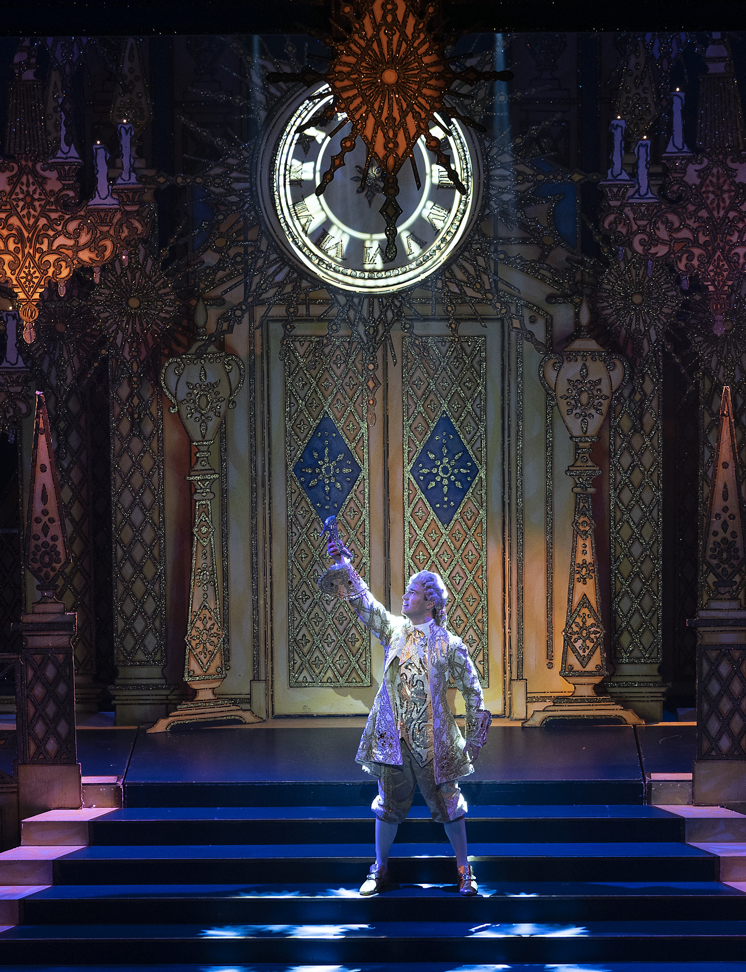
As luck would have it, it’s another iteration of Cinderella that’s got me tentatively dipping my toe back into the panto pool. Decreed by this production as ‘the Fairy Godmother of all pantomimes’, Cinderella is the ultimate Christmas classic, a story so familiar you could probably shout out the lines in your sleep – and this new production is filled with enough glitz, glamour and giggles to remind you why it’s one of the ultimate feel-good fairy tales. I entered the theatre with not a little trepidation and brought backup in the form of my grandpa (not the one Sue Hodge tried to pick up; pretty sure that one’s off panto for life), and left it singing, laughing, and wishing for an encore!

OLYMPUS DIGITAL CAMERA

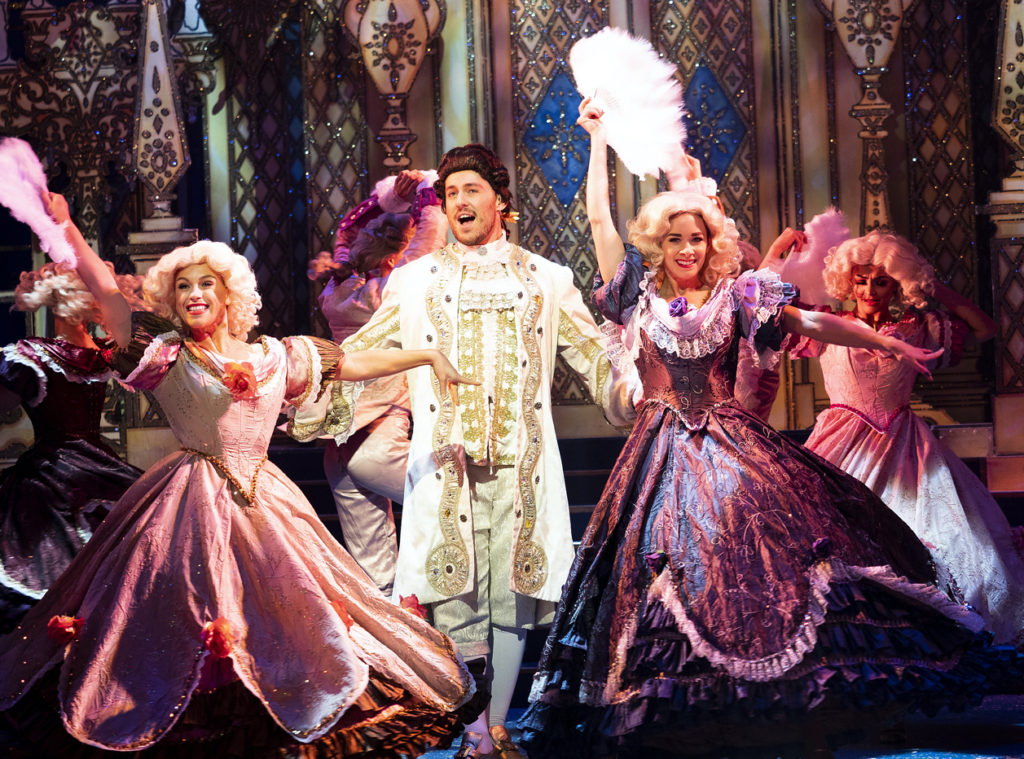
Musical director Michael Morwood’s scintillating New Theatre orchestra makes a joyful noise (their rendition of Pure Imagination, a recurring musical motif, is utterly magical) and the production values are uniformly amazing, from the incredible sets and visual effects to the gorgeous costumes and choreography. Pantos tend to keep up to date with the music of their time – remember S Club 7’s appearance in that Aladdin panto ITV used to rerun every Christmas in the early ‘00s? This reviewer fondly does – and Cinderella has its fair share of modern(ish) tunes on its slate from the likes of Beyonce, the Jonas Brothers, Shawn Mendes and Pink, as well as some campy classics by Shirley Bassey and Gloria Gaynor.

Pic Tim Dickeson 06-12-2019 Cinderella @ The New Theatre

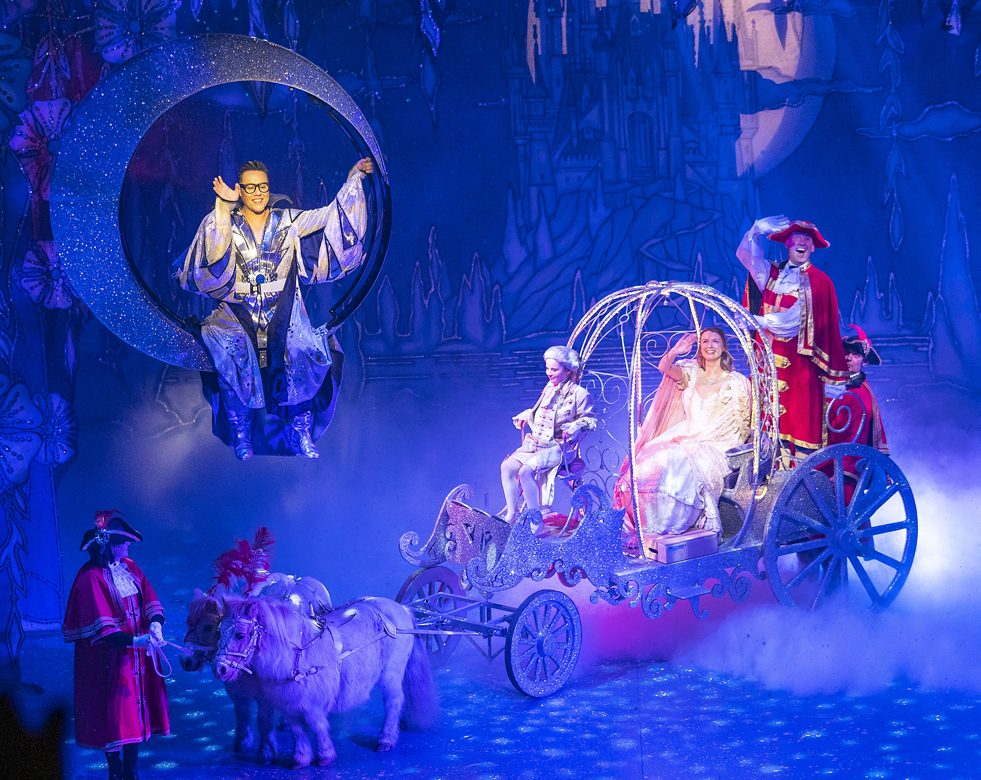
The cast is stellar across the board, but it’s Gok Wan as the Fairy Gokmother (!) that’s maybe the most perfect, meta casting choice of all – because who better to play the ultimate fairy tale makeover guru than the man who taught a nation how to look good naked? Have no fear: there’s no nudity here, as the cast are fabulously costumed to Wan’s high standards. Wan leads the show with effortless charm, wrangling some sense out of the wacky proceedings and making a grand entrance into every scene via sparkly explosion or flying moon. He also accidentally lobbed a bunch of toilet rolls into the audience during a deliciously chaotic rendition of the 12 Days of Christmas, which is the kind of quality ‘it’ll be alright on the night’ goof you just don’t get in your bog-standard (pun intended) end-of-year production.

Phil Butler is amazing as the lovably lovelorn Buttons, pining unrequitedly for Teleri Hughes’ lovely Cinderella. Butler channels the keenly controlled mania of Lee Evans (a compliment I wouldn’t give lightly), playing especially well off of his co-master of ceremonies Gok Wan, and had the crowd in the palm of his hand. Butler’s delivery transforms every line into a zinger – I was responsible for the loudest guffaw when Buttons claimed to be in his mid-thirties (alarming evidence that I’m turning into my grandma who, when we saw 12 Angry Men at the New Theatre some years ago, watched Tom Conti walk onstage and proclaimed in the loudest stage whisper in the history of theatre, ‘That’s not Tom Conti, is it? My God, he’s looking old!’)

OLYMPUS DIGITAL CAMERA

Hughes’ Cinders and Rob Wilshaw’s Prince Charming don’t have the meatiest material but they perform their roles beautifully and lay claim to the loveliest duet, a surprisingly emotional version of Shawn Mendes’ If I Can’t Have You. They also get to flex their comedic chops during a hilarious cover of Beyonce’s Listen, a poignant ballad broken up by a jealous Buttons repeatedly asking Cinderella ‘Who’s that bloke?’ Dale Evans particularly stands out as Dandrini, the Prince’s best friend, who seems like the lovechild of James McAvoy and Michael Fassbender and who shares with Wilshaw an exciting cover of Jonas Brothers’ Sucker and belts out an epic solo version of Pink’s Get the Party Started, backed by the excellent ensemble dancers. (Regan Gascoigne and Nathan Skyrme were on particularly lively form).

Pic Tim Dickeson 06-12-2019 Cinderella @ The New Theatre

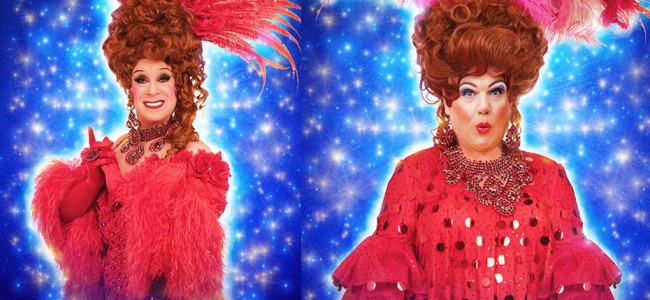
But let’s be honest: this show belongs to the ugly stepsisters, and Ceri Dupree and Mike Doyle as the winkingly-named Tess and Claudia own the stage whenever they strut onto it. Doyle, an award-winning comedian, returns here for his seventh consecutive year as the New Theatre’s panto stalwart; a performer hasn’t got this much joyous mileage out of a Welshily-drawled ‘alriiiiiiight’ since Nessa Jenkins, and he wears the ever-living hell out of the eye-poppingly inventive costumes – designed by Ceri Dupree, who also plays the Tess to his Claudia. Dupree, an international cabaret star, is the show’s secret weapon, countering Doyle’s outrageous bawdiness with an elegantly deadpan aloofness – and by God he knows how to wear a gown. The revolving runway of their increasingly garish costumes is a gag that never gets old – at various points Doyle dresses in outfits that variously evoke a bee, a lampshade and set of traffic lights, and early on in the show the sisters emerge from the stage garbed in what I can only describe as nightmarishly horticultural French and Saunders cosplay. Their Shirley Bassey-off alone is something you have to witness with your own eyes.

I’ll try not to spoil too many of the jokes here because watching them unfold live is a delight you should experience for yourselves – and (thankfully for this introvert) audience participation is limited to your standard ‘OH NO IT ISN’T’ fare, not the ‘dragging someone onstage’ nightmares that have haunted my dreams in the run-up to this performance. I was especially delighted to see so many Welshisms in the show that gave it a personal feel: from Buttons’ snarky asides about Ely and Butetown to the prince inviting such nobles as Megan of Mynachdy to the ball, it’s wonderfully tailored to Welsh audiences.

Cinderella was the show which reignited the snuffed flame of panto love in my heart, and for that I’ll forever be grateful. It’s total escapism; a show brimming with joy, jokes and genuineness that made me forget the worries of the world for two hours, and it’s the ultimate family show because it absolutely has something for everyone. ‘The word for it is magical,’ my grandpa declared after it ended, and I couldn’t agree more: not only will you go to the ball, you’ll have one too!

Cinderella is playing at the New Theatre throughout the festive season, and concludes its Cardiff run on 12 January 2020.

REVIEW The Snow Queen, Sherman Theatre by Barbara Hughes-Moore

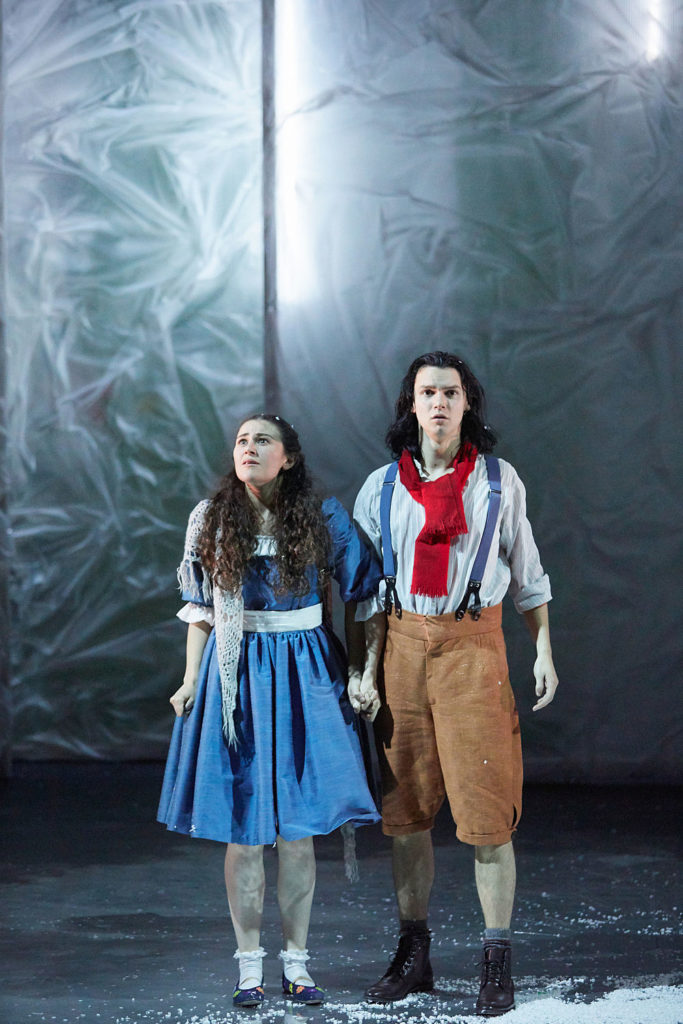
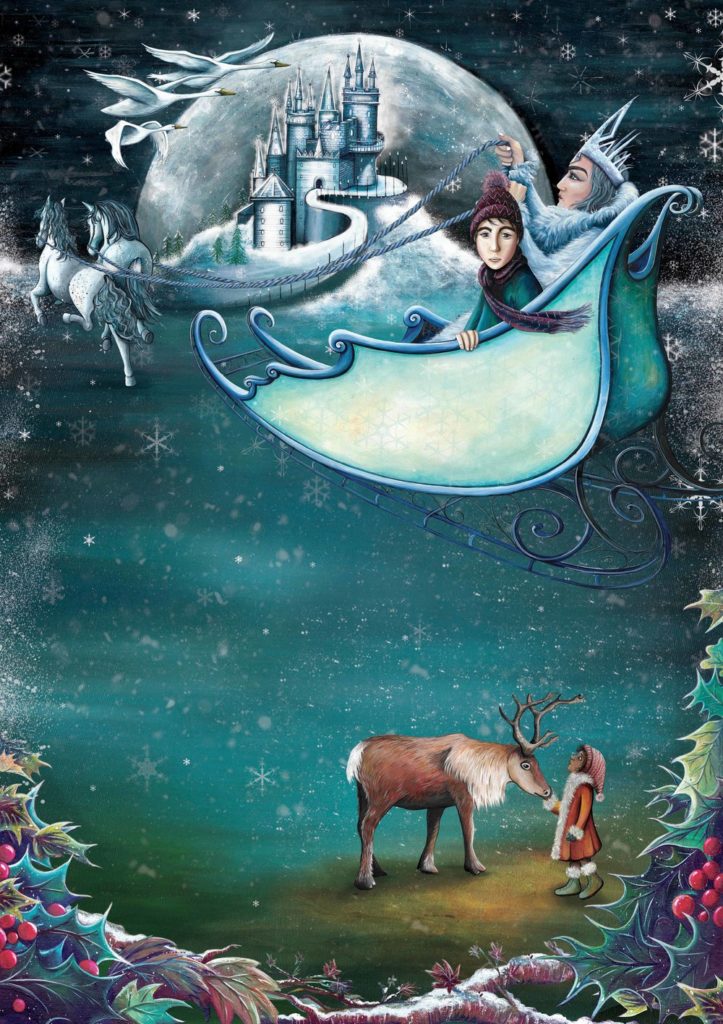
There’s nothing quite like a Sherman Theatre Christmas production to get you in the festive mood – and The Snow Queen, this year’s main-stage musical offering, is a sumptuous Yuletide treat for the whole family. Directed by Tessa Walker, the show adapts Hans Christian Andersen’s classic fairy tale about two young friends, Gerda and Kai, whose friendship is tested when Gerda hurts Kai, and goes on an epic journey to find him and make amends after he is lured away by the wicked Snow Queen.

Anni Dafydd as Gerda and Ed Parry as Kai

Reimagining the Danish fairy tale as an urban myth told to the children of the South Wales Valleys fits with the vision of the Sherman’s artistic director Joe Murphy in telling stories ‘rooted in Wales but relevant to the world’. The show has all the cosy feels of being told a great story on a cold winter night, not least because it seems to draw its framing device from The Princess Bride: in this case, it’s told to us and a stroppy little boy (Morgan Lllewelyn Jones) by his beleaguered babysitter (Grace O’Brien) as they wait out a snowstorm that has delayed the return of the boy’s mother. Having taken out the lights, the heating and the wi-fi, the blackout might as well have turned their sleepy town back to the Stone Age, and the boy isn’t in the mood for a story – but before long, the sitter’s initially irate listener becomes as enrapt as the audience as she weaves an epic tale told to her by her grandmother.

The story is indeed a captivating one, skilfully adapted by Conor Mitchell who pulls quintuple duty as writer, lyricist, composer, musical director and onstage pianist! Mitchell’s music is gorgeous – not all the songs work, though the best are up there with Frozen, which was incidentally inspired by Andersen’s story – but it’s his script that is particularly lovely: funny, sweet and sincere, it feels more universal in scope than Andersen’s, focusing less on faith and more on the power of inner strength, self-determination, and friendship; how kindness is not a commodity but a treasure that should be cultivated, cherished and shared, especially during a time in our world in which it may seem rare.

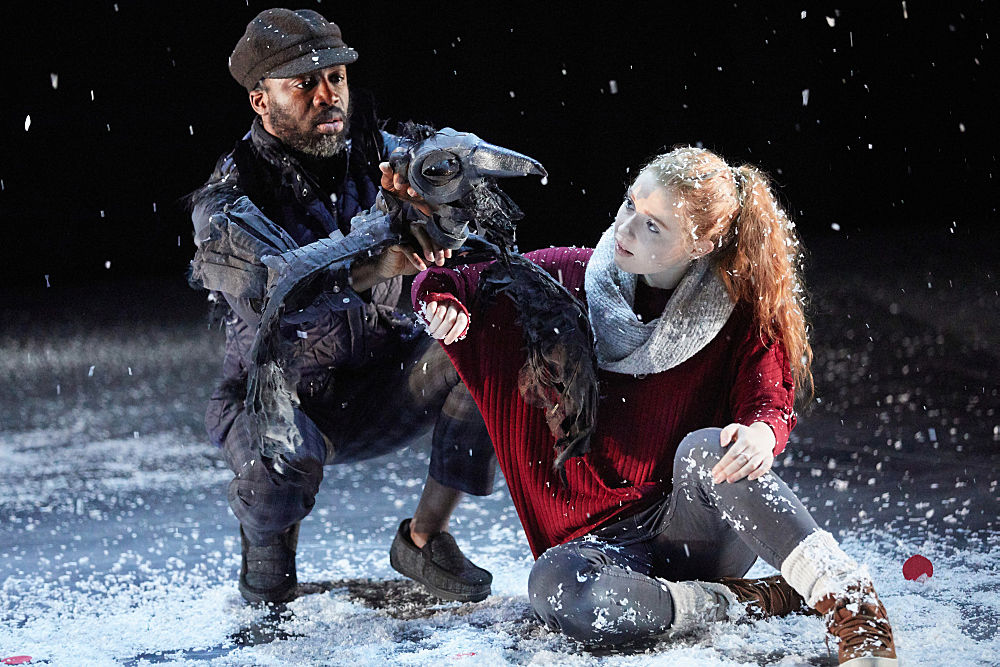
Jo Servi as the Crow and Grace O’Brien as the Sitter

The beautiful messages woven into Mitchell’s script are wonderfully brought to life by an excellent, enthusiastic and deeply creative cast. Anni Dafydd goes on an incredible journey as Gerda, at first a fun but entitled young girl, whose casual classism alienates her closest friend Kai (Ed Parry), and her subsequent quest to find Kai and make up for her mistake is an epic and emotional one. Given that he is the subject of Gerda’s crusade, Parry might not get many scenes as Kai, but he does get to chew the scenery as an adorkably befuddled prince and a sassy anthropomorphic geranium (if that description along doesn’t compel you to see this show, I don’t know what will!)

Along the way, Gerda meets a conveyor belt of eccentric characters, from Hannah Jarman’s bolshy Bandit Girl to Jo Servi’s delightfully irascible Crow (reminiscent of Bagpuss’ Professor Yaffle, with Servi fantastically animating a puppet designed and directed by Rachael Canning) to Julian the adorably heroic reindeer (brought to vivid, hilarious life by Callum Lloyd, who infuses the character with Disney-level charm through sheer skill and enthusiasm – how he managed to draw laughs, gasps and awwws from a lampshade, I’ll never know). Stephanie McConville’s Snow Queen has a glamorously insidious presence, but she appears a touch too infrequently, and her outfit could have been just a bit grander to match the larger-than-life characters that preceded her.

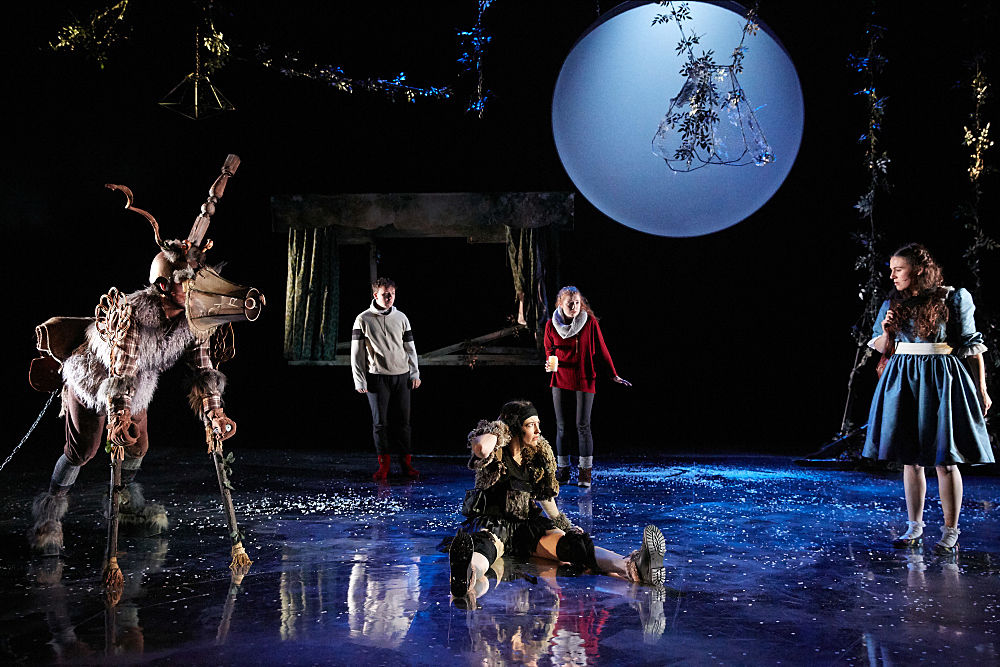
From left to right: Callum Lloyd (Julian the Reindeer), Morgan Llewelyn Jones (Sat), Hannah Jarman (Bandit Girl), Grace O’Brien (Sitter) and Anni Dafydd (Gerda).

Not only is the cast superb across the board – swapping between their roles as actors, musicians and puppeteers with ease – but the show is just beautiful to look at. Cecilia Carey’s inventive sets evoke myriad locations from an eternally-summery garden to an ice palace worthy of Elsa, the season-spanning vistas animated by the atmospheric sound and lighting design (by Ian Barnard and Katy Morison respectively), and Helen Rogers’ inventive costuming (the Bandit Queen’s ensemble is particularly eye-catching), not to mention the snow near-perpetually falling from the heavens. The Garden of Eternal Summer, ruled over by Rachel Nottingham’s slightly demented sorceress, is one of the most vivid locales, and also the setting of the show’s best scene which I can only describe as the Golden Afternoon song from Alice in Wonderland as reimagined by RuPaul’s Drag Race (featuring the above-mentioned sassy geranium, Jo Servi as a timorous wallflower and Stephanie McConville as an ultra-chic rose).

The Snow Queen is brimming with Christmas magic for the whole family, and it’s the perfect show to usher you into the festive season. In my experience, there’s nothing quite as Christmassy as a musical, and the Sherman’s production not only has Disney-calibre songs but a Disney-calibre story and message to go along with them. Not only will it inspire and entertain you, it will teach you that you have to experience the winters of your life in order to appreciate the summers. It’s not the shards of a magic mirror that make a person cruel – that capacity is within us all, but so too is the capacity for kindness, courageousness, and even a little bit of magic.

The Snow Queen is playing at the Sherman Theatre through 31 December.

REVIEW Peter Pan Goes Wrong, New Theatre by Barbara Hughes-Moore

Following its rousing success with The Play That Goes Wrong, Mischief Movie Night and The Comedy About A Bank Robbery, Mischief Theatre are back with their unique take on J.M. Barrie’s Christmassy classic Peter Pan, which descends into utter chaos in what might just be their best show yet.

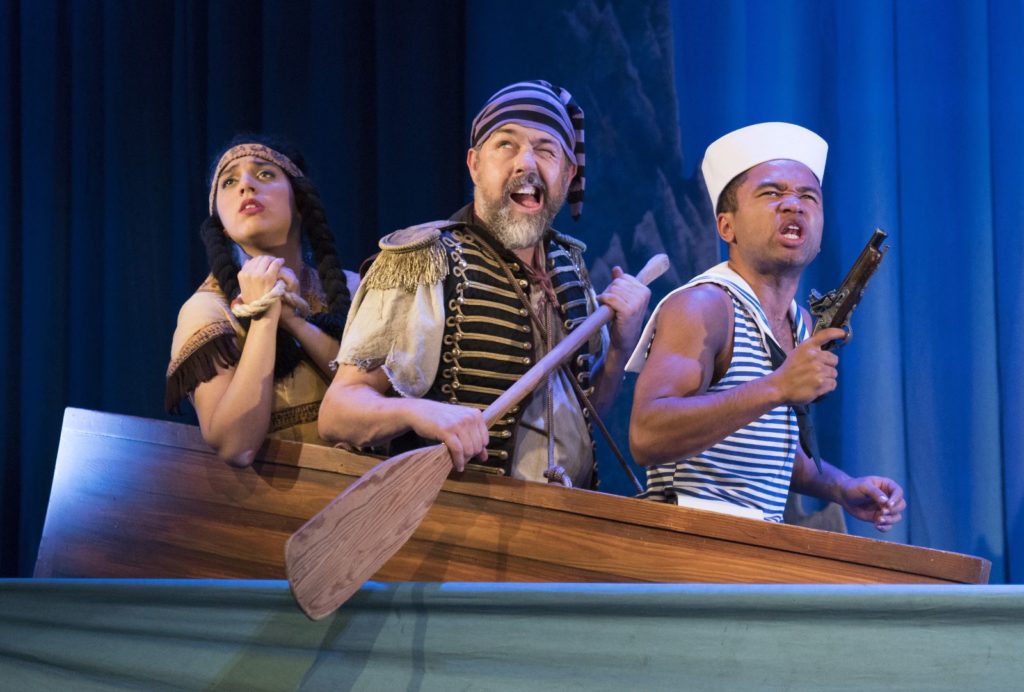
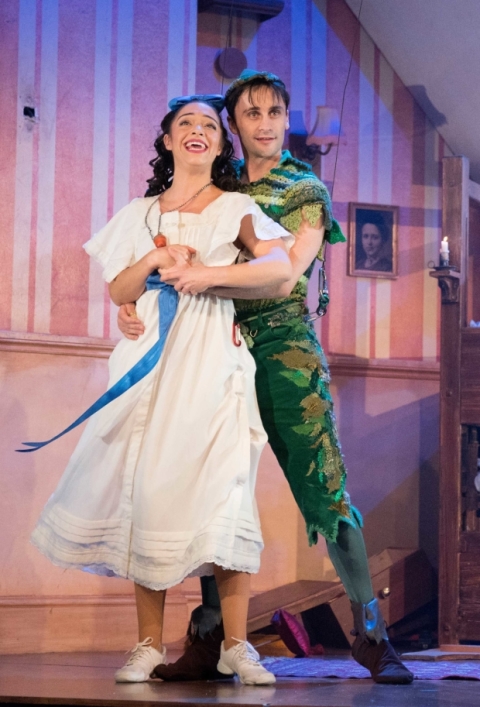
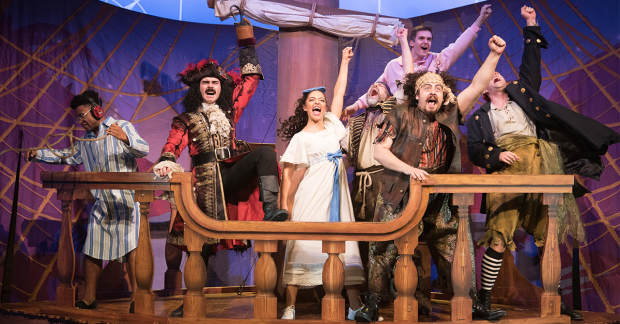
The poster warns us that this is not a pantomime – indeed, an increasingly irritated Captain Hook (Connor Crawford, in one of three excellent performances) reminds us of that fact, even as we the audience gamely reply ‘OH, YES IT IS!’ – but there’s enough magic, musical numbers and mishaps to be considered one. The comedy starts even before the curtain rises, from the hilarious programme (including an in memoriam section for Nadia the crocodile) to the bored-looking stagehands roping in audience members and fusing the whole theatre trying to light a few tiny lamps. The gang have crafted something of a stage-bound MCU – a Mischief Theatrical Universe, if you will – in which their hapless cast and crew from “Cornley Polytechnic Drama Society” slowly descend into chaos and madness: their inventory of onstage oopsies include malfunctioning tech, sets on the verge of collapse and all manner of bungled staging, line deliveries and prop mishaps – and it’s a deceitfully clever, canny formula that runs like clockwork.

The whole cast is an incredible, fine-tuned machine of mischief and they all work so hard – though perhaps none so toilsomely as thespian troupers Oliver Senton and Phoebe Ellabani. Senton plays the over-enthusiastic AD, Nana the Dog, and a particularly unintelligible pirate who sounds like those blokes from Hot Fuzz – but perhaps his best moments come when he inhabits – nay embodies – the role of Peter’s Shadow, which is worth seeing the show for alone. Ellabani has maybe the most divergent set of roles, impressively swapping between the genteel Mrs Darling and family maid Lisa in seconds – not to mention pulling double (quadruple?) duty as Tiger Lily and a fabulously chaotic Tinkerbell. Senton and Ellabani also share perhaps my favourite scene: the one where Senton-as-Nana gets stuck in a door, and Ellabani-as-Mrs-Darling attempts to sing a moving lullaby as the technical team bring out a workshop-worth of noisy power tools to drill him out. You have got to see it for yourselves.

This is the kind of show which wouldn’t work if there was even a single weak link, and everyone in the cast is simply brilliant. One of the standouts is Tom Babbage as Max, a lovelorn actor who was only cast because his rich uncle funded the hapless production (revealed by the malfunctioning sound system). Babbage brings an Andrew Garfield adorkableness to the role, sweet and so sympathetic that he had the entire audience on-side and cheering for him to succeed (his triumphant crocodile dance is perhaps the cutest thing these eyes have ever seen). His unrequited (or is it?) love for Sandra is one of the loveliest aspects of the show, and, as the dance-loving Wendy Darling, Katy Daghorn brings the kind of delightful exuberance only generally found in the end of term school production.

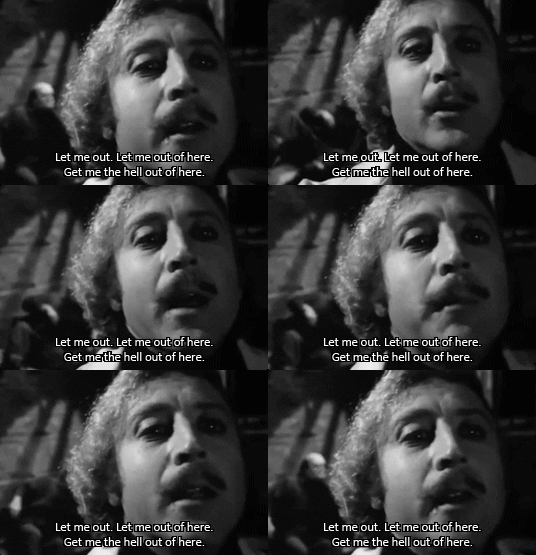
Ciaran Kellgren as Jonathan aka a deliciously smarmy Peter Pan in whose flying sequences gets swung about more ferociously than Miley Cyrus on a wrecking ball. Even Ethan Moorhouse’s stolid stagehand Trevor gets roped in (and strung up – literally and figuratively) when the chaos starts taking out cast members, including the timorous Lucy aka Tootles (Georgia Bradley), one of the many victims of the structurally-unsound set. Romayne Andrews as John Darling gives a gloriously stilted performance as an actor so apathetic his lines – not to mention Classic FM and the shipping forecast – are being fed to him through anachronistic headphones. His line deliveries are an utter joy – matched only by the delectably dramatic narration of Patrick Warner as Francis, the ill-fated master of ceremonies who punctuates his tale by throwing glitter and growing increasingly afraid of his seemingly-possessed chair. Connor Crawford is particularly great as Captain Hook (and he’s clearly enjoying his stylish pirate costume – the way that coat moves!) but as Mr Darling he delivers a perfect homage to Gene Wilder in Young Frankenstein (you’ll know it when you see it).

The revolving set is spectacular – split into three segments that artfully represent numerous locations including the Darling nursery, Hook’s pirate ship, Pan’s woodland hideout, a moonlit London skyline and more, it’s a gorgeous feat of ingenuity that even a tide of technical issues can’t hide. Although it’s not a musical it still boasts some brilliant musical numbers like a rousing sea shanty on the Jolly Roger and a poppy group number about imaginary feasts. There’s also a truly visually striking scene in which Peter and Wendy go for a swim in the Neverland lagoon, and the set transforms into a spectacular evocation of the ocean depths in which neon sea-creatures frolic and glide. They still manage to wring out its comic potential (not least a lights-up reveal as to how they achieved said effect), but it doesn’t dull the polish of the scene’s creative beauty.

Mischief Theatre’s marvellous modus operandi is fast becoming as beloved as theatre tropes and traditions on which it gleefully riffs. Peter Pan is a story so familiar to us that we know the plot beats, the characters and the lines even as the production falls apart at the seams – and there is joy to be had in watching people desperately striving to remain sane while the world collapses around them. It takes pinpoint precision to look this imprecise, and Mischief Theatre have got it down to a fine art. It’s a show for people who adore theatre and even those who aren’t so keen – because every tradition, trope and trapping is lovingly ribbed in that creative, entertaining and endearing way that Mischief does so well. I was lucky enough to see this production with my grandpa, who dubbed the show ‘the best theatre experience I’ve ever had’. It’s a show you shouldn’t miss and won’t forget.

Peter Pan Goes Wrong is playing at the New Theatre, Cardiff through Sunday 10th November.

Review Frankenstein, New Theatre by Barbara Hughes-Moore

The story behind Frankenstein’s creation is nearly as mythic as the tale itself: eighteen-year-old Mary Shelley, dared by Lord Byron and her husband Percy Bysse Shelley during that fateful summer in Geneva, dreamt of a young scientist staring in horror at the fearful creature he brought into being, and subsequently penned one of the most timelessly influential works of literature.

With countless adaptations of the classic tale over the years, and even more just inspired by it, it’s difficult to envision how a modern interpretation could evoke the same subversive quality as it did in its inception – or even warrant its existence in a sea of Frankenstein reimaginings. To my surprise and delight, this new version, penned by the acclaimed Scottish writer Rona Munro and directed by Patricia Benecke, is a bold and radical reworking that earns its place in the pantheon through ingeniously inserting Mary Shelley into her own story. Although in reality she plotted out her book in great detail, here we get to see Mary think up the book in real time – perhaps not historically accurate, but an innovatively metatextual way of watching the creative process unfold.

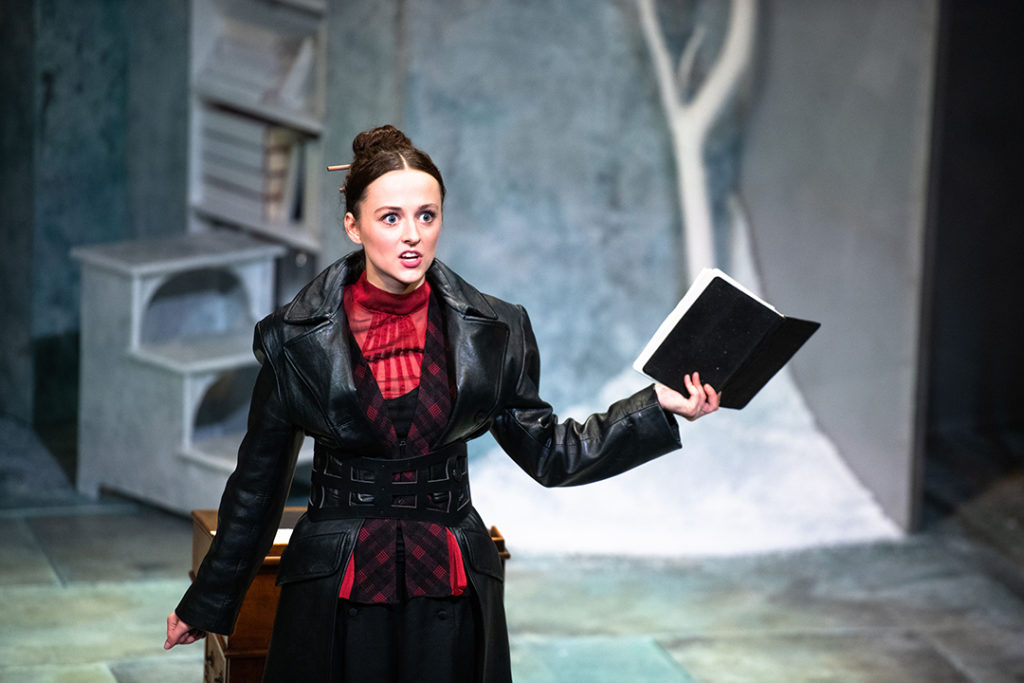
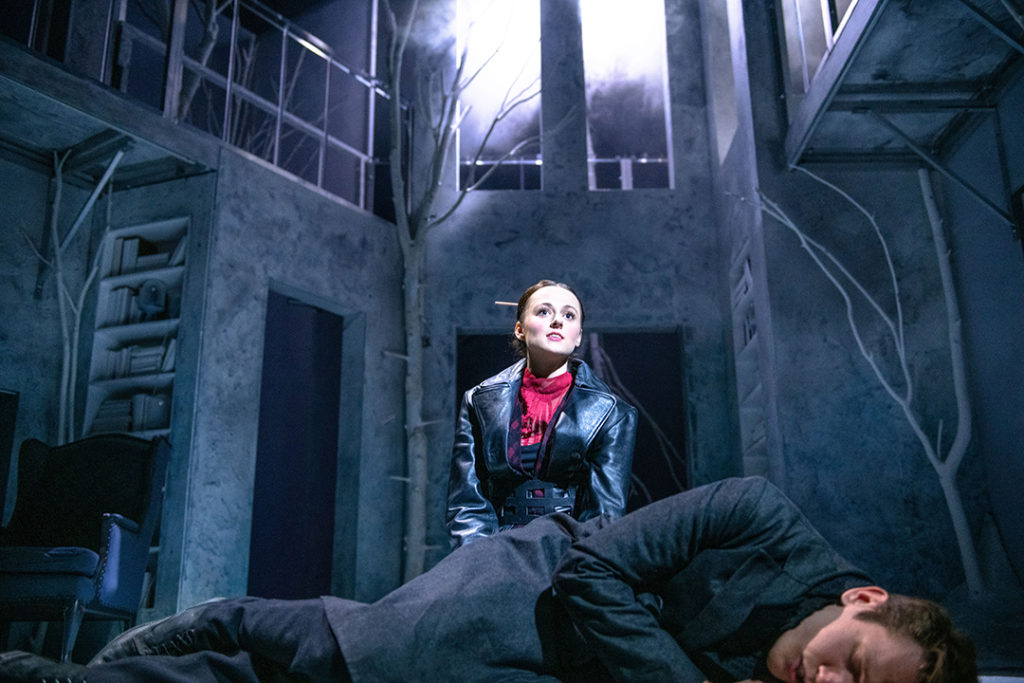
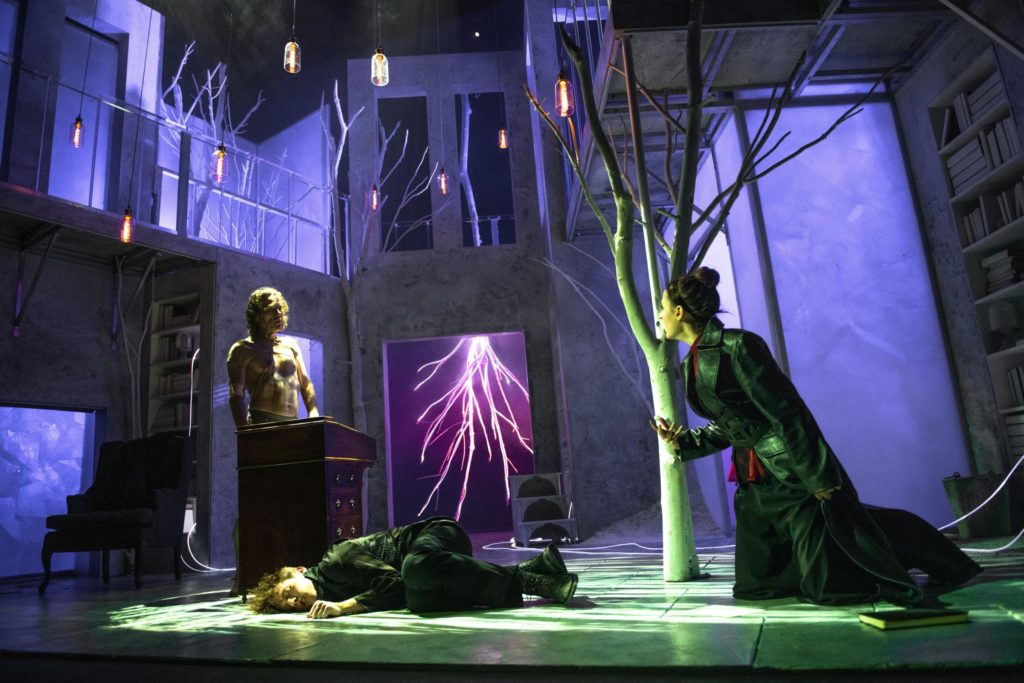
As Mary Shelley, Eilidh Loan is a crackling lightning strike of charisma; brash, snarky and devilishly charming, she wields her pen like a magic wand and has the audience in the palm of her hand. I just love the way she takes up space: her Gentleman Jack swagger-and-style (that long black leather coat!) is captivating, her frantic real-time thought-process compelling, and it’s refreshing to see a woman so joyously aware of her own genius. She’s a Regency Fleabag, dragging us through the fourth wall into her world, making snide comments about her own characters and gleefully twirling the strings of their fate like a Romantic-era Deadpool – in many ways, her brazen delight at the gory demise of her cast makes her as bloodthirsty as her own monster.

It’s a quirk that might seem trite in lesser hands, but it makes sense: the women of both Frankenstein and Shelley’s world were pawns, prisoners and victims of patriarchal control and/or male-perpetrated violence, but Mary Shelley was a woman who smashed through the binaries in which society had boxed her – breaking centuries-old societal conventions was just a regular Tuesday for her. So, to set her in the midst of her own story, to give her the reins completely in the telling of her tale, feels like a natural extension of her work and a compelling tribute to such a revolutionary woman – plus, it injects female agency into a story which is (in)famously bereft of it. Sometimes, Mary’s asides slightly dull the dramatic edge of the proceedings – but the characters and plot beats are so familiar that it was refreshing to see them reinvented in a new light. Maybe Mary wouldn’t quite express herself in the way this version of her does, but her fierce rebellious spirit is made of the same stuff.

Loan is so commanding that the other characters in the play often feel just like that: characters, archetypes, shadows of Shelley’s genius mind. This is Mary’s show, and she won’t let you forget it – which, for my money, works, but perhaps that’s because I know and love the novel so much that simply to portray its plot from point A to point B would seem almost too basic at this point. The central conceit, of Mary inviting us into her writing process as she shapes the characters, is experimental enough to risk the cohesion of the tale (which it just about avoids breaking) whilst also speculating as to Mary’s thoughts and motivations in writing it. It’s a meta deconstruction of Frankenstein as much as an adaptation of it, and the original framing device reanimates a well-worn story into something fresh and unpredictable.

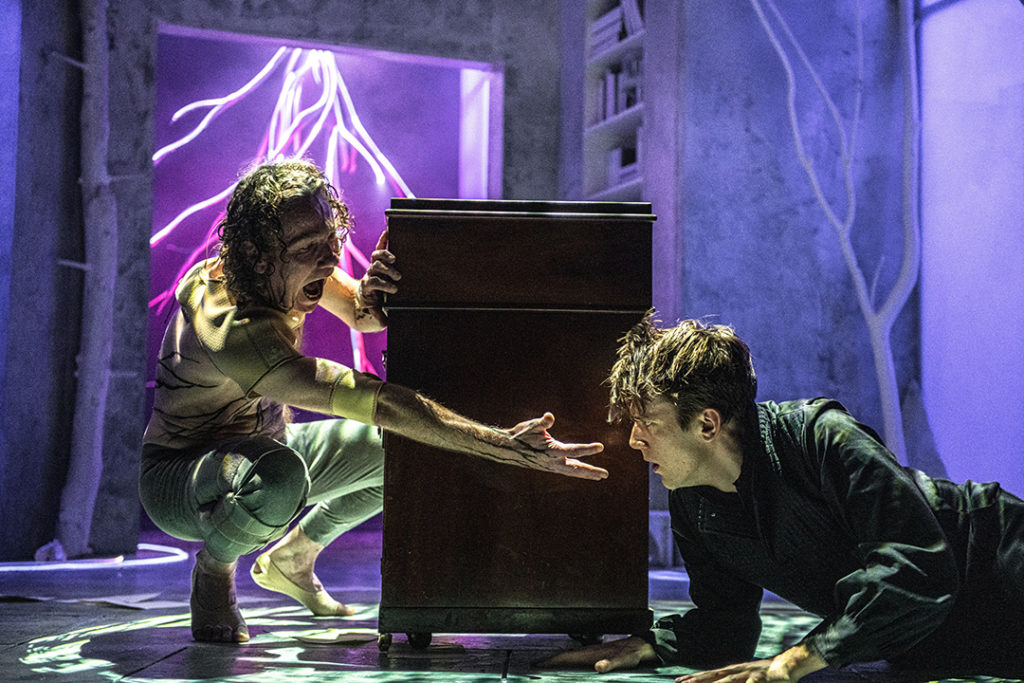
Despite Mary’s dominance, the ensemble is brimming with talent and carry the story with ease. In a shocking turn of events, I found Victor more sympathetic here and the creature less; Ben Castle Gibb’s interpretation of Dr F is rather heart-breaking, even if the love story between he and Natali McCleary’s Elizabeth never quite convinces (it doesn’t work for me in the novel either, to be fair). Michael Moreland’s ‘Monster’ (as he is credited here) is effectively animalistic in his performance, although doesn’t appear as overtly monstrous as the characters’ reactions might suggest. His monster is less elegantly eloquent as his on-page counterpart, but he excellently delivers the play’s best line (which, to my recollection, isn’t in the original): ‘despair was the first gift you ever gave me’.

The rest of the cast is energetic and gamely inhabit Frankenstein’s sprawling character list. Thierry Mabonga is tasked with the most variable cross-section of roles, playing Victor’s hyper younger brother William, his genial bestie Henry Clerval, and (a particularly imposing incarnation of) Captain Walton. As Victor’s long-suffering fiancée Elizabeth, Natali McCleary is saddled with one of the novel’s least meaty roles yet still infuses the character with kindness and charm; however, she shines particularly as Safie, a Muslim woman who leaves home in pursuit of true love, and whose newfound family is spied on by the creature from afar. Greg Powrie and Sarah MacGillivray convince as the domestic parade of paternal/maternal figures who influence Victor and the creature, even if their multiple roles are rather thankless.

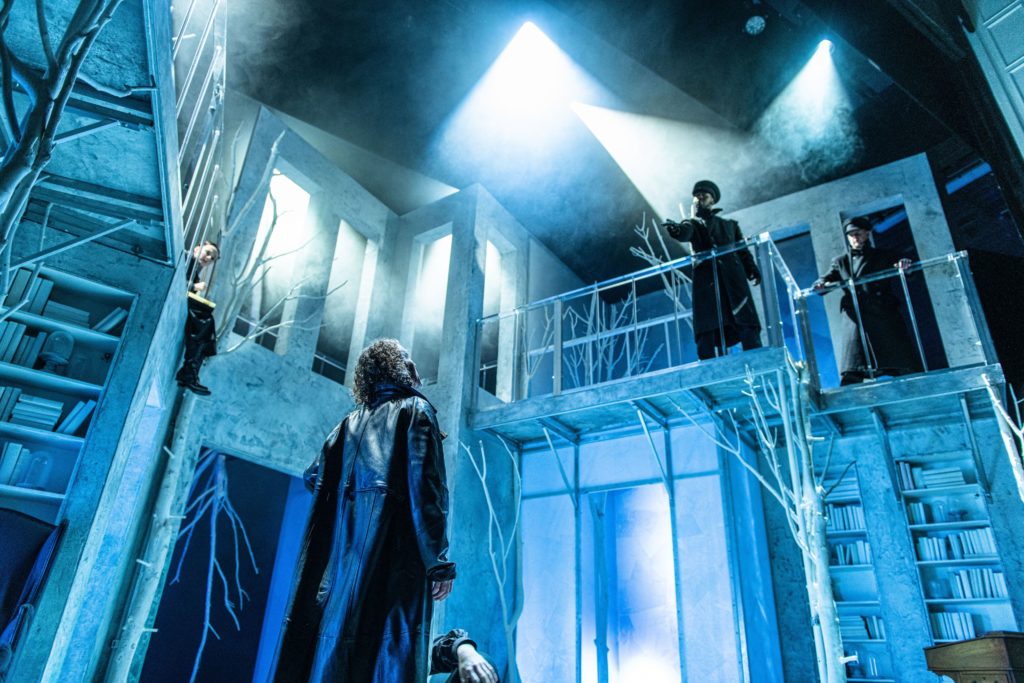
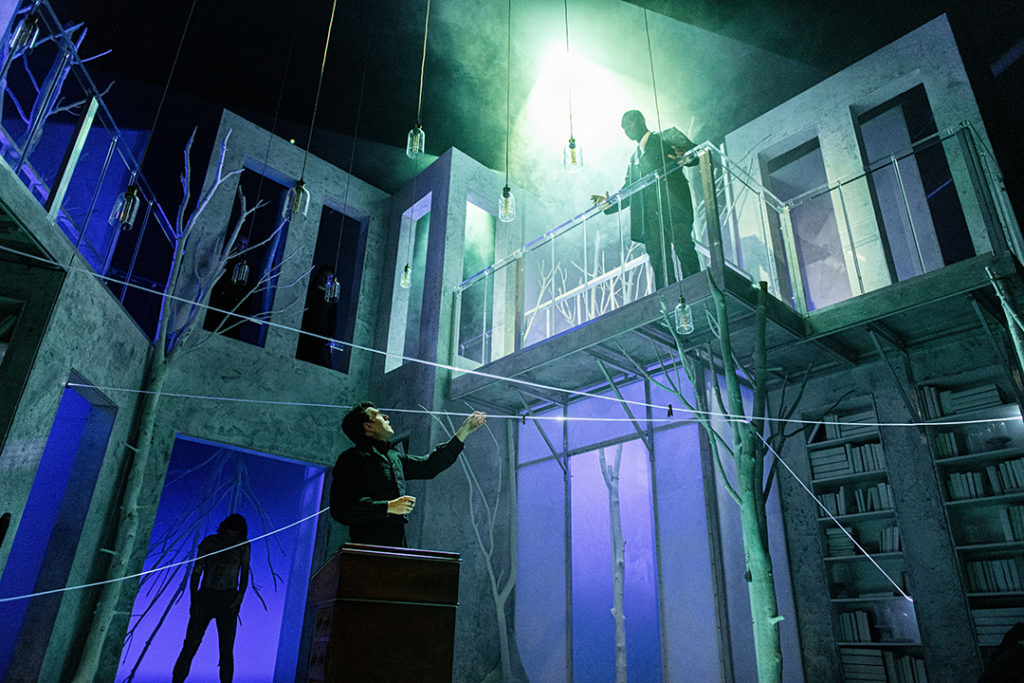
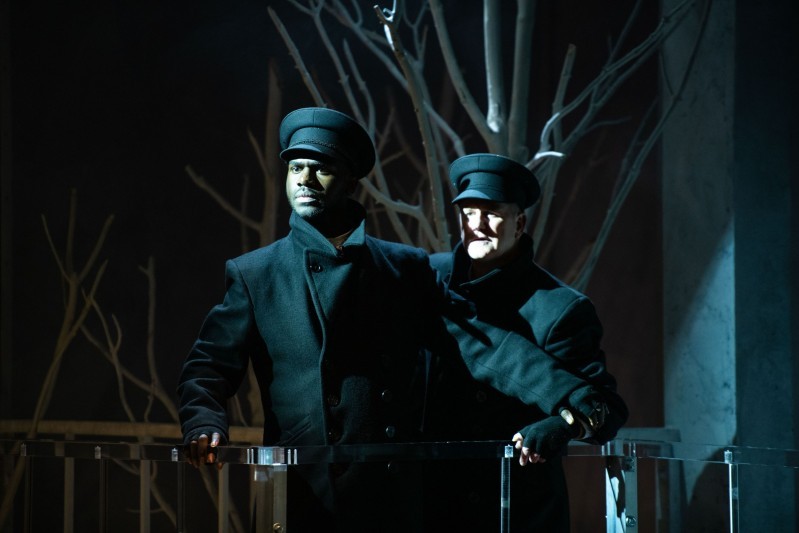
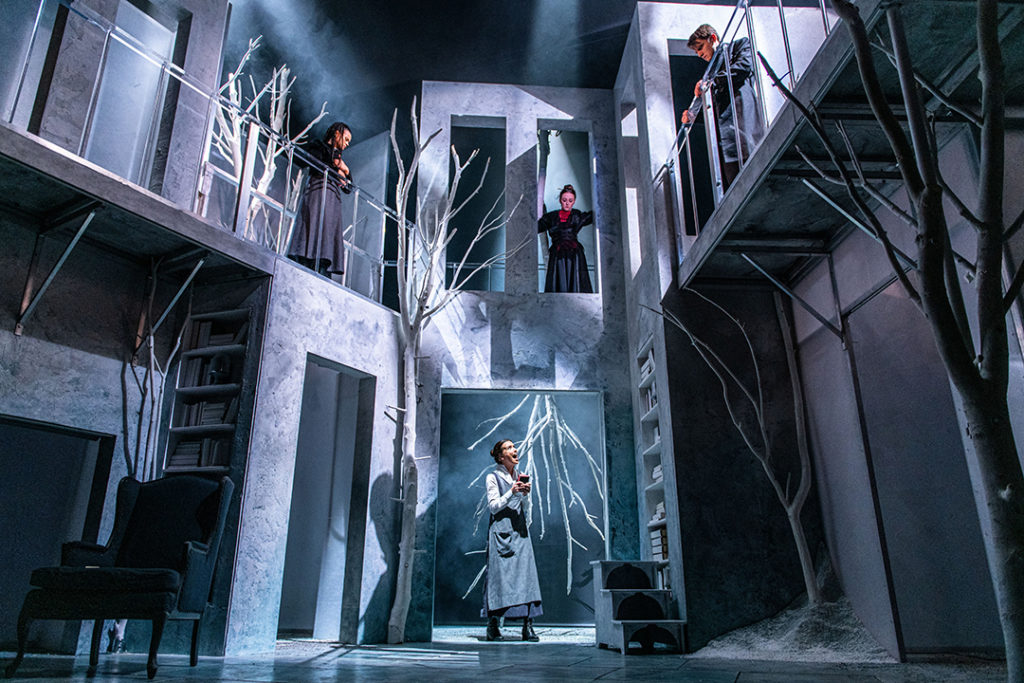
In a play that so unabashedly celebrates a woman’s accomplishments, it’s wonderful to see so many women in key roles in the creative team. Munro’s script is sharp, witty and inventive – she also wrote the compelling Rebus: Long Shadows which I reviewed for Get the Chance earlier this year – and Benecke’s dynamic direction ensures the story whips by at breakneck pace. But it’s the production design that makes the show truly unmissable: Becky Minto (who also designed the costumes!) has crafted a, spectacular, visually stunning and gorgeously symbolic set which doubles as an abandoned stately home, an Arctic-bound ship, and the internal tapestry of Mary’s mind all in one. The set is skeletal, adorned with spindly trees that variously evoke spines, vines, and veins – and which, in a delightfully inventive novelty, the actors climb as the action moves between the two tiers. The gorgeously Gothic atmosphere is augmented by Grant Anderson’s effectively-Frankenstinian lighting and Simon Slater’s eerie music/sound design.

Some reviewers suggest that the play emphasises the ‘morality tale about unfettered science’ angle of the text at the expense of its contemplation on moral responsibility, but I beg to differ. From where I was sitting, the play focuses almost entirely on the latter whilst throwing the scientific cautionary tale out the window – and is all the better for it. After all, we never learn the exact workings of Victor’s reanimation process, and the condemnation of him playing God or mistreating his ‘patient’ relates to the larger themes of humanity’s shared responsibility in the creation of monsters. Munro herself interprets Frankenstein not as a cautionary tale about unchecked science, but rather about inequality – an interpretation I really feel gets to the heart of the story.

Of the monster’s two creators, Mary is the more attentive and empathetic to the being for whose existence she is responsible; she listens to his story, touches him with kindness, and talks to him like a human being. Mary’s rage at the ‘great men’ who abuse their authority is powerfully tinged in shades of #MeToo – but the script leaves enough room for nuance and ambiguity that lends itself to multiple readings, not least Mary’s implied anger at her distant father William Godwin, who easily meets the requirements of the ‘great men’ she condemns. The real monstrous act is failing to take responsibility for the things you create – indeed; to renege on that responsibility is particularly heinous when one has the privilege, means and status that others lack. Victor does not only fail as a father and as a scientist, but as a human being.

This new version of Frankenstein is a refreshingly creative take on a familiar tale. It’s meta approach to the Gothic makes it feel like a mashup of Rosencrantz and Guildenstern are Dead and Young Frankenstein (I can give no higher praise). As Mary Shelley surmises near the play’s close, ‘vengeance is a monster’; perhaps here, the very novel Mary crafts is her last (or first?) act of vengeance against the myriad foes who have wronged her. This may be just the latest in a litany of adaptations of Shelley’s genre-defining masterpiece, but it’s also an invigorating take on the source material that demands to be seen – and it’s just the thing to get you in the spooky mood this Halloween week. Frankenstein is playing at the New Theatre through Saturday 2nd November.

REVIEW Hedda Gabler, Sherman Theatre by Barbara Hughes-Moore

Hedda Gabler will not be coerced. It’s the mantra of a general’s daughter, the battle cry of a woman so enmeshed in the art of war that she keeps loaded pistols in her living room. Henrik Ibsen’s convention-demolishing heroine raised eyebrows (and tensions) when she first stormed onstage in 1891, and the Sherman Theatre’s bold new version proves that Hedda is still as fresh, furious and fascinating a character in 2019 as she ever was.

Adapted from the original by Brian Friel, we follow Hedda Tesman (née Gabler) as she as her husband George return home from their honeymoon. Having recently received his doctorate, George is hopeful of gaining a much-telegraphed professorship – until the resurfacing of his academic rival, and Hedda’s former lover, Eilert Løvborg, threatens to upend the fragile new life they have built together. Chelsea Walker’s electrifying direction keeps mystery and character motivations simmering just below the surface; under her careful, artful eye, the stage is always thrumming with movement, which not only propels the drama along at a nimble pace but makes the world (though encased in a gorgeously hyper-real theatrical set) feel lived-in and authentic.

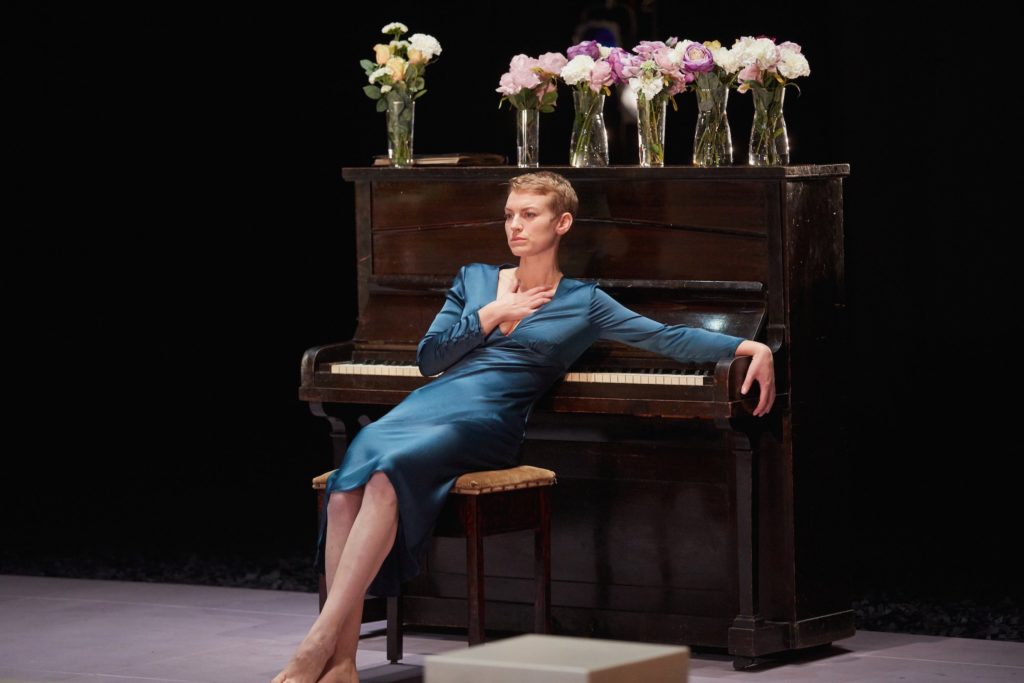
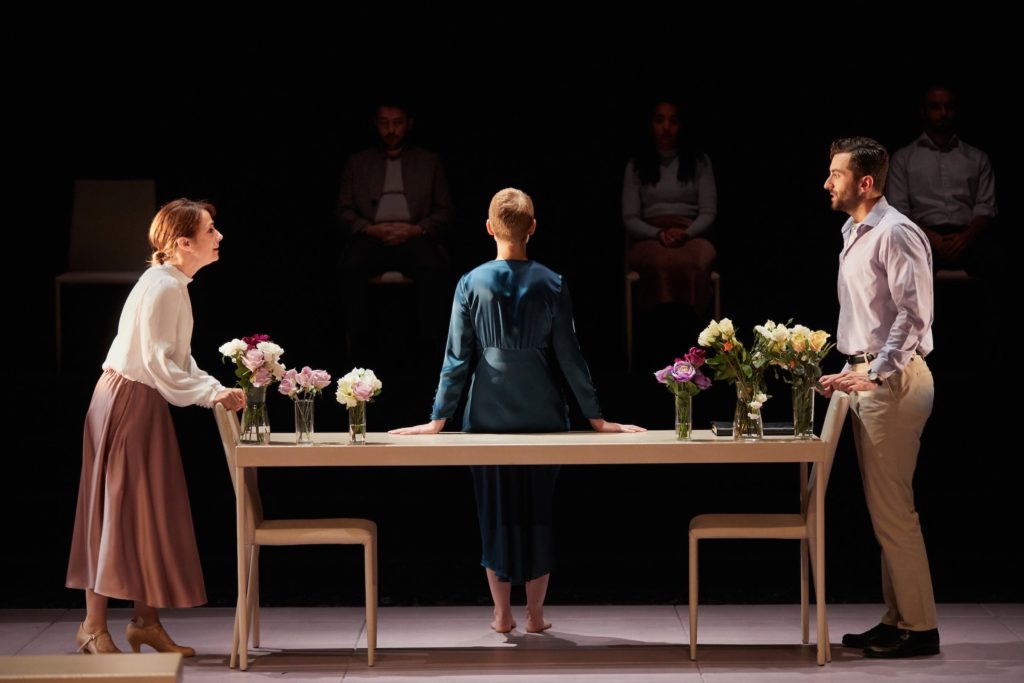
As Hedda Gabler, Heledd Gwynn is astonishing. Brutal, blunt and unbending, she demands space and attention, majestically spreading her arms like a King holding court – because although Hedda is a wife (and possibly an expectant mother), she defies and often transcends the strict binaries of gender and the behaviour dictated therein. Hedda wears her hair short and her feet bare; the most feminine she allows herself to be in appearance is the glamorous silk dress she sports throughout – a militaristic green gown she wears defiantly like armour (she is the only character who does not change her clothes – or anything else, for that matter – in the second act). And yet Gwynn meticulously threads a vein of vulnerability into Hedda’s precipitous façade, deposits of entombed emotion that Hedda battles to suppress and, if need be, destroy.

After Gwynn’s stellar turn, the other most overtly impressive performance is from Richard Mylan as Judge Brack, a sinewy nerve of malevolent machismo who is perhaps the closest Hedda has to an intellectual equal. As both a man and a judge, Brack is a repulsively-drawn sleaze of the highest order who delights in wordplay and innuendo as a means of making himself look powerful and sophisticated. As the sole representative of the law, Brack is a petty, pernicious piece of work; a man who, despite his profession’s aim to locate the truth, deals in gossip, hearsay and lies. Mylan deliciously articulates his every word with a sort of Wildean lasciviousness, and his every moment onstage feels unsettlingly dangerous.

On the opposite end of the spectrum is George Tesman, Hedda’s blissfully clueless beau, endearingly played by Marc Antolin. George is just so lovable that his oblivious adoration of Hedda even as she ridicules him behind his back is one of the most heart-breaking elements in an already-tragic story. Antolin treads a fine line in making George’s naïveté sweet without slipping into bumbling foolishness; his interpretation is a far more sympathetic take on the character than most – even if did manage to turn their honeymoon into a six-month long research trip. His doting aunt Juliana, tenderly played by Nia Roberts, seems to understand more of Hedda’s foibles than she would ever passive aggressively hint to her nephew, but Roberts brilliantly plays the role on several different levels at once, hinting at a more intricate inner life that other versions might gloss over – meanwhile Caroline Berry as stalwart servant Bertha watches proceedings with soundless intensity.

The ever-excellent Alexandria Riley once again shines in a complex role. As Thea Elvstead, Riley represents a more conventional femininity than Gwynn’s Hedda, escaping one troubled romance to start another, and finding herself caught in the dead space in between men who continue to fail her. She has devoted herself to the cause of Løvborg’s redemption and is willing to put in the invisible emotional labour to help co-author his revolutionary new book uncredited. Although Thea is eager to raise Løvborg up at her own expense, she is presented as a far more bold, brave person than Hedda, who despite her brash callousness admits herself a coward in catering to her phobia of scandal above all else – and the thorny rapport between Thea and Hedda is one of the drama’s most engaging and multifaceted relationships.

As a heroine in 1891, Hedda was unlike any woman in fiction at the time – her existence was a triumph in itself, every cruel act a defiant reclamation of agency that other women (fictional or otherwise) were then denied at a systematic level. Even though Hedda remains frustratingly oblique about her intentions (for the most part), that she has the freedom and privacy of her own thoughts and motivations was a privilege afforded to few women in the literature of her era. It is even more poignant when considering how Hedda is treated as property and possession to everyone in her life – especially to Brack, who views her as uncharted (and as-yet unconquered) territory, and even to dear, darling George (who takes on more of the emotional, empathetic woman-coded duties of the domestic household), who starts mapping out her entire life the second he learns that he has a progeny on the way, exuberantly uncaring of what she has to say in the matter.

Tragically, perhaps the only one to see her as a person is one she dehumanises the most: Eilert Løvborg, wonderfully portrayed by Jay Saighal. He is the one to call Hedda by her maiden name, by the name we know her, by the name that reflects her true self. Saighal is captivating in the role, projecting the image of a genuinely kind but self-destructive person brimming with love and beauty but unable to channel it into healthy, rewarding pursuits – his infatuation with Hedda a prime example. The moment where Løvborg secretly touches Hedda’s hand as an unknowing George flips through the honeymoon photo album is the most sensually-charged moment in a play that also features the judge crawling towards Hedda on all fours. That brief, almost-hidden moment of contact is a subtle, gorgeously romantic moment that represents all that was, is and could be between two people who just keep missing the chance to be together.

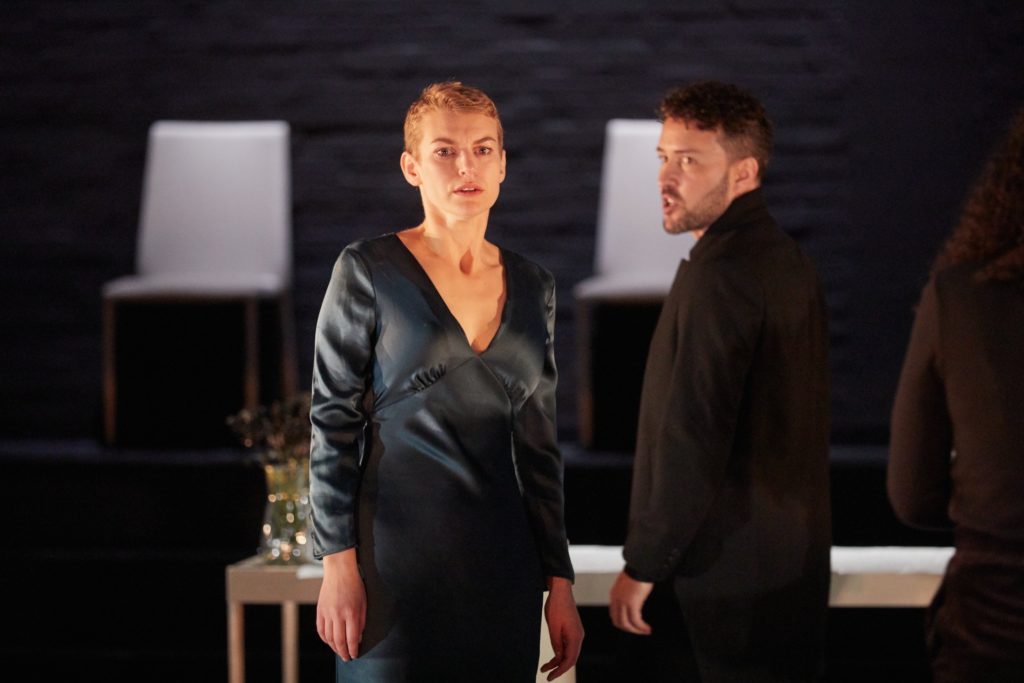
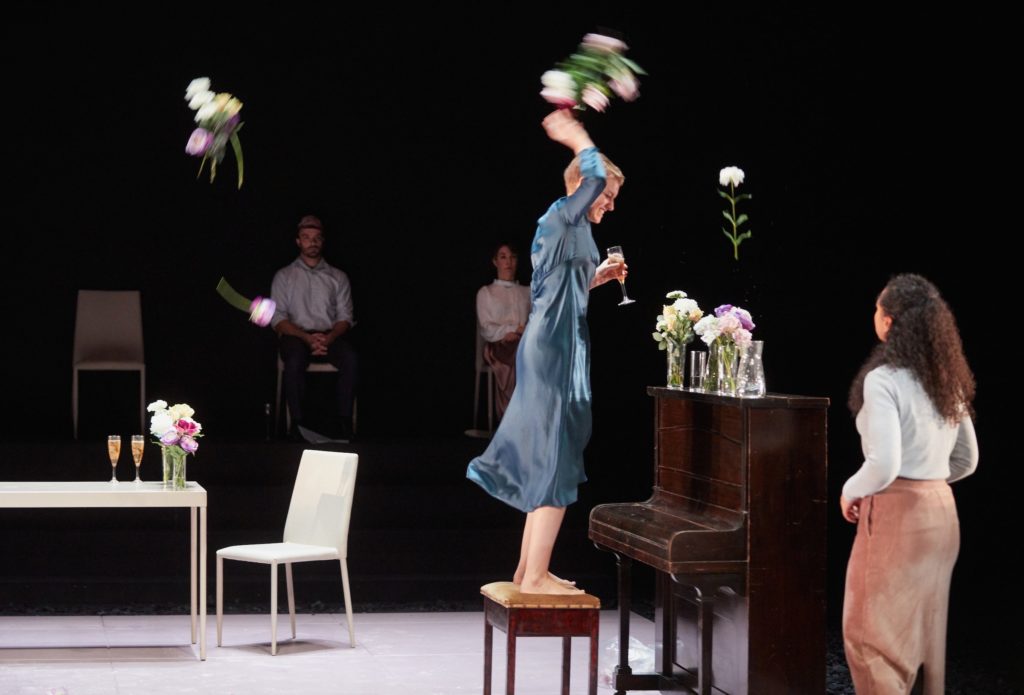
The superb acting is bolstered by a truly spectacular set, gloriously designed by Rosanna Vize in a way that is both edgily creative and deeply symbolic. The stage is decadently austere – all sharp lines and stark colours, nothing homely in sight save for the battered old piano which maybe represents Hedda’s deceased mother; a cage hangs ominously over the domestic square like a sword of Damocles, ready to ensnare her. The set is both specific and universal enough to enable a multitude of readings: perhaps it represents the reductive domestic sphere, or a psychoanalytic manifestation of Hedda’s internal mind; perhaps a domesticated purgatory or a metaphysical courtroom – or all at once? Ash falls from the ceiling at times; a real fire burns in a hidden compartment under the floor; in parts the stage is littered with flowers, symbols of pure, pretty, uncomplicated femininity – and Hedda takes a blowtorch to them. It’s utterly mesmerising.

Giles Thomas and Robert Sword’s anxious heartbeat of a score throbs ominously as tensions rise, and the cast wait their turn while sitting in chairs at the back of the stage, watching. As a purgatorial judiciary of peers, they sit in judgment, but also don’t seem to exist unless as pawns in the machinations of Hedda, who is the only actor onstage at all times – even when she is not participating in a scene, she remains the focus of it, standing imposingly at the centre of the stage as others talk about her. At one point George waxes lyrical about how there is only one Hedda, but she is already two – Hedda Gabler and Hedda Tesman. The true Hedda lies behind a door to which we are never given access; though the drama’s vibrant brush strokes paint only a partial portrait, we learn that Hedda is a deeply complicated, contradictory and confounding person. We may not agree with her, like her, or even sympathise with her – but we are her, in all our wondrous complexity.

It was a privilege to be a part of the post-show panel, along with Hannah Morgan (Head Above the Waves), David Mellor (Lecturer of Sociology, University of South Wales), led by Tim Howe (Communities & Engagement Coordinator, Sherman Theatre). It was such a joyful panel to be a part of and honestly my favourite so far – not least because Hannah
memorably dubbed Løvborg ‘hot bleedy guy’ and made my night! It was particularly special because Cardiff’s Law and Literature module was out in force, including our brilliant students and fearless leader Professor Ambreena Manji. We have been studying the play in our classes and it has been wonderfully rewarding to hear each of the students develop and express their own individual interpretation of the story, characters and themes. Although Hedda Gabler is not obviously legal on the surface, a deeper reading reveals legal issues at play such as gendered criminal behaviour, theft, co-authorship, property law, blackmail, and encouraging suicide (and that’s just the non-spoiler list!) Reading the play with these issues in mind can help to historicise law and explore its real-world effects and implications. The panel culminated in the question of whether Hedda ultimately has a choice in the end – I can only urge you to see this stunning production and answer that question for yourselves. Hedda Gabler is playing at the Sherman Theatre until 2nd November.

REVIEW Curtains (UK Tour), New Theatre by Barbara Hughes-Moore

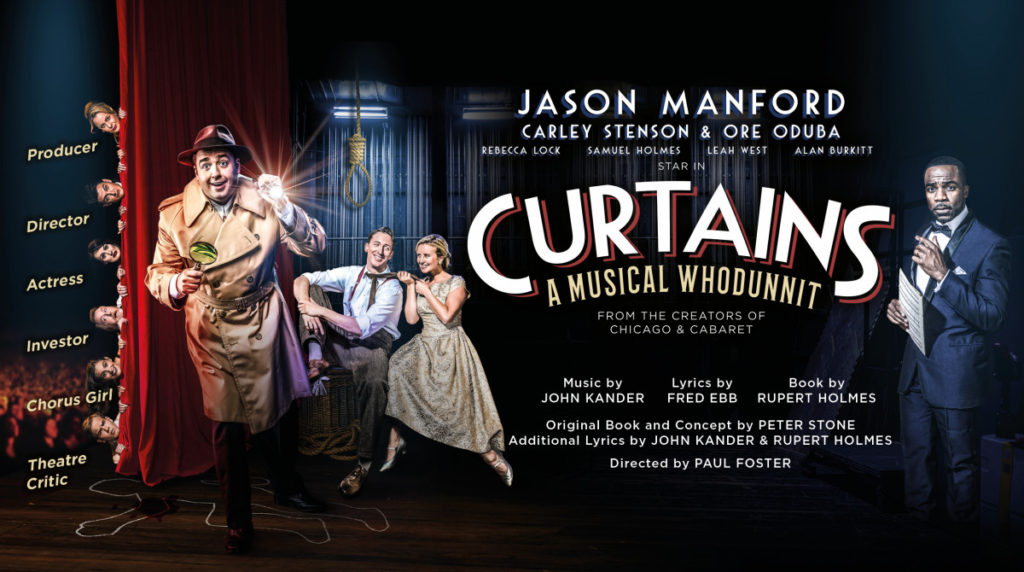
From the creators of Chicago and Cabaret, Curtains marks John Kander and Fred Ebb’s third musical with a one-word title that starts with the letter ‘C’ – and also the third jewel in a storied career that has graced us with some of the best musical theatre in history. Curtains features a starry, multi-talented cast, an enthralling mystery and simply some of the best theatre I have had the pleasure of watching in quite some time.

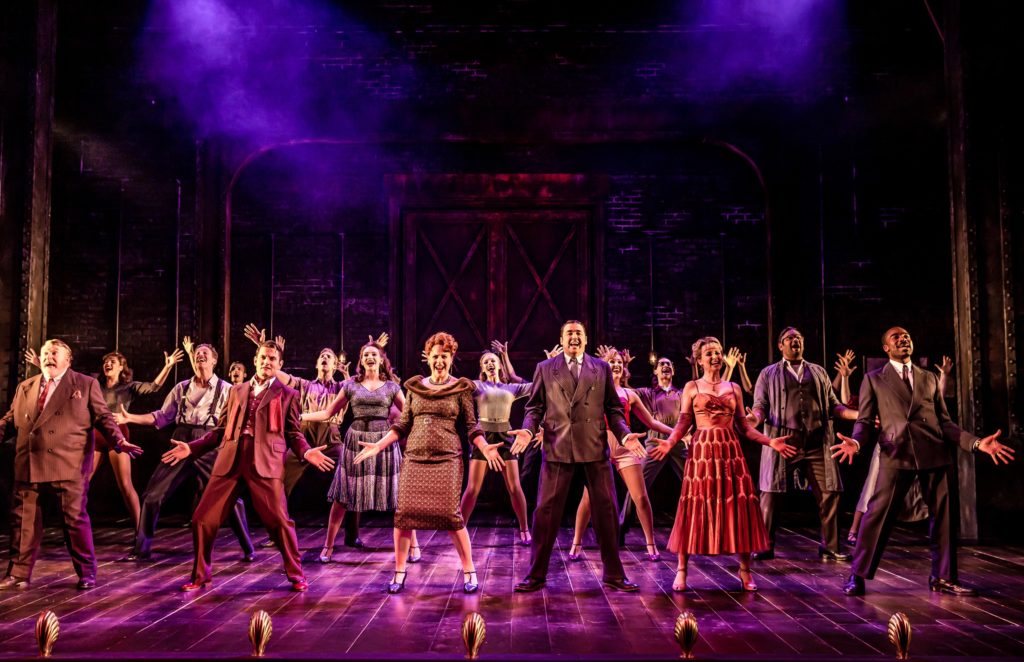
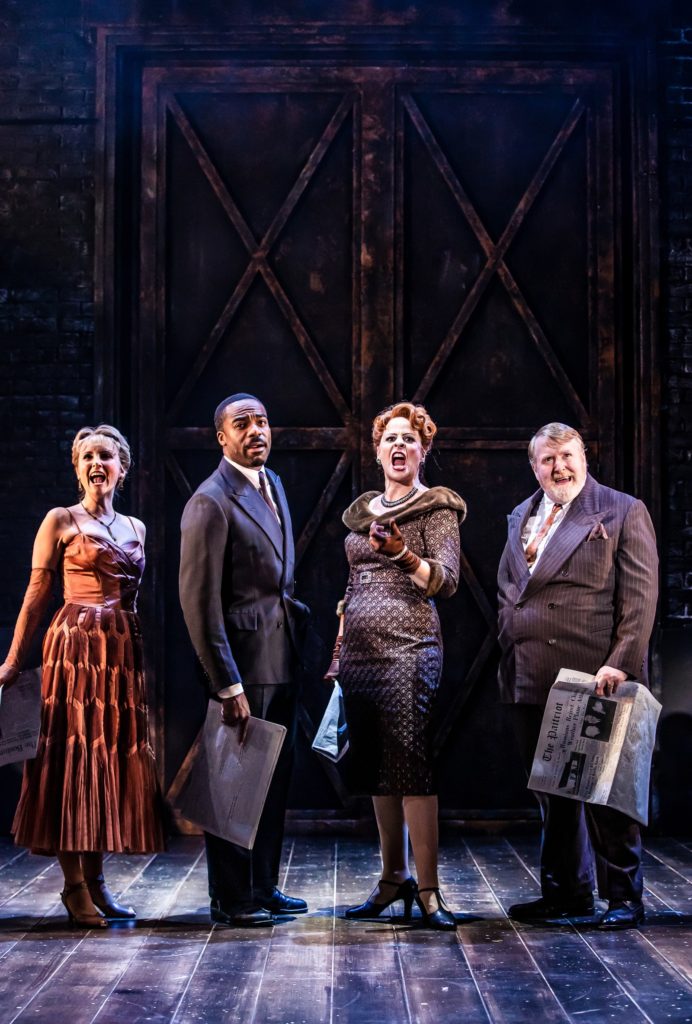
Originating in the US with David Hyde Pierce in the lead, this version is directed by Paul Foster, and written by Rupert Holmes, based on the original concept/book by Peter Stone. Drawing on the fourth wall-breaking, metatextual mischief of Kiss Me, Kate and The Producers, Curtains is set in late 1950s Boston and centres on the beleaguered cast and crew of the Broadway-bound Robbin’ Hood of the Old West (basically Robin Hood meets Oklahoma, a hilariously bizarre mix). When their lustre-lacking leading lady is murdered onstage on opening night, it’s up to detective Frank Cioffi (Jason Manford) to root out the true culprit – that is, if he’s not too busy turning his dreams of theatrical stardom into a reality.

Curtains The Musical ©The Other Richard

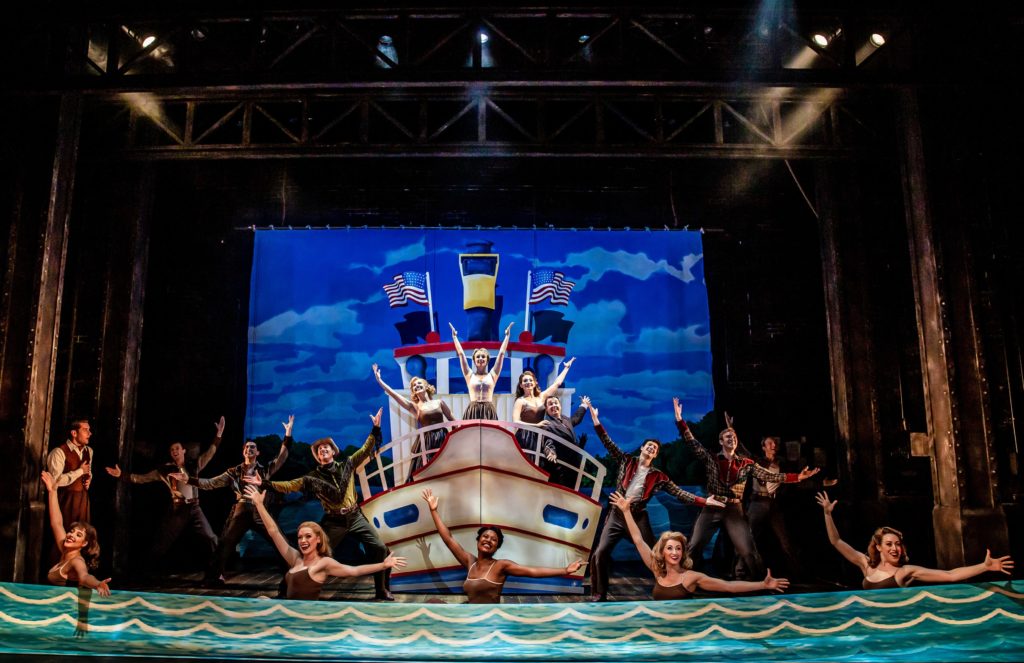
Though the mystery keeps you guessing right up until the end, it’s a show that’s more ‘musical’ than ‘whodunnit’, but that’s no bad thing when you have an ensemble as tremendously gifted as this one. The sheer power of the assembled cast is on full display in thrilling numbers like the captivatingly extravagant ‘In the Same Boat’, the chillingly operatic ‘The Woman’s Dead’, and the hilariously effervescent ‘He/She/They Did It’ (in which the company’s collective paranoia imagines each character to be the culprit in turn). Every single person is a triple threat and a triple delight, whether it’s gloriously hamming up their pleas of innocence or pizzazz-ing the hell out of a showstopping number. But it’s Jason Manford’s leading performance that anchors the show, and further proves his West End mettle after lauded turns in Guys and Dolls, The Producers and Chitty Chitty Bang Bang.

‘It’s curtains for you, pal!’ is something that Cioffi might be used to saying in his day job, but it also hints at his secret desire to become one of the ‘Show People’ who appear to be the prime suspects. His wish to waive the workaday in exchange for a life in the arts might remind you of one Leopold Bloom (a role Manford has played in the past) – but he’s far from The Producers’ mousy neurotic. Manford brings a Jimmy Stewart-esque everyman quality to this role and continues to impress as an all-round performer, with his characteristic comic timing, killer vocals and some terrific moves – even though the cast also boasts Strictly Come Dancing champ Ore Oduba, it’s Manford who gets the showpiece dance sequence!

Curtains The Musical ©The Other Richard

As songwriter Aaron Fox, Oduba is a revelation here, imbuing his character with classic elegance and Clark Gable charm. We already knew from his 2014 Strictly win that he could dance, but I was surprised and delighted to find out how wonderfully he could sing too! It’s a shame that (other than as part of the chorus line) he doesn’t get a showcase dance scene – but he melds excellently with the ensemble, and his songs (including the melancholy ‘I Miss the Music’) are some of the loveliest in the show. His chemistry with Carley Stenson’s Georgia Hendricks (Fox’s songwriting partner/wife) is fantastic, and Stenson is superb in the role – having already earned her West End stripes in a multitude of hits including Legally Blonde, Les Miserables, Shrek and Spamalot, Stenson rocks some of the show’s most exciting numbers, especially act one closer ‘Thataway!’

If that’s not already enough, there are also masterful turns by the brilliant Leah Barbara West as rising ingénue Niki Harris (who, on the strength of this performance, is surely destined for the role of Christine Daaé in the not-too-distant future), and Samuel Holmes as hilariously haughty director Christopher Belling, who lays claim to some of the finest sarcasm this side of Dr Perry Cox. But it’s Rebecca Lock as Carmen Bernstein, the delectably brusque producer of Robbin’ Hood, who truly steals the show every time she’s onstage. Lock is a powerhouse in the role, breathtakingly charismatic and possessing the timeless quality and sheer presence of theatre greats like Dolores Gray and Ethel Merman, especially in her magnificent solo number ‘It’s a Business’.

Curtains The Musical ©The Other Richard

This whole production is a creative marvel, gorgeously crafted from top to bottom. David Woodhead’s lavish sets are a spectacle in themselves, none more breath-taking than a striking evocation of the theatre rafters that you simply have to experience for yourself. The vibrant orchestra is incredible; a beautiful reminder that there is nothing quite like live music. Gabriella Slade’s costumes are utterly magnificent (the sheer amount of material in the ‘Kansasland’ dresses deserves an award – the way they move!), and Alistair David’s thrilling, innovative choreography evokes the joyous, pin-point precision of classic movie musicals – Frank/Niki’s love duet (‘A Tough Act to Follow’) on the stairs is pure Singin’ in the Rain, and the ‘Kansasland’ sequence is Seven Brides for Seven Brothers perfection; I, personally, can give no higher praise. It hasn’t aged well in some aspects – there’s a dance/song sequence featuring a Native American character that feels inappropriate (especially as she is portrayed by a white actress), and Bambi (Emma Caffrey) is kind of over-sexualised for laughs, so the script could do with a little updating in those respects.

It’s rare to see such a thoroughly brilliant and beautifully devised show of this calibre outside of Broadway or the West End, but Curtains ticks all the boxes. It’s a self-aware love letter to musical theatre that ribs the genre for its tropes and celebrates it for its virtues. Ultimately, the show isn’t interested in what the critics think – it views them in much the same way as M. Night Shyamalan circa Lady in the Water, but when they’re as deliciously snobby as resident killjoy Daryl Grady (Adam Rhys-Charles), who can blame them? – because what it truly cares about is entertaining its audience. With a classic feel and a show-stopping quality in every scene and song, it’s clear the curtain won’t be dropping on this superlative production for a very long time indeed.

Curtains is playing at the New Theatre, Cardiff this week before storming its way through the UK through next year. A genuinely unmissable treat.