

 (5 / 5)
Jane Eyre is fearsome and blazing, with an inevitably symbolic of the plays presentation of temptation and restless desire, the audience succumb, engulfed by the ferocity of its cast and the boldness of Sally Cookson’s direction.
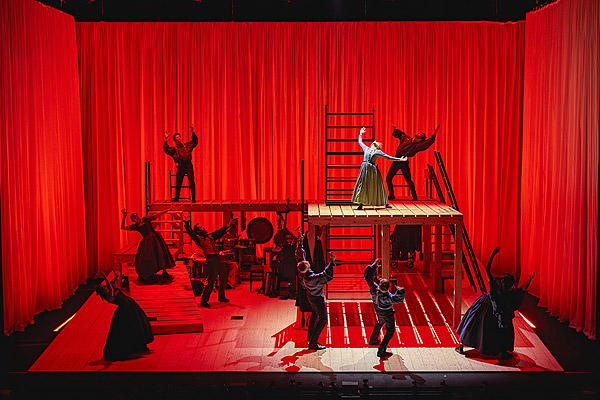
Amongst the haunting moors, trepidation is a state of being and, yet, our female heroine embodies its antithesis – fired by generational anguish, past and contemporary, Bronte – mediated by Cookson – defies the societal dismissal of the wholly feminine nature of yearning and discontent. The National Theatre’s ‘Jane Eyre’ is soaring and liberated, necessary as an, ever-contemporary, evolved feminist narrative.
Hope, within the play, is almost embodied as a metaphorical rejection of the play’s desolate and dire setting, in its weighted suppression, through the stark opposition of the cast’s spirited elevation and weightlessness. Through Jane’s experiences of; the people she meets, the places she sees, and that which she cannot understand, she is subjected to sinisterism and character-dimming corruption – preaching a passive dignity, in favour of her (societally embedded) feminine duty – yet, ultimately love is professed as the only true salvation. Conflicting, in nature, as she is bound through desire, love liberates Jane as simultaneously she is chained to one man for all eternity. Ultimately pre-occupied by the pondering of existentially-defying love, I do wonder how the Bronte’s would respond to Love Island.
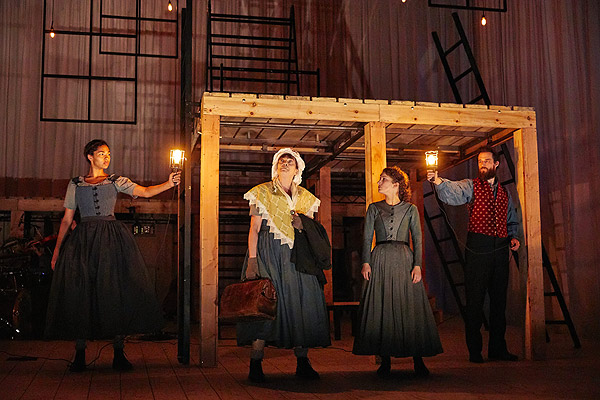
The solidity and grounding conveyed by the set band embodied an inevitability of Jane and Mr Rochester’s unity through an unbridled and innate devotion conveyed by the all-encompassing folk instrumental. Originated within, what was considered, the English ‘country’, in its expression of working-class tradition, custom and superstitions, it is mystifying and fiercely optimistic in wanderlust.
Michael Vale’s set design, earthy and raw, preaches and idolises childlike innocence, as the cast boundlessly throw and exert themselves to-and-fro the minimalistic tree house. In the pure and sanctified white sheets hanging to enmesh the space it is the projection of our own thoughts, the play’s narration and the immorality of the characters themselves which taint and stain the clean, preserved walls of the godly, proper, Victorian society that they abide to.
Dan Canham’s movement spurred and propelled its cast with agitation, injected spirit, yet, ultimately, underlined an active mistreatment and suppression of Jane Eyre. The production’s movement and instrumental accompaniment evoked and transpired a wanderlust and disquietude from Jane unto us as the continuous action pounding from the stage beat within my stomach.
The production’s frenetic energy combined with the haunting spectre of Melanie Marshall’s Bertha Mason, a raw, wretched and pitiful operatic presence, magnified the sparsity of the set, with its bare isolation that, arguably, embodies the desolate origins that drew, boundlessly, the souls of Jane and Mr. Rochester to clasp together.
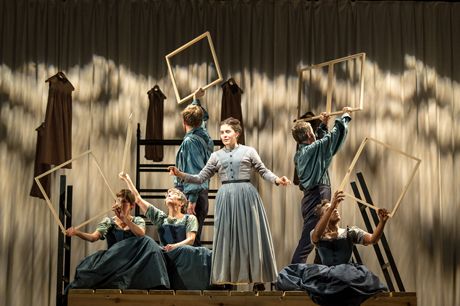
The halting, sharp scenes and the multitudinous use of rough sound gave the play the same raw emotion that categorises the book as such an elegant and unflinching exploration of the human heart. In the flurry, and succession, of such striking performances, the cast achieve flawlessness in their execution of truly turbulent multi-rolling with a rejoiced creative ferment.
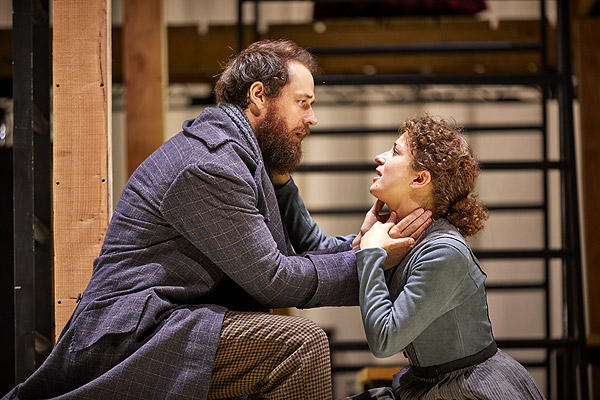
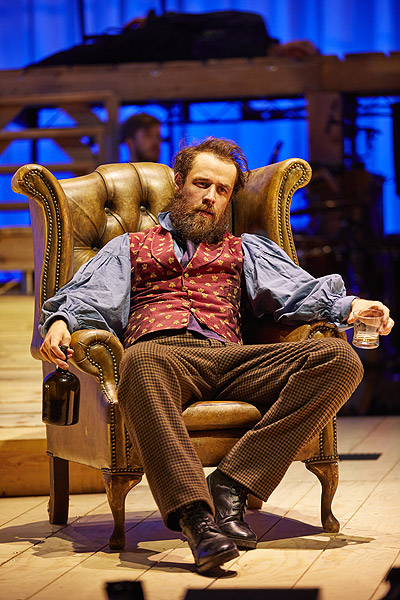
Nadia Clifford was a spectacle to behold brimming with the fever of Jane’s restlessness. Feisty and crumbling, neither over-bearing, Nadia created the unrelenting independence and the secret longing that characterises the eponymous heroine. Nadia’s portrayal allowed Jane to be flawed, multi-faceted in her complexity, to the extent, at which, exposing Mr Rochester as a truly rigid and canvased enigma of a man. Devastated and defeated, yet hopeful and triumphant, in equal measure, the National Theatre’s ‘Jane Eyre’ was stunning, shocking and soaring.
All posts by admin
Review Pink Mist Sherman Theatre
 (4 / 5)
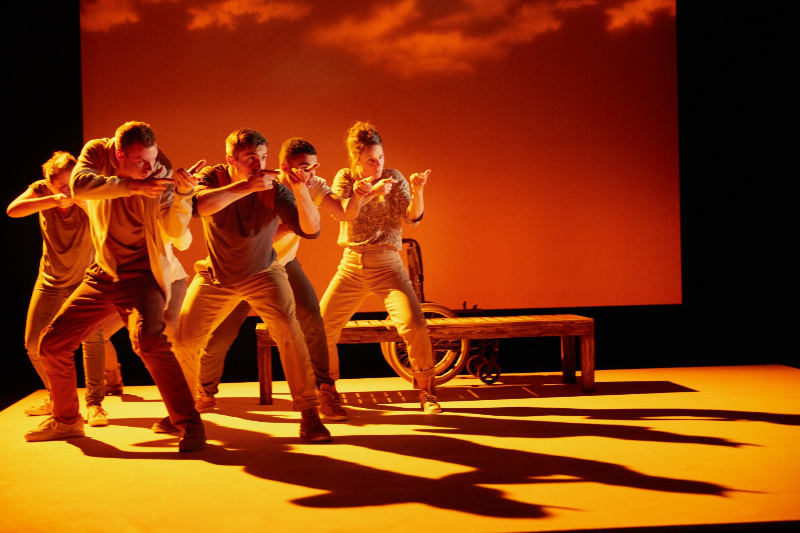
Pink Mist, Owen Sheer’s highly acclaimed verse-drama, follows three cocksure Bristolian teens as they venture out of their mundane lives and into military, service and manhood. It is a story passed from generation to generation. What is duty and honour?
There is a reading below of Laurens review to listen to.
When discussing a piece of theatre – in those post-show discussions, with friends, when you are so casually trying to assert your immensely dominate intellectualism and philosophical nature over them – there always seems to be that continuous occurrence of certain words within your vocabulary, or maybe that repetition just shows my own intellect… but, to me, Pink Mist is simply beautiful. Beautiful, bold, and stunning. Heartrending, really.
Pink Mist is alight. Flickering then scorching, but that’s just good theatre, really. It is Sheers, however, that kindles the human psych through his poetry. I say poetry, not poetic language, not verse-drama, or monologue, because Sheers is massively contributing to the changing face of contemporary poetry. In a recent interview with Owen Sheers, he claimed that young people bring an electricity and an energy that cannot be compared, as audience members. It’s true. The school-trippers were out in mass, and they jumped, and they cried, and one girl gave the most, devotedly, dramatic gasp, I’ve ever heard! I’ve never seen an audience so willing to stand on their feet, other than in a school hall for their grandchildren. Teenagers really feel when given an outlet to do so. Young people really invest in stories, they’re less restrained and emotionally analytical, and they’re waiting for their own to begin. In Pink Mist that Sheers gives an extraordinary level of investment and empathy to the voices of these young people.
https://youtu.be/MFOiT6e__h8
George Mann’s movement is captivating, compassionate and spirited. Technical aspects stimulated a sensory bombardment and affirmation. Both give scope to the artistic possibilities which the piece, furthermore, inspires. The piece, somewhat, enigmatic and abstract proves to challenge the given understanding, the status quo and the audience’s perception. And that’s why, I think, young people can fly with the piece. We’re spoon fed too much in today’s media. We’re capable of discovery because it is demanded by art – it is, and we are, more than the memorising and compressing of facts into some soul-devouring mock essay question that serves, actually, very little purpose to our society, to be honest with you.
Dan Krikler exudes charisma, Alex Stedman’s warmth, as an actor, is exemplary, and Peter Edwards’s Taff stands as perhaps the most endearing of all. However, the women of this piece, Rebecca Hamilton, Rebecca Kilick, and Zara Ramm, are exceptionally wholehearted; commanding a platform as pronounced as that of the boys’. The cast are one unity, a compact driving force. Yet, they’re either in isolation, or serving the microcosm which could deny a, certain, compulsive empathy. Perhaps it is through a dynamic distancing that provides an intensity, otherwise unattainable. So, I didn’t leave the theatre distraught, that night, like some very emotional valley girls (which was, actually, really funny), but I left upset; with a contentment in the knowledge that Pink Mist is a societal tragedy.
Pink Mist Tour
National Tour
31 Jan – 1 Apr 2017
Presented by Nick Williams Productions
31 Jan-1 Feb, Aberystwth Arts Centre
2-4 Feb, Sherman Theatre, Cardiff
7-9 Feb, New Wolsey Theatre, Ipswich
14-18 Feb, Oxford Playhouse
23-25 Feb, Traverse Theatre, Edinburgh
7-11 Mar, Devonshire Park Theatre, Eastbourne
14 Mar, Pontio, Bangor
17-18 Mar, Taliesin Arts Centre, Swansea
20-21 Mar, Theatre Royal Winchester
23-25 Mar, Birmingham Rep
28 Mar-1 Apr, West Yorkshire Playhouse
An Interview with Owen Sheers
Owen Sheers is one of the leading contemporary writers, in Britain, today, a Professor in Creativity at Swansea University, and my 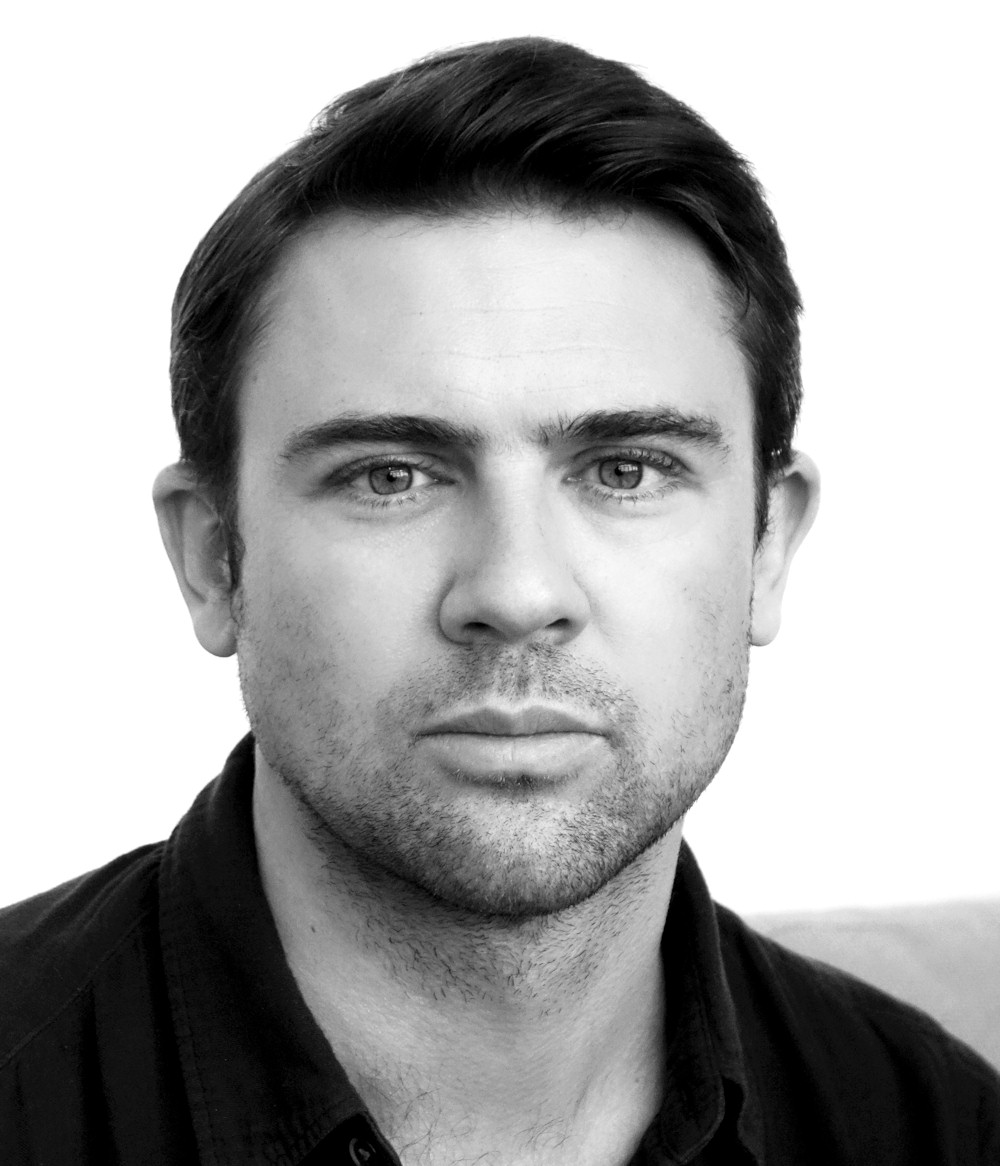 immediate go-to subject of conversation when I don’t want to do any work in English lessons. Sheers was the first writer in residence at the Welsh Rugby Union – the first of any national rugby union team – which resulted in the publication of ‘Calon’ his non-fiction work on the Welsh team. His professional positions have included being Writer in Residence at The Wordsworth Trust and a 2007/08 Dorothy and Lewis B, Cullman Fellow at the New York Public Library. So, with works varying from poetry, to novels and drama, said accolades, and praise for ‘contemporary literature’s renaissance man’ is hardly surprising. But, for me it is Sheer’s stage adaption of his original verse drama, ‘Pink Mist’, commissioned for Radio 4, that currently has me enthused! After speaking with Owen Sheers I ran to tell my friends how amazing he is and how beautiful his ‘phone voice’ is. I’m a groupie.
Originally, as you wrote primarily as a poet, do you feel like you come to all your work as a poet?
I used to say that ‘I feel like a poet writing in other forms’; I think sometimes that’s still true. So, with something like ‘Pink Mist’ it’s very much, it’s a poet’s play, and actually, in some ways, it feels like my closest relationship with poetry that I’ve had for a long time, because it’s verse drama. It relies very much on rhythm and rhyme and metaphor, but, I suppose, in the model of the dramatic monologue, the retrospect of the dramatic monologue. With ‘Pink Mist’ I very much feel like a poet writing for the theatre. I think what changed me recently was my last novel, ‘I Saw a Man’, where I realised that novels are such wonderful, but difficult beasts, that, actually, you have to feel like a novelist writing a novel, and I wanted ‘I Saw a Man’ to be a different kind work of fiction for me. I think my previous fiction, ‘Resistance’, ‘The Dust Diaries’, you could possibly describe them as being, I guess, a poet’s novels. But I wanted that ‘I Saw a Man’ to feel like a novelist’s novel, and I hope that the story, the book, and the way that the book is structured actually plays with the ideal of the novel, so it was really important to take that fuller step into fiction. So, maybe it’s starting to change for me, and actually funny enough I’ve just finished a second draft of a new play where I wanted to experiment with exactly that – I wanted to write a play as a playwright. Unlike my previous theatrical works which tend to have lots of soliloquys and monologues and a certain lyrical tone, this new play that I’ve just finished is very much dialogue driven and plot-driven, and it’s more like what you would define as a conventional play. I think I am in an interesting period of experimenting stepping more fully out of a poet’s shoes.
How was adapting a verse drama to the stage?
The fact that it was commissioned for radio first, I think, was very significant as with radio you are writing for the ear. And so, it felt instinctive to me to do, to write something that was lyrical but that was also to be very much oral story-telling, and that painted the pictures in a listener’s mind as that was all they got, the voice. But, also, because it’s a play where I’m trying to harness and be at conflict with the voices of others then that also can lean towards drama as it allowed me to invent characters, to invent language but all of it grounded in these thirty interviews that I did, to inform the piece. It sounds paradoxical but when the artifice is turned up – in a verse drama – I think, actually, in some ways, it becomes more accessible, it feels more relating to those original voices. Really the challenge to put it onto stage wasn’t mine, but the directors’. How do you take a play for voices and dramatise it? And that’s where, and I’m not just saying this, I think that the directors John Retallack and George Mann have done an extraordinary job, cause, I mean, it could have easily have been a mess! They’ve not only done it so sensitively but they’ve found a physical language and a dramatic language which feels completely inherited from that style of poetry – which is poetry, but which is grown from everyday speech. The movement in the piece is extraordinary; I could watch it all day long. Every single move you can see how it relates back to an everyday action. To be honest, the challenge, it lay very much with the director and the cast, and I suppose that’s how you can feel very lucky in theatre, when writing, cause you kind of hand over this thing which is blessing and a curse!
How much do you value the accessibility of your work, particularly with young people? And, do you think that poetry needs to be more accessible, or that people need to rise to poetry?
I think it’s both, I mean, I don’t think poetry should be more accessible because I think that you shouldn’t have, to have, the word ‘should’ in literature. A writer can do what they want. Then your job is to do it well, whatever your choices are. But, I think that what we think of as being accessible is sometimes not right and not true. ‘Pink Mist’ is a fine example, actually. All the way through to get it published as a book, to get it put on the stage has been a struggle because the conventional, cultural gatekeepers were quite resistant to the idea of a verse drama. They thought it would be alienating, it would be obscure, and where ‘Pink Mist’ found it’s the first audience was in schools and with university students, and I think with people who didn’t have any pre-conceptions about ‘Oh, verse drama, that sounds a bit strange’, they just responded to it. I think, for them, what was interesting was that they weren’t thinking of T.S Eliot, but they were thinking much more of Kate Tempest, and rap and spoken-word poetry. So, what I say is that I don’t think that we should go into things thinking ‘Is it successful, is it not?’ cause sometimes we’ll be surprised, you know. Something that verse drama does is that it is accessible, not necessarily on a level of meaning, but on a level of rhythm, on this subterranean level of communication. Is it important? It’s all in my work, I’ve always tried to broaden the reach in terms of audience, and broaden the depth. Going back to plays like ‘The Two Worlds of Charlie F’, my year with the Welsh Rugby Union, a lot of that wasabout both attracting the audiences, but showing both existing audiences that ‘actually, you know what, all of us can get this.’ There’s no magic trick. If it’s good stuff then people are, hopefully, emotionally moved and they’re made to think, whatever their background. That’s what is so important about this tour, for me, is that when ‘Pink Mist’ happened at Bristol Old Vic that was great but I really wanted it to get out – well I certainly wanted it to come to Wales, obviously being Welsh. I wanted it to get out to regional towns and cities where, in terms of young men and women, they are choosing to join the army, sometimes as a last option, sometimes because it’s offering things that everyday life isn’t; that can be anything from belonging to just the regular pay packet. It’s in these regional cities where people are really experiencing that the most, and so I was really keen, for ‘Pink Mist’, to travel to these places where, hopefully, the story will resonate as still something very current. So, yes, the answer is young people, with this play, are very important to me, but they’re also important to the play. When I’ve sat in theatres and there’s a younger audience you feel the energy of the play change, cause it’s a play about seventeen and eighteen year olds, and if you’ve got lots of them in the audience it’s just electric. It’s great. 
Would you consider writing work specifically targeted at young people, in the future?
Well, I think the important thing to say is that I didn’t target ‘Pink Mist’ at young people and teenagers. The story of the play is one that concerns them, but I think that I am constantly wrong-footed when I go into schools! If I try and, you know, pitch something which is what I think that age group’s level is, they always prove me wrong. ‘Uh uh, it’s way higher mate, it’s way higher.’ So, I’ve learnt that young people and teenagers are perfectly capable of absorbing and responding to plays written for adults – partly because I think it’s when you’re a teenager that you’re feeling and thinking about a world in a particularly vivid way. I quite often think that you care in a way that, sometimes, older people stop doing, which is a shame. But, I suppose yes, I keep wanting to write material and write plays that teenagers and young people feel are equally for them as they are for anyone else. I have started working a piece which is about young boys that were trafficked from Afghanistan to Britain when they were ten or eleven, and now at the age of seventeen, eighteen they’re being faced with deportation; I suppose that is a young person’s story.
Do you have any words of wisdom for young people who want be to artists, who want to create and tell stories?
Yes, well I don’t know if it’s words of wisdom, exactly, but I’d say, firstly, immerse yourself in the art form that you want to excel at. So, if you want to be a playwright see lots of theatre, read lots of theatre. If you want to be a poet, read lots of poetry. You want to be a film maker? Watch films, not just as a passive viewer but as a film maker. Look, how are people doing this? Watch the current language of the day. I’m always amazed at how many people want to be writers, and you ask them what they’re reading and they’re not reading very much. You wouldn’t imagine a rugby player who never watched rugby. Secondly, if you’re sure this is what you want to do, it is for you. The arts still, in Britain, I hope, there should be no barriers to entry, and I think on the whole there isn’t – there are still ways that people can be supported to enter the arts. It’s a very old thing what I’m going to say, it’s nothing particularly wise, but you know, work bloody hard. I still get rejected! Sometimes it’s for the right reasons, and sometimes it’s because someone’s not seeing it – which is then your job to make them see it. Immerse yourself in your art form, work hard, do believe it’s for you and believe that you can do it. Nearly every piece of work I’ve done it has been started with people telling me no. So, you’ve got to be quite stubborn!
How important is it, for you, to be a ‘Welsh’ writer?
Well, it’s an important part of my life, but that’s for me, because I am Welsh, and we all have an attachment to the physical landscape and the cultural landscape that we’re brought up in. But, what I don’t like is Nationalism, or jingoism. And I don’t like any narrowing of the horizons, artistically, through nationalities. It might sound like I’m spitting hairs but I quite often describe myself as a writer from Wales, because that seems truer to me – I am both. In terms of my family, and where I live, I’m from Wales, and how I was formed, I am from Wales, but to say I’m a Welsh writer is… I don’t want to be defined by borders. We partly write so we can write about anything, and we want to write stuff that people respond to everywhere. In Wales, of course, you’ve also got to be aware of saying that you’re a Welsh writer, and when you’re not writing in Welsh, then you’re not entirely describing it truthfully. ‘So, yeah, a writer from Wales.’ W. H. Auden once said that ‘A poet should aspire to be like a good cheese – locally produced, but internationally renowned.’ It’s an odd quote but that’s kind of what I aspire to. I think in terms of influence of the work, yeah of course. A lot of some of my earlier favourite writers were Welsh – the early poets who told me to keep going, keeping trying, like Dannie Abse and Robert Minhinnick were all Welsh. It’s where I first met the arts and saw theatre, so it can’t help but have an influence; I think the Welsh landscape has always influenced me, even when I haven’t lived here.
Although I was left unsuccessful in getting anywhere near to an actual definition, Sheers insists that it is the title’s ambiguity that spirals dramatic intensity.
It should, hopefully, come at you in the play. It’s a title that is designed to slightly wrong-foot the audience. Every conflict produces its own vocabulary, its own lexicon, and ‘pink mist’ was a term that I heard several times from the young men, the young wounded soldiers that I was interviewing. It refers to an element of modern warfare, the asymmetry in warfare.
I think that on ce you know what it is, it changes from being something vague that sounds quite light to being something, really, very dark and sinister. But, it’s a title I had to fight for. When it was originally commissioned for Radio 4, right up to the control room, they didn’t want to use that title. And, at one point, probably, slightly over-dramatically, I literally down tooled, I stopped writing. ‘I’m not going to finish this play unless I’m allowed to call it ‘Pink Mist.’ So, then they relented and let me call it ‘Pink Mist.’
After informing Owen of the unfortunate conclusion many schools have had to come to –crippled (culturally and artistically) by the demand for high grades and league table success – regarding the expulsion of GCSE English Literature, for many students, this is what he had to say.
I think that’s terrible. The two go hand-in-hand. How are you going to develop English Language without the example of the rest of it in English Literature? Everyone can find a way into it (literature), and if a kid can’t find a way into it then that’s just bad teaching. As you can tell I feel pretty strongly about that, and I didn’t know that actually. In terms of studied – it’s a huge honour, because I’m aware that I met, I got to read poetry, like a lot of people, for the first time as part of studying, so, again, it’s a huge privilege. And, I’m quite humbled by it, actually. I think it’s very different being studied as to being read, and I would always rather be read. And, I would argue that that’s always the best form of study. It’s strange in the modern world because students can contact you, on Facebook, on Twitter, and via your website, and I’m still figuring out how best to deal with that. I think, if someone asked me a serious and a good question then I’ll always answer. But, actually, it should only be the work that they’re responding to, not me. I do try to still go into schools a lot, you know, I never had a writer come into school when I was there, and it’s great for the writers, and hopefully great for the schools as well. It’s a huge privilege being studied. I sometimes find myself apologising to students, ‘Ohh we have to study your book…’ ‘Well I’m sorry, sorry it’s me, but you’ve got to study someone!’
A review of ‘Pink Mist’ is still to come. Stay tuned my homies… (Mrs Harris)
All production shots of ‘Pink Mist’ were taken by Mark Douet.
Show Times of ‘Pink Mist’ at the Sherman Theatre include: Thursday – 7:30, Friday – 7:30, Saturday – 2:30/7:30
Pink Mist Tour
National Tour
31 Jan – 1 Apr 2017
Presented by Nick Williams Productions
31 Jan-1 Feb, Aberystwth Arts Centre
2-4 Feb, Sherman Theatre, Cardiff
7-9 Feb, New Wolsey Theatre, Ipswich
14-18 Feb, Oxford Playhouse
23-25 Feb, Traverse Theatre, Edinburgh
7-11 Mar, Devonshire Park Theatre, Eastbourne
14 Mar, Pontio, Bangor
17-18 Mar, Taliesin Arts Centre, Swansea
20-21 Mar, Theatre Royal Winchester
23-25 Mar, Birmingham Rep
28 Mar-1 Apr, West Yorkshire Playhouse
By Owen Sheers
Directed by John Retallack and George Mann
Designer Emma Cains
Lighting Designer Peter Harrison
Sound Designer Jon Nicholls
Cast
Peter Edwards
Rebecca Hamilton
Rebecca Killick
Dan Krikler
Zara Ramm
Alex Stedman
Review, Not I and Scorch, Sherman Theatre

(4 / 5)
An audience constrained and submerged. Betty Jane Walsh graces a Beckett classic and leaves her audience weightless, like a punch bag.
Admittedly I will confess that until this evening I had never watched or ever read a Samuel Beckett play, so I don’t know if it’s normal to find one’s self in a state of fervent suffocation. Although written in 1972 the date is irrelevant Patricia Logue proves that Not I is timeless, unfortunately.
Walsh relentlessly grasps at a language of ferocity and intention transfixing an audience, enticed by her mouth, for the entire piece. In thirteen minutes we’ve lived a life, however messy and misunderstood – a hurricane of passion slammed into your chest. Not I pierces and cries of that lost, but leaves only an awe for the resilience of a woman.
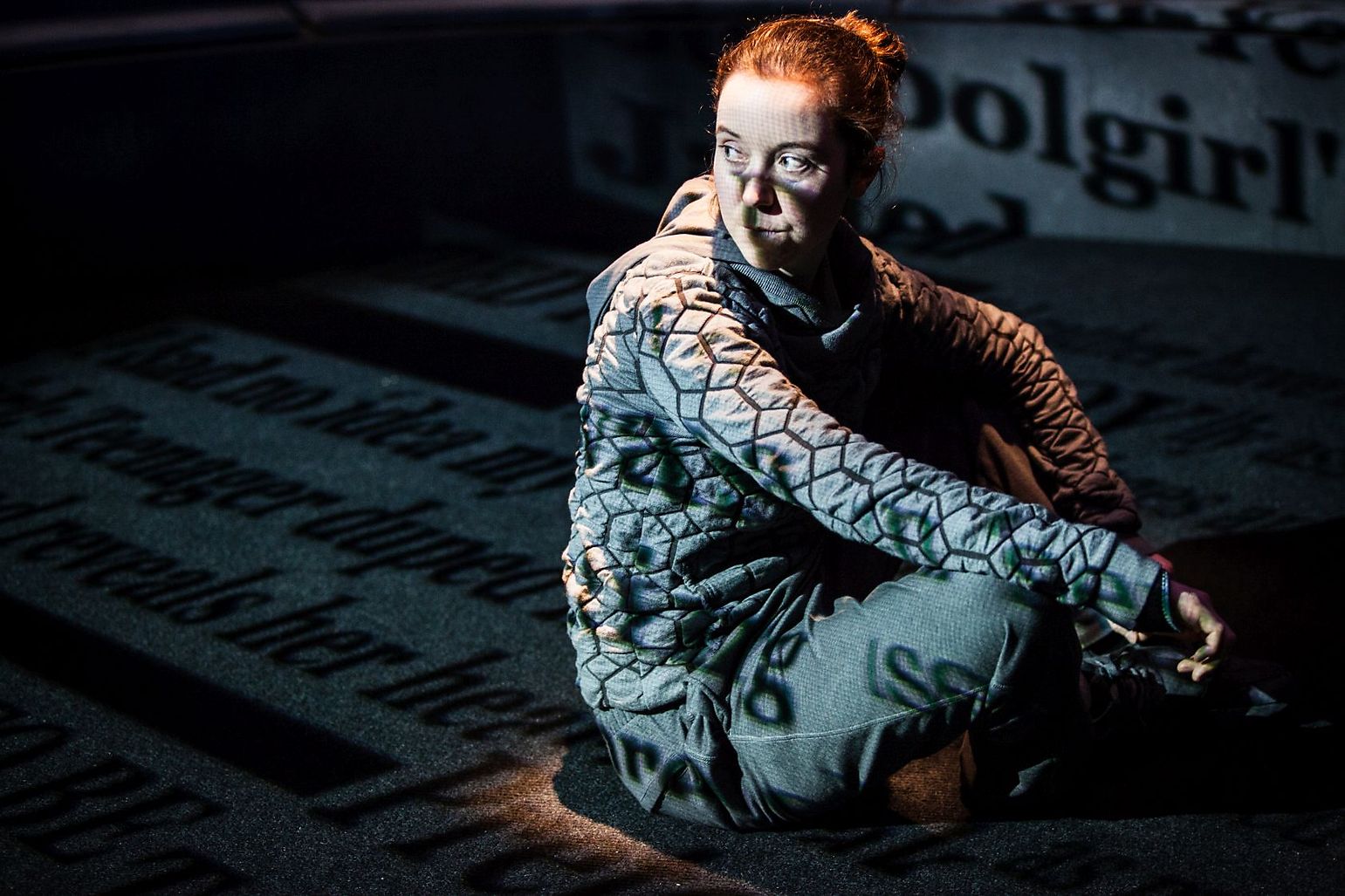
Scorch
(5 / 5)
Scorch is electrifying. It alights, and it shocks and it launches you, and it takes no prisoners.
Kessy and Kez are two very different people. Self-confessing and selfless. Simple and complex. True and false. Female and Male. We’re all just chasing happiness. But, what happens when we play within the vortex of a technological stimulated world?
Emma Jordan stimulates a circle of trust and the truth. Congregated around a grey carpet on a black stool, infected by an optimism and energy, Amy McAllister consumed me, as well as entire audience. We smirked and laughed as we saw clarity within the murk of a societal taboo – ‘you’re nodding!’ McAllister rejoiced. Never have I wanted an actor to look me in the eyes more than Amy McAllister. She was fierce without anguish, and she was light without compromise. She is your friend.
Sharp, succinct and slashing in movement. Choreography by Nicola Curry frees and enthrals, but always beats with the raging undercurrent of sexual identity and gender fluidity confessed.
Stacey Gregg’s words run. They drive and they dig and they stick. In the fragmented speech of a teenage stirring, Kez is heard clearly, bound to his knowing of self – dialogue erupts and translates a tale of our generation. Gregg exposes a sheer insignificance of your life, yet grounds and cements you in your very being, all at the same time. If all writers were as generous as Gregg, and all writing was of such sincerity, and humanity, the world might become a better place.
This season at the Sherman has already proved to be epic – don’t miss any of it.
Young Artists Festival 2016, The Other Room
(5 / 5)
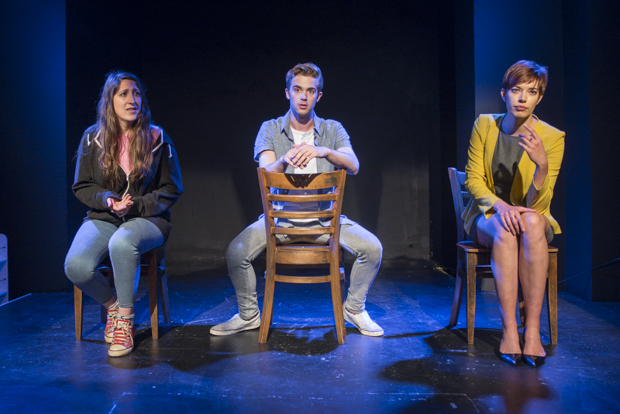
The Other Room Theatre, founded in 2014, is not only Cardiff’s first pub-theatre, but it is a platform for all theatre creatives in Cardiff to produce, showcase, and be showcased as exciting, emerging artists, in their own right. Also, did I mention that they are Fringe Theatre of the Year? This year’s cohort (the second to tread the, alcoholically doused, boards of Porter’s bar) certainly held a prestige in being there. The festival itself only reflects what The Other Room already embodies in its very existence: collaboration, support and exploration; a platform, a place where you land your first job. As participants of, not only, an intense work-shopping programme but a profit share job, the young artists finished the week with enough of the box office profits to forget the majority of the days before by paying their round at the bar. Young director, Bruno Chavez, (previously involved in the 2015 festival as a writer) beautifully articulated, when expressing his own experiences with TOR, that ‘The festival is a purified version of what theatre is.’ Bruno, as well as young writer Susan Monkton (previously an acting participant), are proof of TOR’s undeniable devotion to their community. And, after director Kate Wasserberg’s declared, on the very first day, ‘You’re our guys now’ the sentiment became only more solidified.
In order to respond to the festival with the respect and admiration that I hold for it, and everyone involved, demanded from me was a personal investment – a vulnerability and an immersion. I began writing a play about garden gnomes, I played a ‘dramatised’ game of ‘Never have I ever’, and began to develop a directorial eye for pioneering, new theatre. But, I never f***ed the chair… So, yes, I now hold very little objectivity, but the The Other Room’s dedicated ethos in its love for artists is infectious.
It seems only apt that TOR team would open the festival, Monday morning, with an introduction to starting a company from scratch. Something emphasised by every industry professional from Tamara Harvey (Artistic Director of Theatr Clwyd) to Gemma McAvoy (Agent from Emptage and Hallett) was the roots accessible to an emerging artist, and a desire to empower the individuals. Unfortunately, if I were to delve as far as I would like, into all the insightful workshops we have experienced this week, this would end up resembling a governmental report, so that’s not happening. However, highlighted by Tamara and Kate was a need for equality within our industry (not only as female directors but as parents, regardless of gender); it is something that I’d like to reiterate. Following http://www.pipacampaign.com/, provides support to the Parents in Performing Arts campaign, allowing equal opportunities and access for parents and carers working in the performing arts. Now, for any aspiring theatre makers, to gain just some of the knowledge and empowerment that the chosen 40 artists involved in the festival have acquired, the following websites are not to be overlooked: https://www.equity.org.uk/home/ and http://www.arts.wales/. Of course, you could just sign up for next year’s festival. Stay posted via http://www.otherroomtheatre.com/en/.
Acting, writing, stage management and directing are professions massively stigmatised, and consequently individuals succumb to a generalised stereotype. The stereotype is wholly valid… Stereotypically, they are rule-breaker. Artists – they deify revolution, eccentricity and creation! Required for such demanding crafts are: specifically unique individuals, indispensable in their, collaborative, quest for creation. So, these people, that is what this article and this festival is all about.
Most of the week culminates to the formation of the artistic companies and their performances of new, ten minute, plays written by acclaimed playwrights; Joel Horwood, Morgan Lloyd Malcolm, Lisa Jen, Alun Saunders and Sam Burns. Shadowing these companies has not only been insightful, but a lot of fun! At this point I would like to throw a shout out to Porthcawl Comp who let me chill in a bar all week, in the name of work experience – you the real MVP. So, without any further ado, here’s what the companies did, and how that became to be.
Mirror Loop – Morgan Lloyd Malcolm
A primal uproar against society’s shredding and crippling expectations. As women continue to precipitate actions of self-deprecation and disbelief in ability we subject the next generation to the cycle. The unity of women in a palindrome of a script. Of course, we could also see the piece as a comparison between the mid-life crisis and the intoxicated, purposeless 20 something.
What really struck me about this company, led by Seren Vickers, was the call for an open dialogue and conversation. As a response to this, actors, Andrea Edwards and Alexandra Lewis clearly embedded their souls, in a devotion to the truth within this piece of feminist prose. The scattering of a character’s direction, thoughts and inanimate props seamlessly fuel an uprising for something more.
Look Up – Nicola Reynolds
Thought provokingly normal. All of us have had conversations which hold a clear resemblance to that of these characters’. We all have experienced, or can acknowledge, a friendship with unexplainable depth; how much do we, and can we, actually understand? And, should we be questioning the societal demands to talk ‘Game of Thrones’ around confessional suicidal thoughts. Susie Gale and Lauren Page, in the space of days, were able to develop an unwavering bond that bred a very real and tangible world within The Other Room.
The bleakness of an exposed hate, post-EU Referendum, the indifference to prior civil awakenings, and the objectification of a society’s primped and preened as sexual props. A constant agitation, an uprising within one’s self simply leaving only an ugly aggressor. ‘I’m twenty two and I’m so tired.’ It isn’t too extravagant of a statement, really.
A piece demanding in such an investment from one’s self (a vulnerability to be showcased) also demanded a directorial nurturing – with compassionately insistent nudges Nicola Reynolds urged and empowered her actors to be able to ‘pick it up,’ by themselves – resulting in a flawless performance.
The Ugly Pen – Sam Burns
The timeless story of how ugly boy meets ugly girl.
In a societal info structure of discrimination and oppression those who stand up are the ‘ugos’. As an audience positioned to be inactive, unaffected ‘tourists’, Sam Burns and this company dare to question our responsibility to accept and cherish all within our society. So, the cast defiant, and unrefined, challenge us. As the four cast members stand within their chalked ‘ugly pen’, their entitled ‘environment’, what cannot be suppressed is their voice of antagonism, as the characters insuppressibly narrate their stories.
For this cast, perhaps the most blatant, if not most challenging, of obstacles was their own attractiveness. Yet, alike a blinding charisma – counteracting a director’s, somewhat, restricting vision – their gurning faces shone through a window (coverall hole) of opportunity.

You Make Me – Joel Horwood
Tobias Weatherburn and Rebecca Ormorod are tireless fabricators of energy. Director Emily Stroud offered an open plane for exploration – evident in a mutual vision of their story as a (brave) freed movement allowed actors to thrive.
Horwood’s script holds matter to the derailed relationship – what will be the inerasable snapshots in the aftermath? Nostalgia has become a cultural phenomenon. Facebook memories, snapchat, timehop, Horwood and the company suggest that it’s not just a self-indulgence but a self-inflicted spiralling of regret and, with a scattering of joy, an inevitable sadness. With the cast’s domineering presence it hauls an immediacy of passion.
Frozen – Lisa Jen
Strikingly real, relevant and receptive. Bruno Chavez simplistically stages the offensive stamp of a Western civilisation upon a broken people. Through its dialogue is an exposed brutality, torment and desperation, captivatingly delivered in Melanie Steven’s (symbolically) broken English, but through Disney’s lyrical genius it swells in gravity.
My first interaction with this group included a frenzied, exploration of youth with cast member Carys McQueen. Yes, we danced to ‘For the First Time in Forever’, and it was art. But, now, ‘Open up the gate’ will never sound as self-possessed, or melodic, to audiences as it was before. From young Rima’s wandering escapism to her mother’s entrapment, both actors selflessly stripped inhibitions raw. A desperation – in Carys’ fixation and Melanie’s stare -, and an intensity of character than only a subjection to abject horror can bring. An essential provocation.
Blue Sky Thinking – Alun Saunders
People, bacon, insecurity. What does any of it really mean? Seriously, it would make my job a lot easier. However, in the uncertainty is its charm. Frederick Wienand confines his actors to a self-containment of character as they interweave monologue. The performance itself exudes an air of philosophical debate. Through all the societal questioning, the cast master a comedy eased from simplicity and truthfulness. A coincidental humour in coincidental lives.
‘What is in the script, and what have we invented?’ A question posed by, actor and mentor to the artists, Steffan Rhodri. Not only for a progression in the script’s direction, but also as an existential question for the characters. What boundaries do draw, what mechanisms do we develop, how do we structure humanity? Engaging and endearing.
A Play That Isn’t About Sex – Joel Horwood
I have spent days in tormenting deliberation as to how I could express my love for this group without sounding perverted… the eternal struggle. This group exposed themselves in a way in which I have never seen people soberly do – this circle of trust stimulated by director Duncan Hallis was almost a testament to humanity.
Experimentation and exploration was key to this piece. A use of physicality, embedded and emphasised from the first rehearsal, enabled the symbolising of tyrannical power, or down-trodden vulnerability, or a corrupted youthfulness. Sex in the grand scheme of things? It embodies everyone. It embodies our everyday lives. War, children, food, euphoria, disturbance. The opting to possess a sense of ambiguity within the piece maximised an accessibility to it, as well an acceptance of murky circumstances. Seven exceptional performers with one chair, in unity, highlighted an unquestioned societal morality in the availability of sex as an inanimate exercise. At what age did we begin to sexualise bananas?
‘A Play That Isn’t About Sex’ – Allowing ourselves to feel in an overwhelmingly constructed reality. But, perhaps it’s easier to do when ‘The chair doesn’t have eyes.’
Too often forgotten, but never to be unappreciated in their abilities and dedication are the stage managers. Dunyasha Barrow and Amy Arkle-Jones (mentored by, the festival’s Stage Manager, Steffi Pickering) managed two groups each, in which they took a responsibility for; the sourcing of props and costumes, lighting and sound – all that is technical. Rehearsal reports and call sheets. It is all mind- numbing, so here’s an homage to you guys. Also, there’s young artistic lighting designer Alia Stephen who devotedly lighted every single performance with skillful insight. I’ll move on now, because we all know you’re not ones to relish in the spotlight.
Writers – ever enigmatic and elusive – were to emerge on the Friday morning with their plays to offer, each in their own specifically self-deprecating way. From Monday’s workshop with playwright Mathew Bulgo – hospitable in its musing silence and offerings of Haribo Starmix – the young writers began to develop (or birth) their stories. Bulgo, as well as playwrights Gary Owen and Alun Saunders, tutored their writers through the struggles of writers block and finding their own voice. Seamlessly flowing words, the visualisation of text/the creation of something ‘watchable’ – the pinnacle of the craft. They are all very smart, but in addition to that, writers strip themselves to expose a vulnerability, which many artists would never dare to do. But, it’s the sharing – that’s the scary part. But, the love they receive from those they share their pieces with – that’s what they chase. From the corner that I peered from, from the bar stool that I perched on, in every initial reading there was a warmth and a collective of smiles as the gravity of what was happening, and what these pieces symbolised, was digested.
Warlines – Holly Fry
Holly, in response to meeting a sincere and personable tramp in London, took to chronicle the strands of such an unfortunate life. A truthfully cutting Welsh voice. In its simplicity and cheery pessimism, a silenced story and people rise. Insightful and intelligent.
Angus – Bruno Chavez
Daring, unconventional and shameless.
Schizophrenia – a mystery to many in its misrepresentation, and ‘taboo’ nature – is tormenting in its clarity, in this striking piece. Demanding in investment, a menagerie of individual response, as well as embodiment and exploration surfaces, for an audience, as well as performers. In their addressing, the audience are torn from their self-contained bubble, and seized.
Service Please – Melanie Stevens
Melanie Stevens sings the anthem of a people – a people who work in customer service. With a singeing relatability and humour, Melanie encompassed the audience with ease. Within a simple reminder that waitresses are people what surfaces is a profoundly honest, and suppressed outrage.
Always Tuesday – Emily Garside
A real world full of real people. Sometimes it’s hard to imagine.
Emily Garside offers a special relationship – with dark intricacies – and it’s fascinating. Do we just comply with society’s rules of relationships/connecting? And, how meaningful can these ‘approved’ relationships be?
Through art and cake we are happy – discussion or involvement in a form of creation, beauty and self-indulgence. (Garside’s piece, intended or not, truly embodies the Young Artists Festival itself.) Of course, vomit too – as a subject – can fasten a connection with human kind. But, through a fear of rejection, or being denied, we discuss soaps instead of mental illness.
‘I’ve tried mindfulness, but I prefer vodka’
Bloody Paperwork – Lawrence Quilty
Is there truly a humanity behind politics? Politicians. What are they pushed to? Trained to be? I ask because I have no idea. Like, how I assume, many of us feel about politics.
Something highlighted in a rehearsal of the piece was the character’s movement. Confined by so many bodies Aiden Glass (MP) can only infiltrate or resign – a life in parliament. But, these people have families. Those families are hounded as the tabloid media stir and agitate within the pot-holes of fear within a nation. Corruption has seeped so deep it has stained even the bed-rock of our democratic nation.
Quilty skilfully probes into the intrigue of a plagued and destructive system.
Who Was Howell Davies? – Dai Hill
Death is awkward. Where is the line when discussing the dead? Perceptive in the exploration of a relationship between father and children, and with a compassion documents the life of a man plagued by his hindrances. A blinding ignorance and naivety in Hill’s characters sources a golden Welsh humour. But, with it comes the undertones of a despondent, misogynist Welsh working class.
Beautiful – Susan Monkton
A conflict of interest. Rape. Who is to blame?
An issue as relevant today as it was for previous generations. A simple misunderstanding, illustrated through destructive, self-assured monologues. Monkton’s twining of dialogue highlights a desired gender equality disregarded by the sports industry. Class, sexism, mental illness all suppressing; whether they silence or provoke is profoundly individual. The actors sat, inactive. In its rehearsed reading Emily Stroud brought a required simplicity to the staging; it is how it is deciphered – true and false.
Lastly, I would just like to thank all the wonderful artists who welcomed me to create with them, and shared their work with me. I don’t doubt that I will see you and your work sometime in the near future, hopefully in The Other Room.
Review Before I Leave National Theatre Wales
(4 / 5)
National Theatre Wales soar as their revere for a nation of unified pride reigns in a more increasingly inclusive Welsh theatre, at the Sherman Theatre.
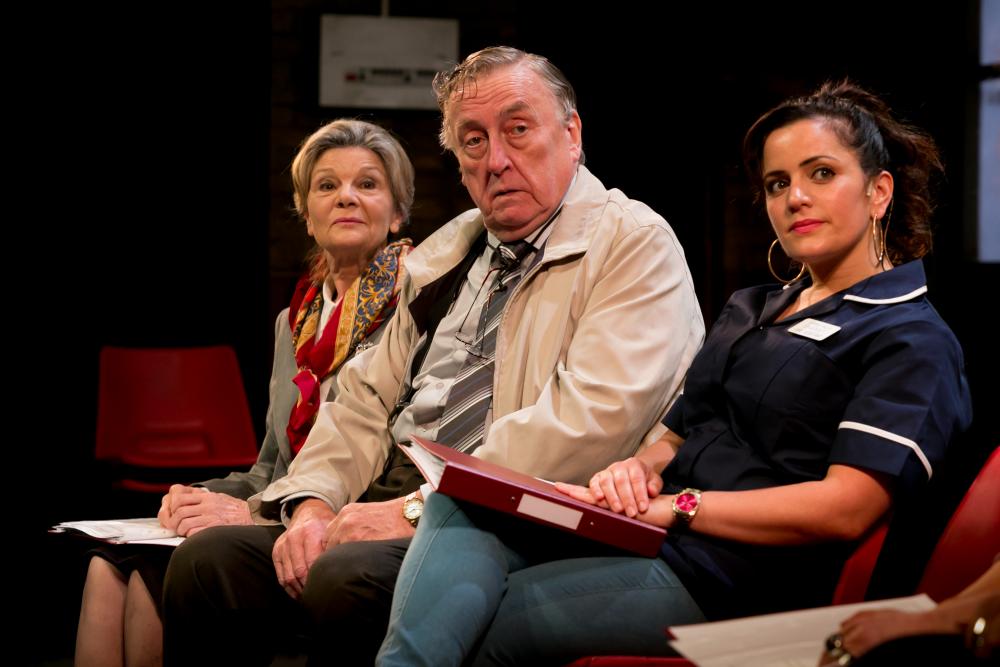
From first glance Before I Leave is a story of Alzheimer’s – inevitably sad and scattered with a respectably predictable style of humour. However, with a wonderfully assured cast, a truthful direction, and a truly vibrant script, a brewing passion of a profound Welsh musicality triumphs! Rocky’s war-cry of ‘Why can’t we give love one more chance?’ encompasses this performance for me. We all can appreciate the desperate actions of a character put ‘Under Pressure’.
To quote playwright Patrick Jones “This play is a testament to the healing power of song” From the perspective of, debatably, the youngest person in the audience on Tuesday night, regardless of my cultural experience – and knowledge of The Jam or Neil Diamond – I (like the entire audience) can acknowledge that music has an ability, if somewhat exploited in this piece, to evoke our human longing for nostalgia, understanding, belonging and escape. The Before I Leave chorus and choir added a beauty, in its sentiment, to a pop-rock enthused performance.
Director Mathew Dunster champions empathetic and honest portrayals, through an admiration for ‘the people’. From Desmond Barrit’s unapologetic portrayal of an ex-policeman embodying a life of continuous conflict. Celia Hewitt’s sorrowful, and enlightening, Isabelle, and Dafydd Hywel’s exulted grit in Rocky – who illuminates the truth behind a too well-known Welsh figure. But, Martin Marquez’s Joe – a slowly fading rocker, unsure of what he’s raging at anymore – makes for a seemingly effortless and encompassing performance, and perhaps, as a result, the most under-rated of the evening.
Dunster’s direction – of meandering crossovers and the adopting of minimalistic solutions – highlights a simplicity that poignantly reflects a nation of loss. This constant interchanging of time, characters and setting reinforces the spirit of a community continuing to live. And, the audience, intended or not, are coaxed to ‘power through’ the surges, and droughts, of a zealous intensity.
Jones’ sincere, and deeply-rooted play is confirmed in the understanding of its disease. Abrupt, and ambling, scenes are a mere portal into the scattered objectives of a chaotic (real) life.
Anna Fleischle recreates all too familiar settings. Chairs striking – in their primary colours – plonked, to animate waning lives, on the uninspiring mesh of carpet. Seamlessly, a reflection of the struggle to express vividity in an increasingly taxed and drained Welsh society, as well as those plagued by Alzheimer’s, can be discovered in a tragically governmental building – a Merthyr library. Straker’s poignant projections of our green valley, its ever-present brutality, and our glorious dead, succeed in capturing the tensions of an ‘evolving’ Wales.
Before I Leave is painstakingly perceptive – yet the light never fails to pierce through its shadows. National Theatre Wales commanded the audience to their feet and left them humming.
Theatre
Before I Leave
Venue: Sherman Theatre
Dates: 27 May – 11 June, PN 31st May
Director: Matthew Dunster
Written by: Patrick Jones
Design: Anna Fleischle
Technical: Heddwyn Davies/Andy Evans (Sound), Dyfan Jones (Music), Angharad Matthews (Costume), Dick Straker (Video designer), Joe Fletcher (Lighting)
Cast includes: Desmond Barrit (Evan), Olwen Rees (Isabelle), Dafydd Hywel (Rocky), Llinos Daniel (Gemma), Martin Marquez (Joe), Melanie Walters (Dyanne) and Oliver Wood (Scott)
Running time: 2hrs 30min
Review Bird Sherman Cymru
(5 / 5)
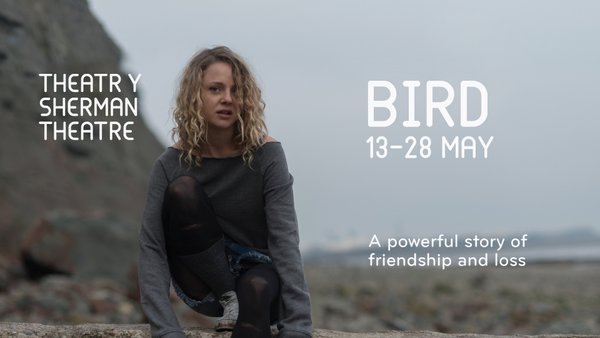
Ava (Georgia Henshaw) and Tash (Rosie Sheehy) are young, optimistic and disfigured teens. Their friendship and integral bond is rooted within the whirlwind of complicated lives and a callous society. As Ava dashes and flitters off every object, person and syllable, Tash is always at heights, dancing at the edge of the world – awaiting flight.
Never have I experienced such an encompassing performance. I strolled into the Sherman, and left sprinting. But, regardless of my train times, Bird is a play that melts the facades and the barriers, and leaves you trying to fly – in all senses of the word.
An elderly man, as the audience were sipping the last dregs of their wine/settling, I heard from the front row, turn to his wife and speculate ‘I think it’s a comedy’. ‘I don’t think so mate’ I quipped, in thought. However, now I see that Bird cannot be constrained to a genre, or what people want it to be. Ava – stunningly performed by Georgia Henshaw – has an infectious spirit and an undeniably truthful perception of life. Resulting in imposing moments of frolic and uncontained rage, I didn’t feel the back of my chair once. Rosie Sheehy, too, must be applauded. Her exploration of the depth within the thirteen-year-old was wonderfully perceptive and chilling.
Katherine Chandler is a writer who sees the world empathetically and urges us all to do so. Desperation is far too attainable as the play’s women appease the men surrounding them. Does the honesty of ‘It just got too much,’ vindicate all the vodka, and the manipulation, and the self-serving? Chandler holds up a mirror to the real world and the audience are almost blinded by the familiar reflections.
Close to the surface lurks the grit and tensions of the women’s lives. The set designed by Kenny Miller, ingeniously incorporates this theme as the characters stand upon the yellowing, moulded tiles of a swimming pool beneath a sky of industrial light.
‘Bird’ is a sharply directed play – so successfully done that it’s easy to forget it had to be constructed that way. Rachel O’Riordan presents a piece of astoundingly compelling theatre as every silence, gesture and intonation propels the audience deeper within the crevices of the narrative.
Very rarely do you leave the theatre in, slightly paralysing, awe. A play as impacting as ‘Bird’ is not to be missed!