Hi, my name is Connor Strange, and for those that do not know me, I am a Freelance Theatre Technician & Event Crew. I have written a couple of articles on the Get the Chance platform before, and the article I am writing today is especially poignant and relevant to me.
I am making this public appeal, in light of the current Covid-19 outbreak. The closure of our theatres and live events has spelled disaster, with theatres on the brink of collapse and redundancies already starting. I felt a sense of sadness and despair looking at the disaster unfolding before me, I could not and would not stay silent on this issue.
So this is a story of how I am standing up and supporting our theatres colleagues and friends across our beloved country, and sharing the event that I am organising and taking part in to raise money for Acting For Others.
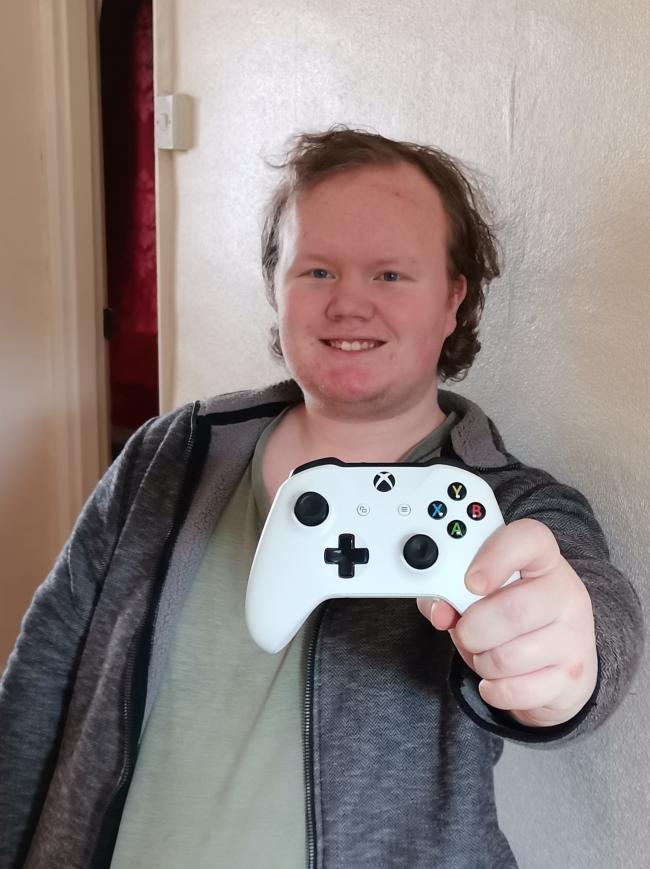
I am an avid gamer in my spare time, and thought to myself how could I raise money? It dawned on me that I could do a charity gaming livestream and raise money that way. So here’s what I am doing:
I am taking part in a 12 hour gaming livestream on the 1st of August 2020 between 9am and 9pm (UK BST) playing 5 well known game titles, in this order: Minecraft, Fallout 76, Forza Horizon, Fortnite, Elder Scrolls Online.
The event will be raising money for UK charity Acting for Others, and will be broadcast on Twitch – www.twitch.tv/connorstrange145
Acting for Others is a charity that represents 14 UK theatrical charities. The funds raised are used to offer emotional and financial support via their 14 member charities to members of the entertainment industry who have fallen on hard times through illness, injury or circumstance.
They support actors, dancers, singers, variety performers, backstage workers from the dressers to the techs, front of house & box office, theatre admin and behind the scenes creatives such as directors and choreographers.
I am raising money because I want to help colleagues from across the country who are struggling financially and emotionally due to COVID-19, and I want to give something back to a community of creatives that are truly accepting and inclusive. Our community has been let down by government, and some colleagues have not been able to access funding, grants or government loans. This is unacceptable, and I felt that I could not turn a blind eye or stay silent on an issue that means so much to me.
As a Freelance Theatre Technician, I have been accepted and included and I am truly thankful to the theatre industry, for giving me an opportunity to thrive and succeed.
The work that Acting For Others do is truly inspiring, and I hope that you can donate. However small or big your donation is, it will truly help. If you can’t donate, that’s completely okay. If you could share my page far and wide, I would be extremely grateful. If you would like to donate the link is www.justgiving.com/fundraising/connorstrange1
Thank you for your support, and I hope you’re all safe and well.
Dominic Dromgoole’s A Midsummer Night’s Dream is just that: dreamy. It has everything you could want from a woodland romp – gorgeous costumes, plenty of gags and superb acting, but is never cliché, nor rests on the Globe’s laurels.
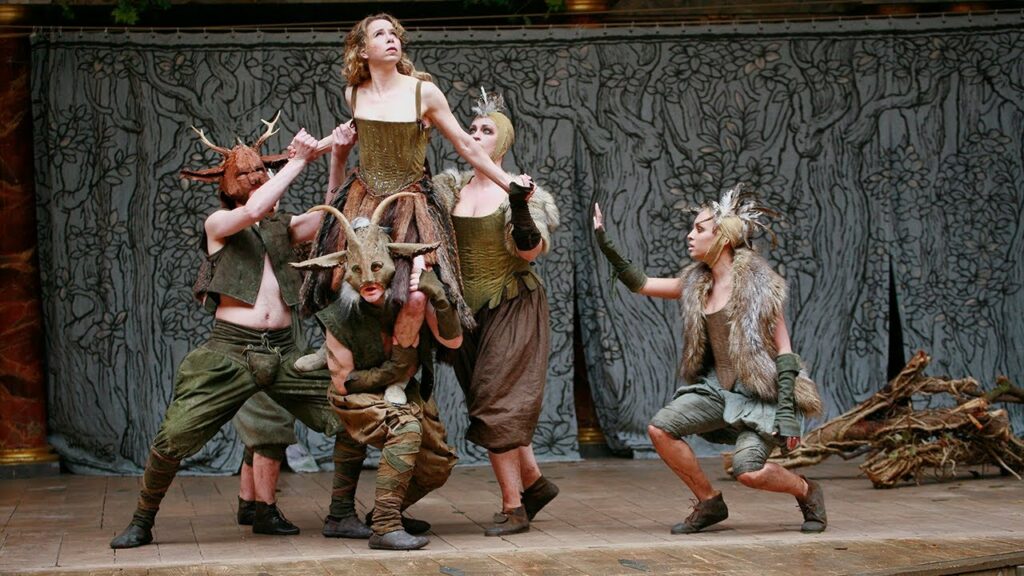
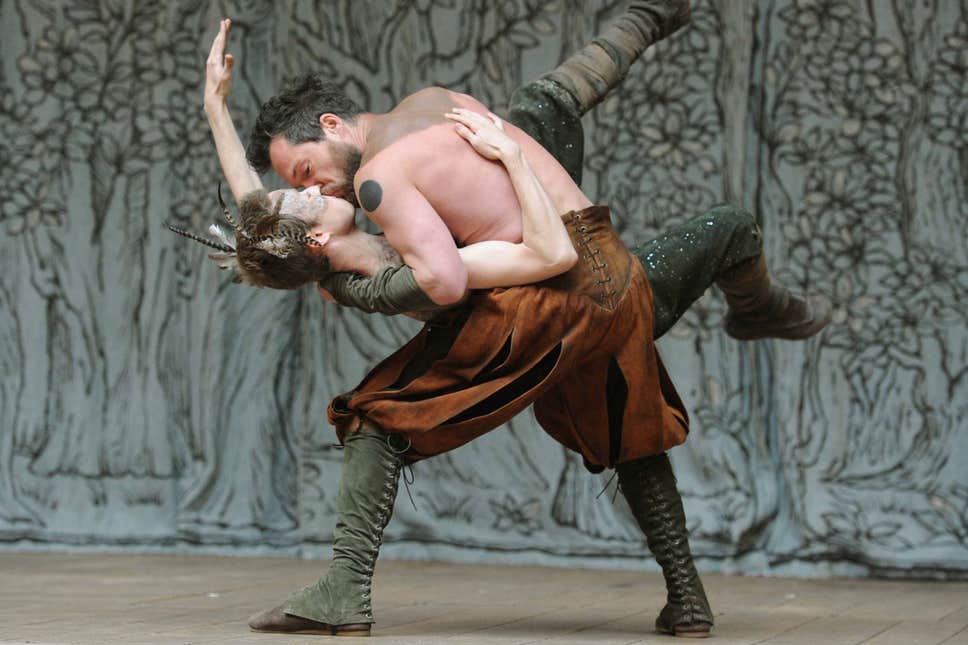
The Fairy Queen (Michelle Terry) and her followers. Image: Alastair Muir
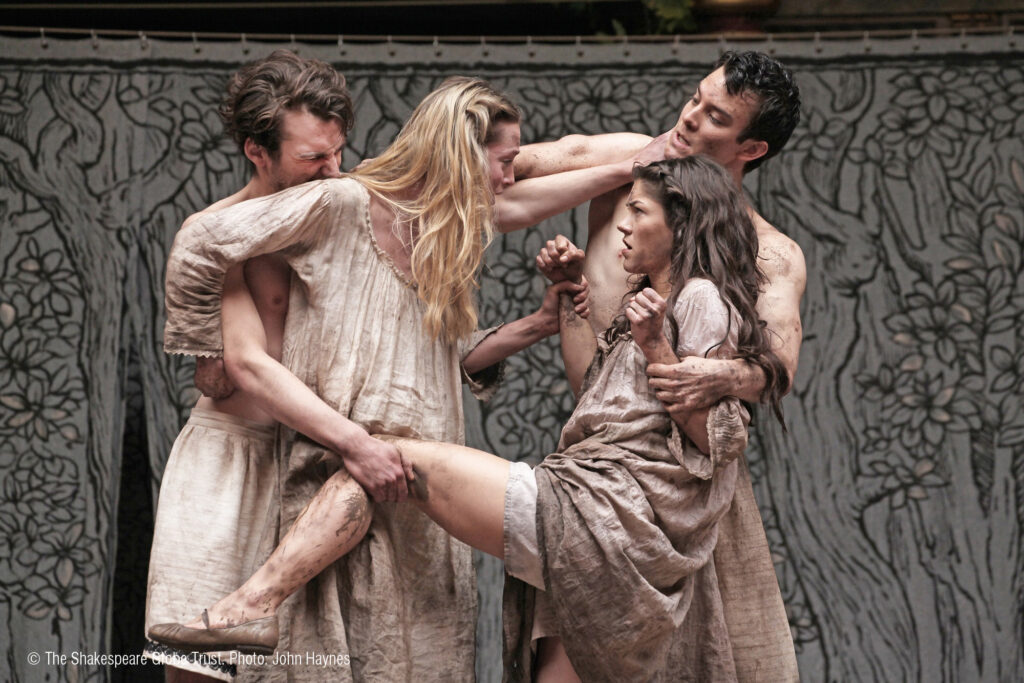
This production uses both Elizabethan staging and costumes though you’d be mistaken to think it fusty: John Light’s Oberon and Matthew Tennyson’s Puck both bare their chests, while Michelle Terry as Titania skips about in a fur pelt skirt that looks straight off a runway. The fairies’ costumes are also stripped down; trousers and corsets are embellished with natural materials like twigs and mud, as well as animal features such as feathers and stag horns. Delicate winged creatures these fairies are not. Instead, they snarl and shriek like a wild chorus, adding an element of danger to the forest scenes. Their bestial and androgynous clothing contrasts heavily with the pristine, stiffly laced, and heavily gendered garments of the humans in the Athenian court. But when the four young Athenian lovers get lost in the woods, they gradually become more uncivilised and less dressed, which makes for an interesting crash course on the various layers of Renaissance garb.
The lovers a little worse for wear – well, ‘the course of true love never did run smooth’. Image: John Haynes
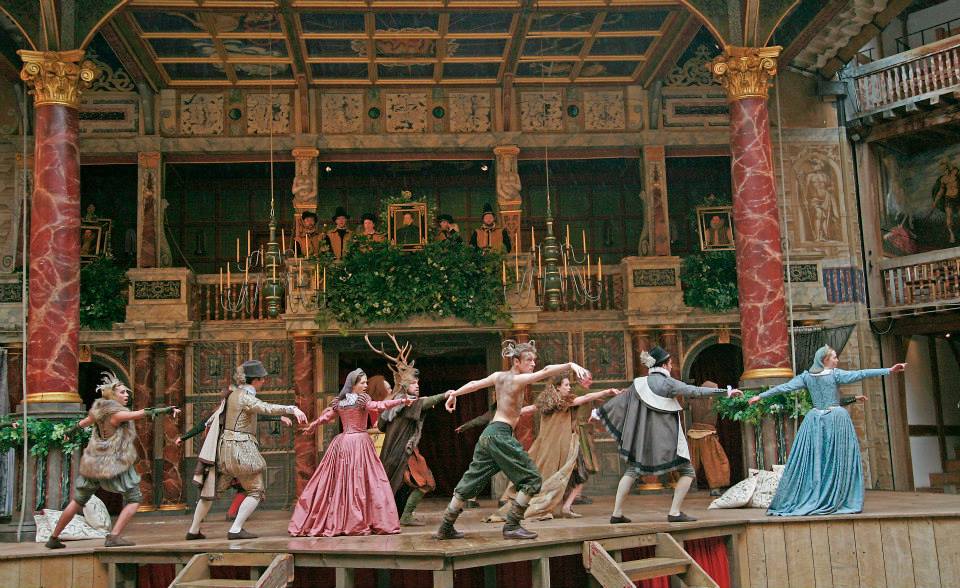
The set design by Jonathan Fenson is pleasingly simple: the existing polished brown wood and red ‘marble’ arches of the Globe suit the pomp of the court scenes, and these earthy tones, when coupled with foliage and green tapestry curtains, equally complement the autumnal imagining of the forest scenes. As an outdoor venue, staging Midsummer at the Globe is always a special experience, but the rejection of the usual floral, sunny features is a welcome change and actually matches the overcast day of recording rather well. Opting for a darker, cruder design captures the more mysterious and animalistic themes of magic and lust within the play.
The opening of the production begins uniquely with a dance sequence reflecting a battle between male swordsmen and female archers, in which Hippolyta is bested and won as a war trophy wife. This completely alters the meaning of the first lines between King Theseus and his new bride. They are not a lovesick couple longing for their wedding day but a growling Lord and his bitter captive (both roles played brilliantly with seething venom by Light and Terry). This patriarchal tyranny informs the next shocking scene where Hermia’s father reminds his daughter that the penalty for disobeying him is death. In the forest, we learn there is also trouble in paradise where the tension is mirrored between the fairy king and queen; themes of misogyny are not brushed under the woodland carpet and the threat of violence lingers here too. When the young lovers enter the realm however, things do take a turn for the ‘fancy free’. In this version, the line ‘What fools these mortals be’ rings true as the lovers are played less seriously – a valid interpretation for me, as Shakespeare’s device of having them ultimately wake up and fall in love with the ‘correct’ person is a silly notion in the first place. All young actors give accomplished performances, Hermia (Oliva Ross) and Helena (Sarah Macrae) as headstrong women and Lysander (Luke Thompson) and Demetrius (Joshua Silver) as hapless posh boys.
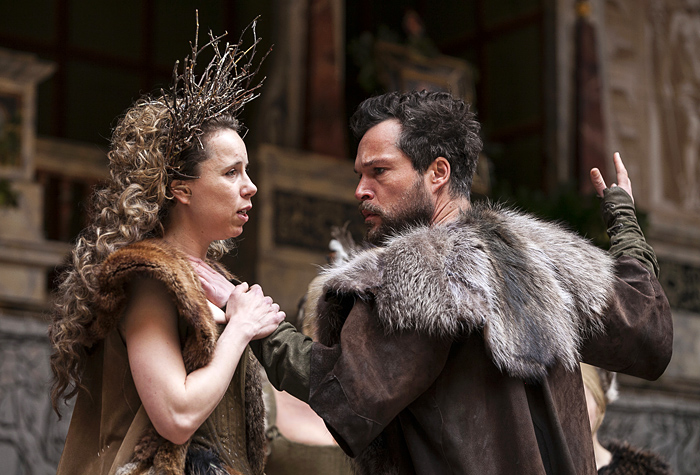
All is not well in Fairyland: Oberon (John Light) threatens Titania (Michelle Terry). Image: Alastair Muir
Stand out performances also come from Michelle Terry, the Globe’s current artistic director, whose Titania is just as haughty as her Hippolyta, though more full of the joys of spring – or summer. John Light adopts a husky Irish accent for his Oberon and his ultra-masculine portrayal contrasts with Matthew Tennyson’s boyish Puck. The pair makes a great duo, employing Sian Williams’ tactile choreography – the use of gymnastics and swinging ropes also bring out the production’s playfulness. The tactility flows into romance: everyone, regardless of gender or species, seems to be getting it on in this production.
Oberon (John Light) is enamoured with his protégé Puck (Matthew Tennyson). Image: Alastair
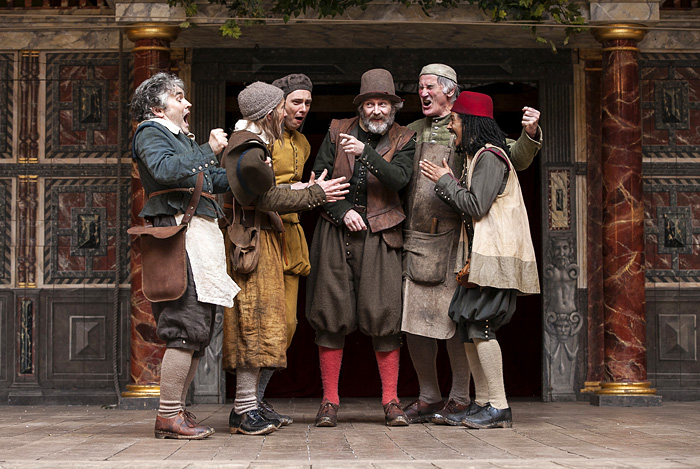
It’s Bottom, however, who steals the show; Pearce Quigley is a comic genius, his Salford accent thicker than gravy with cheesy chips and his performance raises belly laughs from the audience. The comedy is ramped up with the Mechanicals, a usual audience favourite, who certainly don’t disappoint here. The infamous roll call is blocked clearly and each actor’s intonation allows us to fully understand the dialogue. Though the Mechanicals’ questionable acting skills mean they shouldn’t give up their day jobs, director Dromgoole adds yet another trade to the craftmen’s collective wheelhouse – clog dancing. Bottom the Weaver and Peter Quince (a brilliant Fergal McElherron) clash fantastically; Bottom undermines micro-managing Peter (‘Peter?’) through constantly interrupting and forgetting Peter’s name, but the rivalry is ultimately settled with a ‘clog off’, where Peter whips out a delightfully anachronistic moon walk.
‘Take pains. Be perfect.’ The rude Mechanicals celebrate their play’s commission. Image: Alastair Muir
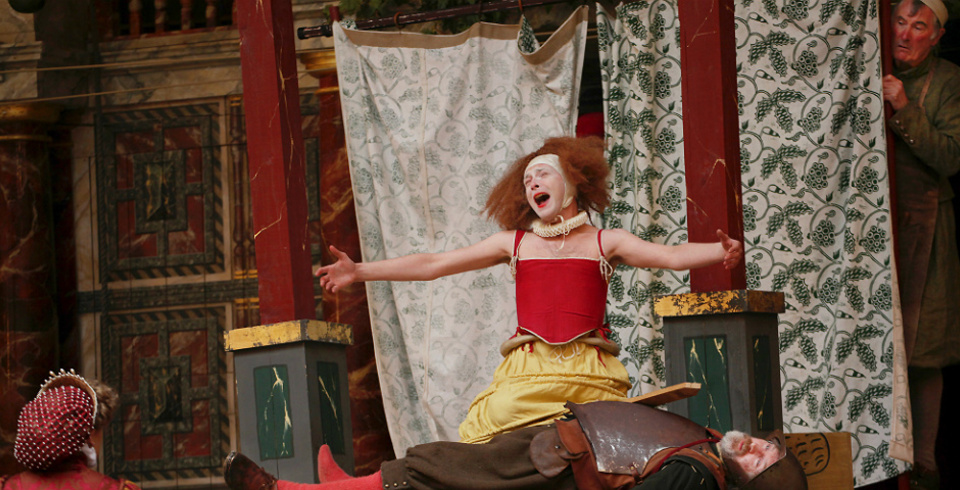
The play within a play brings the comedy to a crescendo and is a great reward for the near 3 hour runtime, though this production is definitely no chore to watch. ‘Director’-cum-‘narrator’ Peter is in his element and his campy, over-bearing manner wouldn’t be out of place in any am-dram rehearsal room. Under his direction, the misguided players bring out a pop-up replica of the Globe itself, which is wonky and requires periodic mending by Snug (an understated Edward Peel), regardless of whether the sound of hammering and the piggybacking of actors is a tad distracting to both ‘players’ and their courtly audience. Things only get worse (or rather, better) when Wall’s (Tom Lawrence) huge costume threatens to eclipse the entire structure and his ‘crannied hole’ is set in a very unfortunate place. ‘Beauteous’ Thisbe (Christopher Logan) provides no respite to this theatre of the absurd as her portrait is visually terrifying, all garish face paint and huge hooped skirt which upturns in her death scene, though this is too drawn out and the audience’s laughter drops off a little. Despite the otherwise successfully overblown actions and slapstick tone, these elements are contrasted with many pregnant pauses, subtle glances and small gestures, all timed perfectly to alter the pace and heighten the comedy. As the play in miniature and play proper draw to a close, the cast have us eating out of the palm of their hands.
The tragic tale of Pyramus and ‘Thingy’ (Christoper Logan and Pearce Quigley). Image: Alastair Muir
The live music, composed by Claire Van Kampen, is sparse but used to good effect: the traditional fanfare frames the opening sequence, and periodic drums and strings create an eerie atmosphere to signify the faeries’ arrivals. The accompanying wordless singing is unearthly and a perfect fit; as such, it also closes the show with a final masque, categorising this production as both beautiful and haunting.
With innovative interpretation, visual flair and real comic wit, the Globe’s 2013 performance of A Midsummer Night’s Dream is, dare I say, the best version I’ve ever seen. Acapella vocals and traditional yet naturalistic costume take Shakespeare’s deceptively dark comedy back to its roots, but in doing so, breathe fresh life into it. It’s passionate, stirring, and above all, funny – they must have taken Bottom’s plea to heart and took pains – for it was perfect.
The ensemble in the closing masque. Image: Alastair Muir
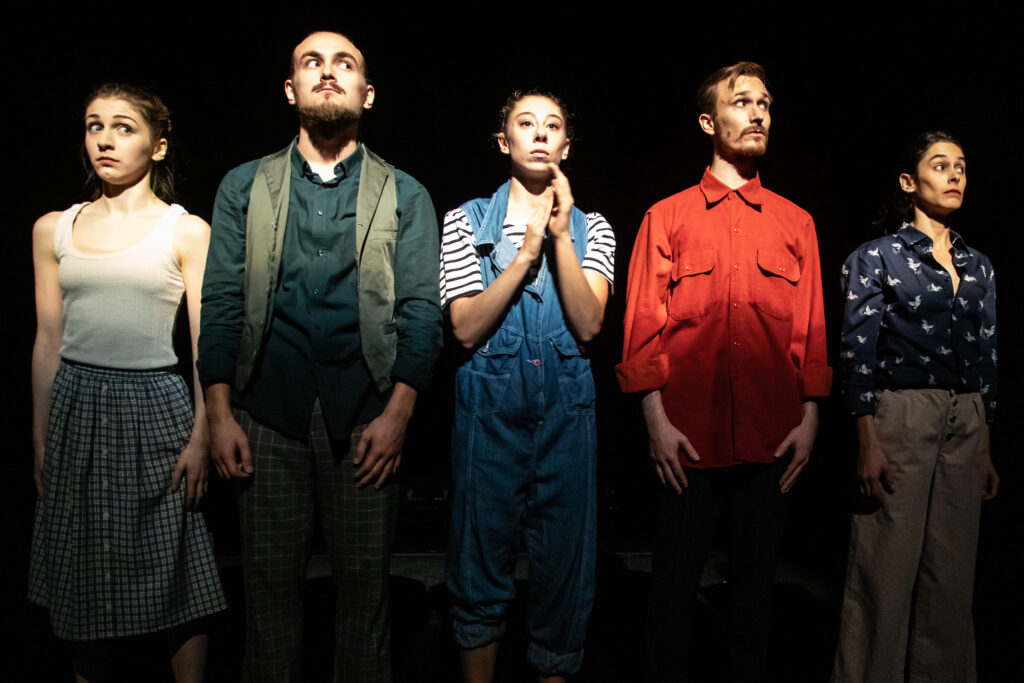
National Dance Company Wales has announced its next live streamed online premiere, Ed Myhill’s Clapping, which will unite Company’s dancers together in lockdown.
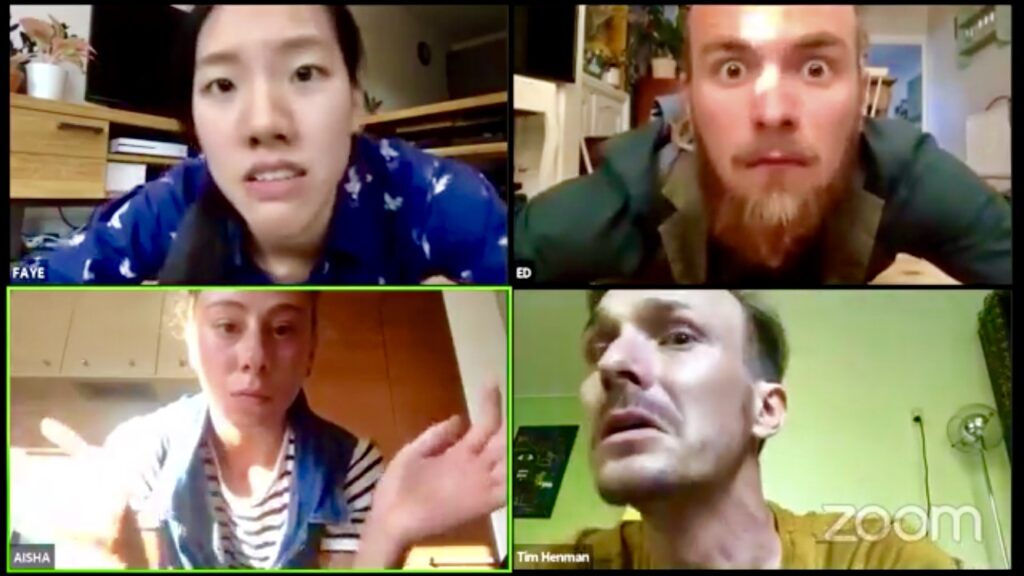
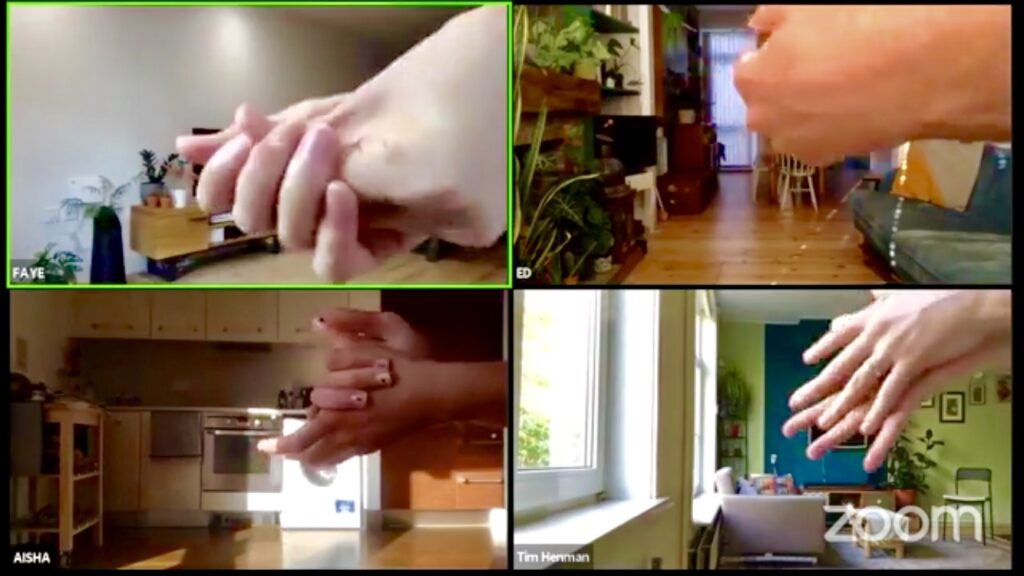
Following the first ever Live Streamed dance performance of Alexandra Waierstall’s 2067: Time and Time and Time, NDCWales are again creating a Live Stream Online Premiere, this time Ed Myhill’s Clapping created via Zoom and broadcast on Facebook. Clapping will be bringing the dancers in lockdown together for a one-off live performance on Thursday 25 June 7pm.
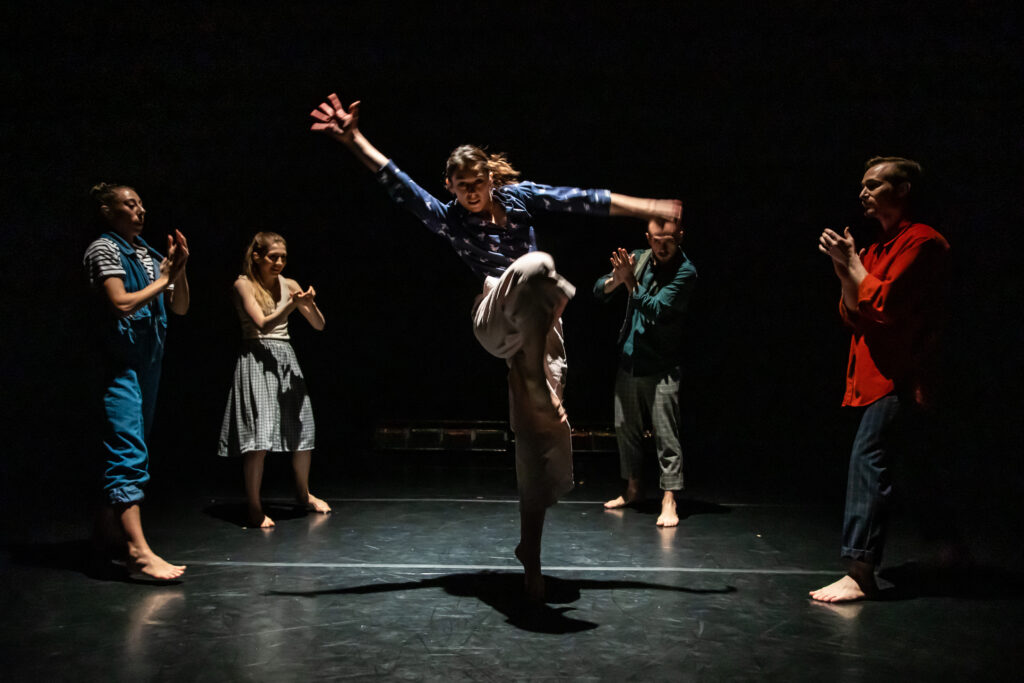
Clapping uses rhythm as a driving force. The dancers use lively movement and clapping to create a soundtrack for the fun and dynamic dance.
A few weeks ago, the Company created a short 1-minute Clap for Carers version, as a thank you to NHS, carers and support workers across the UK and beyond.
Company dancer, Ed Myhill created the piece originally for National Dance Company Wales’ Alternative Routes in 2018, before it toured across Wales as part of the Company’s Routes tour in 2019. The extended version, Why Are PeopleClapping?! will be included in NDCWales’ tour of Europe in December 2020, and as part of its Spring UK repertoire in 2021. Following the 10-minute live stream performance on 25 June there will also be a live Q & A.
The broadcast is still available on Facebook on NDCWales’ Video channel here
From 8 June there will be classes for young people and those who have restricted mobility based on the dance piece, as well as an insight into the rehearsals process in two Open Rehearsals on Facebook and Instagram. Audiences will be able to join the Company on Thursday 11 and 18 June 2-2.30pm to watch how rehearsals are developing, plus an opportunity to ask NDCWales questions via comments on Facebook Live during the session.
NDCWales wants to keep connecting to its audiences across Wales and the world, as well as engage with new audiences, many of whom many not have had the chance to experience Contemporary dance before lockdown.
Over the last eight weeks, NDCWales has been premiering many of its productions online for the first time for audiences to watch for free as part of its online programme KiN:Connected, including Afterimage (by Fernando Melo), Rygbi: Annwyl i mi/ Dear To Me (Fearghus Ó Conchúir) as well as a live streamed Zoom version of Alexandra Waierstall’s of 2067: Time and Time and Time where the dancers joined together to create a dance piece from isolation.
Associate Director, Lee Johnson said, “This uplifting dance piece is immediately relatable as you bounce from a tennis match to a rendition of Heads, Shoulders, Knees & Toes, to a dance-off, and from these into full-bodied, energetic & joyous dancing. The choreography is sophisticated and witty yet laidback and down to earth.
Full details of the KiN:Connected can be found at ndcwales.co.uk and on social media channels @NDCWales
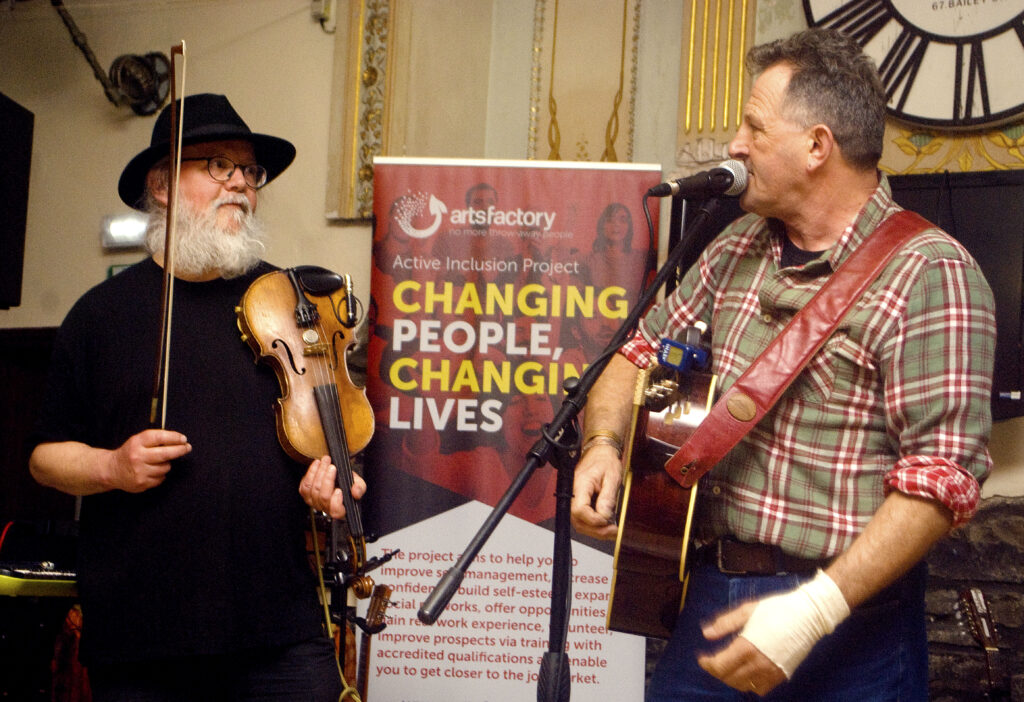
Take me back to the days when we were never alone – well, let’s see, it was the month of March when creativity rocked the Arts Factory in Ferndale and we were altogether. The scene had been set in 2019 when the forward looking company Avant Cymru introduced a MaDCaff evening event to The Factory in Porth as part of the FestYPorth celebrations. It sparked an idea for such an event to be held in the Rhondda Fach. Proposals for a venue were put forward and the nucleus began to evolve as the Arts Factory (the Trerhondda Chapel Arts Centre in Ferndale) took up the baton for it to be staged as a Community activity to raise funds for Mental Health.
A MaDCaff event is an experience which is encompassed in its very title
Music Dance and a Café
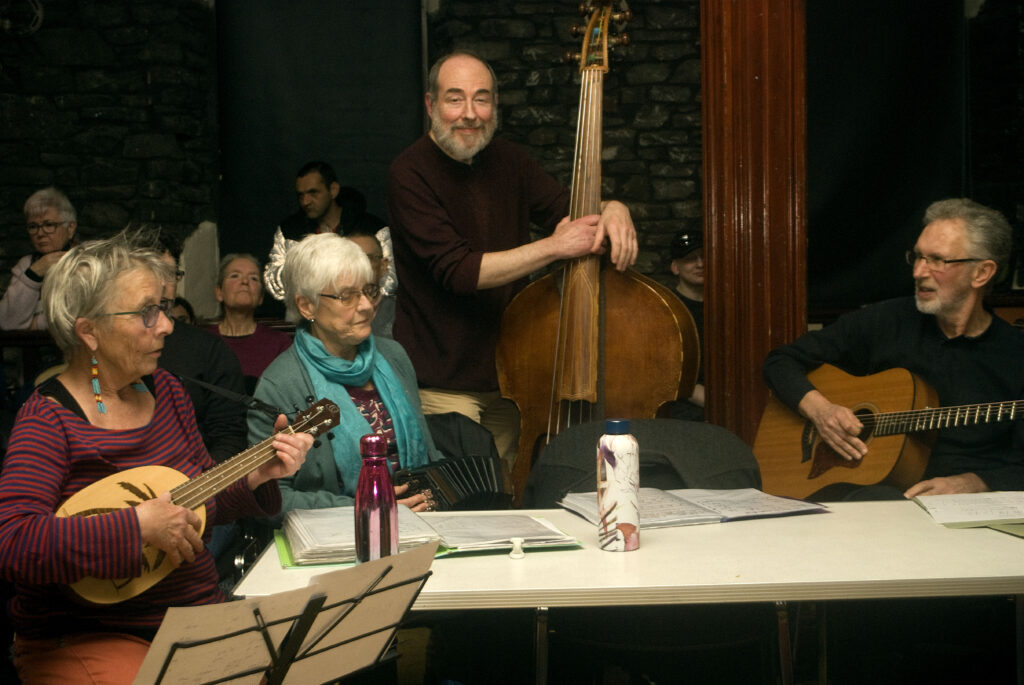
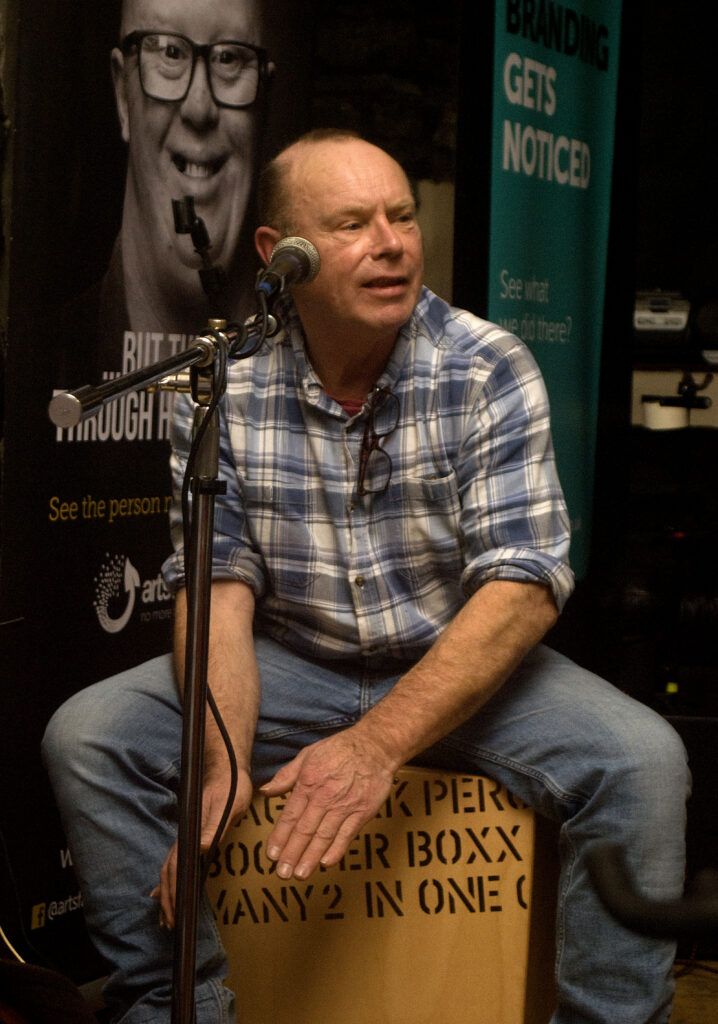
It is an open mic where people can perform or be entertained, pressure free with a quiet place to talk if required. With DAC (Disability Arts Cymru) and the Arts Factory volunteers, the evening became a cornucopia of colour as musicians assembled their electrical equipment and sound tested their instruments, dancers waited in anticipation of opening the event, whilst people bought Raffle Tickets on their arrival, sourced the Refreshment stand and marvelled at the artwork that had been kindly donated by local artist Carole Kratzke for the Art Auction.
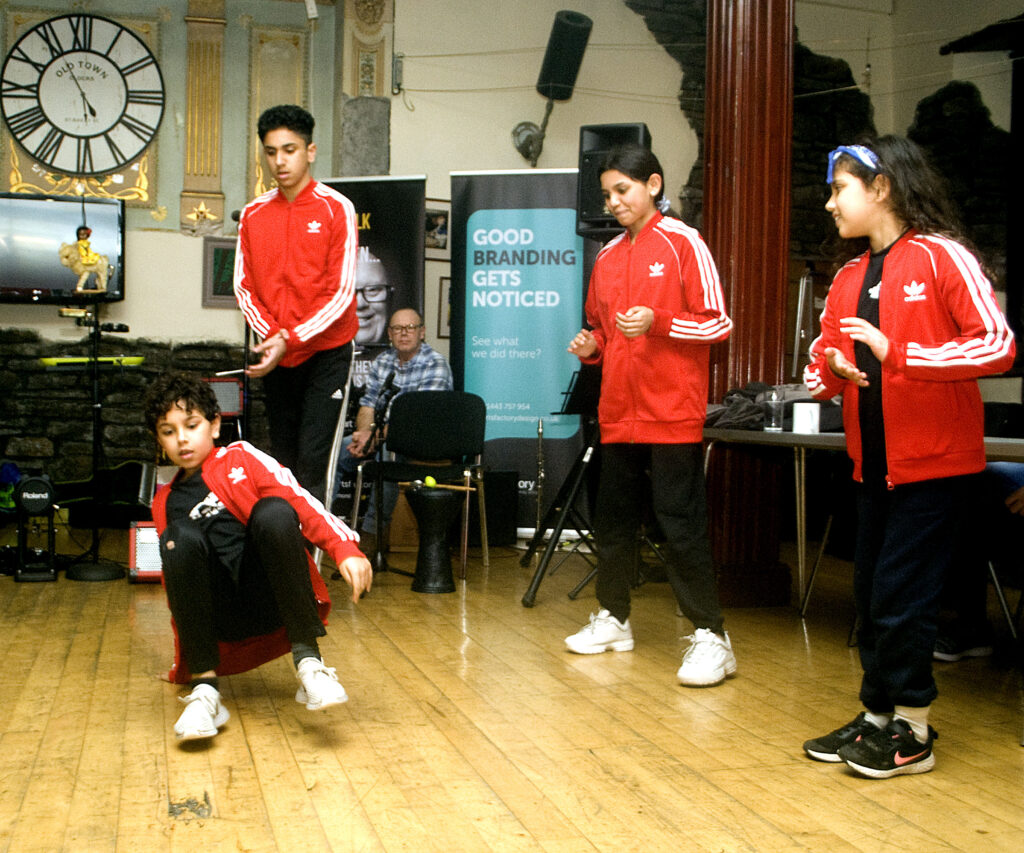
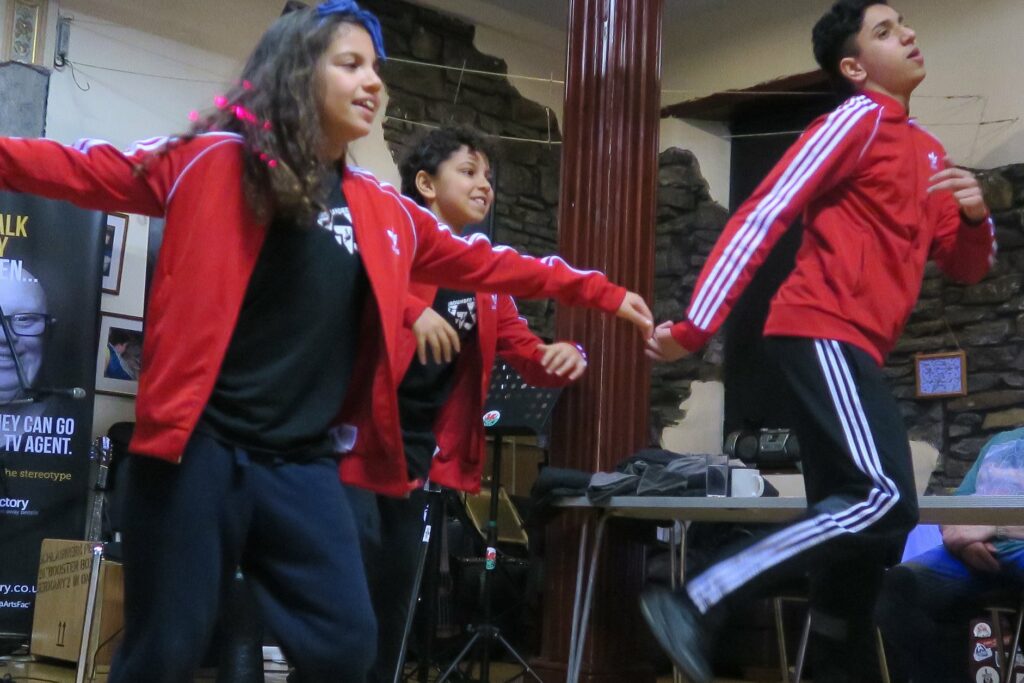
The young dancers of Avant Cymru, coming from their recent performance at the Millenium Centre in Cardiff, blew caution to the wind with their energetic and exhilarating movements, incredibly intricate and jaw dropping showing the skills that they had been taught by Jamie Berry, a company Director of Avant Cymru, who, in January 2020 won the deserved accolade of Wales Creative Tutor of the Year bringing his distinctive talent to develop the health and wellbeing, through dance, to the Valleys.
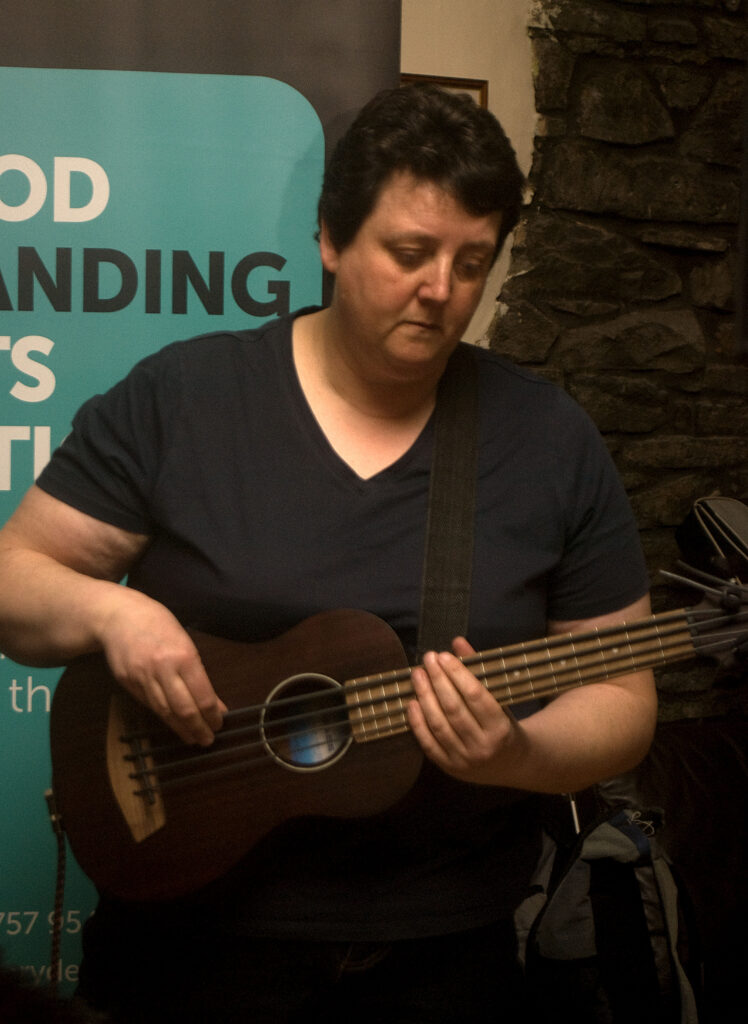
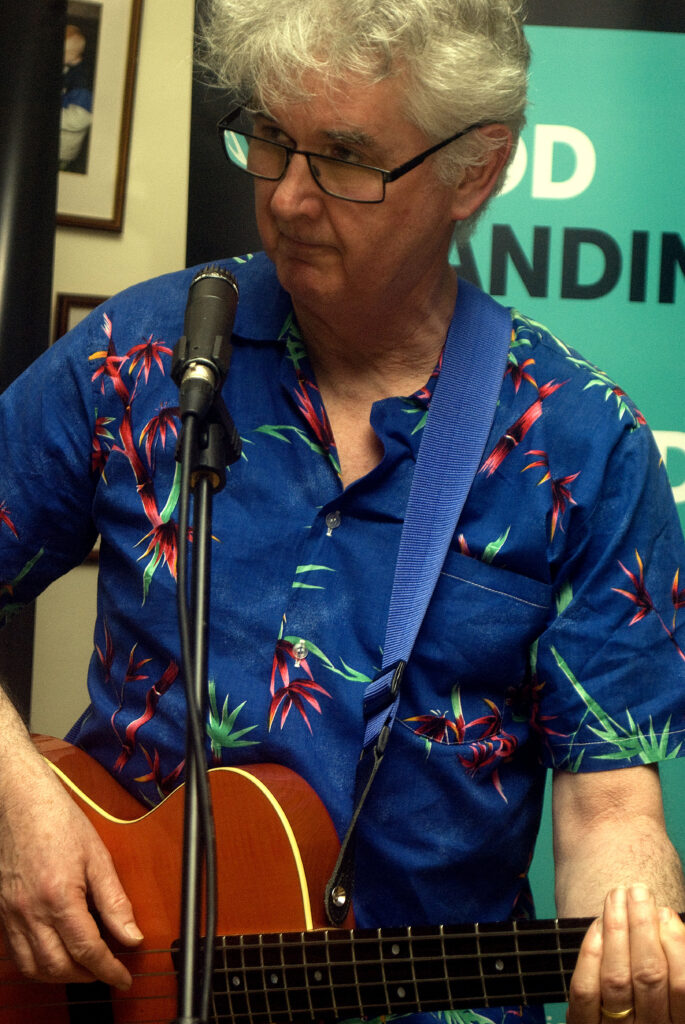
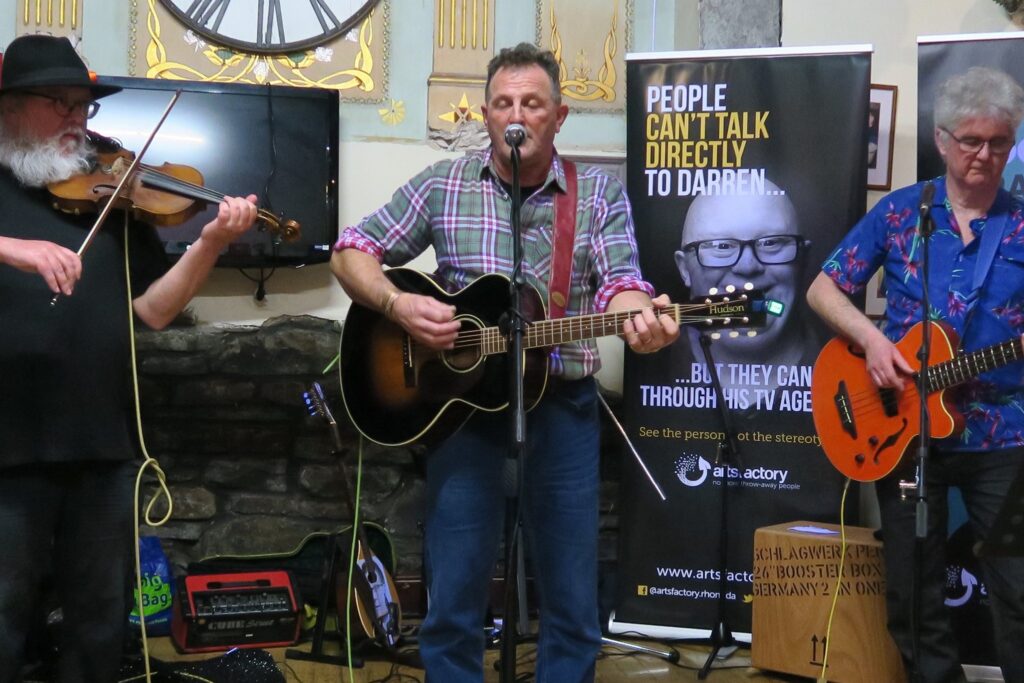
Gaudy Orde announced their arrival with their usual toe tapping eclectic music with Jeff Japers (aka Andrew Powell) on the ukulele, keyboard and main vocals; Tall Joy (aka Joy Garfitt), Helen Spoons (aka Helen Probyn-Williams); James Parr – Superstar; Barry Sidings (aka Alex Coxhead) and Romany Bob (aka Andy Roberts) providing a surreal and distinctive experience of music, song and humour into an intoxicating mix as the evening progressed.
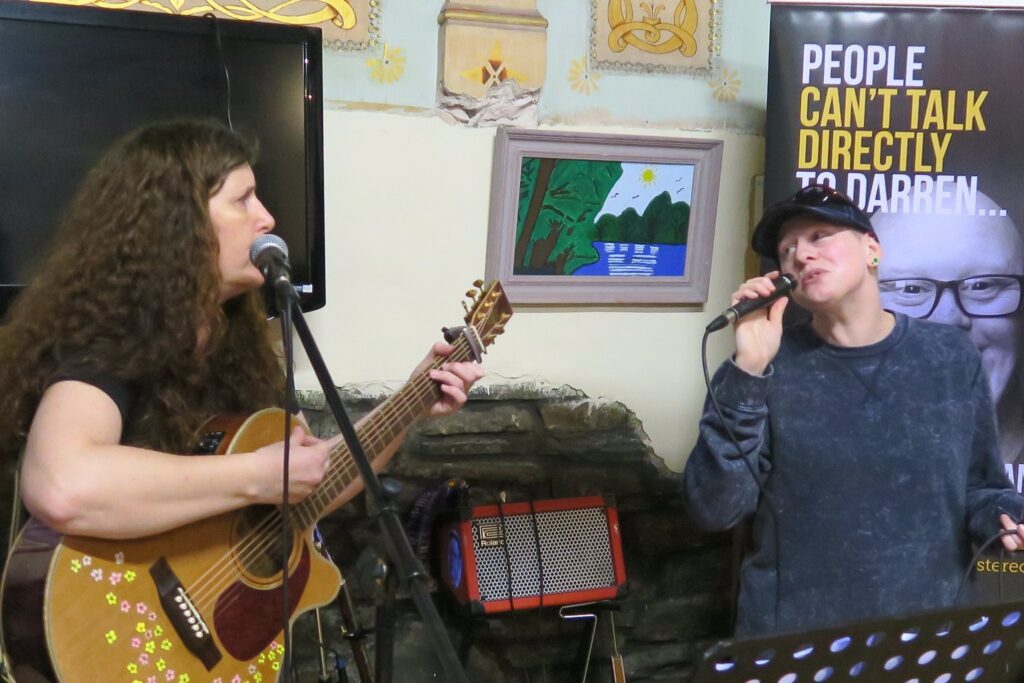
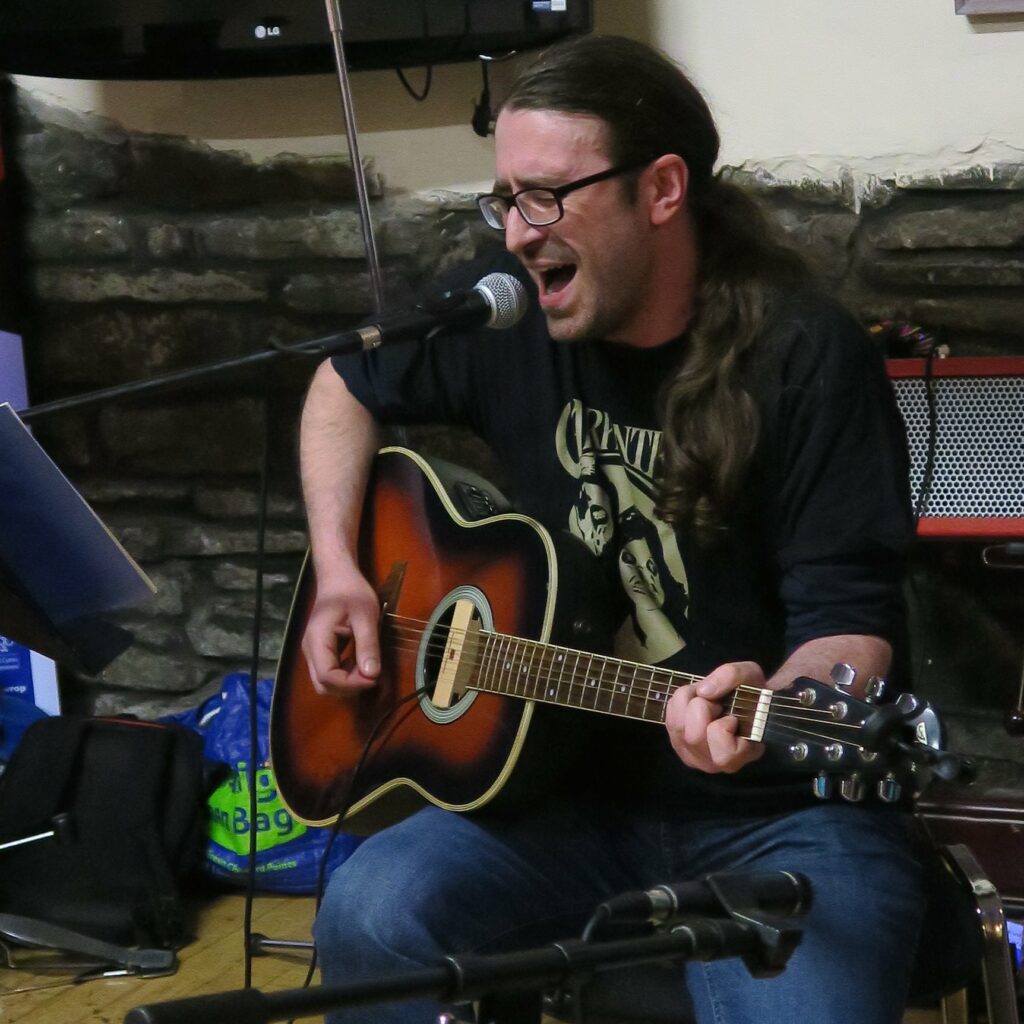
In turn Jeff Japers, as the evening’s Master of Ceremony, introduced the Nutz ‘n’ Bolts duo which normally consists of husband and wife team Dawn and Dave Hoban, but on this night we were invited to meet Jowan who sang with Dawn. It was an experience of emotions entwined harmonies and excellent guitar playing.
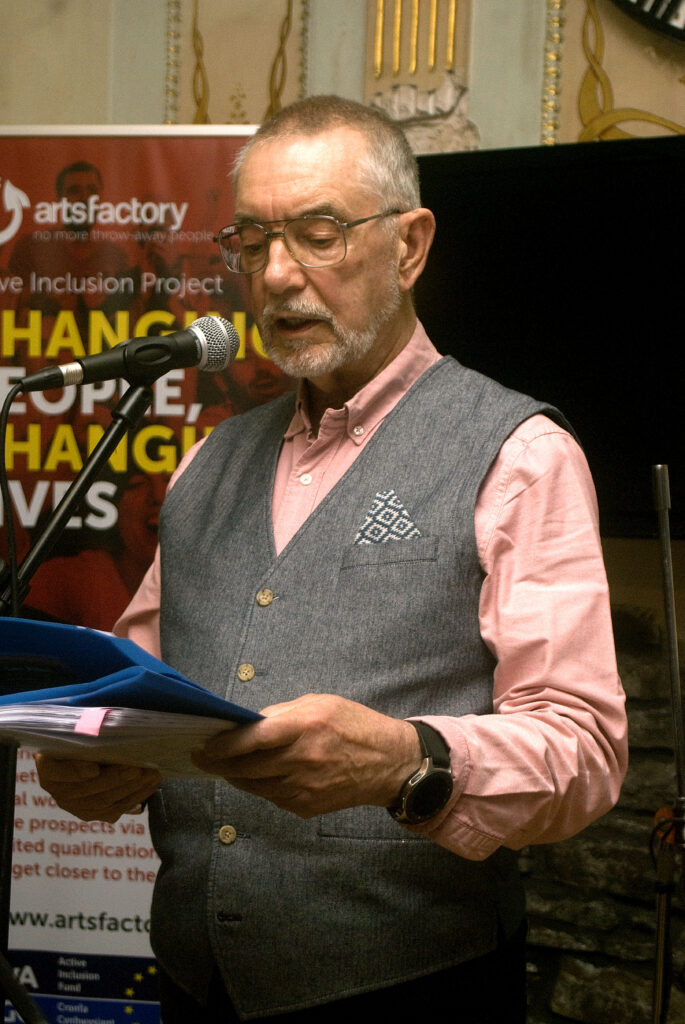
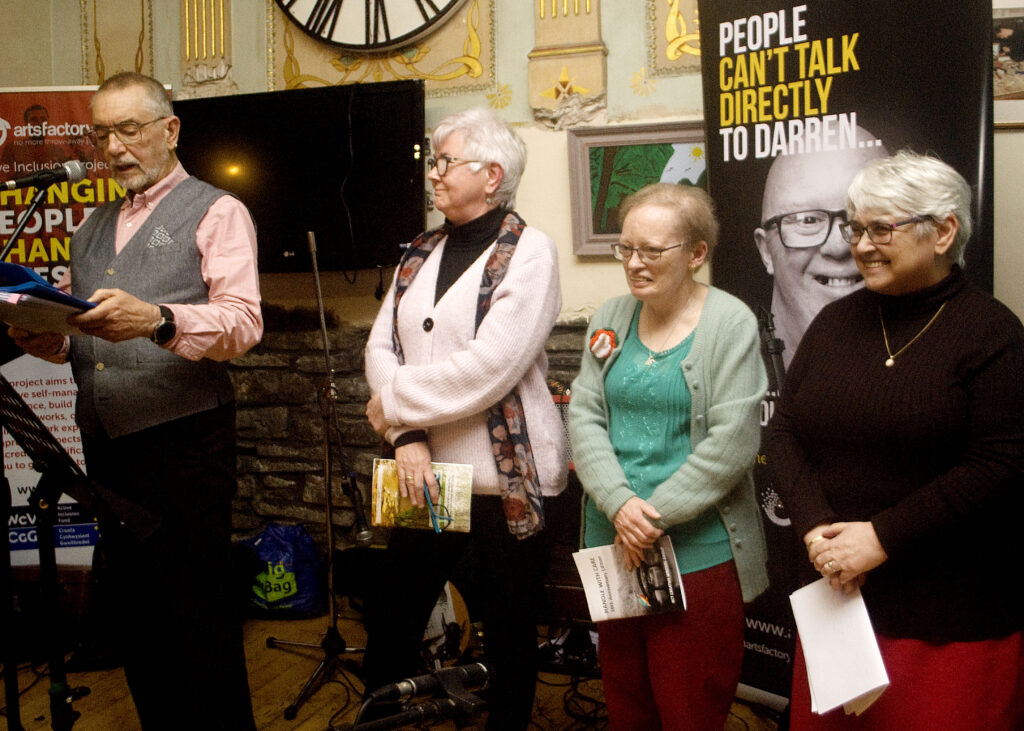
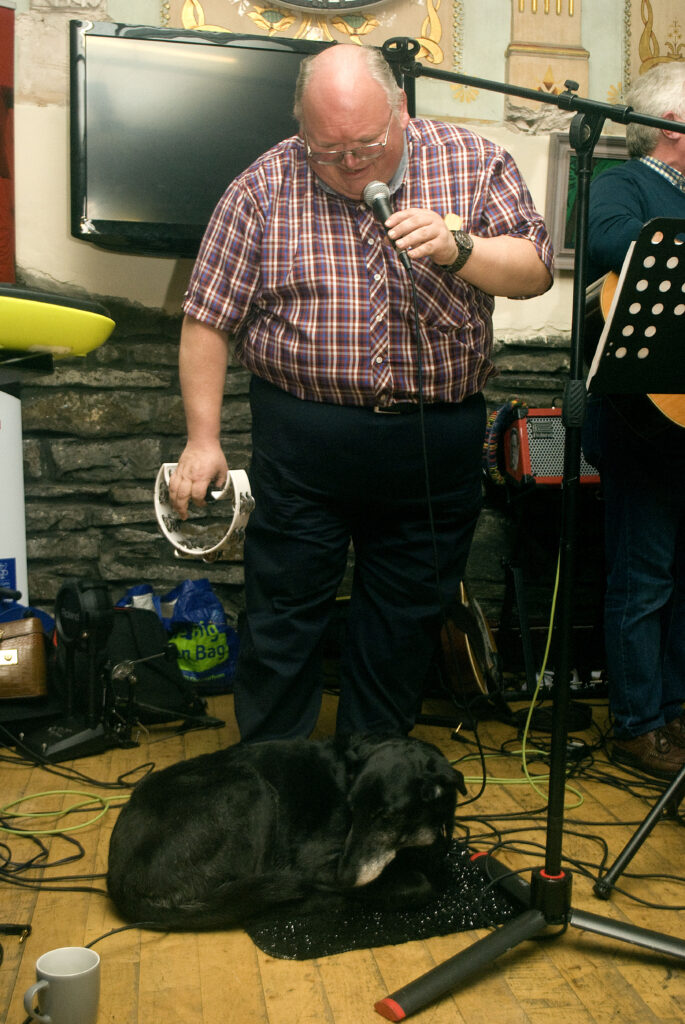
Les Allen, Linda Michele, Ann Davies and Anne Lord, who are members of the RCT Creative Writers Group, read selections from their 10th Anniversary publication “Handle with Care” ably supported by Members Jess Morgan, Gerhard Kress, Helen Probyn-Williams and Rachel Williams. Jakey (12), our favourite therapy dog was present to ensure that everyone was feeling safe and well.
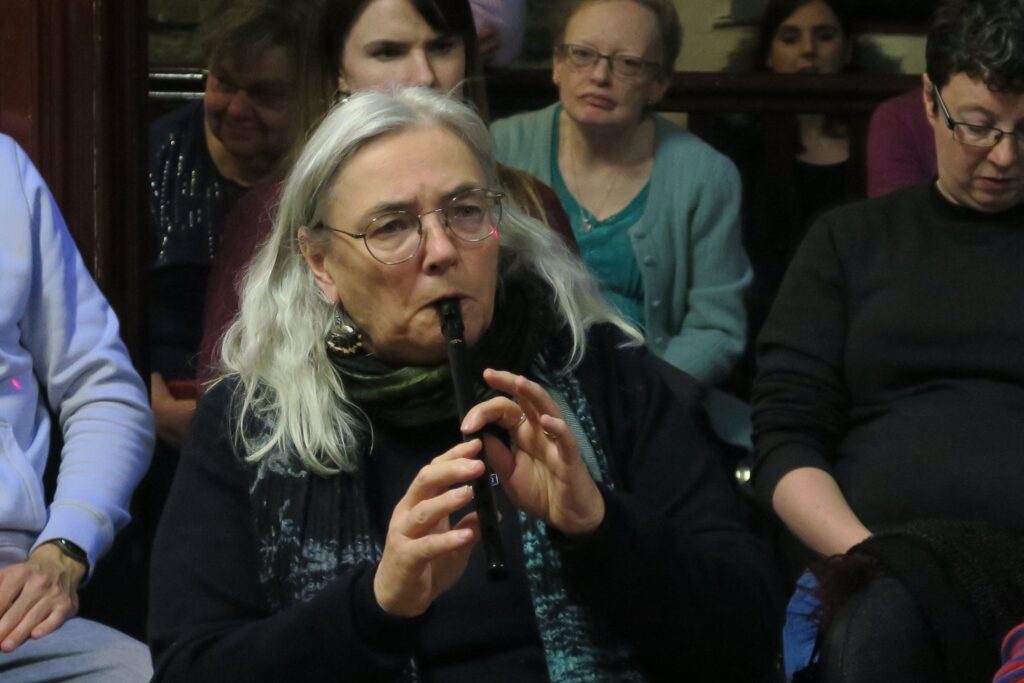
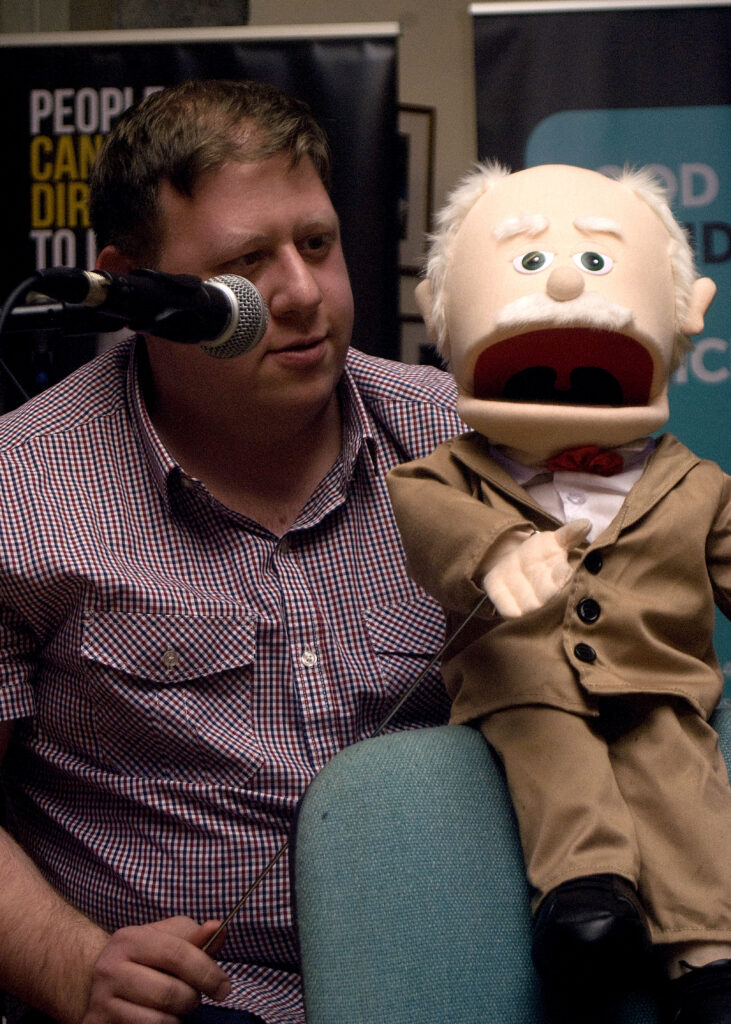
The interlude that followed included the results of the Raffle, closely followed by the Art Auction which had bids bouncing from every direction in the audience. The Open mic participation was offered to the audience as one of the young Avant Cymru dancers stepped forward to sing, closely followed by singer guitarist Lee Harvey from Aberdare. Talent can be found in quiet places as Josh and his “companion” dummy took up the Ventriloquist mantle for the night in a comedic conversation. The Bella Vista Coffee Club brought the house down with their jazz performance provided by Ann and Paul Hughes, Jim Barrett, Helen Probyn-Williams and Sally Churchill.
TimeLine a trio of local singers and musicians namely Nigel, Gary and Keith, opened the second half of the evening’s entertainment. Their songs were rich and melodious and the audience were soon joining in with the verses of the songs that brought back so many treasured memories.
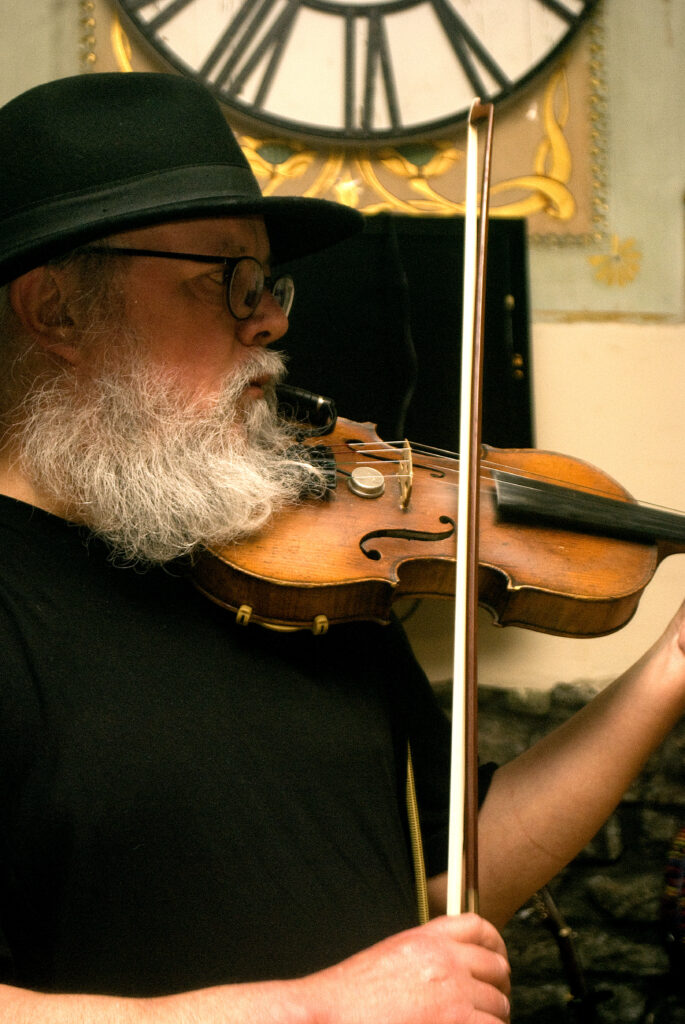
Tricycle, comprising of Gerhard Kress, Paul Rosser and Michael Morton brought the event to a close with the atmospheric musical sounds of a fiddle combined with guitars alongside their passionate lyrics.
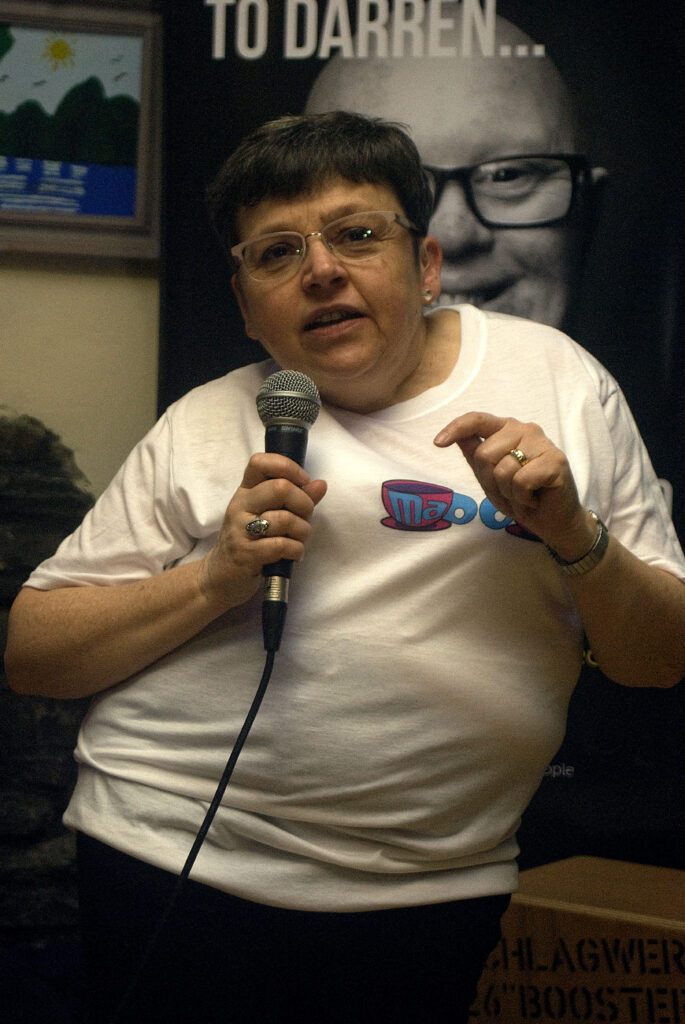
Louise Gaw, Project Coordinator for Changing People Changing Lives at the Arts Factory Ferndale introduced Sara Beer, South Wales Regional Officer of DAC (Disability Arts Cymru) to bring the evening to a close. Thanking all within the Arts Factory and DAC for their hard work in organising the event. Goody Bags were given to people as they left including items from DAC. Gifts were kindly donated by Francesca Kay the noted WordArt, Poet and Letter Press professional from Hay on Wye, who is a friend of RCT Creative Writers Group
I would like to personally extend my appreciation to all who responded to the request for participants and to RCT Creative Group Members who supported me in arranging this event giving their time and energy freely to provide a true Noson Llawen Merry Night to remember for those who attended.
We were all left with the memories of songs, music, dance, poetry and stories echoing the creative talent that is within the community.
Times have changed and we are now finding ourselves in an unprecedented situation.
WE are all the waves on the same sea, and at this moment we send each other a virtual hug with the message to stay safe and well.
MaDCaff maintains the talent of RCT.
With thanks and appreciation to Sara Beer and Volunteers of Disability Arts Cymru Louise Gaw and Volunteers of Arts Factory Ferndale RCT Creative Writers Group Members especially Anne Jess Les Gerhard Helen and Rachel not forgetting Jakey Carole Kratze Francesca Kay To photographers for their kind permission
Sara Mayo Gerhard Kress Anne Lord Jess Morgan Open Mic performers
Jamie Berry of Avant Cymru and dancers Jeff Japers for his Master of Ceremonies Gaudy OrdeNutz ‘n’ BoltzTimeLine Tricycle and for all who gave their support for this event to raise funds for Mental Health
National Dance Company Wales Dance Ambassador Angharad Harrop reflects on the challenges and creative activity she has developed during the Lockdown period.
Angharad is employed as one of the NDCWales, Welsh Priority Venue, Dance Ambassadors. This project is funded by The Foyle Foundation
NDCWales supports seven Welsh Priority Venues. Each Priority Venue has a Dance Ambassador who is local to the venue, knows the companies repertoire and has received specialist training. Their role is to support the public to access the work of NDCWales and keep year-round contact with its communities Wales wide.
Delivery is informed by the dance already happening in local areas. This model supports local communities to become audiences and participants. This helps with engaging more people in a broader range of dance but also to sustain and develop the dance sector in Wales as more people engage with the artform.
“Before the COVID-19 crisis came, I was working as a Dance Artist in schools, a Dance Ambassador with NDCWales and with community groups. Some work has been postponed, though much has continued.
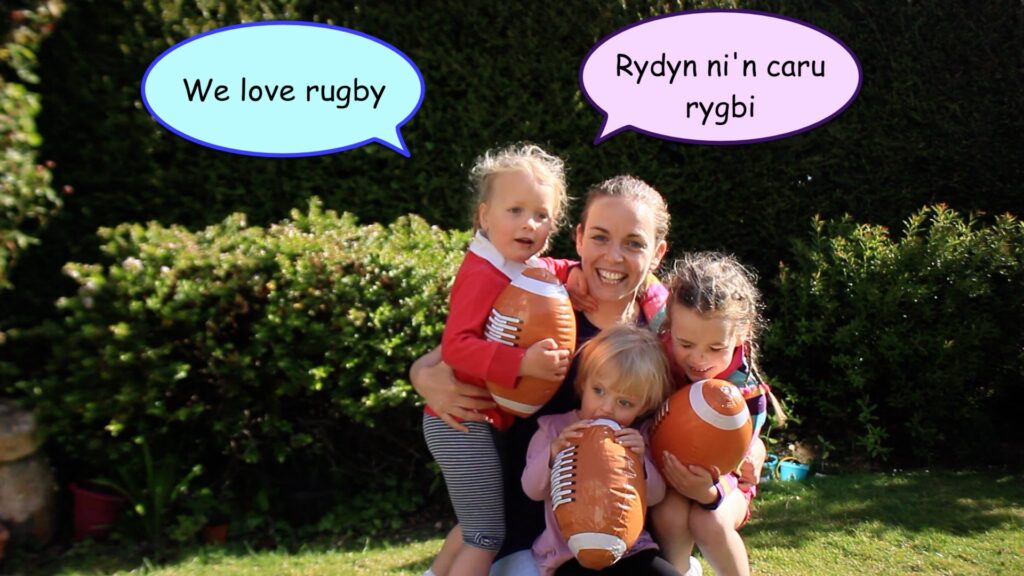
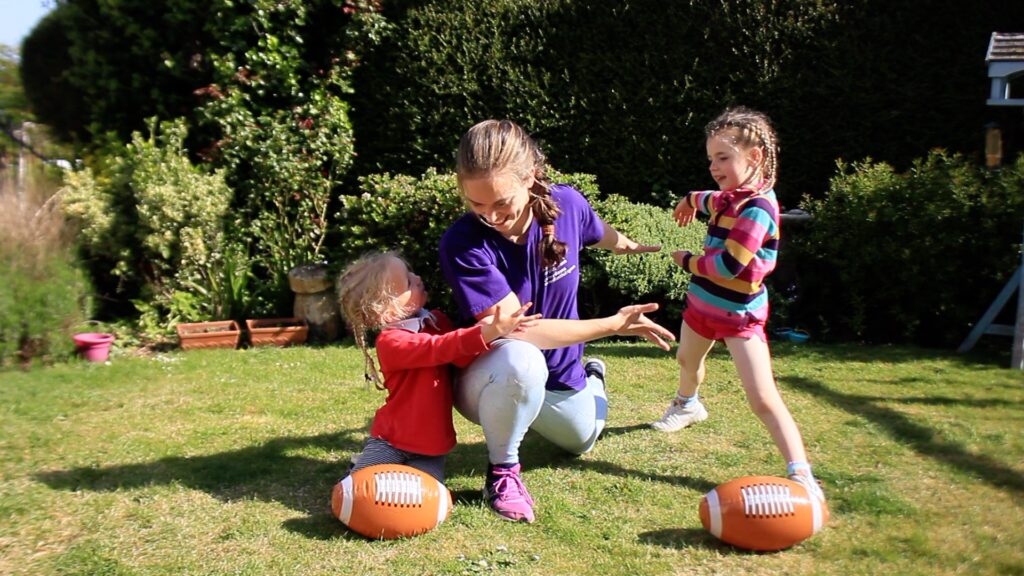
The projects that have continued have shifted into a digital space and are being shared, as best as possible, with the spirit of the live interaction and emphasis of community that drives the work – including NDCWales’ Rygbi education pack and Ribidirês – early years dance sessions supported by Pontio. I am fortunate to have young children, who love to move and use their imaginations, and a supportive husband. This has allowed us to collaborate as a family to create learning resources that engage both children and adults in dance that supports children’s education and development.
Creating videos in this way has allowed me to use my work to support the wellbeing of my family, with the exploration and learning of my children becoming the heart of the work. We have made some wonderful memories as a family from within our home, whilst supporting the learning and development of our children.
We have climbed through forests, flown to space and scored a try for Wales in a crowded stadium.
Our hope is that through working as a family, we can give confidence to other families to use movement and dance to support their health and wellbeing at this difficult time. Inspiring families to get lost in a journey into the unknown from their own homes, to discover the power of touch and to learn through fun.
Our hope is that through our work families can strengthen bonds and make magical memories, of meeting aliens and winning the Six Nations for Wales, and to allow themselves a minute to find the value in flying as freely as a butterfly, without a care in the world.”
More information on Angharad and her work is below.
Angharad is a Dance Artist working in North Wales. She has worked as a choreographer and dancer for companies such as Light, Ladd and Emberton, National Theatre Wales and Theatr Genedlaethol. She is co-director of Cymru:Brasil and intercultural performance company who create work inspired by Welsh and Brazilian culture. Angharad works across the community and within education delivering projects for companies including National Dance Company Wales (Dance Ambassador), Pontio at Galeri and Theatr Clwyd. Angharad has a passion for Dance in Early Years and through her company Ribidirês runs bilingual classes to encourage a love of the Welsh language from an early age.
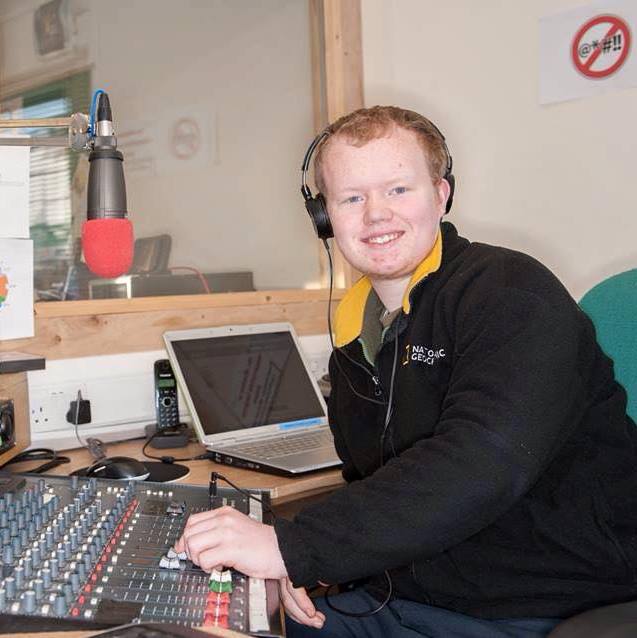
This post was written by Connor Strange. Connor is 24 years old from Ammanford in Carmarthenshire. He is originally from Wales but lived in England for about 4 years of his life, and is a former radio presenter from Eden FM Radio, a community radio station in Penrith, Cumbria. He now works in theatre & events as a freelance theatre technician & event crew.
He is also a champion & ambassador for the Time to Change Wales campaign. This has allowed him to gain new skills, meet new people and share his story of how stigma and discrimination has affected him in his life.
In this blog post he discusses the experiences he has had in radio, theatre & events over the past few years, and his experiences during the current Covid-19 (Coronavirus) outbreak.
Today in this blog, I thought it would be a good idea to share my experiences of volunteering in radio & events, my experiences in technical theatre and other things I have been a part of.
To understand my journey, I need to give some background to my story. I left school – Ysgol Dyffryn Aman in Ammanford back in 2011, and attended Coleg Sir Gar in 2012 studying Creative i-Media (Interactive Multimedia) – sound & video editing, flash animation etc.
I then left Wales for work reasons and moved to England in July of 2013 shortly after leaving college. I lived with my grandparents for a few months while I tried to find a place of my own. Unfortunately, I could not find much work until I stumbled upon the Prince’s Trust programme.
So during 2014, I was on the Prince’s Trust programme based out of Newton Rigg College just outside of Penrith, and as part of this programme I was required to do a work placement with a local organisation. I decided that I wanted to do my work placement with Eden FM Radio, a local community radio station serving Penrith & the Eden Valley. At the time they were broadcasting online, but shortly after OFCOM granted the station an FM frequency and licence.
It seemed like the perfect fit to me and so I asked the station manager if I could do a placement at the station. To my delight, Eden FM approved my request. I got the chance to do a variety of task ranging from production of programs, research for the sport programme & co-presenting alongside other presenters.
At the end of my placement, I was offered the chance to produce & present my very own show. To this day, I still can’t remember what I called it but never mind. It was the very first time I had ever presented live on the radio and was a surreal experience at the least. At the end of the show, I was offered the opportunity to come back and volunteer for Eden FM. So obviously I agreed, and went on to produce a number of shows including specialist shows like the Noughties Show & hosted Drivetime.
I am extremely thankful to the team at Eden FM Radio for allowing me to volunteer at their station. They supported me in developing my skills in presenting, and producing shows of a high calibre, which still serves me well to this very day. I wish them the absolute best. The station has gone on to be a successful station serving their local community with music, traffic and travel information, informing the public about local events and so much more. They are a shining example of local community radio in the North West of England.
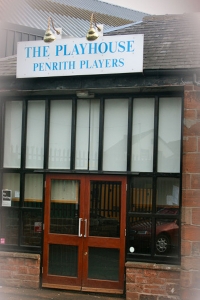
During my time living in Penrith, I also volunteered at Penrith Players. Penrith Playhouse is the only permanent, member run theatre in Penrith, and rely on volunteers to run the venue. I supported one of their productions, Blackadder Goes Forth, as a member of the Stage Crew moving set pieces & elements onto and off stage. This was my first experience of working backstage & supporting a production. It got me thinking about my future aspirations, what I wanted to do with my life, and I decided that I wanted to work in some part of the creative industries. I am thankful to Penrith Players for the experience, as it gave me a real insight into productions and the amount of work that is put into making a play a reality.
In 2017, I decided to move back to Wales and volunteered with a local theatre company to build up some experience in technical theatre. I built up experience in sound, lighting & stage management having worked on 2 successful productions as lighting desk operator and assistant stage manager. The experiences have served me well to help build up a portfolio of work.
Over the last couple of years, I have volunteered with Time to Change Wales. This is the first national campaign to end the stigma and discrimination faced by people with mental health problems. As someone who has mental health problems, and has faced stigma and discrimination, I felt that it was the right thing to speak out about my experiences.
As a result of volunteering I have had the opportunity to deliver anti-stigma talks at organisations and groups across South Wales, including at the Suicide and Self Harm Prevention Workshop organised by Public Health Wales in Swansea. In addition, I have spoken at Singleton Hospital, YMCA Swansea and Cardiff University. I have also spoken on a BBC Wales Live programme about my experiences of being bullied and discriminated against.
I have also taken the time to engage in interests that suit me. In 2019, I volunteered at Swansea Pride as a Parade Volunteer supporting the event. Also, I had the opportunity to volunteer at the Insomnia Gaming Festival in Birmingham, one of the biggest gaming events in the country, featuring major YouTubers such as Call Me Kevin, WillNe etc.
It was during Swansea Pride that I met Mark & Nia Jermin from Jermin Productions. I started talking to them about my interest in technical theatre & other aspects of the industry. I got in contact a couple of months later and asked if there were any openings on any upcoming productions. I thought that it would be a long shot, but my patience paid off. In November 2019, I was given the opportunity to work on Jermin Productions’ Cinderella South Wales Tour as a Follow Spot Operator & Swing Technician.
Basically to sum up, a Follow Spot Operator is someone that operates a light called a Follow Spot (used to follow key cast members on stage). A Swing Technician is someone that works across all areas of the production & supports the different areas e.g. stage management, set building, pyrotechnics etc.
Looking back to when I was going through school & college, I don’t think I would ever have had the confidence to have been part of such a major touring production. I am forever grateful to Jermin Productions for giving me that opportunity, which has led on to exciting projects, which at some point I will come around to working on. Unfortunately, due to the current Coronavirus outbreak those projects have had to be put on hold for the foreseeable future.
I wrote a blog post about my experiences of working on Cinderella for Jermin Productions which you can find here
Keeping myself motivated throughout the current Covid-19 outbreak has been a monumental task, something that I found exceedingly difficult. This crisis has definitely taken a toll on me personally, having lost 4 months’ worth of work in the blink of an eye, losing a friend to the virus and feeling exceedingly anxious about the current situation. But, despite the situation, I have been keeping myself busy. I am forever grateful to the work that key workers from every industry are doing to keep our nation running, especially through an unprecedented time in our country’s history. From NHS workers to carers, police officers to supermarket workers. The list goes on. Thank you to everyone. Theatres & technicians will come back, actors & actresses will rise up and act again, and everyone from every area of the arts & entertainment industry will come back to give amazing performances. Until the time comes when this virus goes, I will carry on keeping myself positive and busy.
To finish up, I am grateful once more to the following companies & organisations for their support and helping me to develop as a person:
Eden FM Radio – for giving me my first chance in radio. Special thanks to Lee Quinn, Martin Cowin, Ben France & Andy Neen. Also special thanks to Zoe Badder for all your help and letting me shadow you on your shows.
Penrith Players – for giving me my first voluntary opportunity in technical theatre
Get The Chance – for featuring my blogs. Special thanks to Guy for always believing in me.
Jermin Productions – for giving me my first paid opportunity on Cinderella, special thanks to:
Mark Jermin – Director
Nia Jermin – Director
Ollie Gordon-Rump – Lighting Supervisor
Mark Jones – Production Manager
Grace Bilsborough – Deputy Stage Manager
Luke Jones – my fellow partner in crime (Second Follow Spot Operator)
Every cast & crew member on the production, too many names to write down
I hope to work with Jermin Productions on their next production – Beauty and the Beast, hopefully coming this Winter 2020 conditions permitting.
Thank you for reading my blog and hope that it has given you an insight into my life & why I carry on volunteering.
I hope you all stay safe and well and remember to stay home during this crisis & protect our beloved National Health Service.
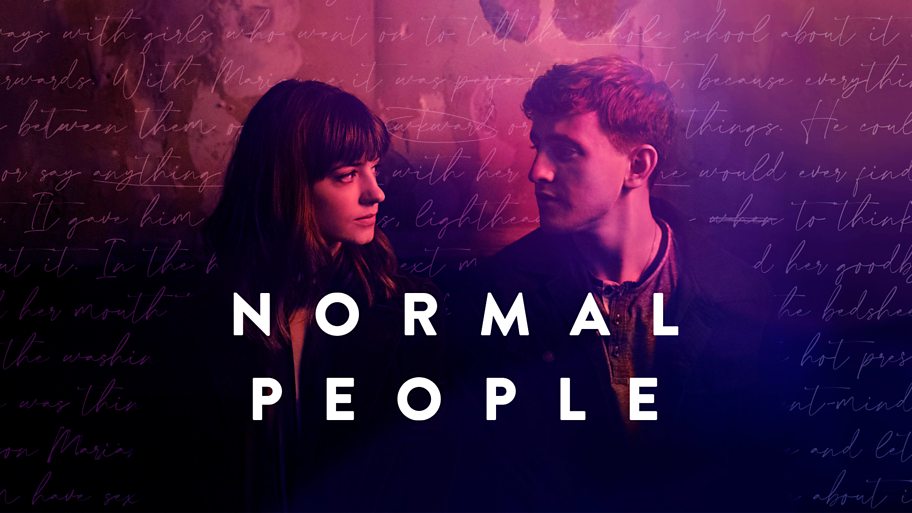
Normal People, written by Sally Rooney, Alice Birch and Mark O’Rowe and directed by Lenny Abrahamson and Hettie McDonald is based on the novel by Sally Rooney and stars Daisy Edgar-Jones and Paul Mescal.
I came to this with no knowledge of the book and for that I am grateful; some of the finest qualities of this drama are in the screenplay, direction and, above all, in the acting, and, whatever the qualities of the novel, this is a piece of art in its own right and should be judged as such.
The characters played by Edgar-Jones and Paul Mescal are Connell and Marianne. The story begins with them in their last year of High School in County Sligo in the Republic of Ireland and follows them in twelve short episodes through the end of Sixth Form and on through their undergraduate years at Trinity, Dublin.
Psychologists and our own experience teaches us that what we go through at this time in our lives identifies us for ourselves – we always see ourselves, in some sense, as what we were then, as our life is at its most intense for us. The music, the art, the sport and above all the relationships experienced at this time, we come to think of as ‘our time’, ‘our era’.
It is this quality which drives not the narrative but the emotional landscape of this superb drama. There is an unerring touch with the writing, editing and the resulting atmosphere of this piece which makes us feel intensely for Connell and Marianne as they stumble into and through their love.
There are a number of likeable and quite well-drawn characters in this piece; Connell’s mother, played beautifully and with real restraint by the gorgeous Sarah Greene is the most notable of the supporting cast – but support is all they ever really are. You can draw each figure with a sentence as they never matter for themselves, only for the way in which they impact upon Marianne and Connell. Marianne’s mother and brother clearly impact her life horribly, but it is the impact on her only which is allowed to interest us. They cannot be allowed to take our eye off the ball by mattering in and of themselves. The awful death of Connell’s school friend is a central trope which is explored in depth, but we don’t know the boy or care for him, we know Connell and watch him experience his grief. Similarly, the ghastly boyfriend of Marianne’s is little more than a cipher to show us more of Marianne herself and of Connell. There is great discipline in the screen writing which never allows us to shift our focus or interest away from our real subject.
The work is intensely claustrophobic; we are almost suffocated by the script and the camerawork; we feel voyeuristic and deeply uncomfortable at being present for such private moments, which are handled beautifully and with the surest of touches throughout. There’s an awful lot of sex. Thankfully, it is almost always between Connell and Marianne – Edgar-Jones and Mescal got to know one another very well, without a doubt. In a world were sex for young people can become so commoditised and influenced by pornography, the simple, tender, naïve couplings of these two youngsters is quite lovely.
There are funny moments, deeply touching moments and an awful lot of dreadfully sad moments. It was a fine decision to keep episodes so short – we could let ourselves breath after half an hour and feel some measure of relief that it was over, then long for the next episode to begin.
In watching Connell and Marianne we watch ourselves. That, I think, is the most wonderful thing about this drama – the way in which it takes us to that time in our own lives. The quality of the work delivers emotions which are raw in the extreme and our late teenage and early twenties lives come roaring back at us like the Sligo waves.
Film and television acting is, by necessity, a very technical thing; making something so convincing, so visceral, so raw and so real then is a huge achievement. This is work of the very highest order and for those of us who shared Marianne and Connell’s journey, it will stay with us for some time.
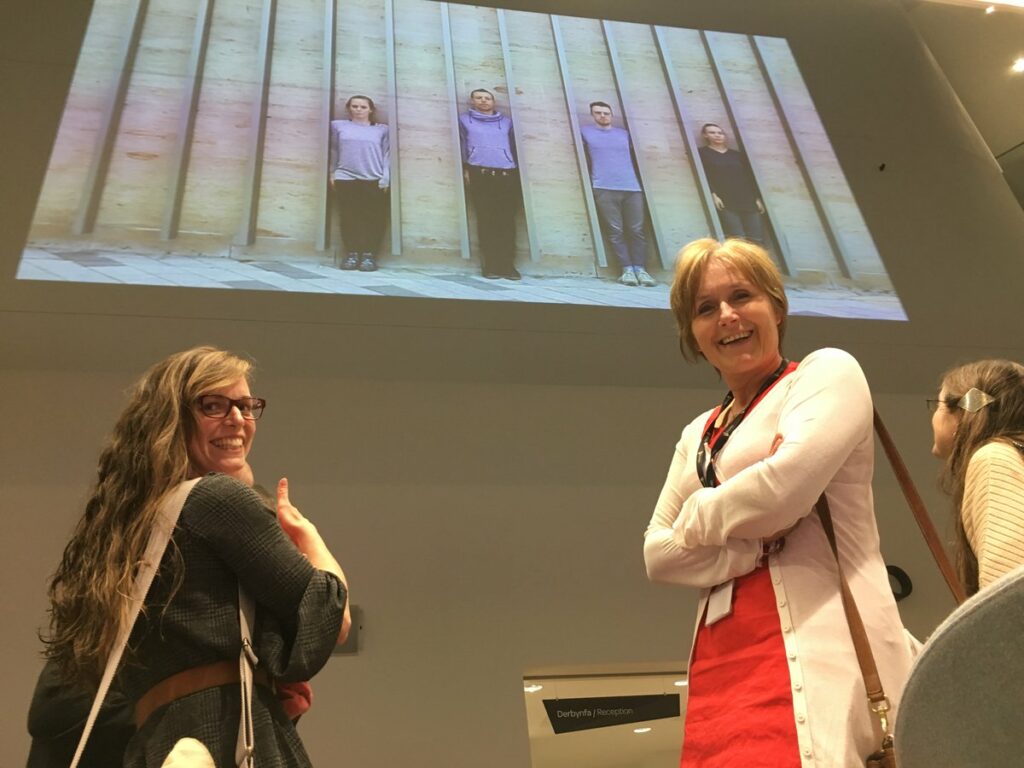
This piece choreographed by Alexandra Waiestall uses a structured improvisation for its’ choreography and was a part of National Dance Company Wales’ Kin tour. Unfortunately, due to current circumstances, the tour was drawn to a sudden halt. Therefore, in response to this, NDC Wales performed this piece via live stream, for audiences to watch from the safety of their own homes.
Alexandra Waiestall
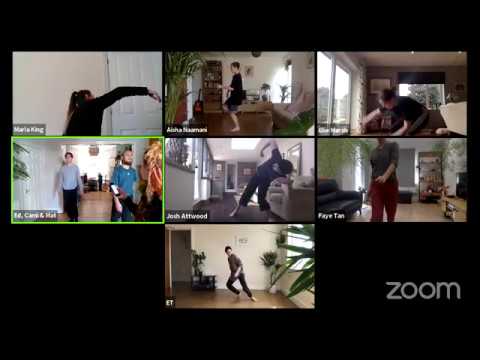
The screen was filled with seven boxes, each with one or a couple of dancers inside of them. With each of the ten dancers streaming from their homes, it allowed us as the audience to see into their worlds and connect with them as people and not solely performers.
It began with the speaking of a script, which in turn the dancers used as a set of instructions to aid the creation of their movement. These instructions provided context for the dancers’ making and provided clear connections within the movements between the dancers. Therefore, although they were each moving in their own isolation, they were connected as one. Even those who were performing in the same, shared space as others seemed separate and isolated from one and another. Occasionally, yes, they would enter each- others’ bubbles but it was not this direct communication that connected those in the shared space but again this more prominent connection through intention.
The point of focus flickers between the dancers themselves, their movements, and their views of their surroundings. We as an audience are with them, seeing what they see and engaging with the stimuli that is determining their movement. Each performer has their own understanding of the text given, with moments of pause and breath throughout. The dancers continue to move in and out of frame, reminding us that we are only seeing one perspective of each dancer, even though we are seeing seven different perspectives of the performance.
The introduction of the use of phones and torches brings a shift to the piece. We seem less focussed on the performers and more so the effects of this new dimension within the piece. They begin to interfere and although enhancing the performance, make me question the duality of how this relates to daily life. The dancers shift in their movement quality, and so does their intention and focus. Due to this we acknowledge a shift in our perception and question if we become the ones being filmed, or is it in fact that they are really filming each other? We change how we once saw the screen and question how we see through a lens as compared to before, and is this any different to how we previously watched the first part through our screens at home?
Such phrases stick with me from the text, such as, the “Electricity goes off”. The dancers would join in silence and stillness until the text spoke of it turning “on”, moving once again as the music returns. Another phrase being that of the reference to a “blue sky”. The dancers, although independently of thought, turned their attention to their external senses, prioritising their sight or the sensation of the light on their skin. Many showed us where they could see the outside, usually through a window and continued to move towards that reflection. This journey of visualisation showed us how each perspective of each performer although distinctly different was connected to each other and how their independent decision making often led to similar ideologies.
The score itself provides detail whilst still allowing space for thought and creativity. I would love to play with the score and test how my own methods for improvisation would be similar/ different to those for the company dancers. And how connected, I would feel to them through this one piece of text.
The piece seemed extremely relevant and pressing to our mutual experiences of lockdown. How can we continue to connect to one and another through technology but focus on how we can achieve this with real substance in a way that replaces human touch? Also, how do we see our surroundings, and do we take advantage of them by the misuse of technology in our daily lives?
Overall, it is wonderful that NDCWales shared this piece with us in an alternate format and it is even more wonderful that it was live and not just an online screening. It gave connectivity to an audience in a way in which a usual theatre setting cannot achieve and really provided a platform in which improvised work, that relies so heavily on inter-personal connections, can continue to grow.
Theatre in lockdown: amidst this unsettling period for the arts, writer Tracy Harris and the Royal Welsh College of Music & Drama’s acting graduates bring original and pioneering theatre into our homes.
Picture the scene. It is 2018, two years prior to the pandemic. I am at a lively Gate Theatre in Notting Hill, having just watched a number of brilliantly talented RWCMD acting graduates perform a collection of new writing. Fast forward two years later and the setting is somewhat different. I am sat on my bed; dinner at the ready and eyes fixated on my laptop screen. I am watching eight of the 2020 acting graduates perform in the same new writing festival but this time the stage takes the form of their own homes. What clearly hasn’t changed under this unusual setting is RWCMD’s ability to produce some of the country’s best acting talent, as well as the Welsh conservatoire’s determination to produce new and innovative ways of storytelling.
Set on an online rehab course spanning ten weeks, Ripples sees eight strangers all suffering with some form of addiction confront the traumas of their past and recount these experiences to the group. Tracy Harris deals with the difficult topic of addiction with great sensitivity, giving way for sprinkles of humour as well as hope. Originally meant for the Sherman Theatre’s stage, the play’s adaptation for screen is innovative and wholly original. The weekly sessions take the form of a ‘Zoom’ meeting, and participants join from their respective rooms in the rehabilitation centre.
Without revealing too much, we see some wonderful creativity in the staging of the production. Matthew Holmquist’s sure direction not only allows the play to run smoothly, but the impeccable timing of individuals joining and exiting scenes (or their Zoom meeting) really plays into the ‘liveness’ of this event. Describing the performance as a ‘play-reading’ would serve to disparage the care put into creating this albeit virtual but very real narrative space. Holmquist’s clear direction, paired with tactful performances from his cast allows the audience to empathise with, and become wrapped-up in the characters’ stories. Ripples proves that it is possible to make high-quality theatre under these current constraints, with the immersive tech surprisingly running with ease, as though the play was in fact made for this digital setting. There is no doubt that Matthew Holmquist’s work with The Other Room, Cardiff, has made him the perfect fit for breathing lively and engaging narrative into such small, confined theatre spaces.
The creative team behind Ripples has produced a piece that sets a leading example to other theatres and theatre companies worldwide. They have proven that during these unprecedented times, Wales can still be a frontrunner in the world of new writing, standing shoulder to shoulder with its inspiring work in the ‘real world’.
National Theatre Wales and Sherman Theatre will work together with a range of independent companies and artists to produce play readings, showcasing the talent of playwrights, companies and creatives across Wales.
The partnership will enable Welsh directors, actors, and designers to be fully supported and funded to deliver the readings, while providing a platform to share homegrown work, alongside contemporary classic titles that may yet to have been performed here in Wales.
The perfect balance of accessibility and enchantment, Carmen
provides an in-between of West-end theatrics and operatic skill.
Carmen is one of the more renowned operas and this rendition
from the Welsh National Opera has been immensely popular, bringing it back for
their spring season. Unlike other opera’s I’ve seen, not all the text used was sung
but there was a split between spoken moments and song. This blend of
familiarity meant that Carmen provided an easily accessible route into opera,
especially for those that are already used to seeing musical productions. Carmen
bared various resemblances to musicals I’ve seen prior such as Miss Saigon;
this was both in setting and the dynamics throughout the show. Therefore, there
was more breath and pause from the mixture of song and text which meant that as
a whole, the opera felt much shorter to the audience watching (which I’m sure
we know from the Harry Potter films is extremely important).
Throughout the whole of the piece, the ensemble were extremely
invested in their own roles and their individual plots within the piece. This
gave substance to the main storyline and the audience could easily follow that
throughout. The children were incredible, taking their roles with maturity and
giving true investment into their parts. My only criticism, being that you
could notice when they were waiting for prompts which is no fault of their own
but due to a lesser understanding and experience of improvising to fill the
time.
It was the moments in which the focus was on the ensemble
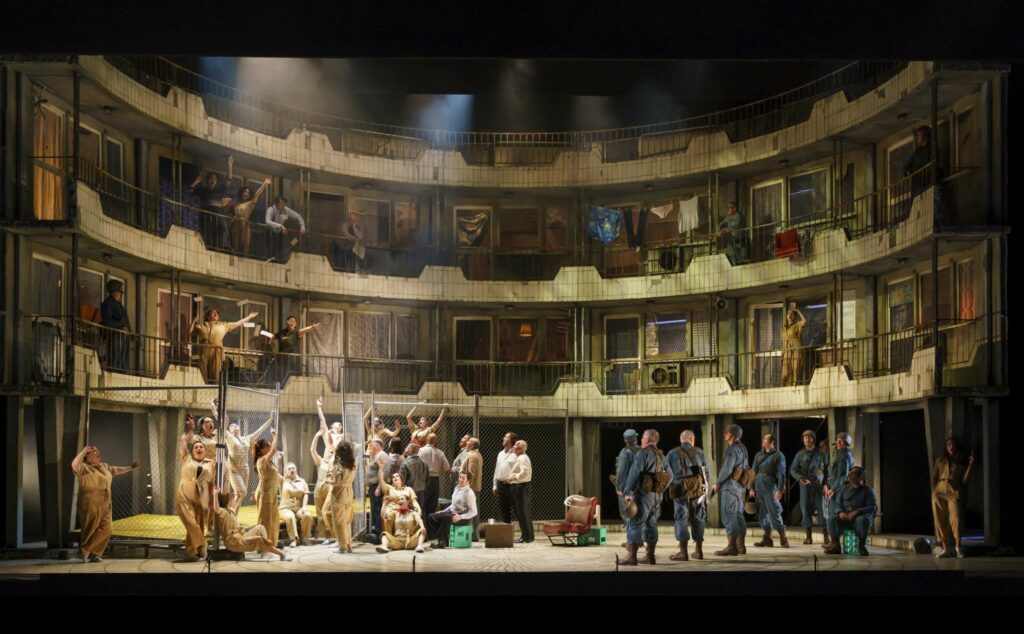
that stay with me from the performance. Examples being: The children, mocking
the guards in their barracks, bringing a whirlwind of my life and joy to the
stage, The women from the tobacco factory, with their relentless desire and allure,
The gun smuggling scene, hiding weapons within various props and what you saw
was completely different to that of the person sat next to you due to the
variety and depth of what was occurring on stage, And finally, the
light-hearted scene outside of the bullring, with street vendors and people
haggling for refreshments.
The use of sound coming from the stage during these moments
were wonderful. There were made by the ensemble to accompany the orchestra and
added a sense of true passion coming from the performers. When they stamped
stools, clapped and slapped their body parts, the full stage came alive
radiating towards the audience.
I found the main characters struggled with their realism,
especially within moments of intimacy. When Carmen kisses Jose, the kiss feels
distant as the characters aren’t close enough, I almost desired a real kiss to
fulfil those moments. It seems to be these moments between Jose and Carmen that
lacked their depth, another example being when Carmen hits Jose with a towel
but does it so softly that the anger doesn’t seep through in the way intended.
In opposition to this, Escamillo embodies his character wonderfully, portraying
himself in such a way that the audience dislikes his arrogance. However,
physically, when posing and using stronger gestures, he needed to be more over
the top and exaggerated to really stay true to his characters’ aurora.
There were moments of confusion throughout the piece for the
audience, especially in regards as to what was being sang by whom. The subtitles
didn’t repeat, even when a character did. Also, when two characters were
singing a call and response section, this failed due to them both singing both
parts combined with the lack of captions above. In order to fix the problems
within the call and response between characters, it could require something as
simple as just spatial re-alignment. By moving the characters to different
parts of the stage, the audience would be forced to look from character to
character and therefore, from one side to the other which would ensure the
audience understands the conversations being had.
To conclude, I think Carmen is the perfect gateway between a
musical and an opera. With song, dance and text, the audience is immersed
throughout the performance and is moved alongside the storyline with the
characters. However, I feel this rendition needed more work with the small
details, those that change a performance into excellence. By working on the
physicality of the main characters and fine tuning on key moments, the whole
storyline would become easier to follow to the audience.
Creating opportunities for a diverse range of people to experience and respond to sport, arts, culture and live events. / Lleisiau amrywiol o Gymru yn ymateb i'r celfyddydau a digwyddiadau byw



 (4 / 5)