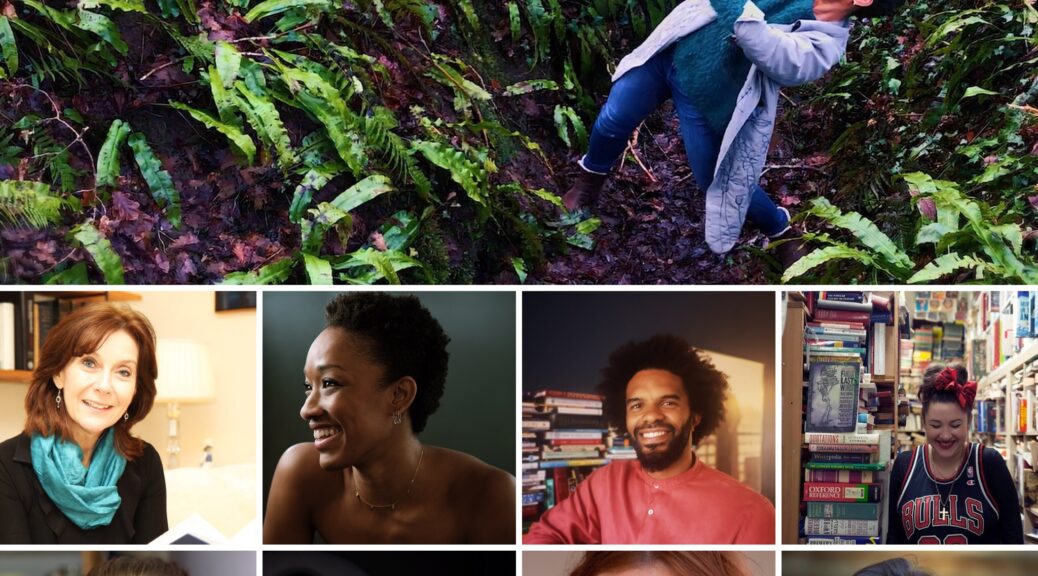
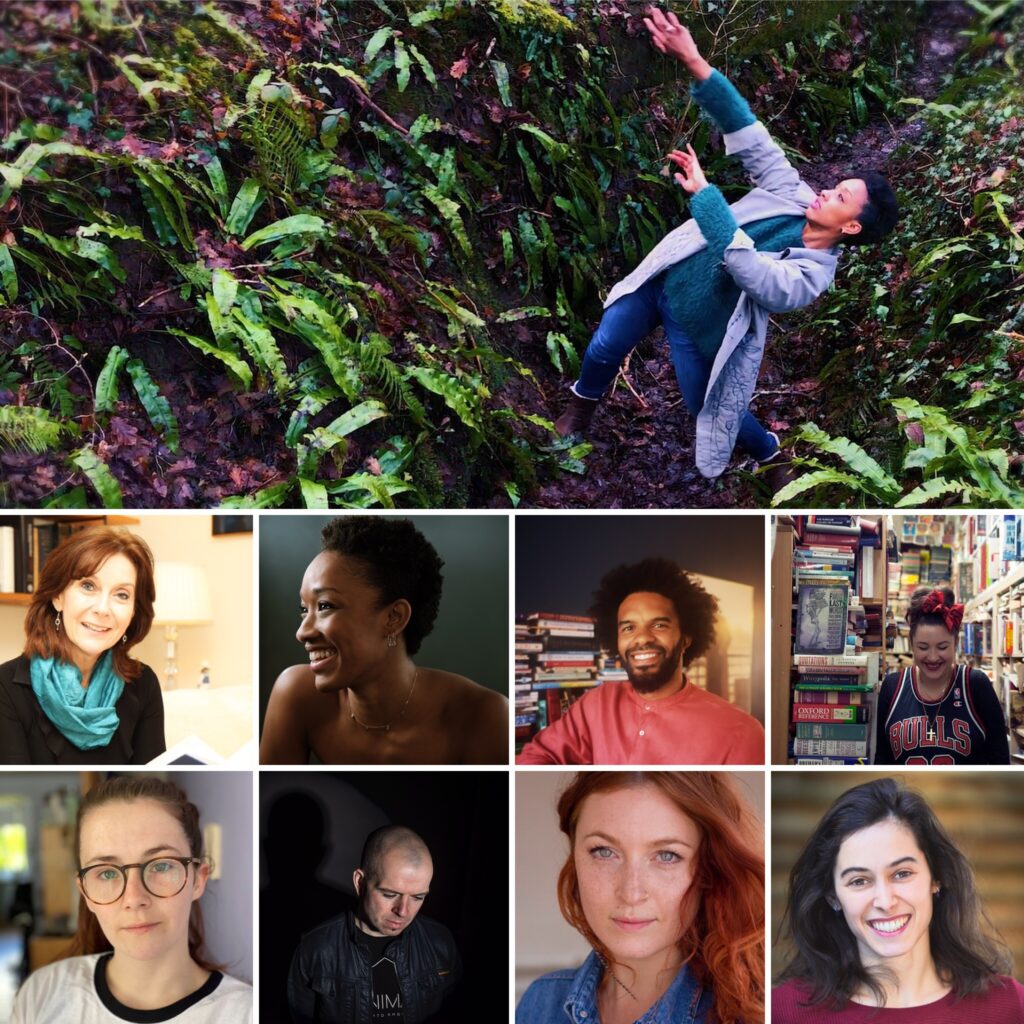
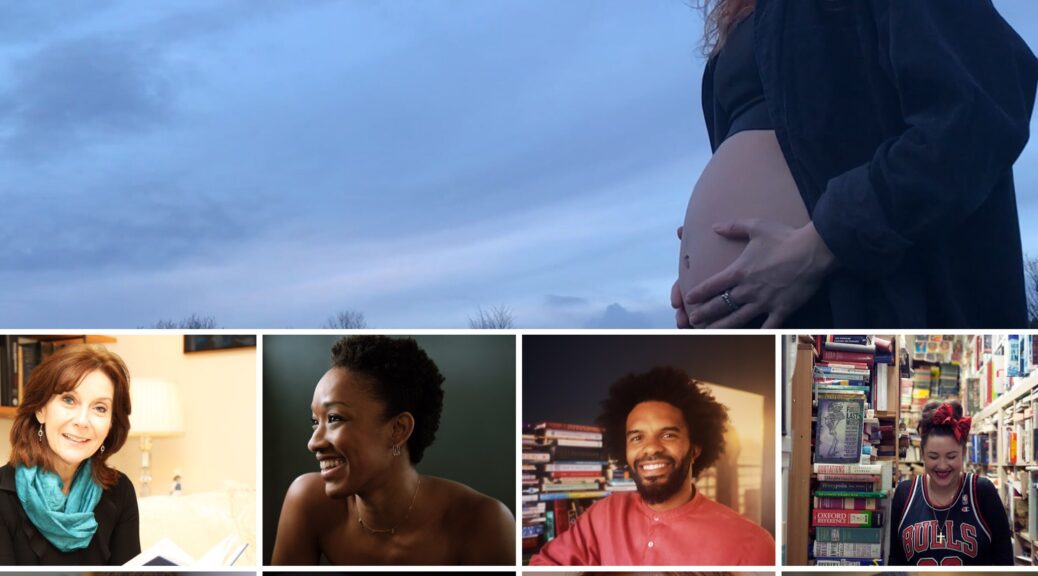
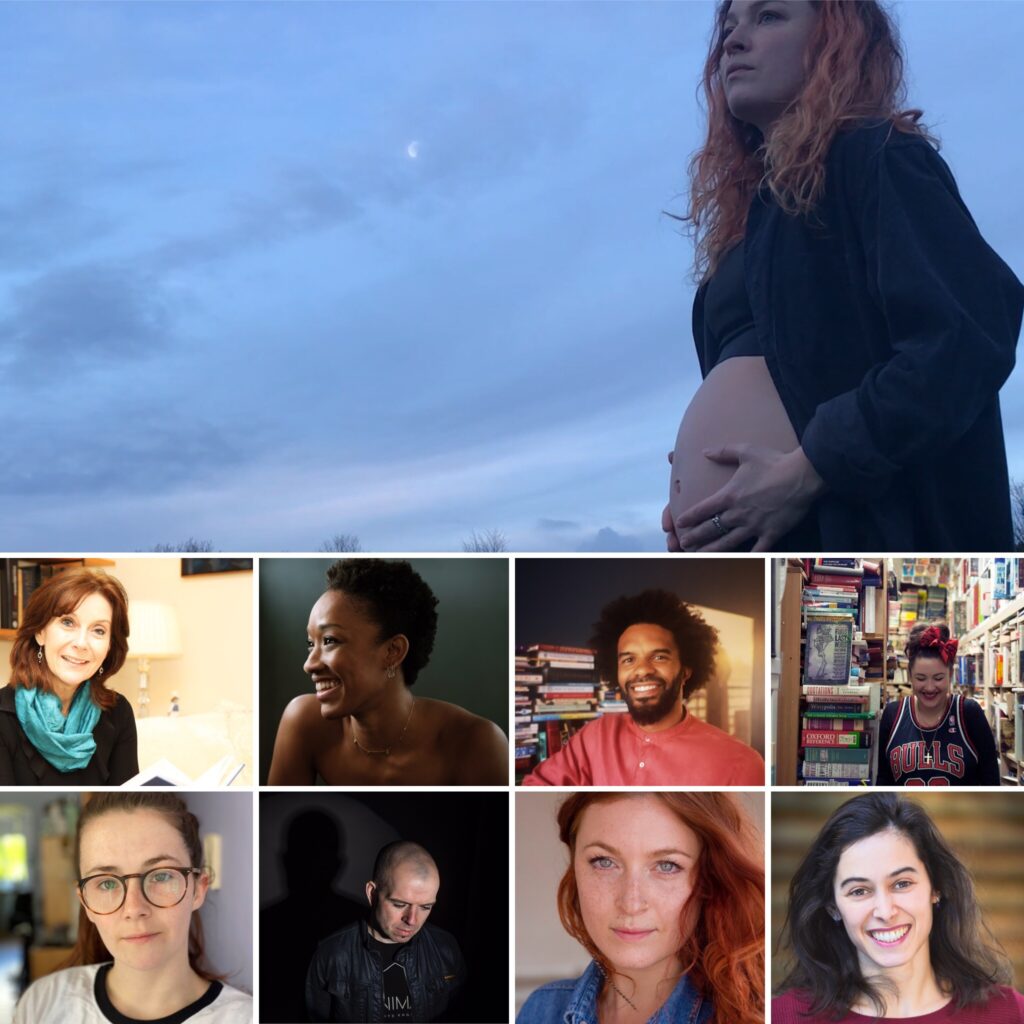
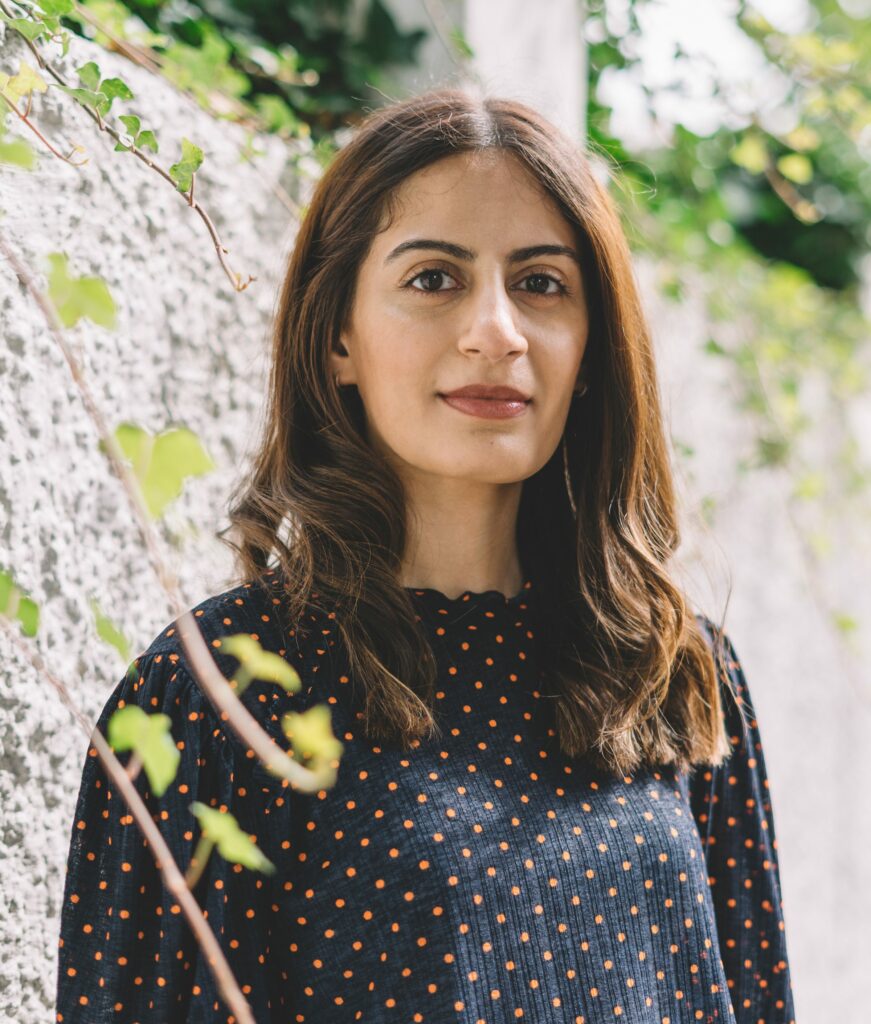
Bydd tair ffilm yn cael eu rhyddhau ym mis Mawrth fel rhan o Plethu/Weave #2, cydweithrediad traws gelfyddyd ddigidol Cwmni Dawns Cenedlaethol Cymru (CDCCyrmru) a Llenyddiaeth Cymru, a fydd yn cynnwys yr ail o dri chomisiwn arbennig fel rhan o flwyddyn Cymru yn yr Almaen.
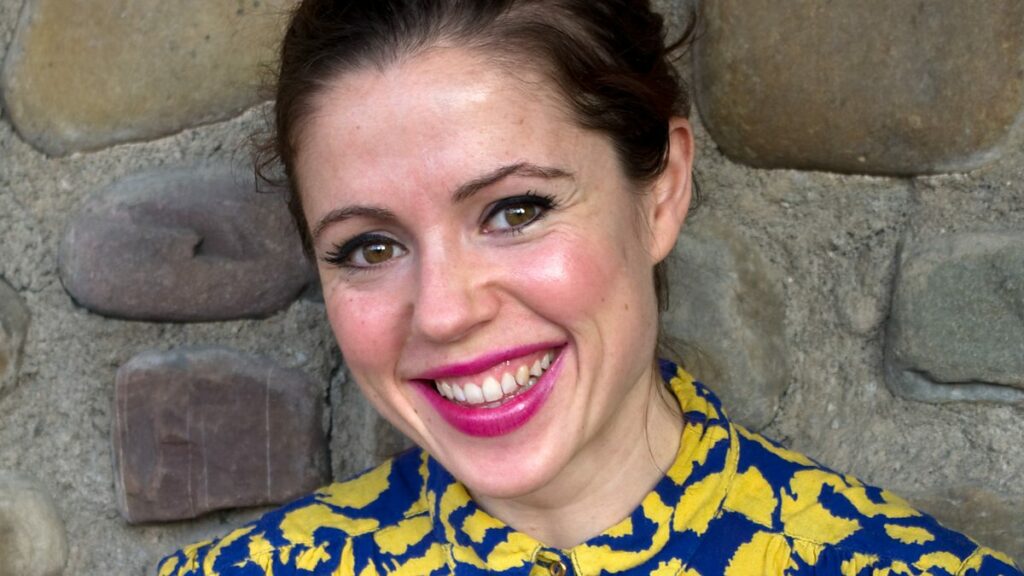
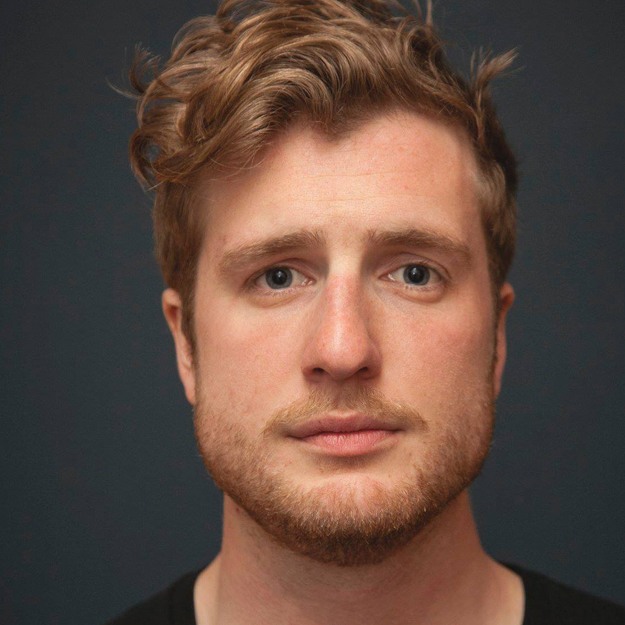
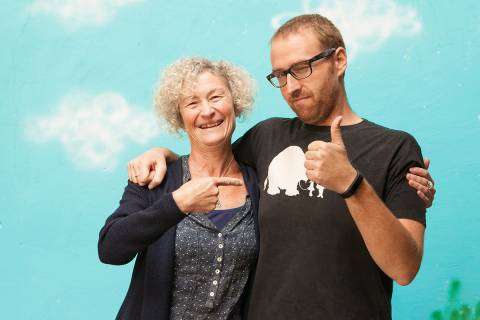
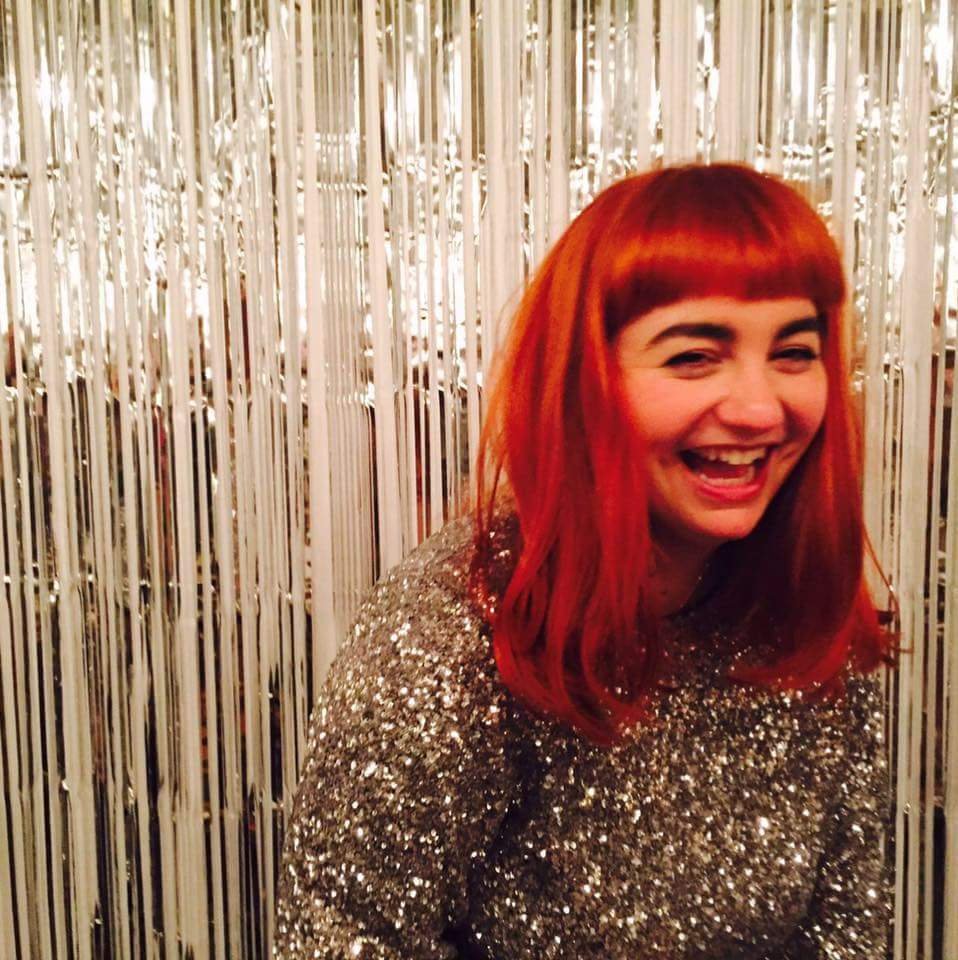
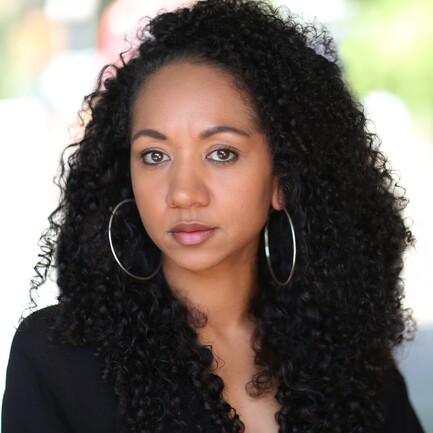
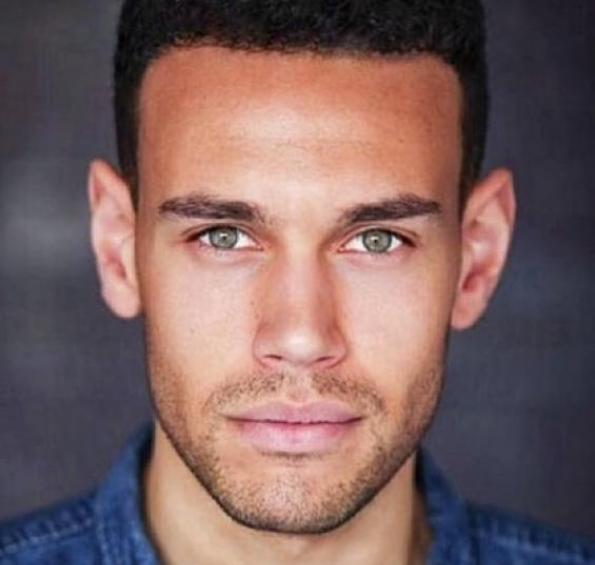
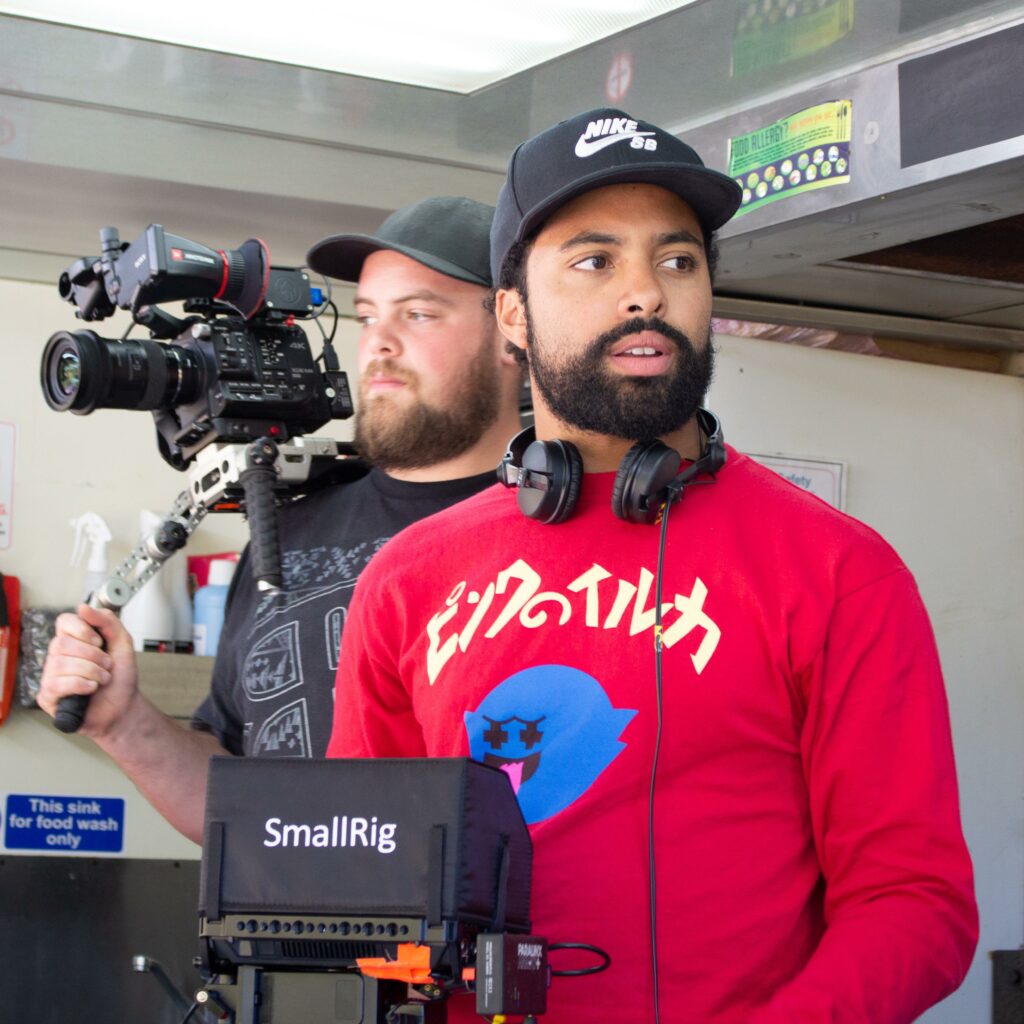
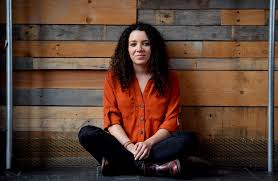
Gan asio rhai o leisiau mwyaf cyffrous Cymru, mae’r artistiaid dawns Krystal Lowe, Camille Giraudeau ac Elan Elidyr wedi cael eu paru gydag awduron, beirdd ac arloeswyr Hip-Hop – Alex Wharton, Rufus Mufasa ac Ed Holden i greu tair ffilm fer ddigidol ar gyfer cynulleidfaoedd ar-lein.
Yn 2021 bydd Plethu/Weave #2, cydweithrediad traws gelfyddyd CDCCymru a Llenyddiaeth Cymru, yn dwyn ynghyd wyth o ddawnswyr annibynnol eraill o Gymru a’u paru gyda rhai o feirdd mwyaf talentog Cymru. Mae rhai o’r creadigaethau dros y flwyddyn ddiwethaf wedi’u hysbrydoli gan straeon, lleoliad, treftadaeth a chysylltiad yr artistiaid eu hunain â Chymru.
Rhyddhawyd y ffilm gyntaf o gyfres Plethu/Weave #2, Aber Bach, a grëwyd gan Y Prifardd Mererid Hopwood a dawnsiwr CDCCymru, Elena Sgarbi, ym mis Ionawr fel rhan o lansiad blwyddyn Cymru yn yr Almaen Llywodraeth Cymru.
Bydd ail gomisiwn Cymru yn yr Almaen Plethu/Weave #2 yn gywaith rhwng yr awdur, bardd a’r bardd plant o Dorfaen, Alex Wharton, a’r dawnsiwr, coreograffydd a’r awdur Krystal Lowe. Mae Pethau Gwell i Ddod yn canolbwyntio ar gynaladwyedd, yr amgylchedd a byd natur, sydd yn rhai o brif themâu blwyddyn Cymru yn yr Almaen.
Meddai’r dawnsiwr Krystal Lowe, “Mae’r geiriau hyn wedi’u creu’n hyfryd gan fardd sydd â chariad at y gofod y mae’n byw ynddo, gyda natur yn rhan ganolog o hynny. Mae Alex yn plethu geiriau fel ‘troelli’ a ‘dawns’ yn hyfryd er mwyn adleisio’r symudiad sydd i’w weld trwy gydol y ffilm ac mae ei lais diniwed yn gosod sgôr eiddgar a chyffrous imi ddawnsio ynghyd â hi.
“Rwy’n caru llenyddiaeth ac rwyf wrth fy modd â dawns – mae plethu’r ddau hyn gyda’i gilydd yn llawenydd ac yn fraint na fydd gen i byth y geiriau i’w cyfleu.”
Mae Krystal hefyd yn gweithio gyda’r dylunydd gwisgoedd cynaliadwy, Emma-Jane Weeks a fydd yn defnyddio llifyn ffabrig naturiol a dillad wedi eu huwchgylchu i greu gwisg gyda dyluniadau a deunyddiau gweadog iawn i ddynwared natur o amgylch y ffilm.
“Mae cynaliadwyedd mewn gwisgoedd yn eithaf prin felly braf fydd creu darn sydd yn dangos ei fod yn bosib gwneud dewisiadau synhwyrol wrth wneud gwisgoedd, yn ogystal â gweddu themâu’r darn dan sylw,”
Bydd Pethau Gwell i Ddod yn cael ei lansio fel rhan o flwyddyn thema Cymru yn yr Almaen Llywodraeth Cymru ar Ddydd Gŵyl Dewi, ddydd Llun 1 Mawrth 2021. Bydd modd gwylio’r ffilm ar eu sianeli cyfryngau cymdeithasol, cyn y bydd y ffilm ar gael ar sianeli a gwefannau cyfryngau cymdeithasol CDCCymru a Llenyddiaeth Cymru o 2 Mawrth 2021 ymlaen. Bydd y gerdd ar gael mewn tair iaith. Cyfieithwyd cerdd Alex i’r Gymraeg a’r Almaeneg gan Ifor ap Glyn ac Eluned Gramich.
Y ffilm nesaf fydd cywaith rhwng dawnsiwr CDCCymru Camille Giraudeau, a’r actifydd llenyddol, yr addysgwr Hip-Hop a’r rapiwr Rufus Mufasa. Themâu’r cywaith hwn yw mamolaeth a rôl a chryfder menywod yn y gymdeithas. Caiff y ffilm ei rhyddhau ar ddydd Iau 15 Mawrth.
Bydd y drydedd yn cael ei rhyddhau ar ddydd Iau 29 Mawrth ac fe’i crëwyd gan yr artist dawns o Aberystwyth, Elan Elidyr, a’r arloeswr Hip-Hop, Ed Holden.
Meddai Lee Johnston, Cyfarwyddwr Cysylltiol CDCCymru, “Mae’r ffilmiau Plethu/Weave hyn yn archwilio pynciau hanfodol megis ein perthynas â’n hamgylchedd naturiol, a phrofiad mamolaeth. Maent yn agor straeon cymhellol a chraff ac yn deyrnged i bŵer barddoniaeth a dawns.”
Bydd cyfres Plethu/Weave #2 yn parhau yn ystod mis Ebrill a mis Mai, gyda rhagor o fanylion am y ffilmiau hynny i’w ganfod ar wefannau CDCCymru a Llenyddiaeth Cymru.
Three films will be released in March as part of National Dance Company Wales (NDCWales) and Literature Wales’ digital cross-artform collaboration, Plethu/Weave #2, which will include the second of three Wales in Germany commissions.
Fusing together some of Wales’ most exciting voices, dance artists Krystal Lowe, Camille Giraudeau and Elan Elidyr have been paired with authors, poets and Hip-Hop pioneers – Alex Wharton, Rufus Mufasa and Ed Holden to create three digital short films for online audiences.
In 2021 NDCWales and Literature Wales’ cross-artform collaboration, Plethu/Weave #2 will bring together a further eight independent Wales based dancers matched with some of Wales’ most talented poets. Some of the creations over the last year have been inspired by the artists own stories, location, heritage and connection with Wales.
The first Plethu/Weave #2 film, Aber Bach, created by Mererid Hopwood and NDCWales dancer, Elena Sgarbi, was released in January as part of the launch of Welsh Government’s Wales in Germany themed year.
https://youtu.be/MtqjsBoYXGc
The second Plethu/Weave #2 Wales In Germany Commission will be by Torfaen-based writer, poet and children’s author Alex Wharton, and Bermuda-born, Wales-based dancer, choreographer, and writer Krystal Lowe.Good Things to Come focuses on sustainability, environment and nature, which are amongst the core themes of the Wales in Germany year.
Dance artist Krystal Lowe said, “These words are beautifully created in the midst of nature by a poet and lover of the spaces he inhabits. Alex beautifully weaves words like ‘spin’ and ‘dance’ to echo the movement that will be seen throughout the film and his innocent cinnamon voice makes for an eager and exciting score for me to dance along with.
“I love literature and I love dance – to weave these two together is a joy and privilege I will never have the words to convey.”
Krystal is also working with sustainable costume designer, Emma-Jane Weeks who will use natural fabric dye and upcycling clothing to create a costume with very textured designs and materials to mimic the nature around the film.
“Sustainability in costume is quite far and few so it would be so great to make a piece that demonstrates how possible it is to make good choices when costuming as well as fitting with the theme of the piece,” said Emma Jane Weeks.
Good Things To Come will be launched as part of the Welsh Government’s Wales In Germany themed year on Monday 1 March 2021, St David’s Day on their social media channels, and will be available on NDCWales and Literature Wales’ social media channels and websites from 2 March 2021. The poem is available in English, Welsh and German, by Ifor ap Glyn and Eluned Gramich.
The next film in March will be by NDCWales dancer Camille Giraudeau and literary activist, Hip-Hop educator, lyricist and rapper Rufus Mufasa and is themed around motherhood, the role and strength of women in society, and will be released on Thursday 15March.
The third film released for Plethu/Weave #2 film will be out on Thursday 29 March and has been created by Aberystwyth born freelance dance artist Elan Elidyr and Welsh Hip-Hop pioneer and poet, Ed Holden.
NDCWales’ Associate Director, Lee Johnston said, “These Plethu/ Weave films examine vital subjects such as our relationship with our natural environment, and the experience of motherhood. They open up compelling and insightful stories and are a tribute to the power of poetry and dance.”
Plethu/Weave #2 series will continue into April and May, with further details on those films released later in April on the NDCWales and Literature Wales websites.
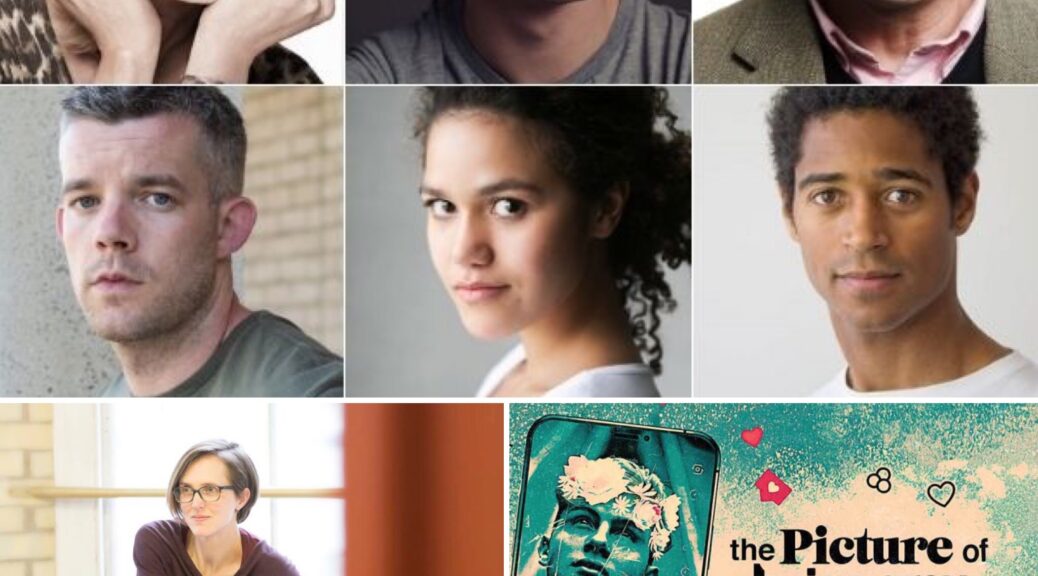
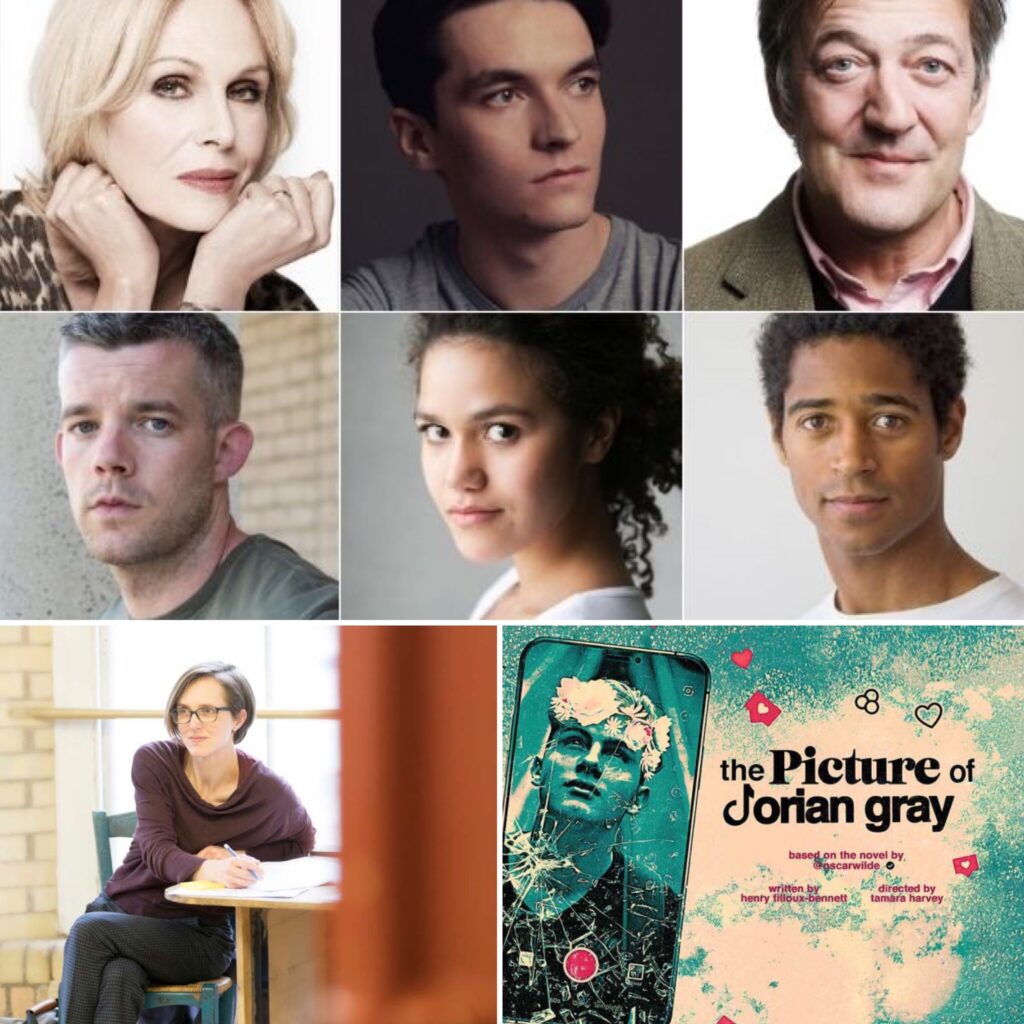
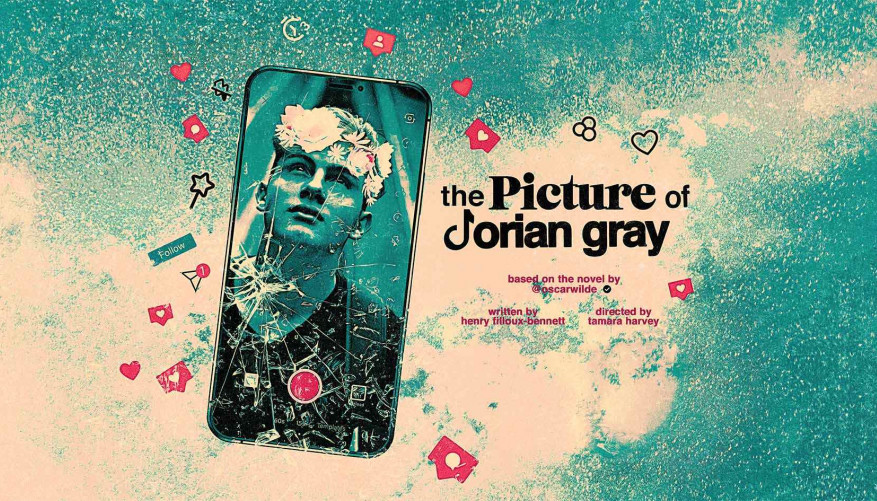
Get The Chance critic, Beth Armstrong, chats to Tamara Harvey, Artistic Director of North Wales theatre, Theatr Clwyd. Tamara is the director of new online play, The Picture of Dorian Gray, featuring cross-county creatives and a star-studded cast. This adaptation of Oscar Wilde’s famous novel is a collaboration between the Barn Theatre, Lawrence Batley Theatre, New Wolsey Theatre and Oxford Playhouse with partner venues including Aberystwyth Arts Centre and Torch Theatre.
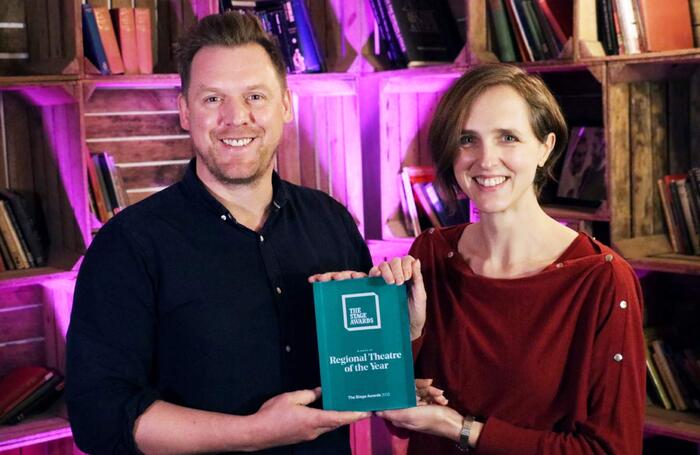
Tamara,congratulations on being named The Stage, Regional Theatre Of The Year. Can you tell me what that meant to you and the whole team at Theatr Clwyd?
Executive director Liam Evans-Ford and artistic director Tamara Harvey. Photo: Theatr Clwyd
It was just an amazing start to the year because everyone in the team has worked so hard whether they’ve been working on serving our community or creating online content or whether they’ve been on furlough and have had to navigate the emotional difficulties of that – home-schooling, friends and family being ill – so to have a moment where the industry and The Stage said ‘you’re doing alright’, you know, ‘keep going’ – it was a really good way to start 2021.
Well it’s a brilliant achievement. So your new production, The Picture of Dorian Gray, is an online play. Now online plays are becoming more commonplace amid the pandemic but each theatre has their own definition. Could you give us more details on what this play might look like or are you keeping it under wraps?
Yeah I’m very happy to. Essentially it’s born of the question of: ‘What can we do?’ So we can’t tell stories on our stages right now. What can we do? It’s a combination of audio recordings, found footage, filmed extracts – some filming taking place in person, socially distanced, obviously, and some in people’s own homes, so it’s come from adversity but hopefully it means that we’re just creating a slightly new way of experiencing the story.
It sounds really innovative. And there have been a lot of brilliant pieces of theatre, TV and film made during lockdown. Does your adaptation make any coronavirus parallels or does it provide a brief respite from it all?
I think it certainly provides respite, I would say, in that it’s full of brilliant actors and it’s a fascinating story. It is set now so there are moments that allude to the world we’re living in now but it isn’t a story about a pandemic. It’s a story about people living their lives in a particular moment in time.
So as you said it takes place now. The play modernises Oscar Wilde’s story and transforms Dorian Gray into a social media influencer. Recently many influencers have been criticised for travelling despite restrictions. Do you think audiences will have less sympathy towards the character in light of this? Will their opinions of him change in any way?
Ah, interesting…I think we each when we watch a story, when we experience of piece of theatre or digital storytelling, we bring our own experiences and our own opinions to it so I think everyone is likely to react to Dorian in a slightly different way, depending on whether they have experience of that online world or they don’t, whether it’s something that they’re completely familiar with or something that they find totally alien. I think, and I hope actually – it’s one of the stories with making a piece of theatre, whether it’s on screen or on stage – I hope that people will have different reactions depending on their own experiences.
Social media and the idea of keeping up appearances seem to be a key theme. Do you think the pandemic has increased our anxiety of showing off our best selves online or instead alleviated some of the pressure, as teachers and colleagues are now allowed a little window into our lives everyday – messy kitchens and all?
It’s certainly increased my anxiety! *laughs* There’s nothing like having to be on a TV screen every day, you know. The great joy of discovering you can turn off your self-view on Zoom is amazing. Look, I think it’s done both, hasn’t it? We’re having to spend more time – even if only at the moment when we sign onto a facetime or a Zoom or whatever – we’re spending more time seeing our own image and for some of us that’s, you know, not a pleasant experience, for others I’m sure it’s delightful. We’re also able to have pyjama bottoms on as long as only our top half is seen so it’s a really curious mix. I put on heels for the first time yesterday and it felt totally bizarre because I haven’t done that in months and so yeah, perhaps with all of these things, each of us is having such a different experience. You know it’s that thing – people have said we’re all in the same storm but in different boats. I’m having to spend almost all day everyday on Zoom and there are other people who don’t go near it. So I think it’s impossible to generalise really.
Rehearsing online and with social distancing measures must have presented a lot of challenges but are there any positive aspects or creative innovation to have come out of these restrictions?
Well the whole piece is a creative endeavour that wouldn’t have happened under any other set of circumstances. So the fact that it exists is in itself a positive coming out of this moment. Online rehearsals are…difficult. Partly because of the time lag, partly because there is a focusing thing that happens when you walk into a rehearsal room – you’re leaving your life behind, plugging into a different space and that focuses your mind, whereas if you’re in your own home, you’ve got the door going or you’ve got the dog barking, you know, or your kids running round, whatever it is. But there are advantages; I still get to have tea with my kids every day and people don’t have to leave their loved ones behind to travel. Given the choice, I will still want to be in a room with people but it is possible to find positives even online.
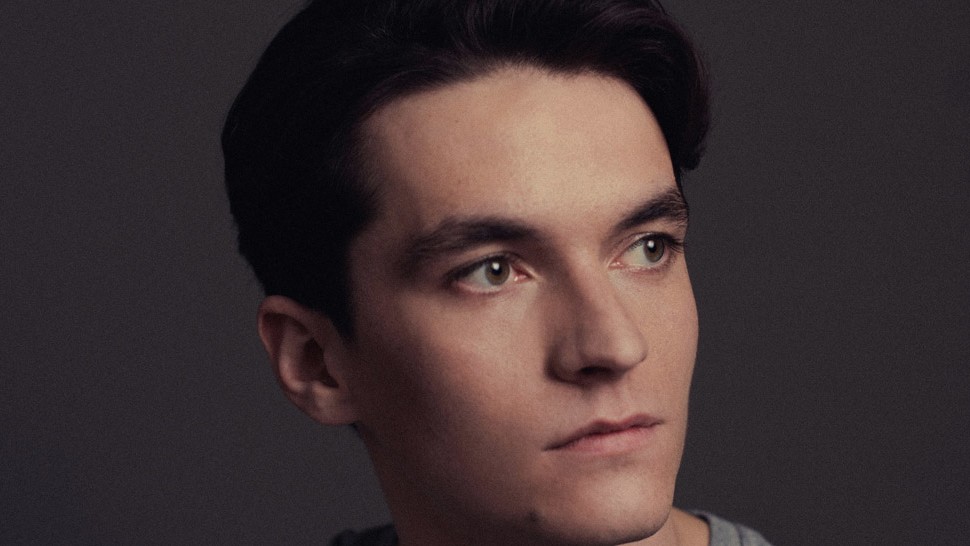
Yeah I think that’s true. So starring as the title character Dorian is actor, Fionn Whitehead, who audiences will no doubt recognise as the breakthrough star of Dunkirk. What do you think Fionn brings to the role?
Fionn is just extraordinary. On screen he is completely mesmerising and I think that’s to do with the rare combination of vulnerability and strength. And wit. And innocence. He’s a kind of fascinating mix and the other thing that’s such a joy about him is he’s just an incredible person to have on set because he’s utterly delightful every second of the day. That means that you can be playful and collaborative and try things and as a director, feel able to make mistakes or try something unexpected because he’s so open and engaged. He’s extraordinary.
Fionn Whitehead
The show is currently in pre-production but are there any aspects or ideas you’re particularly excited to share with the cast and other creatives?
Well we’ve kind of got everything, as it were, in the can. We’ve now done all of the filming. The bit that’s happening now, which is quite new for me and therefore really exciting, is the editing. And I’m in this lovely position where I’m spending most of everyday on Zoom with our amazing director of photography and editor, Ben Collins, from the Barn Theatre with both of us watching the dailies and working out the edit so there’s something really heart-warming in this moment about knowing that I’m up in North Wales in my regional theatre and he’s down in Cirencester in his but there’s this invisible string reaching between us as we both create a thing. And the whole time we’re watching onscreen all these other people who’ve come together, whether physically or remotely, to make a story in order to support regional theatre and that feels pretty special.
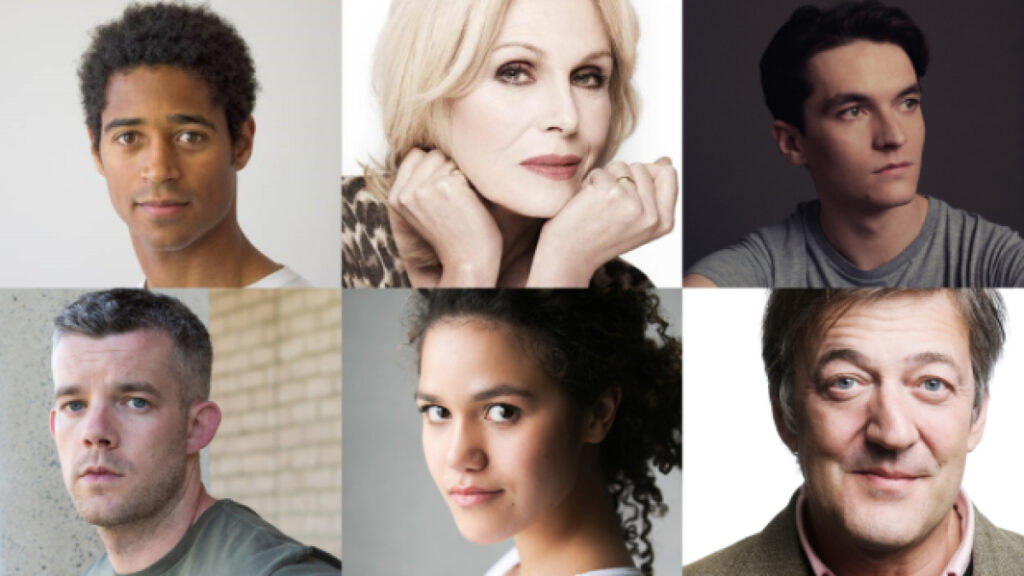
The cast of The Picture of Dorian Grey
I love that sense of connection that you have. So would you like to add anything else?
I suppose the only thing is that it’s worth saying that it does have what Henry Filloux-Bennett, who is the adapter, has done so beautifully – he’s managed to hold on to the spirit of the original which of course has all the wit of Oscar Wilde so as well as talking about social media and being about the downfall of this young man it’s also funny and fun and irreverent and all of those things.
Oscar Wilde’s The Picture of Dorian Gray is adapted by Henry Filloux-Bennett
Thank you so much. I think that just leaves me to say best of luck and I can’t wait to see it.
Beth Armstrong
Get the Chance supports volunteer critics like Beth to access a world of cultural provision. We receive no ongoing, external funding. If you can support our work please donate here, thanks.
Hi Simone great to meet you, can you give our readers some background information on yourself please?
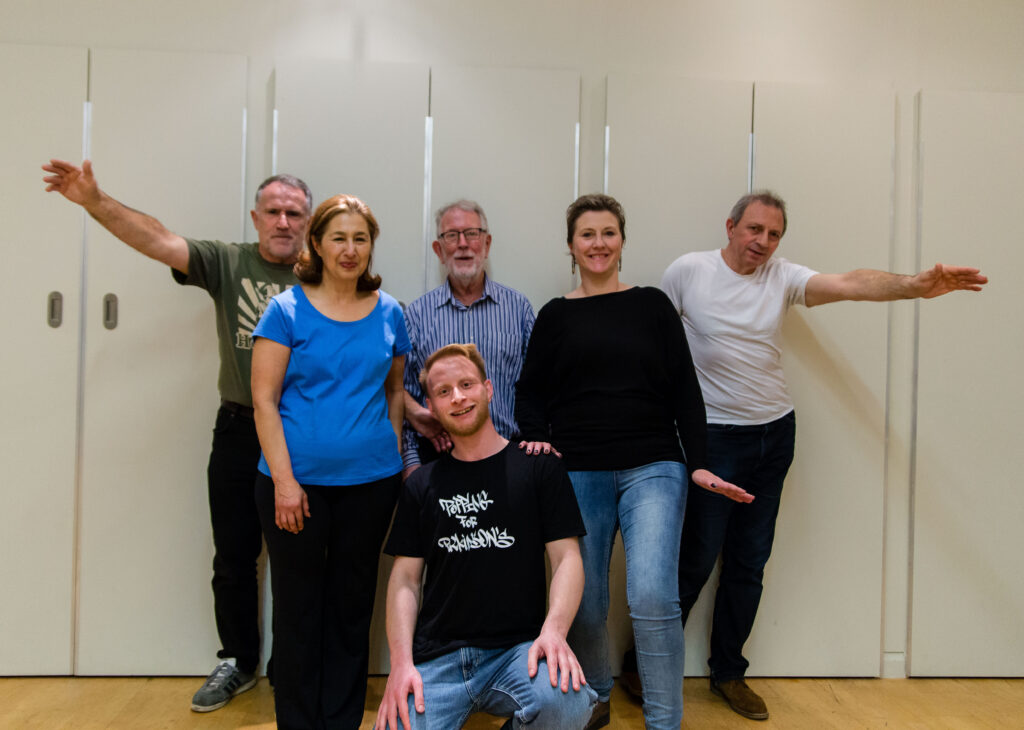
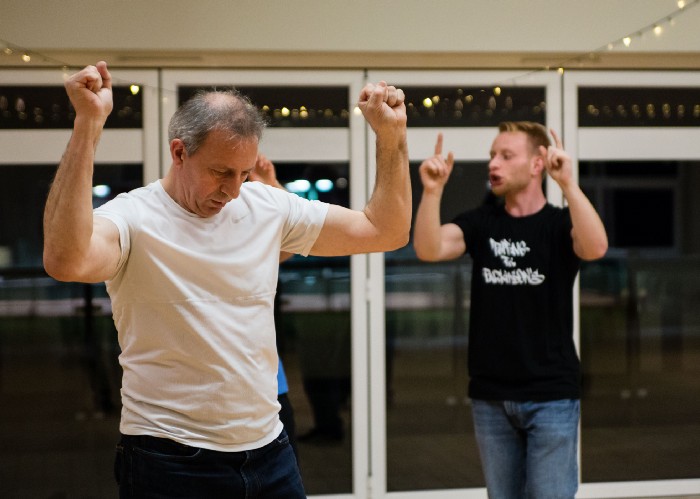
Thanks for having me! I am Simone Sistarelli, and I am the founder of Popping For Parkinson’s ®, a project that transforms Parkinson’s patients into Popping dance students. I am passionate about inspiring people. I am a dance artist, a social entrepreneur, a musician and public speaker. I am in the Universal Hip Hop Museum Hall of Fame for my contribution to Hip Hop Culture.
I have a BA in Contemporary Dance from Trinity Laban and an MSc in Dance Psychology from the University of Hertfordshire.
What got you interested in the arts?
I fell in love at first sight with dancing at age 10, and I have not stopped being in the arts world since! The arts are an incredible vessel of expression, and they feel liberating to me.
You have been running Popping For Parkinson’s since 2015. On your website you describe your approach as
“Using Popping dance techniques as an innovative therapeutic tool for improving the physical condition of people affected by Parkinson’s disease. Participants see improvement in their natural movement capacities, but also gain confidence, feel less socially isolated and have fun.”
It sounds like a fascinating approach. Where did the project originate?
I had the original idea in 2012 while training at Trinity Laban Conservatoire. It originated as a result of various inputs, from my granddad having Parkinson’s to the similarities between the Parkinson’s tremors and Popping dance. I thought: people with Parkinson’s shake without the beat;I train my whole life as a Popping dancer to shake to the beat. In my head, people with Parkinson’s could turn their symptom into a superpower! After years of research on Parkinson’s, dance, music therapy, dance therapy and more, I developed a methodology, started a collaboration with SLYPN (South London Younger Parkinson’s Network), I offered the first dance class as a trial run, people loved it, and we haven’t stopped since!
How does someone get involved, do they need to have any prior dance experience?
Absolutely no prior experience is needed! People can simply sign up for the online classes through our website and join us!
How would you like the project to develop?
There are around 10 million people with Parkinson’s worldwide. The ultimate aim of the project is to reach all of them and empower them all to become dancers! In practical terms, I am working on future developments by exploring different ways to reach people, from writing a book to creating dance tutorials (both on streaming platforms and DVDs), creating bespoke music for dance classes and more.
You might not normally think of Hip-Hop culture and Parkinson’s as strong partners. What has the reaction been to the project in the Hip Hop community?
My work has been recognised by the Universal Hip Hop Museum, the ultimate dream for anyone in the Hip Hop community. I hope I can inspire people in the Hip Hop world as much as Hip Hop inspired me in the first place.
There is a lack of Diversity in mainstream cultural provision. Do you think your project has connected with people who might not normally think of themselves as Dancers?
Yes! Dance is so much more than solely performing, and appreciating that is key to inviting more people to improve their life through social artistic movement.
Music is a key element of Hip Hop. How do you select the tracks to use in your class and if you had to choose one, what’s your favourite?
As a musician myself, I carefully choose the songs for my classes. I know the impact that a good tune can have! I am a record collector and I have a vast collection of songs to start from, then depending on the theme/mood of the class I will pick the most appropriate songs. Songs can go from classic Popping tunes (Cameo, Zapp) to Popping beats (Slick Dogg, Beatslaya), from recent Electro-Funk releases (Mofak, Makvel) to my own music productions.
Asking for a favourite song/album to a collector is like asking for the favourite child to a parent, it’s impossible to answer! One of the songs that I keep going back to though is Brass Construction’s “Get up to Get Down”.
Get the Chance works to support a diverse range of members of the public to access cultural provision. Are you aware of any barriers that people living with Parkinson’s face to access dance and your organisations work? If you have identified any, have you been able to reduce these barriers in any way?
People with Parkinson’s face several challenges on a daily basis. Some of these limitations are specific to accessing dance classes. We did encounter some of them and we tried to reduce the impact that they had. One example was offering both seated and standing classes, so that people with limited mobility can access Popping dance (which tends to be a standing dance style).
Another limitation was costs, so from the very start of the project we offered the classes free of charge for participants (thanks to the support of funders such as the Mayor of London Sadiq Khan and the National Lottery Community Fund).
Now that classes are online only for obvious reasons, barriers are different. For example, commuting to class can be challenging for people with Parkinson’s, yet this particular limitation is not present online. At the same time, online classes present other barriers, such as technological knowledge, Zoom fatigue, access to broadband (especially for older people). We want to expand and offer several ways of participation, from interactive classes via Zoom to pre-recorded classes on YouTube, from dance tutorials to DVDs (coming soon) in order to minimise the impact that barriers create to people with Parkinson’s. It is a constant work-in-progress.
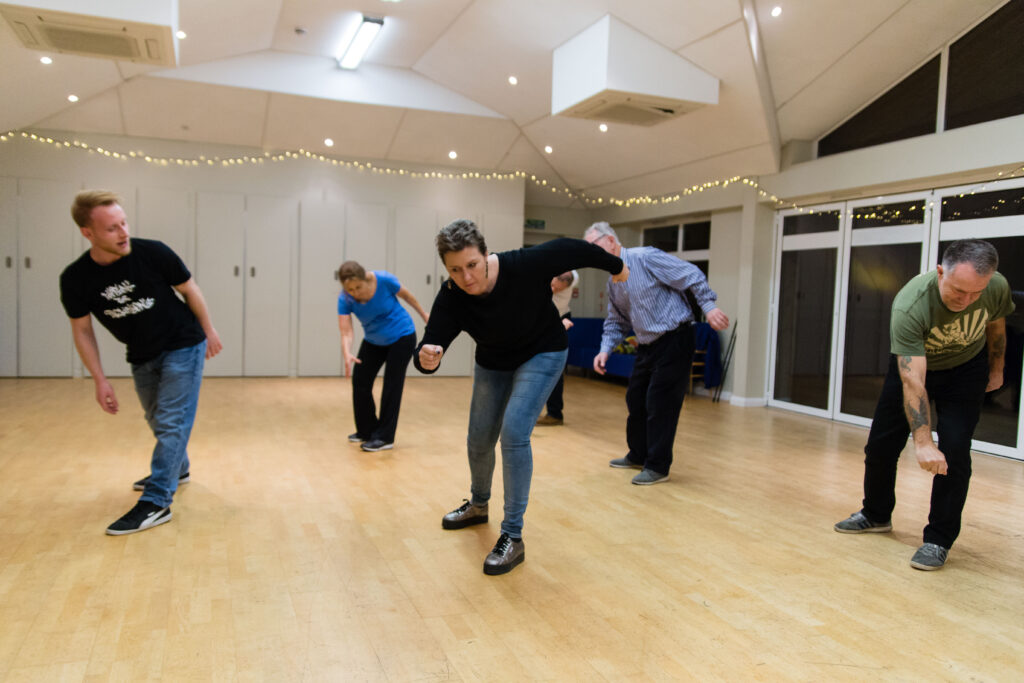
The video below is a taster video of a Popping For Parkinson’s Class
With the roll out of the Covid-19 vacancies, the arts sector is hopeful audiences will return to venues and theatres. If theatres want to attract people living with Parkinson’s what do you think they should do?
Venues should understand the needs of people with Parkinson’s in order to accommodate them, making sure that venues are accessible and that staff are trained accordingly.
If you were able to fund an area of the arts what would this be and why?
All of them! But if I had to choose, I would dedicate way more funding to the phenomenal individuals that dedicate their lives to supporting people through artistic expression. The value that individuals bring to the arts is immense, and without them organisations could not thrive.
What excites you about the arts at the moment?
Two main aspects really inspire and excite me at this stage. One is dance science, getting a deeper understanding of the relationship between arts and health, as I believe there is unlimited potential there.
The other one is the creation of new cross-disciplinary experiences that engage a diverse audience through the combination of several media (for example, from the genre-defying dance film TOM by Wilkie Branson to choreographing for drones).
https://vimeo.com/wilkiebranson/tomtrail
What was the last really great thing that you experienced that you would like to share with our readers?
Seeing my students come to class with severe difficulties and then leaving energised, smiling and confident is an experience I still cannot get used to after many years! The power of dance truly is remarkable, so much so that sometimes it feels magical!
Thanks for your time Simone
Thank you
You can checkout the PoppingFor Parkinsons Spotify playlis here
National Dance Company Wales (NDCWales) and English National Ballet will be providing more opportunities for people with Parkinson’s to take part in its high-quality dance programme online and eventually at two new venues in North Wales.
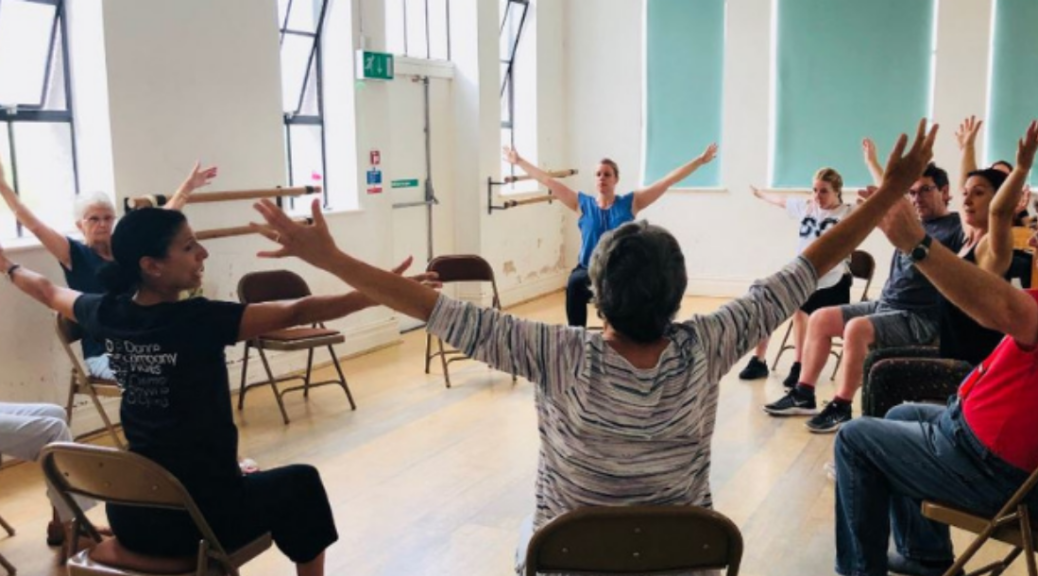
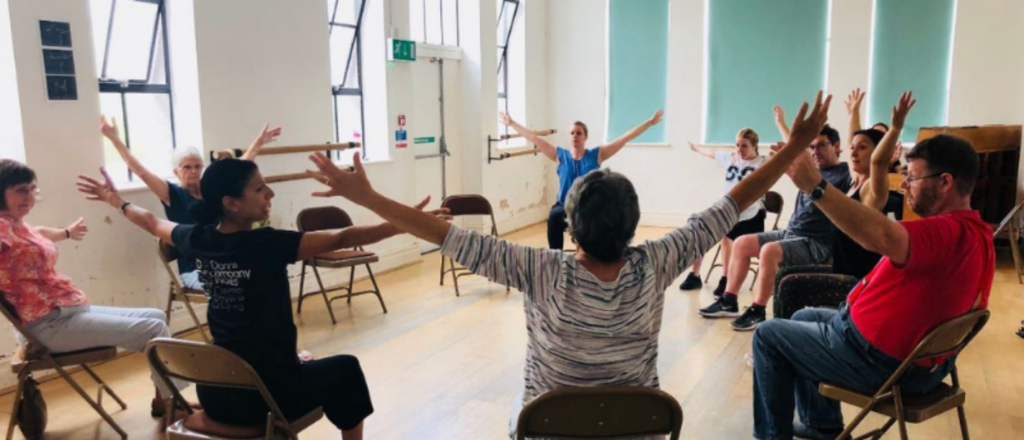
NDCWales’ Dance for Parkinson’s class for people living with Parkinson’s, their family, friends and carers has been running since 2015 as an affiliated hub of English National Ballet’s Dance for Parkinson’s programme.
The first class was launched at the Dance House (Wales Millennium Centre) Cardiff 2015, and the second from Blackwood Miners Institute in Caerphilly County Borough in 2018.
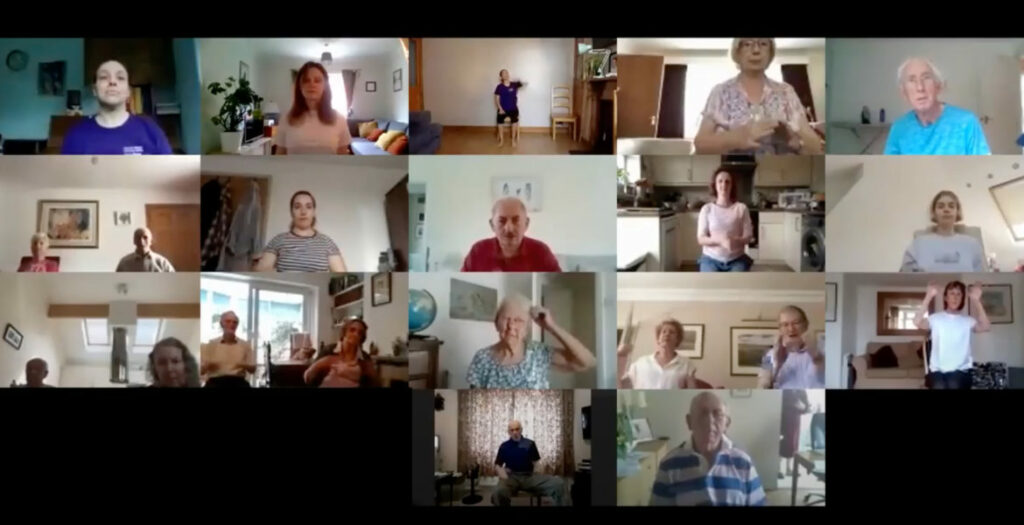
During the 2020 pandemic lockdown, many of its participants had to shield. NDCWales continued to provide support and engagement with online sessions to connect with its loyal participants.
In 2021, NDCWales and ENB will continue to offer live online versions of its classes and will also be creating two pilot hubs in North Wales, Pontio (Bangor) and Coleg Cambria (Wrexham).
NDCWales are also working in partnership with Digital Communities Wales during the pandemic to give all participants the confidence and skills to use their laptops and tablets to access classes online.
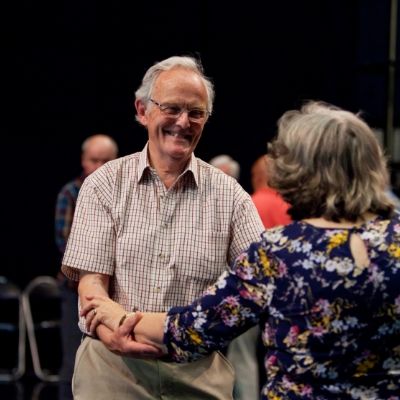
In Wales, there are estimated to be around 6,000 people living with Parkinson’s – with the majority aged over 50. Dancing has been shown to support people with Parkinson’s to develop confidence and strength, whilst temporarily relieving some participants of these symptoms in everyday life. The Dance for Parkinson’s Classes are expressive, creative and promote feelings of freedom from the physical and social constraints of having Parkinson’s.
Dance for Parkinson’s classes focuses on one English National Ballet or National Dance Company Wales production and explores the themes and ideas around the movements of that dance piece.
The classes this Spring will be focusing on two dance films from English National Ballet’s recent digital season, ‘Senseless Kindness’ by Yuri Possokhov first, then followed by Arielle Smith’s ‘Jolly Folly’.
Last term, the theme was inspired by NDCWales’ production of Ed Myhill’s Clapping?! which uses rhythm as a driving force and was reimagined online during lockdown. A short film, Ed & Flow, has been produced of the class and is available to view below.
NDCWales and their partners are putting plans in place to continue to start the interactive Zoom online sessions again, but when it’s safe to do so, offer the classes in person at all four hubs.
One existing Dance for Parkinson’s participant said, “The lockdown has been very hard, as I was no longer able to see people and my family. I felt isolated and my speech was suffering. I found the Zoom sessions helped me reconnect and it was lovely to see the teachers and all the participants of our group. The sessions were very uplifting for me and I always looked forward to them.”
Regular Dance for Parkinson’s attendees, Angela Harrison said, “It makes me feel I can cope better; I can walk better… it’s the best medicine. I come in feeling like a little old lady”, but I leave here feeling quite tall.”
Guy O’Donnell, NDCWales’ Participation Producer said, “We are really pleased to be able to work in partnership with Pontio and Coleg Cambria and provide this support in North Wales. We have seen the benefits of this programme and the impact it has had on our regular attendees here in South Wales.
“While we are unable to be in person together at the moment the ability to connect online has enabled existing attenders to take part from the comfort of their own home and stay connected to people sociably. The feedback we’ve had so far from our loyal Dance for Parkinson’s participants is that they wanted to still feel connected and still continue to feel the benefit of the programme on their health. They were keen and wanted to be adventurous and learn about technology, and fortunately with the continued support from Digital Communities Wales we have been able to do this.”
As well as encouraging new participants to take part in Dance for Parkinson’s, NDCWales is continuing to look for volunteers to help support participants in the programme.
If you would like further information and to sign up to the programme as participant or a volunteer please contact Guy O’Donnell, Learning and Participation Producer – guy@ndcwales.co.uk or 07305 534 981.
Dance for Parkinson’s is supported by the Moondance Foundation, the Hodge Foundation, The Austin and Hope Pilkington Trust, and Western Power Distribution.
For further information please visit ndcwales.co.uk
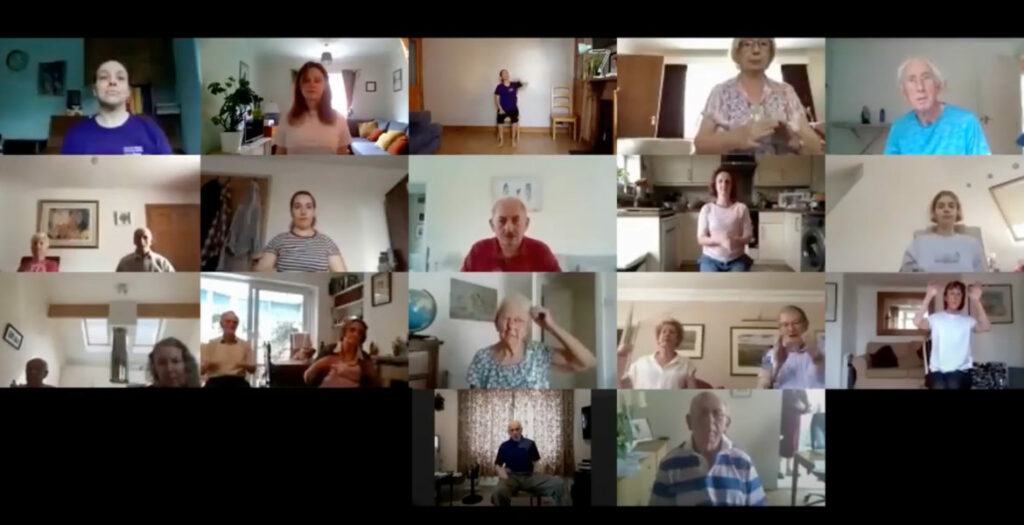
National Dance Company Wales (NDCWales) and English National Ballet’s Dance for Parkinson’s programme has been transported from the Dance House (Cardiff Bay) and Blackwood Miners Institute (Caerphilly) to a new Zoom online class to help support those most vulnerable and still shielding.
NDCWales has been running the high quality dance classes for people living with Parkinson’s, their family, friends and carers since 2015 at the Dance House and 2017 at Blackwood Miners Institute, both part of a UK wide programme with English National Ballet.
Dance for Parkinson’s has been proven to support people with Parkinson’s to develop confidence and strength, whilst temporarily relieving some participants of symptoms in everyday life. Classes are expressive, creative and promote feelings of freedom from the physical and social constraints of having Parkinson’s.
Since the start of lockdown NDCWales and English National Ballet have been piloting a version online to support existing attenders to take part from the comfort of their own home, many of whom are vulnerable and have been shielding since March. It’s also allowed existing attenders to the classes to stay connected to people through lockdown sociably.
Dance for Parkinson’s Participant said, “The lockdown has been very hard, as I was no longer able to see people and my family. I felt isolated and my speech was suffering. I found the Zoom sessions helped me reconnect and it was lovely to see the teachers and all the participants of our group. The sessions were very uplifting for me and I always looked forward to them.”
As well as setting up the sessions online, NDCWales has partnered with Digital Communities Wales who work with digitally excluded people. Helping them deliver digital inclusion activities so they can do it well and make a bigger impact. They helped NDCWales to provide free training and support for those who have never used Zoom before.
NDCWales’ Learning and Participation, Guy O’Donnell said, “The feedback we’ve had from our loyal Dance for Parkinson’s participants is that they wanted to still feel connected and still continue to feel the benefit of the programme on their health. They were keen and wanted to be adventurous and learn about technology, and fortunately with the continued support from Digital Communities Wales we have been able to do this.”
Following the pilot over lockdown, Dance for Parkinson’s will now be available online for new members to join in from Thursday 17September, 1.15pm-2.45pm. The programme runs across 12 weeks and participants can join in at any time. The first class on the 17 September is free and the first class is free for new attenders, classes are £3.50 per week thereafter. Each term the programme focuses on one English National Ballet or National Dance Company Wales production and explores the themes and ideas around the movements of that dance piece. This term, Dance for Parkinson’s will be focused on NDCWales’ production of Ed Myhill’s Clapping?! which was adapted for online during lockdown.
As well as encouraging new members to take part in Dance for Parkinson’s, NDCWales and English National Ballet are continuing to look for volunteers to help support participants in the programme. If you would like further information and to sign up to the programme as participant or a volunteer please contact – Guy O’Donnell, Learning and Participation Producer, NDCWales email guy@ndcwales.co.uk or ring 07305 534 981.
Dance for Parkinson’s is supported by Caerphilly Council, Hodge Foundation, The Moondance Foundation and The Goldsmiths Charity Company.
Mae rhaglen Dawnsio ar gyfer Parkinson’s Cwmni Dawns Cenedlaethol Cymru ac English National Ballet wedi cael ei symud o’r Tŷ Dawns (Bae Caerdydd) a Sefydliad Glowyr Coed-duon (Caerffili) i ddosbarth ar-lein Zoom newydd i helpu i gefnogi’r rheiny sydd fwyaf bregus ac yn parhau i warchod eu hunain.
Mae CDCCymru wedi bod yn cynnal y dosbarthiadau dawns o safon uchel i bobl sy’n byw â Parkinson’s a’u teuluoedd, ffrindiau a gofalwyr ers 2015 yn y Tŷ Dawns a 2017 yn Sefydliad Glowyr Coed-duon, pob un yn rhan o raglen ledled y DU ag English National Ballet.
Profwyd bod Dawnsio ar gyfer Parkinson’s yn cefnogi pobl â Parkinson’s i fagu hyder a chryfder, gan leddfu dros dro symptomau ym mywyd bob dydd rhai o’r cyfranogwyr. Mae’r dosbarthiadau’n fynegiadol, yn greadigol ac yn hyrwyddo teimladau o ryddid rhag cyfyngiadau corfforol a chymdeithasol Parkinson’s.
Ers dechrau’r cyfnod clo mae CDCCymru ac English National Ballet wedi bod yn treialu rhaglen ar-lein i gefnogi mynychwyr presennol i gymryd rhan o gysur eu cartrefi eu hunain, y mae llawer ohonynt yn fregus ac wedi bod gwarchod ers mis Mawrth. Mae wedi caniatáu i fynychwyr presennol gadw mewn cysylltiad â phobl drwy’r cyfnod clo yn gymdeithasol.
Dywedodd Cyfranogwr Dawnsio ar gyfer Parkinson’s, “Mae’r cyfnod clo wedi bod yn anodd iawn, nid oeddwn yn gallu gweld pobl na fy nheulu rhagor. Roeddwn yn teimlo’n unig ac roedd fy lleferydd yn gwaethygu. Helpodd y sesiynau Zoom i mi ailgysylltu ac roedd yn wych gweld yr athrawon a holl gyfranogwyr ein grŵp. Roedd y sesiynau yn codi calon ac roeddwn bob amser yn edrych ymlaen atynt.”
Yn ogystal â sefydlu’r sesiynau ar-lein, mae CDCCymru wedi uno â Chymunedau Digidol Cymru sy’n gweithio gyda phobl wedi’u cau allan yn ddigidol. Gan eu helpu i ddarparu gweithgareddau cynhwysiant digidol fel eu bod yn gallu ei wneud yn dda a chael mwy o effaith. Gwnaethant helpu CDCCymru i ddarparu hyfforddiant a chymorth am ddim i’r rheiny nad oedd erioed wedi defnyddio Zoom o’r blaen.
Dywedodd Cynhyrchydd Dysgu a Chyfranogi CDCCymru, Guy O’Donnell, “Yr adborth a gawsom gan ein cyfranogwyr Dawnsio ar gyfer Parkinson’s ffyddlon, oedd eu bod eisiau teimlo mewn cysylltiad o hyd a pharhau i deimlo buddion y rhaglen ar eu hiechyd. Roeddent yn awyddus ac eisiau bod yn fentrus a dysgu am dechnoleg, ac yn ffodus gyda chefnogaeth barhaus gan Gymunedau Digidol Cymru rydym wedi gallu gwneud hyn.”
Yn dilyn y cynllun peilot dros y cyfnod clo, bydd Dawnsio ar gyfer Parkinson’s bellach ar gael ar-lein i aelodau newydd ymuno â’r rhaglen o ddydd Iau 17 Medi, 1.15pm-2.45pm. Cynhelir y rhaglen dros 12 wythnos a gall cyfranogwyr ymuno unrhyw bryd. Mae’r dosbarth cyntaf ar 17 Medi am ddim ac mae’r dosbarth cyntaf am ddim i fynychwyr newydd, ar ôl hynny codir tâl o £3.50 yr wythnos am ddosbarthiadau. Bob tymor mae’r rhaglen yn canolbwyntio ar un cynhyrchiad gan English National Ballet neu Gwmni Dawns Cenedlaethol Cymru ac yn archwilio’r themâu a syniadau y tu ôl i symudiadau’r darn dawns hwnnw. Y tymor hwn, bydd Dawnsio ar gyfer Parkinson’s yn canolbwyntio ar gynhyrchiad CDCCymru o Clapping?! Ed Myhill a gafodd ei addasu i’w arddangos ar-lein yn ystod y cyfnod clo.
Yn ogystal ag annog aelodau newydd i ymuno â Dawnsio ar gyfer Parkinson’s, mae CDCCymru ac English National Ballet yn parhau i chwilio am wirfoddolwyr i helpu i gefnogi cyfranogwyr y rhaglen. Os hoffech ragor o wybodaeth a chofrestru i’r rhaglen fel cyfranogwr neu wirfoddolwr, cysylltwch â – Guy O’Donnell, Cynhyrchydd Dysgu a Chyfranogi, CDCCymru e-bostiwch guy@ndcwales.co.uk neu ffoniwch 07305 534 981.
Cefnogir Dawnsio ar gyfer Parkinson’s gan Gyngor Caerffili, Hodge Foundation, The Moondance Foundation a The Goldsmiths Charity Company.
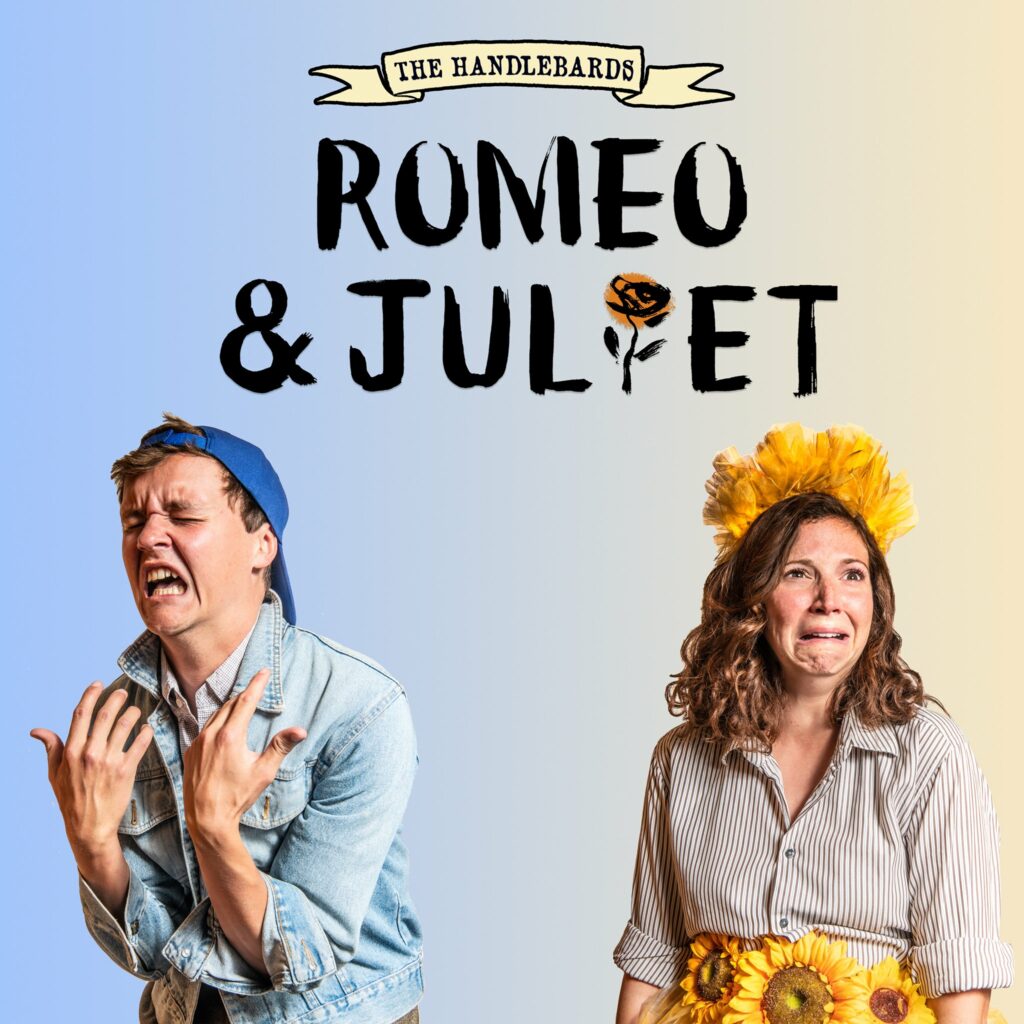
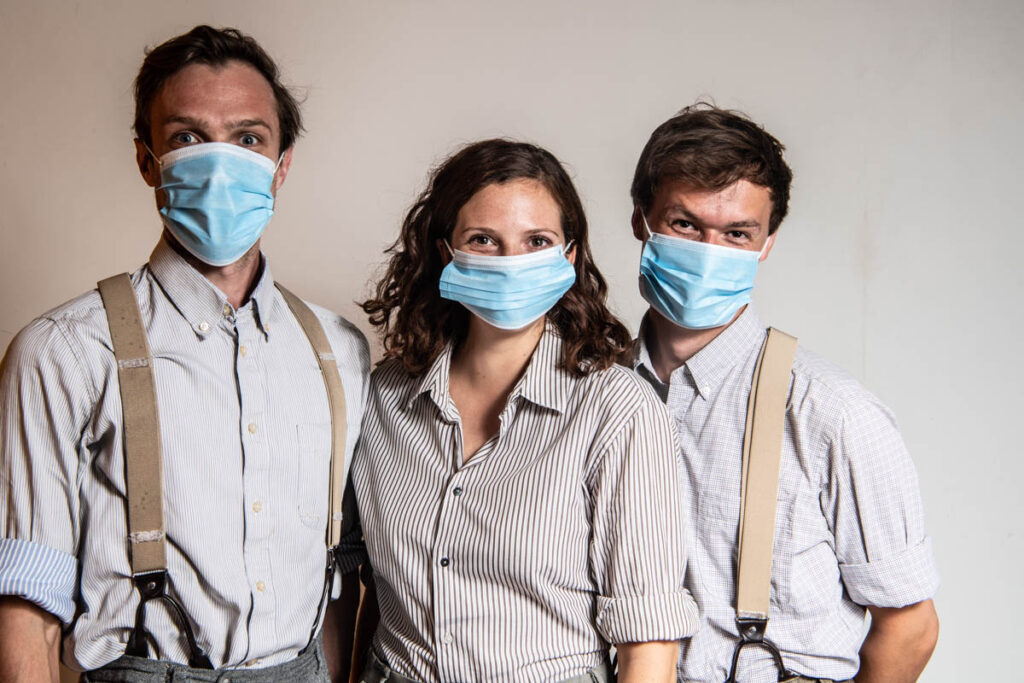
‘One household, all alike in dignity, In our living room, we rehearse our scenes’ reads The HandleBard’s Facebook promo post. The cycling Shakespeare troupe, formed in 2013, are finally back in the bicycle saddle after emerging from lockdown with a new version of Romeo and Juliet directed by Nel Crouch. This year’s configuration of Bards is co-habiting trio Tom Dixon, Lucy Green and Paul Moss, which includes real-life couple Tom and Lucy…perhaps making Paul the third wheel (pun intended). “Which is why I’m playing Romeo!” announces Paul to laughter, an arrangement which allows for some entertaining mock-jealousy and several warning glances at guilty-looking audience members.
Melodramatic madness in the world’s greatest love story. Image: Rah Petherbridge
On arrival at the picturesque venue, Hoghton Tower’s walled garden, we’re welcomed and informed of the safety guidelines, doused with hand sanitiser, and led to a spot well clear of other households. All this is done by the HandleBards themselves and it’s lovely to feel part of something wholesome and organic: it’s clear that though a renowned and fully-fledged company, the HandleBards are still mucking in with all aspects of their show, from stewarding to stage set-up (though no doubt there is a dedicated team supporting them). Though all the safety precautions are adhered to – including no more infamous picnic stealing (luckily for me and my Kinder Bueno) – refreshingly, the play itself contains no lockdown references, no toilet paper gags, and no pandemic buzzwords. Despite having seen some interesting pieces of art and media exploring the crisis, it’s actually blissful to just have 80 minutes of pure fun and escapism.
A masked masque: Tom Dixon, Lucy Green and Paul Moss. Image: Rah Petherbridge
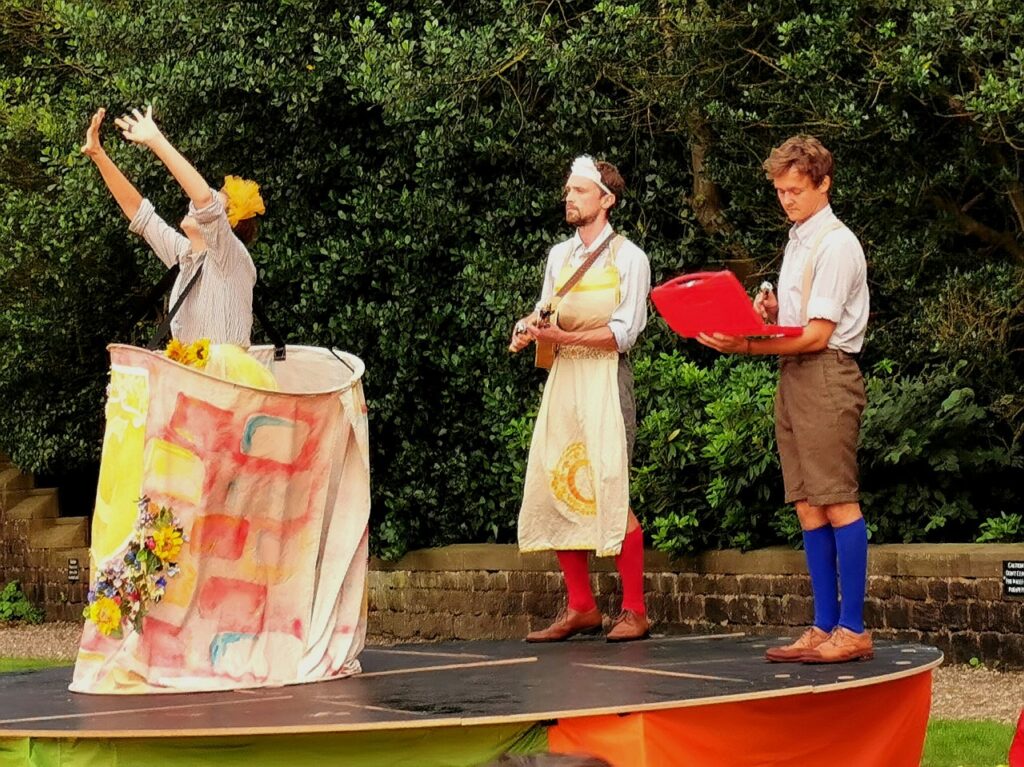
That said, one allowance is made for when Juliet (Lucy Green) runs to Friar Laurence’s gaff – the route being the long perimeter of the socially-distanced audience – where she complains ‘It’s much farther than usual!’. But apart from that, almost everything else is the usual HandleBards affair, featuring their classic conventions like repurposing bike equipment (tyre pumps become swords and pannier straps secure the stage), slow-motion fights, rapid character swapping, and their signature humorous, high-energy cavorting.
With just three actors, the troupe play multiple roles, often using just a wig held by an extended arm as a stand-in when more than three bodies are required in one scene, demonstrating clever choreography by director, Nel Crouch. To avoid confusion, the audience are helped to distinguish between characters through exaggerated accents, colour coded costumes bearing big ‘C’s and ‘M’s to denote house loyalties, and bike bells attached to each performer’s finger, which ding periodically to signal a character switch.
Juliet (Lucy Green) on her balcony, the Nurse (Tom Dixon) and musical accompaniment from Paul Moss
The characterisation in the production is suitably overblown for a tragedy turned comedy: Juliet (Green) swings from silly and girlish to teenage tearaway, screaming at her mother that she “come[s] anon!”, while Romeo (Moss) is a typical Northern sixth former with backwards cap and denim jacket. The emphasis on the lovers’ young age pokes fun at Shakespeare and allows for an amusingly melodramatic death scene, after which the pair get up unceremoniously, announcing “We’ve gotta play the other characters…”. These include: Lady Capulet (Moss), a soprano-voiced snob; Mercutio (Dixon), a Scouse mad lad; and Friar Laurence (Moss), re-imagined as a monk-cum-ninja with an accent one foot in Scotland and the other in the West Country, constantly dousing the hormonal teenagers with holy water. This is a Shakespearean retelling that certainly doesn’t take itself too seriously. But the audience favourite has got to be the Nurse (Dixon), with her comical stoop, heralding “alright”s, and senior moments, which culminate in her mistaking Juliet’s wedding ring for a jelly sweet and spitting it out with “Sorreh! Thought it wore a ‘aribo!”
Amongst the crazy antics and the hilarity, there is a tender moment between the eponymous tragic heroes when they first lament their love for one another: it’s created with just Shakespeare’s verse, four chords on a ukulele, and the natural accompaniment of the wind, which is a testament to the HandleBards’ ability to completely change lanes in both tone and pace before we’re back to more high jinks and tom foolery. Music also opens and closes the show, with stripped down vocal harmonies, as well as a funny interval song dedicated to an unfortunate front rower. The staging is equally stripped down: there isn’t exactly a set to speak of, only a raised platform, and costume changes are done simply with actors’ backs towards us (there’s isn’t time for anything else!). It feels unpretentious and transparent – a return to the bygone era of touring players entertaining the rural masses, and it’s all the richer for it.
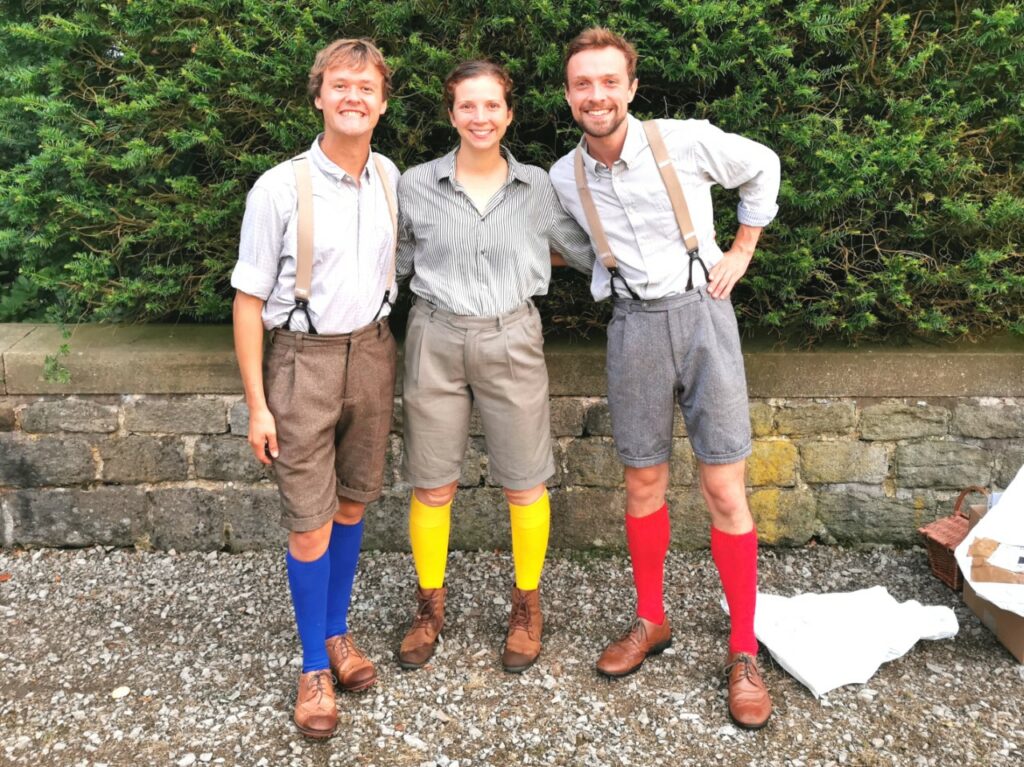
The Handelbards in their fetching cycling socks
The HandleBard’s Romeo and Juliet is a pocket rocket – small but mighty – and its 80 minutes is jam-packed with more accents, more character changes, and more laughs than you can Shake a spear(e) at. It’s witty, fresh, and appears to be performed by a cast who genuinely love what they do. More than that though, this production facilitated a group of strangers coming together for a bit of fun on a patch of grass, just long enough to keep the rain off. And in these challenging times, it’s the perfect antidote, if only for a couple of hours.
If you too seek happy days to happy nights, Romeo and Juliet, and the HandleBards’ new children’s show, Gnora The Gnome’s Daytime Disco, tours across England (and the Netherlands!) until 19th September.
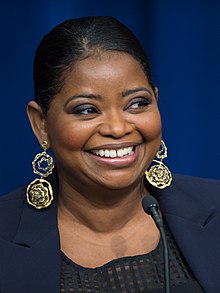
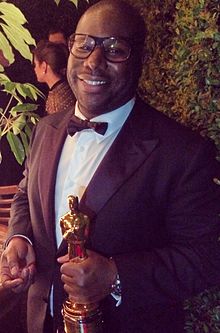
“We need to ask ourselves how do we encourage the next generation of artists and creatives to strive and aim for the stars? A big factor in encouragement is inspiration. If they never see role models they can relate to win awards how are they ever encouraged to become the next Octavia Spencer or the next Steve McQueen.”
2 years ago I wrote that above quote
On Friday 28th June 2019 … Thousands of young boys and girls sat at home from their “cheap seats” and watched history play out.
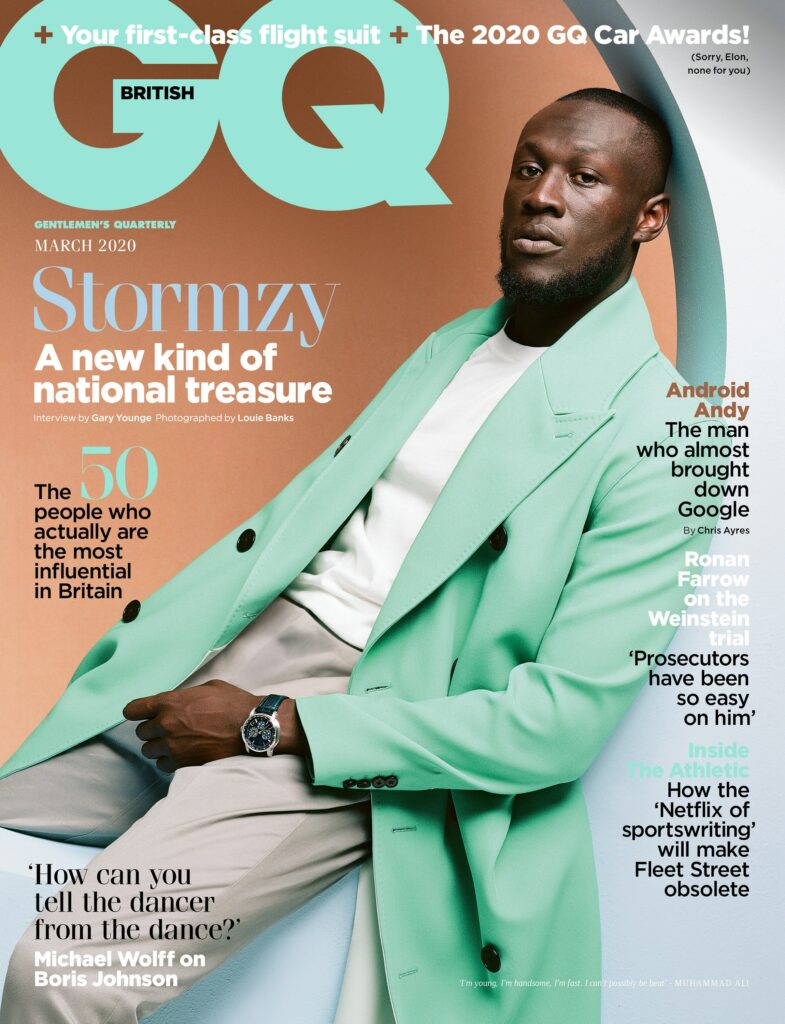
They watched a 24 year old Michael Ebenazer Kwadjo Omari Owuo Jr. headline The biggest music festival in the world. Or as many and most people know him by the name of Stormzy.
The reason I start this article with that is because 2 years ago I wrote about Oprah being sat at home as a little girl in 1964 and watching history play out with Sidney Poitier winning an award and found herself inspired.
Now fast forward over 50 years and the exact same thing has happened.
There are little boys and girls who were either there like I was lucky enough to be, or at home watching, but either way were inspired to see a young Black British man on the biggest stage in the world and his talent and hard work got him to that position.
That inspiration is priceless. And that’s how we encourage the next generation to strive for bigger and better things.
By showing them what they can achieve.
Like I said 2 years ago “If opportunity is not given to people then how are we ever going to be in a position where we can showcase our talents?, be nominated for awards? and inspire our peers and the next generation?”
Stormzy, for example, got the opportunity to headline and smashed it out of Worthy Farm. His talent got him there, not the colour of his skin and that’s inspirational to everyone that can relate. Thats inspirational to all our peers and to the next generation who can watch that and believe that they can headline Glastonbury, Or perform or direct at the National Theatre or on Broadway, Or be on the front cover of GQ, Or play football for a premiership team, or be in the next avengers movie. Or be the next Stormzy or Oprah.
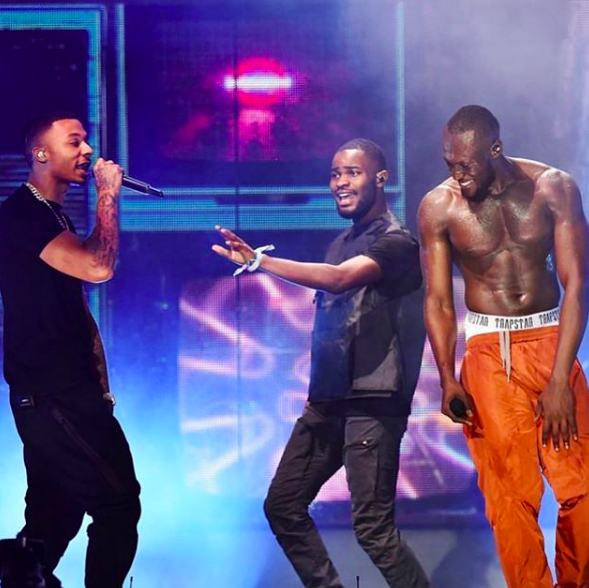
During Stormzy’s set he bought on Dave and Fredo to perform ‘Funky Friday’
He used his platform and his moment to give an opportunity to Dave and Fredo to perform on the pyramid stage and to experience that thrill and allow them to share in the moment.
Thats huge!
I say it all the time in conversations with friends, when running workshops or giving talks – If I’m winning then we’re all winning because I’m going to learn some new skills, new knowledge and make new networks etc which I can then relay back to others to allow them to bask in the new found knowledge and glory I have gained and vice versa.
If YOU are winning then we are all winning because you’re going to learn things that can only help benefit others journeys and careers.
To quote Denzel (as I always do) – “I’m not in this to compete, I’m in this to get better”
That night in June at Glasto, Stormzy was winning but he gave an opportunity for others to win as well.
That for me is on the Macro Level in Stormzy and Oprah and I’m going to bring it to the Micro Level of myself and Wales.
Back home in Wales the last 2 years have been a whirlwind (for me personally)
I’ve been given so many opportunities that have led to me:
I’ve had organisations like Literature Wales believe in me and my talent to help develop further works of mine.
I’ve been on TV (which for a kid from Hammond Drive is huge – Check out changing the narrative from 27 for more clarity)
I’ve been a part of a sold out show by the incredible Tin Shed Theatre again in my hometown.. bringing top class theatre to my doorstep (something I never had when I was growing up)
But again as I echoed 2 years ago the key word in ALL of that is opportunity.
They’ve given me the opportunity so i’m on the same page as other creatives and artists.
They gave me that opportunity to either sink or swim but it’s that chance that is so greatly needed. Without that chance, very few people can reach the potential that they have the ability to reach.
Without opportunity all that remains is an imbalanced and under-represented system where inspiration can’t flourish.
And without Inspiration many journeys won’t even start and many potentials never realised.
I can’t write this and act like opportunity hasn’t been present for me because it has but hard work and determination has been right along side it as I’ve built a career for the past 6 years.
The more I reflect on the past 2 years since writing that article the more I realise that it has been a good starting point in Wales where more of my peers and community are getting given opportunities and they’re smashing it outta the park everytime.
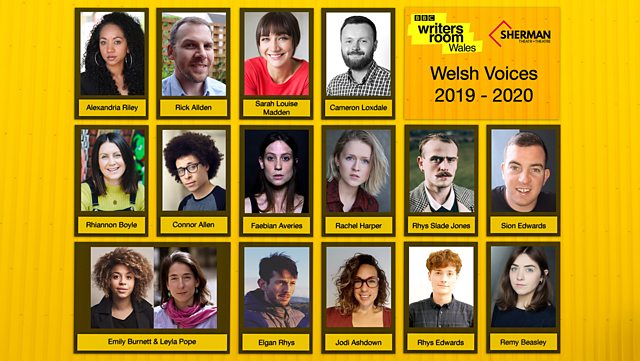
Alex Riley is breaking down barriers with her Mixed documentary and being a member on the above writing groups alongside myself and starring in smash hit TV like The Tuckers and End of the F***ing World
Mali-Ann Rees is killing it in the Tourist Trap alongside Leroy Brito.
Kyle Lima, like myself with The Riverfront has been made associate artist of HIS hometown theatre at The Sherman.
The reason I list these Kings and Queens is simply because like myself, 2 years ago they weren’t in the position that they are now.
Through hard work they’ve been given opportunities which they have consistently smashed.
So many young Welsh black and mixed race girls can turn on the tele and see Alex and Mali on their screens. Thats huge! because that’s inspirational. Thats showing them that it can be done and they can one day be in the same position as them.
Like Oprah did when she turned on the TV back five decades ago.
Youth who see Kyle and myself in Associate roles at their hometown theatres again can start to think that they too can achieve the same success. That those local buildings are for them as much as anyone else. They can start to aim for similar aspirations.
Once opportunity is given then all you’re judged on is your talent. It’s a level playing field where all it comes down to is you. BUT opportunity has to be given for the talent to shine.
So carry on giving opportunities to the talented individuals that warrant them and if you can’t find those talented individuals then seek them out. Because trust me theres plenty of them!
Talent comes in all shapes and sizes and we simply HAVE to find that and represent that.
We can’t afford to be lazy.
I guess what am I trying to say with all of this ….
Well simply put, I recently asked a close friend of mine to list White Welsh Published Playwrights and without hesitation they were able to list many amazing playwrights, many of whom I look up to myself and have helped paved the way for me BUT then I said now name me Black Welsh Published Playwrights and there was a pause as we both tried to think.
That pause is what has to change!
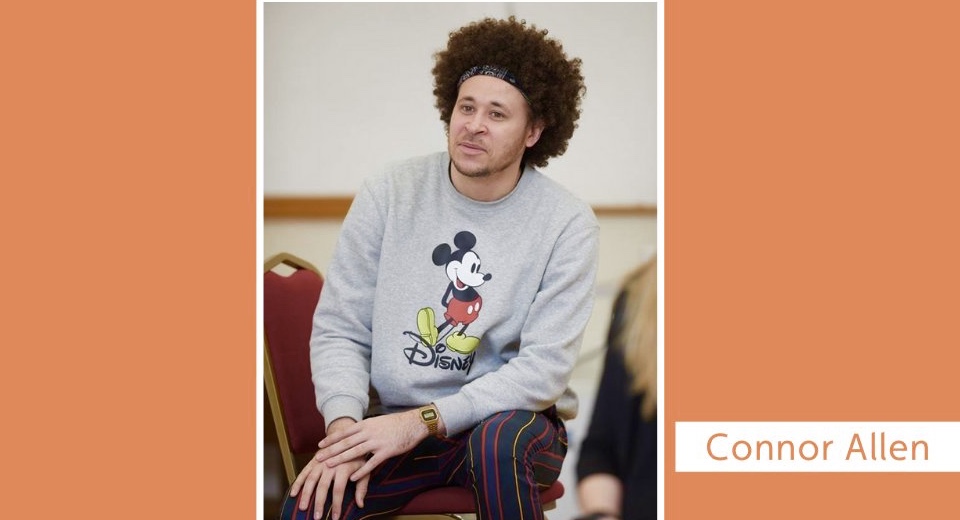
And that’s why I list the amazing individuals and there are so many more but in future when little welsh boys and girls of colour are talking about playwrights and writing that represents them and inspires them, they can think of Connor Allen, Alex Riley, Kyle Lima, Darragh Mortell, Taylor Edmonds, Durre Shahwar and so many more
There won’t be a pause.
Thats how we change the system and keep that encouragement for the next generation to follow in the footsteps that we lay before them. We must become the change that we seek. We must become the role models that we never had growing up.
Mentorship and role models are huge and so vital to development. It’s the work of them that lays solid foundations and blueprints down for the next generation to follow and build upon, so they can make a more equal and justified system and industry.
Opportunity is now being given and its a great and much needed starting point.
But we have to develop that starting point.
There is still more that can be done to make equality and inclusivity a more normalised thing within the arts.
Create more gate keepers, role models and mentors that relate to and represent the communities that make up Wales’ rich diverse culture and history.
According to Welsh Government Data only 6% of Wales is made up of “Black, Asian and Minority Ethnic” (not sure how much I believe that) but my point is that in a country that is predominantly white we need to make systems and industries that represent ALL walks of life. Even the 6%.
We are experiencing a real positive shift at the moment and this can only be fully realised through education and sacrifice of power and privilege.
I realise that the more I am improving and the more success I gain, the more power and privilege I am given. BUT with that power and privilege I am given, I can make a choice to share that.
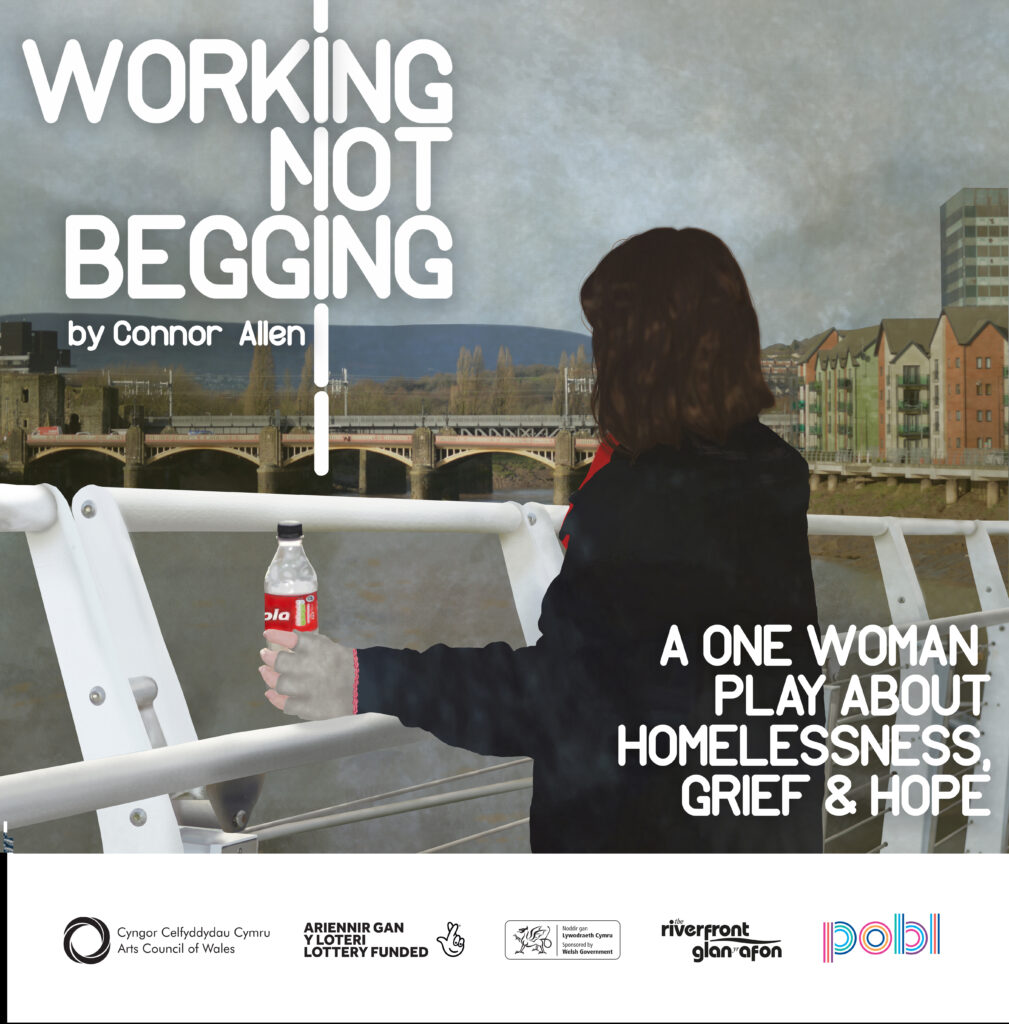
Take my recent Literature Wales commission 27, I chose to give some of my commission to other artists to allow them the opportunity to have paid artistic work where one of the artists is still in high school, one is yet to graduate and another has only recently graduated. Now I don’t say that to be like “oh look at me” I say it simply because if I can do that then people in far bigger and more important positions than me can do that as well.
I know how important opportunity has been in getting me to the position I am in today so i’ll never shy away from offering opportunity to those coming up
J Cole says it brilliantly in Middle Child – “I’m dead in the middle of two generations I’m little bro and big bro all at once”
It was only 5/6 years back that I myself was one of those artists looking for a chance and if it wasn’t for people taking a chance on me and believing in me well, I wouldn’t be where I am today, so its only fair that I give back where and when I can.
And if I can do that so can other organisations and institutions. I’m just one man with a modicum of influence. Imagine the potential if others with far more influence and power made the same approach that I have done.
Its about being courageous and then we will see some positive changes. Changes that are generational. That can have an impact for future generations.
Every single role model/person that we look up to, started off exactly like us. As people learning and working to get better.
Yes, many of my community are angry, upset, confused and more at the moment. And its the likes of role models on a global and local level that will maintain the inspiration and development of the next generation. If we don’t see ourselves and our representation then how are we meant to be engaged and inspired to be the next generation of role models and trend setters.
It’s cyclical.
In these dark times we must never forget our own power, our own talent, our own strength.
It’s only in the darkest of times that we can see the light.
And even though opportunities are becoming more and hopefully more of the younger generation are finding hope and inspiration in looking at the current generation of us achieving success we have to strive for more.
Opportunity is just the planting of the seeds, For real fruition we have to see representation in all forms, from all walks of lives showcased throughout the arts and throughout all sectors.
We live in a multi-cultural, multi-ethnic world where all forms of race, gender, sexuality, disability and more are ripe and without positive and sustained change then we run the risk of an industry not embracing that and not showcasing every form of the human condition.
Art is a reflection of life, in ALL its forms.
Real collective change can only be made when representation is across all levels of infrastructure.
PERIOD
So as always
Much Love
Keep dreaming
Keep striving
Con x
Creating opportunities for a diverse range of people to experience and respond to sport, arts, culture and live events. / Lleisiau amrywiol o Gymru yn ymateb i'r celfyddydau a digwyddiadau byw