All posts by admin

REVIEW CARDIFF SINGER OF THE WORLD COMPETITION – HEAT 2 – 12 JUNE 2023 BY GWYNETH STROUD

 out of 5 stars (5 / 5)

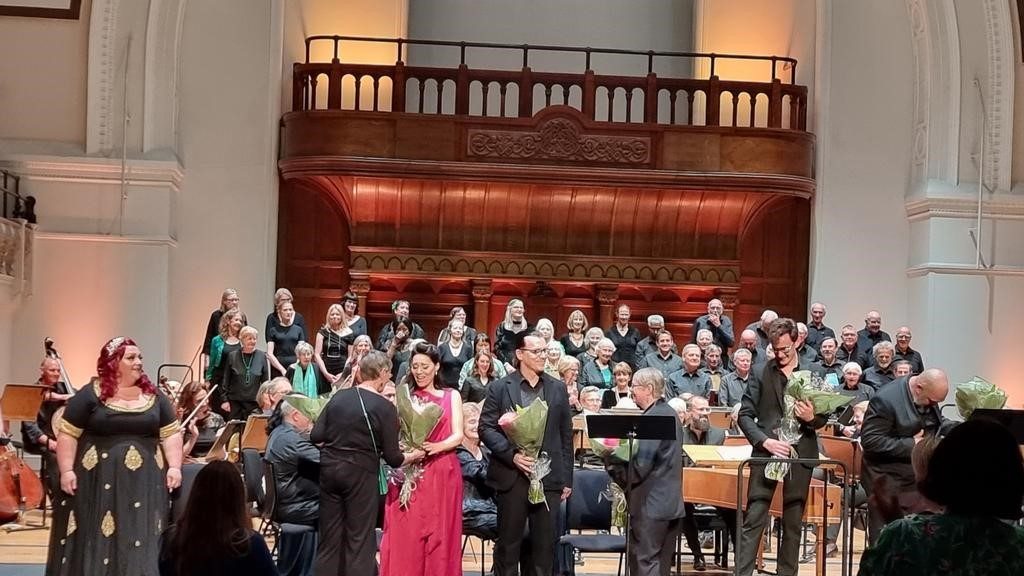
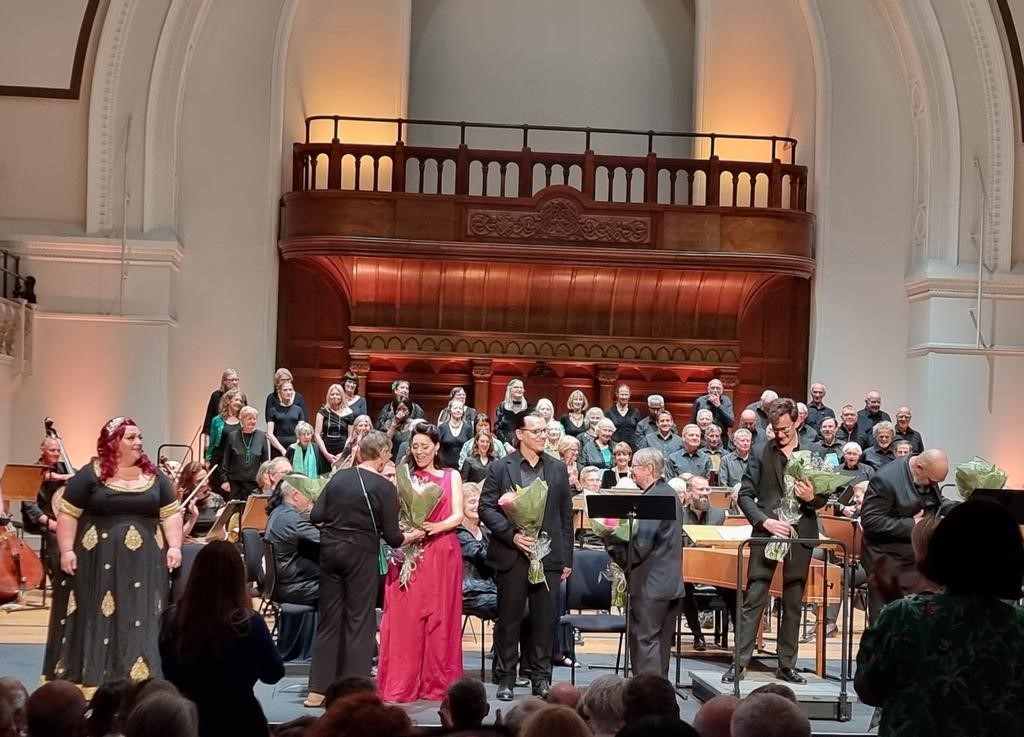
Finally the wait is over. After four long years in exile without an audience, Cardiff Singer of the World is back, and is celebrating its 40th anniversary, along with that of its host since the first competition in 1983, St David’s Hall, the national concert hall of Wales.

Having been fortunate enough to see the Welsh representative, soprano Jessica Robinson, at a recent lunchtime concert, I was very much looking forward to Heat 2 of the main prize in which Jessica had been placed, together with her fellow competitors Toni Nezic (bass, Croatia); Meigui Zhang (soprano, China) and Ogulcan Yilmaz (bass-bariton, Turkey). The judges for the evening were Sir Brian McMaster, former director of the Edinburgh International Festival, Argentinian mezzo-soprano Bernarda Fink, Welsh soprano Rosemany Joshua, multi-award -winning composer Errollyn Wallen, and returning as chair of the jury, Aidan Lang, general director of Welsh National Opera. The singers were accompanied by the National Orchestra of Wales.

First to perform was Meigui Zhang.  Meigui is an elegant singer, who clearly enjoys throwing herself into operatic roles. Her mellifluous tones rang out around the Hall. Her choices of Donizetti, Bizet and Lehar suited her voice type well, though a greater variety would have been welcome.

Ogulcan Yilmaz followed, with a selection by Rachmaninov, Mozart and Bellini. Ogulcan stated that he had been successful in making the heats after a few attempts, and the experience will have been highly valuable for him. Again, a wider choice of repertoire might have been beneficial in order to experience the vocal variation in style.

Next came Jessica Robinson, to rapturous applause for the “home girl”.  Jessica was the only singer to select five pieces (by Donizetti, Mozart, Verdi, Grieg and Jonathan Dove) and much thought had clearly been given to breadth of style and showcasing of technical skill and range. The audience clearly enjoyed this performance immensely, and Jessica’s ability to engage her audience via her pure theatricality was  palpable.

Toni Nezic was the final contestant, with a repertoire of Halevy, Verdi and Bellini. His warm bass tones, demonstration of range and ability to capture the audience worked well for him, and he will no doubt go far in his operatic career.

As ever, The National Orchestra of Wales, under the baton of Ryan Bancroft, accompanied each of the performers beautifully, and played no small part in enhancing the enjoyment of the evening.

Jessica Robinson emerged as a worthy winner, to the delight of the audience. She will be an excellent representative for the host nation in Sunday’s final. Good luck Jess!

Review La Clemenza di Tito, Chelsea Opera Group, Cadogan Hall by James Ellis

Photo credit: Linda Farrell

[USR=4]

This most recent trip to London was met with little sleep, tube closure and sweltering temperatures. This first night in, I wanted to see a group who have established themselves since the 1950s in their love of music making.

Chelsea Opera Group’s most recent concert was Mozart’s La Clemenza di Tito, his last opera. I’ve been curious to hear this for years, it’s a ancient Roman setting filled with deceit and vengeance, or so we think. I’ll confess this was a Mozart which didn’t grab me as much as other pieces, I still went along with it. It was shorter then the more famous work and though the story is slightly more dense then it needs to be, had sharp moments of drama. As for the music, there are very many marvellous arias, some duets and a chorus who pop up to declare how great their empire, Titus really is.

The plot may some issues with pacing and there are gender crossing roles as well, so some head stretching does occur. I was impressed by the professionalism of the while thing. The orchestra were right, the chorus had some proud moments and the soloists were right for the roles. Conductor Paul Wingfield occasionally shocked with grunts and stomps on the podium, his passion was shared with all others on stage. There was a grace to the composition, though almost certainly not historically accurate, the piece remains a fine example of letting things go, even if you’ve been greatly wronged.

The cast shone here. Helena Dix was a delight as Vitella, the most dramatically dressed in vivid gown and laurels. It’s a role mostly of plotting, her voice very strong in a commanding role. Sesto was played by Kezia Bienek, also indulges in cunning with the plot to destroy Titus. Here she left little doubt over her mezzo, it was clear and noteworthy in the part. Polly Leech also enthralled as Annio, a trouser role here and the audience was very keen on her. Simon Wilding was Publio, a minor role though one he filled with suspense, he is a bass to keep an eye on.

A last minute replacement saw Ben Thapa as Titus, a strange character one not seen for most of the opera. This is a commanding person to take on, though his clemency comes later he can be a bit of queen per se. Ben tackled this arias with vigor, though the final one might have featured some unsure moments. The fact he came in at the last hour and did this is also impressive, his voice is  quite enthralling and rouge. In the smaller part of the show, Servilia played by Ellis Laugharne was a brief affair, though had some lush moments with Polly, their love for one another define in duets and sweet arias.

The whole evening remained impressive. I’d love to come back for more!  

Chelsea Opera Group’s next performance at Cadogan Hall will be Verdi’s A Masked Ball 22 October 2023.

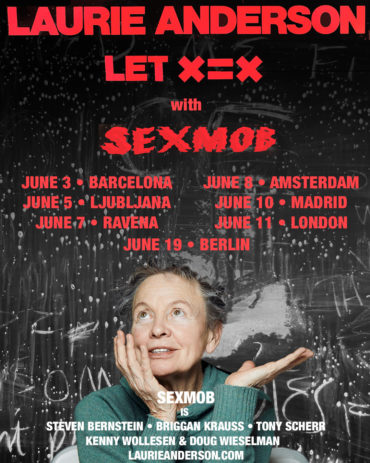
Review Laurie Anderson Let X = X Show, Barbican Centre, London by James Ellis

 out of 5 stars (5 / 5)

It has been a few years of waiting to finally see Laurie Anderson on tour in London. All the Things I Lost in the Flood had an ill fated date in the Capitol in 2020 and we wouldn’t discover what exactly happened with her estate just yet. I don’t think its yet to come here and a new tour Let X = X, should please both fans of her new work and much more classic offerings.

It remains her wry observations, slightly surreal sence of humour, her multi talented practices that wow. Spoken word, violin, performance art, video work and more which proves her brilliance. Her band also got us good with an array of pop, jazz, funk and everything in between. 

https://youtu.be/Vkfpi2H8tOE

We flew off From the Air  from her eternal Big Science album, a treasure on vinyl nowadays. There is a plane theme throughout the work and outstanding brass pepper the sound world with vigor. Her puns and modulations in her voice are also highlights, amazing how he can sound masculine when lover and higher is another sort of realm. The mostly  monochrome video work shed her chalk work flourish and thrive as snowflakes and chemical compounds. A spaceman falling off a mountain was a visual to not forget in a hurry. Her love of her late husband Lou Reed also loves here, a collaboration which spanned years. 

Lesser known works is also a reminder that there remains decades of art from Laurie. Her new curiosity with A.I. has lead to some quirky songs. Of course, her number one hit O, Superman  almost certainly her most known track. Minimalasit and quite string, it’s always a bob and had a strange aura all it’s own. Whilst we didn’t hear thing from Home of the Brave, there was a wonderful choice of songs from over the years. One wonders what will happen to A.I. 

This fabulous concert ended by wrapping things up with an audience off its feet doing an impronteu Tai chi session. Wonderful. 

Laurie Anderson continues on tour around Europe. 

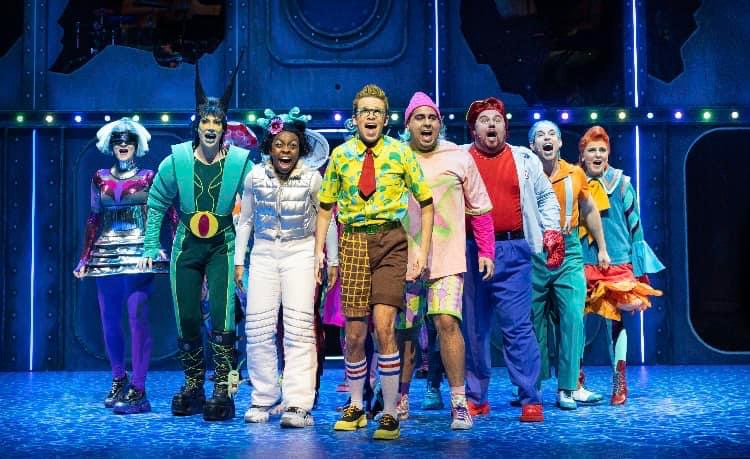
Review The Spongebob Musical, Wales Millennium Centre by James Ellis 

Photo credit: Mark Senior

 out of 5 stars (3 / 5)

The musical nebula has now taken a plunge to the briny deep of Bikini Bottom. Yet, can a live stage show of a beloved animation from Nickelodeon work? This could be the first musical for a lot of young ones, so there is that…

Easily a live show mostly for children, I’m still getting my head round the roster of newly written songs for the show. We see the likes of Cyndi Lauper, Steven Tyler/Joe Perry, The Flaming Lips, John Legend and Panic! At the Disco all making offerings here, as well as other artists. If the dizzying amount of work which went into the music had gone into the story, this would be an all round success. Kyle Jarrow with the book, took his shot, though its not quite right. I guess I’m a veteran of the original show, who saw it when it first came out when I was in high school, the mass of memes and gifs is tantamount to its staying power today. The late creator Stephen Hillenberg is now dearly missed, his TV show remains as a cherished creation.

We start off with typical pirates and the mock impersonation of deep sea explorer Jacques Cousteau (who co-invented scuba gear, no less) and we are catapulted into the bottom of the ocean. The characters here appear to make use of the vast litter which humans have dumped into the ocean. The show embraces the upcycled aspect of the premise and goes into over drive. We see bottles, cups, marigolds and more grabbed for the show, quite clever in some ways.

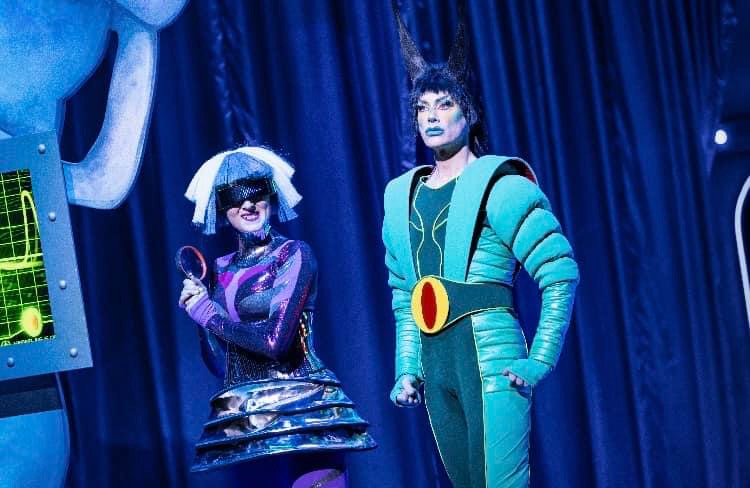
The sound also needs a lot of work. Many times the singers when talking were drowned out by the band or mics being not high up enough. This lead to some jokes not landing, past some clunkiness of the script. The story is very slight, a volcano threatens the town when Spongebob and friends try to save the day. The villian Plankton, conjures up another evil scheme with Karen the Computer, the only real subplot which doesn’t go anywhere aside little pay off (they just sort of get away with their wickedness). The songs though by a vast array of musicians, never feel too jarring and are quite fun in many respects. Pop, country, rock, gospel and rap all feature proudly. Most songs do gave that musical sheen you’d expect.

The cast demonstrate some great to average impersonations of the cartoon characters they take on. As Squidward, Gareth Gates does the nasal, though could even do more. He gets a tab sequence for the four legs and feet as said squid and I was glad there were moments with his clarinet, which the character is seen with in the show. Richard J Hunt as Mr Krabs attempts the pseudo-Scottish brogue of the miser crab fella, an odd role is more about the jokes than the songs. Divina De Campo as Plankton is great casting, though working with this script the role doesn’t reach much more than fun and not funny enough. Davina’s rap sequence vs Spongebob remained a highlight.

Photo credit: Mark Senior

As the title character, Lewis Cornay is near perfect. The whine, the laugh, the gait…everything. Nice pipes proves his talents and a sharp sense of comic timing is also there. Irfan Damani captures the splubby nature of Patrick Starfish, the less intelligent one. Tangled up in a cult of sardines, his humour comes from softly spoken insights and a few classic quotes from the show. Sandy the Squirel is from a delightful Chrissie Bhima, the outsider part who adds a whip of Texas to the show, I was expecting more country music! Perhaps the best vocals belong to Sarah Freer as the whale daughter of Mr Kraps, Pearl. Though her clothes made her look more like an octopus, she clomps around and stunned with a piercing voice I’d love to hear in other things. Hannah Lowther as Karen the Computer works with a very limited character, who only really serves Plankton, in their love hate relationship.

Minor roles also evoke the connecting fibre in playing in these recognisable parts. This is thanks to the marvellous costumes of Sarah Mercadé which are worth seeing just for admission. 

The Spongebob Musical runs at the Wales Millennium Centre till 10th June 2023, then on tour. 

Review Strauss’ Don Quixote, BBC NOW, St David’s Hall by James Ellis

I’ve seen much less of our BBC National Orchestra this year, I’ll admit that. Though what I have seen has been dazzling, I’m thinking back to the Charles Ives and John Adams a few weeks ago as a highlight. Our bright, American conductor Ryan Bancroft as Principle is choosing much more stimulating music than usual.

First we begin in Wales with Grace William’s and her Concert Overture. On a sad day, Grace chose to destroy manuscripts of several of her pieces, this overture being one of them. Other copies from previous performances had been salvaged and the piece is saved from being lost. It’s a jumpy, jolting few minutes. Grace’s vibrancy for orchestration is proven in this early work, I’ve never understood why she doesn’t get more love outside of Wales? The strings got a lot of attention from the composer and you can feel a unburdening anticipation to it all.

Next, a fashionable performance of Mozart’s 39th Symphony. Ryan made it breezily cool and light. The only discrepancy was a rogue phone from the audience going off between movements, holting Ryan in setting off into the rest of the symphony. I think we had some new concert attendees who didn’t quite grasp phone etiquette, especially when we are live on national radio. You don’t see Mozart symphonies as much with BBC NOW and I’d be down for more. You can feel the passion and the genius, thanks to our loving conductor who really cares about this music.

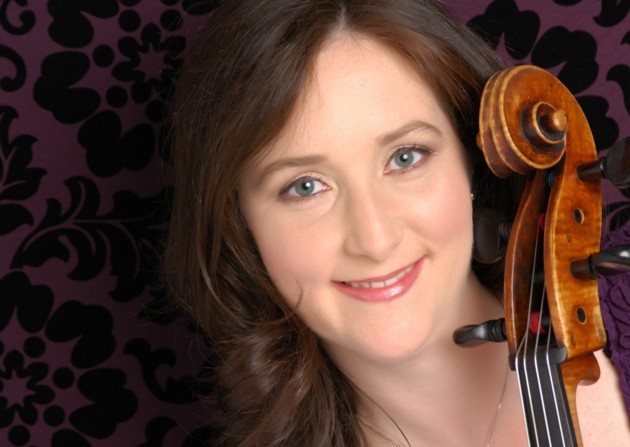
For this finale concert for the season, we had a rarity: Richard Strauss’ Don Quixote, a strange tone poem, which is also a cello concerto. Taking Cervantes’ famous epic of the mad Spanish knight, this made for one of the finer discoveries for this year. Lead cellist of the orchestra Alice Neary wowed here, were so used to seeing her in the thick of the other players, all eyes on her here. Not an easy piece to play, she delighted in the odd nature of the beast. The ironic waltzes, loved up romance and the acidic modernism that could only ever be R. Strauss. The discordant bars when Quixote famously mistakes windmills for giants are piercing, no doubt triggering a few audience members. On viola, Rebecca Jones adds to the joy as Quixote’s man servant Sancho Panza, not really a soloist though some curious playing for the much mocked viola is appealing.

Cardiff audiences would love to see BBC NOW players get more soloists roles not just for budgetary reasons. A chance to get to know who we’ve had all along in this marvellous orchestra. I only ever get more proud of BBC NOW.

Listen to this concert on BBC Sounds till 1st July 2023.

DangerPoint ‘A safety education centre with children at its heart’

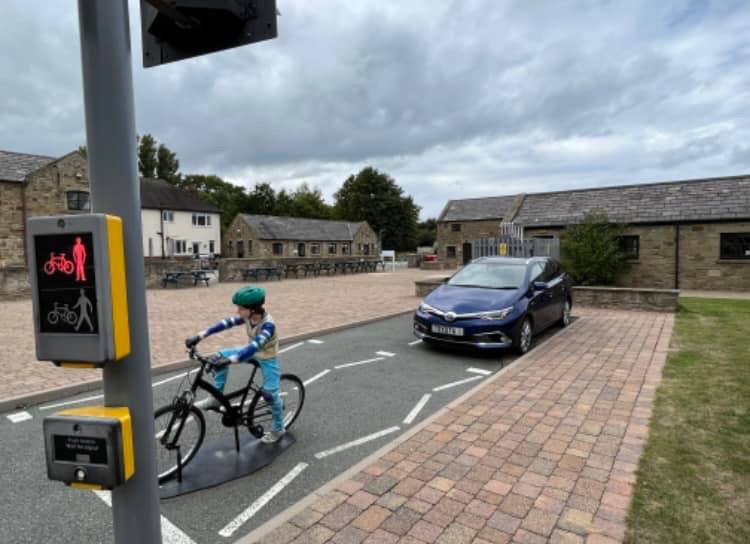
Opened in 2005, DangerPoint is an education centre which aims to inform the next generation about all things safety- from road safety, staying safe online, hazards to look out for in the home and much more!

An independent charity located in Talacre on the beautiful North Wales coast, DangerPoint has something to offer everyone, from educational tours for schools and organised groups to fantastic family days out, with a chance to take part in the Danger Detective Quest and Treasure Hunt or get artsy and crafty with CraftPoint- an opportunity to create and take home your very own masterpiece- from painting to pottery and beyond.

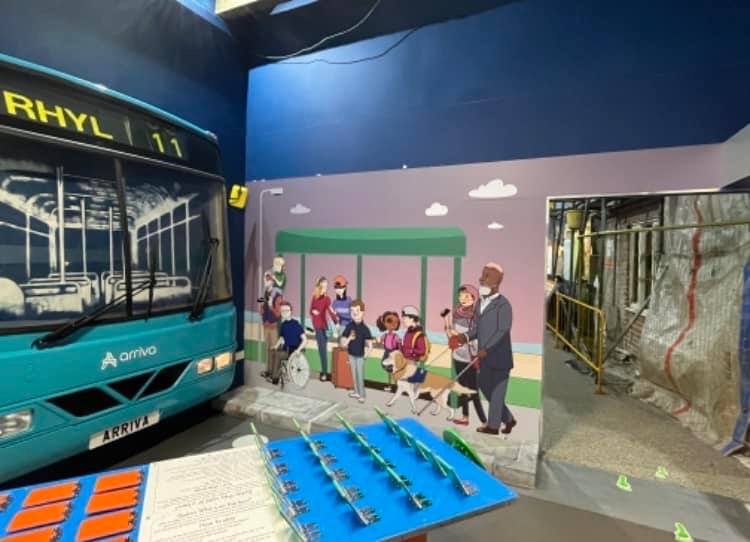
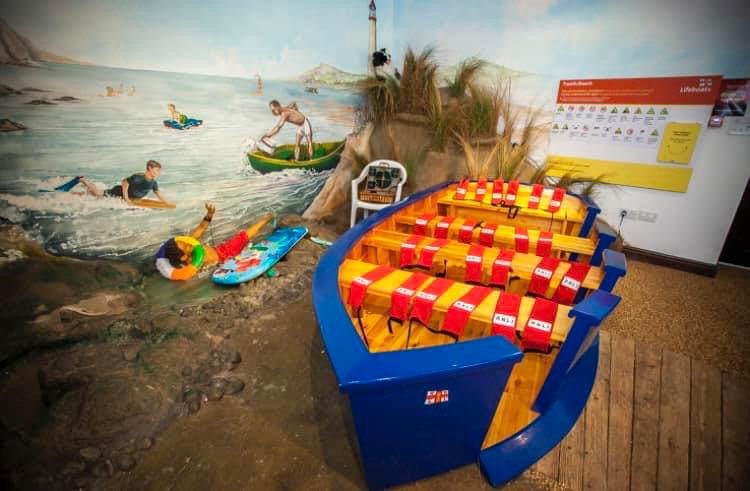
The centre is unique- providing an inclusive experience which immerses children and young people in real life situations thanks to its creative set-up…the centre is designed like a film set! Visitors venture from a living room to the kitchen, from the countryside to the beach, with many more stops along the way! Throughout their journey they are faced with varying safety scenarios and potential hazards as well as being presented with lots of hands-on activities to broaden their knowledge whilst having lots of fun!

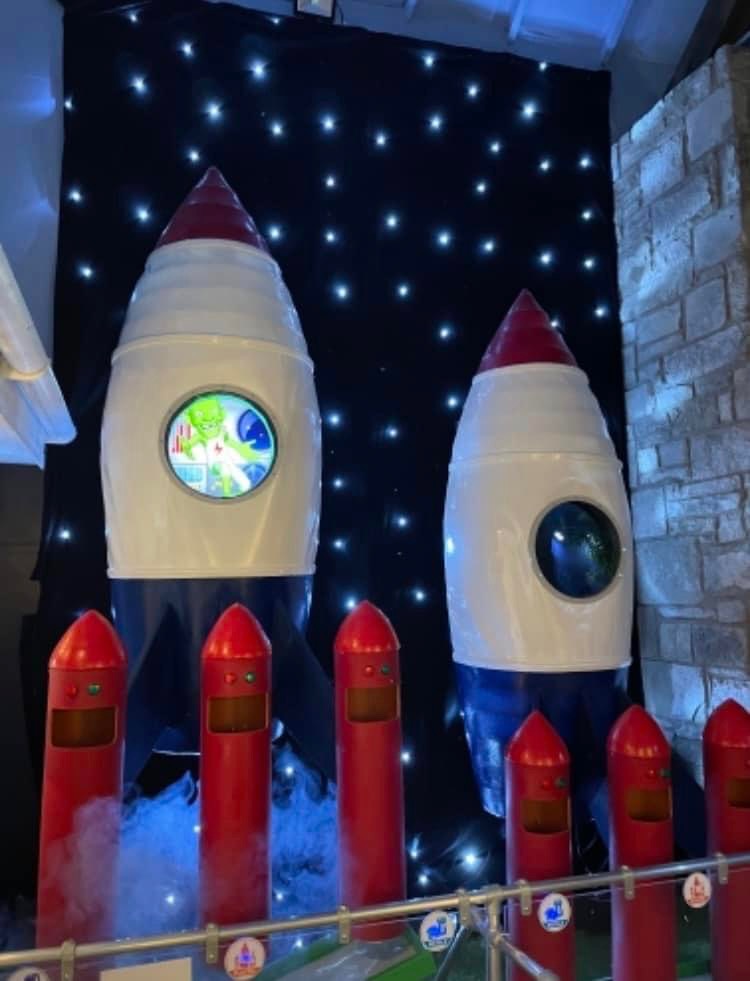
Visitors will also get the chance to meet DangerPoint’s very own mascot, K-os. K-os is from another planet and doesn’t understand the dangers he could face on Earth! During a tour, visitors can talk to K-os and share with him any safety hints and tips they already know or any they’ve learnt throughout their visit. If you’re looking for somewhere to gain life skills in a totally immersive and interactive environment, then look no further!

To find out more about DangerPoint please visit www.dangerpoint.org.uk 

Review The Hallé, St David’s Hall by James Ellis 

 out of 5 stars (3 / 5)

I’ve  not seen a classical concert so hectic at St David’s for years. The Hallé made the call and Cardiff answered with an impressive audience. Sat in Tier 5 I finally got to see the conductor’s face, that of an emboldened Dalia Stasevska. She turned and gave time to all the players, though I could hear her scoffing quite loudly doing dramatic moments. I love her though, she makes for a fascinating maestro to watch and seeing here near head on made for a highlight. 

Sibelius would being and end the night, Karelia Suite open with a typically Finnish, folksy fashion. It remained delightful, the last movement partially jolly within it’s ringtone nodding vibe. To be nearer the woodwind I could hear them much clearer and they ring out in a work like this if only for moments. One of the composer’s more accessible works, the symphony which follows might also be applied in that category.    

Sad to say Beethoven’s Triple Concerto for Violin, Cello and Piano left me mostly unmoved. With Nicola Benedetti having to cancel, Hyeyoon Park was up for the violin solo, aside cellist Sheku Kanneh-Mason and pianist Benjamin Grosvenor. This busy concerto has little going for it, though the three soloists made it more attractive then it really is. With so many soloists, little time is given to really get into the nitty gritty of a concerto proper. Some earth moments you’d expect from Beethoven are here and the usually rollicking passages were here. Hyeyoon and Sheku shared thematic elements due to their instrument being in the same family. Benjamin did some noodley piano from old Ludvig van, though little if anything took flight. Having said that seeing these three young talents on the Cardiff stage was quite touching. 

A surprise form Sweden and Andrea Tarrodi with her Paradisfåglar II (Birds of Paradise). With the first piece being just for string orchestra, here the second imagining is a lush and livid depiction of the jungle and the birds who frequent it. Inspired by Planet Earth from the BBC, Andrea was taken aback by the beauty of the Birds of Paradise, a subset of endangered birds who seem to have drag plumage and delightful dance moves. Wonderful glissandi evoke the shrill songs of these birds (though which specific bird of paradise is unclear), Fien orchestration sees a tam-tam struck very gently a few times and the string still shining in most of the piece. 

Dalia wasted no time and went straight into the next Sibelius: his Seventh Symphony. Surprisingly slight around 20 odd minutes, it lost momentum a few times and a musical storm did feel like it was coming. Dalia dazzled here, in the brief affair, the breeze and fire of the composer lived. The ending was full of promised and went off well, a finale which develops in the under current for such a brief piece. Brass and percussion here were devastating. I’ll have to listen to this again.

The short second half, left wanting more though still remained an evening full of bold and memorable music making. 

Review Camenae de Cymru, Vivaldi’s Four Seasons & Arias, All St Church, Bristol by James Ellis

 out of 5 stars (3 / 5)

It is lovely to see Wales based singers out and about, here the Camenae de Cymru visited Bristol for an evening of Vivaldi. Though they had two dates in Cardiff and around the area, a little trip over the border is never a strain.

All Saints Church in Bristol is a great find. Wrecked by Blitz bombs, the restoration in the 1960s is staggering and theatrical, the vivid stained glass work of John Piper also dazzles. The fine selection of lesser know Vivaldi in his operatic arias were fascinating and touching. Kristina Bitina as vocalist gave these a good shot, the choice from her opening Gloria stood out. The opera choices from Judith Triumphans and Orlando Furioso prove they should be performed more, they stand out for helping the opera art form develop as we know it. Kristina delivered in proud song and more of these lesser known feats would be highly encouraged.

The main event would be the famous Four Season concerto we all know and love. Yuri Savkin on violin needed no sheet music and was up for the challenge for this pristine piece. On cello Tabitha Selley made for a marvellous addition, whilst on harp Ben Creighton Griffiths was suitably Baroque in appearance and played with ease and contentment. Our host for the evening was singer and writer Nichola Bojczuk, with some fitting lesser known poems past the composer’s era. This as well as her own verse was fitting for the Seasons and a reminder that in the UK we are drastically losing our bird population.

Due to the size of the church the music was sometimes drowned out by it’s unrelenting echo, the harp at times had an overbearing bass. I’d be intrigued to hear more music in the church, I just cant get over how impressive the space is. There was a crunchy noise heard throughout the concert, which no one could seem to detect. Popping outside in the intermission, it may have had to do with the stained glass, though I heard little when out there. Apparently someone had taped protein glass earlier in the day, a strange ambient noise which felt watery aside the Seasons.

A pleasure to come and listen.

Camenae de Cymru perform in Penarth the Best Romantic Music of the 19th Century on May 13th 2023 at All Saints Church.

Review Art, Chapter Arts Centre by Peter Gaskell

Long before the shock of seeing Tracey Emin’s unmade bed as an exhibit in a gallery, or Martin Creed’s ‘Work No. 227: The Lights Going On And Off’, modern art has evoked strong emotions.

In this single-act play directed by Peter Harding-Roberts for Everyman Theatre at Chapter in Cardiff, the purchase of a blank canvas for a ludicrously high price pits pretentious Serge seeking to impress his friends against classicist Marc who scorns the work as a “piece of white shit”. When he asks “Are you going to have it framed?”, Serge laughingly replies “It’s not supposed to be framed. The artist doesn’t want it to be. It mustn’t be interrupted. It’s already in its setting”, echoing what Mark Rothko said about keeping his paintings frameless to increase their impact on the world, as part of the world rather than separate objects.

Their friend Yvan is drawn into the debate, whose appeasing nature suggests he may provide an opportunity for some resolution to their opposing views about modern art. More than the debate about the merits of the artwork though, ‘Art’ explores the art of friendship as the antagonists realise the fragility of their long-term relationships and question their validity, the painting itself a catalyst for amplifying hidden tensions in a longstanding three-way bromance.

Seasoned Everyman actors Brian Smith and Gregory Owens are joined by Michael Taylor Moran in Yasmina Reza’s 90-minute narrative, structured not in formal scenes but in pithy little episodes, mostly duologues between two of the three protagonists, punctuated by confessional asides that break the fourth wall. The action takes place in Serge’s apartment where two large off-white armchairs are separated by a settle that serves to prop the painting centre-stage as well as a seat when all three characters need to sit. The geometry of the minimalist and monochromatic set allows the three of them to keep their distance from each other which I believe helps accentuate their differences, although I heard someone saying they wished the actors got physically closer as one might expect of true friends. Yet others have criticised the playwright for failing to establish a solid emotional base for her characters’ friendship, that these men are just archetypes, but I disagree. We don’t need to know the origins of their friendship, just the characteristics that account for their differing responses to the artwork in question, and these are well-portrayed.

In the end there is a twist that leads to the suggestion that the canvas represents a man who moves across a space and disappears, a universal metaphor for life itself perhaps, in the same way Creed’s Work No. 227 is interpreted as signifying birth (lights on) and death (lights off). I will resist identifying which character interprets the white canvas in this way as it might spoil the enjoyment of a play I would recommend seeing, for its nonstop cross-fire of crackling language and performances by three actors who capably hold our attention throughout as their levels of exasperation rise and fall according to the strain of their characters’ efforts to keep their friendship alive.

In the programme notes, the director quotes the playwright who considered her play as much a tragedy as a comedy and challenges us to disagree. That ‘Art’’ won the Molière Award for Best Author and the 1998 Tony Award for Best Play suggests the play works, and this performance also, because it is both.

Art runs at Chapter until Saturday May 13th

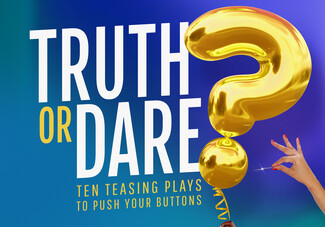
TRUTH or DARE, Theatr Clwyd, Thursday 4th May 2023 by Simon Kensdale

There will be no new theatrical professionals in the future without development programmes. These programmes are problematic because the work that comes out through them is bound to be variable. Yet, just as investment clubs throw money at funds supporting collections of start-up businesses, in the hope that the one that comes good will offset the losses incurred on the duds, a theatre initiating a development programme hopes to be able to mine a new vein of artistic talent.

‘Truth’ or ‘Dare’ are representative of Theatr Clwyd’s investment in its local community. Each consists of five short plays, written by freelancers, performed by two teams of ten actors. The plays are given the full treatment, with two directors and two associate directors, two stage managers and two deputies and a good-sized creative team. No expense is spared.

You might think this would be high risk. Will anyone travel to see new work by unknown writers being staged on a Thursday night in a small town in north west Wales? Isn’t there a danger of having more people on stage than in the auditorium? This can happen but fortunately it doesn’t happen in Mold. Because of Theatr Clwyd’s reputation and its well established relationship with its audience, they turn out to see what is going on (including people who are still the right side of forty). Thus, on the Press Night for ‘Truth’ and ‘Dare’ there were well over a hundred people in attendance. The makeshift space, The Mix, Theatr Clwyd is using while its main house is being refurbished, was over three quarters full. The Mayor was there in person, too, wearing the chain of office.

The audience enjoyed the double bill. They laughed long and loud. They clapped vigorously. They cheered and gave the casts of both groups of plays a standing ovation. It was quite a night and refreshing to experience so much open enthusiasm and support. It wasn’t unlike being at a football match when the home team wins.

That said, I think what appealed most to the audience were the performers. The evening became a show case for the actors and the creative team behind them, i.e. they fully repaid the investment. I felt, however, that the performers were better than the material they were working with. I couldn’t understand the connections between the plays and Truth or Dare, for example, and I couldn’t find the comic centre or the joke in most of them. I missed the point of One Stop Short and didn’t see why a stuffed teddy duck had replaced a dog in This Time Next Week. I felt there was an absence of plot And The Crowd Goes Boom.

This could have been down to my lack of perception but what the actors were doing, on the other hand, I could relate to completely. They managed to extract every last drop of potential from what they had been given. Every traditional theatrical gag was included, up to and including ‘Take a Chair’ – (Exit with chair) (groan).

What the audience got was a high-octane display of the art of coarse acting which, in some cases, took farce to a new level. One feature of this was the incorporation of objects provided by the audience for the cast to use as key props. These objects had not been seen before the night, so the actors were required to improvise to incorporate them quickly into the scripts. Cue much mirth as a doorknob became a murder weapon and a toilet roll became a prized personal possession.

Perhaps it’s unfair to pick out individual performances, because the evening favoured the comics over their straight supporters, but Seren Vickers was astonishingly daft as James Bond in drag; Laura Dalgleish managed to do things with a dowsing stick that I can’t describe and Geraint Edwards managed to completely reinvent the whole business of sales and marketing. These three weren’t just over the top. They were somewhere else entirely. Leilah Hughes as an all singing, all dancing Barbie was not far behind them.

Whilst the plays themselves were a mixed bag of different styles and approaches, there were two – The Wake and Bwgan (The Ghoul) – which stood out by being more or less naturalistic. The former was a set piece in which two sisters argue over what they will each inherit from their (toilet roll fixated) mother. The latter was a kind of ghost story in Welsh, which provided Betson Llwyd with the opportunity to be suitably ghoulish and to perform a bravura solo monologue. The fluent Welsh she spoke added atmosphere and musicality to the story, as I don’t speak I inevitably had to look away from what was being done on stage to read the subtitles on the overhead screen. Lisa Jen Brown contributed a lot to the success of both these pieces.

The language of Bwgan and the approach adopted in the other plays, up to and including the audience participation, has its limits, however. I’m not convinced this programme could transfer or tour and enjoy the same level of success as it had at Theatr Clwyd. In the end, although it was enjoyable, it wasn’t very original. What I would like to see personally is the same level of talent and commitment invested in plays that capture the imagination. There are short comic plays by Chekov and O’Casey that would really come to life with this cast’s energy. The treatment could also be applied to work by Ionesco and more recent comic dramatists like Dario Fo. This creative team could easily tackle longer classic plays by Moliere or Goldoni.

Finally, it would also be good to see serious work – drama that is disturbing and intellectually challenging – replacing the preoccupation with going for laughs, which is something of an easy way out.

Of course, it’s not fair to compare the programme with material by the greatest European playwrights and it’s beside the point. What one would hope, though, is that Theatr Clwyd’s development programme does succeed in unearthing writers and scripts which will allow them to get beyond providing their audience with light entertainment and just tickling their fancies. On the basis of the good things that were in this double bill, that should be well within the theatre’s capabilities.