All posts by admin

Review Hamilton, Wales Millennium Centre by Tracey Robinson

 out of 5 stars (5 / 5)

As the lights dim and the first notes play, the audience is instantly pulled into a wave of energy and emotion. The room buzzes with anticipation, knowing this is more than a performance—it’s an experience. Hamilton isn’t just a musical, it’s a look at America’s evolving identity, its history, and legacy complexities.

The stage, simple yet full of movement, becomes a character itself. With purposeful choreography and smooth transitions, it reflects Hamilton’s fast-paced life and the revolution he sparked. As the cast moves with energy, the audience feels drawn in, no longer just watching history but experiencing the ambition, ideals, and struggles that built the nation.

Lin-Manuel Miranda breathes new life as a vibrant, modern story of Alexander Hamilton, a relatively overlooked Founding Father, crafting a narrative as bold and innovative as Hamilton himself. By blending hip-hop, R&B, and traditional Broadway, Miranda mixes history with a modern twist, creating an energetic retelling of America’s origins that feels both relevant and engaging, allowing audiences to connect with the story. Its true brilliance shines through its diverse cast, portraying America’s founders—a powerful reminder that history belongs to everyone. The lyrics are sharp, clever, and deeply emotional. Songs like “My Shot” and “The Room Where It Happens” delve into ambition and power, while “Burn” and “It’s Quiet Uptown” deliver raw, heart-wrenching moments.

The show is a feast for the eyes and the heart. The rotating stage adds depth and symbolism, representing the continuous flow and ever-changing perspectives of history. The performances grab you and don’t let go, Sam Oladieinde’s Burr keeps us hooked, making us question if he’s the villain or just tragically human.

Miranda’s Hamilton is a force of nature, leaving us breathless with his unstoppable energy. Billy Nevers steals every scene, switching from the flashy Jefferson to the lively Lafayette with effortless charm. King George III pops in now and then, stealing the show, with Daniel Boys nailing it in gloriously over-the-top camp style.

It’s rare to see a hip-hop musical with impressive choreography, rap battles, and locking, especially one done so well that it makes you want to get up and dance. It was great seeing Cardiff’s, Levi Tyrell Johnson performing in the ensemble.

Shaq Taylor was exceptional as Hamilton, bringing both strength and moments of humour to the role. His commanding stage presence was undeniable, but it never overshadowed the equally impressive cast. The audience’s applause and whoops of delight after every song reflected the high energy and joy the cast brought, showcasing their talent and strong camaraderie. Maya Britto’s portrayal of Eliza was powerful and emotional, especially in “Burn,” where she conveyed deep anger and betrayal. In the reprise of “Stay Alive,” she perfectly captured the heart-wrenching grief of a parent losing a child, leaving the audience profoundly moved.

The real magic of Hamilton goes beyond the performances and music—it’s how it makes us feel deeply connected to the characters and their struggles. We see our own ambitions in Hamilton’s relentless drive, our regrets in Burr’s hesitation, and our grief in Eliza’s heartache.

Hamilton is one of the best musicals I have ever seen. If you haven’t already got tickets run to get them now, you’ll be swept away!

Review A Christmas Carol, The Sherman Theatre by Kate Richards

Image Credit Richard Hubert Smith

 out of 5 stars (5 / 5)

Taking two children (11 and 12) to see a production of the Dickens classic ‘A Christmas Carol’ and knowing nothing about the production was a risk.  I’d heard it was quite long, I was worried it might be very dour and maybe the language would be inaccessible for youngsters.  I’ve also experienced other Christmas productions which were quite ‘arty’ interpretations of classic tales (e.g. The Lion, The Witch and The Wardrobe – when during the interval I heard a child ask their parent ‘Mummy what’s an Aslan’?) and clearly went way above their heads.  So, I was fairly surprised to see a variety of instruments on and before the stage as we came into the comfortable auditorium.  I was also reassured to see a detailed set of a traditional snowy, Victorian street scene, as I’d feared a minimalist, abstract set that might not convey the oppressive Dickensian atmosphere.  The opening seconds of the performance also did not disappoint – a dramatic musical flourish and a burst of coloured light revealed the silhouette of our ‘protagonist’ complete with tilted top hat and heavy winter coat.  And that readers, was the end of all the traditionalism……

‘He’ was not a he at all – this Cardiff dwelling, Ebenezer Scrooge (or Ebbie) is a cello-playing, powerhouse of a woman with the stature and stage presence to intimidate all but the bravest of souls.  Hannah McPake strides around the stage, glaring and hollering at anyone who tries to drag her into the spirit of Christmas and merely laughs at the impending threat of her three night-time visitors. 

It’s difficult to know where to start reviewing the rest of the cast – each of them taking on at least two but most often four or five other characters through-out the show – but undoubtedly what they all have in common is an abundance of talent!  It is honestly breathtaking the quality of the acting, singing and musical skills we were treated to by this accomplished cast.  We had a harp, an accordion, a saxophone, we had puppets, we had slapstick comedy, tears and anguish, romance and West-End quality voices from a cast of only 8 and there wasn’t one amongst them that didn’t add to the richness of the experience we had in the Sherman Theatre that evening.

The subtle beauty of the ghost of Christmas past (Catrin Mai Edwards) – beautiful Welsh vocals and evocative storytelling had me transported to Victorian Cardiff and entranced.  Then, listed only as ‘Apprentice Actor’ in the programme, our hearts were all broken by the perfect tones of Madalena Juma as Ebbie’s Mum forced to give him up as she was sent to the Workhouse.  ‘Apprentice’ she may be, but she is definitely mastering her craft most ably as she held her own amongst this accomplished company.

After the emotion and the drama of the past, and still laughing in the face of her past crimes and misdemeanours, Ebbie and the audience are confronted with (or maybe ‘assaulted by’) the Ghost of Christmas Present…..what can I say about Owen Alun as the Ghost of Christmas Present?  There are no words – suffice to say that EVERYONE needs a ‘Ginger North Walian’ in their lives at Christmas (and frankly all year around!).  No spoilers here – you have to experience it!

In a very modern backstory, we got insight into the reasons behind Ebbie’s notorious miserliness and the drama was built as we thought the Ghost of Christmas Present had finally cracked through her hard shell and Ebbie would be saved from the torment and chains endured by her former business partner Marley, but alas she soon slipped back into her old ways.  Bring on the mighty Ghost of Christmas Future! 

The creativity of this production is wonderful – the four ghosts (including Marley of course) could not be more different – they are humorous, enchanting, ridiculous and terrifying and take the audience on a rollercoaster of emotion through-out the nearly two-hour production.  There is so much attention to detail in the set, the costumes, the vulnerable delicacy of the puppet children, the music and the songs – it combines to make a perfect evening.  Last Christmas I had the pleasure of seeing Disney’s Aladdin at another venue in Cardiff – the big budget spectacular was incredible and left me feeling joyous and uplifted, but I can honestly say that the exuberant feeling as I jumped to my feet to explode into applause with the rest of the audience after this production, was absolutely no less life-affirming and the first thing I did when I got home was have a look to see if there are still tickets available to go again!  This is pretty much a first for me – I don’t think I’ve seen any production twice in my life!  It was heartening to hear that my 11-year-old son and his friend loved it to, and he’d also be willing to spend another evening in the company of this incredible cast!  Oh, and if you’re wondering who his favourite character was?…….That well-known Dickens character – the business bauble!  You’ll just have to go and find out for yourself!

Review Ensemble 360, RWCMD by James Ellis

 out of 5 stars (4 / 5)

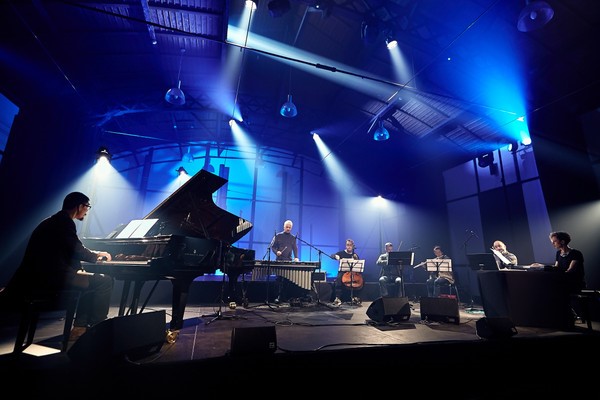
A new ensemble to discover. Some familiar faces along the way. New work and experimental master abound. Helen Grime and her Seven Pierrot Miniatures took fitting poetry not used in the later Schoenberg as the bedrock for this. Pierrot being the clown icon of the Commedia dell’arte character from Italian culture is the foundation for half the programme. Grime’s music here is fluffy, strange, almost evocative. A premiere from Piers Hellawell…Woodsmoke. This would be Robert Plane on clarinet, best know to Welsh (and BBC Proms) audiences as leader of the instrument for BBC NOW and Tim Horton on piano. A harsh work, still very much in a rigid form, though alert and heightened with fine furies from both players.

It would be Brahms to cleanse the pallet, that of his Trio for Clarinet, Cello & Piano in A minor. Unlike his other pieces, Brahms has an effortless idea after idea in this trio. The melodies flow and are at ease with the three players. Whilst Plane lead in many ways, cellist Gemma Rosefield also found alluring offerings, the writing for her instrument she seemed to truly savour. Those of you who know me might scoff at Brahms, yet when he does it right (in such instances like a piece like this) there can be magic and an accessible scope.

Lastly for what I was here for: Schoenberg’s Pierrot Lunaire. Soprano Claire Booth has recorded this with the Ensemble to glowing reviews, so expectations were high. This is Schoenberg before the tight Twelve-tone technique he would be most famous for. What this is however is a bizarre, vivid, uncompromised set of songs with a singer who talks, as opposed to singing proper. This ‘sprechgezane’ changes little over it’s more than twenty movements, only altering in temperament, volume and enunciation. For the early years of the 20th Century, its bonkers and a thrill to those willing to respect it. The ensemble play with expressive density and allure, Booth savouring this peculiar piece with sharp set of performative skills throughout. A plus one not akin to this as much asked me during: “Why is everything in German so intense??” That cannot be denied.

Review Mary Rose – York Theatre Royal by Simon Kensdale

This is a play – by JM Barrie, the author of ‘Peter Pan’ – that shouldn’t work today. First produced in 1920, it puts stereotypical characters into conventional settings and develops conversations between them in dated, middle class English. There is no direct conflict and the use of clichéd idiom and vocabulary is stifling. On top of this, the plot splits between two very different places and then takes fifty years to completely unravel.

Yet it does work. Barrie prompts you into reconsidering some time-honoured and appropriate literary themes. This may be because in ‘Mary Rose’ he deploys a crude form of surrealism, using it to open up another dimension behind the mind-numbing realism.

A little girl goes missing on a small island during a family holiday. After a month she reappears, unharmed and unconscious any time has passed. Since her parents are overjoyed to have her back, this mystery is accepted. Because it is never explained, though, sitting in the audience you try to rationalise it. Is it a reference to the number of children who died in childhood before the advent of modern medicine and hospital treatment – and of how a century ago parents simply had to cope?

Because of their daughter’s brush with death, the parents in the play are overly protective of her. They worry about her getting married. She does, however, and at first everything goes well – she has a baby boy – but when she persuades her husband to take her back to the island where she once disappeared – she disappears again, this time apparently for good.

You puzzle over Barrie’s intention. You think perhaps now he is referring to how often women died in childbirth before antibiotics were discovered. But huge numbers of young people had died in the flu epidemic that followed the First World War. A lot of households had to deal with losing their daughters as well as losing their sons. The mystery in the play echoes a social environment where a generation grew up with its members not having known one or both of their parents.

‘Mary Rose’ doesn’t wallow in sorrow. Mary’s parents and husband get on with their lives. The family maid becomes a surrogate daughter and is promoted to being a paid companion for Mary’s mother. But, in yet another twist irreconcilable with everyday reality, Mary returns after a quarter of a century. She is unchanged and, again, doesn’t know what has happened. Of course, everyone close to her has aged to the point at which she cannot recognise them – even though they all recognise her. Trying to grasp the situation, you consider the issue of mental stability. Mary is like someone who has gone mad, still believing herself to be young when she is middle-aged. The unhappy atmosphere in the family re-union thus becomes realistic and credible, even though the route the story has taken to set it up has been fantastic.

To round the play off, the story fast forwards in a movement reminiscent of ‘The Winter’s Tale’ –
‘Impute it not a crime
To me or my swift passage that I slide
O’er sixteen years, and leave the growth untried
Of that wide gap, since it is in my power
To o’erthrow law and in one self-born hour
To plant and o’erwhelm custom.’

Only Barrie’s story skips another twenty-five years, to the return of Mary’s son, Harry, to the house of his grandparents. There he encounters his mother, now a ghost.

A play which reminds you of the quote you learned for your A level English exam can’t be all bad. ‘Mary Rose’ is not on the scale of a Shakespearean play, but it gets away with what might just be a device – the use of unreal passages of time – to force consideration of family life – at this point, a kind of climax – reconciliation. The long-lost son is allowed a (brief) meeting with the mother he never knew, while she discovers her son has led a full life, a discovery that allows her to disappear forever – happy at last. Barrie succeeds in infusing his story with some poetry – as he had earlier with ‘Peter Pan’.

You could leave the theatre thinking about how surrealism never really got going in England, perhaps because of our insular attitude towards Europe, perhaps because our intelligentsia didn’t speak any foreign languages. You might also want to wonder why Barrie, who was very well connected with the other literary figures of his day, is no rival for Chekov, who was born in the same year. He’s hardly an English Ibsen, either. But whether you’re interested in its background or not, the York Actors Collective deserves congratulations for reviving a play that is so little known. (They won’t have earned much for their work, either, as it only resulted in a short run in a studio space.)

The Collective managed to wring the few laughs there are from the script. They made the stuffed shirt characters more or less sympathetic. The scenes didn’t drag as they might have done and the conversations, although clunky and predictable, rattled along without the need for overacting. The addition of a slight Australian accent for Harry, and a Hebridan brogue for Cameron, the gillie who accompanies Mary and her family to the little island, added colour. I didn’t find the portrayal of Mary’s husband, Simon, convincing but it is nightmare role to play, as he – a naval officer – is completely devoid of personality. The set was minimal but adequate for a studio production. The period atmosphere was caught by a few items of furniture and the appropriate clothing.

Theatres shouldn’t run too many revivals at the expense of new work, but there are a number of plays out there which are unfamiliar to the general public. Given the right kind of treatment, venues will benefit from putting them on. We saw this with the National’s ‘An Inspector Calls’ a few years ago and also with Theatr Clwyd’s production of ‘Rope’ in July this year. More, please.

Review Sarah Connolly & Joseph Middleton, Wigmore Hall, London by James Ellis

 out of 5 stars (4 / 5)

It’s been over a decade I’d say since last seeing the great Sarah Connolly. Now a Dame, one of England’s finest mezzos spent an evening at Wigmore with a inspired programme. Whilst Imogen Cooper could not make it on piano (a decision apparently made months ago), Joseph Middleton gave the honours.

In an all German first half, it was everything I’d ever need. In Schumann’s 6 Gedichte von N Lenau und Requiem (bare with me, this is correct), we got a splendid account from Connolly. Her German sounds great and is a lovely actor too, the sensuality and aching in the verse bleeds out. Her voice never overbears at all. The mezzo is finely crafted, the gusto she brings but a thrill to all. These German themes would continue with Huge Wolf and a fine selection of his songs. These too were superb, dare I say even more thrilling than the prior. A rich evocative nature was the aura of these, Middleton also as strong in these allusive bars which never gave away all their secrets.

After the break, a breakneck voyage to France, England and the United States. Debussy’s Chansons de Bilitis, was a deeply allusive set of three magical songs filled with merriment. Henri Duparc (who usually crops up at French recital’s) had the Extase in this continuation of the Gallic themes. Not as perceptive as the Debussy, though light and bright, filled with smiles. A selection of Benjamin Britten folk arrangements charmed, even with his stuffy ironies. ‘Sephestia’s Lullaby’ from A Charm of Lullabies was a stand out, a whiplash delivery in a nursery rhyme patter, so fetching the audience lapped it up. An end with songs of Samuel Barber was a more solemn turn, the solemn words of James Joyce ringing true. ‘Sleep now’ one of a few surprises, it was just a bit dreary to end with. Still the musicianship was razor-sharp, as expected.

The encore was Tangoes by Richard Rodney Bennett, what finer way to send us off?

Review Julien van Mellaerts & Alphonse Cemin, Wigmore Hall,  London by James Ellis

 out of 5 stars (3 / 5)

After two concerts over the space of a day, I was not quite yet done with Wigmore Hall.  The next afternoon, we got an afternoon dubbed ‘Au cimetière de Montmarte’, a tribute to the cultural district in Paris. Though this was mostly a French programme, we started in German with Robert Schumann. His Dichterliebe were a delightful collection of songs. These little pieces oozed with love, and more love, nature and landscapes and a passion for the heroic. So brief, over in a few bars and they delighted in every sense. Tender listening.

Julien is a fine baritone  but my one reservation are the high notes. They go into a realm of the almost uneasy, an enforcement not pleasing at all. Though the middle register is great, the low notes wonderous pools of depth. On to France with Berlioz and Lili Boulanger, the later being much more intriguing. The former’s extracts from Les nuits d’ete were witty and sombre, though with Lili we gets lots of ideas and impressionisms. Her Attente is new to me, though anytime we hear her it’s quite special, her tragically early death snubbed out a composer of real talent.

Poulenc and his Banalités are cheeky portions of froth and nostalgia in equal measure. The cabaret is very much the setting, the mood is sultry and fun. Pianist Alphonse Cemi looks like he enjoys the material just as much as our singer, playing with an abandon little seen today, fast and truly tight when needed. Further merry treats from Guilbert and Trenet ended this Parisian voyage. It was one of light humour, conversational insights and of moody illusions. An English classic as an encore: A Nightingale Sang in Berkeley Square was musically just about right, bringing us back to our current local. 

Review BBC Singers, John Tavener’s Requiem Fragments, St Martin in the Fields, London by James Ellis

 out of 5 stars (4 / 5)

The BBC Singers remain one of many musical institutions who have been compromised by politics and funding. We’ve seen all the dismal activity in Wales with some of our groups, we really feel all this is happening at the wrong time.

This wonderful concert in a perfect venue had all the right features. Condensed down to 70 minutes and with the loss of conductor Sofi Jeannin, it would be Nicholas Chalmers who would take the plucky reins. This John Taverner heavy concert was filled with light, beauty and hope. Samuel Barber’s Angus Dei, better known as the Adagio for Strings in its quartet arrangement is famous and remains as powerful as when it was written. The Singers excel here, brooding harmonies and gentle harmonics are their powerhouse. Kristina Arakelyan’s Evening Prayer has few tricks nor frills, though was a miniature of grace, a subtlety not heard for some time.

Tavener’s Funeral Ikos is taken from the Greek Orthodox Church for when one of their priests dies. With stirring vocals and the sharing of the passages between the gendered singing groups, it could only be moving. The “Alleluias” are particularly strong, warm and golden as they stretch out between all. A return from Arakelyan, this time her Holocaust Memorial Day Hymn. This smooth writing comes from a composer in her youth, filled with promise. I’d like her to push the envelope and try out more experimental things.

Repurposed for Princess Diana’s funeral, Song for Athene was heard by over a billion people that day. It never loses its footing, the pacing is perfect too. Grabbing slices of Hamlet and more Orthodox wording, the chorus had moments of sheer wonder here. You are always pleased when it’s on the programme and it should leave many eyes teary. A more recent outing from 2014 with Tavener’s Requiem Fragments was the end this night. Having died the year prior, this send off saw its premiere at the Proms in London. Inspired by Renaissance master Josquin des Pres, these fragments also feature a string quartet and three trombones.

It’s odd in many ways, though filled with bracing, pretty moments you’d always expect. The quartet add a lot of power in the blend with the singers. The trombones are used sparingly, if little more then plodding and brief declarations. With Hindu texts melding with Latin, it felt like one of many latter offerings of Tavener and his fascination with faiths of the world. Even the opening words are a zen like “Ommmmm”. The solo for soprano stood behind us in her lush choral is then mirrored by the chrous, a standout of the piece and then done again for good measure. I think I may have preferred this upon its first outing, listening on the radio a decade ago. 

Review Septura, Wigmore Hall, London by James Ellis

 out of 5 stars (3 / 5)

In their tenth anniversary, Septura brass have made a name for themselves in the brass world. This being my first encounter, I wanted to savour their sound. The debate rages on whether brass on it’s own works as well as expected…still I was keen to see. Artistic director Matthew Knight would like me to think so.

Orlande de Lassus’ Lagrime di San Pietro is very much of its era, 16th Century. Septura has covered a broad palette spanning five centuries, new commissions also part of their makeup. It was lovely to heard essentially medieval music, unbovered by complexities, just affectionate and pleasing music.

Roxanna Panufnik got a premiere with her Seven Heavens. Music is in the family her father also a composer. I was stood behind her at the box office, we must do an interview sometime. Inspired by the Islamic depiction of the seven levels of heaven, the piece has an expectedly exotic plain. Using scales from the Muslim world, the effect was of worth, even if a whiff of novelty lingered. Strange harmonies between the players, aside perfumed solos was pretty much the whole piece. It also opens up the truth of musical languages from around the world, something not always seen today.

In an argument by Simon Cox, a selection of Prokofiev’s 10 Pieces Op. 12 was a cheeky opener to the second half. As ever acidic and bursting with rampant sure fire wit, you can always rely on the Russian composer. The audience was amused too, some laughter after certain moments stood out. For me, this and the last piece was the most fetching and attentive.

Shostakovich’s String Quartet No. 8, arranged by Simon Cox and Matthew Night worked very well. The alarming energy and morbid musings of Shostakovich didn’t win in the cross over. This quartet from 1960 came after years of deeply rooted anxiety and paranoia over his home county and his position in it. Could further arrangements work just as well?

The encore was on the tip of my tongue, I thought it was Debussy but I cant quite recall. 

Saturday 16th November 2024 

Review Richard O’Brien’s Rocky Horror Show, New Theatre, Cardiff by Bethan England

 out of 5 stars (4 / 5)

Rocky Horror show is certainly a cult hit by this point, clearly evidenced by the masses of Franks, Riff Raffs and more in the New Theatre foyer area, along with an abundance of corsets, high heels and golden top hats. It’s always an experience attending a production of this show, even from the moment of stepping into the theatre! But after all these years, does the classic show still deserve its prominent status?

The show looks back to its classic roots but with a fresh new face, courtesy of direction from Christoper Luscombe and excellent synchronicity from choreographer, Nathan M Wright. The Phantoms and cast are slick, utilising the full stage and, surrounding, but never encroaching upon the main action. There is a freshness and a joy to the movements which I think I’ve missed in other productions of this show. The contrast between the bright, popping colours of the first scenes and the later darker, yet still fabulous interior of the castle is expertly designed by Hugh Durrant. The whole set is surrounded with a twisting film reel and the musicians sit above it all, looking down upon the action. Lighting makes the stage truly pop with disco balls, lasers, projections directly onto the stage and more, another layer to the craziness of the plot, designed by Nick Richings.

The music is iconic of course and is lavishly brought to life here by a talented Josh Sood and his band, Ollie Boorman (drums), Dan Humphreys (bass guitar), Liam Spencer-Smith (guitars) and Dave Webb (reeds). Having them onstage rather than below in a pit really makes them a part of the action and ensures that the music envelops the audience in those well-known musical numbers. The songs are performed with panache by the band; the stand outs are Sweet Tranvestite and, of course, the incredible, Time Warp, which had multiple members of the audience up on their feet and dancing along.

What truly made this show for me was the outstanding cast; each and every one of them gives us a truly joyous performance; the singing and comic timing is particularly good. Lauren Chia and Connor Carson are lovable and clueless as our young lovebirds, Janet and Brad; I particularly enjoyed their rendition of Once in a While, beautifully harmonised, a tender moment in a somewhat manic and crazy show. Job Greuter, Natasha Hoeberigs and Jayne-Lee Zanoncelli are the life and soul of the party as Riff Raff, Magenta and Columbia. As the leading force behind Time Warp, they literally blow the roof off the New Theatre; the vocals and performances here are exceptional. I was also really impressed by Greuter’s vocal performance in Over at the Frankenstein Place. Edward Bullingham also delivers an excellent version of Hot Patootie, bursting onto the stage as Eddie and returning later as Dr Scott.

The Narrator must be an intimidating role to step into in this show, he is, after all, the victim of most of the heckling from the audience. However, Nathan Caton truly utilises his comic chops here, gives the audience as good (and sometimes as rude and crude!) as he gets, and his responses are so fast and witty that the hecklers need ice for his burns by the end of the show! He is effortlessly funny, bang up to date and owns the stage whenever he steps onto it. Frank N Furter is performed on 4th and 5th November by Stephen Webb, a veteran of the show who has played the role on multiple occasions. From the moment the doors open, and he appears, draped in his cape to perform Sweet Transvestite, to the final curtain call, Webb is a brilliant, loveable yet devilish Frank, strutting across the stage with so much poise, a twinkle in his eye and a phenomenal voice. His performance of I’m Going Home was such a poignant moment, proving he can show us the softer, more tender side of Frank too.

The show is truly a rollicking, fast paced, no holds barred production, and the finale has the audience up and dancing as one. The plot is insane, but it doesn’t matter; for two hours the audience laugh, heckle, clap, dance and even sing along in this bonkers yet full of heart production. Whether you’re a long-time attendee of the show or its your first time seeing it, there’s something for everyone here, but just make sure to leave your inhibitions well and truly at home!

Review Pontypool, Wales Millennium Centre by Bethan England.

 out of 5 stars (4.5 / 5)

‘Don’t. Breathe. A. Word,’ is the advice given to all those who may enter the Western Studio at the Wales Millennium Centre to watch ‘Pontypool;’ a brand new stage adaptation by Hefin Robinson, directed by Dan Phillips and based on the cult horror story by Tony Burgess.

The original novel took place in Pontypool but in Ontario, Canada, whereas this production definitely is a lot more local!

Washed up radio DJ, Grant Mazzy is trying to ‘take no prisoners’ and whip up the local community into action through his radio slot. There’s only one problem; he’s used to the listeners of Islington and now he’s ended up in a basement in Pontypool delivering his ‘Mazzy’s musings’ on Beacon Radio. Producer Rhiannon has certainly got her hands full with him and Megan, the assistant, is just trying to keep the show on track. Mazzy wants to deliver hard hitting radio, which isn’t easy when you must interview the cast of the local, gender blind production of Lawrence of Arabia…

Production Images Credit Kirsten McTernan

The action, all delivered in the basement radio station, really amps up as they start to receive news of a local ‘riot’ at the doctor’s surgery, which turns out to be a lot more than it first seems. Not being familiar with the cult horror novel means that every twist and turn of this production was a complete surprise to me but even those familiar with the story will be met with a fresh, local but universal story that is brought bang up to the 21st century with Rhiannon demanding Mazzy STOP using the word ‘woke’ and references to the last time we got locked down. The writing is fantastic, and I highly commend Hefin’s adaptation; the humour is fast paced and relentless, the language is witty and smart and the relationships between the characters are totally believable. Even when the action starts to ramp up, the direction by Dan Phillips has clearly been worked to toe the line between drama and comedy, its expertly walked and even in the horrific moments, the comedy still flows!

The casting is spot on; Carwyn Jones is the voice of Ken Loney, ‘the eye in the sky’ reporting on the weather in Pontypool from his ‘sun helicopter…’ Although we never see him, the voiceover is excellent, the comedy ably aided by the clever sound effects. His later phone calls to the station are perfectly counterbalanced to the earlier humour, with voice alone sending shivers down the spines of the audience. Ioan Hefin is ‘dodgy’ Dr Harry Phillips, again balancing comic chops with great acting ability in the more serious moments. He is the lynchpin to the play, providing us with in turns hilarious and in turns dramatic moments of explanation.

Rhiannon Briar is brought to life by Victoria John; she captures the frustration of the producer stuck with the radio ‘star’ with big ambitions of ‘shaking things up.’ The clashes with Mazzy are delivered with panache and Victoria gives us brilliant angry chemistry with Mazzy. They are the quintessential odd couple of the play. Without giving too much away, Mail O’Donnell’s portrayal of Megan Davies, the radio assistant, is a role of two parts! Her physicality is exceptional, and she ably delivers the vision of Movement and Intimacy Director, Lucy Glassbrook. Her realisation of the character and her twists and turns is delivered expertly right up to its explosive conclusion…

Finally, the radio DJ himself, the voice of Pontypool, Grant Mazzy is brought to life by Lloyd Hutchinson. Lloyd owns the stage and his radio booth, prowling across the stage with his agenda ready and waiting to be delivered to the willing (or unwilling) listeners of Beacon Radio. He sends the audience into fits of laughter with facial expressions and movements alone; he also sends a shiver down our spines with those expressions and silences too. I was so impressed by his ability to have me giggling one moment and with my heart in the mouth the next.

A special mention must go to the make up and special effects, which totally blew me away. The make up is brilliant; huge congratulations to the Marcus Whitney and assistant, Kristie Stanway. I honestly had no idea how the team would bring this horror classic to life onstage, but I was in awe. I can’t say too much, but the make up and effects are visceral and drew gasps (and sounds of disgust!) from the captivated audience.

A huge congratulations to all involved with this expert adaptation; what a phenomenal version, with a distinct national flavour but universal appeal. Don’t miss this and do not let Pontypool fall silent. ‘Don’t. Breathe. A. Word…’ or should I say… ‘Dim. Gair. Wrth Neb…’

You can find out more and book tickets here