All posts by admin

Review, Little Women, New Theatre, Cardiff by Bethan England

 out of 5 stars (4 / 5)

‘Little Women’ is loved across the world in its various iterations; from its original publication in 1868, it has been widely adored, with critical and commercial success. Based loosely on author Louisa May Alcott’s own life, we follow the lives of four sisters; young women forging their path from childhood to adulthood. Loud and rambunctious Jo, ladylike Meg, quiet yet ‘good’ Beth and the youngest, Amy, used to getting her own way. The play begins just after their Pa has left to serve as a Chaplain for the Union in the American Civil War, and each girl is dealing with it in her own unique way.

This version has been adapted by Anne-Marie Casey, screenwriter initially who has now turned her attention to stage adaptations, having also adapted Wuthering Heights for stage in 2014. I loved the pace and the humour of this script; it loses none of the original whilst breathing life into the plot and giving these characters a chance to come alive on stage. It is genuinely witty and funny and full of heart, a fact we can, obviously, primarily credit to the original novel, but also shines here on stage which is a credit to Casey. The piece has direction and movement direction from Loveday Ingram and Mike Ashcroft respectively, and I loved the innovative use of the space. The set changes very slightly throughout, but with the direction we always feel like we are in a new space, whether that’s skating across an ice-covered pond, dancing on a balcony at a ball or stealing that first kiss in the snow.

Lighting and design, by Ruari Murchison and Mike Robertson, complements the actors well. I loved the world of ‘Little Women.’ The set is a living room amongst the trees, so to speak, but we are never in any doubt as to where we are. The trees and stool double as the window that Laurie is constantly clambering through, the flats at the back of the stage mean we can see each girl in tableau as time passes and they go from girl to woman. Sometimes simplicity is best, and I loved the idea of nature permeating the house in which the girls lived. Jo’s writing desk being ever present is also a nice touch as if, it’s the desk itself, that is charting the lives of these women. Lighting is also simple but effective; especially stark during Amy’s fall through the ice. I loved the addition of contemporary hymns and Christmas songs to add colour to the piece and to the lives of Marmee and her girls. Matthew Bugg, Composer and Sound Designer, adds his own touch to the piece; the arrangements are beautiful and sang so well by the ensemble.

This is a very well-cast company. Led by Grace Molony as Jo, who perfectly balances Jo’s tomboyish tendencies with her uncompromising love for her family, her passion for life, writing and independence, and her softer, more loving side towards the end of the show. She is excellent, a perfect Jo and she achieves plenty of laughter in our matinee audience. Jade Kennedy as Meg is wonderful; the will she, won’t she romance she shares with Jack Ashton as John Brooke is very endearing. There is, again, a lovely balance of humour but also the more serious, mothering side of Meg. They are joined by Catherine Chalk as Beth; her nervous energy around strangers is truly palpable throughout act one, and her tragic ending is expertly handled by Chalk. The final ‘little woman’ is indeed the littlest; Imogen Elliot as Amy brings a childlike innocence and petulance in act one, which blossoms very effectively into a society woman in act two.

They are accompanied by Belinda Lang who is excellent as Aunt March. Her accent is perfect, and her deadpan lines are delivered with expertise. She is delightfully blunt and rude, a fantastic addition to the cast. Ellie Pawsey understudied as Marmee in this performance and her motherly light really shone in the role. Her strength in holding together her family was really evident yet she was able to balance this with the emotion of hearing about her injured husband and the pain of losing a daughter. Outnumbered, but no less talented are the men of the piece. Cillian Lenaghan as Laurie bounds across the stage, the perfect opposite to Meg, seemingly more grown up and mature than them all in act one and then discovering his petulance in act two. Cillian counterbalances Monoly’s Jo with ease and they have a lovely chemistry. Finally, Jack Ashton who spends act one as Meg’s love interest, John Brooke and act two as Jo’s love interest, Frederick Bhaer. Ashton delivers these two distinct characters with ease. It is easy to put aside our dramatic disbelief and invest in him as both characters. I really enjoyed his Frederick especially, with a great accent and a softness and hesitation to his admission of feelings for Jo. This is a faithful adaptation, which keeps close to the original but also has its own voice and identity. Its true success is in its accessibility; I have never read the book (but will do so now!) and was sat alongside two sisters who have seen every iteration on film and were read the novel every night by their mother as children. I love how we came in with very different expectations and knowledges of the story but all left having absolutely loved this version. The show is lovely; touching, poignant at times, full of heart and humour; perfectly chronicling the lives of these little girls into ‘Little Women

Review, Britten Sinfonia, Messiaen’s Et Exspecto Resurrectionem Mortuorum, St George’s Roman Catholic Cathedral, London by James Ellis

 out of 5 stars (4 / 5)

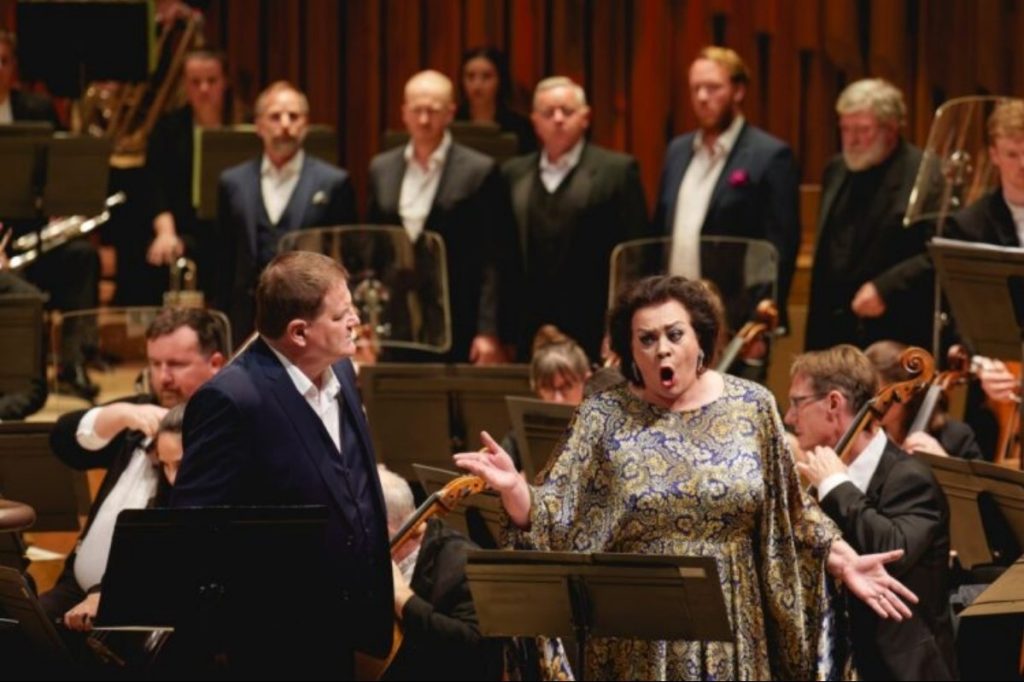
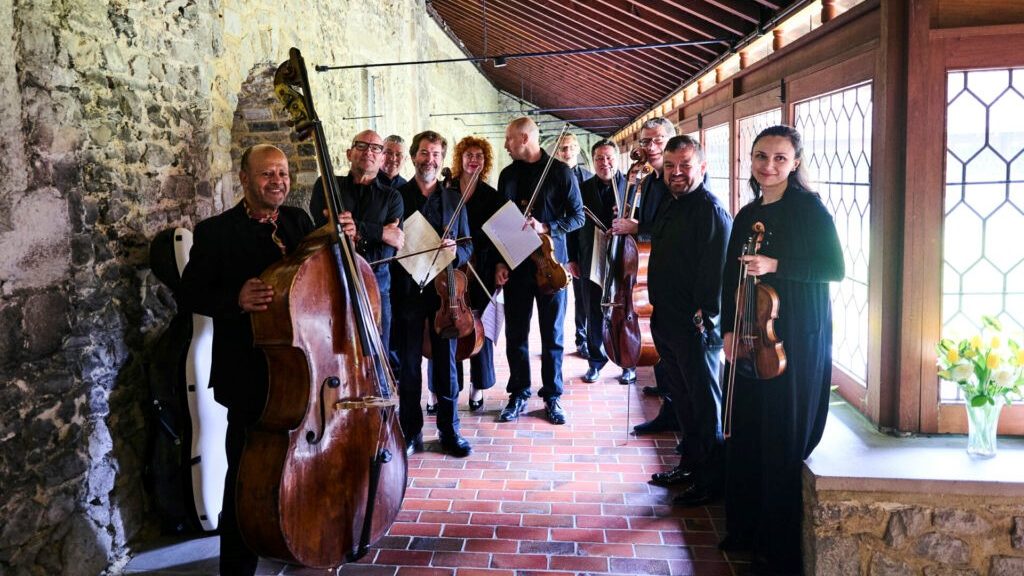
In the perfect setting for Messiaen, St George’s in Southwark proved a stunning evening for Britten Sinfonia. With no strings in sight, this wind ensemble would also feature brass and the famous percussion too.

Stravinsky’s Symphonies of Wind Instruments is often paired with Messiaen Et Exspecto. These delightful few minutes features shrill, bouncy moods followed by more sensual bars. The deep acoustic of the cathedral may not have faired well for this opener. The Choir of Merton College, Oxford followed in brief motets by Poulenc and Duruflé. These were the real deal, powerful stuff from these young singers. Poulenc’s Tristis est anima mea might have been the strongest, though all were truest declarations of faith.

Stravinsky’s Mass may prove why he didnt write much choral writing. Moments had promise and an experimental edge, yet it doesn’t quite take off.  Passages of Orthodox singing and strange murmurings were note worthy, the wind players getting the expectedly angular writing. Benjamin Nicholas shared the baton with Nicholas Daniel both driven with the fire of this music. Daniel, best know as an oboist have a lush solo for Messiaen’s Vocalise-étude. This is lovely in its mawkishness, brief moments of flower scents and an unbroken style that could on be Messiaen. The Choir return only now at the entrance to the cathedral with the continuing French composer’s O Sacrum Convivium. The music levitates in real time, its just so warm these singers sung it flawlessly in their last feature of the night.

In Et Exspecto Resurrectionem Mortuorum, Messiaen conjured a terrifying memorial to the dead of both World Wars. A stunning array of tubular bells, tam-tams, cowbells all feature heavily and shine. The loudness is considerable, though I think the larger tam-tams could have had the crescendos a little more stretched out. Even in Messiaen’s whole canon there is nothing this earthy or alarming. The silences between each movement are baked into the score, another powerful feat. The finale sees temple gongs played ad nauseam, as all players blast and scream through the horror. It’s quite an unforgettable feat.

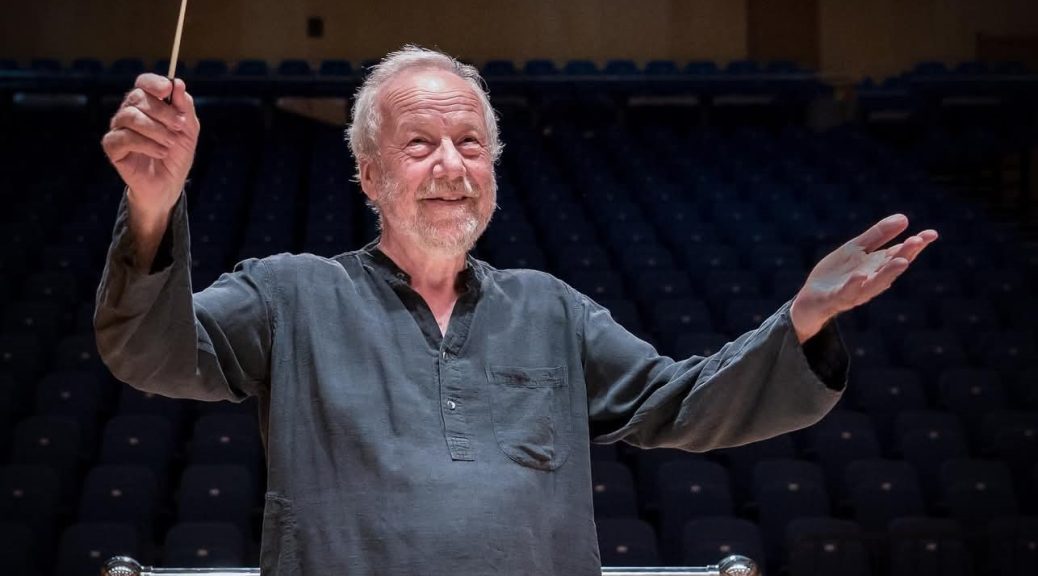
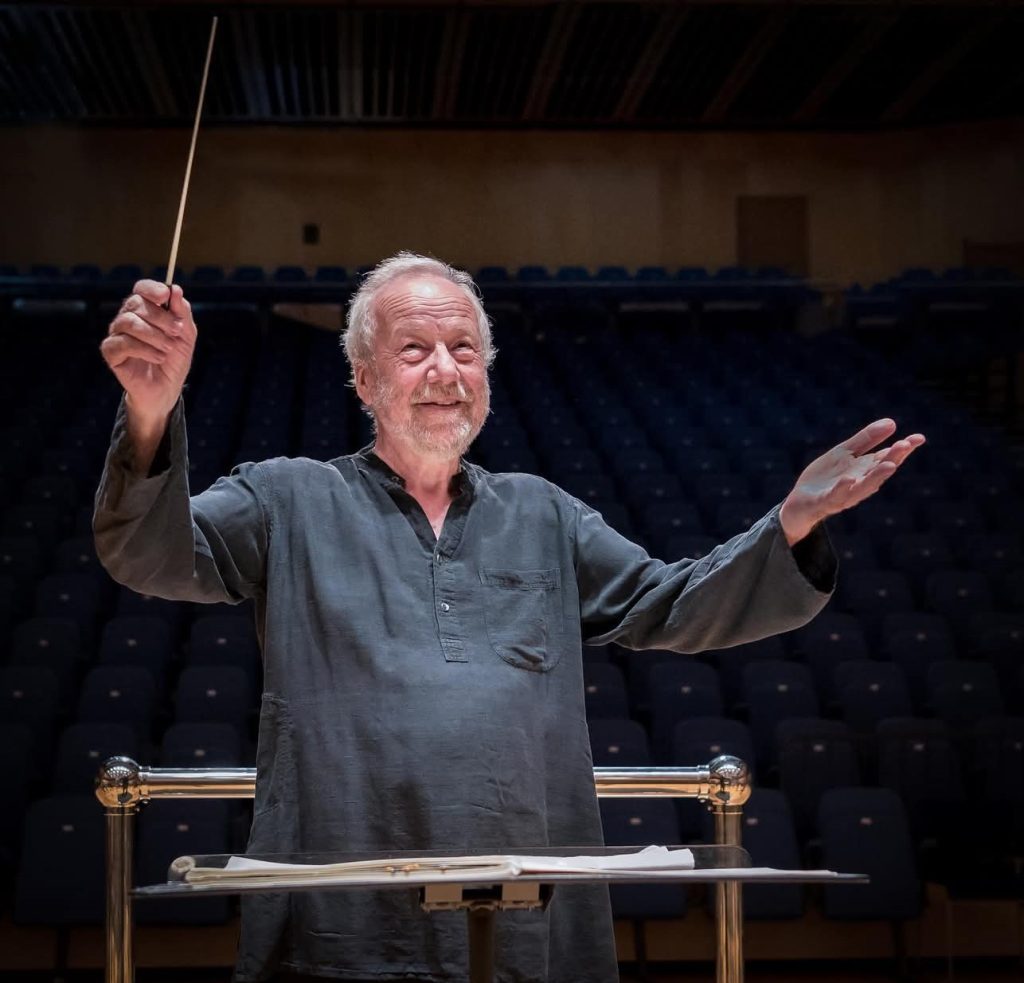
Nicholas Daniel, who is now leaving the Britten Sinfonia. We will dearly miss him. 

Review, Krapp’s Last Tape, Barbican Centre, London by James Ellis

Photo credit: Patricio Cassinoni

 out of 5 stars (4 / 5)

Samuel Beckett might just be my favourite playwright. Why? It’s his abstractions, the eerie usage of prose for a higher truth. His plays in French and German then translated into English, capturing profound depths that wouldn’t be seen if it was just in English first.

First seen in 1958 with actor Patrick Magee, Krapp’s Last Tape have seen much success and is often regarded as one of Beckett’s finer works. This isn’t my personal favourite, though thanks to a tight production it holds up as enlightening. The play is even going with Gary Oldman in York , so there are plenty of chances to see this odd tale.

Per annum, Krapp on his birthday records another tape. A post-mortem of the year he’s had. He listens to recordings from decades past and loses himself in then, only to dismiss them as ancient histories. Aged 69, he leaves his last tape, after eating a few bananas, popping out to the kitchen in a hurried scuttle to what sounds like the pouring of wine (quite possibly urination) a few times and constantly critiques the man he was, against the man he is now.

Stephen Rea is a true Beckett actor. He had the foresight to pre-recorded the relevant material a decade ago, just in case he ever did play Krapp. Luck would be on his side thanks to laser focused director Vicky Featherstone. Set designer Jamie Vartan has the most simplistic plan, yet all you really need is a sliding door, chair, table with extended draw and that’s your lot. Katie Davenport got the tattyness of old age and white boots that might just not match the outfit. Lighting by Paul Keogan is scary and alluring in all ways. Kevin Gleeson’s, sound design keeps the suggestion of a drone in utter pianissimo throughout, near Lynchian. Stephen Wright as audio director assisted Rea with the old recordings and did a valiant job. You can tell Rea is younger, though not by a huge amount. Imagine the 30 years old tapes…

There is much to unpack about archivism, longing, resentment, ageing, loneliness, sex and lust in this mere 55 minutes. Other artists have taken the tapes ideas and ran with it, musicians especially with opera and looping material are really nice ideas. It has made me wonder about how do we preserve items in needs of tender love and care, with the passage of time decaying most materials. Through it all…was this the purpose of recording something?

Its runs till 3rd May 2025  

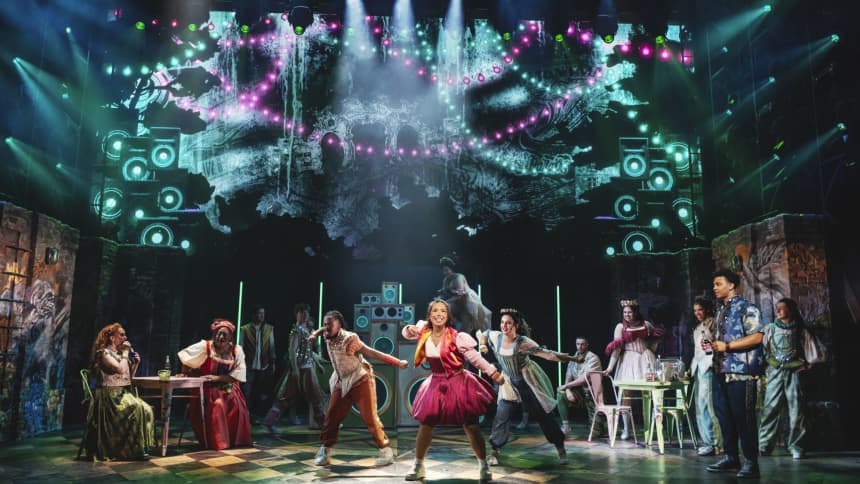
Review ‘Dear Evan Hansen’, Wales Millennium Centre by Charlie Cross

 out of 5 stars (5 / 5)

‘Dear Evan Hansen’ is a musical about a high school senior who suffers from social anxiety, who fabricates a friendship with outcast, Connor Murphy, to achieve connection and popularity, after Connor commits suicide. Evan’s lie ends up out of control and leads to severe consequences; Evan becoming a symbol of Connor’s legacy, causing a chain reaction on his own life.

The set pretty much stays the same, yet creates life throughout the story like moving doors, on and off bedrooms and optical trees. Simple but effective!

Last, but definitely not least, the cast! Here are my favourites…
Tom Dickerson as Jared Kleinman, gave us the right amount of comedy to mix in with the show and gave us all a laugh. Killian Thomas Lefevre was fantastic as Connor Murphy. Even though Connor didn’t have much stage time, Killian honestly did not let that stop him, with lots of aggression but some softness. He showed us that Connor Murphy was sarcastic and rude but yet soft towards Evan on his last day. I must say Evan Hansen himself, played by Ryan Kopel, was absolutely brilliant. He showed everything Evan needed to be, anxious to tender and even showing the side of him that has outbursts.

Overall the show was honestly one of the best I’ve seen, it had everything it needed and it was everything it needed it to be, so stop ‘tapping on the glass’ and get yourself tickets for ‘Dear Evan Hansen.’

Review, Dear Evan Hansen, Wales Millennium Centre by Bethan England

 out of 5 stars (5 / 5)

‘Today is going to be a good day’ and it certainly is a good day coming out of the new tour production of Dear Evan Hansen at the Wales Millennium Centre. The new production has a lot to live up to; a decade of productions since its first performance in July 2015. There has certainly been a huge number of changes for the world since the debut of the show too, with a pandemic lockdown, international conflicts which are still yet to be resolved and political and financial instability. Certainly, with all this ongoing, the themes tackled in the musical are more important than ever; the NHS regularly reports an increase in mental health issues with young people and in fact, the suicide rate in 2023 was the highest it’s been since 1999.

Having said all that, you may be inclined to think that the show is a fairly depressing affair, and it definitely has its moments of being on an emotional rollercoaster; I found myself in floods of tears at several points! However, the main mantra of the show signs through in its stunning score penned by Benj Pasek and Justin Paul (their impressive back catalogue includes work on La Land and The Greatest Showman), with stunning lines such as ‘you are not alone,’ ‘let the sun come streaming in’ and of course, the iconic, ‘you will be found.’ Based on a true story that occurred during Benj Pasek’s school years, I particularly love the fact that the characters, although likeable, are morally grey. They are so real and human that they bound from the stage and force us to look at our own decisions and life choices. It also truly emphasises that theme of ‘connection’ and that we all touch one another’s lives, sometimes without even intending to.

Therefore, this production has a lot to live up to! And it does so, with absolute ease, stamping its own new identity on the legacy of the musical. Starting with set, video design and lighting, (Morgan Large on set, costume and video, Ravi Deepres also on video and Matt Daw on lighting), I must say, that this production absolutely sets the bar and then smashes it. The way that this design all comes together and seamlessly integrates with performers on stage in a truly breathtaking way. There were several moments where I found myself with my mouth literally hanging open; from the moving ‘windows’ that have Evan literally waving through them, the ‘sun’ filling the whole stage as Evan sings ‘I climb ‘til the entire sun shines on my face,’ and the stunning montage of online footage as we hear ‘You Will Be Found,’ these moments are visually stunning and will stay in my mind for a long time. Huge congratulations to the team, they have created a truly stunning visual production with a very minimalist stage which enhances the performers rather than detract from them.

The small, but mighty, cast and ensemble of 14 certainly deserves the highest of praise. The ensemble creates beautiful tableaus and choreography (a credit to Choreographer, Carrie-Anne Ingrouille) and the chorus singing is stunning. The whole cast is wonderful, but I must make special mention to a few of them. Alice Fearn is a seasoned performer and having seen her portray Beverley Bass in Come from Away, I knew she’d be incredible as Evan’s mother, Heidi. She does not disappoint; ‘Good for You’ is gritty, angry and powerful and she flips it completely with a poignant, heart-breaking performance of ‘So Big/So Small.’ The true show stealer though is Ryan Kopel playing the titular Evan. I do not exaggerate when I say that his portrayal of Evan is phenomenal. His voice soars over the score with truly stunning emotional and lightness of touch in places and a powerhouse, emotional belt when required. His acting is a masterclass; he is instantly endearing and highly likeable immediately and he had me in tears from the beginning; from ‘Waving Through a Window’ to the showstopper of ‘Words Fail,’ where you truly could have heard a pin drop in the Wales Millennium Centre. They are joined by Lauren Conray as Zoe Murphy, Helen Anker as Cynthia Murphy and Richard Hurst as Larry Murphy, who exceptionally show the grief, or not, of the Murphy family; Killian Thomas Lefevre as Connor, who had me in absolute stitches in ‘Sincerely, Me’ and Tom Dickerson as Jared Kleinman and Vivian Panka as Alana Beck who bring brilliant vocals and fantastic humour to their roles.

The day you watch the newest production of Dear Evan Hansen is going to be a good day and here’s why…it breathes fresh life into an already beautiful show, elevates the score, brings moments of stillness and poignancy to the libretto and shows touring productions what can be achieved with simple yet impressive set, video and lighting design. It’s an important show for everyone to see; yes, the themes are hard hitting and you will find yourself emotionally drained by the end, but you’ll also find yourself uplifted, reaffirmed and knowing that even when things go wrong, when life seems its darkest, that we are connected, not alone and that, ‘you will be found.’

Review In C, Sasha Waltz & Guests x London Sinfonietta, Queen Elizabeth Hall, London by James Ellis

Photo Credit: Pete Woodhead

 out of 5 stars (5 / 5)

I am not done with so called minimalism in London just yet. Part of the Southbank Centre’s Multitudes Festival, In C, proved to be a thrill. Taking Terry Riley’s iconic 1960’s composition, it is here laced with dance and that from Sasha Waltz.

Just over an hour, the whole beast was touching and the definition of fluidity. Diverse dancers swell together, Waltz’s stance on the belief, profound here. The London Sinfonietta players maintained tightness the overall pace. The C note is given time to breath in these phases, never a moment of discord nor shock. The development of this note is luxurious in its discoveries. These repeating motions from the musicians are a testament to muscle memory and endurance. This powdered piece is essentially Riley’ most revered stand out and that’s not a bad thing. You can easily lose yourself within it.

Waltz’ choreography has used classical music before to acclaim. It’s very human, allow me to explain what I mean. It’s the combination of coloured vests, which gradually darken with sweat, the smiles the dancers give and the unrelenting flow that makes up, this so uniting. So many connections are made: some appear to handle heart break, others suggest the glimpses of friendship. Each dancers easily go off on their own venture, prayer signs and soft balletic postures…often returning to a semblance of gathering. An infectious conga line appeared to form in one instance catching others into its fold, only then to disassemble at just as quick. Each dancers brought clear insight and energy, the head turned a few times, adding with their little adventures into the auditorium. Quite literary dancing in the aisles.

This might just be one of the most lovely combinations of dance and music. A broad colour palette evoked Rothko and Klee, a large screen haunting the space. This is also proof how good a venue the Queen Elizabeth Hall is for dance, I’ve seen work before but this defined it. Wonderous flights seem to take over the troupe as if they might just have floated off. I was quite moved, again its just so achingly human. I might just try out some of these flurrying moves at home…

It runs till 30 April 2025. 

Review Matthew Bourne’s Swan Lake, WMC by James Ellis

 out of 5 stars (4 / 5)

We’ve been thinking a lot in Wales about the plight of musicians and artists. Yet how are the dancers doing? I guess we are all cooked really, the feeling of hopelessness about funding and opportunities linger on. Let’s having something to raise the spirits…

In 1995, director and choreographer Sir Matthew Bourne hit the ballet jackpot in his reimagining of the definitive ballet. Maybe back 30 years ago, this would been highly radical, messing with the formula of a piece so cherished by dance audiences. Still, the connective tissue of the original Swan Lake is evident and lives, thanks to what holds up as a sparkling feat. The new additions of queer and gender bending roles are what stand out in what has often (incorrectly) been dubbed the “all male Swan Lake”.

The story is practically the same, it’s just the dressing of a newer setting that could be 1950s or today, or another universe. The prince, unhappy with his life then falls for a woman, The Girlfriend, though the snobbery of The Queen and the court would dominate. The prince finds himself at a lake, only to have an awakening in many ways, as The Swan and his posey waft into his life. It all end in tears, as the beats of the original story are mirrored and gentle tweaked.

This really does prove to be a fun and absorbing evening. Bourne’s foundation of classical ballet is always there waiting. Yet, the more contemporary dance components are what makes it so compelling, the fluidity and outbursts from this varied cast. There are quirky jabs and physical majesty in these demanding roles. There are extremities, moments of period dances from decades past and other flurries seeing odder sights. The swan troupe who in their iconic down feather tights and ink beak makeup adorned on their forehead, get some of the finest moments of the show. They are the poster children and have been for years. They even hiss, which was not expected.

The gala balls and the mock Royal Ballet visit also sparkle with glamour, dippy humour and a surprising amount of sexuality. When The Swan arrives at one of these dos as The Stranger (or the Black Swan in the original), I was taken with just how steamy it got. Some really fun and electric moves in the Spanish and other dances, as The Prince, loses his sanity over The Swan making multiple passes at his mother. Lez Brotherston in the set and costumes have famous details and practical ease. The sets are clever in looking grander and heavier than they are, the costumes range from nightclub garters to royal gowns, all very fetching.

These are dancers on their ‘A’ game. The Swan is Jackson Fisch, in a compelling and a sensual depiction of the fatal avian folly. This might be the finest dance performance I’ve seen for a while. Stephan Murray is not far behind as The Prince, who leads the show throughout. Innocence, intrigue, discovery and mania are his components, each played with nuance and the energy given off Murray is palpable.  The Queen is Nicole Kabera gets some divaesque steps and the commanding presence to, proving the royal line has talents galore.

The Girlfriend from Katrina Lyndon is the comic relief, the foil to latter triggering this tragedy. Her stint in the Royal Ballet scene riffed on excitable audience goers, eating, passionately reading the programme and turning off their ringing phones. Also highly nimble, her time on stage was often eye catching and delightful.  James Lovell looks like Tchaikovsky as The Private Secretary, this is a character who judges others mostly The Prince and Girlfriend. Much more the straight man in the court, this fells secondary though still part of the broth.  

The one gripe, though I’ve said it before is the canned orchestra. Tchaikovsky’s soul lived in his compositions and here is no different. All the recognisable tunes and lesser-known passages feature, I even wondered if the order was messed around the for new take. I recall not seeing any live musicians at Bourne’s Cinderella too. The tourabilty of the show might be for reason like this, though as prices rise for theatre goers and musicians continue to fight for their jobs, I think it would add an extra layer of joy and spectacle.

Whilst all swans in this realm are owned by the King, this particular one very much belongs to Bourne.

Review Hot Chicks, Sherman Theatre, Grand Ambition by Richard E Rock

When I was a kid (which was a very long time ago), ask any schoolboy what he wanted to be when he grew up and he would reply, ‘a footballer’. What any schoolgirl at that time might have answered I never discovered, as such social mixing was kept very much to a minimum. A pop star, perhaps?

For the two protagonists in this electrifying play, teenagers Kyla and Ruby, the answer is ‘to go viral’ and enjoy ‘pool parties in Las Vegas’. A pipe dream this may be, but it’s all these girls have to cling to, what with them coming from broken families and having no other discernible prospects.

HOT CHICKS is the latest production by Swansea’s Grand Ambition, in collaboration with Cardiff’s Sherman Theatre, and concerns people whose lives usually play out beneath the eyeline of the average, law-abiding, taxpayer. If such a thing still exists.

Kyla and Ruby are teenage friends who spend most of their spare time hanging around in a fried chicken shop in a deprived area of Swansea, antagonising the irascible but sympathetic owner, Cheney. One day, in walks Sadie, a woman who seems to have everything they crave: money, designer clothing and a winning attitude. Almost immediately, the young and impressionable girls are caught in her orbit, hanging onto her every word and keen to pick up the crumbs she casts their way. But there’s a darker side to Sadie and her intentions towards her new admirers are far from benign. And soon, Kyla and Ruby are neck-deep in the older woman’s world, which is a dark and dangerous place indeed, with little hope of escape.

HOT CHICKS deals with uncomfortable subjects, subjects we’d rather look away from, but thanks to the unique staging we – the audience – can’t. We’re forced to take this journey with the teenage protagonists, along the way sharing every high and feeling every bruise. All this is conveyed via the astonishing performances by the two leads, Izzi McCormack John as Kyla and Londiwe Mthembu as Ruby, who dazzle with those co-existing teenage traits of obnoxiousness and vulnerability. Rachel Redford swings effortlessly from cool swagger to icy malevolence as Sadie, and Richard Elis exudes a natural warmth as the owner of the fried chicken shop where the drama takes place. In the great swirl of all this upheaval and tragedy, he is a voice of reason.

Written by Rebecca Jade Hammond and directed by Hannah Noone, HOT CHICKS is a hugely engaging play; funny, witty, touching and horrifying in equal measure. It opens your eyes, raises your consciousness and plunges you headlong into the lives of people you might not so much have glanced at in the street. It’s become something of cliché to say that this is a play people should be made to see, but it certainly applies here. It’s an elevating experience.

HOT CHICKS is on at the Grand Theatre, Swansea, until April 25.

Review, …Earnest?, New Theatre, Cardiff by Bethan England

Having had no idea of what to expect upon taking my seat in the New Theatre, I can happily confirm that ‘…Earnest?’ is one of the maddest, most exhilarating, hilarious pieces of theatre I have seen in a while. ‘The Importance of Being Earnest’ is turning 130 this year; after being encouraged to sing happy birthday…to the play…we are launched into our evening. Anyone seeing ‘…Earnest?’ should take on board what Wilde himself once said, ‘we should treat all the trivial things of life very seriously, and all the serious things of life with sincere and studied triviality.’

What happens when your lead actor fails to show up? Well, in the case of ‘…Earnest?,’ they turn to the only place they can think of…the audience. The director, Simon takes to the stage valiantly and tries to pluck the next Olivier from the crowd as, the show must go on. Our evening was fronted by unsuspecting Chris, a data analyst who may have picked a seat slightly too close to the stage… From there, things just continue to descend into abject chaos, with the actress playing Cecily disappearing off to cover for the lead skater on ‘Harry Potter…On Ice’ and more and more audience members are plucked from obscurity to stardom as the show becomes more and more barking mad.

What is truly impressive is the sheer skill of the actors involved here. Their improvisation and ability to think on their feet is excellent. The show must never look the same from night to night and yet the cast never falter; their responses are witty and immediate, their ability to move around the hapless audience members joining them on stage creates such hilarity, especially as the props keep moving, Jack Daniels gets added to glasses instead of ‘stage whiskey’ and chaos unfolds in front of us.

The cast are excellent; Guido Garcia Lueches as Terry/Algernon and Rhys Tees as Graham/Lane open the show as we are launched into our production of ‘The Importance of Being Earnest.’ Their flamboyant blocking and over the top delivery is particularly satisfying for anyone involved in, or having seen a slightly hammy community production. When Earnest does not appear, their panic is palpable; Terry is unable to change any of his blocking and Graham starts suffering from props inevitably being in the wrong place at the wrong time. Josh Haberfield enters from the audience as our hapless director, Simon Slough, who comes up with a solution; an audience member can help, script in hand, to perform the show. We are also joined by Ben Mann as Josh, our techie, who’s just trying to be useful but with limited, screamed instructions he’s finding it a bit tricky…

These opening scenes are so important in setting up the action and the expectations of the piece. The cast’s interactions with each other and the audience members are genuinely funny and topical. I had no idea what to expect from the show and I’m pleased to report it is riotous. Trynity Silk as Jennifer/Gwendolen and Judith Amsenga as Eleanor/Lady Bracknell then join us, and the anarchy continues. We are joined on stage but a very ‘feminine’ Cecily in a resplendent pink frock, we have a sword fight with one sword, a drunken Gwendolen becoming more and more undressed and Lady Bracknell losing her voice. My personal favourite part was the explanation of Earnest being found in a train station in a handbag (not Victoria Station as originally intended but Severn Tunnel Junction for our performance), performed entirely in interpretive, physical dance with Graham Tees bounding across the stage with sheer joy and abandon; it sums up a perfectly crazy evening.

Say It Again, Sorry? have truly brought an experience to the stage, like nothing I’ve ever seen before. The sheer talent of the writers and the actors involved to basically perform a different show every evening based on what their brand-new stars might (or might not) say had me holding my breath in anticipation. Even if you’re not familiar with the original Oscar Wilde play, I implore you to go and see this (again and again, it’ll be different every time!) as it is a pure tonic and highly entertaining. I really cannot wait to see what the team behind Say it Again, Sorry? will do next; their refreshing take on theatre is definitely something I will be following, in ‘earnest’ so to speak!

Review Death of a Salesman, New Theatre, Cardiff by James Ellis

 out of 5 stars (2 / 5)

Arthur Miller is often declared the greatest American Playwright of the last century. Though I might declare The Crucible his finest work, most school teens and theatre bugs will no doubt learn toward Death of a Salesman.

This is a raging, shoulder shaking, alarm call for the so called ‘American Dream’. Did it ever really exist? And for whom, exactly? Recent American politics would mirror these sour ideas tenfold. Willy Loman is the salesman in question, a deeply exhausted man of business who drives hundreds of miles for his work. A job with little gratis nor promise of a promotion, he like many before and after remain under the thumb of ‘the man’. With two grown up sons and a wife, everything appears stable, till the emergence of attempted suicide, rising debt and matrimonial troubles.

In this production from Trafalgar Theatre Productions and Raw Material, I’m sad to say I was left rather cold. There appears to be several things in need of tweaking. Dare I say, the actors could have been mic’d up higher, the musicians (who like the actors not in their scenes) watch from the sides, could have been utilised much more than their fleeting folk and bluesy bars. The American accents are also tricky, proven by poor to passable attempts from the company. The whole show simply should have had more electricity.

The set is average to fair: planks of wood suggest the Loman garden, a screen of a tree towers above and some props offer the home interiors itself. Its tourable, at least. David Hayman as Loman, has good tics and knows the piece well, but it still doesn’t work as a lead. I think it’s the quietness and the lack of real vibrancy. As Happy and Biff, Daniel Cahil and Michael Wallace are the backbone of the show. The constant seeking of approval from their father is paramount, getting the right job and even a declaration of a marriage proposal is never acknowledged. They do what they can in the heady roles and almost get away with it. Perhaps the strongest casting choices in this.

The weary wife Linda played by Beth Marshall, is a hard role to crack. She must support her husband, constantly remind her children of their fathers major issues, as well as keep the house going. Marshal plays the tired but bright role well enough, it’s a fine example of a great female character being behind a typical man. Stuart Ennis is Willy’s brother Ben, looking like composer Charles Ives, a distinguished gentleman who fared well in business. We only see him in some of Willy’s multiple flashbacks, Ben is only ever there to boast and remind Willy of his lack of luck in life. Ennis played this with fun and pomp, the only old world fibre to the show, originally set in the late 1940s. Other cast members are by the numbers, though some moments of humour flickered, some tensions almost palpable.

Runs at New Theatre till 5 April 2025.