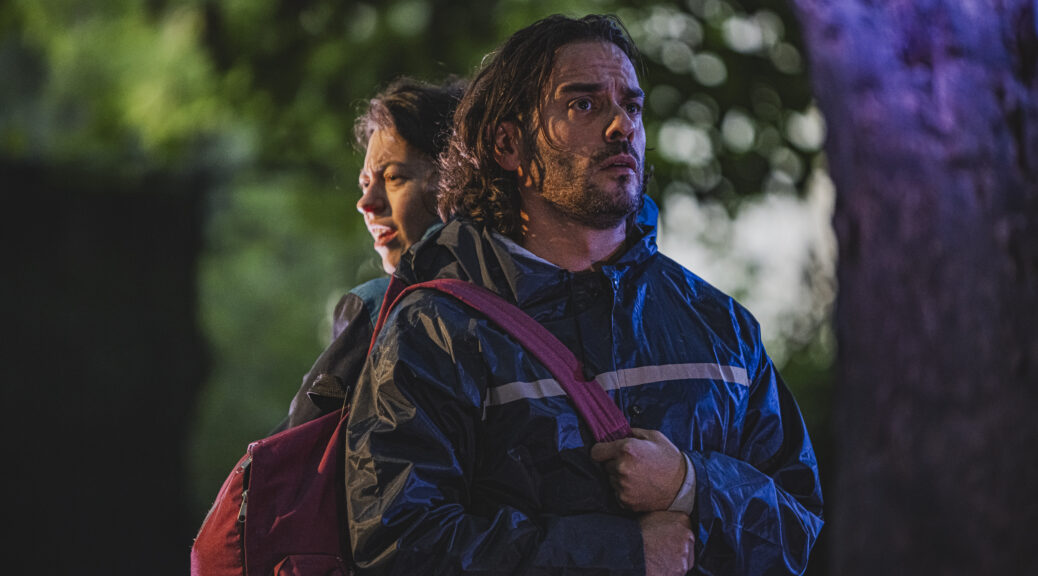
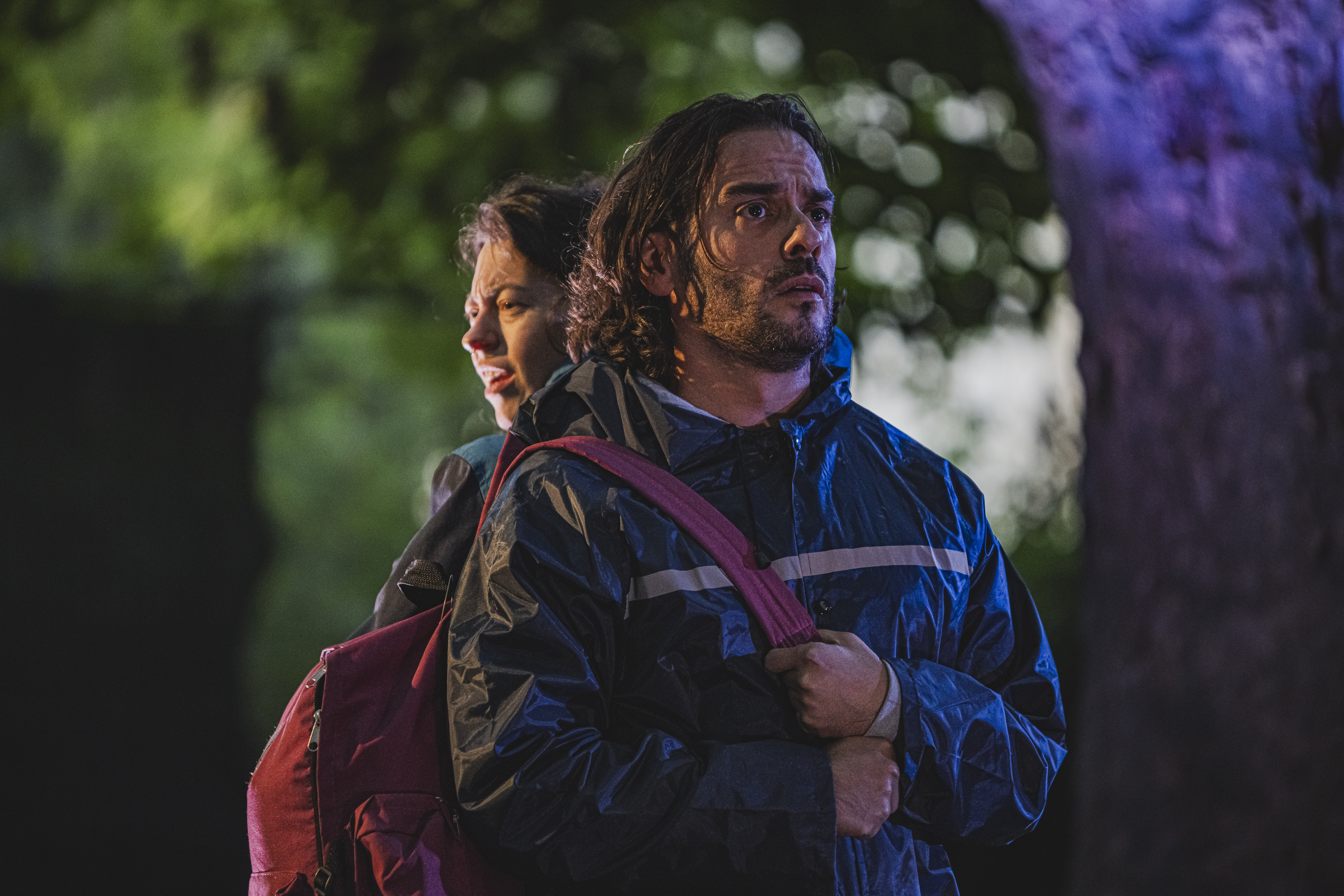
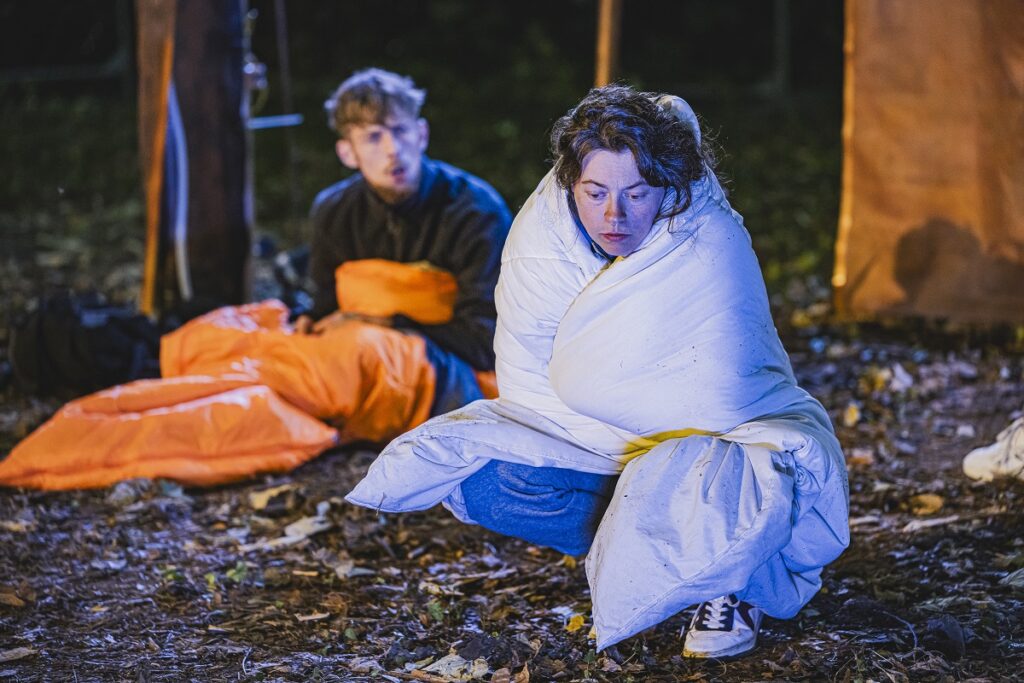
A cold and windy night was the perfect setting for The Other Room’s newest co-production ‘An Orange in the Subway’. Performed outside in Mackenzie Park, in collaboration with The Wallich. The show really brought in all the senses as the audience sat on the ground, watching the actors as they deftly performed Owen Thomas’ story.
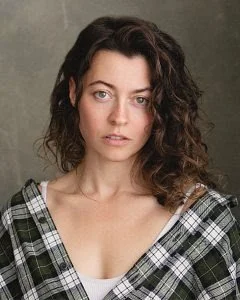
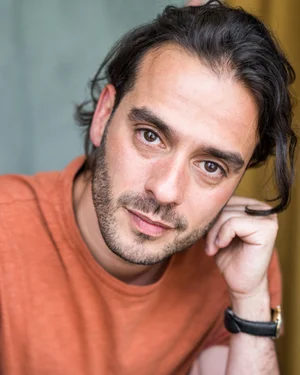
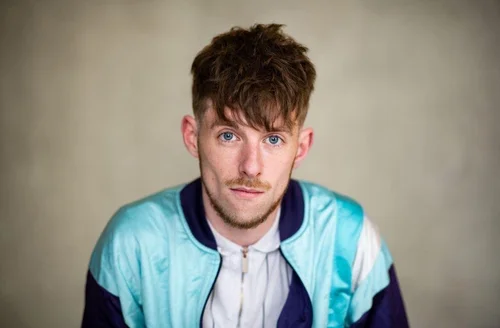
The performances were incredibly impressive. Mica Williams’ Cassie was our focus and hardly had a moment to breath in a very intense hour of performance. The desperation, confusion and loneliness of the character shone, and Williams’ physicality added to the creation of the world we joined. François Pandolfo’s multi-rolling, added layers to the story and the different characters he can create are always impressive. Ranging from the recognisable to the absurd, we glimpsed the breadth of those that form Cassie’s world of Cardiff- a particular highlight was the very drunk girl we could all recognise. Osian Lloyd’s performance was a stand out for me, I was so impressed with the nuance and differences between the characters portrayed. The Bankers’ opening lines immediately drew us in and the shifting between worlds and characters throughout kept you engaged and part of it.
This was hugely helped by the setting, and kudos needs to go to Katy Morison’s lighting and Tic Ashfields sound. Both made you aware what you were seeing was a performance, but heightened the action and created the world of angels as well as embracing the natural world and darker nights we are heading into.
Whilst there were so many positives, the show has made me question my expectations around art for arts sakes and the responsibilities of showing a topic such as homelessness. If the show wasn’t in collaboration with The Wallich, I would be tempted to find some of the characters as closer to stereotypes rather than full humanity. Owen Thomas’ verse was hard to immediately grasp, moving us from feeling the show was made from a point of truth.
The strongest moment of the play I felt was Cassie sharing with the statue of Nye Bev that she’d tried the support out there, but all the rules and curfews were too much. This was a great insight into the complex struggles that exist between the help that is out there and the people most in need, as well as the power of autonomy. I expected to see more about what help does exist and the next steps for the characters, but then that might have felt kitsch and shoved in, when for so many people there might not be a happy ending.
Leaving, I struggled to decide what the outcome of the piece was. Now, not all theatre needs a call to action or an objective I know, but especially when it was so based in rough sleeping not just in subject but in setting, I was expecting to leave and feel something. Some sort of next step or understanding of the struggles people face and an idea of what may help.
“Not just a deeply moving play, but a rare, connected experience of homelessness between the audience and the actors onstage.“
It started with my forgotten umbrella and ended with one of the most authentic and unique theatre experiences. Following the story of Cassie, a homeless girl lost and ruined, our emotions become escalated from watching this live performance of ‘An Orange in the Subway’ as we experience sitting on the ground on tarps and rain falling down for the ultimate homeless experience, immersing us with the incredible actors and witnessing their same struggles with them.
Owen Thomas’ writing will leave you wondering and in a rapt effect about how other people in this world are living, clinging to any hope and enthusiasm in what feels a dead-end life. The play will have you laughing the one second, and teary-eyed the other as we witness the harsh reality of being homeless.
Isolated and fearful, the main character of Cassie, played captivatingly by Mica Williams, is determined there is more to her life, someone or something out there looking out for her. And as we embark on her story, the incredible multi-rolling of both actors: François Pandolfo and Osian Lloyd, who has actual experience of being homeless, will expose the nerve wracking and heart-breaking encounters homeless people deal with every day.
In partnership with a Welsh homelessness charity The Wallich, Dan Jones’ perfect directing and the passionate acting brought to life the play and is giving homeless people the voice that is always subtly ignored when they plead on the side of the street.
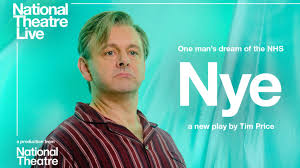
The noisy member for Ebbw Vale. The stuttering orator. The father of the National Health Service. Growing up as a Valleys girl I was always told that the NHS was created by a Welshman;, but I never truly knew the full story behind the man, Nye Bevan, whose vision for a better, fairer world, was the driving force behind creating the National Health Service. I first encountered Nye at the Wales Millennium Centre in its previous run in 2024. It’s safe to say that my visit to the revival version in 2025 still left me reeling with emotions; high with laughter one moment, face wet with tears the next.
In a time where the NHS is under much scrutiny; undervalued, understaffed, underfunded, Nye takes us back to its infancy, with the opening pages revealing Aneurin Bevan recovering from an operation in one of the very hospitals he built. The staging here is a thing of beauty, the set and ensemble create a budding National Health Service, the hustle and bustle of the ward’s essence captured perfectly. From there we enter Nye Bevan’s dream and his journey from a Miner’s son in Ebbw Vale, through school, endless tribunals and countless committees, to the Houses of Parliament and eventually to his role of Minister for Health (…and Housing) and his ‘vision’ come to life in the creation of the National Health Service.
Nye is, to my mind, a masterclass in writing. The scene in Tredegar Library is a particular favourite of mine, delivered with a deftness of touch but an undeniable Welsh Valleys flavour. Another is the ‘seam’ with Nye’s father, David; a poetic explanation of what it truly meant to be a ‘learned miner’ with the ‘one true blow’ counterbalanced perfectly with the undeniable voice of the Valleys Welshman. The writing throughout truly captures the lives, the spirits, the souls of the people of the coalmining town that Nye Bevan called home and the wider political world he came to inhabit. Tim Price’s pen brings the Valleys to life before my eyes and it is a Valleys that is achingly familiar to me.
The set is striking and with a swipe of a hospital curtain we are transported throughout the world of Nye. Vicki Mortimer’s striking set with its various levels of green ward curtains move us effortlessly throughout the tableaus, and when they are fully removed, the stage is all the starker and bleaker for it. The emptiness of the stage with the single hospital bed at the end of Act One is stunning in its emptiness and simplicity, and shows the audience, with brutal honesty, that the end of a life is just a son holding his father in his arms and telling him not to fight anymore. The projection design by Jon Driscoll is one of my favourite parts of the production, in particular the scene where Nye first takes up the mantle of Minster for Health and crowds of people in need start walking towards him in desperation. It’s so simple but the execution is flawless. Lighting, sound and music are also excellent, designed by Paule Constable, Donato Wharton and Will Stuart respectively.
Director Rufus Norris is joined by the Revival’s Co-Director Francesca Goodridge, alongside Co-Choreographers, Steven Hoggett and Jess Williams. The way the cast and ensemble move and flow in this production is beautiful; humorous and heartbreaking. The flow and creation of tableaus in Nye, quite frankly, takes my breath away and is an absolute testament to the direction and choreography of the piece.
The cast of Nye is, without exception, phenomenal. There are very few changes from the production in 2024, and you can feel the trust and security that the actors feel in one another. The physicality as they swap and change from various ages in some cases, and roles in others, occurs without fault and without ever jarring the audience’s imagination, morphing from nurse to sister, doctors to politicians (and back again). I would be remiss, of course, not to mention, Michael Sheen in the titular role. He truly embodies Aneurin Bevan; never shying away from his flaws and human condition, with a healthy tot of charm thrown in. The physical wrench of his stutter is painful to watch, juxtaposed with his burgeoning confidence as he first meets Jennie Lee (played with great poise by Sharon Small). I never thought I would get to see Michael Sheen musical performance, full of vigour and swagger; and only a heartbreaking few moments later we see him clutching his dying father in his arms, in a moment which left the audience reeling. What a huge weight to fall on an actor’s shoulders to portray, not only a real person, but one so universally revered and admired, even idolised in his hometown. The respect, poise and gravitas that Michael Sheen brings to this role is nothing short of breathtaking.
Nye truly is a love letter to the National Health Service, in a time where it needs OUR care and attention after years of giving so much of that to us. The play is not so much a ‘call to arms’ as a reminder of all it took to get Nye’s vision to be realised and of the utter travesty it would be to lose that now. But Nye is more than a story of the realisation of the health service; it’s the journey of a man, his life, his triumphs, his flaws, and the people who touched his life along the way. Nye is an absolute triumph and a testament to every single person who has brought Aneurin Bevan back to our minds and our hearts.
Out of all the strange and wondrous animated work under the Adult Swim banner comes rare jewels and underdogs. From Gonzalo Cordova comes Women Wearing Shoulder Pads, set in 1980s Ecuador. Hailing from Spain, business lady Marionete Negocios (voiced by Pepa Pallarés) is met with scorn and conspiracy as she plans to make guinea pigs pets as opposed to being on the menu. Within this culture clash (the animal in Spanish is called ‘cuy’) lies the main thread of the plot.
This is stop motion and their uncanny appearance is slightly jerky, though that is part of the charm. The only apparent surreal feature is the larger than life cow used as a replacement in bullfighting. Corruption was rife in this era and here is no different. Matador Coquita Buenasurete sleeps with Marionete and hands over breeding contacts. In the second episode, Coquita is in conflict with her new love and her work, the first big pull of the story. Hugely successful Chef Doña Quispe appears as the villain in her attempts to keep cow as a food stuff, blocking the plans to domesticate them. Marionete offers a duck as a piece offering to Doña and things fall apart pretty quickly. Further scheming seems to be afoot from all parties and should emerge as delicious in their execution.
I’d like to say I’m convinced by the whole premise, but at this stage I’m undecided. The hands of the characters in close up appear as real human live action clips, not as disturbing as you’d think. The stop motion figures are subtle and not the most eye catching. Some humour may be lost in translation and some crude jokes seen in past animation might not work well today. The setting of the its era is also convincing, as the name would suggest. The leading lady cast and Spanish/Latin American identity should find an audience away from the bonkers work often seen with Adult Swim. Yet, a mere ten minutes a piece, it leaves you wanting more from this subtle, curious offering.
Watch on Mondays live on Channel 4 & streaming after.
Communities Engagement Partner at Royal Welsh College of Music and Drama, Guy O’Donnell was one of the speakers at the annual Arts Marketing Association Conference, Amplify in Edinburgh in July.
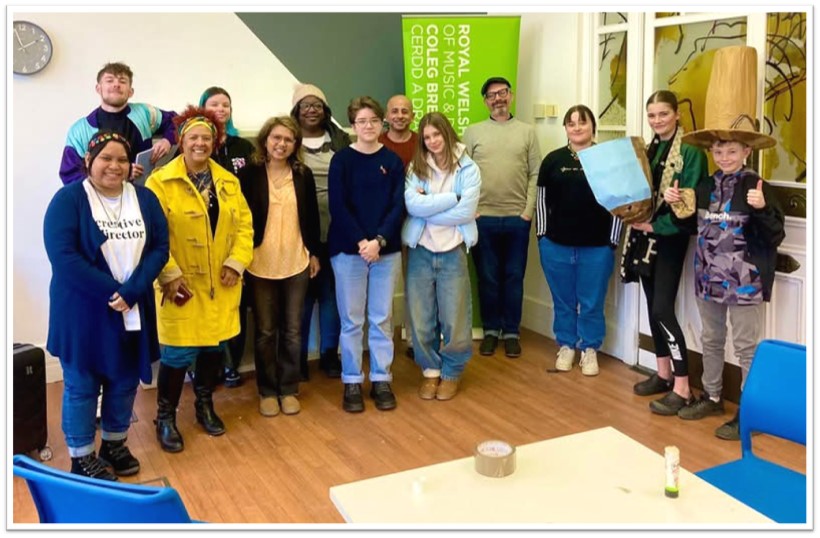
In the role of Communities Engagement Partner, Guy works on delivering a wide range of engagement activity, working across every aspect of the College with potential students, community groups, schools, colleges, audience members, partner organisations, decision makers and the wider public.
Guys presentation is shared below to give an overview of the work of the Department.
The Royal Welsh College of Music and Drama (RWCMD) is in a position to make a significant impact on the cultural accessibility and inclusion of people who may be facing barriers to engaging with live performances.
By actively supporting these audiences to work with their students, and share the creative outcomes on their stages and exhibitions, RWCMD has fostered a more inclusive, diverse, and collaborative environment that benefits both the participants and our students.
In this overview you can learn more about the work RWCMD has supported to develop;
Demonstratable techniques to increase the diversity of audiences
New ways to curate a cultural programme
Ways to work with volunteers to increase attendance and income
After many audience development initiatives, audiences are still mainly white, well-educated, middle-class, and middle-aged. This lack of diversity makes it difficult to demonstrate the value of publicly funded cultural activity. It also raises doubts about how creative and lively the arts sector is and its genuine connection to the broader general public.
In this article I will outline the work of the Communities Engagement Department at RWCMD, to co-create, empower, and support active audiences who face barriers, offering them opportunities to work directly with our students. Our goal is to not only enhance the cultural engagement of these communities but to provide them with a meaningful platform to share their creativity, exchange ideas, and contribute to the training of our students.
The Royal Welsh College of Music & Drama in Cardiff, attracts the best creative talent from across the globe. As Wales’s national conservatoire, we fire imagination and drive innovation, offering training to more than eight hundred actors, musicians, designers, technicians, and arts managers from more than forty countries.
The College’s events calendar encompasses over five hundred public performances every year including orchestral concerts, recitals, drama, opera, and musical theatre. The creative diversity of the College ensures a stimulating environment and broad experience for students of all disciplines.
RWCMD is a space for everyone, through proactive measures, we seek to address barriers, promote diversity in all its forms, and cultivate a culture of belonging where everyone, has the opportunity to reach their full potential.
The mission of college is to be a space for everyone; the role of the Communities Engagement Partner works to support a greater range of students and the public to be aware of college and our work. In order to deliver on this mission When I first came into the role in Sep 22, I spent time learning about our live performance programme and meet with lots of staff and students and members of the public to get their views. What came across most strongly was the potential of our live cultural offer to open up conversations about access to the arts and it is a natural strength as the national conservatoire of Wales.
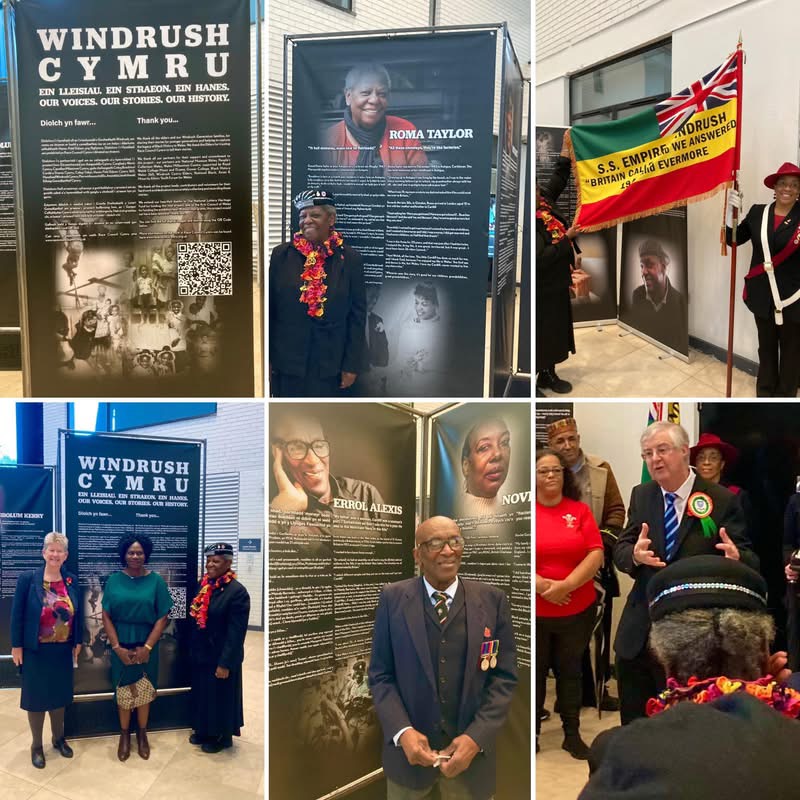
Using this information one of the first projects we developed was Calypso Jazz with The Windrush Cymru Elders
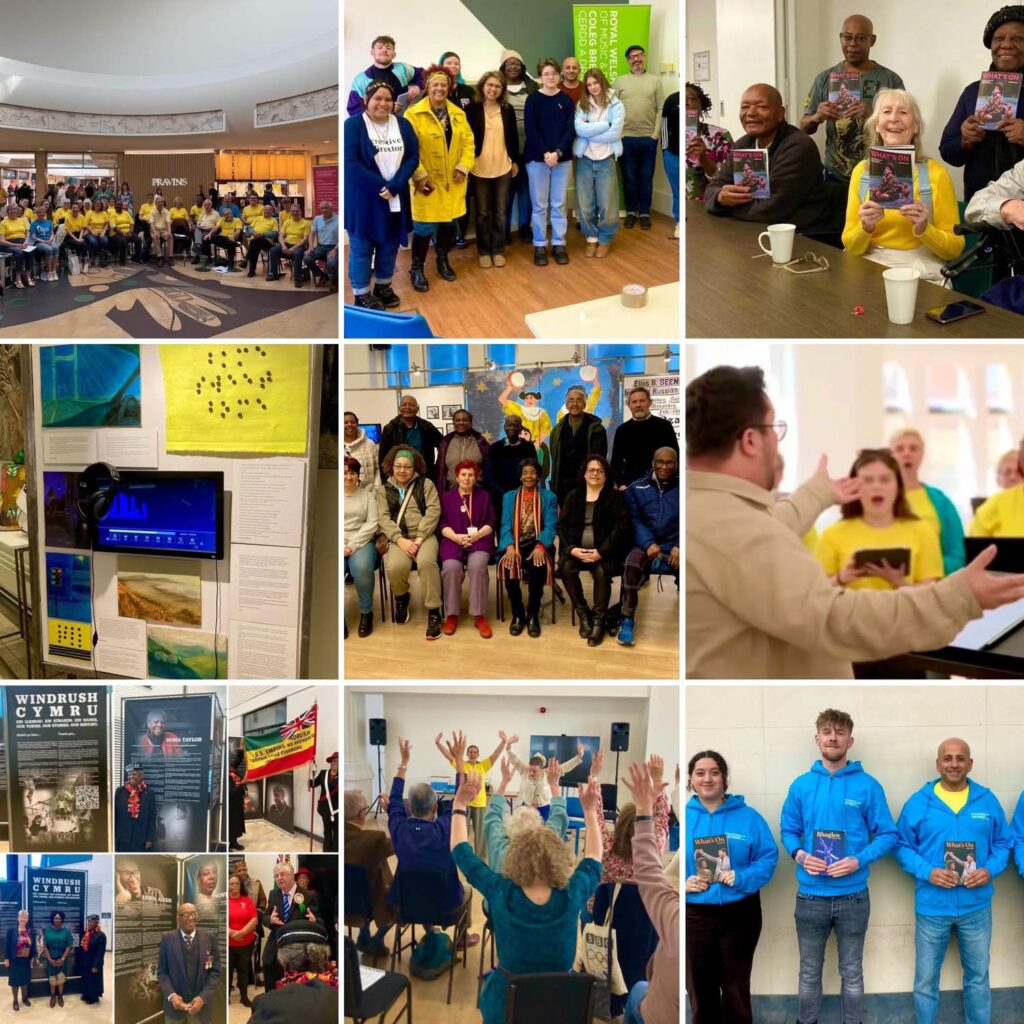
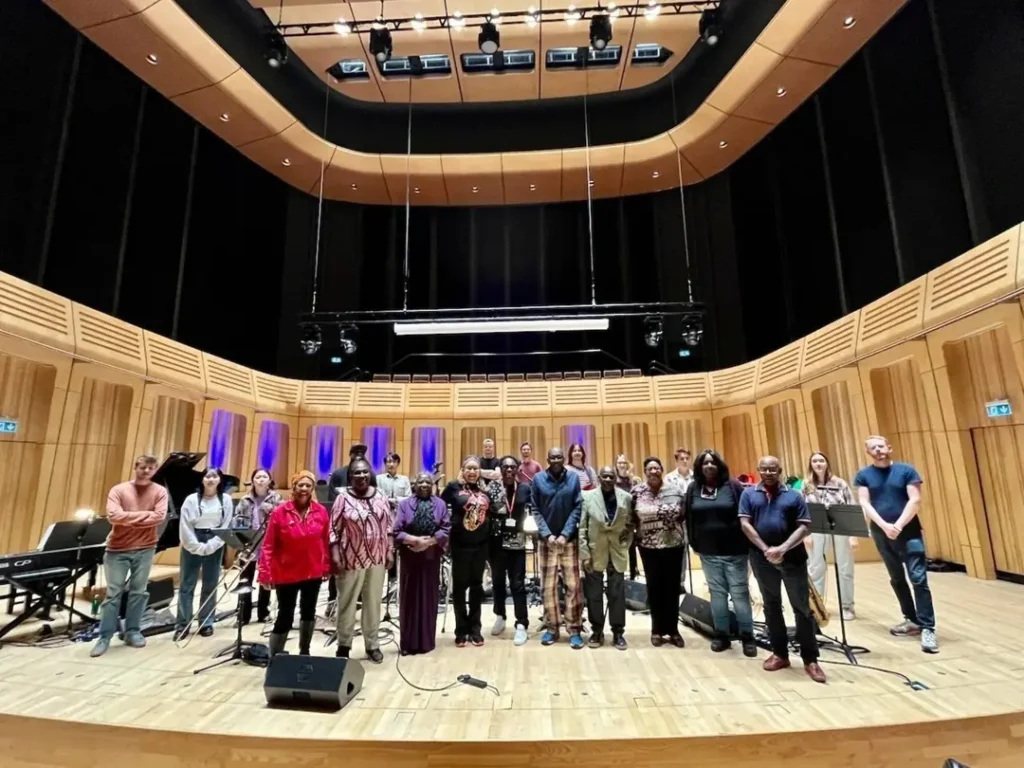
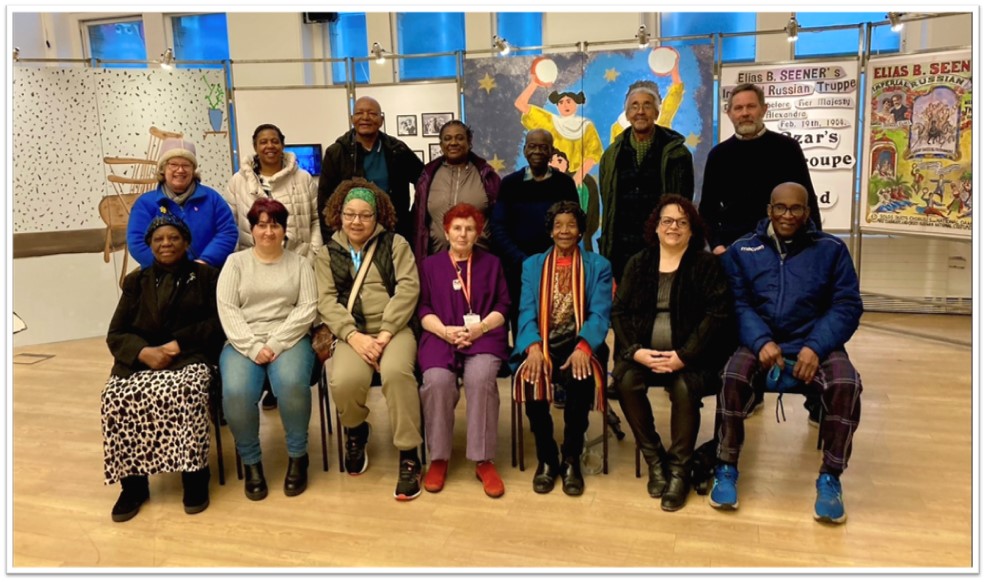
The Windrush Cymru Elders, led by Race Council Cymru, come from different areas across South Wales. They’re a proactive group of Elders who promote understanding of ethnic minority elders’ concerns and needs while celebrating key milestones and marking the contributions of people of African descent.
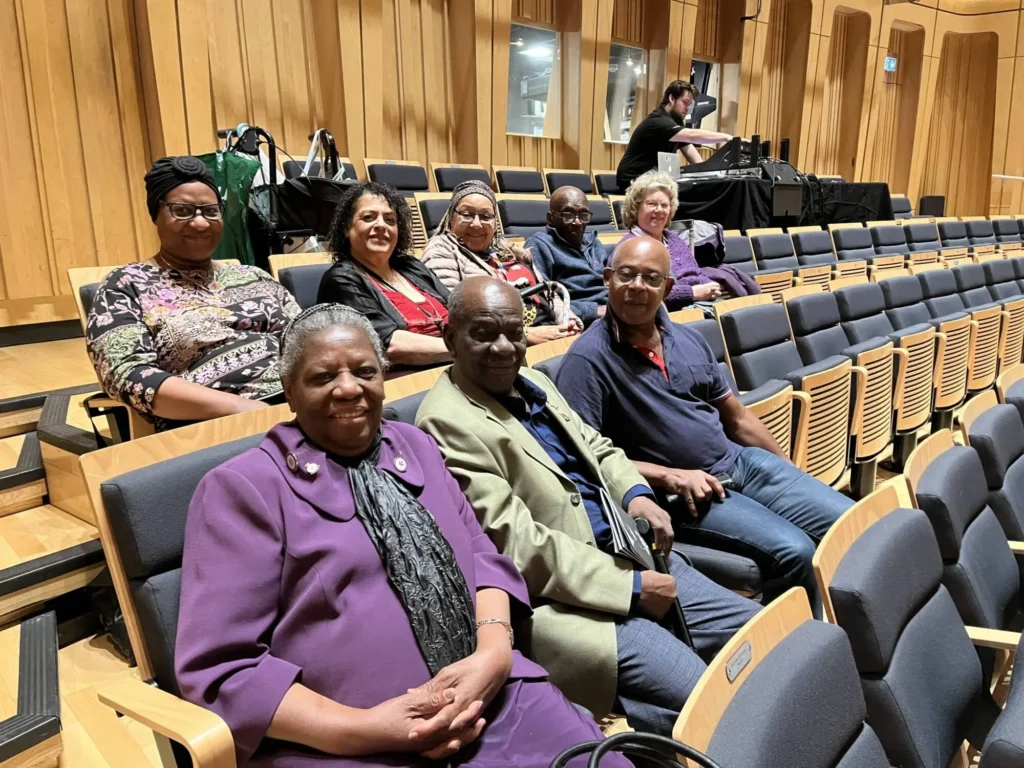
The group meets weekly, usually in the College, to enjoy each other’s company and take part in creative activities in and around Wales. The College and Race Council Cymru colleagues, provide support and meeting facilities for the group who use College as a community hub.
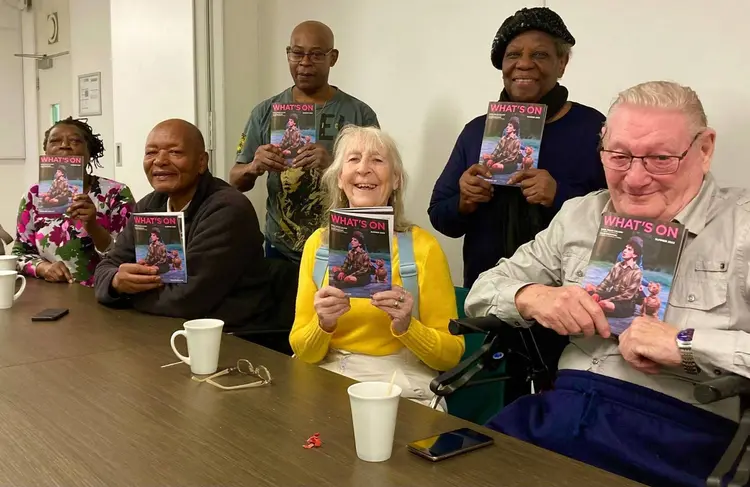
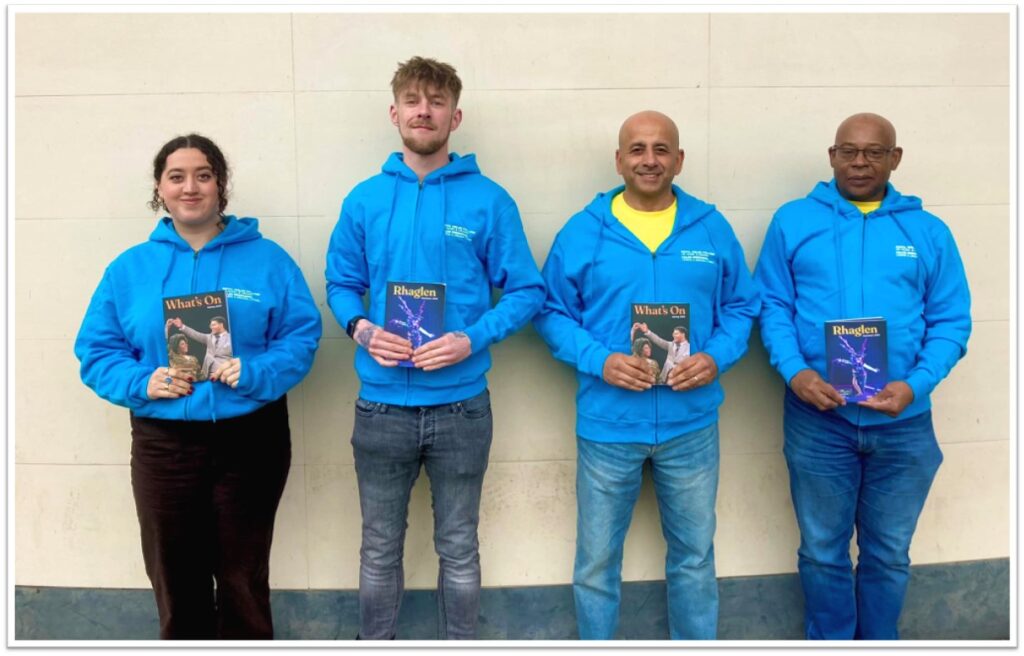
They collaborate with us on feedback and input to the What’s On performance programme. A range of colleagues and students from college have presented to the group to foster an understanding of the College’s work and develop links with The Windrush Community. Public performance is central to student learning, as is understanding a diverse range of audiences and their needs.
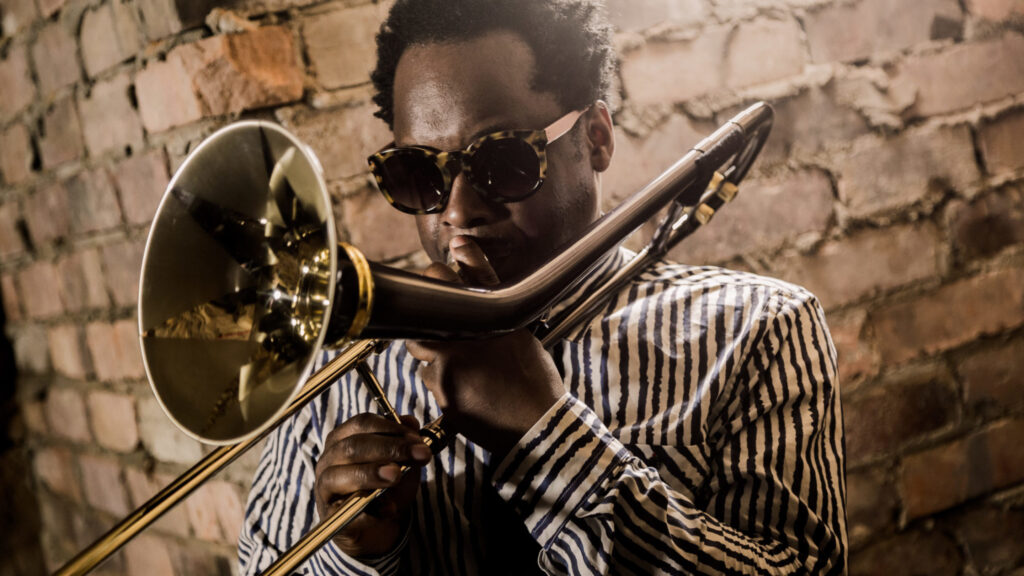
At the start of the new academic year, we have a large-scale concert led by jazz musician Dennis Rollins, supported by our students. Prior to the performance Dennis and staff, met members of The Windrush Elders to discuss their musical heritage, the conversations led to a co-created concert performance where our students and the Elders shared a stage, to a paying public, to celebrate Calypso Jazz.
The Elders have also been supported by college to join The Tempo Time Credit Network. Tempo Time Credits are an external UK wide organisation. They build local and national networks of organisations, bringing people together in their local communities to conduct valued and important voluntary work. Volunteers earn Tempo Time Credits as part of a reward and recognition scheme for the invaluable work they do within their communities. These Credits can be exchanged for a range of services and activities provided by their local and national Recognition Partners of which College is one.
The Elders earn two Tempo Time Credits volunteering their time as part of their weekly meetings, supporting their community. Most of the group have used their credits to see a college performance. As some of the Elders would find the physical cost of tickets a barrier, this collaboration benefits everyone involved.
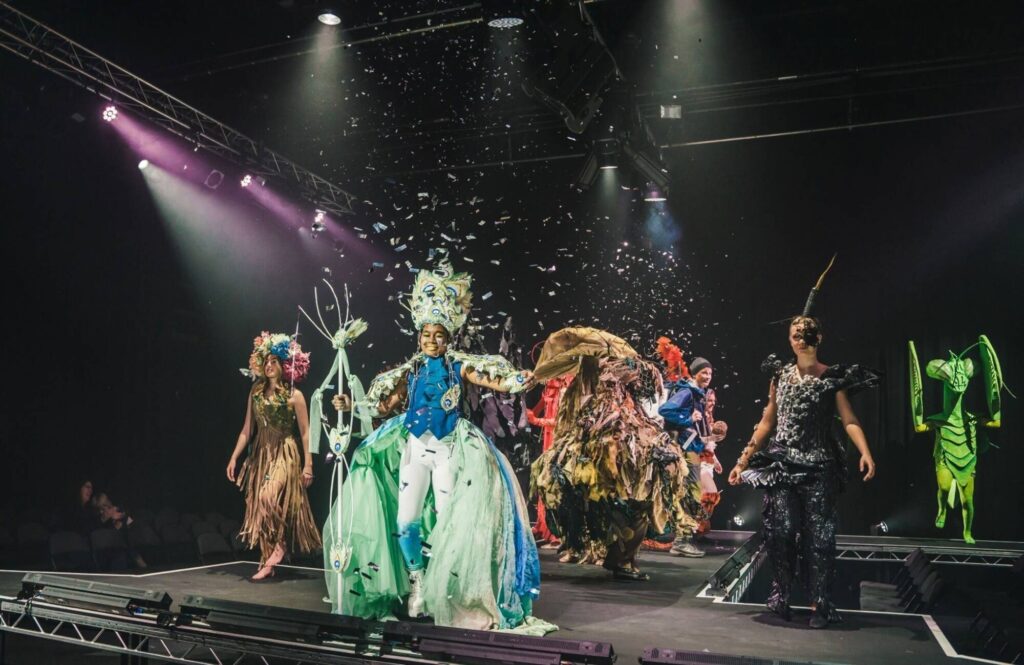
Using their Time Credits the Windrush Elders have seen opera, drama and classical music. They have also brought their grandchildren to see Wearable Art, the costume showcase created and performed by Design for Performance students. This introduces tomorrow’s talent from a range of communities to the College and inspires them for future career possibilities in the creative industries.
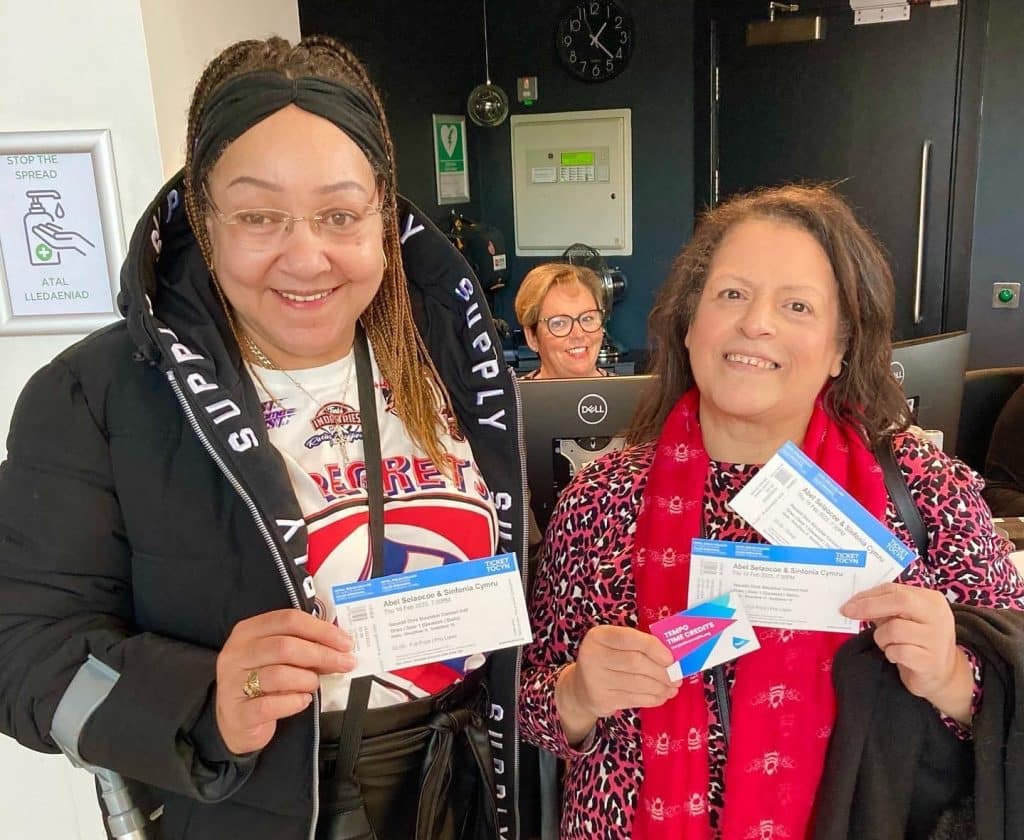
Karen and Linda two of the Elders have used their Tempo Time Credits to see performances by South African musician Abel Selaocoe
They said of their Time Credit membership
‘Since coming to college, we have had the wonderful ability to earn Tempo Time Credits through volunteering our time to support our group, The Windrush Elders. This has opened up the possibility to use credits as reward payments for different things such as theatre shows or going to leisure centres.
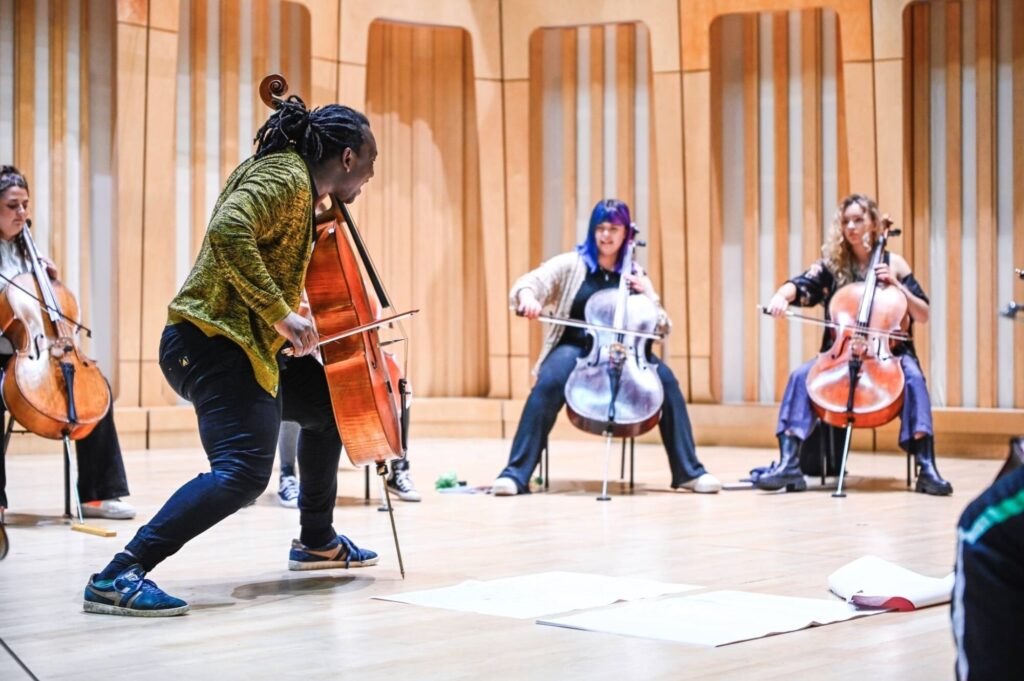
At College, we’ve seen Abel Selaocoe, the jazz cello player twice, last December as part of a quartet and then again as part of an orchestra of violinists & cello players. We thought both performances were astounding and loved every minute.
Being able to attend these performances and be included with Abel’s audience participation was so lovely. We actually felt we were transported to his home country of South Africa! We are looking forward to future performances at college.’
Our Tempo Time Credit spend at RWCMD has increased year on year from,
• Sep 22-July 23 = the annual spend was 87
• Sep 23- July 24 = the annual spend was 184
• Sep 24- July 25 = the annual spend was 230
At College, the average café/bar spend by audience members per individual production is £10-15. If two hundred people spend £12.50 over one year, that is an additional £2,500 over the year. This shows supporting Time Credit spend is a great way to support secondary spend with in most cases no additional outgoings.
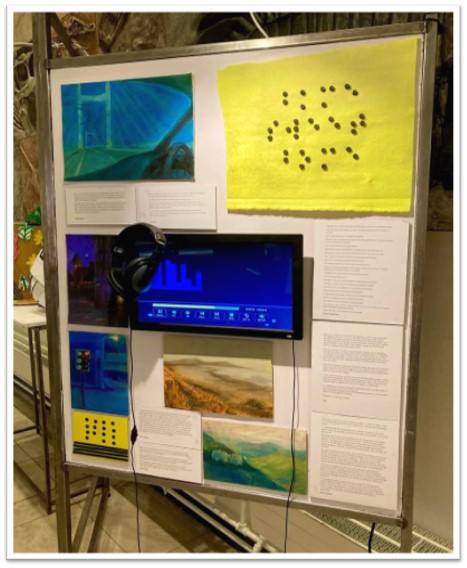
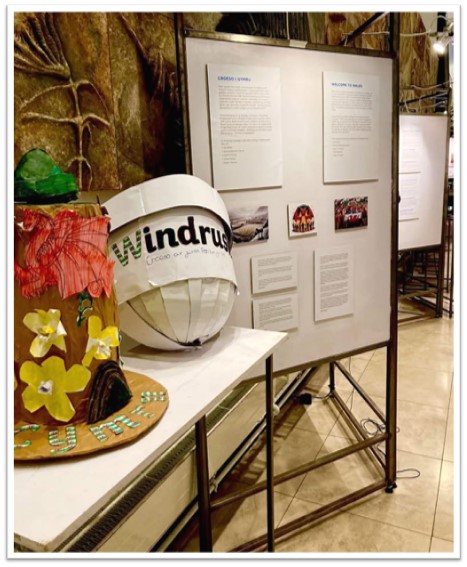
Audiences from groups including Blind communities. The Homeless community and The Windrush Elders were supported to access a college exhibition called Welcome to Wales. The exhibition from by International theatre designer and RWCMD International Chair in Drama, Pamela Howard OBE was a free installation at the Old Library, in The Hayes in the centre of Cardiff , the exhibition was a unique retelling of poignant journeys and the welcome, Wales gave to so many artists, performers and musicians, including Pamela’s own ancestors.
The community groups attending the exhibition were supported by a diverse range of creative professionals to create their own creative outcomes based on the initial exhibition. The resulting work was exhibited in college alongside the work of our Production Design students. Creative outcomes included creative writing, poetry, songs, visual art, braille art and sculptures. This work was subsequently used as a teaching aid for our students when learning about inclusive programming.
RWCMD hosted the ‘Windrush Cymru – Our Voices, Our Stories’- history exhibition at the College as part of its tour, which also included the Senedd and National Museum Wales.
The project and resulting exhibition directly responded to a call from Elders of the Windrush Generation who wanted to ensure that their generation’s legacy is captured and retained for posterity.
Three of the Elders have received training to act on behalf of College as Community Volunteers. Our Community Volunteers spend time advocating amongst their own networks about performances at college. They have supported new attenders who I or Colleges traditional marketing would have had difficulty reaching.
In the summer of 2025, two of our Community Volunteers independently supported ten of the Elders to attend a showing of the Grenfell installation by Steve McQueen at Chapter Arts Centre in Cardiff. This activity has shifted the traditional hierarchical process of accessing cultural provision, it democratises and empowers the communities we seek to reach. We aim to build on this work in the coming years.
To conclude as we are the College of Music and Drama, an illustration of community activity that brings together our students and members of the public who might be facing barriers in their lives centred around a celebration of musical activity.
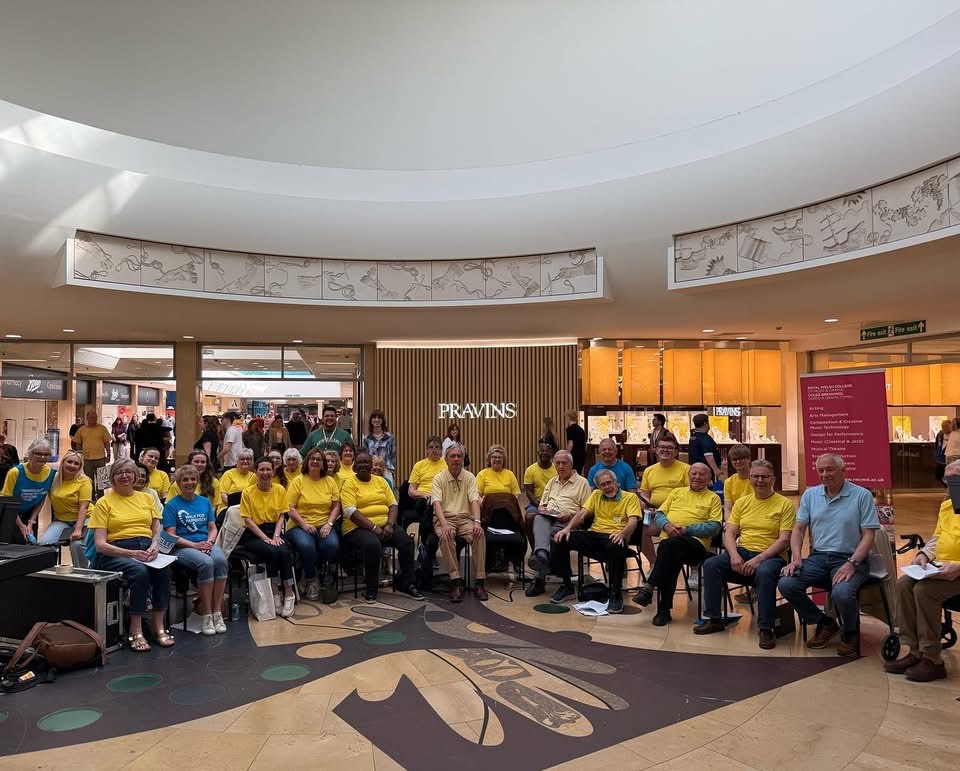
The Good Vibrations Chorus is a free signing group targeted at those living with Parkinson’s but open to all. Chorus members take part in vocal exercises, warmups and sing both familiar and new songs with the intention of strengthening the voice to counteract the softening of speech and the loss of muscle tone common in Parkinson’s.
Singing has been shown to reduce Parkinson’s symptoms like tremor, and issues with walking and posture. This is because it helps to relax muscles and release tension in the back and neck. Singing can also help to reduce anxiety and low mood by lowering stress hormones and increases the brain’s ‘feel-good’ chemical (endorphins).
The Windrush Elders are supported to attend the Chorus, we are aware of a lack of diversity in Arts and Health initiatives, the Elders collaborate with us to support members of their own networks to attend.
Our Repertoire is broad and diverse; it contains traditional Choral music but also musicians such as Bob Marley to support the College mission of being a space for everybody.
The Chorus members have shared the comments below in relation to their membership;
It’s great. It’s like a jewel, really, that’s shining brightly. We’ve got the right people in positions, such as Josh and Dora, the tutors. Along with the complimentary package that we have with the students fulfilling their ambitions and their requirements at the same time is wonderful. There’s different layers to all of this, so it’s great. And the backing of the College and Parkinson’s Cymru, it’s great as well.
‘Thursdays are great because that means it’s a choir day! Hurrah! It really is the highlight of my week and I always look forward to our sessions. I sing with two other choirs but what I love about the Good Vibrations Chorus is the relaxed atmosphere and it’s good to get to know other people who are living with Parkinson’s. The choir is friendly and welcoming and Josh, our musical director, balances the rehearsals perfectly between singing and having a lot of fun. We always have a laugh. It’s such a tonic! It’s so uplifting and from a well-being point of view that’s immeasurable. All that wrapped up in a great big ball of joy is such a positive thing.’
August is always a dry spell for classical music in London. It would be a brief spell after the all night Prom at the Royal Albert Hall, that a return to London would follow a week after this massive event.
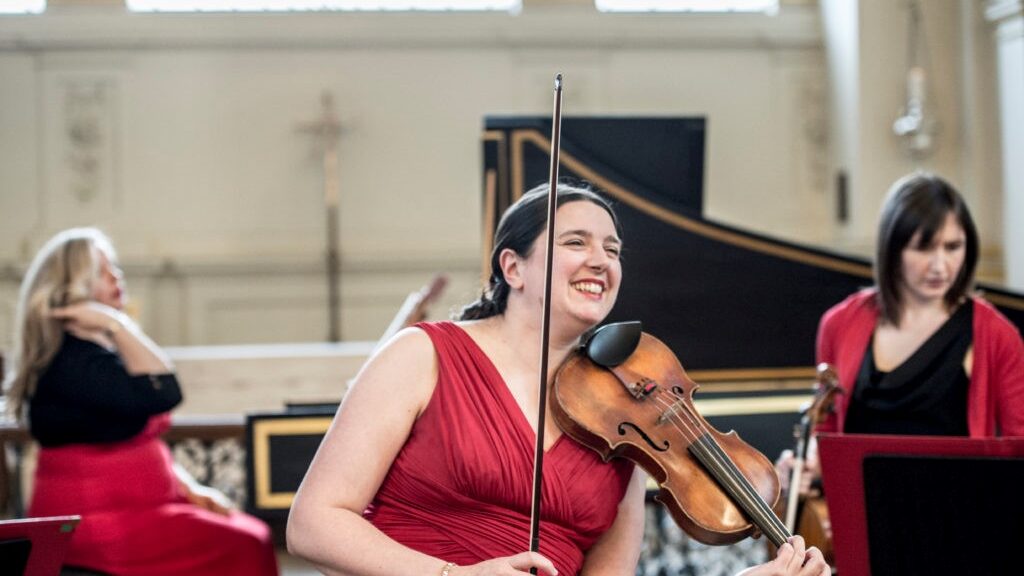
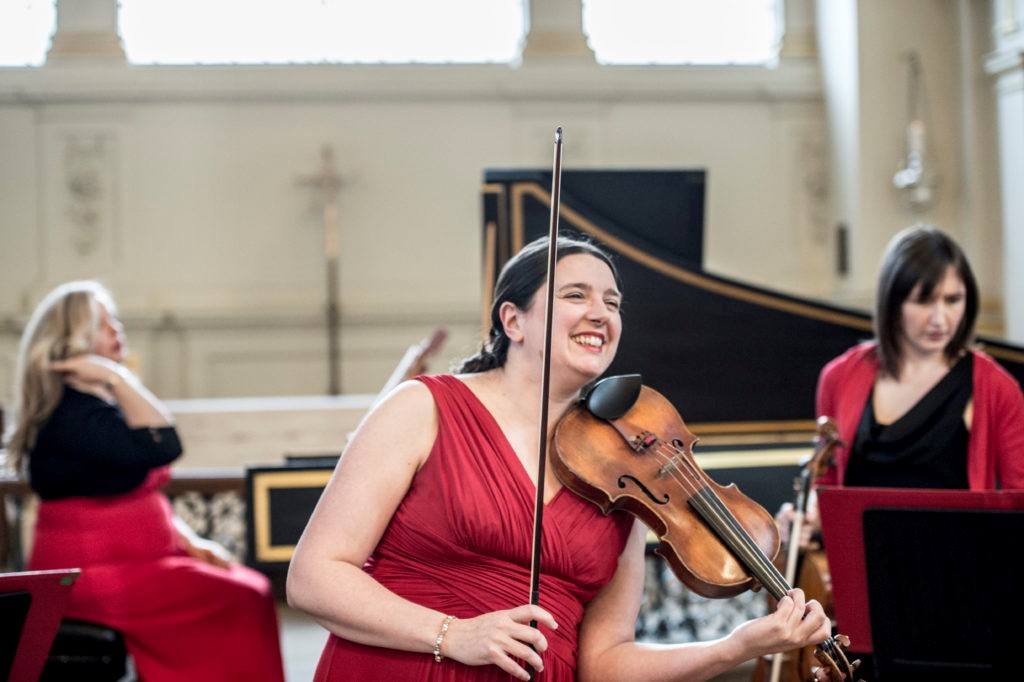
This concert from the Belmont Ensemble was on the the much more popular side, essentially all the hits. The utter lack of air-con in St Martin’s made this concert feel like a drag, though the all lady players gave merriment and depth to proceedings. The Arrival of Queen Sheba by Handel is the playfulness you’d expect aside the heights of eloquence. Belmont played with clarity, not to heavy but on the right side of expectations. Bach’s Air on the G String is another eternal trapping from the great mind, clever in its melody, the players didn’t force too much and it went well. Canon in D is simply so overplayed its easy to greatly tire of it. Pachelbel’s one hit wonder (though he wrote more, people!) is a homestay of weddings and other cause for celebrations, its pacing plods, its main theme stutters.
I knew all on the set expect Handel’s Concerto Grosso in A, the first fun find. Not too long in length yet having some exponential ideas, the impact is delightful and often whole hearted. Bach at it again, with Jesu, Joy of Man’s Desiring perhaps the most touching of the night. I chose this at a family member’s funeral, its meticulous form is other worldly, Belmont giving it their all reaping the rewards. Ending with Summer and Winter from Vivaldi’s The Four Seasons, this is the most gimmicky of the lot. Yet, I grew up with this work and know its value. As the soloist, Helen Davies stood up to the challenge in a fiendish and tricky role. It worked for the most part, one or two passages the ensemble seemed to fall flat, yet this faded. Helen ended covered in sweat, lost in what she had just created from the concerto’s demand.
Listed in the flyer, conductor Peter G Dyson was nowhere to be seen. Was this an add on from previous marketing materials?
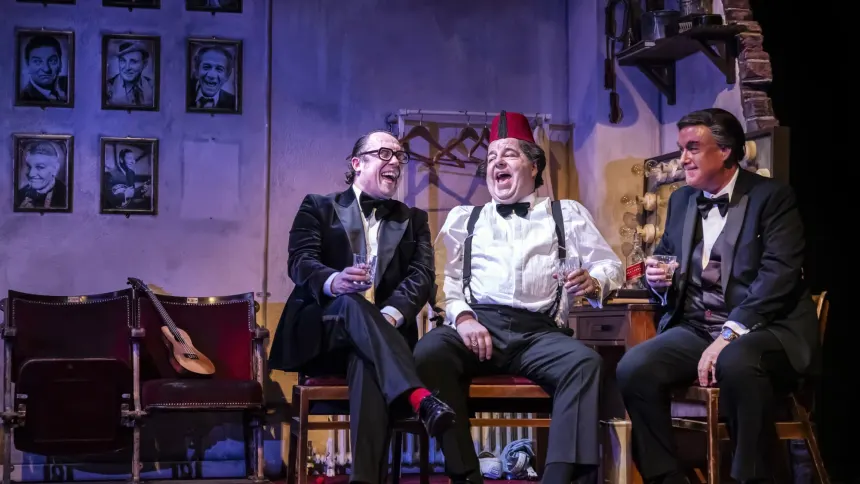
The Last Laugh is much more than exceptionally talented performers doing impressions of three comedy greats of the past. The portrayals here are incredibly touching and eerily true to life in the tiniest expressions and mannerisms. Penned by Paul Hendy, this is a production that reaches beyond the public personas of these three giants of British comedy to reveal the personalities, the insecurities and the battles of the men beneath. It’s definitely a rib tickler of a production but it’s much more than that, with moments of poignancy and a final tableau that breaks the audience’s collective hearts.
From the moment Damian Williams appears on stage in vest, pants, duck feet and, of course, Cooper’s infamous fez, we are drawn to this infectious, honest, compelling performance. The voice, mannerisms, the easy way with the audience are all spot on; the ‘just like that,’ the laugh, the endless abuse of Bob Monkhouse, is all eerily accurate of the late comedian. His quieter moments counterbalance this perfectly, his blank stares into the mirror, the glance out to the audience as he picks up his props, alone. The final, heartbreaking scenes are delivered with absolute poise and the silence from the audience, where there once was laughter, is palpable.
Simon Cartwright’s portrayal of Bob Monkhouse truly captures the essence of the famous comedian and presenter whom many of us will remember from shows like Opportunity Knocks or Family Fortunes. The voice is spot on; it sounds like Bob is really on stage, once again the mannerisms and stage presence of this comedy great is exceptionally accurate. I was really struck with Simon’s way of dealing with Bob’s difficulties; a comedy partner who committed suicide, a disabled child, a difficult marriage. Although his character is quieter and more reserved than his co-stars he still stands shoulder to shoulder with them, which is impressive.
From the moment Bob Golding enters as Eric Morecambe, it’s as if the late comedian has bounded back to life on the Millennium Centre stage; Bob bounces across the stage with all the exuberance that Eric was so famous for. As with the other performers, it’s eerie. The voice, the mannerisms, the way of simply ‘being’ with the other comedians speaks of years of admiration of Eric and honing his craft to create him on stage. Sheer joy is counterbalanced perfectly with his quieter discussions about Ernie being like his ‘comedy brother’ and the family he never sees to pursue his comedy dreams in his duo.
So yes, this is a ‘laugh a minute’ as other critics have said, but what truly gives it its staying power is ultimately the portrayal of the human beings behind these facades. It was interesting to hear that the play had gone to New York and, although the theatre goers there didn’t really know the comedians being portrayed, it was the familiar ‘lived in’ experience of simply being human that still made the production resonate with the stateside attendees.
If you love any, or all three of these personalities then this is a must-see. But even if you don’t know their catalogue of work, it’s still an important piece of theatre to attend. It’s a masterclass in storytelling; the last twist of the story, the final flash of the mirror lights and the final call to stage are devastating and brings a tear to the eye where there were, only moments before, a ‘last laugh.’
The BBC Proms are only getting bigger. Yet there are some concerns from this writer. After a few years of trial gigs around the UK, official with the name, it now appears that the whole nation of Wales is not getting anything this year. This puzzles me, as we’ve had events in Cardiff, Newport and beyond. This is a really disappointing blow. What is even more bizarre is the removal of the full Prom schedule getting the numbers removed. This was also so easy when sorting tickets and so on.
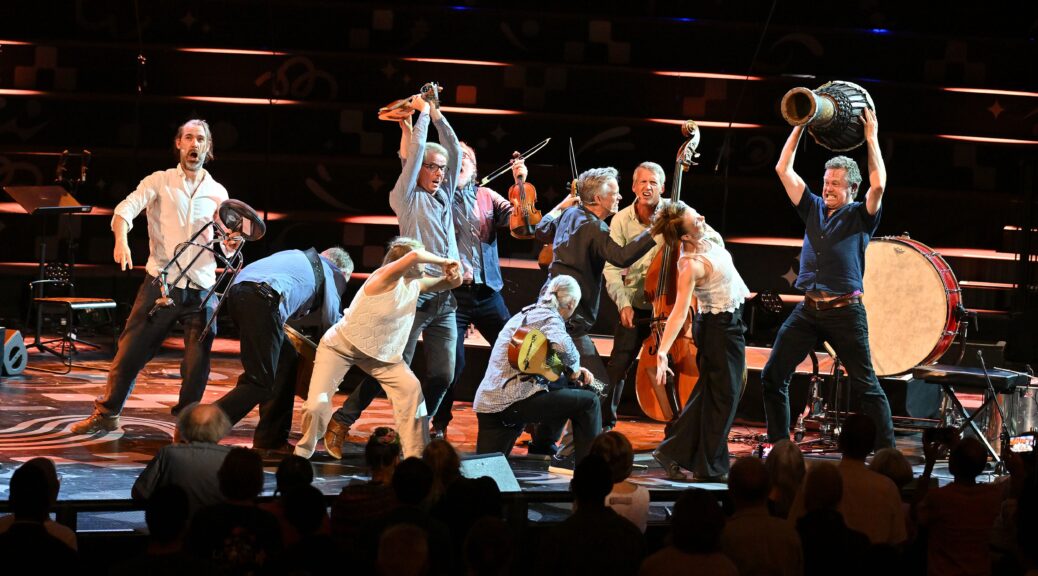
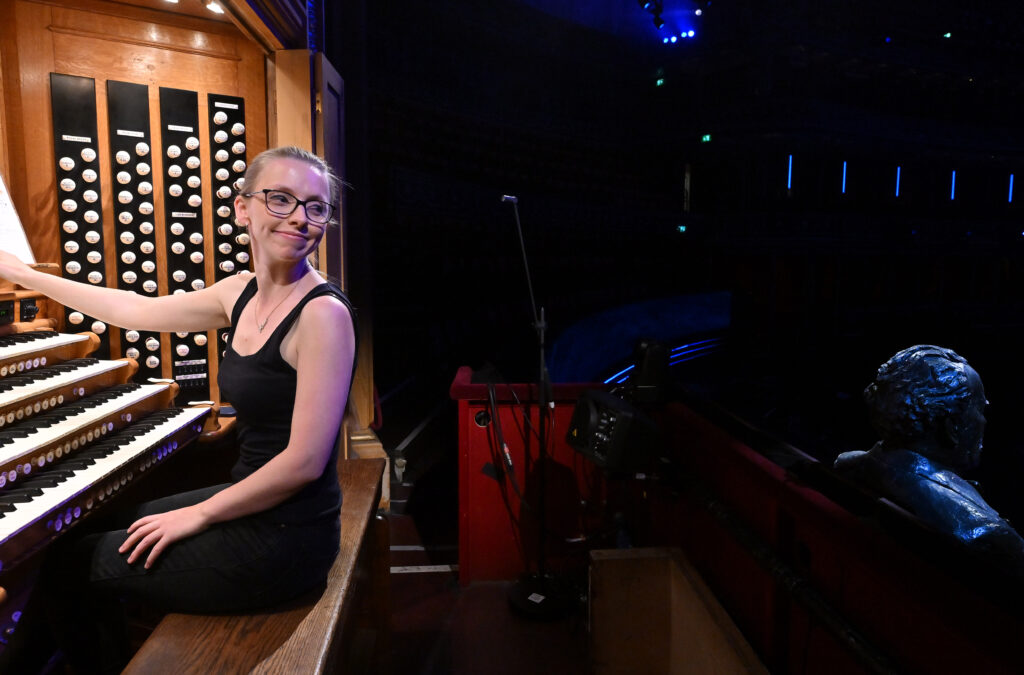
In a plunge into the deep end, an all night Prom was an exciting and exhausting endeavour. Not done since the early 80s, this is no small feat and we can thank Anna Lapwood and the efforts of the team, who assembled the whole monster. Breaking into things at 11pm, Anna chose an accessible if somewhat arbitrary set on the grand organ in the hall. Eugène Gigout’s Toccata in B Minor is heavily leaning on JS Bach, though this opener felt like the herald we deserved. Her praise on TikTok has seen a large flowing and this is all fine. Olivia Belli and her Limina luminis evokes the film Interstellar in its sensual minimalism, a vision of an astronaut gazing back at the sight of earth. Choices from Pirates of the Caribbean might be the most typical, though her brief singing and flair in the sea shanties and drinking songs were hard to not enjoy.
From Dark Till Dawn: All Night Prom, Part 1-Anna Lapwood organ
Barokksolistene / Mamelukk, Bjarte Eike violin/director
Pembroke College Chapel Choir, Anna Lapwood conductor
as part of the BBC Proms in the Royal Albert Hall on Friday, 8 Aug. 2025 Photo by Mark Allan
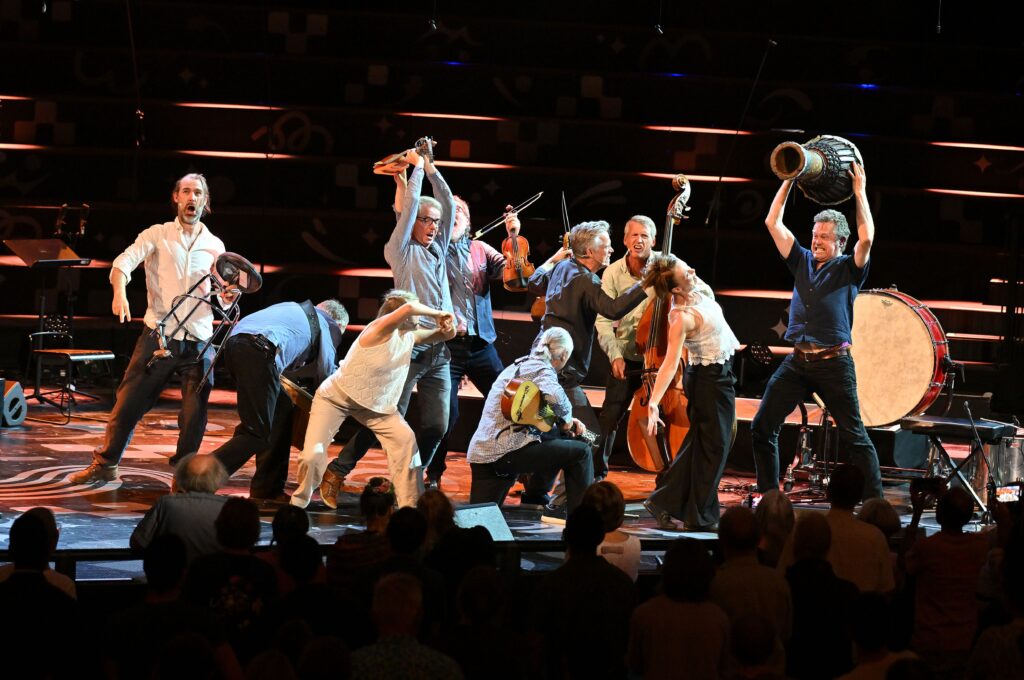
In keeping with this merry vibe, Barokksolistene are a Norwegian folk band who excel in evocations of years past in taverns and pubs. We get a broad scan of Western Europe, naturally Scandinavia, Canada and further afield. Director and on violin, Bjarte Eike is leader of ceremonies, a charming silver fox with cheeky humour and some sour political swipes at the UK, its all rather fun. Whether or not musically it was a little twee or me I’m still on the fence about. Though moments of utter beauty shone and dancing beats would be met with movement and panache. Their encore was a phenomenal harmony that greatly touched, an Acapella joy that found real praise from this hungry audience. It would appear that their party continued even into their dressing room.
Anna Lapwood would not be done just yet (far from it!) as she would return to conduct the Pembroke College Chapel Choir. Whilst this was their first performance at the Proms, it would be Anna’s last venture with them after nine years of collaboration. I was impressed by these young singers, some of which Anna pointed out are not even studying music. There was a sensibility and vim out of them. Kerry Andrews opened with a sweet ‘All things are quite silent’, and Anna’s very own ‘Arise, shine’ were conventional in form and clever it their simplicity. I’ve some reservations about Eric Whitacre and his ‘Sleep’, I’ve never found it to be very potent. His novel ‘Leonardo Dreams of his Flying Machines’ is trite in some ways, breaking down the artists remarkable inventions in flight. The singers wrap up with winds and whistle noise in a tacky mimicry of these contraptions. Bob Dylan and his ‘Make You Feel My Love’, arranged by Lapwood, sent me over the sickly metre.
Well needed rests were spread throughout the 8 hours. Hayato Sumino from Japan gave an intimate piano recital, as there second set began things got much more intimate. Chopin’s Waltz in E flat and Polonaise are very famous and I found them decent fare. Hayato turned to the also present upright piano and played one of his own: Nocturne II: After Dawn. This slight venture was hushed and perfect on the sombre frame of the upright, its appeal lays in the gentleness. A take on Dance Macabre saw him on both pianos, in this busy arrangement by Liszt and H. Sumino. Lots of the music was fitting, the Dance included, skeletons jigging around the night as the cock’s crowing wraps up the party. The take on Boléro by Ravel was cut in half and less effective. Some percussive ticks and elbow slamming added to the drama of the latter few bars, though I doubt it works as well as its start: the grounding statement. Radiohead’s ‘Everything in Its Right Place’ and Like Spinning Plates ending the session and they were passable, on cello Anastasia Kobekina played in the later and this would tease into her own programme that would shortly follow.
From Dark Till Dawn: All Night Prom, Part 2-Hayato Sumino piano
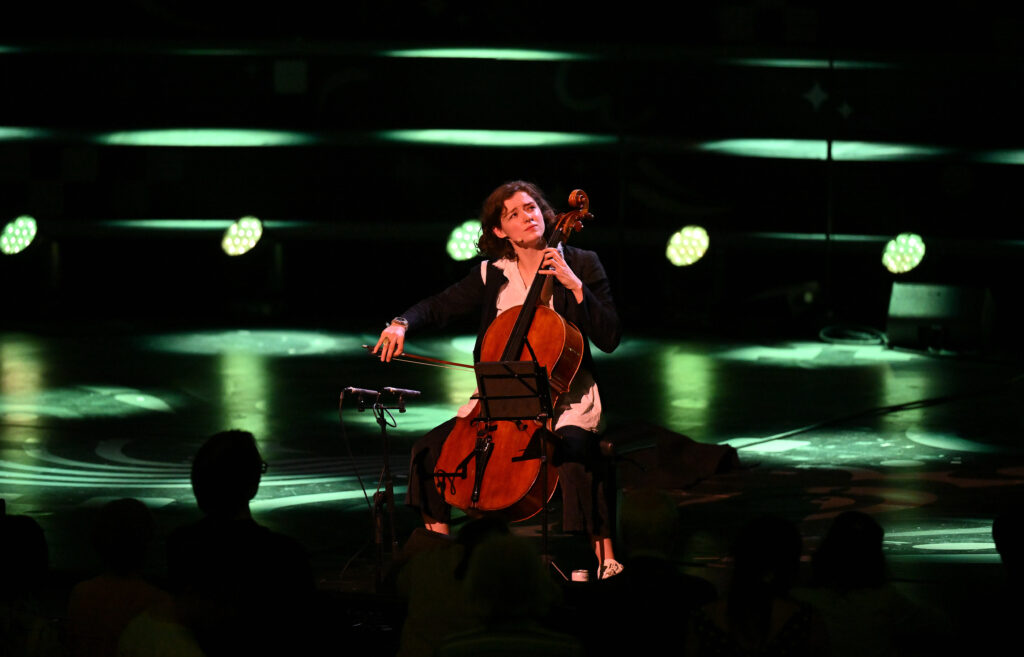
Anastasia Kobekina cello
as part of the BBC Proms in the Royal Albert Hall on Friday, 8 Aug. 2025 Photo by Mark Allan
Anastasia’s time here is most certainly my favourite programme. By the time she was on stage it was coming up to 4am, the plucky audience around me has retired for the night and the intimacy would now reach utter concentration. Cherished Bach Cello suits were the mainstay here and I was loving it. Beginning with ‘O fronds virga’ from Saint Hildegard of Bingen, we met the sacred realm, then to stately Bach and Jonny Greenwood’s Postcard. The latter was written in lockdown and is so slight and under character, it is fifty seconds of cluttering string contact of little note. Vladimir Kobekin and his Narrenschiff (Ship of Fools) was the most theatrical and alarming. Dark and filled with mystery it stood out for its utter invention. I believe I recall Pēteris Vasks and his Grāmata čellam (The Book) – Pianissimo causing a stir in a concert in Cardiff with another cellist years ago. Most likely due to the actual vocalise of the player as well as cello playing simultaneously. Beautiful in its creation, unfettered by compilation it is a brief moment that glimmered. More Bach suites for the pot aligned with Boccherini’s Fandango, with foot stomping and cries aloud. Fabulous musicianship.
After this I began to falter, it had been at least five hours. String group 12 Ensemble were next and they kept some of the programme from their concert at Wigmore Hall the other week. I think the audience struggled with the demands of ‘Many Fruited Dog Tooth’ from Isabella Gellis. Having its world premiere at Wigmore (and this night its Proms debut) this oddly moss inspired near fifteen minutes was a slog, its chirpy and hushed tones would not aid this sleep deprived audience. Edmund Finnis in the Hymn, after William Byrd was effective and stimulating. Oliver Leith’s ‘Full like drips’ from Honey Siren and Oliver Coates’ One Without’ from the film Aftersun were the alluring pieces to win us over in their sincerity. I was not expecting to hear Olivier Messiaen on this night and his ‘Prière du Christ montant vers son Père from L’ascension wrapped up their time with subtle intensity.
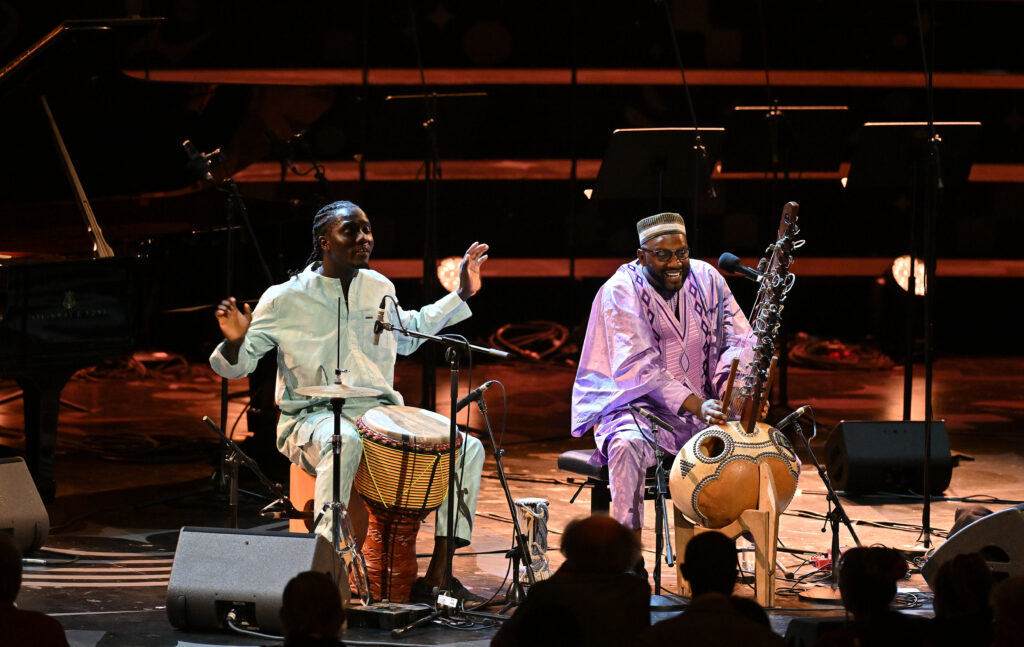
From Dark Till Dawn: All Night Prom, Part 3: 12 Ensemble, Seckou Keita kora/voice with Mohamed Gueye percussion, Sleeping At Last with 12 Ensemble, Pembroke College Chapel Choir, Anna Lapwood as part of the BBC Proms in the Royal Albert Hall on Friday, 8 Aug. 2025 Photo by Mark Allan
My face was falling off after this, I had crashed and the ample caffeine intake was intense. A man who had travelled from Chicago remarked how “crazy” it was I was drinking coffee so late. No doubt, coffee sales on the night were a success too. A touch of diversity with Seckou Keita from Senegal would continue as the penultimate act. On kora, he plays the harp sounding instrument with a fluid melodic ambience. It’s pleasant, yet I wouldn’t say I was nourished by it. The singing is charming, as well feel the heat and the whimsy of his homeland. On percussion Mohamed Gueye added textures to the fray though was not heard enough, his time brief yet energised. 12 Ensemble would pop back for a finale flourish in ‘Future Strings’ to delight his send off.
It would be fitting that this colossal concert would wrap up with an artist called Sleeping At Last. Hailing from Chicago, Ryan O’Neal got to the piano and most of the musicians from the night joined him to the climatic end. These are songs which are noble and insightful, yet they lacked any real punch. His vocals impress in typical soul and pop fashion and the songs written about the twelve personality types is inspired. Simple songs names such as ‘Nine’, ‘North’, ‘Touch’ and ‘Sight’ are a choice and one which seems to fit. This could have easily been Sam Smith or other pop stars I’ve lost the names of at present. Somewhat anticlimactic, the audience had given standing ovations for some of the acts, yet here appeared simply too tired to do one last time.
Extensibly, a concert that will go down in history, though the idea won’t see the light of day for quite some time.
What is rare for me is a return to the past, of the television kind anyway. Those who know me are aware of my rewatch of Twin Peaks, after David Lynch’s passing. That is the true exception.
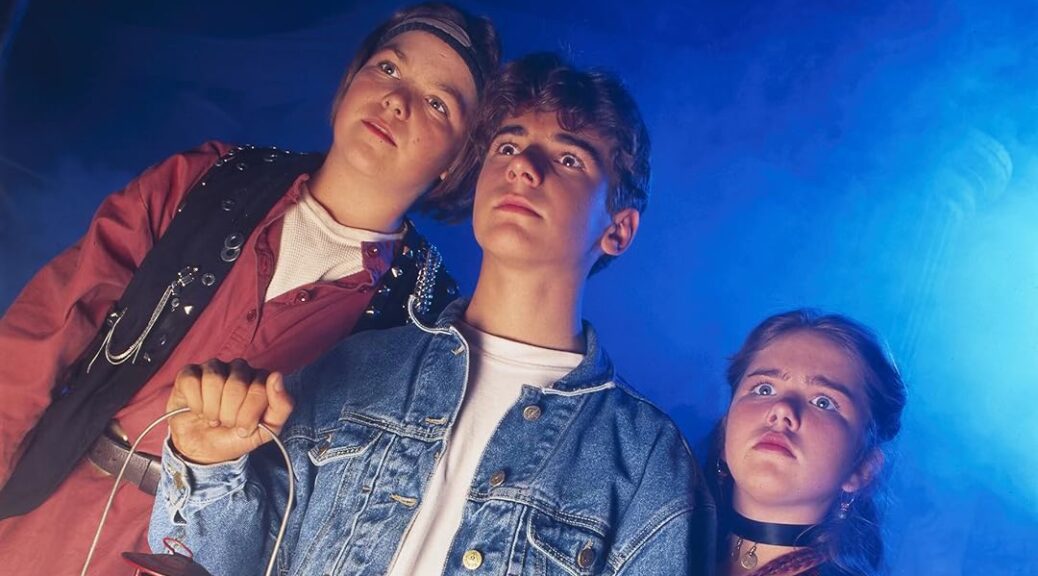
Through rough, AI looking videos on YouTube I had the seismic shock of nostalgic flight. From this, I can proudly say I do remember The Odyssey and it is easily one of the finer shows made for kids television, so much so that adults can easily find a way in as well.
It would have been either Nickelodeon or Channel 4 that I watched it. What I do remember most are the opening credits and the impactful, defining moment of the story. Yet, have I engaged in the Mandela Effect…I am sure the show was called Coma? This leads into the story…
Made in Canada from CBC Television, the success of the series had to an impressive three seasons, though not all plot threads were wrapped up as expected. Created by Paul Vitols and Warren Easton, I do wonder if there was any inspiration from Twin Peaks, The Odyssey would have just been aired as the cult show was losing its main allure.
The premise is layered, especially for its main audience. Jay, an 11-year old boy is keen to join a local tree-fort club, the lead of which is Keith. Jay brings his late father’s precious telescope as an offering into the club. Things get murky with bullying, Donna, Jay’s disabled friend tries to keep things cool. In a desperate attempt to leave, Jay uses ropes to slide down to the ground. This gives way and he falls in epic fashion only then to have a might thump on a stone. For most of the next two seasons, Jay is in a coma, yet another realm is revealed as he appears to create stories in his head about The Tower and its surroundings. No adults live in this land and children appropriate numerous adult jobs and cultures. The show is fantasy, yet is still rooted in reality, as the event mirror in both worlds. The show never had the intent to speak down to children and this is one of its best assets.
I’m now aware I cannot speak of the show with out a dreadful sense of tragedy. Both male and female leads have passed both extremely young, Illya Woloshyn in 2023 and Ashley Rogers back in 2007. Their deaths have led to some unsavoury fake news about what caused this and I must write with care here. Watching them grow up so fast over there three seasons is touching, but it was still a hard watch. Woloshyn had promise growing up into the dashing main character, yet at times his acting didn’t quite gel with the script. Other times he seems to really get it, his obsession with his apparently dead father (I won’t spoil too much here) and general teenage angst are absorbing. Im amazed just how much a show from the early 90s sucked me in like this.
I don’t recall watching till the end back in the day, but what we do get at the finale is a fine wrap up that could have expanded on the dynamic between children becoming grownups and adults respecting this. Many 90s tropes are here: the music…good lord the fashion! Though dated in may respects, the story still holds. A remake, which has apparently been in the discussions would not rival this rawness and clever sense of theatre. Ashley Rogers as both Donna and Alpha, was such a great young actress, who found praise also in the film Now and Then. Her sensibleness grounds Jay in both roles and her bookish persona is very charming. The trio is completed by Tony Sampson, best known later as Eddy in Ed, Eddy, n Eddy (fans of the show will know I’ve spelt this right), the bully who becomes friends with Jay. As the third season goes on Sampson changes with clear weight loss and the gruff traits of the role are still their. His fashion choices might just be the most “radical”.
What must be of note is the fact that a young Ryan Reynolds is in the fold, playing Macro and Lee. Dressed up like a fascist, even in this early role you can see he’s having fun, no doubt all the cast must have found this eventful. Macro is the make shift right hand man to Brad (again won’t spoil here) and no doubt had acting lessons from an early age. Even his line “My poochy needs me…” could easily be from Deadpool. Andrea Nemeth as Medea and singer Sierra Jones, is fine casting, an actress who didn’t go on to do much else, yet really shines here. Her on-again-off-again pairing with Finger and Mic from a rebellious Mark Hildreath is also funny for its frustrated puppy love murmurings. Finger’s later doomsday plot is also absorbing.
Also surprising that a compassionate Janet Hodgkinson as Jay’s mum, Val didn’t do a huge amount of work either. In season three she is not seen for a few episodes, yet her vast efforts are to make sure her son comes out of his coma. There appears to be some rather dated methods of aiding someone in that condition: do we really think a bag of ice and loud noises could wake someone from a coma? It almost reeks of cult, the care facility Jay is sent to.
How does Jay know of this other realm when he is awake? Will he find his father in either place? Many questions arise. Broad themes are tackled and the troubles of being a young person are never belittled. I just adore this show for such a gentle and fine handling of the children. This is easily watched on YouTube, those who binge might be a little shocked with the darker edge of the third season, arguably the best.
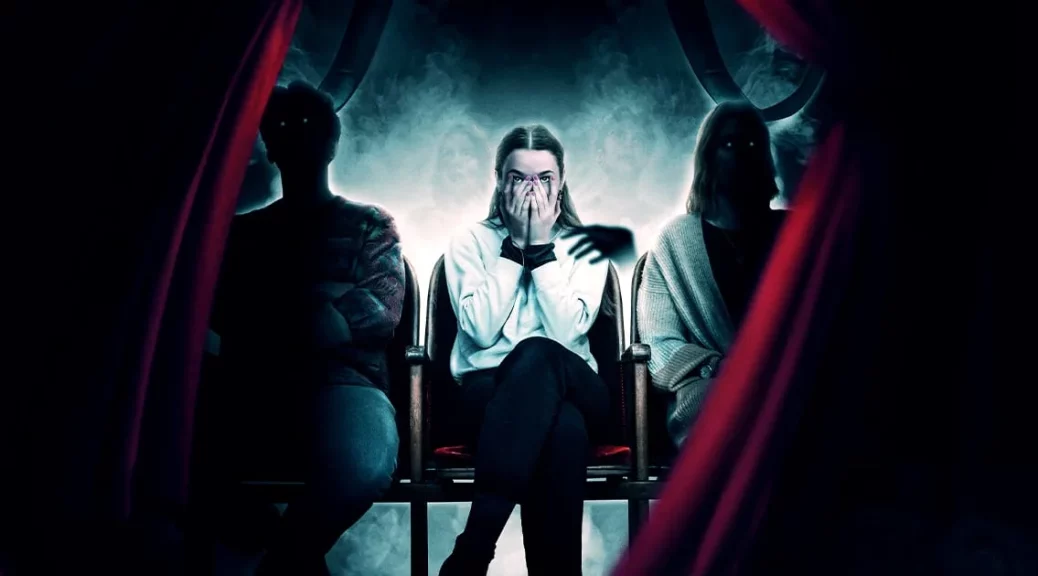
Concocted from the brains of The League of Gentlemen writers, Jeremy Dyson and Andy Nyman, after Nyman walked past The Fortune Theatre, showing The Woman in Black. You can definitely see the inspiration that Ghost Stories draws from the Susan Hill penned classic, but it deviates and twists and turns in ways that could only come from the brain of writers such as the duo behind The League of Gentlemen!
The production is unusual in that its publicity material contains no stills or videos of the actual show, just audience reaction. This means I enter the theatre, (alone might I add!), with complete trepidation at what is about to happen! All I was aware of was that the show had no interval and no readmittance once the show had begun and, therefore, no escape! I also knew that it would be a collection of stories collated by our guide through the paranormal, Professor Goodman…
I feel with this kind of show, it lives and dies on the quality of its performers. Luckily, the talent on show here is clear and immediately obvious. Lucas Albion as Professor Goodman is the glue that holds this production together, bumbling onto the stage from an auditorium door and immediately into the hearts of the audience. His job is a difficult one; to hold the stories together and to entertain us in the interim. Lucas is brilliant, he holds the audience in the palm of his hand whether taking us through a slideshow or demanding the audience raise their hands if they themselves have had a ghostly experience. These sections could easily have lost the audience, but Lucas is a master at building the tension and at times the humour of the piece.
Our stories are portrayed by one actor per story. Again, these sections could easily become tedious, but the acting here is masterful. David Cardy portrays slightly crotchety, but endearing nightwatchman, Tony Matthews. Without giving too much away, there are long stretches here of quiet or silence, which David builds into tension with ease. He balances this perfectly with hilarious moments such as her berating of the poor Russian nightwatchman who keeps radioing him. I could feel the audience around me on the edge of their seats as Tony flashes a single torch beam across the stage and the final payoff resulted in screams mixed in equally with terrified laughter.
We blend seamlessly into the other stories which feature Preston Nyman as Simon Rifkand and Clive Mantle as Mike Priddle. Preston is perfectly cast as the hapless Simon who is driving home from a party in the early hours of the morning (without a licence, I might add!). His comic timing and sheer fright at the incidents that occur in his story are a sight to behold. The audience were roaring with laughter which immediately became jumping out of their seats and screams of fear. An excellent, balanced performance. Clive Mantle as Mike also blends comedy expertly with a nuanced, thoughtful moments too. His portrayal of ‘the prophet’ businessman is believable, his cockiness and confidence from the business world mixed in with his more tender moments about his wife and his fear at telling the story.
Alongside this talented cast, we have an impressive set created by Jon Bausor. The ‘intermissions’ between stories allow the sets to change with ease and they really are a sight to behold. Mixed with the constant billowing smoke which only helps to increase the tension, I was surprised at the sheer kinetic nature of the set which moves and flows around the actors and the illusions of depth and space that is created by the set design. Teamed up with constant, unnerving sound curated by sound designer, Nick Manning, excellent lighting (and lack thereof!) from James Francombe and very smart special effects from Scott Penrose, the production values of this show are incredible and, I must admit, unexpected!
All in all, this far exceeded my expectations in every sense of the word, made me jump (more than once), weaved a very clever and unexpected twist that I certainly didn’t see coming and gave me a huge sense of unease which is with me still today! I will definitely be keeping the secrets of Ghost Stories as, even if I was to try and explain what I had seen, I don’t think I would truly capture the essence of what the show achieves. Yes you’ll jump, you might scream, you might laugh hysterically but you will have a great night out and come away thinking about what you’ve seen for a long time to come!
Creating opportunities for a diverse range of people to experience and respond to sport, arts, culture and live events. / Lleisiau amrywiol o Gymru yn ymateb i'r celfyddydau a digwyddiadau byw


 (5 / 5)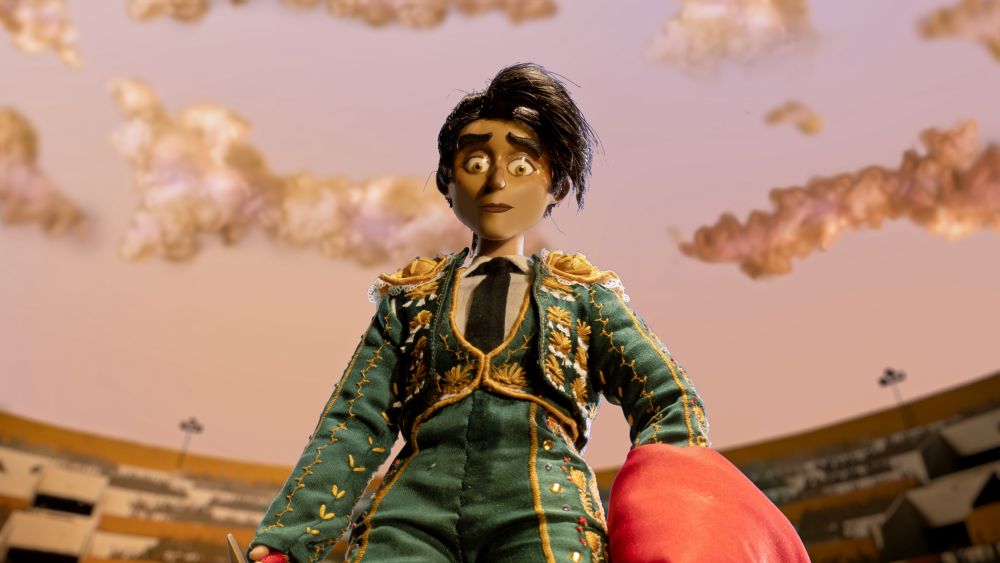
 (3 / 5)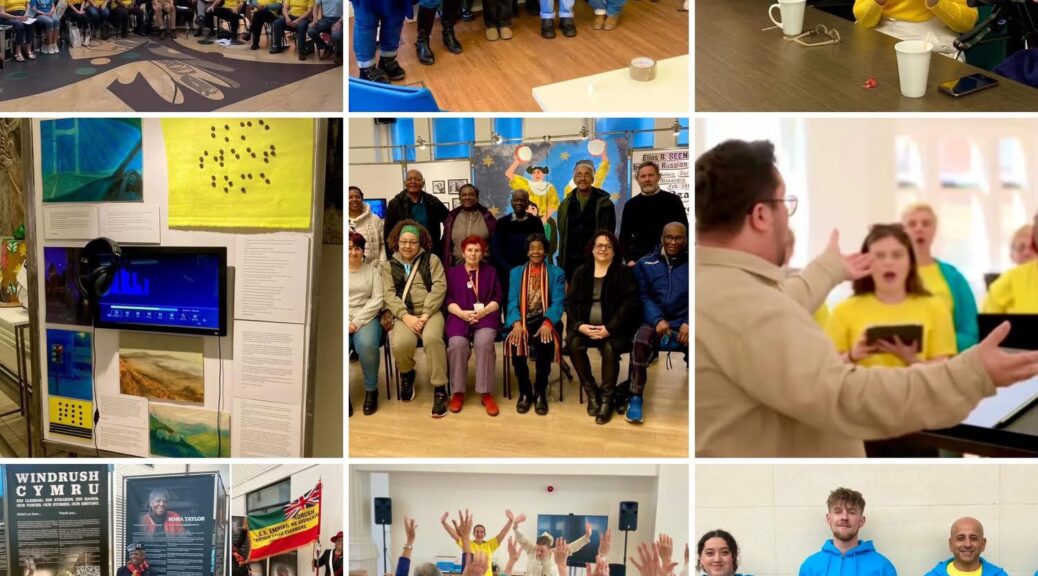

 (4 / 5)