
 (3 / 5)
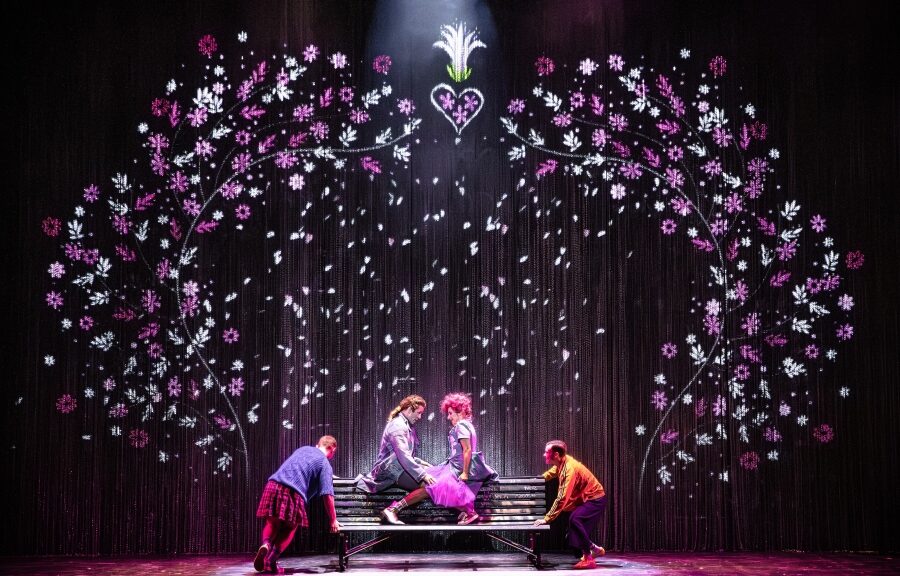
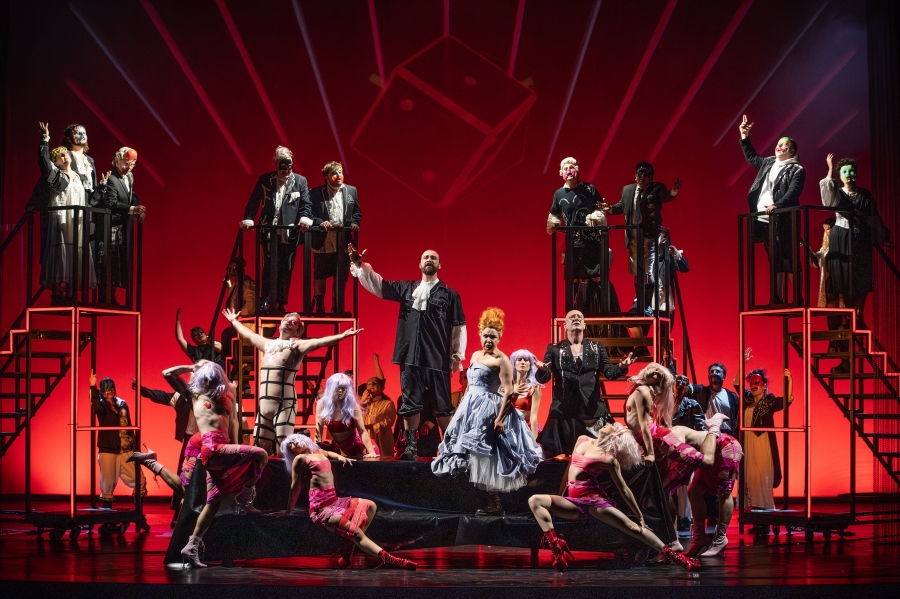
The Welsh National Opera know how to put on a show. On opening night, Cardiff’s public enjoyed Candide by Leonard Bernstein. It’s a light musical, more than an operetta, done in a cheeky tone. The WNO enthralls the public with colour, wit, and excellent performances from all the cast. Of note are also the choreography by Ewan Jones, the imaginative use of light by Rob Casey, to create animations and guide the story, and Nathalie Pallandre’s costumes, where the eighteenth century meets and crashes with the late twentieth century.
The singing by all members of the cast is excellent. Soraya Mafi stands out with a powerful voice and delightful timbre. Excellent is also Amy Payne as The Old Woman, delivering a funny and skillful performance, and Ed Lyon is an impeccable Candide.
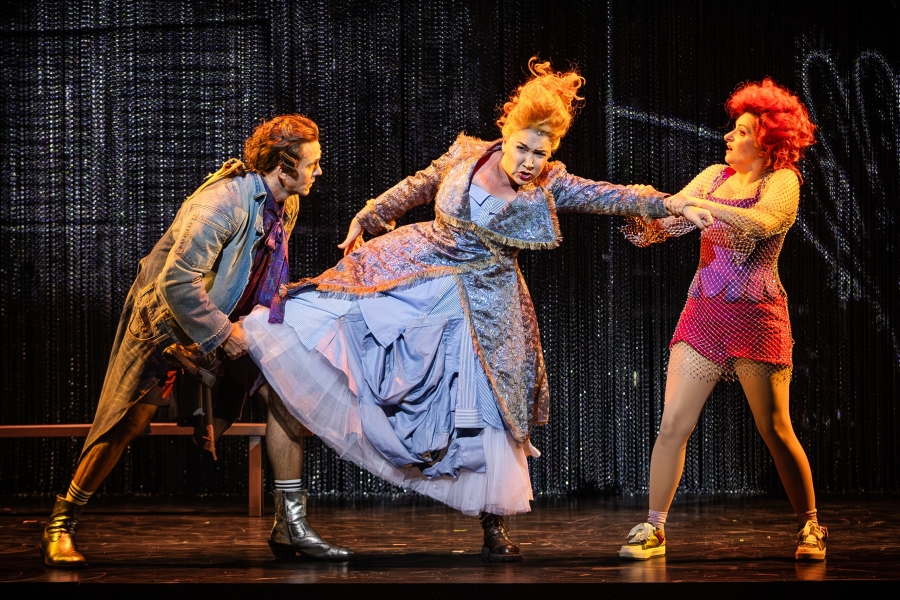
Alas, Bernstein’s Candide lacks the satire and depth of Voltaire’s original novella. It’s a picaresque pastiche with no subtleties. The good mise en scène, creative costumes, and excellent performances cannot compensate for the lack of substance of this musical. There is no variation in tone in the music or the story. There is no emotional arch, and the cheeky jokes become irksome after a short while.
The two-dimensional cartoon created by the light animation emphasises unwittingly the lack of depth of the show. Although effective in conveying the comedy in the beginning, the two-dimensional drawings keep the scene flat. As a result, there is little variety in the perspective on stage, just as there is no change in tone in the music.
There is no escape from a mediocre score and shallow libretto, light years away from the subtle and biting satire of Voltaire, but also from Bernstein’s West Side Story. Yet, people loved it. It’s a bit of fun on a rainy night in what feels like an abrupt autumn.
At a time when culture is under attack, when theft of artistic work has effectively been legalised to make AI viable, one can’t help longing for the amazing productions of Janáček that the WNO gave us in the past. One can’t help yearn for the WNO doing operas to convey the truth of the human condition.
Eva Marloe’s review of the Welsh National Opera’s production of Bernstein’s “Candide” is surprisingly flat and negative for such a lively show. We saw the WNO’s performance on the 2nd October at the “Mayflower” in Southampton.
Bernstein rarely provides what is expected but anyone familiar with his music would recognise the opening bars of the overture immediately – quick tempo shifts, unexpected rhythms and sparkling orchestration – cartoon-like, satirical and witty – Voltaire, at speed, modern.
The stunning CGI and hand-drawn stage set constantly emerging on the hanging “curtain” cleverly linked with the actors’ movements, made the audience laugh and gasp on occasions. Operetta, Bernstein-style with AI artistry. Modern.
Marloe states there is “no change in tone”. Candide’s early music is lyrical, wide-eyed with optimistic innocence, soaring simplicity. As his painful disillusionment increases, with life/opera’s progress, his lines become more dramatic, conflicted until, by the end, it is grounded in reality.
Taking the individual experience of reading to the screen/stage is a challenge. Bernstein, the didactic, polymath, always was a teacher “par excellence”, no matter what the situation. Perhaps here, he works hard to convey the nuances of reading to ensure Voltaire’s message is conveyed. Although a novella, it takes longer to read than opera composers and audience have at their disposal.
The libretto’s light tone and jaunty music change as the characters sing together in a solemn, hymn-like style, in sharp contrast to the operetta’s earlier chaos. The music grows in warmth, building to a powerful, communal climax – the truth. Life’s meaning is in the collective effort.
For the opening of the Kennedy Arts Centre, Bernstein composed “Mass”, an evening when the audience’s expectations – Sanctus, Anguis Dei, etc – were cast aside. It is a very Voltaire, existential piece as the celebrant struggles with life within the optimistic setting of the Roman mass. In “Candide”, Bernstein shocked again. The constant Brechtian alienation effect in the set drawn by AI and CGI and the narrator speaking directly to the audience, constantly remind us to consider, to think, to decide. “To be or not to be” in our modern world.
All credit to the WNO for this courageous, exciting production – singing at its best, acting to suit the message, exacting choreography and energy to convey so much, if the audience are able to assimilate the unfolding scene.
Audiences who attend Bernstein events expecting the “usual” will always be “disappointed”. It may take a little thought to appreciate what has been gifted on stage.
Marloe yearns for the past, a return to the WNO giving us “the truth of the human condition”. Bernstein rarely provides the comfort zone of the known; his intellect was always probing, searching, dealing with present, ever-changing life. On the 2nd October, Voltaire, the WNO and Bernstein brought an audience to its feet by adding to our cultural life. Marloe – rightly – bemoans the legalised theft of artistic work. In this case, from the opening bars, the thieves will know it is Bernstein aided and abetted by the great WNO.