
Image Credit: Kirsten McTernan
 (5 / 5)
It’s rare to see Welsh history take center stage on this scale, let alone in the biggest theatre in Wales, and it’s especially rare seeing it refuse to apologise for being there too. The result is funny, angry, moving and unexpectedly intimate.
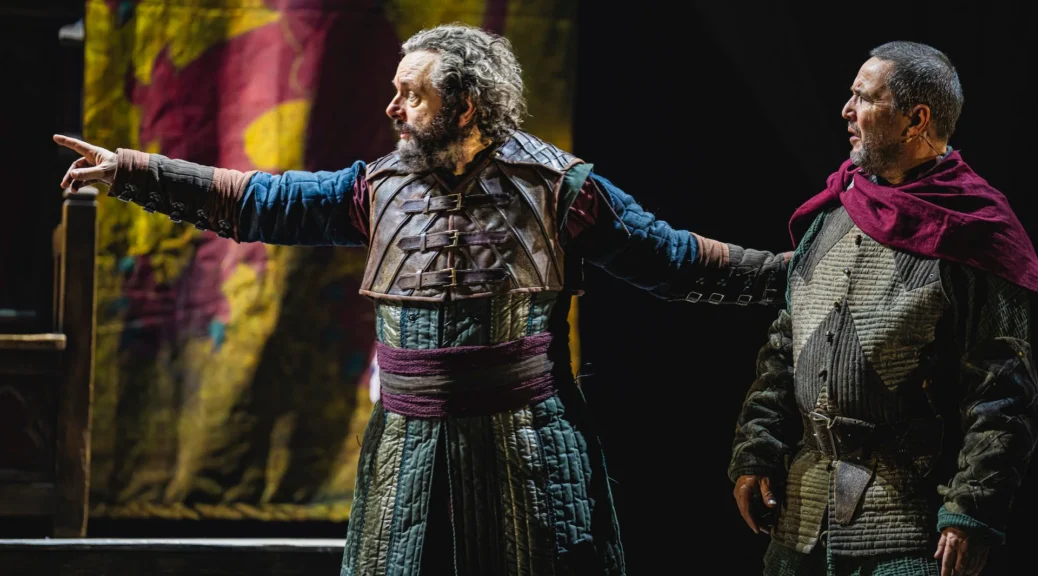
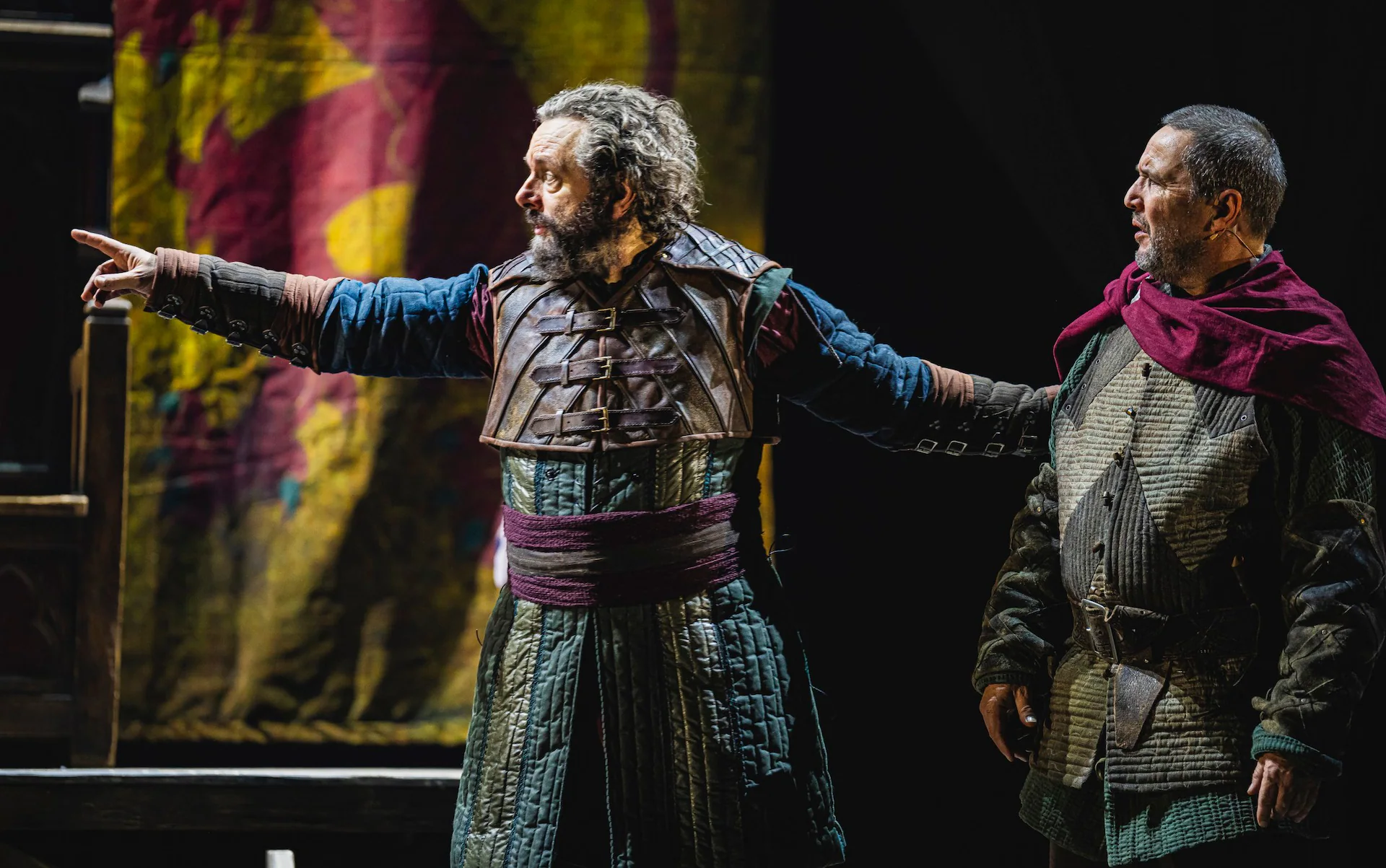
Owain & Henry, written by Gary Owen and starring Michael Sheen, tells the story of Owain Glyndŵr’s rebellion against the English crown, placing him opposite Henry IV and the future Henry V. Gary Owen’s version of history is muddy, foul-mouthed and full of argument. Characters trade grand speeches one minute and sharp jokes the next. There is a confidence to the writing that allows it to move easily between tragedy and comedy without losing momentum. Too often, stories about Wales are filtered through an outsider’s perspective, but here, Wales really speaks for itself. Welsh phrases and colloquialisms are woven naturally through conversations, and the effect is subtle and powerful.
We meet princes, nobles and kings, yet many of the characters sound remarkably like people you might overhear in a café, outside a rugby match, or at the bar in a village pub. That sense of familiarity is important because Glyndŵr occupies a strange place in Welsh culture. He is both a historical figure and symbol. The play’s achievement is that it returns him to human scale. We see not only a revolutionary and military leader but a husband, a father and a man struggling with burdens he never entirely chose for himself.
At the centre of it all is Sheen. His performance is commanding without ever tipping into self-importance. He is passionate, charismatic, but most importantly, a flawed hero. For all the grandeur surrounding the character, the performance remains grounded.
The supporting cast is equally impressive. Linus Roache plays Henry IV pompously and arrogantly, while Rakie Ayola brings intelligence and steel to Marred, Glyndwr’s wife. Sophie Melville is loud and ferocious, turning grief into fury as Lois. Meanwhile, Ned Costello, the Prince and future king, is all entitlement and cruelty hidden beneath youthful swagger.
One of the production’s greatest strengths is its ability to make uncertainty feel dramatic. Few characters possess complete control over events, and victory never feels guaranteed. Alliances shift, loyalties fracture, and private doubts often prove to be just as significant as the battles themselves. The result is a story that feels genuinely unpredictable, even when its broad historical outcome is already known.
The production scale deserves mentioning too. Set designer Jon Bausor avoids the obvious imagery of medieval castles and banners. Instead, the stage is dominated by rusted steel girders, moving platforms and harsh floodlights. The industrial design gives the story a distinctly Welsh feel, connecting Glyndŵr’s rebellion to the Wales shaped by coal, mines and steel. Rather than presenting history as distant and romantic, the set suggests that the questions at the heart of the play still belong to modern Wales too.
And beneath the humour and spectacle, the play repeatedly returns to questions of memory, power, and who gets written into history. Several moments touch on mispronunciation, dismissal and the casual assumptions of those who are sitting at the center themselves. It’s not a bitter production either; what emerges most strongly is pride. The type of pride that comes from seeing your stories treated with ambition and care.
That feeling definitely extends beyond the stage. During one of the closing moments, a section of the national anthem began, and people around me started singing along almost instinctively. Others joined in, and nobody had been asked to. It was a very triumphant experience. The production had spent three hours speaking in a voice that felt distinctly Welsh, and in that final moment the audience answered back.
Perhaps that is what Owain & Henry does best. It is an epic in scope, packed with so much grit, humour and political intrigue, but also keeping what it is to be Welsh alive. The best historical dramas remind us that the past is not really past at all. Owain & Henry achieves exactly that, asking what it means for a nation to tell its own stories and share its identity. And when the audience naturally began to sing, it felt clear that Wales was recognised as its own.