Tag Archives: Mold

Review: Glitch, The True Story of the Post Office Scandal, Theatr Clwyd, Mold, by Richard Evans

A Rabble Theatre production, Theatr Weston (Theatr Clwyd)

 out of 5 stars (4.5 / 5)

On tour nationwide until April

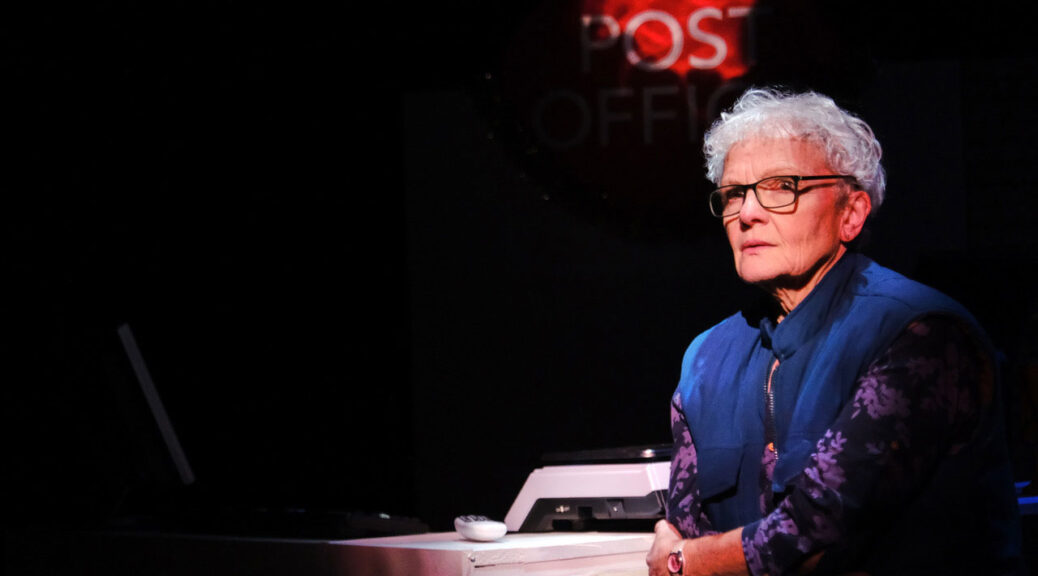
Glitch.  It took a television series to ignite public anger about a scandal that had been brewing for over 20 years.  Those with an eye to the news knew something about what was happening but most remained blindly indifferent to the scale of injustice that was being perpetrated.  This drama relates some personal stories from those whose lives were often ruined by the actions of the Post Office and the computer company, Fujitsu.  It focuses in particular on the story of Pam Stubbs from Barkham, a small village 15 minutes away from the Fujitsu headquarters in Basingstoke. 

Rabble theatre takes stories of national significance and develops drama from them.  They are passionate about supporting women such that when they heard the story of Pam in 2021, they felt compelled to tell her story. As they devised the show, it became apparent that this was a huge scandal, not a one off event.  Glitch was first produced in 2024, before the broadcast of the now famous ITV drama featuring Alan Bates who was knighted recently for investigating this scandal and managing the campaign for justice.  

What happened to over 900 sub-post office masters is quite simple.  A new computer system called Horizon made by Fujitsu to record transactions was installed in sub-post offices.  A selection of these Horizon machines developed a bug which altered the totals of a days takings leaving a short fall of perhaps £200 a day unaccounted for.  Over a period of time, a sub-post office could run up a debt of up to £50,000 by which time, the Post Office auditors would have been called in to inspect what was happening and concluded that the sub-post office master was swindling the system.  The Post Office would then prosecute the shop owner to recoup the money.   
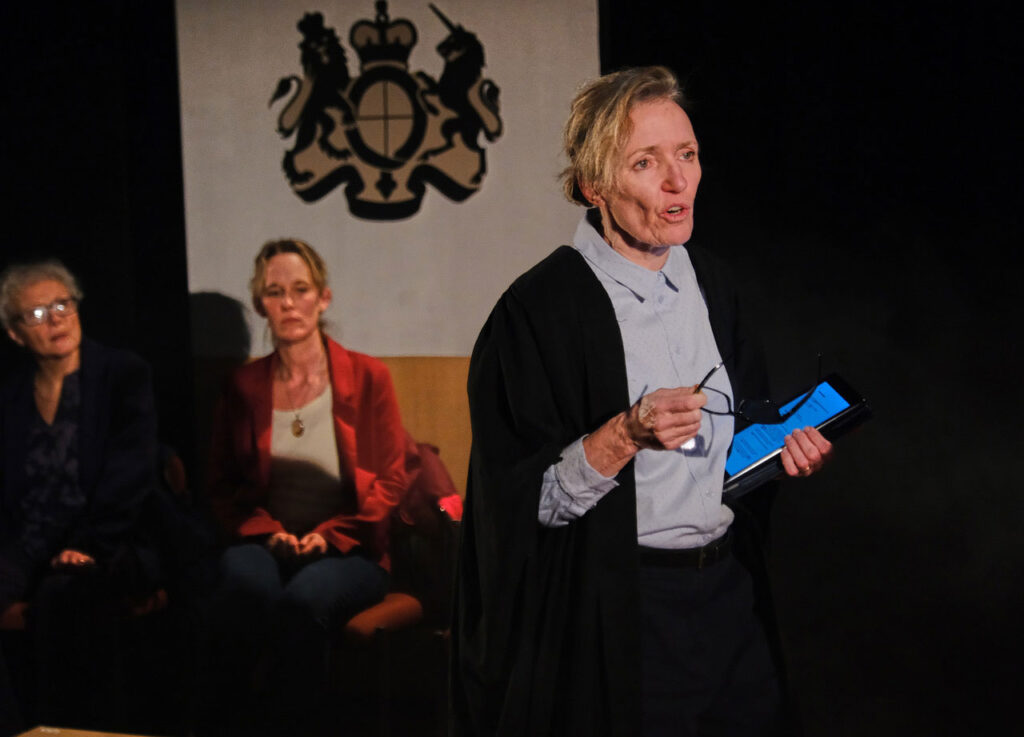
Pam’s particular story is both distressing and admirable.  She kept meticulous written records of every Post Office transaction and could detail every loss that was unjustly incurred within the accounts.  Despite countless attempts to call in help from the Post Office and Fujitsu she was not believed, had her counter closed down and she had to sell her shop.  She became a social pariah in a close knit village, yet despite this when called on to testify in court, stood up and told her story despite intimidating and manipulative tactics from the defence lawyers.  She emerges as a strong minded, fair person who acted with integrity.  
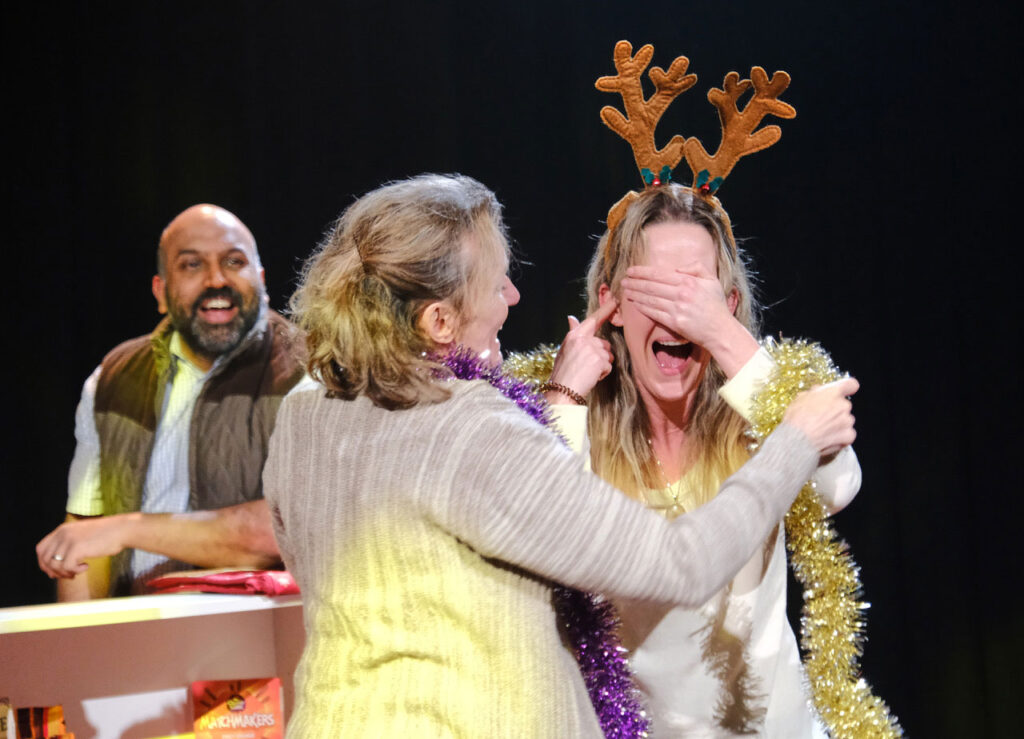
This show needed a strong lead and Joanna Howarth as Pam provides this.  At times friendly and gentle, at others someone you would not mess with.  However this was a team effort with a small cast of four.  Laura Penneycard, Naveed Khan and Sabine Netherclift all played multiple roles and together they portrayed a compelling drama that illustrated the distress caused by the scandal well.  

The play notes that 300 people died before seeing this injustice exposed and their name cleared.  Thirteen of those committed suicide.  Many law abiding citizens were imprisoned or faced bankruptcy because the Post Office believed a computer system from a faceless multinational company rather than honest working people.  This really is a story of the common person fighting against the impersonal cruelty of big business and the desire to put profit before people.  Full marks to Rabble Theatre for being bold enough to tell this story.  It deserves widespread viewing.
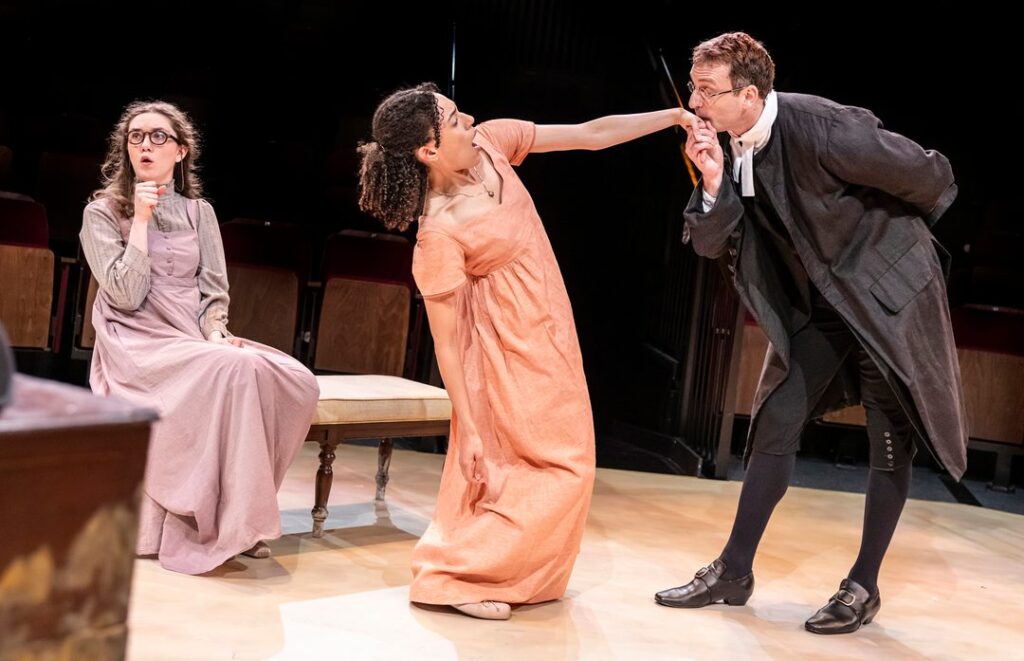
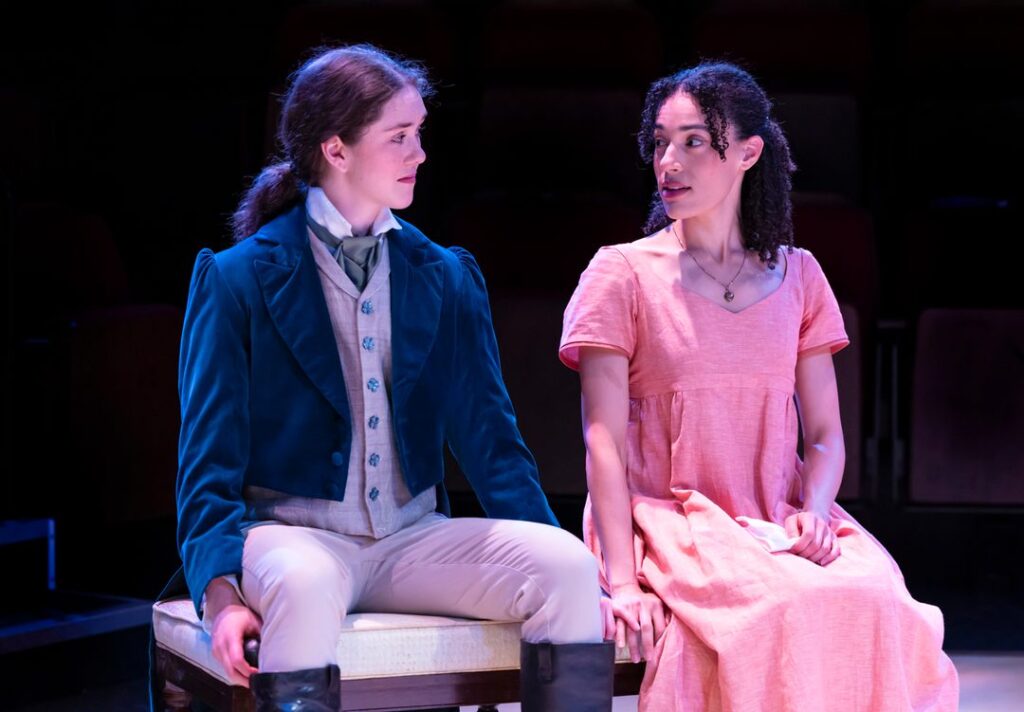
Review: Pride and Prejudice Theatr Clwyd, Mold, by Richard Evans

By Kate Hamill, adapted from Jane Austin’s novel Theatr Moondance, Theatr Clwyd, October 15 – 25th 2025 and touring

 out of 5 stars (3.5 / 5)

An Octagon Theatre Bolton, Theatre by the Lake, Stephen Joseph Theatre and Hull Truck Theatre production, in association with Theatr Clwyd

To mark the 250th anniversary of Jane Austens birth, a new Pride and Prejudice play sounds a great idea. We were promised a witty retelling of this classic novel and there was plenty of humour, even farce, but would this do justice to the original or the numerous subsequent films and serialisations?

The story of course is well known.  Four sisters living in a rural location with no dowry need a match yet the older two are on the verge of spinsterhood while the younger two show little sign of maturity.  When Darcy arrives he is disparaging about this provincial, rustic society so when he proposes to one sister, Lizzie despite his better judgement he is surprised to be refused.  He then sets about successfully winning her hand managing to change the determined attitude of his beau. 

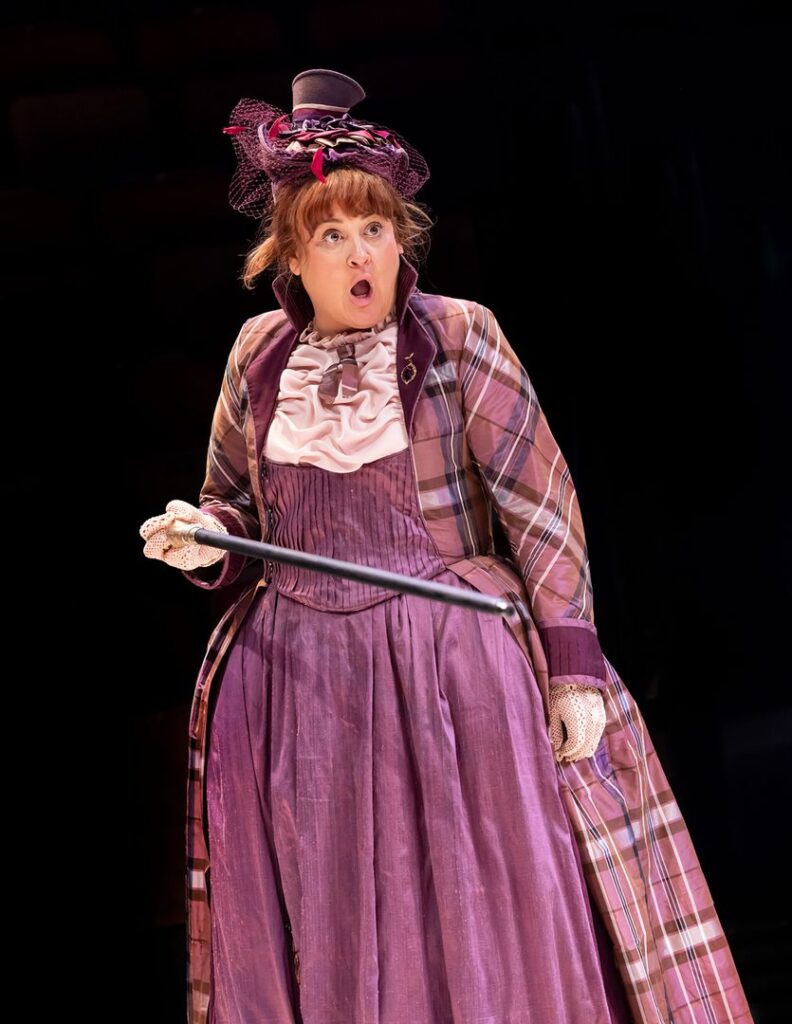
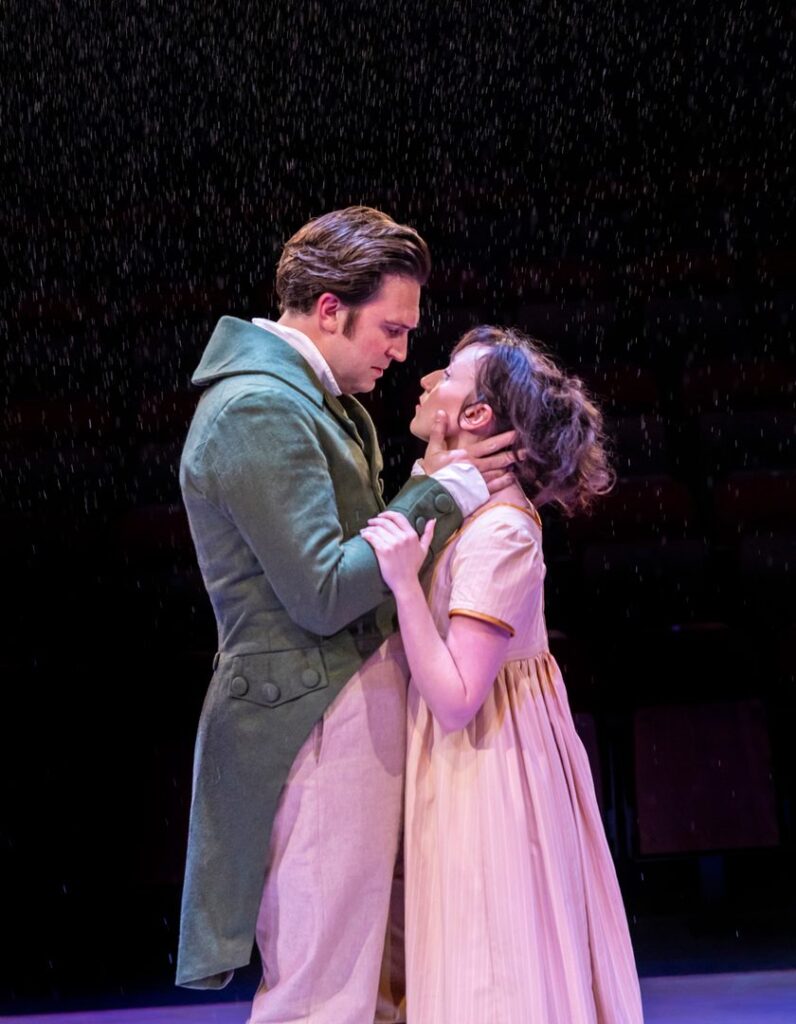
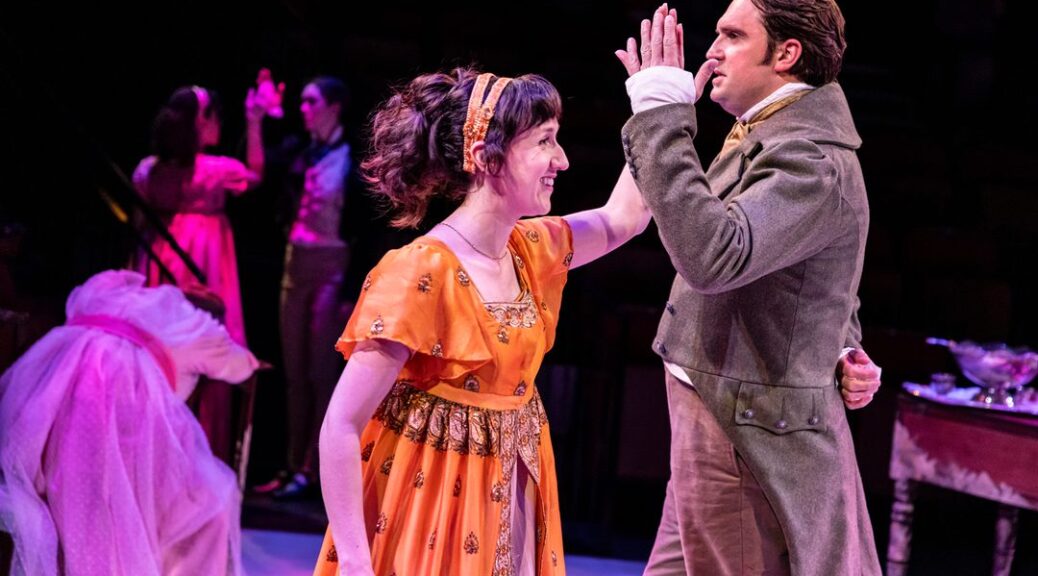
There was much to enjoy about the evening, Rosa Hesmondhalgh as Elizabeth Bennett was forthright, outspoken yet loyal to her family despite the many frustrations they caused her and James Sheldon’s Darcy visibly softened from an arrogant attitude to one demonstrating consideration and compassion beyond expectations.  The scenes where Darcy proposes and where he and Lizzie finally find each other were captivating.  The audience also warmed to the plentiful farcical humour with the figures of Mrs Bennett (Joanna Holden) and Mr Collins (Ben Fensome) in particular appearing almost pantomimesque.

There were some strange decisions concerning casting.  Eve Pereira carved out a lovely put upon role as Mary Bennett but was also asked to play Mr Bingham, despite her smaller physical stature compared to the other male characters.  Jessica Ellis was funny and vivacious as Lydia Bennett yet was less convincing and quite shouty as Lady Catherine de Burgh.

The major difficulty of staging Austen’s masterpiece, Pride and Prejudice, is that it is so well loved and so much part of peoples literary history that some people are bound to be disappointed.  This production fell between two stools.  The costuming indicated that it was set in Regency times but no attempt was made to adapt period mannerisms, language and attitudes.  There is a small genre of novels that are modern Pride and Prejudice retellings such that a contemporary setting for the play is a realistic prospect.  

Austen is well loved for her dry wit and irony but is not known for her slapstick and farce.  As a consequence, there are many who would have preferred a version that retaining the quiet reserved dignity associated with upper class Regency society.  However, for others, they will enjoy this show, funny as it was, after all the storyline of Pride and Prejudice remains compelling.

Review: Annie Get your Gun, Theatr Clwyd, Mold by Richard Evans

Theatr Moondance, Theatr Clwyd, Mold, Sept 3rd – 6th 2025

 out of 5 stars (3 / 5)

Tiptop Productions

Was this a musical or a concert?

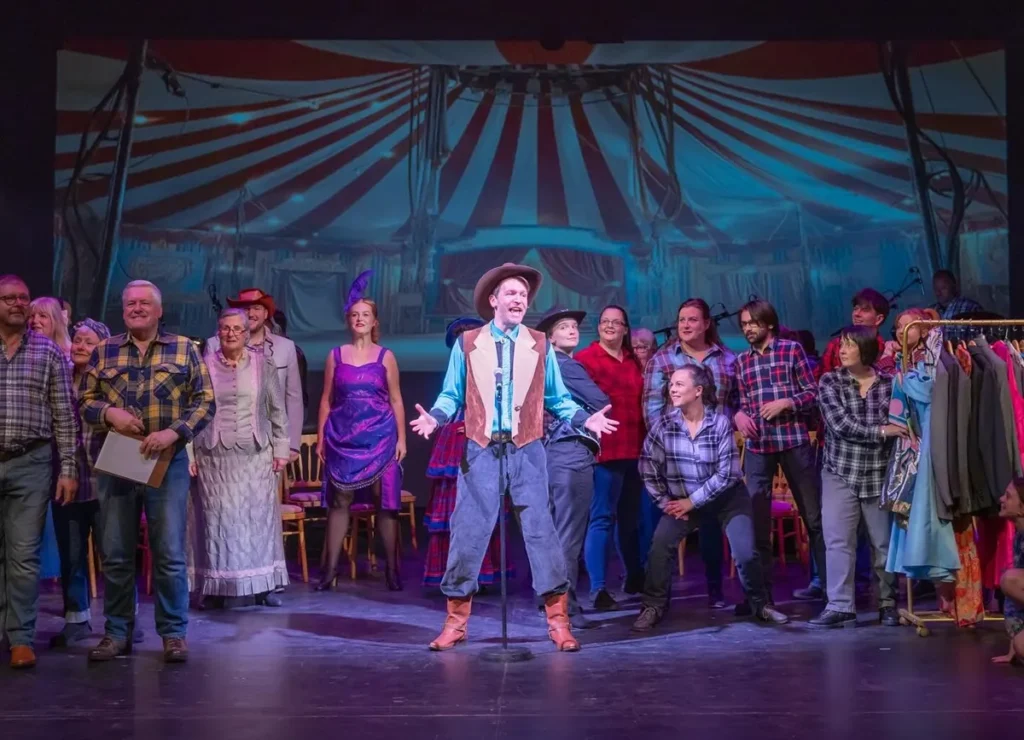
The opening, show stopping number, ‘There’s no business like show business was lively, passionate and well coordinated and indicated that it was the former, a musical.  One would then expect the stage to clear and the acting to start, but instead the ensemble sat down in serried rows and the action took place in front of them, indicating it was more of a concert.  In this way the production was neither one nor the other.  

The story of Annie is loosely based in history.  Annie is a poor girl who traps and shoots animals to feed her siblings.  She is set up to challenge Frank Butler, a sharpshooter in Buffalo Bills Wild West show and wins.  She then joins the troupe and falls in love with Frank but he will not accept Annie’s new found fame and leaves for a rival troupe, run by Pawnee Bill.  Buffalo Bill’s show tours Europe to great acclaim but little financial gain so has to come home and merge with Pawnee, thus bringing the two stars together again.  When Annie loses a shooting match to Frank on purpose, they are reconciled and get married.  

The company are enthusiastic in their endeavours despite being self conscious at times.   Jade Pritchard is well cast as Annie and has a great voice.  She has a good rapport with Gareth Hughes as Frank especially when they are acting as rivals.  Their duet with ‘Anything your can do I can do better’ was memorable.  Annie’s young siblings, Grace Hill as Jessie, Abigail Garner as Nellie and Arlo Lucas as Little Jake were a bundle of energy.  The action though was static at times, limited by the staging where the action took place behind four microphones at the front of the stage.  The production also lacked attention to detail especially in costuming, with some 20th Century shoes on show and the odd suit that seemed straight out of the 1970’s.

The musicals main characters in real life, Annie Oakley and Frank Butler were indeed natural sharpshooters.  Annie came from an impoverished background until she won her shooting contest with Frank.  They married and formed a performing partnership with great success.  Annie, in a long career went on to support women’s rights and to teach self defence lessons.  The Hollywood version is a more saccharine coated, sanitised version where Annie has to lose a second shooting match with Frank in order to win his heart, indicating perhaps that the male ego could not stand the prospect of being less successful than a female.  

The musical raises a question, what does a man look for in a woman?  According to the song, ‘The girl that I marry’ she will be ‘as soft and pink as a nursery’, wearing satin, laces and cologne and having polished her nails.  And that is what Annie had to change to be in order to get her man.  This seems a world away from the real life Annie, and out of kilter with many women today.  However, this should not stop us enjoying what is a feel good show with great Irving Berlin songs and which was enthusiastically and competently performed by the company.