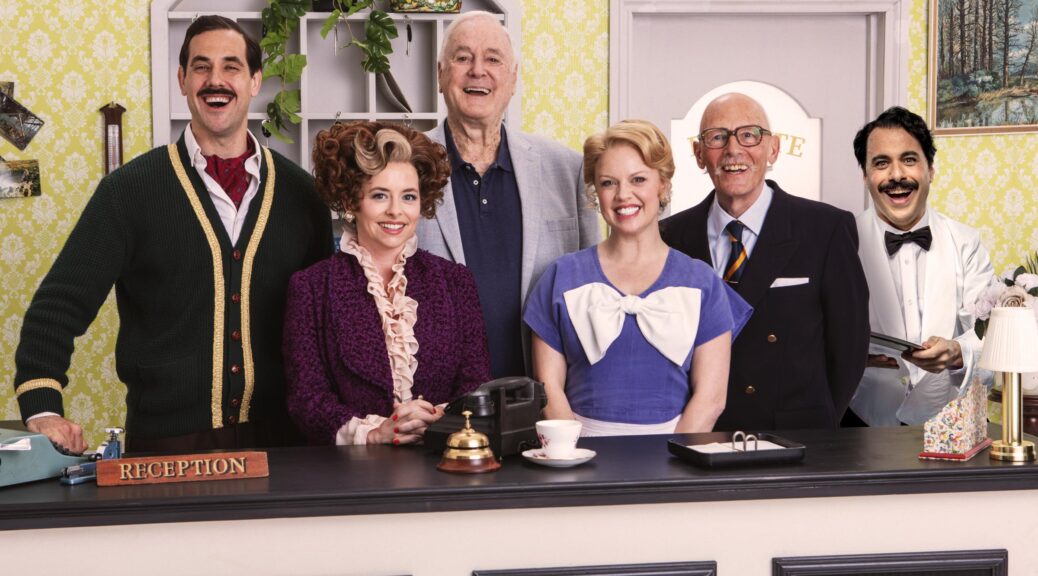
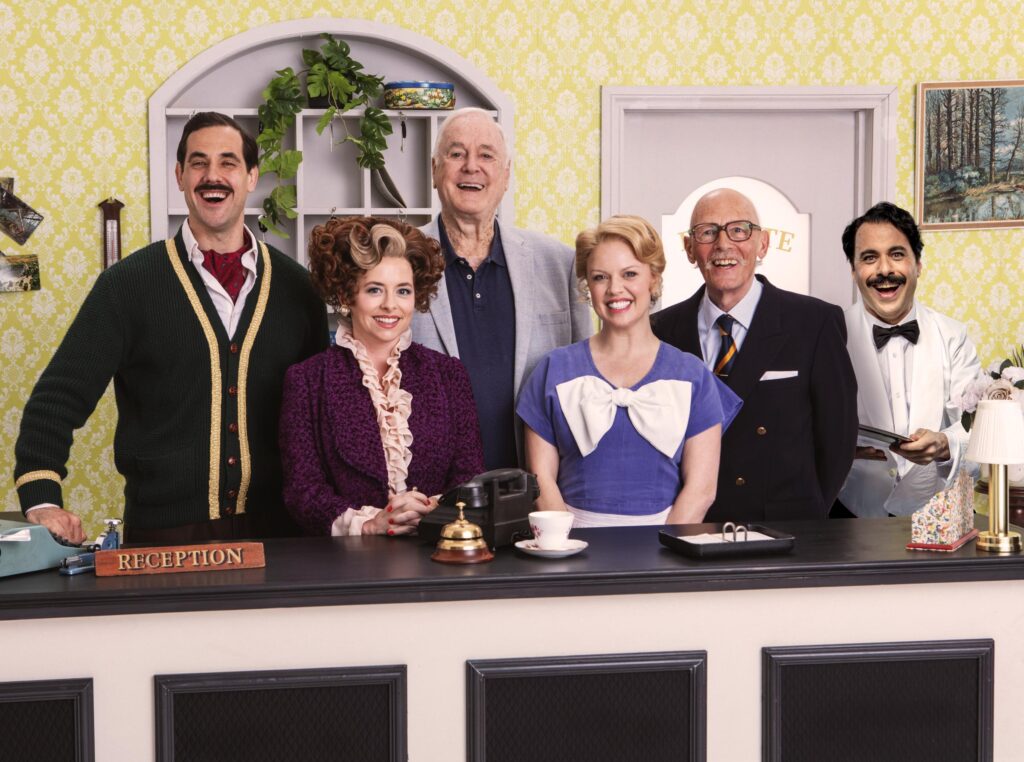
Faulty Towers was an absolutely brilliant production that brought the classic TV show to life on stage. From the moment the performance began, the cast captured the energy, humour, and chaos that made the original series so beloved.
The actors did an excellent job portraying the iconic characters, with Basil’s frantic antics, Sybil’s sharp wit, and Manuel’s hilarious misunderstandings creating laugh-out-loud moments throughout the show. The timing and delivery of the comedy were spot on, making it feel as though the television episodes had been transported directly to the theatre.
The attention to detail, from the costumes to the character mannerisms, was impressive and helped recreate the charm of the original series.
Overall, Faulty Towers was a fantastic evening of entertainment. It successfully captured the spirit of the TV classic while adding the excitement of a live performance. Fans of the show will love it, and even those new to the world of Fawlty Towers are sure to have a great time. Highly recommended!
In Mischief Comedy’s full foray into musical theatre, we travel back in time to 534BC to Ancient Greece; the island of Ikaria to be exact, where we find Thespis and his sister, Poly. It’s Greece the Musical (but not that one) but it’s got all the traits of that well known, popular musical! Toe tapping songs, exuberant dance numbers and a cast of hugely likeable characters.
It’s also got all the usual traits of a classic Mischief show, with puns galore, clever one liners, the wittiest lyrics I’ve heard in a while, pastiches of other media (in this case, Andrew Lloyd Webber gets a few gentle jibes) and physical comedy which had the audience in stiches. The writing team of Jonathan Sayer (co-writer of The Play That Goes Wrong, Peter Pan Goes Wrong and The Comedy About A Bank Robbery) and Ed Zanders (musical director, Mischief Movie Night) ensures that the classic Mischief formula is maintained whilst exploring a brand new medium for the group.
The story is about the accidental discovery of acting as all five residents of Ikaria are forced into a prayer competition in Athens to try and stave off a deadly drought ravaging Greece. The motley crew of Thespis, Poly, Adonis, Melampus and Atlas head off to Athens with a brand new concept, ready to take on the Tyrant’s competition with their mantra of ‘walking in someone else’s sandals.’ Accompanied by their trusty, if small Greek Chorus (two of them due to ‘budgetary cuts), and an all singing, all dancing ensemble, they are set to change the world and end the drought at the same time.
The cast is perfection. They certainly have both the comedic and vocal chops for the job and they deliver in spades. They had me crying with laughter from beginning to end but also deliver loads of heart too, and there are moments of genuine poignancy too. Allie Dart and Matt Cavendish don’t stop for a moment as our brilliant Greek Chorus but also filling in all the other roles too, as well as moving the Grecian set. They are full of puns, accents, personalities and seem to revel in their all-encompassing roles. The residents of Ikaria equally excel, balancing each other out to perfection. James Spence is a funny, hapless, but endearing Thespis, alongside, Claire-Marie Hall’s more sensible, reliable Poly. I really enjoyed their relationship but also their respective solos.
Luke Latchman breaks hearts as the downtrodden Atlas, and his voice is beautiful! I loved his journey of confidence building to confess his feelings for oblivious Thespis. Mia Jerome shines as Melampus, the island elder (at the grand old age of 32), and her Old Man Tango brought the house down. Marc Pickering is the ‘hero’ of the piece, as Adonis and his physical comedy is for sure, a highlight of the whole production. Finally, Rhys Taylor plays a truly riotous Tyrant; I honestly didn’t know what was coming next! They hold the audience in the palm of their hand whenever they are on stage and their voice is phenomenal.
This is a fabulous new piece of musical theatre, with pastiche, hilarity, and just sheer joyful silliness. Mischief can truly do no wrong at the moment and long may their reign of both the West End and touring theatre continue.
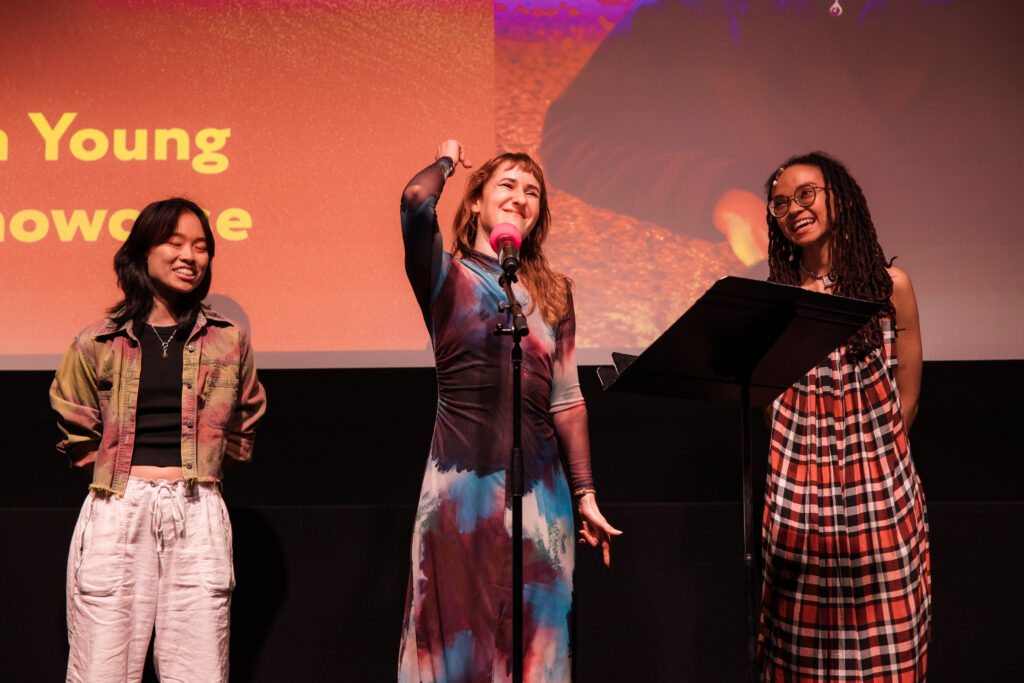
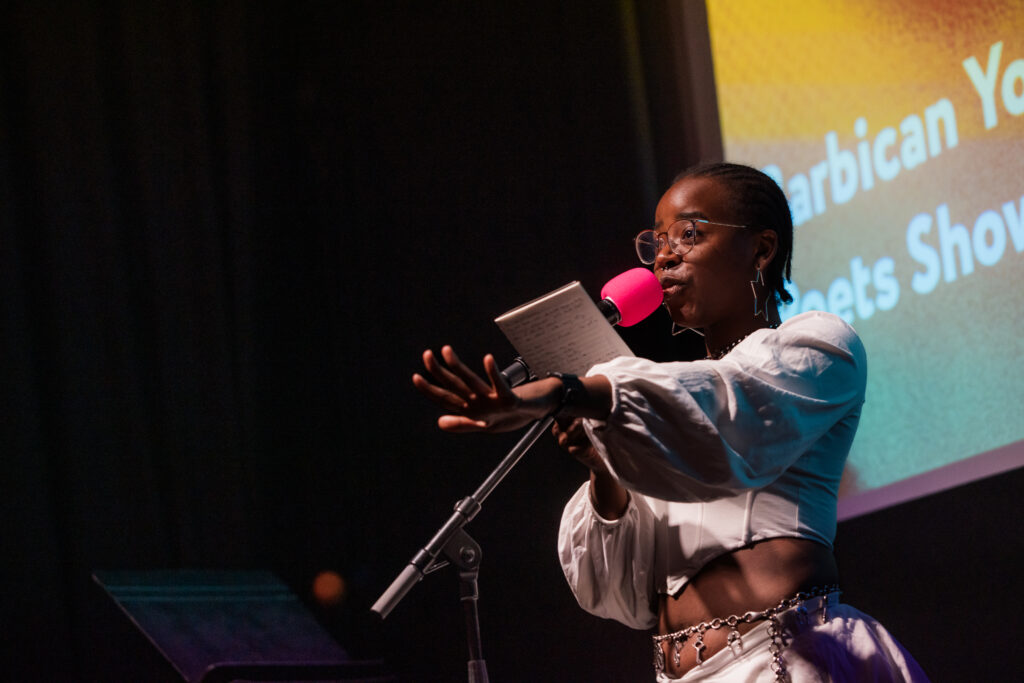
Barbican Young Poets 2026 cohort, led by Jacob Sam-La Rose organised an immersive, theoretical & live poetry event on 20th June 2026. Workshops explored either practical, theoretical or philosophical approaches & methods to enable others to write, think & reflect creatively and expressively.
Barbican Young Poets 2025
Despite attendees being spoilt for choice due having to choose one out of nine other workshops, the right workshop did eventually find you. I first attended ‘Beyond the poem: The Poetics of loose ends – poetry & Archiving’, facilitated by Taylor Beidler.
Taylor’s workshop was extremely interactive, she discussed her interesting works as a poetry archivist; as well as her PHD research into archives as a tool for storytelling. Taylor’s workshop explored different poetic narratives from political responses to content such as ‘Huey P Newton’ (Black party movement activist leader) which encouraged conscious cultural depths to the poetry we read, birthed in response to anti-black racially inflicted rally’s in the 60s.
Taylor’s workshop was educational, conversations sparked from the hand picked postcards she brought into her workshop, which encouraged groups to inevitably discuss colonialism, loss, family generations, holiday’s & the importance of how we stay connected, restore experiences and document fond or historic moments during and throughout our personal lives.
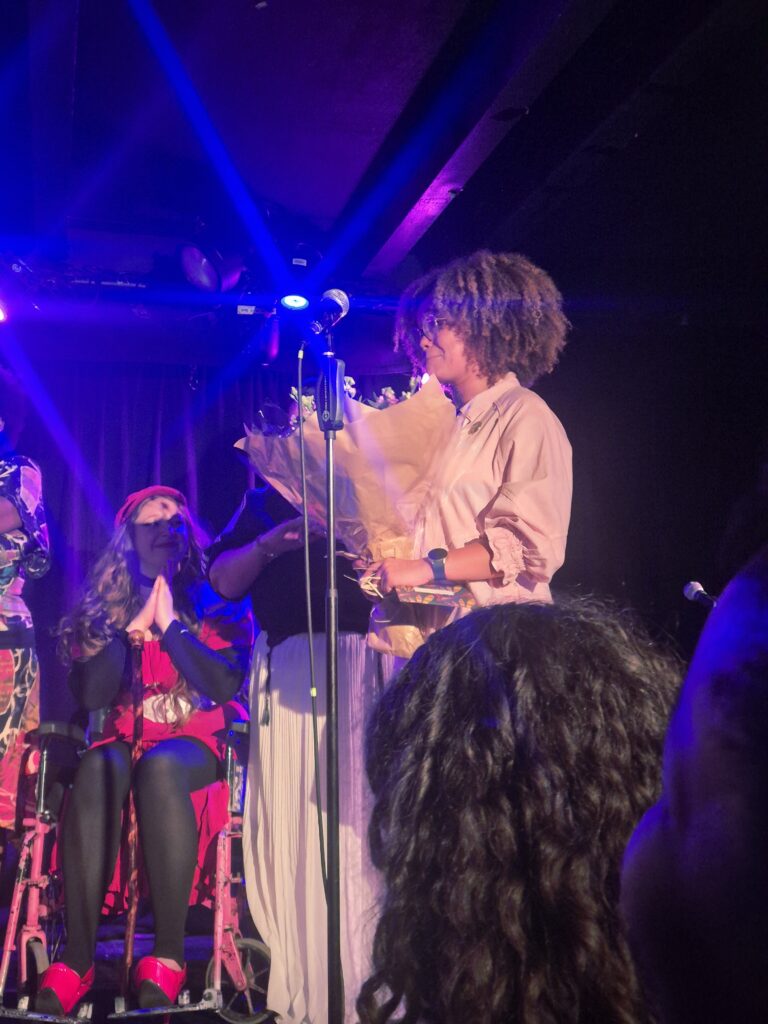
Barbican Young Poets 2025
The Second workshop I participated in was facilitated by Jess Senanayake. This workshop was ‘Body Instrument: Embodying the word’. Allowing attendees to bring their bodies into writing practice’, which explored the different ways in how the body moves and shapes what we write. The workshop was profound, individuals were encouraged to dance to feel alive through wild expression in hope that in pairs we found the passion, motivation & energy to write meaningful poetry with rhythmic and sensual influence.
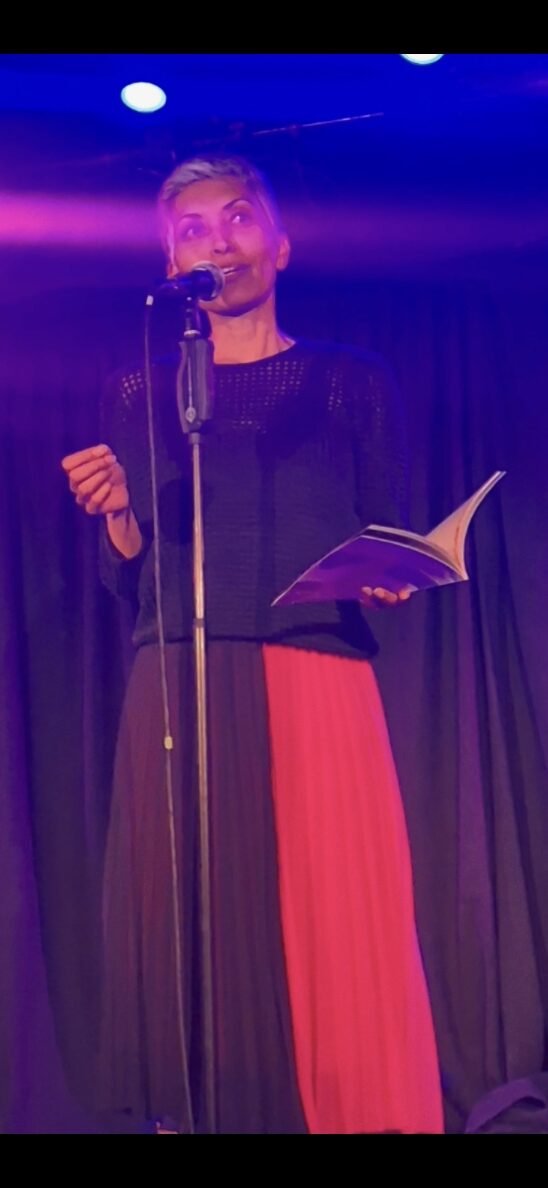
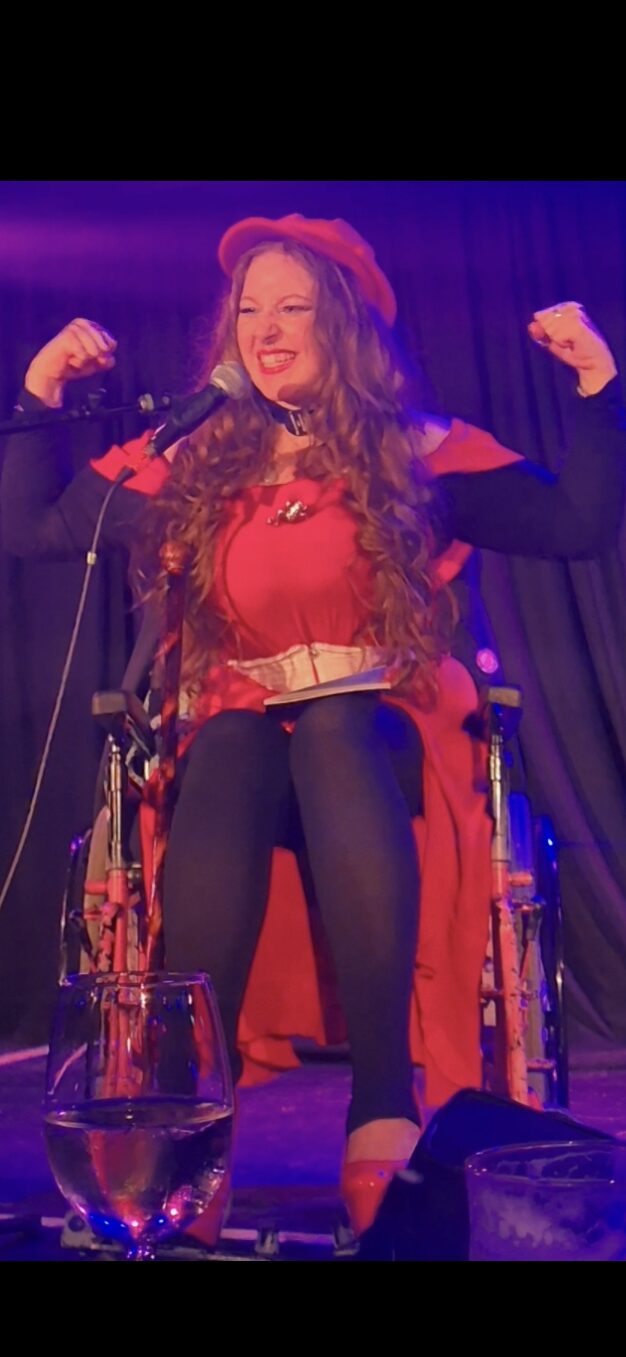
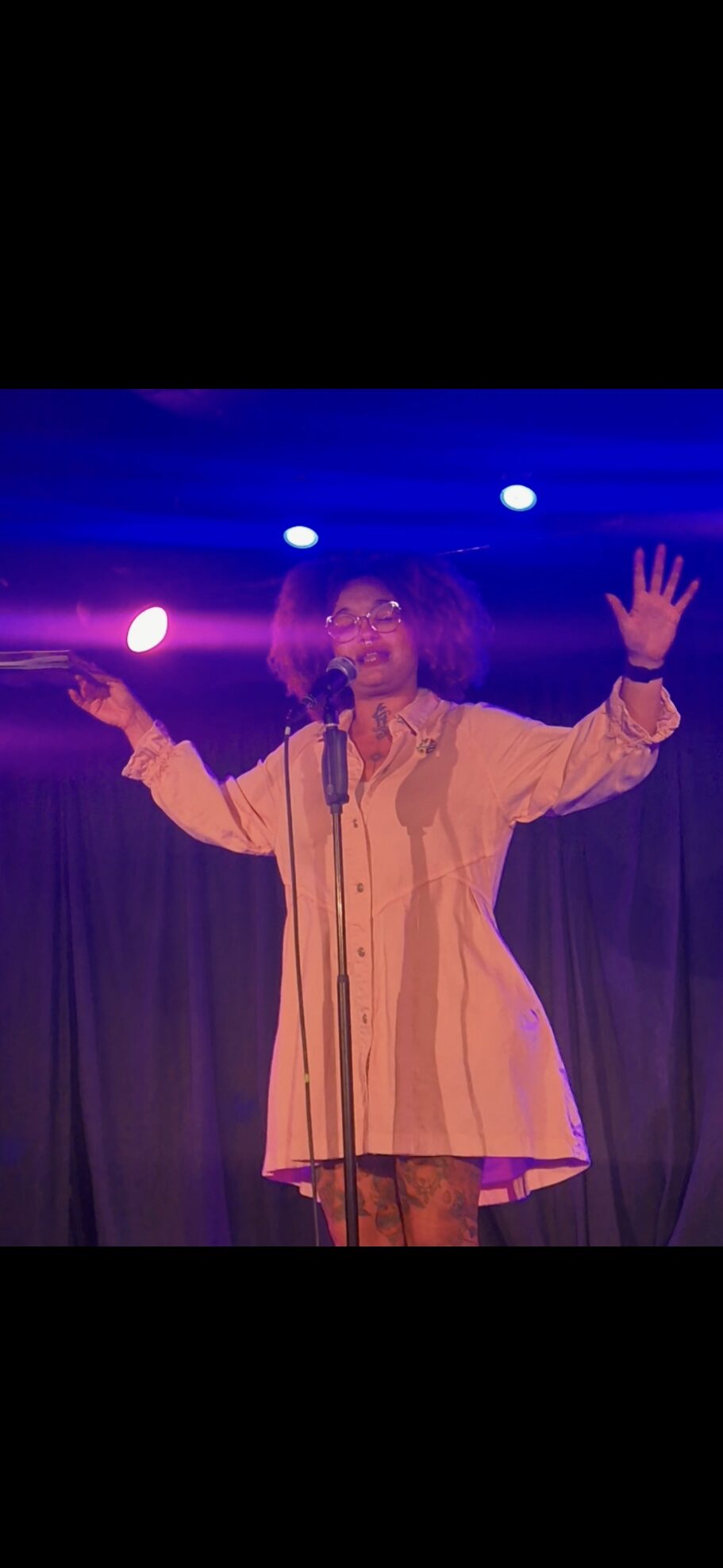
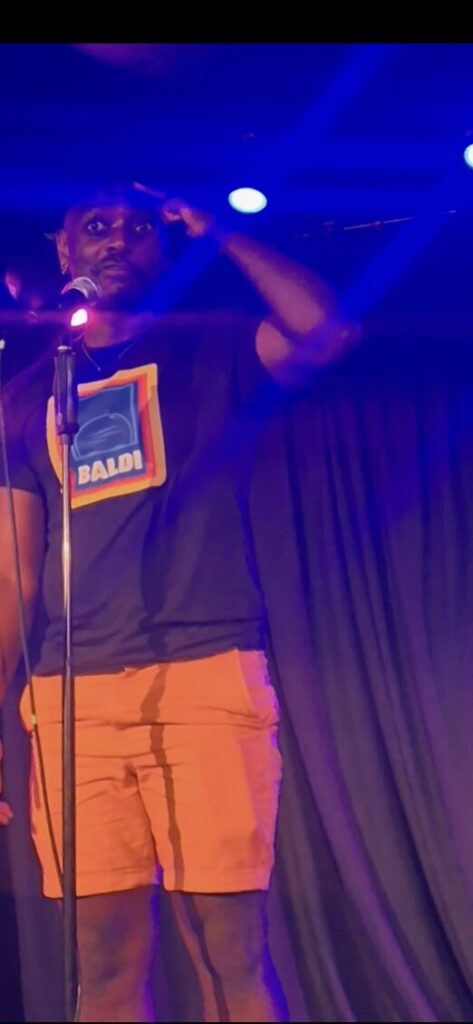
Later into the afternoon, Barbican’s Young Poets graced the stage with sensational, sensitive & sensory Spoken word performances. Themes explored were on Discrimination, Love, Nature, cultural home-cooked food, Identity, & more. A packed day, with a refreshingly vibrant circulation of talent and new insights expressed through the power of words.
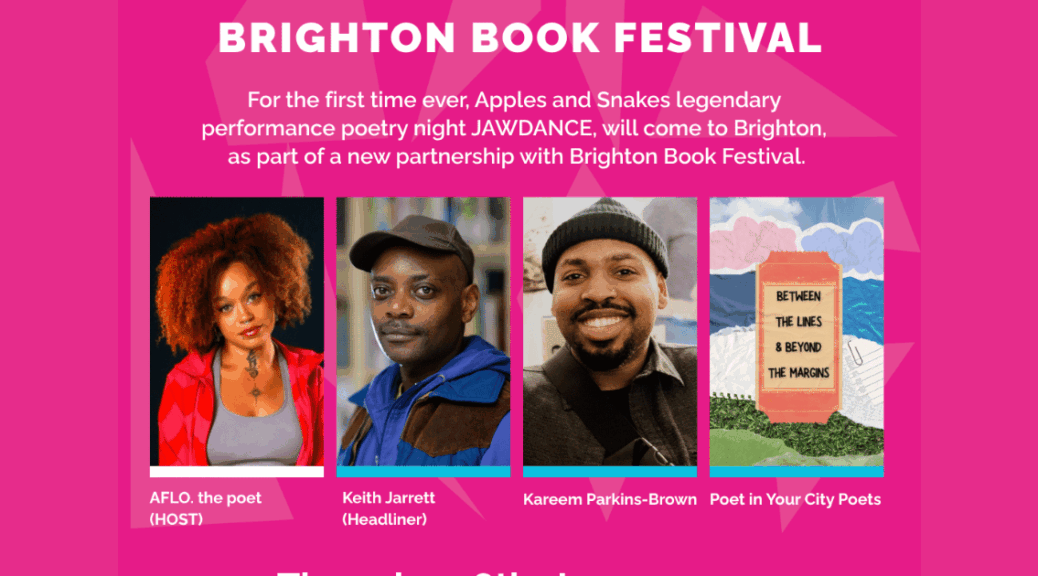
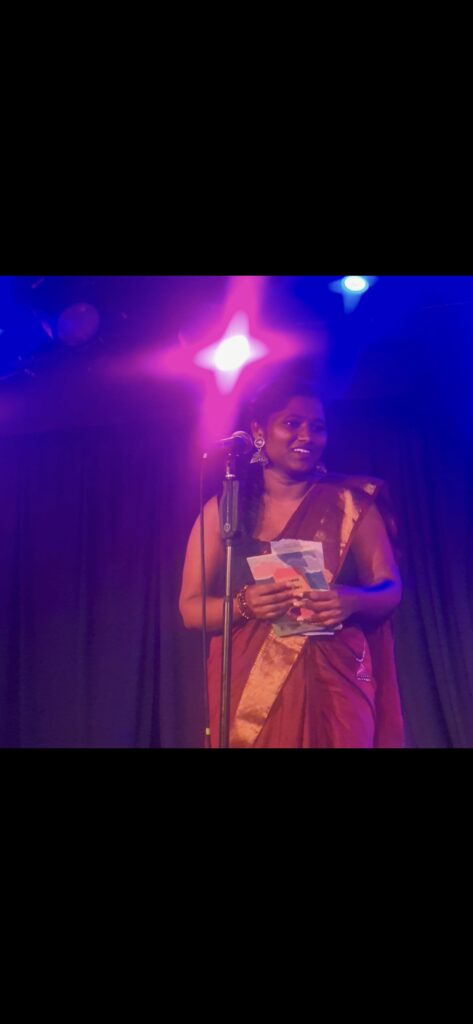
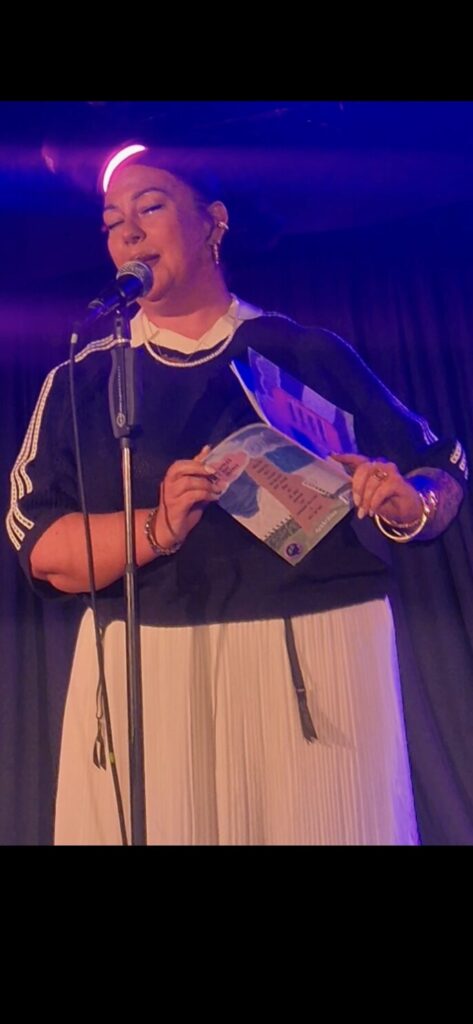
JAWDANCE hosted an exquisite evening of live performance poetry, featuring twelve emerging Spoken word artists who’ve worked collectively with ‘Poets in the city poets’ cohort to co-create an anthology showcasing their poetic vulnerabilities and authenticity. Each poem featured a Ghazal; exploring the following themes: Racism, Activism, Love, Transphobia, violence against women, friendships, misogyny, nature & creativity.
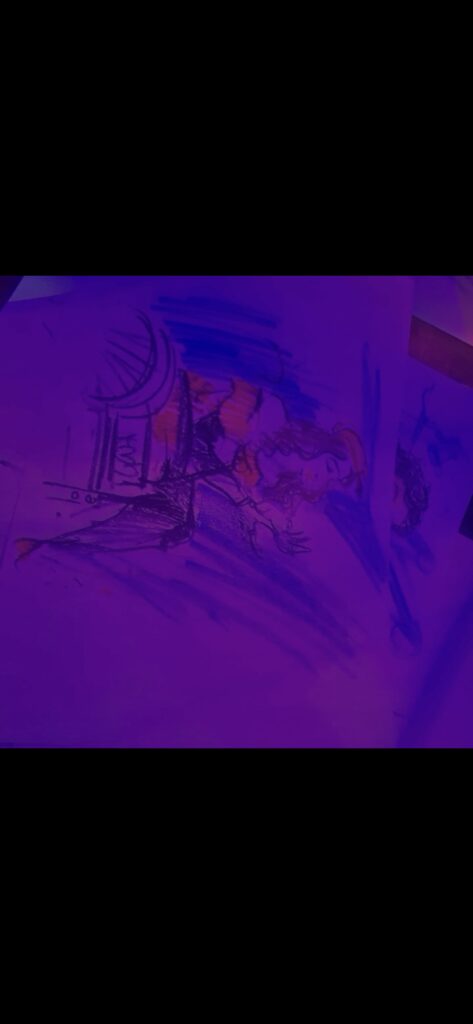
This creatively insightful zine entitled ‘Beyond The Lines & Beyond The Margins’ encouraged voices of bravery, culture, integrity, transformation & concepts of healing. This zine was Published by Apples & Snakes, edited cover design is by poet ‘AFLO’, and collaboratively designed by Nurio Castro from ‘Writing our legacy’ & MNamug from ‘Aghh! Zine’. Better yet! All funds profited goes towards a local charity! which is a fantastic fusion intertwined. An artist by the name of Curtis Tappenden drew all poets on stage live in action, which gave the night an additional special essence!
The 2026 Cohort performance poets were: Alana-Eli, Bisly, Calliope, Em Williams, Gray Taylor, Hema, Jazz, Joe Jones, Kamakshi, Lucy, Sophoenixx Silk Fyah & AFLO.
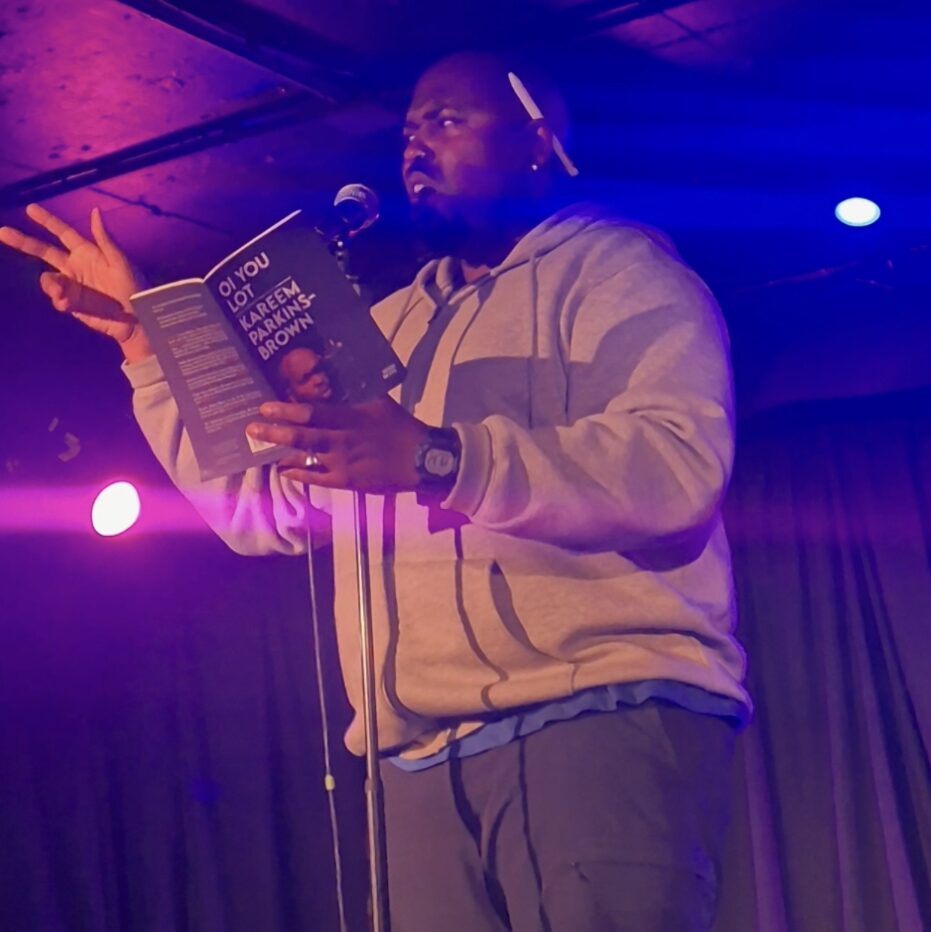
The evening started off with the incredible Kareem Parkins Brown, reading several punchy funny quotes from his poetry collection, “Oi not you lot” where we got mesmerised by his two readings ‘Son’ and ‘150 months’.
The next performer highlighted “If flowers can grow through concrete, then so can we” poet Calliope Mermuse took to the stage initially! Starting off with their two poems ‘A heartbreak poem about healing’ & ‘The ghost of your image is still here’… beautifully flowing into our ears “I am still a child (slightly unhealed) and when we play it’s revealed that this child survived to become a very silly mum!” Entitled ‘Mum Ghazal’ from Sophoenixx Silk Fyah.
Poet Hema shared her favourite personal childhood memories of her grandfather, starting off with “What love is” ending on “Always have more lemons than we need”. ‘Ready or Not Ghazal’ performed by Alana-Eli, explored depths of mentally preparing, showing up before stepping up for ourselves unapologetically.
AFLO the poet lyrics, was poetically effective & dreamy, taking minds on a visually effective journey with her piece “A halo around her head” metaphorically hypnotising poetry creatively describing afro hair such as; “A bouquet in perfect bloom” to describe women of colour witnessing each others beauty “Memorised locs lock eyes”… “We do not know each other but we know each other in a multitude of ways..”, “Knowing that our hands have faced the same trials….touched by greedy hands who did not seek permission”. Tales both mixed and black girls with afro hair texture could warmly & deeply connect to.
The Second half of the performers were equally as richly potent with Gray Taylor’s piece ‘Monkey Ghazal’ & ‘Am I English?’. Poet Em Williams, a sensory poet who equally took us through a reflective playful adventure of their wordplay. All performers featured one too many powerhouse poems & punch lines to name and describe. The night ended with the featured Spokenword artist Keith Jarrett, performing collaborative poems from his new book. Jawdance, Brighton was their first night to remember, with a zine that everyone couldn’t resist from buying. This zine certainly contains brilliance inciting reflections and giggles from both angles. There’s a space for all emotions and feelings to offer resonance, as well as solidarity through universal experiences and mental, spiritual journeying of all wonderful human beings exploring personal to universal afflictions, bliss and embrace.
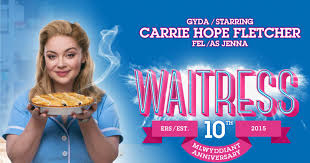
As hearty and tasty as a piece of one of Jenna’s pies, Waitress celebrates its 10th anniversary with a fresh new tour which is the perfect blend of ingredients, including an exceptional cast, an hilarious script and plenty of sincerity. Based on the 2007 film of the same name, the musical has gone from strength to strength with an initial run of four years on Broadway and a run in London’s Adelphi Theatre. In fact, it features one of musical theatre’s most well-known modern ballads; the beautiful She Used to be Mine.
The star attraction is West End leading lady and ever popular Youtuber, Carrie Hope Fletcher. She more than holds her own as the titular waitress, Jenna. Her vocals soar and particular highlights are her relationship with Sandra Marvin’s Becky and Evie Hoskin’s Dawn, and her burgeoning love affair with the endearing yet awkward Dr. Pomatter, played by Dan Partridge. Fletcher The moments were she finally meets her daughter, little Lulu are sensitively, beautifully portrayed and she is a delight to watch as Jenna; a worthy leading lady.
Her partners in crime, Becky and Dawn are truly wonderfully cast. Sandra Marvin delivers spades of sass as Becky and her rendition of I Didn’t Plan It truly raises the roof of the Donald Gordon Theatre. Delightfully quirky and with fantastic comedic chops is Evie Hoskins as Dawn. She immediately endears herself to the audience and her relationship with Ogie, portrayed by Mark Anderson is joyous. When He Sees Me and Never Ever Getting Rid of Me are wonderful moments of the production.
Dan Partridge is a loveable dorky Dr Pommater, with a fantastic way of blending comedy with heartfelt moments with Jenna. There are some really lovely moments between Partridge and Flecther, which cement them as firm favourites with the audience. Also excellent in role are Dan O’Brien as Cal, Mark Wilshire as Earl and cantankerous yet loveable Old Joe is played by stage and screen veteran, Les Dennis. Special mention to Ellie Ruiz Rodriguez as Nurse Norma who had the audience crying with laughter on multiple occasions and managed to steal every scene she burst into.
As sweet as a squirt of whipped cream on a perfectly baked pie, this brand-new tour of Waitress is truly a chef’s kiss. It’s a truly delightful evening of theatre, filled with comedy but also heart and the talented cast truly delivers.
What is a lullaby? We have ideas and famous musical pieces to give this an answer. Yet, how to we continue to perceive this style and honour it with newer creations?
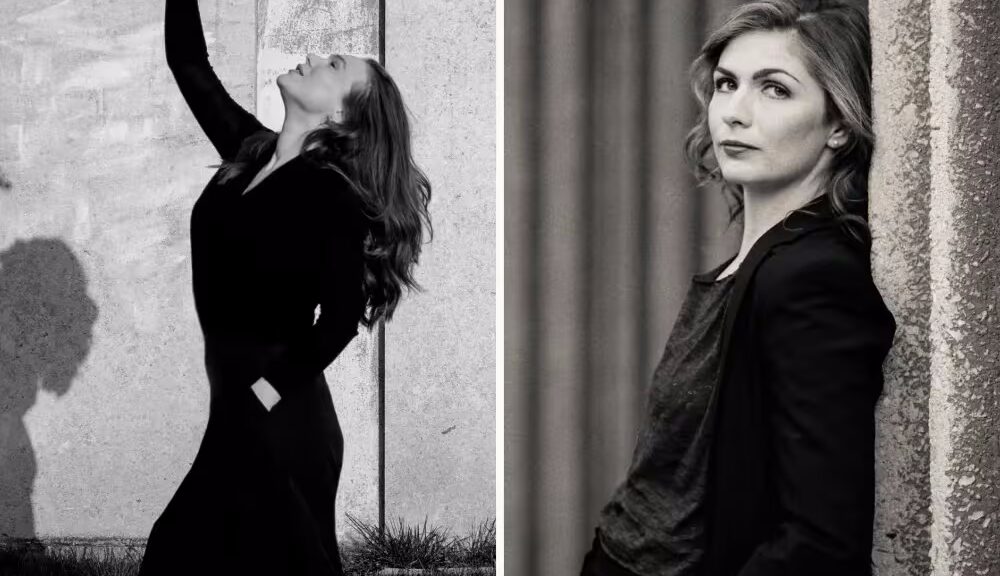
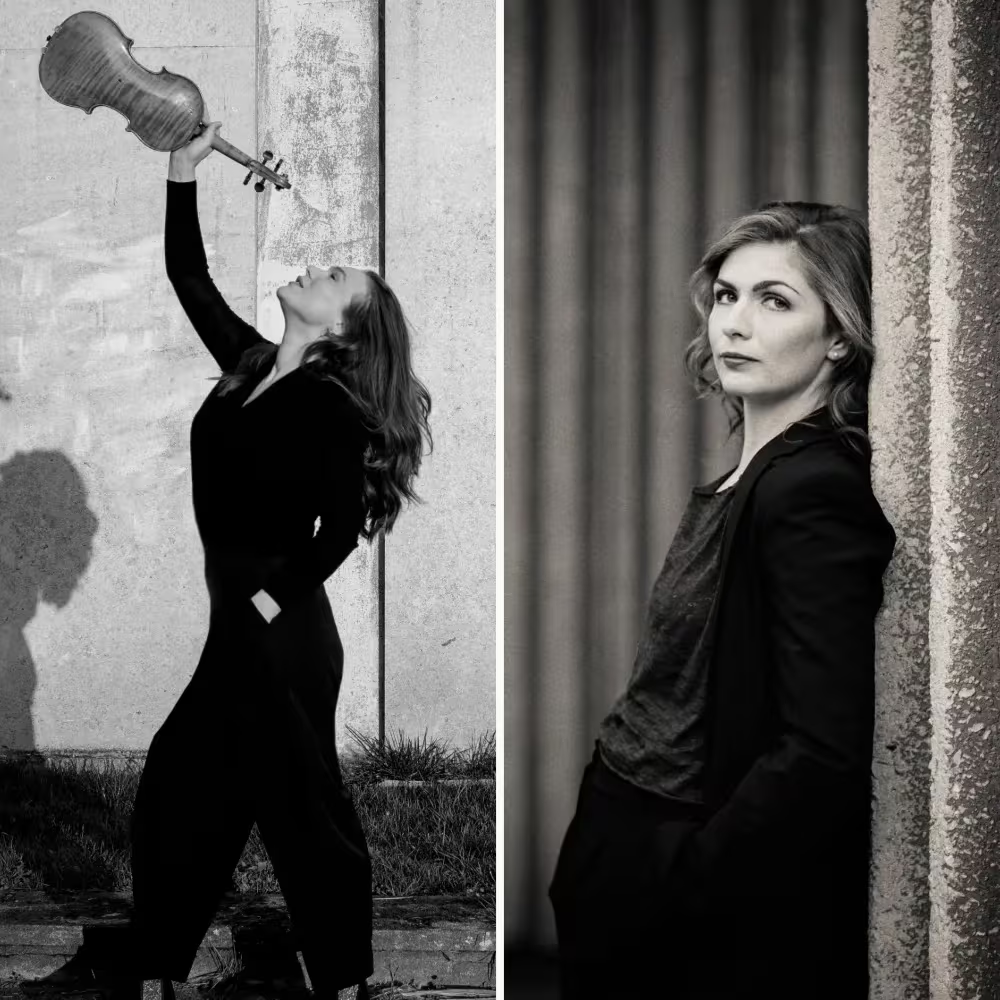
Here comes Tamsin Waley-Cohen on violin and Cordelia Williams on piano, to answer this question with considerable breadth. Arriving at the space, we heard gurgles of babies as sparkly lamps would suggest a night light for younger ones. Beginners was Spiegel I’m Spiegel by Arvo Pärt. Still going strong in his 90s, this is one of Pärt’s most cherished creations.
Tamsin captured the reverence and stoney stillness it demands, Cordelia on piano got the scales through and they can feel like a fine partnership. Brahms’ Wiegenlied is truly his most famous creation and one of the most recognisable works of music today. His lullaby is arranged here by both players, and an all-round sense of serene cheer comes over the stage. It might be considered easy to play, naturally I doubt this is true.
Dvořák and his Songs My Mother Taught Me, another fitting tribute. Filled with evocative Czech allure, again Tamsin brings her all, her sense of control over the violin. I grew up playing the same and found it a nightmare to really work at. Seeing her play is a reminder why you should keep going. A world premiere from Freya Waley-Cohen, sister to Tamsin, in a four-thousand-year-old Babaloyinan text. A mother comforts her baby who cries, this little piece was sweet and will see more outings, I’m sure. Scriabin’s Nocturne in F sharp was expectedly moody, the Russian composer often in a sensual realm of expressivity.
John Cage is a rare delight to hear live, and his own Nocturne was no different. Very folk like in writing, with many different techniques for Tamsin to try, as Cordelia gets further strange structures on the keys. The Lullaby by Schubert is curious, touching in its offering, yet slight. Hearing the full Fantasie in C was the big, meaty finale. Tamsin played with a passionate zeal, seeing swooping moments, with a rich, romantic fibre demanded of Schubert. Moments of dance, smiles and reflection all ring here. Cordelia is a fine, clear accomplice, you sense the warm connection between her and Tamsin. An encore of Schumann would lull us off into our day.
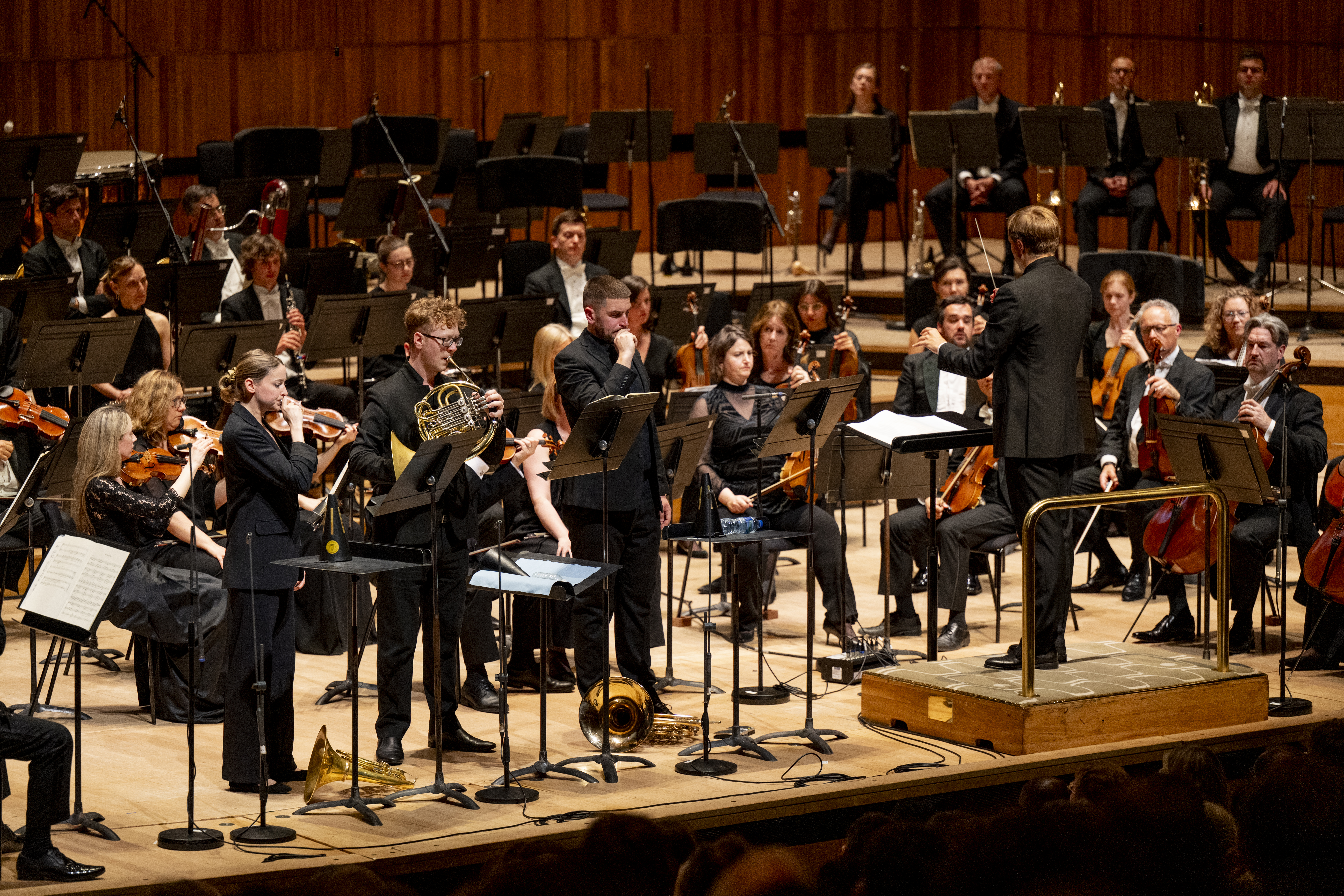
Any trip to the Southbank should be spent with the RPO. Even more noteworthy was their concert the day prior in Bristol, which got the premiere for the UK by Joe Hisaishi. With the rest of the programme all Russian, how would this concert fare?
Opening with Ilse of the Dead by Rachmaninoff, conductor Vasily Petrenko introduced the music with his usual dry humour and insight. I can take or leave some Rachmaninoff, this is in the later for me. Inspired by the painting of the same name, there is an effect of mood and dread, yet it never really mingles with much more than mediocre. Hating to write like this, but this is the truth. Yet, with the Royal Phil and Petrenko the playing is always tight and played with conviction.
Joe Hisaishi is best known for his scores for Miyazaki’s timeless animations. In what sounded like great fun, The Border, Concerto for 3 Horns and Orchestra got its first London outing. I’ll say it felt very hushed at the start, the melody for the horns was stringy, with no grab. Said horns are Ben Hulme, Katy Woolley & Alexander Edmundson, who are musically solid in their roles. Moments where they disconnected their mouths pieces of the horns, to sing into them was a nice touch. The through line mostly felt John Adams like in nature, with bouncy and pounding passages. I was mostly unwowed by it, yet with Hisaishi as RPO’s Composer-in-Association there are chances to hear more.
Petrenko speaking of Scriabin in the first half, informed us of his talent and vision as a composer. Had Scriabin finished his Mysterium, it would have been the greatest work of art every created, an artistic apocalypse. Fate would play his hand and the composer would die young of blood poisoning. His 3rd Symphony is dubbed ‘The Divine Poem’ and has many hallmarks of his style. Saying this, the ecstatic, feverish energy we often attribute to the Russian composer are here, yet are muted. Nearly fifty minutes in length, it is hefty and I think some might struggle with it. He was obsessed with light and the sun, moments would prove this, aside angst and passions. Later, manic work of Scriabin would attract me more, though some moments in here suggested the violence and colour of what was to come and what could have truly been.
This concert will air on BBC Radio 3 on 14th July 2026 at 7:30pm and on BBC Sounds for 30 days after broadcast.
In this interview with Natalia Lewis, Managing Director from RE:ACT Performing & Production Arts we learn more about their work.
Across Wales, there is extraordinary creative talent.
Young people with imagination, confidence waiting to grow, and communities full of stories, ideas and creativity. Yet for many people, the route into the arts can still feel unclear, distant or simply out of reach. Working across theatre, arts training and community-based and professional creative projects, one of the questions we find ourselves asking more and more is this:
How do we help make routes into the arts feel more possible?
The barriers can vary greatly for different people. Sometimes it is financial. Sometimes it is geography. Sometimes it is confidence, transport, family circumstance or simply never feeling like spaces in the arts are ‘for people like me’. In many communities, particularly outside major cities, high-quality opportunities can feel difficult to access. Professional training can feel far away. Creative careers can feel disconnected from everyday life. That feels like an important conversation for all of us working in the sector.
At RE:ACT Performing & Production Arts, we often think about how we can play a small part in removing barriers. We deliberately work in communities across Wales because we believe young people should not have to leave their area to access meaningful creative opportunities. We currently offer funded places at every branch, keep fees intentionally affordable, and welcome young people without auditions. We are also passionate about helping young people see the professional world of the arts up close. Whether through visiting industry professionals, workshops, masterclasses or relationships with wider creative organisations, we want young people in Wales to feel connected to opportunities and to understand that creative careers are genuinely possible.
Importantly, we also try to widen the idea of what a creative future can look like. Not every young person wants to stand centre stage. Some discover a passion for directing, technical theatre, stage management, writing, producing or backstage work, careers that are just as important to the industry but often spoken about less. Creating routes into both performing and production arts feels particularly important, especially for young people who may never have realised those opportunities exist.
We also know that access is not only about affordability. Sometimes access means opportunity arriving closer to home. For a young person in Swansea, Llanelli, the Rhondda or another community where opportunities may feel more limited, it might mean meeting a visiting industry professional for the first time. It might mean stepping into a theatre space, building confidence, or realising creative careers are not reserved for ‘other people’. Those moments matter.
At Dog With A Bone Creative Studio, we think about similar questions through a different lens. How can professional creative work leave something meaningful behind? Alongside productions and immersive experiences, we increasingly try to build wider social value into projects, whether through free workshops for schools, education resources, charity partnerships, fundraising support or opportunities for local engagement.
We have also been asking ourselves a wider question.
Can theatre and creative experiences leave more than memories?
Can they help build confidence? Create aspiration? Introduce someone to a creative pathway they had never considered before? We certainly do not have all the answers.
Like many organisations, we are navigating questions around accessibility, sustainability and how to ensure opportunities feel genuinely open. We certainly do not have all the answers, but, like a dog with a bone, we continually strive to find them.
But across Wales, there are brilliant organisations, venues, artists and educators all trying to widen access and strengthen routes into the arts. Perhaps that is where meaningful change happens. Not through one perfect solution, but through organisations, artists, educators, venues and communities all coming together and playing their part.
Because talent exists everywhere in Wales. Opportunity should too.
This wrap up gig for me in London saw an extensive week of opera and classical. I’ve heard new work and standards all in the space of same evenings. London really is a true cultural capital in many ways for arts and music. Not to be confused with the Manchester Collective, the Manchester Camerata are an other fine musical group who are proud of making music and getting it out there to people. Saying this, I was rather sad to see sways of seats, certainly in the first few rows near empty. Could audiences not handle the work to come?
An evening inspired by mental health would delve the depths of misery and lamentation. Judith Weir and their typically Scottish themed Blue Green Hill would start and set the tone for vision and brilliance. Errollyn Wallen took a snippet of Hamlet, in Ophelia’s famous mad scene. Both singer, Rebecca Hardwick and the instrumentalists shout and mirror each others outbursts. By Gis and by Saint Charity, the name of this piece is odd, perfect for tonight’s theme. A clever, brief companion piece to the 8 Songs that would follow. Wallen has written music with bizarre undertones and even delighted us as well. Schumann’s Kreisleriana, in an arrangement by Simon Parking, would end the first half and this position in the programme a loaded one. Schumann has such mental anguish we might say he had this or that by today’s standard. This take on the piano piece, gently alludes to these troubles, though is still extremely faithful. Light in nature and some moments not the most alluring, we did get a fine cello duet with Hannah Roberts and Ben Powell on piano, towards the finish.
One thing I did find annoying is the pocket programme when trying to write this review, constant flipping and flapping back and forth. No to this. Yet, the big guns of the night was Peter Maxwell Davies and his 8 Songs for a Mad King. An icon of the British Avant-Garde, there is so much that goes on in this swift thirty minutes. John Andrews as maestro is militant, keeping all the antics in check, are attentive circus leader for this. Company Chameleon teamed up with the Camerata to focus on the music yet still have the expected music theatre elements that are baked into the work (the musicians wore jumpsuits suits). But was it enough?
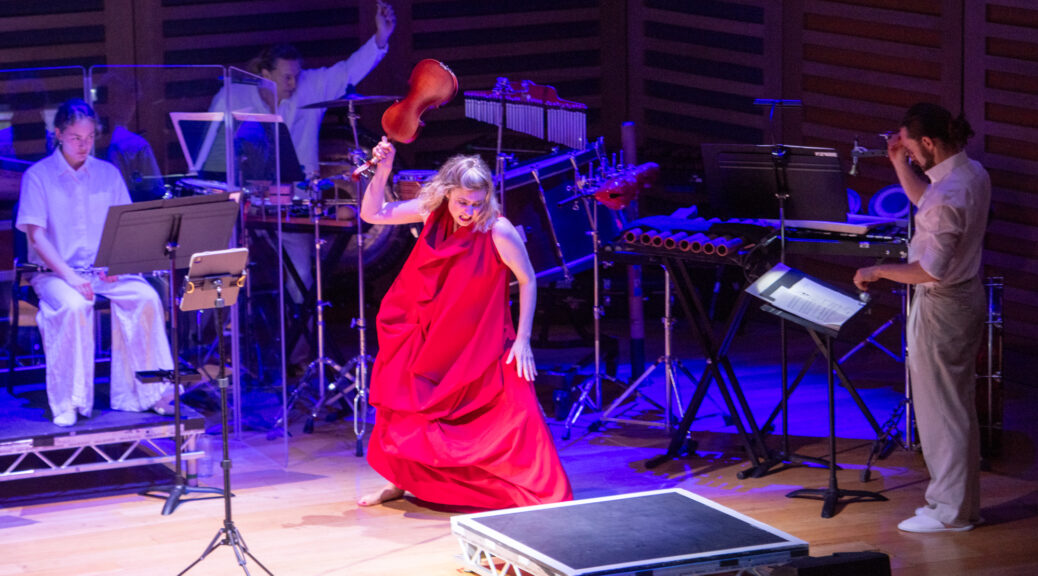
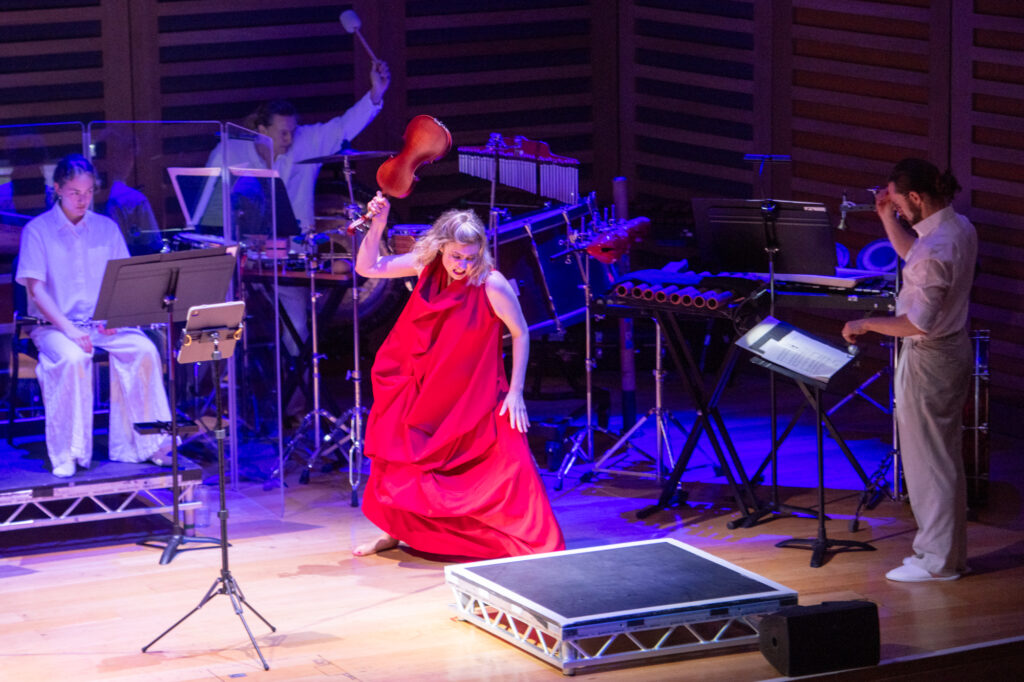
Mezzo Roșie Andrews (in a billowy red dress) might be a first for the role as King George here. We have seen many great men attack the role: Julius Eastman, Roy Hart (who premiered the piece) and Leigh Melrose to name but a few. There may not have been a clear intent to have this figure a king, yet I also doubt if this is even a queen either. The character’s lucidity comes and goes, as we hear shrieks, vocal fries, mutterings, neighs, bird song and rattles just in the voice. The sheet music is equally fascinating, one sheet famously made the bars resemble a bird cage, a theme there. The players are rather busy through out, percussionist Ben Powell has his work cut out for him. King George’s writings are the basis of the variable word-song play, his stranger moments where nothing made sense and a chasm emerged between himself, his family and his subjects.
Andrews has fun and also seem to grasp the role well. Yet I wonder if something was missing? Maybe it was the touches of staging you expect. Thinking down this experiment made me realise just how thrilling Barbara Hannigan would be in the role and perhaps…even Björk! There appears many more ideas could come about for this Mad King.
I thought I had heard the last of John Tavener back in 2015 with Floods of Dreams, from the Britten Sinfonia. After a lifetime in Orthodoxy, Tavener passed in 2013, just shy of his 70th birthday. Prior to his death, he spent many years considering the universal nature of faith. Through this, he found many source materials in Hinduism, Buddhism, Islam and other beliefs. His fallout with his main writer for his music, Mother Thekla who sadly saw this as a step too far and a step away from Orthodoxy.
Originally written in 2005, Krishna was never a commission. Sir John just wrote it for pleasure. Hearing it now over twenty years later was rather moving. Most of his work is filled with infinite sadness. Listening to his last opera on record, Mary of Egypt proves you simply have to be there in person. I think Krishna has more going for it, as this “mystical pantomime” has some truly quite beautiful music, Tavener never afraid to embrace traditional modes. There are much respect to the story of Krishna, Indian music and the culture surrounding. There may be notes on appropriation here, though this shared experience is another universal truth.
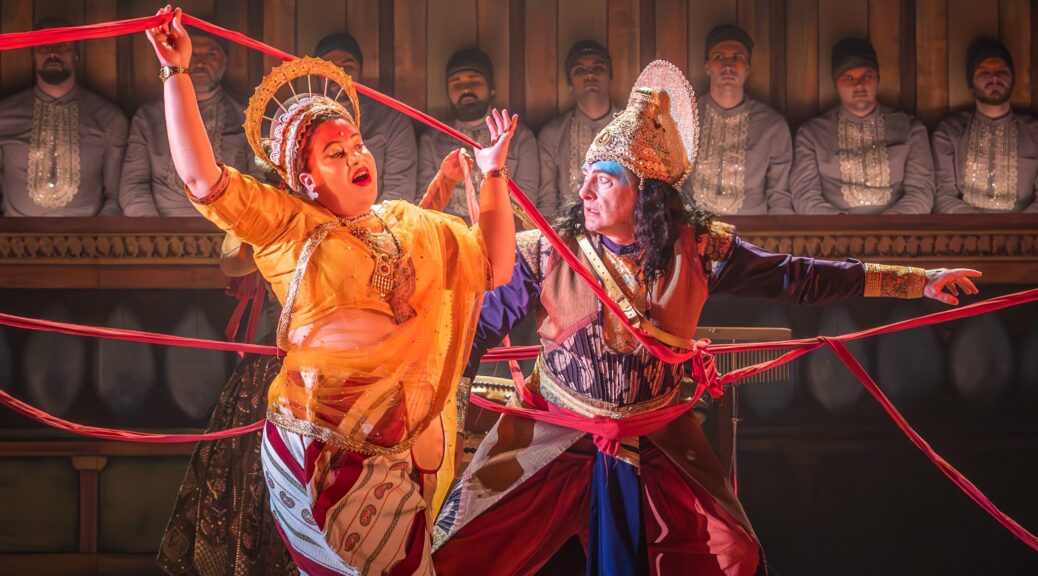
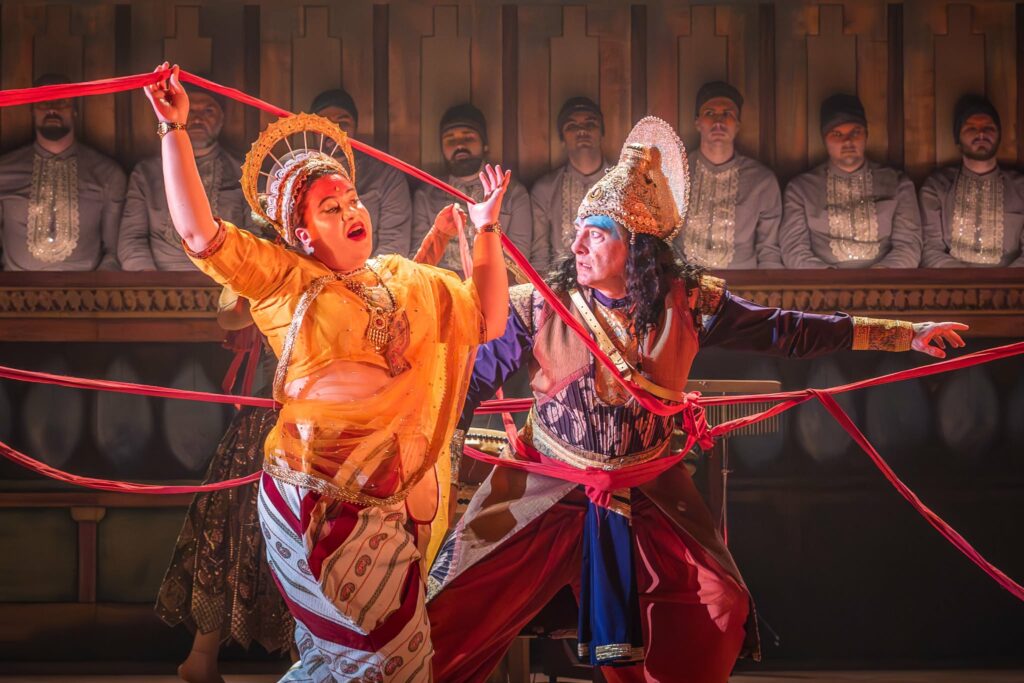
Tavener is still the youngest ever commissioned composer at the Royal Opera and his popularity has never gone away. His honouring of the celestial Krishna and how he created such a strange and trippy opera on the subject gets a lot of respect out of me. David Poutney, who did heaps of work with Welsh National Opera, took the directing reigns here. He loves pageantry and there are numerous silly billy moments for the chorus sat in a traditional structure. I was not expecting a giant, inflatable cobra to be on stage, as Krishna battles it, a phase of good verses evil. There is not a conventional story here, but rather moments from Krishna life.
Mark Shanahan as conductor and The Gascoigne Orchestra brought this treat to life with joy and reverence. We get the ringing temple bowls and sombre handballs, percussion Tavener has used for decades. Drummer Nao Masuda had many moments of dramatic interjection on these beautiful drums, as well as rain trees, bowls and more. Designer Rachana Jadhavhas committed to the most faithful costumes and they are a stunning sight to behold. Krishna’s transformation into maturity is shared between four singers, each costume the familiar and dazzling clothes of the god.
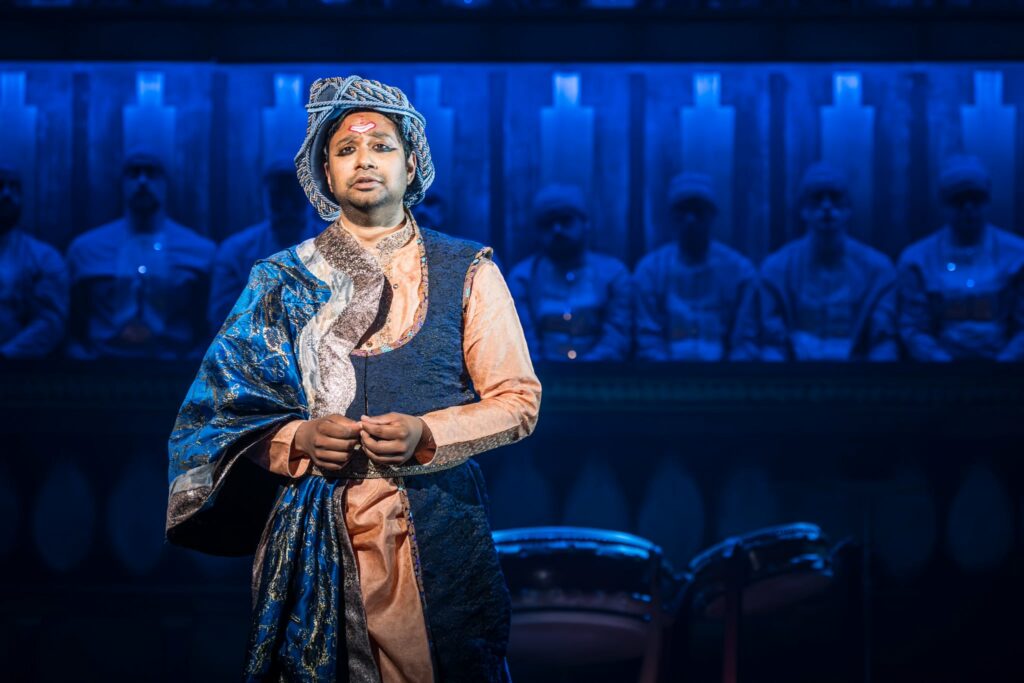
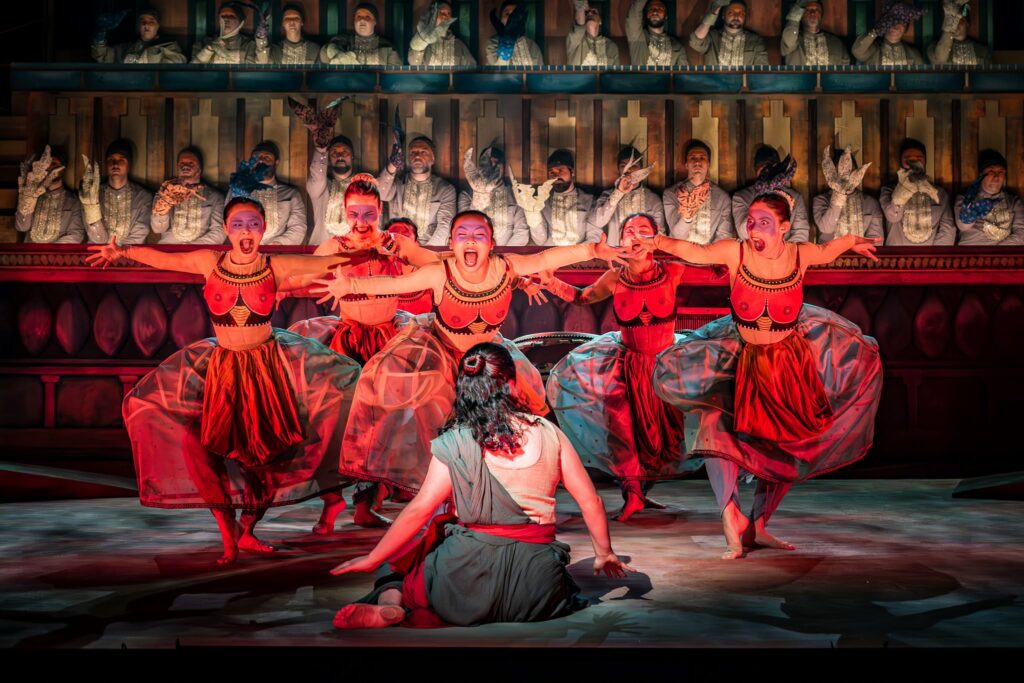
The set of women dancers add auras of expressionism and further traditional moves thanks to choreographer Shobana Jeyasingh. There is some top-class singing on board this production. Ross Ramgobin as the Celestial Narrator (who’s costume appears to have changed since the photo run) is the announcer of each scene. Calmness in the sung line is the ideal and is seen off and on in this compressed role. Sara Fulgoni as the weeping cow Bhumi and Krishna’s mother Yashoda has many moments of depths for mezzo, evocative and impassioned. Nazan Fikret as Rikmini who marries Krishna and Radha from Juila Sitkovetsky north get stratospheric bars during their extensive Love Duet and other embraces. Jennifer Statham is seen little as the child version of Radha, blindfolded and playing games with Krishna, vocally sweet and playing a child well.
Most remarkable are the four singers who see Krishna is various stages of his development. Child version is Rosa Sparks, who getting the biggest applause at the curtain, has real colour and range and a voice that absolutely should be heard much more. Adolescent Krishna is Eliran Kadussi a touching countertenor and joy to listen to. Young man Krishna is from Welshman tenor Elgan Llŷr Thomas, who has hefty voice demands for the role. He seemed to struggle slightly in the blockbuster love duet, but it is just so demanding. I’d like to hear more from him. Krishna as a man was Brett Polegato, very Messiaen St Francis like in his broad, wise aria. With bow and arrow abound and fabulous attire, it was great to just see him on stage. Though, all four singers together united on stage, was a lovely vision.
Sir John’s popularity is justified thanks to the deeply emotional core to his faith and therefore his music. This was a lovely send off of a life in music.
Krishna continues at Grange Park Opera till 2nd July 2026
Creating opportunities for a diverse range of people to experience and respond to sport, arts, culture and live events. / Lleisiau amrywiol o Gymru yn ymateb i'r celfyddydau a digwyddiadau byw

 (3 / 5)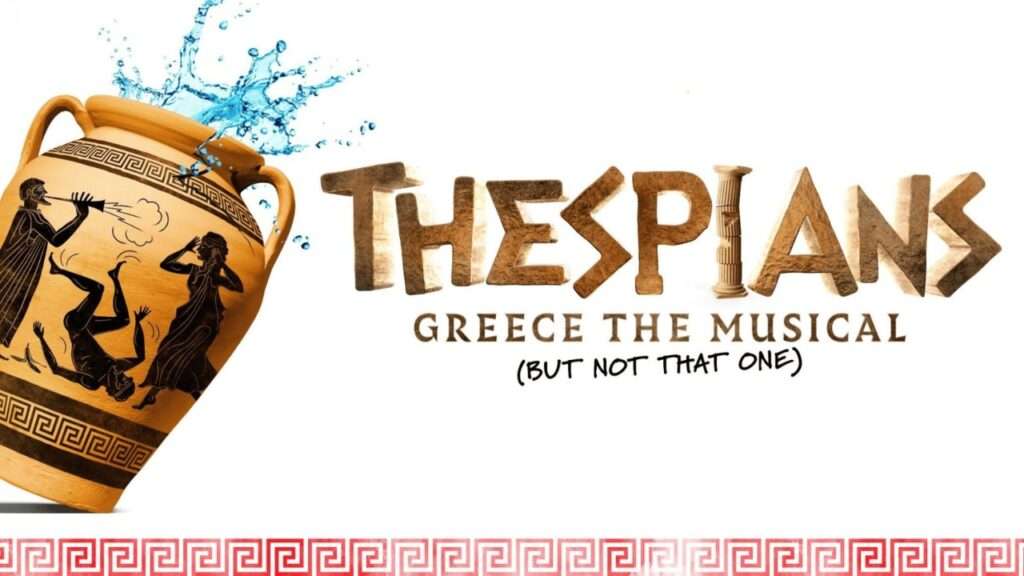
 (4.5 / 5)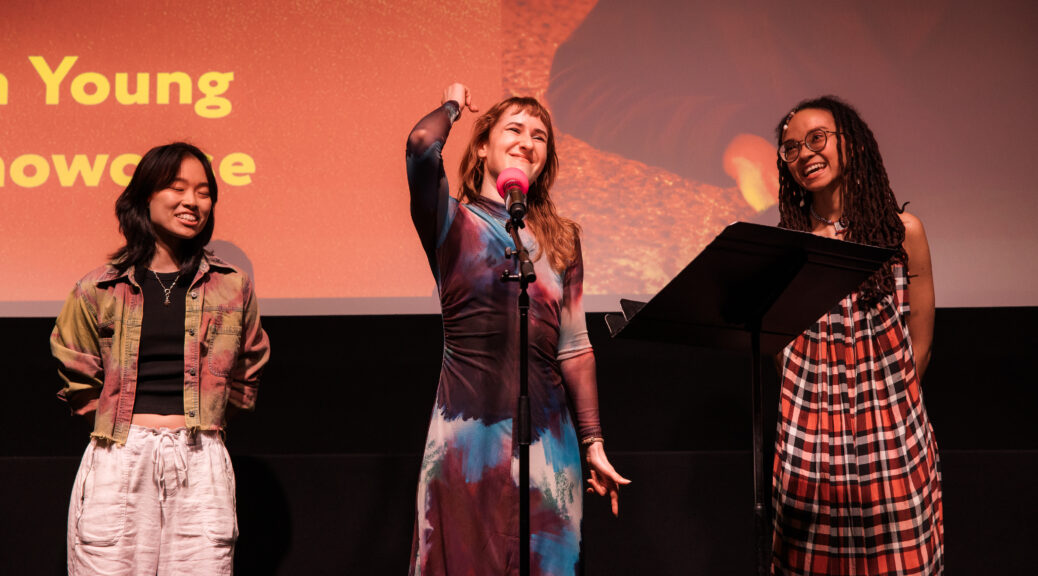
 (4 / 5)