Tag Archives: featured

Review: Rick by Ricky Montgomery by Sian Thomas

4/5 stars

Ricky Montgomery’s new album, Rick, landed on shelves and streaming services today. This is an album I’ve been looking forward to since his last album, Montgomery Ricky, and a handful of singles (such as some edits of songs from his first album, and singles from Rick such as Don’t Say That, Eraser, and Boy Toy) came out.

Montgomery Ricky released in 2016, with a track list of:
This December
Line Without a Hook
Cabo
Don’t Know How
Last Night
California
My Heart is Buried in Venice
Mr Loverman
Get Used to It
Snow
and a run-time of 35 minutes. However, his two songs, Line Without A Hook, and Mr Loverman went viral on TikTok back in 2020. Typically, they go hand in hand with various edits and memes, but when I discovered those songs and thereby the album and Ricky himself, I was floored by his music style, lyricism, and voice.

His new album Rick, had been alluded to and then promoted vigorously online, and described during his Block Party Podcast appearance as, “It’s called Rick, which is both my dad’s name, so it’s like being an adult and growing up without, you know, one of your parents. […] I am called Ricky, it’s my name that I go by, that I’ve gone by since I was a little boy – if your name is Ricky, there’s a point in your life where you consider becoming Rick.”. I found this particularly interesting as while the album progresses, it moves forward with the clear theme of rushing adulthood, self-discovery, and family relationships. I found it altogether endearing and in many instances, heartbreakingly intense.

Rick has a track list of
One Way Mirror
Boy Toy
Truth or Dare
I’m Just Joking in This Interlude (Interlude)
In Your Pocket
Don’t Say That
Eraser
We Got Married Twice (Interlude)
Type A
Paper Towel
Sometimes I Need to Be Alone
Ethan’s Song
Black Fins
Ribbons (Outro)
and a run-time of 40 minutes.

Songs such as Sometimes I Need to Be Alone stuck out to me as almost classics; soft and witty with lines such as “You tell me it’s not now or never / but I can’t wait forever / It’s such a simple question / with such an easy answer” and the repeating-to-finish lines of “It’s you”, the song quickly stuck out to me as an all-time favourite. I found it particularly inspiring as it goaded out my own creative endeavours with a burst of energy and life, which is always such a gorgeously invigorating feeling when finding a song, artist, or album.

The tracks Don’t Say That, Eraser, and Boy Toy were released early in anticipation for the album, and while in my experience I didn’t see many waves from Don’t Say That and Eraser, Ricky’s song Boy Toy was a quick hit to fans, myself included. I feel this song also boosted his online presence, leading to fun artist interactions and a fantastic peek into what the wider album would look like, especially with the inclusion of the lyric video. Boy Toy was an interesting look into the art and style of the music, with fun, bouncy music and catchy lyrics, with a nice undercurrent of vulnerability and admission. 

The general “vibe” of the art and presentation of this album almost gives me the vibe of a backroom, a liminal space, a creepy story regurgitated online; however all the music itself is incredibly vulnerable and introspective, especially given songs Truth of Dare and Type A, with lines such as “Let’s play truth or dare / try to act like I’m not scared / stripped down to my underwear / it’s only show and tell” and “What a year we’ve had / you went bi, I put my gender back” respectively, being amazingly open, raw, and real. 

The two interludes and outro include some spoken-word conversations between Ricky and his mother, discussing his father, in various past situations before their divorce and his untimely passing. There was a similar interlude in the 2022 EP It’s 2016 Somewhere, and these three tracks reek of that nostalgic tone. They are heartfelt, funny, and contemplative. A nice break to the album that provide a nice context, but ultimately become skips on further relistens as the draw is of course more naturally pointed to the songs.

Ricky Montgomery is honestly one of my absolute favourite artists I’ve had the fortune to come across, as his music is youthful, fun, and cuts right to the bone. My anticipation for Rick was high; I was incredibly excited for its release and found myself up and listening to the album as early as 5:30am the morning of release! It is truly an incredible listen, and I’m beyond excited to see where Ricky goes next (hopefully, to the UK on his tour!)

Sian Thomas

Review, Eun-Me Ahn’s Dragons, Barbican Centre, London by James Ellis

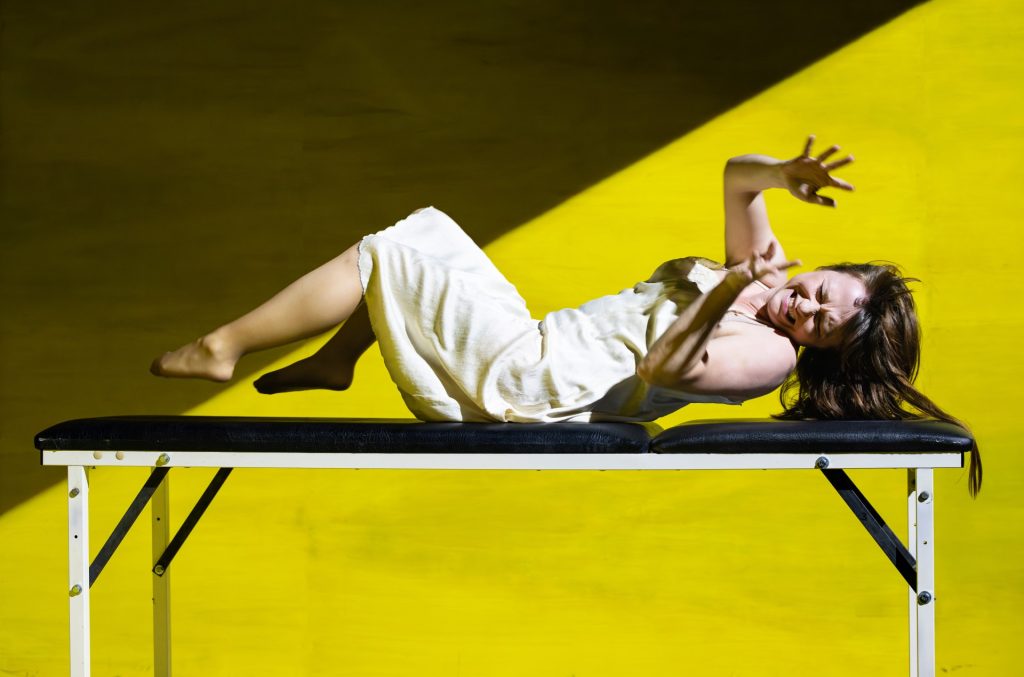
Photo credit: Sukmu Yun

 out of 5 stars (3 / 5)


In my first dance piece seen at the Barbican Theatre, we had a brief yet envigouring stint. Choreographer Eun-Me Ahn has taken under her wing emerging dancers from all over Asia. It’s very humbling and touching to see her support for artists who are at the starting point of their careers, their talents taken flight both in tour and nationally.

Though the show about halfway through halts to introduce some of the dancers (name, country of origin and why choose dance?), we get to know them a bit better, breaking down assumed barriers. Other dancers on screens appear blurred and compressed, though we would later realise that these were the ones who could not make it, Covid playing it’s part to dampen ambition.

The work itself started off strong, strange and wonderful usage of grey ventilation ducting. These might just be our dragons in question, no? These pipes are treated with a fluid creativity, a total highlight. They adorn costumes, make speakers for a makeshift stereo, they cover the stage from floor to rafters and evoke much rope play. The dances meld somewhere between traditional and the experimental. The humour shone through for many smile evoking moments, usually from Ahn herself or a colourful costume wowing in absurd styling.

The heavy use of screens for the moments without absent dancers had less charm. At times, lucious, in other moments it remained a bit tacky. Some underwater scenes were eye candy and some of the effects fusing live dancer and the imagery on screen could work. The show was a little too long, I think it could have been a solid hour. A queer vain glided through as well, something I lapped up with cross dressing and those glorious, golden shortS which I’ll never forget.

The dances may have been mixed with glides, near performance art, returns to traditional elements of the art and whacky contemporary elements. It might not have always glued together, but it is very sweet to see talented artists flourishing in their prime. Consider me a fan.

Dragons continues to The Lowry, Salford. 


Review Half Six Fix: Stravinsky’s Pulcinella, LSO, Barbican Centre, London by James Ellis 

Photo credit: Christophe Abramowitz

 out of 5 stars (4 / 5)

The goal of more accessible concerts at half past six is one of London Symphony Orchestra’s outputs. It’s a swell idea, with one 30 odd minute piece getting the spotlight and a talk before going into more detail makes for a grand hour.

Here, Barbara Hannigan as conductor and speaker, delighted with insights into Pulcinella by Igor Stravinsky. Heavily inspired by the music of 18th century work by Pergolesi, this would turn out compromised as most of the music featured is not by him. Hannigan went into detail about Stravinsky’s dip into neo-classical ideals, a return to form of less experimental nature. You can hear it’s still very much Stravinsky’s arrangement of this bubbly, happy music. It’s a world away from his earlier ballet work, this being a collab with Picasso and other artists.

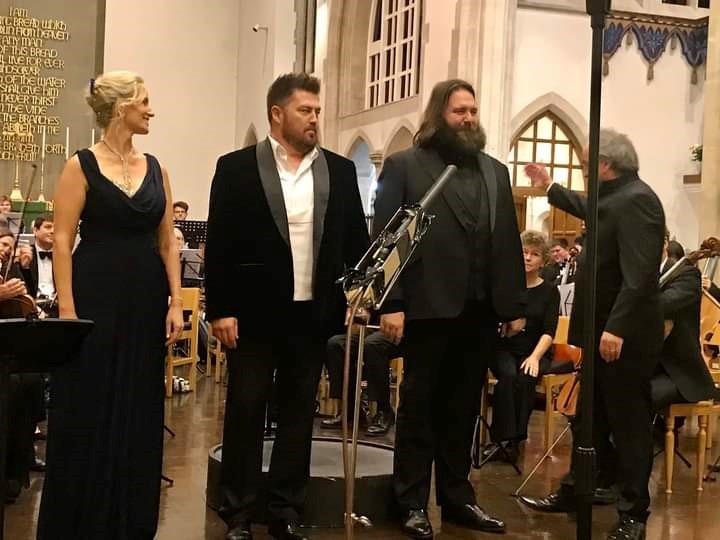
Hannigan as conductor, created form the way she is known for. She seems to executed good vibes bringing this out to us. The players shone with the return to Italian standards, peppered by the Russian composer’s rampant vitality. A trio of singers: Fleur Barron, Charles Sy and Douglas Williams has few solos, though these characters from the Commedia dell’arte proved good actors and suitable vocied and ones to watch out for. It’s the little extra details Stravinsky adds that keep you thinking after it was over.

Review, Bayerisches Staatsorchester, Barbican Centre by James Ellis 

Photo credits: Mark Allan/Barbican
 out of 5 stars (3 / 5)

A rare visit from the Munich Opera orchestra would be a treat for London based audiences. I missed them the night prior, a selection of Victoria Poleva, Berg and Richard Strauss seemed promising.

In a very Germanic second evening, Wagner’s Prelude to Tristan and Isolde is total romance. Many speculate it’s sex set to music, the passion of the Celtic story cannot be deined. Conductor Vladimir Jurowski swooned his way through, the buttery fluidity highly sensual. This is easy Wagner to access, the famously coined bleeding chunks. As an opener it was very fine.

For Schumann’s Piano Concerto, we saw Yefin Bronfman as soloists. I do find this piece apprachable and easy fair, Yefin had restraint in many ways. Wagner absolutely quoted at least one melody here for his Flying Dutchman. As a concerto the piano gets many flights and retrospection, Schumann’s lovely sence of dynamics are ever present. There is also the feeling of the promise what the piano concerto will become, there’s not really violence here nor harshness. Yefin faired well, but I wasnt wowed. An encore of Chopin pleased most.

I’m hearing Mahler’s 4th a few times this years, the LSO in Bath last. Here, in what is not my favourite of his lies a symphony filled with sleigh bells, sweet melodies, moments of pain and a soprano singing as a child in heaven. A bizarre brew, which does not always hold up for its hour demands. Yet when right, it sparked and transformed, Jurowski proving his fine maestro sway over the mass of players. The boyserious, Austrian air I think about in Mahler is in this, though is done better in past symphonic work. Louise Alder for the saccharin finale also added to proceedings. Her voice matched the tone well, the delight of the child in heaven playing and seeing the saints going about their jobs told through the vivid verse.

A final gift of Bach’s Air on a G String wrapped up well. 

Review, The Threepenny Opera, OVO, The Cockpit Theatre, London by James Ellis

 out of 5 stars (4 / 5)

A rare treat from OVO in London with The Threepenny Opera. Most well know for the hit song Mack the Knife, the show’s titular anti-hero, this remained a delight. From the mostly young cast was brought new life to this peculiar show. High res jackets and made up mannequins are the home stay of the production, directed by Adam Nichols and Julia Mintzer.

Kurt Weil excelled as caberat songs, symphonies and film score. This is some of his best work here, the bouncing, acidic metres and remaining tunefulness are total highlights. Story wise, Bertold Brecht was never one to turn down a sort of fable lecture in most of his work. Mack the Knife is one of London’s most infamous criminals, falls in love with Polly and gets his commpuence…or does he?

My plus one was confused over the meaning and the ending’s choice. I always see it as Brecht’s cutting look at society and the systems we engage in as flawed, corrupted and horrible. This was Peaky Blinders for the Weimar period. Much respect to the springy, witty ensemble. This is such a Cockney piece and the accents felt genuine (this London after all) and the leads impressed. Peter Watss as Mack, bringing out all the stops for the scary, yet loveable thug. It was nicely performed and should see him in the role agian.

Polly was a delight from Emily Panes, musically well suited to caberat. The role does not have a lot to do, but when she engages with Mack and warding off his other lady friends things take flight. Mark Carlisle adds mad inventor vibes and Jonathan Peacham, engaged with money making schemes with homeless people. The delivery was telling and his timing well paced. Annette Yeo as as Celia Peccham in an amuzing costume and shrill theatrics is another enjoyable flutter.

The ensemble acted, sang and played the instruments and well done them. Czech conductor Lada Valešová added a serious, if still fun tone to proceedings. Her sometimes engaging with the action was dry, these little moments helped break down the show, being in the round, in English translation and by a group who didn’t focus on making a very showy show.

It runs till 7th Oct 2023. More information here

Review ‘Dragons’ Eun-Me Ahn Company, Barbican by Tanica Psalmist

Pioneering South Korean choreographer Eun-Me Ahn, premiere’s the exquisite production Dragons. Witnessing ‘Dragons’ is a fusion of both traditional and modern dance styles, centred around music and non-stop movement infusing culture, rhythm and poetical essence from across Asia, which connects the young with the elders, where they both come to terms with the concepts, changes to embrace the vitality of an inter-connected world that calls for adaption, simplicity and interpersonal growth to with an inevitable changing & circulating universe, world & dimension. 

The feature of holograms throughout Dragons gives this production a special, diverse energy into the captivating space created by the Avantgarde choreographer Eun-Me Ahn’s latest kaleidoscopic production, which exhibited an empowering execution from her extraordinary company of flexibly enchanting dancers, who individually interacted on stage with holograms of five inspiring young performers from Malaysia, Japan, South Korea, Indonesia and Taiwan.

Education, warmth, freedom, water & all the in-between to reflect expression, movement, liberation, originality takes formulation of movement, touch, physicality and sensuality, sprung culture, solidarity and global unification. The vibrancy of colour whether through the clothing, traditional outfits, holograms and or significant lighting cinematic effect; brought the space alive and told a story of beauty, love, passion, progression, soul purpose, magnitude, togetherness, hope, future endeavours, vulnerability & success.

Above-all, Dragons is a fantastic way to absorb the power of Asian past and present culture, whilst bringing about a collective form of magnet impulsivity and grip of focused gratitude and feeling of emotions, service and the ability to feel music, contemporary and hip hop dance, alongside traditional dance movement in a non-unapologetic and self accepting way.

La Traviata – a review by Eva Marloes

Stacey Alleaume as Violetta in La Traviata, photo by Julian Guidera

 out of 5 stars (3.5 / 5)

In the past week, the documentary In Plain Sight, an investigation by Channel 4’s Dispatches and the Sunday Times, has alleged that comedian turned wellness guru Russell Brand is responsible for exploitative treatment of women, including rape and sexual assault. Just like when the #MeToo  movement emerged, many have questioned the women speaking out. Women are still exploited by powerful men and their sexuality is still policed.

La Traviata couldn’t be more topical. Verdi’s opera was shocking in depicting and taking the side of a ‘fallen woman’, what today might be an escort. Alas, the unimaginative direction, originally by Sir David McVicar, here by Sarah Crisp, makes it look preposterous and bizarre.

Violetta, a courtesan, meets Alfredo at a lavish party. She decides to leave that life and live with Alfredo supporting their life together financially. Unbeknown to Alfredo, his father asks Violetta to leave his son to protect his and his family’s reputation. 

Stacey Alleaume as Violetta and Mark S Ross as Giorgio Germont in La Traviata, photo by Julian Guidera

Violetta leaves Alfredo who feels spurned and acts his revenge by throwing money at her in public to repay her. Verdi thinks she has a dignity and should be respected.

It is none other than Alfredo’s father who defends her and condemns his own son for disrespecting her. Yet, only at the very end Alfredo learns that Violetta sacrificed their love and life together for his reputation. He comes back to see her dying. 

La Traviata could still be a powerful story if set in today’s times, just as James Macdonald’s clever production of Rigoletto did by setting it in Washington DC in the #MeToo era. 

The WNO’s traditional setting fails to convey Verdi’s intention. The choice of a very dark set design, presumably to symbolise impending doom, has a jarring effect on the opening scene whose frivolity and joviality are dampened. It weakens the unfolding of the tragedy and frustrates the solid performances of the artists. 

David Junghoon Kim shines as Alfredo, just as he did as the Duke in Rigoletto. He is at home with Verdi and gives a performance full of pathos. His beautiful tonality and powerful voice deliver longing and sorrow effectively. Stacey Alleaume as Violetta has a splendid coloratura. She’s at ease on high notes and bel canto. In the ‘croce e delizia’ duet with Alfredo in Act I, she seemed often overpowered by David Junghoon Kim when singing at a lower range. She is stronger in the second act with Mark S Ross, playing Alfredo’s father Giorgio Germont, and the final dying scene. Mark S Ross has a beautiful baritone voice. He gives an excellent performance.

The WNO’s chorus is strong as ever. The orchestra, under the baton of Alexander Joel, gives a solid, albeit uninspiring, performance.

David Junghoon Kim and Stacey Alleaume in La Traviata, photo by Julian Guidera.

Review, Chouchane Siranssian, Leonardo Garcia Alacón & Balás Máté, Wigmore Hall by James Ellis

 out of 5 stars (4 / 5)

A return to London, making an effort to go and see something before even going to my host. In this marvellous afternoon concert we heard from JS Bach and other varying delights.

This was really an opportunity to show off Chouchane Siranssian on the violin. I loved the effort of a sensual Leonardo Garcia Alacón on harpsichord and Balás Máté giving patience and nice drone work as supporting cello. The Bach works: the Violin Sonata in G and Adagio from Violin Sonata in C minor had that had real compassion, Siranssian seems to soar in this repertoire. Amazing to think how much the repertoire has changed, yet Bach was such a game change in his own right. Complexity met beauty in what we should expect from Bach, the passion of these players was a highlight.

Though the Bach got the audience in, a delight from Carlo Farina and his Sonata quinta detta ‘La Farina’. Of note is it’s strange momentum, seemingly slow then without warning pushes forward with swift rhythms. I hadn’t heard anything like, certainly not from the era of the composer (1604-1639). More discoveries like this make you realise just how much innovation there was over the centuries.

A short fire trip followed with Johan Jakob Walther’s Passacaglia from Sonata No. 7, Krikor Naregatsi with his Improvisation on Havun Havun and Pietro Antonio Locatelli’s Sonata in D minor. Siranssian shone once again here with one part of high pitched squeals from her violin, her accompanists also getting fine musical moments. Bleeding well into each other this choice of three works was fine, its was all very touching and highly sweeping. The broad steps of musical style and expression never waned.

Ending with Andrea’s Anton Schmelzer and his Violin Sonata ‘Victori derby Christen’ prove more brilliance from this trio, this hour with them a joy. Siranssian I assume read out the name of movements in German as the piece went on, its approachable nature made for easy listening. We’d love to have them back soon. 

Review, Rebecca, Charing Cross Theatre, London by James Ellis    

Photo credit: Mark Senior

 out of 5 stars (2 / 5)

After a hefty scandal in its original outing, the German take on the classic English book Rebecca as a musical has finally made it to London. Sadly, the curse which is synonymous with the story still leaves it mark…

The elegance and intrigue of Daphne Du Maurier’s tale has not translated well in this staging by Alejandro Bonatto. There is something of a pantomime about the whole thing. I can assume the budget was right for this, even with some practical use of quite a small stage, designer Nicky Shaw should get a shoutout for this. The songs by Michael Kunze and Sylvester Levay have some charm and passion, but remain remarkably old fashioned. Precise extracts from the novel are present, yet it’s the generic vocal line and unappealing melodies which stand out. I spent over 14 hours listening to the audio book and it’s amazing how much was the story just stops and starts on stage. This tension does not always work when you have to take a break with songs.

The cast are vocally fine, with what they are given. I was pleased with the loud and proud ensemble who play the service staff, salty sailor types and Monte Carlo snobs. Our leading lady is never given a first name, the mark of Rebecca as Mr de Winter’s first wife looms over all. As “I”, said second wife is Lauren Jones who works well in the unassuming role. She puts up with a lot, curiously there is no mention of children or plans for any from either wife. Elements of Jane Eyre cannot be denied either. As Maxim de Winter, I wasn’t so convinced with Richard Carson, though dashing and subtly spoken. I didn’t really get the outbursts nor mental anguish from his time with Rebeca and here death. A singing voice that felt quite Les Mis, marginally less depressing than that show.

Kara Lane had fun as Mrs Danvers, perhaps the most fascinating living character in the story. Obsessed with Rebeca whom she always cared for, her singing reach absurd moments belting out the title characters name, some of the best moments in the show. The supporting cast varied from compassion to miscast. Some problematic aspects…the role of Ben who feels quite Sondheim like was played with conviction from an adorable David Breeds, his broken, mysterious, lines signs straight from the book. Sarah Harlington as Beatrice might be the best suited for any of these roles, Piers Bate as Frank Crawley getting little time to show sympathy in the ongoing scandal. Emily Apps as Clarice and Alex James-Ward as Rebecca’s cousin also worked well in the scattered pacing.

Its rare that I’m annoyed with a show. Rebeca deserved better.

Rebecca runs at Charing Cross Theatre till 18th November 2023.

Cyfweliad gyda’r actor Tom Blumberg

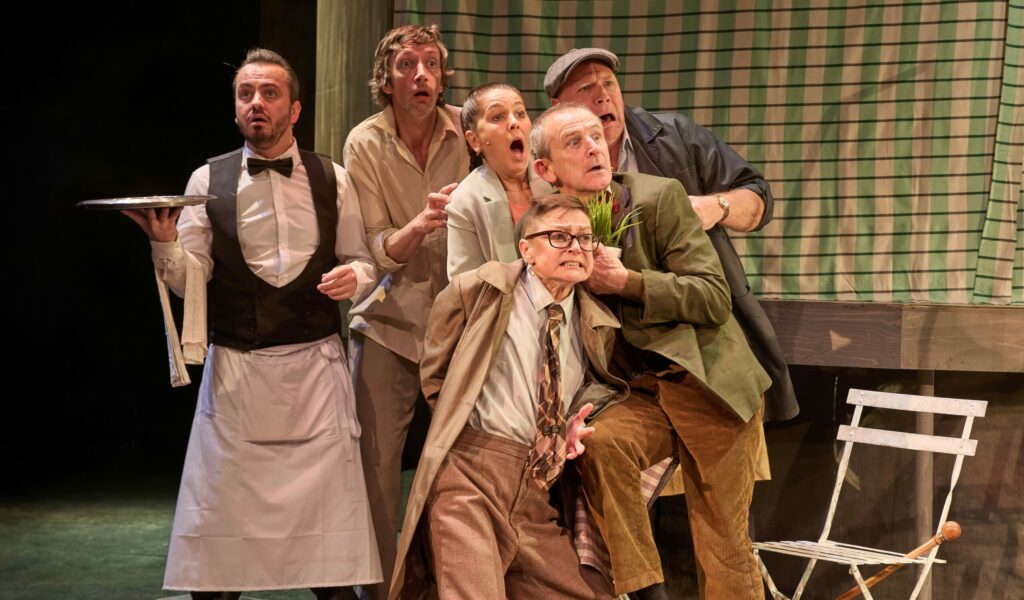
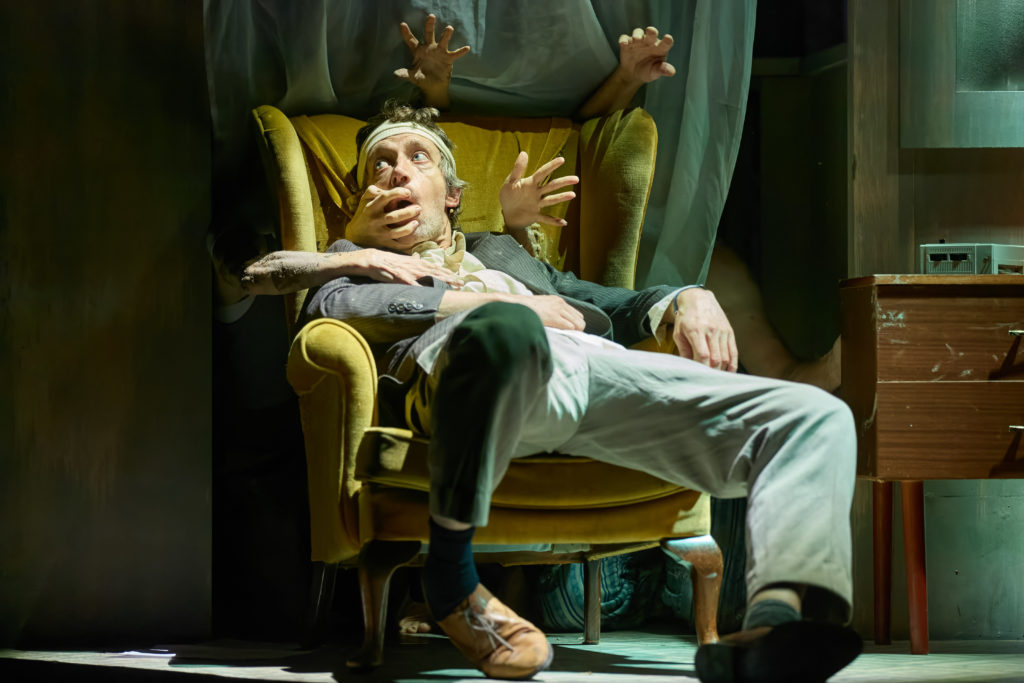
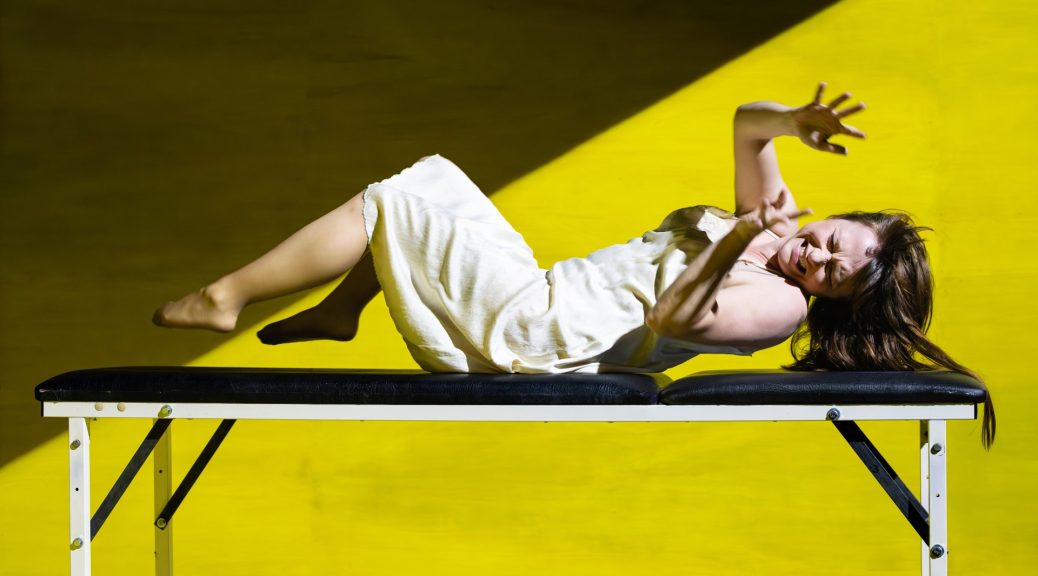
Cyn i ymarferion ddechrau ar gyfer Y Fenyw Mewn Du yn yr Hydref, gofynnon ni cwpl o gwestiynau i’r actor Tom Blumberg am straeon ysbryd, ei ofnau a’i fywyd newydd yn Toronto.

Pam ddylai cynulleidfaoedd ddod i weld Y Fenyw Mewn Du?

Os ydych chi’n hoffi arswyd ac yn mwynhau cael dipyn o fraw (fel fi),  mae’r stori yma’n wych, ac yn llawn eiliadau iasol pur. Ond y prif reswm yw bod prinder straeon arswyd ac ysbryd yn y Gymraeg – wedyn mae hyn yn teimlo fel rhywbeth gwahanol, ac yn gyfle eitha’ unigryw….yn enwedig dros gyfnod Calan Gaeaf!

Ai hon yw’r stori ysbryd gyntaf i chi actio/cyfarwyddo/addasu? Beth sy’n ei gwneud yn arbennig/wahanol?

Ie. ‘Dw i wrth fy modd gyda straeon ysbryd ac felly ‘dw i wedi gweld lot ohonyn nhw, ac mae’n hynod o gyffrous i fod ar yr ochr arall, yn perfformio un am unwaith. Be sy’n ei wneud yn arbennig dw i’n meddwl yw bod y stori’n cael ei pherfformio yn Gymraeg, mae rhywbeth barddonol am yr iaith Gymraeg sy’n gwneud y stori hyd yn oed yn fwy effeithiol yn fy marn i – mae’r delweddau yn fyw ac yn effeithiol iawn.

Rydych wedi symud i Ganada yn ddiweddar, beth ysgogodd y mudo yma, a beth wnaeth i chi gytuno i ddychwelyd i Gymru ar gyfer YFMD?

Do ! Ar ôl 2 flynedd o aros yn yr unfan dros y pandemig, o’dd hi’n teimlo fel amser am antur ! ‘Dw i wastad wedi bod eisiau byw dramor, ac mae Canada yn wlad mor brydferth roedd o’n teimlo fel y lle delfrydol – yn enwedig gyda rhai cyfleoedd actio ar gael yno hefyd, yn golygu gallwn i ddod o hyd i waith yno. Dw i wrth fy modd yno hyd yma. Roedd YFMD ar y gweill cyn i mi allu cadarnhau fy fisa,  ond mae wastad wedi bod yn freuddwyd i fi chwarae’r rhan ers i mi fynd i weld y ddrama yn Saesneg yn y West End pan o’n i’n ysgol ddrama. Mae’n fraint cael chwarae rhan yn ‘premiere y byd’ o’r stori yn y Gymraeg,  felly ‘doedd dim rhaid i fi feddwl ddwywaith am ddychwelyd o Ganada i fod yn rhan o’r cynhyrchiad gyda chwmni sydd wedi ‘nghefnogi i ers blynyddoedd lawer, cwmni sydd yn agos iawn at fy nghalon – a gyda thîm delfrydol o artistiad a chriw cynhyrchu.  Dw i wedi siomi braidd y byddai’n colli fy nhymor Calan Gaeaf cyntaf yng Ngogledd America, achos dwi’n gwybod ei fod yn gallu bod yn eitha’ gwyllt yno ac maen nhw’n mynd i gymaint o ymdrech – ond mi fyddai’n perfformio’n fyw mewn stori ysbryd ar lwyfan, wedyn mae’n fargen digon teg dw i’n meddwl.

Beth sy’n gwneud i chi grynu?

Yr eiliadau mwyaf brawychus i fi mewn unrhyw straeon arswyd yw’r awgrymiadau bach yna o arswyd – fel pan gewch chi gip ar rywbeth sy’n gwneud i chi gwestiynu a wnaethoch chi ei weld mewn gwirionedd, neu ai’ch meddwl oedd yn chwarae triciau arnoch chi, yn dychmygu pethau. Yr eiliadau bach hynny o ddirgelwch, cipolwg o ffigwr tu ôl i chi mewn drych, siapiau rhyfedd yn y cysgodion – pan mae’r dychymyg yn rasio yn wyllt … dyna’r eiliadau mwyaf cyffrous dw i’n meddwl.

Pam fod gwneud theatr yn Gymraeg yn bwysig i chi?

Mae theatr Gymraeg yn hollbwysig :  mae’n hybu’r defnydd o’n hiaith fendigedig o fewn profiad hwyliog a difyr. Mae’n cynnig cyfle hefyd i ddysgwyr gael ymdrwytho yn y Gymraeg y tu allan i’r ystafell ddosbarth, sydd yn allweddol dw i’n meddwl. Dw i hefyd yn meddwl bod y math yma o straeon ysbryd yn cael eu perfformio mor anaml yn y Gymraeg, mae’n grêt gallu rhoi’r cyfle i Gymry Cymraeg brofi stori ysbryd fyw yn ein hiaith hyfryd ein hunain – a dw i ddim yn siwr iawn pam, ond mae’n teimlo’n fwy real yn y Gymraeg !

Oes gennych chi unrhyw straeon ysbryd eich hun yr hoffech chi eu rhannu?

Ddwlen i allu neud hynny ! Dw i wrth fy modd gyda straeon ysbryd, a chlywed profiadau pobl eraill o’r oruwchnaturiol, ond dydw i byth wedi cael profiad ysbrydion fy hun ! Ond dwi’n un o’r bobl od yna fyddai’n falch iawn o gael y fath profiad – mae’n rhywbeth cyfareddol dw i’n meddwl, yn hytrach nag yn frawychus. Mae’r byd go iawn yn llawer mwy brawychus i mi – mae’n gysur i mi rhywsut meddwl bod yna eneidiau o’r gorffennol yn symud yn ein plith … cyn belled bod nhw ddim yn dod ag unrhyw felltithion erchyll fel mae’r fenyw mewn du.