Tag Archives: featured

Review, Ar y Ffin, S4C by Gareth Williams

 out of 5 stars (3 / 5)

It was Newport’s time to shine in S4C’s latest drama series Ar y Ffin. Made much of in a Guardian article prior to broadcast, the city is often overlooked by its capital cousin, but becomes a metaphor here for the title character’s own story. Erin Richards is superb as Claire Lewis Jones, a magistrate and mother who has tried, with a great degree of success, to step out of the shadow of her unsavoury past. Yet she is still haunted by a ghost, in the form of Pete Burton (played by Tom Cullen), a shady local gangster whose criminal activities come slowly to collide with Claire’s personal and professional life across the course of six episodes. And whilst at times there are threads in the narrative which suggest too much artistic licence has been wrought, writers Georgia Lee and Hannah Daniel still offer enough entertaining twists and turns to ensure the implausible never make Ar y Ffin unwatchable.

One of the draws of this drama is the mother-daughter relationship at its centre. Lauren Morais is excellent as troubled teen Beca, whose trajectory of travel is, we come to find out, much like her mother’s was back in the day. The way that Claire seeks to protect her, sometimes at great personal and professional cost, is made all-the-more heartfelt by Richards steely portrayal. She follows in a long line of similar female protagonists in Welsh TV drama, balancing a strong exterior with a hidden vulnerability that eeks out as the series progresses. Beca is much the same, though Morais adds a stubborn teenage bolshiness to mask her susceptibility. Ultimately, both characters cast a shadow of weakness over their respective partners – husband Al (Matthew Gravelle) burying his head in the sand over financial problems whilst Beca’s boyfriend Sonny softens towards the series’ end.

There is clearly appetite from the production team to continue Ar y Ffin. Its conclusion feels far too open to simply leave it at that. Where it goes from here is open to question, but with Beca clearly emerging as a central character alongside her mother Claire, further exploration of that relationship would prove invaluable to keep viewers’ interest beyond the standard criminal fare of Pete and his boys. That might involve a trip over the border perhaps, given the final scene. But whether this drama expands beyond or keeps Newport as its central focus, it has been refreshing to see a different Welsh city as a backdrop. A reminder that urban stories are not limited to Cardiff.

You can watch the series on BBC iPlayer here.

Reviewed by Gareth Williams

Review Bat Out of Hell –New Theatre, Cardiff, 3rd February 2024 by Bethan England

 out of 5 stars (4 / 5)

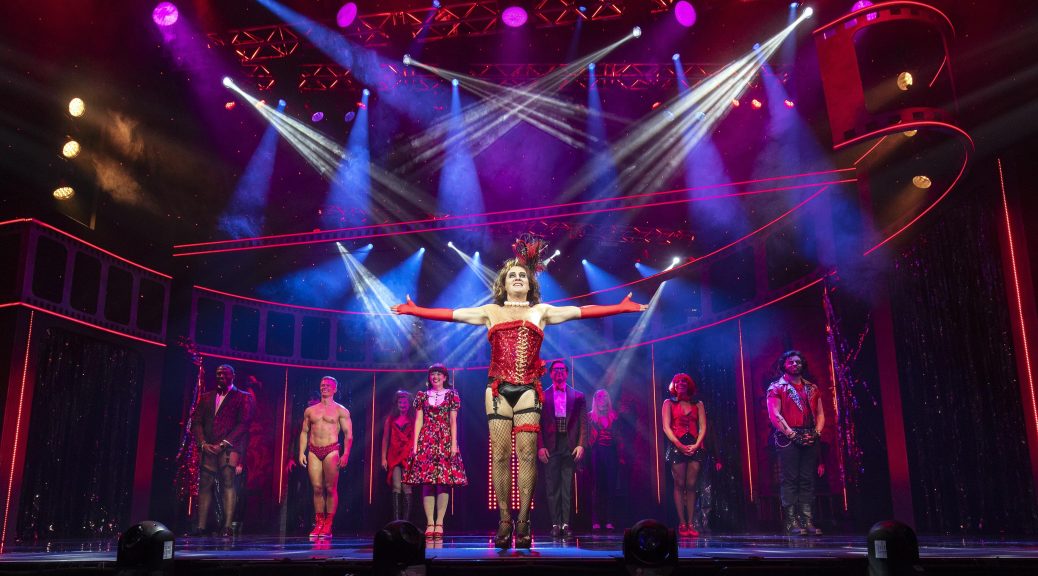
Bat Out of Hell unapologetically storms onto the New Theatre stage, bursting with the greatest hits of Jim Steinman and Meatloaf, a set straight out of a dystopian cityscape, punchy, stylish dance routines and vocals to die for.

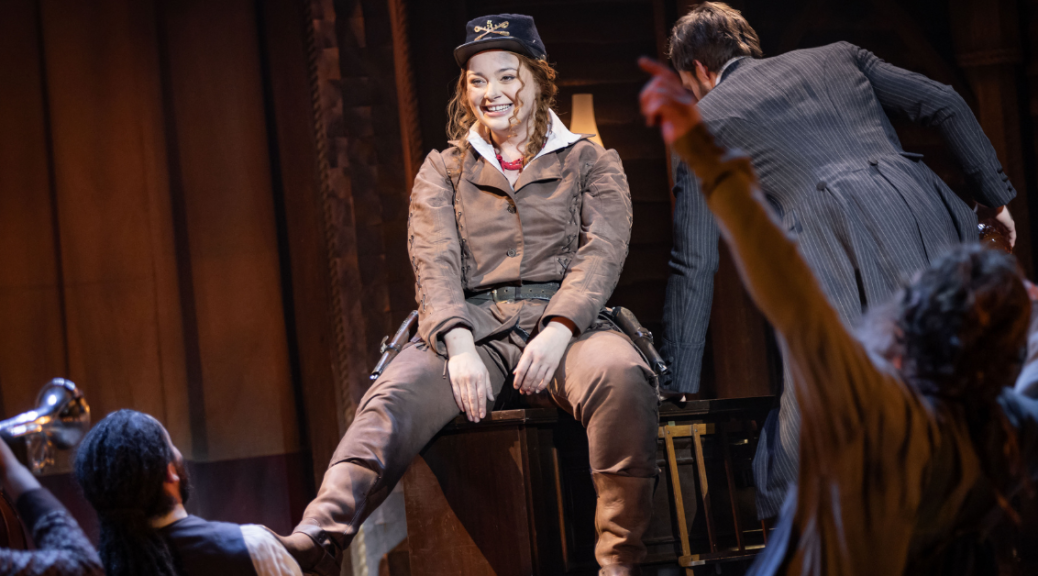
There’s a lot to take in, from the tunnels of Obsidian, the incredible band pouring their hearts and souls into the beloved songs, the performers who look like they’re having an absolute blast and the lights and sounds which fill the theatre to even further capacity. The storyline follows a rag tag bunch of unageing friends; The Lost, who live beneath the city in the tunnel system. With echoes of JM Barrie’s Peter Pan, (indeed where the piece has its origins as Jim Steinman originally intended to pen an updated version of the play called Neverland), The Lost are bombastic, free spirited and unashamedly living their ‘forever 18’ lives. Above ground, the ‘Hook’ of the piece, Falco, threatens all that they stand for, trying to bring enforced order to their bohemian lifestyles of rock and roll. His free-spirited daughter, Raven, however, has fallen in love with the forever young Strat and is determined to run away, find The Lost and live her life her own way and be free.

Although the themes of Peter Pan are still evident in some ways, the piece now stands apart and carves out its own space in the Musical Theatre genre. To draw parallels with other jukebox musicals would be unfair; it does have similarities, but it is certainly unlike anything I have ever seen on stage before in shows such as We Will Rock You, for example. The show is pure theatre. It is unashamedly over the top, loud, proud and explosive. From the first number to the curtain call, the audience is grabbed by the frilly white shirt and pulled into their world. The dance numbers are electric; the leads and ensemble leap across the stage using the tunnel set to its full potential, disappearing and reappearing through its maw. The pure energy of the routines really impressed me; the ensemble earning their cheers in the finale just as much as the lead performers.

And what a cast of leads it is. Our four main characters clearly have Bat in their blood; Rob Fowler as Falco and Sharon Sexton as Sloane both originated their roles in the 2017 production. They clearly know these songs and these roles like the back of their hands; their musical numbers are truly spectacular with vocals that are described in no other way than brilliant. Paradise By The Dashboard Light is spectacular and hilarious in equal measure, but their voices reach even further heights in What Part of My Body Hurts the Most and It’s All Coming Back To Me Now. They clearly adore this piece of theatre; it oozes out of them whenever they step on stage.

Katie Tonkinson as Raven also returns to the role having played Valkyrie and cover Raven in the UK and International Tour and Peacock Theatre. She brings a perfect naivety to the role but then owns the stage with confidence and poise in her musical numbers. Heaven Can Wait was beautifully sung showing her softer more emotional vocals, but the counterpart to this was her heartfelt, raw rendition of It’s All Coming Back To Me Now. Glenn Adamson as Strat owns the stage and proves why this is a role this he is critically acclaimed for. He clearly channels the performances of Meat Loaf and his performance leaves the audience breathless; he bounds across the stage with restless energy and pours every energy into every single song. The ‘greatest hits’ are truly made his own with an obvious standout being his performance of Bat Out of Hell, truly raising hell at the end of act one. Georgia Bradshaw as Zahara and Ryan Carter as Jagwire also deserve mention, for their rendition of Two Out of Three Ain’t Bad alone; their vocal acrobatics had me on the edge of my seat.

The tour tries new things too, with the current in vogue method of bringing onstage videography to the production. I enjoyed this element as it did allow an extra layer to the performances and enabled lots of close ups and different angles of the musical numbers. I did, sometimes feel a little overwhelmed as I wanted to look everywhere at once; at the screens, the action on stage, the dancers and the lead vocalist. The cast also uses handheld mics throughout, even throughout dialogue. This does give the show a distinct concert feeling but it can sometimes feel slightly distracting.

Overall, the show is pure energy, dragging the audience along with its joy and vigour and certainly pulled people to their feet by the end to sing and dance along. For fans of Jim Steinman and Meat Loaf this is an absolute must, but there’s something here for everyone so catch it at the New Theatre before it roars off to the next stop of its tour!

More information and to book tickets here

Review, Poulenc’s La voix humaine, BBC NOW, Hoddinott Hall by James Ellis

 out of 5 stars (4 / 5)

The new year in the Welsh capital saw concerns over the disarming of history, nursing and music studies at Cardiff University. The arts are becoming a deeply rooted concern, as well as further rug pulls, National Theatre Wales bows out as well. Still, St. David’s Hall the concert hall for Wales remains closed. This major hub for the BBC National Orchestra of Wales may not be in use for at least another year or two.

We’ve settled into Hoddinott Hall down the Bay, as have the orchestra for all Cardiff based concerts. Some of these events can boast sell outs, thanks to thrilling programmes and guest artists. Issues expressed before in reviews would prevail and need attention. I’m talking about the lack of physical programmes and tonight, a lack of a libretto for the French sung operatic outing (the equipped venue would fare well with a surtitle screen). No one really wants to read on their phone with a digital programme.

Jamie Martín is a natural conductor, who would herald the start of a fine concert thanks to Ravel’s ‘Mother Goose’. This being the full ballet version, as with the composer it is often light and mostly charming in execution. Typical tales of Beauty and the Beast, Sleeping Beauty and lesser-known stories are within these bars. The eloquence of the orchestration would go onto influence music inspired by fantasy and fairy tales in media, such as a standout it remains. Putting personal taste aside with Ravel, the whole work has hurrying, shimmering moments. I could see this being a nice intro to classical music for children, yet it doesn’t seem to be the first choice. The orchestra captured the fine bristle of all the movements, its grandeur mounting up to a sweet closing.

A rare opera arrival for Hoddinott, with that of soprano Danielle de Niese and Poulenc’s ‘La voix humaine’ or ‘The Human Voice’. One of the finest one-act operas from the 20th Century, this taking of Cocteau’s play sees an intimate scope. The only character is a lady who in a desperate flux, speaks to her lover on the phone, the conspiracy of a breakup the dramatic punch of the plot. With a sad send off, Poulenc and his full use of orchestra throughout is mighty. The pounding and plucking of the alert score become more engrossing as this woeful tableau goes on. The xylophone is the clever ringing of the dreaded telephone (who has a landline anymore?), as each call faces connection issues, wrongs numbers and flashes of this vanishing lover.

Ubiquitous to Glyndebourne audiences, this is de Niese’s first time with BBC NOW. I’d dare say it was a success, the French sounded perfect, the acting flustered, yet paced. Her voice holds truth and a graceful, unwavering flight, never a half measure in anything she does. It’s time we see her back again with Welsh National Opera. It must happen.

Mold Carnival by Simon Kensdale

In 1895, the star attractions at the Mold Carnival were Leino, the Flying Trapezist; Signor Rovollo, the Gymnastic Wonder and Professor Crannio,’The Marvellous Conjurer.

In 1904, Carnival music was supplied by the Royal Buckley Town Prize Band. There was the Best Decorated Bicycle competition, Riders on Horseback and The Procession of Gigantic Proportions, which paraded through Mold’s principal streets, its salient features being six brass bands. At the close of The Procession, the public congregated at the Black Lion Hotel where dancing took place to music supplied by the Brymbo Steel Works Prize Band. Takings for the Carnival in 1904 were about £68, and after putting aside an amount for the following years’ show, £25 was handed over to the Mold Cottage Hospital Fund. (Note – this information is from the Mold Carnival website and was provided by local Historian David Rowe.)

Mold Carnival has form.  It’s representative of a genre of activity that is widespread and perhaps an example of best practice, not too small to be meaningless but not too large to be commercially exploited.  It’s still organised by volunteers and in 2024 it attracted over 6,000 people to its events.  This is what grassroots cultural activity looks like (in terms of grass, the organisers get a lot of help from local people cutting the grass on the two fields where the Carnival is held).

The Eisteddfod Mold Carnival is not but there is an almost infinite variety of strata in this type of cultural activity.  The Eisteddfod is not Glastonbury and Glastonbury is not Edinburgh, which is not Bayreuth.  Carnivals, like festivals, have a role to play, otherwise they would disappear.

This year I thought I might participate in the ‘Time 2 Shine’ Mold Carnival talent show, not because I am talented but because I like a challenge and it looked like a good way to see the event from the inside.

I am a (very) amateur piano accordion player.  I thought I’d play a simple version of the famous Czardas, composed in 1904 by Monti (go to https://youtu.be/_Zjz6oLuaxw if you want to hear it played properly).

A Czardas is a traditional Hungarian folk dance, getting its name from the old Hungarian  term for roadside tavern. Its origin was a death dance, in which a soldier fights with an opponent, looks for his weak points, then kills him and dances in joy.  It starts slowly, speeds up, slows down and then finishes quickly.  I thought it might be suitable for the Carnival…

Lined up against me in the talent competition were a young man playing Chopin on a keyboard, a teenager impersonating Chuck Berry, a vocalist with an Adele song, a girl reciting her poem about what she would do if she were Queen for a day and some very young singers performing their favourite pop songs to backing tracks (they were all word perfect). 

You can’t judge the talent in a line-up like that.  I don’t say this because I didn’t win (!) but because more than the difference between apples and pears is involved.  The only original performer was the poet.  It’s not easy to either write or recite your own funny poem.  The most technically accomplished performer was the Chopin player, who would have put in a lot of practice on his Grade 8 exam piece.  The most entertaining performer by far was the Chuck Berry impersonator. But then the vocalist was employment-ready standard, and the very young performers’ singing was as accurate as their recall of their lyrics.  Then there was me – but you always attract an eccentric when you have an open-door policy.

I was perfectly happy to have performed the Czardas satisfactorily, if at two-thirds speed.  A couple of people had asked me what my accordion was, so I think I reminded the Carnival-goers of what is now a vanishing instrument in the UK.  Children danced as I played and I got enough applause to go home quite pleased with myself.

I think the Adele singer and Chuck Berry won the senior and junior categories because they conformed most closely to what talent show judges are looking for, but that’s beside the point.  The point is that creative performance activity can and does take place in a variety of styles, irrespective of economics.  It makes a significant contribution to social celebration – the Mold Carnival feeling like a gigantic garden party, with its mountain bike acrobatics, its fire-eater and the alien robot wandering around in front of the Territorial Army.  The only question is – Is It Art?

The short answer to that is No. There was not enough originality, technical ability or depth of feeling on show for anything to be discussed in artistic terms (especially not if you want to compare what was on offer with what gets performed in the street at major festivals).  However, art does not appear out of thin air and artists have journey to make.  It’s possible that at some point in the future the author of ‘What I would do If I was Queen for a day’ will one day release a first collection.  It’s possible that the Chopin player will become a modern composer.  It’s possible that the young Chuck Berry impersonator will develop his own persona and become the next Mick Jagger.

It’s that possibility which counts, alongside the opportunity events like Mold Carnival give young people the chance to experiment and gain experience.  There is nothing quite like appearing on stage in front of a substantial live audience, especially if you are only nine years old.  The theatre in the UK depends heavily on both musicals and pantomimes for its survival and carnivals help to feed future cast members into the system.  So it’s not exactly what you see taking place, so much as what it all represents that matters.

I’m already wondering what I might brush up to perform this year.

The csárdás is characterized by a variation in tempo: it starts out slowly (lassú) and ends in a very fast tempo (friss, literally “fresh”).

The dancers are both male and female, with the women dressed in traditional wide skirts, which form a distinctive shape when they whirl.

Review, LSO, La rondine, Barbican, London by James Ellis

 out of 5 stars (4 / 5)

With the tenure of Antonio Pappano with the London Symphony Orchestra now under way, London will be treated to both concert and operatic offerings. The idea of these concert operas are mouth-watering, the first outing was Puccini’s La rondine.

One of the Italian masters lesser known works, it owes a lot to La traviata and the glamour yesteryear of Paris. Though the story has a focus on comedy for the first two acts, the love story flutters about in the third act, not necessarily fulfilling the narrative structure. Musically, this is a sparkly affair: lots of fun and mirth from all involved. The sweeping melodies are met with Puccini’s modern harmonies, clever in many ways. There is the famous aria and absurdly soaring high notes, ensemble moments that hark back to Verdi, who’s shoulders Puccini rests on. 

Pappano and the orchestra were pristine, this was their second performance of La rondine this week. Everything was acute and perfect. Strangely out of all the instruments aside the strings, it was the marvellous glockenspiel and harp that stood out. The piano also featured, though is used less effectively in the pot. The chorus were also a triumph playing rowdy students and party goes, all that was missing was the champagne bottles in hand. The time was brief though they shone in the middle act, you couldn’t resist their impeccable charms.

The cast were also great. Carolina López Moreno as Magda de Civry was the stand out, our beloved diva with a voice working extremely well here. Her control and drive for these luxurious moments never waned, a real star. Michael Fabiano as Ruggero Lastouc is here love interest and is just as fine. His hefty role for tenor has a lot in it, vocally very intense and Fabiano pulls many things off to acclaim. The maid Lisette, Serena Gamberoni has her nose in the air, with a genuine dislike for Magda, a second soprano role that is not always noteworthy. She seemed to enjoy the fussy role anyway and sang well. Paul Appleby as Prunier who is in love with Lisette, gets curious, funny bars his tenor working really well in Puccini. He gets the most laughs and is not a bad actor either. There were several party going supporting roles that also shone, too many to mention, but some up and coming and established singers were in the fold.

It’s a short affair under two hours and musically is rather pleasing. The story may not grip like other Puccini, yet for its size and colour it’s a lovely thing to admire. 

Review Nutcracker (the alternative cabaret) by Rhys Payne.

 out of 5 stars (4 / 5)

Over the past couple of years, it has become somewhat of an annual tradition for me to take the short journey to the Weston Studio and the Wales Millennium Centre to watch a queer-infused re-telling of some of the most iconic Christmas classics to ever exist. The last three Christmases saw Polly Amorous and the team take over the venue with their unique version of festive stories (the most recent of which is the first xxxmas which you can read about at https://getthechance.wales/2023/12/23/review-the-first-xxxmas-by-rhys-payne/) but the team working on this year’s project took a much more classically theatrical twist! As the name would suggest this iteration of The Nutcracker players homage to the iconic two-act ballet of the same name and I have to admit this is not a show I am particularly familiar with and so it did take me a little longer to pick on some of the nods and reference to the original show.

Production Images Kirsten McTernan

The story explores the underground world of misunderstood creatures as they highlight their skills in the wonderfully eccentric “Le Crack” through a series of cabaret-style performances. I thought that it was particularly clever that the opening moments of the show showed the group of outcasts actually putting on the aforementioned cabaret performance for the audience as this beautifully blended the lines between the story and reality that totally made sense!

My favourite performance in this version of The Nutcracker however was the captivating Cadbury Parfait who took on the wonderfully iconic role of the Sugar Plum Fairy. From the very moment this performer stepped onto the stage, they instantly stole both the spotlight and the audience’s attention as they showcased an incredible burlesque-infused performance. The performer used every inch of the stage as they began peeling off layers of their gorgeous insanely regal, gorgeously pink outfit which the audience went absolutely wild for. The second half of this production, however, saw the sugar plum fairy fully embrace a more villainous perspective as she began to spout a series of homophobic/transphobic abuse at the budding couple of the Nutcracker and the Rat King. This transformation began with the character being shrouded by towering curtains (which later magically cascaded down to the floor to reveal her new outfit) above the stage as she donned her Margret Thatcher-inspired suit/hair as she began spouting transphobic/homophobic abuse at the new coupling of the Nutcracker and the Rat King which was clearly a reference to the section 28 laws passed during Thatcher’s leadership. This then transformed into a performance of a performance of “Just Don’t be Gay” which was a comedic, cabaret-centric number that exposed the character’s bigoted views and also contained buckets loads of audience participation as the sugar plum fairy had key audience members reciting the straight creed of loving fixing cars, top gear and cigars. Despite being the character which the audience was encouraged to hate and boo, but I could not help myself being totally transfixed every time this character took to the stage!

Just over a year ago, we were introduced to the incredible Diomede at the first every Hell Haus event (which you can read about at https://rhysreviews.com/2023/10/23/hell-haus-production-review/) where we were totally transfixed by their incredible lip-synch talents but I was not aware how much of an all-round musical performer they are! Diomede was announced as the titular role in this queer-adaptation of the classic Nutcracker, and they were instrumental in helping invite immense amounts of sympathy from the audience. As an innocent character brought into this underground world of cabaret, The Nutcracker is not aware of all the things that go on at Le Crack or the lives of the creatures underground and so seeing this character go from being totally unaware to becoming a victim of the oppression was very powerful! There was a hilarious sequence later in the show where Diomede was forced into a physical box after confessing their attraction towards The Rat King (captured wonderfully by Len Blanco) to her master the Sugar Plum Fairy which led to a series of hilarious events where this performer trying to encourage a romantic moment while being stuck inside the box and also reciting the “straight man” mantra introduced by the sugar plumb fairy which had the audience in hysterics throughout!

In terms of individual performances, however, there was one member of the cast who clearly used this production to showcase their immense array of talents. Before ‘the cast of Le Crack’ could take to the stage the audience was greeted by Heledd Watkins as the world’s first dominatrix cockroach who helped to introduce “Le Crack” and the rules of the evening (which was obviously very important at any event) with a series of Nessa-inspired interactions with the audience. Throughout this compare-style introduction, ‘Roach’ showcased their bilingual talents by sharing some of the information through the medium of Welsh which is obviously a fantastic inclusion. Later in the production Roach also showcased their musical talents but not only providing backing vocals for all the performers but also busting out a series of electric guitar solos which was insanely impressive!

Overall, Nutcracker: the alternative cabaret is a contemporary and entertaining twist on one of the most iconic ballets with a much-welcomed queer/cabaret style twist which allowed space for a series of mesmerising performances. As previously discussed, this is my first experience with The Nutcracker so I do believe that I may have missed some of the references to the original story, but the narrative itself was easy enough to understand. Despite being an extremely outlandish tale, the love story between the invading toy soldier and the king of the rats is particularly captivating and the added layer of queerness to the story makes it even more heartwarming. The audience was clearly immensely involved with the story as they appeared to erupt in thunderous applause or booming boos at key points in the story. I would rate this story 4 out of 5 stars!

Review Khatia Buniatishvili & Academy of St Martin in the Fields, Barbican, London by James Ellis

 out of 5 stars (4 / 5)

It’s been on the bucket list for a while to see the emerging superstar pianist Khatia Buniatishvili. With her season at the Barbican, she is playing in an array of varied repertoire. This is all very exciting and the time to see her live was upon me. Before this, Academy of St Martin in the Fields set of with Mozart’s Don Giovanni Overture. Director Benjamin Marquise Gilmore lead as first violin, taking over conducting duties without ever needing to conduct. The energy between him and the players is magnetic, Mozart’s spiralling themes and punches hit the audience as they have done for centuries.

Khatia had planned to rather ambitiously perform the solo for two Mozart concerti, though this would fall through. Though her time spent with his Piano Concerto No. 23. This was in many ways perfection, Khatia arrived to the stage in a golden dress, one statement of many. Her playing is effortless (so glad I could see the keys and her hands) graceful yet also violent. Her little moments of conducting, clutching of fists in the air after dramatic passages and her swaying are poetry. This famous concerto has wide appeal and with Khatia playing, each of the three movements were a joy. Her playing of the stupendous Adagio was creamy and oh so right. It’s empowering seeing a musician on this scale. The encore was the very well known Debussy that delighted the audience and left us keen to see her in the new year.

The cancelled other Mozart concerto was replaced respectfully with Mendelssohn’s The Hebrides Overture. The German composer vividly recounted his trip to Scotland with watery cleverness and a sweeping orchestration. Again, the players were were a resounding success, the balance calibrated to a fine set. Fittingly, Haydn’s Symphony No. 104 was the finale. Dubbed the ‘London’, this master of the craft gave thrills and laughs abound. Eccentric in nature, its four movements are curious and noteworthy for their almost ironic tone.

We were then gifted an encore of Sibelius’ Nocturne, the serene flute from Michael Cox the definition of pianissimo. I could not have found a better wrap up.  

Review, BBC NOW, Ives’ 1st Symphony, Hoddinott Hall by James Ellis

 out of 5 stars (2 / 5)

It’s the wrap up for BBC NOW for the year. Those feeling festive can savour their upcoming Messiah and Christmas thrills, though for me it ends with a more formal offering.

Gabriella Smith started things off with a vivid seascape, that of Tumblebird Contrails. Here the eerie nature of the sea and its command over humans is displayed in a full throttle delivery. I noticed the strings and percussion as stand outs. I can’t say I’ve ever seen a cymbal struck on a timpani drum, so that’s a first. Fairly uneasy in the crescendo harmony, I still found it compelling even if it was brief and for me, the highlight of the night.

Simon Wills continued as both composer and methodical conductor (the rest of the concert was under the baton of a thrilled Geoffrey Paterson) in a sort of James Joyce inspired work. ‘Nora Barnacle Assumes Command’ is a new trumpet concerto and Wills claimed it is not necessarily inspired by the duo. Nora was lovers with Joyce for years and their first meeting is mirrored in his megalithic novel Ulysses. I’m sad to say, it was very conventional and might just be the most dull world premiere I’ve ever heard. Donal Bannister as soloist proves his talents, yet the piece never really shows him off, its greyscale never enchanced. We’ve seen Bannister in BBC NOW for years and his talks on Mahler were always bright and piffy. Aside from fun circus and ommpa passages, I was unmoved by this venture. Pity.

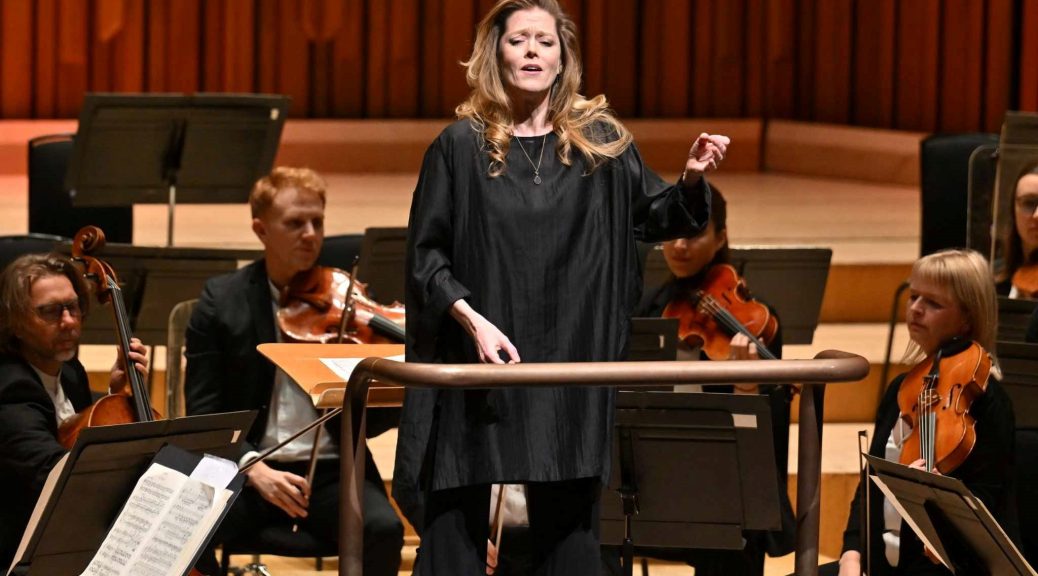
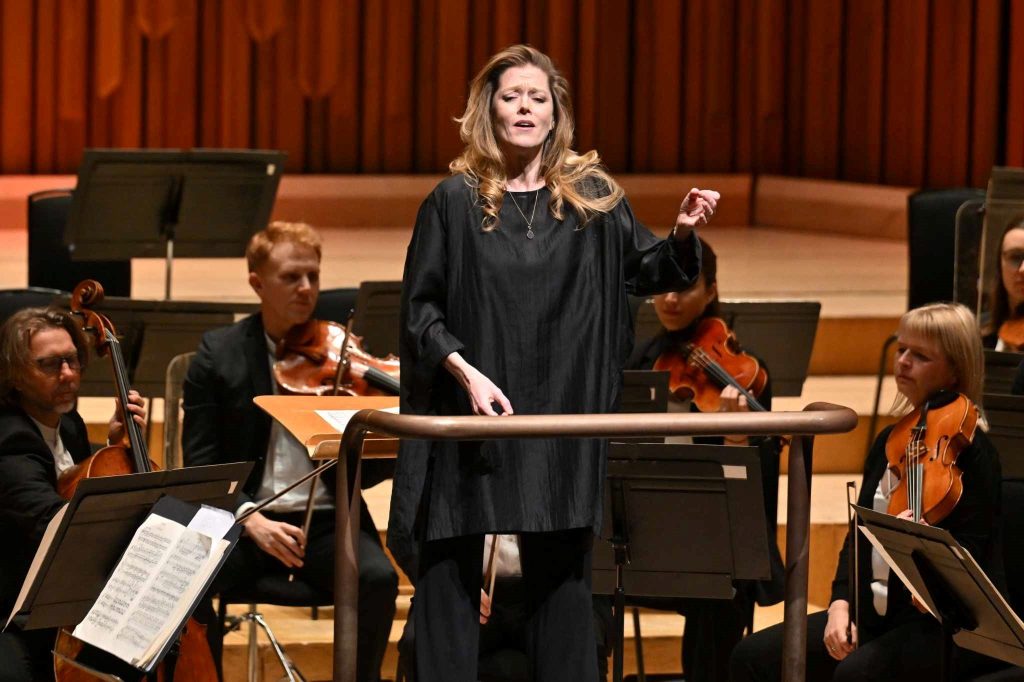
Celebrating his 150th birthday, Charles Ives saw a smattering of performance of his work this year. Ryan Bancroft (pictured) was meant to take over this night for Ives’ Symphony No. 1, the American maestro has excelled in the past with his other symphonies and tone poems. This is early Ives, prior to his plunge into wealth (thanks to a lucrative insurance firm) and his famous experimentation within music. He would create pieces decades before their time, even with some academics claiming he wrote this work much later. His 1st, is extremely safe and again, a bit boring. Inspiration from hymns and marching bands feel present yet never developed into anything really note worthy. Even the rich ‘American sound’ is not here and made me crave much more wild work such as his 4th Symphony or Three Pieces in New England. Aside from the Three Page Sonata, this was the only Ives I heard live in this birthday year…I was hoping to hear heaps more.

It also has to be noted that even with this live on the radio, some audience members choose to talk and thumble about during the music. We’ve had issues before and we can dream that these get ironed out. We’re all here to listen and make discoveries. Let’s respectfully share the joy together in quietness. Also, with the plea for physical programmes to come back to the space, there are improvements to be made. I’m sure I’ll enjoy the new year’s concerts much more: Poulenc, Boulez and Messiaen prove promising.

Listen on BBC Sounds now. 

Abel Selaocoe – Christmas from Around the World with BBC Singers at the Milton Court Hall review by Tanica Psalmist

In conjunction Abel Selaocoe & the BBC singers concert, was the prepared setup, as the live show recorded for BBC Radio 3 in broadcast of Radio 3 Live concert on Thursday 5th December 2024, at the Milton court Hall.

Presenter Al Ryan gave a triumphant introduction to Abel Selaocoe; South African cellist & singer, as he hit centre stage alongside his band members Fred Thomas (pianist), Alan Keary (electric bass guitarist) & Sidiki Dembèlè (African percussionist), whom all majestically energised the space with traditional South African sounds, rooted deeply with Sangoma & Khoisan cultural infusion. Featuring different layers of tribal rhythms from his vocal cords alone chanting high frequencies of spiritual tranquillity, soothing depths of magical symphonies enmeshed with raw passion, power and precision of harmony, love and identity. The themes of his powerhouse music were all in his song titles; Ancestral Affirmations, Emmanuele, Tsohie Tsohie & Hlokomela to name a few.

Abel Selaocoe & his band played six tracks on the night, all which exuded angelical, sensational as well as hypnotising melodies, taking you into a trance effect with the various instrumental sounds from his magnificent band, alongside Abels’s combination of Sangoma grunts and Mongolian throat singing effects which effortlessly blessed the space.

Abel Selaocoe has a raw talent which is undoubtedly stimulating, guaranteed to send shivers down your spine, with his uniquely diverse & varied heightened sounds effect, where when you close your eyes your senses amplify in his culturally empowering & enriching classical music, both satisfying and rewarding to hear as you see pure enthusiasm, joy & soul driven fulfilment whenever he plays.

BBC singers were conducted by Grace Rossiter, with the choir presenting nine songs during the night also, additionally adding to the melodic background & enhancing the atmosphere when their angelic vocals, creating to the ambience of the rich sounds from Abel Selaocoe & his band.

The entire concert was profound, carrying sentimental weight due to the depths of passion, love, deepness, grace & charisma, as he poured his mastery of libation in different ways to reflect his inner artistic genius. Reminding us all how perfection once mastered in any craft can be equally abstract and therapeutic simultaneously. The multiple streams of creativity explored without fully understanding all the words created a blissful & beautiful dynamic which only became more exciting, warming & demure throughout the performances.

Overall, the venue was perfect at capturing the entire essence of the African fusion of Abel, his band & the performance quality of the BBC singers, especially with the corporation of having audience participation neatly intertwined during various moments, making the concert a collective experience that was buoyant, jovial and deepening. I trust Abel Selaocoe tours will reach new ears in the new year to ensure more individuals get to experience his unique voice activation without reverb nor auto tune. Mind-blowing & extraordinary performance.

Review Mum Fighter Tracy Harris by Holly Harris

The story is super powerful, and it created a more impactful side to motherhood.  The synopsis of the story delves into the complexities and resilience of the whole womanhood and motherhood aspect, it further tells the story about a mother, called Amber, who fights for her daughter’s health who is fighting cerebral palsy, and her name is Bea. The stage configuration illustrates a boxing ring to win the support for her daughter, the whole story shows great emotion and conflict with the facing of cerebral palsy and the role of being a mother going against the system.

The performance I went and saw with my College, BGLZ, was led by Micha Williams, her performance was incredible, and her portrayal has widely influential in the theatre.  The acting led by the actress is praised for its emotional depth and physicality due to its practical on-stage boxing techniques.  The character Amber has great purpose in the play, she is the protagonist and is a compelling person. The actress plays her outstandingly well and with the physicality, and the acting was amazing. Micha shows great significance when using the boxing ring that symbolizes a determination to fight for her daughters’ rights, this made me super emotional because of how well she portrayed the characters feelings.

The themes within the play are very vulnerable when it shows the depth of an innocent family’s life.  The lengths that a mother will go through for her child is empowering, and this play definitely shows the strength that Amber goes through, but also the upsetting side to it too.   The theme of fighting is the main theme of the play, and it adds that unique adaptation to the story’s main focus.  Furthermore, the boxing metaphor demonstrates the emotional and powerful dimension to the narrative: this emphasizes the intensity of Ambers struggle while dealing with life.

In summary, the Mum Fighter play is a powerful story written by Tracy Harris, and it explores her own struggle.  Harris has a son with the disability, Cerebral Palsy and has created a perfect adaptation of her personal life to a stage show demonstrating the battle she went through herself. With the joint amazing writing and performance, the play is overall incredible, and the theatrical experience creates such a moving atmosphere within the theatre that leaves the audience grasping for what happened next, and how proud that the audience is when Amber wins the fight mentally and physically.