
Category Archives: Theatre

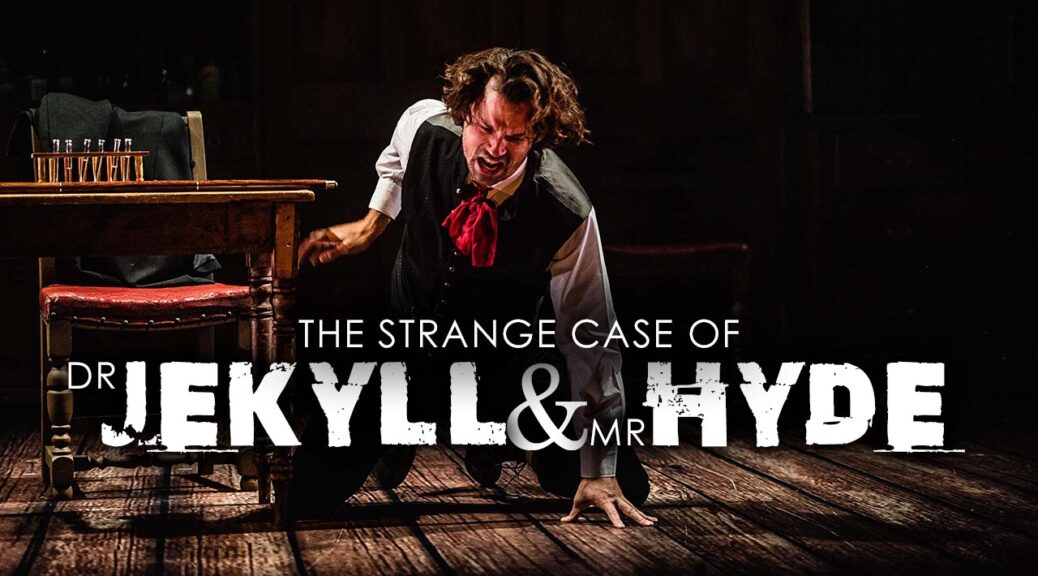
REVIEW The Strange Case of Dr Jekyll & Mr Hyde, New Theatre by Barbara Hughes-Moore

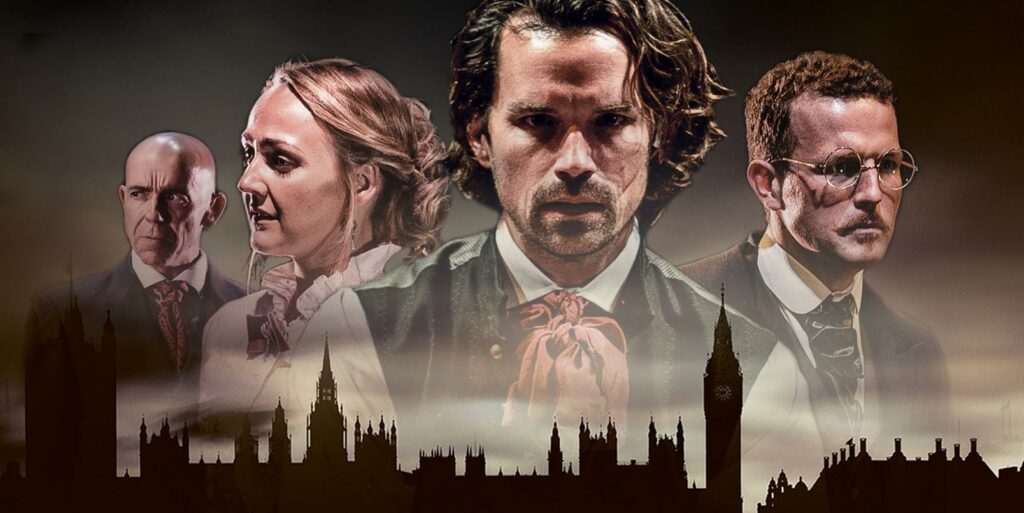
If a potion could make you into your best self, would you take it? What if it came with a cost: a little less empathy here, a little more aggression there, would you still make that choice? The tale of a good man hiding the dark side within has captured audiences ever since Robert Louis Stevenson published his most (in)famous work, Strange Case of Dr Jekyll and Mr Hyde, in 1886. 135 years later, and we’re still telling the same story, and now Blackeyed Theatre have staged a bold new version which opened at the New Theatre last night.
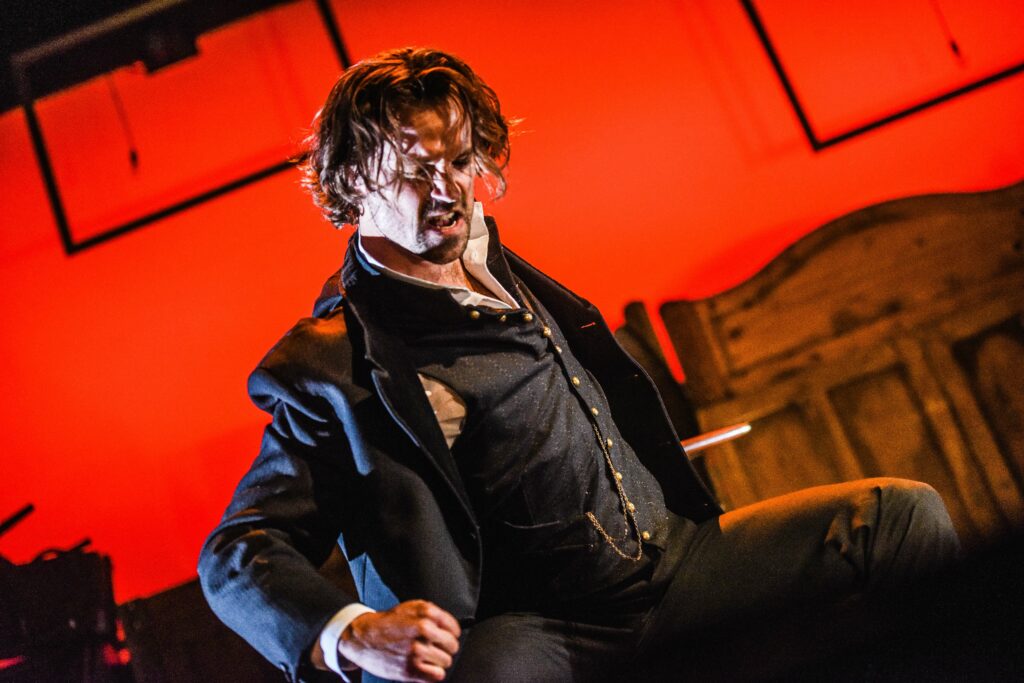
Written and directed by Nick Lane, the story follows Dr Henry Jekyll (Blake Kubena), a respected scientist on the verge of a neurological breakthrough. His friends and colleagues condemn his dubious methods, but a potential romance might just bring out the best in him – if the worst doesn’t beat him to it. I don’t just love the original, I literally wrote the book on it (well, the PhD, anyway) – so you can understand my excitement at finally seeing a stage version come to Cardiff. And it was well worth the wait. The company live streamed an earlier version in September 2020, but there’s something magical about witnessing these four exceptional actors play multiple roles (or should that be ‘selves’?) right before your eyes.
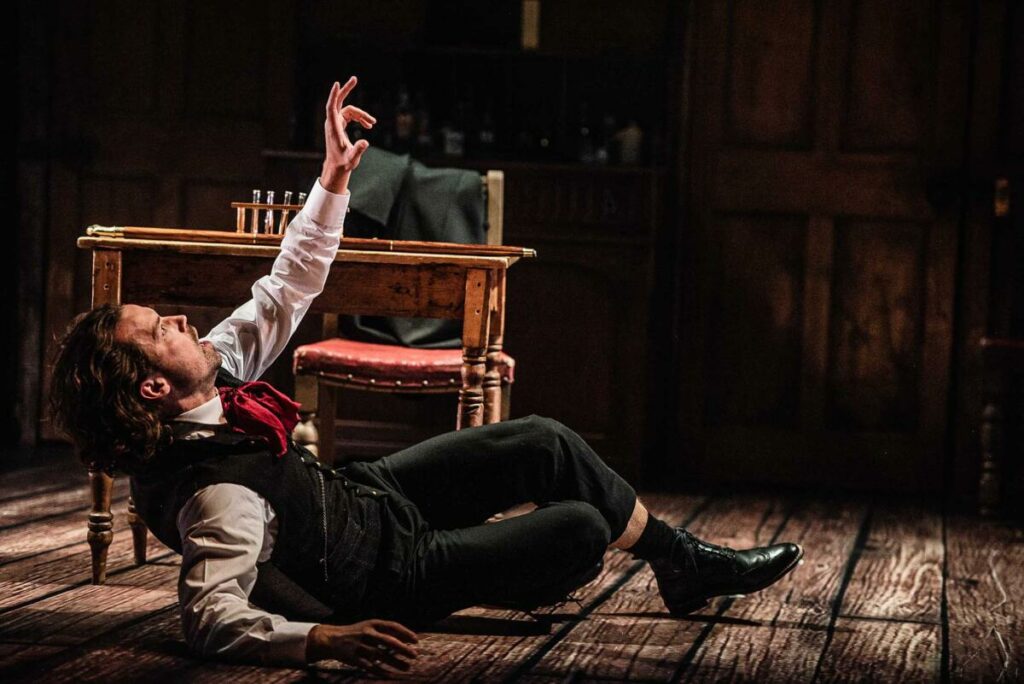
Blake Kubena gives a captivating and visceral performance as both Jekyll and Hyde, moving fluidly between the two ‘personalities’. The physical aspects of the role are crafted in collaboration with movement/intimacy director Enric Ortuño, who is also responsible for several stunning slow-motion sequences, especially a (literally) gut-wrenching act one closer that simply has to be seen to be believed. Lane’s adaptation takes the unusual and rewarding route of making Hyde more debonair than the socially awkward Jekyll, and juxtaposing an intelligent but physically weak Jekyll (not unlike Stevenson himself) with a cruel and powerful Hyde makes for enthralling viewing.
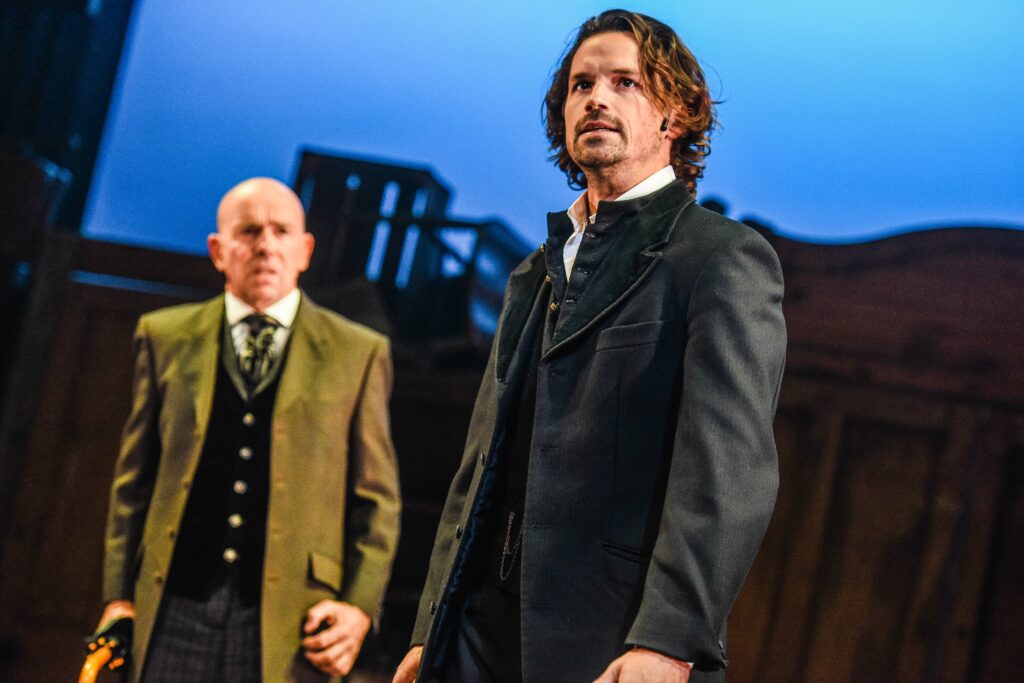
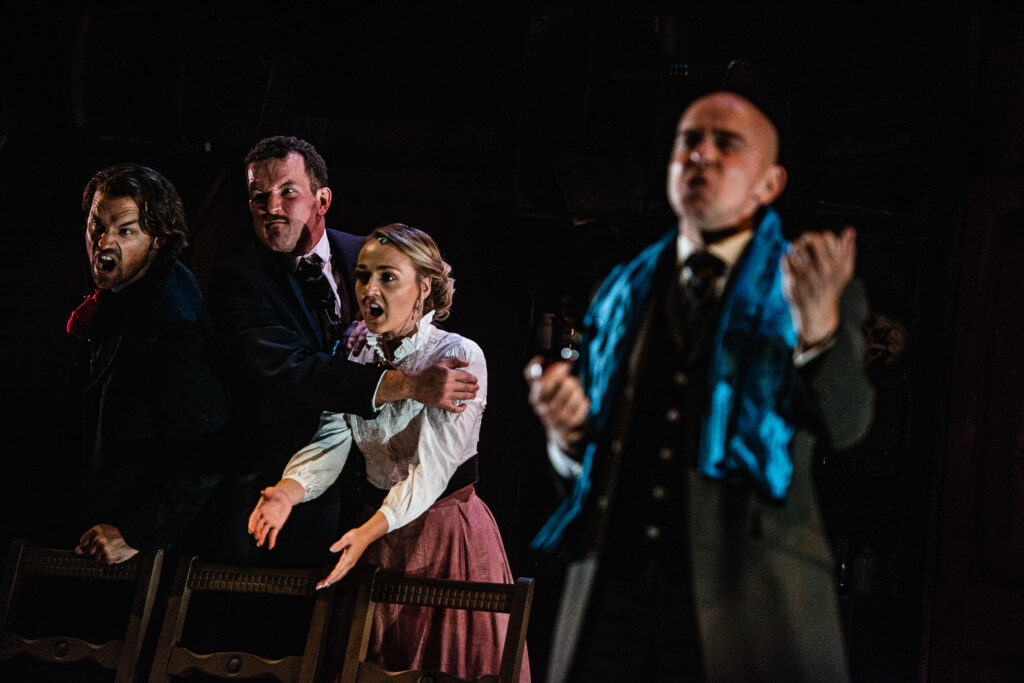
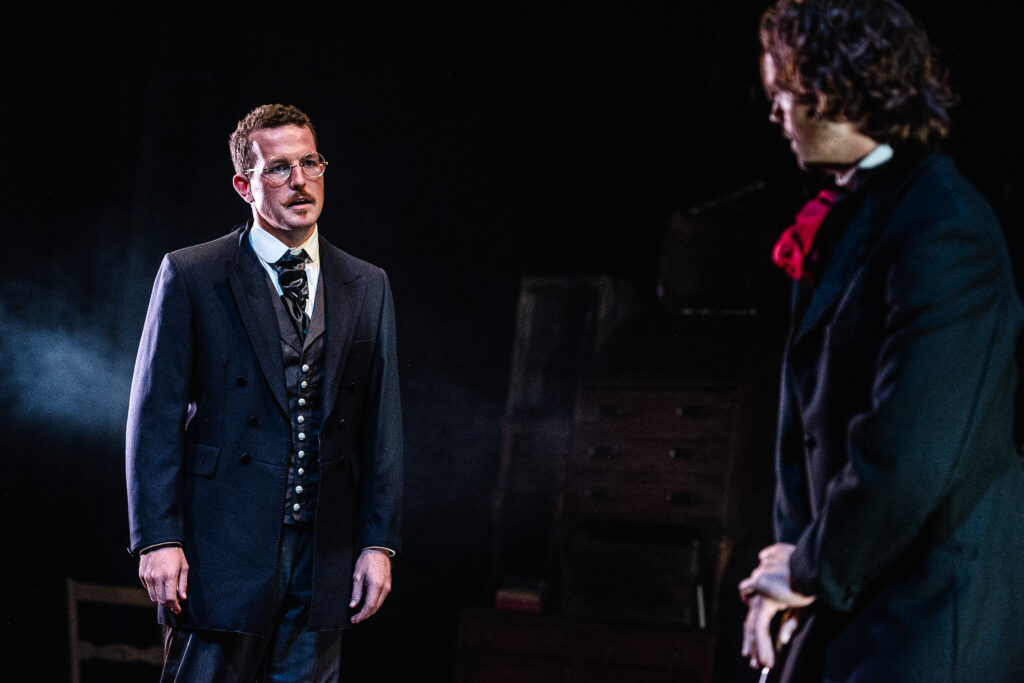
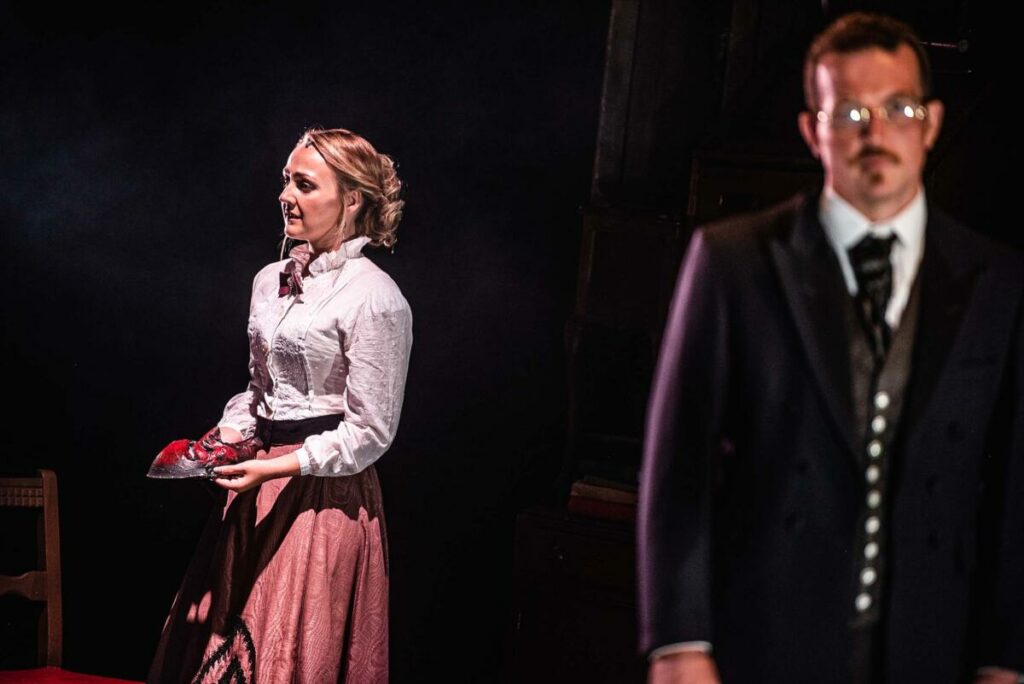
Zach Lee plays Jekyll’s friend and lawyer, Gabriel Utterson, as a strait-laced Petrocelli with the fastidiousness of Hercule Poirot. Lee narrates much of the story and excellently grounds the increasingly-eerie action. Paige Round is especially impressive as Eleanor Lanyon, the sole woman in the play: the novel features no named women characters, concerned as it is with masculinity and the aggression and repression tied up within it, but Round crafts a woman as multi-faceted as the titular character, and brings much of the play’s energy and drive. And Ashley Sean-Cook plays Dr Hastie Lanyon, Eleanor’s sweet-natured beau, bringing new layers to Lanyon that make him far more complicated and sympathetic than his literary counterpart.
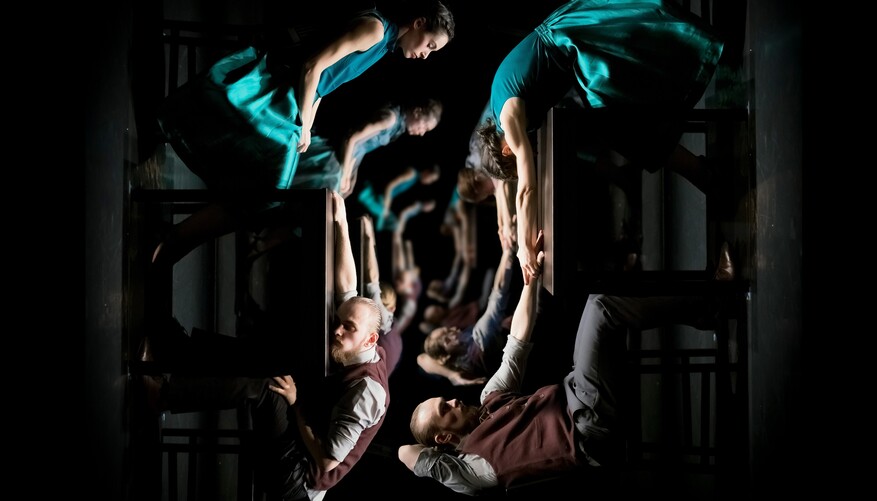
Moving the action from 1885 to the 1890s edges it closer to the dawn of psychoanalysis which Jekyll anticipated (in an effective opener, the cast first emerge wearing masks and speaking the same overlapping dialogue). Victoria Spearing’s striking set, a row of antique doors and cupboards lit alternately by red and blue, is itself evocatively psychoanalytical. Naomi Gibbs’ costumes brilliantly transport you to turn of the century London, and Lane’s adaptation cleverly draws in themes and parallels from Stevenson’s contemporaries, creating something of a Gothic smorgasbord: this Henry is driven not to let ‘the unjust man go his way and the just another’ but to revolutionise science, much like Victor Frankenstein. His experiments on rats and other animals (including human beings) aligns him not just with Victor but with Dr Moreau, fictional ‘mad’ scientists whose experiments paralleled the rise of vivisection that so engrossed and revolted the delicate sensibilities of Victorian society. A lawyer investigating supernatural goings on in 1897-era London smacks of Dracula – and while the subtextual homoeroticism of the original is relegated to a single saucy reference here, there’s a little of Dorian Gray in this Henry Jekyll, who too falls in love with a rising star of the stage.
Robert Louis Stevenson wasn’t much interested in being a lawyer, but he was fascinated with the criminal mind; what can propel a seemingly ordinary person into doing extraordinary (and extralegal) deeds. The ‘why’ of crime started to rival the ‘how’ in Gothic fiction of the time, which is perhaps why true-crime cases rose in popularity – the case of William Brodie, a Edinburgh clergyman by day, thief and gambler by night, certainly made an impression on Stevenson. The book itself is a split personality: the original was grudgingly burned by Stevenson at the behest of his wife, likely due to sexual or disturbing content – the second (written in less than a week and likely under the influence of controlled substances) is more civil, more sanitized, and yet still managed to push boundaries. Blackeyed Theatre brings both versions of the text together in a gloriously (un)holy union here.
Blackeyed Theatre have perfected the formula of adapting classic literature to be taught in schools in accessible and lively ways. Their version of Jekyll and Hyde is an absorbing, immersive and exciting adaptation that does justice to the original while forging its own path. It could be a little tighter, especially in the first act, and the switch between the characters’ perspectives can make the timeline a touch confusing – but the latter serves to reinforce the theme of fractured subjectivity. Whether you’re familiar with the original or just its central duo, Blackeyed Theatre’s adaptation will take you on a riveting journey. And it leaves us, as life always does, with a choice: to take the easy road or the hard. It calls us to question why we keep telling the tale of Henry Jekyll and Edward Hyde over and over when we should really be looking into a mirror. What will you see if you do? And what if the mask is the mirror?
The Strange Case of Dr Jekyll & Mr Hyde is playing at the New Theatre Cardiff through Saturday 13 November.

Review HERE, National Dance Company Wales, Theatr Clwyd by Alicia Jelley

I immersed myself in dance on Friday by watching @ndcwales perform their triple bill production, HERE at @theatrclwyd

I’d seen ‘Afterimage’ by @_fernando_melo before on a previous tour, but it was still just as mesmerising as the first time and if not more profound after lockdown, as the theme of being disconnected to one another and ourselves struck a poignant chord.

‘Why are people clapping?!’ by @ed.myhill might have been my personal favorite. Highlighting that rhythm is at the core of dance, and that the human being can become a percussion instrument capable of making music simply by clapping at different tempos with light and shade was fun to watch. Not to mention the facial expressions

Lastly ‘Moving is everywhere, forever’ by @fayefayefaye.tan definitely had myself and most the audience tapping and moving in their seats. Dance is therapy, and expression of the soul, a release. It makes you feel good and fulfills a basic human need to move the body. Dance is for everyone

You can catch the tour at Aberystwyth Arts Centre on Tuesday the 9th Nov, more information here

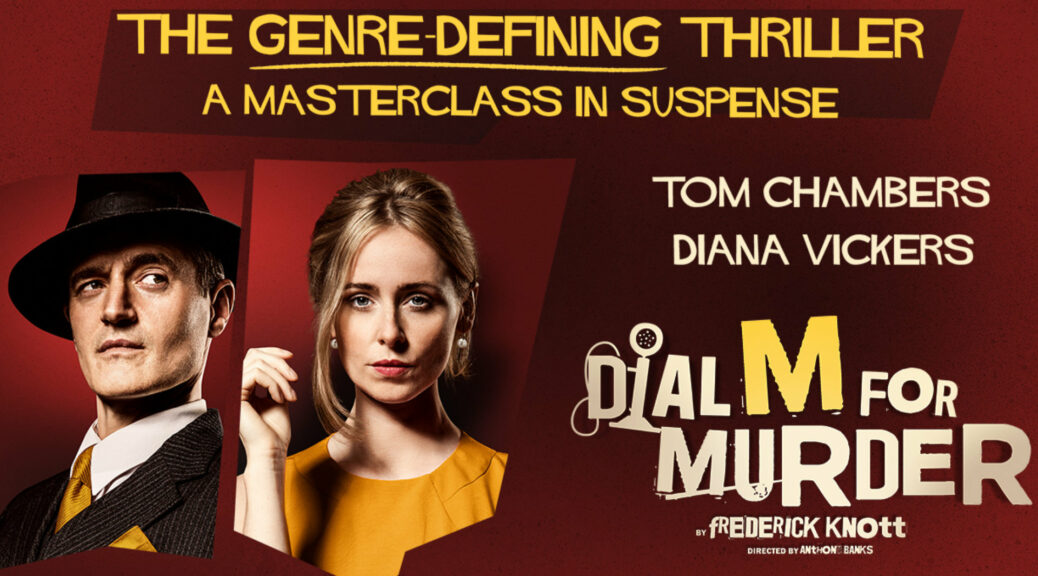
REVIEW Dial M for Murder, New Theatre by Barbara Hughes-Moore

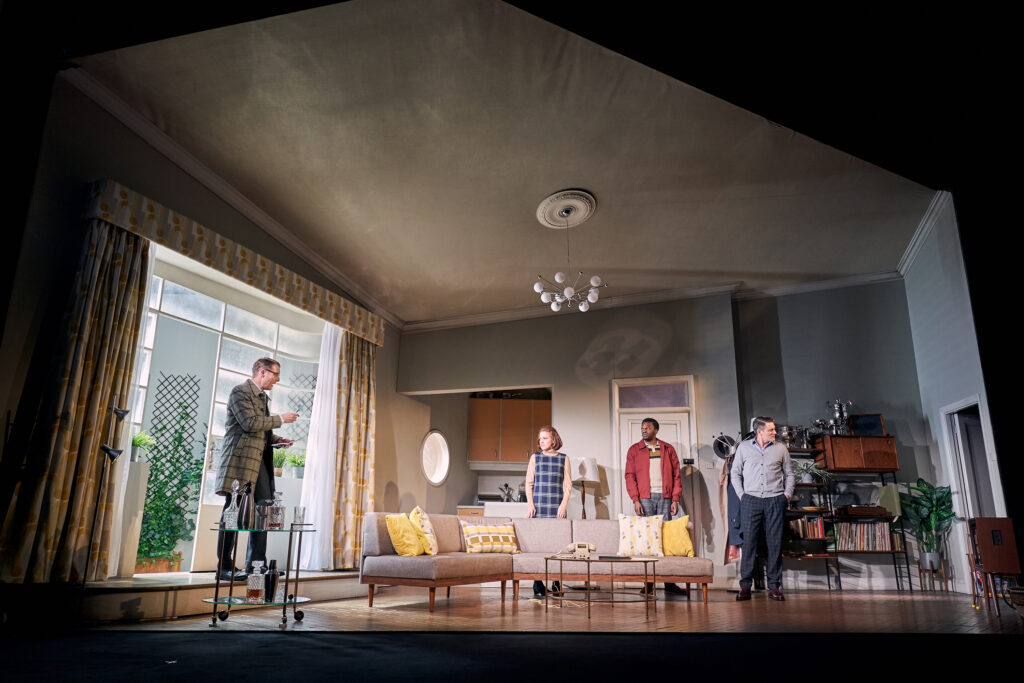
Is there such a thing as a perfect crime? This is the question at the heart of Frederick Knott’s classic play and Alfred Hitchcock’s iconic movie adaptation, which come to life in this stylish new production directed by Anthony Banks. Starring Strictly Come Dancing champion Tom Chambers (Top Hat, Crazy for You) and West End star Diana Vickers (Little Voice), the play follows Tony Wendice (Chambers), a retired tennis player who seems to have it all: a beautiful, rich wife, Margot (Vickers), a swanky Maida Vale apartment, and a perfect life. But when Wendice learns that Margot is having an affair with budding crime writer Max Halliday (Michael Salami), he concocts a foolproof plan to kill her and claim her fortune without having to go through with the grisly deed himself.

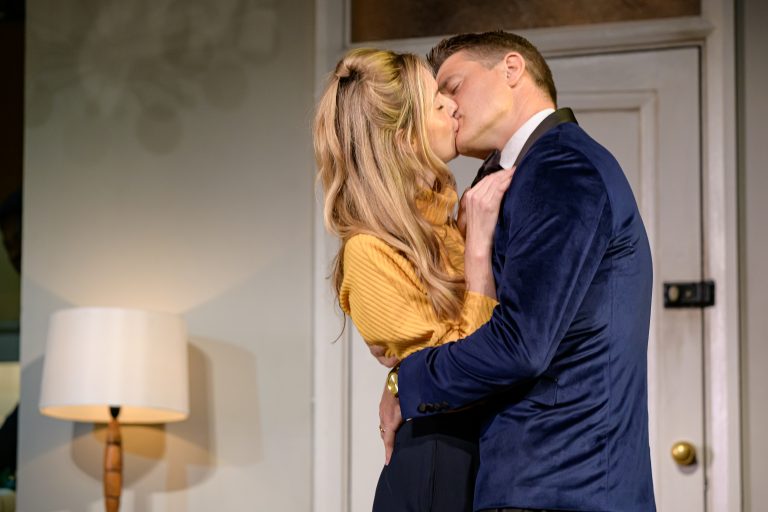
Diana Vickers and Tom Chambers

It’s great to see Dial M for Murder come to Cardiff, not only because the touring production has been so long delayed due to COVID, but also because the 1954 movie starred Grace Kelly alongside local boy Ray Milland, the first Welshman to win an Oscar. The touring production captures all the thrills of the original, and the cast bring a lot of energy and drive to the story – especially Chambers, who brings a dancer’s grace to Wendice that cleverly underscores the character’s background. He moves through the stage with the elegance of a tennis player, as if everything is still a game to him: there’s a winner, and a loser, rules, technique, and a ruthless urge to triumph. He may have left the game, but it has clearly not left him.

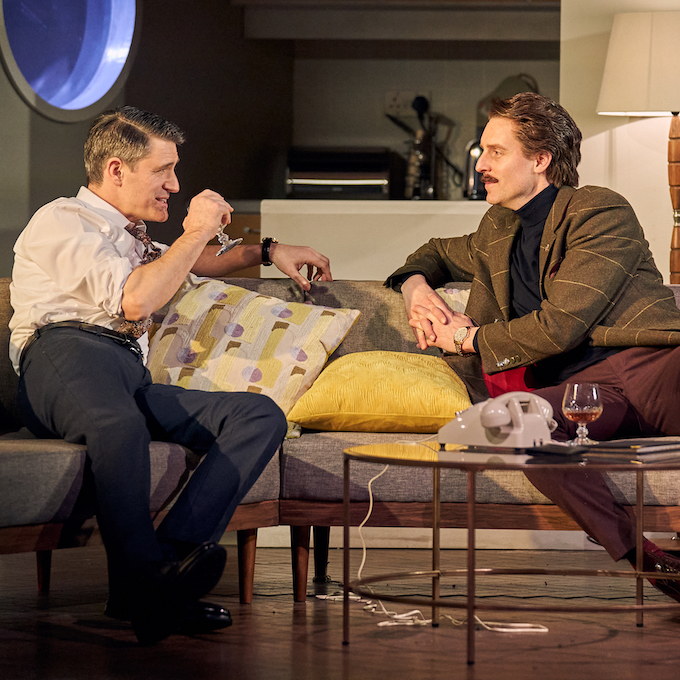
Tom Chambers and Christopher Harper

Chambers is the master of the dropped smile: charming and effervescent one minute, seething and manipulative the next. He plays especially well off of Christopher Harper (Coronation Street), who pulls double duty as both the reluctant assassin and the eccentric detective. Harper is chameleonic and effortless in each role – had I not known beforehand, I genuinely wouldn’t have been able to tell they were played by the same actor. Both performances are brilliant – but the affably off-centre Inspector Hubbard might just win by a hair (imagine if Sam Rockwell played Eric Idle playing Columbo). Vickers and Salami ground the action with less showy roles but no less impressive performances, especially in the second half. While the drama hits all the right notes, there’s a surprising amount of comedy to enjoy here as well, not least in watching Wendice’s plan hopelessly unravel.

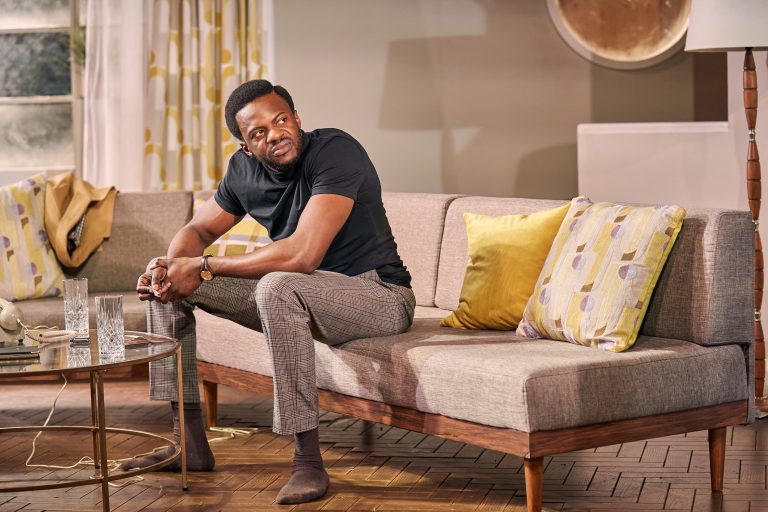
Michael Salami

The cast are buoyed by an absolutely gorgeous set designed by David Woodhead (also responsible for the stylish costumes) and Lizzie Powell’s inventive lighting. Shifting the story to the 60s places it on the cusp of sweeping social and legal change in Britain: this was an era which saw legislation outlawing racial discrimination and decriminalising sex between men, the rise of second-wave feminism, and the end of capital punishment – all of which subtly and effectively underscore the story. Tony and Margot’s relationship is a marriage of new and old money, a fragile union especially in class-shaken post-war Britain. The show itself might be a tad uneven at times, only really dialling up after the interval – and there’s a jarring moment when the otherwise-sympathetic Hubbard roughs up Halliday, perhaps in a nod to police racism – but it’s themes, it’s performances, and the pure, thrilling storytelling are otherwise on-point.

There’s no such thing as a perfect crime because the people who commit them aren’t perfect. No-one is: no matter how clever you are, no matter how much you plan and scheme and prepare, there’s always something you’ve missed. And you really shouldn’t miss Dial M for Murder: the self-proclaimed ‘blueprint for the modern thriller’ might be pushing seventy, but it can still swing for the fences.

Dial M for Murder is playing at the New Theatre through Saturday 6th November

Note: this production features a significant amount of flashing lights during scene changes.

If you booked tickets for the original dates of 29 June – 3 July 2021, they will be valid for these performances.

Audio Described Performance: 6 November 2021 2:30PM

Review by
Barbara Hughes-Moore

Get the Chance supports volunteer critics like Barbara to access a world of cultural provision. We receive no ongoing, external funding. If you can support our work please donate here thanks.

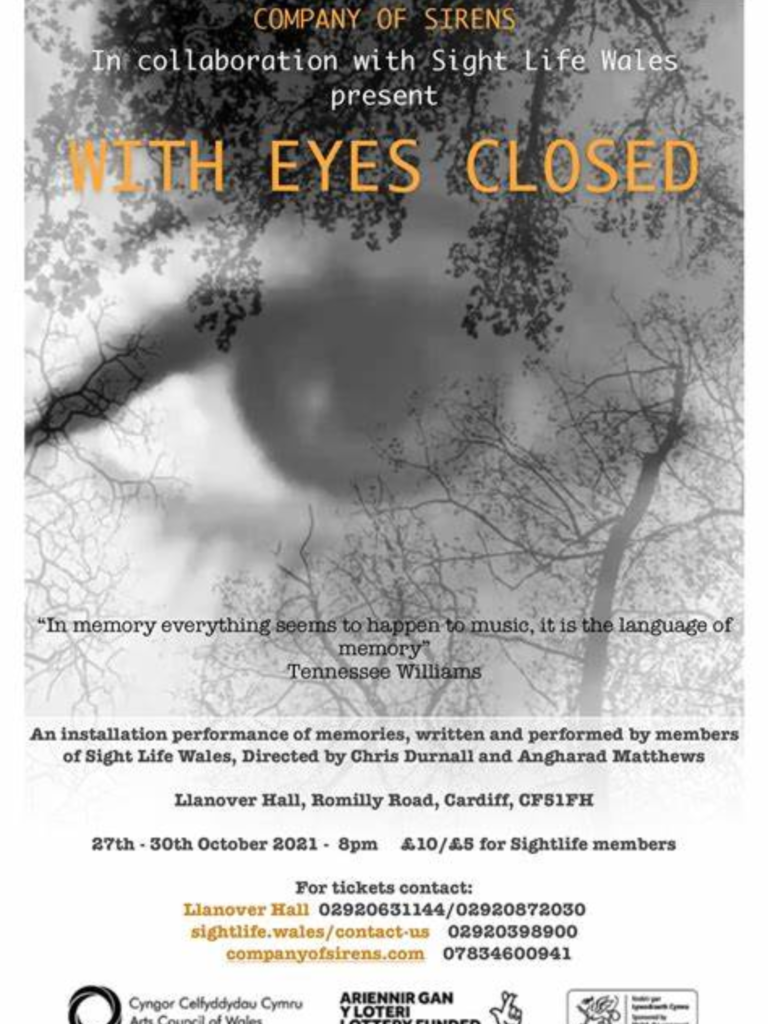
REVIEW With Eyes Closed, Company of Sirens by Barbara Hughes-Moore


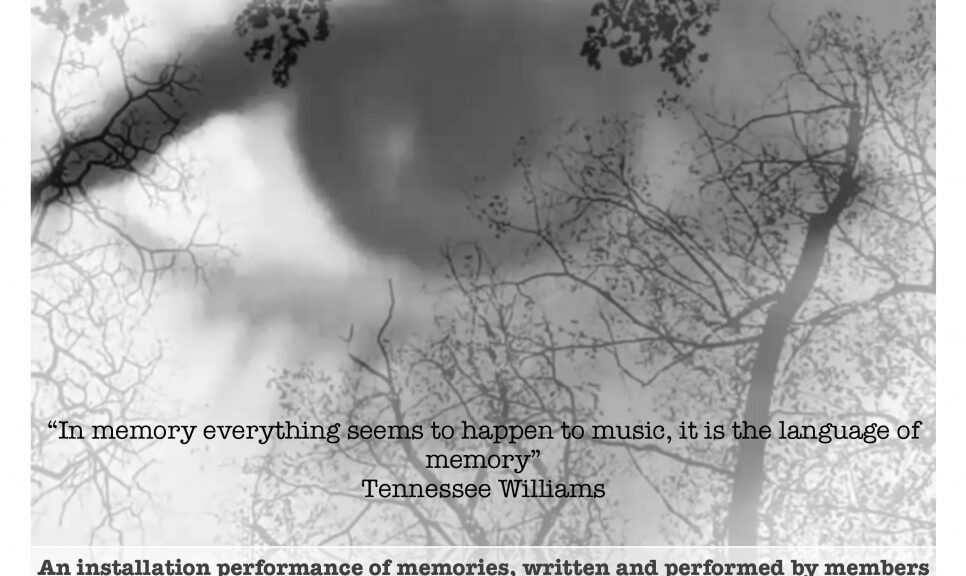
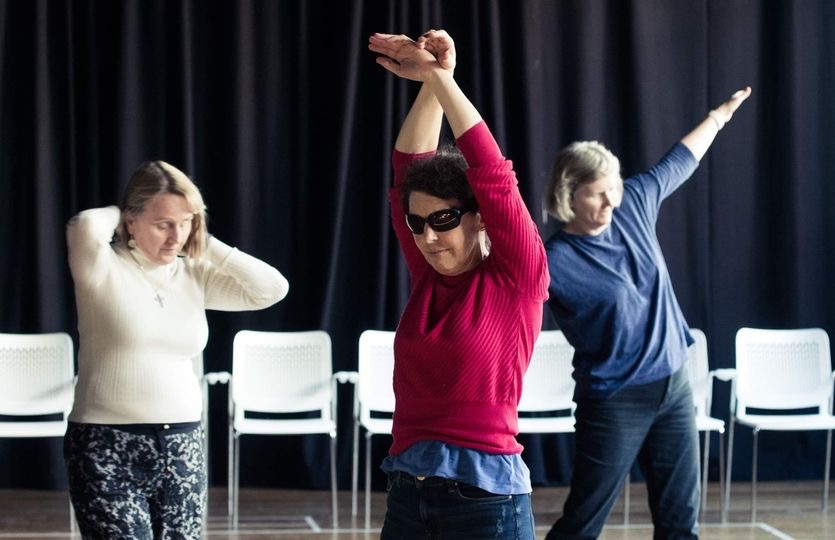
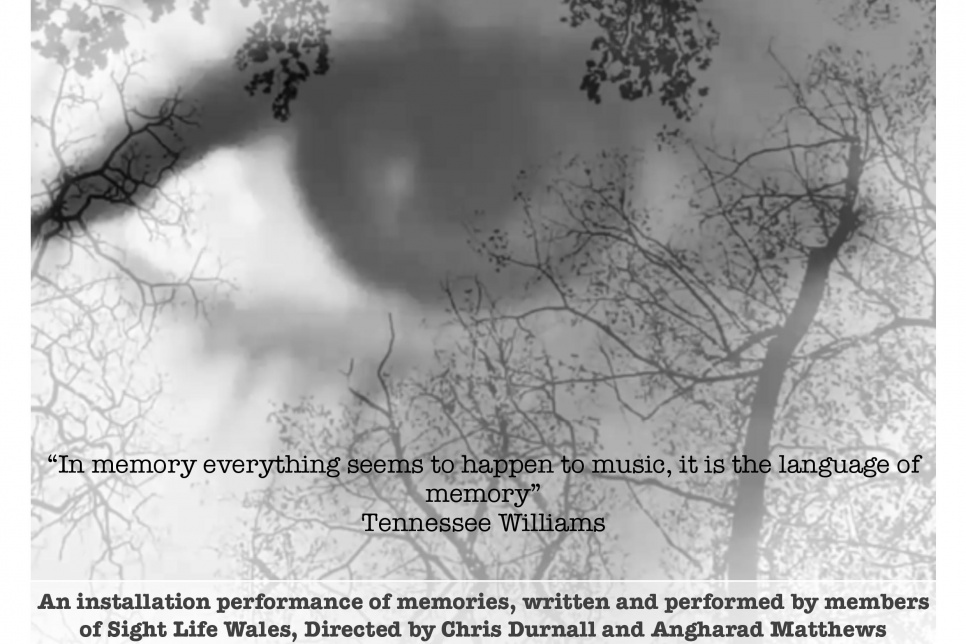
What can you see with your eyes closed? Do you see darkness, or the imprint of light, or a treasured memory? This new production by Company of Sirens, in collaboration with Sight Life Wales, explores the shores of memory and time, the footprints we leave there and the people with whom we travel it. 

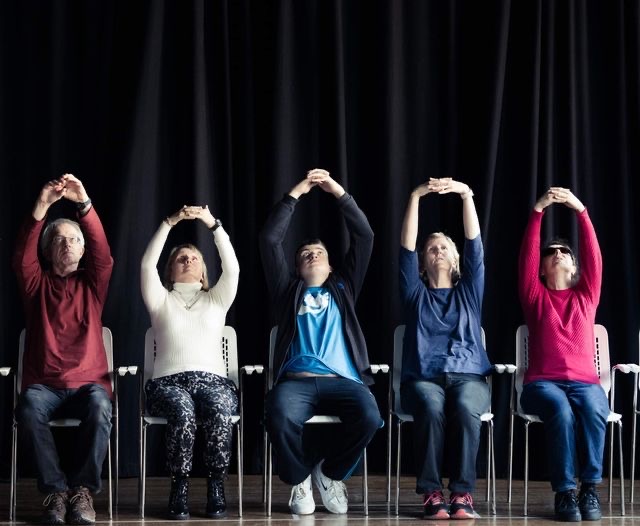
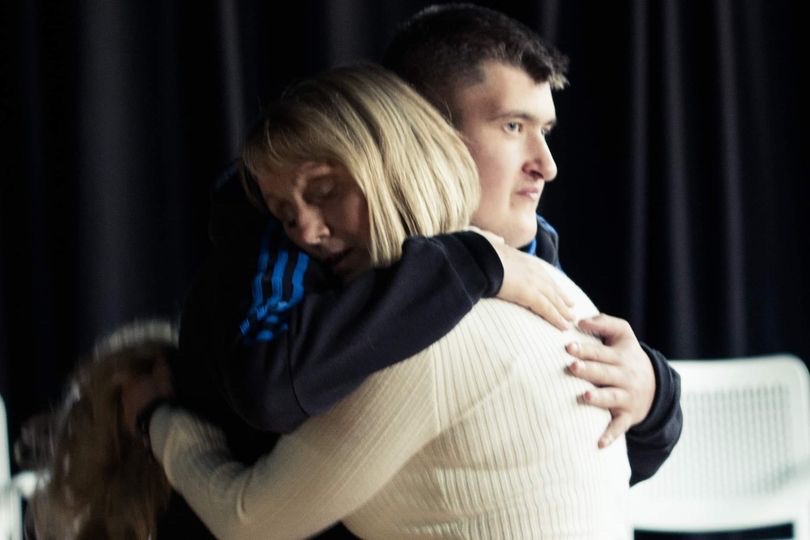
Beautifully directed by Chris Durnall and Angharad Matthews, With Eyes Closed features performers with sight loss telling stories of their their lives, loves and dreams. The piece originates in a series of taster drama workshops through the Llanover Hall Charity which pre-dated and subsequently continued throughout lockdown. The performers are all so natural on the stage that I was stunned to learn this was their first foray into acting. Precision is difficult; making it look natural is almost impossible – and that’s exactly what they achieve.  

This is a theatre piece that moves and breathes like the tide. The stage, transformed into a tranquil shore by Cara Hood’s effective lighting, is the stage for sharing memories, pieces of our lives buoyed by the waves and washed in by the tide. Company of Sirens have always had an innate sense of the ways music and memory intersect, and the music, beautifully played live by Stacey Blythe, is present but not invasive, and it glimmers like sunlight on the ocean. Tales affecting in their simplicity, are told with honesty, joy, and laughter – and, like a wave, the performers often move as one, rising and flowing together as the music shimmers like the sea around them. 

Funded by Arts Council Wales and the National Lottery, each story has been filmed professionally and will be shown in the Wales Millennium Centre as part of their Festival of Voice in November – but there’s something special and distinctly irreplaceable about experiencing this piece live; an honesty, an authenticity and a gentleness to the piece which caught me quite off guard. It calls you to wonder what you see when you close your eyes, the paths you could walk guided by memory alone, and who you walk them with.  

With Eyes Closed is playing at Llanover Hall Arts Centre Cardiff from 27-30 October at 8.00 with an additional performance at 2.00 on Saturday 30th. Tickets are selling out and Friday is already sold out.

Review, Friday Night Love Poem, Crossline Theatre, By Hannah Goslin

 out of 5 stars (4 / 5)

Not many productions, books, shows, advice columns talk openly and frankly about sex, love and what it is like for different women.

Friday Night Love Poem is a coming of age story about three different women: a group of women in America, all part of a Christian support group, a Canadian teenager in the early noughties and a British teenager in current times. We see the juxtaposition of not only how sex and love has change through ages, but also what it is like in different communities and also different ages.

The first third of the Production is interesting and does well to steer away from the quintessential and stereotypical Bible bashing American evangelists. There are elements of their extremism but it isn’t what we see often portrayed. It isn’t satirical and therefore makes it more real. There is a sense of recognition; we can relate to elements but some we cannot, as per part of this community. Sex before marriage and LGBTQ+ are questioned and the woman, who is experiencing this confusing time, is conflicting by two parts of this community – the liberal and the stubborn and traditional. The only issue being that they are cycling through a time period of meetings. At first this isn’t clear that their movements to a different position of the stage is the signal for a scene change, and until we get the hang of this, it convolutes the storyline somewhat. When we change to a completely different story, there is music and lighting change, and this works well. Even if it was a change of lights or a change of outfit item, a prop, then it may have been a little clearer.

Our second coming of age story is something recognisable from my own teenage years. The rebellion, the rock music, the interest of older boys, of sex. We go through the moments losing her virginity and realising later that the one you lose your virginity to is not always the love of you life. A huge difference mirroring earlier discussion of sex after marriage. To avoid the x-rated, we are shown her experience through the use of Barbie and Ken. And somehow this is a really interesting and a subtle way to show it but also highlights the youngness of the character, that the idea of sex is in minds of those much younger than we think, and the unmentioned events and non events of sex. The unspoken. In fact, this, in addition to factual sex ed, would be honest and helpful to anyone.

Our last story is more up to date. This is more poetic and fast paced, and is somehow beautiful in this aspect. The elements of porn pressure, of the pressure on young girls and lack of respect of boys, the consequences of this and more. It is heartbreaking but also realistic, shown in a very theatrical way. The poetic monologue expressing her thoughts and feelings, clearly taken from media and what she thinks she should be and do. And then the issue of revenge porn. Something so grotesque is eloquently expressed.

Friday Night Love Poem is a raw and unbridled look at what sex and love means for all kinds of women; ignoring any boundary, ignoring any stigma and in this way, becoming an important piece of theatre on consent and the unspoken realities of women and sex.

Friday Night Love Poem will be on stage at The Space January 18th – 22nd 2022.

Review Back in Play, Sherman Theatre by Beth Clark

Being back at the Sherman Theatre

When I had an email through: would you like to volunteer via the Sherman 5 project, for the “Radical Reinventions” short plays, part of the Back in Play Festival at the Sherman theatre this week, I was immediately excited again.

Radical Reinventions have taken classic stories and cleverly reinvented them to tackle issues of today. Each play is set in the studio space with cabaret style seating, a warm cosy space, dressed with table lamps and dazzling chandeliers, you instantly feel relaxed upon entry.

The first of the two plays I attended was “The Love Thief”, directed by Nerida Bradley. To my surprise, this play was written and also performed by Rahim El Habachi in monologue style. Rahim excelled at the opportunity to shine as a multi-talented creative, being one to watch going forward. ‘The Love Thief’, takes the Greek mythology tale of Prometheus and remakes it that Prometheus steals love from the gods. Every time there is to be pain caused in the story via love, (or lack of), Prometheus would break into belly dance. Dressed head to toe in belly dancing attire, Prometheus would dance whole heartily to fantastic eastern music and with moves that shook the studio. With the play tackling dark social injustices, the break out in dance and music was the distraction needed before Rahim continues to indulge us in more emotion. The play left you thinking about subjects that are often overlooked but made you look at them from an inside view, which was for me, in hindsight, was the most interesting part of the play.

The second play “Tilting at Windmills”, directed and written by the extremely talented Hannah McPake and performed by Mared Jarman is inspired by the very long classic Don Quixote by Miguel De Cervantes. To the viewers delight, the play was extremely light hearted and fun in the story telling although as the story progresses the realisation of loss and barriers were to emerge, with the story telling and the personal life of the character playing the same. The smiles of the audience and audience interaction happened instantaneously on entry whereby audience members were asked to take on characters within the play. As well as audience members to take on characters in the play so did a plant, a mop head, a monkey and a narrator through the bellowing speakers of the studio, making a monologue projection interesting at every moment.

The young actress Mared Jarman was an exceptional professional who put every ounce of energy into her performance and whom I would actively follow for any future performances. With lots of people experiencing loss and having to overcome more than usual in today’s climate, I believe this play has a beautiful message to portray but in a not so heavy on the heart way which for me had a very healing effect.

Would I recommend the Back in Play Festival at Sherman Theatre to others? Absolutely! If you like myself, have found getting back into your old self before lockdown restrictions, a bit of hurdle then do not delay in booking on. The plays, lasting only 30 minutes gives the viewer a short, sharp shock of creativity which will get you motivated and wanting more.

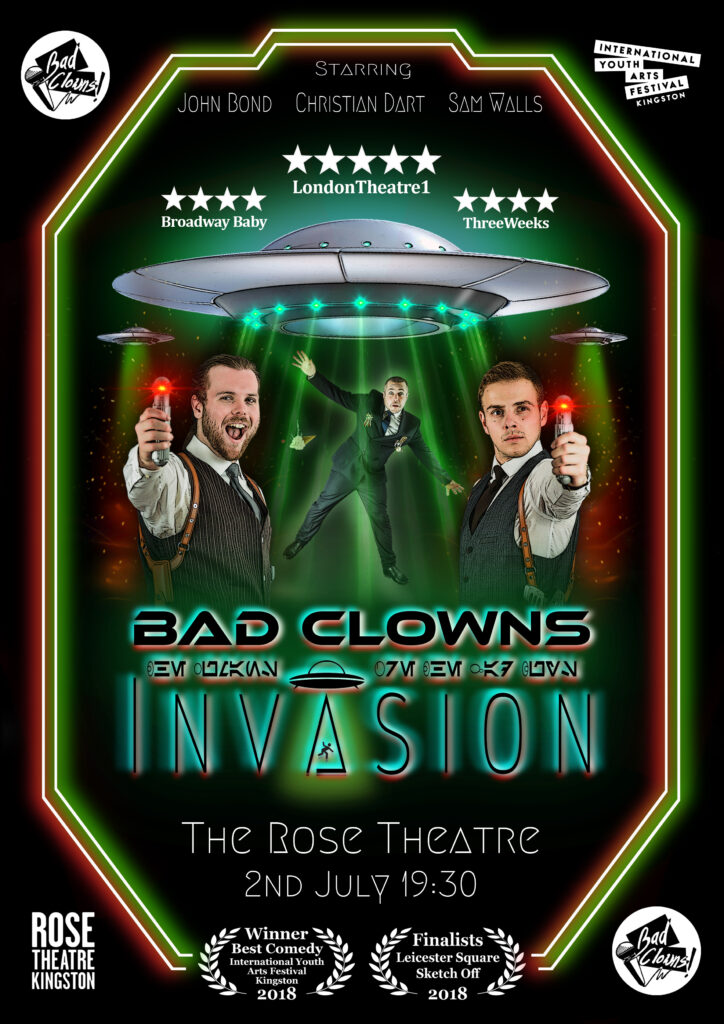
Review, Invasion, Bad Clowns Comedy, By Hannah Goslin

 out of 5 stars (4 / 5)

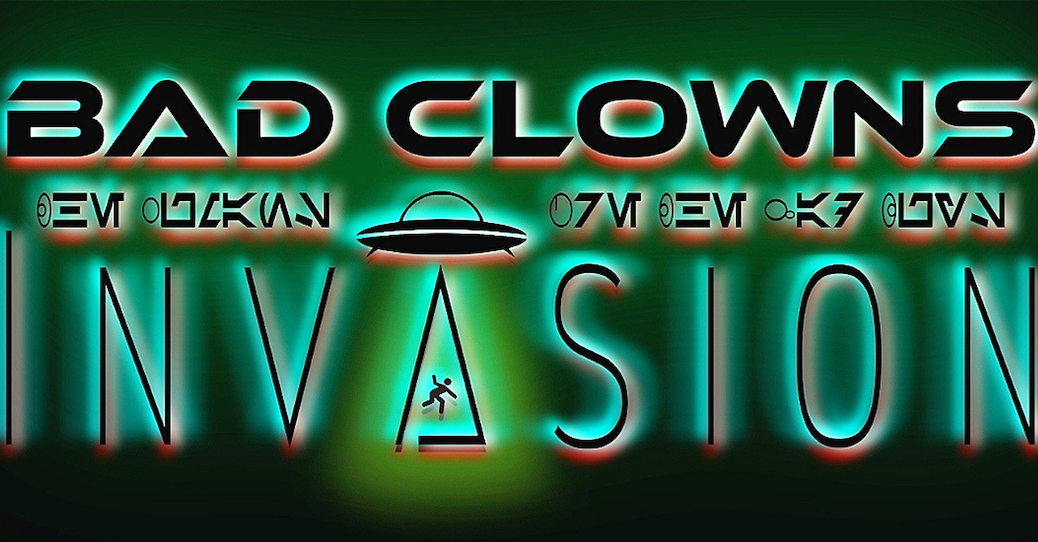
Take Men in Black. Set it in England. Add some bumbling comedy buffoons and what do you get? Invasion by Bad Clowns Comedy.

Filmed exclusively for reviewers, Bad Clowns Comedy have nicely given us a good quality recording of their show at the Rose Theatre, Kingston. Filmed with different angles and great sound recording, it is one of the best recordings over the past year of Covid that I have seen.

If you were to imagine Men in Black set and written by the British, this would be it. The character’s fumble around, they’re not sure what they are doing, to some degree it could be seen as a spoof. It reminds me much of Simon Pegg and Nick Frost if they brought their films or even their show, Spaced, to the stage. It reminds me also of when Ant and Dec ventured on the film Alien Autopsy, when the narrative is meant to be spooky and serious, but in true British Comedy style, is a comedy of itself. If Ade Edmondson and Rik Mayall decided to make a Sci-Fi theatre show for Bottom, this is what it would be.

Each character has its own flaws – Sam’s character is stars truck by his commanding officer, but lacks common sense and this leads to hilarious errors. Christian is the smarter of the two but exasperated by Sam and still, finds ways to be inadequate as a Special Agent himself. John is the commanding officer, who encompasses both Sam and Christian’s traits, and for sure, should not be a captain – hilariously finding ridiculous ways to stop a bomb, to engage with the set, the characters, the narrative. If this was true life, it would be one hilarious worry.

The three performers bounce off one another and the audience well. When there is the odd mistake or a heckle, they are quick to react and incorporate it into the performance. It only adds to the hilarity. They engage with the audience, using their responses and heckles to incorporate and help the narrative. They address them the entire time and so there is no escape, but makes you feel part of an exclusive club.

Adding multi-media in the form of a large presentation screen, recorded voices with Sci-Fi style orders, they effortlessly pick up on the quintessential elements of known Sci-Fi, from films, tv shows, games as well as British Culture. Some being well known dances that we all followed at school discos, the presentation of pop ups on a computer screen from way back when, with the correct noises and the use of brain control with helmets often seen in Sci-Fi films. It allows us to spot and identify with these parts and shows their intricate research and well written production.

A wonderful part of this production is that they clearly enjoy what they do and are very skilled in improv and going with the flow of the performance. Times where they could corpse or it’s on the verge of this, is still so professionally done and fits… like it was always meant to happen.

Invasion by Bad Clowns, is a hilarious and very British Sci-Fi Comedy production which anyone, whether into this genre or not, would find themselves laughing out loud at.

Review Death Drop, New Theatre Cardiff by Barbara Hughes-Moore

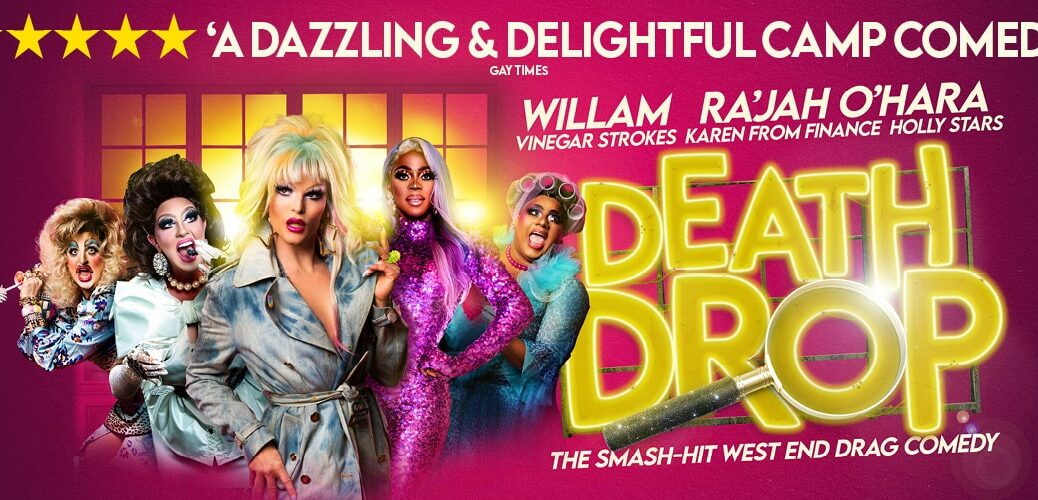
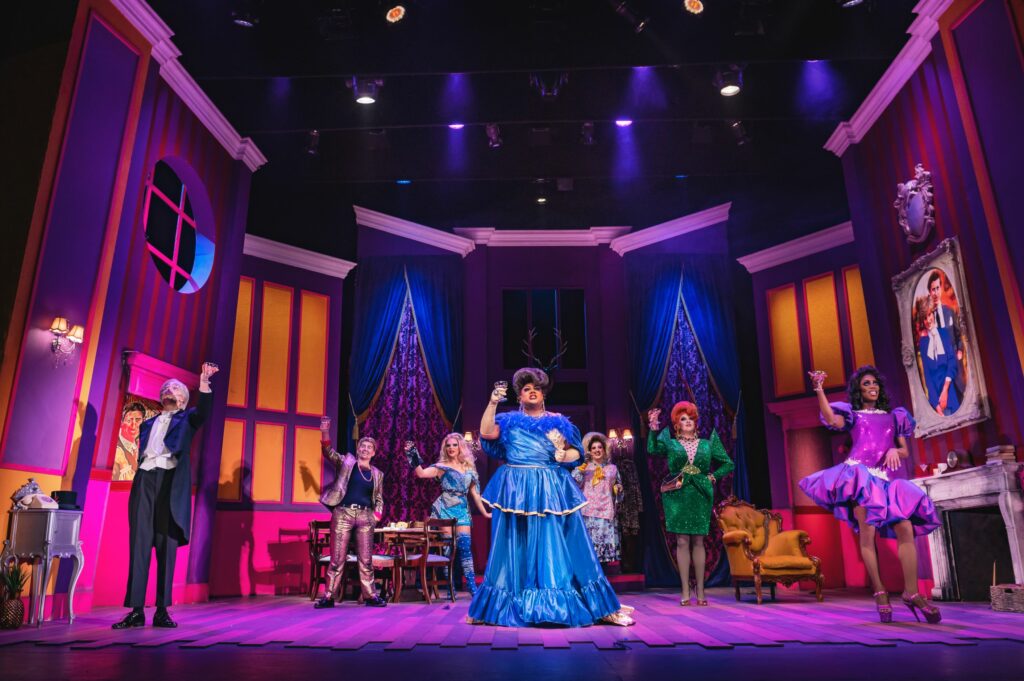
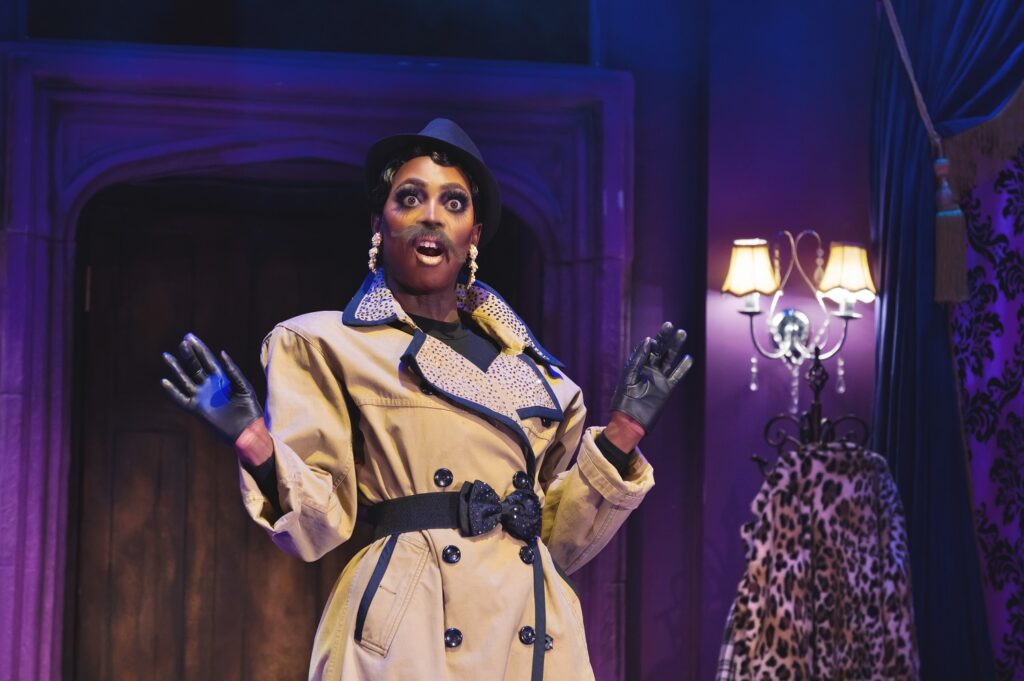
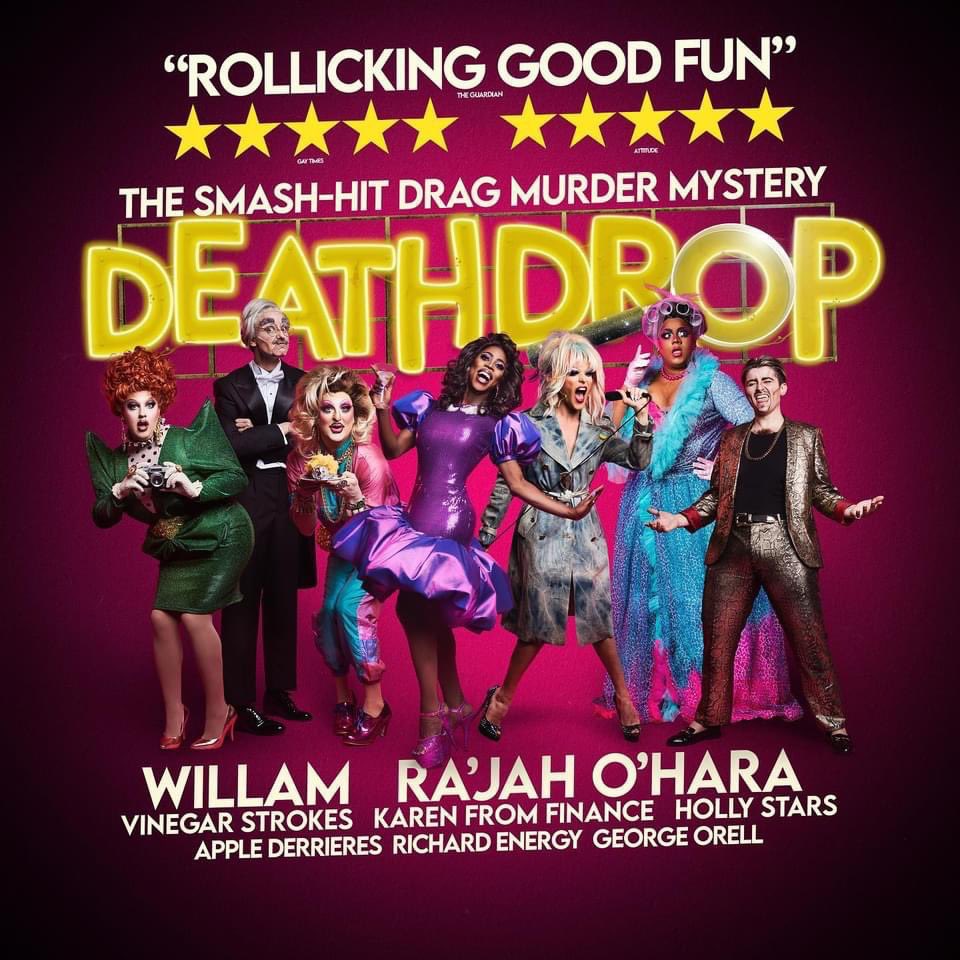
Death Drop is the ultimate triple threat: it’s a Drag Comedy, a murder mystery, and a musical extravaganza – and it’s here to slay. Premiering on the West End in December, the star-studded UK Tour is making a brief pit-stop in Cardiff for only a few days – so sashay your way to the New Theatre and catch it while you can!

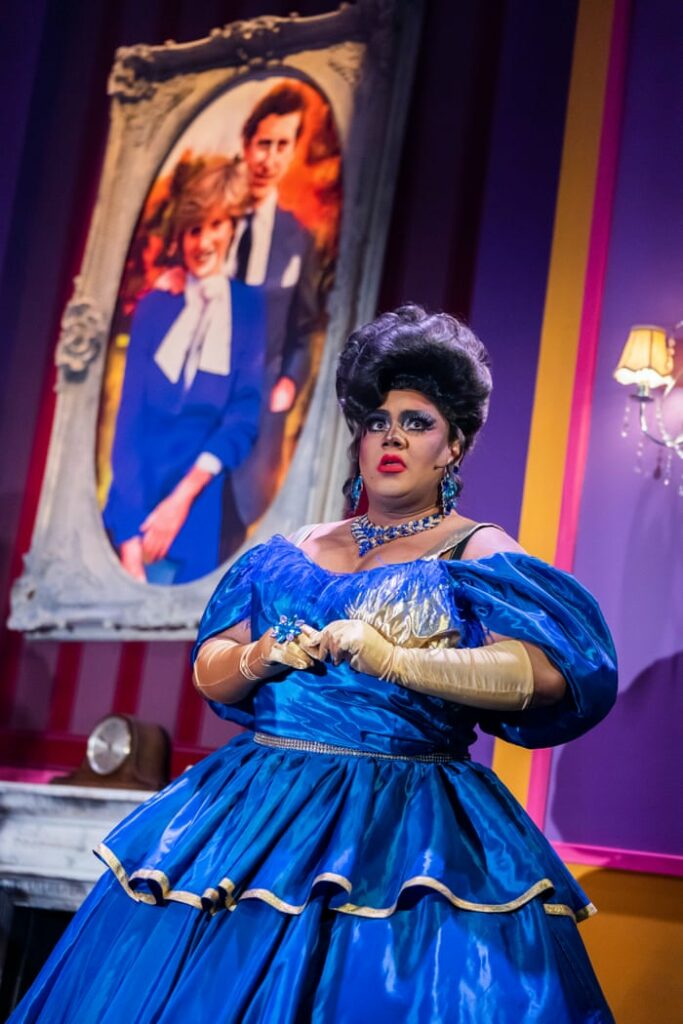
It’s 1991, and Lady von Fistenberg (Drag Race UK star Vinegar Strokes) has gathered a gaggle of celebrity frenemies to her mansion on Tuck Island to celebrate Charles and Diana’s anniversary – only for the guests to start dropping dead. This isn’t your grandmother’s murder mystery – and when it comes to the jokes, there’s no such thing as ‘too far’. Produced by TuckShop and Trafalgar Theatre Productions and written by Holly Stars (who also plays all three Bottomley Sisters), the show is essentially Murder on the Starlight Express: a campy, chaotic riff on the whodunnit where the one-liners fly so thick and fast, they make panto look slow.

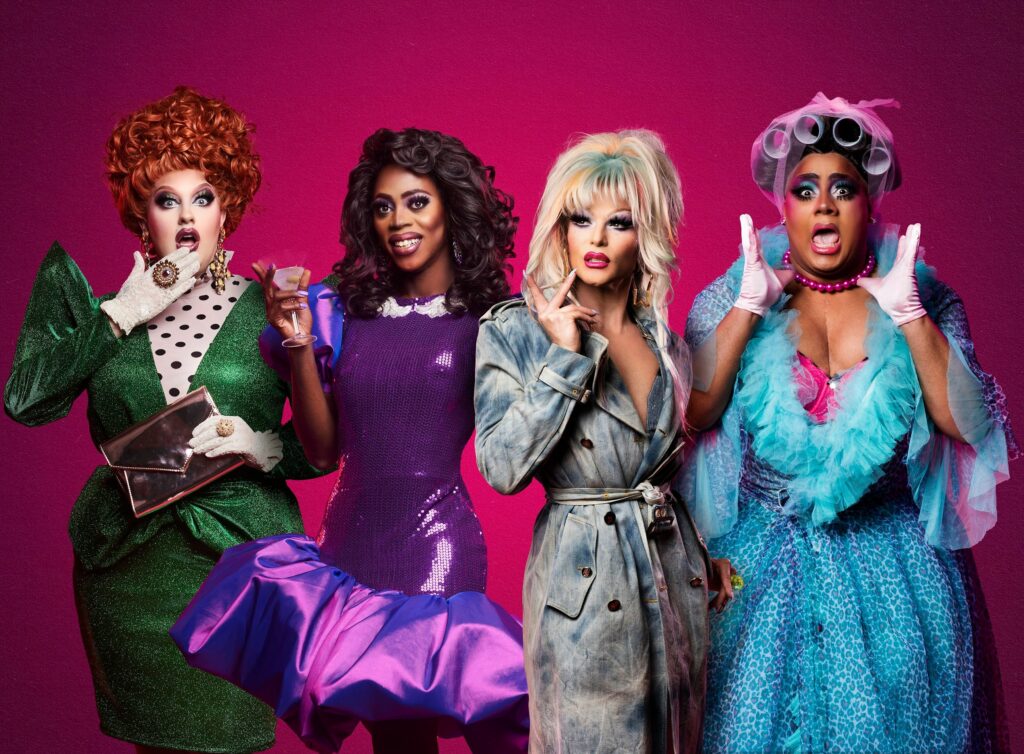
Karen From Finance, Ra’Jah O’Hara, Willam, and Vinegar Strokes

Drag legends Willam and Ra’Jah O’Hara lead an all-star cast including Vinegar Strokes (reprising her role from the original West End lineup), Drag Race Down Under’s Karen From Finance, and drag kings like Richard Energy and George Orell who deliver some of the show’s best and most bonkers lines. The cast are incredibly game and bring a fun, raucous energy to the stage – I truly can’t remember the last time I laughed as much as I did in Death Drop.

Directed by Jesse Jones and with original songs by Flo and Joan (Oopsie Whoopsie is a real earworm), the show is a boozy, bolshy bit of escapist fun. Justin Williams’ set looks as if Dr Seuss designed Liberace’s living room, and Isobel Pellow’s costumes are a feast for the eyes: case in point, an outfit of Willam’s made entirely of bandanas (even the boots! I seriously want a pair). It leaves no 90s reference unturned and no innuendo unmilked – it’s daft, it’s dirty, and it’s an absolute delight.

Funny, filthy and fabulous, Death Drop is anything but a drag. If you’re averse to a bit of blue (cheese or comedy), you might want to give this one a miss – but if you’re up for a night of glitz, glamour and giggles, you can’t get better than this.

Death Drop is sashaying its way through to Saturday 23 October at the New Theatre.

Review, Immersive Gatsby, Immersive LDN, By Hannah Goslin

 out of 5 stars (4 / 5)

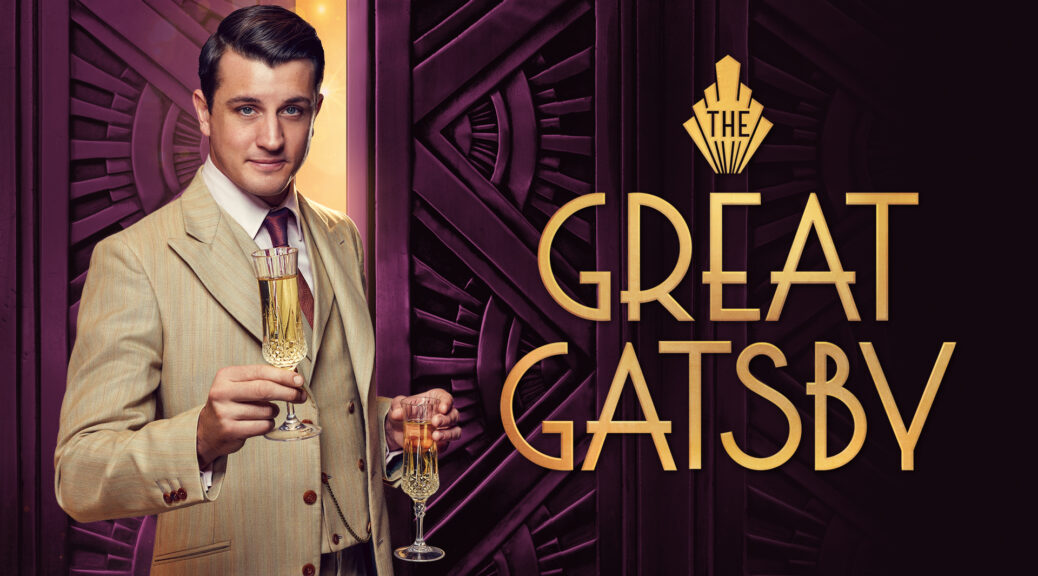
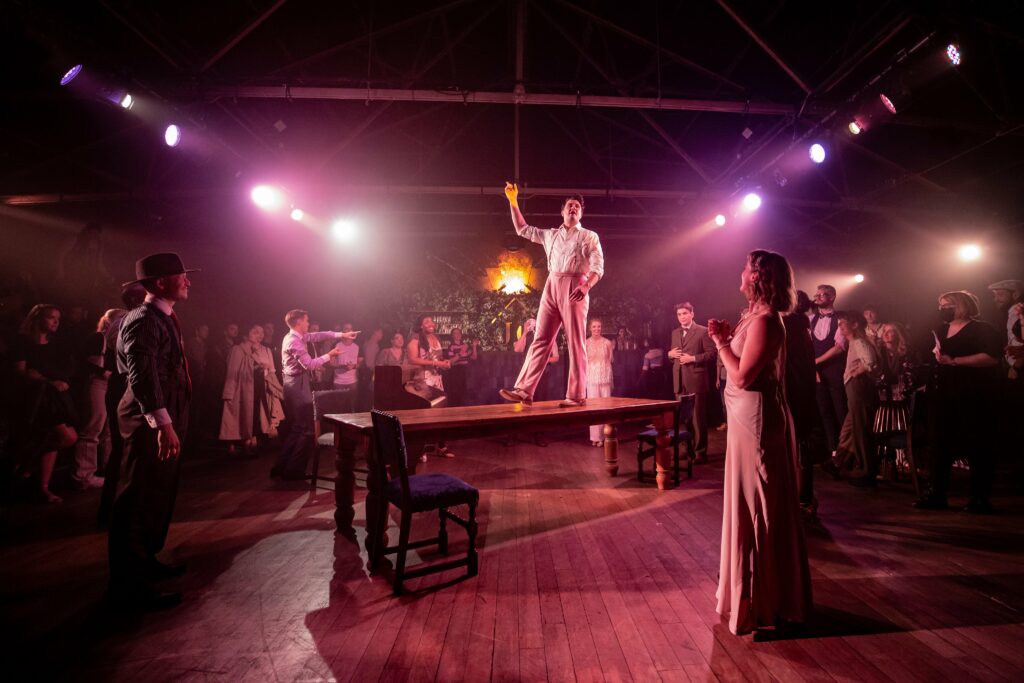
Greeted at the door by a man with an excellent hospitable nature and his 1920’s attire on, in the heart of London, we enter into what feels like some form of speakeasy at the top of this lovely building, where the doors open and you are (nicely) bashed in the face with jazz music and dancing.

Immersive Gatsby is based upon the well known American Novel, The Great Gatsby by F.Scott Fitzgerald, which you likely know from recent film adaptations, or were subjected to at school. I admit, that I have a love/hate relationship with the novel, mainly with school ruining it. But as adaptions in film and theatre continue, I appreciate it more in older age.

The story is about old lovers who meet in later life. Both changed dramatically, their love is reignited but is doomed by circumstance, by gossip and cheating, by lies and love. And so we see them fall in love but also fight for one another, amongst the many love triangles.

The story of Gatsby is well known for the fact the character of Jay Gatsby throws lavish parties where anyone who is anyone will be. Full of booze, of colours, dancing and care free lifestyles, and this is what we initially get a taste of. The performers do quintessential moves from the 1920’s, in their beautiful and stylish outfits, encouraging us to dance, and at one point, putting us through a dance class. Certainly a good way to have a great night out and feel pleasantly out of your comfort zone.

The joy of Immersive theatre, especially in large venues, is that there are pockets of events happening in different rooms, in little groups, in corners of the room. Depending where you are placed, you may get to chat with Daisy about her love for Jay, or Muriel about her love affair. Not everyone gets to go in another room, or be spoken to and that’s what makes each experience different to the last. This is what makes you want to go again; to fill your FOMO needs.

However, with this, it can also feel a little frustrating. The placements of the rooms are almost in each corner and until you realise this, it’s entirely possible you won’t be lucky enough to be whisked away in the group. It’s impossible to be sure everyone out of potentially 150 people in a room has had their turn to see the new spaces. And so we unfortunately left with only seeing the main area and 1 extra room. I wouldn’t say we felt cheated but it certainly wetted our curiosity appetite and left us a little deflated with the knowledge there were scenes and rooms we never saw.

I was lucky enough to be taken away on my own with the character Muriel. My social awkwardness did not help here but it was really interesting to go into this quiet room and talk with the character as if we were old friends. A very special part of the evening indeed.

Knowing the story well, it confused me that character’s seemed to be doubling up and being put in parts of the story that they were not in the novel. It is clearly for logistical reasons, and they do well to keep in character and to continue the momentum, so we enjoy this as it is but it conflicts what we know about about the story and somehow undermines some of Fitzgerald’s intentions. Some characters also didn’t come across as they were intended in the novel and again, this is a juxtaposition on the initial story. I couldn’t help but be critical, thinking that that was not how a character was meant to be or how the story goes.

I cannot leave a review without mentioning Gatsby himself: there are moments of the above to help inform the transition of the space and the story but Oliver Towse is the right brooding, distant but hopelessly in love character that Gatsby should be… and clearly his attractive nature, in his well known pink 3 piece, makes us all swoon. As if we are in the room of a Rockstar.

Immersive Gatsby is for sure a brilliant night out; filled with dancing, elation, champagne and a 1920’s Eastenders style vibe with conflict. But for those who know the story well, the need to utilise the space unfortunately sees changes to the novel which makes a stickler a little anxious.

Review Our War,  Imole Theatre Company by Tanica Psalmist

Remember me more than a fighting man and the choice I made for the greater plan”

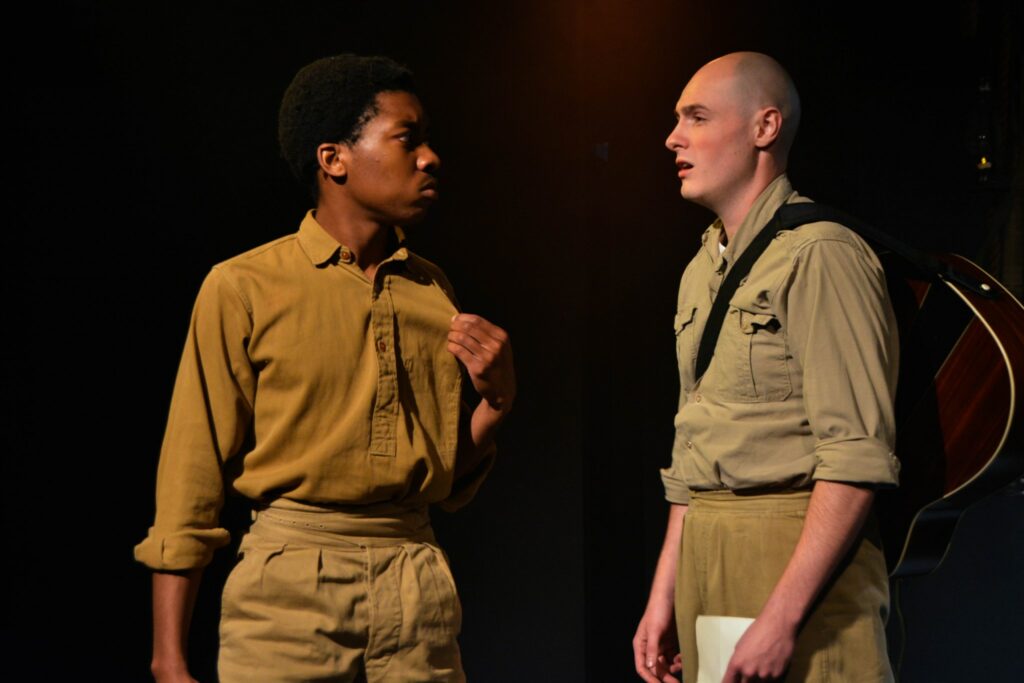
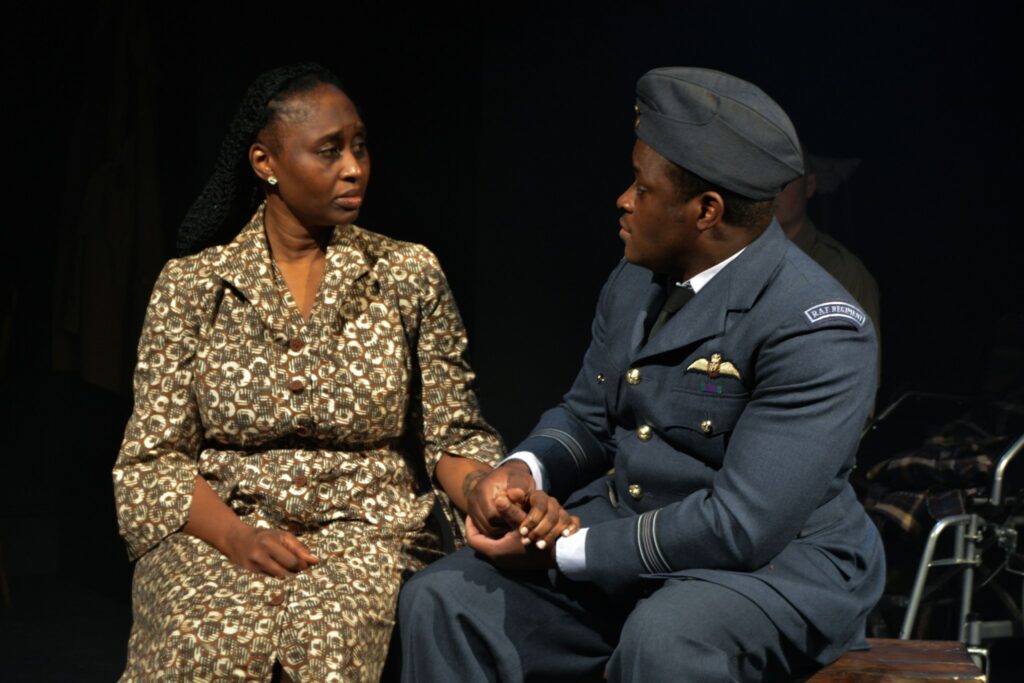
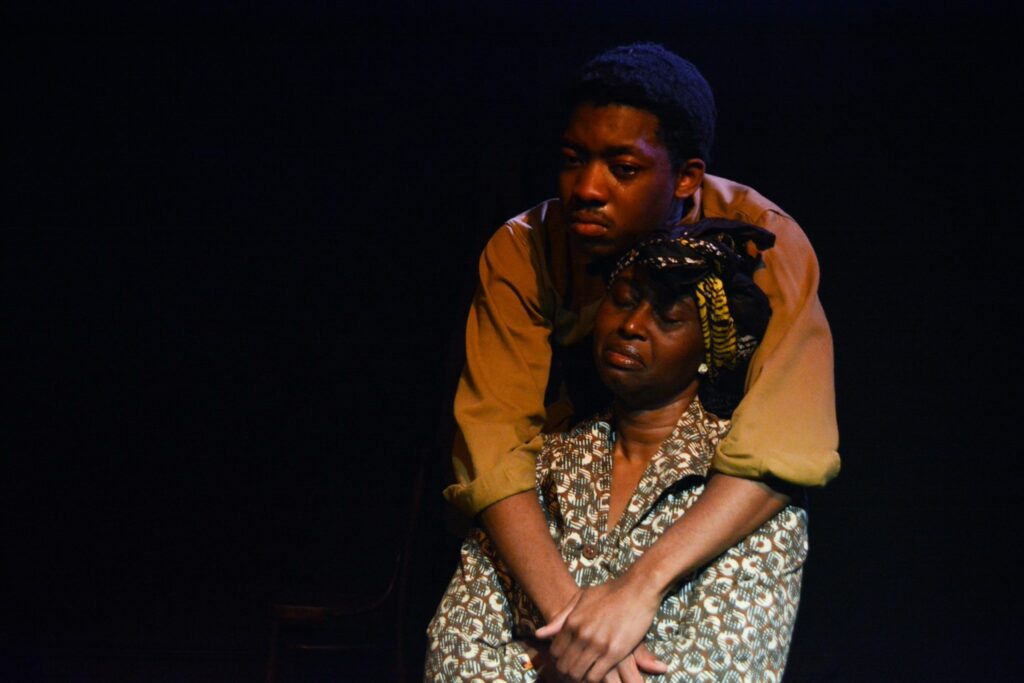
‘Our War’ is directed by Andrew Ashaye & produced by Imole Theatre Company (Lola Oteh). Our War is an emotionally compelling story from the lens of the fellow Nigerians Ola, Tommy and Christian, as they travel from their native land Nigeria. Encouraged to partake in World War II as Nigeria at the time was a British colony; which left young men & women feeling as if they had no other choice or say in the matter, just wanting to make their mothers proud. Nigerian men & woman were not only having to leave sunny Nigeria, their families & parents; but the feeling of hope, unknowing whether they’d ever get reunited with their loved ones again. A flight with no guarantee of return, but of the sounds of explosive nuclear bombs, the height of World War II became their history.

After the play, I was keen to speak with Lola Oteh to hear what sparked her interest in the concept of ‘Our War’. Lola mentioned it was when she’d realised the vast absence of African & West Indian soldiers who were not widely acknowledged or recognised in being Britain’s key players fighting for the country.

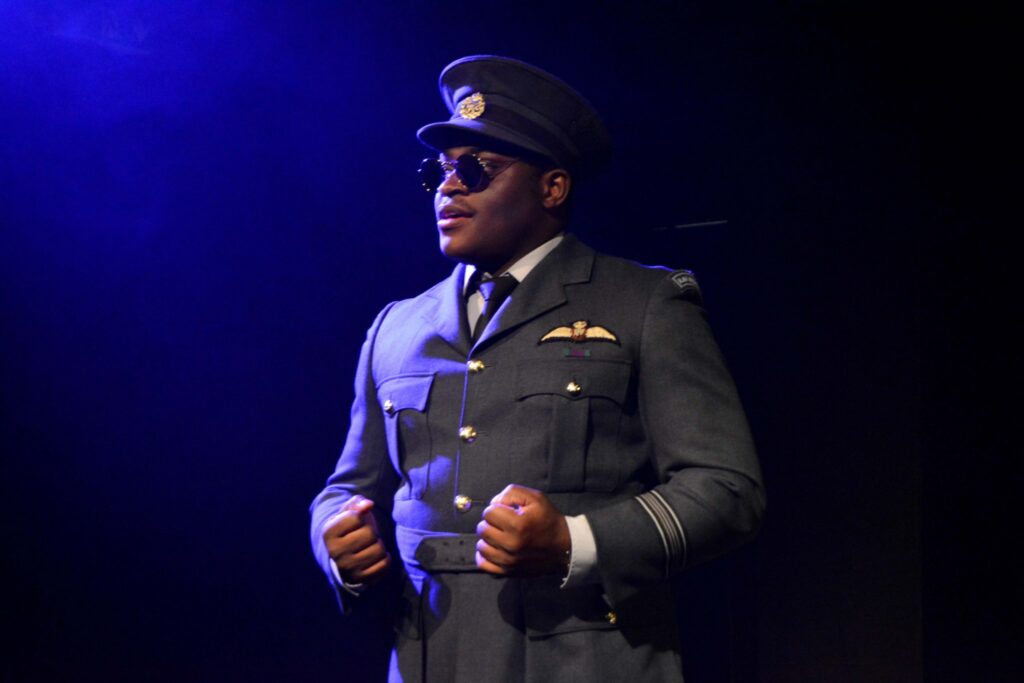
Once Ola (the nurse), Tommy & Christian arrived to Britain, they experienced the national terror of war on the battlefield and the harsh realities of being Black in the army and in the local community. This entailed not only segregation for the coloured but their uniform differences to.

In conversation with Lola Oteh & Andrew Ashaye after the play, it became clear that Our War came together after an abundance of research from various sources from black cultural archives, etc. was carried out. Where autobiographies, real names, times & untold stories were incorporated into the play to ensure they portrayed life as realistically as possible during that era. Perfectly depicting the characteristics, mindsets & attitude of those in authority as well as the veteran desperately missing their motherland. ‘Our War’ perfectly dramatises the bravery of forgotten heroes, Black African and Caribbean men and women who contributed and made sacrifices for the war effort in Britain.

This production was majestically infused with elements of Nigerian culture through compelling dialogue & sweet singing in Yoruba; penetrating the audience hearts. Lola Oteh’s cultural influence was deeply embedded to create a platform in which original and innovative stories could be told. Drama and performance was greatly used in ‘Our War’ to magnify history bringing the past back to life and giving us a voice to stories that might not always be heard.