All posts by Richard Evans

Review Rush,Theatr Clwyd By Richard Evans

 out of 5 stars (5 / 5)

Behind ‘Rush’ lies a simple theme.  This is my story.  This is where I come from, this is why I came here.  This is what life is like for me here.  Here is my story told through the universal medium of music.  We all have a story like this, and to a degree every story is engaging because people are interesting.  It is just that some stories are more interesting than others and this one involves three continents, colonization, death of an indigenous people, brutal slavery, rebellion, warfare, migration and racism.  Welcome to Jamaica and its tour of Britain, February 2020, destination Mold.

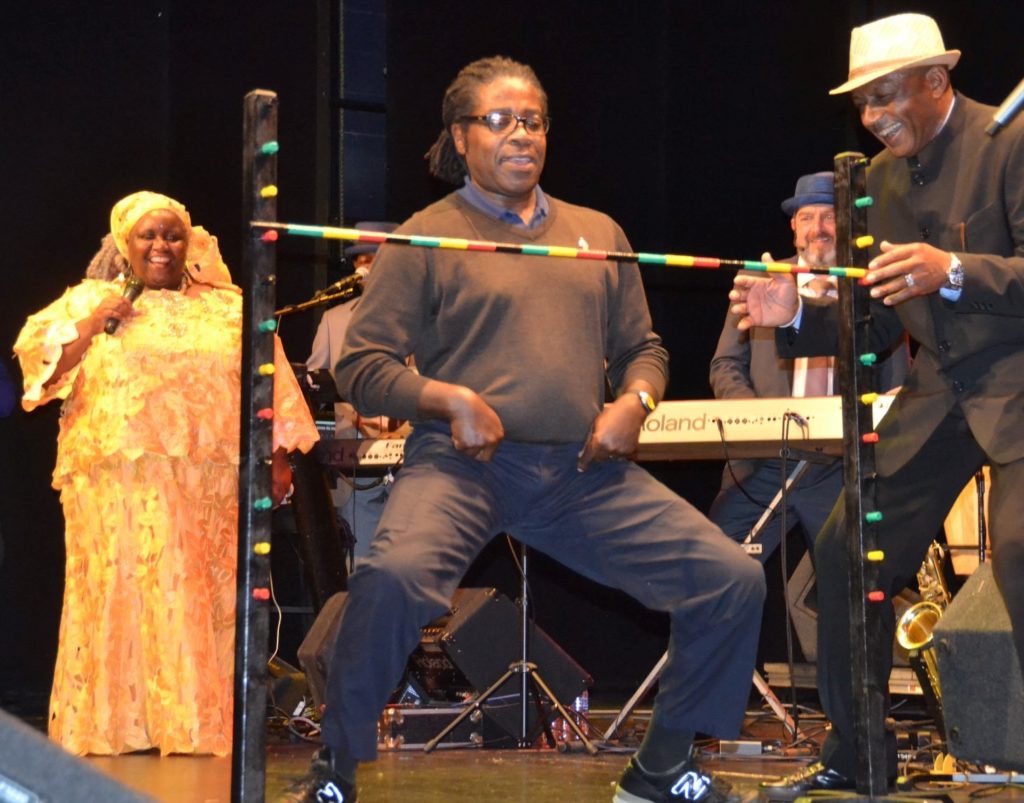
We were promised a joyous Jamaican journey and judging by the fact all bar a handful of people in a crowded theatre were on their feet at times, this is what we got.  Even my left knee was shaking in time to this rhythmic feast despite my pathological phobia of dancing.  The fact that I was pinned back in my seat to avoid the gyrations of the lady standing next to me did not detract from the spectacle.  Sometimes it is just great to see people join in with unfettered enthusiasm. 

Yet here was a contradiction.  This story is far from joyous, it is tainted with more than a bucketful of blood, sweat and tears and while this was pointed out with a wry sense of humour, this was not what we heard. Instead we were treated to an endless list of Jamaican song encompassing a brief history of ska and reggae with songs from Jimmy Cliff and Desmond Decker amongst a host of others.  Special mention was made of Bob Marley who would have celebrated his 75th birthday this week and who played Deeside Leisure Centre in 1980.  It’s a small world.  There were some surprising sounds, ‘The tide is high’ is so heavily associated with Blondie that many have forgotten its Jamaican roots. 

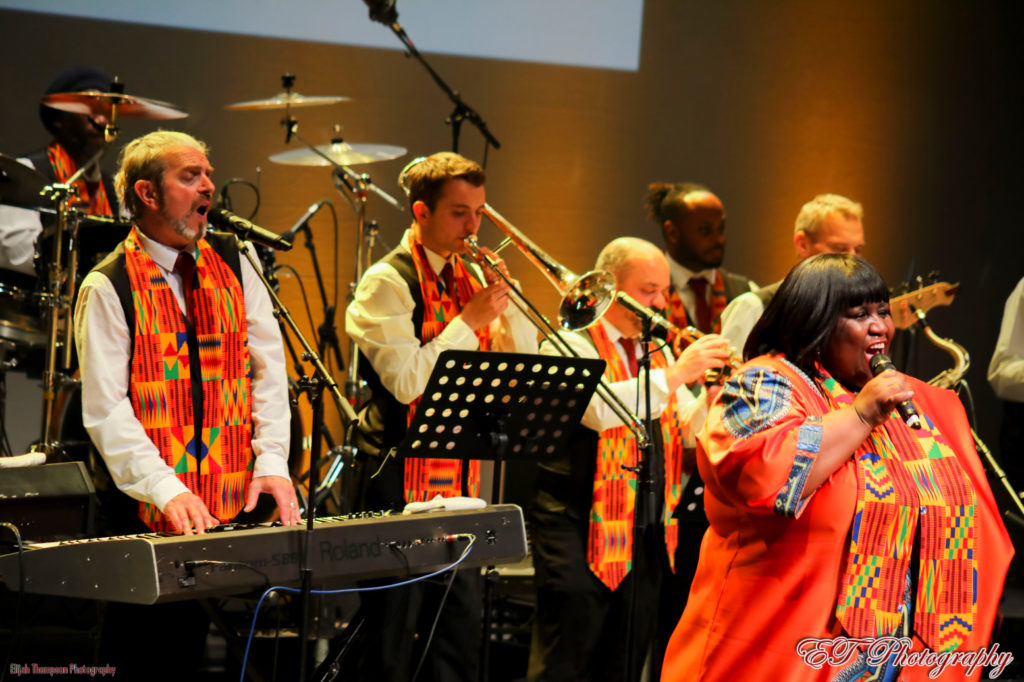
The music was performed with distinction by the JA Reggae Band, all of whom were consummate musicians orchestrated by the lead guitar and musical director, Orville Pinnock. True to the development of ska in particular, the band was racially diverse with a rich tapestry of experience from different musical genres.  They were ably supported by DJ Paul who played a variety of tracks supplementing a long set. 

The two lead singers IKA and Janice Williamson both had rich, powerful voices that were adaptable to a range of song.  My particular favourite was the gospel standard, ‘Oh Happy day’ acknowledging church influence on the Jamaican community.  The story was introduced and narrated by John Simmitt, who did so gently, rhythmically yet with a waspish sense of humour.  One pleasing aspect here was that there were no ‘stars’ in this ensemble, just a team working closely together who so obviously enjoyed and entered into the musical feast they presented.

My question is, how important is the Jamaican story?  This, and others like it should be a staple in every secondary school curriculum.  It speaks volumes to us about our national identity, our historic legacy and comments forcefully against those xenophobic elements in our society that seem to have found a voice in the past few years.  From the brutal colonization of the 15th and 16th Centuries, the loathsome practice of transatlantic slavery to the shocking betrayal of the Windrush generation by a populist government pillorying immigrants to win votes, this story reeks of injustice.  I would have liked to see more historical narrative, to learn more about the Maroon rebellions and leaders such as Marcus Garvey and Paul Bogle instead of being satisfied with allusions to these events and people.  But increasingly as the show developed it was a celebration of music that has its roots or was influenced by Jamaica. 

Perhaps the most important theme of the show was to emphasise the fact that the presence of Black and Asian communities in the UK is the result of a direct invitation to live here by the British government after World War 2.  Once people arrived, despite a pernicious level of racism these communities have integrated into, influenced and enhanced our society.  The reception given to 2-tone music and the energy generated by numbers by The Specials and Madness was a prime illustration of this.  Similar statements could be made especially about those communities from the Indian sub-continent who have made their home here.  Few people prior to 1960 would have heard of Tandoori chicken, yet to some, this is more of a national dish than roast beef and Yorkshire pudding. 

These communities are building their own cultural legacy now, a great example being the Notting Hill Carnival, one of the biggest street festivals in the world, attracting over 2 million visitors each year.  The carnival in itself is unique, being a fusion of Jamaican reggae and Trinidadian steel band and is now officially a British cultural icon.  Perhaps we have forgotten the roots of this carnival lie in a response to racial attacks on West Indians.  Few have heard of the 1959 death of Kelso Cochrane at the hands of white youths.  And few will know that the perpetrators were never charged or convicted for fear of the public unrest that may incite.  This was despite the fact that the identity of the killer was an open secret in the local community. 

This demonstrates that we have a lot to learn from this history yet despite such a powerful message it was not the key theme of the evening.  There was no axe to grind, no bitterness at this shameful treatment.  Just a nice line of humour poking fun at people like Enoch Powell and his ‘Rivers of Blood’ speech.  The Conservative club in his former constituency is now a West Indian Cultural Centre.  How times have changed. 

The pervasive theme of the evening for me was the rhythm which permeated every song, energised the audience and left people with a feel good factor.  It was remarkable that a mainly white, middle aged, middle class audience found such movement and joy in this Caribbean cultural festival.  John Simmitt joked that the audience might be better suited to a cup of Milo or Horlicks before bedtime but this was far from the case.  The audience warmed to the rhythm with gusto.  Full credit to the cast, who after taking their bow made their way to the foyer to greet the audience as they left.  After three hours of performance they need not have done this but was a most welcome end to a fabulous evening.

Go and see this performance.  Feel the rhythm, enjoy the music, learn the history. 

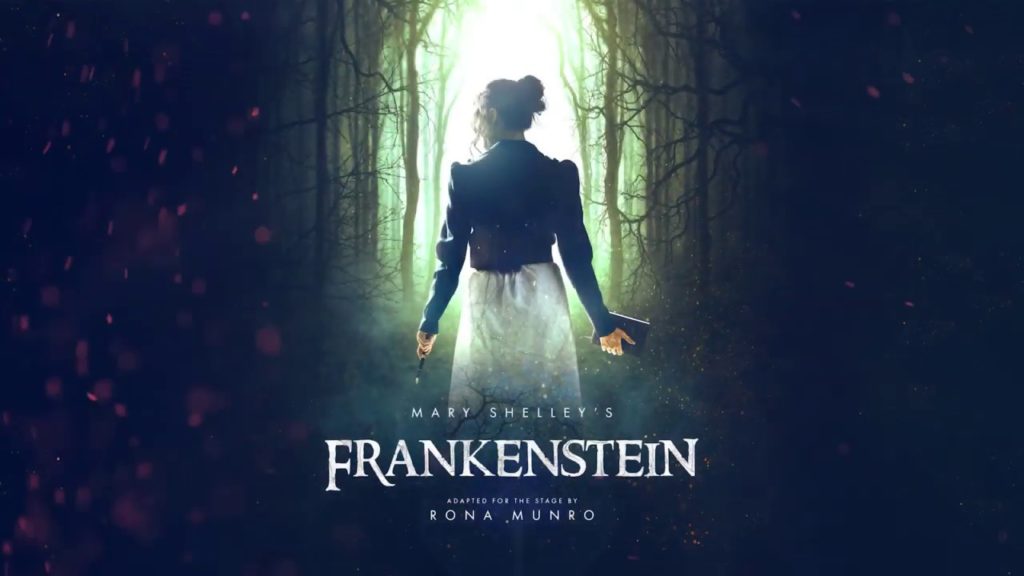
Frankenstein at Theatr Clwyd (Selladoor Productions | Matthew Townshend Productions | Belgrade Theatre Coventry | Perth Theatre at Horsecross Arts) By Richard Evans

 out of 5 stars (5 / 5)

Prometheus reborn.

This is an ambitious premise.  Take a story that has passed into classic status, that has been reworked countless times in serious and spoof form, that has universal recognition and that has spawned endless clones and then strip it back to its original story line and portray it through the eyes of its creator.  Would it work?  Can it fulfil that lofty aim?

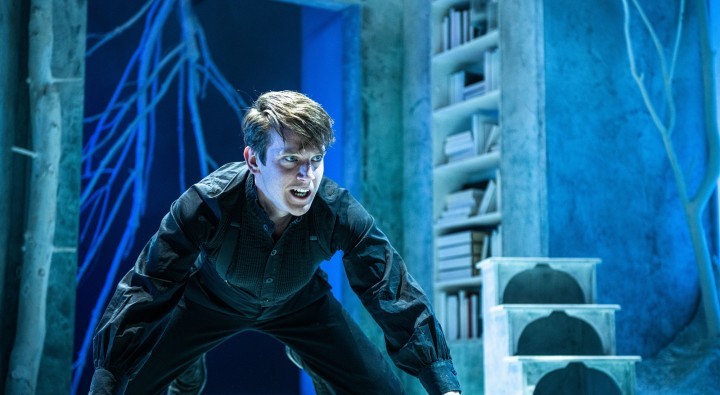
I have to say I thoroughly enjoyed this production at Theatr Clwyd.  I heard it said that it was a verbose script with a lot of shouting and that the lead playing Mary Shelley was too in your face, but to me this was absorbing, thought provoking theatre that retold the story and yet picked out the social context admirably. 

At times it is not comfortable viewing, it was intended as a
horror story and developed a threatening, suspense filled atmosphere without
attempting to shock for the sake of it. 
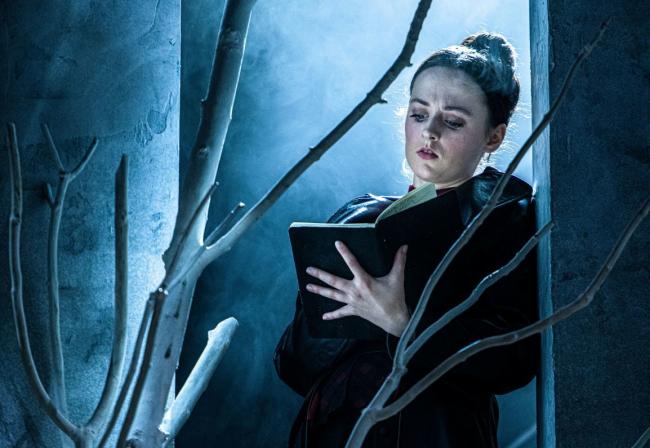
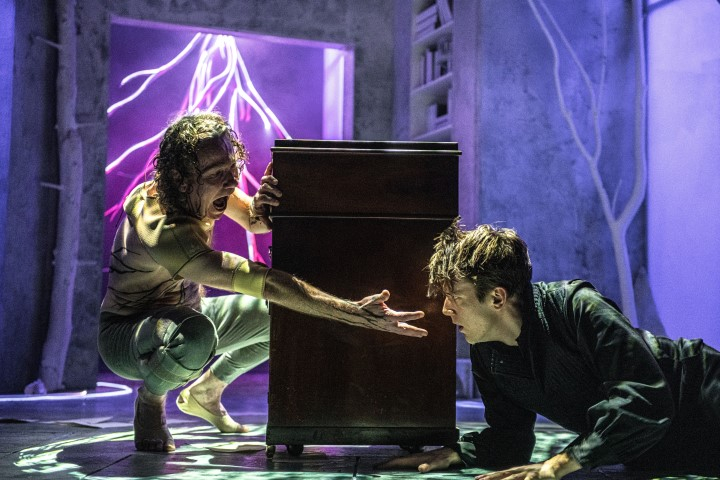
The set and lighting was highly effective, with an almost black and
white backdrop yet with a clever use of height that allowed you to see the
story and then see the thought process of the author side by side. 

It was this use of the author that allowed the social context and Promethean nature of the story to breathe.  Especially during the second act, you saw her dictating the nature of the story to drive home the point that she wanted to make.  In that sense the play was as much about her as it was Frankenstein and his monster.  She was a remarkable author.  She was an 18 year old recently married woman who had suffered considerable personal tragedy when this was written.  She was actively involved in events that fermented the social revolution that was taking place in the early 19th Century and the play reflects that clamour for change.  She then became the fulfilment of some of her mother, Mary Wollstonecraft’s desires when as an independent, self-supporting woman, developed her own career while supporting other members of her family. 

She developed themes of throwing off traditional rule and
transforming society through scientific revolution, yet knowing that unfettered
scientific investigation can take things too far.  The book served as an illustration of the
conflict between a traditional way of life, the challenge of science and the
interdependence of different branches of knowledge, such that Science without Religion
is ignorant.  Religion without Science is
blind.   

Most strikingly to me though was Shelley’s  insistence that what people need is love,
compassion and some companionship and if you deny people these basic needs you
are playing with fire. 

It is the stated intention of the playwright, Rona Munro to draw us back to the life of Mary Shelley, and she accomplishes this really well.  Mary is played with huge emotion by Eilidh Loan yet this portrayal does not compromise the telling of Frankenstein’s story.  This is told faithfully and the two male leads, Frankenstein (Ben Castle Gibb on his professional debut) and the monster (Michael Morland) bring out the optimism, despair and tragedy of this striking story pointedly.


To me this is a carefully crafted, multi-layered and thought
provoking piece of theatre.  It is
intense and at times bleak.  There is
also much pathos that reflects on today’s society.  The chief desire of the monster is to be
loved, appreciated and understood. When he fails to find those qualities
directed towards him, his nature is transformed to match his hideous
appearance.  Therein lies a paradigm that
speaks volumes to our society. So often we fail to appreciate those amongst us
who we describe as ‘other’ and Shelley comments, neglect ‘others’ at our
peril.  It is no wonder that this story
has been retold so many times and it is great to see a production that remains
modern yet takes us back to Shelley’s original ideas.

Go and see Frankenstein and prepare to be surprised.  Even shocked!

Murder on Mulholland Drive, Phoenix Theatre Company BY Richard Evans

 out of 5 stars (4 / 5)

Theatr Clwyd, Friday January 24th 2020. Review by Richard Evans.

Suspense, intrigue, who will get their revenge?

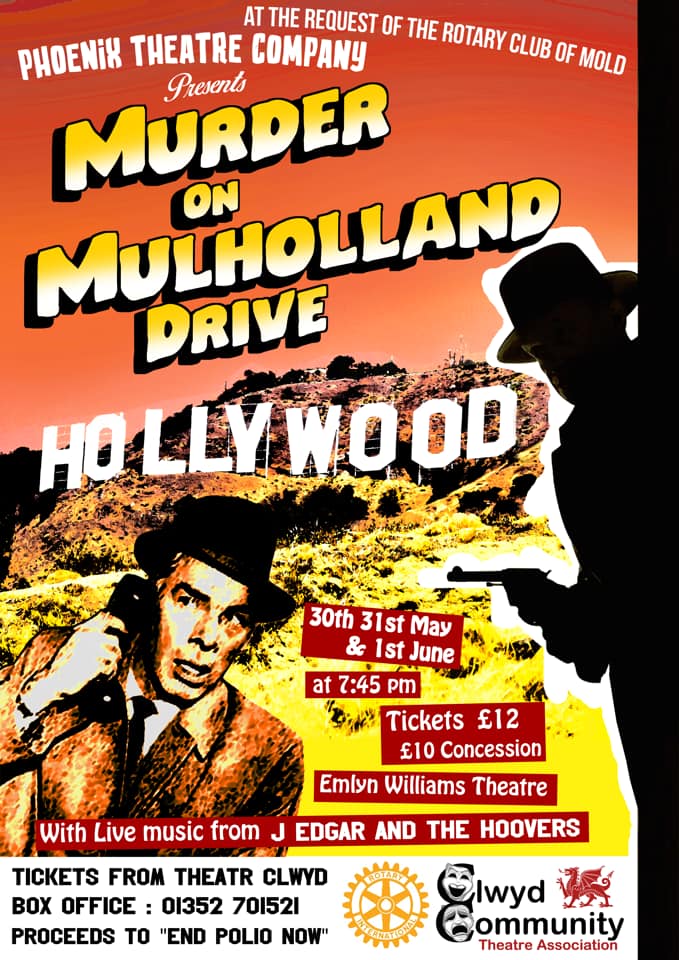
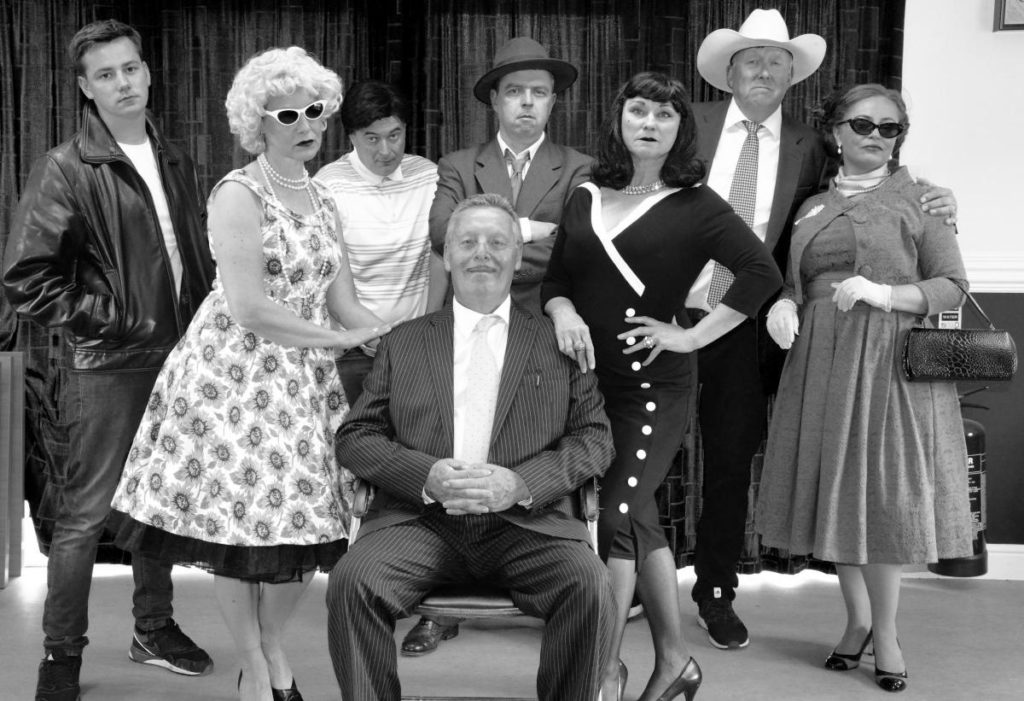
This is a new play, written, directed and lead by Richard
Jones and produced by Phoenix Theatre Company from Mold, and requested by the
Rotary Club.  It was first performed last
May at Theatr Clwyd and reprised this week.

Full marks for bringing a new script and showing the
ambition to stage this play.  It made for
an enjoyable evening’s entertainment, which while being a very wordy script
held my attention to the end.  I
particularly enjoyed the characterisation. 
As the play was set in Hollywood in the 1950’s it spoofed the major film
stars of the day very well, adding a nice touch of humour.

I also thought the live music added much to the play.  The band, J. Edgar and the Hoovers was simple yet highly effective.  A three piece unit played a mixture of covers of 1950’s standards and original compositions tailored to suit the mood and the characters. 

This was a comic murder mystery revolving around a major
Hollywood film producer who had a mega salary and an ego to go with it.  He had got to the top with a mixture of
grandiose gesture, manipulation, blackmail and cruelty such that he incurred
hate in the other characters.  This was
played realistically by Richard Jones and while the first act was dominated by
him, this suited the bombastic nature of the character and fitted the story
line well.  Having gained many enemies on
his rise to the top, there was no shortage of people willing to bop him off! 

The second act saw the introduction of Sam Shade, detective,
a spoof of Humphrey Bogarts film noir character convincingly delivered by John
Kinsey, despite the slightly odd distraction of singing ‘Rawhide’ shortly after
his entrance.  This seemed out of kilter
with the rest of the play.  The
denouement had a suitable twist at the end, allusive of some of the best that
Hollywood produced in the 1950’s and also adding great comic value. 

Perhaps I am wrong, I gained the impression that the first
act, which was short at 40 minutes long ended too early, omitting one scene that
had to be delivered at the start of the second act to avoid effectively writing
out one of the characters.   

I found the script very word heavy and the storyline
repetitive at times yet there was much to enjoy about this play.  It was great to see allusions to other films
or series like Back to the Future and Miss Marple.  The use of Jimmy Cagney’s ‘You dirty rat’ was
great showing the script was cleverly constructed and humourous. 

The topic matter is indeed relevant to what has taken place
in Hollywood down through the years.    However,
I thought the intros in the first act were laboured and could have been
incorporated into the following scenes showing the interaction with the lead
and the rest of the characters.  Having
said this, the acting by all involved was professional and delivered really
well. 

Bearing in mind this is an ambitious piece of theatre,
performed by an amateur group albeit with a long pedigree it was a very good
evening’s entertainment.  Of course it
could be honed and refined, but I did not see anyone leave disappointed and the
play left the audience with a warm, feel good factor. 

4 stars out of 5, 4 rather than 3.5 because of its
originality

Review A Christmas Carol – Theatr Clwyd, Wednesday December 18th 2019 by Richard Evans

A Christmas Carol, a real cracker or just plain humbug?

Would this presentation stay true to Dickens’ novella?  Would it be accessible to children or would they be rather sucking on a bag of humbugs by the end?  These two questions were answered in a resoundingly positive way as the cast and crew at Theatr Clwyd rose to the challenge with aplomb.  

This was a thoroughly enjoyable interactive performance that communicated much of what Dickens intended yet had a lightness of touch, an impish humour and a sense of occasion that made it well suited to a Christmas show.  The script, an adaptation by Alan Harris incorporated plenty of Dickensian language and picked up many of the paradigms that pervade this well known story.  These included the heartless materialism that Victorian London exhibited alongside the powerless struggle against deprivation experienced by the poor.  

The cast was a mixture of professional and community actors and while all the professionals stood out, there was no perceivable divide between the two elements and they communicated a real sense of enjoyment plus feelings of teamwork and unity.  This places the production firmly in the footsteps of community and promenade productions such as the Great Gatsby and Mold Riots.  It has been great to see such creativity and ambition coming from the Theatr and it is exciting to see so many local people so eager to take part in this type of production.  

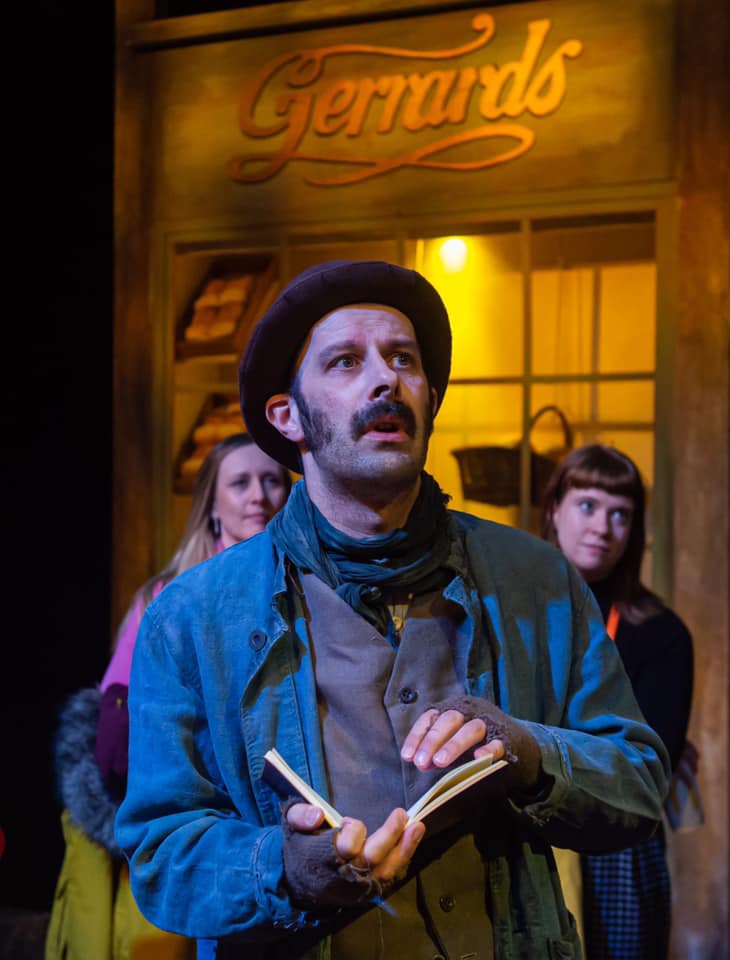
The play used two adjacent settings in the theatre, one space transformed into a street market where the audience mingled freely with the cast.  Audience members were given a token to exchange for a sample of local produce and this set the tone for the interactive nature of this production.  Being so close to the action immerses you into the experience and builds empathy for the characters.  However it was hard to imagine it was a cold December day when the place was so hot!

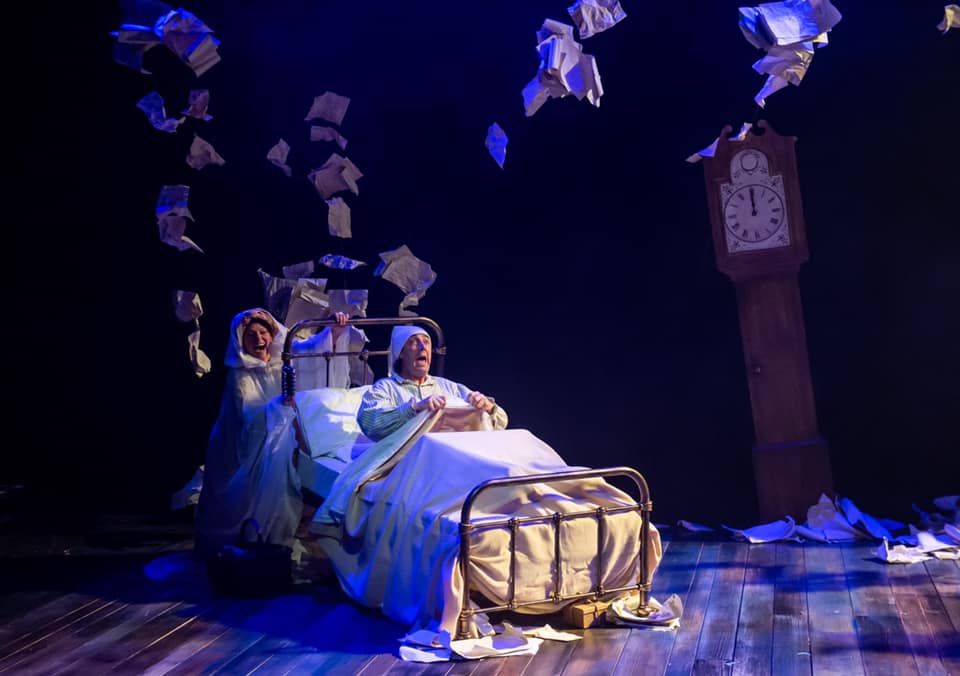
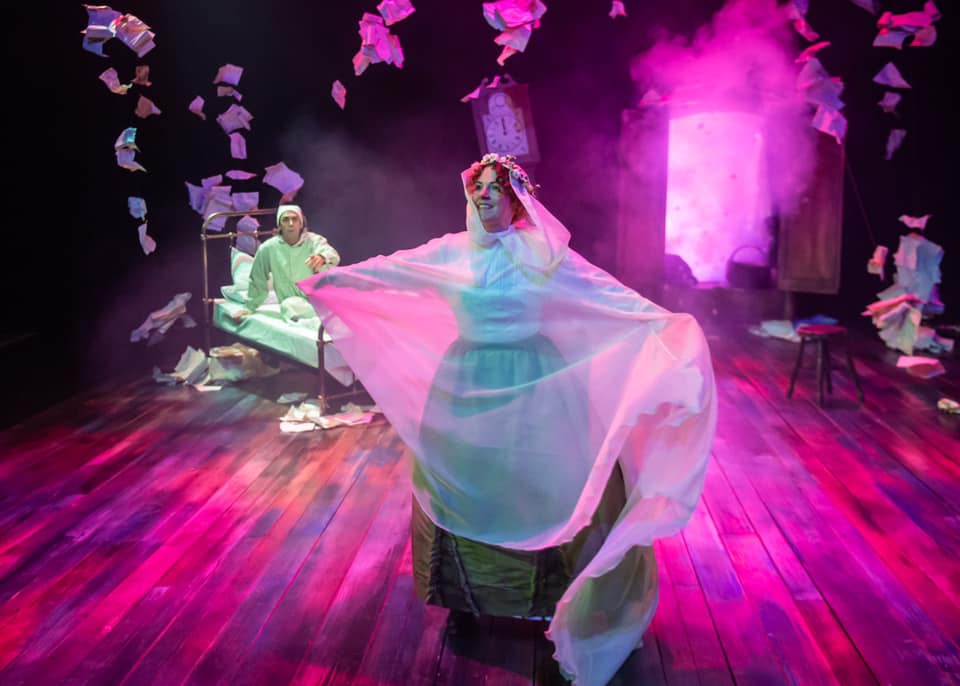
The second space staged the visitations of the three Christmas ghosts to Ebenezer Scrooge, played excellently by Steven Elliot.  The transformation of Scrooge from a money grabbing miser who showed little sympathy for the human condition to one shocked into generosity of spirit was plain to see.  In another subtle layer, the play explored the reasons why Scrooge was so miserly.  Had he not been neglected as a child, would he have been so surly?

The sets, light and sound created a gently intimidating atmosphere that was appropriate for a production open to children.  My only problem was that when an actor had their back to you it was hard to hear them.  The first transition between the two rooms felt slow and slightly awkward, but the second seemed much smoother and served to transform the mood successfully from Scrooges depressive night adventures to an optimistic Christmas Day.  

The bleakness and intensity of those ghostly confrontations was broken up with a few pantomime style games that helped maintain concentration for people young and old.  It was good to see even quite young children taking part.  Yet despite considerable phase and change in the play it did not lose its pace or rhythm and those interactive activities did not detract from the story, rather they were worked seamlessly into the production.  

This play to me was most enjoyable.  I particularly liked the performance of Bob Cratchit (Matthew Bulgo) and of Tiny Tim (Lewis Lowry) who brought a stubborn optimism to contrast the materialistic ignorance of Scrooge.  As with many stories, it is great to see the underdog triumph in adversity especially when celestial help was required. It has made for a most pleasant addition to my Christmas celebrations. Christmas Cracker or mere humbug?  I saw a bag of unopened humbugs by the door as I left.

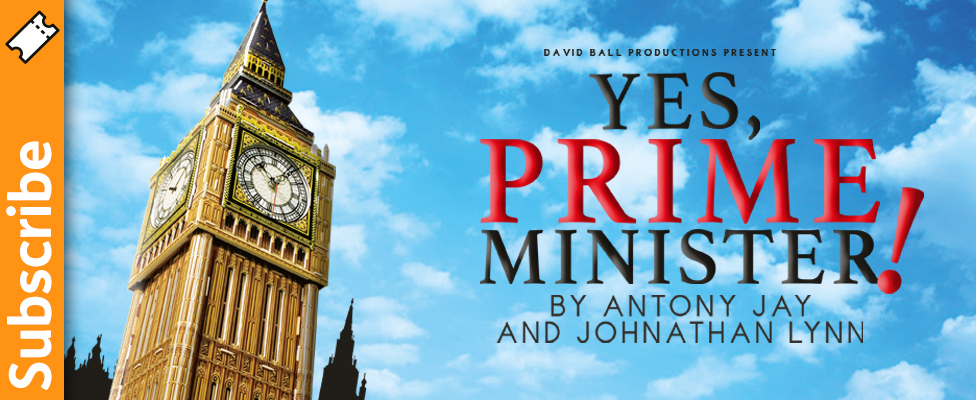
Review Yes Prime Minister, David Ball Productions, Theatr Clwyd by Richard Evans

Living up to a legend?

Undoubtedly, the BBC series, Yes Minister and its sequel, Yes Prime Minister have provided us with many comic moments and fond memories.  To recreate that show on stage, doing justice to those original characters yet producing something fresh is a challenge that is met with panache in this show at Theatr Clwyd.  A combination of a great script and excellent delivery make this a thoroughly enjoyable evening’s entertainment.

While the script was at times complex and wordy, it captured the spirit of the original TV programme in a contemporary story that was easily understood and well communicated.  It struck a balance between political satire and farce that engaged the audience throughout.  

The lead actors were true to the characters portrayed in the original series yet not hidebound by them.  In fact, theybrought their own persona and comic touch to bear successfully.  Of particular note was Peter Forbes as Sir Humphrey whose handling of complex obfuscating sentences was an exercise in memory and diction that was passed with flying colours.  Paul Bradley, who for several years has played in TV series like Eastenders and Holby City was an excellent Jim Hacker, producing a comic performance naturally,combining a shambolic ingénue and streetwise politician well. I particularly liked Sarah Earnshaw as political advisor Claire Sutton, who had a confident, relaxed charm as she outfoxed the seasoned civil servants around her.

This was not a production that had me rolling in the aisles but it will live long in the memory and had many one liners that had the audience chuckling.  “We are here to serve the people, not to do what is right!’

I would recommend this play to anyone with a memory of the sitcom or who feels a frustration whenever they listen to those politicians who never know how to answer a straight question. That’s probably most of us then.  It serves as a good night out and left me with a warm, feel good factor.  A thoroughly worthwhile theatre experience.