Panto Did you enjoy that? No, panto’s not really my thing.
Well, I guess that’s one way to end the evening. Not the reply I expected.
How awful it must have been for them sitting next to me and my pal volubly joining in with every ‘Behind you’ and screaming ‘Sweet Caroline’ as prompted. It reminded me of a school trip to watch Jacques Tati films and failing to find any of them funny. Panto is either your thing or it isn’t and even if it is, sometimes it takes a conscious effort to enjoy the trip.
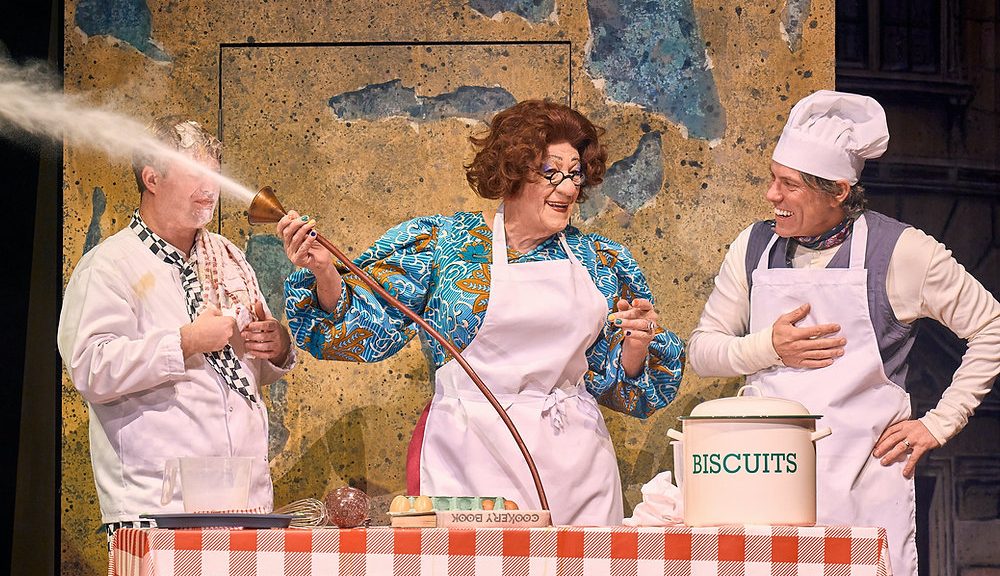
It certainly felt a bit trippy at times. I did wonder occasionally if a little soma was in the air in this brave new world of traditional panto meets … um…. What exactly? It followed the traditional styling of slapstick, political commentary, dancing, singing, inuendo and an eclectic collection of critters, gender role reversal, good defeating evil and a sound moral story.
Overstepping the mark is different for everyone – I couldn’t handle the Michael Gove bat. A bit too obvious, too crude for me. But that’s panto. It’s using humour to cross lines. And give parents something to explain to their children in the car on the way home.
The animal costumes were, frankly, odd. The feeling they had been plucked from the dressing up box in a rush gave them an odd sense of the amateur. Presumably deliberate not only to contrast with the extravagance of the lead role but to give more of the feel of waifs and strays. Quite unfair given the very enjoyable solo performances and by Cilla the Goose especially. And even more unfair given the utter rampant chaotic joy of the whole performance.
The sound was unclear at times and it struck me that their natural voices without amplification might have made for a more WMC like performance and a less confusing and weirdly sluggish start. But boy did it pick up pace!
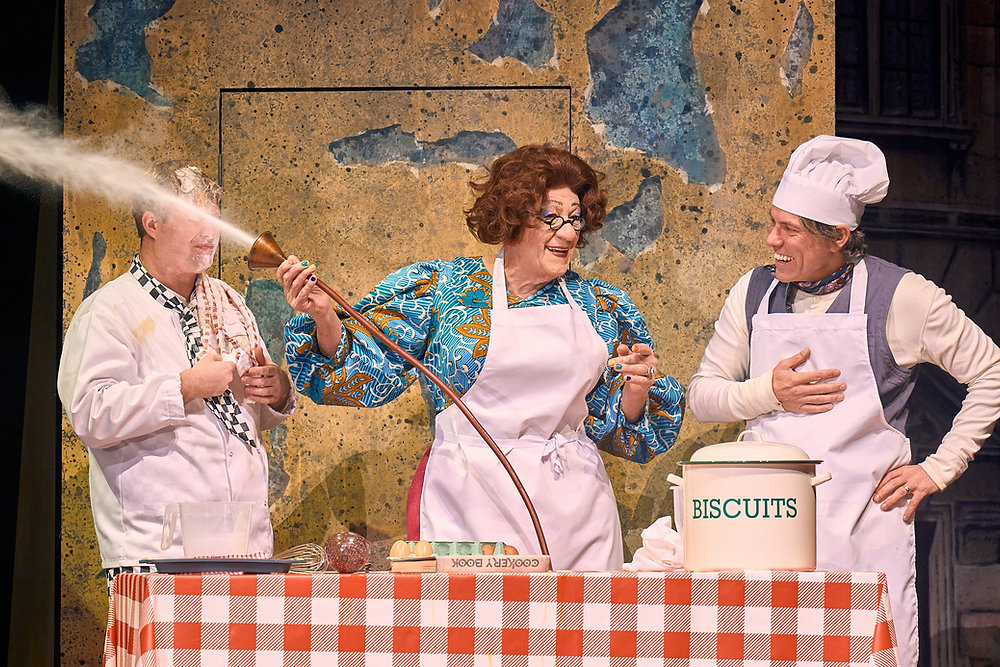
The witches were extravagant comperes, pushing and pulling the chaos and glory of the story along in some style. Great singing too – really great in fact. Jack was appropriately clownish and played the audience well. Vic, Gabriel Fleary standing in for John Bishop, deserves special mention – what a generous and complete performance. And alongside Gandalf, Sir Ian McKellen, who as Mother Goose runs the show. She headlines this old story and carries it in some style. Larger than life, bigger than everyone else on stage, Les Dawson and Grimaldi combined.
What a bird. And as my mother would have said, Less of the old if you don’t mind.
Aside: dear WMC, tinned wine is not the way forward. It really isn’t.
A review of the new digital play, exploring where film and theatre meet, follows two teenagers, one a drug runner and the other the daughter of an addict, as they navigate a dangerous adult world.
Do cats tan? Could you bring me out a blanket?
Tom Powell, The Silence and The Noise, film.
This Be The Verse
BY PHILIP LARKIN
They fuck you up, your mum and dad.
They may not mean to, but they do.
They fill you with the faults they had
And add some extra, just for you.
But they were fucked up in their turn
By fools in old-style hats and coats,
Who half the time were soppy-stern
And half at one another’s throats.
Man hands on misery to man.
It deepens like a coastal shelf.
Get out as early as you can,
And don’t have any kids yourself.
‘’There are 8 reasons why teenagers take drugs: other people, misinformation, popular media, escape and self medication, boredom, rebellion, instant gratification, lack of confidence.’’
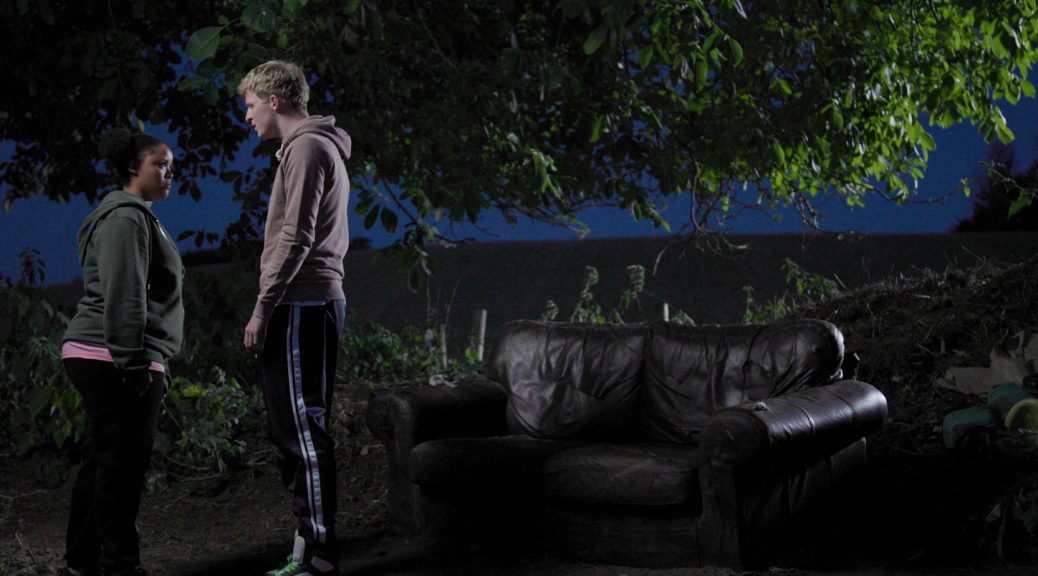
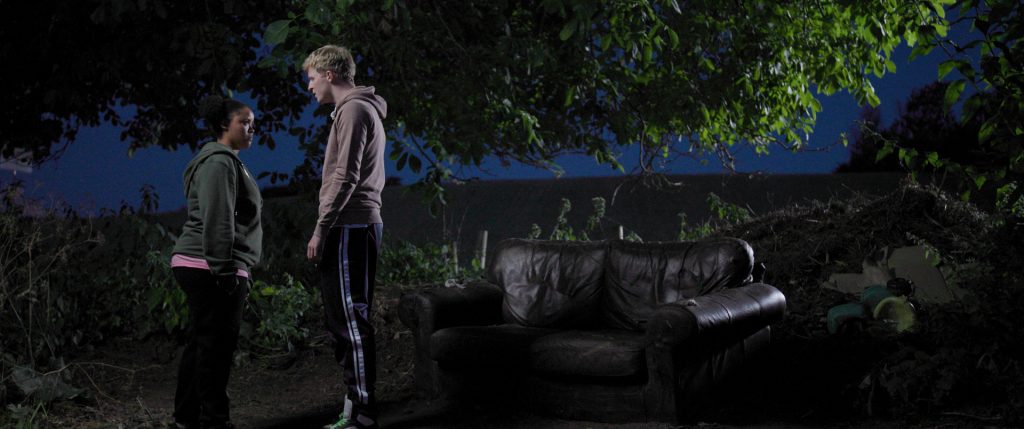
Two teenagers ‘both alike in dignity’, acting out the roles they think they should be playing and railing against the tiny crooked worlds they inhabit on instinct and experience unbalanced and afraid.
Daize and Ant , star crossed indeed and lost in an adult place where parenting and drugs are failing them and where hope and stability come from each other.
This Shakespearean duologue creeps under the skin like a needle. It is a slippery painful rush of child and adult feeling its way through the awkward brilliance of its performers. Exceptional and tragic, closed and candid, ‘you’re not a laugh a minute you know’.
I am reminded of being a lay member on the local restorative justice panel and wishing I could magic better lives for the young people we met. These teenagers couldn’t just say No, their worlds were governed differently. Victims of circumstance. I think of them often and wonder what we should do differently as we are the village raising the child and we have a combined responsibility.
Powell forces me to return to the debates in my head – where does responsibility lie and what does it look like? Is Ant so upset by his mother’s infidelity that he looks to make money in the easiest and quickest way (sic), justifying his decisions within a dubious moral framework? How does his complicated and dangerous choice compare to Daize’s addicted and failing mother which leaves her daughter to defend herself with a knife and eat cat food? No one should have to eat cat food. It is an axis on which the play turns.
It is all relative. It is not what happens but how we deal with it. This film schleps through nature and nurture and their consequences on transitional minds.
The story telling is adept – our actors are acting out teenagers acting as adults and breaking into juvenility. It is the most powerful and upsetting screenplay. Like those young people all those years ago in the justice system, I want to take them home and protect them, restore their innocence in some naïve and offensive way. That is how convincing they are.
But Ant takes Daize home and the bravado and the arguments become a search for the relative peace of a family set up, leaving death and chaos behind them. Perhaps this Romeo and Juliet get a happier ending.
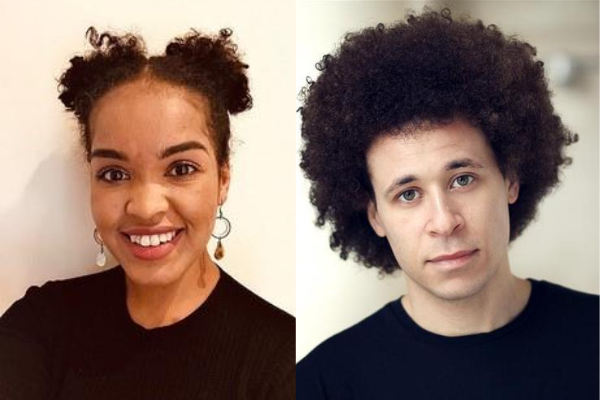
Helen Joy interviews Jodi Ann Nicholson and Connor Allen for Get the Chance, a voluntary organisation run by Guy O’Donnell and a very enthusiastic group of volunteers reviewing the Arts.
Helen
Hi Jodi and Connor great to meet you both.
Jodi
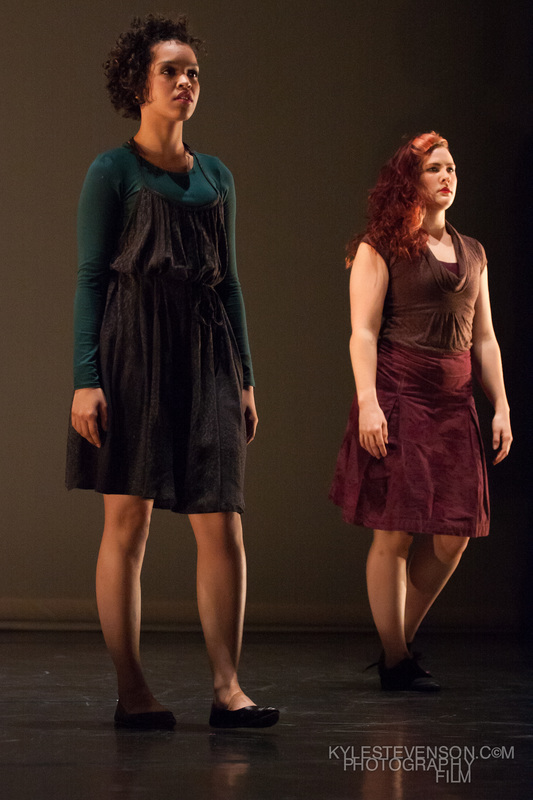
Hi I am Jodi Ann Nicholson, the dancer on Plethu/Weave project together with Connor
Connor
Hi I am Connor, an artist, poet and speaker of the word of ‘Branches of Me’.
https://youtu.be/8woi_2_B6fM
Helen
How did you start working on this project?
Jodi
We were paired together through National Dance Company Wales and Literature Wales and we are both part of the Plethu/Weave project
Connor
We were paired and it skyrocketed from there.
Helen
Why do you say skyrocketed Connor?
Connor
I found that the conversations and the experiences we had just met and shot straight up. We carried on going and going until we hit the stars and once we were there in that beauty of space and we were able to create ‘the branches of me’. It was a nice exploration. I felt we truly met and it skyrocketed in the conversations we had, the warmth that we shared and the talent we brought to the table.
Helen
What was it about each of you that connected? Because quite often we are put together in projects and it doesn’t always necessarily work, you don’t find that mutual passion. What was it that you found in each other that enabled you to work together so well?
Jodi
So both of our practices separately share similar interests when it comes to exploring identity and in particular mixed race identity. So when we came together, Connor was an easy person to talk to and easy to listen to so we just bounced off each other had a great open, honest space to communicate with each other and we shared a lot of interest in our work.
Connor
I think for me it was meeting someone who was open and gentle as Jodi. We were able to have those conversations where we could connect and just talk and talk for hours, understanding each other. On a base human level it’s beautiful and on these types of project it just helps.
Helen
What was the message you were trying to get across? What is the project about?
Connor
Personally it is about that exploration of a mixed race identity in a society that sees race as black and white. There is a unique point in a mixed race identity where you visualise a family tree and it has black branches and white branches. It is both of those cultures and ethnicities that make us what we are. Growing up, my exploration of identity was unique because I was too white for my black friends but too black for my white friends. So I was thinking, well where do I fit in? I don’t feel like I fit in either part of this thread. That is what is great about working on this project and chatting with Jodi. We can then bounce off each other and say that yeah, I felt that and I can relate to that. So that we then started to formulate an idea. It was not just me. Growing up I felt a lot of times that it was just me. Why am I feeling like this, when no one else is?
Jodi
I would say a lot of the same as Connor has. Looking about what it is to be mixed race in a world where it is going to be white to be black and finding the balance and harmony and finding our voice within it. Because we are two people who have been looking at this separately for a while, to come together and realise that we do share a lot of these experiences. You start to realise that perhaps this isn’t just our individual dilemmas of identity. Maybe other people of mixed race and backgrounds share the same thing as well. I think it was important to get our voices out and work out what our voice is and hopefully share what other peoples voice is.
Connor
So then we can get universal. We have our individual experiences we bounce off and we can use that to get to the heart of why we feel like this. Once we get to the heart of the issue. I hate the word issue, it’s not an issue.
Jodi
Experience maybe
Connor
That’s why she is brilliant see! By having the universality of our experience and that of ethnicity others can relate to it.
Helen
This issue around visual identity and how we are seen and how we want to be seen is a massive one. It’s a human condition isn’t it? You are trying to find a way of illustrating and narrating how it feels to be in that grey area in between black and white and how that feels and how you share that and share it in a universal way. And you have done it playing to your individual strengths. So Jodi, you’re a dancer, Connor you are an actor, writer, poet. And you’ve pulled together those different ways of communication to produce a two minute track. How did it feel to make that film? Do you feel confident you have got those messages across? And what are those messages that you really want us to get?
Connor
I personally feel confident, not so much a message but that it has definitely opened up a conversation around these issues where people can relate to that or say ‘that line, that really stuck with me’. So a lot of films being created were about 90 seconds and we went back and forth so many times because we just couldn’t hit that limit. And actually we don’t want to sacrifice our art and our vision to try and move it down to there. We truly believe in the potential in this and to get the true message across it needs to be the length it needs to be and we got it to 2 minutes. We were not going to sacrifice any more. It was an important point for us to say that this is the story we want to tell.
Helen
I tell you what, I’ve grown to really like a lot of the modern poets in a way that I did not think I would.
William Dean Ford
I was working with a guy called William Dean Ford last week on a mental health project with some poetry and he quite often uses the Haiku format, but kind of repeatedly so it is a kind of Haiku in verses if that makes sense and I’ve been really struck at poetry as a means of getting through to people. I’ve been really struck by that recently and I think that because now we’re trained like Pavlov’s dogs into snippets of information, you know social media drives snippets of information all the time, everything is short and fast and I’ve been interested in watching the poets respond to that and being so careful and so sensitive about their use of words to make best use of that space. It’s been absolutely brilliant. Now I think they have a role that wasn’t there for a long time.
Connor
Yeah that means like there is power in words. Words carry so much power and weight that sometimes people forget that. In the same way that music can have a profound effect on you as you can relate to that and you hear those lyrics and they resonate with you in a way that other things don’t. Words are some of the most powerful tools we have
Helen
Yes they are and I’ve been fascinated in recent years with dance for exactly the same reason. Jodi you used that word ‘Economy’ and inspiring people to think about things in different ways and its part of what you are trying to do. Okay, if you can’t get it that way, try it this way it’s using all the things at our fingertips to say you need to think about this. You know you can’t ignore this, it’s really important
Jodi
When it comes to dance you have to communicate. Half or a good measure of our communication comes from our bodies as well as language and words so I think dance works well as it communicates in a different way and level than language or words.
Helen
Tell us about this video, ‘Identity – Black Lives Matter’ and your role in communicating what it feels like to you as a mixed race individuals.
Connor
For me personally, I did an interesting thing. I just watched it, turned the audio off so just watched Jodi’s dance and it is a different experience. For me this is linked, we know why we made it and our exploration. But for me it’s about what it means for whoever needs it. Its subjective, some people are going to watch that and it will deeply resonate with them, at a level that other pieces might not and other people are going to be educated, and say, ‘wow, I’ve never even thought about that, it’s really interesting.’ And there might be people out there watching and thinking ‘that’s a load of crap.’ And just skip past it. And that’s fine. It’s what it is to them. We will always have our back and forth, our moment of exploring and what it means for us as two mixed race artists. We are quite open and honest about that. It is about that exploration of identity and what that means – Where do we fit it in to this movement of Black Lives Matter in this pivotal moment in society and in history. Right now we are in a unique tipping point that Black Lives Matter and black lives are being shone in a different light. People are hearing our stories and listening to our voices. On the one hand there are a lot of people who are scared by that but at the same time there are a lot of people embracing and supporting that. It’s a unique balance for me. What I would like is for people to watch the film and to spark up conversations about what an intertwined identity means on both levels.
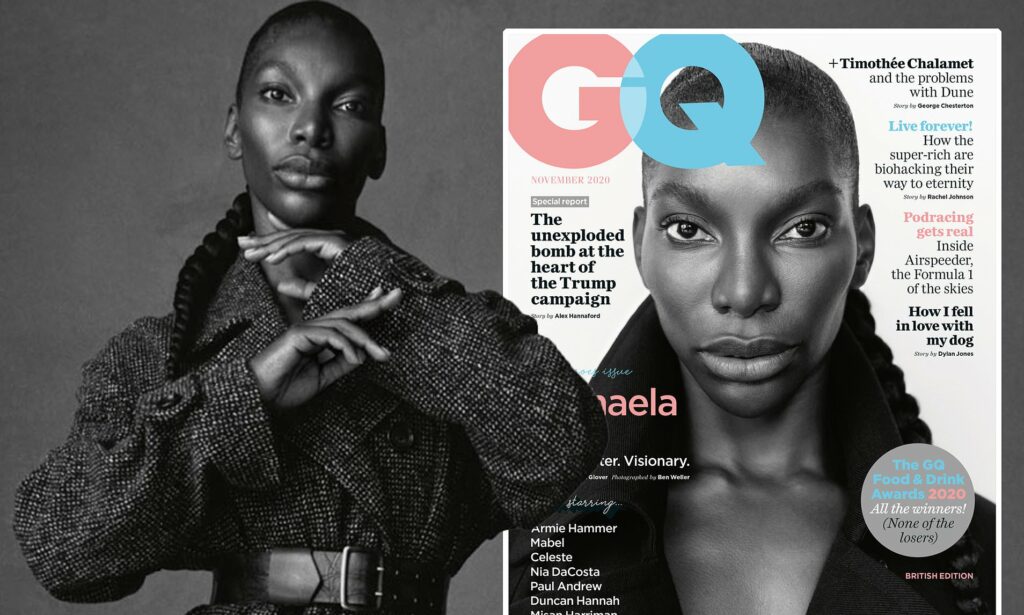
I read a really interesting quote by Donald Glover and Michaela Corel in GQ magazine. Donald talks there of how a lot of white people are scared to have those conversations as they might see themselves reflected back on themselves and that is a scary thing, to know that you might have said the wrong thing to someone or that you might carry those prejudices and you might not like them. I think because we live in a society of counter culture and outrage, people are quick to say ‘No you’re wrong and I’m right’. It is just about opening up that conversation because I truly believe that if you walk in the shoes of another person you have a greater capacity for empathy and that all it is about. Knowing that we have our experiences but there are going to be other experiences. As I was saying to Jodi, I can never relate to what it means to be a woman because I am not a women. I don’t have menstrual cycles I don’t carry children, and there are all these other things I can’t relate to I can’t resonate but what I can do because I’ve been raised by a Queen is knowing in some way what it means to go through those issues, those adversities is be an ally and support women and females. That is all we are asking. Even if you don’t fully agree with us, even if it doesn’t resonate, you can still be an ally, you can still listen and have that greater capacity for empathy. A lot of people nowadays say they don’t see colour, but you have to see colour to see our experience and then empathise with what we are going through. You might not be able to relate to but you can empathise what we are going through. Long story short, I just want the film to open up the door to empathy for other mixed race or black people who are feeling the way we are feeling.
Helen
I was just going to say to Jodi that you are communicating in a very different way from Connor, who is using the spoken word to get his narrative across and he is doing it in a very universal, embracing way. You are using the medium of dance and film. How do you feel when you put your work out there and people can interpret it in all sorts of different ways and not just the way you necessarily want.
Jodi
I am completely fine with that ultimately. I know that there is a space for interpretation when you put anything out there no matter what form it takes whether it’s through poetry, right through art or whether it’s through dance. When I put work out there, there has been a long process before it that I have worked out whether it’s by myself or with somebody I have been collaborating with, working out what it is I want to say, what it is I think and how I think it is best to communicate and to show this through my body, through film, through whatever medium I’m using. I am very open and I put it out there for there to be conversation about how people experience what I am talking about or what I am trying to get across. Sometimes its picked up and people think that is exactly how I feel, It’s exactly what I think and this is my experience and it’s a completely shared thing. Other people go ‘Oh, I don’t quite understand what you are talking about or what you are trying to show.’ And I go ‘well okay, why? Or what is it that you did get?’ And I think that is just as interesting and just as important to me as an artist. Because either something new will come out of it that I will then learn from or I’ll go, ‘Okay, I need to work on that as an artist.’ Depending on how important it is to me that a particular message is got across. I put work out there for the conversation about in this case, Identity. And how we experience each other and have space to have openness to experiencing other people and their lives.
Connor
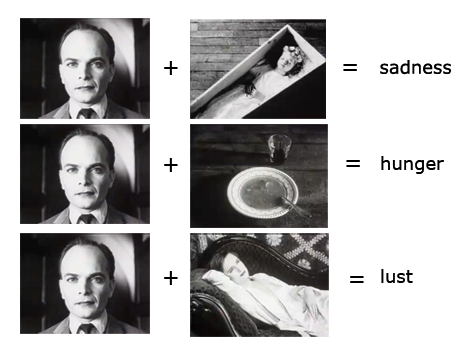
Going off the back of that, I learned recently, a year back, there was this Russian practitioner called Kushelov and he came up with this thing called ‘The Kushelov Effect.’ He made three short films, and he got a Russian actress and he wanted to try and grab the visuals of what it meant and show what hunger, grief and laughter felt like. He wanted to film the three emotions in their entirety. He filmed this actress looking into an empty bowl, a coffin and something else and filmed the shot. He released this film of these three stages band it just went crazy, and people went ‘OMG, the actress has really got the true meaning of grief in her eyes and the innocence in her laughter, you can just tell it’
It came out years later that he used the exact same shot on all three films. So what that meant was, its just audience subjectivity. It is subjective to the audience. They put the take on that. Going off what you said then it is quite similar. We know why we made this, and why we make our work but as soon as it goes out there, it is up to the audiences’ perceptions to be ‘Ah, you meant that, didn’t you.’ Or, ‘I didn’t quite get that,’ it’s not really resonated. It’s just subjectivity, and what it means to the audience.
Helen
And I think there is something there about taking the fear out of the conversations. We are all struggling with using the right words, the right time, the right people and the right place. It takes away the honesty and the openness sometimes. So it is really important to have those conversations. That’s how people change, how they are educated. In my view it needs to be done in the most non-confrontational way as possible so that you are embracing all those different views.
Connor
You need those. You need different views but you need also that openness to say ‘okay cool so that what you have just said is not how we’re perceived but I can educate you on the right terminology or the right way to think about it.‘ So education for me is key. I could be screaming down a void, the black hole that is Twitter and saying ‘this is how I should be feeling now’ And that’s fine. J Cole is a rapper, he released a song recently where he spoke quite openly about that won’t culture and how he is not that. I think everyone has their ways of trying to tackle musicians who deal with that. Some people are very vocal and will do all their research and they will go out there and ban drugs. Other people like me, I’m very reserved and I would rather speak to individuals and plant these little seeds and hopefully then they will grow into fruition years later. I work in these communities in that way.
For me personally it is about education and we just need to be more open and willing to be like ‘You can’t say that because that offends me, or I don’t like that’. For example using the N word. Some members of the community will use the N word other people won’t.
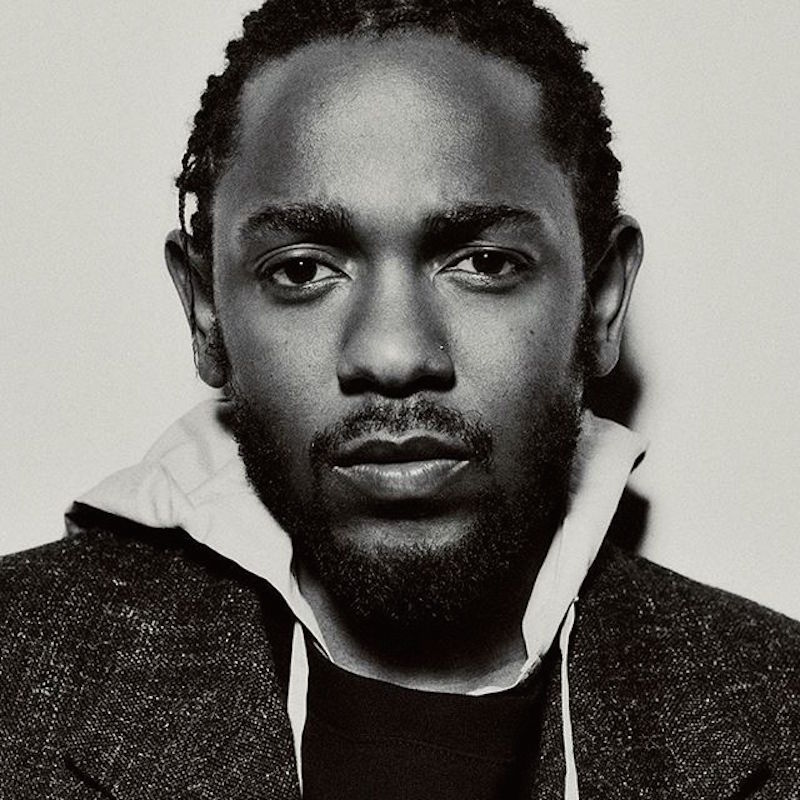
Kendrick Lamarr
Kendrick Lamarr had an issue where he was in Australia on a world tour and he brought a white female fan up on stage and she started rapping along to one of his songs and then obviously the N word was in the song and so she said the N word and he stopped the show. And he said ‘whoa, no, you don’t get to say that.’ But in that instance for example, it’s in your music and she was a fan and she’s just singing along. So instead of automatically saying ‘You don’t get to say that cos you are white.’ Let’s have this conversation. Why can’t she say that because she is rapping along to a song and she is a fan? They are awkward conversations and you are trying to justify as to why a section of society gets to say well ‘you get to say that, why can’t I say that word?‘ Firstly there are two iterations of that word, one with an ‘a’ and one with an ‘er’ so it depends on what connotation you are using. By having more openness, gentleness and willingness to engage in conversation. It doesn’t have to be confrontational. You can have a nice debate and you are not always going to see eye to eye and that’s fine. You don’t have to agree with everything we are saying if you can say that you can see where you are coming from, I just don’t agree. That’s also fine, it’s the small victories.
Jodi
I’m with Connor, I think education is massive, important. There just needs to be space for people to speak their mind and learn from each other. I know from myself in general in life I can be really scared about talking sometimes because I am trying to make sure that once the words have left my mouth I am not going to regret it or change my mind afterwards. I think that if you don’t understand something or you don’t know then people need to give you the space to ask. Maybe you are going to get it wrong or you may offend somebody or you are not going to offend anyone, but there be space for it to be said because once we start talking about it we can start understanding it and each other and where we are coming from. We shouldn’t be scared about getting it wrong. You can get it wrong once, maybe not twice or three times. Which is why I think my work and this piece is about wanting to open up the conversation, this is what we have been talking about for the last month and what we have been thinking about ourselves for years. This is our point of showing you guys, now what do you think. Let’s have space to do that. Because when it comes to race it is important to have the conversations and feel confident to do so.
Helen
And it is up to all of us to create the environment to have that conversation. To make that safe space so that however those conversations are being had in whatever medium they are embraced and valued. I can’t tell you how much I’ve enjoyed listening to you. You are the most remarkable people and I don’t doubt you are going to have remarkable futures. I would recommend to anybody that they follow Jodi and Connor and in particular pick up on this latest video piece because it is absolutely beautiful. Can you tell us where we can find that video what it is called and how we could contact you if we wanted to have that conversation?
Connor
The pieces are called ‘The Branches of Me.’ It can be found on Literature Wales and National Dance Company Wales Twitter. It’s also NDCWales website and on You Tube.
Jodi
It’s on Instagram. All social media platforms used by literature Wales and National Dance Company Wales.
Connor
If you want to contact me, I am on Twitter, @connor_allen92 or my website, connorallen.co.uk there is a contact form on there.
Thank you so much both of you, this is so important. Anybody who is feeling that they are not part of something…. It’s dreadful really. We all need to feel part of something. We are herd animals and to feel excluded from a conversation in any sense is not a nice feeling, thanks for your time.
Interview transcribed by Richard Evans, Get the Chance.
Get the Chance member Helen Joy, interviews Poet Marvin Thompson. In this interview Marvin discusses his background. How issues such as Black Lives Matter have impacted on his current practice and Plethu a collaboration with Literature Wales/National Dance Company Wales and Dancer Ed Myhill.
Plethu / Weave: Triptych Part 1 by/gan Marvin Thompson and Ed Myhill
Please note: This video contains deliberate use of a highly offensive racial slur and images that some viewers might find distressing. These elements are relevant to the context of the artistic work which explores Wales’ relationship with the transatlantic slave trade.
I am the wrong person to review these pieces. I love NDCWales’ performances like I love good chocolate, I love them like a filthy, dirty, sweet secret, I want to shout this to the world.
Tundra
Tundra I have seen before. Seen? Seen? You don’t just see these dancers on a stage, you feel them in your guts and in your heart. I cannot begin to imagine what it must really be like to sweat and toil over the solid waste ground of the boards, feeling hot but showing cold. It is stunning. Complex, beautiful and stronger than ever.
I was taught about the tundra, the Russian Steppes, the permafrost and their people in a time when we embraced our differences, when our clothes and cities and foods and arts were noticeably different. Morau is a visionary unafraid of the past, unafraid of what makes us special, what joins us.
Afterimage
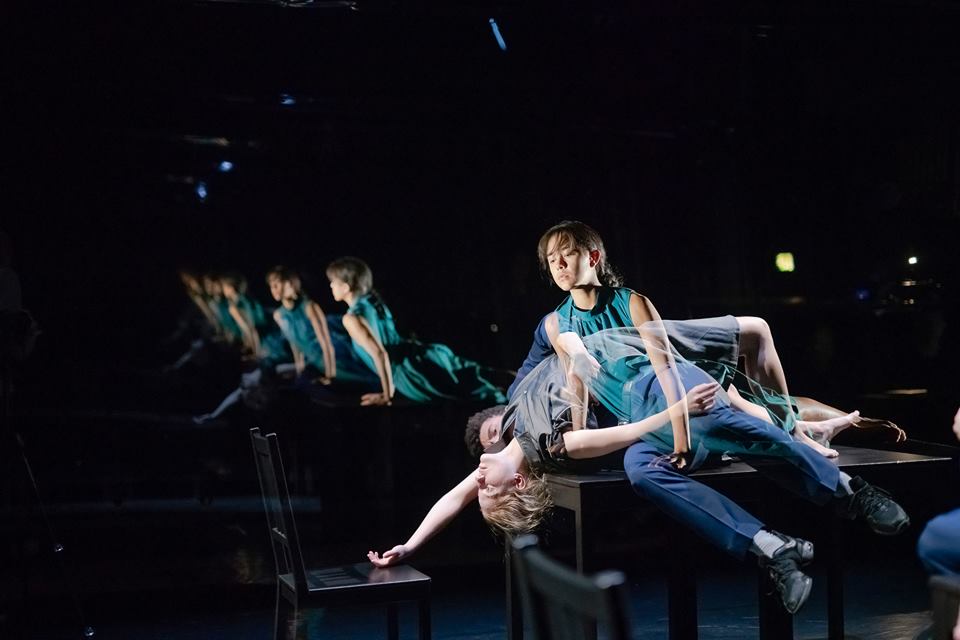
Now this is magic. The audience asks are there mirrors? No – I want to scream – it’s magic, let it be magic. Don’t explain – just enjoy the rolling images of relationships between the dancers, the music and the space they fill.
Melo wants the audience to have an active role in interpreting his piece, not tacit complicit traditional acceptance but think, join in, believe. Visually incredible – as it should be. This is a hungry piece.
Revellers Mass
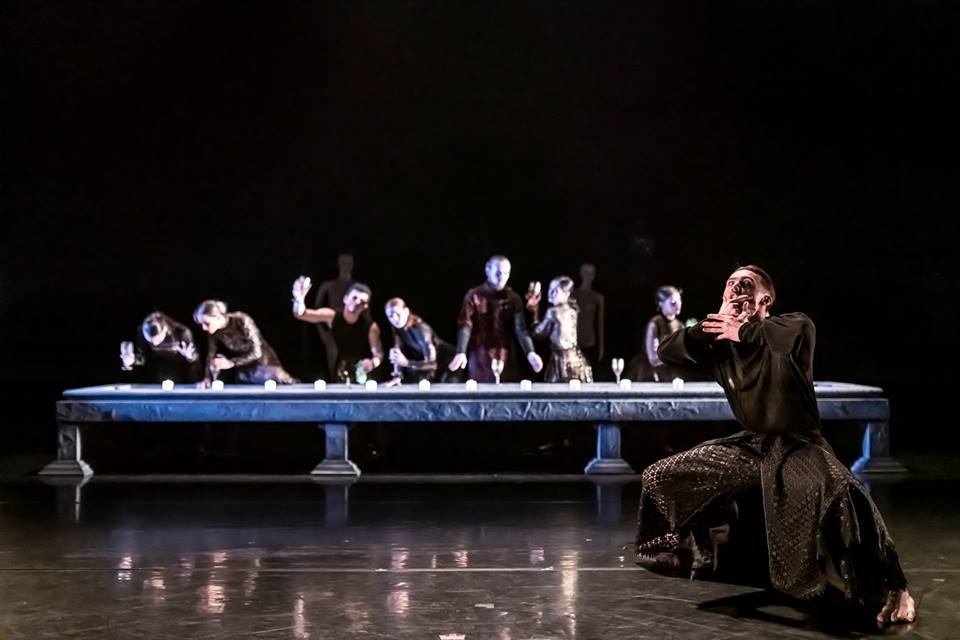
A greedy, visceral, writhing display. Gorgeous. I think Greenaway, I see Spanish lace and the bloody colours of fFamenco, I see The Last Supper debauched and blasphemous. I bloody love this. How does Finn do this? I want to cry, it is so so good. It is funny, it is dangerous, it is an orgy and a ceremony.
The music is perfect – deep through to ironic – and the audience sighs and laughs along, cringing at memories of our own revelry. We particularly like the mannequin’s arms groping a dancer’s body as he cavorts on water Fun! Joyous! And there we are, dragged off in disgrace and a fitting end. Brilliant. And as always, I am left wanting more, wanting to see it all again.
Afterthought
Why do these dances make me cry? What is it about them that taps into something so primal, so rooted that when they soar, I do too? Perhaps it is because I could no more do what they do than fly to the moon, perhaps it is because I see what could have been. We are often brought up kindly and carefully, encouraged to train for a proper job but we miss something – art brings life, in all its forms. Do not be afraid to take that different path. Do not be afraid to paint your dreams.
It is a cold and snowy night in St Hilary. I drive up to the village hall. All is quiet. I tap on the door. It creaks open…to expose a whole community packed into a warm space – already chatting and laughing and drinking tea. A blast of hot air and frivolity. An absolute treat to be amongst such a friendly bunch all ready to enjoy themselves. And enjoy ourselves we do.
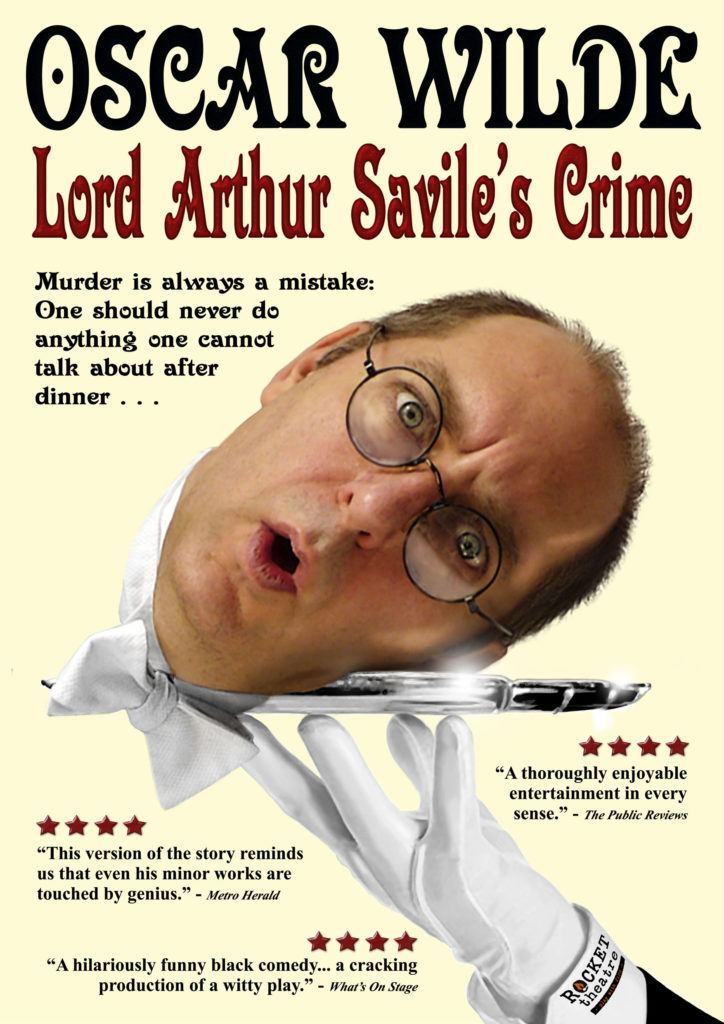
You always think you know Oscar Wilde = that you are au fait with every quip and quiver but no, we all know so little of this clever writer, this scribe of human quirks.
Lord Arthur performed by Martin Harris is positively steaming with aristocratic lunacy – a Bateman come to life, facing out his audience and batting down his batman. Ah, Middlewick performed by Chris Bridgman. Valet, butler, gentleman’s gentleman,player of many parts. Subtle, farcical, multi-talented, the perfect foil.
They do not falter.
We are laughing from the off. We are relishing the peculiar gratification of recognising a line, a title, a character. And then it starts to take a tricky turn. We are being included. Not just eyeballed but persuaded onto the stage. Stage? A chair, a fireplace, a table and a stool just within the curve of our seating. A painting of Lady Savile, young Sybil in fine Edwardian garb, overseeing all of us. And we are suddenly nervous.
Cries of, Oooh I’m glad to be at the back, go out. We egg on our comrades to join in with that curious mixture of jealousy and relief. It is expertly handled. Hilarious! Properly one of the funniest theatrical experiences to be had. The temperature starts to climb. The macabre nature of the tale unfolds and we accept not only the dark side of our humour but the apparent ease with which the upper class is seen to accept its position outside of the law. Lord Arthur and Middlewick start to play with our sensibilities and we are sucked in. We are all in the clutches of the palmist.
D’you think authenticity is what they’re after in St. Hilary?Clearly not! We want more Lady Clem.
A slightly clunky trip to Venice requires us to take a break and enjoy wine and ice cream while the snow falls outside and the temperature rises inside.
In our cups, we rise to the panto atmosphere and settle into the second act with enthusiasm. Lord Arthur, driven to a carefully controlled distraction by his failure to commit murder, pushes on with Middlewick riding shotgun to the story telling. We are roaring with laughter and starting to wonder how it all will end.
And end it does. A sorry damp little ending, perhaps a bit like life itself.
And we are released into the cold, a lot warmer and a little wiser to the power of suggestibility to the gentler mind. It’s all been such nonsense…
There was an Old Person of Ems Who casually fell in the Thames; And when he was found, they said he was drowned, That unlucky Old Person of Ems.
I’m never quite sure what we are trying to say when it comes to our use of the internet.
And I’m none the wiser after this performance.
We dance around the issues of data-sharing and personal exposure. We dally with each other’s lives and throw our own out there into web-space without thought for the consequences.
We trip the light fantastic with our innermost secrets reluctantly and willingly bared.
This is elegant, cautious, a ripple of ideas from dancer to dancer. We give and we take, we argue and hide. We watch the interplay of give and take played out as always with beauty, story and perfect timing.
We watch two reluctant lovers forced together by circumstance and unavoidable magnetism progress into companionable partnership.
This philosophic performance makes me think: do we have a choice?
Clever, thoughtful, poetic.
All photography by Sian Trenberth, Panopitcon by Tim Volleman, Set & Costume: Sophie Wheelan, Lighting: Jose Tevar , Sound Design: Benjamin Smith, Composer: Trailand Elzorth. Dancers: Elena Sgarbi & Oliver Chapman
Un
Some people just make you wish you could be someone else, have someone else’s gifts – maybe just for a day.
This is clean, smart, strong. She stands confidently alone and accepts the challenges life brings.
I am agog at the power in this dance, this dancer. She is utterly beautiful and complete.
‘Un’ by Kat Collings , Set & Costume: Megumi Okazaki, Lighting: Jose Tevar , Sound Design: Benjamin Smith , Composer: Sylvia Villa , Dancer: Julia Reider
Ecrit
To my left is a choreographer and dancer and she says of this: they fly!
And fly they do.
This piece is the reason to follow this dance company, to follow dance, to sit here in the dark and let the lights and the simplicityof the stage capture you, to let the music touch you and the movements of the dancers feed your soul.
The love in this dance makes me cry. This feels as if it has been born perfect, perfection born of two imperfect creatures in a story of passion and pain.
“Truth is, so great, that I wouldn’t like to speak, or sleep, or listen, or love. To feel myself trapped, with no fear of blood, outside time and magic, within your own fear, and your great anguish, and within the very beating of your heart. All this madness, if I asked it of you, I know, in your silence, there would be only confusion. I ask you for violence, in the nonsense, and you, you give me grace, your light and your warmth. I’d like to paint you, but there are no colors, because there are so many, in my confusion, the tangible form of my great love. ” Diego Riviera
I see this piece again and again behind closed eyes and relive it best I can.
To my right, the costumier says, however many times I see this it will not be enough. I agree.
‘Ecrit’ by Nikita Goile, Set & Costume: Erty Huang, Lighting: Jose Tevar , Sound Design: Benjamin Smith , Composer: Florencia Alen Dancers: Nikita Goile & Cyril Durand-Gasselin
Why Are People Clapping
Because they are having fun!
Slapping, clapping, rollicking dance as a lively contrast to the soul-searching we have enjoyed before.
I find this hard on my ears and squint back at the stage, recoiling slightly at the noise. It is such a shock! The rhythm of life beats and the audience laughs and we pull faces back at the dancers’comic turns.
This feels like an exercise, an exploration – a start to something this extraordinary company of dancers will see through in its own way and I very much look forward to seeing it too.
‘Why Are People Clapping?’ by Ed Myhill,Set & Costume: Elin Steele, Lighting: Jose Tevar, Sound Design: Benjamin Smith , Dancers: Julia Reider, Kat Collings, Tim Volleman, Elena Sgarbi & Oliver Chapman
A wonderful series of pieces – I left exhausted and elated.
#altroutes18
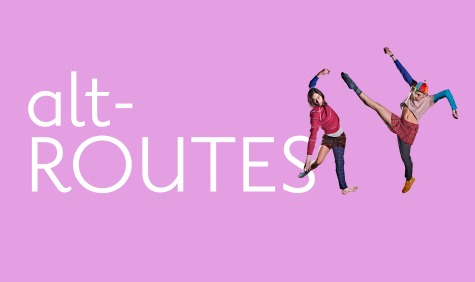
alt-ROUTES
7 – 9 June 2018
Seen: 8 June
National Dance Company Wales
Dance & Design from Cardiff’s emerging artists
Dance House, Wales Millennium Centre
Panopticon
Choreographer – Tim Volleman
Dancers – oliver Chapman & Elena Sgarbi
Un
Choreographer – Kat collings
Dancer – Julia Reider
Ecrit
Choreographer – Nikita Goile
Dancers – Nikita goile & Cyril surand-gasselin
Why Are People Clapping
Choreographer – Ed Myhill
Dancers – Julia Reider, Kat Collings, Tim Volleman elenaSgarbi, Oliver Chapman
“To know yourself, you must accept your dark side. To deal with others’ dark sides, you must also know your dark side.”
Carl Jung
Tonight, with this piece, Ballet Cymru gives us a vision of utter loveliness in dance, in theatre and in purpose. Tonight, I cry with the utter elevated beauty of it all.
The dancers are beautiful, confident story-tellers and they revel in the simple stories they tell.
Exposed and discerning, gentle and strong, they seem so utterly happy out there under the lights. Oblivious to the likes of me, gazing at them with wet eyes.
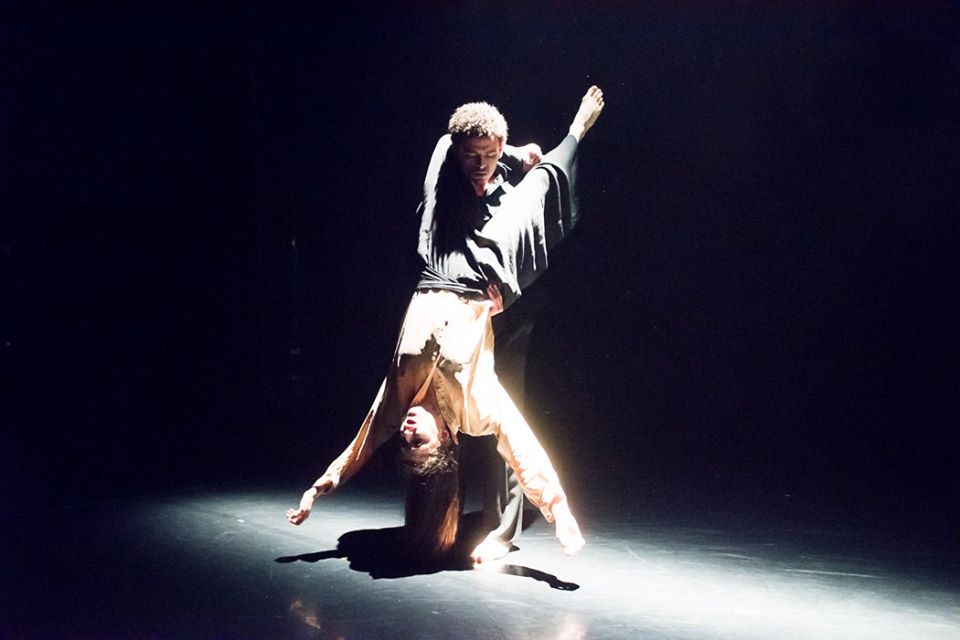
The painfully perfect shadow of the Royal Ballet is cast and it serves to brighten our Ballet Cymru. This is the most gorgeous coupling. We can feel the reverence and respect and sense the raising of the game; we are in the presence of greatness and its impact: the lifts a little higher, the smiles a little wider, the precision of ballet in the arena of modern dance.
And danced to such music! Such mournfully sweet song. Just perfect. It reaches inside me and touches the soul in me.
Stripped, bare, tops and tunics against dark stone wall, it is just light on dance, lightness and dancers. All darks and lights and thoughtfulness.
Visually, aurally, this is just sublime.
Shadow Aspect starts with Jung so should end with Jung: “As far as we can discern, the sole purpose of human existence is to kindle a light in the darkness of mere being.”
Thank you, Ballet Cymru, for striking the match.
Choreography By Tim Podesta
Music by French composer Jean-Phillipe Goude
With kind permission from www.icidailleurs.com
Stage design by Australian architect Andy Mero & Tim Podesta
Costumes Design Yukiko
Photo credit Jason Ashwood http://welshballet.co.uk/productions/shadow-aspect/ Reviewed by Helen Joy for Get the Chance, Friday 3rd November, 2017.
Helen Joy
Here’s the thing:
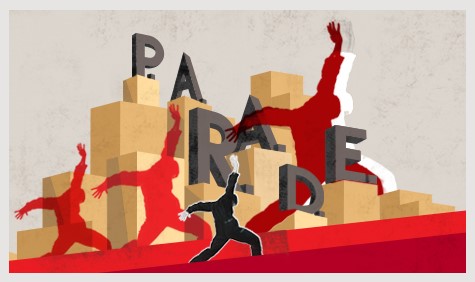
I have grown to adore National Dance Company Wales, I covet every ticket to every performance I am able to attend and I cherish each moment spent in the presence of such talent. And the dance pieces played out on the stage of the Wales Millennium Centre for P.A.R.A.D.E .were more of the same – clever, beautiful, witty, fulfilling. The performance pieces in the foyer and outside in the Oval Basin, were enjoyable and the context fun. But the intention of P.A.R.A.D.E. was lost to me. The problem as I see it is mine and it is this: expectation.
The original P.A.R.A.D.E. was designed to bring ballet to the masses, a cultural-political poke in the eye to traditional elitism. An opening of doors to art and theatre and ballet. This wasn’t quite. It was more an homage to Lenin and to the Revolution and to Russia. And glorious in its own right.
Photo credit: Mark Douet
Outside, free to stand about in our anoraks, occasionally prompted to wave our little red flags in response to the forceful rhetoric from our esteemed leader – past entrepreneurs lambasted and then a crie de couer ‘where are the entrepreneurs when we need them now?’ Hiding?! What a spectacular leader in Eiry Thomas we have! I rather think we might follow her forever in enthusiastic formation!
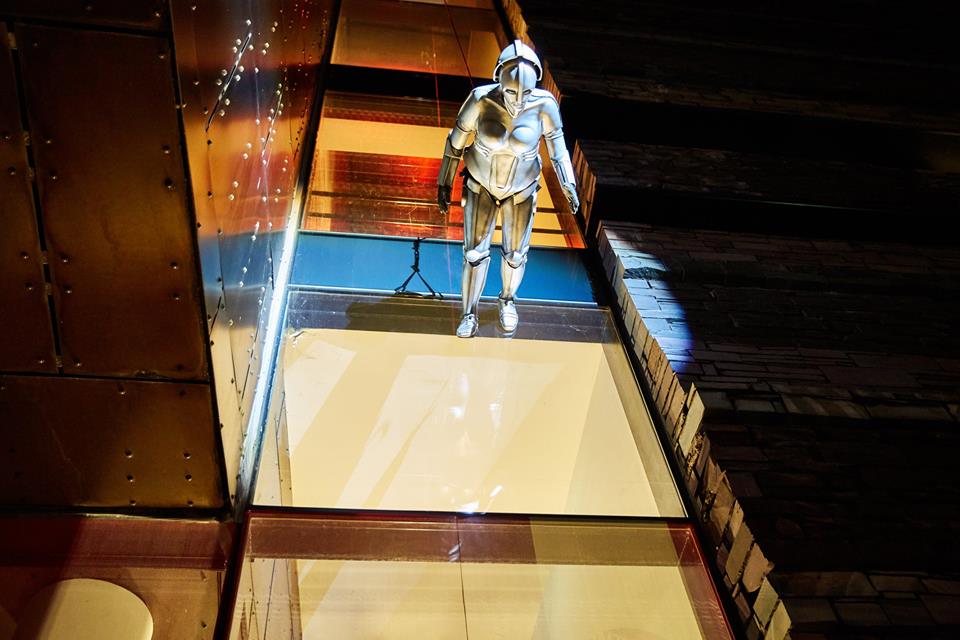
Instead, we rally to the dance and admire the aerial robot – all silver against the blue of dungarees and the red of the lights.
Photo credit: Mark Douet
I wasn’t expecting a socio-political tirade on our current times; nor a dystopian view of our future past; it feels like a rather arty dance-y episode of Dr Who. Not a bad thing. Not a bad thing at all.
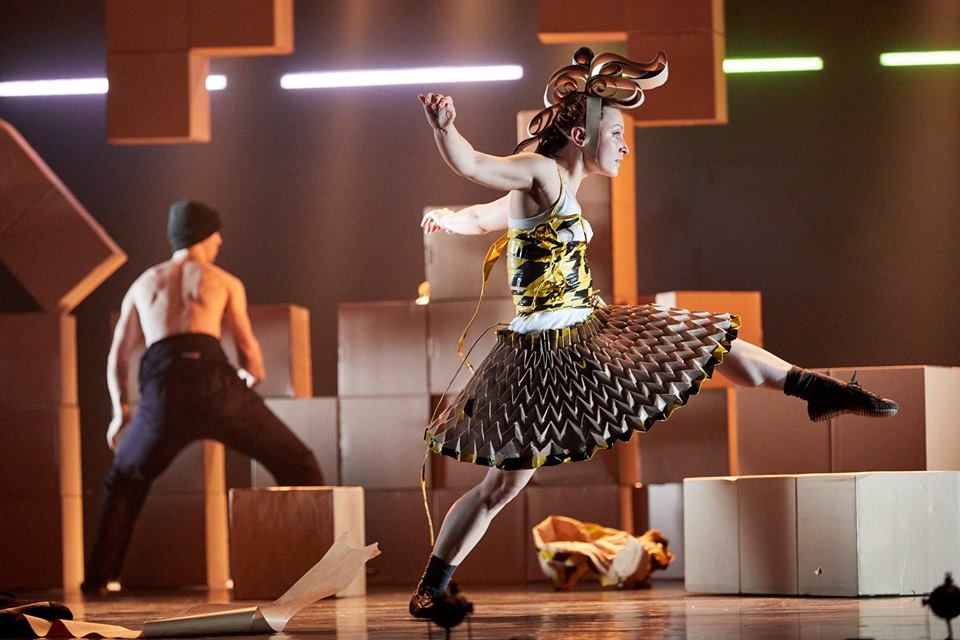
We feel the collective conscience and obligingly shuffle into the WMC where we experience the dystopian theme as it continues with men in dresses and masks dancing with shopping trolleys. ‘The worm that turned’ perhaps. More Factory floor box shifting along the counters. More dungarees. More still silent faces.
Photo credit: Mark Douet
We can only look. Walk around them. There is no engagement, no participation, only watching. And lots of boxes. It’s predictable but not comfortable. It’s creepy. It’s always clever.
Back in our comfort zone, with paid tickets we settle into our seats and watch some very clever dance. I am back in the land I know of adoration.
‘I thought the dance pieces in the WMC were amazing. I was transfixed’.
Photo credit: Mark Douet
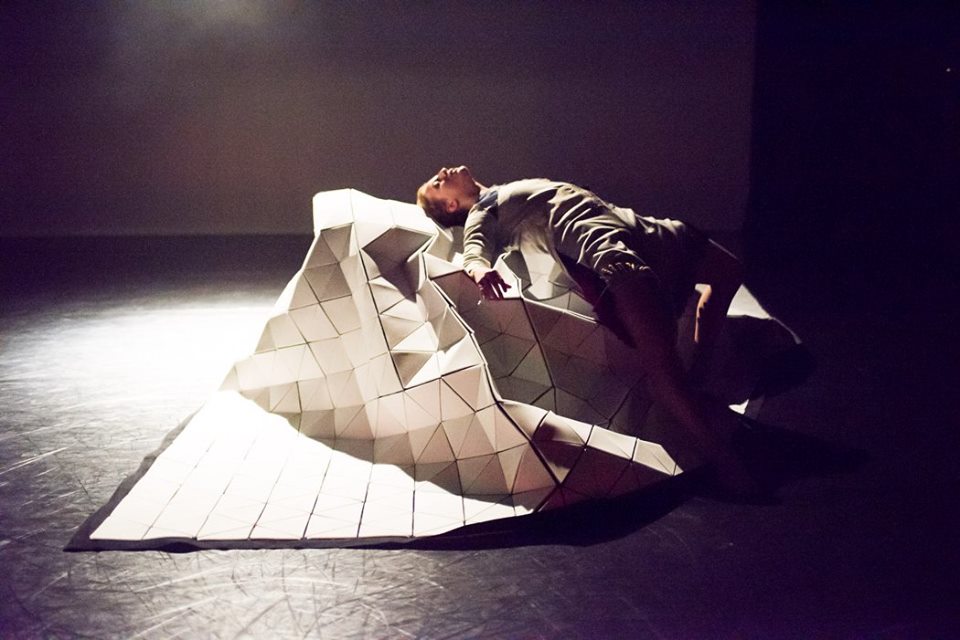
The first piece, P.A.R.A.D.E. huge and dark and taped up, smacks of rebellion on the factory floor, the fear of automation. It has a ‘50s feel. All smokey dark and dismal. Costumes roll from municipal and practical to cardboard rococo and crying eye to breast-plated automaton. Big. Complex. Storytelling dance with breadth and depth and drama. Wonderful. ‘I liked it. I loved it. It fills the stage.’ No mean feat at the WMC.
Photo Credit: Rhys Cozens
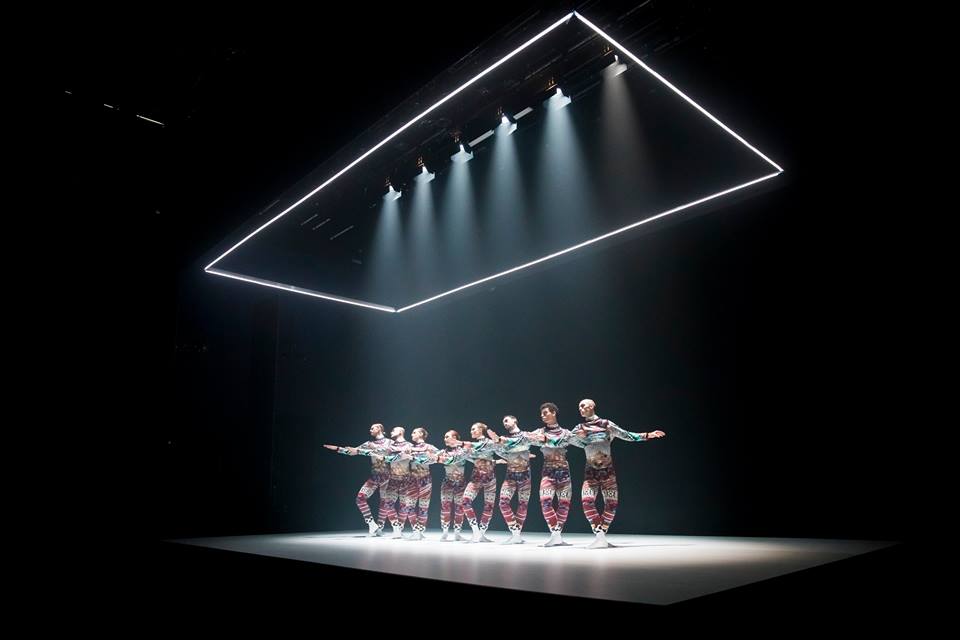
The second. Tundra. Different. Dramatic, quietly voluble and perfectly captivating. Very beautiful. Honed, stark, arctic. Very far from barren. It is not enough to see this once. The audience leaves in roaring silence.
Choreographed to perfection, visually dramatic, carefully disturbing; P.A.R.A.D.E. is a show to be proud to have seen. I just wish we had been a little more included.
Check out the atmospheric trailers for PARADE – they are spectacular. https://www.youtube.com/watch?v=8CoIhlBPCOU https://www.wmc.org.uk/Productions/2017-2018/DonaldGordonTheatre/Parade/
NDCWales
Marc Rees
BBC National Orchestra of Wales
Rubicon Dance
Dawns i Bawb
Choreographer Tundra Marcos Morau
Choreographer PARADE Caroline Finn
Graffiti artist Pure Evil
Architectural designer Jenny Hall
Aerialist Kate Lawrence
Composer Jack White
Helen Joy
CHAPTER IN ASSOCIATION WITH GARETH JOHN BALE AND OWEN THOMAS
This is very uncomfortable viewing in a very small intimate space. We are witnesses to a private life in a public space.
Laughing at jokes our present vox populi disdains. Awkward. Funny. Have we forgotten that some things are just funny? Not sexist, dirty, grubby, misogynist, vile, elitist. Just funny.
From the mid 1980s onwards, we start to judge. We start to create a view of things humorous according to an assumed view of things social, socially acceptable. We start to judge a man according to his popularity, his means. Mean, they said. Was he?
Was Benny even half the terrible things we said he was? How refreshing to get another view.
Not mean but normal. Not lecherous but admiring. Not base but witty.
Hugely popular for years, a hard-working comic who paved the path others trod. A quiet man. A man who sat in his chair and who we all like to think died in shame and misery and silence.
Silence, yes. Peace, yes. The peace of his own home, his own chair.
Why do we fear being alone in death so much? What else have we, the populi, also lost along with our ability to judge individually and in context?
Our vox seems louder than ever but is it shouting down the debate and silencing the dissenters? Uncomfortable viewing indeed.
An outstanding, enjoyable, humane performance by Liam Tobin. Clever direction, clever script. Enough hopping back and for through time to make it theatre, not so much as to make it contrived.
I absolutely loved the final scene – the main man, the person, Benny, playing out of the television and over his room, his chair, his body. Playing that tune, that background music to life as we know it.
Very, very good stuff indeed.
It is a grey audience tonight. How would a younger audience react, I wonder. It would be interesting to show a Benny Hill programme beforehand. Even more interesting to get each member of the audience’s honest reactions.
Could be a shocker!
Oh and I sat next to someone who knew someone who knew one of Benny’s Angels… and she had had a blast!
Performed by Liam Tobin
Written by Owen Thomas
Directed by Gareth John Bale Reviewed by Helen Joy, 3rd Act Critic for Get the Chance, Friday 9th September
Creating opportunities for a diverse range of people to experience and respond to sport, arts, culture and live events. / Lleisiau amrywiol o Gymru yn ymateb i'r celfyddydau a digwyddiadau byw

 (5 / 5)

 (4 / 5)