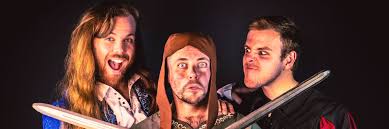
I came to a realisation tonight – I * think * I might be a groupie. After seeing Bad Clowns Comedy around 3 times along with their solo acts, this throuple, this bromance, continues to get better and better.
Not unlike the Cornetto series, these loveable rogues are friendly faces that you become accustomed to seeing, but each time, in a different and hilarious guise. While we are used to Sam, Christian and John, when they welcome us as one of them, josh with us and include us in the unscripted moments of fun, they still bring a new, fun and fresh approach to comedy, with new characters that still have that essence of them underneath.
On their final show of this year’s fringe, a packed house was full of an electric excitement, with genuine fans in the seats. This interactive performance invited the unexpected, with heckles and involvement that could have easily stumped a performer – not these lads. They took it, they ran with it and built on the naughty and the nuanced.
There is genuinely no point where you know what will happen next. Long Live the King! in a way, is what it says – it’s an age old tale of the line of succession but in true Bad Clowns style, with many a twist. However, the twists and turns, peppered with traditional slapstick (almost to the detriment of the Gilded Balloon Patter House’s ceiling), at times lewd and obvious jokes and (my favourite) a good ol corpsing moment when they try to fumble one another, it’s nothing short of surprising and genius. And again, in true Bad Clowns style, the ending is our choice – who will we want to be king? It’s all up for grabs and this trio are skilled enough to pivot off the potential change and the occasional heckle and surprise from us.
Bad Clowns: Long Live the King! is a laugh a minute, high energy feat in the comedy circuit. This group has only one way to go and that’s even further up!
Gary Owen, known for his phenomenal play, Iphigenia in Splott, returns to Lyric Hammersmith with his adaptation of Henrik Ibsen’s, Ghosts. Featuring welsh actor Callum Scott Howells who has graced our TV screens in It’s a Sin and the stage with Cabaret and supported by a host of other famous faces, this classic tale is brought into the modern world.
Ghosts tells the story of the class system, long-term abuse and the intertwining relationships between. When Helena wants to use the money from her abusive late husband to create a children’s hospital, it begins to unravel as the truth comes out about him. She is catapulted backwards to her memories of trauma and, with her son Oz home, soon the unspoken secrets are revealed, creating problems that cannot be solved.
The entire performance takes place in one room – it looks like a plush building, with a glass window, that only ever looks out at the clouds and mist. The walls are plastered in the back view of a man’s head – a man we never meet. There’s a sense of someone always present, and when we hear the tales of abuse by her late husband, there’s this sense of him always watching. The cloud-covered building is hidden away from normality of the village, and this is only ever broached by the outsiders who are invited in. There’s a reference to class not only in this but outwardly acknowledged, and the concept of privileged in abuse underpins a lot of the story.
What is interesting is that the story delves into the juxtaposition of being a victim and this experience of turning them into an abuser. Helena (played by Victoria Smurfit, seen recently in the acclaimed Rivals) uses her position to push down the trauma, but as it unravels and her along with it, she uses her taught behaviour to impact others, using her privilege to forward abuse. It’s a really interesting take on domestic abuse and creates a feeling of unease, when, a not entirely likeable character creates an atmosphere where you feel sympathy, but breaks and returns to the unlikable person.
Scott Howells plays a lovable fool, brought up rich and sent away, he is a budding actor and holds the majority of the comical lines. He’s awkward but also bubble wrapped and this comes across in his interactions with others. His relationship with Reggie (played by Patricia Allison) becomes the one relationship that he isn’t pretentious in and the child-like innocence between them is natural and fun. It lulls us only into what comes next and they both create that easy environment, so when the mic-drop moments of the play happen, it makes you audibly gasp and feel very uncomfortable – exactly the purpose.
The only parts that felt a little out of place were some of theatrical approaches – for a large part, the play has a naturalistic feel – the performers conduct their interactions, there are monologues, and there is nothing wrong with this. On its own, the shocking moments would be as shocking. But later, there’s a change to choral/foreboding church music; some electronical music that crescendos; freeze frames and silhouetting, which are all fine as theatrical choices, but adds very little to the production. If this was throughout in little pockets, it may have added more to the performance. It unfortunately felt a little shoe-horned it and without purpose.
Overall, Ghosts is an enjoyable production. Full of twists and turns and shocking moments, it also has moments of comedy and lovable characters, doing well to create a comfortable space to plunge the theatrical blows.
What a privilege it is to be able to see Marina Abramović’s work so often in the current day. Being brought up studying her performance art pieces, over the years, Abramović seems to be creating more and more work in London and each one new and as fascinating as the next and I feel lucky to be able to see them first hand and continue to be inspired.
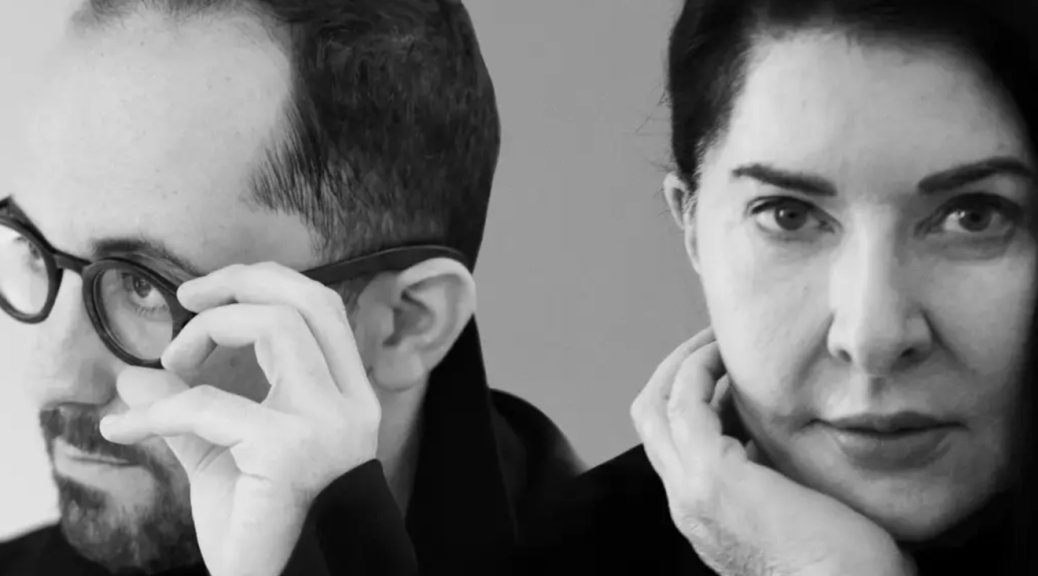
As part of the Multitudes Festival, she has joined with pianist Igor Levit to combine classical music and her quintessential durational work to create a performance across 20 hours. The options to come in and out throughout these 20 hours or find yourself with a 1 hour slot in itself delivers a unique experience for each audience member and the feat of the art is, not only what Abramović is famous for, her bread and butter, but still managing to be something new and exciting.
Vexations is based on a one page score of its namesake. While simplistic on paper, the score is ordered to repeat multiple times and throughout the 20 hours, Levit does just that. But it changes; the tempo, the tone, the volume, the intention, it is somehow different every time and even in a 1 hour slot, it lulls you, surprises you, creates a dreamlike state and shocks you. You find each iteration to be new in some way and never the same as the previous. Levit first performed this over live stream during the Covid lockdown, with an aim to comment on the experience of all but especially the hardships of artists at the time. There certainly feels like a poignant commentary on this, and becomes relatable for everyone; who else remembers the days of doing the same things over and over, but those rare times of something new to break up those long years?
Front and centre, Levit is at his piano, tearing at sheets when a page is complete and throwing it in disarray on the stage, building and building over the hours. He approaches the music each time as if it is something new. By my slot, 7 hours have passed, and the endurance is clear and painful, with movement in his body, changes from sitting to standing, uncomfortable and becoming stiff, an almost madness in his eyes but also something playful alongside it. Untouched snacks are provided to satiate but he never reaches for them. He does however abruptly break, a strange moment when looking around the auditorium, while he goes to the toilet or grabs some food, that the durational audience members treat this as some kind of break, to check their phones or break themselves; almost like a unwritten interval. Watching Levit himself, while directly or through the huge mirror above, looking down like a topsy-turvy world, is intoxicating and strangely, the music at no point becomes unbearable or monotonous.
To accompany him, the black and white tiled stage is littered with well placed seating and audience members, chosen to sit and basque in the performance, eyes closed and in the moment. This is facilitated by two performers who move around with strong intent but at glacial speeds and no emotion. It is somewhat frightening but also calming at the same time. A wave of adrenaline as they come to the audience, breaking the fourth wall, will I be next? Another wave of disappointment (or maybe relief) when you’re not. But there’s also a tenderness in the blank faces and a sense of care by how they move and how they handle the audience members. It feels like a less aggressive selection process for a school sports team, or like becoming a “chosen one” from a crowd, being brought through a wall or veil we cannot see, highlighted by the preparation of shoe removal before stepping on the tiles. And watching this movement also lulls you, it is fascinating, and you can’t quite take your eyes off the performers or how the audience interact – some accept their fate, some are excited, one begins to move almost as if they have been replaced by the performer and copies her when he is released back to his seat, still in this trance-like state. One poor chap, with a wristband to show he is a durational audience member and therefore been here a while, suddenly loses all sense of his body, the performer still in a glacial but sped up way, not breaking character, rushing to him before he falls. He himself seems to have been pushed into a trance, and likely in need of water and nourishment, it is an occurrence that shows the impact it not only has on the audience but the sheer strength of the performers and Levit during these 20 hours.
And while touched upon already, there is a third performer – us. Or more specifically, those (in my opinion, lucky enough) to have been able to be there for the full day. What interesting experiences must they have had over that time, visually and also within themselves. I looked around and they themselves had become part of the performance – comfortable clothing, bobbing along to the music as if at a rock concert, cushions and blankets as if camped out to be the first in line at a festival or to get tickets, their seats marked by coffee cups or their bags on their chosen breaks. It was a social study that they were unaware they were part of and it only added to the essence of this performance.
Vexations certainly brings a new and interesting approach to the intention of the Multitudes festival. Breaking all the rules, it encompasses the whole room, physically and mentally, creating a unique experience and feeling but also an unusual and one of a kind pocket universe through song and physical art.
Kicking off the Multitudes festival, a festival that aims to celebrate the collaboration between classical music and other art forms, London Philharmonic Orchestra and circus troupe, Circa explodes in the Royal Festival Hall.
While the concept feels unsurprising and a good fit with one another, the actual viewing of such a spectacle is awe-inspiring and exciting.
Written for and with inspiration from dance, Daphnis and Chloe depicts the story of young love, with star-crossed lovers, a kidnapping by pirates and ultimate earthquake triggered by the rescue, eventually joining the lovers together again. This is followed by a secondary piece, La Valse, created in a time of war, depicting a society of chaos and on the verge of collapse.
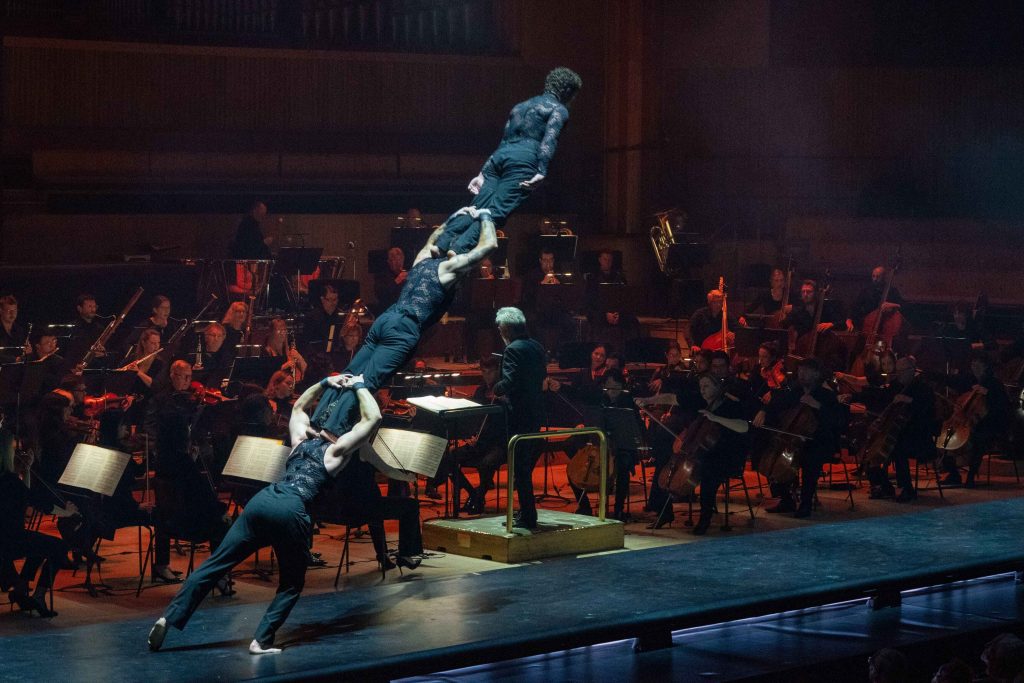
The orchestra is on stage for the entirety of this performance. A quick intro by the head of music at Southbank Centre, we are reminded that, a tradition physical performance, such as circus or dance, would see a moment of applaud between pieces or at moments of monumental feats, but we are asked to hold our excitement to the end to also take in the orchestra and their equal part in this. In practicality, this is somewhat hard. A classical music novice, and clearly not the only one, a small break and an actual standing up of the orchestra and point to the accompanying choir prompts a response and so when the performers come back and the music drums back up, only then we know we are not finished. Not the end of the world but a strange sensation none the less. However, there is something lovely and refreshing to not hear an applaud each time the circus perform a death-defying stunt, while not silencing a strong, short inhale, and it gave a platform to take in the whole performance.
Despite this confusion, which is minimal in comparison to the event, the room is filled with the sounds of a typical orchestra. It reminded me how I wish to visit more classical music concerts, while with little knowledge of what to see exactly, as the live music aspect gives you a special tingle from the talent demonstrated and the beauty. As mentioned before, a choir accompanies, high in the seating to the right. Their gentle standing up for appropriate moments to join in with their choral harmonies brings a multitude of feelings, from excitement to sinister atmosphere, accompanying and competing in equal measures with the ever changing tone and range of the orchestra.
While we are unable to miss the orchestra, we are somewhat distracted by Circa. A small strip at the front of the stage is their platform, working linear and occasionally branching to the backing levels of the auditorium behind the orchestra. The feats are incredible, reaching heights using one another’s strength and contortion, it is visually beautiful and provoking of audible gasps. The amazement in itself coming from the small space they easily and effortlessly work in, compared to traditional circus tents or large vacant space. There’s a want, after the starting speech, to try and give attention to the orchestra and the choir, but it’s difficult to look at their “performance” when visually, the area is brimming with both them and the circus performers. However, you are trusting on your ears and the piece never misses a moment where all elements fit together seamlessly.
Daphnis and Chloe gels the different platforms of classical music and circus with ease and beautifully. Does it feel like a breakthrough in the arts? Not really, but you can’t help but love the collaboration and that it paves the way for more live music and preformative art forms to go back to traditional roots and bring them to the modern world.
No story about the Holocaust is ever the same. We think we know the basics, we know what happened and continue to be appalled. But story after story comes to us, with each being ever so different to the last, each so horrific and heroic and unfathomable.
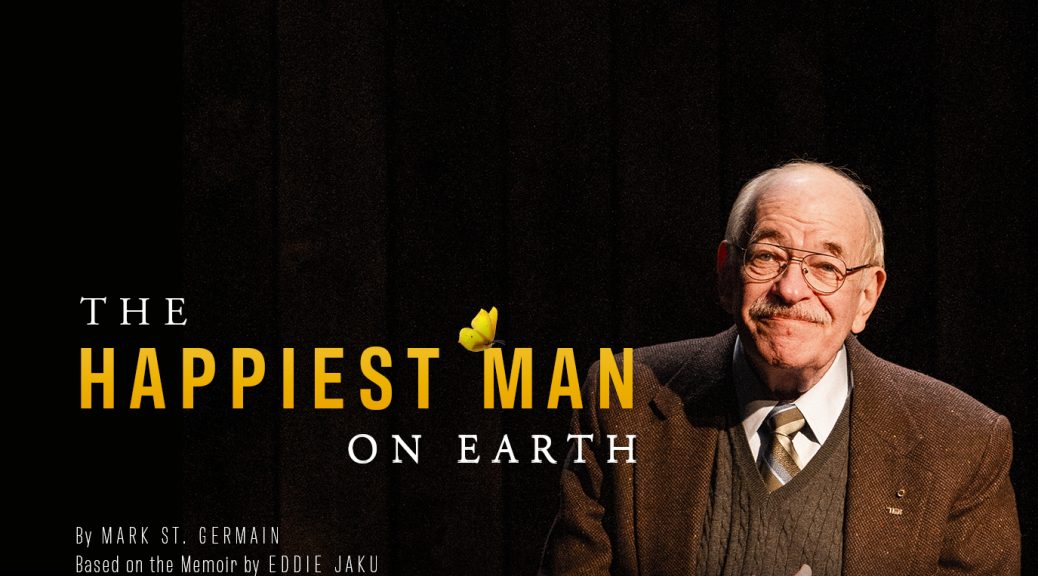
The Happiest Man on Earth, based on the best selling memoir by Eddie Jaku, a holocaust survivor, is brought to the stage in this fantastic one man show. From childhood to adulthood, we are taken through Jaku’s life from the happiest to the most horrific.
Kenneth Tigar who plays Jaku, firstly comes in and interacts with us, ad-libbing on the spot and not only making us comfortable but also chuckle. He is friendly and lovely and this sets us up, within a cocoon of security, for him to deliver the spine tingling tale. Tigar somehow delivers the entire, highly theatrical production with a way that feels like he is speaking to each of us individually. He makes eye contact, letting us see the range of emotions, deep from his soul. It’s so easy to forget, this isn’t his story. He delivers it so vulnerably, so intimately and so candidly.
While Tigar is the only performer, sometimes switching from himself to other characters with subtle voice and physical changes, the set and the making of different locations and atmosphere is represented through minimal staging and a range of soundscapes and lighting. It does the right amount of adding to Tigar’s performance but also elevating it theatrically. It gives you shivers and envelopes you within these different spaces and transports you to the range of humble places to the depths of hell.
The Happiest Man on Earth is a fantastic production, delivering a high theatrical performance without taking away the main essence and reality of Eddie Jaku’s life. This is not only down the the fantastic and subtle staging but also to the personable performance by Kenneth Tigar.
I must say, it is a daily thought and worry of mine about the (hopefully, very far in the future) moment of losing my parents *touches wood*. I’m not sure my reaction, how I will cope, and whether there will be moments of insanity or even comedy. Yes, We’re Related has already helped my knowledge that this could be possible.
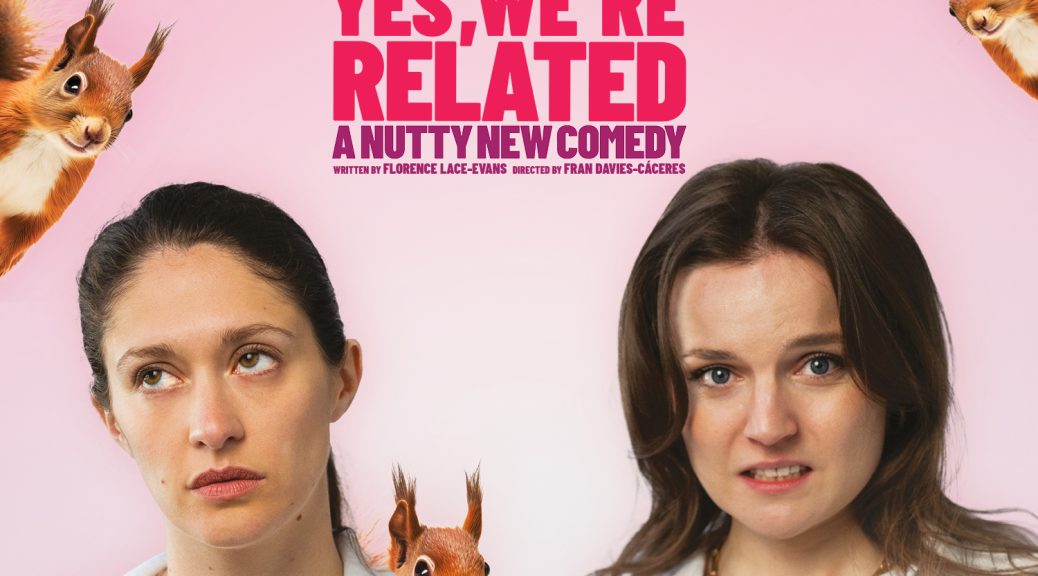
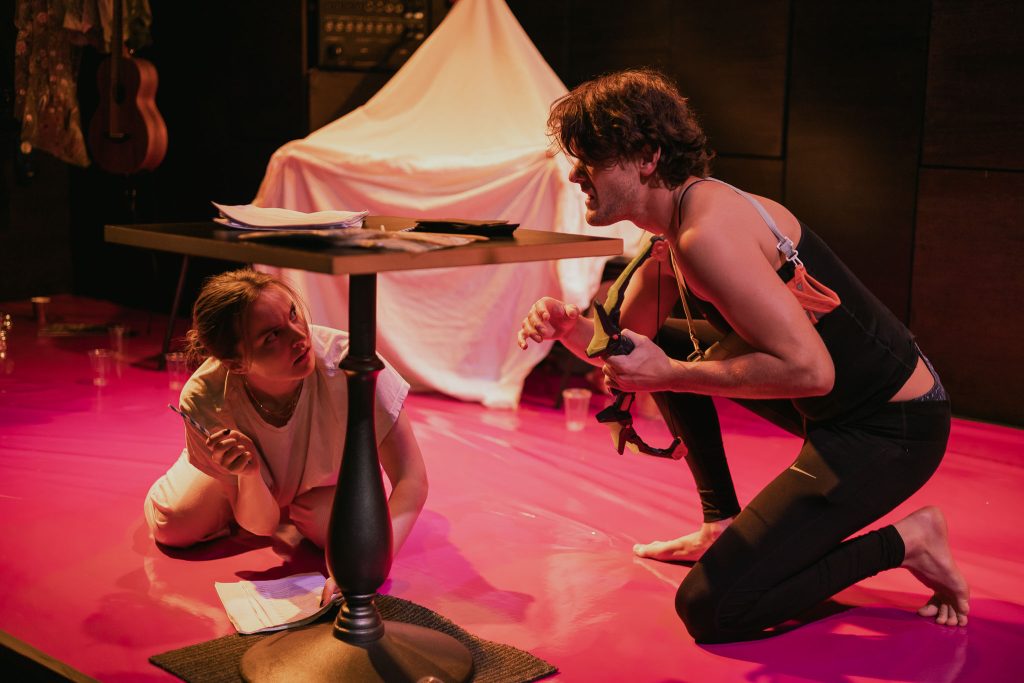
Yes, We’re Related, is the story of two very different sisters, dealing with the passing of their mother, a party to celebrate 1 year on, the memories and angst and… a squirrel. Yes that’s right, a squirrel. Gerald is believed to be their mother reincarnated but what ensues is a stark look at the sister’s relationship, with one another, their mother and one of their partners and how to cope within loss.
A mixture of themes, this production certainly has moments of highs and lows. I wouldn’t say that it touches deeply in terms of sentiment or bringing a tear to your eye, but it brings out sympathies and certainly makes you think about your own relationships with family and friends. The highs are very high, with quick witted humour and a contrasting characterisation between sisters; one is prim and proper, organised and seemingly with her life together, the other, short of a breakdown within grief, is buoyant and erratic and extroverted. The two bounce off each other, with little break for pause, and this works really well. It feels truly natural as a sisterhood and as if we are peaking through that fourth wall.
The partner who is the third wheel of this relationship, is more like his partner’s sister than her; wild and melodramatic but also love-able. However, we know him as Mark, and twice does he accidentally get referred to as Mike. We can only assume this is an ex that the sister is fixated on, but we never reach that revelation and so it doesn’t quite add to the story as it maybe was meant to.
The squirrel, Gerald, is never seen. I’ll admit, I thought would there be some hand puppet or wildly, someone dressed as a squirrel. But no, he is presented in sound and light only, using our figment of imagination when he escapes and this works really well. He is meant to be the mother in animal form and the symbiotic relationship between him and the sister living there is concerning but also heartwarming. Her way of coping. A story, heard many a time in different guises. So when he leaves the story, and she succumbs to her grief, it is heartwarming and tearing all at the same time.
Yes, We’re Related is a roller coaster of comedy, meaningful conversation and a warm hug in what we will all experience, in one way or another. The performances and relationships are impeccable and it tells an age old story in a unique and new way.
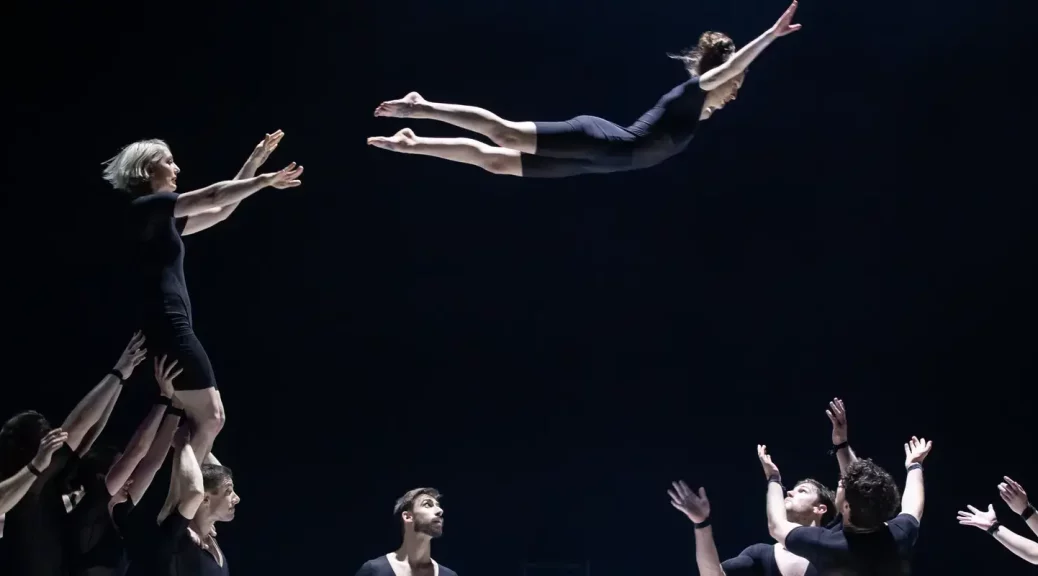
Plunged into darkness, our eyes becoming accustomed, we start to see the outline of bodies, moving as one. As the lights come up, we are confronted with a team of mismatched and almost fearsome creatures, with mixtures of jagged and smooth movements.
A double bill, National Dance Company Wales bring questioning and critical performances, Skinners by Melanie Lane and AUGUST by Matthew William Robinson. Neither aim to give answers to our changing world but aim for us to reflect on our existence and the change around us.
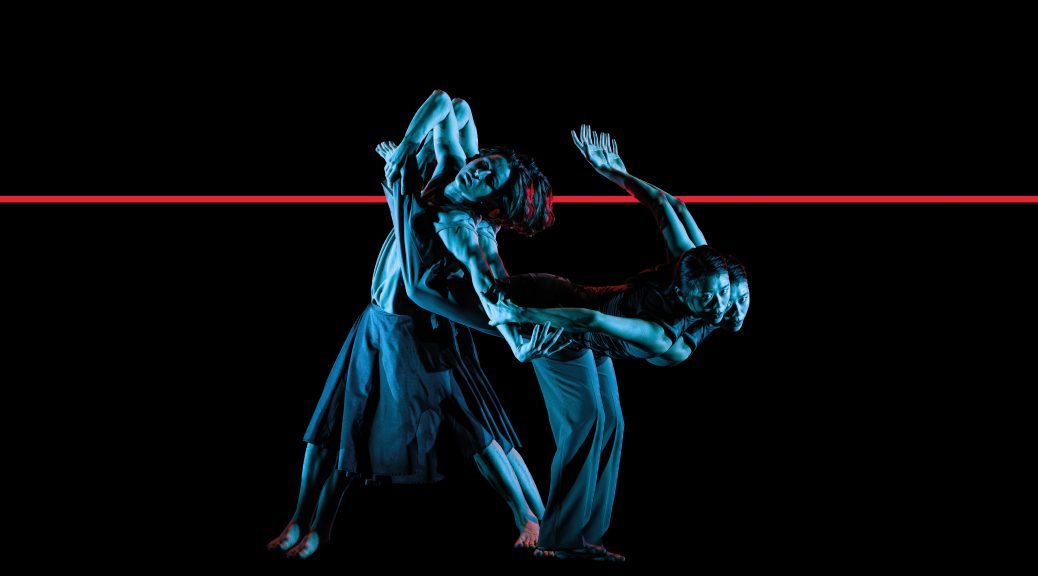
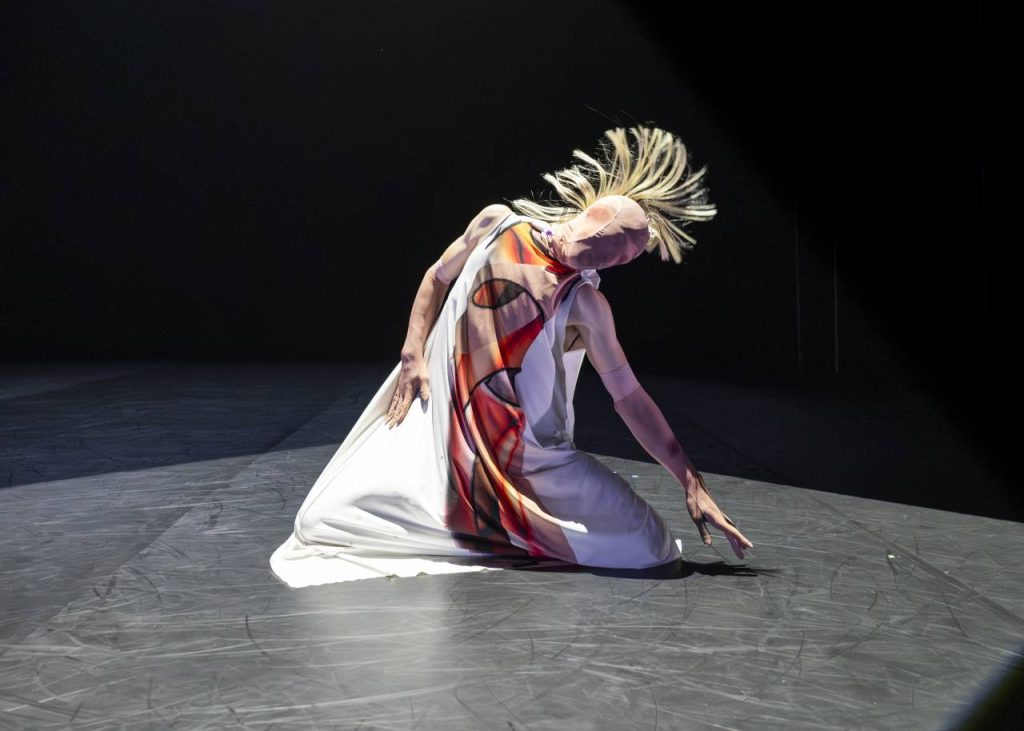
Skinners particularly looks at the digital age, where physicality is distorted beyond recognition and where we live in a virtual world as opposed to reality. This first piece is what we are confronted with from the dark; creatures with recognisable assets yet distorted some what, move as one and then in separate spheres. The movements themselves move from recognisable, to abrupt, repetitive and unusual. With their costuming and contortion of their bodies, we want to understand but we are quickly pulled away, watching something unearthly, at times robotic, at times… no one knows.
It is a piece that you cannot take your eyes off. Even the repetitive movement hooks you, and there is something always catching your eye. Once the performers peel away their outer layer, they become more humanised, but there is still this sense of something lost underneath, as they continue to move unusually and almost unnaturally. It is a high octaned piece, full of dance moves that seem simple and easy, but clearly requires immense talent and skill to perform.
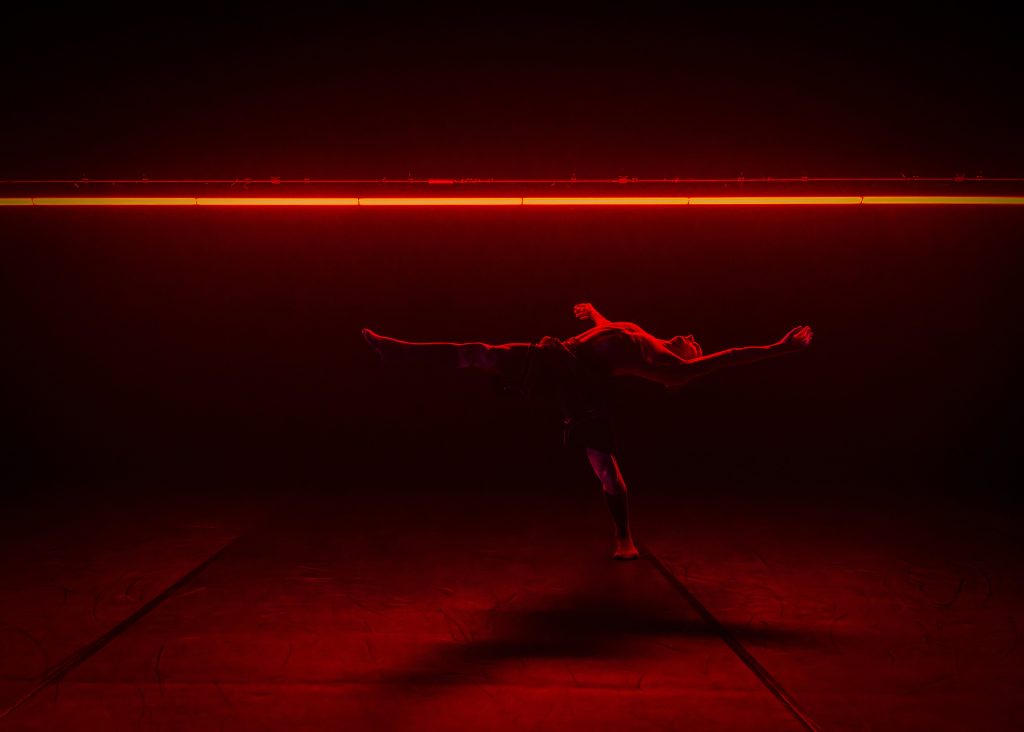
AUGUST, while noted in the programme as inspired by sunsets and sunrises and the liminal space between, to me, it continued this concept of other-worldly, of a digital age. A horizontal light, that throughout counts down and follows the dancers across the stage, gave this sci-fi effect; of a barrier that could not be crossed. Within this, the movement, compared to Skinners is more graceful and fluid – dancers appear from the dark and as the horizontal light moves up, down, forward and back in movement with them, they are highlighted by the shadows created.
Again, unable to take your eyes off, there is something always appearing or disappearing, with moments of increased energy, within the fluidity of their movements. It is sensual and intense, with the performers working more with one another and their bodies than previously, melding into one and separating into something different.
Frontiers showcases the immense talent of the NDCW – from the unusual and avant guard to the fluid and contemporary, Skinners and AUGUST beautifully compete in excellence.
Ru Paul’s Drag Race has skyrocketed through society in the last couple of years, bringing out new Queens every year and from, almost, every country. As one of the OG fans, its been a wild ride to see this trajectory, but also wonderful to see the UK represented. And well represented it is, with artists such as Lawrence Chaney.
A young, scottish Queen, Chaney jumped onto our screens and stole our hearts. In their early 20’s at the time, it was astonishing for us to see someone so well curated and with their drag act essentially down. No wonder they became the Queen of the season.
I have only seen Chaney once, on the UK Huns Tour, and in an old nightclub from my youth. The focus was very much on the UK Huns song, and lipsyncing from all the girl group. There were elements of stand up from Chaney, but not enough to really see the charm they showed on the show.
From Holyrood to Hollywood takes us, post Drag Race, across Chaney’s life since, from fame to their personal life, to the show the night before with questionable audience members. It’s a laugh a minute, despite Chaney’s failing voice, peppered with lip syncs, specially sliced together with verbal snippets, adding so many levels of comedy to the performance.
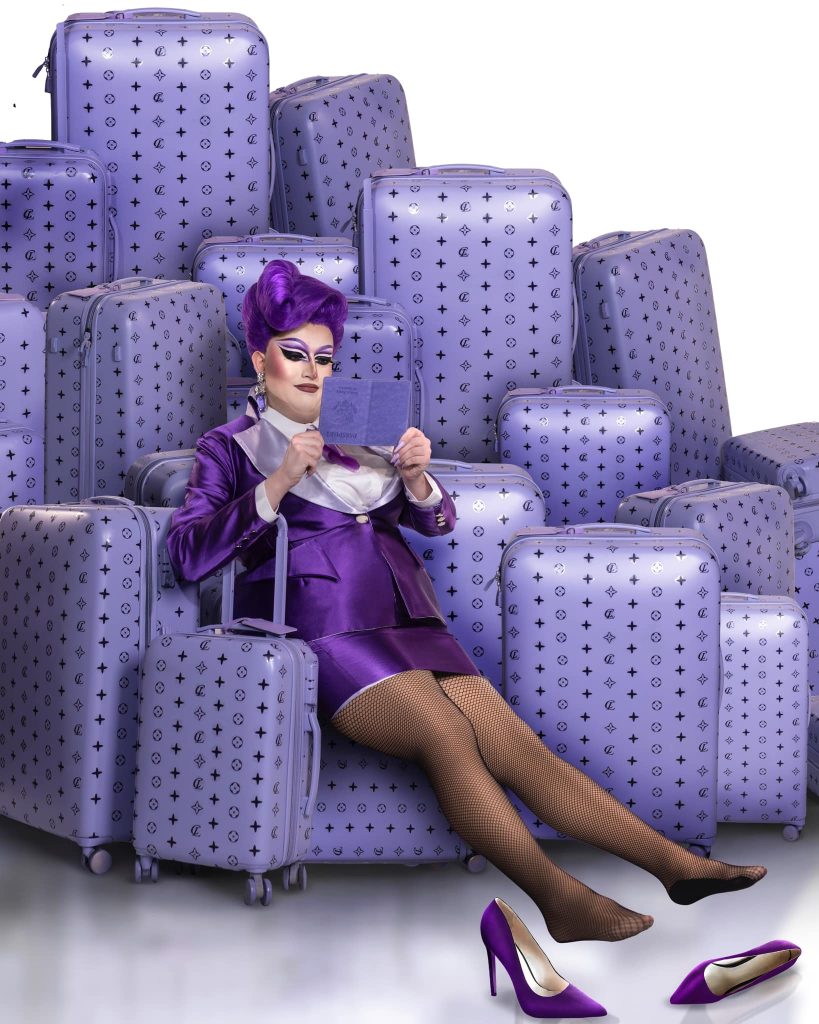
Chaney is a true comedian, taking on the audience when they go rogue, quick witted and fast with the jokes and come backs. They are very comfortable on stage, and treats us as if we have known one another for a long time. A big space feels intimate, and as if this show is only for us. They are also crude, rude, with no barriers and not a moment of holding back. They are for sure a comedian who isn’t afraid to offend, but somehow does it in a lovely, personable way. And not to mention, they are fabulous, in thier chic purple air stewardess get up.
Drag Race fans will eventually be absolutely delighted, when they bring out their winning sceptre to finish off the show. We get to re-live the crowning moment and, after some time feeling as if we have had a lovely chin-wag, we feel personally very proud of our purple Queen.
Lawrence Chaney, From Holyrood to Hollywood is every Drag Queen Comedian lovers dream, with a sense of intimacy in amongst the rude jokes and quality lip syncing.
Noted as one of the most haunted cities in the UK, and a stone throw from the notorious Greyfriars Kirkyard Cemetary, Ed Fringe regulars would have seen the Ghost Tours Bus parked up and taking visitors on a spooky ride through the city.
I’ve always wanted to go on the bus tour, but never found the time to squeeze it in. But, with it being fringe, press tickets were available and, as it is conducted by trained actors, it felt apt to take part.
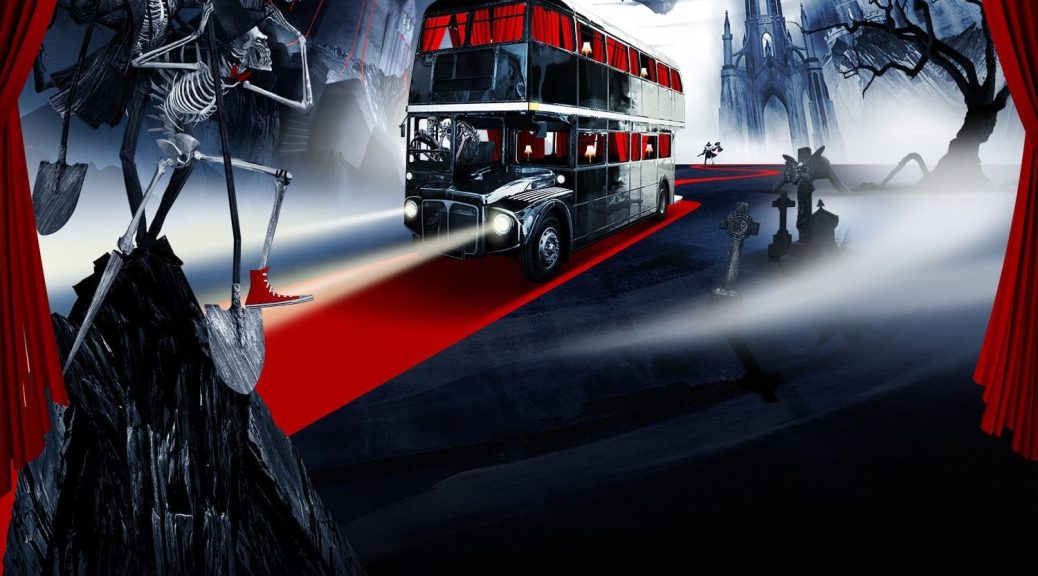
Joining, coincidentally, at just outside the Frankenstein pub, we are admitted to an old bus that has been kitted out inside with tables and seats, velvet curtains, old lamps, reflecting gothic culture and old horror films. It is plush and feels like taking part in a seance. However, the initial induction was in want: we are greeted by our tour guide, dressed ghostly but who did not seem to want to engage with us. Taking our tickets however, was an man dressed in an ordinary manner, breaking the illusion quite instantly. It was a real shame to have this initial introduction and likely impacted how the rest of the tour felt.
Throughout the journey, there are snippets pointed out to us, of mass grave sites and places where reported ghost sightings have been. These are sometimes elaborated upon, others not. The ones that are are very interesting, but others that would seem likely stories visitors would be more interested in e.g. the ghosts of the castle, are merely commented on existing and swept over, leaving us wanting a lot more.
We have the opportunity to jump off at the oldest graveyard, which did have this spooky feel and started to get your hopes back up of returning to the good ol ghost tour. Sadly, however, our tour guide of the day, while following his script in both spooky facts and the story line, often broke character to bring his own commentary such as a dislike of Ed Fringe, a moment of warning to not venturing a certain way in the graveyard due to thefts resulting in his shouting at the tourist who didn’t listen, and commentary on the traffic. Again, it sadly broke the magic slightly and, perhaps he was just having a bad day, but did not seem relevant information or part of the experience at times.
Throughout, we are introduced to a story line of a supposed ghost lady who slowly breaks down the bus. We are introduced vocally to the driver, an alcoholic ex-prison inmate, and this gave an interesting element to our story. We’re told the bus once carried bodies, we end up in an exorcism, and there are plenty of jump scares through speakers and the screens. Myself as a complete wimp was jumping at all of this, but only proved its sufficiency in this way.
Overall, the Ghost Tours Bus is certainly an experience and a novel way to explore a haunted city such as Edinburgh, after you have done the traditional sightseeing. It adds another element to its past, and the experience is something for all horror lovers. It just happened that this particular tour had many moments of the illusion broken and felt slightly disappointing when so much has clearly been put into the aesthetics and planning.
If you’re part of the generation who was informed by Horrible Histories books and later the television show (let’s be honest, it was on CBBC but was purely for us adults) then you grew up with a sense of history not being the stuffy, serious topic and actually one of comedy.
Out of this, podcasts such as You’re Dead to Me and Oh What A Time have developed, and now there is much more appreciation of history and the comical aspects of times gone by. We are also a species who love to know “what if” – what would have happened if that event did or did not happen? Paul Coulter takes us on this journey, spanning decades and lifetimes, to tell us about just 5 Mistakes that Changed History.
We are swung from Alexander The Great, all the way up to Churchill in this lecture meets stand up comedy show. Performed in what actually looks like an old coliseum style lecture hall, Coulter uses multi-media, referencing modern elements such as memes and his own childhood to reflect and relate these ancient tales to us, a modern audience. This has this structured pattern, seen in many solo stand up performances, and is used well to create extra elements of comedy, separate to those from the story alone.
Perhaps it was the choice of venue, but it did in fact feel like a lecture, with a professor who was trying to engage his students. It had its comical moments, but more in an astonished way, mostly at the stupidity of the past. It was of course informative and educational, and as a history lover, I did in fact enjoy it immensely… but as a piece of theatre or stand up? It felt that this could be a loose connection.
5 Mistakes that Changed History is educational, fun and a great modern approach to bringing history to the masses. However, adding this into a comedy or theatrical genre felt slightly tenuous, no matter how entertaining it was.
Creating opportunities for a diverse range of people to experience and respond to sport, arts, culture and live events. / Lleisiau amrywiol o Gymru yn ymateb i'r celfyddydau a digwyddiadau byw

 (5 / 5)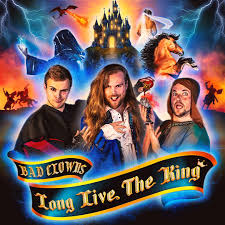

 (3 / 5)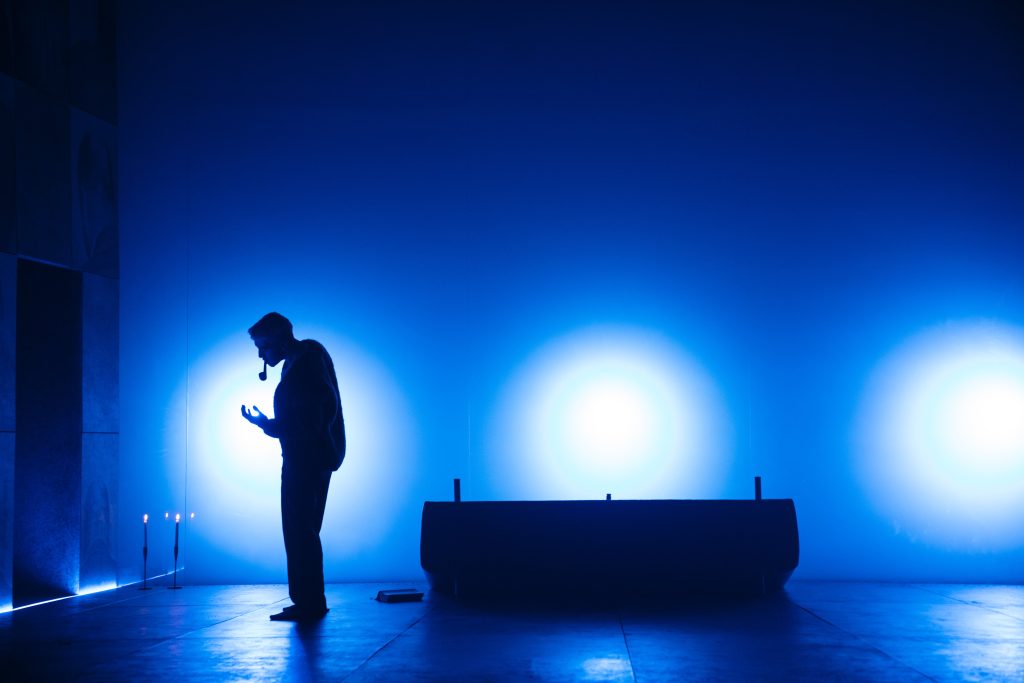
 (4 / 5)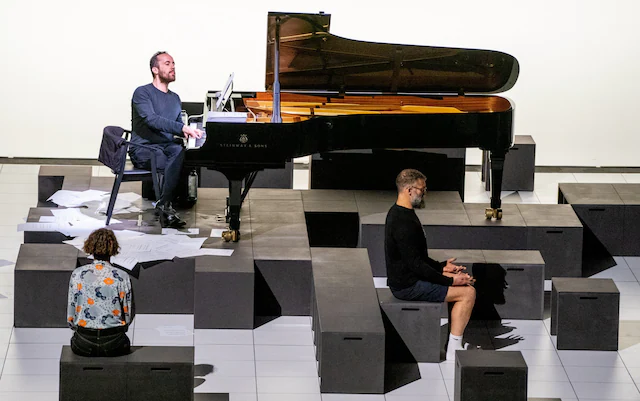

 (2 / 5)