
All posts by Hannah Goslin

[...]

Review, The Dao of Unrepresentative British Chinese Experience, Daniel York Loh, Soho Theatre, by Hannah Goslin

 out of 5 stars (3 / 5)

Combination of post punk revolution and ancient Chinese tradition and story telling, this mash together of what would seem like very different genres comes together in this small but atmospheric production.

The Dao of Unrepresentative British Chinese Experience looks at the racial politics around British Chinese people, what it means to have the contrasting cultures and embrace them both, but also when you’re “not Chinese enough”.

The story flicks back and forth between traditional, ancient stories to more modern situations. While it is understood why they do this (predominantly that it is one of the main focus of the story and title itself) it becomes slightly hard to distinguish. Perhaps there’s an element of my lack of knowledge and naivety in the culture and history, but I do feel that theatre should teach and give a sense of learning to those outside its realms and this only left me in want.

Characters swap between the performers and it becomes a little difficult to follow – are they different characters, or the same played by different performers? It’s never really that clear. Between this and the jump between time and sometimes space, the main ethos and point of the production gets a little lost.

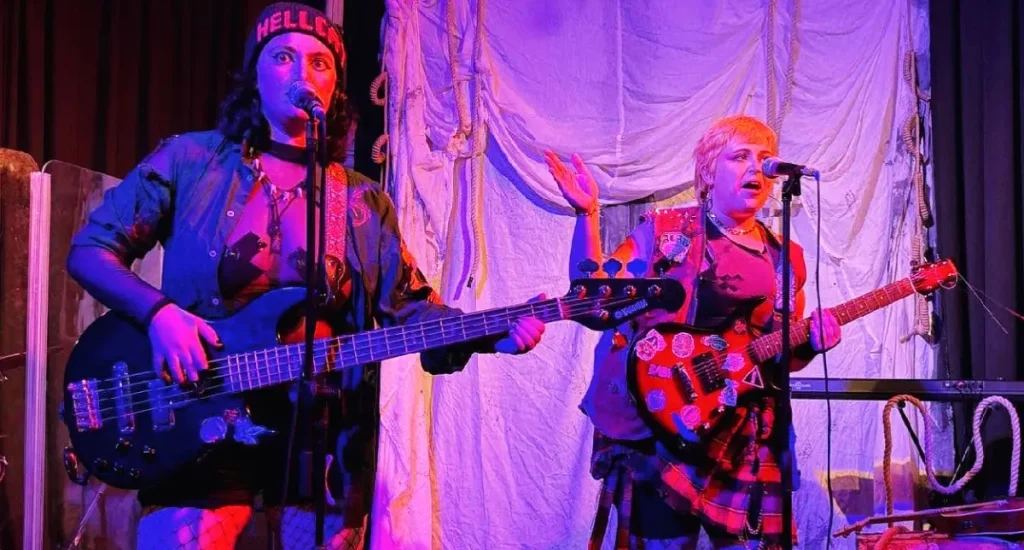
It is indispersed with original punk rock music and this is fun, exciting, catchy and new and adds another theatrical element. But without being too clear on the narrative, it just feels like a helpful break. There is, what unusually and one i’ve never heard of, a 5 minute interval. Only enough to run out and hardly seems worth it, but the lack of time to decompress and try to understand the first half would have been helpful.

The performers themselves are fantastic – in whatever they do, from acting to playing an instrument, they are fully in the show and there is passion and realism in the hardship they portray. Not to mention their talent and fantastic composition of music which is definitely worth its own space to grow fans.

The Dao of Unrepresentative British Chinese Experience is certainly that – an experience. It has all the elements to be a fantastic piece of work but there is something lost in its narrative and therefore lacks in educating those of us who are not from that society.

Review: Bacchae: Prelude to a Purge, Marlene Monteiro Freitas, LIFT Festival, Sadlers Wells, By Hannah Goslin

 out of 5 stars (4 / 5)

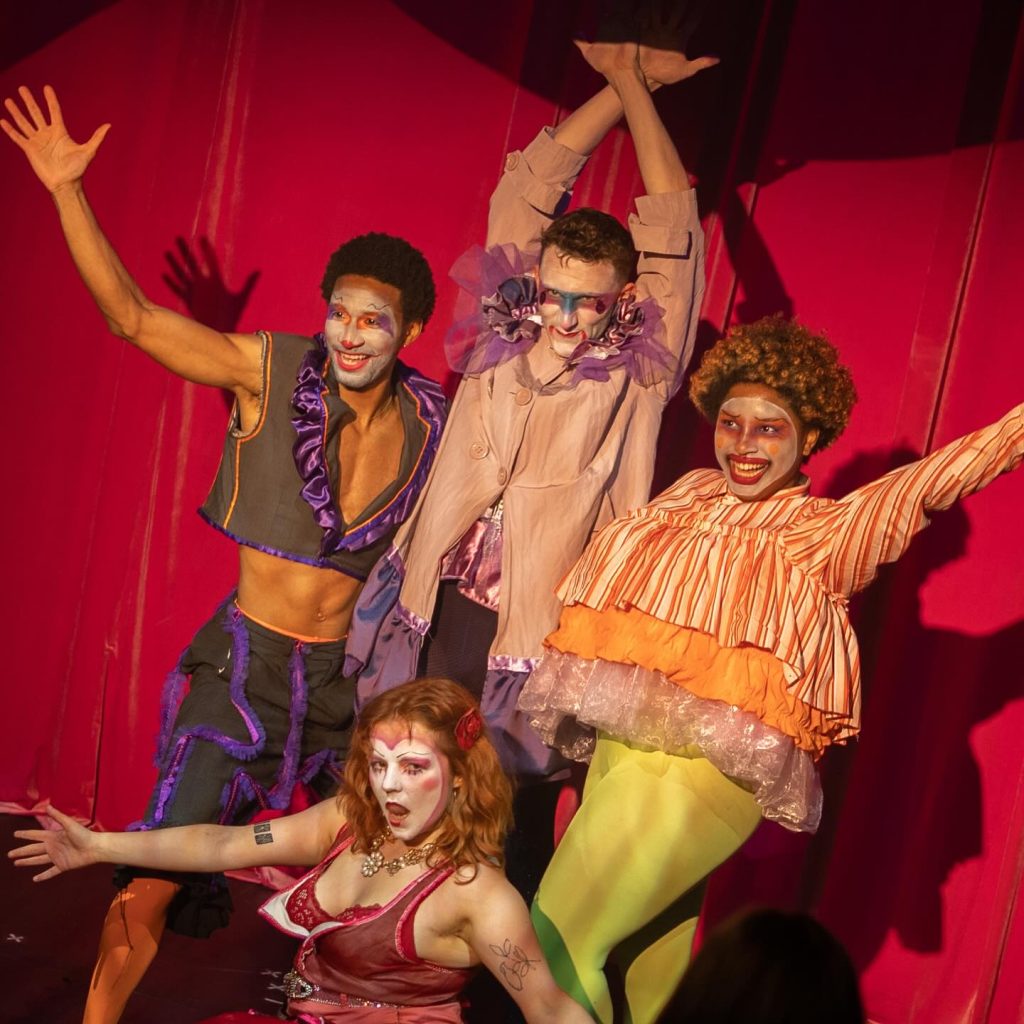
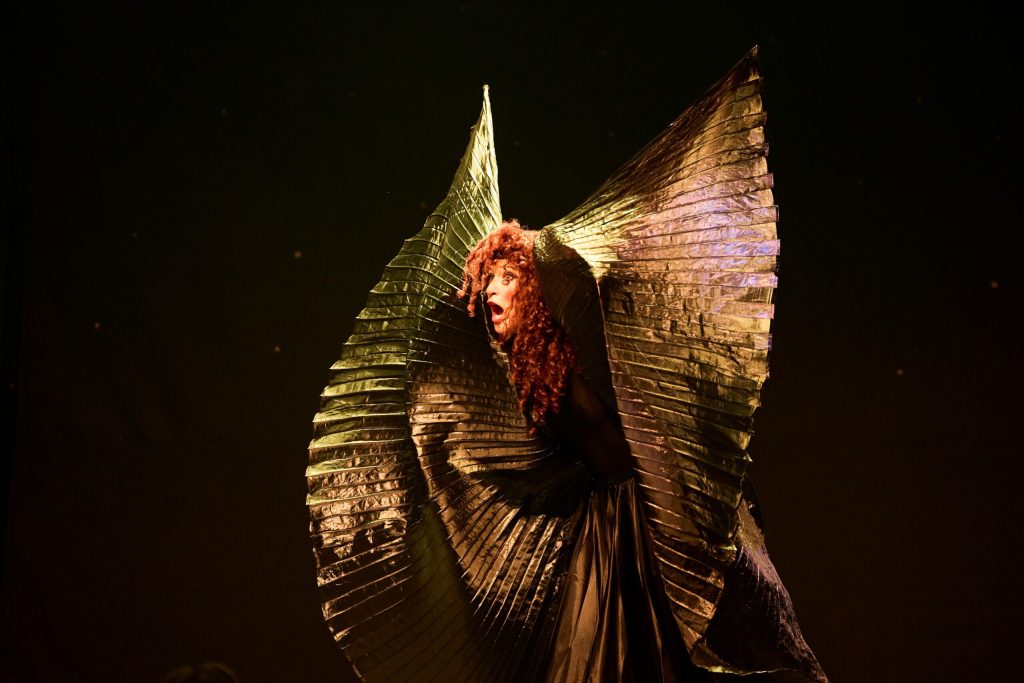
Clowning. Bouffon. Alienation effect. Utter chaos and hilarity. Marlene Monteiro Freitas brings us 2+ hours of what would seem to be utter craziness on stage. But really, this is a very clever and interesting performance.

It isn’t everyone’s cup of tea. This is very clear when some leave at different points throughout and the lack of interval seems, at the beginning, overwhelming. But it is certainly one of those productions where you need to fully give over to the madness, and it is a lot of fun, evoking and interesting.

Taking inspiration from Euripides, The Bacchae, we see the performers fight between beauty and the grotesque; peace and noise; the search for the calm amongst the chaos. This is seen in the many bodies, all undertaking something different; sometimes repetitive, sometimes unusual, but rarely the same. These are injected quickly and without much preamble to new “scenes”, where focus changes between performers, but the others always still being in view or supporting.

There is a sense of “dance” and certainly performance art, with times of extreme repetition which, at first seems simple but really, the contortion of body and the movement requires a lot of strength and skill. It seems not a bead of sweat is broken and it is effortless, confirming the skills of the performers. Crude and often lewd suggestions, revelations and gestures take place, alongside a provocative and uncensored but also beautiful video of a woman giving birth, which is clever in not only bringing us in but also in pushing us away. There is an element of Brecht and the alienation effect in the narrative and it works to some extent for the traditional theatre goer. The ups and downs of the production, the ebbs and flows all work together to create something dynamic, grotesque and yet wildly entertaining and thought provoking.

Bacchae: Prelude to a Purge is a roller coaster from start to end; at times drawing you in and other times trying to force you away. It is comical and dark, provoking and sometimes just a little lovingly stupid.

Review, The Trials and Passions of Unfamous Women, Anaina Leite, Lara Duate, Clean Break, LIFT Festival, Brixton House, By Hannah Goslin

 out of 5 stars (3 / 5)

A part promenade, part traditional black box, The Trials and Passions of Unfamous Women brings the past and the present in a clash of injustice.

Beginning the production, we are introduced to our guide, our jester who introduces the performance in a casual and relaxed way. This character has its own darkness and path and isn’t one to forget. We are soon introduced to four different figures from past mythologies and stories, where we are given the choice of interacting with their stories. This later propels to the current day, a courtroom and continued injustices of women.

For me, it took a little time to realise and understand the reasoning for the great transition. The style and approach to them seemed very different, a potential disconnect but in time, did begin to culminate. The stories aim to transcend space and time and show that women imprisonment and hardship isn’t a new thing; it is steeped in history, and only changed its appearance from the invention of the justice system.

A clever staging; we are brought initially into opulance of these grand women, with their gold and magnificence over us. However, there was a choice to have different stories happen at the same time; you do not get to see all of them but the ones you do see create a spacial dynamic which is hard to engage with and you really do want to engage! I fear this is more the choice of performance space than a theatrical choice; the square room is pretty large but not enough to separate the sound. Not unusual for a promenade or immersive piece, we miss out on two stories, but all the more reason to come again. Despite the sound clash, microphones are provided and, perhaps a personal choice of mine, were relied upon too much and weren’t effective. They were there to help amplify these women’s voices and only hindered. It was hard to hear all the discussions and interactions. I personally would prefer no microphones in every show and the traditional projection to be used, but appreciate that Clean Break is known for working with non-traditional actors and therefore this may not be a focus.

Despite these nigglings, we get to a point where true stories of the women we see are broadcast. And they are done with informality, with vulnerability and courage. These are powerful and supported with theatricality but not bombarded. This subtlety is immensely effective and providing that moment to hook us in. Their familiarity and kindness to us as audience members in interaction is heartwarming, breaking a bit of the beginning sense of god-like characters and positioning them as one of us mortals, continuing to help tell the story of these ordinary women.

The Trials and Passions of Unfamous Women is a play with a lot of scope. The ideas are there and so is the effort, but some stage and tech choices sadly impacted its effect.

Review: The Bounds, Stewart Pringle, Royal Court Theatre, by Hannah Goslin

 out of 5 stars (4 / 5)

The Euros have kicked off. Dear England is returning to the West End. Is football coming home? They hope so in 1553.

This is the second play I have seen at the Royal Court focusing on historical football fans and their livelihoods around this time. Prior, Gunter featured this similar focus, pulling off into witchcraft and female alienation. The Bounds touches on this slightly, but this play is a bit more than that. It is about divides in place, in status, in religion. Dark but comical, and somehow relatable.

In London, there is currently a focus on regional plays and characters: Nye, based on the Welsh pioneer Nye Bevan; Boys From the Black Stuff, based in 80s Liverpool, and now The Bounds, again, bringing regional writing and theatre, from Newcastle. It feels like a rich time to bring these stories into the city and open up to other stories.

Rowan and Percy, as far as we can tell by their immediate interactions, are old friends. Grown up as some of the working class of the area, their only joy is to take part in this huge football game that spans miles between towns. There’s a modernisation to their attitudes and it is something we relate to, whether football fans or not. And somehow this is also pretty comical – a lively fan, impoverish and of an ancient time, shouting and bursting with excitement of a football game. The rapport between Rowan and Percy is natural, on beat and quick in succession. The back and forth “banter” sets the precedence for the play, and we relax into the setting.

That is until is goes all wrong. A appearance of a stranger changes this; suspicions arise, wariness unfolds and a secrecy is prevalent. This interaction starts off quite comical but soon it gets dark, with visions unnatural and non-nonsensical. When lighting changes and these “visions” appear, we are drowned in a sense of foreboding, an end of the world mystique and soon the laughter is long gone. We are forced to think of our own mortality, of the status of our World and it is an uncomfortable setting, with the actors almost making us teeter on the edge for a surprise that never comes.

The Bounds is a fantastic play, making you relax into a sense of security only to be directly pulled out of it. Combinations of the writing, actors and the stage/set all culminate to make something riveting and (in a good way) uncomfortable.

Review: A View From The Bridge, Theatre Royal Haymarket, by Hannah Goslin

 out of 5 stars (4 / 5)

Starting with a bold statement – as any critic, I try not to go into a show with any bias or preemption. I firstly did not intend to go, for sadly, Dominic West. I’ve seen him in many things and never been the biggest of fans. But after seeing him and Callum Scott Howells speak about it on the TV, I decided to go. Boy, am I glad I did.

A View From The Bridge is a classic play by Arthur Miller. Known primarily for his work being based in America and its history, this play focuses on the flux of immigration to New York and the relationships built between new generation New Yorkers and their families back in their mother lands. West plays the main protagonist; the pillar of the family, all encompassing and ever loving to his orphaned niece from his wife’s side. When his wife’s stranger cousins come over to earn money, after starving and struggling in Italy, relationships become tense and feelings and thoughts arise from under the surface.

There is first to say that all the acting and general performances were perfection. Not a line was tripped over, not a pause where it was not meant to be; even slight slips like a flying piece of apple when cutting one to share is handled by the performers with grace and a natural nature. Their interactions feel real and wholesome, so when events begin to deteriorate, there are audible gasps and fear and sadness of the breakdown of these relationships. The shocking moments are really shocking and this is all made effective by the sense that we are breaking into the forth wall.

West is sublime. Yes, all the accents are a little hammed up and feel stereotypical of the New York Italian community during this era (1920-40’s) but when you get used to it, words are articulated with precision and West’s change from doting and loving uncle to something more jealous and sinister is a gradual change that is impeccably done. When Scott Howells joins, he is much more Italian and it, again, is a little dramatic but it works. When moments are serious, it feels real and feels serious and he commands the stage as much as West; which works brilliantly when they begin their intense dislike of one another.

Supporting cast and ensemble slot into their positions just as well and each command the stage in their own way at some point. The women, mainly Kate Fleetwood and Nia Towle, who, during this era are likely meant to be seen and not heard, are actually fiercely independent, which makes the break down and eventual end all the more heartbreaking. They both present completely different characters and sides of womanhood and in their own right take up space and perform with every inch of their souls.

There is something to say about some ensemble however; there are very small moments when a crowd is gathered and all of about 5 minutes at a time. It maybe happens twice, and while the ensemble do their jobs brilliantly, it did feel slightly unnecessary and as if they were not being used to their potential. If the play had just been the main characters, this would have worked just as well. Similarly, it was wonderful to see an un-microphoned performance; going back to the tradition of using skill and enunciation to perform. So when there is a brief interjection of sound to suggest someone calling outside the house, it’s a little strange and somewhat unnecessary, seeing as they had already been calling off stage successfully before this.

Over all, despite my reluctance, A View From The Bridge was utterly fantastic. Equally lovable and heartbreaking, Miller’s well known play is brought to life in what feels like a new and fresh way; natural and intense enough to feel as if we are intruding into real life.

Review: Lie Low, Ciara Elizabeth Smyth, Royal Court Theatre, By Hannah Goslin

 out of 5 stars (4 / 5)

In this square bit of carpet, a duo bring a story of abuse, mental health and difficult relationships.

Faye’s home was broken into; she had come home drunk and therefore, the timings and activities are a blur. She’s not sure what has happened… but she is sure. She hasn’t slept and then, by rekindling her relationship with her brother, she enlists his help to “cure” her. But what develops are home truths, forgotten abuse and no cure in sight.

This harrowing and intense story is mostly based on the verbal interaction between Faye and her brother Naoise. They are rekindling their relationship after a year of no contact after the home invasion. Soon, truths come out on both sides and the change of blame and shocking events switches between the two. It is more than easy for us to side with Faye as a female suffering with trauma, but the story often takes a turn, putting her in the position of the abuser. It is shocking to say the least but important in highlighting the lack of gender in trauma and abuse.

The elevation of the story, interspersed with “flashbacks” that have been heightened by music and dance, add a theatrical element and to some degree is rather comical. But as it repeats, as the story descends into chaos and fear, these become more intense. McCurry’s (Faye) descent into madness, while trying to be rational is a triumph and ultimately shocking. The reaction by her brother and his physical show of fear shows that this isn’t normal and we soon jump to his side, full of fear and worry.

The energy between them is palpable and some when the most shocking moments happen, a pin could drop with the shock and quietness we experience. The changing between theatricality and almost naturalism is seamless and ensuring the important story is told and experienced in a mind blowing way.

Lie Low is a fantastic piece of theatre. It highlights important stories and the impact of trauma, but also of gender-less abuse. Theatrically it is brilliant and does well to change the platform between reality and the imagined.

Review, Spirited Away, London Coliseum, by Hannah Goslin

 out of 5 stars (4 / 5)

From My Neighbour Totoro, to the world acclaimed Spirited Away, Anime theatre is growing as a trend on stage and Studio Ghibli is taking over the scene. Full of Japanese folk magic and stories, the exploration of different culture is hitting mainstream and changing the way of theatre.

Studio Ghibli has a enormous following. It has transferred to memes, popular culture, a staple amongst the alternative and with all films on Netflix, crossing into the more well known. Totoro began this new theatrical stream last year, in partnership with the RSC and has lead the way to new grand and impressive performances.

Spirited Away is the story of Chihiro who gets lost in a magical bathhouse and meets strange creatures and gods along the way. She gets tangled into misadventure on her quest to get back to her parents and her real world. It is comical, strange and magical.

The story begins in a forest and so the stage is already set up for this, foliage creeping into the walls, across boxes and the orchestra pit, giving that sense of immersion and invitation. Generally, the set is incredible: revolving structures, elements that come from the floor, the ceiling, the wings – there is so much to making the ever changing scenes and this happens seamlessly and effortlessly. The set itself is well crafted and beautiful, reflecting to minute detail the scenes and colours in the film itself. It is very much as if the film has been transferred exactly to the stage, supported by exact costuming and theatrical techniques to bring the magical creatures alive.

Puppetry is huge in this piece, with standard puppetry, supported by puppeteers, to fantastic inventions using different sizes of the same character for perspective, surprising use of the auditorium, creating those “wow” moments. The larger creatures range from the building of different pieces together to formulate as one, operated by various puppeteers, to full bodied costumes. The effect is incredible and reflecting almost exactly to the film. No Face, noted for growing in stature throughout, begins as one person – the costuming and movement, almost butoh-esque and bouffon-esque, is unusual and works together to create this figure that is almost human but certainly moves differently. As it grows, more people add to this movement and large props are used. The impression is magnificent and so fantastically well done.

A live orchestra makes this especially special, bringing life to Joe Hisaishi’s well known compositions and filling the auditorium with whimsy. I say it all the time, but there is certainly something awe-inspiring of live music accompanying theatre. While the production is innovative, the live orchestra brings it back to theatrical roots.

What was also brilliant and unlike the recent Totoro, is that, along with keeping to the story almost exactly, the production was in Japanese. It was wonderful to hear original language on a west end stage and enveloped us in that immersion. However, subtitles were supplied but very much at the side of the stage. While I know the story, I felt my head consistently turning to read and unfortunately, this took me away a little from the scene. I felt I missed the beautiful minor elements and some action and likely will have to come and see again without engaging in subtitles.

Spirited Away is magnificent, beautiful and extremely theatrically clever. It is almost a carbon copy from film to stage and a great introduction to Anime but also a proud moment for already existing fans.

Review, Diana: The Untold and Untrue Story, Awkward Productions, Kings Head Theatre by Hannah Goslin

 out of 5 stars (4 / 5)

What do you expect from a show with such a title? I’m not sure. I wasn’t sure if I was attending satire, a royal love letter or a complete reinvention of Diana Spencer. In a way, it was a little bit of all this and a whole lot more.

We meet Lady Di, in heaven, retelling her * untrue * story of love, loss, death and gay rights. We rush through her life in a whirlwind, facing facts we know from the papers and others that are assumed/invented. Boundaries are blown away, laughter is rife amongst the chaos and reinvention is something of genius.

Linus Karp is the absolute spit of Diana in physical form and in every mannerism. They have it down to a tee in the subtleties and in the elements we know her for; the voice, the slight head tilt, adding other hilarious physicality such as the perceived stiff royal wave. While scripted, there are moments of ad lib which are done in the most Diana of ways and keeping entirely to character. There are certainly moments when you need to remind yourself that this is not the real Diana and this is the untrue story.

Camp, hammed up multi-media and narratives are included, moving a story to something very theatrical, satirical and utterly hilarious. Repeated phrases such as “I am the Queen” or “Whatever X means”, just become funnier and funnier. Expected but always a brilliant theatrical addition. It adds to the chaos and the comedy of it all. Karp is also not afraid to attack conspiracy theories, pop culture references, bold statements, change facts to fit the comical narrative, about the royals and the dark humour of this is done without holding back, which only makes it more genius and more funny.

With this being a 1-2 person cast, many other elements are supported by audience members, prompted by the big screen, to get up, perform and read lines. We have Lady Di’s parents, a corgi, made up nannies… all which threw themselves into the roles and had fun. The audience was spectacular and really took the interaction with all they had. It made the show flow and added to the comedy and enjoyment, to see that they also were having a great time being involved.

Diana: The Untold and Untrue story is a laugh a minute, humorously dark and boundary pushing, with that extra sprinkle of campness: a perfect performance if you want your sides to split while questioning if Diana has been resurrected in front of you.

Review, The Sleeping Beauty, Birmingham Royal Ballet, Sadlers Wells, By Hannah Goslin

 out of 5 stars (4 / 5)

I am ashamed to admit that my knowledge and version of Sleeping Beauty is entirely from Disney. I’m used to the owl dancing in a coat, an impossible leaning cake (which I want for every birthday, even at 31 turning 32) and the big dragon. So when I came to this production, the storyline following, at times, a different path, it was like a new story for me.

These differences are subtle. But to summarise the story of The Sleeping Beauty in this production: a girl (Aurora) is cursed by an evil fairy, after she isn’t invited to her christening. When she pricks her finger on a spindle, she would fall into a 100 year sleep. And so up until her 16th birthday, all sharp objects are eliminated from the palace. The evil fairy manages to sneak a spindle in and Aurora falls to her fate. Only true loves kiss releases her, where she awakes to a beautiful marriage and guests of fairy-tale royalty.

In this day and age, we are so used to modernisation of tales, of a reinvention of tradition, and often this is refreshing and allows the story to be told in a new way. However, Birmingham Royal Ballet went against this grain and kept it very traditional. And this, in itself, was absolutely refreshing. The opulence of the stage, the set, the costumes was exquisite and gave me a goosebump-ed feeling of the days of old, where audiences dressed up to attend and were part of the elite. The beauty of this, is that, at a very affordable price, anyone could come to this production and get that exact feeling. They get to come and feel special, and that was evident in the eyes of many young children in attendance.

The stage had so many layers to it and rose so high, that we felt as if we were really in a grand European castle or palace, with all the pomp and circumstance, the historical costumes along with the beautiful and decadent tutus, allowing us to not only be transported in time but in place.

Accompanied by a live orchestra, the tradition continued with the accompaniment, but also felt extremely special. There’s something about live orchestral music that makes you shiver with awe and excitement, and the atmosphere it helped to create were effective with the change of the mood of the scene.

The dancing of course was spectacular. Not a foot was wrong and tradition continued to seep through in each member, whether a principal or in the background. The only qualm is that some more technically advanced moves that required balance did not always translate to the dancers face and so the panic and concern of this became evident and made that moment lose its magic somewhat.

The end of the story, we are treated to new characters who attend the wedding. Puss in Boots, The White Cat and Little Red Riding Hood are introduced, providing some giggles and some change of pace. It’s only at the end in the final bow that a few more appear in the guise of a Sultan and another furry creature. This was a little confusing and likely to do with some tradition in the ballet. However, it felt a little out of place and distracted somewhat from the celebration of the cast.

Overall, seeing traditional ballet and in the form of a story I thought I knew, but evidently did not, was magical and special. We were transported in time, in place and into a fairy tale world.

Review, Gunter, Dirty Hare, Royal Court Theatre, By Hannah Goslin

 out of 5 stars (4 / 5)

Gunter, by the initial synopsis, sounds like a story we know well. A witch trial, where the outcome either way is not a way out and where women have been condemned, sexualised and abused. However, Gunter is a little different. This particular trial starts with a football match. The richest man in the village, Brian Gunter, murders two boys at a football match, escaping imprisonment because of his status, gender and his money. But when his daughter suddenly begins convulsing and acting strange, it descends into a witch hunt for the two boy’s mother, who is believed to have cursed Gunter’s daughter in revenge, commenting on the difference of gender in finding justice, when she is sought after to be condemned.

A historical tale with only a small amount of fact recorded, the story is translated into modern day to try and place it in our minds as prevalent. The themes themselves are comments on gender inequality, patriarchy and injustice between women and men which is seen in today’s society, as much as it was in the 1600’s. This is effective in not placing the story in the past, allowing us to relate and to bring it to modern day. This is supported by the actors in football kit, beginning the show as we walk in with images of football hooligans projected onto the back wall and the continued inclusion of multi-media throughout. It is important that we don’t push the story into the past, making it seem like fiction or the past and not really a reality. However, the football aspect feels a small part of the overall story and a slightly disconnected element as the play unfolds. Perhaps it is there to remind us of how football has been historically male orientated from both players and fans but this loses its power during the production, in a good way, when it is replaced by much more.

Such a theme, on the outside, would seem intense. But there’s something special about this production when it’s actually very funny. Perhaps the content shouldn’t be so funny, but how the actors and the writing bring across these nuggets is so superb and does well to help build up the crescendo of the end of the play.

Multi-media is used effectively, to not only modernise the story, but to bring different levels and different and eerie elements to the production, with microphones and a live band, unique songs and soundscapes. The immense energy of the performers is powerful and energetic, making me wonder how exhausted they must be after each show. Their ability to change characters throughout, with only their skill and nothing more is extraordinary. At times, I wanted to pin point an actor for standing out particularly, but this was too hard. They all were monumental and brilliant in every role they took through sheer physicality.

Gunter makes so many poignant and important comments on past and presence differences between men and women and the injustices in this. A historical tale, centered in a time of witches and magic, which can still be translated to modern day, but with some comedy, some modernisms and an overall fantastic tour de force of theatre.