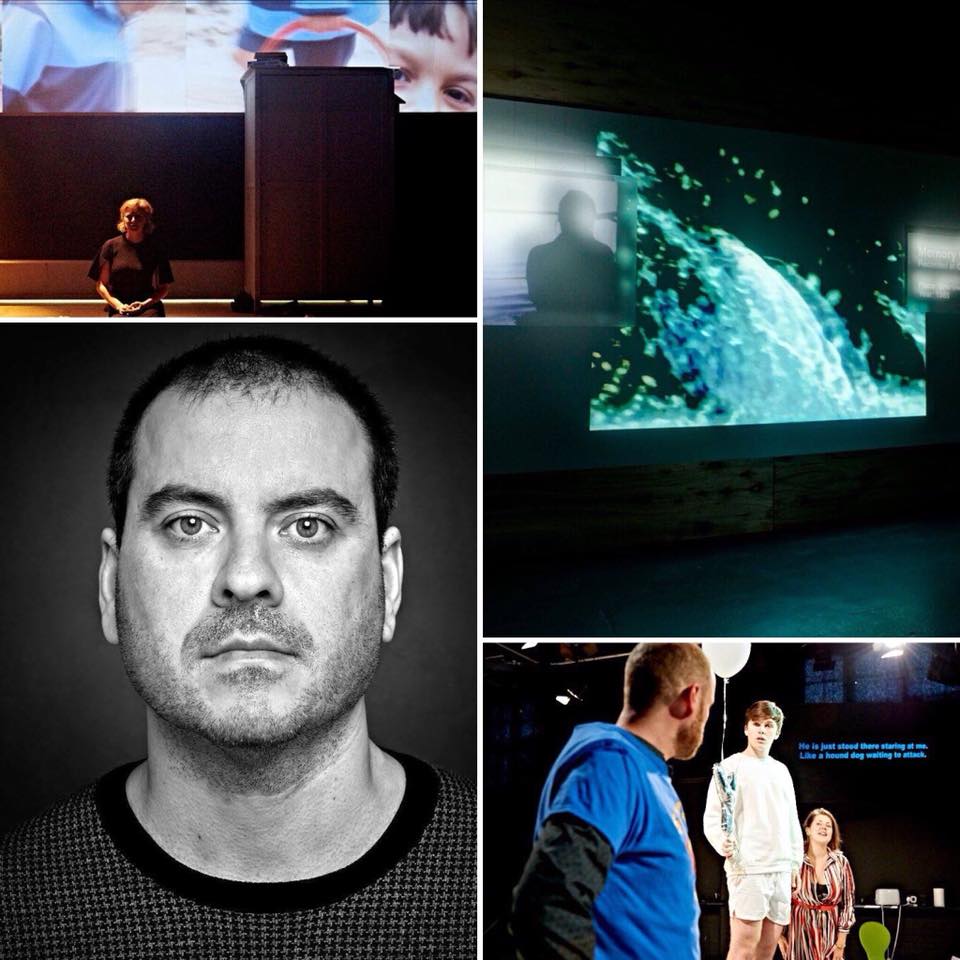
All posts by Guy O'Donnell

Hi I am Guy the project coordinator for Get The Chance. I am a trained secondary teacher of Art and Design and have taught at all Key Stages in England and Wales. I am also an experienced theatre designer and have designed for many of the theatre companies in Wales.

An interview with Jorge Lizalde


The director of Get the Chance, Guy O’Donnell recently met with Photographer/Videographer/ AV designer and Projection Mapper Jorge Lizalde. They discussed his training in Spain, his most recent work with Lucid Theatre Company on Little Wolf and his thoughts on the arts in Wales.
Hi Jorge, great to meet you can you give our readers some background information on yourself please?
Hi, I am Spanish and was born in Zaragoza and moved 12 years ago to the UK when I finished my art studies in Salamanca and then Madrid. When I arrived in the UK I worked for four years as a cinema projectionist at Vue Cinemas at the Angel (London) as well as The French Institute (London) where the projection is still old school, swapping film reels every hour over two projectors, a job that I loved but digital cinema has killed it. In 2009 I moved to Cardiff and since then I have been freelancing as Photographer/Videographer and most recently as an AV designer and Projection Mapper.
So what got you interested in the arts?
My grandfather Jose Luis Cano (on my mother’s side) was a famous watercolour painter from where I come from, his son, Jose Luis Cano (both my grand father and uncle, share the same name as it’s a Spanish tradition to name your son after your father.) my uncle, is a well known painter/illustrator, he creates the satiric daily drawings on the local newspaper, Heraldo De Aragon. My grandfather had an art studio, known as Studio Cano that’s why I trade commercially with that name,  which is my second surname, in Spain we keep both surnames from the father and the mothers side. The different people I encountered at Studio Cano learned different painting styles and disciplines at the studio. I spent a lot of my childhood and teenage years there, painting, drawing, etc. It is where I got ready for my University access as in Spain to study a BA in Fine Arts you need to know how to draw a life model as part of your A Levels. At Uni I learned many different disciplines of painting, sculpture and drawing as studies are quiet traditional, making my own canvas, paints, etc. My father was into photography just as an amateur but his brother was a commercial photographer. I didn’t really got interested in photography until my father passed away 18 years ago and I was passed down his  heritage and his equipment at the end of my first year at Uni. In addition, many friends of my parents are ceramists, architects, etc. Art was always around, so I guess it was inevitable that my brother (classical/flamenco guitarist) and myself would finally become involved in the arts as a career.
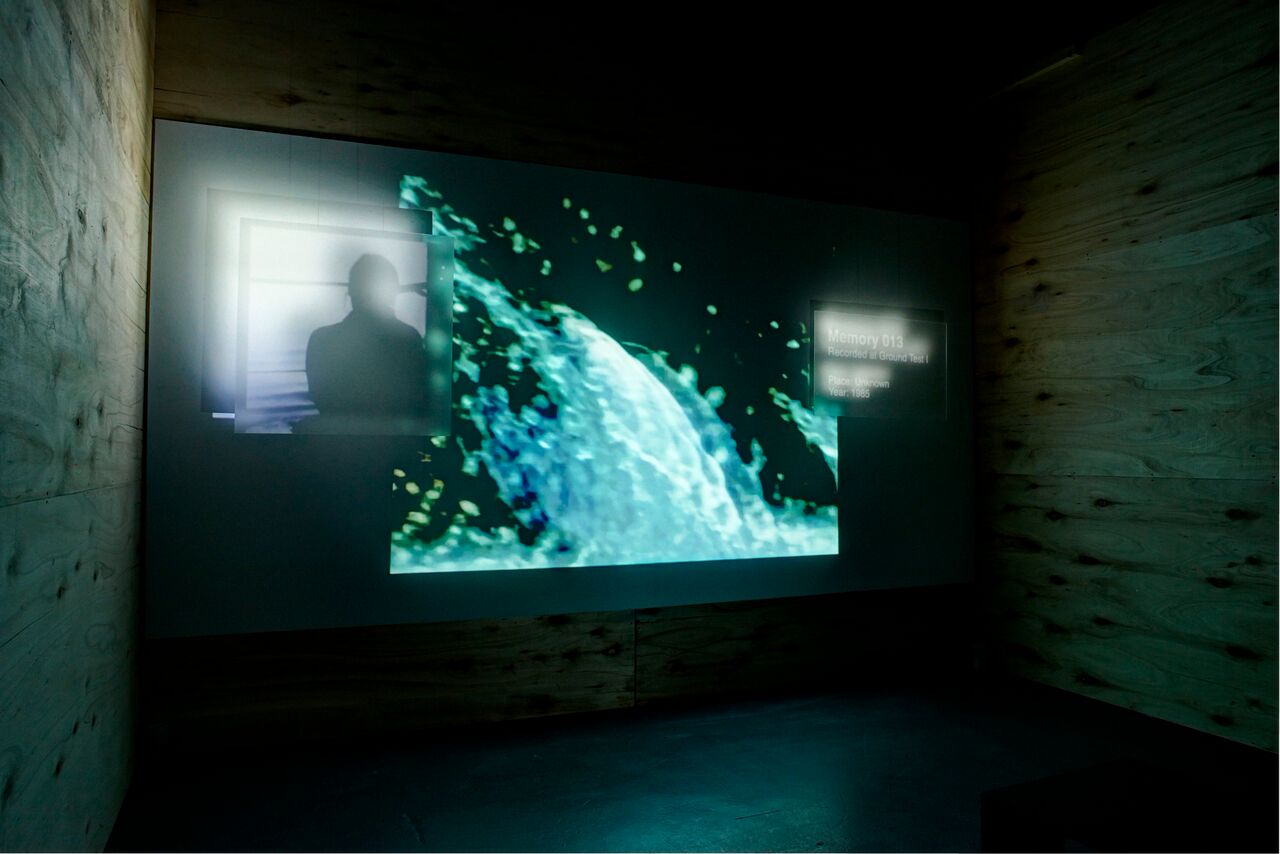
Jorge Lizalde, “Mnemonic” at G39 gallery

You have a wide variety of film and photographic skills. When you are photographing a theatrical production how do you approach the process of taking an image?
With every shot I treat it as individual, my camera settings and focus are manually set so I have total control of the shot. Having started as self-taught on film, before digital photography took over, has helped me to have a good understanding of the tech, so I just have to pay attention to what’s going on in front of me (actor interactions, movements, reactions, expressions etc.) I don’t like to retouch pictures afterwards in post-production, I just readjust the white-balance that sometimes the camera can get wrong. Foe example   theatre lights can have  new LEDs which can be can be really tricky on temperature and contrast, but what you see on the picture is normally what I initially capture. What I do particularly like is to move around a lot as this gives me some perspective and creates more interesting shots that just an on the spot view  from the auditorium. From a dress rehearsal session I can get around 150 usable shots,  its  then the job of the producer or the person in charge of marketing to choose the final images.
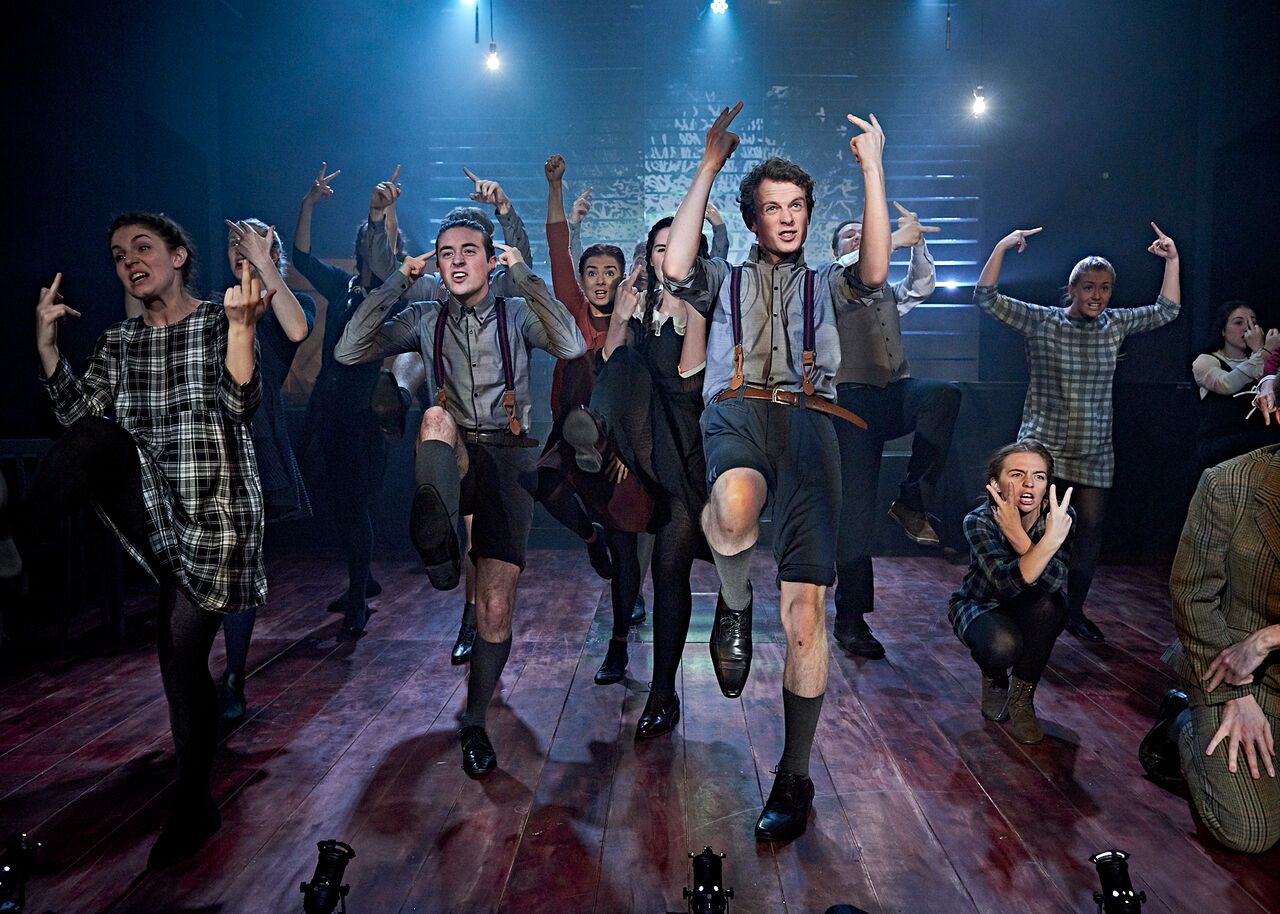
Credit: Gamta School by Jorge Lizalde | studiocano.co.uk

What makes a good image for a theatre production?
A well composed and focused picture of a scenario or situation that through the actors expressions tells you exactly what’s going on. If on top of that it gives you a sense of the stage or space that to me is a hell of a picture.
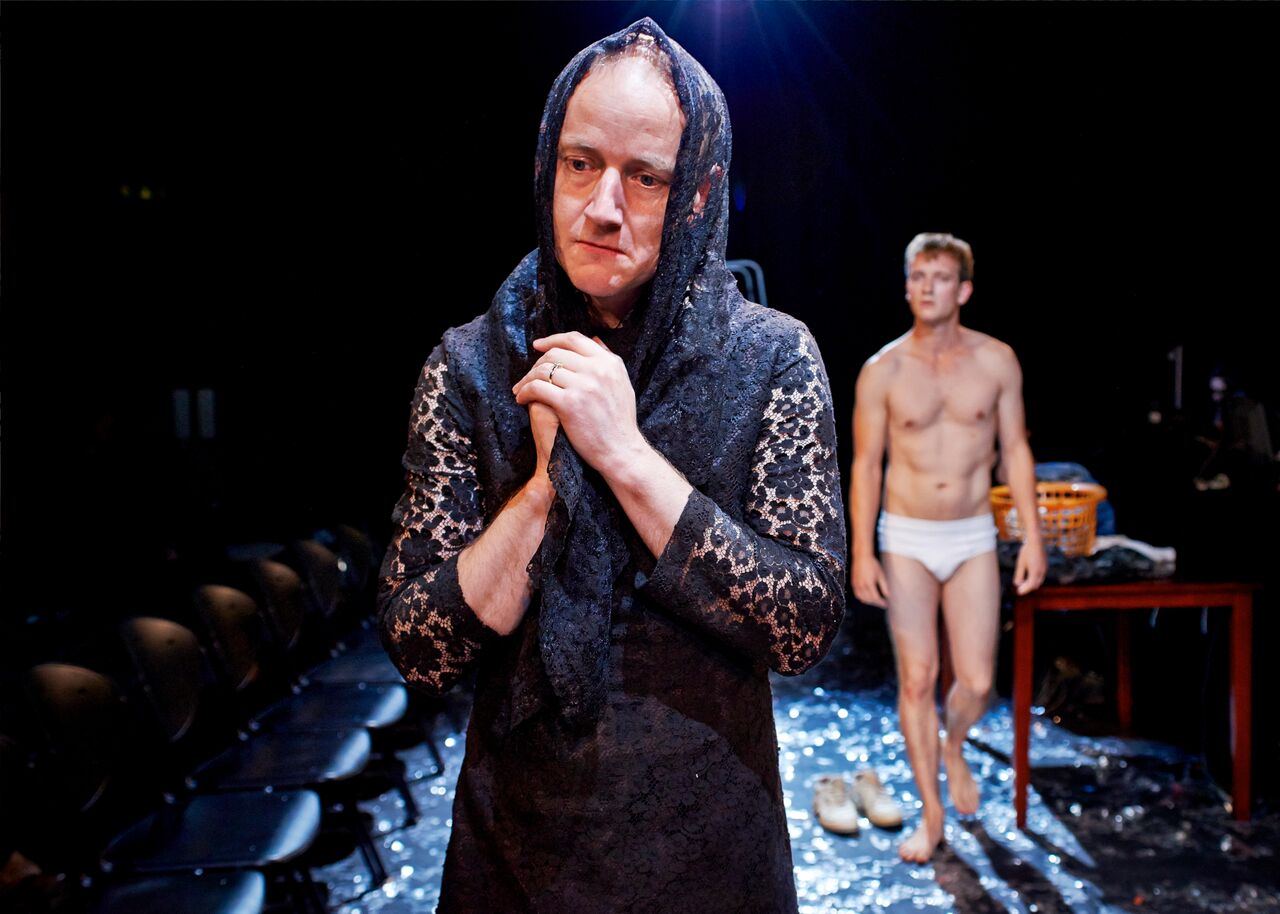
Credit: Roberto Zucco – August 012 by Jorge Lizalde | studiocano.co.uk

You also design and map Audio Visual projection for live performance, with new technologies this is a rapidly developing area, how do you see this art form developing?
Mapping projection is not new and has been part of theatre or arts for many years. Recently The Far Side Of The Moon by Robert Lepage was performed in Cardiff at The Wales Millennium Centre

LePage is known  for some great experimentation and mapping projections, that production is 17 years, believe it or not! What it is really developing fast it is the technology is becoming faster and cheaper. What a projector could give you 10 years ago in terms of quality for £25,000 you can have it now for just £1,400 and in a 1/5 of the size too. It’s the same with computers, they are faster to process the video codecs, I can edit and program a video on the middle of the tech session if needed, something unthinkable a couple of years ago, so AV is no longer  part of a privileged group with lots of money it can be also part of small budget productions or projects.

Untitled.mp4​Credit: Clockwork Orange / Curve Theatre – AV Mapping by Jorge Lizalde | studiocano.co.uk

Continuing this theme of embracing new technologies you also utilise drone camera footage in your work,  most recently in “Little Wolf” by Lucid Theatre Company. Can you tell us how you have developed your skills in this area and again how you see this art form developing in the future?
I bought my drone this summer for my own project about Brexit and what it means to be an EU citizen today in the UK,  as at the moment I feel we don’t belong to any land. The model I bought has some great features as well as a quality image, you can control it with the hand. I took it this summer to Finland where I was part of Oulu Hack Week organised by Taikabox, three days of experimenting with new technologies and dance where we tested it and created a little presentation or dance piece with it.

Now I am developing and experimenting a bit more with its possibilities and limits for the stage. I will have a hack day with Lara Ward at the end of November and hopefully refine its use in the future to create a little performance with it . Since I bought it I haven’t stoped using it, for example as you mention with Little Wolf where I created some footage overlooking water, – a swimming pool, a lake and the sea, it was really helpful. It’s still early days to say where this tech will go but it has become cheap and really fast so I wouldn’t be surprised if everyone owns one, even if it is just for selfies which it is what my little drone was designed for in the first place!
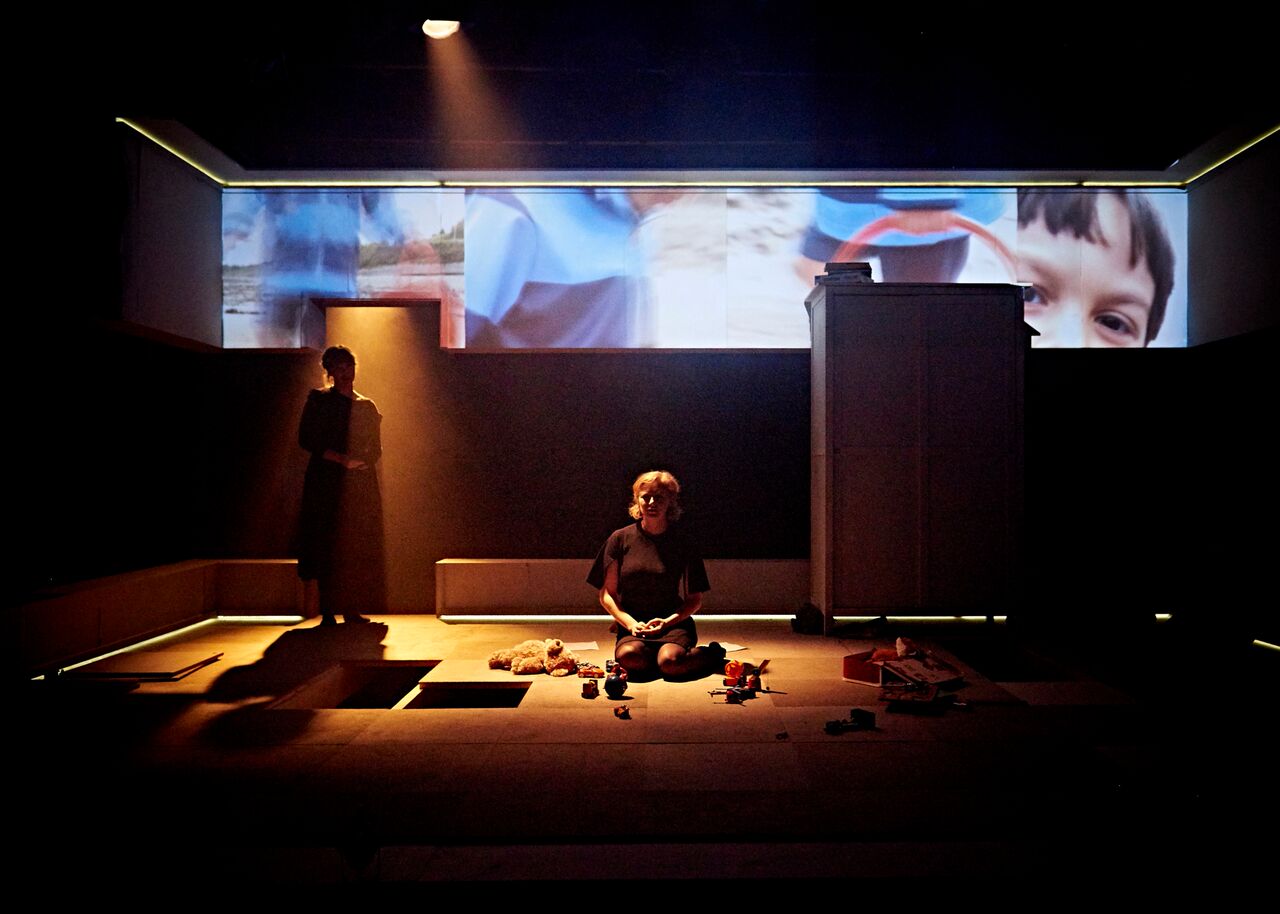
Credit: Little Wolf / Lucid – Av mapping by Jorge Lizalde | studiocano.co.uk

Get the Chance works to support a diverse range of members of the public to access cultural provision Are you aware of any barriers to equality and diversity for either Welsh or Wales based artists/creatives?
Yes I am really aware, I am Spanish and have an accent that in many cases is judged as not educated or a knowledgeable person. I haven’t been able to get some jobs because of it. At the beginning it was annoying when people tried to maximise their mouth motion and slow their pronunciation when talking to me because they think I didn’t understand but now I just do the same to them if they do, I slow my talking and maximise my pronunciation, maybe that’s why I don’t get the jobs but who wants to work with someone that diminishes you by your accent? Also, I have been involved with Taking Flight Theatre Company

As well as  other theatre companies developing live subtitles,  I have been working on  creating theatre which is more accessible to all audiences. I believe I am the only person in the UK using the software I am working with, or at least this is what a programmer recently told me! It is  software created for film cinema subtitles but I adapted to theatre. It can be projected over projections, it can be programmed to be part of the stage and interact with actors, it can be shared in any device, Android or Apple, phone or pads and via a local network which can be used in a promenade performance without access to the internet. In addition I am developing  live speech to text subtitles (same language or a live translation of it as for example Welsh-English or Spanish- English) but the technology is not there yet, hopefully with the development of  home assistants like Google Home and Amazon Alexa the interpretation of the language will get faster and better.
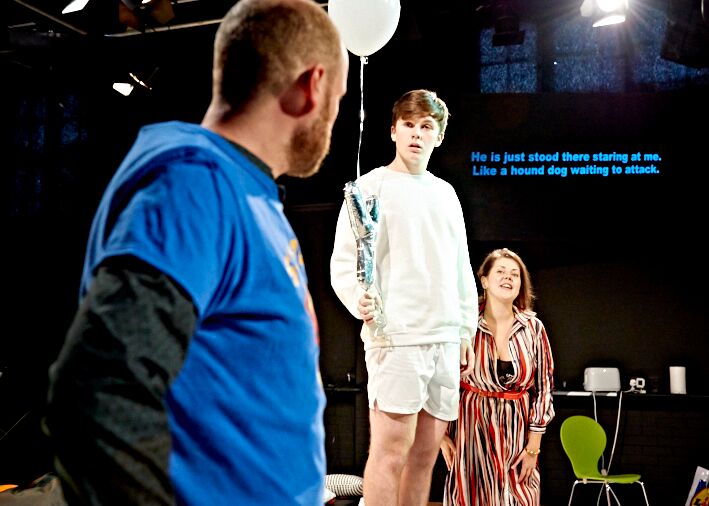
Credit: Yuri / August 012 | Subtitles and picture by Jorge Lizalde | studiocano.co.uk

There are a range of organisations supporting Welsh and Wales based artists and creatives, I wonder if you feel the current support network and career opportunities feel ‘healthy’ to you?
I think it is pretty healthy,  a bit more funding would be great, especially after so many years of having cuts in the arts budgets. The only problem I am facing this days  is, I am in my late 30s so there are no prizes or opportunities for that age or not as many, most are focused on early career or under 30s.  If you are a mid 30s or early 40s creative and want to start an art career there are not many opportunities to build a good portfolio and be quickly part of the art community.
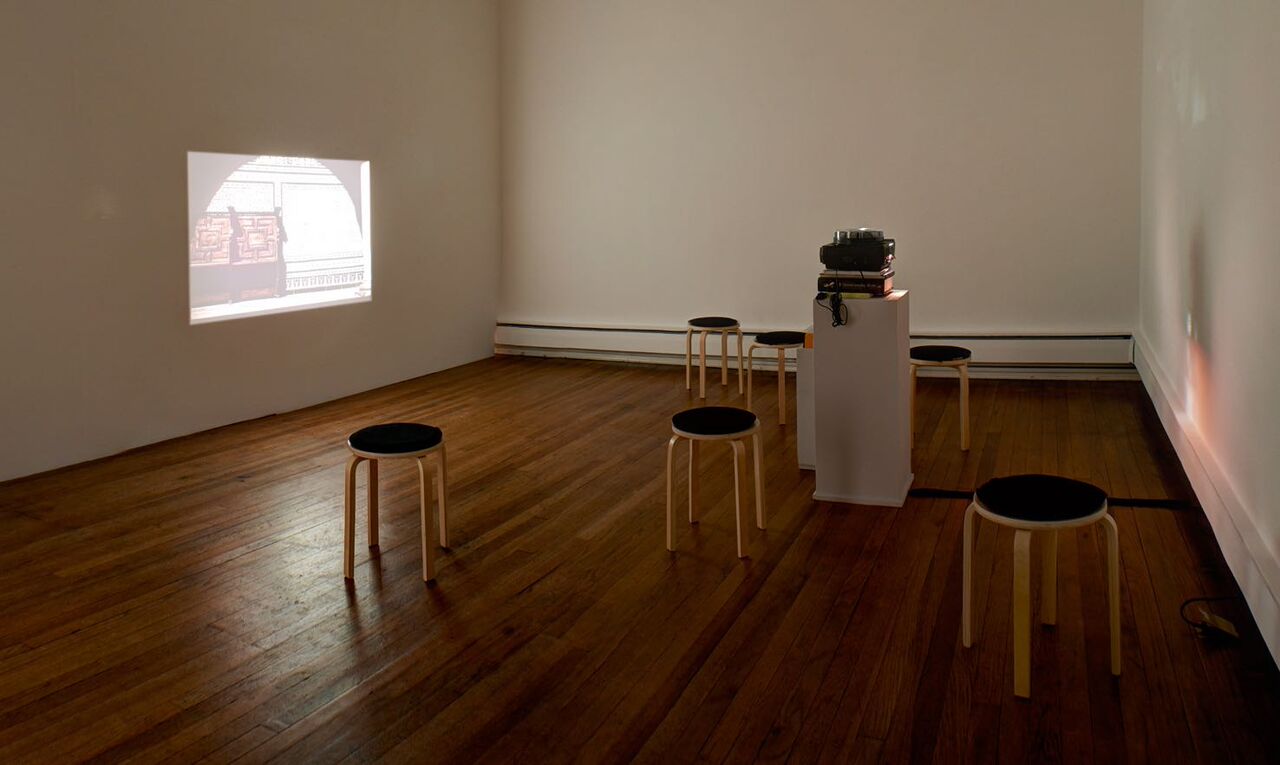
Credit: Own Installation, “Editing my father” at Ffotogallery

If you were able to fund an area of the arts in Wales what would this be and why?

To choose an specific area  would be to discriminate against the others. I never understood targeting specific areas, all areas, race, social, cultural backgrounds, etc should be considered every year for equally and fund them according to the excellence of the projects and their outcomes. If that means some stablished organisations  loose funding after many years receiving it because independent or small projects are creating better projects to present, so be it.
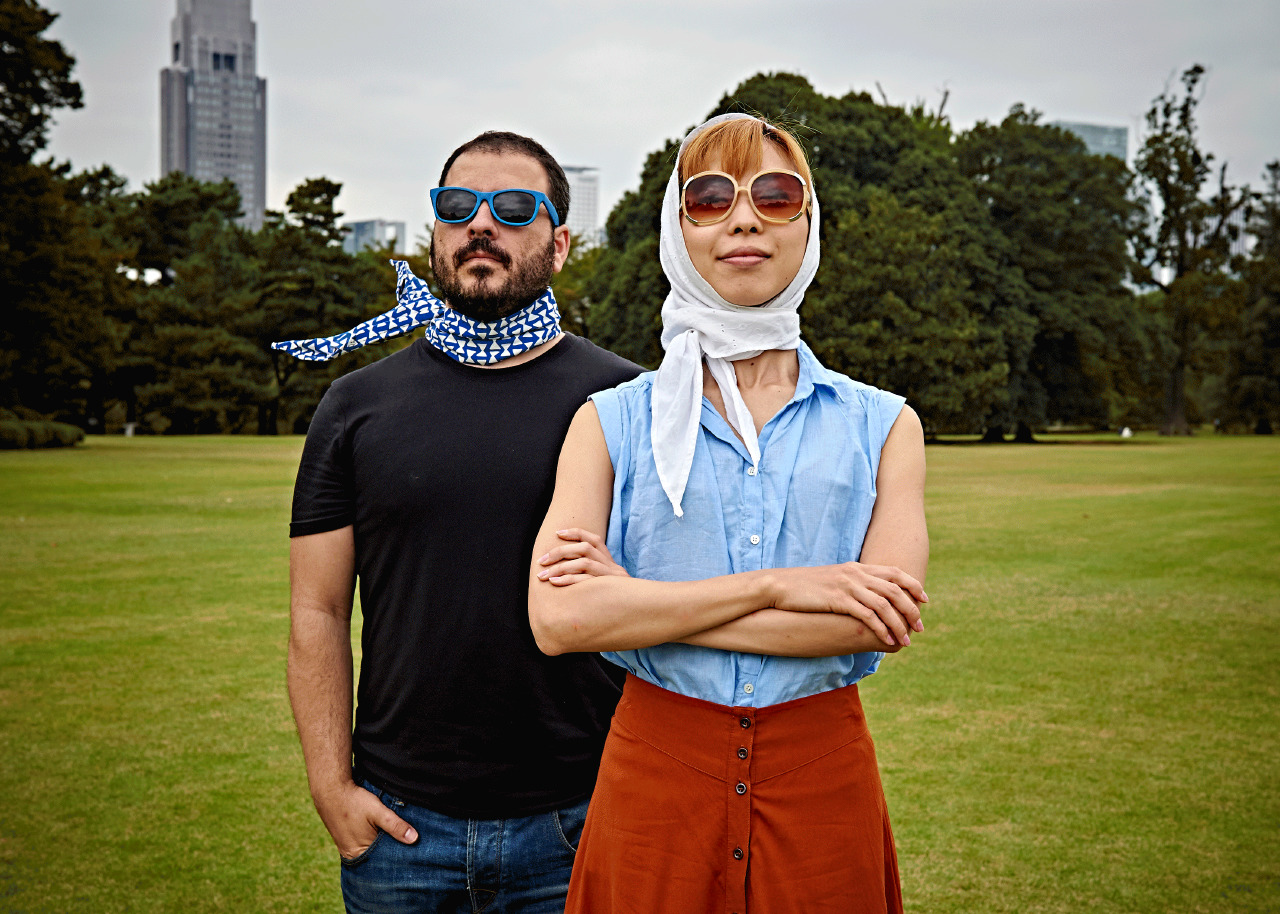
Credit: “Cymru & I” Collaboration with Japanese choreographer Yo Nakamura

More information about the project linked to the above image: http://jorgelizalde.com/iframe-2/iframe/index.html

What excites you about the arts in Wales?
What really excites me it is the size of the art community, it is not big, so you soon know most of the artists working in Wales. This  also makes it really accessible, and that gives you great freedom to experiment and collaborate with other artists and start new projects or enterprises. It creates opportunities for pop up exhibitions, zines, performances, etc. I don’t think there are enough links with work which is  part of a performance or the theatre/artistic community with visual or more modern arts  groups but hopefully in the future there will be more collaborative work between art galleries – g39, Ffotogallery and Chapter – with the performance festivals – Festival of Voice, Cardiff  Dance Festival  – or venues like the WMC or Chapter – as well as artists from both backgrounds. When they have collaborated in the past at events such as Experimentica or Artes Mundi there are more interesting projects happening and everybody really gains from it, creatively and culturally.
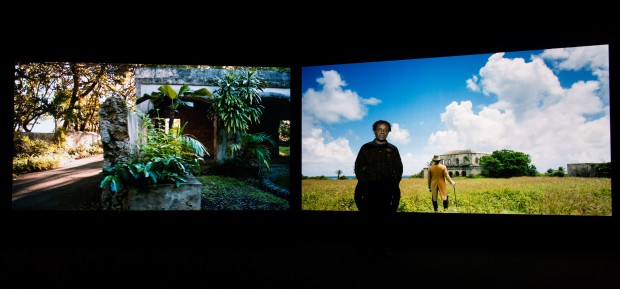
Artes Mundi 2017 Winner John Akomfrah with artwork Auto Da Fé © Polly Thomas
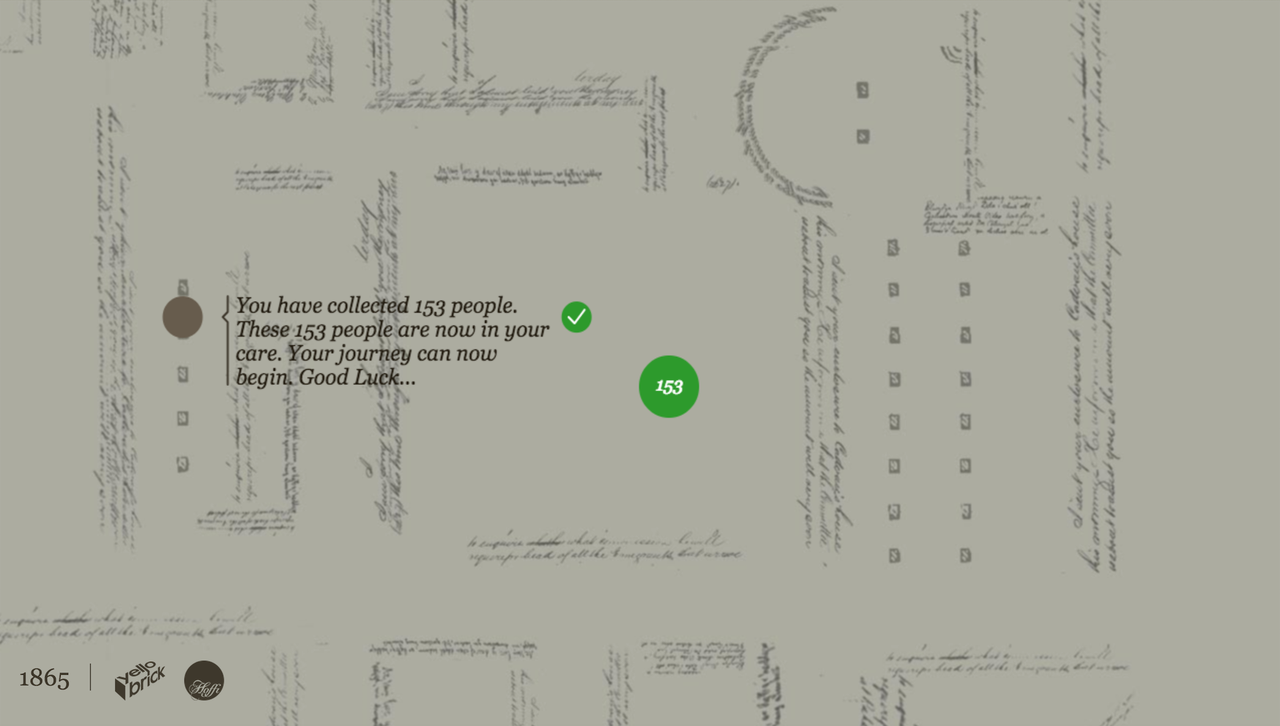

Credit: “1865” prototype game app in collaboration with Yellobrick, Nesta and National Library of Wales


Link to more information on the project above https://www.nesta.org.uk/our-projects/digital-rd-fund-arts-wales-case-studies/arts-archives-and-technology
What was the last really great thing that you experienced that you would like to share with our readers?
I have always been interested on working with lights and mapping lights structures these are getting more and more interesting, especially with LEDs stripes, with them you can have as many different colours and sync as you like. A good example of it is Robert Hencke’s Lumiere III laser lights installation which I saw at the Barbican main theatre at the  beginning of this year and it was one of the greatest art experiences I have ever seen.

Thanks for your time Jorge.
You can find more  information about Jorge and his work at the links below.
Personal
Commercial
An interview with Dr Branwen Davies


The director of Get the Chance Guy O’Donnell recently met with writer Dr Branwen Davies. They discussed her training, career to date, a new work in progress ‘Cut and Run’ which will be performed at Chapter Arts Centre this December and her thoughts on the arts in Wales.
Hi Branwen great to meet you, can you give our readers some background information on yourself please?
I initially trained as an actor at The Royal Welsh College of Music and Drama in Cardiff after being involved with National Youth Theatre Wales as a teenager. I was interested in performing but realised I was a better writer than an actor and decided to focus on writing instead. My training gave me a really good grounding and introduction to theatre, plays and performance as well as the opportunity to meet some great people who I have been lucky to collaborate and work with later in life. I think actors can be great script editors – knowing what is needed and not needed in scenes and what can be conveyed without text. I think my actor training helped me become a better writer and theatre maker.

The Royal Welsh College of Music and Drama, Cardiff.

So what got you interested in writing and the arts?
I’ve always written and I’ve always been involved in theatre in some way shape or form. I wrote plays as a child, took them to school and forced the class to perform them! I wrote whilst at RWCMD and after working as an actor for a few years decided to do a Creative Writing Masters at Bangor University. Whilst doing my MA I was commisioned by Theatr Genedlaethol Cymru to co-write the Welsh language play DOMINOS that toured Wales. I’ve since been combining freelance writing work, lecturing and various theatre/performance projects with various companies in Welsh and English.

The writers of DOMINOS, Mared Swain, Branwen Davies,  Manon Wyn,  and Angharad Llwyd.

You have recently been running some reviewing workshops for schools linked to Cwmni Fran Wens production Mwgsi. How have the young people responded?

Mwgsi 

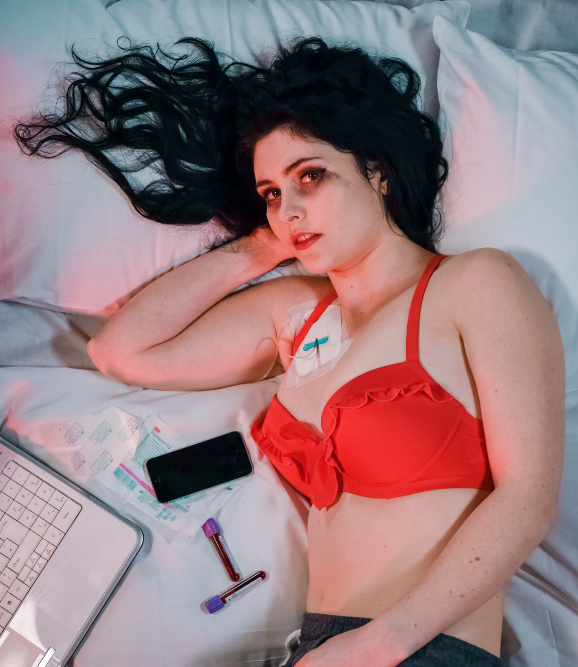
It’s been an eye opener talking to young people regarding the hard-hitting production of Mwgsi which is about a young girl who at the end of her A levels discovers she has Leukemia. I admire the young people’s honesty and frankness. They know what they like and don’t like and are able to communicate well their thoughts and reactions to the play. I feel it’s important that a play produced for young people is reviewed by young people – i.e the target audience and that Fran Wen – a company who aim to create exciting theatre that challenges young people with content and form approach schools and offer the opportunity. I’ve had many interesting discussions the past few weeks and enjoyed discussing what a review can be and should be and how to create a vocabulary to talk about performance and theatre and elements involved in a production in an engaging way.
I believe you have been working with older citizens. Can you tell us more about the project you have led on?
It was a privilege to work with the older citizens on the project Lleisiau/Voices with Pontio and Friars Secondary School in Bangor. We spent time with the residents at the old people’s home Plas Hedd at Maesgeirchen Bangor who specialise in care for people with Dementia. We created a verbatim piece of theatre after the students befriended the residents and talked and interviewed them. Seeing the frindships that were formed between the generations was heartwarming. Being able to see the residents as real people with stories and a past rather than patients in a chair and most importantly being able to give them a voice was very rewarding. I have never laughed and cried so much during a project. It really hit home the power of theatre, communication and engaging with the community. The stories that were shared were priceless – Mable’s fun and frolics with the Land Army, Margaret training to be a nurse and escaping from the window after lights out and Morus playing the piano whilst his father sang and his brother played the trombone. The end result was read to the friends and families of everyone involved and was a celebration really of the resident’s lives. But the process of befriending and giving the teenagers an opportunity to get to know the older generation and to share and learn from them was the real power of the project and seeing the residents light up and enjoy sharing and laughing and having fun.It was very real, very human and touching.

Gwanwynn celebrates creativity in older age, with an increasing older population in Wales is their enough support for the creativity of our older citizens?
I don’t think there is enough support for the creativity of our older citizens. There are some important and rewarding projects going on but there needs to be more. I feel we tend to forget or ignore our older citizens when they need to be celebrated. They have so much to share and we have so much to gain from them. Loneliness is such a huge problem with our elderly citizens and I feel an output for creativity would be a huge benefit to combat loneliness and eradicate the stigma of old age.

Get the Chance works to support a diverse range of members of the public to access cultural provision Are you aware of any barriers to equality and diversity for either Welsh or Wales based artists?
Get the Chance do a great job. There are always barriers and always people fighting for equality and for more diversity. It’s the money element that worries me. The expense and cost of opportunities – even visiting theatres or booking a space! I wish there was more funding to collaborate with different artists on a research and development level. Introducing different artists to each other to experiment and play with different ways of working.
If you were able to fund an area of the arts in Wales what would this be and why?
I would like to see more funding for children and young people’s theatre – theatre that provokes without preaching. Some of the most memorable performances I have seen have been for younger audiences. I still remember some productions that came to my primary school and feel that it is a mistake to steer away from visiting schools and performing at schools. It is the only opportunity some children will have of theatre. I would like to see more funding for the less obvious and less traditional forms of theatre and theatre making too and development of new work. Would be good to take a risk with funding and support less known and less experienced artists – we miss out by playing safe. There is room to push boundaries.
What excites you about the arts in Wales?
What excites me? The talent!The practitioners and artists we have in Wales across the board – actors/directors/writers etc I just wish there was more opportunity to showcase the talent across the border and internationally.

What was the last really great thing that you experienced that you would like to share with our readers?
I have just experienced a weekend at Ty Newydd in Llanystumdwy at a writing retreat where I was mentoring 6 new young writers with Elgan Rhys for Fran Wen.

Branwen  working with one of the young people at Ty Newydd.

It’s a magical place and a weekend collaborating, talking and sharing was invigorating!

Elgan Rhys working with one of the young people at Ty Newydd.

P.A.R.A.D.E

Photographic credit: Mark Douet

Performance wise I recently saw National Dance Wales and Marc Rees’s P.A.R.A.D.E – yes I’m biased because I collaborated with the text for the performance but I enjoyed the experience, excitement and the spectacle of it all.

P.A.R.A.D.E

Photographic credit: Mark Douet

And lastly to finish what are you currently working on?
Cut and Run is a work in progress that Dirty Protest are developing/performing in the run up to Christmas at Chapter as an alternative Christmas show. You can catch it at the studio in Chapter December 20th-23rd. It’s a one woman show with mosquitoes, Texan tourists and a ticking biological clock!

We spoke to Catherine Paskell,  Artistic Director of Dirty Protest about this new performance.
As part of Dirty Protest’s 10 year anniversary celebrations, the company present a development production of a new Christmas monologue, Cut and Run by Branwen Davies. Branwen wrote for Dirty Protest’s very first short play night in 2007 and this is her first full length play for the company.
Cut and Run follows Dirty Protest’s tradition of alternative Christmas offerings and will be performed at Chapter 20th – 23rd December 2017. Tickets can be booked here
 

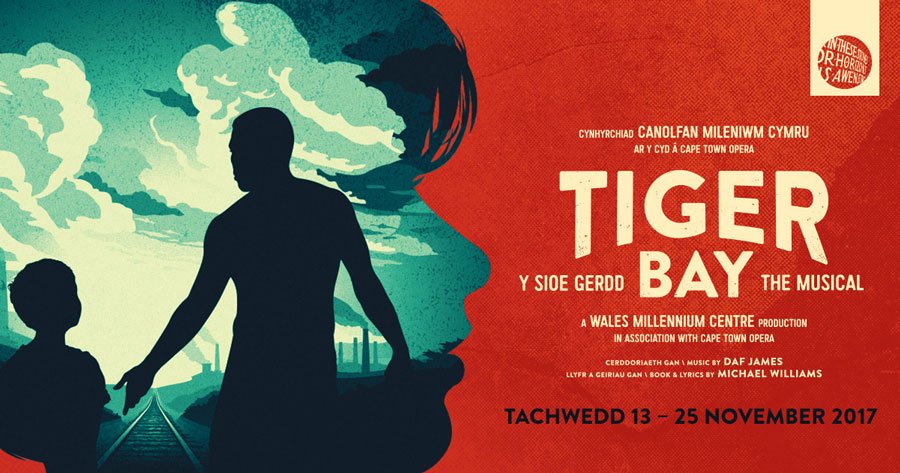
Review Tiger Bay The Musical, Wales Millennium Centre by Ceri Ann Goddard

(The review below is from a preview performance, accessed through Spice Time Credits)

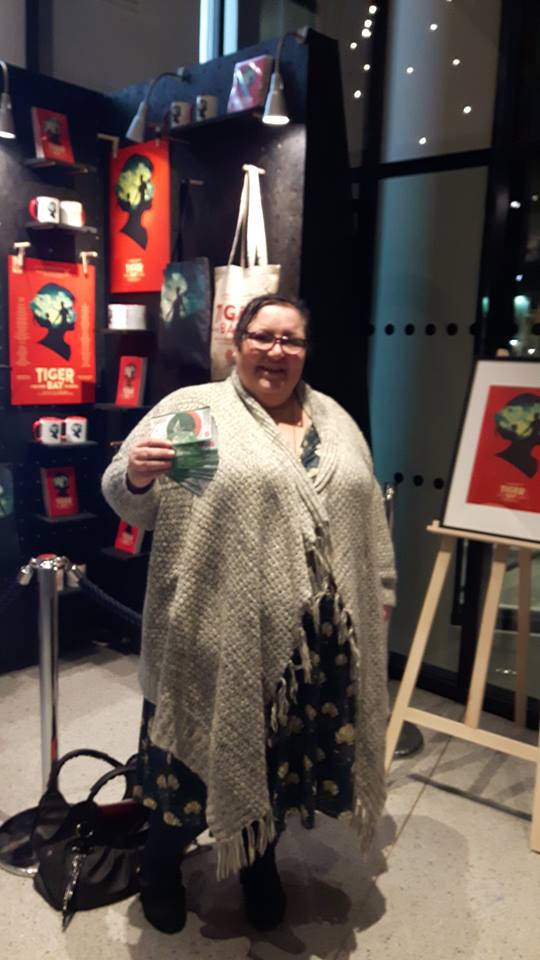
So off I went out out (no slippers) for my first Spice Time Credit spend in several months. It was so good to get out, I’ve been bit unwell again, just coming through the other side, treats like this make recovery fun and what better way than to go and see a fab new show like Tiger Bay The Musical  with friends and family thanks to Spice Cardiff and the Wales Millennium Centre.

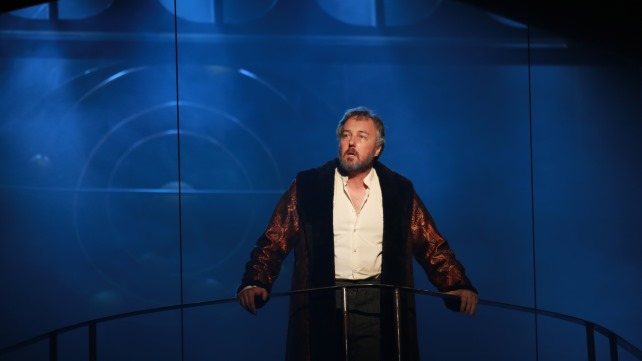
Tiger Bay is a beautifully crafted musical based in Cardiff around the boom time of the coal industry. Its about the people who lived and worked there, tales of love, hardship, hope and tragedy (be prepared to experience a gamut of emotions). John Owen Jones voice is commanding and lyrical, it was so lovely, Dom Hartley Harris voice is like velvet, ‘Ianto’ is played by a little star to be and Noel Sullivan got the best boo as a baddy I’ve heard since I saw the Baron in La Traviata.

Suzanne Packer back to a Kairdiff accent as not seen on Casualty was excellent, her part induced some lovely giggles and we forget at times the lady is an accomplished and talented singer, an excellent performance by all.
The staging itself is incredibly clever, with a few set pieces that move and it immediately changes the scenery and ambiance, one minute you are on a ship by the dock, the next inside a local hostelry and the next inside a castle.

I think my favourite part was the stage lighting, I certainly applaud the director/designer of that, the intense lighting/spotlighting and placement of the actors and other players induced dramatic silhouettes (the smoking lady in Morgans) or made it seem like there were three times as many people on the stage, (triple shadows), the sinister giant stretched shadows in the darker scenes, it was an excellent bit of staging.

The choreography and choral arrangements and orchestra were amazing, some parts where you have a three different singers I think its called polyphonic chorus, didn’t always work for me and I lost the story but I soon caught up, however you cannot deny its very clever and brilliantly technical and all credit to the professionalism of the cast and indeed the very young cast that these choral sections were so superb.
So any negatives?, I have to say yes, it’s slightly too long, I’m disabled and sitting for three hours can be uncomfortable, I was getting quite fidgety towards the end, not because I’d lost interest, but because I had a numb bottom and a complaining hip. I think some of the linking to scenes was tenuous and some overlong, but really its a tiny complaint and did not deter my enjoyment of the show. I truly recommend you get a ticket to go if you can, it was a really lovely evening, whats not to enjoy about being entertained by a well written show performed by talented people?
Bravo, I say Bravo!

Ceri Ann Goddard
Cast
Ensemble — Jamal Andréas
Rowena Pryddy — Vikki Bebb
Leonora Piper — Liz May Brice
Donkeyman / Ensemble — Lee Dillon-Stuart
Cadi / Ensemble — Lucy Elson
Ensemble — Kit Esuruoso
Ensemble — Soophia Foroughi
Mali / Ensemble — Zoe George
Donkeyman / Ensemble — Daniel Graham
Themba — Dom Hartley-Harris
Ianto — Louise Harvey
Ianto — Ruby Llewelyn
Lowri / Ensemble — Elin Llwyd
Ensemble — Carl Man
First Mate / Locke — Rhidian Marc
Ensemble — Kayed Mohamed-Mason
Klondike Ellie / Ensemble — Busisiwe Ngejane
John Stuart — John Owen-Jones
Marisha / Ensemble — Suzanne Packer
Fezile / Ensemble — Luvo Rasemeni
Yusef Mohamed / Ensemble — Zolani Shangase
Ensemble — Cilla Silvia
Ensemble — Ernestine Stuurman
Seamus O’Rourke — Noel Sullivan
Donkeyman / Ensemble — Joshua Tonks
Bosun / Ensemble — Adam Vaughan
Arwyn — Ian Virgo
Ensemble — Emma Warren
Ensemble — Stephanie Webber
CREATIVE & PRODUCING TEAM
Music by — Daf James
Book and Lyrics — Michael Williams
Director — Melly Still
Co-Director — Max Barton
Designer — Anna Fleischle
Lighting Designer — Joshua Carr
Sound Designer — Christopher Shutt
Music Supervisor and Musical Director — David Mahoney
Choreographer — Melody Squire
Casting Director — Jim Arnold CDG for Pippa Ailion Casting
Additional Casting — Charlotte Sutton CDG
Producer — Maris Lyons
Executive Producer — Pádraig Cusack
Additional Welsh Lyrics — Daf James
Associate Director — Shelley Adriaanzen, Richard Tunley
Associate Designer — Loukia Minetou
Associate Lighting Designer — Peter Small
Associate Sound Designer — Greg Pink
Associate Choreographer — Lungelo Ngamlana
Fight Director — Kev McCurdy
Voice Coach — Nia Lynn
Orchestrations — Jeff Howard
Additional Orchestrations — Nathan Jones
Costume Supervisor — Natasha Prynne
Production Manager — David Evans

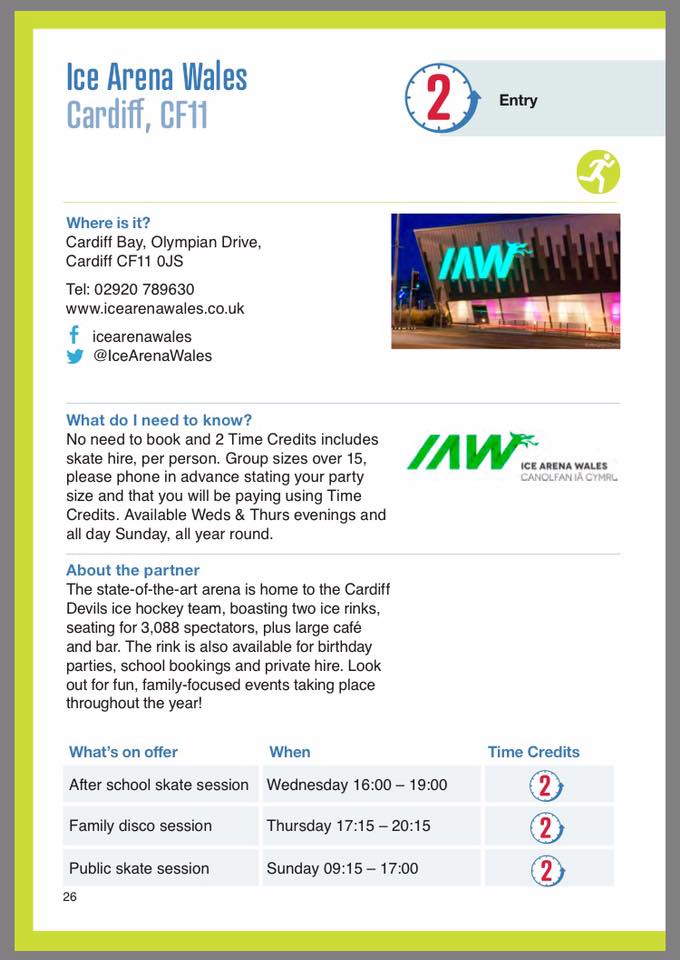
It’s Nice on the Ice with Spice Time Credits


Ice Arena Wales is one of the many organisations across the UK that are part of the Spice Time Credit Network.  The Time Credits model works simply: for each hour that an individual contributes to their community or service, they earn a Time Credit. This Time Credit can then be spent on accessing an hour of activity, such as local attractions, training courses or leisure, or gifted to others.
I recently visited the Ice Arena Wales with my family to spend Spice Time Credits I had earned in a voluntary capacity. Using Spice Time Credits is very simple they are accepted at the venue on Sundays between 9.15-17:00, for after school skate sessions on Wednesdays between 16:00-19:00 and for family disco sessions on Thursdays between 17:15-20:15. Each skate session will cost two Spice Time Credits per person. You simply ask to pay with Spice Time Credits at reception and then make you way into the changing area.

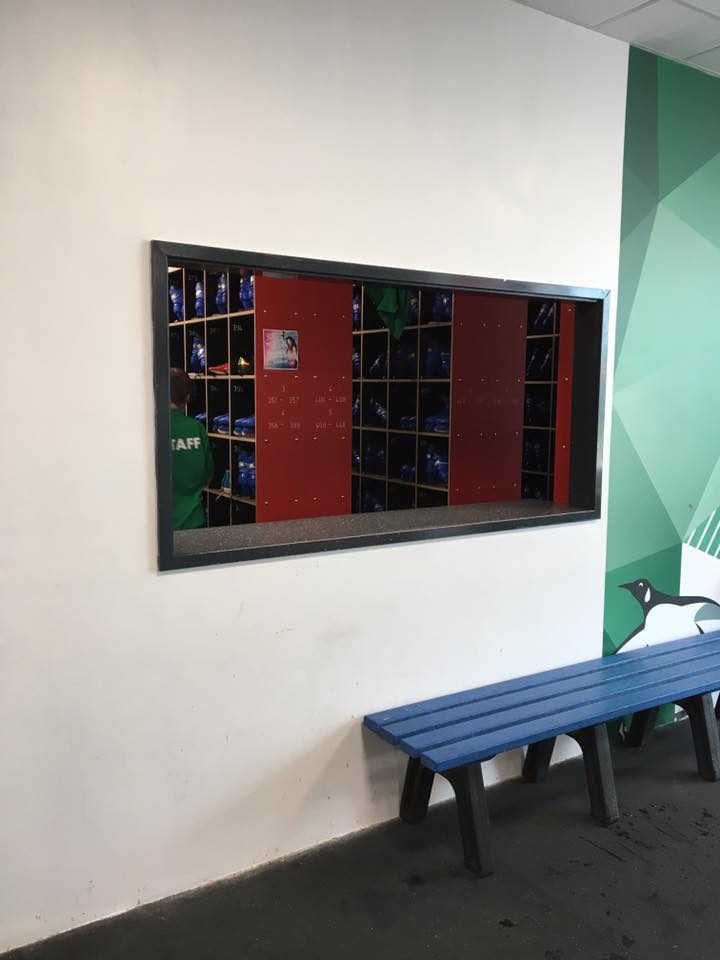
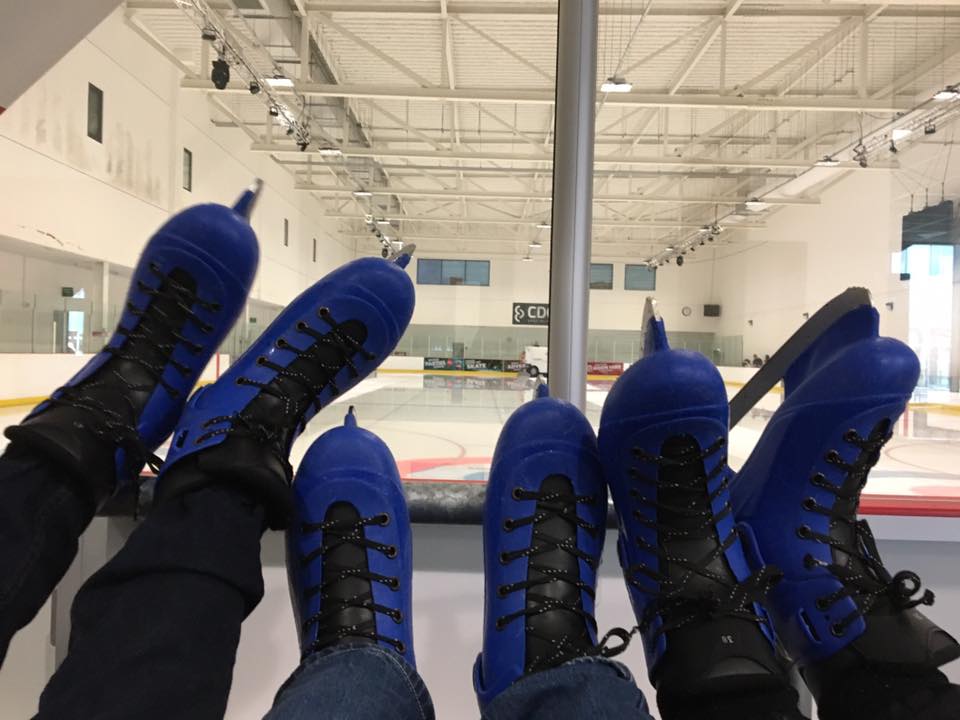
The staff here are very friendly, you simply hand in your shoes and requests ice skates in your size. One you have your boots on, (remember to tie then nice and tight) you are ready to skate!

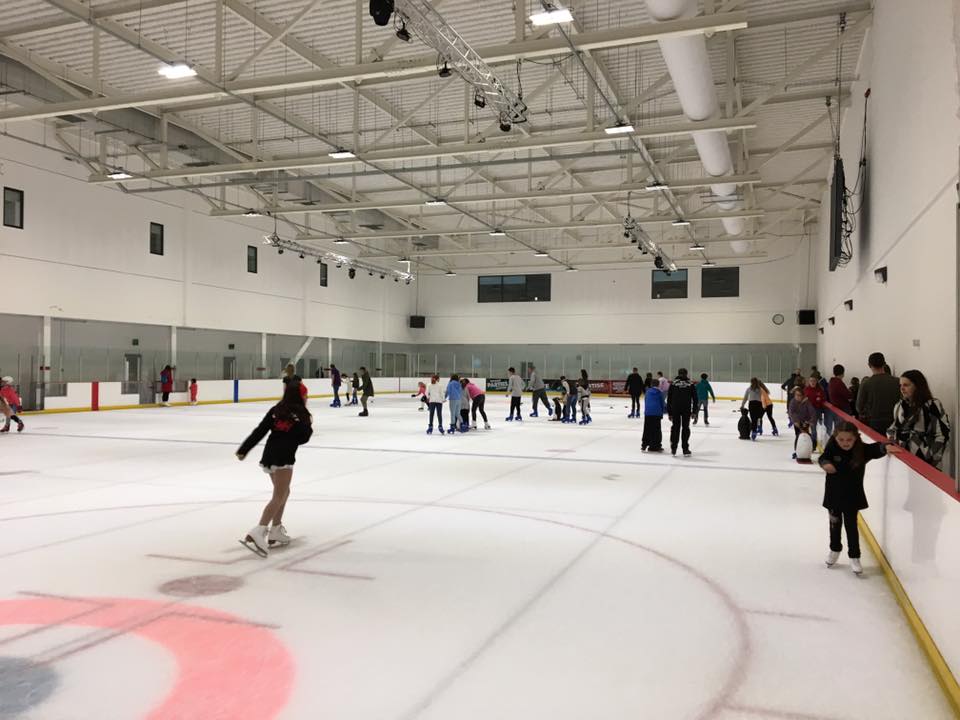
The public skating area provides ample space for all of the family to have lots of fun. The top half of the rink is often used for classes for little ones. Skate penguins can be hired from the venue for little ones who might need some extra help. The rink is always staffed by very helpful Ice Arena Wales staff members in case you have a problem or like myself occasionally fall over!

As a family we stayed for a few hours and really enjoyed ourselves. The venue also has a cafe serving hot drinks and snacks as well as a well stocked bar if you need to rest your tired feet!

I can recommend spending Spice Time Credits at Ice Arena Wales. Its a fun, healthy way to enjoy special family time together in the heart of Cardiff.
You can check out the UK wide Spice Time Credit spend brochures at this link.
 

Review The Bear, Mid Wales Opera by Barbara Michaels


The Bear Mid Wales Opera
Based on the play by Anton Chekhov
Composer: William Walton
Libretto: Paul Dehn and William Walton
Musical Director: Jonathan Lyness
Direction and Design: Richard Studer
Reviewer: Barbara Michaels
 out of 5 stars (3 / 5)
 
Composed in 1967 and based in Anton Chekhov’s play of the same name, The Bear is a comedy in one act written by Walton with the humour which characterises much of this composers work. Not perhaps the best known of operas and seldom performed, this production by MWO is expressly designed for small stages. With its minimal instrumental requirements and just three performers The Bear is admirably suitable.
Thursday last saw the start of a 16-venue tour taking in village halls and similar small venues spread across the region; an innovative idea as far as opera is concerned designed by directors Jonathan Lyness and Richard Studer with a twofold purpose – accessibility with regard to both venue and cost, and introducing opera to audiences who have never seen an opera performed and are, understandably, wary. Lyness is also intent on dispelling the myth that opera is only for the cognoscenti.
The performance at Llanfair Caereinion near Welshpool on the second night of the run, will, without doubt, have done much to dispel that myth. Comic opera is never easy and Lyness had the additional challenge of reducing the orchestration to just five musicians: violin, harp, bassoon, percussion and piano, with the violin taking on part of the original viola score.
The action takes place in the widow Yelina Ivanova Popova’s country house in around 1888, and opens with the widow’s manservant Luka bemoaning that fact that his mistress, a young and good-looking widow, is still grieving for her late husband and refusing to leave her house a year after his death. (Later we learn that in fact, far from deserving of her devotion, he had a number of mistresses)A visitor arrives in the shape of a rough and ready businessman Smirnov who has come to collect the money owed to him by the late Popova. The two spar, to the extent of preparing to point loaded pistols at one another – but are unable to fire because they have fallen in love.
With excellent musical backup provided by the minimal chamber orchestra, the three singers rise to the challenge of performing in a hall with far from ideal acoustics. Mezzo soprano Carolyn Dobbin is delightful in the central role of the widow Popova, while both baritone Adam Green, as Smirnov (the bear of thee title) and bass Matt-hew Buswell as Luka give strong performances.
Giving value for money, after the interval MWO gave some excerpts from their forthcoming Spring 2018 tour of Tchaikovsky’s Eugen Onegin as a taste of what is to come from this small but multi-talented company.
Touring around Wales

Barbara Michaels

An Interview with Kyle Lima


The director of Get the Chance Guy O’Donnell recently met with actor Kyle Lima. They discussed his training, his new production Heat and Soul which will be performed at Wales Millennium Centre this November and his thoughts on the arts in Wales.
Hi Kyle great to meet you, can you give our readers some background information on yourself please?
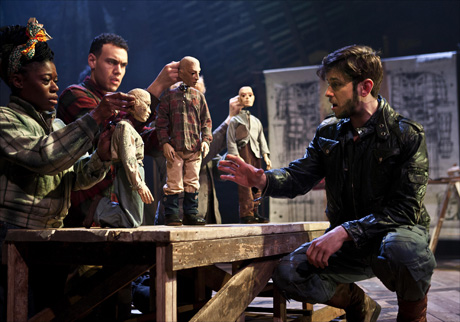
Hi I was born and raised in Cardiff and grew up in Splott. I went to Baden Powell Primary school and Willows High School. I then went on to study drama on a foundation course for a year then a two year BTEC course at Coleg Glan Hafren in Performing Arts. I then went on to study at The Royal Welsh College of Music and Drama, graduating in 2009. I’ve been fortunate enough to have worked with the Artistic Director of the Bristol Old Vic and the visionary mind behind the world renowned production of ‘War Horse’, Tom Morris, in his BOV world tour production of A Midsummer Nights Dream in which I played the young lover Demetrius.

A Midsummer Nights Dream, Bristol Old Vic Theatre 

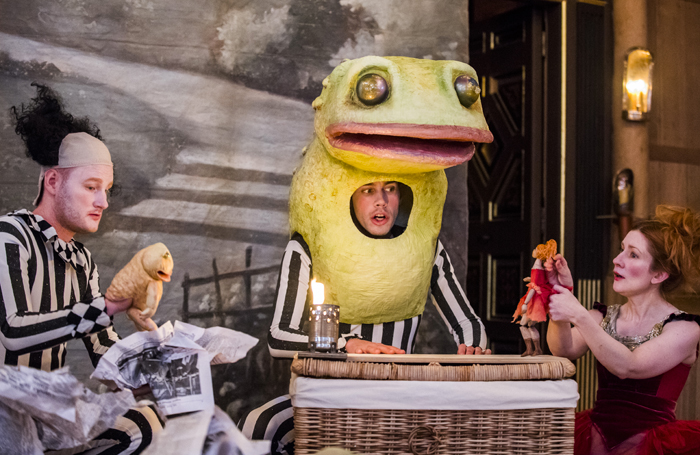
Most recently I have worked with the artistic director of the Shakespeare’s Globe, Emma Rice, in her production of The Little Match Girl in The Sam Wanamaker Theatre at the Globe,

The Little Match Girl, Shakespeare’s Globe Theatre.

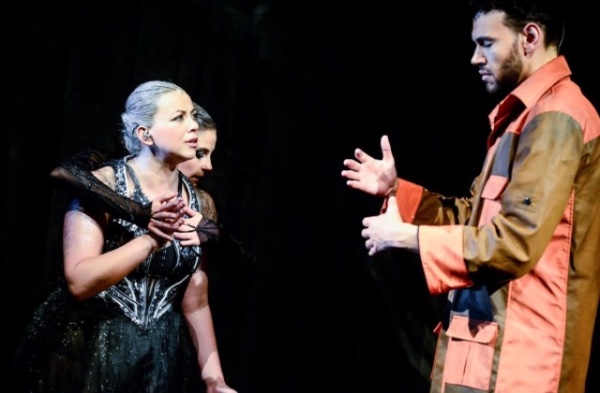
As well as Emma’s ‘Kneehigh’ production of ‘Tristan & Ysult’ in which I played the scheming right hand man of the king, Frocin.
Last year I was in Charlotte Churches ‘The Last Mermaid’ as part of the Wales Millennium Centre’s first Festival of Voice which was an incredible experience.

The Little Mermaid, Charlotte Church, Festival of Voice, WMC.

So what got you interested in acting and the arts?
I grew up loving films, TV and animation. I’d spent a lot of time drawing cartoons from the TV and eventually creating my own cartoon characters. I thought I was going to be an illustrator or work in animation but I as I got older I found drawing isolating and wanted to be more social. When I went to high school and discovered drama classes and found that I could make people laugh having absorbed so much performance ability from watching a lot of films and TV, I started to think that acting was something I potentially wanted to do. I had an extraordinary drama teacher at High School called Jo Bryant who was extremely encouraging and brought something out of me as well as every child she taught. At eleven or twelve years old In my first year of High School she told that I was going to be in the school play and that I basically didn’t have a choice. It was Little Shop of Horrors. It was a two week run. Jo told me she wanted me to play the crazy dentist one week and to be the voice of the alien planet, Audrey two, the next but even though I had performed in drama class to a small group of my classmates the idea of performing to the whole school terrified me so I asked if I could just play the alien plant because it meant I could play this brilliant character and sing amazing songs but all while standing behind a curtain speaking in to a microphone while some poor soul stood inside a giant foam plant puppet and moved it around to match the performance of my voice. That experience was wonderful! It was really was the start of my love of acting. I eventually did step on stage in further school productions as I got a older and grew in confidence. Jo Bryant was a ray of light and really opened the door to what I was capable of, not only as an actor but as a person. Jo passed away many years ago  due to illness but I think of her often. She was wonderful.
You have a new one man show called Heart and Soul at The Wales Millennium Centre on Nov 24th & 25th. Can you tell us more about this production?

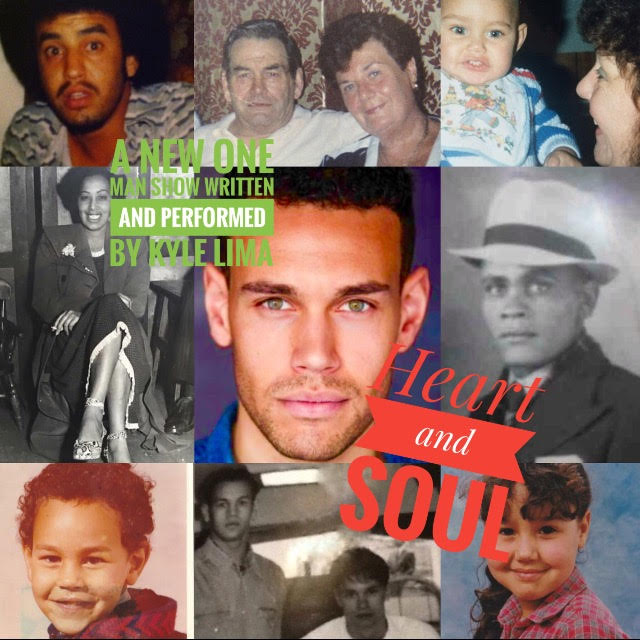
Heart and Soul is a one man show about the great ‘heart’ and spirit of the Welsh, combined with the influential ‘Soul’ music, as well as other genres of the music of black culture. The Wales Millennium Centre will be housing the production. Heart and Soul is a show that celebrates the unique multicultural communities of Cardiff, performed by myself portraying characters based on different generation of my family and the people of Cardiff. It will be a combination of historic and comedic stories inspired by different periods of my family and other members of the Cardiff communities lives, interwoven with live music and songs of each characters heyday sung by me while accompanied on piano by accomplished musician Chris Hyson . The songs vary from Vocal-Jazz, classic soul, 90’s RnB & Garage and perhaps a few other surprises too!

You can watch a video of the production below


Get the Chance works to support a diverse range of members of the public to access cultural provision Are you aware of any barriers to equality and diversity for either Welsh or Wales based artists/creatives?
I feel the only real barrier is ourselves. We can be our own worst enemy in terms of not doing what we want and pursuing our dreams and goals. I know I’ve stood in my own way many times over the years but If you want something bad enough you have to step out of your own way. If you want to do something you have to do it. Take it. We don’t all start off in life from an equal playing field, that is apparent, in many ways more so than ever and there are those out there who will want to keep it that way, but you have to do want you want and go for it anyway. In terms of barriers within the arts, more doors must be open for people of diverse multicultural working class backgrounds to enable them to ascend to positions of power with in the arts and industries in general. When there is a variety of people at the top levels of decision making the opportunities will trickle down and we will see more equality. If we invest in young people from working class and multi culture communities who show a passion for the arts and if we continue to mentor them throughout their lives, they could potentially be the next future artistic director of a theatre company and having the perspective of their background and life experience they will then continue to create opportunities for those like them as well as others.
Organisations such as The Wales Millennium Centre have worked with the diverse communities geographically close to their venue for a number of years. Do you feel local communities have a genuine connection to the venue and its artistic programme?

With the production of the Musical Tiger Bay as well as shows like my own which give examples of the multicultural history of Cardiff communities I hope the people of Cardiff will come and see these shows and feel a connection to the artistic creativity that is coming out of the Wales Millennium Centre.
If you were able to fund an area of the arts in Wales what would this be and why?
I would invest funding in to programs for children and young adults to experience the arts more. If I wasn’t lucky enough to have had a great drama teacher at High School who was so enthusiastic about theatre and who showed me that I was capable of performing, I wouldn’t be the man I am today.
What excites you about the arts in Wales? What was the last really great thing that you experienced that you would like to share with our readers?

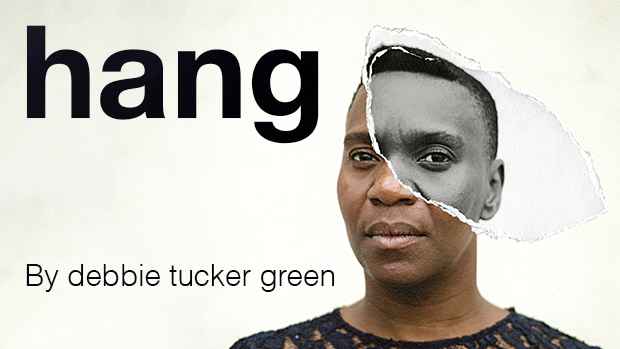
I know it’s not theatre but I watched the bilingual TV program Bang on S4C recently and was really impressed by the caliber of the writing, production value and performances as well as by the amounts of great young actors that were in it who had graduated from the Royal Welsh College of Music and Drama. Wales is in a  great place to nurture talent and I’m excited to see who will shine next. One actress in Bang was Alexandria Riley who I also saw along side Anita Reynolds and Seren Vickers in the Other Room’s production on Debbie Tucker Green’s play ‘Hang’, directed by Izzy Rabey.

That was a great show with brilliant acting from all three actors. Rachel O’Riordan also directed Alexandria in the production of Gary Owen’s adaptation of The Cherry Orchard which was the last thing I saw. That had great performances in it also.

Thanks for your time Kyle

Guy O’Donnell

An interview with Chloë Clarke and Sami Thorpe from Elbow Room Theatre Company


This is a BSL introduction to the background of Elbow Room Theatre Company

Hi Chloe and Sami great to meet you both, can you give our readers some background information on yourself please?
Sami: Hi, I’m Sami, I work as a performer and also as a qualified British Sign Language/English Interpreter. I have a longstanding passion for inclusion and accessibility in the Arts ever since training at a unique degree course at the University of Reading; Theatre Arts, Education and Deaf Studies.
Chloë: I’ve been performing professionally as an actor/musician for about 8 years, nearly exclusively in integrated or inclusive theatre. I’m registered blind so access in the arts is something I consider vital, and since receiving an Unlimited commission to explore creative uses of audio description I’ve become an AD consultant working with a huge variety of artists and companies across the UK and internationally.

You are in the process of launching a new company called ‘Elbow Room Theatre Company’, an interesting title! Please tell us more.
Sami: Our aim is to create elbow room in the arts for marginalised groups of people. We’ll do this through a commitment to representation and equal access for performers and audiences. We produce new writing that explores creative access from the outset. ‘Elbow Room’ came to us when thinking about who has space and freedom in the arts and society, and who is fighting for it. We want to celebrate diversity and provide a platform for those, like us, who have to use their elbows occasionally. It’s important to continue discussions surrounding representation and diversity through the work we create and through collaborating with other companies, venues and the wider community.
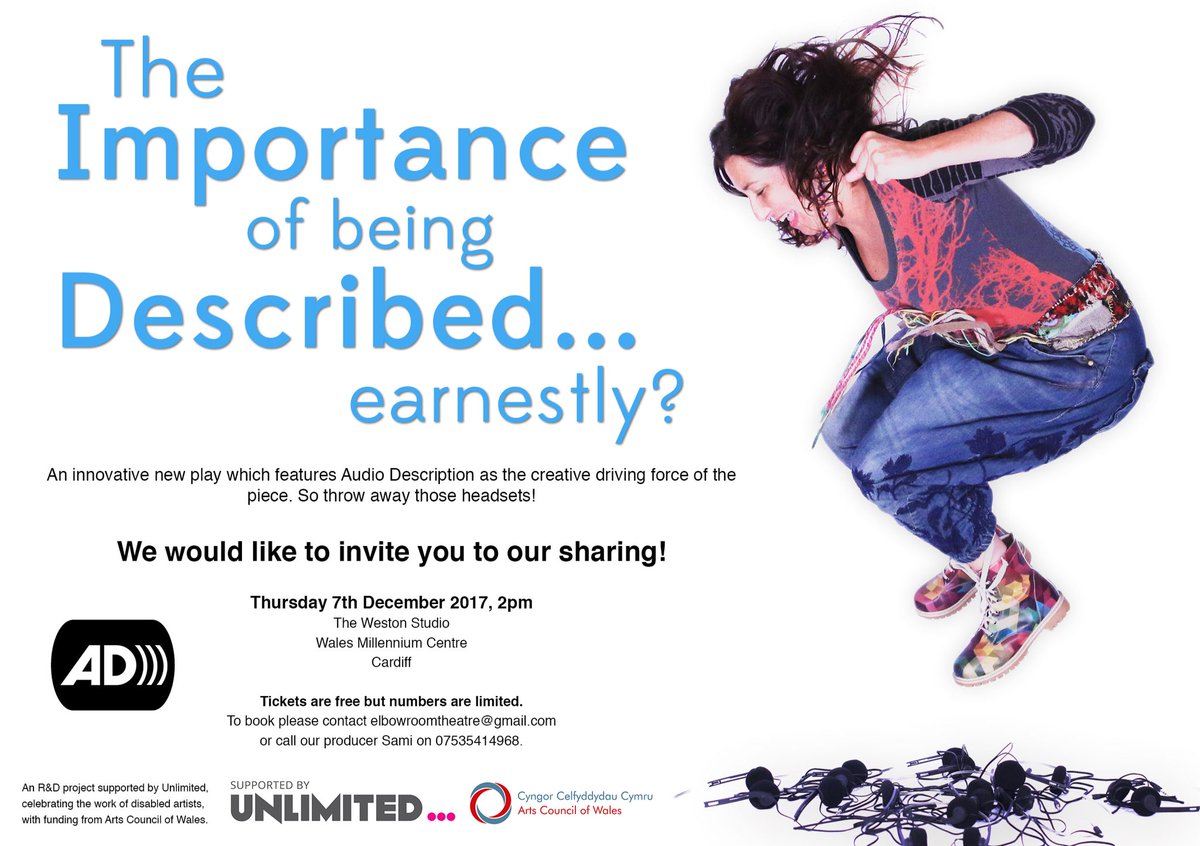
You are both currently working on a new production called The Importance of Being Described… earnestly? We believe this new production presents a new form of Audio Description for audiences?
Chloë: That’s the plan! It came from my frustration at what I felt was a lack of creativity and the isolating, singular nature of ‘traditional’ audio description. We’re throwing away those headsets and devising a creative style of audio description that offers a choice of interpretation and enhances the show for everyone equally. It is delivered live by all characters – and the audience – in a way that adds to the humour and drives the action as well as providing what we like to call ‘access by stealth’.

We want to prove that access really is for everyone and will be hosting a sharing of our research and development on Thursday December 7th at 2pm, in the Weston Studio, Wales Millennium Centre. We’re inviting any interested parties to book tickets via our website: www.elbowroomtheatre.com. Tickets are free but numbers are limited so grab ‘em quick!
Get the Chance works to support a diverse range of members of the public to access cultural provision. Are you aware of any barriers to equality and diversity for either Welsh or Wales based artists?
Sami: I think there are definitely barriers, we can’t be naive in thinking that we are remotely near a time when we can tick a box to say that equality has been achieved, however that shouldn’t deter us in doing every little thing we can to highlight these barriers and to remove them. We are in it for the long game, we need to produce role models for young people and that means opening our doors wider in places where we train and educate people in the arts. We need to continue to have discussions around equality and diversity and implement new forms of inclusion. Talk AND do, that’s the way forward. Diversity is so broad, we must cater for individuals and not just label groups of people. We are all unique and that makes for an exciting, interesting and rich world. Chloë: I couldn’t agree more. Yeah. What she said.
You both work across the UK with a specific focus on work that supports access for performers and artists. How do you feel Wales compares in these areas to the rest of the UK?
Sami: I honestly think Wales is behind. Both England and Scotland host disability led theatre companies, I would love to see more theatre that integrates access come over to Wales. It’s not that we don’t have any integrated theatre here or an unwillingness to learn, in fact, I find generally there is an inclusive attitude, it’s just that we need MORE. More choice, more variety for more people, more of the time.
Chloë: Having worked a lot in Wales and England I’d say there is definitely disparity in the amount of access and disability representation between them. As Sami so succinctly put, attitudes here are by and large willing, but somehow things just aren’t getting done at the level they should be. I think this is hugely to do with the relative scarcity of diverse or inclusive companies and work produced here, as well as a lack of programming of good examples from further afield. So often the argument from venues and companies with regards to access is ‘we’d love to, BUT…’ – we need to work together to combat the barriers faced by these venues and companies. One possible solution is the creative integration of access from the start of a project instead of tacking it on at the end. We need to enthuse writers and directors, as well as venues, to consider access from the outset. This can break down barriers from both sides.
If you were able to fund an area of cultural activity in Wales what would this be and why?
Chloë: It would be in theatre and making theatre inclusive as a whole. We don’t just mean providing accessible performances, the entire experience needs to be welcoming, from booking tickets to getting to the theatre to interacting with venue staff. We need to be cultivating trust with diverse audiences in order to see them grow.
What excites you about the arts in Wales ? What was the last really great thing that you experienced that you would like to share with our readers?
Sami : We love being in Cardiff, being in a city where there’s so much choice of theatre and cultural activity. The richness and quality of the Arts here really excite us and we want to see it all shared with as many people as possible. The last thing I saw that I really loved was the NT Live cinema screening of Angels in America.It took me two weekends to watch it as its very long! It was absolutely beautiful Andrew Garfield was in it. I loved him as an actor he was absolutely gorgeous. He is now playing a disabled person in the film Breathe, I saw him being interviewed on the Andrew Marr show recently. He was using language such as “Able Bodied” and ” Wheel Chair Bound”. I think these opportunities should be given to disabled performers or at the very least have some awareness of the social model of disability and right those wrongs. You are sat there watching cringing, going you are a person that has spent hours researching this role, you must know about the social model of disability, use your power , use your place in the world to be like no this is the correct terminology to use, be a role model!

Thank you for your time, we look forward to your sharing at the Wales Millennium Centre. Thank you for coming to have a chat with us for Get the Chance this afternoon.
Many thanks for your time

An interview with Chris Durnall


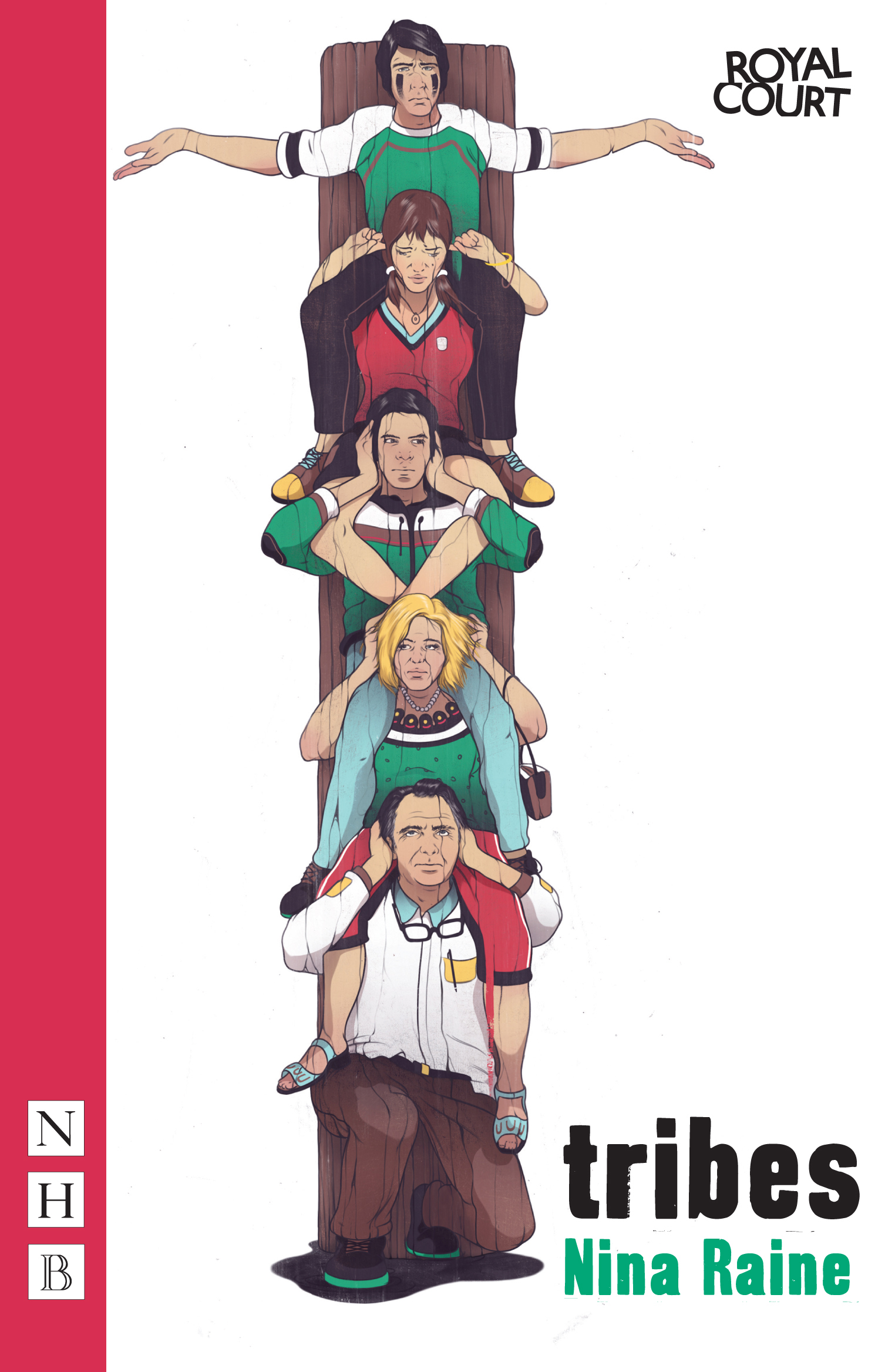
The Director of Get the Chance, Guy O’Donnell recently got the chance to chat with director Chris Durnall. We discussed his career to date, his new project focusing on the BSL aspects within Tribes by Nina Raine and his thoughts on theatre in Wales.
Hi Chris great to meet you, can you give our readers some background information on yourself please?
 I’m Artistic Director of Company of Sirens and also produce work under the name Winterlight. Company of Sirens stage Welsh premiers of powerful contemporary plays. Productions include Anthony Neilson’s Stitching and The Censor, Philip Ridley’s Tender Napalm, Mercury Fur and Dark Vanilla Jungle, Manfred Karge’s Conquest of the South Pole and Jennifer Haley’s The Nether.

Chris in rehearsals for Jennifer Haley’s The Nether

Plus new plays by Welsh authors Ian Rowlands, Troyanne, and Sean Tyrone by Mark Ryan. Winterlight as our sister company specialise in new work that focuses on autism and disability issues. We have recently completed a trilogy of plays tracing the life of an autistic individual Matthews Passion 2013, Touch Blue Touch Yellow 2015 and Quiet Hands 2017.

Matthews Passion

I was Artistic Director of Theatr Ffynnon for eight years working with adults with physical and learning difficulties. I also teach acting, deliver one to one sessions and freelance as a director. I was previously a professional actor for eighteen years.
 So what got you interested in theatre and the arts?
Well once you get the call it’s difficult to consider doing anything else. I went to the theatre all the time when I was younger and devoured plays, often learning whole roles just for fun. When I went to drama college I was amazed by many student’s lack of interest or lack of curiosity. It was really disappointing. Having said that drama college was the happiest time of my life. I still love those people.  The arts for me are split between those who dabble with varying degrees of success and those that have to do this without an option. Time and circumstances pretty soon determine which camp you are in.
Company of Sirens with the support of the Arts Council of Wales will be exploring the signing aspects of performance focusing on its use within the play Tribes by Nina Raine during October/November 2017 with support from Disability Arts Wales. Why have you chosen this as your latest production?
 I wanted to explore the potential of non-verbal communication within performance. Non- verbal narrative. I believe drama lies between text and that words are often an avoidance technique to avoid and circumvent real communication.
The play Tribes fits the companies remit in terms of powerful new drama and also through the two deaf characters use of BSL within the play, helps support the other strand of my work which is about empowerment and the raising of awareness.

What personal knowledge do you have of theatre for deaf audiences?
 My work with Theatr Ffynnon was concerned with giving a voice to the disempowered. We delivered projects through the medium of film, theatre, animation, visual art, music and poetry in order to explore routes of communication appropriate to our members and participants. The purity of their work moved me deeply and taught me a lot. We never patronised our members and listened to what they had to say as creative people. If I can merge this approach with professional actors working with a contemporary text I will be happy. In the play Tribes the deaf protagonist’s family communicate through cliché and verbal aggression. They speak in platitudes based on insecurity and often a sense of failure. Billy and his partially deaf girlfriend Sylvia communicate directly through gesture, eye contact and body language. We recognise the adage “actions speak louder than words”
Get the Chance works to support a diverse range of members of the public to access cultural provision Are you aware of any barriers to equality and diversity for either Welsh or Wales based artists/creatives? 
 I worry that work may be compromised by having to fit into funding priorities. It’s a question of approach. There has been a surge of work and support encouraging equality and diversity and that has been wonderful. I do believe that within this framework there should be scope for “arts for arts sake” whereby funders say we like your work, we trust your intent, go and create. I feel those times may be gone forever due largely to our culture of accountability.
There are a range of organisations supporting Welsh and Wales based artists and creatives, I wonder if you feel the current support network and career opportunities feel ‘healthy’ to you?
 See above. Its great the doors are opening up but I do believe any art form moves forward through the taking of risks and a culture of experimentation. Diversity need not suffer but our artists need full creative freedom in order to create the extra – ordinary.
 If you were able to fund an area of the arts in Wales what would this be and why?
 Fund the risk takers and chance takers. Back the artists themselves and allow them the freedom to create
 What excites you about the arts in Wales? What was the last really great thing that you experienced that you would like to share with our readers? 
 The amount of young companies trying to work within a difficult culture gives me hope.

Pearson and Brooks, The Persians, National Theatre Wales.

The work of Pearson and Brooks (The Iliad and the Persians) for National Theatre Wales. Directors who try to break the mould like Mathilde Lopez. Goodcopbadcop’s experiments. Writers such as Ian Rowlands, Tim Rhys and Gary Owen are producing great work. A thriving experimental dance scene
Many thanks for your time Chris.
 

An Interview with Meredydd Barker


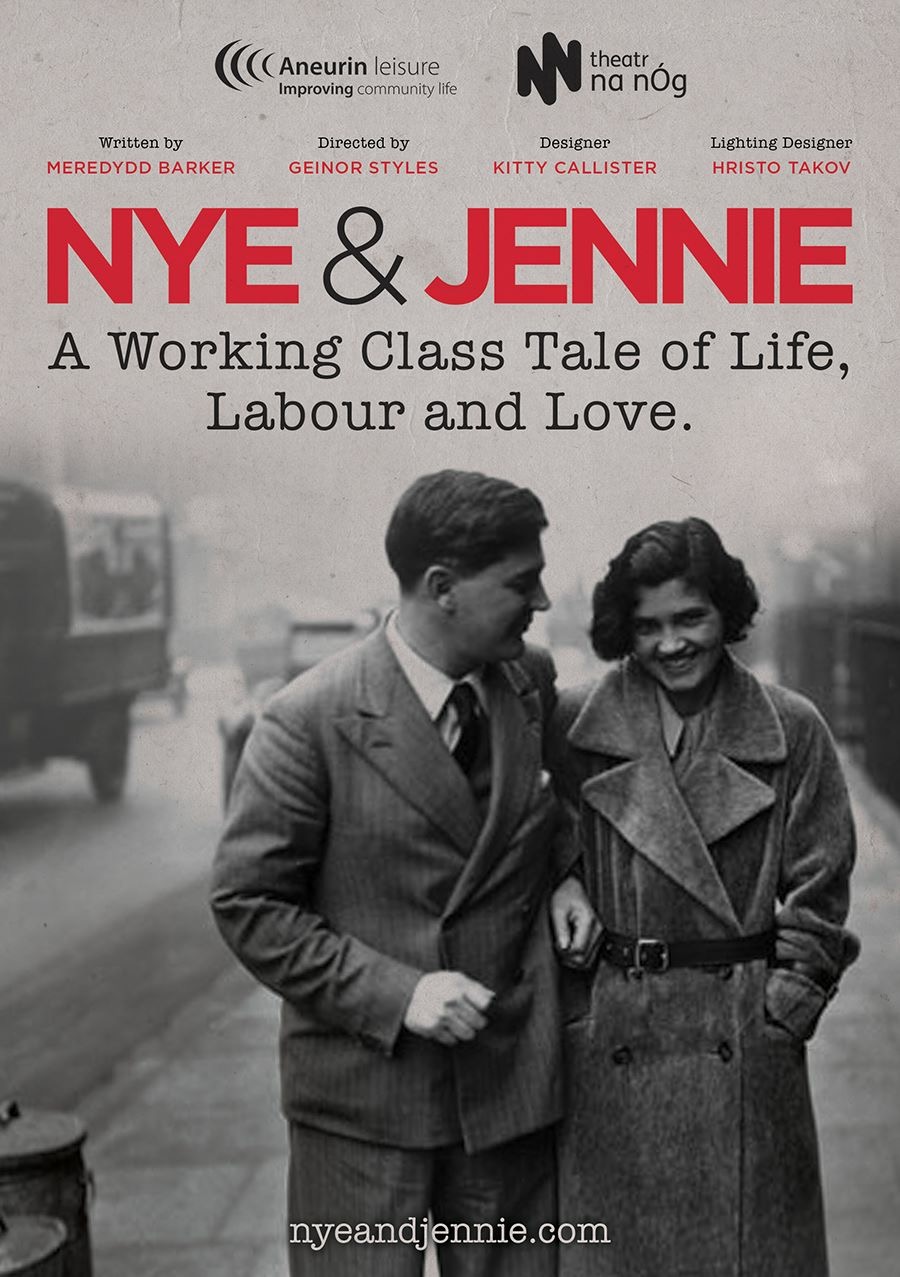
The Director of Get the Chance, Guy O’Donnell recently got the chance to chat with playwright Meredydd Barker. We discussed his career to date, ‘Nye and Jennie’ a new play he has written for Theatr na nÓg and his thoughts on theatre in Wales.
Hi Meredydd great to meet you, can you give our readers some background information on yourself please? 
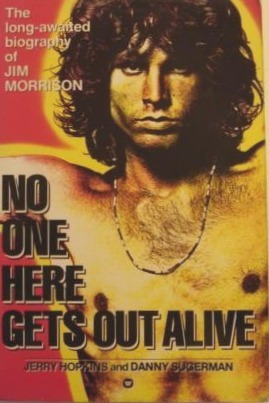
 I was brought up on the ultra rural north coast of Pembrokeshire; potato fields, big sky and sea. My father, Gordon, was an engineer from Buxton in Derbyshire who came down to St Davids to wire up a moulding factory. Being a field sports and sea fishing fanatic he stayed. It was heaven to him. My mother, Ruth Barker, was a Welsh singer-songwriter – she was quite well known in the seventies and eighties – so the idea of self-expression through the arts was a natural one. Such a rural upbringing meant the winter nights were about reading and drawing. I was an introspective kid anyway. Somehow I got into rock music, and around the age of fourteen I read the Jim Morrison biography, ‘No-One Here Gets Out Alive.’

I wanted to study what he read as a teenager – the beats, French symbolist poetry et al – and so became a voracious reader. I also wrote some dreadful poetry. My other great love was visual art. I didn’t want a lecturer telling me what to read on literature course so it seemed natural to go to art college, all the while writing ideas for stories and observations in my sketchbooks. I ended up getting a degree from St Martins College in London. I did some teaching there at the Centre for Languages – mostly English to Japanese fashion students – but I wasn’t creatively happy. It was around that time I met my wife who was working at The Everyman theatre in Liverpool. I followed her there and found myself going to the theatre maybe three times a week. One night, after seeing something particularly dire on stage, I decided that I should try writing a play. I felt I could do better than what I’d just seen. So I wrote The Rabbit which was picked up by Terry Hands at Theatr Clwyd. It wasn’t only my debut but the first play that I’d ever written, so to have it directed by him ranks as one of the very most incredible things to ever happen to me. And here I am.

You are currently working on a new play called ‘Nye and Jennie’ for Theatr na nÓg. How did you come to be involved in this new production and can you tell us more about it?
 Geinor Styles, Artistic Director of Theatr na nÓg, had read Jennie Lee’s autobiography, ‘My Life with Nye.’ She was bowled over by the story of this woman: first ever minister for the arts, prime mover behind the creation of the Open University and so much more. But she was overshadowed, as anyone would be, by Nye Bevan, her husband. Geinor had a hunch that I’d be a good fit when it came to writing a play about them. I did some reading, took a very deep breath, and said yes. It’s a two hander and so I hope the play has an intimacy in and of itself as explores what it meant to be two people in love who also happened to be creating two political legends in a time of immense domestic and international upheaval.

The play is described as a ‘Working class tale of Life,Labour and Love’ With the recent production of We’re Still Here by National Theatre Wales portraying the lives of Neath Port Talbot Steel Workers and this new production examining the political background and personal inspiration of Aneurin Bevan and Jennie Lee do you feel that Welsh Theatre is presenting representative stories of its citizens on our stages?
Not as much as it thinks it does. If you want to get a sense of what sort of lives people are leading you need a sense of place. The psychogeography of a play is quite fragile and it demands a sensitive touch from directors which it quite often doesn’t receive. It doesn’t survive the director’s process or vision or whatever they might want to call it. There’s no point enlisting a local playwright if an outsider is going to butcher it to fulfil their own agenda, which can often be brimful with some quite inaccurate preconceptions about a place and its people. But if those inaccuracies are camouflaged by bright lights and pretty soundscapes with a couple of laughs and a tearful middle eight then what price being representative? The five-star review is what’s important, not the lessons that may be learned. But giving the audience what it wants isn’t the same as holding up a mirror.
You’re telling a story. It’s one of many stories. But you’re telling us that this is the story that needs telling. Is that because it contains an essential truth that’s not being expressed? Or is it because it fits the world view you arrived with and you know it fits it into your particular blunderbuss of theatrical tricks? There are truths in peoples lives – the way they talk, why they say what they say, the way they treat each other with such casual brutality, the way they love – that lie at the heart and the heart is a difficult thing to get to but it’s the playwright’s job to do that. Trust the playwrights. Even if it’s difficult, even if it’s something you don’t believe, go with them.
Saying something difficult is too often seen as synonymous with courting failure, especially if the production is on large scale. But there are communities in Wales that aren’t addressing their faultlines and if theatre can’t point that out then it doesn’t deserve to call itself art because art, if it’s about anything, is about saying the difficult thing.
There are times when an outsiders point of view is exactly what’s needed. But not as often as that sentiment is used by outsiders as an excuse to defend their misconceptions. But, as I say, those misconceptions can be hidden with the smoke and mirrors of theatre with the result that nobody learns anything. There are exceptions and I’m working with an exceptional exception in Geinor and Theatr na nÓg.
The production information describes Bevan and Lee as “Aneurin Bevan and Jennie Lee were comrades and flatmates who together fought and preached for socialism as they saw it; he the Tredegar firebrand on the Labour backbenches, she the miner’s daughter from Fife who became a Socialist MP before she was old enough to vote.” Get the Chance is partially inspired from a conversation between the comedian Billy Connolly and former Scottish trade union leader Jimmy Reid. At Reid’s funeral in 2010 Connolly stated;
 “I remember him saying that if you look at these housing estates and high-rise flats – look at all the windows. Behind every one of these windows is somebody who might be a horse-jumping champion, a formula one racing champion, a yachtsman of great degree, but he’ll never know because he’ll never step on a yacht or formula one car – he’ll never get the chance.
 Do you think opportunities still exist for young working class citizens from Tredegar or Fife to get the chance to actively engage in politics, the NHS or the arts today?
Two years ago I spent some time in Ebbw Vale working for the Shakespeare Schools Festival. I was able to see at first hand what the teachers in that area were like. Some were actually able to get some teaching done, but too many were just crisis managing. Provision for the arts in schools is dwindling so it’s difficult for pupils to get a good grounding in the craft. With the good grounding comes the ability to make an informed decision about whether it’s something you want to do with your life. But you need good examples to follow. Are any of the politicians around today worth emulating? There are some, but their philosophies are drowned out by the white noise most politicians mistake for public discourse. The NHS is being visibly driven into the ground in Wales so how can an adult recommend that a student devotes his or her future to something that’s being so devalued? In Fife good things are happening, but the ruling SNP is in a scrap with the Conservatives and Liberals over a new education programme which is stalling while they sort out their ideological differences. Who suffers? The pupil. Always the kids.
You are also Artistic Director of Narberth Youth Theatre. How did you come to be involved with this group?
 My wife and I formed Narberth Youth Theatre because there was a need for something less formal than what the schools were offering, a place where the members could be themselves while they learnt more about theatre. Teenagers came to us and asked us to do it. And I must say it gives me the opportunity to work on my practice as a theatre maker week in, week out. We have guest facilitiators to keep things fresh and a great sense of curiosity in the group. It’s all good.
Get the Chance works to support a diverse range of members of the public to access cultural provision Are you aware of any barriers to equality and diversity for either Welsh or Wales based artists or specifically writers?
 The greatest barrier is the geography of Wales itself. Just physically navigating it is hard. And theatre – like the mafia – is a face to face business. We all need to be able to go and see stuff, talk about it with the creatives, then get home. There won’t be any real consilience in Wales until that becomes easier. I scratch my head over the lack of matinees in Cardiff. In Liverpool the Everyman Playhouse has been experimenting with evening shows at 5-30 and audiences have responded positively to that. It means people from further away can get home or spend time in town and meet and talk and plan new alliances.
 There are a range of organisations supporting Welsh and Wales based writers, I wonder if you feel the current support network and career opportunities for playwrights living and working in Wales feel ‘healthy’ to you?
 If you’re a playwright, then you’ve made a tough choice in life. There’s only so much networks and organisations in Wales can do for a Welsh playwright. You really need to help yourself somehow. I’m forming my own company called The Holding Cell and I want see who I can attract to work with me and see if we can attract an audience because that’s what it’s all about. There are superb actors in Wales who aren’t even being seen for parts and I want to work with them, again in some cases. Let’s see what we can do for ourselves.
If you were able to fund an area of the arts in Wales what would this be and why?
Youth. It’s the law of initial conditions. Throw the ball high and hard – give it the best possible chance to travel far – then you’ll know it’ll go the distance. Invest in the beginning.
What excites you about the arts in Wales? What was the last really great thing that you experienced that you would like to share with our readers?
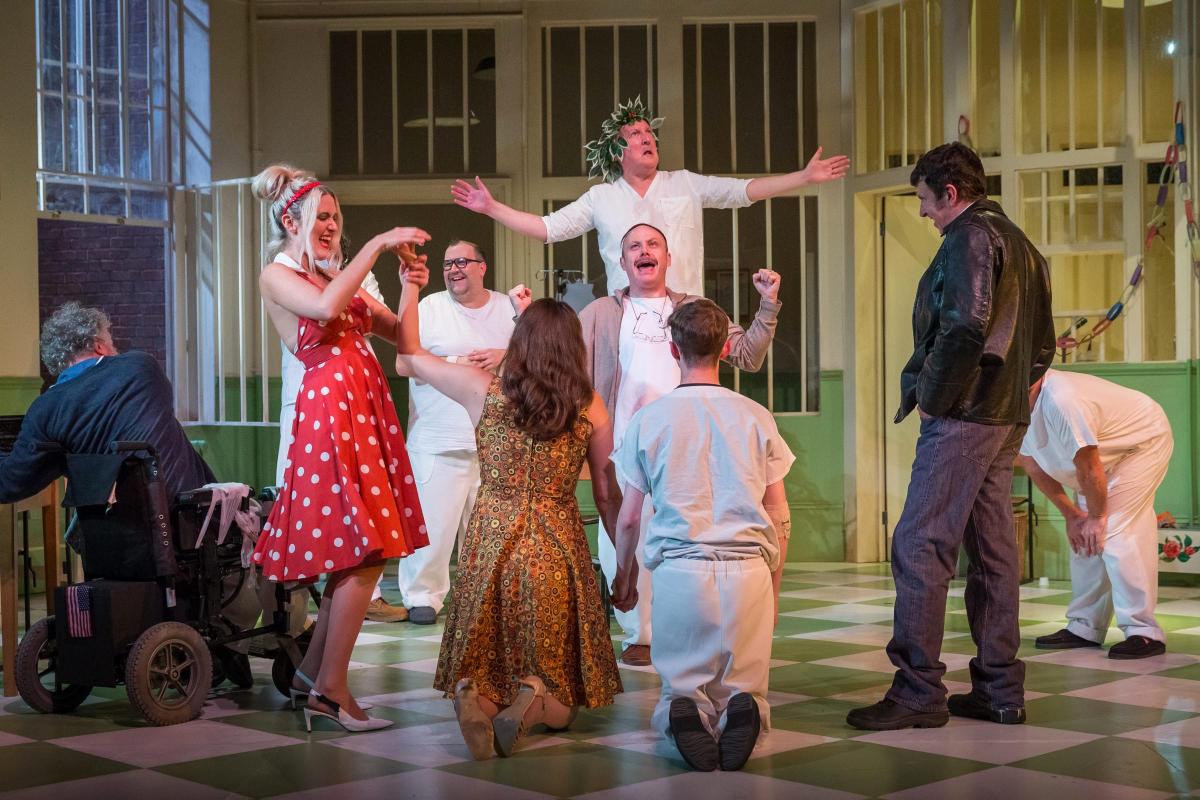
We’ve got astonishing actors here. That excites me more than anything else. It makes me want to write because I know that if I’m lucky enough to get into a room with Welsh actors I’m going to walk out with an enhanced piece of work. It’s happened every time. The last truly great thing that I saw was the Jean Michel Basquiat exhibition at The Barbican. In Wales, One Flew over the Cuckoo’s Nest at The Torch was ensemble work as good as I’ve ever seen.


An Interview with Eric Ngalle Charles


Hi Eric great to meet you, can you give our readers some background information on yourself please?
My name is Eric Ngalle Charles, I am a Cameroonian born Wales based writer poet and playwright.
So what got you interested in writing and the arts?
I wrote my first poem when I was about 8years old, I wanted to compliment my mother, for she was my father. However my mother did not understand my humour, she thought I was mocking her for the fact that many men went through her bed chambers. ‘’Dearest mother, you are beautiful like the snowflakes of Siberia, everybody knows where you are, no one dares’’ this earned me my first banishment from my village. I moved to my maternal grand father’s house where I started reading African newspapers posthumously. My maternal grandfather was a British Colonial governor and had the luxury of newspapers being delivered albeit three months late.

Your run a company called Black Entertainment Wales, an arts organisation that provides a platform for artists in the BME communities to showcase their work. Do you feel BME creatives in Wales are supported?
The bar for support for BME creatives is too high. Plus the very fact the Wales itself is a minority in the grand scheme of things means at times it doesn’t know sometimes how to deal with its BAME creatives. Organisations are making strides in the right direction, I am now on the board of directors for Literature Wales, We have FIO making strides, and we have support from other creatives like Charlotte Williams and Isabelle Adonis. There’s hope.

You are also a playwright how do you approach writing in this art form?
I guess I am fascinated by ‘’blindness’’ What can provoke someone or something to invoke blindness from the gods. I am not an ‘’OBWANJE CHILD’’ as described by Ben Okri in Famished Road, however I carry such marks, and I strongly believe that we must not cut off that link between the land of the dead and that of the living. I write to maintain the link. In most of my plays, I perform rituals, either through singing an ancient song that my ancestors used when communicating with the gods, or simply pouring liquor or water onto the ground and invoking the gods. During my last performance in Palas Print Caernarfon for the Literature festival in June with Ifor Ap Glyn the National Poet of Wales, I performed Molikilikili (stick insect, who insist on bringing down the great Iroko tree by pushing it to the ground, most people mistook its antics for press-ups) and I did an invocation using Welsh leaves and Welsh water. Yes, the gods are playwrights, they use us to poke fun and make merry.

Get the Chance works to support a diverse range of members of the public to access cultural provision Are you aware of any barriers to equality and diversity for either Welsh or Wales based artists/creatives?
The way information is dispersed, community centers, libraries are not stocking the right information, and institutions that have powers that control information on activities do not have foot soldiers. There is disconnect between creatives and those institutions that should support them.
There are a range of organisations supporting Welsh and Wales based artists and creatives, I wonder if you feel the current support network and career opportunities feel ‘healthy’ to you?
Two of such organisations have been helpful and healthy to me because I am very persistent, other people once you knock them they lose the ability to stand up. I believe in the power of my story, I know what I write and I am willing and learning to learn how to write.
If you were able to fund an area of the arts in Wales what would this be and why?
Public performance arts. We should encourage young and emerging talents to showcase their work and to get paid for doing so.
What excites you about the arts in Wales? What was the last really great thing that you experienced that you would like to share with our readers?
Event’s organizers such as the Hay Trust, Hay Festival are embracing diversity, for me I am currently talking with the National Trust to see if I could perform my plays around their various premises. I just came from Cameroon last month as part of a ‘’Bridge Building’’ initiative supported by Wales Arts International which will see Artists from Wales going to Cameroon and Vice versa. As a result of my first visit, I have been invited back to Cameroon by the authorities to perform at the South Cameroon Cultural Festival. Effectively I am passing the baton to the future generation.