All posts by Guy O'Donnell

Hi I am Guy the project coordinator for Get The Chance. I am a trained secondary teacher of Art and Design and have taught at all Key Stages in England and Wales. I am also an experienced theatre designer and have designed for many of the theatre companies in Wales.

Where Creativity Comes Alive: RWCMD Workshops at Llanishen

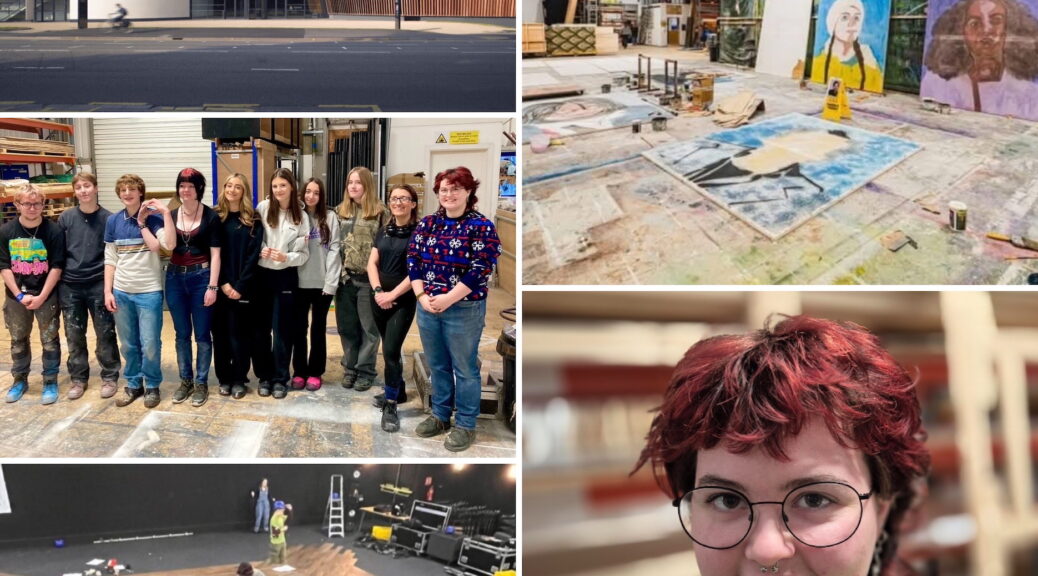
Royal Welsh College of Music & Drama, BA (Hons) Design for Performance, student, Bea Massey studied at Radyr Comprehensive School, Cardiff. She recently arranged with the school teaching staff, for Radyr pupils to attend the RWCMD workshops in Llanishen for an exciting hands on workshop to give an insight into the types of course of study at college. In this interview Bea gives us an overview of this activity.
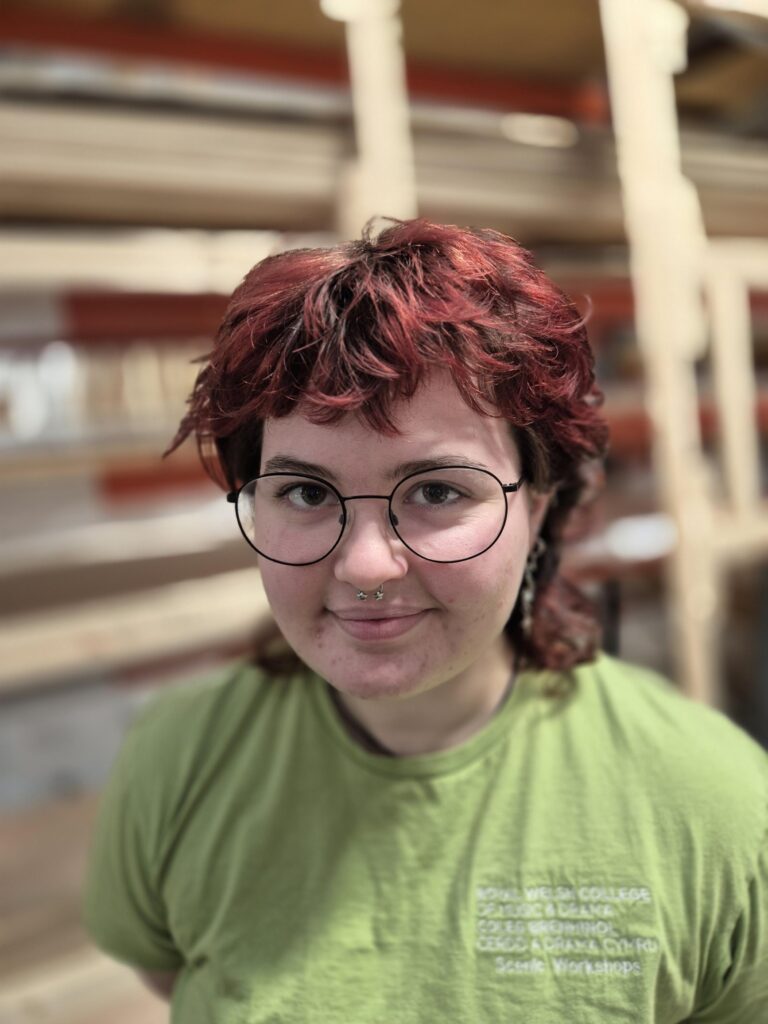
Hi Bea, you are currently studying Foundation Scenic Construction on the Design for Performance degree at RWCMD — what first sparked your interest in scenic construction and working behind the scenes for live performance?

After leaving 6th form at Radyr Comprehensive school I went straight into a Foundation Degree in Scenic Construction at Royal Welsh College of Music and Drama. I graduated that two-year course in the summer, and I am now completing the optional 3rd year which allows me to graduate with a full BA degree qualification in Design for Performance

    Credit Kirsten McTernan

    I have always loved the theatre. Even from a young age, my mum and I would go to see plays, ballets, operas, and musicals whenever we could, which led me to take drama as a GCSE at Radyr Comp. I never really liked to be on stage though; I was more interested in what happened behind the scenes. At my first high school I joined the Drama club being a stagehand, and when I was doing the practical element of my drama GCSE, I opted to do the lighting for my group instead of acting. I was one of the only students to ever do this at Radyr, but I was so happy when they allowed it and encouraged me to explore this option more. 

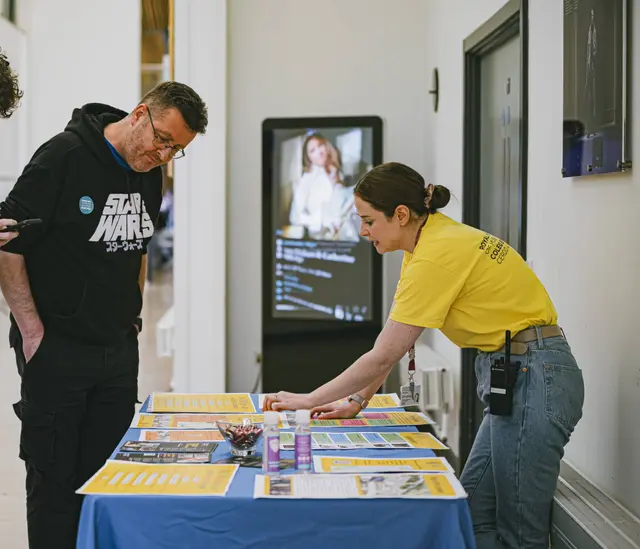
    When it came time to think about universities, I hated the thought of doing an academically centred course, I wanted to work with my hands with a more practical course. I had some thoughts of doing an apprenticeship with the construction company my dad worked for, but then Screen Alliance Wales (SAW) came to give a presentation, and they talked about all of the careers you could have in film, TV or theatre and this really appealed to me.
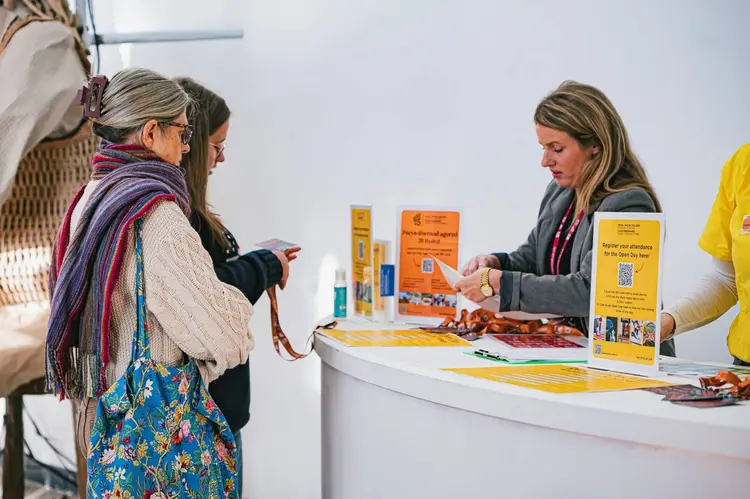
    I started looking into courses that did theatre lighting, as that was the only thing I had any experience in, and I found an Open Day at RWCMD for stage management and scenic construction. I went and immediately fell in love with the vibe of the college. I saw the theatre spaces and the sets they had set up but then I went to the Llanishen workshop, and I knew I HAD to get onto the scenic construction course!
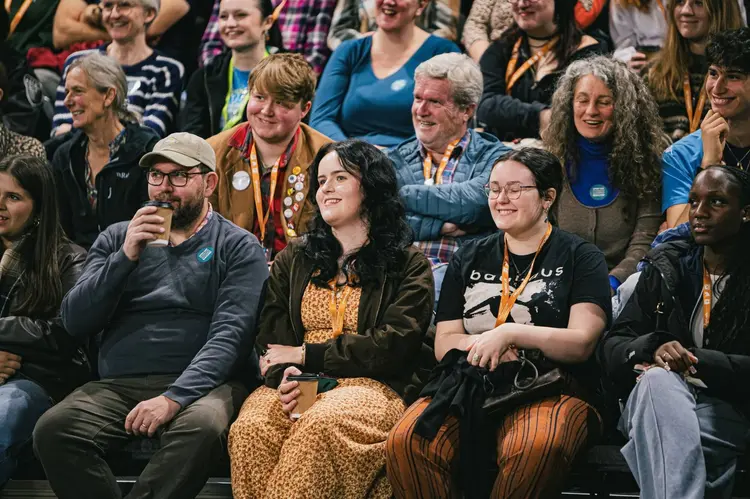
    Credit Kirsten McTernan

    You have arranged for students and teaching staff from your old school, Radyr Comprehensive to visit the RWCMD workshop. What inspired you to create this opportunity?

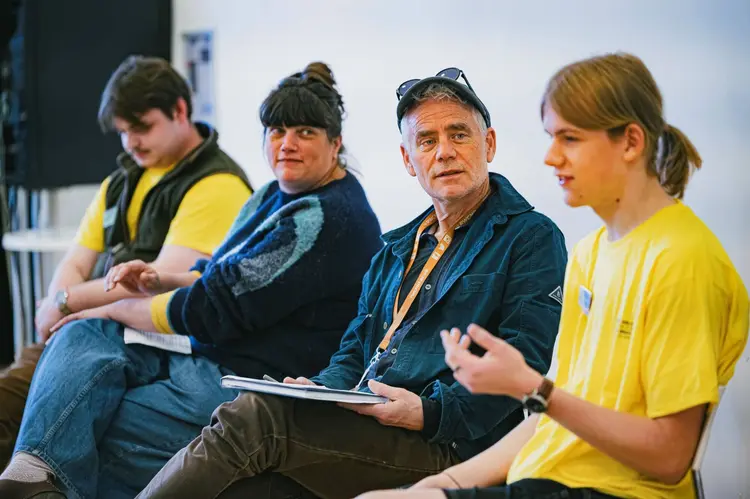
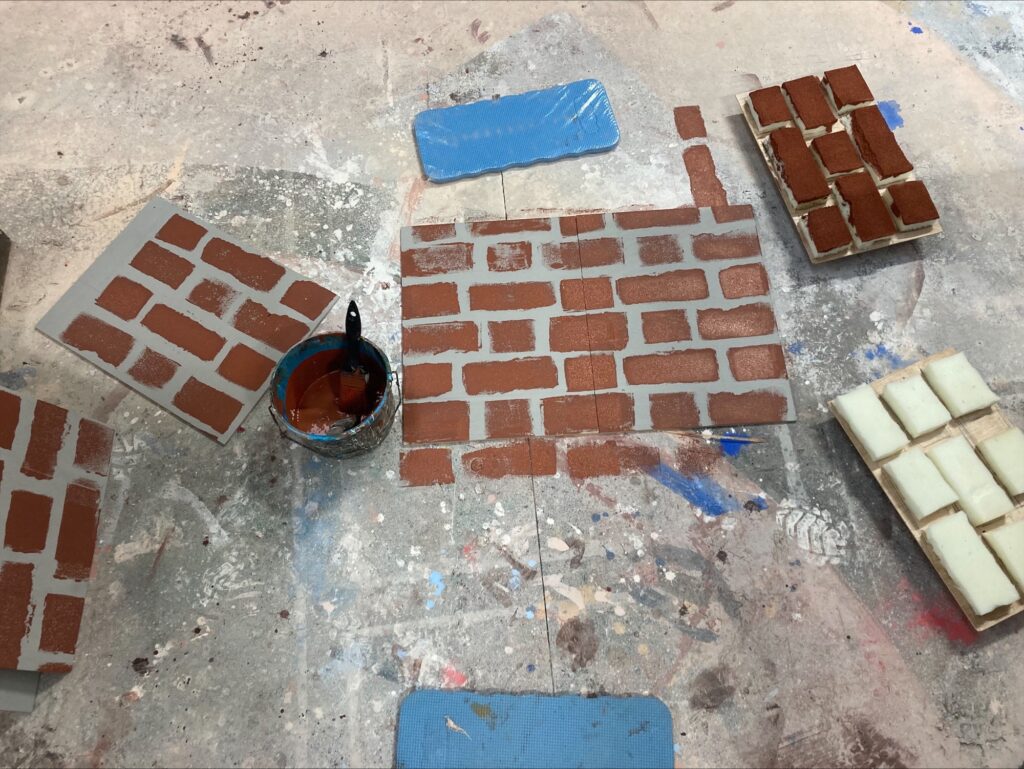
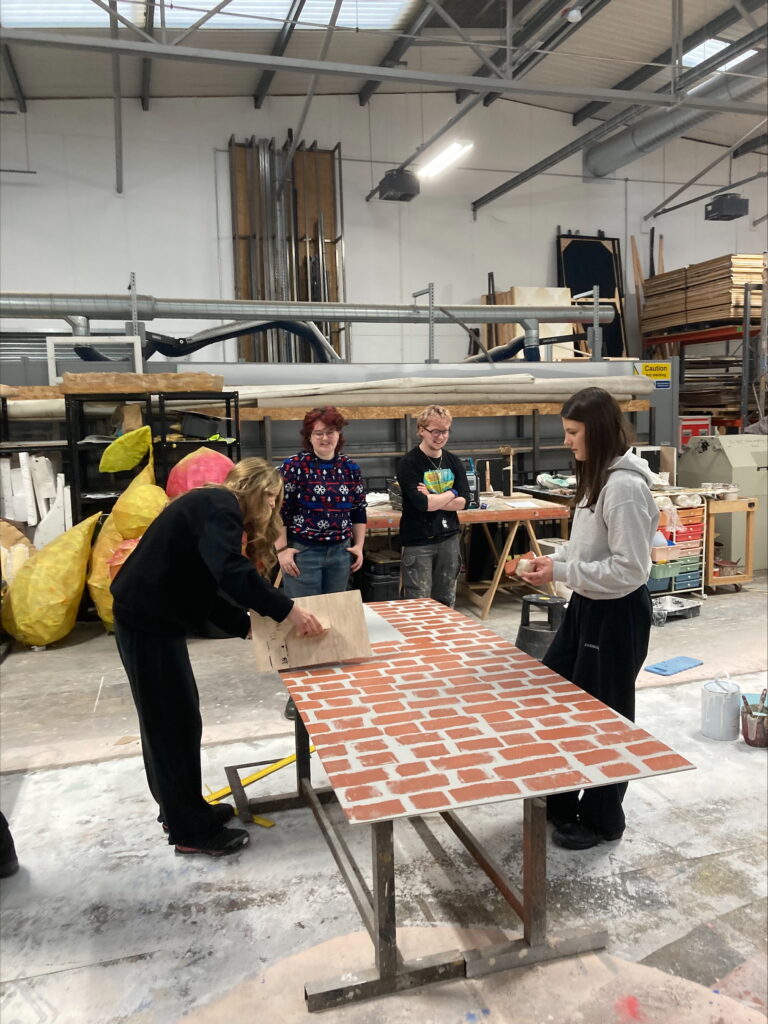
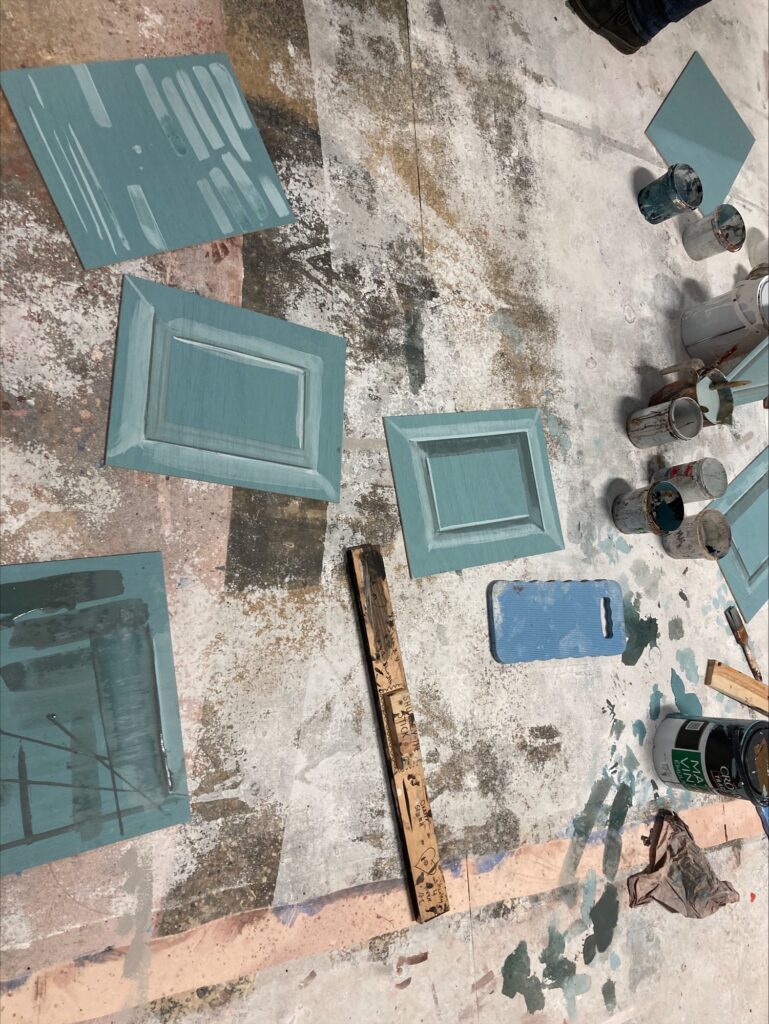
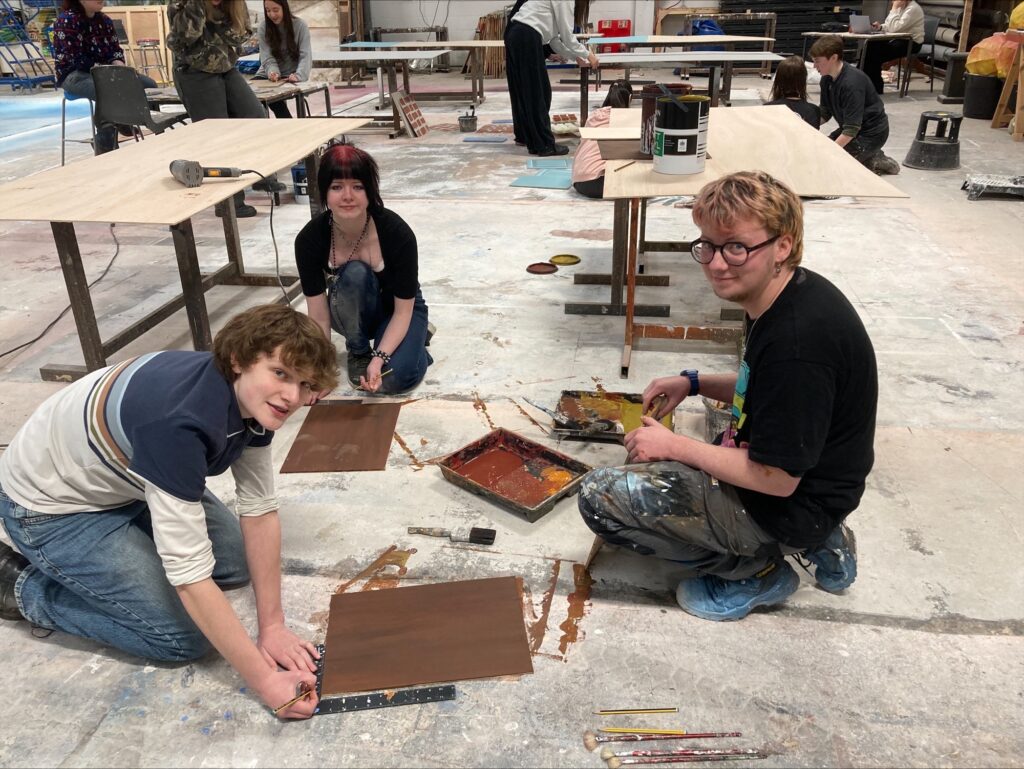
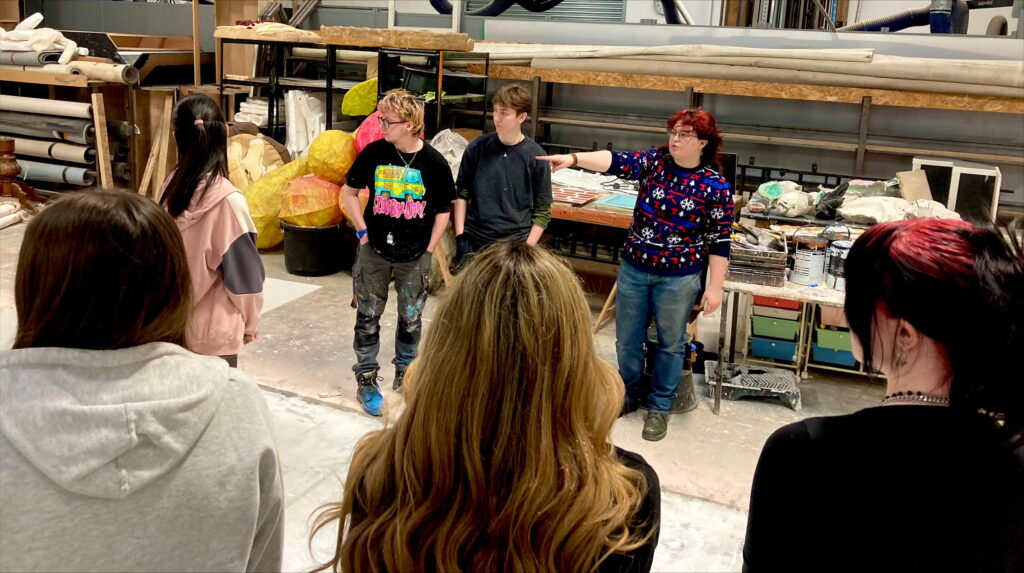
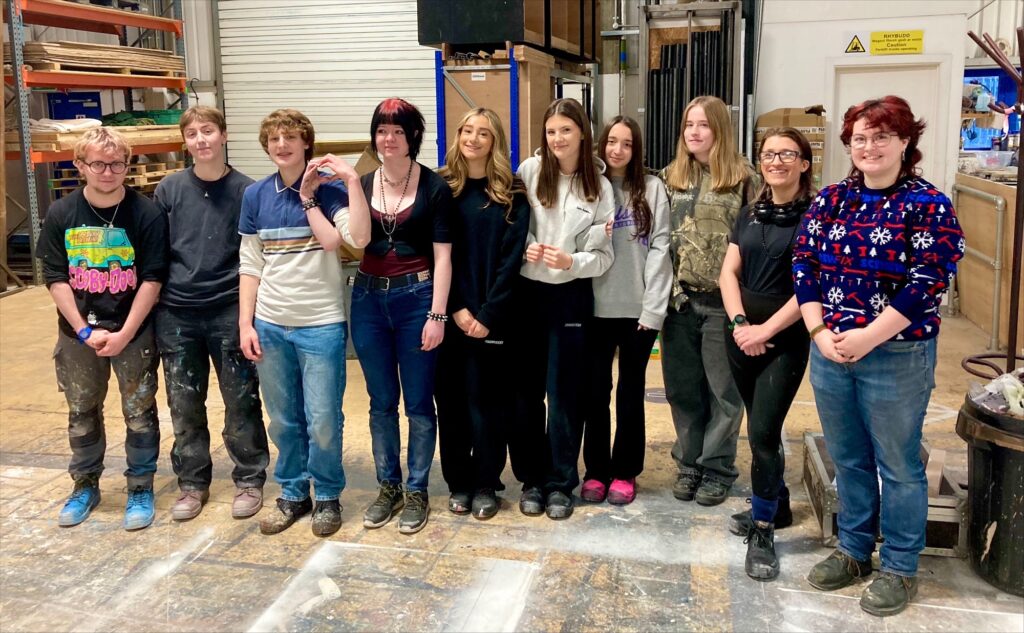
    Inviting Radyr students to the workshop began as a way to include them in the making of the set for their Footloose production and giving them a better understanding of what goes into set building and painting. The College workshop has a relationship with the Drama Dept at school and this was a great way to develop it. I also wanted to give young people an opportunity to see what other career paths are available (like SAW did for me) and for them to see that these options are available to anyone. 
    Many young people don’t realise how many career paths exist in the creative industries. What do you wish you had known about scenic construction or backstage careers when you were in school?

    I wish I had known that these kind of university and career paths were available at an earlier age. When you are younger, and in schools, your perception of theatre and the arts is purely in the acting and performance side. Very rarely do schools push for opportunities to work on the production side of shows so it is hard to visualise these as a career opportunity. I was lucky at Radyr as they allowed me to go down the lighting route for my drama GCSE which eventually led me to my university course in scenic construction, but I feel like it was a rough path to get to this point. If I had known about stage management and scenery making, then I may have found myself here sooner with more experience under my belt. 
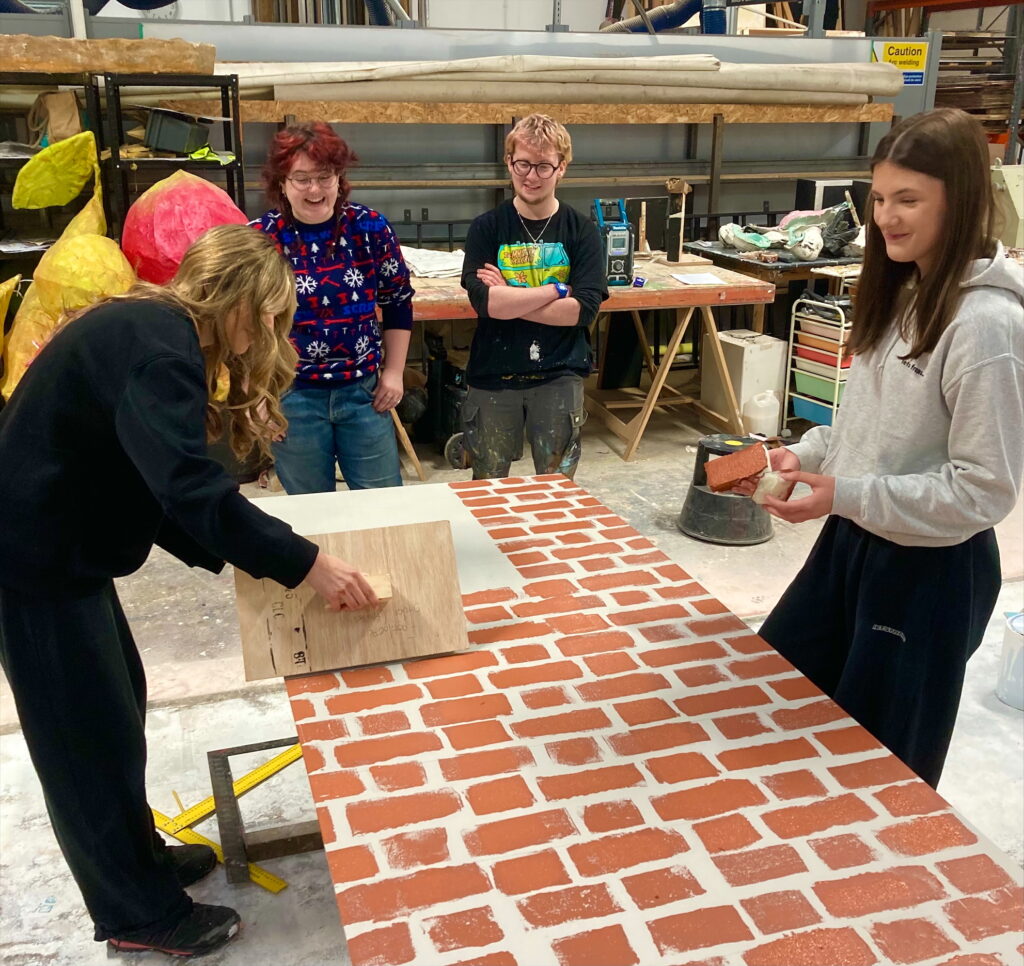
    The Llanishen workshop is a huge, state-of-the-art space. For someone who hasn’t visited before, what’s it like to walk into that environment for the first time?

    Walking into Llanishen workshop really is a breath-taking moment. For me it secured my decision to go to RWCMD for the Foundation Degree in Scenic Construction. I just knew that I wanted to learn in that environment and eventually work in similar environments! The workshop showcases so many previous students work that it feels very exciting that you could one day be making sets and props at that level for programmes like Dr Who or His Dark Materials
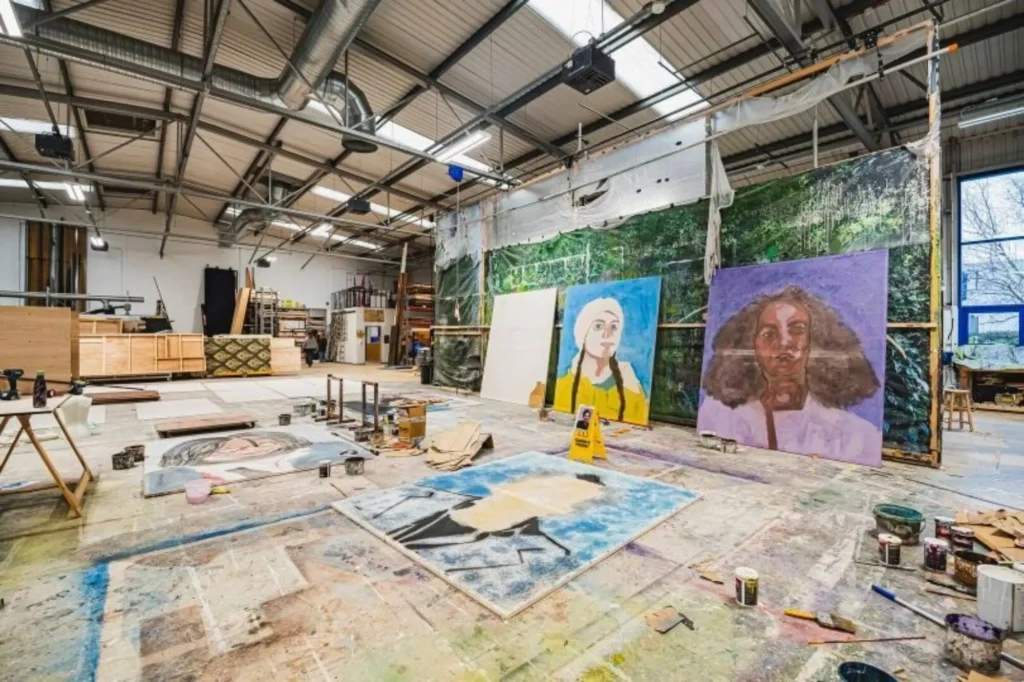
    Credit Kirsten McTernan

    How important is hands-on learning in your course? Can you share an example of a practical task or project that really changed the way you think about the craft?

    The Foundation degree in Scenic Construction and the Foundation degree in Scenic Arts, are both almost entirely hands on work. This makes it ideal for kinaesthetic learners, and you tend to pick up skills quicker as it is a fair amount of repetition of skills. A key moment of both courses which really change your view of the craft is the first time you work on a production block – working on sets for college shows. You really understand the flow and pace a workshop requires and the speed and quality required of your skills.
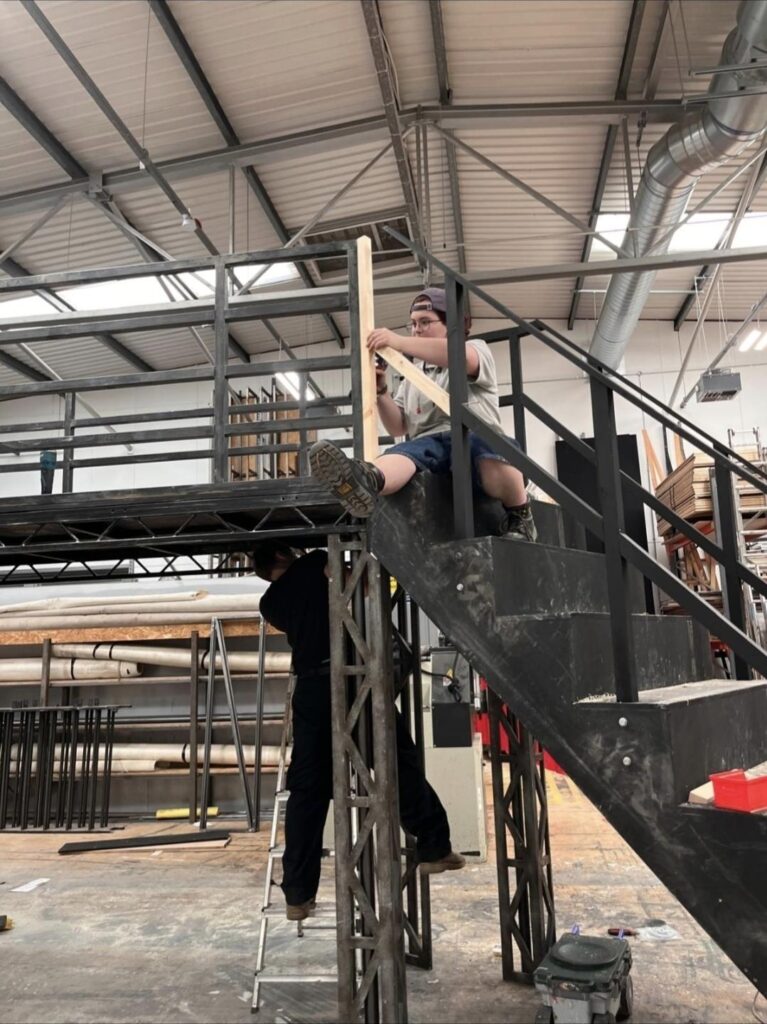
    Bea working on a set at the RWCMD Llanishen Workshop

    What do you hope the visiting Radyr students take away from their time in the workshop? Are there any specific skills or “lightbulb moments” you’d love them to experience?

    We hope that the students will walk away from their visit to our workshop with a realistic view on what a career in the creative arts could look like. That they can see that there is more to art courses and more to drama courses than is widely known, and that there are many more options for them after high school! Ideally, we hope that a few would take an interest into specifically the courses that our college provide, however a wider horizon for their futures is the main goal. 
    A lot of 16–25 year olds worry that creative careers aren’t “real jobs.” As someone training for a specialist backstage role, how would you respond to that concern?

    I think that as a society we have put a lot of pressure for young people to want so called “real jobs” but in actual fact all paid work is a real job! You do not have to be a doctor or a teacher to feel good about your career, if your work excites you and you are paid your worth, then any job is a valued one. I mean some people pay the rent by kicking a ball around! The path I am heading down may not always mean financial/job security, as I may need to work freelance, but this is a possibility I am willing to take on to do a job I enjoy and find fulfilling. Also, at RWCMD we have lectures about finance, being a freelancer, how to apply for grants, and other useful topics for entering the work force after college. 
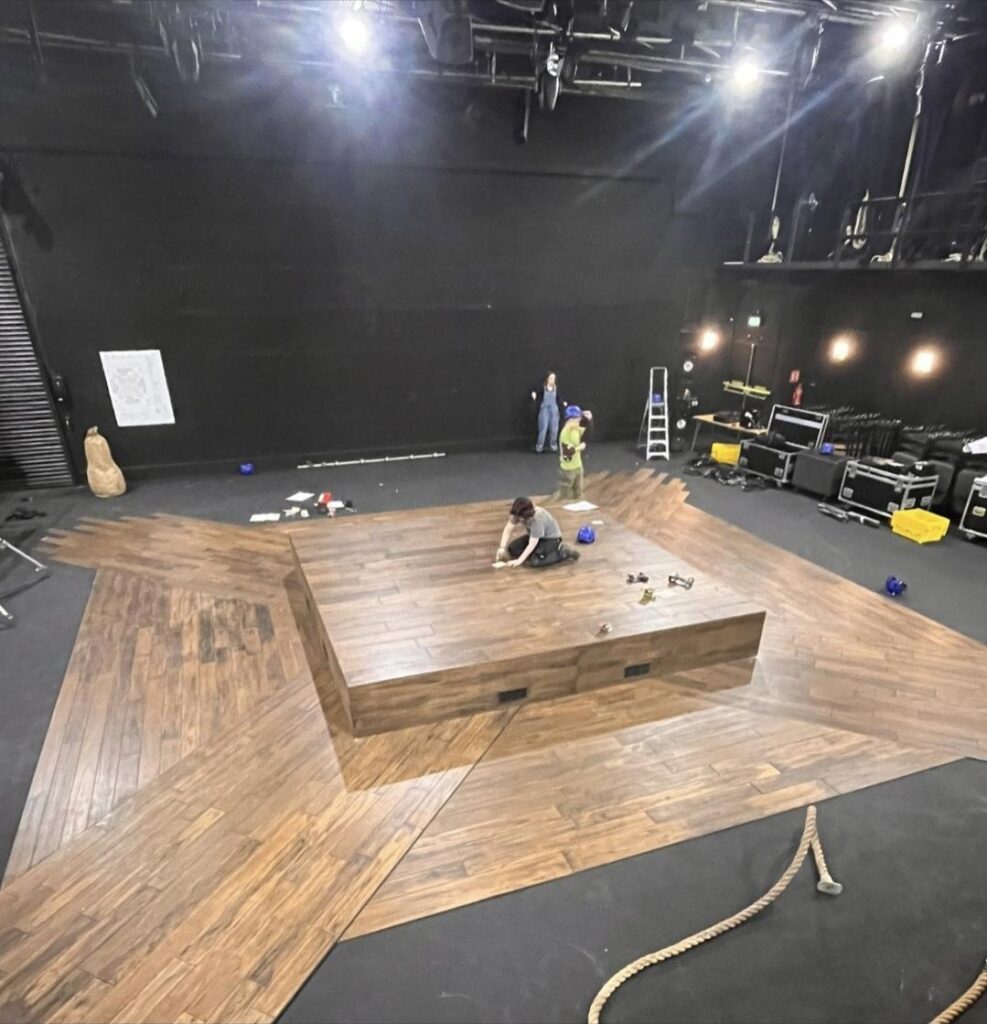
    Bea working on the get in for The Sweet Science of Bruising in the Bute Theatre at RWCMD.

    If a young person reading this is curious about backstage work but isn’t sure where to start, what would you suggest they do next — any courses, experiences, or first steps you’d recommend?

      I would recommend going to as many open days as possible and gain a good understanding on every niche backstage role you could work towards. I would also recommend looking at Screen Alliance Wales’s website as they provide tours, courses, and shadow placements for a wide variety of workplaces. 

      The visit was supported by Mrs Power, Head of Music at Radyr, Comprehensive School, she kindly chatted with us about the workshop.

      Mrs Power, what made you feel this was RWCMD Workshop was an important opportunity for your students?

        An insight into options post A level will inspire our young people in the areas they could get involved with as a possible career. Its a great opportunity for our students from the Art Music and Drama Departments to mix and work with young people slightly older themselves who are training for careers in the Creative Industries, its gives them some ownership of their future career pathways.

          For many young people, the backstage world feels hidden. Why do you think it’s valuable for students to experience hands-on creative work rather than just hearing about it?

          Its real, authentic and engaging, our students will definitely remember today! We value the informal conversations between the groups of young people today. It great for them to speak to Bea who is so enthusiastic.

            Why is it important for schools and creative institutions like RWCMD to work together when it comes to showing young people the full landscape of creative industries in Wales?

            As a teacher you are there to deliver the curriculum every week, we very much value these types of opportunities today, it inspires and invigorates our students to achieve in school as they can see what’s possible as they develop and mature. We have been lucky enough o have music students and lecturing staff to come into school and share their knowledge with our staff and students. They provide life changing opportunities.
            Tempo Time Credits and a Rugby Match to Remember!

            By Guy O’Donnell, Director of Get the Chance

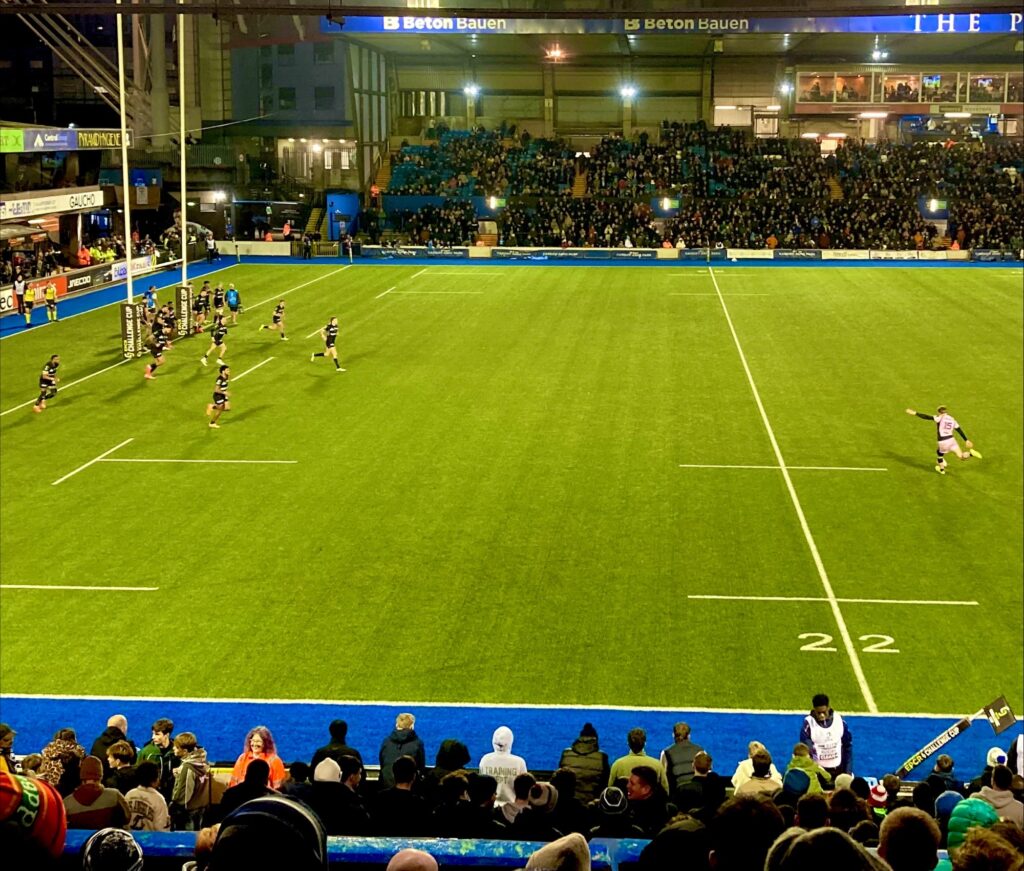
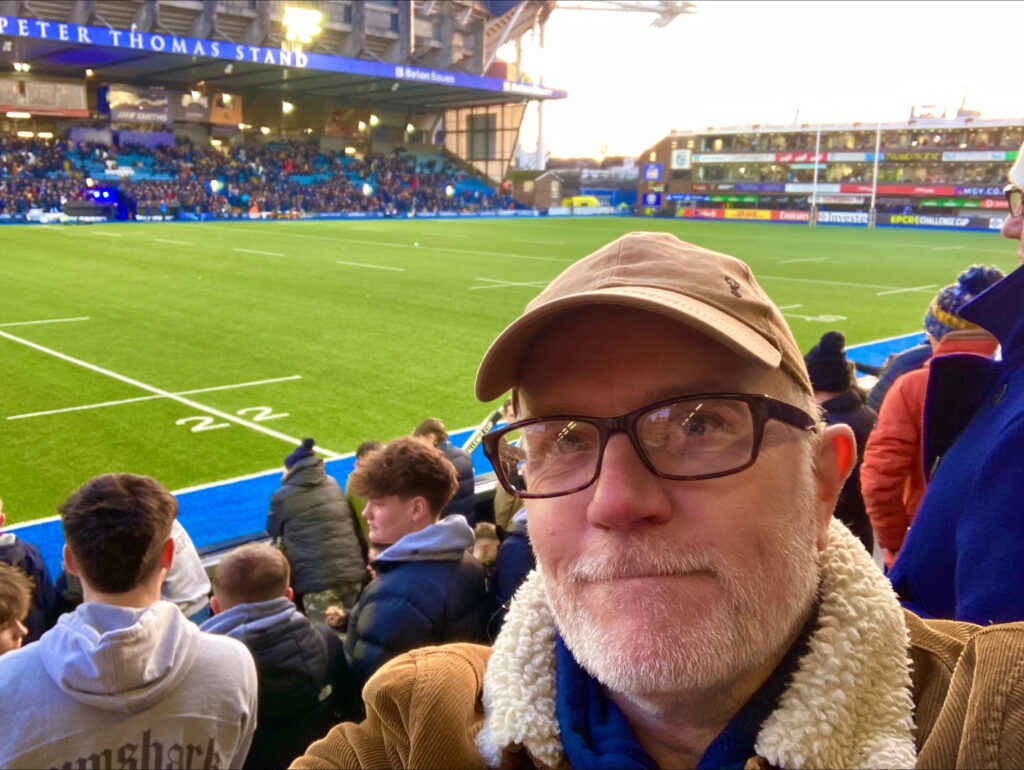
            What better way to talk about how Tempo Time Credits work than sharing an amazing ruby match in the capital of Wales! Last Saturday I was lucky enough to head down to Cardiff Arms Park to watch Cardiff Rugby take on Racing 92 in the EPCR Challenge Cup — and the best bit? I did it with Tempo Time Credits. What a brilliant way to turn volunteering into unforgettable moments!

            What Are Tempo Time Credits?

            https://c3sc.org.uk/wp-content/uploads/tempotimecredit.PNG
            https://livingwellconsortium.com/wp-content/uploads/2023/04/Tempo.png

            If you haven’t yet come across them, Tempo Time Credits are a simple but powerful way of rewarding and thanking people for the time they volunteer in their communities. Members of the Network earn 1 Time Credit for every hour you volunteer. You can spend those credits on a huge range of activities and experiences offered by Tempo’s network of partners — from theatre tickets to museum entry, to sport and more.
            I’ve earned mine through administrating and helping out with Get the Chance. Get the Chance works to create opportunities for a diverse range of people to experience and respond to sport, arts, culture and live events.

            How to Use Tempo Time Credits to Get a Rugby Ticket

            Here’s how it works,

            1. Earn your Time Credits by volunteering with a Tempo partner organisation (like us!).
            2. Log in to your Tempo online account and click to redeem your credits for available activities.

            3. Search for activities by location and interest — in my case I looked for Cardiff Rugby or sports events.
            4. Select the match and confirm your booking using your credits — it’s often as simple as an online voucher, booking code or email confirmation.

            For the Cardiff Ruby match I just emailed the team at Cardiff Rugby, quoting my Tempo ID and they then booked two tickets for me and sent me the electronic tickets by return of email. It’s incredibly straightforward and that part always feels like a reward in itself!

            Getting to Cardiff Arms Park

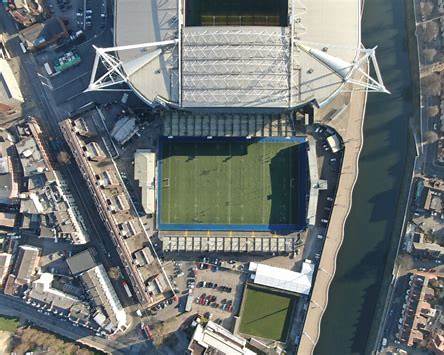
            If you haven’t been before, Cardiff Arms Park sits right in the heart of Cardiff’s city centre, next to the iconic Principality Stadium, so it’s super easy to find! I took the train into Cardiff Central, and from there it’s only about a 10-minute walk to the ground.

            There’s no match-day parking on site, but plenty of public transport options around, and a whole host of city centre car parks nearby if driving is your preference.

            The Match Experience

            There’s nothing like walking up the street towards the Arms Park on a match day. The atmosphere builds with every step — supporters in scarves and colours, families gathering, friends meeting up — you feel it before you even get in through the gates.

            To get into the card I just had to show my electronic ticket at the turnstile and have the QR code scanned. There are lots of staff onsite who can show you the way if you haven’t been before.

            Then the game kicks off — and what a spectacle it was! Cardiff Rugby against Racing 92, two teams giving everything in front of a buzzing crowd. Being there live with the roar of supporters, the tension of pivotal plays and the thrill of big hits — well, it reminded me why live sport really matters.

            Half-Time… Food and Drinks! Final Score

            Half-time at the Arms Park is a highlight in itself. There are plenty of refreshment options on offer — from classic match-day favourites like hot pies, burgers and chips, to coffee and snacks. There are also bars and stands inside and outside the ground where you can grab a drink and chat with fellow fans.

            Whether you’re catching up with friends about the first-half action or just soaking up the atmosphere, it’s a great chance to relax before the second half.

            Final Score

            Cardiff took a huge stride towards the Challenge Cup knockouts with a determined, 32-13, bonus-point home win over Racing 92 in front of a buzzing Arms Park crowd.

            Why I Love Tempo Time Credits

            Using Tempo Time Credits to go to a rugby match like that felt brilliant. Not only do you get rewarded for giving back — you can try new things, and share those experiences with friends or family. Whether it’s sport, theatre, or a day out somewhere new, Tempo opens so many doors!

            Ready to Get Involved?

            If you’ve not signed up yet, now’s a great time. Join the Tempo Time Credit network, start volunteering, and start racking up credits! Head to wearetempo.org to sign up, browse opportunities, and see where your credits can take you next.

            Let’s get out there, try new things, and make some memories — thanks to Tempo!

            “Early exposure to the arts shapes lives” An Interview with Playwright Tracy Harris.

            We last interviewed Tracy in 2020, In this new interview she updates us on her work with Coleg Gwent and thoughts on the Creative industries today.

            Hi Tracy You recently worked with Viv Goodman, lecturer on the AS and A Level Drama & Theatre Studies course across Coleg Gwent supporting the delivery of the Unit 3, A level Drama & Theatre Studies unit called Women in Drama. What did this entail?

            I spent time with the students sharing my experience as a female playwright working in Wales and talking honestly about what it means to write women’s stories today. I introduced them to my two current projects; Girls, Girls, Girls, a verbatim piece exploring five decades of stories from one of the last all-girls schools in Wales, and Divas, a pop-opera based on Adelina Patti and the divas that followed, that I’m co-writing with Cath Dyson. We also worked on their devised pieces, encouraging them to make brave, truthful choices about how they represent women on stage.

            Viv often supports practising creatives to deliver activity with her students; do you feel this has value?

            I think it’s absolutely essential. When students meet people who are actually out there making work, the industry suddenly feels more real and reachable. They get to ask proper questions the “How do you do this?” kind. They see the messy, exciting, problem-solving side of creativity. And representation really matters. For young women, especially working-class young women, seeing someone like them forging a path in theatre can be a game-changer. It tells them they belong here too.

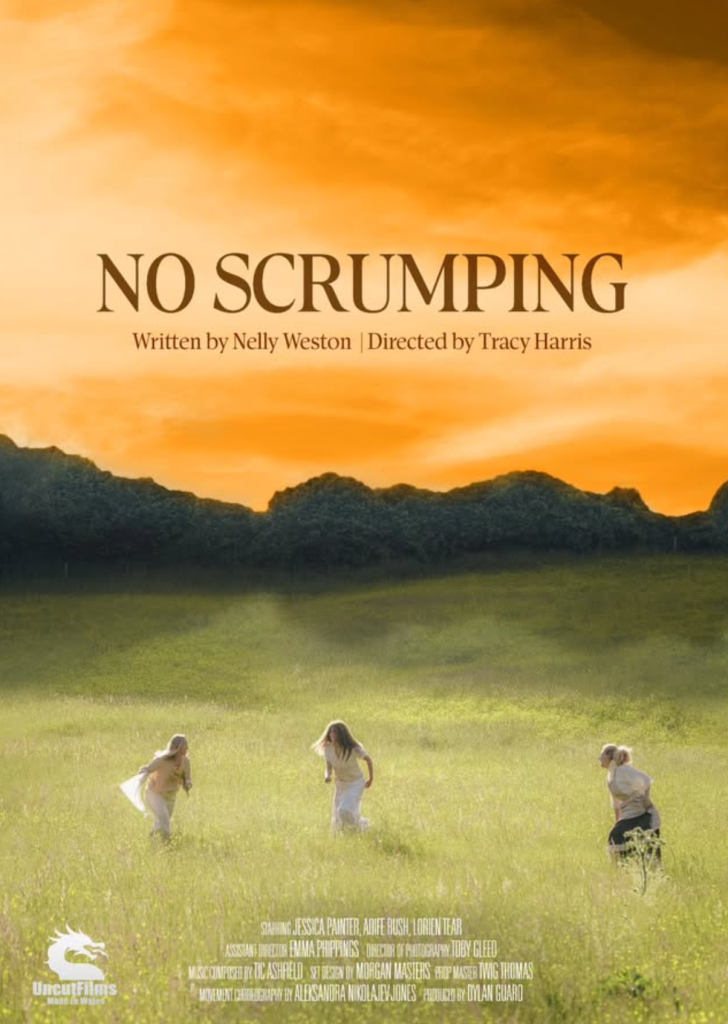
            Viv creates such a vibrant, inspiring environment by bringing creatives in. I genuinely love working with her students, and many of them stay in touch after. Dylan, that I met back in 2020 has just produced a short film No Scrumping, which I directed and which comes out next year. Watching the next generation step into the industry is honestly one of the most rewarding parts of what I do.

            We asked Viv Goodman about the Unit , Viv, How did you come to involve the professional playwrights in the Women in Drama unit and how did you choose them?

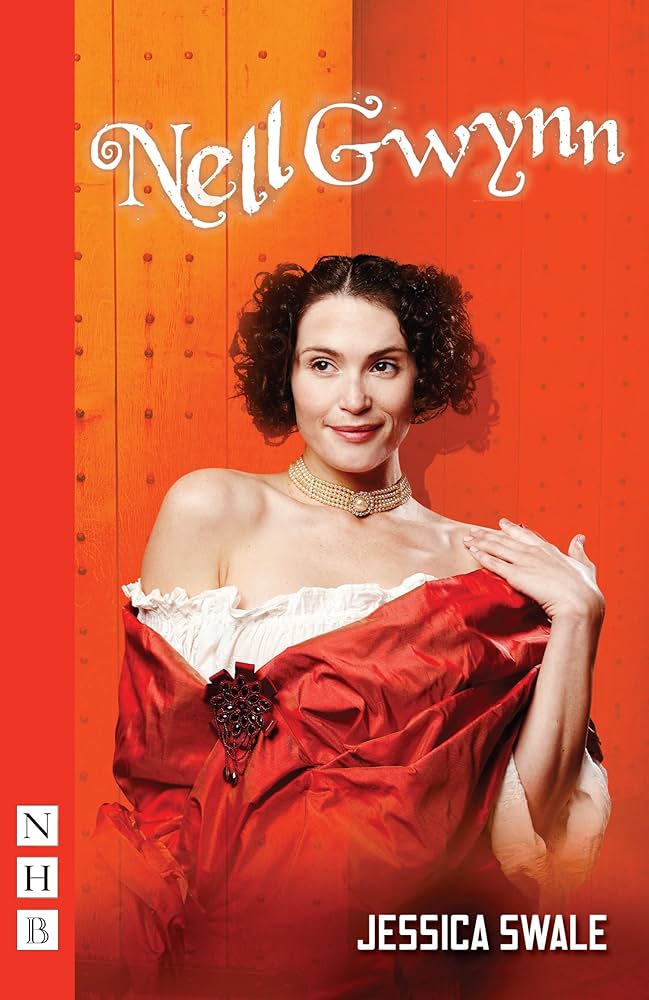
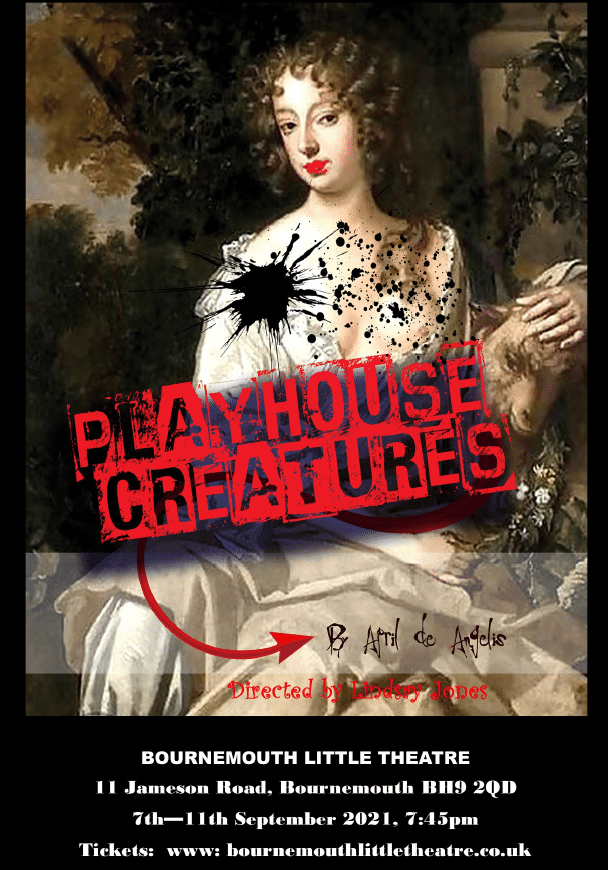
            The Women in the Performing Arts project has emerged from the learners’ choice of stimulus for their Unit 3 A level Drama & Theatre Studies exam ; they selected the Rob Burrow quotation ” in a world of adversity we must dare to dream” which, as an all female class, prompted discussions about the difficulties women in the performing arts have faced in order to pursue a respected place in the profession. We explored the lives of the  first actresses in the Restoration era through workshopping Jessica Swale’s ‘Nell Gwyn’ and ‘Playhouse Creatures’ by April de Angelis and we wanted to work from these plays for their scripted pieces.

            We then wanted to look at the journey that women have made from that time to now and so I asked Playwrights Tracy Harris, Lisa Parry and Gwenllian Higginson for help! I really wanted the learners to meet them and work with them practically, but also to be able to discuss the industry and find out their views about women’s place in the theatre today.

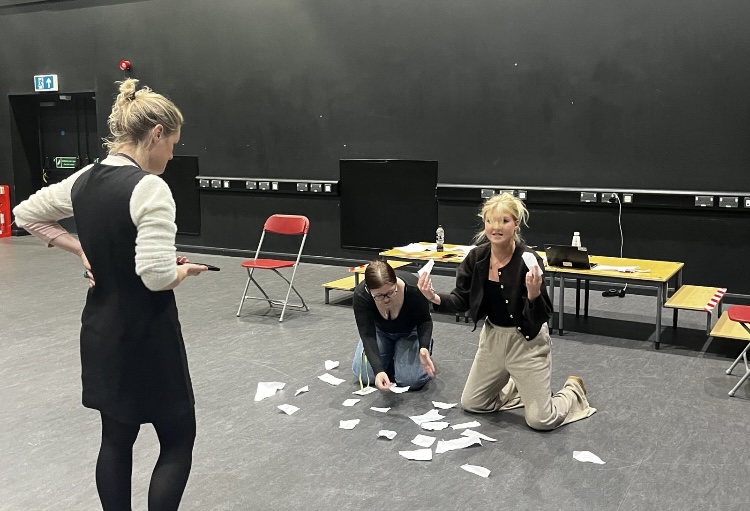
            Tracy working at Coleg Gwent

            A part of their devised theatre style is to use verbatim and we will be taking their views and reflections to use in the pieces as well as having the benefit of their practical expertise as playwright and actor respectively. It’s fantastic to have them on board with our work; some fascinating views and experiences have been shared and it’s both alarming and necessary for us to acknowledge that female performers are still faced with issues that April de Angelis depicts in her 1660s set play. I’ve been lucky to work with so many brilliant industry professionals in the classroom, but I must say that there is something unique and special about this project; it’s all about the girls!

            The cultural sector is dominated by middle-class, white men. Has the work to improve diversity for women had an effect? What more needs to happen?

            There’s definitely been some progress, conversations are finally happening in the open. But let’s be honest real structural change is still lagging behind. Women continue to face barriers in funding, opportunities, confidence, and access. If we want things to genuinely shift, we need more, sustained investment, not one-off projects, Proper access routes for young women who don’t already have cultural or financial privilege, Fair, open commissioning processes that don’t favour the same voices over and over. Long-term mentorship; This year I have mentored two young female writers; Lorien Tear on her first play; ‘Breeding ‘and Ceri Ashe on her verbatim play about motherhood, and it’s been one of the most rewarding experiences to be able to work with new bold female voices and see them shine. Representation is important, but it’s just the start. The goal is an industry where women don’t just enter, they stay, they grow, they support each other and they lead.

            I am also working on a festival celebrating Jane Arden. She was one of the leading figures in British theatre and Cinema and one of the most radical feminist voices in the 60’s and 70s. My aim is to create a celebration of this forgotten Welsh artist showcasing her plays, films and talks with leading academics. She is a major inspiration of mine and her work should be celebrated far and wide!

            Is the decline in A-level Drama affecting who goes into performing arts training?

            Yes, and it’s already having an impact. When Drama disappears from schools, whole groups of young people lose the chance to discover that the arts might be for them. Drama gives young people confidence, imagination, and a sense of belonging. Without it, so many potential creatives simply never get lit up by that first spark. It’s particularly damaging for working-class students, who often don’t have access to theatre outside of school. And this isn’t just about training actors, it’s about writers, directors, designers, technicians, producers, and audiences. The whole ecosystem suffers. Early exposure to the arts shapes lives. If we want a diverse, vibrant cultural sector, we have to fight for Drama in schools. It matters culturally, creatively, and for the future of our industry.

            Tell us about your writing process. Where do your ideas come from?

            My writing process varies depending on the piece, but most of my ideas are rooted in real experiences or stories I feel compelled to tell. Before I begin writing, I usually fall down a research rabbit hole, collecting anything that sparks something to do with the story: snippets of text, pieces of music, images, fragments of conversations. Once I’ve gathered enough material, I write the first draft instinctively. I try not to overthink it; I just get the story out and shape it later.


            Can you describe your writing day? Do you have a process or a minimum word count?


            My process is more instinctive. When I’m working on a play, I give myself the time and freedom to write the first draft quite freely, then I go back and refine, reshape, and more often than not cut anything that isn’t serving the piece. I’ve learned to trust this process rather than force something on days when the urge simply isn’t there. Ideas often arrive when I’m out and about, far more than when I’m sitting at my desk. I’ve stopped putting pressure on myself to hit a word count. When the writing is ready to come, it always does, and it’s often in the middle of the night or when I least expect it. Once I’ve taken it as far as I can on my own, I’ll share it with friends I trust before moving on to the next draft. That stage of honest feedback is invaluable to me.


            Do you write from a certain physical space? Do you have a writing room?


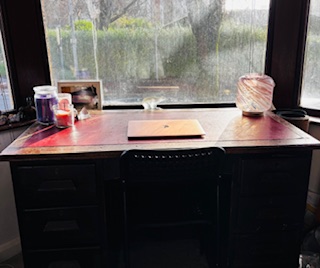
            I usually write at my desk in my office. It’s by a window overlooking a busy road, which I actually love, it reminds me that life is happening outside while I’m tucked away creating something. I’ll sometimes work in cafés, but never when I’m starting a first draft. At the beginning, I need the quiet space to let ideas come without distraction.


            Which Welsh writers have inspired your work?


            Welsh writers inspire me constantly, and there are too many to do justice to in a single list. But I always return to the greats; Jane Arden and Dylan Thomas have been lifelong influences. I’m also deeply inspired by the work of Ed Thomas, Gary Owen, Alys Conran, Katherine Chandler, Gwyneth Lewis. I love the unique voices of Catherine Dyson and Katie Payne, whose plays ‘The Last Picture’ (York Theatre) and My Mixed up Tape (Sherman) are on next year.

            Thanks for your time Tracy

            “Early embedding of the Arts, is crucial to being seen as viable career options.” Vivienne Goodman on the decline in Drama at ‘A’ Level.

            As schools across the UK — and Wales in particular — see a significant long-term decline in students taking A-level Drama, concerns are growing about the future of the performing arts pipeline. The number of A-level drama students across the UK has plummeted by over 50% since 2010

            Organisations, such as the Campaign for the Arts, have expressed concern about this trend, highlighting the importance of creative skills for the growing creative industries sector in the UK. The Welsh Government has indicated an interest in redressing this balance through the new Curriculum for Wales, which places importance on creative and expressive arts, but the impact of this is still developing.

            To explore what this means for young people, training providers, Welsh Actors and the wider creative sector, we spoke with Viv Goodman, lecturer on the AS and A Level Drama & Theatre Studies course across Coleg Gwent. Viv sheds light on she thinks might be driving the decline — and what might be done to reverse it


            Hi Viv great to catch up again after our previous interview which focused on your work with Welsh Playwrights and your students on in your previous role as a lecturer on the Extended Diploma in Performing Arts course at Coleg Gwent. Why do you think fewer young people in Wales are choosing Drama at A-level, and what misconceptions do you hear most often?

            I think that prioritising and promotion of STEM subjects has certainly become detrimental to the Arts, it feels as if we’re back to the days of defending our place in the curriculum, whereas that hasn’t always been the case. I find this frustrating as I have worked with so many incredible creatives at Coleg Gwent over the years and the difference they have made to learners in terms of their skills, aspirations and personal development is immeasurable.

            We are very strong here across vocational and A Level creative subjects (I have been lucky to teach in both areas) and it’s left me with enormous admiration for tutors in the areas of Performing Arts ,Music, Art, Photography, Media and Film. I’m also uncomfortable with the feeling that we are in competition with STEM subjects, when really, the breadth of subjects and the opportunities they all bring is surely the ultimate aim for education and employability. I think in terms of Drama that it’s left many comprehensive school timetables or been reduced, and so it is possibly not perceived as an option going forward. The A level course can be taken without having studied GCSE Drama and this is perhaps the message that needs to get out there now. 

            Is the decline in A-level Drama having a visible impact on who enters performing arts training — in terms of skills, confidence, or diversity of backgrounds?

            I think if it isn’t already having an impact then it certainly will do; I feel that there are potential industry professionals who are not getting early access to theatre and Drama and this embedding of the arts is crucial to it becoming familiar and comfortable for pupils; from that early stage, they are more likely to see the arts as viable career options. Equality and Diversity are thankfully being promoted in lots of ways, but in terms of real opportunities, we’re not actually creating enough of them. Early experiences of theatre will also, crucially, create the audiences of the future and we should also be thinking about that. 

            How do you see the Welsh context specifically shaping this issue? Are there barriers or opportunities unique to Wales?

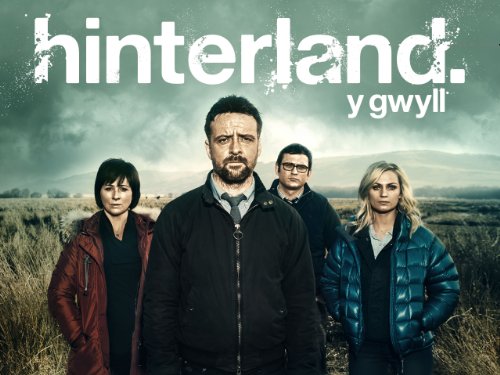
            There are opportunities that are unique to Wales in terms of our place in TV and Film production in particular: it’s a real string to our bow that courses in Media, for example, use Welsh crime drama Hinterland/y gwyll as a case study.

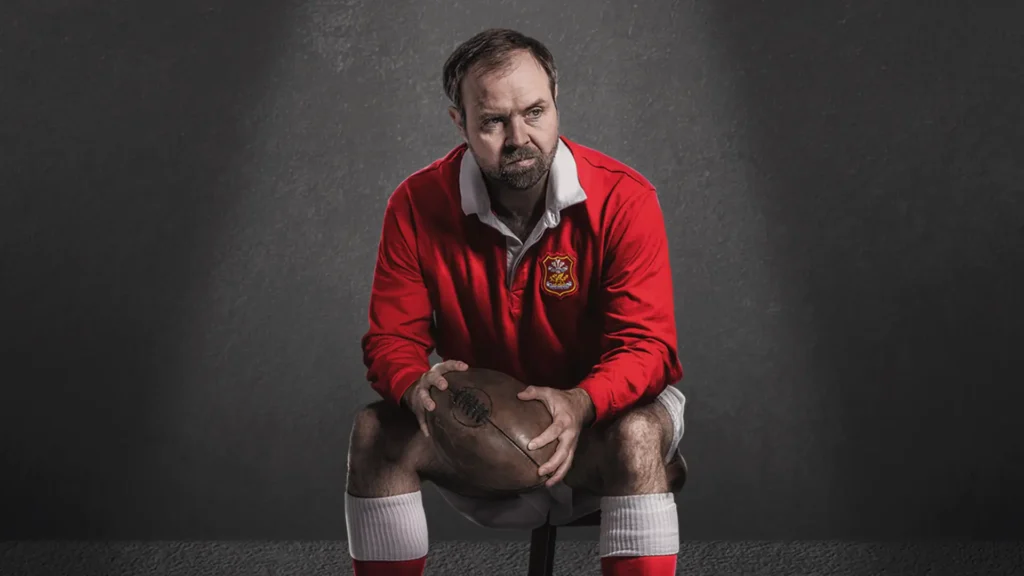
            I make a lot of connections to the Welsh theatre industry in my teaching , not only going to see productions, but also discussing the international success of some of our theatre pieces. Grav, created by Owen Thomas, Peter Doran, and actor Gareth John Bale, and first performed by the Torch is an excellent example. I have worked with the Grav team so much and used the play/production in a number of lessons, its a brilliant example of Welsh Theatre.

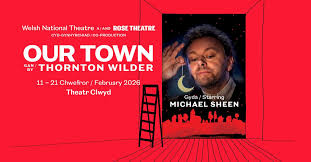
            I think that Welsh theatre is becoming more confident and ambitious with the recent launch of the Welsh National Theatre and Fran Goodridge’s, Sherman Theatre, Artistic Director plans to connect the Sherman Theatre, Cardiff with The Royal Court, for example. My hope is that opportunities for future industry professionals will  grow from the impact of these changes.

            What risks does this long-term decline pose for the future of the performing arts workforce in Wales — both onstage and backstage?

            I think that we need to address the issue in education quite quickly and promote the fact that the creative industries are essential to the economy; I feel there is still a misconception that the arts are a luxury. Without training and opportunities for young people in theatre, film and tv the industries will struggle further in  future and I don’t think this is taken seriously enough at the moment.

            What would you say to a student, teacher, or parent who believes Drama is ‘less valuable’ than other subjects?

            I would say that any accredited qualification will have had to jump through hoops to attain the accreditation in the first place, so they are all viable from that point of view. There are so many reasons to study Drama other than wanting to enter the performing arts professionally: the transferable skills of team work, problem solving, working to group deadlines, communicating meaning through creative decisions are all essential in other professions. Every year I have A Level Drama learners who study the subject alongside the sciences and the experience equips them with excellent interpersonal skills that become evident when they present themselves to universities. Also, we’re in a place where mental health and well being are a significant issue for young people and the experience of Drama is enormously helpful for processing emotions and fostering a sense of belonging. 
            What actions from policymakers or education leaders would make the biggest difference in reversing the decline?

            From a UK and Wales wide perspective, I think we need to present STEAM rather than STEM as the tagline and go back to reinforcing the ‘broad and balanced’ approach towards education. As I mentioned earlier, I have now worked with vocational and A level teams across three sites of Coleg Gwent and the experience has opened my eyes to the expertise and inspiration that teachers offer learners across the curriculum. I really think that education leaders and policymakers need to promote all opportunities with equality if we are to create a workforce that is fully prepared in terms of skills and well being; that’s what makes people fit for work.

            A Lifetime Impact on Accessible Theatre

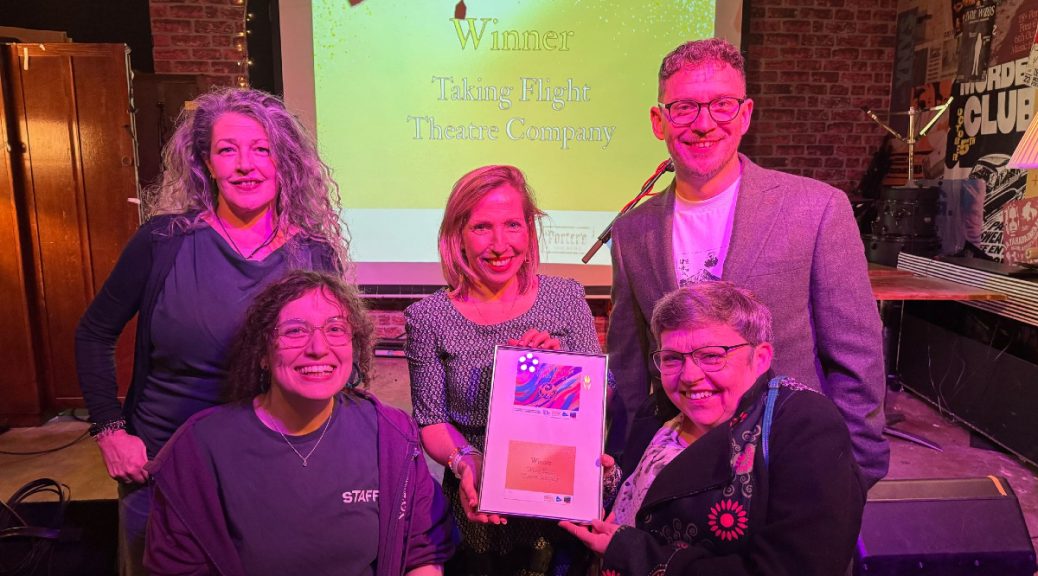
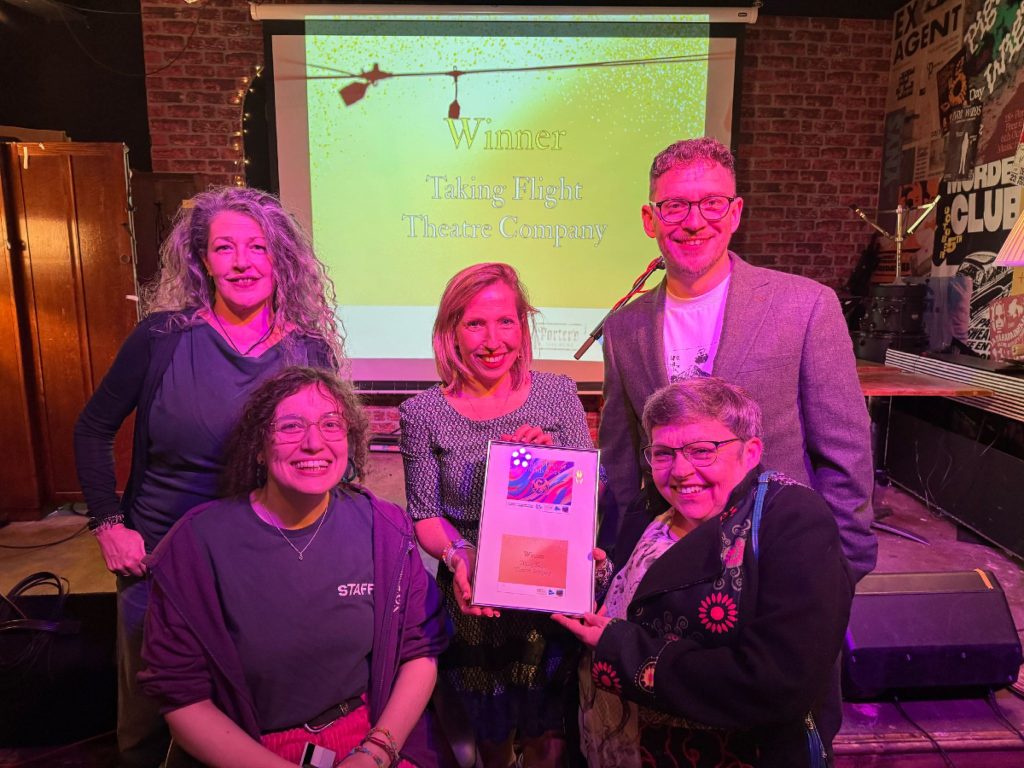
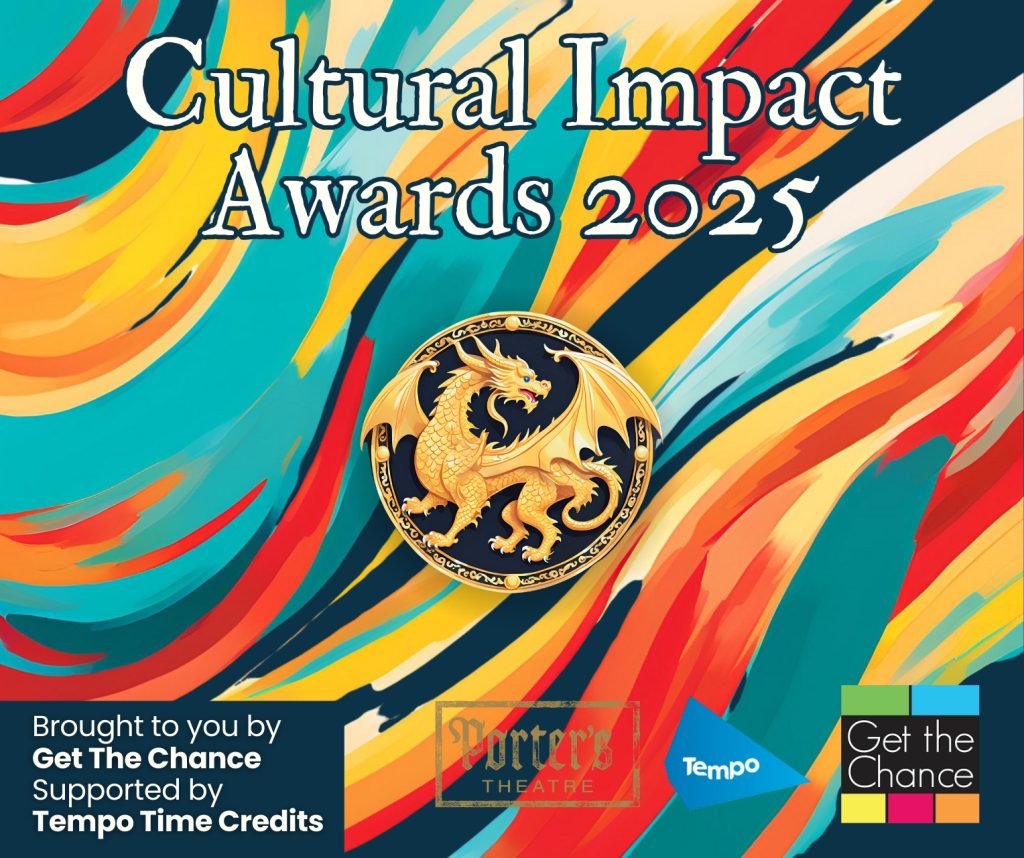
            Taking Flight Theatre Company is delighted to have been honoured with the inaugural Lifetime Impact Award at the Get the Chance Cultural Impact Awards 2025 last month, supported by Tempo Time Credits, Ffilm Cymru Wales and Porters Cardiff.

            Taking Flight makes bold, unusual theatre productions with Deaf, disabled, neurodivergent and non-disabled performers. Their work tours Wales and beyond. Alongside touring work, they nurture the next generation of disabled talent, both on stage & behind the scenes. They do this through running inclusive professional training courses & mentoring schemes for people who identify as Deaf or disabled & are looking for the next step into a career in theatre, or to develop existing skills & build confidence.

            With approaching 17 years’ experience in creating accessible theatre, they have become the “go to” organisation in Wales for advice, information or inspiration on integrating access & working with inclusive casts.

            Artistic Director Elise Davison said:

            “We are absolutely thrilled to have been given this lovely award. We were rather overwhelmed, and very happy to have our work of the past 17 years or so recognised in this way. We’d like to thank everyone who has made this journey possible and welcome the steps that the industry in Wales is making towards becoming more inclusive for audiences and professionals alike. Let’s keep shouting about access, eh? It really does make the work better for everyone.”

            Guy O’Donnell, director of Get the Chance said:

            “Taking Flight won the Get the Chance, Lifetime Impact Award because of the ongoing positive change they have led on for the cultural sector in Wales.

            They featured strongly in many of the Categories for this year’s awards, demonstrating their reach amongst the arts sector and the public.”

            Sara Beer, director of change at Craidd is also a longstanding member of Taking Flight’s board of trustees. Sara was invited to present the award to the company by Get the Chance, and said:

            “Taking Flight creates excellent, accessible theatre and the impact they have had on Deaf, disabled and neurodivergent creatives has been huge, providing brilliant opportunities and raising awareness of the talent that for so long has been overlooked.

            The company also provides high quality training for theatre creatives across Wales. This means that there are now many more audio describers available to companies who work in both English and Welsh and a pool of creative enablers to support freelancers and companies to provide inclusive, accessible environments for everyone.

            It is remarkable that the majority of their work has been created on project funding and their determination and belief in making important accessible theatre of the highest quality. Now that they are revenue-funded by Arts Council Wales I’m sure there are going to be many exciting times ahead”.

            The award comes at an exciting time for Taking Flight as they enter the production phase of their latest show, a fully accessible BSL/English production entitled Martha that will open at Cardiff’s Sherman Theatre this May. Martha is set in the near future, in a world where sign language has been banned and Deaf culture driven underground – a cautionary cabaret about the dangers of oppression and totalitarianism. More information can be found here:

            Martha

            Launching the Get The Chance, Cultural Impact Awards, 2025

            The Get The Chance, Cultural Impact Awards, 2025 supported by Tempo Time Credits and Porters Cardiff, Launch this month!

            The Get The Chance, Cultural Impact Awards, 2025 celebrate high quality, cultural activity that reaches a broad range of the public and its positive impact on their quality of life.

            The Award event will take place at Porters , Cardiff on Sat March 22nd, 5-7 pm a representative of all nominated organisations/individuals will be invited to attend.

            Award winners in each category will have the opportunity to have a short professional film created which highlights their work. (subject to confirmation)

            The Awards are supported by Tempo Time Credits and Porters Cardiff. Rachel Gegeshidze, Chief Executive, Tempo Time Credits said

            “At Tempo, we believe that culture, the arts, and heritage should be accessible to all, and we are incredibly proud to support the Get The Chance, Cultural Impact Awards 2025. Volunteers are the backbone of our communities, and through Time Credits, we recognise and value their time, opening doors to new experiences. These awards shine a light on the incredible cultural initiatives and volunteers that give their time to make a real difference to communities and people’s lives, and we are privileged to celebrate the individuals and organisations leading this work.”

            Rachel Gegeshidze, Chief Executive, Tempo Time Credits

            Dan Porter, Director of Porter’s Cardiff said

            ‘As a venue we want to remain committed to new, emerging and unsupported artists. We are happy to support the Get The Chance, Impact Awards and what we can help others to achieve at Porters Cardiff”

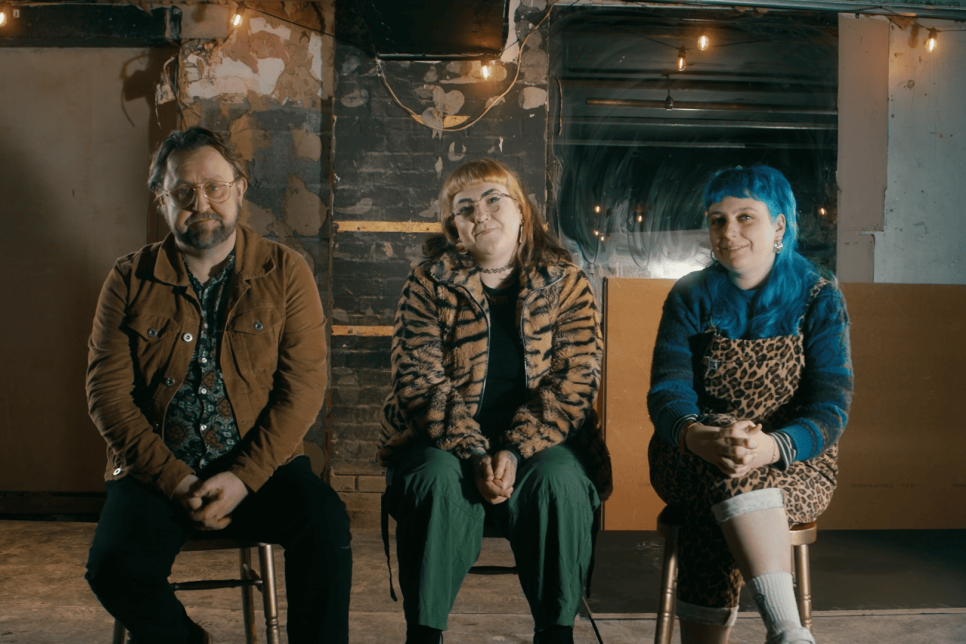
            Dan Porter, Alice Rush and Frankie-Rose Taylor

            (Photograph: Moreton Brothers)

            The awards are a great opportunity to celebrate the impact cultural provision in Wales during 2024, many of the individual categories are sponsored by a range of project supporters.

            *Please get in touch of you are interested in supporting this event

            Further information on the Categories and nomination process can be found below

            These awards aim to highlight and showcase the vibrant and diverse nature of culture, heritage and the arts within our Nation each year

            Criteria

            For the purposes of these awards, we have a broad definition of cultural provision which includes community arts volunteering, education and heritage. Nominations will reflect a range of areas in the cultural life of Wales, nominated individuals or organisations can be either voluntary or professional. All nominated parties must be from or based in Wales for the majority of their creative activity and nominated area. The nomination period is Jan 01-Dec 31 2024.

            The purpose of these awards is to raise awareness of high quality, cultural activity that reaches a broad range of the public and its impact. Due consideration shall be made on the resources of the creative activity and its impact on the public.

            All work must have a strong Welsh connection, and this will form part of the scoring process.

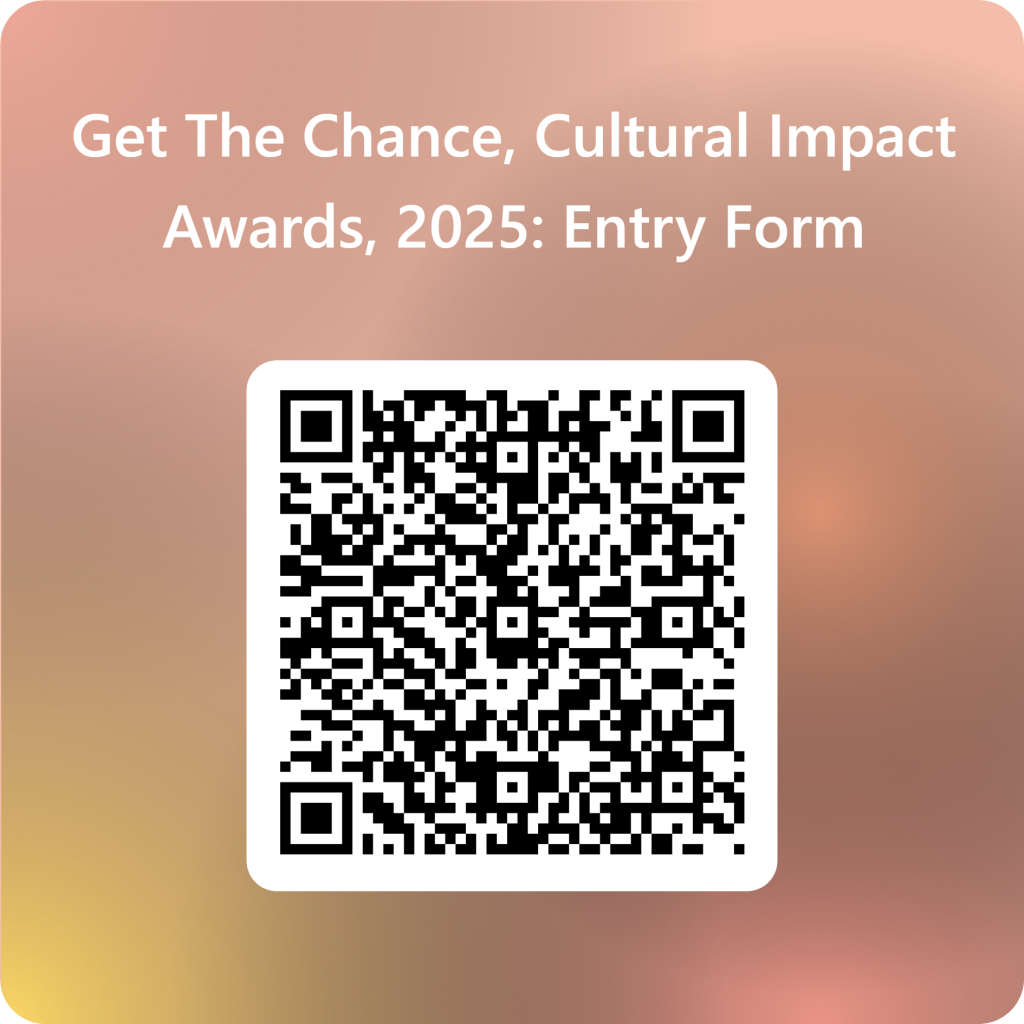
            The nomination form can be found at the link below

            https://forms.office.com/e/MFiTvHPSXy

            Categories

            1. Public Event

            Description: Awarded to a public production, exhibition or cultural event that demonstrates high artistic ambition and quality which connects with the public. The activity should take place in and be produced by Welsh and Wales based creatives

            Considerations

            • What impact did this Public Event have on the general public?
            • How the event has demonstrable high artistic quality, did it receive reviews, press coverage or industry awards?
            • Audience reach – roughly how many people saw it and were any specific groups reached such as children and young people etc?
            • Audience reach – where did audiences come from? Did it tour or was it large enough to attract people from outside the direct performance area?

            2. Creative of the Year

            (Sponsored by Porters Cardiff)

            Description: Awarded to a Creative who demonstrates the highest artistic quality in work which is created and/or publicly exhibited, performed or displayed in Wales.

            Considerations

            • What Impact did the work of this Creative have on the general public?
            • How has the Creative demonstrated high artistic quality, did their work receive reviews, press coverage or industry awards?

            3. Community and Education Project

            (Sponsored by The Red Shoes Poster Archive)

            Description: Awarded to a community, participatory or education project e.g. choir, dance, theatre, visual arts or heritage group which provides regular, inclusive access to culture for local people.

            Considerations

            • What Impact does the community, participatory or education project have on the general public?
            • Did the project receive positive feedback and satisfaction from participants?
            • How many people took part?
            • Was the project inclusive? For example, supporting people from diverse backgrounds or those with disabilities or who, for other reasons, might otherwise not have the opportunity to take part?
            • Did the project receive any positive press coverage, reviews, other awards or recognition
            • Did the project work in partnership with other organisations?

            4. Facilitator of the Year

            Description: Awarded to a cultural facilitator, teacher or practitioner who leads inclusive community, participatory or education projects in Wales

            Considerations

            • The impact the individuals work has on the group or individuals
            • Any reviews, press coverage, other awards or recognition
            • Any feedback from partners or funders

            5. Culture and Health

            (Sponsored by Christine O’Donnell)

            Description: Awarded to a cultural project, event or series of workshops which support people living in Wales to improve their health and wellbeing.

            Considerations

            • The impact the project has had on its participants
            • How many people took part?
            • How the project/event positively impacted people’s health?
            • Any participant feedback/testimonial?
            • Are there any ways the activity has reduced reliance on other services such as the NHS?
            • How the project used culture and participation?
            • Any reviews, press coverage, other awards/recognition?
            • Any partner feedback?

            6. Cultural Champion

            (Sponsored by Tempo Time Credits)

            Description: Awarded to an individual from the creative community, e.g. a volunteer, administrator, technician, curator or board member whose work makes a significant positive contribution to the cultural life of the Nation

            Considerations

            • The major project/event/activity/display in which the individual has played a significant role and what the impact of their role has been?
            • How the individual positively contributes, beyond their own participation (for example supporting others, volunteering etc)?
            • Any support or feedback from project/organisation leaders or facilitators?
            • Any reviews, press coverage, other awards/recognition for either the individual or the project they are involved with?
            • About any feedback from colleagues, participants and other relevant parties?

            7. Commitment to Arts, Heritage & Culture

            (Sponsored by Awen Cultural Trust)

            Description: Awarded to a school who demonstrate significant commitment to and celebration of the arts in the broadest sense

            Considerations

            • The impact the project has had on its participants?
            • What cultural activities does the school offer?
            • How many students are involved?
            • How is this offer different from traditionally provided education activity?

            8. Disabled Creativity

            An award recognising the achievements of an organisation or individual creating awareness of Disabled led work.

            Considerations

            • What impact has the organisation or individual made to Disabled led work?
            • What cultural activities does the organisation or individual offer?
            • How many people are involved?

            Review The Lion, the Witch and the Wardrobe, Wales Millennium Centre by Tracy Robinson

            As the weather turns frosty, it feels like we too have stepped beyond the fur coats and into our own endless winter. But if that means joining the Pevensie children on an adventure, then this winter brings plenty of warmth!

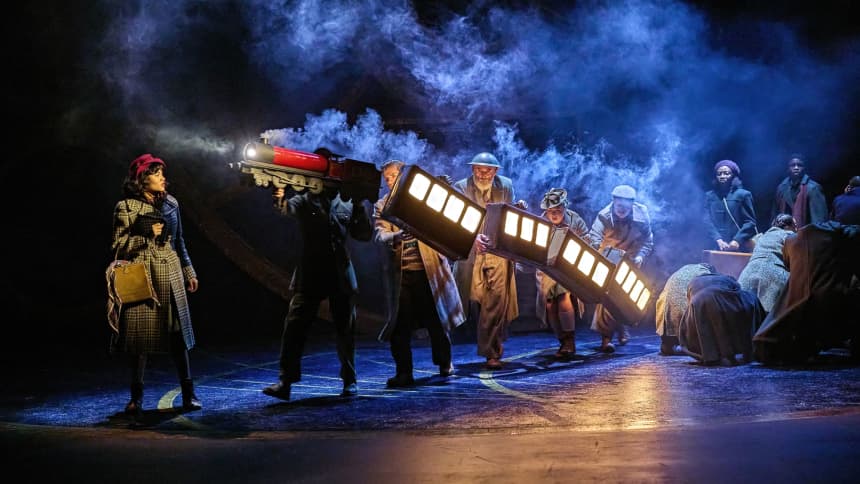
            The stage adaptation of C.S. Lewis’s “The Lion, the Witch and the Wardrobe” is a magical experience that brings Narnia to life. Directed by Michael Fentiman, this production blends music, puppetry, and energy, making it a treat for fans old and new.

            The Wales Millennium Centre delivered an unforgettable experience. Marking the novel’s 75th anniversary, this adaptation enhances the beloved story’s magic. With breathtaking staging and a talented cast, it brings the wonder and adventure of Narnia to life.

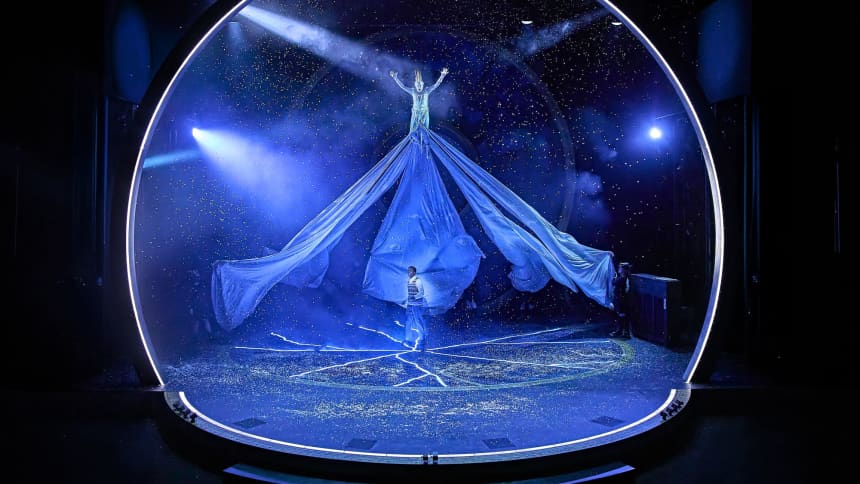
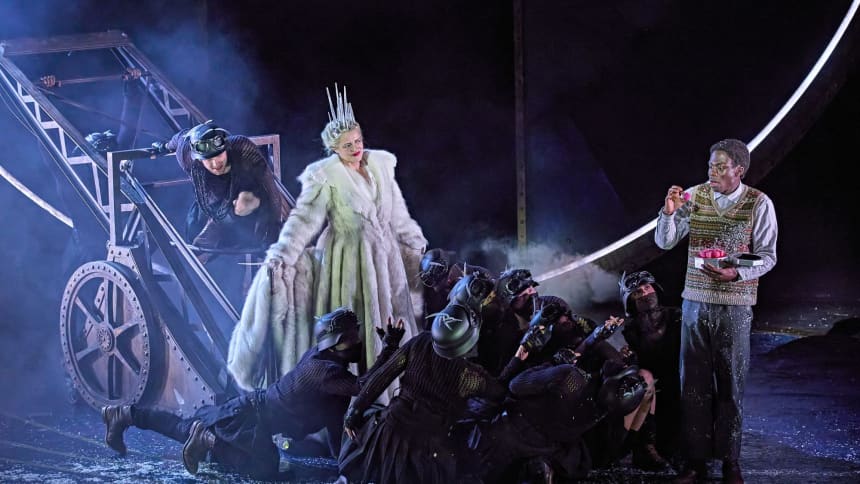
            From the moment the lights go down, the visuals are breathtaking. Tom Paris’s set and costumes transport the audience into the snowy forests and the White Witch’s icy castle. The puppetry, especially in bringing Aslan to life, is wonderful. Actor, Stanton Wright, along with a team of puppeteers, makes the lion feel both powerful and real.

            The music by Benji Bower and Barnaby Race adds depth with folk-inspired melodies. A unique touch is the actors’ playing instruments live on stage, making the atmosphere even more immersive.
            The cast shines, led by the four Pevensie children, who capture both the wonder and sibling squabbles of youth. Joanna Adaran (Susan), Jesse Dunbar (Peter), Kudzai Mangombe (Lucy), and Bunmi Osadolor (Edmund) bring their characters to life, making Edmund’s transformation from selfish to redeemed very moving.

            Katy Stephens is both chilling and captivating as the White Witch. Archie Pope’s Mr. Tumnus is warm and endearing, and his nostalgic song about spring is a show highlight. Ed Thorpe’s Mr. Beaver brings the perfect amount of humour, while Anya de Villiers as Mrs. Beaver is equally delightful.

             The audience reacted with gasps of wonder and enthusiastic applause, especially during the wardrobe’s magical transformation into Narnia. The mix of humour, adventure, and emotion made the show enjoyable for all ages.
            Some special effects may not be as striking from seats farther away, and the first half’s pacing is uneven, with some scenes dragging while others felt rushed. At times, the music overpowers key dialogue. Aslan’s portrayal as both a puppet and an actor is creative, but some may find the transition a bit distracting. 

            And of course, no matter how magical the show, it doesn’t come with a real portal to Narnia. Some audience members (myself included) might leave a little disappointed after checking the back of their wardrobes at home!

            This adaptation is a brilliant retelling of a beloved story. With strong performances, stunning visuals, and immersive music, it captures the heart of C.S. Lewis’s classic. Despite minor flaws, the passion and creativity behind this production make it must-see. Whether revisiting a childhood favourite or discovering Narnia for the first time, this show is a magical and unforgettable experience.

            Taking off my critic’s hat for a moment—this production completely swept me away. I could go on and on with praise, but I urge you to see it for yourself. I felt like a child again, lost in a magical world brought to life in the most fantastic way. It’s 317 days to Christmas, but in Narnia, every day could be Christmas. If I could exist in both the real world and Narnia like the Pevensies, it would be a dream come true!
            Review The Vicar of Dibley, Phoenix Theatre Company, ‘The Mix’ at Theatr Clwyd by N Pugh

            The BBC sitcom ‘The Vicar of Dibley’ is a representation of British comedy at its finest. They just don’t make comedy like it anymore so what a treat it was to find that the well known show had been adapted from screen to stage.
            The Vicar of Dibley follows the journey of a confident female vicar with a huge personality, as she becomes the vicar of the church in a small, conservative village where her presence is not, at first, welcomed.

            Walking into ‘The Mix’ at Theatr Clwyd, we were met with a simple set that was effective in supporting the cast to tell the story. Scenes moved between the Dibley Parish Hall, the church vestry and the Vicar’s living room. Particular effort had been made to ensure that each set was instantly recognisable, and certain aspects could be likened to the locations seen on our screens. Lighting was used effectively to complement the set. For example, the stained glass church window that was lit from the back to highlight its beauty, and the light that changed as the door to Geraldine Granger’s (Nicola Simonds) living room opened and closed.

            A particularly nice touch was the invitation given to the audience to join in with the hymn during one of the church service scenes – song words were included at the back of the programme. This provided audience members with a well received, immersive experience. Unfortunately, the decision was made not to use microphones during this performance which did, at some points, hinder the flow of the dialogue. The volume of the laughter after some of the comedic lines meant that the next line was missed by the audience.

            The casting of this production was excellent and it was evident that each cast member had studied their character, and their characteristics. Alice (Sara Griffiths) and Hugo (Luke Crofts) were particularly convincing- their on stage double act was hilarious and they were extremely well received by the audience. Owen (Ben Wheelhouse) and Frank (Eric Jones) were also instantly recognisable as the much loved characters that once graced our screens.

            A huge congratulations to the cast and crew of this production. The team is small, but evidently mighty. My first experience of watching a Phoenix Theatre Company production and, God willing, it won’t be my last!

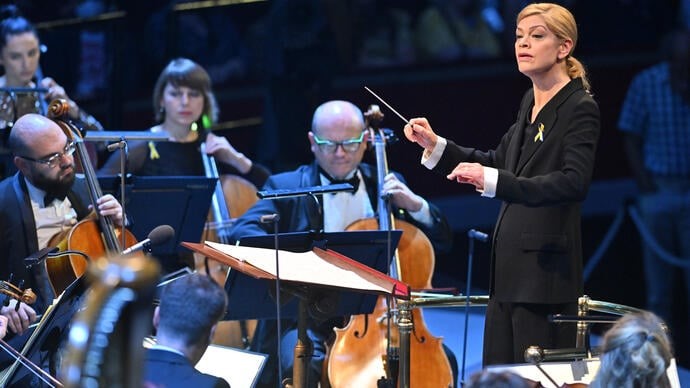
            Review, Ukrainian Freedom Orchestra, Beethoven’s 9th Symphony, St Paul’s Cathedral by James Ellis

             out of 5 stars (5 / 5)

            An orchestra must play as an act of defiance. Few would deny this upon seeing the Ukrainian Freedom Orchestra after their invasion from Russa back in 2022. The Songs for Ukraine Chorus are also made up one hundred and sixty singers, of those effected by the conflict. Prior to this all consuming concert at St Paul’s, a few speakers told of the importance of these musicians. Most telling, was General Valeriy Zaluzhny, UK Ambassador to Ukraine, who spoke of the utmost urgency of the events occurring in their home country. Having also followed other conflicts since, it really hit me hard just how impactful this has been to the world.

            A fine opening with Bucha, Lacrimosa by Victoria Vita Polevá, which detailed the massacre Russia commit in spring of the year of invasion. With violinist Marko Komonko, this was deeply impactful…I was lost in the emotion the whole thing. Not dissimilar to Arvo Pärt and John Tavener, a feeling of the sacred minimalist took over the massive space. Terrifying metallic percussion stood out and possible electronics were a softer fiber in the overall orchestration. Komonko played stupendously. A gentle handling of the strings and their harmonics was another compelling element. Polevá took a bow at the end and proves she is a composer to watch out for.

            Two hundred years have passed since the advent of Beethoven’s 9th Symphony, sometimes dubbed the ‘Choral’. Often used as a marker during times of conflict, this was particularly hefty with these players. Conductor Keri-Lynn Wilson graciously led all through the epic piece: its primordial opening, melodic pixelations, piercing melodic bite and earthy ruminations. The acoustics of the cathedral did frequently blur the focus, yet other times its vapours were highly rewarding. I’d say the last three movement had passages were the sound worked but other bars were like mush. We can leave that aside thanks to the context of the evening.

            Also sung in Ukrainian, adding extra layers and personal touches. The four soloists Olga Bezsmertna, Natalia Kukhar, Valentyn Dytiuk and Andrii Kymach wowed with their respective sung momentum. Kymach in his baritone, may have been at the mercy of acoustics, though often delighted with a burr, you’d expect from the range. Olga Bezsmertna had a frequent smile on her face, lost in the music, soaring notes she fared very well in and constantly engaged with the audience. Natalia Kukhar as mezzo added to the pot, her time with Olga some sweet, touching remembrances. Tenor Valentyn Dytiuk, got a famous, cheery solo with an almost ommpa band styling, towards the end, a voice that you want to hear again. Of course, the recognisable Ode to Joy, left me highly moved and this crowd loved what they heard. The lady sat behind me also remarked about the acoustic, though stated the concert was “symbolic”.

            An encore by Yuri Shevchenko: WE DO EXIST! was a paraphrase to the melody by M. Verbytskyi (National Anthem of Ukraine) for violin and strings. All stood for what we assumed was a more traditional take in the anthem, though this version was eerie and chilling. A concert for the history books.

            “Music is at the heart of who I am” An interview with RWCMD, Student Musician Sophie Hallam

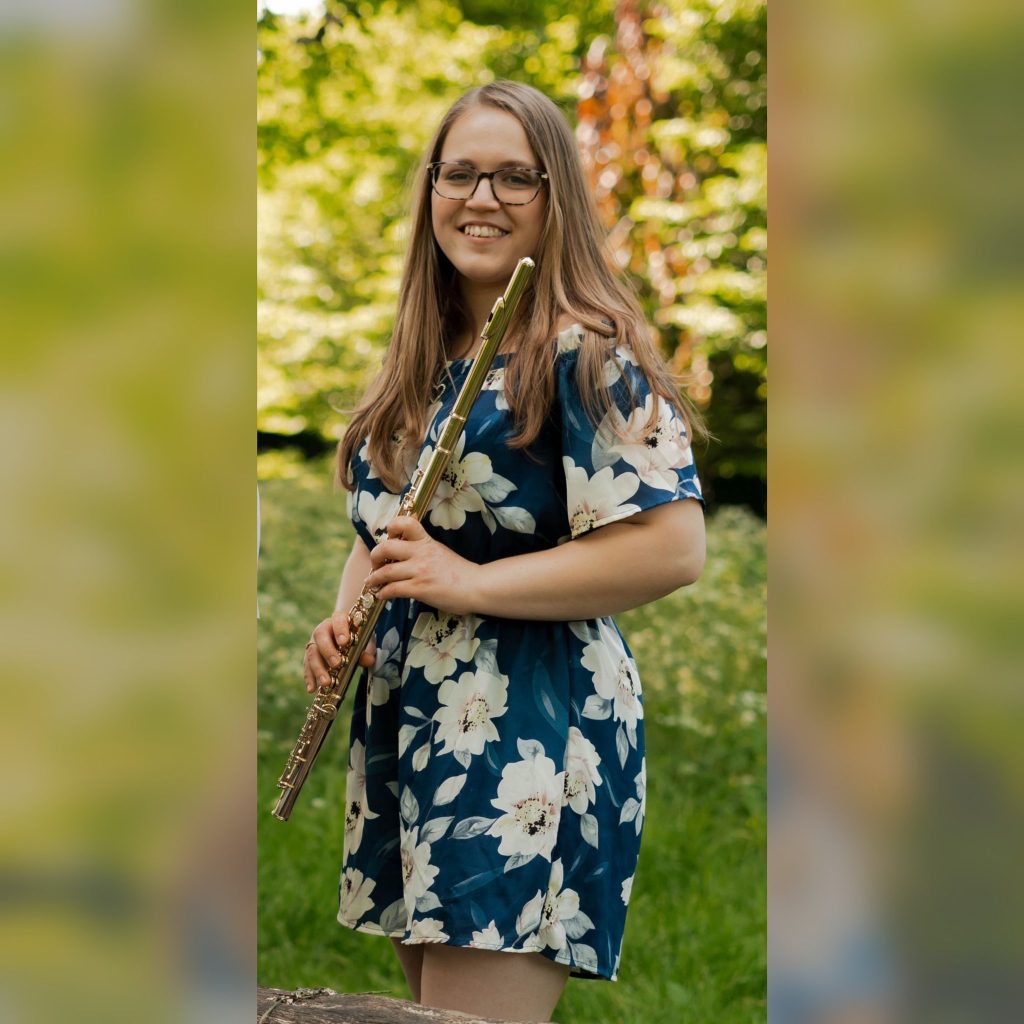
            Hi Sophie, great to meet you. You are currently studying Music Performance (Flute) at RWCMD, Cardiff, can you give our readers some background information on your career to date?  

            Hi Guy, it’s lovely to meet you too! I have been playing the flute for 13 years, previously studying with Berkshire Music Trust, (a registered charity who support everyone to have access to music education regardless of their background) …or Berkshire Maestros as it was known back then! Throughout my time with them I played in numerous ensembles, the most senior being Berkshire Youth Symphony Orchestra, Newbury Concert Band and Newbury Flute Choir.

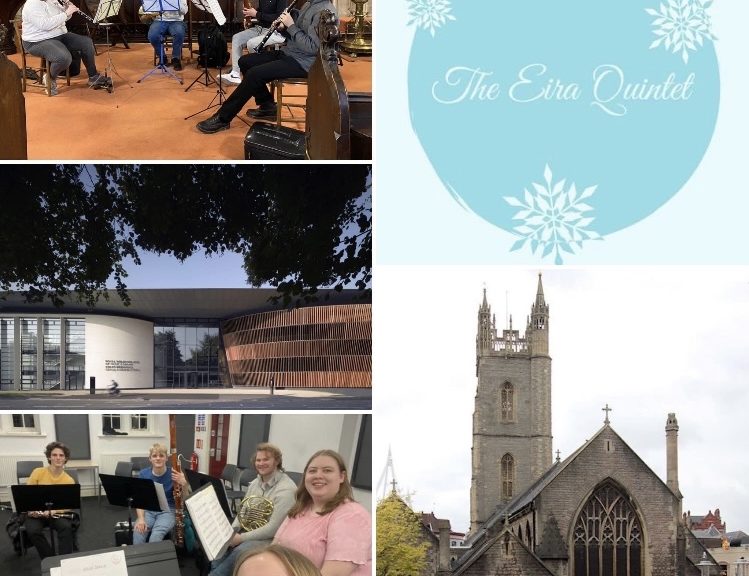
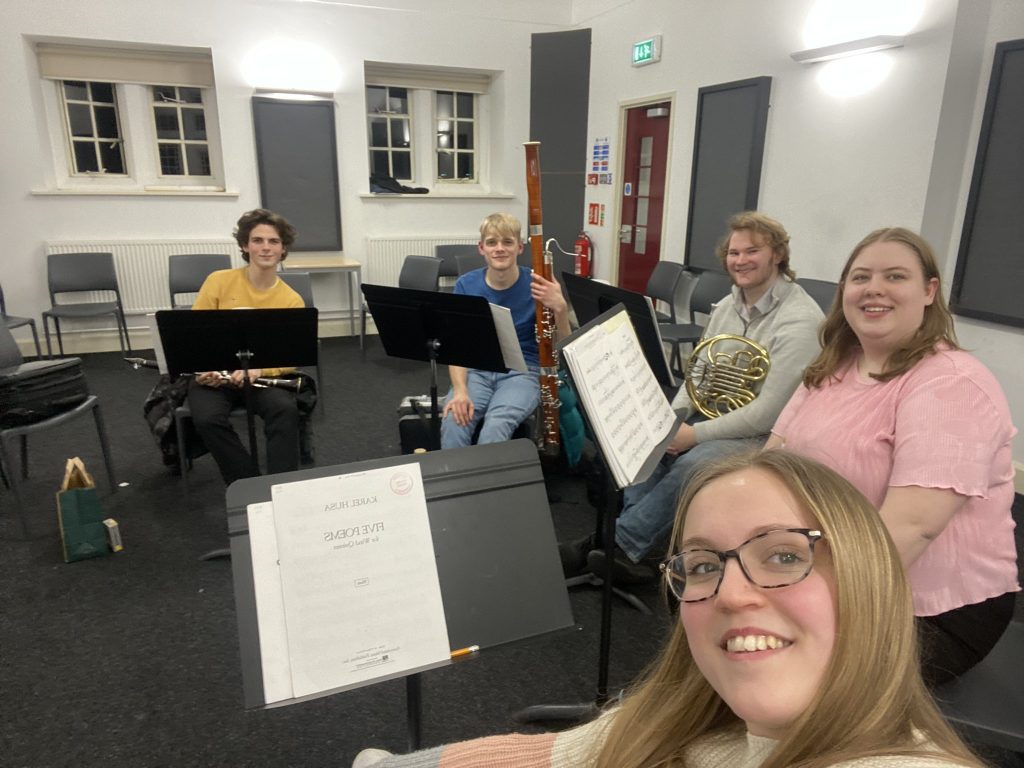
            Since joining the RWCMD in 2020, I have been part of the RWCMD Symphony Orchestra and also formed the Eira Quintet and the Corriera Trio with other members of the college. 

            So, what got you interested in the arts? 

            I have always been interested in the arts as a whole, singing was one of my hobbies from the moment I could get words out of my mouth! It was actually my mum who got me interested in playing the flute, as she had her old one in the house and let me have a try when I was 8 years old. I fell in love with it straight away and have never looked back since. 

            What importance does music have in your life and how have you combined the life of a student musician and opportunities to perform live in your professional career?  

            Music is at the heart of who I am. There is not much I do without having music of some description either playing in the background, or playing it myself. It is something that I use to help regulate my mental health, as I believe music can be so empowering regardless of whether you are the listener or performer. The college provide us with many opportunities to sign up to perform, both inside the college and out in the community, so it is all about finding a balance and being disciplined and realistic with how much you can take on alongside the mandatory work that comes with the degree. Alongside this, I often go to schools or learning centres with my ensembles to do community workshops, which is something I hope to continue doing throughout my professional career. 

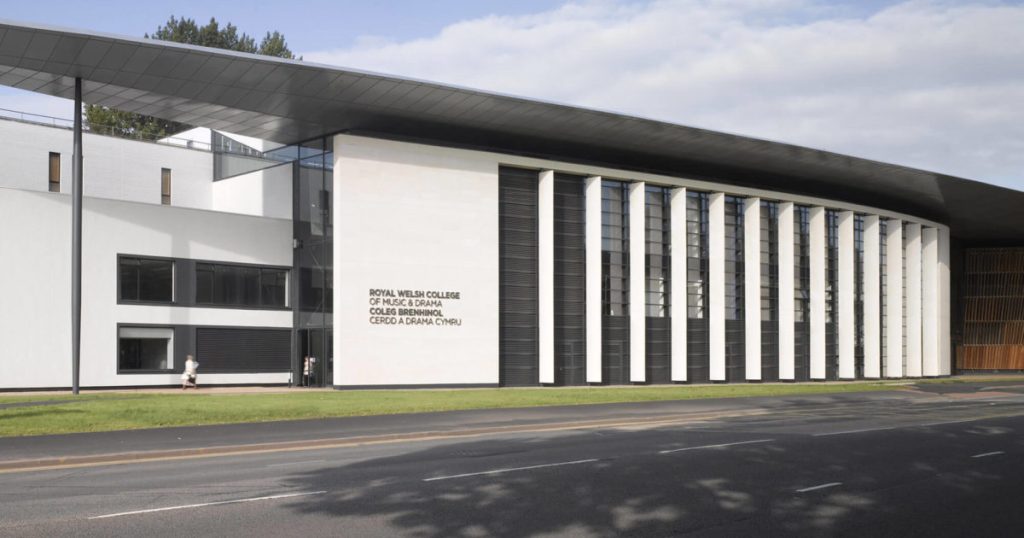
            The Royal Welsh College of Music & Drama is a Conservatoire, some of our readers may be unfamiliar with this term, how does this differ to study at a University?

            That is a great question! Studying at a conservatoire is a lot more performance based than studying Music at a university. We have two solo performance recitals per year (one short, one long), a technical exam specific to our instrument, an orchestral excerpts exam and an ensemble recital. There is still some written assignments each year, however these aren’t as heavily weighted. 

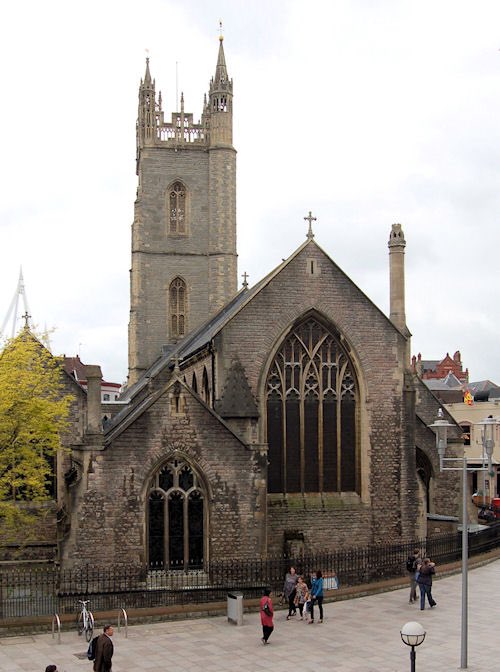
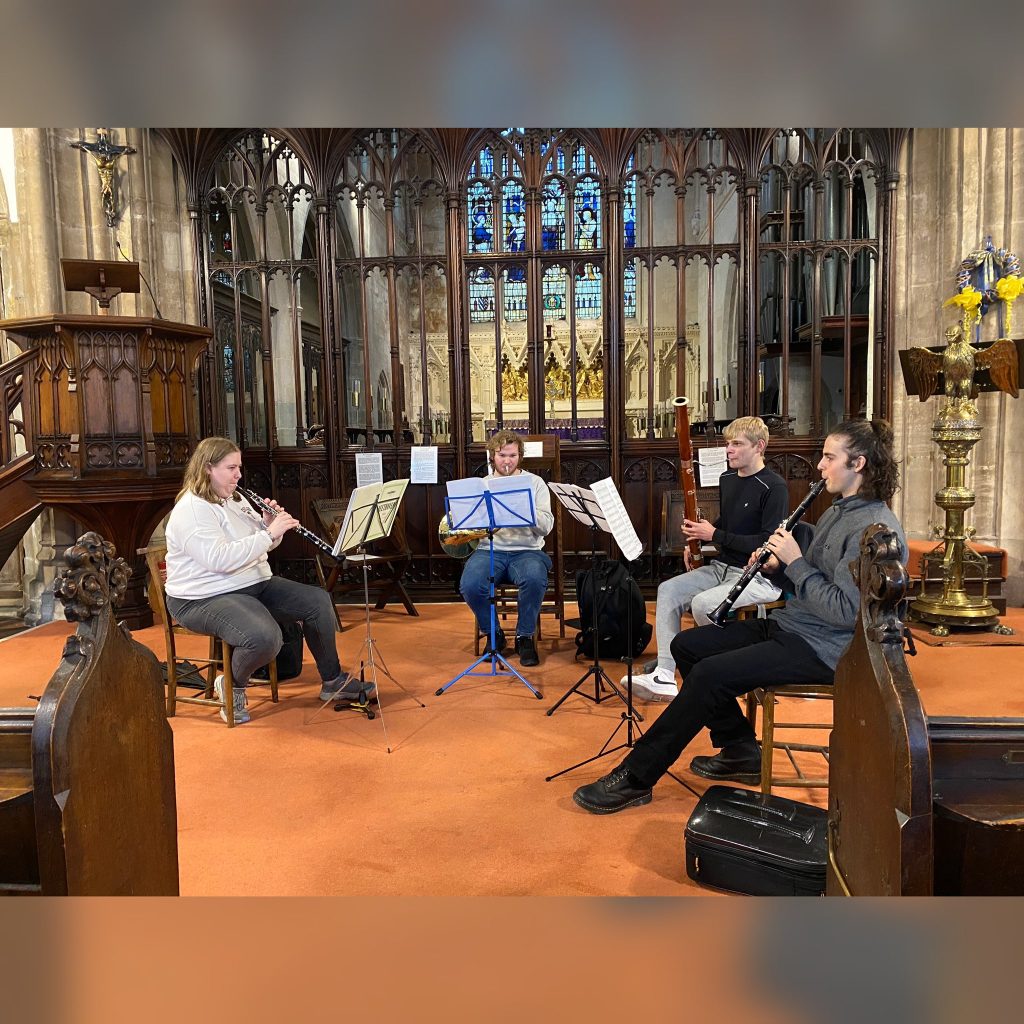
            Along with the members of The Eira Quintet you are part of one of the RWCMD, Woolcott Residencies, these provide students with the tools, support and mentoring needed to set themselves up as creative businesses working in a collaborative, entrepreneurial manner. They are an innovative training programme designed to support RWCMD students working within the community, and to give local people a sense of ownership of the arts. Your Residency is based at St Johns Church adjacent to The Hayes, Cardiff. How did you come to be involved in this project and what are your ambitions for its delivery? 

             The opportunity to become the artists in residence at the church was advertised to the students at college, so we applied and were lucky enough to be offered the position! We have a few different plans for concerts to deliver at the church, including one hopefully collaborating with the choir, as well as workshop ideas for local schools and members of the community. We were also honoured to perform as part of the St David’s Day service and hope to be involved in more of the church’s events across the residency. 

            As part of the Woolcott Residency, each ensemble will be encouraged to curate and nurture their own relationship with a venue, delivering regular educational workshops, concerts and participatory sessions for at least a year. You will be performing in the Church in the near future, how do you approach performing in a church and what has the response been so far? 

             Yes, we are really looking forward to this performing, we have some really fun music lined up! Performing in a church definitely brings some challenges due to the boomy acoustic, so we have to make sure we over do any detail in the music for it to come across. Also, as the venue is a sacred place, we always make sure to have conversations with the church clergy to make sure they are happy with the music we perform and the way we use the space. So far we have had a very positive response from both the clergy and the members of the community towards our performances, as well as from the Mayor of Cardiff and staff from the Cardiff and Vale Music Service. 

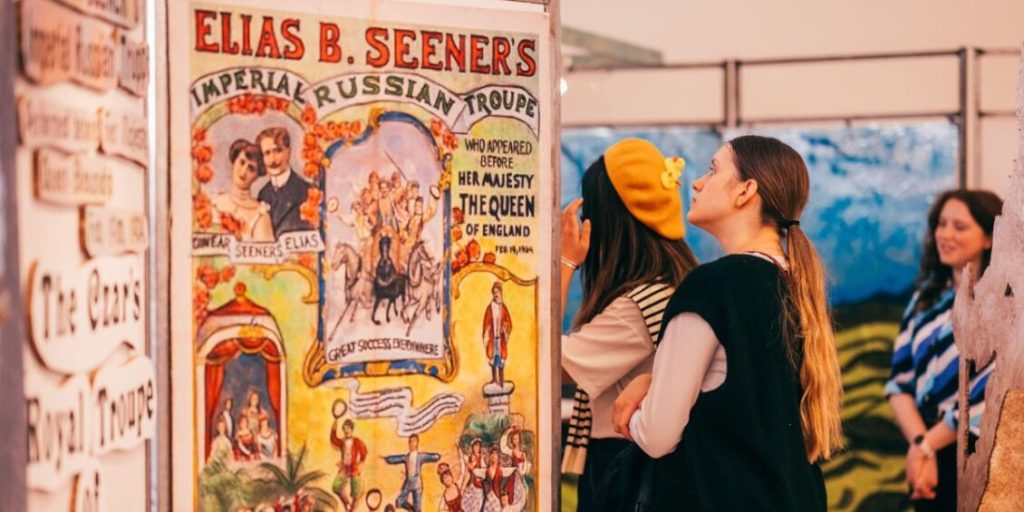
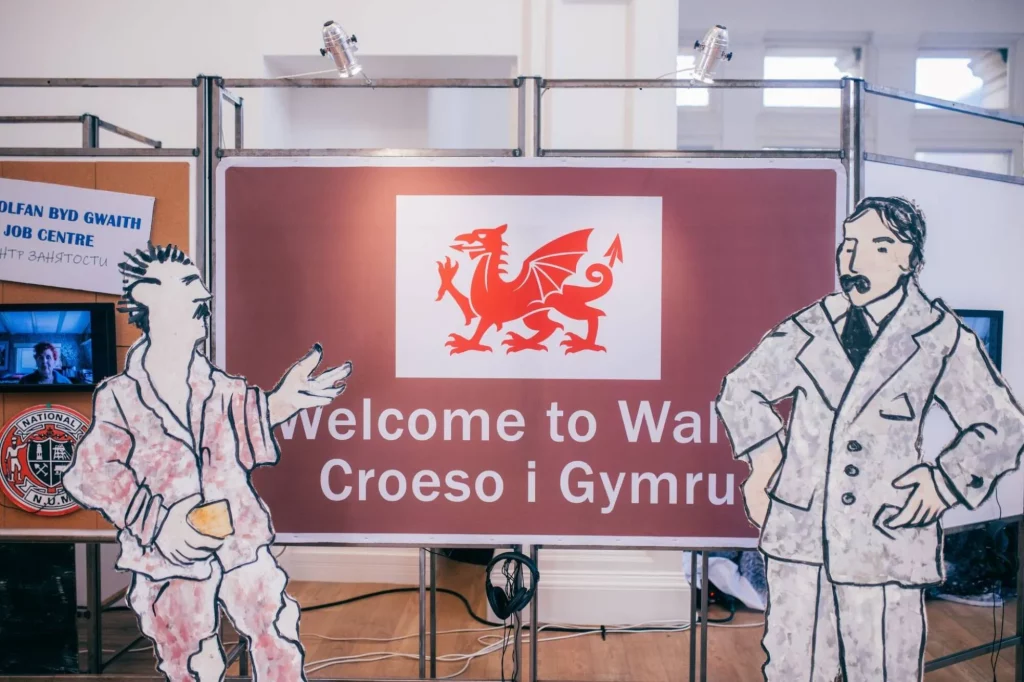
            You also recently performed in The Old Library as part of Pamela Howards, Welcome to Wales Exhibition. The exhibition had a theme of retracing the stories of immigrants who’ve travelled through and to Cardiff. As young musicians how can you reflect contemporary society?  

            I think our work at the exhibition reflects the positive direction that society is going in in recognising the struggles that have happened in our history and working on preventing them from happening again. We are very fortunate to have the luxury of studying at RWCMD, so I think it is fantastic that these stories are being given the setting to be shared both with us as students and the wider community. We always strive to include a diverse range of composers in our repertoire to reflect how society is moving in this direction. 

            If you were able to fund an area of the arts what would this be and why? 

            If you had asked me this question a couple of years ago then I would have said music education without a doubt, as I believe that it is so important both for a child’s development but also for the future of the arts as a whole. However, in light of recent events I would now choose to fund professional orchestras and venues as they are now the organisations that are struggling with a lack of funding. 

            What currently inspires you about the arts in the Wales? 

            I find the Welsh Government’s attitude to music education very inspiring! They see the importance of music in schools and have put a plan in place to allow children of all ages to participate in musical activities and/or learn an instrument without any limitations of cost. I think this is exactly what the future of the arts needs and it brings a lot of hope into the sector. 

            What was the last really great arts event that you experienced that you would like to share with our readers? 

            I may be biased, but I recently went to the “Opera Double Bill” at the Sherman Theatre. This was a performance of Puccini’s Gianni Schicchi and Resphigi’s La Bella Dormente Nel Bosco by RWCMD’s David Seligman Opera School. As far as I know, everything from the set design to the musicians on and off stage was done by college students, and it was all to such a high standard. I enjoyed it so much that I went every night! 

            If you are interested in study at RWCMD you can find out more about future Open Days here