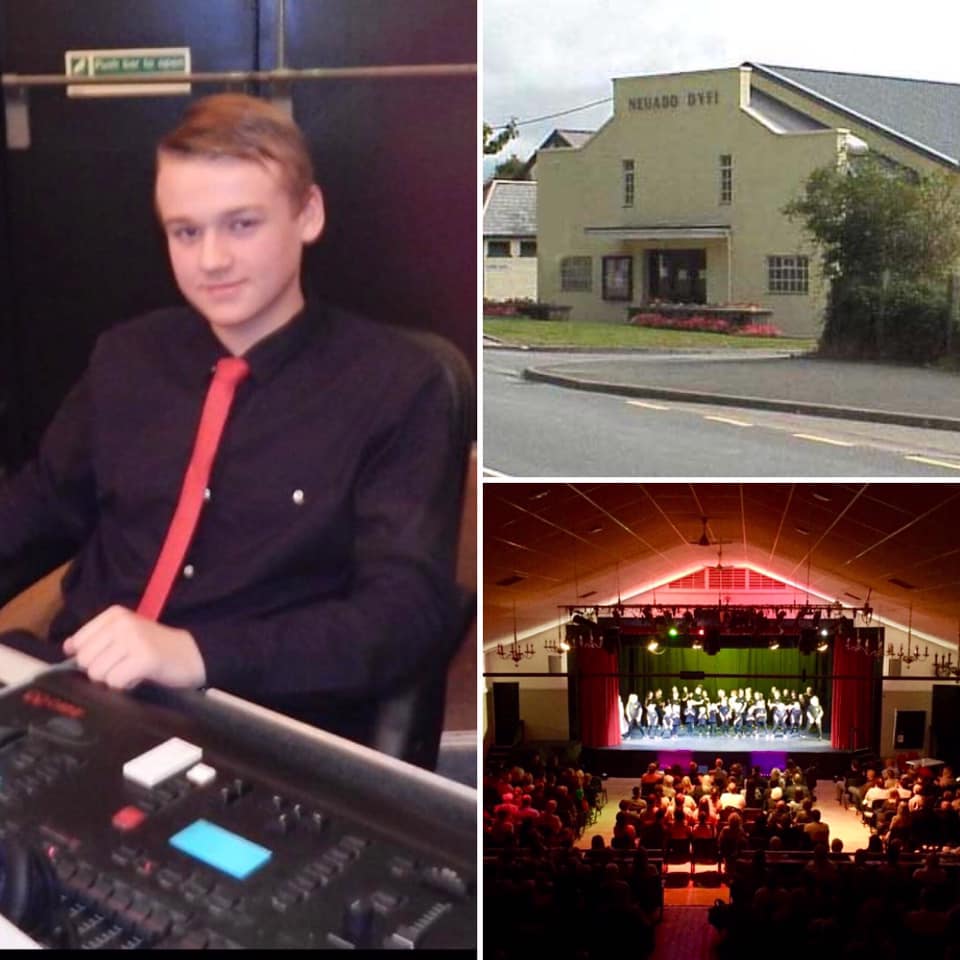
Hi I am Guy the project coordinator for Get The Chance. I am a trained secondary teacher of Art and Design and have taught at all Key Stages in England and Wales. I am also an experienced theatre designer and have designed for many of the theatre companies in Wales.
Hi Sam great to meet you, can you give our readers some background information on yourself please?
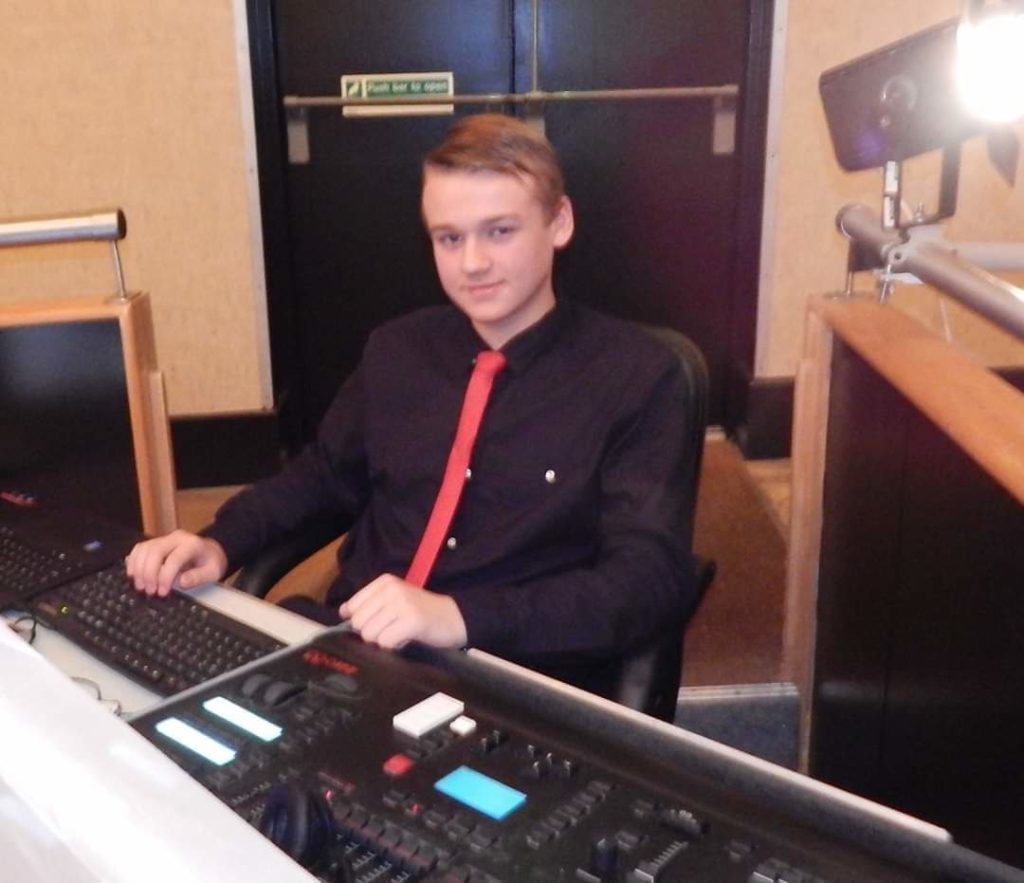
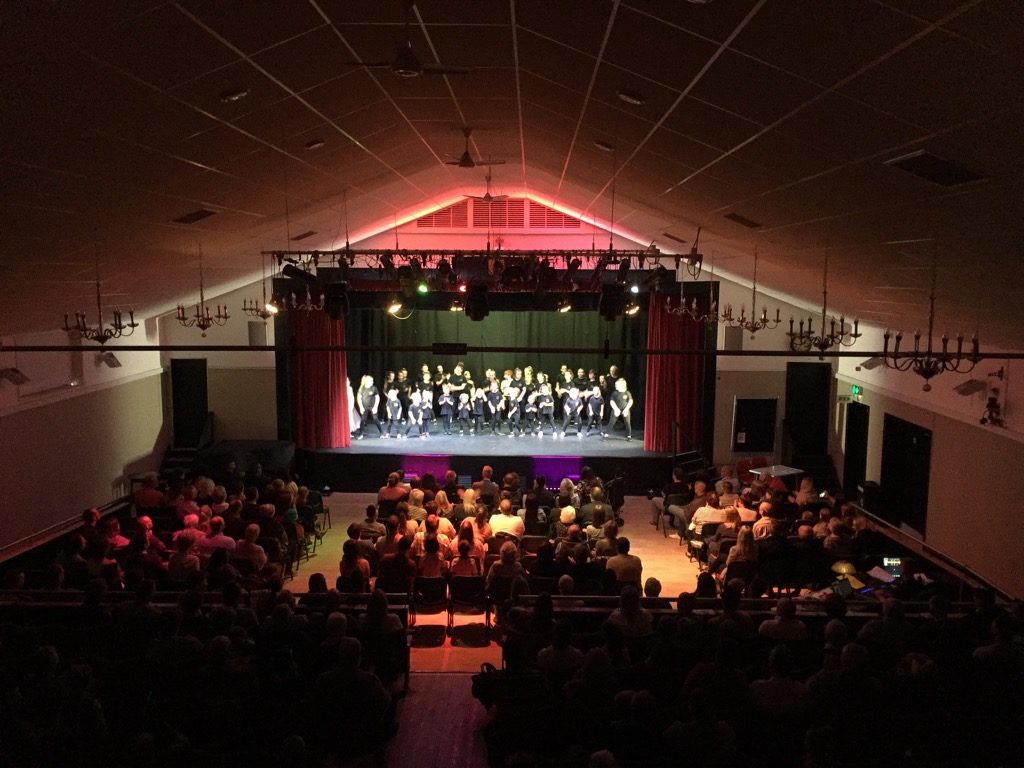
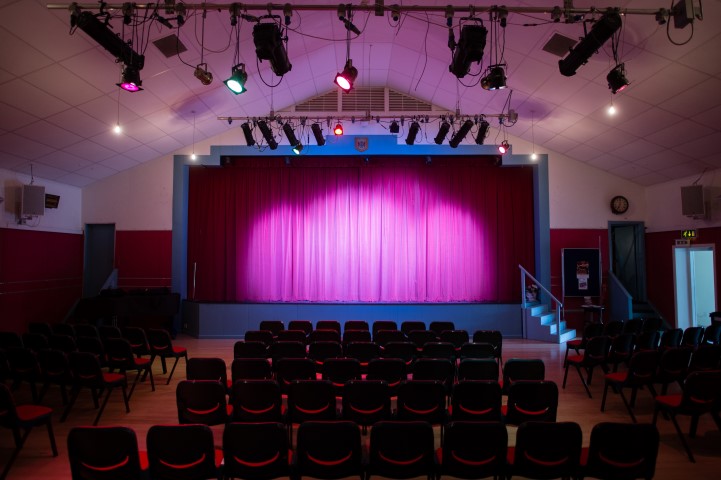
I am a 15-year-old who is very interested in the technical side of theatre. I do a lot in the hall which is closest to me which is Neuadd Dyfi in Aberdyfi . I help out with all types of events that happen in the hall from small touring shows, dance and talent shows to our local pantomime.
So what got you interested in the arts?
It all started when I moved down here at the age of 7, my mum became involved with Aberdyfi Players the 1st year we moved down here.
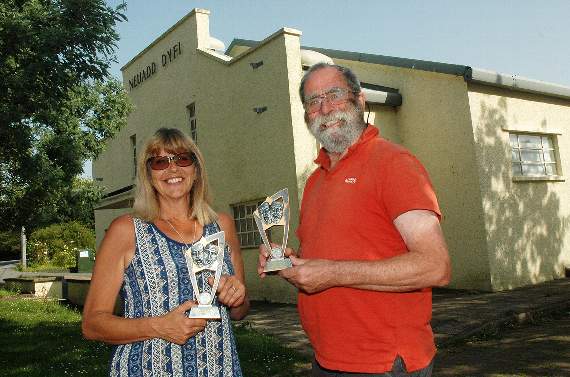
Aberdyfi Players directors Su Tacey and Des George outside the Neuadd Dyfi earlier this year with the two awards for Best Pantomime overall in their District in Wales and Best Stage Management and Special Effects. Amateur Theatre National and Operatic Dramatic Association (NODA) for their 2018 production of Aladdin.
I was pretty much dragged along to watch the performance of their yearly pantomime. From the moment I walked into the hall I wanted to know how to work the lighting. Most children at that age wouldn’t have continued to think about it but after talking to mum she introduced me to Des George who runs the hall and he fuelled my interest even more. I didn’t join Aberdyfi Players straight away but it wasn’t long as I was inching to get involved with the tech side with Des’s knowledge, help and experience it has got me to where I am today.
Congratulations on your nomination for Young Person of the Year in the National Rural Touring Awards 2019.The awards recognise the valuable work of productions, venues, promoters, schemes, and staff in the rural touring sector. What is your role at Neuadd Dyfi?
Good question, I don’t feel I really have one specific role at the Neuadd, I try my best to help with as many things as I can. Obviously my main interest is lighting and sound which I help all the touring companies or events which come into the hall with.
Get the Chance works to support a diverse range of members of the public to access cultural provision Are you aware of any barriers to accessing high quality productions for audiences at Neuadd Dyfi?
I would have to say it would be the size of our auditorium, we have had half of the hall levelled out, but we would like it to all be retractable seating. If we did have retractable seating installed it would open up so many more opportunities.
If you were able to fund an area of the arts what would this be and why?
I have to say it is difficult to choose one area to fund, it would have to be backstage in general. From props to tech
What excites you about the arts ?
The fact that everyone comes together to form one big team and works together to create one big show. Everyone has their own part from technical to costume to performing.
What was the last really great live performance you experienced that you would like to share with our readers?
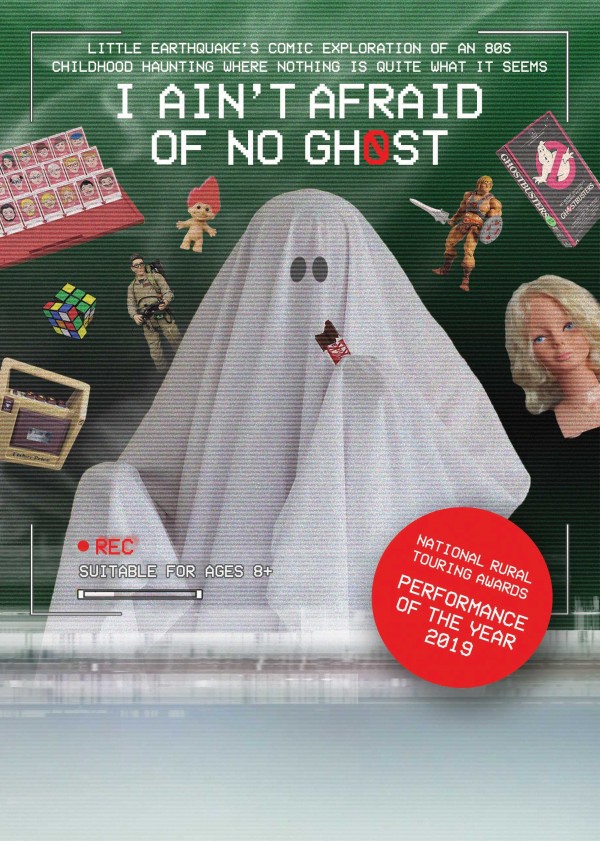
It would have to be ‘I Ain’t Afraid of No Ghost’ by Little Earthquake. By far one of the most mind twisting shows I have ever watched, if you get the chance ( no pun intended) to go and watch it please do. The meaning behind it is amazing but that’s all I can say about it.
Hi Sarah great
to meet you, can you give our readers some background information on yourself
please?
I have been dancing since the age
of 3 and have trained in many dance styles such as ballet, modern, jazz, street
dance, freestyle and Cheerleading. I completed the IDTA Dance Teaching Diploma
in Freestyle and Modern Jazz with Distinction and I am qualified Cheerleading
and Fitness Instructor. I have been privileged to work alongside many industry
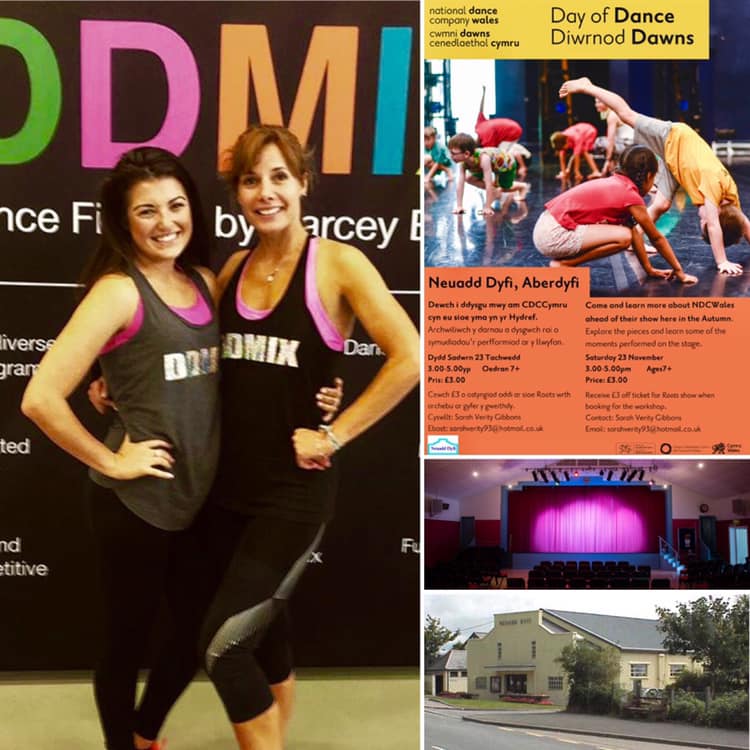
professionals such as Wayne Sleep and Darcey Bussell.
Since graduating from the University of Manchester, I performed and taught overseas before moving to Leeds to own a dance franchise which involved teaching dance in schools and the wider community.
I was a member of the National Youth Theatre and have gained much Musical Theatre experience over the years. Since recently moving to Aberystwyth I have already acquired many dancing opportunities and teach at Aberystwyth Arts Centre
Dreams Dance School and set up my own Dance School ‘The Sarah Verity School of Dance’ as well as teaching freelance in local schools and the wider community.
So what got
you interested in the arts?
I have danced since the age of three and despite my peers stopping
dancing in their early teens, I have always had the desire to continue. During
my academia studies at school and University, dancing and the performing arts
has always been an escape for me and a form of self-expression.
You run your own dance school called, The Sarah Verity School of Dance. Your dance provision is obviously very important as its the only dance school in the area and teaches a range of dance styles to all ages, including adults. What do you hope to achieve with your dance school?
The positive effects of dancing whether it is as a hobby or as a career are significant and I have been fortunate enough to live in different places across the UK where dancing has always been an option. Therefore I wanted the people of West Wales who live in the more remote areas to have the same opportunities, without having to travel a great distance. I have been fortunate with my dance career and have seen the positive impact dancing has on children and adults. My aim is to continue to have a positive impact on people’s lives through dance.
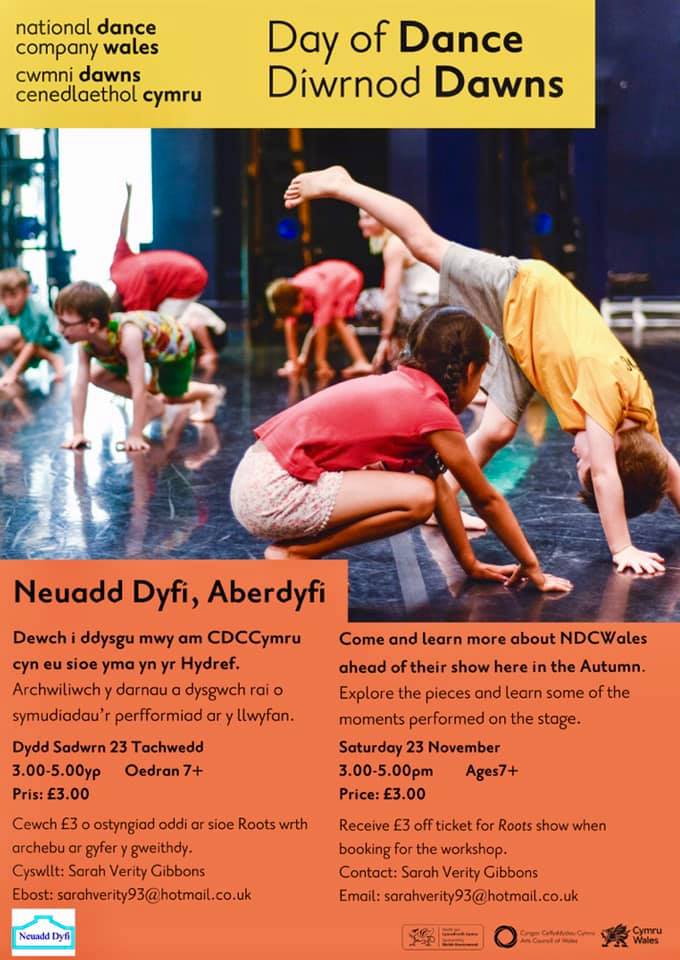
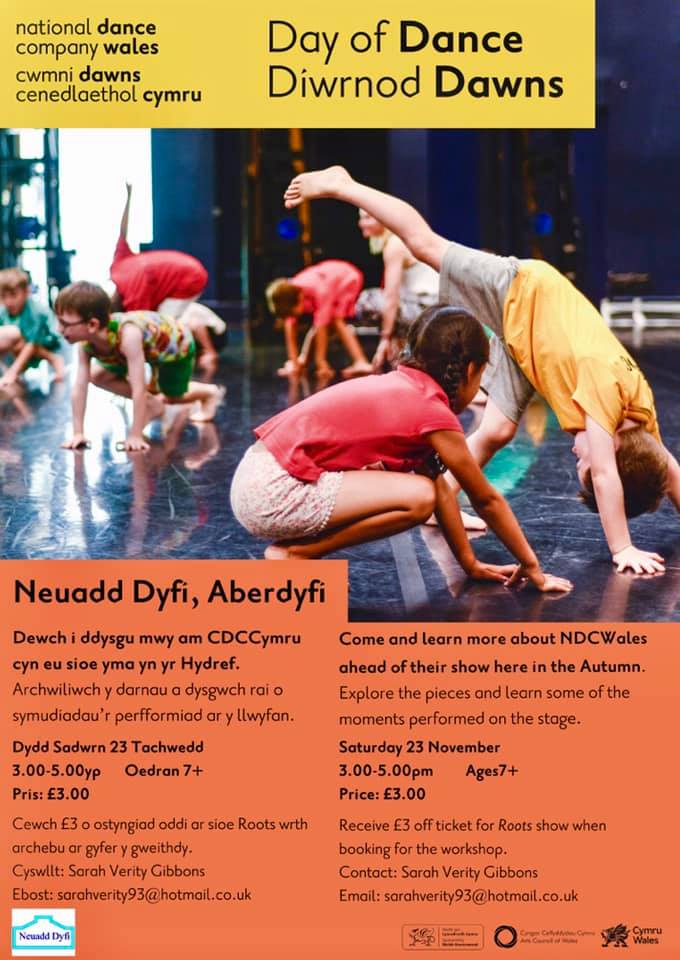
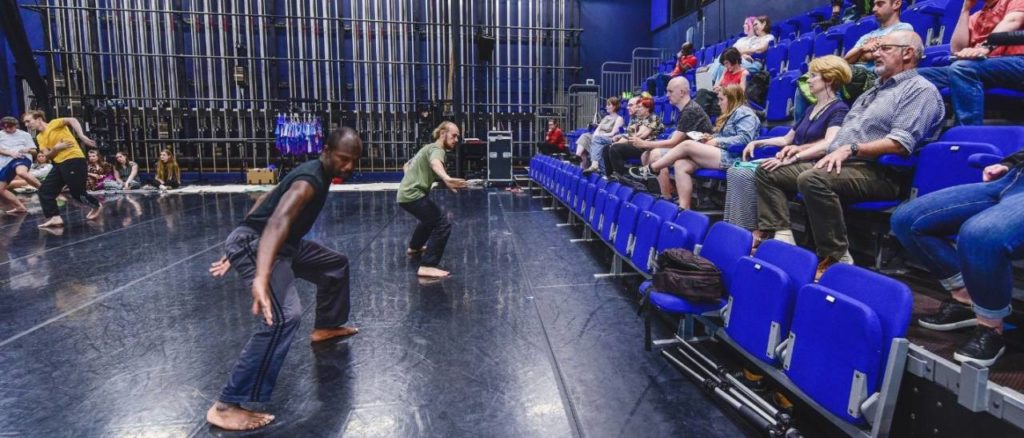
You are collaborating with National Dance Company Wales to support a Day of Dance at Neuadd Dyfi,Aberdyfi on Saturday the 23rd November from 3-5pm. Do you think its important for organisations like NDCWales to work with community dance organisations such as your own?
I think it is amazing that we can offer the opportunity for people in this area to be able to work and be trained by National Dance Company Wales and have the experience of watching them perform, without having to travel to the city. I hope it will be a valuable experience for the National Dance Company Wales artists too, to work with dancers with mixed abilities and dance experience.
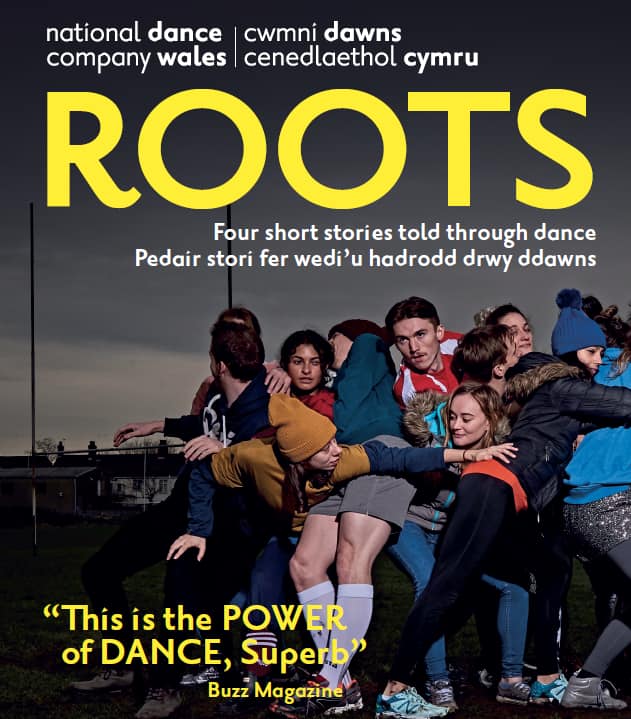
NDCWales then play at Neuadd Dyfi, Aberdyfi on Sunday the 24rd November as part of their autumn Roots tour. This is the first time the National Dance Company has performed at the venue, what piece of work are you most looking forward to seeing from the Roots programme and why?
I’m looking forward to seeing Why Are People Clapping!? by Ed Myhill as it has similarities with the musical ‘Stomp’ which I have been a fan of from seeing it at a young age. I love the simplicity of making a rhythm out of a simple sound and then gradually layering different sounds and movement onto the beat to produce an amazing result.
Neuadd Dyfi,Aberdyfi is an Arts Council Wales Night Out touring venue and is clearly an important asset to the local community. We interviewed Des George who runs the venue, in 2017, how is the venue important to you personally?
The venue has ‘West End’ standard facilities such as amazing lighting and sound equipment and sprung floor rehearsal space, which we are so fortunate to have in a small village in West Wales. We were able to rehearse and perform our dance school shows at the venue, which is so important for the pupils and their parents to have this opportunity as it is the largest venue in the area.
Get the Chance works to support a diverse range of members of the public to access cultural provision. Are you aware of any barriers to accessing high quality Dance provision?
In
deprived areas, it is difficult for parent/guardians to have extra income to
pay for their children’s dance tuition. Therefore cost of dance tuition is
reduced which means that the income is also reduced for the dance teacher. Even
reduced fees may still be a considerable expense for some of the parents paying
it.
If you were
able to fund an area of the arts what would this be and why?
Enabling funding for underprivileged children to be able to partake in
dance lessons.
What excites
you about the arts ?
In a world of ever changing political situations, climates and
technological advances, the arts still remain a form of liberation from the
pressures of modern society, yet it also has the opportunity to enable
expression around such issues and has the potential to influence the future.
What was the
last really great live performance you experienced that you would like to share
with our readers?
Despite living far from the city, we are very fortunate to have a local cinema that portrays the ‘live theatre screenings’. Therefore last year Matthew Bourne’ s adaptation of ‘Cinderella’ did a live performance from Sadler Wells that was screened to our local cinema in Tywyn. It was an hour to watch. We are lucky enough to have his latest version of ‘Swan Lake’ coming to our cinema as live screening at the end of November, which I am very much looking forward to.
Get the Chance is a strong supporter of Welsh/Wales based Playwrights. Wales as a nation does not have a literary department to support Playwrights. When we found out about the exciting Playwright module from lecturer Viv Goodman on the Extended Diploma in Performing Arts course at Coleg Gwent we got in touch to find out more this new initiative.
Hi Viv, great to meet you, what got you involved in the arts and education?
I loved Drama in school from a very young age and it was always going to be something I would pursue further. About the time I was in sixth form in Cardiff I decided I wanted to teach Drama; I had gained so much from my own teachers and through provision such as The Sherman Theatre Youth Project. I did the Secondary Drama teaching degree that was run between what is now Cardiff Met and RWCMD, then went straight into working in secondary schools. I’ve been at Coleg Gwent for 12 years now; moving to FE was the best thing for me, I have really loved working on a vocational course with the students.
You are about to embark on an exciting new project with a range of writers, please tell us more!
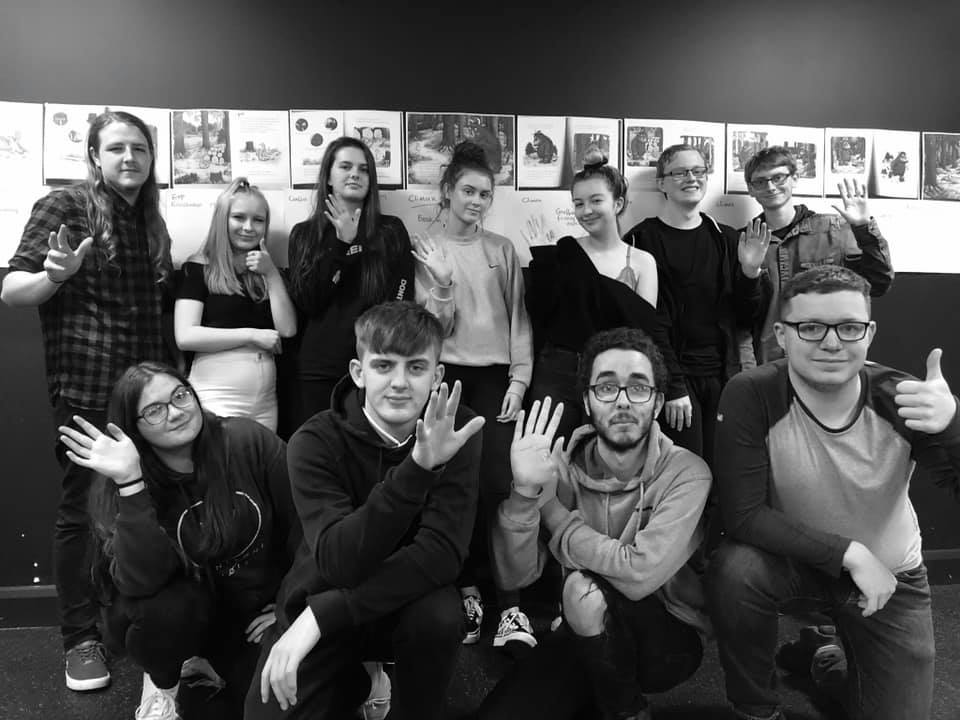
Year two actors on the Extended Diploma in Performing Arts course at Coleg Gwent
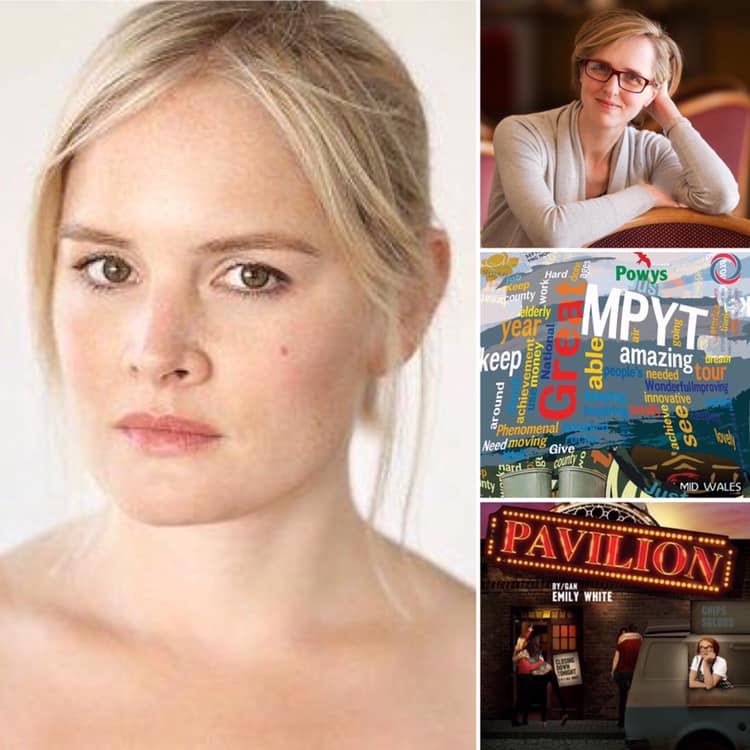
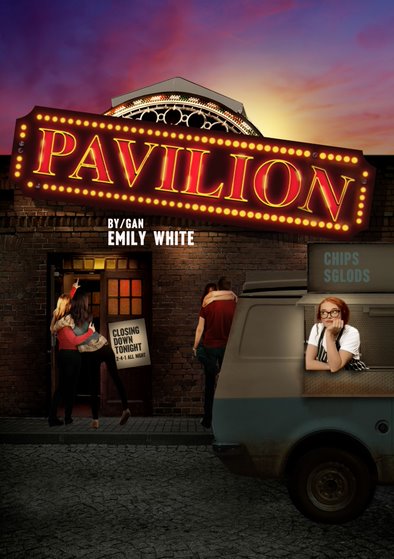
We start on 24th Oct when we go to see Pavilion, Emily White the productions writer will be coming to us the following day to do a workshop about the play. I anticipate that some of the students will select an extract to rehearse for performance. Owen Thomas will be able to join us for several workshops during November, we will be exploring extracts from his work Grav, An Orange in the Subway, Richard Parker and The Night Porter. The pieces will all be performed on 11th/12th December at Coleg Gwent and will be delivered as a promenade theatre experience, touring the audience between different locations that create the right mood/atmosphere for each play. Jeremy Hylton Davies will also join us in November, he will be taking a workshop on TV and radio acting/writing and sharing some of his BBC scripts with the students.
Why do you think its important for your students to engage with living playwrights?
I really want the acting students to have interaction with performing arts professionals, it’s something I am currently trying to develop for the Level 3 Year 2 Acting course. Working with these three playwrights will give students the opportunity to understand a bit more about the writing process, but mostly I think it will make the scripts and professional world seem more real somehow; I’m sure that very often a playwright or an author can appear simply as a name on a book and this project will allow them to talk to real people and work with them to bring their concepts, themes and characters to life.
What has been the response from the writers as regards getting involved in the project?
I am genuinely bowled over and delighted by their response to the project! All three playwrights came my way during August while I was considering materials and projects for the new academic year. I knew I wanted to do something contemporary with the Year 2 group during the first term before they go on to a classical/historical project, but I couldn’t decide on a play. I was in touch with Emily first and got swept up in the excitement for Pavilion! I knew that she wanted the play to reach a younger audience and I felt that the students would connect with this. She was thrilled to learn that we were coming to see it at the Riverfront and was really happy to come and see us for a workshop. I then got in touch with Owen, having also read his Get the Chance interview and learned a good deal more about his work.
I was really interested to know more about The Night Porter as we had done a ghost storytelling project at Coleg Gwent a couple of years previously. He was also very positive about coming in to share his work with us and it was at this point that the idea of making it into a project occurred to me. I asked to meet Owen, he was involved with the Edinburgh Festival, taking West to NAFoW and then a research and development week on An Orange in the Subway, so by the time we finally managed to catch up I had about 50,000 questions for him… but I managed to rein myself in and keep to the matter in hand! He was very enthusiastic and supportive. I was also delighted to hear back from Jeremy; his writing across the fields of theatre, BBC TV and Radio Drama really interested me and he will be invaluable to our students. He has local connections as well, so it’s great that he is able to come and work with us. Everyone has been incredibly kind.
If you were able to fund an area of the arts in Wales what would this be and why?
I would love to see more funding for youth drama projects. Early opportunities and building self- confidence, self-esteem and a sense of belonging to something are essential to well being and growth; during my time as a secondary school teacher in particular I noticed that the pupils involved with Drama, Music and Sport were usually the most content and fulfilled learners.
What was the last really great play that you experienced that you would like to share with our readers?
I loved On Bear Ridge at the Sherman Theatre, incredible writing and performances. A number of people have commented on how great it was to see the auditorium full for a new play. I’m glad Jeremy will get a chance to see it at The Royal Court!
Playwright Owen Thomas tells us more about why he got involved in this new initiative.
When Viv first approached me about working with her students, I accepted
immediately. As well as writing plays, I have taught Drama for almost 20 years
and I have always thought it essential in their development that young people
have the experience of working with people making their living and working in
the arts. It is vital that people who have experience of making work are able
to interact with the next generation. If there is anything that I have learnt
in my writing career then I would be glad to share it, be they tips for how to
be successful or some of the many mistakes I’ve learnt from.
You will be running workshops during November, where the students will
be exploring extracts from your plays Grav, An Orange in the Subway, Richard
Parker and The Night Porter. How will you approach this process and what do you
hope the students will gain from studying your work?
With a play like ‘Grav, it has only ever been performed by the brilliant Gareth John Bale. I am excited to see how a younger performer will approach it. I would certainly encourage them to be bold and to give it their own unique stamp. ‘Grav’ and ‘Richard Parker’ are the two plays of mine closest to my heart in terms of the doors they opened and the people they introduced me to. ‘Richard Parker’ has been performed by a range of companies over the years, and I am often struck by how different people interpret the play. I have seen it played as an out and out comedy, or as a more darkly sinister piece.
‘An Orange in the Subway’ and ‘The Night Porter’, are new plays of mine, and for my own development I am interested to see how these young performers interpret them. Having had the pleasure of doing research and development on both of these plays in the last 12 months I am always excited to learn new things from actors and directors who always come at projects with their own unique viewpoints. It is great to think that a group of talented performers will be spending time with my words and creating a kind of retrospective. I am sure it will make me feel old. I am excited to see what they do. Above all, I hope they enjoy the project and I am looking forward to meeting them.
Do you feel the role of the Playwright is sufficiently understood by those studying drama?
Overall, yes, but a lot depends on how they are taught. One of the good things about GCSE, AS and A Level Drama is that young people are encouraged to study plays. The earlier this can happen in school, the better. Often young people are initially attracted to study drama by the urge to perform. It is important that they learn about the ground breaking writers and directors as well as actors. I have worked with young people who have been inspired to give playwriting a go after studying Playwrights such as Arthur Miller, Shelagh Delaney or Roy Williams. Without the Playwright, there is no play.
What one piece of advice could you share with any aspiring Playwright?
When you are starting out as a Playwright there is nothing more valuable than seeing and hearing your work being performed. With my first play, ‘The Dead of Night’, I roped in various friends and called in favours to help me to stage it. I learnt a huge amount from this process. How what looks good on the page doesn’t always translate into the mouths of the performers, or the fact that what a writer might spend two pages wrestling to communicate, a good actor can communicate with a single look. One of the things that first attracted me to being a Playwright is that, if you have the passion and the time, all you need to stage a play is a script, willing performers and a space. Don’t sit and wait for a theatre to approach you. Get out there and make new work. Trial and error. It is the best way to learn.
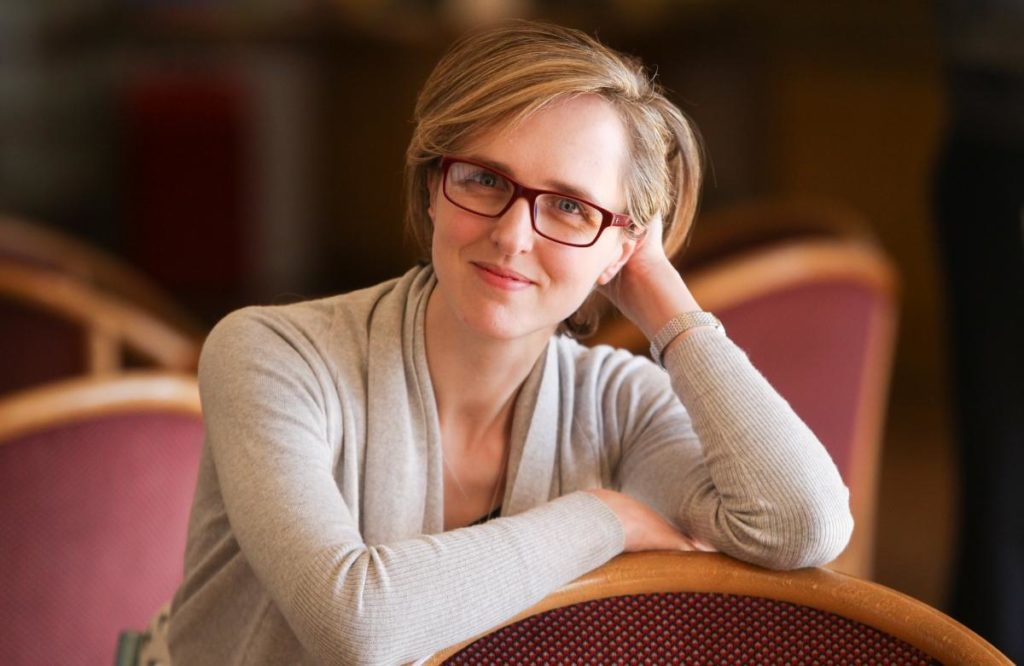
Playwright Emily White tells us more about why she got involved in the new exciting initiative.
I am really passionate about getting more young people coming to the theatre, so I had already agreed to lead some workshops while Pavilion was running at Theatr Clwyd as part of their engagement program, in order to try and encourage some of their younger groups to come and see the show. So when Viv from the Extended Diploma in Performing Arts course at Coleg Gwent reached out to me on Twitter and said she was bringing her students to see Pavilion and would I consider meeting with them I was totally up for it. I’m new to running workshops but I think it’s good to push yourself out of your comfort zone sometimes, theatre and dance meant everything to me when I was young if I hadn’t found that calling I’m not sure what I would have done. I was really lucky to have the opportunities I did, so I want to give something back.
The students will be going to see your play Pavilion at The Riverfront Theatre in Newport. You are then going to run a workshop with the students. How will you approach this process and what do you hope the students will gain from studying your work?
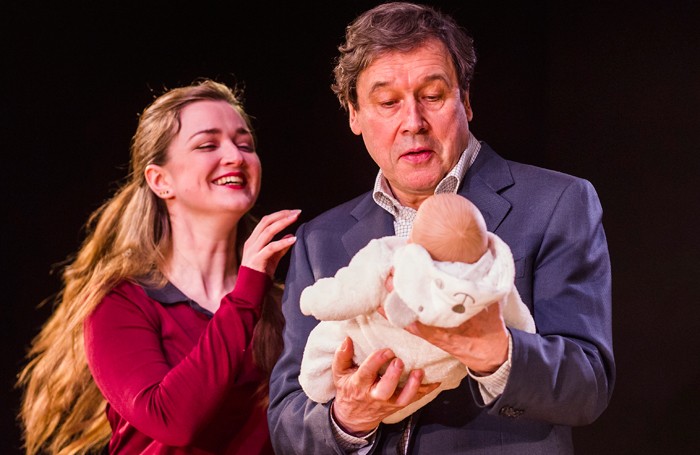
I really feel this play in particular is exciting for young people to watch because there a large number of young characters that they can identify with, it takes place at a bar/nightclub so it’s fun but it also addresses harder hitting issues that they are facing. Out of all the feedback we’ve received about the show, my favourite comment was that one of our techies brought his 16 year old son to see it, and he loved it so much he went and bought himself and his girlfriend tickets with his own money so he could see it again. I was really happy to hear that it spoke to him so strongly. We’ve also had students from Wrexham come along to the show and some members from my old youth theatre MPYT (Mid Powys Youth Theatre) and they have all responded positively to it and wanted to study or perform it, so hopefully the Newport students will feel the same. Viv and I have talked about a Q&A session and then some work on particular scenes. I think these workshops will be primarily about performing whereas the ones I lead at Clwyd were writing exercises on developing character. Although some of those exercises could apply to performers as well in terms of creating a backstory for your character that goes beyond the information given to you in the text. For example asking the students to list twenty things a character remembers, twenty things they want etc. to help to build a more complex inner world.
Do you feel the role of the Playwright is sufficiently understood by those studying drama?
In a word: no. At least I didn’t fully understand it – I did a BTEC in Performing Arts at Hereford and we did a bit of devising/writing and at RADA we did a little writing but mostly of monologues as a way into characters but I didn’t really start to understand playwriting until I tried to write a play. Only once you try, and get feedback, and then redraft and redraft and redraft, can you start to understand how much work goes into writing a play. Acting is in a walk in the park compared to writing as far as I’m concerned. Even with all the theatrical experience I had as an actor and having read loads of plays (I love reading plays so I buy them more than I buy other books) I didn’t have any idea about how a play is structured. Characters reveal themselves to me quickly but structure and plot I find much more difficult. I had no idea how much editing and rewriting went into playwriting. I’ve never worked on a play with a living playwright so I had no idea what to expect going into the rehearsal process for Pavilion in terms of what would be expected of me and I’m not sure any of the actors did either. We were still rewriting bits and adding lines or editing lines out, right up until press night. Plays can take years to write and then years to get on – Pavilion started four years ago and then right at the end of the process it becomes a collaboration – so I was on my own for years and then for the last few months I’ve had all these other collaborators come in: literary advisors, producers, directors, movement directors, fight directors, designers, sound designers and of course a company of actors and suddenly it’s not yours anymore it becomes a company effort: everyone is there working really hard to make your imagination come to life which is overwhelmingly moving. It’s also strange and exciting and frightening too because you have no control anymore. And of course if Pavilion ever receives another full production it would be completely different again, with a different set of people involved, creating a entirely different show. That’s one of the unique things about plays as opposed to other art forms, it’s never finished, it gets recreated and re-imagined every time… and I’ll probably still be doing rewrites.
What one piece of advice could you share with any aspiring Playwright?
Get some friends together (actors if at all possible) and get them to read your play out loud and then have a discussion about it afterwards. It is a short cut to knowing what works, what nearly works and what will never work. You’ll hear what bits are heavy handed and overwritten, you can make notes as you go along and then you can redraft. This is really helpful even in the very early stages of writing a play and may spark ideas that will help you create new scenes or even new characters.
Writer Jeremy Hylton Davies us more about why he got involved in the new exciting initiative.
I think Viv and I bumped into each other online and she found out that I come not so very far from Crosskeys originally and I do often write Welsh themes or use Welsh characters, including in network drama. Viv asked me if I could help out and I was only too pleased to. I think looking at the world of professional theatre and film and TV, it can seem like it’s made by a select club which is difficult to join. I would think all of the professionals involved would say that they want to demonstrate that that’s not the case and you just need the urge and the will to get involved and make it your working life, if you want to.
How will you approach this process and what do you hope the students will gain from studying your work?
Well, by happy coincidence some of my work has just been broadcast on tv and radio and the students will be able to compare the scripts with the transmitted versions. There can be many changes along the way, not least due to demands of budget and schedule (anyone who works in drama or television will tell you all about those!), but reading the scripts also gives a good insight into how to write to the technical demands of a particular medium and how these demands differ, ie with regard to tv and radio. In radio you can say ‘Here we are on Mars’ and the audience is instantly with you on Mars. In tv or film, if the story is set on Mars, it’s pretty much got to look like Mars. And recreating Mars is expensive!
Do you feel the role of the Playwright is sufficiently understood by those studying drama?
If you say ‘writer’, then it’s a broader question. In theatre the writer is paramount (unless they don’t want a writer at all!), but in film and especially in television, you are part of an enterprise that is dictated by schedules and money, as above, ditto technical demands, but also deadlines, deadlines, deadlines, especially in continuing (serial) drama. There’s a cast, crew and back office production team of about 80 waiting for your script to land – so you’d better land it.
In a historical context, playwrights and writers are also subject to social and political forces of their times. So getting the work staged and finding an audience are difficulties in themselves. A novel you can write in isolation, a play needs an audience if it is to come off the page.
The role of the playwright is tied with the role of the theatre. We live in times when journalism, or at least fewer journalists, are really holding power to account. And when opinions are supposed to be binary, my view vs. the other view. What’s missing is the examination of the degrees of experience and the fact that humans are complex and contradictory beings. Theatre and drama can do that.
But, really, the role of the playwright has been debated since Aristotle – and probably before him! So maybe that the question needs to be constantly asked is an indication that the role of the playwright is actually alive and well and continues on.
What one piece of advice could you share with any aspiring Playwright?
Watch all you can, see and hear all you can. Be curious. Don’t be scared. Write what you want to write. But write. Always write.
Hi Jeannie, so what got you interested in the arts?
I have been drawing and painting ever since I was a child – and I went to a Grammar school where the only subject I excelled in was Art – so it was inevitable that I would go on to try to make a career in the Arts somehow!!
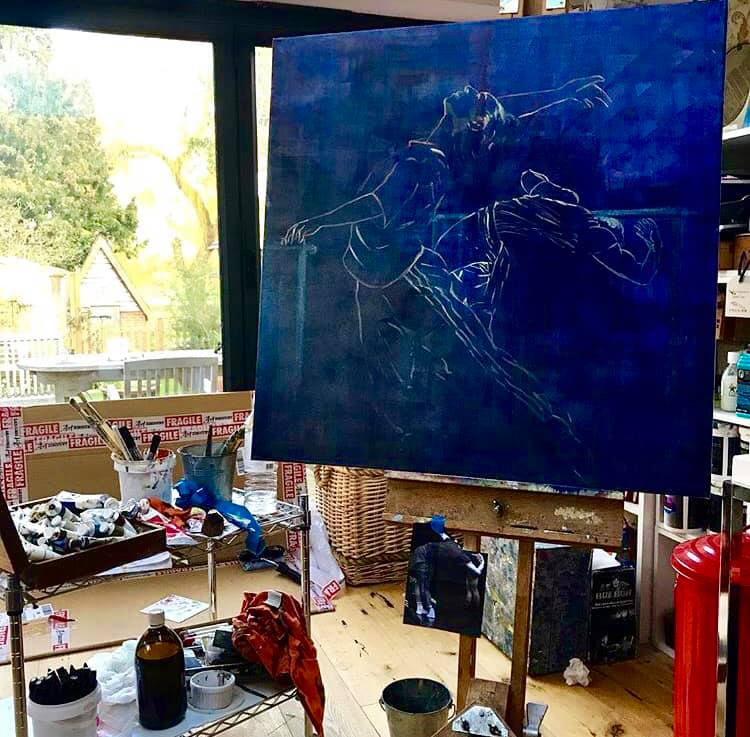
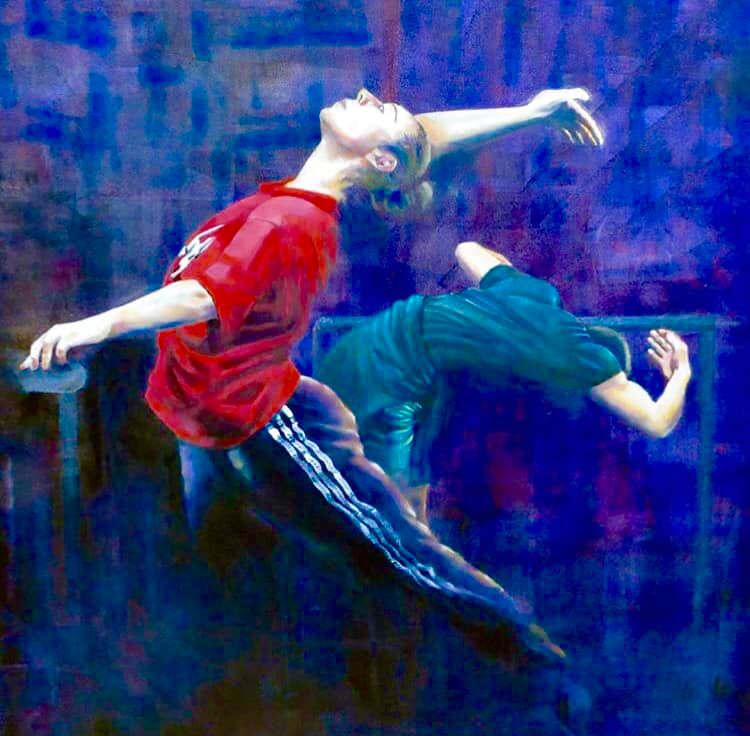
You are fairly new to drawing and painting contemporary dance, can you tell us more about your work in this area?
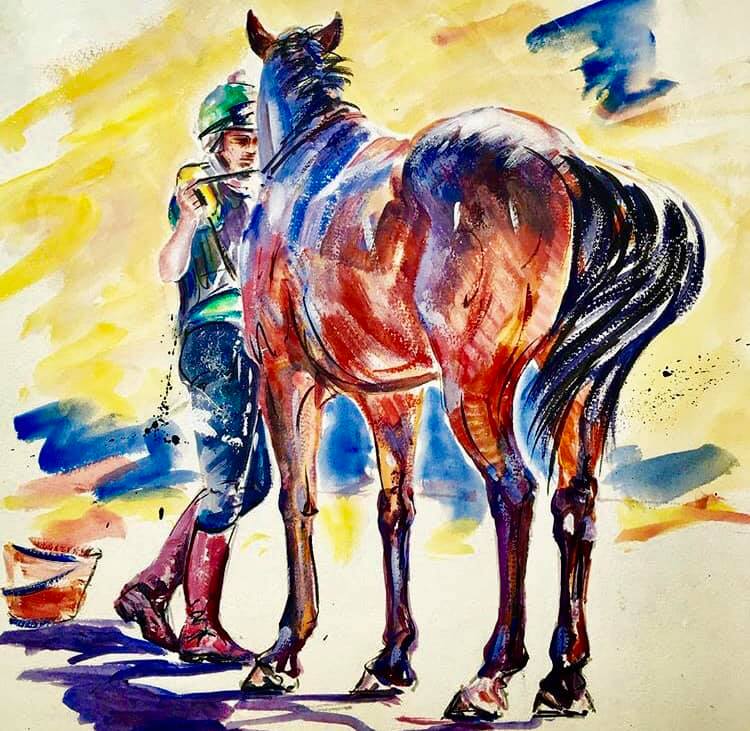
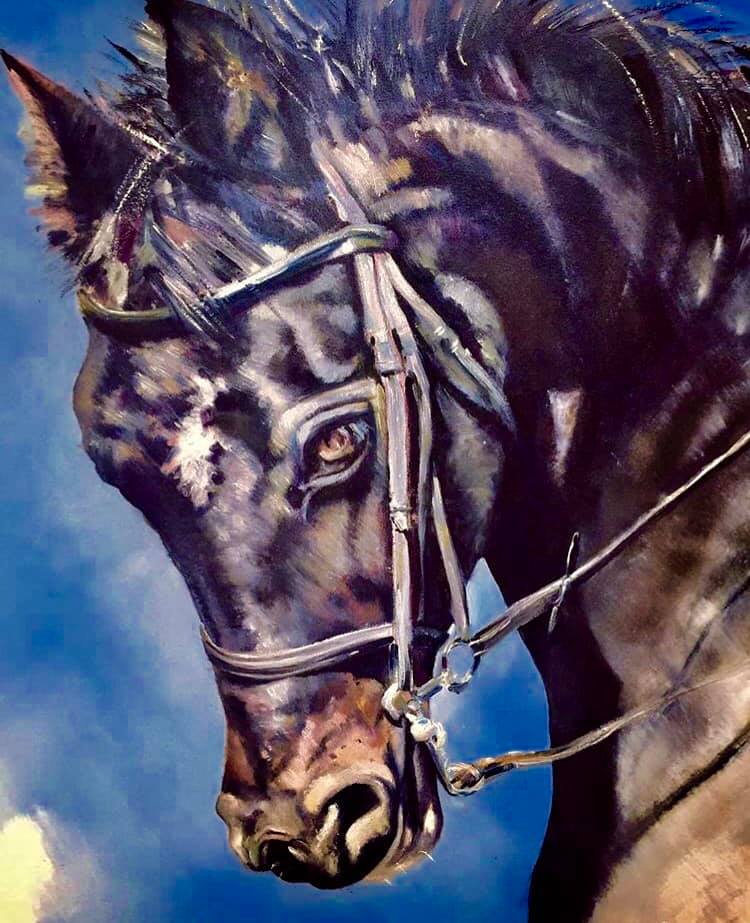
For a time my professional work was centred around racehorses – As a child I was obsessed with drawing and painting them and especially the way they moved. I have always been interested in the human figure too – not particularly portraiture but the figure itself, especially in movement.
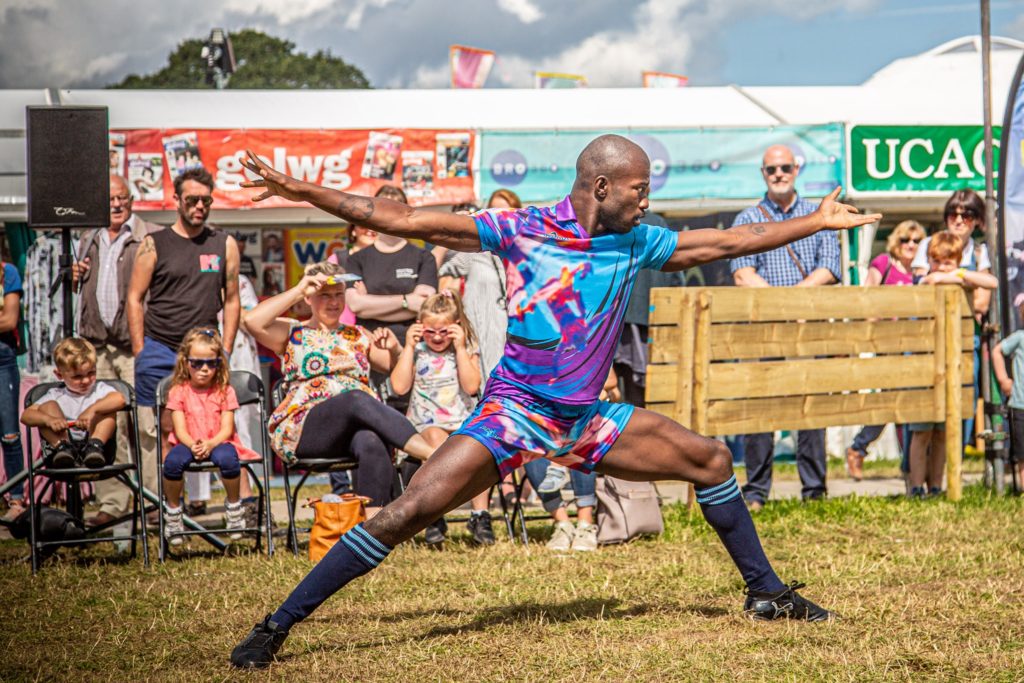
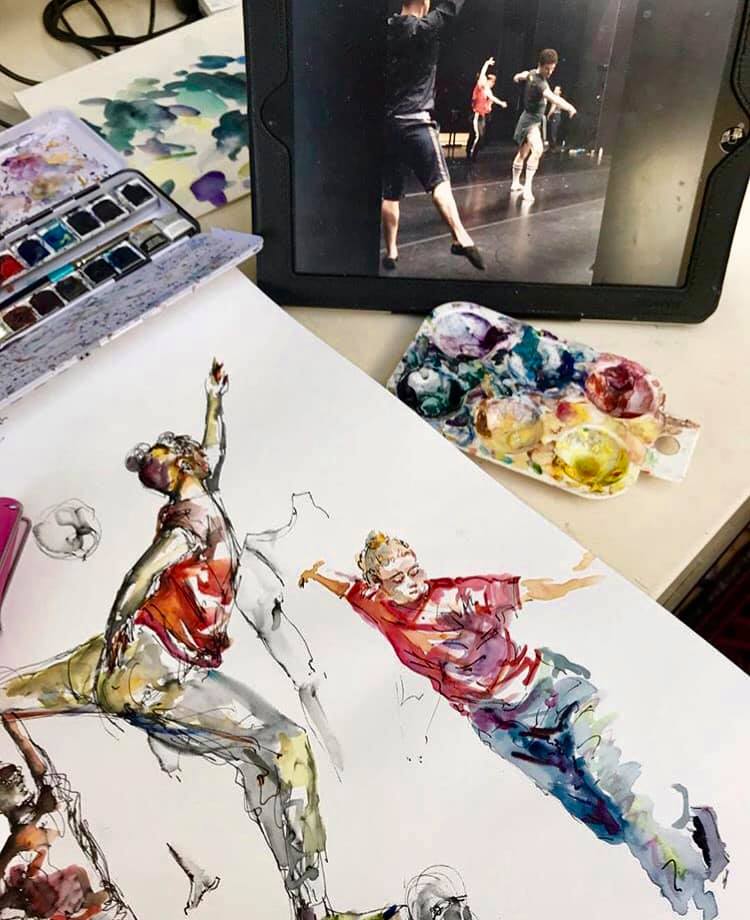
Only a year ago I was invited to a National Dance Company Wales, Open Rehearsal in London where the company were rehearsing for a show that night – that was my introduction into seeing dancers at work and I have been trying to capture my response ever since!
How has your relationship with National Dance Company Wales developed?
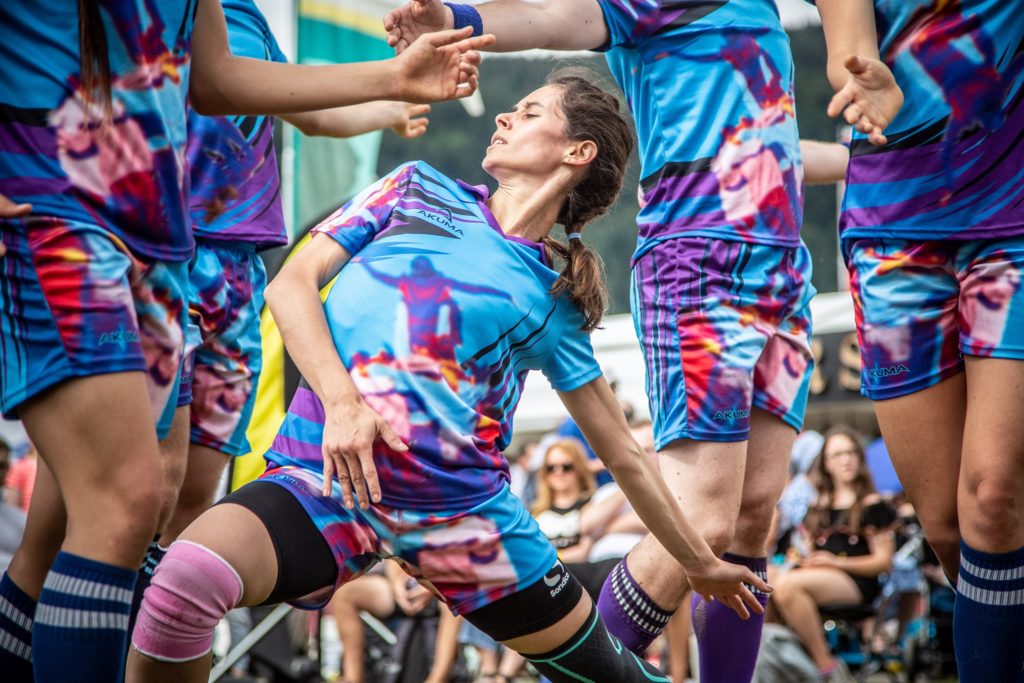
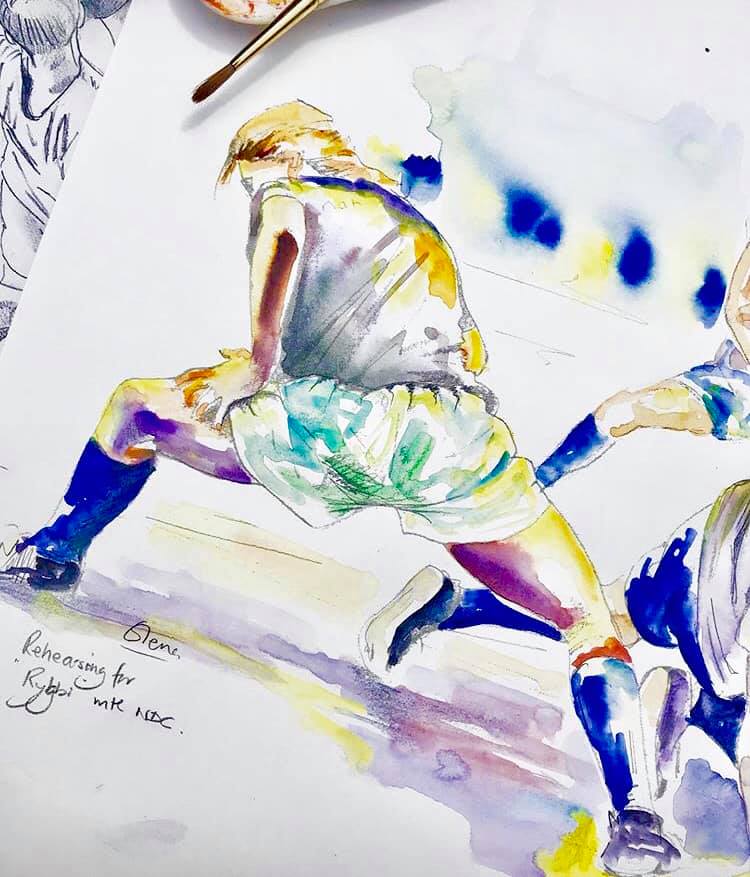
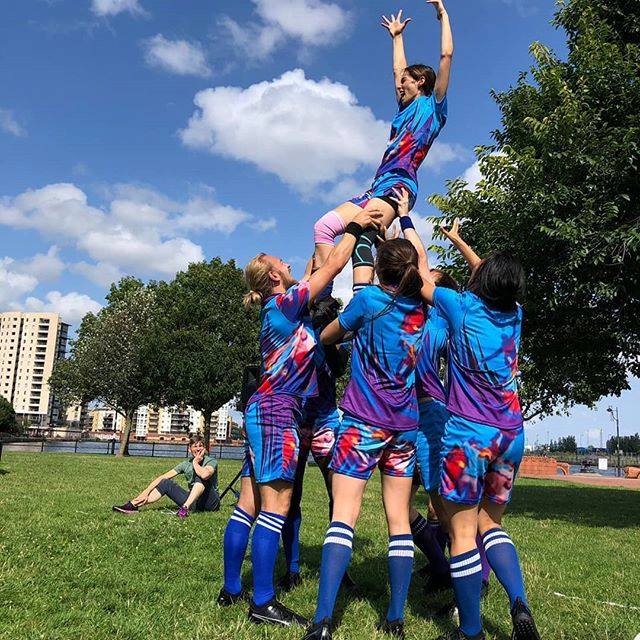
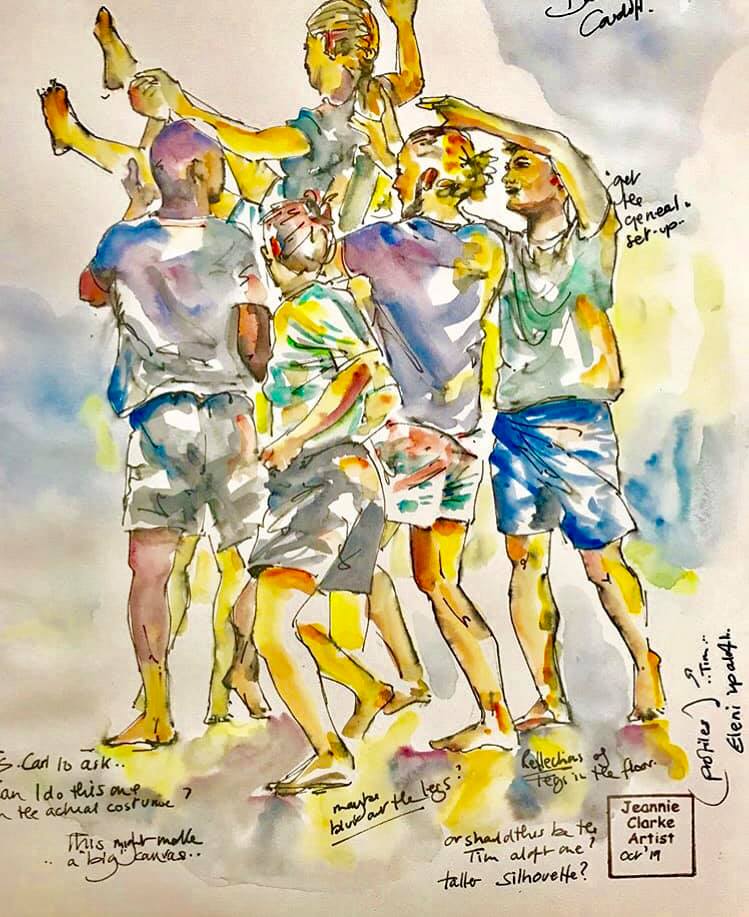
Well, I think I am hooked! Since that first encounter with the dancers I have worked almost exclusively on studying the way they “work”, whether they are resting or rehearsing and have been fortunate to be able to come to Cardiff and spend some days with them in the studio sketching and photographing and in particular I am building up a body of work depicting their production of “Rygbi” which I hope to exhibit next year, fingers crossed…The dancers themselves are hugely enthusiastic and supportive of what I do and are genuinely intrigued to see what I produce. As for me, I am completely in awe of what they do – obviously!!
Get the Chance works to support a diverse range of members of the public to access cultural provision. Are you aware of any barriers to equality and diversity for artists?
Hm… for artists? I haven’t personally hit any barriers in that sphere. I was a teacher in mainstream education many years ago before I left to pursue a career in commercial art. but I am sure that my own involvement with the art world has placed me in a bubble which has shielded me from exposure to barriers and I am sure they DO exist.
If you were able to fund an area of the arts what would this be and why?
For some years after I left mainstream art teaching, I worked with children and young adults who had special needs and varying disabilities (as they were then called)… Our art and creativity sessions were a joy! Hugely beneficial but hugely underfunded and undervalued and certainly would get money!!
What excites you about the arts ?
Wow, where to start!……how much space have I got?….Lets put creativity, in whatever form, back into peoples lives! … Its transformative and life enriching…..
What was the last really great thing that you experienced that you would like to share with our readers?
You mean apart from watching the dancers from National Dance Company Wales almost flying across the stage so beautifully and bringing me to tears……it don’t get much better than that!
National Dance Company Wales are touring Roots to venues across Wales this autumn.
Mold Theatr Clwyd Thursday 7 November 2019, 19:45 BOOK
Hi Tess great to meet you, can you give our readers some background information on yourself please?
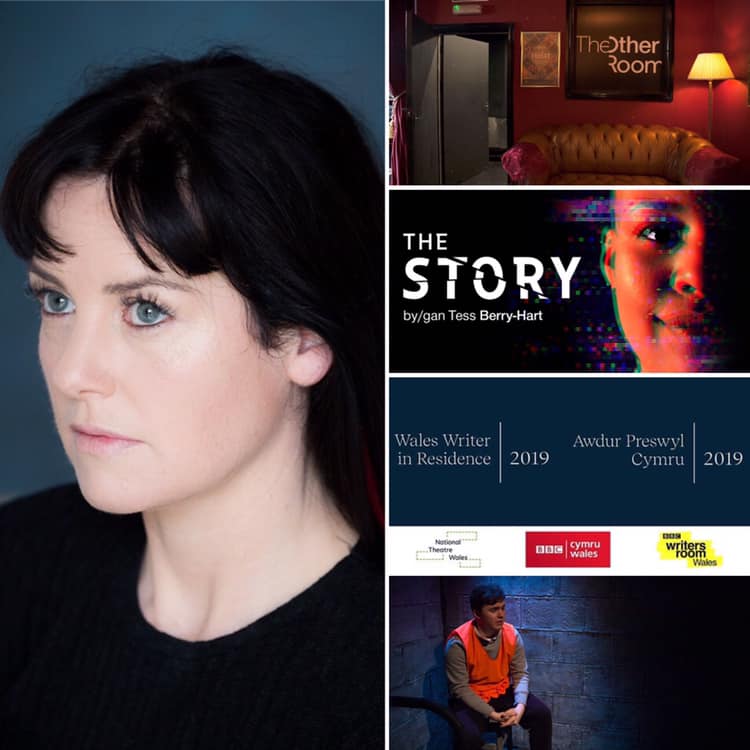
Thank you so much! I’m a playwright and novelist living in Cardiff. I was born in the Midlands but grew up in Oswestry along the Welsh border. I spent my teenage years at school in Denbigh, before going to London for university and work for some years. Some of my writing has been produced in London theatres, as well as at the Edinburgh Festival, and also in the States as part of human rights campaigns. I’m also a refugee rights activist, volunteering with two charities, Calais Action and a choir of refugees and friends, Citizens Of The World Choir.
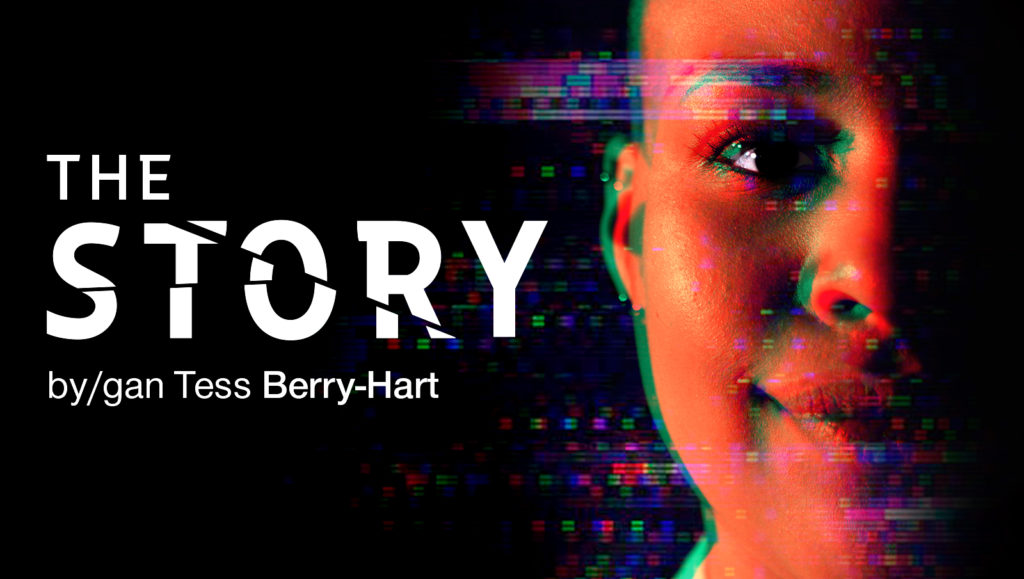
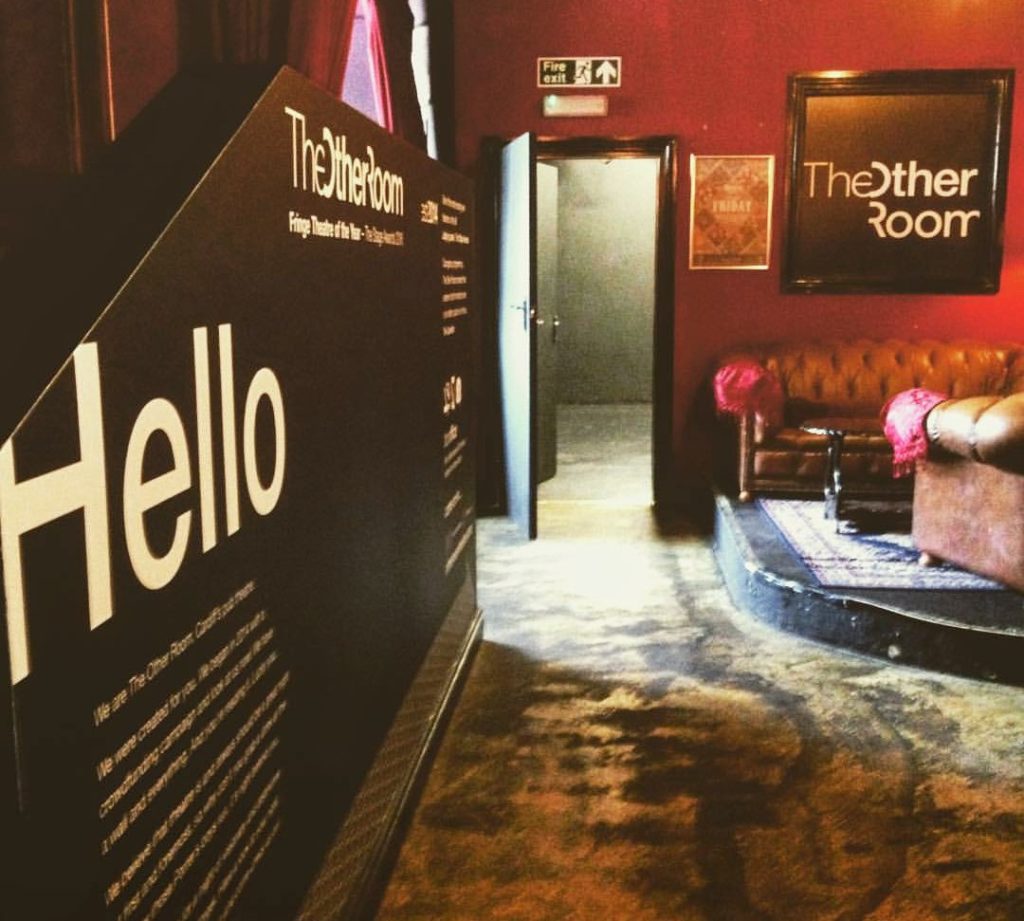
My latest play, “Cargo,” about a group of refugees travelling in a cargo container was produced at the Arcola Theatre London in 2016 and later toured by the Turkish State Theatre last year, and I’ve also previously written a couple of young adult novels about climate change called the Genopolis series. My new show “The Story” was commissioned by The Other Room Cardiff, as part of their Violence series, and will be on from 8 – 25 October 2019.
So, what got you interested in the arts?
My dad was a painter and my aunt was an actress, my brothers are musicians so it’s definitely in the family blood. I read a lot from an early age so I always wanted to write, but also I think I probably moved into writing because it was a toss-up between that and music, but with two brothers as musicians there was more space to find my way in books and theatre for me. Family dynamics (I’m the baby of my siblings) are responsible for an awful lot!
Why do you write?
Therapy! I suffer a lot from depression and anxiety, and unfortunately I’m not one of those people who can do yoga or meditation for calming myself because my brain turns into a screaming bear pit. Instead I manage intrusive or cataclysmic thoughts by creating and writing, whether influenced by or as a direct block to worrisome stuff so I can immerse myself somewhere else for a few hours, or process things that are happening to me. I don’t find that depression and anxiety stop me writing, quite the opposite in fact; my last two pieces were written in the pit of depression earlier this year when I could barely get out of bed, and writing was pretty much the only thing that got me through. It’s a bit like playing beautiful music to block out the neighbours fighting, if you turn it up loud enough, then you can escape for a while.
There are a range of organisations supporting Welsh and Wales based writers, I wonder if you feel the current support network and career opportunities feel ‘healthy’ to you? Is it possible to sustain a career as a writer in Wales and if not what would help?
To be honest, it’s always going to be really hard to be a “full time writer”, wherever you are in the UK, because there’s only so much resources to go around, so both in London and in Wales I’ve had to juggle various things to keep going. I’ve noticed in Wales that the Sherman and Clwyd have been supporting many writers and well as the various writers rooms at the BBC. If I could identify anything it would be that it would be targeting the missing areas of representation in supporting writers, do we need to support more female writers, more writers of colour, etc. The Violet Burns Award by The Other Room Theatre is a very good example of supporting female artists, and I think that it would be good to see more of initiatives like this.
If you were able to fund an area of the arts in Wales what would this be and why?
I’m very interested in mental health and neurodivergence so theatre and groups by and for people affected by various learning or communication conditions, such as Hijinx, or shows like Splish Splash by NTW last year are really valuable. I’m increasingly interested in types of communication that don’t depend on language, because theatre is all about communication, so to try to find ways of telling stories that don’t hinge on words themselves is something that I’m thinking about now.
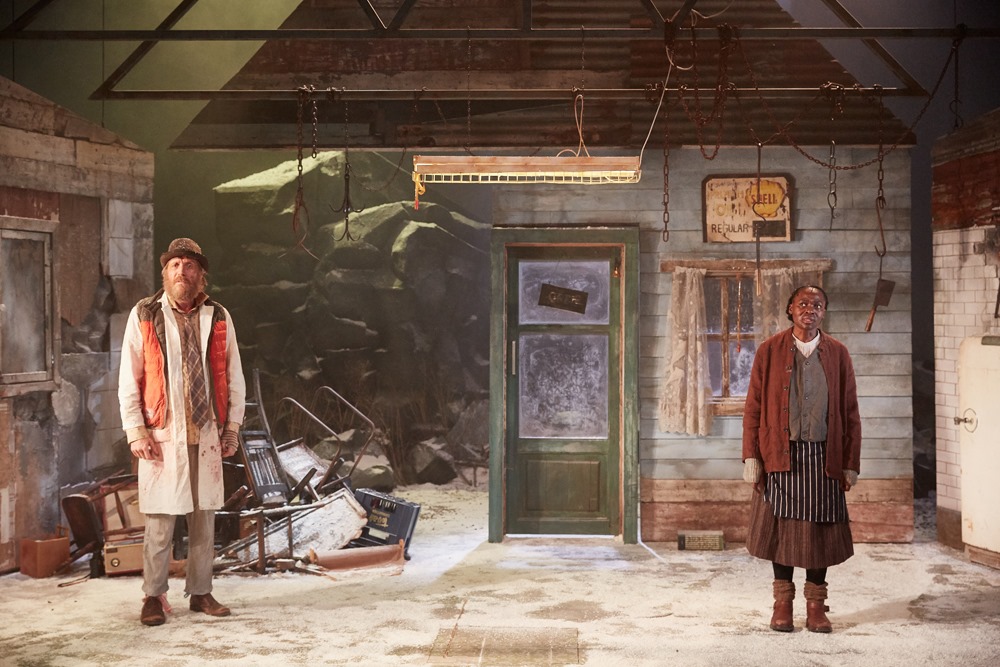
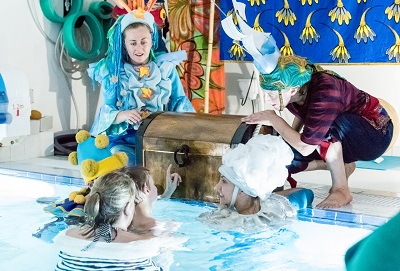
Splish Splash, NTW
Can you tell us about your writing process? Where do your ideas come from?
Ideas get triggered by a range of things; my experience volunteering for instance, or a news story, or domestic events in my family perhaps. There’s always a period of downtime once a script is finished or a deadline met, where I’m the most uncreative person ever because it feels like I’m all used up; but having a few new hot ideas always in my back locker to plan or feel excited about helps my mind feel active.
Can you describe your writing day? Do you have a process or a minimum word count?
I think of writing as a daily practice, like yoga or meditation or tai-chi perhaps, because it has therapeutic value for me personally. The process does change according to whether or not the work is commissioned or whether it’s an idea that I’m working on as a spec script, or a deadline is approaching, but essentially I try to do a bit every day, whether it’s simply allowing myself time to let ideas germinate, or taking half an hour to try to get some raw material down, or editing over something that’s been written. I think most writers have different periods when they find it easier to either edit or create or ruminate, we’re not word machines. Luckily I’m quite a quick writer if I know a deadline is coming, so deadlines really help me to pace myself. I’m definitely not one of those writers who sits down and knocks out a thousand words every morning, but keeping it in the active part of my mind where I’m either writing something or thinking of writing something helps me.
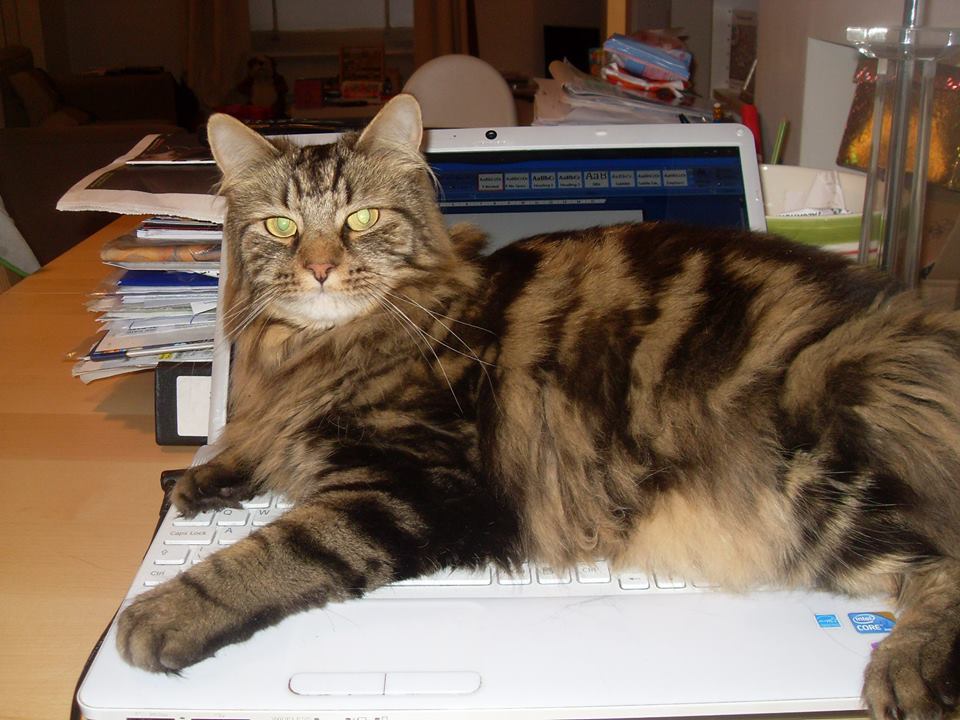
A friend helping Tess write at home!
You are a verbatim storyteller, how do you resolve the challenge of telling a gripping tale and sharing the truth of the diverse voices you work with?
Interestingly, I don’t see myself as a verbatim storyteller. The majority of my work is not verbatim (The Story for instance is fiction), so collecting verbal stories and contributions from people in order to shape it into an artistic work – is something that I’d only use if it was a real-life non-fiction story I was telling.
However, being a writer can be quite lonely so verbatim offers a nice collaborative environment of talking to people and getting out of your own head for a while and into someone else’s. You get to meet hundreds of different people from different backgrounds that you might not otherwise have known in life, and open yourself up to all sorts of interesting possibilities. Right now for instance, I’m working as a librettist with four different choirs to listen to the members’ stories and help transform them into an opera by collaborating with a composer as part of the “Singing Our Lives” project.
And yes, sometimes it’s hard to balance the objective truth of what you’re told with the endless writer’s itch to edit and augment reality, but I switch on different parts of my brain to shape what’s best about the material that I’m given into the themes and actions of the contributors themselves. I find that quite easy to do, as it takes the pressure off to “create” – and in most of my verbatim projects, the story is there waiting to be found anyway.
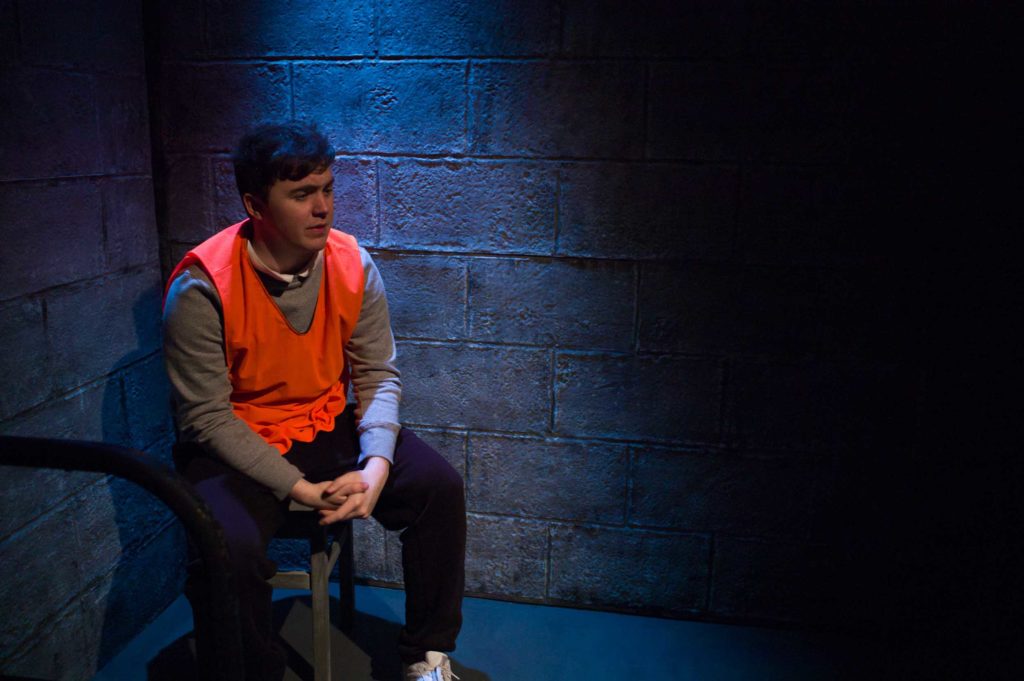
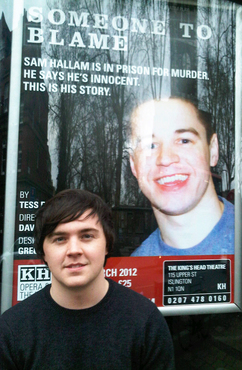
You were commissioned by the King’s Head Theatre to write the verbatim theatre piece Someone To Blame (2012), to highlight the real-life case of Sam Hallam, a 17-year old convicted of a murder he did not commit. Could you describe how you approached this commission and the subsequent developments in Sam’s story.
This was perhaps the most unusual commission I’ve received, which was part of the campaign to highlight the inconsistent evidence that convicted Sam of murder although he wasn’t even there. It was the first non-fiction play I had done, and given the legal issues I decided to work in a verbatim style, reading my way through huge stacks of court testimony, police interview reports and witness statements to use people’s own words about the events to create a piece of theatre. We also visited, interviewed and transcribed the words of people who were there at the time, including Sam in prison a couple of times.
I have a law degree which helped me get through and absorb the mass of evidence, and put together a script which started off with a gang fight in north London during which a young person was tragically stabbed to death. It then followed the various characters implicated in the murder, and critically examined the testimony which had convicted Sam.
The play was produced by the King’s Head a few weeks before Sam’s appeal. When Sam’s case was finally heard, the cast and crew of the play were all in the gallery at the Court of Appeal in London listening to the lawyers outlining the evidence. One of the actors leaned over and whispered to me, “It’s just like your play, isn’t it!”
What we hadn’t expected was that the judges, having heard only three hours of evidence, decided to free Sam there and then as his conviction had been so demonstrably not proven. Sam walked free from the doors of the courthouse that day and got sprayed with champagne by his friends, and there was a huge party in Hoxton for him afterwards. Sadly Sam was denied compensation for his unlawful conviction as the government had abolished automatic compensation for victims of miscarriages of justice.
What excites you about the arts in Wales?
I spent a long time in the London arts scene after I graduated from university, and what I really love about the Welsh arts scene is that it’s smaller yet has a vastly more supportive feel from the theatrical community, as well as from the audiences and community towards practitioners. Artistically there seems to be a lot more dedication to process in rehearsals and development support.
What was the last really great thing that you experienced that you would like to share with our readers?
I was shortlisted for the inaugural BBC Wales Writer in Residence award this year which really excited me and made me feel honoured to be included. It was especially meaningful because I had written the script whilst getting through a very difficult emotional time in my life, and was a deadline that I really struggled with. I’m very glad I managed however, and I’m really grateful for the opportunity.
And finally, your new play, The Story, commissioned by The Other Room Theatre as part of their Violence Series, explores the language of violence and the stories we tell ourselves to justify violence against others. In an extremely polarised society what can this new play offer to inform, educate and entertain?
Since I volunteered in Northern France from 2015 and also in Athens and Lesvos in 2016, the rising populist right-wing rhetoric has really exposed how language has been weaponised and how words matter, whether it be the murder of Jo Cox or the rise in racist attacks and nationalist sentiments in the UK post-Brexit. The Story is also an examination of how the idea of humanity and what it means to be human is being increasingly deconstructed. Volunteers have been criminalised for pulling people out of the sea or giving out food because the recipients aren’t seen as “legal”.
On an artistic note, it’s also probably the most “theatrical” play I’ve written, and really demands a lot of the actors and team! I’m very grateful to The Other Room for giving me the opportunity to create something around these themes, and watching The Story come alive in rehearsals has been epic. People watching it are definitely not going to know what will happen next!
“The Story” plays at The Other Room, Cardiff, as part of their Violence series from 8 – 25 October 2019.
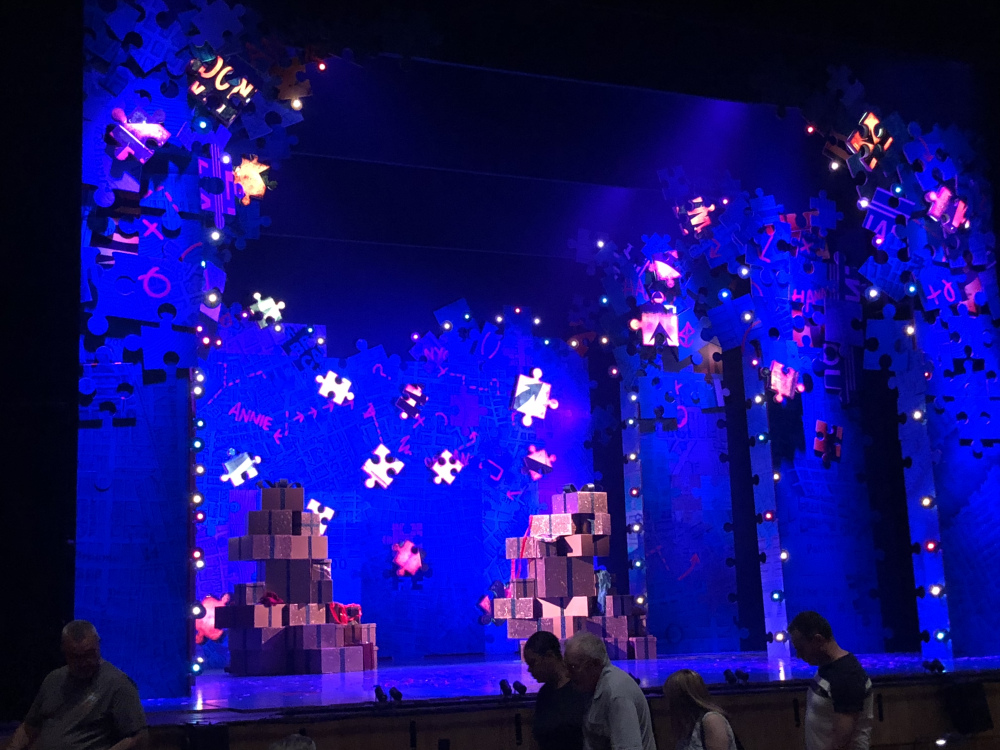
On my Facebook newsfeed , a post from Tempo Time Credits page caught my eye. It was offering tickets to see Annie, in exchange for Time Credits.
When musical theatre offers come up with Time Credits they usually sell out super fast.
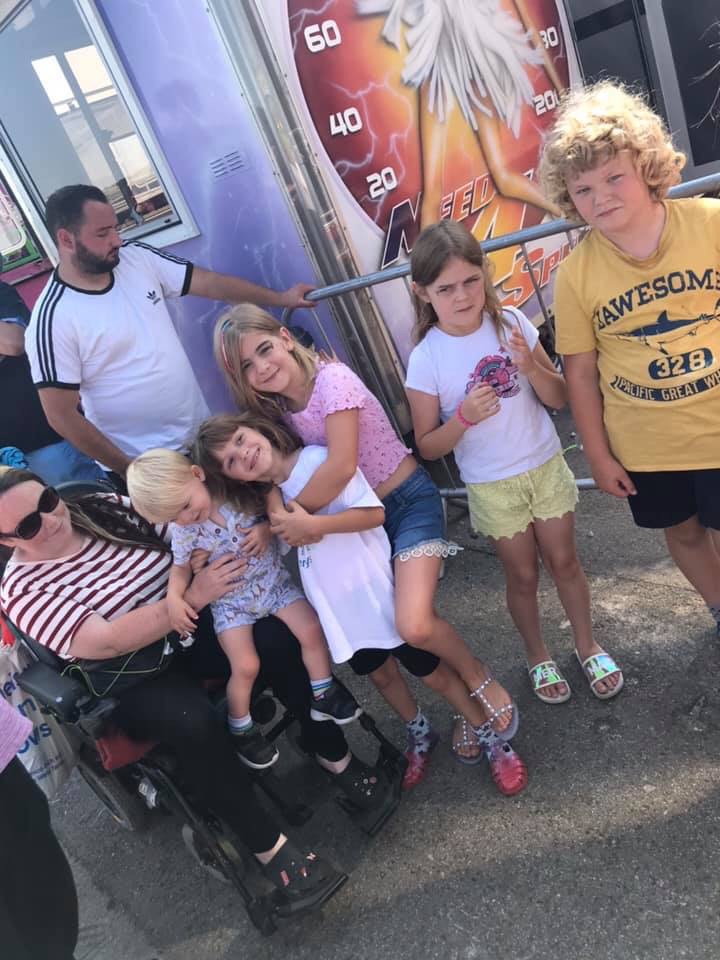
We were in the car on our way to Bristol Zoo to celebrate my partner and our son’s birthday. I thought let’s try see if I can get any! It took about 40 minutes to get through on the phone, my hopes were slowly fading. They offered 3 different days, I could only do the Bank Holiday Monday evening as my partner was working the other days. I got 3 tickets including a wheelchair space, carer ticket through the HYNT scheme and another seat. This cost me 4 time credits. (2 Time Credits per ticket, but with the HYNT scheme the carer is free).
I wasn’t sure at first who would go, myself my mum and dad (it was my dad’s birthday that day too), or myself and oldest two children. I firstly offered them to my parents. I felt they deserved a treat, and that it was my dads birthday. Cody had been to see Madagascar the musical earlier in the month, and Cerys went to see The Little Mermaid with her nan and cousin. They kindly declined and wanted Cody and Cerys to have them to enjoy.
Sunny warm Bank Holiday Monday came. May I emphasise sunny and warm, as most bank holidays are cold, windy and wet in Wales.
It was a super busy day for us all. Cerys attended her extra gymnastics session in the morning. They were celebrating their one year anniversary being open.
Chris’ sister managed to get us tickets for the Chepstow Racecourse Family Fun Day, so we went along and met up together.
From here we called in to see my dad and sang happy birthday. I would have liked longer there, was a very short visit.
Then off we went to the Wales Millennium Centre in Cardiff Bay. My partner Chris dropped us off and looked after our youngest, while Cody, Cerys and I went to watch Annie.
If you are visiting the Wales Millennium Centre, or Cardiff Bay in general, there are a few places you can park. A blue badge holder can pay to park backstage, on site at the Millennium Centre. Or anyone can pay to park at the Red Dragon Centre close by. If you spend money (over £5 I believe) in any of the places at the red dragon centre, parking is free.
There is a multi storey car park close by too. I’m unsure of the prices I’ve never used it. Very slightly further away, a lovely little walk taking in some of the sites, is the Mermaid Quay 2 floor car park, and a pay and display car park near the St David’s Hotel and Spa.
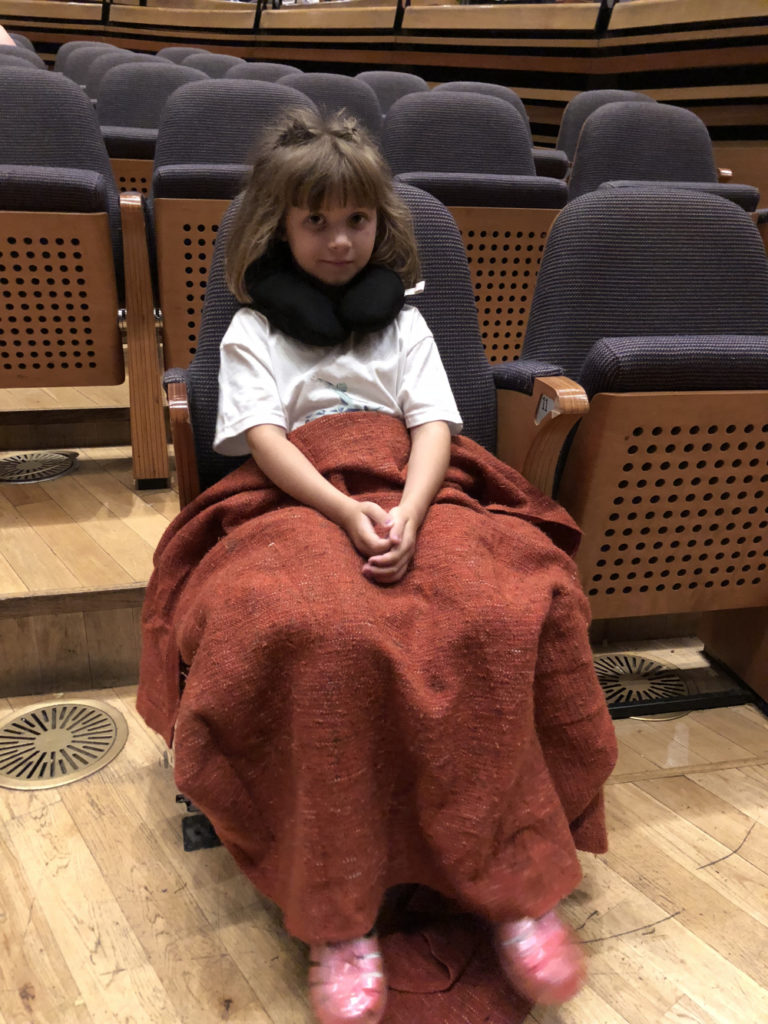
My son likes to use the toilets and go straight up to our seats, even if the doors haven’t been opened to go in yet. We were outside the theatre doors an hour early, first in line! Then he asks every 2 minutes what the time is and how long is it until the open the doors and how many minutes for the show to start. I believe this is part of him, his additional needs. Still no diagnoses for him. (I know a lot of children do ask what time is it and how long etc many times, but this for Cody is different. He appears to get overly anxious, and become more unsettled if the time isn’t told and seen. I was probably asked over 20 times at least.) Cody decided he wanted to wear ear protection headphones out this evening, for the journey here and for the performance. He doesn’t always use them, only occasionally when he feels he needs to. I noticed he was tapping on the wooden side of the balcony and rubbing his hands against it to make a squeaky sound.
I felt like including this in my blog post today, because my eldest does have additional needs and requires that extra support. I’ve mentioned it a little before in my blog, in the post called ‘is it the A word?’ These behaviours stood out to me during our evening. and I mindfully notice this more and more.
We hadn’t had tea, so we were snacking on buffet style foods while waiting, mini sausages, savoury eggs and strawberry lace. What a selection!
A little bell sounded, half an hour before the start time of 7.30. Cody jumped up and down, shouting mum it’s time, get your tickets out. He ran after the usher going to open the doors. I haven’t really mentioned Cerys in this. But she was with me too. She’s quieter and more mellow. Cerys was taking it in, asking about Annie, saying she had seen the modern film version and clips of the older Annie musical film. Standing by my side, walking nicely as we go in.
A bit of background about the Broadway Annie the Musical. It was put together by a player writer named Thomas Meehan who wrote the book, music Charles Strouse and lyrics Martin Charnin. It was originally based on a comic strip called Little Orphan Annie created by Harold Gray.
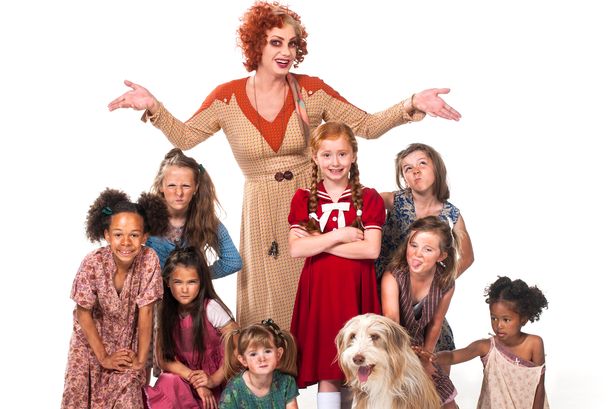
Annie the musical is about a little orphan girl called Annie, who lives in Miss Hannigan children’s home. A billionaire (Mr Warbucks) invites an orphan (Annie) to come stay with him for Christmas, his love grows for Annie as a daughter and he wants to adopt her. Annie clings on to hope of finding her real parents and Mr Warbucks tries to help her. Miss Hannigan makes a plan with her brother and his girlfriend, to pretend to be her parents in order to get the money reward. They are caught out and arrested. Annie finds out her real parents are no longer alive, and Mr Warbucks adopts her.
I’m always quite contented and happy with the wheelchair space at the WMC (Wales Millennium Centre). We have always had seats in the front on the middle stalls. It gives a good view and plenty of leg space, apart from when the ice cream and merchandise cart comes around, which is very close, and lots of people nearly pile on top of you, but I can put up with that for a few minutes. I’m usually in a good mood at this stage, with being blown away with how good the first half of the show has been.
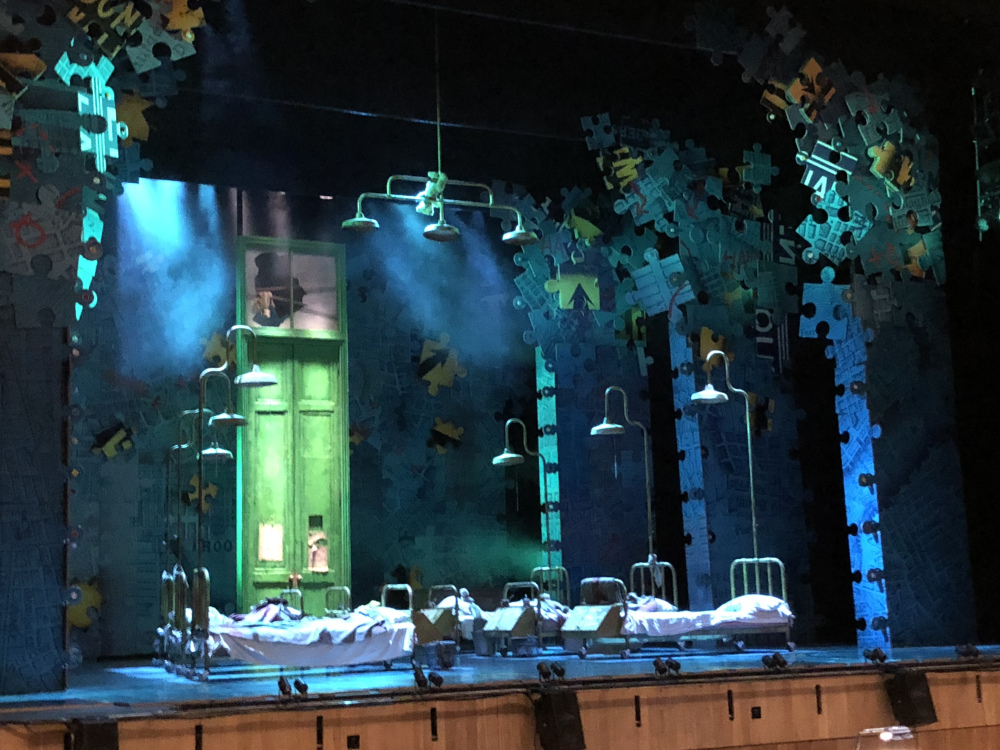
That certainly was the case with Annie. The start of the musical began in the dorm of the children’s home, the orphaned girls in their bed waking up to Molly having a bad dream and singing the first song “Maybe” followed by Miss Hannigan first entrance and then the song “It’s the Hard Knock Life”.
I was impressed by the talent of the children straight away. I wasn’t sure what to make of Miss Hannigan at this point but in a later scene with her brother and his girlfriend, their trio performance was fantastic. How they interacted on stage with their superb singing and choreographed dancing in the song “Easy Street” and “Easy Street reprise”, absolutely brilliant! They seemed to just click perfectly!
Another of my favourite moments of the musical was “I Think I’m Going to Like it Here” and “N.Y.C”. It reminded me of that ‘classic’ musical feel I get from the older musicals with the likes of Gene Kelly and Frank Sinatra. The variety of different types of dance including tap was wonderful to see.
My little girl said to me, before the end of the first act, can we come back and see it again mum, I really like it.
Annie, is a vibrant family musical with catchy tunes and a talented mixed cast of children and adults.
The Time Credit opportunity to pay for tickets, gave us this chance to experience and thoroughly enjoy it.
When we came out of the main auditorium, and back down into the main foyer, the Luke Jerram artwork called Gaia, planet Earth looked spectacular. It’s there from July 30th – September 1st.
When we previously saw it during another visit in day time, my children laid down underneath mesmerised by it.
Annie plays at the Wales Millenium Centre until the 31st of August.
Hi Owen great to meet
you, can you give our readers some background information on yourself please?
I have been a Playwright for almost 20 years. My plays include ‘Benny’, ‘The Wood’, and ‘Richard Parker’. I have a lifelong love of storytelling and the rhythm of words. How the dialogue sounds to an audience is always as important to me as the strength of the narrative.
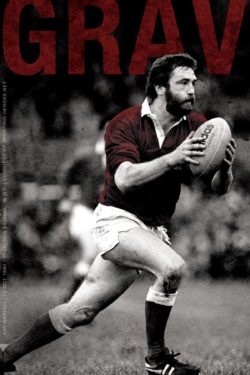
The play I am best known for is ‘Grav’, a one-man show about the life of Welsh cultural and sporting icon, Ray Gravell. This year saw ‘Grav’ complete its 100th performance and counting.
I grew up on a farm in Mid Wales where my parents still live and work. I
now live in Tongwynlais on the edge of Cardiff. I am married to Amelia, and we
have twin daughters, Sofie and Brooke. I love swimming and running and, for my
sins, I am a fanatical supporter of Tottenham Hotspur.
So, what got you
interested in the arts?
The
urge to write was always there. My earliest inspiration was my Primary School
Headteacher at Bronllys Primary School, Mr Dave Cooke. He was also a writer and
would occasionally play us a radio play he had written. I was transfixed by the
idea that something you had written could entertain people. This was where the
idea of being a writer took root.
I
went to a secondary school where drama wasn’t taught and with no history of
school shows. One day I asked the Head if I could write a play and put it on.
The result was a rather strange effort called ‘Where Have All the Foxes Gone?’.
It was staged as part of the Christmas concert and the reception to it, as well
as the buzz of writing dialogue for actors, was instantly addictive.
Poetry
was my first love, and I had some poems published whilst at school. I won some
prizes for my writing at local eisteddfods. In my recent writing I feel I am
returning to my poetic roots, and my new play, ‘West’, is certainly the
most rhythmic and lyrical play that I have written.
It
wasn’t until I was living in London that I had the confidence to stage a play
professionally. One day I rang all the Pub Theatres in the phone book
pretending I was a successful writer looking for somewhere to stage my new
play. The Hen and Chickens in Highbury and Islington offered me a weekend in
December 2003 and the result was my first play, ‘The Dead of Night’.
Your background is in education. I believe you left teaching to
work full time as a writer? This must have meant some risk for you in terms of
you career, why did you feel the need to make this move?
I was a Head of Drama in various schools for almost 20 years and I thoroughly
enjoyed the job. I still do some Freelance teaching at venues such as Welsh
College. But, in my own life, as with so many other people, there had been a
few reminders that your time is finite, and that if there is something you
really want to do then sometimes you just have to go for it. Carpe Diem. I
thought about making the leap for many years, and felt I had enjoyed enough
success to encourage me to go for it. But yes, it was a huge decision and one
that I didn’t take lightly.
Playwriting is my passion. It is the job I have always wanted to do. I
wanted to give myself the opportunity to see how good a writer I could be if I devoted
myself to it. So far, the decision has proved to be the right one. In the past year
I have written two new plays, ‘West’ and ‘The Night Porter’. ‘The
Night Porter’ is a life-long ambition, a good old-fashioned ghost story in
the vein of ‘The Woman in Black’. I am delighted that the Arts Council
of Wales have granted me a large research and development grant to bring the
play to life in January 2020. We have an amazing team lined up I can’t wait to
bring a chill down the spine of Welsh theatre very soon.
You have successfully written plays based around the lives of
Benny Hill and the Welsh Rugby player Ray Gravell. How do you approach
transposing these real lives to the stage?
I have always been fascinated by the lives of real people. The key to bringing a life to the stage is thorough research. There is a huge responsibility in ensuring that you do your homework and present an accurate depiction of your subject matter. When ‘Grav’ was launched at Parc Y Scarlets there was a moment of genuine terror just before Gareth first took to the stage to showcase an extract. The Chief Executive of the Scarlets jokingly said to a room full of dignitaries, ‘well, I hope you’ve got his right, because there’s an awful lot of people in here who loved and knew Ray.’ I went white. Thankfully the reaction to the scene was great.
Finding the voice of a person is crucial. This comes from watching all that you can, and meeting people who knew what they were like. Ray’s widow Mari and his daughters Manon and Gwennan were incredibly supportive. The trust they placed in me to do justice to someone who was so loved by them personally was the primary thought kept at the forefront of my mind.
With Ray Gravell it was easier in that he was a well-loved figure. I
chose Benny Hill precisely because he is more of a marmite figure. I wanted to
get under the skin of a more divisive character, and to explore the impact of
society changing around a person. I have always been interested in the lives of
old comedians. With Benny Hill I was intrigued by how a man who was the most
famous comedian on the planet for a time had become airbrushed out of popular
culture. There was some hostility when the play was first unveiled, but
thankfully this dissipated when people saw the play, and Liam Tobin’s skilful central
performance as Benny.
I am just about to start writing a brand-new play about another
much-loved Welsh icon. The team behind it are excellent. It is somewhat under
wraps at the moment so watch this space.
You frequently work with the same collaborators, Peter Doran, Artistic
Director at The Torch Theatre and most notably the actor Gareth John Bale. How does this relationship work?
On a personal level we are all good friends with a lot in common, but more importantly there is a huge amount of trust between us. That is essential. As a writer you have to be prepared to hand over your work to a creative team who may well suggest cuts and alterations you may or may not agree with. If you have an open and honest relationship, then this is far less painful. I have worked with people in the beginning of my career who would put a line through writing I had spent hours pondering and shaping. This never gets easier, but if you trust the people share the same vision and passion for the project then these decisions become much easier.
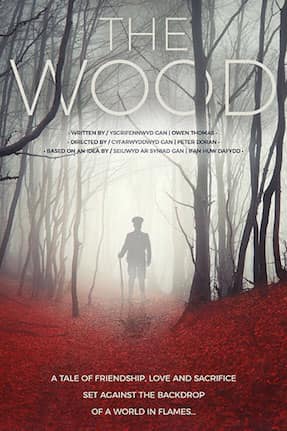
The journey we have been on as a creative team has been incredible, taking us from an initial conversation about ‘Grav’ at the Torch, to New York and our performance this year for the Welsh Rugby team. I can honestly say that throughout this process we have never had a cross word. We all believed in the project and each other. Peter and I went on to work on ‘The Wood’, a play commemorating the Battle of Mametz Wood in World War One. I was incredibly proud of this play and I hope that Peter and I will collaborate on another project in the near future.
Gareth and I have worked together for over a decade. We were first introduced
through the excellent Script Slam at the Sherman Theatre. I had a 10-minute
play called ‘The Window’ in the final and so was randomly paired with
Gareth as the director. We hit it off immediately, and our relationship has
seen us work on a wide range of projects. He is a very skilled director as well
as actor, and we complement each other perfectly in the rehearsal room. My
family often joke about how often I ring him. Usually once a day, often more. We
have lots of plans for the future as Bale and Thomas, and are shortly heading
out to the United States with a new play.
Get the Chance works to support a diverse range of members of the public
to access cultural provision. Are you aware of any barriers to equality and
diversity for either Welsh or Wales based artists?
Encouraging diverse voices to feel empowered to share their stories on
stage is key to this. People from all walks of life who live in 21st
Century Wales need to feel confident enough to share their individual stories
and experiences. We live in strange and somewhat divisive times at the moment.
Theatre has always had the ability to hold a mirror up to society and pose
questions. In my opinion the importance of cultivating awareness and
understanding of other people’s lives and journeys has rarely been so relevant.
New plays by diverse voices can play a key role in inspiring discussion,
generating understanding and engineering social change.
There are a range of organisations supporting Welsh and Wales based
writers, I wonder if you feel the current support network and career
opportunities feel ‘healthy’ to you?
Generally, yes, but there are a few areas where there could be some improvement. I developed as a writer through opportunities such as Script Slam at the Sherman Theatre, Cardiff.
I think there is room in Wales for more events like these for up and coming writers. Writing is a very insular activity, and the chance to see something you have written actually performed on stage is incredibly important in your development. Seeing actors perform your story and hearing your dialogue spoken aloud, as well as having an audience respond to your work, is key to helping you find your style and voice. These early opportunities were fundamental in teaching me how to craft dialogue, and introduced me to some of the most important people in my writing career.
If you were able to fund an area of the arts in Wales what would this be
and why?
Funding for youth provision is essential. Growing up I never had access
to Youth Theatre or drama lessons. Having taught the subject for so many years,
I fully understand the benefits that drama can have on a young person’s life. I
have set up my own Youth Theatre in Tongwynlais which is great because I also
get to teach my own daughters. There are about 25 members at present, and to
see the growth and development in them over the course of the first year has
been really exciting. It is essential for the lifeblood of our industry that we
nurture our future performers and equip them with the transformative skills
that performance can provide. It is essential that drama continues to empower
and embolden young people.
Can you tell us about your writing process? Where do your ideas come from?
Ideas come from a range of sources. I have always enjoyed people
watching, and indeed was inspired to write ‘The Night Porter’ after
glimpsing a haunted looking man sat behind a hotel front desk through a window
on a gloomy night in Edinburgh. Sometimes, as with ‘Grav’ or ‘The
Wood’ I am lucky enough to be approached. But it has to be something I am
going to enjoy researching or something I am able to give my own unique slant. I
will often research a play for ages before I start writing, building up a
thorough knowledge of the subject in my head.
For ‘The Night Porter’ I wanted to properly get under the skin of
how to make people scared and so I enrolled in some night classes on Ghost
Stories in Literature at Cardiff University taught by the fantastic Dr Juliette
Wood. Through that academic process I was able to improve my understanding of
the genre, and this will hopefully add to the scream count in the audience.
I always begin a new play by free writing, getting a load of ideas down
on the screen before saving it and leaving it for a week or two. I then re-read
and delete the vast majority, but in there I often find the elements I want to
develop and expand. I draft and redraft many times until I am satisfied. ‘West’
has undergone five drafts, with ‘Grav’ it was many more. I always try to
hear an early draft spoken aloud having long understood that something might
look great on the page but sound awful when spoken aloud. Failing that, I read
it to the dog in the shed.
Can you describe your writing day? Do you have a process or a minimum
word count?
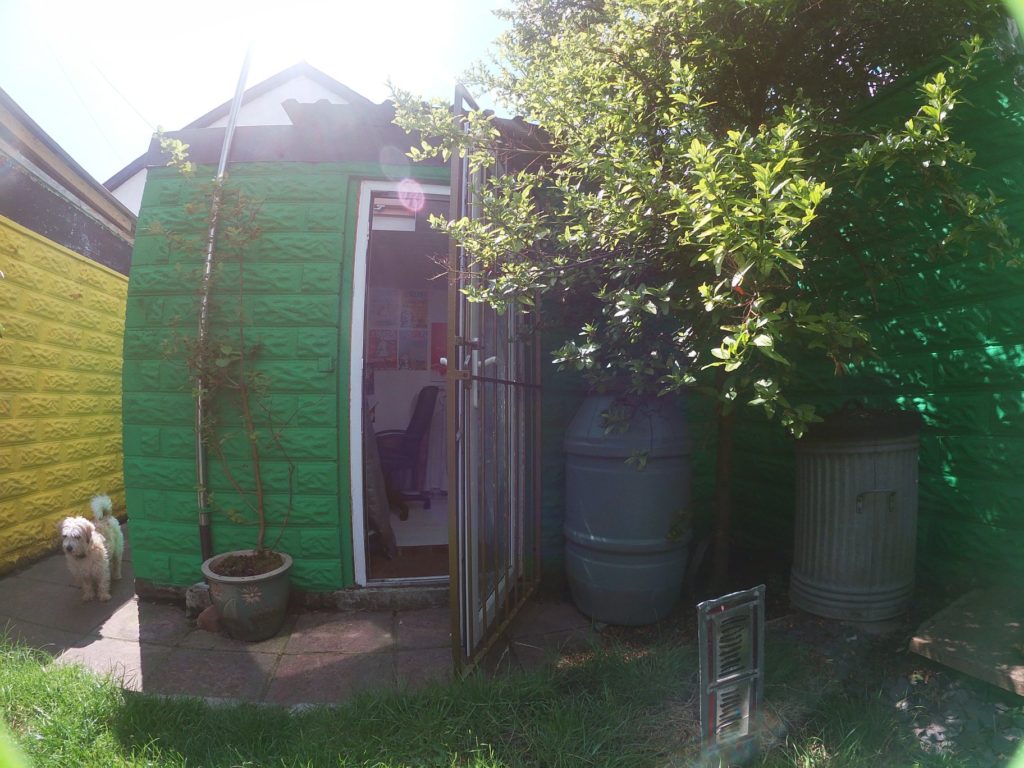
I tend to be at my most productive first thing in the morning. I get up early and go for a walk or a run to clear my head. Then I make a pot of tea and head to the shed for 9. I tend to keep going until ‘The World at One’. The afternoon is often spent reading, researching and editing.
Owen’s Writing Shed
Music is very important, and Spotify is a godsend. The right mood can be created by who you have accompanying you in the background. Richard Hawley is one of my go to artists for this. His lyrics and music are very inspiring, and his latest album, ‘Further’ is just beautiful.
I used to set myself very strict word targets, but after a while I found
I was getting more concerned with the number of words I was writing than the
quality of them. As long as I leave the shed with a scene or some dialogue that
didn’t exist before I went in there then I am happy. A good day could be one
page or five pages – it is the quality of the writing that is important.
Is there a place you go to write?
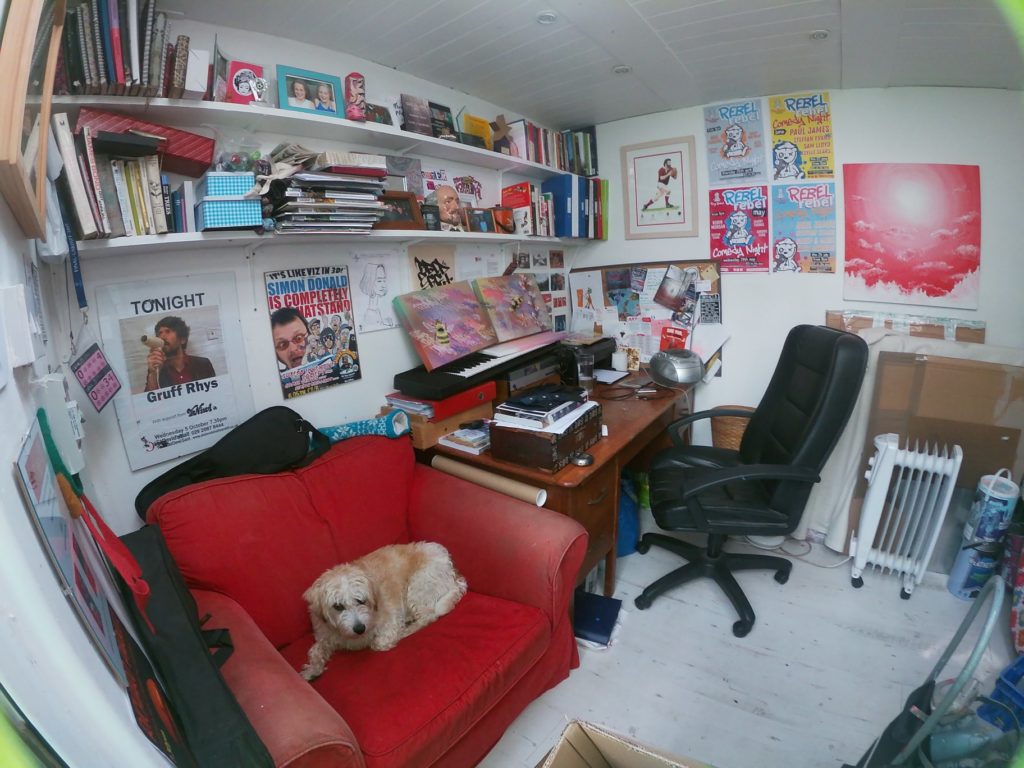
I am lucky in that I have a shed at the bottom of the garden. It has a desk, a chair, bookshelves and pictures all over the wall. I like to be surrounded by postcards, paintings, and photographs, for inspiration. There is no WIFI in the shed which is very important. With a good WIFI connection it is very easy to disappear off into a digital rabbit hole instead of actually writing.
Writing Shed Interior
If I want company then the Park and Dare in Treorchy or Chapter are both
great places. But mostly, and fuelled by a steady stream of tea, I am content
to lose myself for hours in the shed.
What excites you about the arts in Wales?
I am currently working for ‘Pick of the Fringe’ at the Edinburgh
Festival. It is so exciting to see such a wealth of terrific Welsh companies
showcasing exciting, innovative work across the city. Companies like Dirty
Protest, Clocktower and Volcano, to name but a few, are just superb.
My wife is a graffiti artist and spoken work performer called Amelia Unity. She is part of a collective called ‘Ladies of Rage’who are working hard to address the lack of opportunities for female performers in Hip-Hop, grime, drum & base etc. To see how inspired and empowered they are as a group, including firing up the imagination of my own teenage daughters, is terrific.
Gareth Bale and I have recently set up ‘Rebel Rebel Comedy’, a monthly comedy night at Tiny Rebel in Cardiff. I’m really enjoying getting to know the stand-up comedy scene in Wales, and through our wonderful MC, Steffan Evans, we are being introduced to the huge depth of talent that is out there. Stand-up comedians are fearless performers and I love watching them work.
Music wise, I am always in awe of Gruff Rhys. His career is so inspiring and organic. I am always excited to see what he does next. From his very early days he has yet to record an album that I haven’t loved, and his imagination is something I am very envious of. To work with him in some capacity is a long-term ambition of mine. That would be a dream come true.
Finally, after the incredible impact of Rachel O’Riordan at the Sherman, I am very excited to see where the newly appointed Artistic Director, Joe Murphy, takes the theatre to next.
Joe Murphy, Artistic Director, Sherman Theatre.
What was the last really great thing that you experienced that you would
like to share with our readers?
I grew up in the Britpop era and have always loved going to gigs. I am a big fan of 6 Music and recently happened to hear ‘Kebab Spider’ by the Sleaford Mods. I fell in love with it and them on the spot, and went with my wife to see them at Cardiff University earlier this year. On stage were two men in their mid-40’s, one with a lap top and one with a microphone. It was the most unbelievably visceral, and exciting live experience I have had in years. To lose yourself in a crowd and feel the joy of being in a mosh pit was something I thought I had left behind long ago. I am going to see them again in London in November and I cannot wait. Jason Williamson is far and away the best front man I have seen in years, and I would urge you to check out their documentary ‘Bunch of Kunst’ if you want to know more about them.
And finally, I believe you are about to have your new play ‘West’
premier in America. How do you think American audiences will react to your
work?
Last year we were invited to the North American Festival of Wales in
Washington DC with ‘Grav’. The play was well received and so I was asked
to write something original for this year.
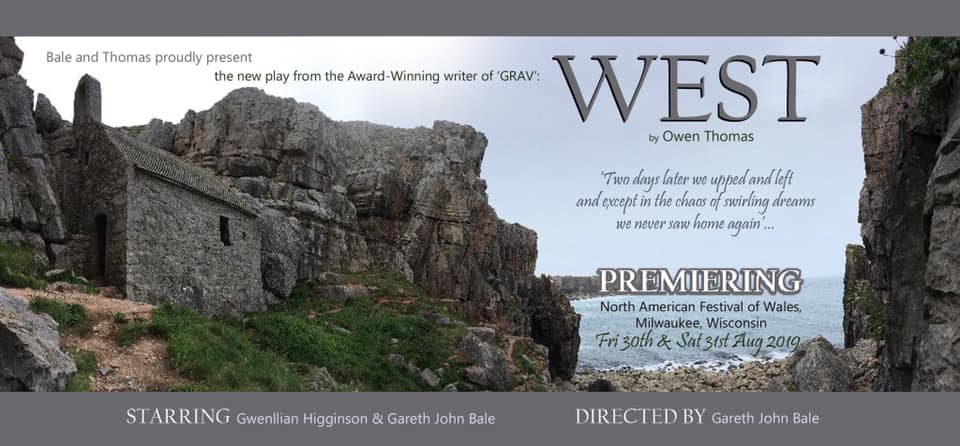
‘West’ explores the lives of the first Welsh settlers who went over to America. It is written largely in verse and stars Gareth Bale and Gwenllian Higginson. On a superficial level it is a love story between two people who make the decision to uproot their lives. On a deeper level I wanted to explore the theme of immigration, and to hopefully show the audience that we all originated from different places. I am very proud of it, and delighted it will premiere in America.
Hi Neil. It’s great to meet you. Can you give our readers some
background information on yourself please?
I’m a writer. It’s taken me a while to be comfortable saying that. Because I’m not from an academic background. My dad was a carpenter and I spent my formative years being led to believe that “the arts” were created by posh people, for posh people. I knew I had something to say, though. And so, after having been overlooked yet again, in favour of the tremendously talented, doe-eyed Derek Allen for the lead role in the school drama, I decided that, unless I wanted to be “chorus” for the remainder of my life, it was time to take things into my own hands. As a parting “gift” to my school, I produced, wrote and directed the inaugural end of year School Revue, a chaotic sketch show, interspersed with bands and Spike Milligan poetry renditions.
I left that all-boys grammar school, a hellish hotbed of bullying, conformity and privilege, with 6 average O Levels, to join a Youth Training Scheme in Print and Design (having turned down a potentially lucrative, but ultimately soul destroying, banking career). But that Print and Design Training Scheme was good to me, exposing me to a previously unknown world of words and images and allowing me to quickly learn a balance between creativity and commercial viability. But, as ungrateful as it seems now, it was never overtly creative. Expressive. Risky. At school, I remember my English teacher complaining that my stories were too long and that he didn’t have time to read them. Having pointed out, with typical teenage cockiness that it was his job, he reminded me, as others often did, that I’d never amount to anything. But I’ve always found the need to prove doubters wrong a powerful motivation.
I joined poetry groups. And naively welded words together, as a form of primitive catharsis. Short poems, laden with unconscious subtext, created to accommodate my own limited attention span. But these poetry groups so often consisted of the spurned and disenfranchised of the world. Society’s sensitive rejects, confined to the sad, back rooms of usually celebratory places. So I wrote a screenplay. About a man in his late 20s, who leaves a mundane and unfulfilling life, to go travelling. It was rubbish. But I finished it. And then I wrote another. A time travel love story. About a widower who travels back in time to change his wife’s fate, so that she lives. But while he’s there, he falls for someone else. It wasn’t as rubbish as the first one, but, having received polite letters (and they were letters back then), I decided to put my aspirations on hold.
Years later, after wearing a hole in where I was from, it was time to move on. To the medium-sized smoke of Cardiff. Five months, in a city where I knew next to no one, living in the attic room of a shared house, in a sweltering room, with nothing but the sobs of the duped pensioner in the room below to remind me I wasn’t alone. Motivation enough to get out and start throwing myself into the posh life. Seeing posh art, created by posh people, for posh people. And posh theatre, written by posh people, for posh people. And nobody stared. Or looked at me like I didn’t belong. And before I knew it, I was talking to people. About art. And theatre. And they weren’t posh at all. Most of them, anyway.
One night, at the Sherman Theatre, I saw Script Slam. Five plays, by previously un-produced writers. Directed by and featuring proper professionals.
And I thought, I could do this. Seven People, seven monologues delivered by seven people with undisclosed secrets, and my first ever play, not only won the Script Slam heats, it also won the Grand Final. And soon, there I was, on stage, receiving a prize in front of my parents for writing and I thought, this is it…
Ten years later, with
a London-based agent, two Guardian reviews, and countless performances of my
work in Wales, London and throughout the UK, this still isn’t it. Writing the
play is just the start. Then comes the re-writing, the rejections and the
resolve to start all over again. But, like an addiction, you just can’t stop
doing it. Because you know, that the highs of simply completing a new work are
nothing compared to the incapacitating elation created by that elusive moment
of acceptance.
Since making my first short film, BETWEEN, last year, I’ve discovered new ways of telling stories for the screen (big and small), too. Having had a meeting with a TV production company about my play RABBIT, I’m currently working on a treatment with a view to developing it into a six-part comedy drama. I’m also in the process of applying for development funding for my first feature. Like I said, it’s an addiction. You just can’t stop doing it. And every compelling addiction story has a killer soundtrack…
This chat is specifically about music and the role it has played
in your personal and professional life. Firstly to start off what are you
currently listening to?
Music’s always been there. My mum and dad were jivers, rockers and rollers, lucky enough to hear Elvis Presley and Jerry Lee Lewis the first time round. They saw The Beatles in Gloucester in the 60s, in a building which is now a slowly fermenting, beer-sticky Wetherspoons. At every opportunity, they’d jive, perfectly sychronised, at smoke-fogged dinner dances, then play the tunes from the night before, whilst peeling carrots to add to the other overcooked ingredients for Sunday lunch. And, slowly, every one of those anti-establishment lyrics and rhythms started to sink in. So, at the age of ten, I fell for punk. A lamb, in parent-approved, respectable gingham check, demanding 3 minutes of anarchy from the DJ at the family disco at Croyde Bay Caravan Park, so I could pogo, solo, starting with The Undertones’ Teenage Kicks, in 1978. And, though there have been giant deviations in my musical mores, there’s always been something about the energy and attitude of punk-influenced music that energises me and makes me smile.
So, at the moment, I’m listening to Idles, Slaves and Rolo Tomassi. Quick-fix anger hits, to subconsciously energise scenes. Then there’s a bit of Nick Cave’s Skeleton Tree, to help me reflect and introspect. And, though it’s not technically music, there’s the looped sound of the sea, coming in, and going out again, my substitute for the uninspiring sound of silence.
We are interviewing a range of people about their
own musical inspiration, can you list 5 records/albums which have a
personal resonance to you and why?
Narrowing it down to five is practically impossible. Like asking me to pick my top five artists. Or insects. But rules are rules, right? And, in spite of my urge to rebel against this seemingly arbitrary figure, here goes.
To help me prepare to write this article, I’ve been listening a lot to Desert Island Discs. They get to choose 8 songs. Single songs. I get 5 whole albums. As someone struggled to say once, would that it were so simple. Should I pick based on my short attention span, which would mean that I’d just choose a record by each of my “new favourite bands” for the last 5 years? Or do I consider those who might be reading this, and allow myself to be influenced by my barely latent artistic insecurities? Choosing obscure Krautrock, soundtracks from the Golden Age of Mexican Film Musicals, niche Austrian yodellers and ironic 90s pop, to offer some contrast and help portray a self-conscious sense of fun? Because I’m, like, an artist, but I literally don’t take myself too seriously.
This all seemed so
much easier when I agreed to it…
OK. In no particular order, there’s Number 1 Thirteen Tales from Urban Bohemia by The Dandy Warhols.
https://youtu.be/C5_QC16mWHE
I’m in Melbourne in a record shop, stopped in my travelling tracks, hearing it for the first time.I’m lying in a bath, in my tragic “bachelor” pad, on a midsummer’s night, windows open, staring at a bruised sky, dreading Friday’s “big night out”.
I’m at the Paradiso in Amsterdam, having cycled to the gig, the neon-bright colours from the stained glass window behind the stage fragmented by tears of joy, hearing it live and feeling so elated that, in that moment, nothing else mattered. This album has everything. It’s massive. It’s the soundscape of a parallel earth. A dream-like, soft-focus earth, with its ponds of pristine pop, scattered amongst its rolling hills of hypnotic rock, all floating on a sea of fuzzy psychedelia. And there’s chickens. And trumpets. It’s the friend I go to when I need reassurance about aeroplane turbulence or that the thing I’m writing is worth finishing.
2. Then there’s U2’s The Joshua Tree.
I know every word. I can hum every guitar solo. There’s a song for breaking up, fucking up and getting back up. I had that mullet. And I bought into Bono’s pain, until I was old enough to know better. But their extended performance of Bad (from The Unforgettable Fire), and Bono’s one to one with a bewildered audience member (and Wham fan) at Live Aid, will always stay with me. It’s all at once indulgent, exploitative, calculated, poetic, dramatic and beautiful.
U2 were my first serious band. The soundtrack to my later teenage years and the variety of experiences that came with them. I remember one of my first jobs, as an apprentice in a screen printing company, hunched over a lightbox, white vest, mullet and earphones playing the opening jangles of Where the Streets Have No Name (on my original Sony Walkman), goose-bumped and feeling that everything was going to be alright.
And then, much later, in the aftermath of the break up of a long relationship, wallowing in With or Without You. And, deep down, still believing the same.
3. There was a time, when the anticipation surrounding the launch of a new release was so great that you could queue outside HMV at midnight to buy the album in the first minute of its release. I’ve done this once in my life. Having pre-warned my neighbour, I returned home with my still warm, shiny, cellophane-wrapped Fat of the Land by Prodigy.
I’m in my early 30s, purple velvet suit, black silk shirt and Musketeer hair, losing it to Firestarter on the dancefloor. In my head, I’m alone. I am a wide-eyed Keith Flint, emerging from his tunnel, unpredictable and scary as hell.
Minutes later, I’m manhandled into a disabled toilet by two bouncers, insistent on performing a full body search for illicit substances. I mean, dancing with such manic intensity, in such heavy and impractical material, on a sweltering dancefloor, could only possibly be the behaviour of a drug-addled lunatic, couldn’t it?
I’ve never taken drugs (“Alcohol’s not a drug, it’s a drink”), but whatever happens to me when I hear certain tracks on this album, must produce similar chemicals. At the time, Firestarter and Breathe almost seemed to possess me. Something empathy-inducing, car-crash compelling, in that combination of primal beats and Keith Flint’s pained pantomime-punk yelps. I remember being out with friends at Clwb. Bored. So I left in search of a new adventure. Just across Womanby Street, at The Moon Club, the pied-piper bass of Diesel Power pulled me closer. Having convinced the bouncers that I was just here for that song, I soon merged into the heaving mass, all sweat and elbows, eyes closed, smiling and lost. Thanks Keith Flint. Rest in Peace.
4. Over the last ten years, there has been less and less music that has compelled me to learn every line. Maybe that’s more to do with how we consume music now. Attention spans increasingly suited to ready-meal playlists of popular hits, without the time or patience to lose ourselves in something more challenging.
And then, along came John Grant’s Pale Green Ghosts. It’s an album of absolute, awkward honesty, overtly biographical and overflowing with painful poetry. Playwrights have to create characters to hide their flaws in, but this is a balls-out confessional. A “forgive me father” you can dance to. And where does this fit into my ongoing, never a dull moment (but sometimes I wish there was) life?
Well, this particular weekend should have been a triumphant one for me. A new play, premiered at a major London venue, with a transfer to a prestigious arts-themed festival. But everything was about to fall apart and descend into one of the worst weekends of my life. Traversing the country, emotional and feeling utterly alone, I arrived at the festival, hoping to shake off the sense of overwhelming helplessness, only to find myself feeling further excluded at a time when I craved connection. Solitary and mentally and physically shattered, music was again on hand to prop me up, wrap its arms around me and send me on my way, with a sense of hope. And this time, it was John Grant who persuaded me that all was not yet lost.
From Queen of Denmark’s “I had it up to my hairline, which keeps receding like my self confidence”, to You Don’t Have To’s “you don’t deserve to have somebody think about you”, I was comforted by empathy before having everything put into perspective by the monumental Glacier, “don’t you become paralysed with fear, when things seem particularly rough…”
5. Seriously, this isn’t fair. Five albums isn’t enough. I feel that, not that they’ll ever read this, I need to use this opportunity to say thanks for the company and inspiration to all of the following, before I mention my final choice (which, as I write this, I’m still not sure of):
Carrie – Fear of Sound
The Teardrop Explodes – Wilder
Bauhaus – Burning From the Inside
Babybird – Ugly Beautiful/There’s Something Going On
The Walkmen – Lisbon/Pussy Cats
Lou Reed and John Cale – Songs For Drella
The Vaccines – What Did You Expect from The Vaccines
Jane’s Addiction – Nothing’s Shocking/Ritual De Lo Habitual
Oasis – Definitely Maybe
Radiohead – The Bends
Dogs – Turn Against This Land
Rolo Tomassi – Time Will Die and Love will Bury It
Die Antwoord – Donker Mag/Ten$ion
Rammstein – Mutter
Yeah Yeah Yeahs – Fever to Tell
Pantera – A Vulgar Display of Power
Frank – Music and Song From the Film
The Mission Soundtrack – Ennio Morricone
O.K. my 5th and final album (I realise that my approach might suggest a sense of over-inflated self importance, but this is music and it means a lot to me, so be kind!) is…
Rufus Wainwright – Want One/Want Two
This could just have easily been Tom Waits or Nick Cave or
Babybird or Jane’s Addiction and I know, I know, this is technically two
albums, creating a Top 6, but they were repackaged as a double album in 2005,
so no rules broken. And what are rules, anyway, really?
Years before the drive-through ease of Spotify, Later with Jools Holland was my trusted introducer to “new” music. In May 2004, Rufus Wainwright performed Vibrate and, like the beneficiary of a free first crack rock, I was hooked. An incredibly beautiful song, saturated with longing and a barely dignified desperation to be loved, delivered in a voice that wavered between absolute self-assurance and disarming vulnerability. In my mid teens, I was obsessed with Marilyn Monroe. I convinced myself that she might have survived, if she’d had a friend who hadn’t harboured some sinister ulterior motive. Though I was barely equipped at the time to deal with my own issues, I imagined going back in time and unconditionally offering her my smooth, skinny shoulder to cry on.
And now, here I was, in the waistcoat and cravat wardrobe of my mid 30s, listening to Vibrate and reminded of my noble teenage fantasies.I sought out his entire back catalogue, in typically obsessive fashion. I lapped up his earlier stuff, but the theatrical emotional rollercoaster of Want One and Two was breathtaking. From the triumphant optimism of Oh What a World, to the infectiously rousing Beautiful Child, from the unrequited love of The Art Teacher to the grand, sing-a-long heartbreak of 14th Street, these albums reminded me that songs didn’t have to be inspired by rage to make me feel something.
And live, he’s even better. Whether backed by an orchestra or
alone at a piano, these are songs to sing along to, about the collective human
experiences of life, love and loss. All this, and he’s proper laugh-out-loud
funny, too.
There’s also something inspiring about how he seems to have forgone what could potentially have been straightforward commercial success, to pursue his operatic aspirations. Maybe I see a parallel, however truly incomparable, with my shirking of a lucrative graphic design career, in favour of the dogged pursuit of my own creative writing dreams.If I ever meet him, I’ll be torn between the fake bravado of asking him to collaborate on a show and the awe-inspired verbal paralysis of unworthiness.
So, that’s my Top 5. Ask me tomorrow and it might be an
entirely different one.
Just to put you on the spot could you choose one track from
the five listed above and tell us why you have chosen this?
Why couldn’t this have been an article about my favourite,
most inspiring cheeses? Which would have proved considerably less traumatic.
Ideally, I’d like to say none of the above. So I could choose
Angela Surf City by The Walkmen or Perfume Genius’s Queen or Nick Cave’s People
Ain’t No Good or Yeah Yeah Yeah’s Maps or Bob Dylan’s Don’t Think Twice it’s
All Right or Idles’ Danny Nedelko. But, far be it from me to, yet again, turn
momentary article-based hellraiser…
The song being chosen…
As my favourite…
From the albums above…
Is…
Solid by the Dandy Warhols. There are so many incredible songs on Thirteen Tales, but the nonchalant, stoner-swagger of this song, conjures images of walking through sunset-lit, excitingly dangerous streets, without a care in the world.
https://youtu.be/-2POhuBLUow
“I feel cool as shit, cause I’ve got no thoughts keeping me down.” While I wait for writing success (and hope that I recognise it when it arrives) and/or untold riches, that’ll be the straightforward, spiritual mantra that I awkwardly (but resolutely) aspire to. Music will always be my empathetic friend, ready to tell me what I need to hear at exactly the right moment. It’s there to laugh with, to cry with and to dance with. It’s being inconsolable at gigs, snubbed by your idols (that’s you, Karen O, but not you, Henry Rollins), comforted after break-ups, reflective at funerals, losing it on dance floors and pushed to do one more press-up, cycle one more lap, write one more scene….
Hi Christian, great to meet you, can you give our readers some background information on yourself please?
Born and raised by my maternal grandparents in Clydach, Swansea. I’m an actor, writer and director. I trained at Welsh College of Music and Drama and did what most graduates do after leaving college…moved to London! I missed Wales way too much and now live in Alltwen with my wife (Actress Michelle McTernan) my son Dylan and my dog Dodger.
This chat is specifically about music and the role it has played in your personal and professional life. Firstly to start off what are you currently listening to?
I LOVE MUSIC! There’s pretty much something playing all the time…whether it’s in the background or something I specifically want to listen to. My wife is going through a bit of a Nina Simone period at the moment so the house is pretty much a Simone Zone! I have to say I’m a big Nina Simone fan (I saw her live at the Royal Festival Hall…she was INCREDIBLE!) so that’s fine by me.
Left to my own devices my music tastes are incredibly varied and eclectic. I achieved a life long ambition recently and managed to see Nile Rodgers and Chic live! IT WAS ABSOLUTELY AMAZING! So, at the moment I’m pretty much a disco devotee! Having said that I love songs that speak to you or capture a period in time…my son introduced me to a song called ‘Ban Drill’ by Krept & Konan and I found it really moving. It’s a great track. I’ve also discovered something about myself whilst compiling this list…I’m very ‘Riff’ led!
Music is also a big part of my professional career with the forthcoming tour of Peggy’s Song from National Theatre Wales. I was really drawn to this play for 3 reasons…written by Kath Chandler, directed by Phil Clark and the beautiful, bittersweet characters at the heart of it.
I play Danny Walkman, a local hospital DJ who loves him job. Music is so much more important to him that just songs…it’s his friend, his family, his passion and his life. He loves people and he truly believes they feel the same way about him…until he meets Peggy! Danny & Peggy have nothing and everything in common…they are two lonely people who only have each other… and the challenge to figure out Peggy’s Song!
We are interviewing a range of people about their own musical inspiration, can you list 5 records/albums which have a personal resonance to you and why?
1. Here Comes the Sun – Obviously I love the Beatles version but the Louise Dearman version has a very special place in my heart. We lost our son Harry in a tragic accident when he was just 5 years old. We played Louise’s version as Harry’s coffin entered the church. That song means a lot to me because it is intrinsically linked to my memories of Harry.
2. Sweet Home Alabama – I have always LOVED this track! As soon as I hear the counting at the top of the song I’m already getting excited about hearing the guitar riff! It is just AMAZING! It is also linked to memory for me. My father died a few weeks before his 52nd birthday…he loved this song and we listened to it on many car journeys! I remember the journey to his funeral. I was sat in front of the funeral car and even though I was deeply upset I was keeping it together…then…as the crematorium doors open I heard Sweet Home Alabama and burst into tears. Music does that.
3. Le Freak – It would be almost impossible for me to not include a Nile Rodgers and Chic song! I think Nile Rodgers is a bona fide musical genius! When I saw him live I couldn’t take my eyes off him! It was a real “You are my hero!” moment! The entire gig was totally magical and I’ll remember it for the rest of my life. I was born in 1972 so disco was a huge part of my youth…I loved it then and I still love it now!
https://youtu.be/9Vjj6J7gXpY
4. Superstition – Stevie Wonder is another one of those people that I think is a true genius! For me the guitar riff of Superstition is one of if not the greatest guitar riffs of all time! I could choose so many Stevie Wonder tracks but Superstition is a real classic!
5. Immigrant Song – One word…WOW! The first time I heard this track I felt like I already knew it! The riff (told you…Riff led tastes!) is the absolute epitome of rock, the vocal is incredible…it has it all! It’s only 2m 26s…I can’t listen to it just the once! Jimmy Page and Robert Plant are ROCK GODS!
Just to put you on the spot could you choose one track from the five listed above and tell us why you have chosen this?
This is tough. Very tough. They all mean so much to me for so many different reasons. I suppose I’d have to choose a track that I can put on repeat and be happy every time I hear it. I’m going to go with Sweet Home Alabama…I think it is an incredible track…it makes me feel happy. Yep! That’s the one!
Peggy’s Song tour Wales later this year. You can book tickets at the links below
Riverfront Newport – 25 September, 7.45pm BOOK NOW
Pontardawe Arts Centre – 26 September, 7.30pm & 27 September, 1pm & 7.30pm BOOK NOW
Theatr Brycheiniog, Brecon – 1 October, 7.30pm BOOK NOW
Grand Pavilion, Porthcawl – 2 October, 7.30pm BOOK NOW
Theatr Hafren, Newtown – 3 October, 7.45pm
Taliesin Arts Centre, Swansea – 4 October, 7.30pm BOOK NOW
Theatr Richard Burton, Royal Welsh College of Music & Drama, Cardiff – 5 October, 7.30pm BOOK NOW
Borough Theatre, Abergavenny – 7 October, 7.30pm BOOK NOW
Blackwood Miners Institute – 8 October, 7.30pm BOOK NOW
Torch Theatre, Milford Haven – 9 October, 7.30pm BOOK NOW
Hi Emily great to meet you, can you give our readers some background information on yourself please?
I grew up in Powys in the countryside on the outskirts of various small villages and towns (we moved a lot) although my mum now lives in Carmarthenshire in the countryside. I started off wanting to be an actress and moved to London and trained at RADA when I was in my early twenties. I acted professionally for some years, mostly in theatre and ran a theatre company with some friends for a while that did fringe shows in pub theatres in London and then I got to my mid-thirties and decided I needed to do something different so I went to University in York and did an MA in theatre writing, directing and performance. When I decided to become a mature student I didn’t really have a new career in mind, I just wanted a degree because when I was at RADA you didn’t get one. I was never particularly studious in High School (although I was always good at English and Drama) and I hadn’t written an essay since GCSE’s so I was amazed and thrilled to discover I was really good at it and that I really loved the playwriting part of the course especially. I left with a distinction and hangover and haven’t stopped writing since.
So what got you interested in the arts?
My parents split up when I was two years old and my dad went back to London where he was from and my mum and I went to live in Wales. My dad came from a working class background where no one in his family were interested in the arts but somehow he developed a love of the theatre and used to go to loads of plays and get the cheap seats way up in the gods and he also loves books and films and art, and passed all that on to me. When I was three he got us cheap seats to see Peter Pan at the National Theatre and I was totally enthralled by it and apparently when we left the theatre I said ‘that’s what I want to do dad.’ So from then on whenever I went to visit him in London he would take me to the theatre, he’d take me to see Shakespeare, Chekhov, Tom Stoppard, Samuel Beckett and I just loved it, not that I totally understood everything that was going on but there was something magical about it all the same.
My mum encouraged me to join Mid Powys Youth Theatre and Powys Dance when I was a teenager and I was really lucky to have some fabulous teachers and directors working with me who were really inspiring and got us all to work really hard and research whatever we were doing a show about – for example we did a show called ‘Frida and Diego’ about Frieda Kahlo and Diego Rivera so you had a bunch of kids in Wales learning about Mexican revolutionary painters and Mexican culture and Mexican dancing – totally mad and brilliant (not sure our accents were that authentic though!). Mid Powys Youth Theatre won the National Youth Theatre awards twice and we got to come up to London to perform at the National Theatre – which was so exciting for all of us as teenagers as you can imagine.
And my dance teacher at Powys Dance gave me my first professional job; touring a dance piece around Wales – which was during my GCSE’s so I’d finish and exam and leg it out the school gates to jump in a tour bus, go and perform and be back in school the next day for another exam. I couldn’t have done any of that without the support of my parents so I’m really grateful to them for encouraging me to pursue the things I loved.
Your new play Pavilion opens at Theatr Clwyd this autumn before then playing at The Riverfront in Newport. The production has a wonderful tag line of “Dance.Drink.Fight.Snog” please tell us more!
The play is set in an old run down Pavilion where the local Friday night disco takes place every week and the whole community is out because the Pavilion is about to be closed down. There has also been a protest that day about the High School being closed and merged with another school in a nearby town – so everyone’s a bit on edge. One of the unique things about growing up in a small town is there’s only one place to go out and dance, so young and old have to socialise with one another and everyone knows everyone which makes for great drama and comedy. So it’s a play about the effects of austerity on a rural community but it’s also a loud, raucous, all singing, all dancing, funny night out in a town full of larger than life characters.
Pavilion takes place in a “small town in a forgotten corner of Wales.” As a Welsh writer how do you feel Wales has been represented on stage and screen recently?
We don’t see nearly enough stories about the Nations on our screens and stages and personally I think it’s important that we do, I feel representing the whole of the UK should be part of the diversity that theatre and television and film are aiming for. We have a divided country at the moment so the arts has a really important role to play in representing the parts of the UK that feel invisible and unheard – people within the London bubble need to see our stories too. How else will we begin to understand one another?
I’m interested in learning about other cultures and it’s been wonderful to see productions like Nine Night, Leave Taking or The Barbershop Chronicles and see a new audience in those theatres that are really excited to see their lives being represented on stage, I found it very moving to see that happening, I was watching the audience as much as I was watching the plays. I’d hope audiences would be interested in learning about Wales: a country right on their doorstep with a fascinating history and it’s own language that they know very little about. I have lived in London for 21 years now and in the theatre especially it’s rare to see a Welsh play about Wales, or a Scottish play about Scotland, Ireland gets a little bit more of a look in. Things are starting to improve on television with the BBC encouraging writers in both the regions and the Nations by creating writing groups that help them into the industry – I was part of the BBC Wales ‘Welsh Voices’ group this year in Cardiff.
And of course we have a very exciting boom of production companies starting up in Cardiff which have brought us some great TV shows like Keeping Faith and Hinterland – may they lead to many more! As far as films go Submarine was fab, Craig Roberts has written and directed some interesting films recently and Pride was wonderful (although I would have preferred a few more Welsh actors).
Tamara Harvey and the team at Theatr Clwyd have really invested and supported Welsh Playwrights. How did you become aware of the theatre and Tamara’s work supporting Welsh writers?
When I’d finished a second draft of Pavilion I contacted a tutor of mine at RADA, Lloyd Trott, he does a lot of work with emerging writers and arranged a table read, and workshop with RADA graduates and students. He suggested we arrange a rehearsed reading and that I invite Tamara to come along. She came up and saw the reading and then finally after a long hiatus she called me totally out of the blue (a year later) and said she wanted to do my play. One of the most exciting phone calls of my life!
I didn’t have an agent at the time so I had sent the play to every British theatre that had open submissions and received really glowing feedback from all of them but it was always ‘We loved it, it’s like a modern day Under Milk Wood but it’s not for us, good luck.’ Part of the problem being it’s a massive cast of eleven actors which costs a lot, theatre’s don’t have any money and I’m a totally unknown writer – so I really stacked the odds against myself ever getting this play on – looking back I should have written a play with two people in one room talking but unfortunately that is not the play I wanted to write! So Tamara and Theatr Clwyd have really done something quite unheard of and amazing by deciding to put it on regardless of those things I am eternally grateful to them for their support.
Theatr Clwyd, Artistic Director, Tamara Harvey
Get the Chance works to support a diverse range of members of the public to access cultural provision Are you aware of any barriers to equality and diversity for either Welsh or Wales based artists?
Well I feel I’ve answered this slightly already. There is a barrier in Welsh writers getting our work on outside of Wales. But I also think poverty is an issue – we need funding to be able support emerging writers and directors from working class backgrounds. If you’re from a really poor family, you can’t afford to be part of a residency if it’s not paid or it doesn’t help with accommodation that’s going to be a big deterrent.
In terms of public access, the lack of transport to the small number of theatres there are is a barrier – Theatr Clwyd is an incredible theatre but it is hard to get to if you don’t own a car – the council used to fund a local taxi company to lay on three buses a week that would collect anyone that couldn’t get to the theatre but with all the funding cuts that service is now gone. I think that’s a crying shame for the theatre and for the audience because it meant that the elderly, the disabled, young people who can’t drive yet and just people who couldn’t afford a car, could go for a night out. When I was a teenager we lived in a small town and my mum had to get rid of our car for a number of years because she was unemployed and there was no way to get anywhere to go and see anything.
If you were able to fund an area of the arts in Wales what would this be and why?
That’s such a difficult question because there’s loads of things I would like to fund. But I think youth engagement is really important so I would want to put funding into that – funding to make sure that every child has access to a youth theatre, a dance centre, an art class or a writing class, music whatever it may be – and crucially enough funding that the organisation is subsidised so that children whose parents are on benefits can still afford to go. All these groups allow young people to meet each other and encourage them to express themselves and to think about the world and their part in it. Art encourages empathy and there’s nothing more important than that right now.
What excites you about the arts in Wales?
I think it’s a really exciting time for the arts in Wales. The theatre scene in Cardiff has grown so much since I was a young, from home grown companies like Dirty Protest, Hijinx, and Chippylane to small venues like The Other Room and because of this there are a lot more Welsh writers around making their mark. The new BBC Wales building and the television production company boom means there are more jobs in that sector in Wales than there has ever been so getting into the production side of the business is now a real possibility for young people in Wales and doesn’t feel so out of reach. Theatr Clwyd are making great work in co-production with London theatre’s so is The Sherman, and NTW is touring round Wales taking projects to places that don’t have easy access to a theatre of their own – all really important, plus all these theatre’s are working with new writers which is fantastic.
What was the last really great thing that you experienced that you would like to share with our readers?
Another really difficult question because I’ve seen so much great work this year. But I guess the show which I can’t get out of my head is Cyprus Avenue by David Ireland – a writer from Northern Ireland – which was on at The Royal Court earlier this year. The premise of the play is: an old unionist in Belfast is suffering with dementia and believes his new baby granddaughter to be a reincarnation of Gerry Adams.
It was a surreal, obviously hilarious and at the same time deeply disturbing play that was an examination of blind hatred. The play could only really end one way and he certainly didn’t chicken out. You spent the entire play crying with laughter but with this growing unease at what was coming. He had us in the palm of his hand. It also made me realise I don’t know nearly as much as I should about Northern Ireland and then we’re back to what I was saying earlier about diversity and representation.
I love a play that is politically charged but manages to still be funny and entertaining. That balance of drama and comedy is, such an effective way to get an audience lured in and invested. Humour is so important. I talked about it for weeks afterwards.
Creating opportunities for a diverse range of people to experience and respond to sport, arts, culture and live events. / Lleisiau amrywiol o Gymru yn ymateb i'r celfyddydau a digwyddiadau byw