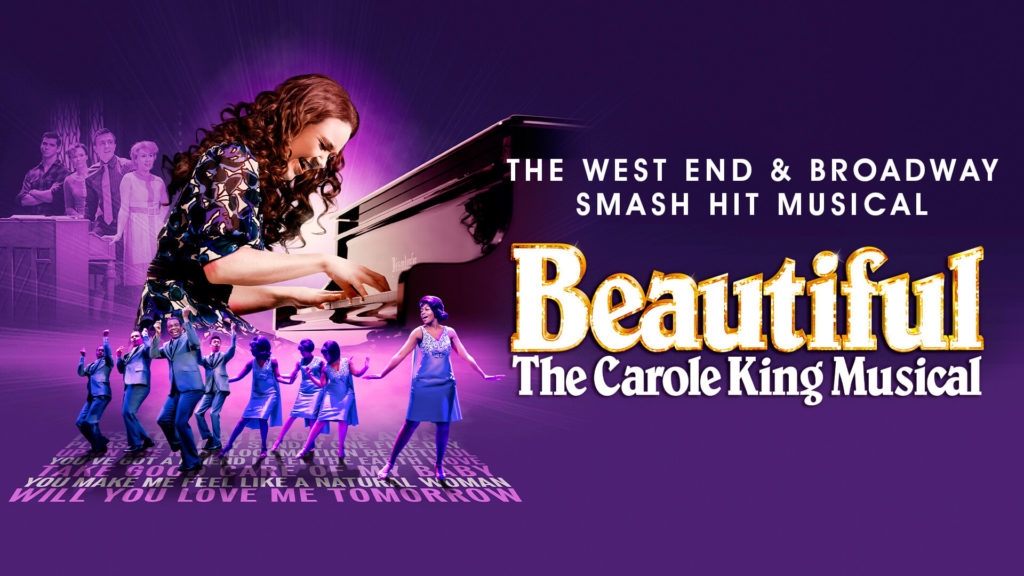
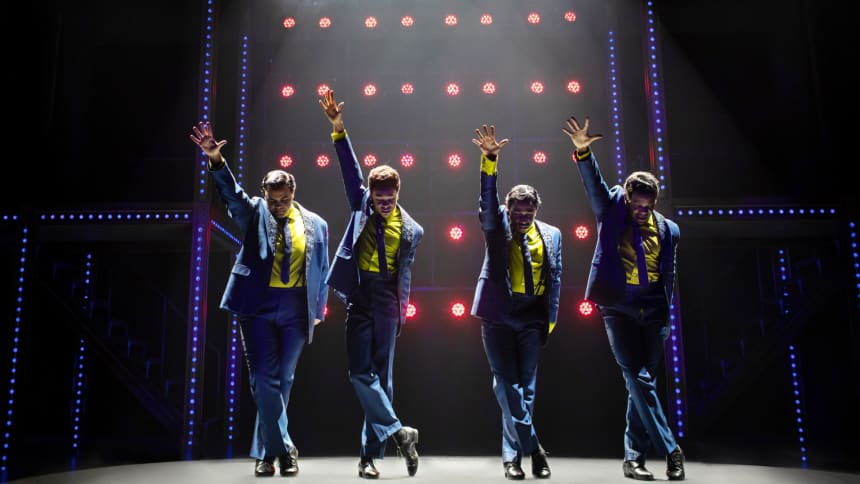
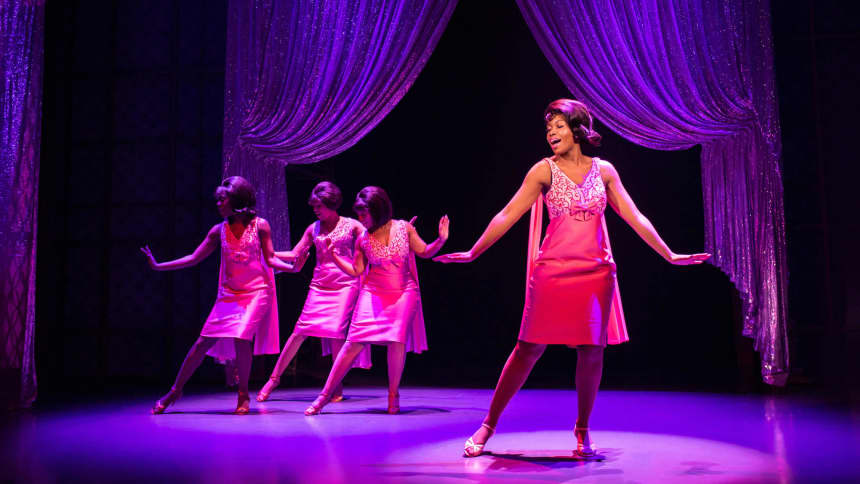
This is an enchanting show which is both pacey and entertaining. It follows the early life story of Carole King, an aspiring young American songwriter and musician who teamed up with her then partner and later husband, Gerry Goffin, moving to Manhattan to compose songs to sell to other artists in the 1960’s – some of the most evocative and iconic songs of their generation. The plot shows the struggles and frustrations facing the fledgeling composers and how they were controlled and ultimately manipulated by the dog eat dog nature of the music industry. We witness each song constructed in their purest form, before being transformed into full production numbers sung by various top chart artists and groups, from The Drifters and Aretha Franklin to James Taylor and The Shirelles and Neil Sedaka and King herself.
The audience were engrossed by the litany of hits which were performed most authentically, proceeding to sing along to the likes of ‘Locomotion’, ‘Natural Woman’, ‘Will you Still Love me Tomorrow’, ‘You’ve got a friend’ and ‘Take good care of my Baby’ to name but a few.
I particularly enjoyed the staging which
was very effective, without fuss and with efficient transitions. We
were transported from one location to another by way of an array of moving
rostra and backdrops creating the perfect mood and atmosphere for each scene.
Costumes were in keeping with the style, reminding us of the quirky, colourful
fashion of this heady creative period.
However, without doubt the main highlight was the music – the crisp, vibrant band arrangements by the eminent Steve Sidwell to the well known tunes and songs written by Carole King. The majority were sung with vigour and enthusiasm by a number of the talented ensemble cast.
The performances of the two main characters – Daisy Wood Davis as King and Adam Gillian as Goffin – were believable and emotional with lovely interaction. They were accompanied by many other actors who sang and danced and multi roled throughout the show providing a very compelling overall experience for the audience.
I thoroughly enjoyed my evening with these 60s legends and it was very pleasing to see the Donald Gordon Theatre full and bopping to the hits. If you are around, check it out – I’m certain you won’t be disappointed. You’ll no doubt feel the earth move and you won’t want to get out of this place!! The production is in Cardiff until March the 14th before resuming their UK tour.
This is a BSL video review. You can read a written version of the review by Chris below.
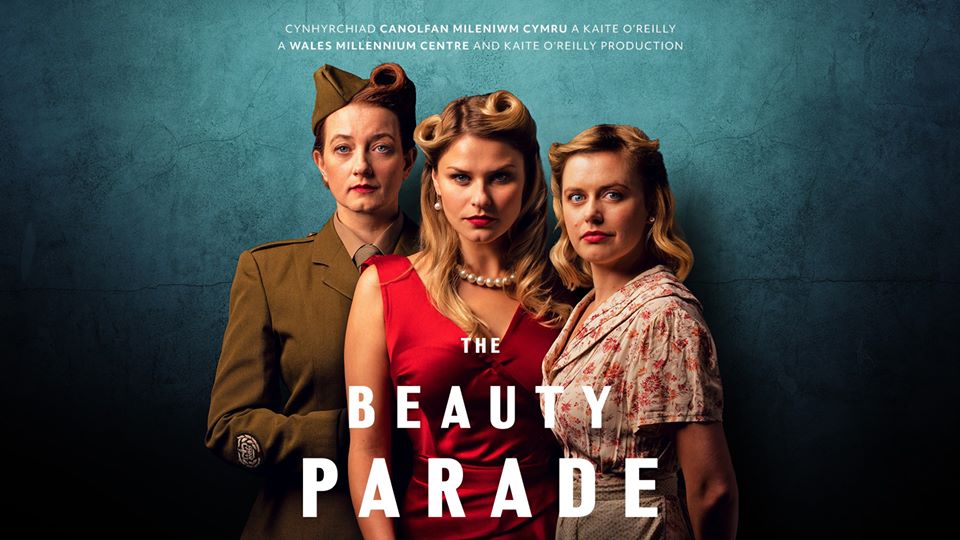
Hello my name is Chris Coles, I went to the WMC to watch Beauty Parade. The play itself was about three woman who were spies in World War Two. It showed what life was like being spies, that they don’t live for long during the War, it was a max of 6 weeks if they were lucky.
The play itself was amazing showing the good relationship between deaf people and hearing people can work. Special effect, captions and music were brilliant and written well into this play. I recommend you see this play if you like period drama.
Heather a Deaf friend of Chris also attended, Heather said that it was great to see a Deaf actress in a mainstream production and she enjoyed the way the captions and effects were presented.
The Beauty Parade plays at The Wales Millenium Centre until the 14th of March.
(Please note this review contains detailed discussion of the play’s plot) Based on the hugely popular novel by Khaled Hosseini, The Kite Runner, adapted for the stage by Matthew Spangler, had a lot to prove. Despite enjoying two runs in the West End in 2016 and ’17, I wasn’t as enamoured with the piece as many other audience members. Having studied the novel at A-Level, the boldness of the story and the narrative poetry which I had loved, weren’t quite captured in the theatrical language of this adaptation. Though it still packs an emotional punch and features innovative staging ideas, overall the play felt a little slow and watered down.
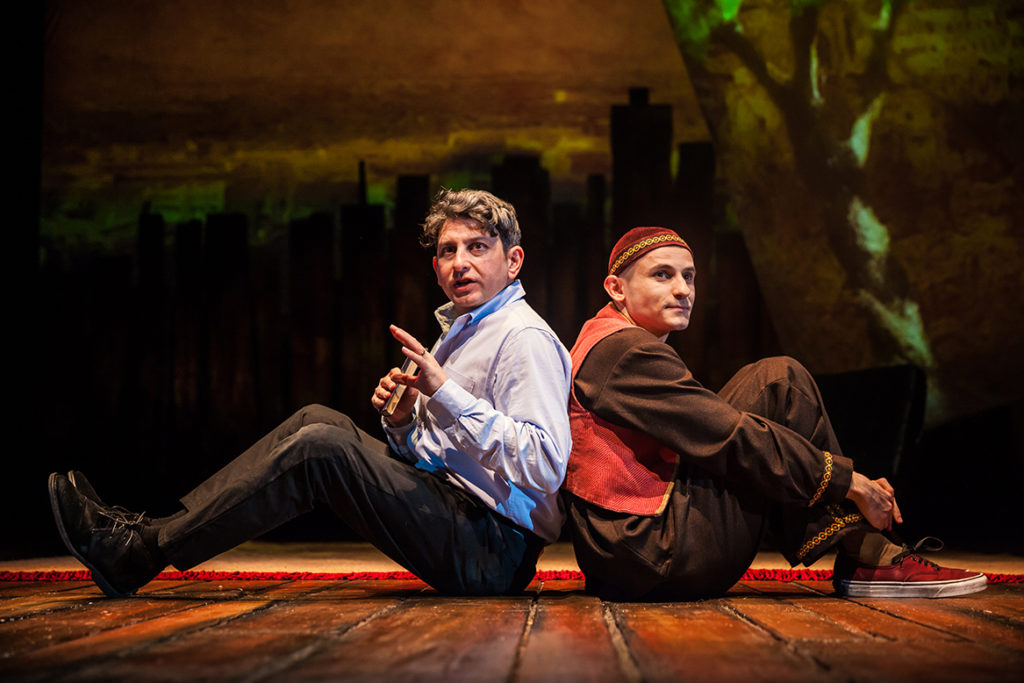
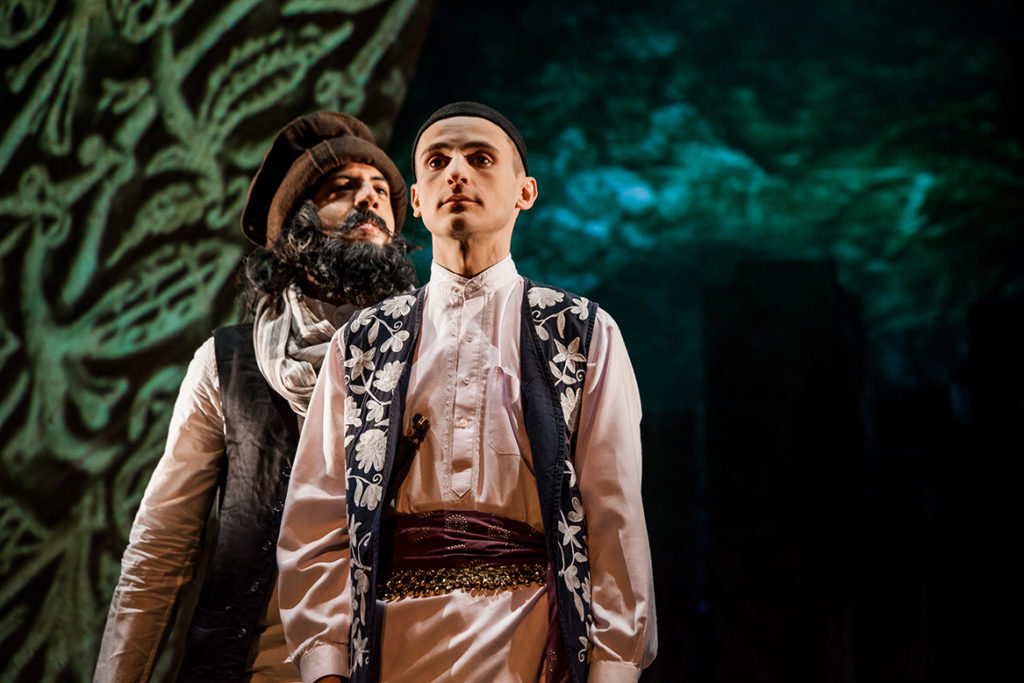
An unlikely friendship: Amir (David Ahmad) and Hassan (Andrei Costin). Image: Betty Laura Zapata
The story is narrated by Amir (David Ahmad) as a grown man, recounting his life in almost verbatim style, which, as a confessional story is a sensible choice but this sometimes takes away from the drama of the moment. Told in chronological order, the play begins with Amir’s childhood in Afghanistan where, as a wealthy Sunni Pashtun, he enjoyed a comfortable life and spent his days playing with his father’s servant, Hassan (Andrei Costin), ostracised for being a Hazara Shiite. On the fateful day of the kite tournament, Amir witnesses a horrific assault on his best friend, and his passivity haunts him decades later; when a phone call from an old friend comes out of the blue, Amir travels from his new home in California to Pakistan in an attempt to finally atone for his sins.
The whole production of this adaptation is minimally staged. The music is mostly provided by onstage tabla player, Hanif Khan, as well as Tibetan singing bowls used to create atmosphere. The live music is one of the play’s shining factors and it draws us into the world immediately.
https://youtu.be/qJtaNjoY5hQ
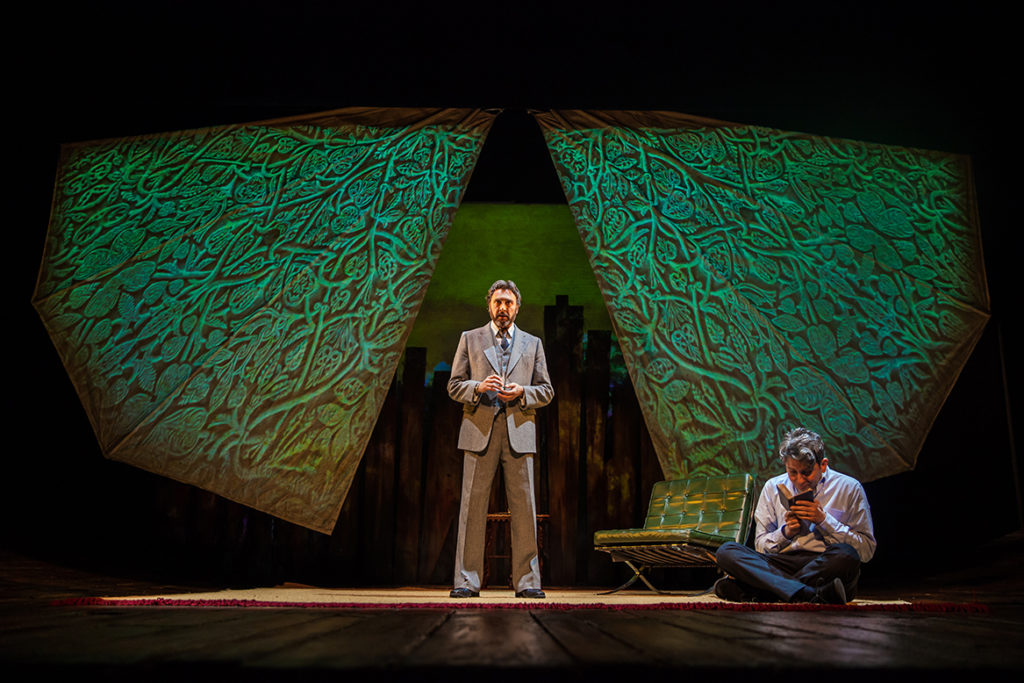
Barney George’s set is equally sparse: just a wooden floor which curves like a skateboard ramp and alternating patterns projected onto a central rug. The backdrop changes colour and is decked with mounted wooden posts to vaguely resemble city skylines, but neither adds much to the production. There are also two giant canvas kites which swing down to conceal scenes and characters, which are effective, and which also show us Amir’s childhood pomegranate tree and later, Hassan’s death, through William Simpson’s projection design.
Baba (Dean Rehman) and Amir (David Ahmad) on the minimal set. Image: Betty Laura Zapata
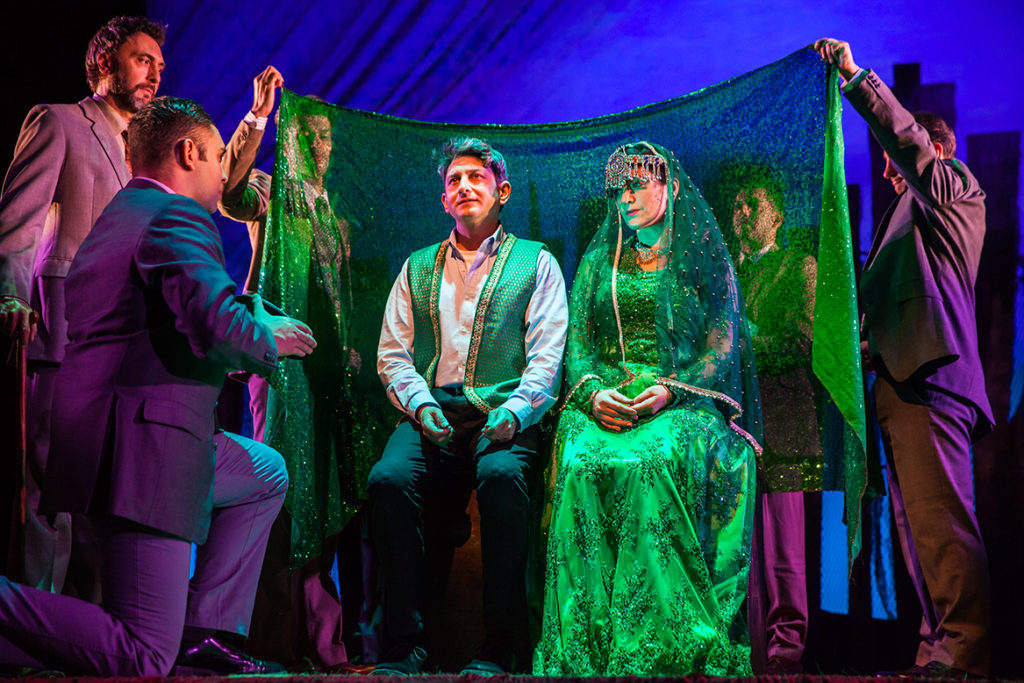
The sparseness of the stage works for the more distressing scenes where we only need to see characters and their expressions, but it makes the joyous ones like Amir and Soraya’s (Lisa Zahra) wedding feel a bit flat. Kitty Winter’s dancing is not quite lively enough to bring up the energy, nor is Charles Balfour’s lighting and Drew Baumohl’s sound really utilised to inject a party atmosphere either. This theme continues with the kite flying scene; there were only two tissue-paper kites, and they were clutched, not flown, in the hands of ensemble cast members, while Amir and Hassan’s kite was just mimed. The whole cast did do a good job of creating the tournament’s excitable tone and the use of several large, wooden Schwirrbögen, swung to create the sound of the wind, was very effective, but I wanted more kites – whether projected, or suspended in the auditorium. Now I wasn’t expecting a Mary Poppins moment, but I had hoped for much more of a spectacle for the novel’s most iconic scene.
The wedding of Amir (David Ahmad) and Soraya (Lisa Zahra). Image: Betty Laura Zapata.
The performances are strong, with David Ahmad bearing most of the weight as the central character who almost never leaves the stage; he does a great job of capturing Amir’s selfish, self-pitying persona and is given plenty of fodder to do it with routinely interjected monologues. Andrei Costin is well cast as the faithful lamb Hassan, and he brings real pathos with Sorab; having Costin play both characters is a clever yet logical choice on director Giles Croft’s part, fitting in with the idea that father and son share an unmistakable resemblance. The decision to represent the characters as children through adopting somewhat whiny children’s voices, however, is a bit of a misstep, sounding inauthentic and becoming a little grating. Child-like physically (which Costin and Ahmad already perform well), coupled with simply speaking with an Afghan accent would have sufficed, and would still have contrasted with adult, American-accented Amir; Hassan’s voice need not contrast anyway as we never see him grow into a man. Dean Rehman is also great at grounding the piece as Amir’s father, Baba, bringing a nuance to the role with both power and sensitivity.
The most harrowing moments such as Assef’s assault on Hassan and Sorab’s attempted suicide are neatly hidden or dealt with offstage but still manage to evoke a few audible gasps and genuine sniffling from the audience. The subject matter is difficult enough that visual representation is not needed but I did want Sorab’s dancing scene to be more poignant. In the book, it’s an exploitative and sinister moment where Amir realises the suffering of Hassan has multiplied in his son, and is the catalyst for Amir finally fighting for someone other than himself. In the same vein, author Hosseini’s Assef is more sadistic – leering yet captivating – but Bhavin Bhatt plays him with a gravelly voice which makes him almost a caricature. Despite his strong portrayal as the teenage bully, Bhatt doesn’t quite manage to evolve the character convincingly into the wild, paedophilic fanatic. The fighting (directed by Philip D’Orléans), even with a knuckleduster in the mix, is also a bit lacklustre.
There is one incredibly emotional scene in the hospital however, where Amir prays for Sorab’s recovery on a prayer mat made by a rectangle of light, and where Ahmad gives a tear-jerking performance of desperation. There’s also a touching point at the end where Amir finally stands up to Soraya‘s racist father (Ian Abeysekera) and shows Sorab how to fly a kite, causing a flicker of a smile on the boy’s face. Amir asks Sorab if he would like him to run to capture the kite they have won together and Sorab nods; Amir tells him, ‘For you, a thousand times over’ – a moving and cyclical moment of atonement which I feel should have been the final line.
The Kite Runner is a faithful adaptation with a hard-working ensemble cast and great use of use music, but it’s a little bland and lacks the vitality of its original medium. It is well-crafted and unspools nicely over its 130 minutes, but never fully takes off and gives us the spectacle we need.
The Kite Runner continues its UK-wide tour until 4th July.
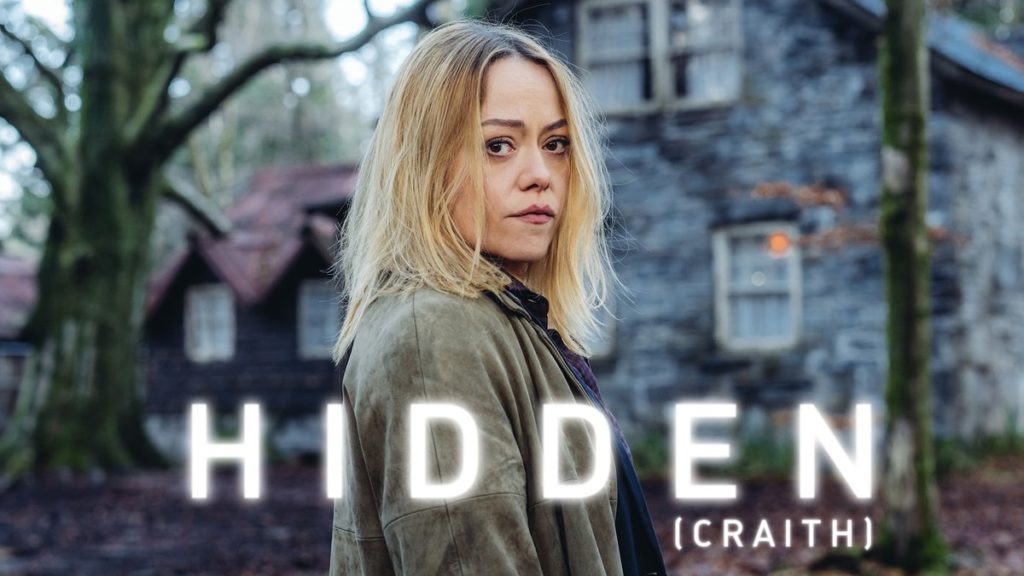
After the fairytale grotesque of Series 1, writer Carys Lewis has done a far better job than her predecessors Mark Andrew and Ed Talfan, with this second slice of Snowdonian Scandi-Noir.
The cinematography and direction, which was accomplished and stylish in the first outing, is now established, highly honed, consistent and heavy with painterly symbolism. The police characters and their families are becoming more familiar and a depth is being added to the character of DI Cadi John, played with gruelling conviction by Sian Rees-Williams. The other recurring characters have been downgraded to background figures for the most part, only interesting as they interact with Cadi John and provide foils for her story.
The bleakness mist-ridden and unremitting; a pallet of every shade of grey and blue grey and ink is smeared with heavy cloud and drizzle. Every interior is chaotic – oozing poverty and misery with its browns and umbers and filthy, greasy greens. No-one smiles unless it is ironic or through gritted teeth.
The building blocks of misery are familiar ones: poverty, family death and other tragedy, loss of reputation, illness and disfigurement, drug abuse and sexual abuse are all rife in these dark and exposed wildernesses around Snowdonia. But, after the awful cliches of Series 1, with its house in the woods peopled by a serial killer and his insane, grotesque mother, we now have something altogether more worthwhile. The plot takes a small group of dysfunctional and damaged youngsters and explores two of them with real depth and quality of writing, acting and directing. There is cliche here too but it is managed and gone beyond.
There is a wonderful sub-plot around a petrol station and shop with a father and daughter, wonderfully played in her case. The tenderness which develops between her and the ex-convict who helps out at the garage is beautifully written and realised.
The pace is slow – painfully slow and over-self conscious at times and there is perhaps too much focus on style and the noir market; but, having said that, the acting throughout is excellent: Annes Elwy and Steffan Cennydd being outstanding and time and care has patiently shaped a very fine piece of original Welsh drama.
Kin, a triple bill of two
new works and one revival performed by National Dance Company Wales at Dance City,
Newcastle is deceptively simple and unspectacular but leaves a warm and deeply
satisfying feeling. Performed by a fine tuned and yet relaxed ensemble this is
beautiful dance with an underlying humanity.
National Dance Company Wales, based in the Wales Millennium Centre, Cardiff is a contemporary dance company in existence since 1983, first as Diversions and, since 2009 as the National Dance Company of Wales. Kin is the latest touring triple bill with works by the current Artistic Director Fearghus O’ Conchuir, Dussledorf based English choreographer Alexandra Waierstall and the late Nigel Charnock, co funder of internationally acclaimed DV8.
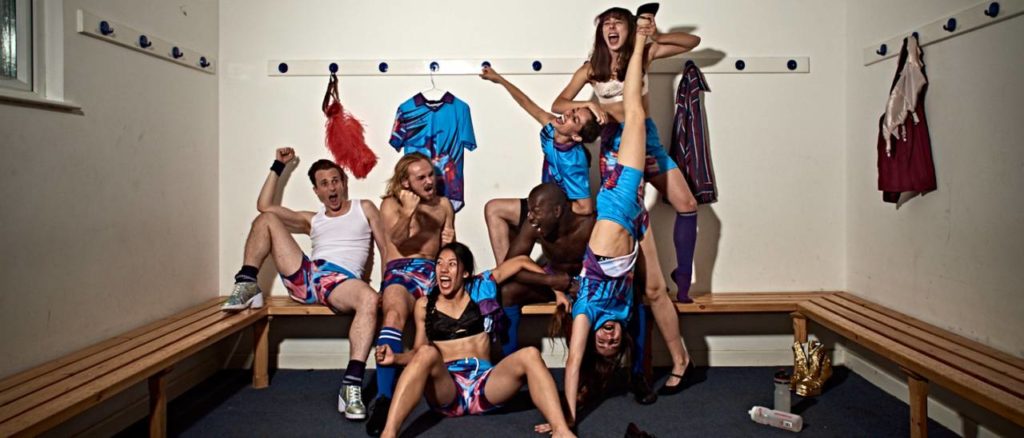
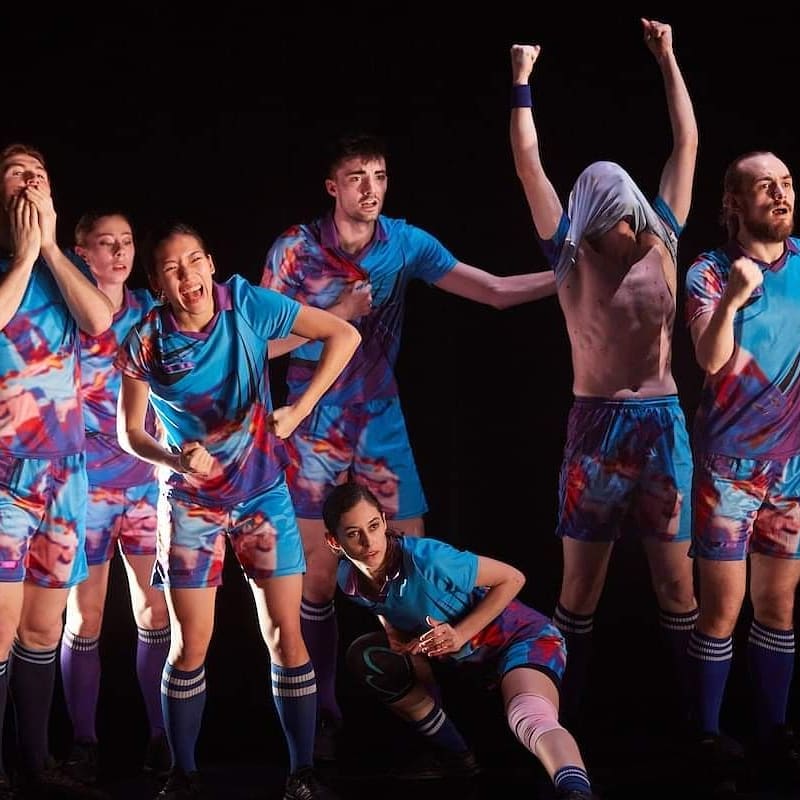
Rygbi, (Rugby in Welsh) the opening work is by Fearghus O Conchuir and is inspired by the, as the title suggests, game of rugby and is a fun, beautifully researched and choreographed piece. That choreographic detail even includes the slightly tight concentrated expressions of the players/dancers, who occasionally break out in victorious smiles. Physically both fluid and dynamic, with rhythmic, fast paced changes of direction and slow motion moments it’s an easily understood piece full of quirks and camaraderie.
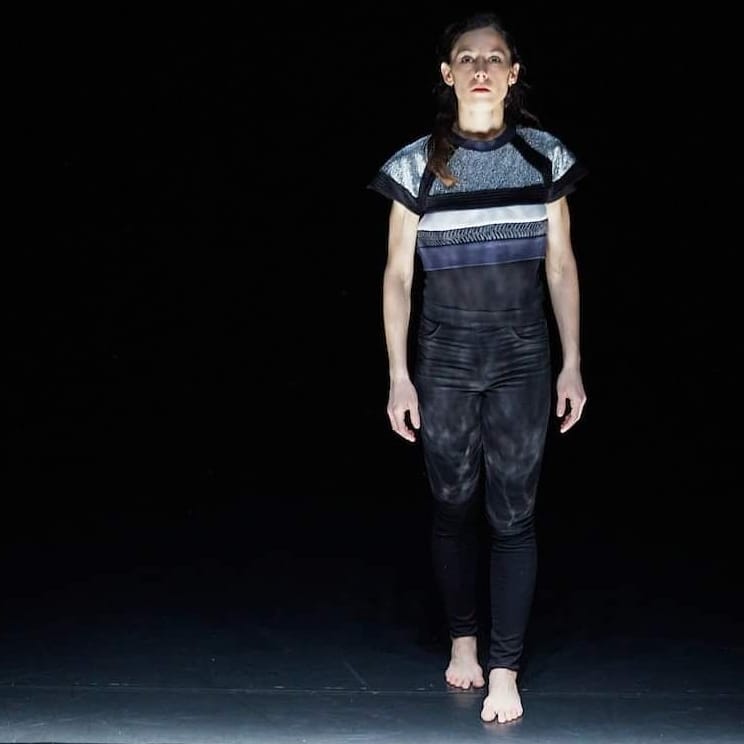
Next up 2067 Time and Time and Time is a much more meditative piece with structured improvisational movement, which though sensitively performed felt diffuse and sometimes obscure. Clearly created with great care and skill I was left wondering what the choreographer really intended even down to the compositional devices and use of props .
Lunatic by the late, great
Nigel Charnock known for his intense theatricality both as performer and
choreographer and important among LGBTQ artists, who tested new ways of
expressing their sexuality and their social situation was created in 2009. It
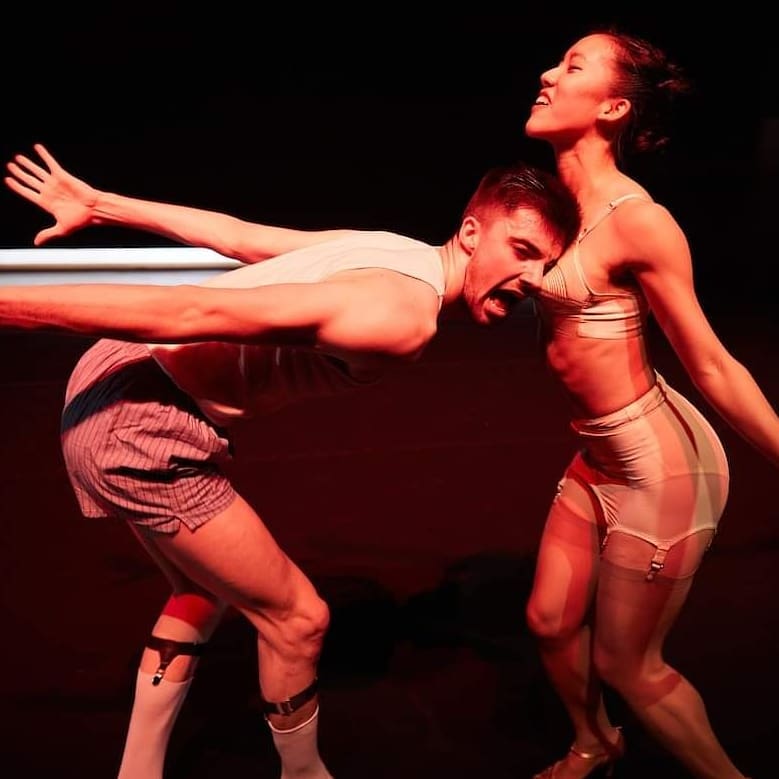
is expertly restaged by Jo Fong and feels uncanny in its’ relevance to today,
from the period style of the 1950s sequences through drag to joyously mad
ballet movement. A mix of dance and gesture filled with despair, madness and
joy using voice, props and costume changes to create a fantastic piece of choreography
which is highly relevant to today. It is also a test for the six dancers who perform
it with panache and humour.
“It is a kind of madness. All my work – to the public – doesn’t look chaotic, but mad. A little bit lunatic. People say, ‘I didn’t know what was going to happen next, what you were going to do next’.” Nigel Charnock interviewed by Emily Lambert, Wales Online 2009
The evening has a clear overarching theme of the group, how important we all are and how connected we are; there’s a sense of humanity and kindness. Superbly curated by Fearghus O’Conchuir it is contemporary dance that seeks to reach out without losing any integrity and it does.
Choreographer Alexandra Waierstall Composer Hauschka Costume Concept and Set Design Alexandra Waierstall Lighting Design Caty Olive Costume Design Brighde Penn
Lunatic
Choreographer Nigel Charnock Costume Design Shanti Freed Costume Make Brighde Penn Lighting Design Jackie Shemesh Costume Design Consultant Joseff Fletcher Restaging & Rehearsal Director Jo Fong. With thanks to the Nigel Charnock Estate
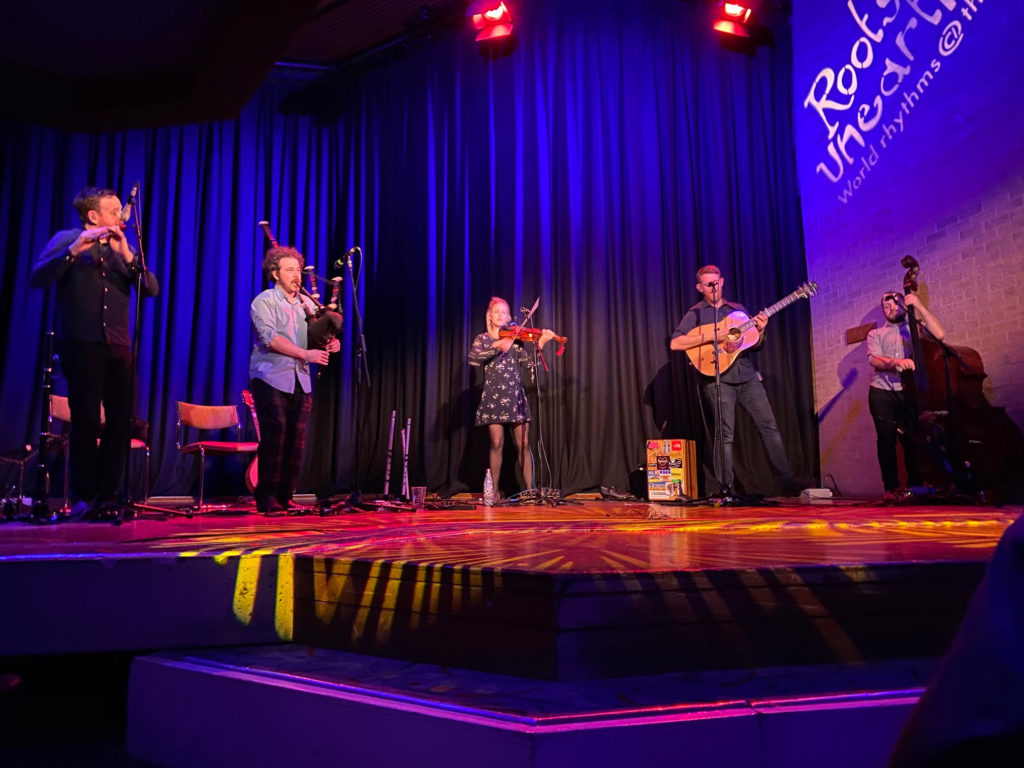
When browsing the St David’s Hall brochure, a variety of performers that I hadn’t heard of before, appeared interesting. In particular I looked up Breabach, listening to a little of their music and thought let’s give it ago. I’m quite open to all genres of music and certainly glad I attended.
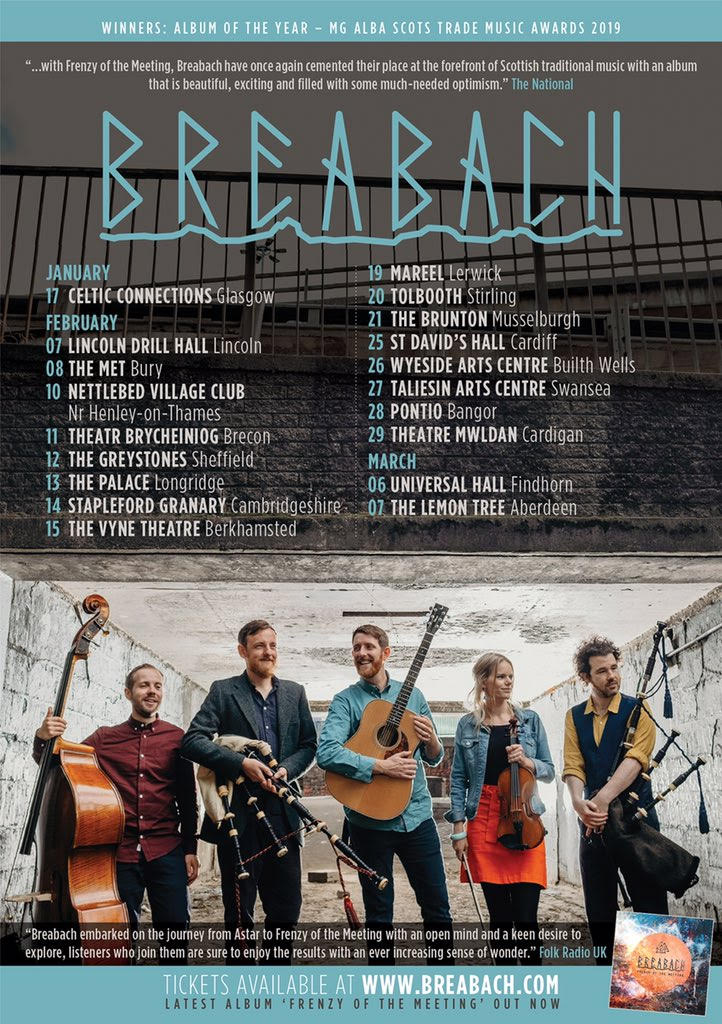
The five piece Scottish folk band, Breabach, came back to Cardiff for their second visit, while on their Winter UK tour. The talented musicians have been together for 15 years, and more recently visited Canada, Australia, and Switzerland.
Part of the Roots Unearthed world music at St David’s Hall in Cardiff, Breabach performed a selection of contemporary folk music including their own band members creative compositions. Their latest album Frenzy of the Meeting, is an exceptional diverse range of sounds by skilled musicians. Listening to them live in the intimate setting on Level 3, was full of energy and passion.
https://youtu.be/z6reICmqWCo
They explore a combination of sounds with their instruments and voice; violin, double bass, guitar, bagpipes, flute, whistle, bouzouki, cajon and vocals.
The Level 3 Lounge at St David’s Hall, had a bar, seating facing and focusing around the stage, and also some chairs and tables on the edge. There was space at the back where you could stand if that’s what you wanted to do, and even have a little dance! Along with the music, it had a warm and moving feeling.
St David’s Hall is in Cardiff. An accessible venue, a central location, with city centre parking all around. Myself as a wheelchair user, parked on Churchill Way in the disabled spaces. Of an evening there are usually plenty. Although slightly further away than St David’s or John Lewis car park (that charge), it is free to park here with a blue badge for a few hours.
At St David’s Hall, there is a door at the side that has ramp access, to take you into the main reception box office, and then a lift to get you to the level you need to be on. Disabled loo access was on the same level as the performance.
I will certainly try and see Breabach again. It’s made me open up to trying more performances that I may not have thought of attending. Whether it’s something your use to and know, or new and different, take that step, go along!
Produced by the Welsh National Opera, Les Vepres Siciliennes,
stands as one part of the trilogy released this spring term. This was my first
experience of an opera, only previously dabbling my toes in with WNO’s
collaboration with National Dance Company Wales in Parade. I felt like
something which utilised dance in which I’m more familiar would act as a great entry
to the world of opera. And in that, I was correct.
Before the performance began, both at the very beginning and
after the interval, the orchestra gave an instrumental opening. This
transcended us into the themes of the piece, providing context and a gateway for
what we were being propelled into. These were incredible and whisked you in and
out of your own thoughts, trying to make sense and pre-empt what was to come.
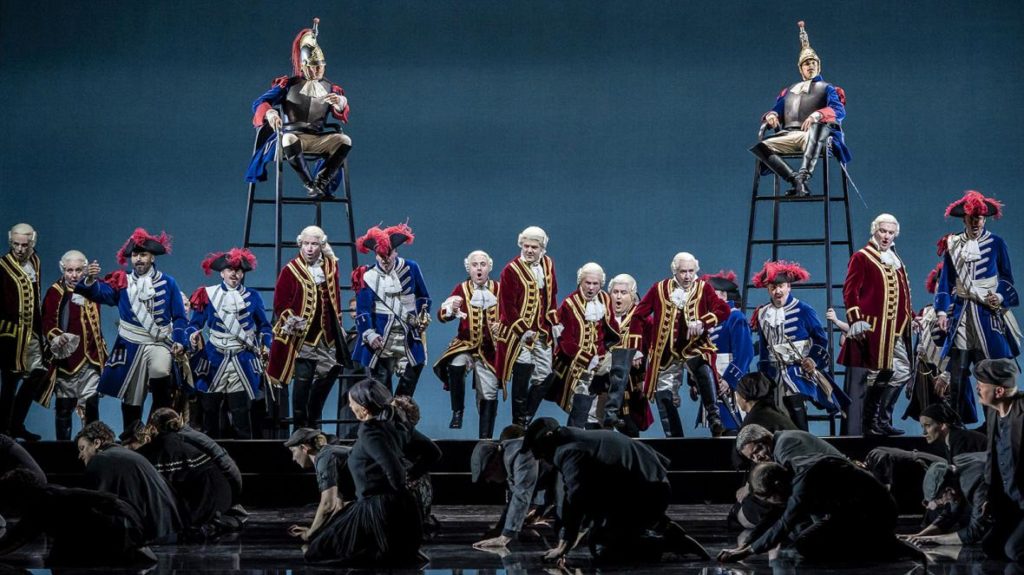
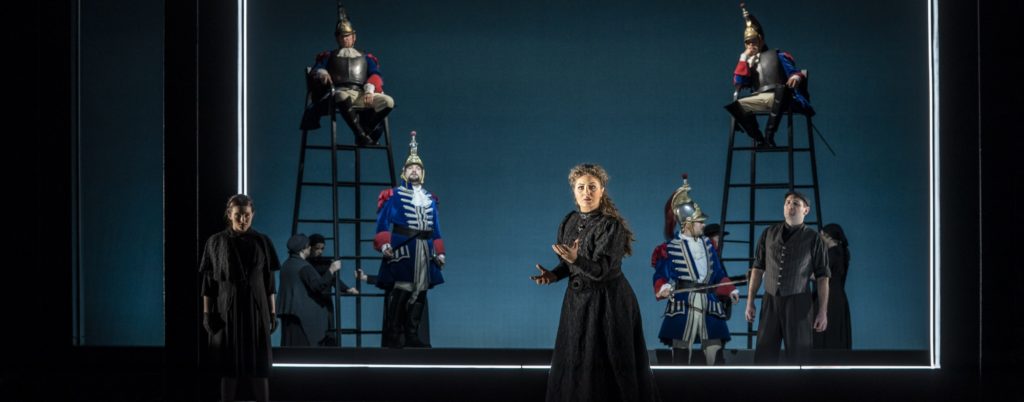
As the curtains raised, a simple, stripped back set emerged.
A rectangular frame which was lit with a box light, formed a storyboard
backdrop in which the piece would take place. The set remained as one of my
favourite components within the piece, it really made the performance more
modern and with the constant re-arranging of various frames, kept the audience’s
attention focussed. The frames allowed the audience to see difference upon the
stage and engage in different perspectives, that of memories of the past and
the difference of location in the present. However, one concern from the set is
that due to its’ abstract nature, it reduces the accessibility of the piece.
For those with hearing difficulties, the lack of a definitive nature within the
background provides no context and makes the plot hard to follow. Also due to
the thickness of the frames, your view is restricted regardless of positioning
of seat which means at times you can’t see key moments of what’s occurring on
stage.
Also, along the terms of accessibility, the placement and structuring with the subtitles was problematic. It was severely difficult to see the stage and read the subtitles at the same time so often important moments of the plot were missed (both in context from the subtitles and in performance on the stage). It also became confusing when two characters were holding a conversation as there was no way to see difference within the text as to who was stating what and whether the text was in time with the vocals or not. I would propose maybe matching a colour to a performer and from there more of an understanding could be built.
https://youtu.be/Rq4ZTOAXi3A
The imagery throughout the piece was beautiful in its
simplicity. It played with shadows and outlines and how people fell into and
out of the light using silhouettes to make powerful, thought provoking
statements. The use of darkness created the ambience for the work but was
broken by bright coloured costumes which created contrast from the otherwise
black costumes.
A piece of imagery that still resonates with me now is that of a gold table being dragged around the stage with the dancers limp and naked, draped over the table like meat at a banquet dinner. This embodiment from the dancers really added depth to the performance throughout and I often found the moments in which the dancers were included provided the much-needed breath for the performance, often bringing a sense of lightness to what would be an otherwise dark stage. The involvement of such an abundance of dance within the opera was a brilliant decision as added the much needed movement and transitions onto the stage. This also provided light-heartedness and a more intense context for what was happening within the storyline.
I felt the performers, both ensemble and main cast, otherwise lacked the embodiment of their characters which was needed. They sang and performed beautifully but the small details such as the realism of touch and emotion seemed absent. For example, at times of compassion, hands were resistant from those whom they were compassionate towards. These moments were both when the performers were acting and responding to what was being sang. This intention would normally provide clarity into the storyline of the piece and without investment from the characters, the emotional plot of the story became difficult to follow.
In Summary Les Vepres Siciliennes provided a perfect gateway
for me into the world of opera. The mixture of dance, choreographed by Caroline
Finn, and opera made it a lot more accessible for me and with such beautiful
imagery throughout I was enchanted and engaged.
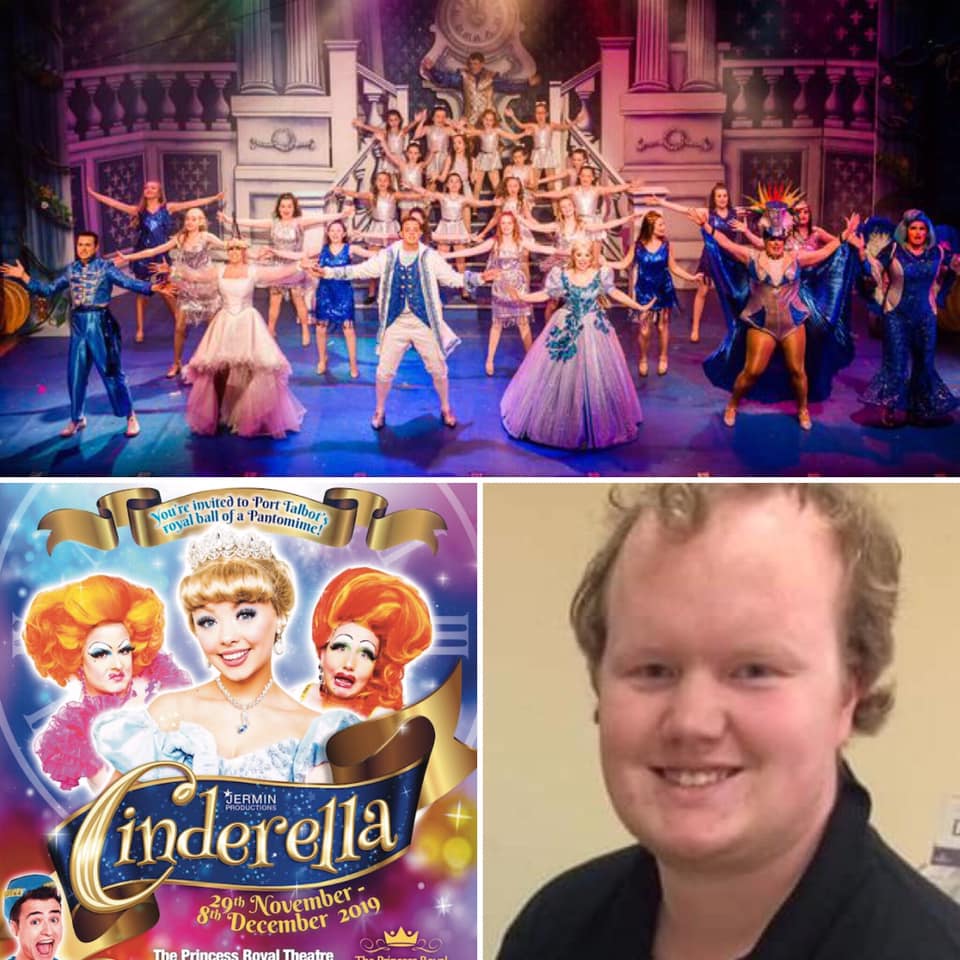
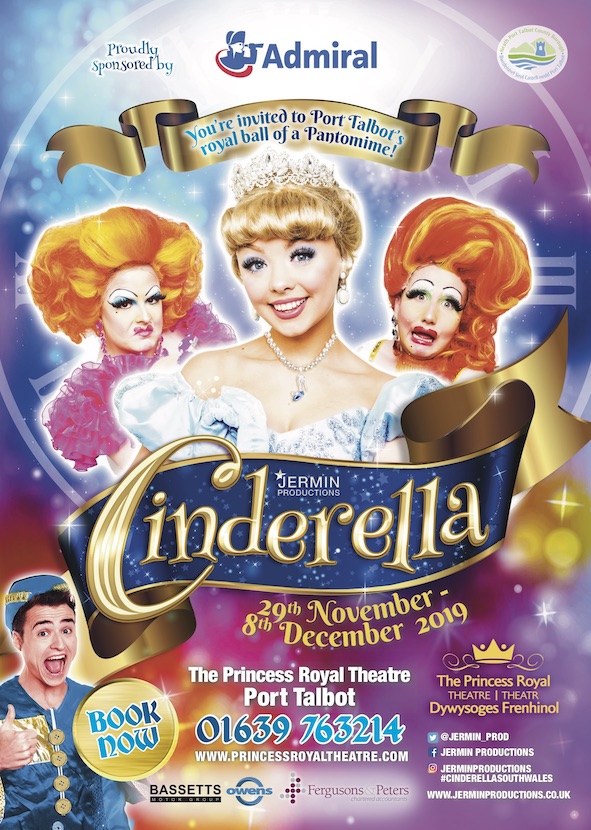
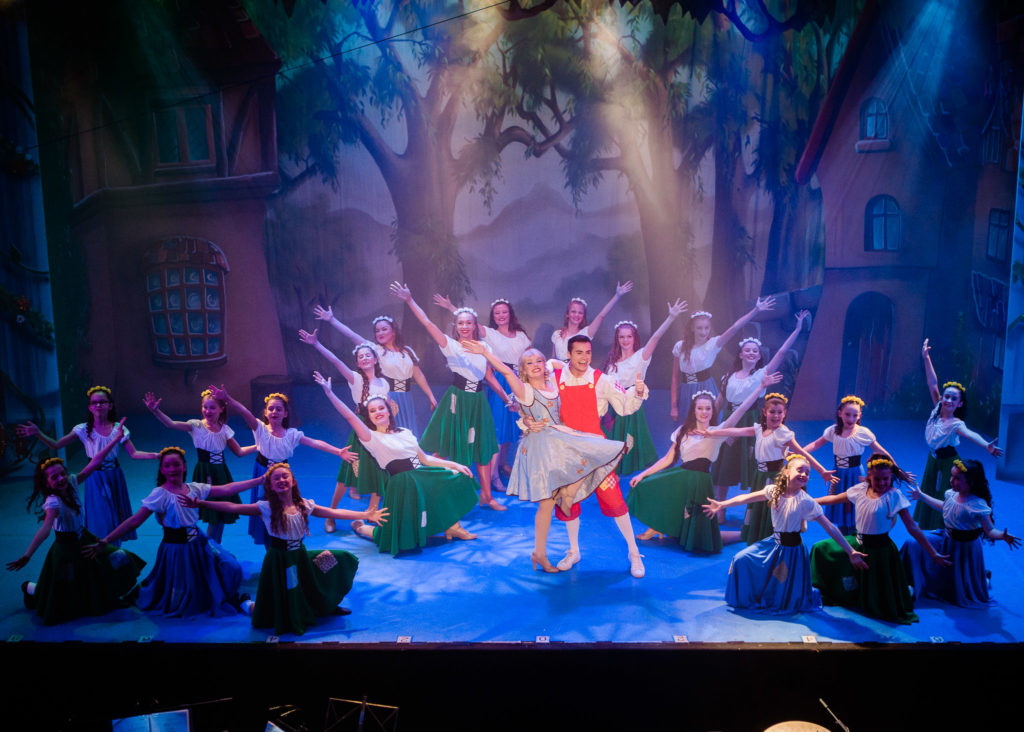
South Wales came alive to the sound of Panto in Winter 2019 with Jermin Productions’ dazzling production of Cinderella, seeing performances across Carmarthenshire & Neath Port Talbot. Performances were held in Port Talbot’s Princess Royal Theatre operated by NPT Theatres, Carmarthen’s Lyric Theatre and Llanelli’s Ffwrnes Theatre operated by Theatrau Sir Gar.
And that is where I come in!
In this article, I will be giving you an in depth look into
the roles that I worked on through the course of the production, and how
important technical theatre is in the world of pantomimes and theatrical
productions.
But first, let me introduce myself. My name is Connor Strange, I’m from Ammanford in Carmarthenshire, and I was very fortunate to work on Jermin Productions’ Cinderella South Wales Tour as a Follow Spot Operator & Lighting Technician. I’ll go on to explain more about those roles later.
My journey into the world of technical theatre all started last year. I volunteered during Swansea Pride back in 2019. During this event, I met Mark & Nia Jermin for the first time which gave me an insight into the world of entertainment. This made me think about my future aspirations and made me eventually decide to want to pursue a career in technical theatre & drama. So, I made contact with Jermin Productions and expressed interest in working on their 2019 pantomime – Cinderella.
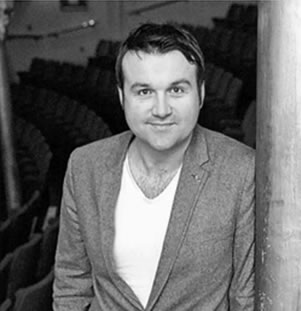
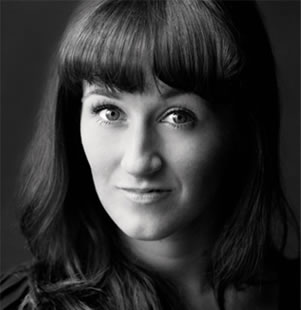
Mark & Nia Jermin
As someone who is relatively new to the world of technical theatre & drama, I was very excited to receive an email in August from Jermin Productions offering me a position on Cinderella. This was such an exciting moment for me as I had never worked on a professional production before. This gave me an opportunity to develop new skills and create connections in the entertainment industry.
Fast forward to November 2019 and it was time to start work on the most ambitious production that I have ever worked on – Cinderella. As with all major productions, first comes the get in. This involves bringing set pieces, costumes, lighting etc – everything that is paramount to a successful production. Then comes assembling sets, rigging lights, preparing costumes for cast & dancers.
As with any production, you need a team & I was very fortunate to have worked with an amazing team of people throughout my time working on Cinderella. This included Mark Jones who was Production Manager, he has overarching responsibility for the safety & security of cast, crew & equipment on site as well as ensuring that the pantomime runs successfully.
Other colleagues included Grace – Deputy Stage Manager who has similar responsibilities to Mark. Alice, Bryn and Jordan were Assistant Stage Managers. ASM’s are tasked with ensuring props are in their correct positions, costumes changes happen when they should and overall operation of the show.
Now earlier on, I mentioned a very important role that I
held during the production – Follow Spot Operator.
For those that do not know, a follow spot operator operates a specialised stage lighting instrument known as a followspot. A followspot is any lighting instrument manually controlled by an operator during a performance. I worked alongside a second follow spot operator, Luke, where we both had to follow a professionally orchestrated cue sheet and following commands issued by stage management and lighting operations. All in all, the role of a follow spot was something that I had never done before but was a fascinating insight into lighting.
Technical theatre has such an important part to play in the running of a pantomime. There are so many elements involved behind the scenes to ensure a pantomime can run successfully & efficiently. These include the Lighting department, Stage Management, Sound & our Musical team. Without these departments and the people working in them, a pantomime could not exist. All of those elements work hand in hand, very much like parts in a car. Without one of those elements, the production does not work as efficiently.
But we must also pay tribute to the Cast, without the cast a pantomime could not exist either. Technical theatre combined with a cast ensures that a production works successfully and delivers a fantastic performance to the general public.
This year’s cast thrilled audiences across South Wales and
gave amazing performances time and time again.
The cast of Cinderella:
Nicole Seabright – Cinderella
Adam Byard – JJ Buttons
Lewis Brimfield – The Prince
Jordan Bateman – Bree
Ryan Edmunds – Tree
Bethan Searle – Fairy Godmother
Working with this amazing cast has been an absolute pleasure
& has been a real eye opener to how much work goes on to make a pantomime
happen.
I spoke to some of our cast & crew about what they got
out of working on Cinderella and their experiences working on a Jermin Productions
pantomime. I also asked them what they would say to people wanting to start out
in performing arts.
Here’s what some of them had to say:
“I got lots out of Cinderella, experience and social were my main ones! I hadn’t worked on a touring theatre show like this before, and I was really lucky to be offered a job by Jermin Productions. I learnt new ways of doing things, tips and tricks to make things easier and even a few life lessons! Socially, I made so many great friends, people I’d work with for the rest of my life. It can get difficult when you’re working together, living together and sharing rooms, but with Cinderella I didn’t get any of that.
If someone asked me if they should go into Theatre tech, I’d definitely say Yes! It’s good fun and you learn a lot of stuff on the job, so if you have a lot of experience beforehand it doesn’t matter! There’s a lot of variety in this industry, which means you can try out different jobs if you’re not sure what to do.” (Ollie Gordon-Rump, Lighting Operations/LX1 – Cinderella 2019)
“What I got from it? I got a great sense of accomplishment from doing Panto with Mark. It’s my second year working for him and it was an amazing experience. It was personal for me as I got to perform in my hometown and even in the place I went to uni. It was a brilliant cast and they are like my second my family. To work with people who were so dedicated and talented was just exceptional. The script was hilarious and we were allowed to add our personalities in the characters and give it our touch.
I’d say to never give up because if you really want something then keep going. I’m a simple boy from Port Talbot whom acts for living. Anything is possible if you believe. (Ryan Edmunds, Tree – Cinderella 2019)
South Wales will come alive once more to the sound of Panto
with Jermin Productions’ Beauty and the Beast coming this Winter 2020.
Tickets are on sale right now for Beauty and the Beast in Port Talbot’s Princess Royal Theatre,
Carmarthen’s Lyric Theatre & Llanelli’s Ffwrnes Theatre.
‘Get It While It’s Hot’ is a good vehicle in various ways for Lowri Jenkin’s honed, clever and at times visceral comedy, ‘Winners’. It tells the old tale of how difficult is it to keep it ‘hot’ – whether that is the vegan dishes or the sex, fuelled by the aphrodisiac of the aptly named Dan Biggar and the colossus of Alun Wyn Jones. You should know though that they succeed, in this warm-hearted, life-affirming and love-affirming piece, they succeed in keeping it hot – though we had to learn to change our minds a little about what that comes to mean for Cassie and Dafydd.
The stage is stripped to two very ordinary
chairs and the production to a very simple and stripped lighting and sound
plot. This works very sympathetically
with the stripping of the two characters as they face a ‘couples counselling’
session, an anniversary present from Cassie to Dafydd. The device of the counselling session works
beautifully too, as it allows for audience interaction as we become the counsellors
for these two engaging and deeply sympathetic figures.
Jenkins’ is very well served by Samantha Jones’
direction and Garrin Clarke’s design – less is certainly more in this
case. We are allowed access to
characters and actors who have nowhere to hide.
And Cassie and Dayfydd do certainly attempt to
hide. There is wonderful humour in the
writing and in the performances of both actors from the first moment of the
play. Timing is crafted and almost every
mark is hit. Dafydd is warm, garrulous
and very engaging from the outset.
Cassie is initially more poised and sophisticated – looking for the
process to solve Dafydd’s problems whilst she makes suitable noises of
support. The play works, as these things
do, to peel way the layers of her social pretences as the increasingly complex
roots of the problems in their long term relationship are exposed.
The piece could have felt very familiar, safe
and predictable had it not been for the quality of the comic writing, the
beautifully honed and pacey dialogue and the genuine charm of the characters
and above all the actors. This is not
challenging, groundbreaking theatre in any sense but it is an extremely
well-crafted, warm, clever and engaging play, done wonderful service by two
compelling and lovely performances.
Lowri Jenkins understands comedy and
dialogue. There are moments when the
interchanges are too rapid fire and when we feel the writer trying too hard,
but they are few and fairly insignificant.
She understands lyrical cadence and silence as well as crowd-pleasing
belly laughs. She looks honestly and
unflinchingly at contemporary relationship issues and familiar gender tropes
and there is a warmth and affection for both her characters and the audience
responds with the real affection and engagement that this piece requires to
succeed.
This play is a winner; it is a crowd pleaser
certainly but it deserves to be. The
performances are very, very good and that they are equally good is rare. Genuine chemistry on stage is the Holy Grail
of theatre and these two have the cup of Christ in their grip. Get to see it if you possibly can on one of
these wet and wintry nights – it’ll warm you right through – it is hot!
The production plays at Sherman Theatre, Cardiff from 11 – 15 Feb 2020; 6.30pm
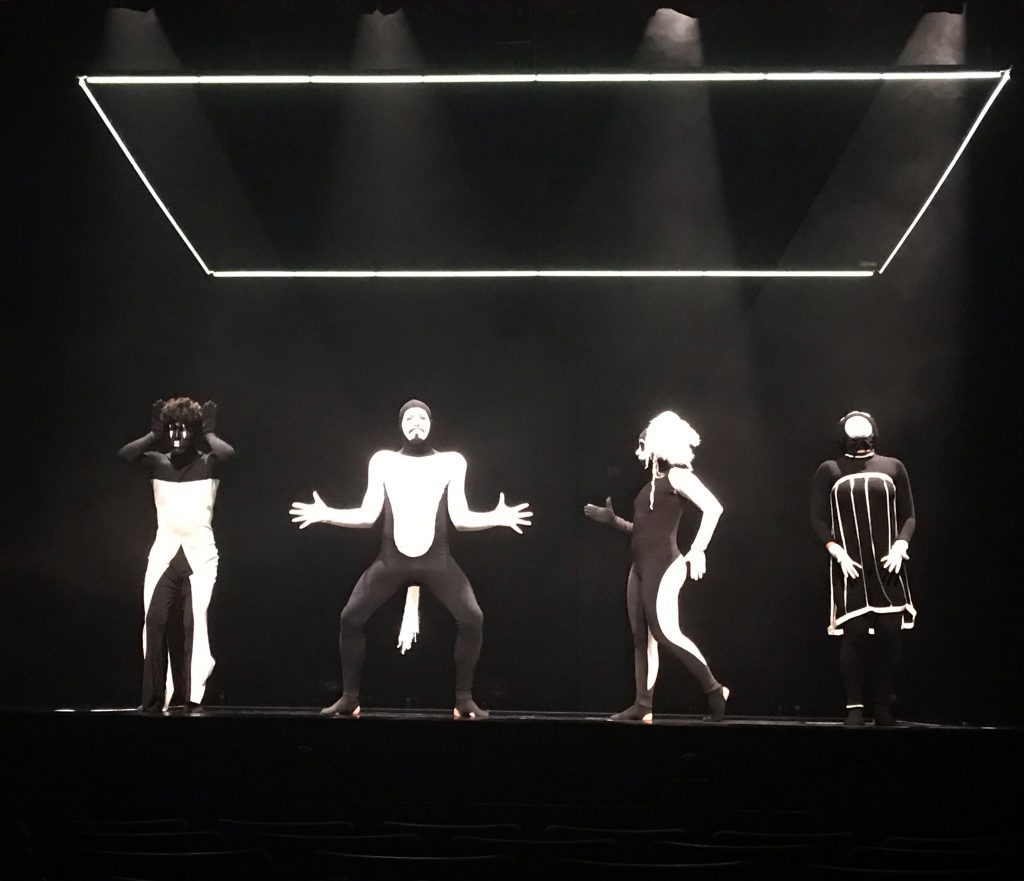
A monochrome Zoetrope of cross- continental imagery.
“Created in collaboration with Peruvian artists and long- time collaborator, composer Steve Blake, ‘Laberinto’ continues Anderson’s work around misconstruction of reimagined lost dances, leading the audience on a serpentine journey into the labyrinth, into worlds beyond death.”
The piece was performed at Bristol’s Old Vic in their Weston
studio, an enchanted yet cosy space which fit the themes of Laberinto
perfectly. This meant the dancers were really amongst the audience, almost
close enough to touch but certainly close enough hear and maybe even feel their
breath.
The dancers begin the piece with grounded movement which
seems heavily influenced by Capoeira, an afro-Brazilian martial art form. They
create strong shapes, providing visual imagery for the audience which is almost
like a caricature or cartoon. This makes characters for each performer within
the monochrome zoetrope of cross- continental imagery that emerges on stage.
The dancers hold their own persona within the piece, each
with their own personality and therefore, their own characteristics. This allows
the audience to form a relationship with each, creating space for light- hearted
comedic moments which feature regularly within the piece and to the very end (including
the bow). These add to the theatrics of the performance and provide breaks from
the intensity of the images throughout. Also making the piece accessible for
those, who are not necessarily from an arts background.
I adored the stark contrast between the characters, whether
that was being devilishly camp or oppositely, stern and unphased. The posture
of these really played true to the role. They often carried a Parisian
‘laissez-faire’ attitude which occasionally indulged us in their inner
flamboyance. However, that isn’t forgetting the shift in physicality when
performing sections that deemed more heavily tribal influenced. The dancers
would then adopt a curved and more grounded approach, contrasting the seemingly
European personas they were previously carrying. Sadly, as the performers
tired, it did seem as though the sparkle of what were such strong, captivating
personalities had become more distant and less embodied by the dancers.
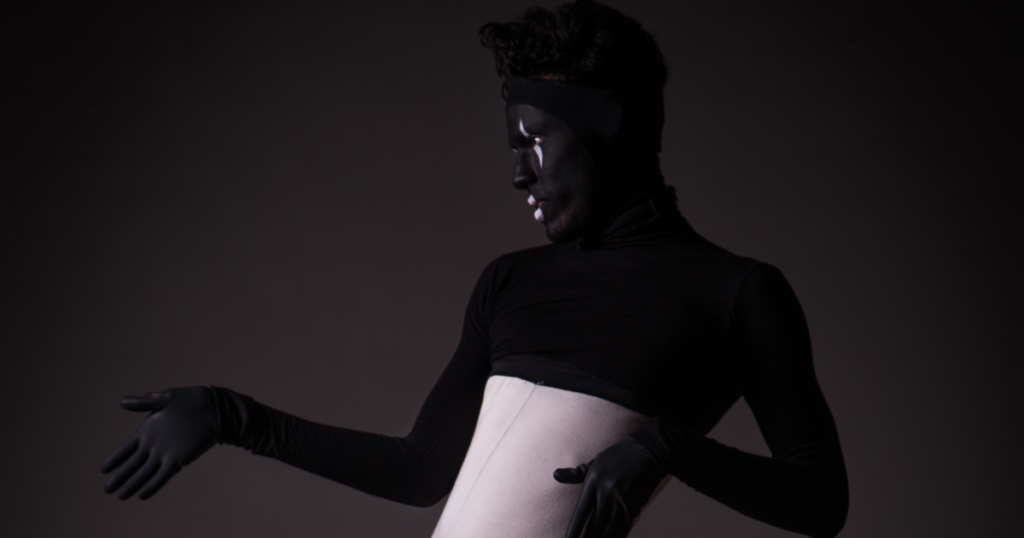
The costumes, all variations of monochrome catsuits, hold
reference to French icons such as Marcus Marceau as well as to Incan or Native
American masks. This fusion of European and Latin American aesthetics is
constant throughout the piece, both in imagery and movement. The use of face
paint on the face enhances the characters in which the dancers play. With
strict monochrome and neutral expressions, it is their physicality which tells
us of their individual stories. Only to be broken with exaggerated facial
expressions or the use of the tongue which strikes contrast to the sullen
monochrome otherwise. Imagery like the sticking out of the tongue and piercing stares
relate to that often seen in tribal rituals. This is heightened in the
penultimate section of the trio. The trio is made up of a solo and a duet. The
soloist seems to be trapped within a shamanic ritual between the other two
dancers. The two dancers appear to be chanting around the soloist but not
verbally, physically. The shamanic chanting is created via the use of hands and
gestural movements, almost like a text. Repeated, over and over, each time with
more power and vigour, growing in strength and intensity.
Throughout the piece the dancers’ hands will never be seen in a fist, but always splayed or stylistically positioned. Often the hands and arms will make references to whacking or vogueing foundations, often crossing over with that of 1980s catwalk models or magazine covers. This shape of movement is always precise, with transitional movements from one shape to the other. These shapes provide the context for the audience, often presenting imagery from familiar historic images. Not only supermodels but mimes, jesters, court dancers and circus performers. I did question at times which images have been used to make the choreography, as although some were obvious in their links, others not so much. There seemed to be expressions that linked with that of ‘Uncle Tom’ propaganda from the 1950s but whether that was purposeful or solely my connections, I am unsure.
The choreography itself relies on a mixture of devised games
(such as freezeframes or adding to the picture) as well as the use of strict
patterns playing with timings, canons, shape and poise. The accents of the choreography
tended to swap between ‘hits’ and breaks’, meaning sharp held movements and
sharper movements that then blend into something softer. The pathways of the
piece were most intriguing and formed a key role within the piece. The
characters would glide past each other, whilst in strict canons but along
unusual pathways meaning as the audience, your eyes were constantly drawn to
different areas within the stage.
The set simply details a square of flooring which is matched
by a dangling box light above. This cube of parameter provides ample space for
the performers to move and with their grounded movement quality, they seem
encased within the space and we the audience are peeking through the looking
glass. The strict spacing provided by the set allows the structure of the piece
to provide breath and more importantly to reset from scene to scene. Almost as
though when the dancers aren’t within the set, they are offstage (although they
continue to pursue their characters and to respond to what is emerging on
stage).
I was fortunate to witness the Q&A at the end of the
performance which added further insight into the process of creation and how
such a project came about. I was happy to learn that photographic images had
been one of the core ways in which the piece had been created and that the
piece focussed on these shapes and imagery throughout. It’s wonderful to see
such open ways of creating and these types partnerships taking place. I look
forward to seeing more from such an emerging professional company and wish them
the best of luck on the rest of their tour.
Creating opportunities for a diverse range of people to experience and respond to sport, arts, culture and live events. / Lleisiau amrywiol o Gymru yn ymateb i'r celfyddydau a digwyddiadau byw

 (4 / 5)

 (3 / 5)
 (5 / 5)