
All posts by admin

Review, The Threepenny Opera, OVO, The Cockpit Theatre, London by James Ellis


 out of 5 stars (4 / 5)

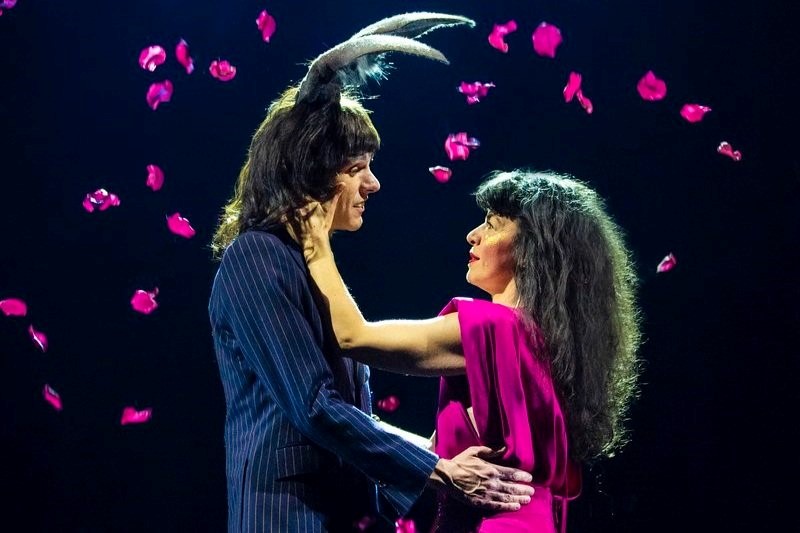
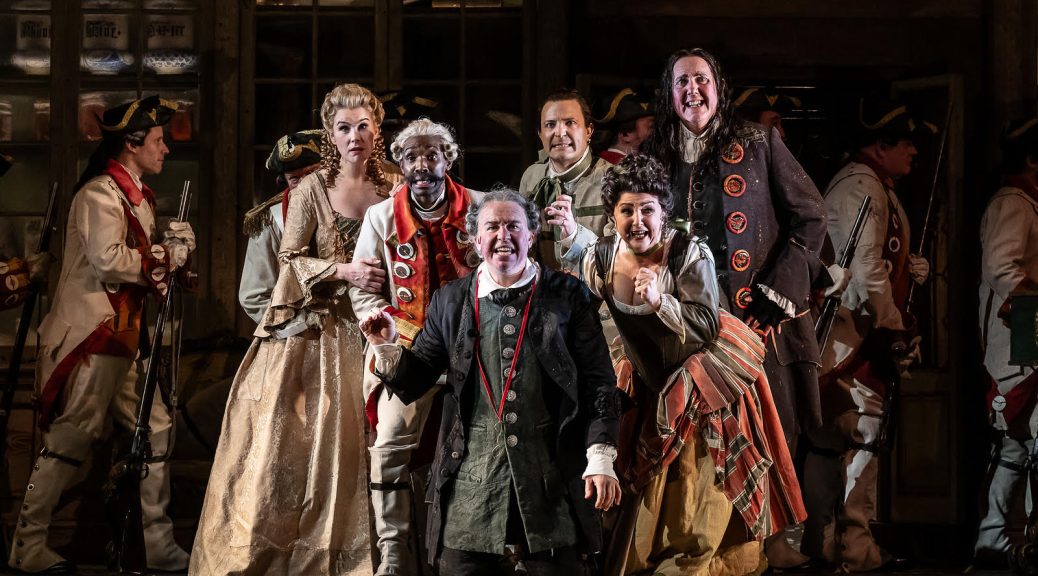
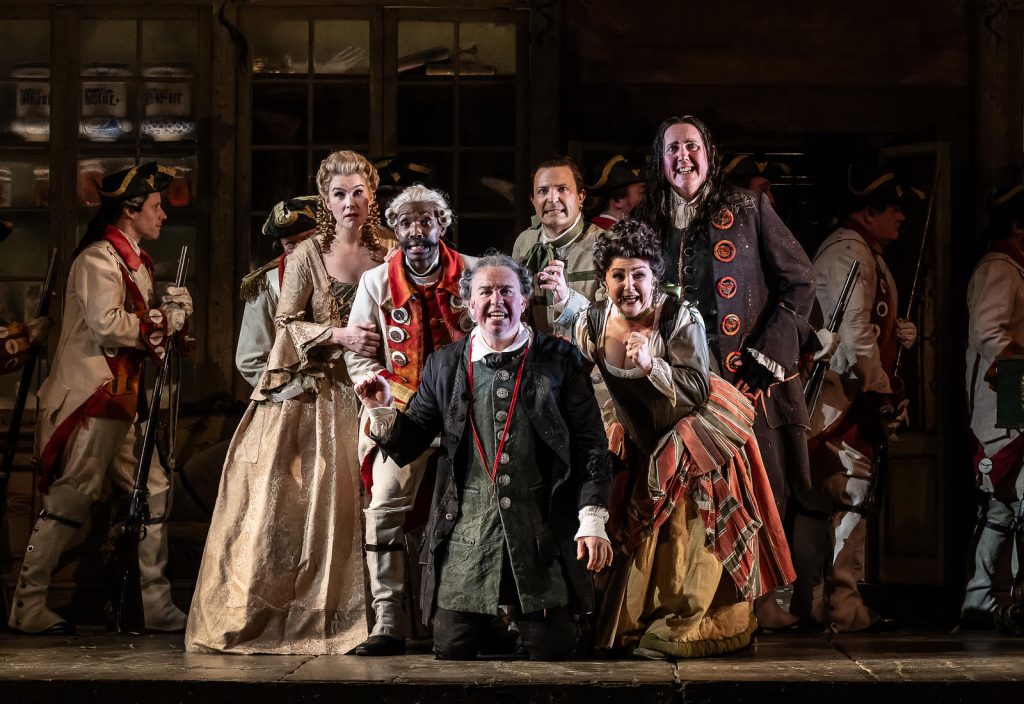
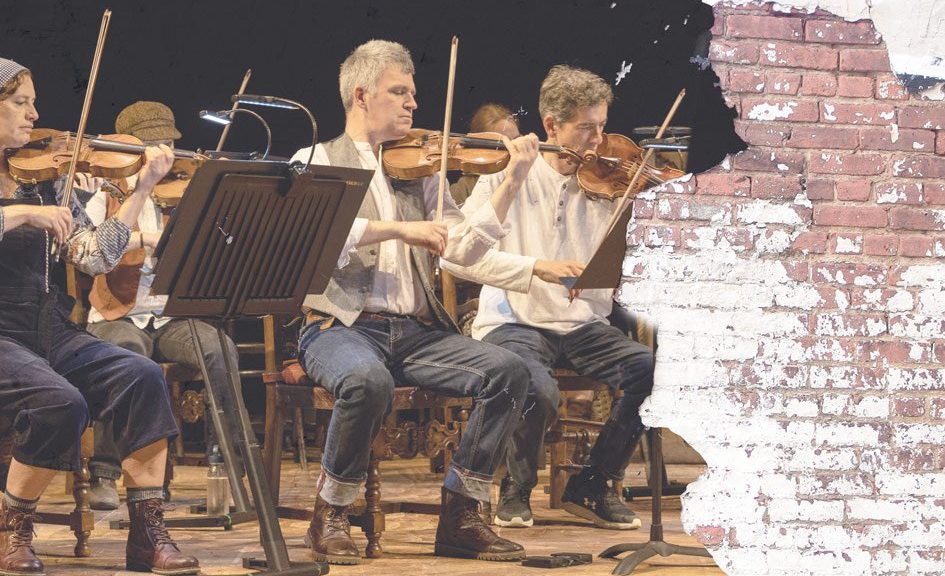
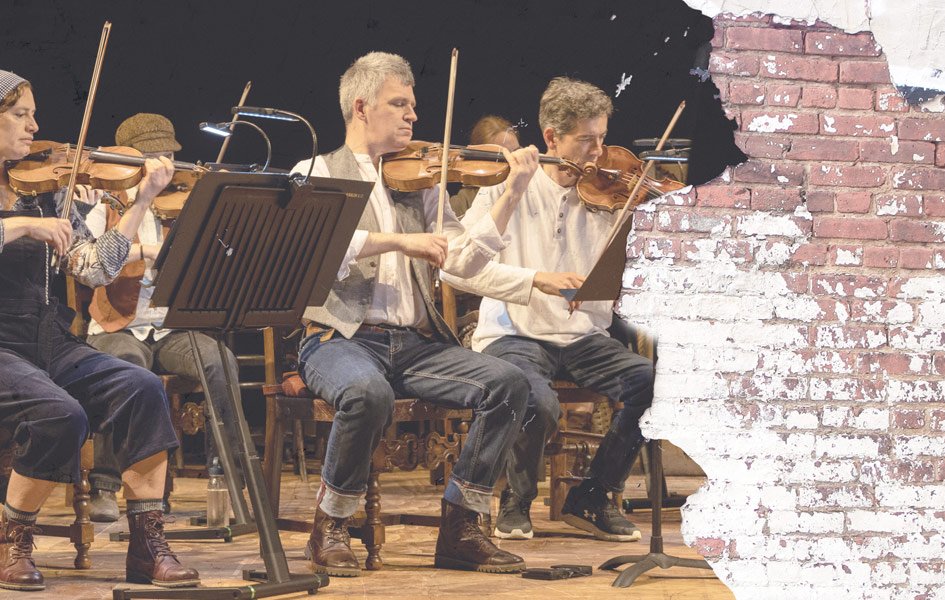
A rare treat from OVO in London with The Threepenny Opera. Most well know for the hit song Mack the Knife, the show’s titular anti-hero, this remained a delight. From the mostly young cast was brought new life to this peculiar show. High res jackets and made up mannequins are the home stay of the production, directed by Adam Nichols and Julia Mintzer.

Kurt Weil excelled as caberat songs, symphonies and film score. This is some of his best work here, the bouncing, acidic metres and remaining tunefulness are total highlights. Story wise, Bertold Brecht was never one to turn down a sort of fable lecture in most of his work. Mack the Knife is one of London’s most infamous criminals, falls in love with Polly and gets his commpuence…or does he?

My plus one was confused over the meaning and the ending’s choice. I always see it as Brecht’s cutting look at society and the systems we engage in as flawed, corrupted and horrible. This was Peaky Blinders for the Weimar period. Much respect to the springy, witty ensemble. This is such a Cockney piece and the accents felt genuine (this London after all) and the leads impressed. Peter Watss as Mack, bringing out all the stops for the scary, yet loveable thug. It was nicely performed and should see him in the role agian.

Polly was a delight from Emily Panes, musically well suited to caberat. The role does not have a lot to do, but when she engages with Mack and warding off his other lady friends things take flight. Mark Carlisle adds mad inventor vibes and Jonathan Peacham, engaged with money making schemes with homeless people. The delivery was telling and his timing well paced. Annette Yeo as as Celia Peccham in an amuzing costume and shrill theatrics is another enjoyable flutter.

The ensemble acted, sang and played the instruments and well done them. Czech conductor Lada Valešová added a serious, if still fun tone to proceedings. Her sometimes engaging with the action was dry, these little moments helped break down the show, being in the round, in English translation and by a group who didn’t focus on making a very showy show.

It runs till 7th Oct 2023. More information here

Review, Chouchane Siranssian, Leonardo Garcia Alacón & Balás Máté, Wigmore Hall by James Ellis

 out of 5 stars (4 / 5)

A return to London, making an effort to go and see something before even going to my host. In this marvellous afternoon concert we heard from JS Bach and other varying delights.

This was really an opportunity to show off Chouchane Siranssian on the violin. I loved the effort of a sensual Leonardo Garcia Alacón on harpsichord and Balás Máté giving patience and nice drone work as supporting cello. The Bach works: the Violin Sonata in G and Adagio from Violin Sonata in C minor had that had real compassion, Siranssian seems to soar in this repertoire. Amazing to think how much the repertoire has changed, yet Bach was such a game change in his own right. Complexity met beauty in what we should expect from Bach, the passion of these players was a highlight.

Though the Bach got the audience in, a delight from Carlo Farina and his Sonata quinta detta ‘La Farina’. Of note is it’s strange momentum, seemingly slow then without warning pushes forward with swift rhythms. I hadn’t heard anything like, certainly not from the era of the composer (1604-1639). More discoveries like this make you realise just how much innovation there was over the centuries.

A short fire trip followed with Johan Jakob Walther’s Passacaglia from Sonata No. 7, Krikor Naregatsi with his Improvisation on Havun Havun and Pietro Antonio Locatelli’s Sonata in D minor. Siranssian shone once again here with one part of high pitched squeals from her violin, her accompanists also getting fine musical moments. Bleeding well into each other this choice of three works was fine, its was all very touching and highly sweeping. The broad steps of musical style and expression never waned.

Ending with Andrea’s Anton Schmelzer and his Violin Sonata ‘Victori derby Christen’ prove more brilliance from this trio, this hour with them a joy. Siranssian I assume read out the name of movements in German as the piece went on, its approachable nature made for easy listening. We’d love to have them back soon. 

Review, Rebecca, Charing Cross Theatre, London by James Ellis    

Photo credit: Mark Senior

 out of 5 stars (2 / 5)

After a hefty scandal in its original outing, the German take on the classic English book Rebecca as a musical has finally made it to London. Sadly, the curse which is synonymous with the story still leaves it mark…

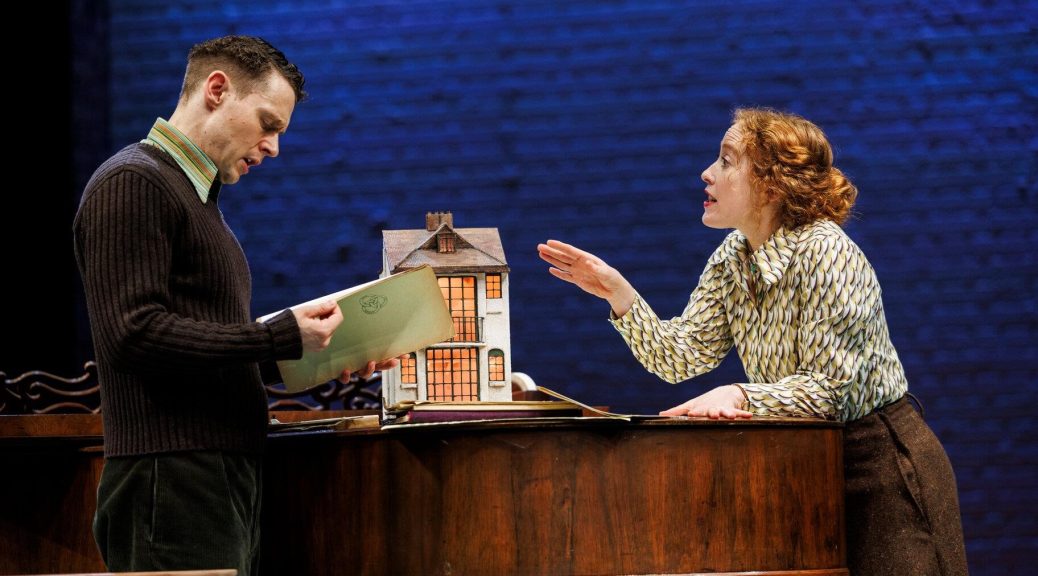
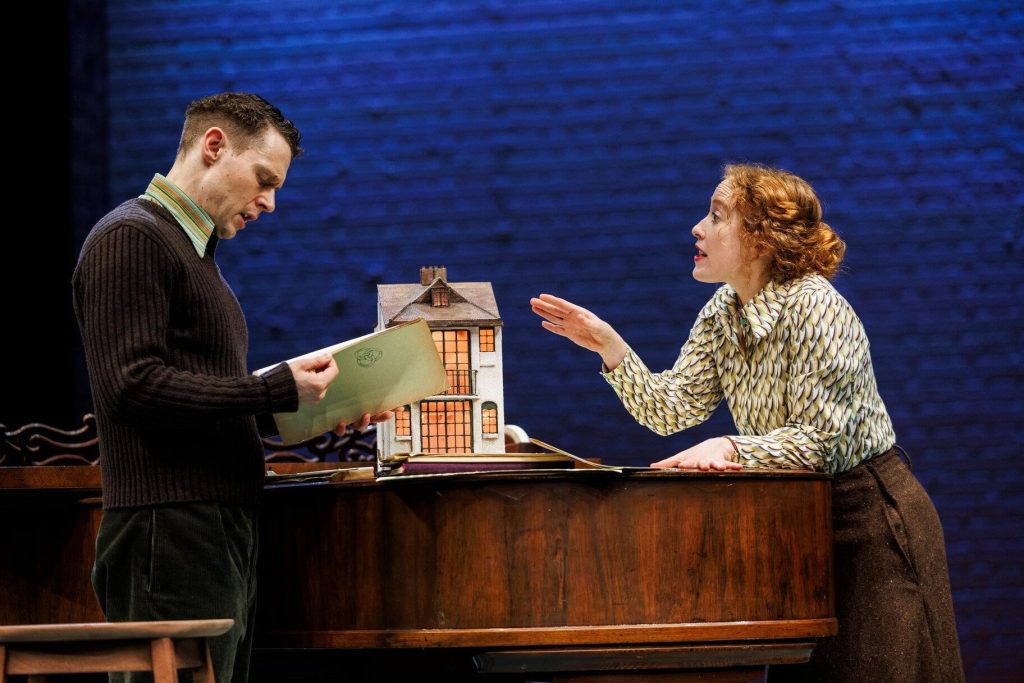
The elegance and intrigue of Daphne Du Maurier’s tale has not translated well in this staging by Alejandro Bonatto. There is something of a pantomime about the whole thing. I can assume the budget was right for this, even with some practical use of quite a small stage, designer Nicky Shaw should get a shoutout for this. The songs by Michael Kunze and Sylvester Levay have some charm and passion, but remain remarkably old fashioned. Precise extracts from the novel are present, yet it’s the generic vocal line and unappealing melodies which stand out. I spent over 14 hours listening to the audio book and it’s amazing how much was the story just stops and starts on stage. This tension does not always work when you have to take a break with songs.

The cast are vocally fine, with what they are given. I was pleased with the loud and proud ensemble who play the service staff, salty sailor types and Monte Carlo snobs. Our leading lady is never given a first name, the mark of Rebecca as Mr de Winter’s first wife looms over all. As “I”, said second wife is Lauren Jones who works well in the unassuming role. She puts up with a lot, curiously there is no mention of children or plans for any from either wife. Elements of Jane Eyre cannot be denied either. As Maxim de Winter, I wasn’t so convinced with Richard Carson, though dashing and subtly spoken. I didn’t really get the outbursts nor mental anguish from his time with Rebeca and here death. A singing voice that felt quite Les Mis, marginally less depressing than that show.

Kara Lane had fun as Mrs Danvers, perhaps the most fascinating living character in the story. Obsessed with Rebeca whom she always cared for, her singing reach absurd moments belting out the title characters name, some of the best moments in the show. The supporting cast varied from compassion to miscast. Some problematic aspects…the role of Ben who feels quite Sondheim like was played with conviction from an adorable David Breeds, his broken, mysterious, lines signs straight from the book. Sarah Harlington as Beatrice might be the best suited for any of these roles, Piers Bate as Frank Crawley getting little time to show sympathy in the ongoing scandal. Emily Apps as Clarice and Alex James-Ward as Rebecca’s cousin also worked well in the scattered pacing.

Its rare that I’m annoyed with a show. Rebeca deserved better.

Rebecca runs at Charing Cross Theatre till 18th November 2023.

Review, An Audience with Lucy Worsley on Agatha Christie, St David’s Hall by James Ellis

Photo credit: Hay Festival/Paul Musso

Perhaps best known for her documentaries on the telly, Lucy Worsley remains a vision of the past. It remains her openness, her determination to shed light upon these famous female figures throughout English history that is endearing. Her girlish charm, her sensible style and swift wit are what make you fall in love with her.

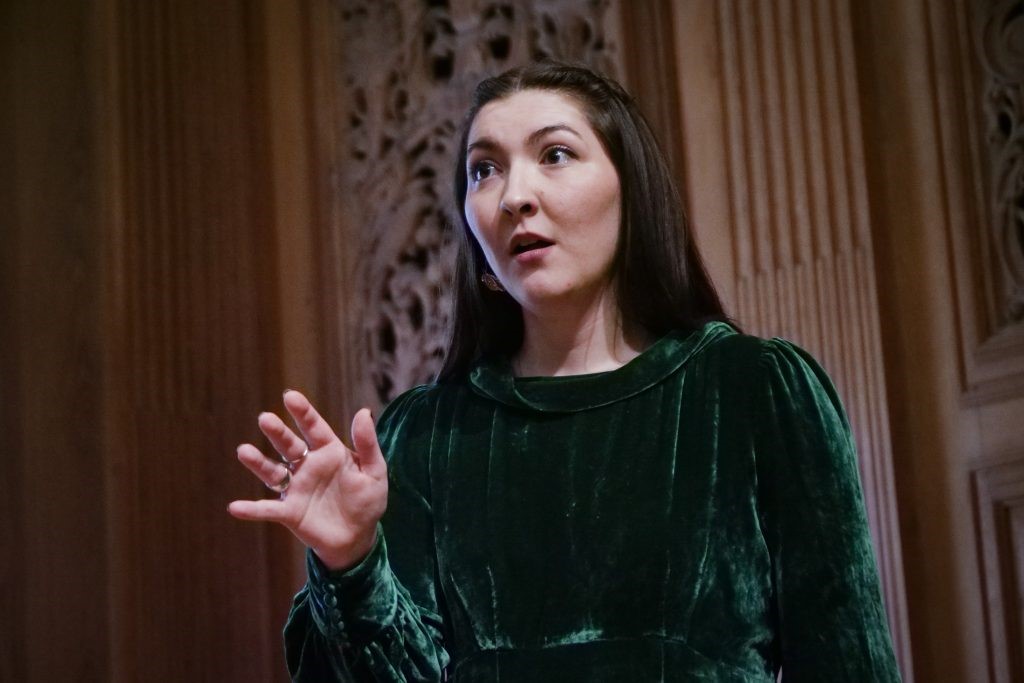
Her arrival to the Cardiff stage was everything I expected it to be and I was still elated. Gracing the space in a nymph like green and sparkly number, her time throught the night was on the murder mystery mistress Agatha Christie. All this to smoothly plug her new book, which people, bought in droves on the night. Impressive to hear that over a thousand tickets had been sold for the Cardiff talk alone.

Christie, here is given the full shake down by Worsley. Her upbringing in Torquay, two separate marriages swirled with affairs, archeology and aging gracefully. The might of her huge selling power in novels galore is commendable, though I’m thinking “was she truly a great writer?”, our presenter saying Murder in the Vicarage is a work of genius. It’s easy to tap into Agatha’s old psyche to see why she loved stories that involed murder and the mode of finding the killer. Work as a nurse during WWI, might pertian to certain horrors, her need to write with a driving force of creation her fuel. Catharsis unbounded.

Lucy makes a PowerPoint presentation funny, thoughtful and expectedly educational. Her reach spans far with TV work, books, live events and job at Hampton Court Palace. We won’t dare mention what a contractor once said to her when she was knocking about with her parasol one day! Though I must confess, I think I might respectfully disagree with Lucy over Christie’s famous disappearance. Her hubbie’s affair put her into an apparent fugue state, which resulted in a suicide attempt, hiding in a hotel for two weeks, alleged amnesia and apparently…a South African accent. If she was faking it, I doubt she could be blamed, her husband pushing her over the edge in mental and physical realms (she planned to force her car over some sand dunes). We are never ourselves in extraordinary circumstances.

Though I doubt I’ll be reading Lucy’s recent page flutter, this was a thoroughly good evening and meeting her after was a briefly, real delight, the longest queue behind me itching to meet her themselves.

Lucy Worsley continues on tour around the UK.

Agatha Christie by Lucy Worsley is available to buy now.

Review Royal Welsh College Symphony Orchestra, Rivers of Life, St David’s Hall by James Ellis

Photo credit: Kirsten McTernan

An evening of water as the life blood of the city and the world from the Royal Welsh College, Sympony Orchestra in a lovely programme. First was Elizabeth Maconchy and her Coronation Overture: Proud Thames, with mood of Walton and other English composers was heard anew here. It had that easily percecbale sound you get from over the border, it was full of chest puffing brass and percussion. Quite lovely really.

Gershwin’s An American in Paris Suite is a delightful venture, evoking the imagery of Gene Kelly and the extravagant ballet sequence from the classic film. Jazzy and brilliant, we get tuned car horns, ear worm after ear worm and a never ending passion for this fusion of great music. Staggering how much of this would go on to impact upon later musicals. It’s the American thrill of the whole thing, conductor David Jones drinking it in, sharing the fun with the students.

Vltava by Smetana flowed through, another glorious and popular choice. It never loses its appeal, the fine orchestration and melody making brings smiles all round. The rhythmic whirling of the notes easily evokes water and the brass bring larger scenes to life. The wedding and other tableaux are also noteworthy, the strings shine here, not to mention the opening. Wrapping up with Respighi’s Pines of Rome remained a vivid panorama of the city through time. The horn solo, the enthralling opening, the recorded nightingale audio and the powerful Roman legion finale, appear unforgettable. More of Respighi should be known, though this piece gets a lot of love.

Review, Merrily We Roll Along, National Youth Music Theatre, Southwark Playhouse Elephant by James Ellis

Photo credits: Konrad Bartelski

National Youth Music Theatre can righty be proud over an alumni of star studded names over the year, who all passed through performing with them. In my first time seeing them and in the new Southwark Playhouse, I stumbled over to see them take on a Sondheim rarity.

Based on the play Geroge Kaufman and Moss Hart, this musical version of Merrily We Roll Along was a notorious flop on Broadway. Yet it has found some sliver of popularity with some cracking songs and with Sondheim, who passed last year, now is the time to go out and see his stuff. Expect clever songs, lighting quick delivery of lyrics (also by him), earworms galore and a refreshing twist on what a musical should be.

This story of Frank Sheppard and Charley Kringas, a composer and lyricists combo on the up, must have been quite cathartic for Sondhiem, looking back on work he did with Leonard Bernstien and Jule Styne. His role with them was purely the writer of lyricist and no doubt the former composer would have been a memorable working environment. Demons are let loose here, the leading lady Mary Flynn, the guys good friend and Frank’s wife later on. The show goes back in time, the lack of chornological order would have proved quite bold back in the 70s, no doubt. We see success, to flops, to their humble beginnings.

It is pretty dated in some respects. The orchestration, some cheap harpsichord keyboard riffs and outdated stereotypes/jokes go against the show. Though the quality of the songs are very high, they remain moving, funny and insightful. I’d pluck out Old Friends as a favourite, very catchy and a nice three hander about the trials and tribulations of friendship. The title song has some charm, though not really a flabergasting find. It’s a Hit, Our Time and Bobby and Jackie and Jack also stand out for various reasons, mostly their quick wit, topical nature and effective sound world.

I respecfully won’t mention this young cast by name, they are rising stars for sure (with a few from Wales to boot!). I was impressed by the very effective American accents aquire for these roles, sounding like the real thing. Humour and sad bits were demonstrated with a formidable punch. The leads had a good peppy attitude as well, the ensemble also quick and alive. Director Katherine Hare and crew should be proud with their efforts putting this on. Libby Todd on sets and costumes harked back to the era, uncluttered moments would lead to hefty scenes and the wide space was used effectively. Not an easy piece to slap on any stage, I’m sure. Side note I would have loved a much earlier start time. We didn’t get out of the theatre till 10:45pm and sorting out public transport in the big city at that time can prove grueling.

It may have its flaws but it’s a big, busy show for youngsters to do today.

Review, Prom 50, Samsung, Academy of Ancient Music, Royal Albert Hall by James Ellis

Photo credit: Sisi Burn

 out of 5 stars (4 / 5)

It would be my last pop at The Proms this year that might just be my highlight of the trip. The Academy of Ancient Music, Philharmonia Chorus with conductor Laurence Cummings wowed with this years take on Handel. The German composers times in London proved fruitful and even today the city appears to adore his work. Samson is an oratorio, quite static in nature, not an opera and most of the main events of this biblical story happen off stage. Of course, the joy with Handel comes with sincere and exquisite arias, music which has held up very well over the centuries to a very height standard.

A fine cast of singers stand out here. As the strongman lead, Allan Clayton is Samsong who waves in and out of the music, his rich timbre always on display and his operatic presence never waning. As Delila, the downfall of Samsung, Jacquelyn Stucker is seen very little for these two and a half hours. Though her subtle vocals might not have command the great hall there was joy in her aria or two, her actions changing the story forever. Joélle Harvey as the Israelite Woman was clear and refined, her famous ending piece Let the bright Seraphim (with galloping trumpet) the crowing achievement of this fairly drab and solemn story. 

Photo credit: Sisi Burn

Wagner stalwart Brindley Sherratt is Harapha, adding conflict and further drama, his voice smooth and a fine baritone to hear here. Jess Dandy in the fictions (a creation of John Milton, not from biblical sources) holds the piece up with a fine contralto, her time on stage extensive, her music affirmed. Bass-baritone Jonathan Lemalu as Manoa, Samson’s father, added pathos to the final act as fate is settled. Lemalu suprisee with another golden voice, the varied male roles getting lots of opportunities to glow. Will Pate as a Messenger was brief, though in fine footing.

Some arias are highlight, the Dead March featuring the flutes and the choral numbers were touching. You’ve got to like your arias, otherwise you will struggle with a thing like this. Cummings both maestro and on one of two harpsichord had so much energy it was staggering. It all glided along smoothly, perhaps just the odd moments which left me unsure. I think the audience was taken with this work. We hope more Handel will follow. I imagine it will.

The BBC Proms are available to listen live on BBC 3 and after on BBC Sounds.

Review, A Philly Soul Summer Festival, Ronnie Scott’s, London by James Ellis

 out of 5 stars (4 / 5)

Natalie Williams’ Soul Family present: A Philly Soul Summer Festival

This first venture to Ronnie Scott’s would prove a triumph. Whilst queues to get in went down the street and the intimate interior was welcoming, it was all quite exciting. Natalie Williams’ Soul Family have been wowing for years for their end of year Motown shows, though here was a summery treat. This Philly Soul fest would be highly accessible, I knew most of the songs from what is essentially my mum’s ear of music.

Whilst some technical glitches early on prevented the family from continuing, a little break would iron out any problems and march onwards with the set. It was just a lovely, warm feeling from the players that caught me. Working my way back to you, Thinking of You and Could it be I’m falling in love was just a taste of over the over 20 song set for all of us to jam to. We were encouraged to dance for occasional numbers and some obliged. You could feel the chemistry between these musicians, Natalie as ring leader, with some piercing vocals and her ensemble of singers: Altia Moses, Vula and Brendan Reilly all getting knock out solos. This is a high calibre of singers, people.

I was also quite taken with Bust Your Windows by Jazmine Sullivan, a blazing, new discovery for me and a highlight of the night. Sat at the bar I was witness to the hustle and bustle of the serving staff who did not stoped for this entire set and prior to playing. It’s a bit tight at the bar if you sit and I was cracking a table proper, still I lost myself in this great concert. People around me were loving it and it was shut an all round good vibe. The band as well were world class, never a fault or flaw in it all. It was just great to see musicianship do what they love and share it with an audience.

I’d be delighted to come back soon.

CREDITS

NATALIE WILLIAMS – vocals
ALITA MOSES – vocals
VULA – vocals
BRENDAN REILLY – vocals
PHIL PESKETT – keys
ALEX MONTAQUE – keys
BEN JONES – guitar
ROBIN MULLARKEY – bass
MARTYN KAINE – drums
DAN PEARCE – vocals/percussion

Review, Prom 49, LSO, Das Paradies und die Peri, Royal Albert Hall, London by James Ellis

Photo credit: Mark Allan

 out of 5 stars (3 / 5)

I’m still reeling after the Londin Sympony Orchestra and Simon Rattle doing Messiaen’s Turangalîla-Symphonie a few weeks back. As Rattle begins to leave the maestro role with them, it looked like The Proms might just be his last potential concert with them.

This is the first time the full work of Das Paradies und die Peri has been done at The Proms. Schumann’s not quite opera, not quite oratorio proved highly popular in its day, with tours around Europe and even going to New York. Based on Thomas Moore’s Lalla Rookh, the Peri in question is semi immortal creature who strives to make it to heaven. Through three redemptive tries, a drop off blood, a sigh and a tear all fail her, expect the final attempt. Journey to India, Egypt and then Syria, this strange piece has surprisingly fallen off since the 20th century, its success something of the past.

This is an era of rampant orientalisation, Moore’s story a popular read at the time, mirroring Scheredzade in the story telling arch and locations. Its pacing is slow in all fairness, though the music is fairly touching, little is done to make the exotic stand out in the music, Schumann’s early German sound is rich and at times compelling. Each part is one of the Peri’s attempts to try and get into heaven for an three act structure. There appears an almost unifying scope where characters from both Islam and Christendom are referenced, as we venture through supernatural forces and the geography of the Orient. 

Photo credit: Mark Allan

There is decent music from Schumann here, though certainly, not his best. You get a flavour for his style, though nothing really stands out, the arias and chorus moments swells and sway throughout. Rattle loves this piece and you really feel this as his choice to make happen. His mastery over everyone on stage was noteworthy, his grey, curly mop proudly on display tonight. Lucy Crowe as the Peri offered stunning vocals for this strange role. The Angel was an equally strident Magdalena Kožená, the Narrator from Andrew Staples framed this odd story together, his tenor very firm and a lovely addition to the cast. In supporting roles, Jeanine De Bique, Floria Boesch and Linard Vrielink offered compelling and soaring vocals, their characters the defining aspect if the Peri goes to heaven or not.

LSO and its Chorus delivered well in what I imagine is a work they rarly take on. It proves how German music would progress, even if Peri is something we see much less of now. It’s a good piece, I just don’t think it needs constant revival.

The BBC Proms are available to listen live on BBC 3 and after on BBC Sounds

Review, BBC Proms, Les Siècles, Royal Albert Hall by James Ellis

Photo credit: Sisi Burn

 out of 5 stars (4 / 5)

There is much to be said about returning to how music used to be played. What is its purpose today? Should we look back at all? Will it keep getting audiences? In comes Les Siècles, best remembered for their Lully some ten years ago, now boasting a 20th birthday this year. The serious but playful maestro François-Xavier Roth keeps everyone in check, his little turn to acknowledge rampant coughers during a movement breaks was funny. He usually exudes confidence and gives lots to the players as well.

The genius of György Ligeti is front and centre for his centenary celebrations. The Proms have already honoured his usage in 2001: A Space Odyssey in concert, now parodied in this years billion dollar busting Barbie from Greta Gerwig. There could not be a better time to hear this most eccentric and outrageous of composers.

In its first ever Proms outing, his Concert Românesc from 1951, is a pristine find. Taking over from Bartók, this is the next level from Transylvania folk findings and new inventions along the way. It’s quite vanilla for most part in the first three movements, things seem to plod along nicely with flavourful songs and an all round infectous charm. Though the final movement, the peasants fiddle melody turns on its head as unusual tuning techniques have been applied here. The spooky last movement would have upset Soviet sensibilities and apparently had it banned for its rockstar quality. It still saw performances anyway, proving the pieces popularity.

Decades later, Ligeti wrote one of the more strange violin concertos imaginable. Isabelle Faust as our soloist really got into what feels like a highly difficult work. Broad new ways of playing meets overtones, ocarinas and swanee whistles in the woodwind and hushed cadenzas propel the Violin Concerto into a surreal realm of possibilities. Faust fiddles with a piercing, passionate flair, just trying to tackle this piece should be commended. The percussion was also note worthy with vibraphones, glockenspiel and little cymbals, some of the work being inspired by music from Papua New Guinea. Multiple listens would envelop the questions you find yourself asking. An encore of Kurtag’s Doloroso from Signs, games and messages was so painfully quiet, you could hardly take it in.

Photo credit: Sisi Burn

Now, we come to it. Sound levels. In keeping with said tradition of faithful music making, here is where the concert fell on its face. By using a forte piano for Mozart’s Piano Concerto No. 23, it was simply to quiet for his monumental hall. Fine playing from Alexander Melnikov, who seemed to relish this odd return to form. Yet it was as if his refined playing was not there at all, the crumbly, slight sound of the fortepiano giving him very little to work with. A man in front of me cricked his neck and cupped his ear to try and hear better (we were in the side stalls, not that far away). I’ve always seen the instrument as the stepping stone between the harpsichord and the piano we know today, it’s easy to see why it fell on the way side. The lack of dampener is also disheartening and just might be the major problem point. That aside, it was pleasant enough (its touching and has room to breath) and the orchestra revelled in this Mozart which proves to be popular at the Proms.

Luckily, the final piece, Mozart’s Jupiter Symphony (No. 41 in C major) kept tuning and instruments of its day and still worked! I kept finding lovely moments in this famous piece, all the players shone throughout, defining how the symphony was changing and evoling in his day. I could feel the energy, the green and floral nature of it a real testament to Mozart’s genius. Motifs grow and rouse towards the gripping finale. This is how it’s done. Popping a bell jar on the past, without setbacks. No encore, though I think this audience was quite happy.

Listen to all Proms concerts on BBC Sounds