
All posts by admin

Review Come From Away, Wales Millennium Centre by Bethan England

 out of 5 stars (5 / 5)

Come From Away has been called one of the ‘best new musicals of the century,’ which is high praise indeed when you consider the sheer choice and variation of shows and, in particular, musicals, when you consider attending the theatre. This assessment, however, is truly well deserved, proven by the instantaneous standing ovation at the end of the opening night of Come From Away at the Millennium Centre.

The plot focuses on the true-life story of the town of Gander. Once the biggest airport in the world, Gander International was at the forefront of aviation, perfectly placed for planes to land to refuel during their transatlantic flights. Since those glory days, however, there’s talk of tearing down the airport as planes can now make their journeys on a single tank. However, the peaceful lives of the residents of Gander are shattered as 38 planes were diverted there due to the airspace being closed after the catastrophic terrorist attack in America on 9/11.

Starting with the staging; there is no safety curtain as we take our seats; the stage is set simply with chairs and tables. The band is on stage alongside the action. The back wall is simple, but projections create all the atmosphere we need; starting with clouds and transitioning as the show progresses to show us various locations and occurrences, such as small lights as the residents gaze up at the numerous planes landing. The simple set means that nothing detracts from the stories being told here. The chairs are moved around to create Tim Hortons where the Mayor sips a Pepsi and ‘gets the lay of the land,’ the rows in the planes or the seats in the school buses that escort the fearful temporary residents of Gander to their impromptu homes on the island. Lighting is incredible, with several moving tableaus perfectly highlighted by the creative placement and tones.

The music is uplifting, joyous and the hooks are infectious. The musicians being on stage and sometimes involved in the action is the perfect way to ensure that the music is well and truly integral to the piece. The pace is non-stop, the harmonies are perfectly placed, the voices are excellent and so heartfelt. Particular favourites of mine were ‘Welcome to the Rock’ which is a rousing opener, ‘Prayer’ which shows the diversity of the passengers on those flights so perfectly, ‘Me and the Sky’ which is Beverley Bass’ homage to her journey to becoming a pilot, and the hilarious ‘Screech In.’

The cast was wonderful and it’s hard to pick out one member as this is such an ensemble piece where every actor is equally as important. However, special mention must be made to Kirsty Malpass, the resident co-director and choreographer, who stepped in to play ‘Bonnie and Others.’ It really shows the importance of understudies, covers, and swings and epitomises that the ‘show must go on.’ Every cast member play multiple parts; the residents of Gander initially, then numerous, various passengers and the pilots and crew on those 38 flights. Each transition is seamless. You are never in doubt of which character is speaking; the change in accents is impressive, as is the Brechtian technique of adding a hat, jacket, or similar, to show that we are now seeing the story of a new character.

What Come From Away does so well is these stories. You feel for every single person delivering their tales. The real characters are presented with sensitivity and truth. The fictional ones too, show what those people went through being so far from home, maybe alone, scared, wondering about their loved ones and appalled at the visions unfolding before them on television screens. It does not shy from showing us the difficult things; the fear and suspicion of the Muslim Egyptian passenger, the difficulty with understanding one another’s language and culture, the overcoming of those issues and coming together because, when it comes down to it, we all ‘come from away’ and all deserve to feel loved, for our stories to be heard, for someone to hold our hands when we feel isolated.

So, is Come From Away truly one of the ‘best new musicals of the century’? It more than earns this accolade, in every note, every story portrayed, the way that we can still learn from it, even over 20 years after that terrorist attack. If anything, we need this musical more than ever, as it shows us that even as we stand ‘on the edge of a moment,’ perhaps in need or feeling alone, there is someone ready to make you feel like you belong, whether that is one person, or a whole community.
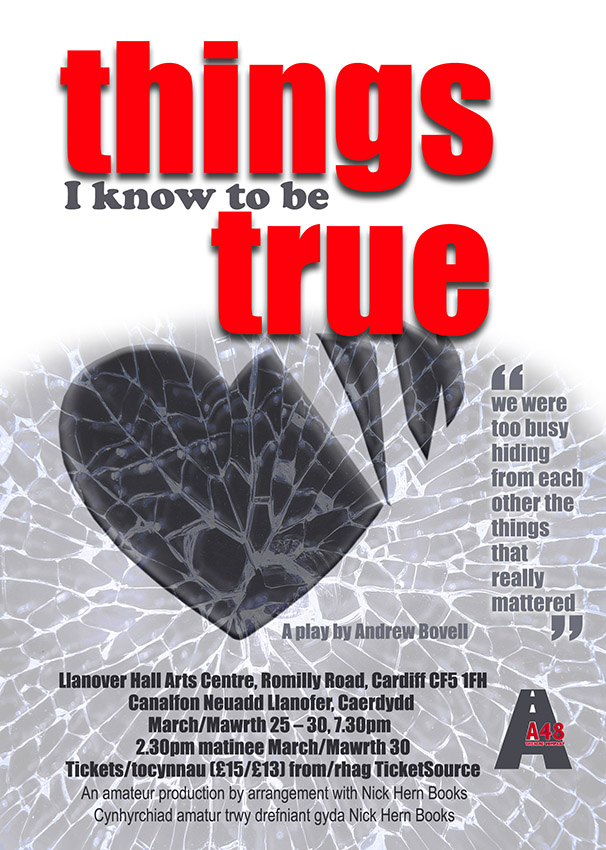
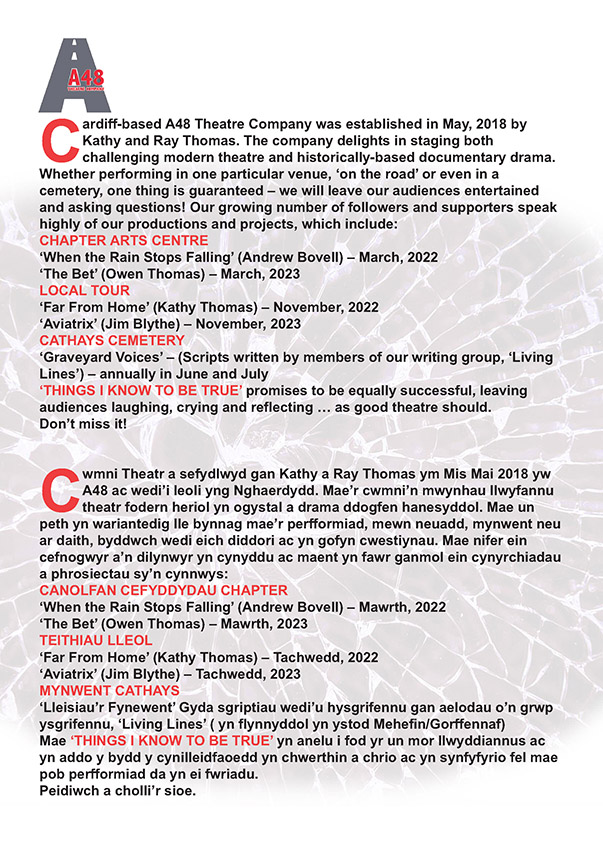
Review Things I Know To Be True, A48 Theatre Company, Llanover Hall Arts Centre by Peter Gaskell

Andrew Bovell is a world renowned Australian playwright with whose work A48 Theatre Company founder Ray Thomas became familiar when he toured a collaborative Welsh and Australian production of “Do Not Go Gentle”, starting at Chapter Arts Centre and finishing at The Drill Hall Theatre in New South Wales in 2017.

After the success of “When The Rain Stops Falling” at Chapter in 2022, A48 Theatre Company chose “Things I Know To Be True”, another of Andrew Bovell’s plays, for the current production which runs from March 25-30th at Llanover hall arts centre, Romilly Road, Cardiff .

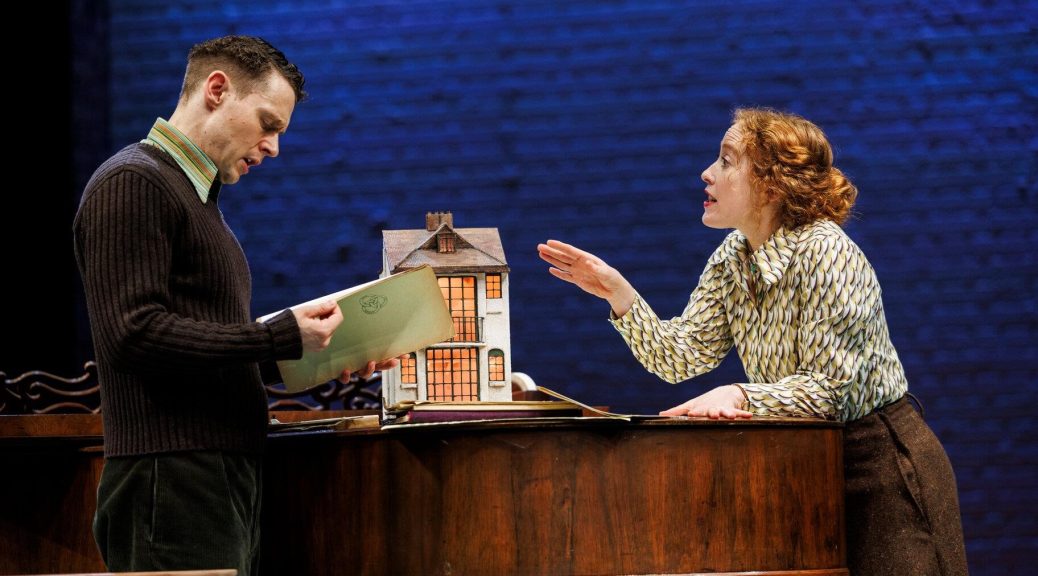
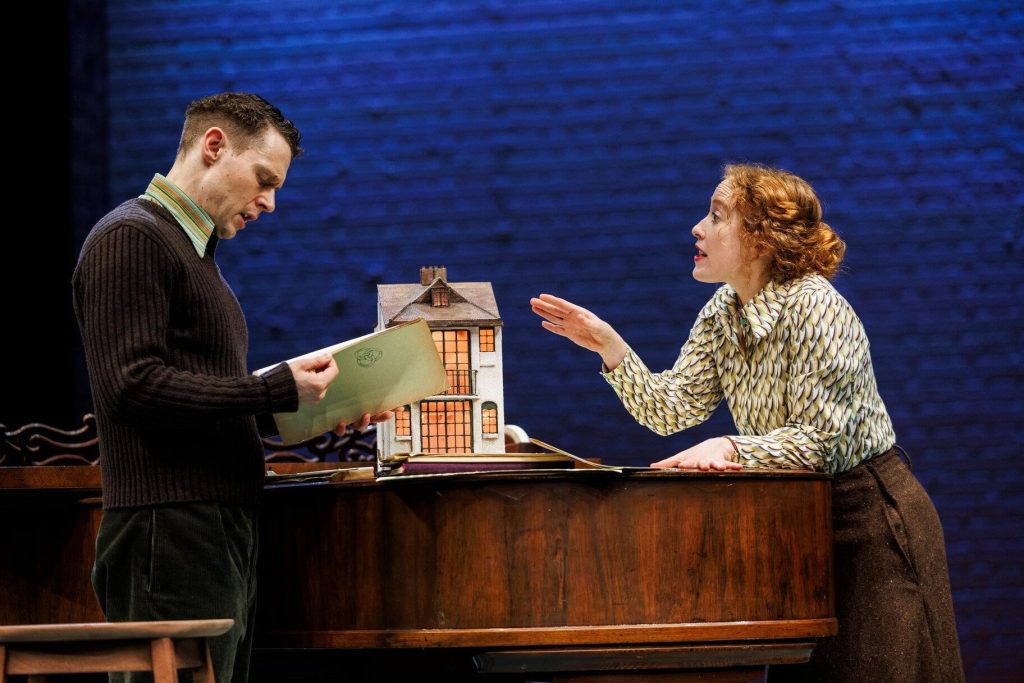
The play is bookended by night-time scenes at the Price family home when the ringing living-room phone wakes up the household. There is speculation among the younger members of the family before father Bob lifts the receiver and answers ‘hello’. Before we know the significance of the call which comes at the close, action then proceeds to the front of the stage where the youngest, Rosie, gives the first monologue.

If you were thinking that the play’s title suggested a catalogue of didactic rants according to one or other characters, it wasn’t going to be this one. Rosie is telling us how she went travelling to discover love and life. Thinking she had got a result, we are shocked to hear the outcome of her encounter with Spanish heart-throb Immanuel in Berlin. When the scene cuts to her arrival at the family home to find solace, we are then diverted from the expectation she will receive a sympathetic hearing as her family appear and pepper us with quick-fire banter relating to past behaviours, some fond memories, others more resentful (e.g “I spend good cash on buying you a coffee-machine, Dad, but you never use it!”) that all but side-lines poor Rosie whose tale of loss and romantic disappointment is ignored.

The play explores the tensions created in the family relationships as each of Fran and Bob’s offspring reveal the singular deep and personal crises in their young adult lives. Bob is a prematurely retired car-worker while Fran still works as a hospital nurse, both have always been scrupulous about raising their children well and morally, to be able to leave the nest one day to create careers and family life of their own. The drama lies in how the revelations put a strain on the prospect of a happy dotage for the parents as their children reach adulthood. Such revelations force Fran to admit she has put small portions of her earnings aside in case she felt she had to leave Bob, to his consternation, while Bob has retired to grow his roses but finds it difficult to spent all his hours usefully satisfying as he had hoped.

The set is simple, tables and chairs behind the house-frame viewed from the garden area with a display of Bob’s beloved roses. Much is made of the tree beyond the fourth wall to illustrate character. Against it Fran beats her head out of frustration; Mark climbs it to observe the life around him, detached as he is from any sense of ease with norms of family and society. His brother Ben skits into view and out again to establish himself as a character evading the focus of others as he masquerades behind a facade of being as well-heeled as the privileged crowd he is trying to impress at work. Status and the value of wealth are hereby explored to a satisfying extent. Financial settlement at career end often results in a paltry amount considering the years of service someone like Fran has given.

When Ben confesses to mounting debt due to false accounting practices to fund his lifestyle, one parent is predictably outraged, the other unpredictably pragmatic. Ben’s brother Mark has decided he identifies as a woman and has booked gender-change surgery. Their sister Pip, a successful corporate career woman, is giving up the intimate care of her children in favour of leaving her husband for another man (also married). All these crises of the young adults throw the stability and hopeful expectations of their unprepared conventional parents into disarray.

The outcome is not surprising but still comes as a shock. Rosie’s second monologue is an inspired piece. Bovell writes it as if Rosie is imagining the thoughts in the overburdened mind of her mother as she leaves her hospital shift in the early morning hours for the last time, not for the first time her absorption in the case of a patient she has cared for being pertinent to her fate. The finale concludes with a wonderful silent episode where the children are dressing their father when all had been in nightwear moments earlier. Mark is now Mia and convincingly dressed and styled as such.

If the intensity of family dynamics is appropriately tense, the script is leavened with humour for some relief. The actors were admirably up to the challenges of some long speeches and fast repartee, if in monologue their voices dropped on occasion, making it hard to hear. A satisfying if unsettling drama, “Things I Know To Be True” is well produced in set and action, and recommended viewing if you can get tickets via a48theatrecompany.com

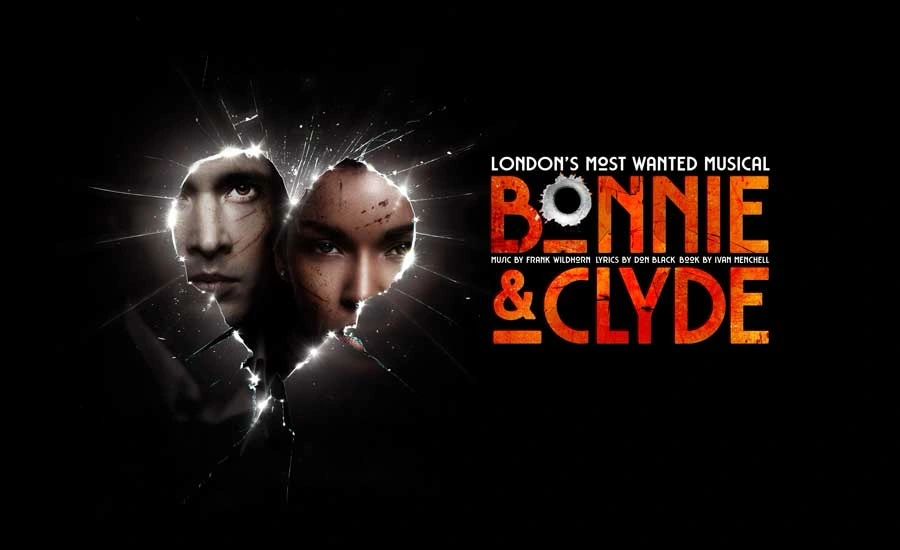
Review Bonnie and Clyde, Wales Millennium Centre by Charlotte Hall

 out of 5 stars (4.5 / 5)

‘Bonnie and Clyde’ is based on the American outlaw duo called Bonnie Parker and Clyde Barrow. They were real life fugitives, in this production at The Wales Millennium Centre, Cardiff, Clyde had always been running from the law, and believed that the only way you could be free was to steal it. Bonnie seemed like a textbook perfect student, but when she met Clyde, they fell intensely in love, and she never left his side after that, she even helped him break out of jail. Once he got out, they were casually robbing places like banks together, and to show how romanticised they were by the public, in the musical, when they were robbing a bank, a hostage asked for their autograph. The crime began to escalate and when a store owner got killed, they had to go on the run. After about two years, they had killed at least 13 people, and the authorities finally managed to track them down, and they were shot and killed, at 23 and 24 years of age.

I didn’t know any of this information prior to watching the performance, I had only heard of their names as being somewhat related to crime. The story was very easy to follow, and you didn’t need to know any backstory to understand what was going on, which is always a plus.

During the production, there were lights dotted on the walls to the side of the stage, and whenever there were ‘gunshots’, the lights would flash at various points and there was an accompanying sound effect. The musical starts with these gunshots and Bonnie and Clyde’s car where they found their demise, and I think showing what happens at the end is effective in this instance, because the story isn’t about trying to figure out what will happen to them, it’s about the journey and Bonnie and Clyde’s deep connection.

Even though the music isn’t pop music or widely known, it immediately grips you. The score consists of gospel, blues, ragtime, and country, which is quite a mixture, but it blends very well, and suits the genre of the musical. Also, the singing was absolutely phenomenal.

As a whole, the diction was clear considering the accents, and every single actor did their job justice, as they all played their characters incredibly well. I didn’t particularly feel for Bonnie and Clyde’s characters, and I don’t think you are supposed to completely empathise with them, but I didn’t want them to be killed by the authorities in the end, I was rooting for them to turn their lives around. As Buck (Clyde’s brother) was telling Blanche, no one is too far gone for you try and help. He was living proof of it, because his relationship with Blanche was always bringing him back to reality and moral ground. Unfortunately, in the end, his love and feeling of responsibility for his brother got him shot not long before Bonnie and Clyde got killed, and I was crying as Blanche was crying over his body, convinced that he would survive if they could get back home in time.

Each of the actors put on a brilliant performance, their singing was top notch, and the story and music was written/ composed also brilliantly. I love how you can write a story about anything and feel a sense of connection/ empathy for anyone, no matter how morally corrupt they are in the end. The only reason it doesn’t get 5 stars, is because I want my soul to be ripped out, and it didn’t quite do that for me, but I still enjoyed all parts of it and would choose to see it again.

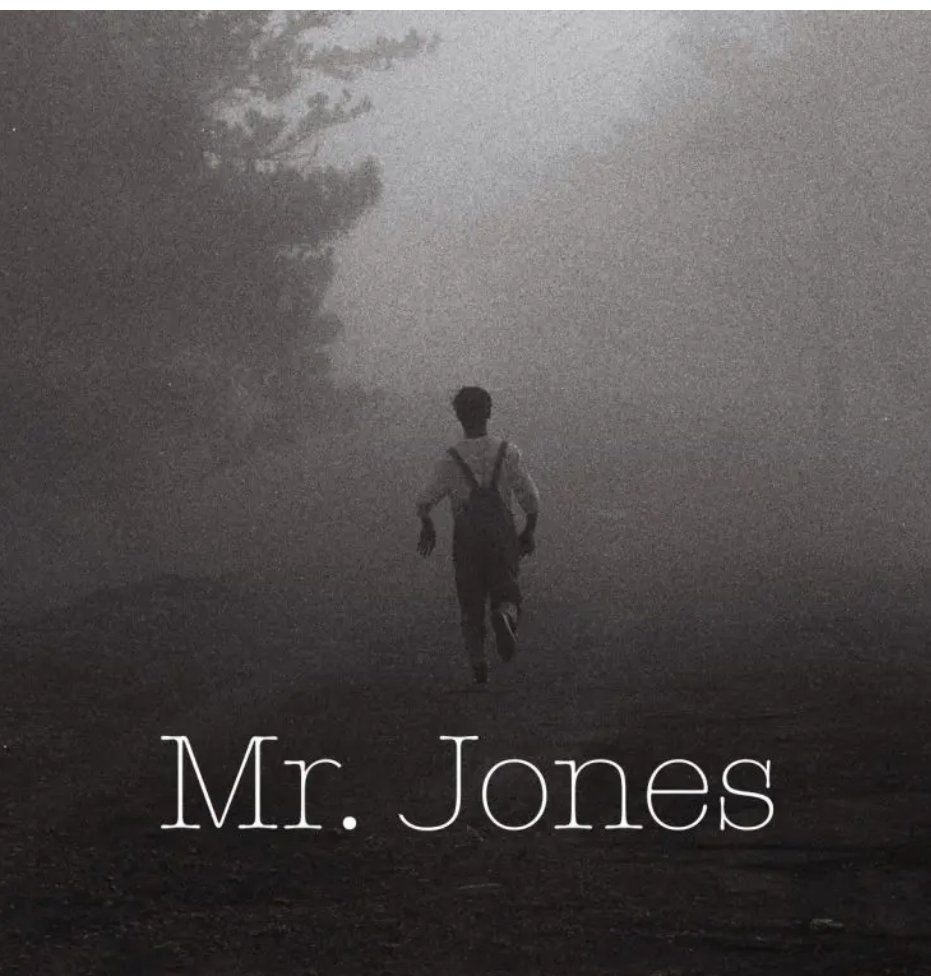
Review, Mr Jones by Liam Holmes, Theatr Soar, Merthyr Tydfil by Bethan England

 out of 5 stars (4 / 5)

A pair of muddy trainers, a tan rucksack and jumper are the only items that sit upon the stage of Theatr Soar. The atmosphere was set by soaring Welsh anthems such as Green Green Grass of Home and Yma O Hyd filling the eaves of the converted chapel.

Liam Holmes as Stephen Jones, enters, in a square of light. His natural cadence and natural ability mean he instantly won over the audience’s hearts. Asking where his rugby boots are to an off stage unknown person, the moments of silence and glances towards this unknown character are poignant and we are immediately aware of something unspoken. The entreaty to ‘talk about it,’ leading to the awkward admittance of this ‘being a bit weird’ sets the scene perfectly for this moving piece about the pain of the Aberfan Disaster for families of the village and that inability to fully express the pain and trauma of that traumatic event.

The simple stage and lighting transports us from house in Aberfan to the waterlogged rugby pitch where Stephen is practising his kicks after his winning penalty against Dowlais in the semi-finals. The stage is used ably, the space filled by Liam and Tanwen Stokes as Angharad. The ‘in the round’ space allows Liam and Tanwen to fully immerse us in the story; Angharad watching from the audience, berating Stephen for being on the pitch rather than at home with dad or entertaining his younger brother, Dafydd. Throughout the play the space is used to great effect, bringing the audience truly into the action.

The sound is also excellent. From the soaring sounds of the crowd as Stephen steps up to take his winning kick, the rumbling of the ‘thunder’ that turns out to be the starting of the waste coal sliding down the mountainside, to the haunting spoken records of Dafydd and the parents of the lost children from the school. In particular, I enjoyed the use of Owen Sheers’ ‘The Green Hollow,’ echoing throughout the space and reminding us of the very human loss of this disaster.

I especially enjoyed the use of Welsh phrases throughout, which were used particularly evocatively during the description of the coal duff slipping down the side of the mountain. Hearing the Welsh then echoed with the English, or vice versa ensured that the script was still accessible to all. I would have liked to hear even more as I thought that this was an excellent device used in an innovative way by the writer.

The pair are ably directed by Michael Neri, clearly they have been told to not be afraid of weighted silences which leave the audience breathlessly waiting for the next line. The humour peppered throughout captures the essence of the valleys village, that easy natured way of speaking to each other which is balanced with what is not said, the glances unseen and words unspoken. With barely any props or set, we are transported between the different scenes of the action; the pitch, the mountain top, the bustling hospital of St Tydfil’s and the dark home of Stephen, Dad and Gramps.

The final scenes perfectly counterbalance the earlier humour and playfulness between Stephen Angharad. There wasn’t a dry eye in the house as Liam delivers the final lines to that unknown voice, his dad, as the two desperately struggle to come to terms with what they have lost. The final cry from Stephen of ‘I’m still here Dad!’ as the lights fade brings the story to its heartbreaking conclusion, leading to a well deserved standing ovation.

The piece was particularly poignant in Merthyr Tydfil but the themes of loss, family, friendship and unspoken love will be met with universal acclaim no matter where this is viewed. I highly recommend Mr Jones, but do make sure you take those tissues along with you!

Review ‘Wife of Cyncoed’, Sherman Theatre by Katie Berrisford

Image Mark Douet

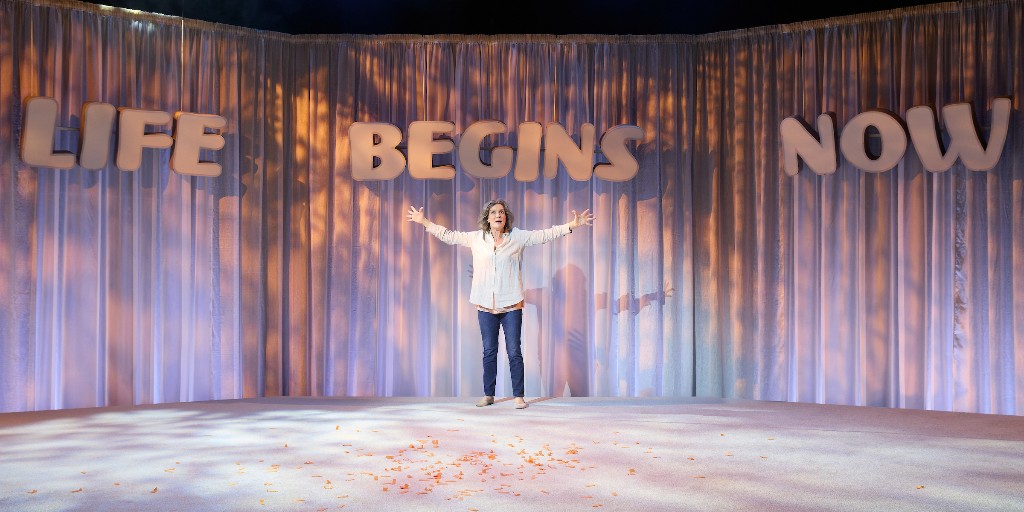
This was an absolute celebration of so many aspects of life that can be easily missed; self-love (in all manners of the word), companionship and reconnection. This one woman show gracefully took us through a myriad of scenes, drawing us into Jane’s life and leaving me on the edge of my seat. Carrying a multitude of character can be very tricky, and indeed could have at times been slightly clearer, but Vivien Parry’s performance was a triumph that garnered a standing ovation at the end.

April Dalton’s set at first looked incredibly simple but tuned out to be perfect- a little dull at first but hiding a lot of light and fun. The carpet was the perfect background for Jane’s transformational experiences and was elevated by Katy Morison’s lighting and Sam Jones’ sound designs, transporting us from Roath Park to London to dancing naked in Caerleon.

Hannah Noone’s direction was understated but allowed Parry’s sensuality to shine and roam around the whole stage space.
To me, the show felt like it would hit every audience member differently. There was a lot I could relate to, but a lot that would hit differently depending on the time of life you saw it.

One of the main messages that I took away from Matt Hartley’s script was that it’s never too late. Never too late to find yourself, have those conversations that are needed or to become a better person. It was a subtle story of redemption for all the characters, and I left wishing every character we met the best as they carry on their life well after we’ve left the auditorium.

Sherman Theatre is known for its young plays and dynamic work, so seeing a story of an older woman was a breath of fresh air, I just hope that younger audiences aren’t put off from attending as they would be missing out. It runs at The Studio until March 23rd with a range of prices for all ages.

Review, Orchestra of the Swan, Revolutionaries, Renegades & Visionaries, Stratford Play House by James Ellis

 out of 5 stars (4 / 5)

In what would be a trip finally making it to Stratford Upon Avon, I was here for a few days. I caught the eye of an exciting concert. The Orchestra of the Swan offered up a riotous evening of Avant-Garde delights, of both the musical and spoken kind.

It was a hefty programme, spanning almost a Millenia, thanks to narrator Mogali Masuku. She delivered all the spoken material, with a sharpness and attention. Though she did fluff quite a few lines, perhaps a bit more rehearsal would have helped. Saying this, I loved her energy, she sat during the music and was easily lost in her own little ballet. It was highly infectious. Her range of writing saw Dickens, Blake, Dr King, Hildegard von Bingen with plenty more. There may not have been much of a through line between the spoken work, but the emphasis on the radical paired well with the music which followed.

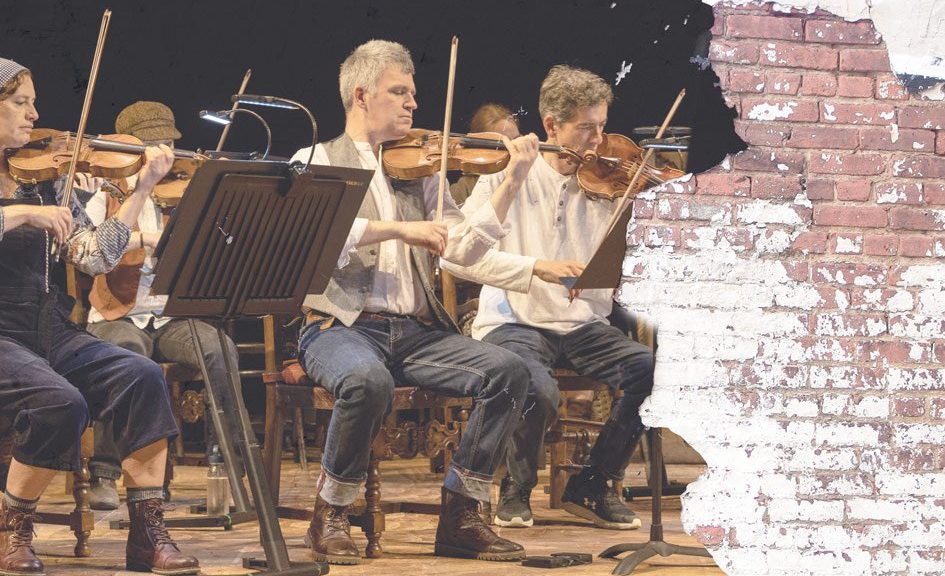
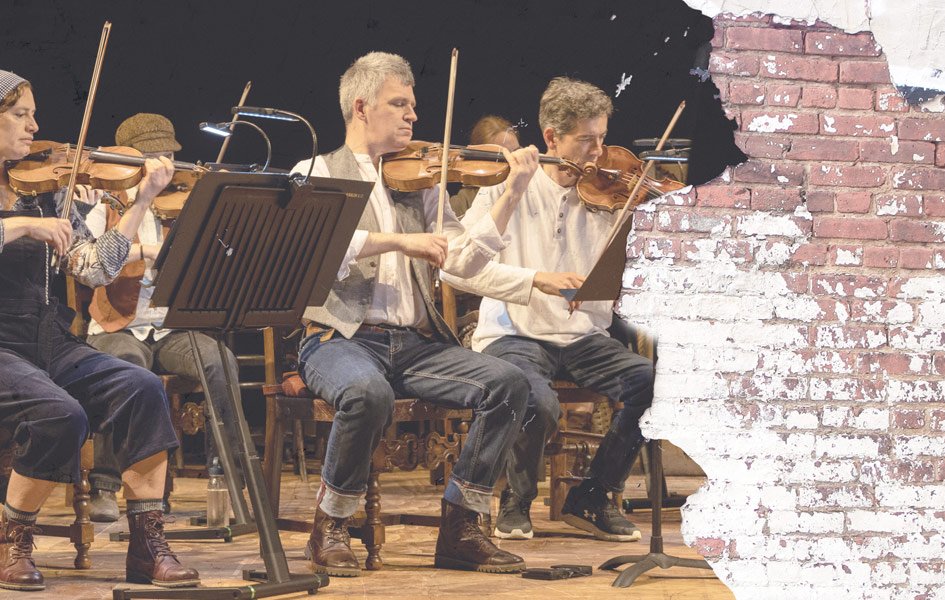
David Le Page as director and lead violin exuded vitality, the whole group of musicians played wonderfully with him. The orchestra has a great air to them, approachable and highly attractive. Amazing how with such breeze they change from one work to another, with little of tonal whiplash. Revolution 9 from John Lennon is a brief affair, recognisable and easily parodied as a meditation on the number and some fluttery notes that follow. Extracts from Shostakovich’s String Quartet No. 8 proved perfectly suited with Arthur Koestler’s Darkness at Noon. Paranoid pangs of being taken in the night by the powers that be are spoken of, were a real worry for the composer also. Perhaps the best pairing of the night, the Shostakovich was alert and wonderfully deary.

Blake’s America a Prophecy, with Mogali reading was wonderfully evocative of the new world and its use of metaphor. Biber’s Battalia is a resounding thrill, proving composers were tinkering with discordant ideas a long time before modernism. The amazing, putty like effect of smearing the notes to create the fermentation of unease, without really being too challenging musically. The piece proves a lot and is always a lot of fun. Jean-Féry Rebel, in an arrangement by Le Page of Choas was another addition to this idea, I found I had goosebumps throughout. Classical in form, though not afraid to shock with further alternative ideas on shape and harmony.

Readings from John Cage and the I Ching, are fascinating views on quietness and the random manner of life. Hearing 4’33 by Cage, we sit in silence, the players at a complete rest. Via a computer, no notes were given to Cage for the pieces and so he famously chose to present it as a piece of music anyway. How sacred a moment to spend in almost silence, the Quakers and others know the value of it and we should to. I found it rather cathartic to be in my own rest state if only for these few minutes. Dare I say…twas life affirming.

Piazzolla’s Four for Tango is another shock and delight, proving you can meddle with convention, this time in the tango genre. Gil Scott-Heron (another Le Page arrangement) and the iconic The Revolution Will Not Be Televised was a jazzy scope, the words of truth ringing out circling the Civil Rights Movement, Mogail coming into her own here, aside a reading of Martin Luther King. Voodoo Child by Jimi Hendrix (a Le Page arrangement) also went down well, a perfumed, heightened listen. The end featured T. S. Eliot and Beethoven’s Eroica Symphony finale, a stirring sprit to wrap up with, the latter being solidly done, the former abstract yet true.

This sold out concert proved a triumph and would have faired well with a younger audience, as a first experience of concert going.

Review, RSC, A Midsummer Night’s Dream, Stratford-upon-Avon by James Ellis

Photo credit: Pamela Raith

 out of 5 stars (4 / 5)

In this brandnew production of Dream from the RSC comes delight, humour and awe. I first got my teeth in the play in college and fell in love with it ever since.

There is real joy here, director Eleanor Rhode has gone all out with massive scope. Lucy Osborne’s design is multi-coloured filling the stage with ladders, giant hanging orbs and soaring platforms. Another huge element to proceedings is John Bulleid as illusion director and designer. The magic on display is nothing sort of astounding, the video work and little lights in the actors palms are also really nice touches. This all works wonders in the space.

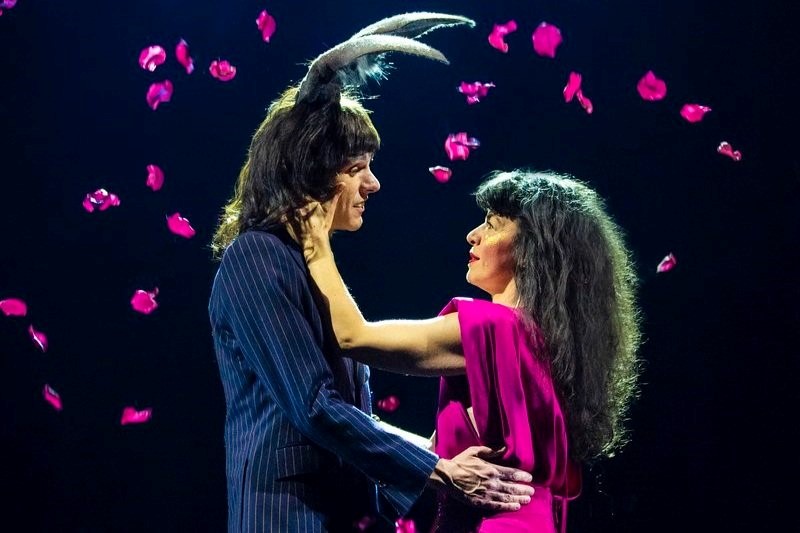
The band are another sensation, thanks to the score of Will Gregory brimming with sass, flair and nods to several genres. The cast are huge and marvellous. Much marketing has been done on Mathew Bayton as Bottom, which is valued (can’t get over the appalling sideburns!) but the rest of the cast are also stars and rising talent. Mathew plays the role with his usual wide eyed mirth, a snapping comic timing and an understated insecurity that Bottom calls for. His donkey transformation sees ears which can move of their own accord, one of many funny moments. From Romeo & Julie and Machinal, Rosie Sheehy as Puck was a familar face. She works mightly well in the role, the image of Heath Leger’s Joker, one of several punk trappings. I love her ornamented accent in the role, brimming with grit, bite, resentment and a wistful endurance.

Many cast members stand out and there is much to shout about. The lovers shine Hermia, Demetrius, Lysander and Helena thanks to the efforts of razor sharp quartet: Dawn Sievewright, Nicholas Armfield, Ryan Hutton and Boadicea Ricketts. There absurd little moments are noteworthy, the lovers should be particularly physical and highly caffeinated. Ryan’s leaping, Nicholas’ marital arts postures, Boadicea’s shrieking and Dawn’s rages are left in the brain. The rest of The Mechanicals shine, the indifference of Emily Cundick’s Snout, Snug from Laurie Jamieson as a lovable dimwit. The Pyramus and Thisbe wrap up should be the funniest scene of the play and here it was. Given a loving send up of Giallo horror films, with plenty of deep red blood and cheap, anxious keyboard chords to boot.

Helen Monks is Peter Quince the flustered director for their little play, not really seen enough in the role. As Starveling, Premi Tamang came into her own as Moon in the outlandish Pyramus set, her smug face and flickering torch is one of my favourite moments. Nitesh Soni as Flute is another adorable addition to the actors group, another comedic discovery. We don’t see as such the Forrest Nymphs, though the light and effects did most of the work here, each of the actors voiced the tiny roles with conviction. Barry Gill as Theseus faired well in delivery, though I found he did little with a straight laced Oberon, though this punk attire was a standout. Airline Saba, as both Titania and Hippolyta exuded a fierce persona for each and a sensusal use of mannerism. Neil McCaul seen for a shortlist while at the start and end is Egeus, outraged over the young lovers actions, as the show starts off with a serious tone.

I’ve left little of the story out of this review, it being pretty well known. I would recommend a trip to Stratford for this gem of a show.

A Midsummer Night’s Dream runs till 30 March 2024.

Review Ben & Imo, RSC Stratford-upon-Avon by James Ellis

Photo credit: Ellie Kurttz

 out of 5 stars (4 / 5)

In the centenary year of his birth, I attended Benjamin Britten’s prized creation: the Aldeburgh Festival in Suffolk. Walking to his grave, I spoke in one of my awful poem’s how I “staggered sharply” to pay my respects. His black megalith, is paired with his life partner Peter Pears, singer of renowned who created many of Britten’s tenor roles. Behind them is Imogen Holst.

Daughter to Gustav Holst, renowned for the eternal Planets Suite, Imogen had a gun-ho attitude to her career in music. She kept up morale during WWII, teaching children and amateurs to play instruments and sing. This new play by Mark Ravenhill sees her friendship formulate with Britten, over the terrifying commission of Gloriana, for the Queen’s coronation. With 9 months till the premiere, their relationship is greatly tested through power dynamics, sexual politics, class, position and taste. Though I did not find any great appeal in her compositions, she remains a female composer of note, not just for assisting in an opera and festival planning.

Imo is billed as a musical adviser to the creation of the opera. She dips in and out of the role, notes and advice abound about the score, cast and programming. Ben’s depression, bad arm and composer’s block is what makes the creation so fraught, his cageyness about Imo is another huge barrier about what she is on the project. Ravenhill’s knows his stuff, his work in the operatic form lies in his back catalogue. There is a depth in his characters, who seem to brush aside the total nonsense of the world. It is eloquently written, possibly working better as a one act show around 95 minute mark, like the radio play it is based on.

Director Erica Whyman has created a intimate show in the Swan Theatre. The space may evoke Shakespeare’s Globe, yet the back wall had a feel of Britten’s own Snape Maltings, with beach shingle spread across the floor. The soundscape is of the sea through out, expected due to the setting (Britten’s exposed house gets flooded at Christmas). The score by Conor Mitchell is a dastardly wonder, piano heavy and not heard enough. Connor Fogel playing live offstage was a wonderous addition, adding a live musical elevation to the show. This how ever didn’t stop the actors from both pretend playing the revolving piano on stage, with it spurts of water during the flood scene. Both Conor and Connor have had fun on the music side of things, the references to Britten in the score are there apparently to point out.

As Britten, Samuel Barnett looks the part, the curly, tempered hair, the clothes and glasses. His face does capture something of the composer if only a little. The sensible, then furious mood swings are delivered well. Britten would not have been an all rounded figure to gel with, how easy it was to be excluded at the drop of a hat. There was tenderness too, the love for Imo still there even in roaring insults. Victoria Yeats is chatty, whimsical, yet still grounded as Imogen. She arrives almost like Mary Poppins into the space. Yeats seems to brush off most of the tantrums of her fellow composer, like a mother, sibling and at times a wife. She stands her ground with Barnett in moments of shouty confrontation, all for the good of music making.

The second act sees the most patient driver in existence, as the tense morning before trying out the opera in London is delayed due to Imo’s tardiness. There is much yelling and poison from both, it could have almost turned physical. This is a work of fiction about two recent creative lives, people who knew them both are still around. I wonder just how catty things really got between them…

Though the opera Gloriana itself, does have its fans, it is nowhere Britten’s best. Much is said of a flop at its opening and though it has seen some stagings here and there, there is still life in the show yet. Ben & Imo proves just how intense a process it was to make.

Ben & Imo runs till 6 April 2024

Review, William Thomas & Florent Mourier, Opera Rara, Lansdowne Club, London by James Ellis

 out of 5 stars (4 / 5)

Opera Rara are on the prowl for the lesser heard, lesser staged in the operatic world. They have no council funding and have excelled with rarely seen delights. This saloon concert at the Lansdowne Club, a charming membership venue over looking Berkeley Square proved a thrill. I was taking the charm of the older gentlemen’s club, I was warmly welcomed and they were happy to allow me to sit and have a drink before. It was all rather fetching, it was seeing the club’s cat that really did it for me, Harry one of two who live there.

This was a fine opportunity to hear emerging bass singer William Thomas and on piano Florent Mourier. The chance to hear encounter lesser heard Verdi and Donizetti songs was a treat and in such a fine space. We heard many songs on the night, too many to mention. Thomas who is such a talented bass, felt quite special sitting and listening to him. The bass does not always get a lot of love and a fine, young singer like this could break down many barriers. Even in the Italian or the French repertoire (such was the influence of Parisain opera and all things francophile) from the two composers.

Starting with Donizetti’s Troppo é vezzoza la ninfa bella, we couldn’t have had a better start. Thomas plays the odd little characters well in these songs, humour aside great timing also important. My Italian plus one said the language was clear, though not all the time as is the way with words used in opera. Hearing Verdi, In solitaria stanza had a sweet Bellini reference, more influence from the past. Deh, pietoso, oh addolorata had the words of Gothic God Goethe. Mourier had a few rehearsals with Thomas prior, you would think they have played together for years. His piano skills meshed marvellously for these songs, he seems to get these hardly hear song like few do. Together, magic was made between Thomas and Mourier, both at the top of their game. An encore would preview his role in Verdi’s Simon Boccanegra coming up in Manchester, wetting mouths. 

Seriousness met fun, romance and tension, in the club saloon setting you couldn’t ask for much more. 

Opera Rara perform the original Verdi Simon Boccanegra from 1857 at Manchester Bridgewater Hall 18 April 2024. 

Review, Hadestown, Lyric Theatre, London by James Ellis

Photo credit: Marc Brenner

 out of 5 stars (3 / 5)

I’ve wanted to see Hadestown for sometime. Anas Mitchell has whipped up a frenzy with this Greek myth inspired musical take on the tale. This being it’s West End premiere, can it live up to the hype?

Whilst it might work better as a concept album, it is Mitchell’s songs which are the pulling power of Hadestown. The familiar story has been on stage and screen in varying styles, yet its the lack of innovation which bores here. This is one of the most famous stories in Western literature, with a real opportunity do something interesting with it. Granted the New Orleans style jazz and hearty folk stylings do meld only to a certain degree. Its the former which is punchy and keeps toes tapping. They could have even pushed the jazz even more from this golden band,

My main gripe is that this story (presented as it is) does not fill 2 hours of a show, this is made clear in the second act when Hades stops and pauses as the Furies sing about his indecisions to free our young couple. Some press night jitters also saw a hanky nearly fall and a few instances of mic scratches. We let this slide, as this press and guest night performance had great energy. The ensemble for the show are very impressive in their energy, their diverse apperance another great thing. Musically, they have the least interesting songs, the Fates might just claim that crown.

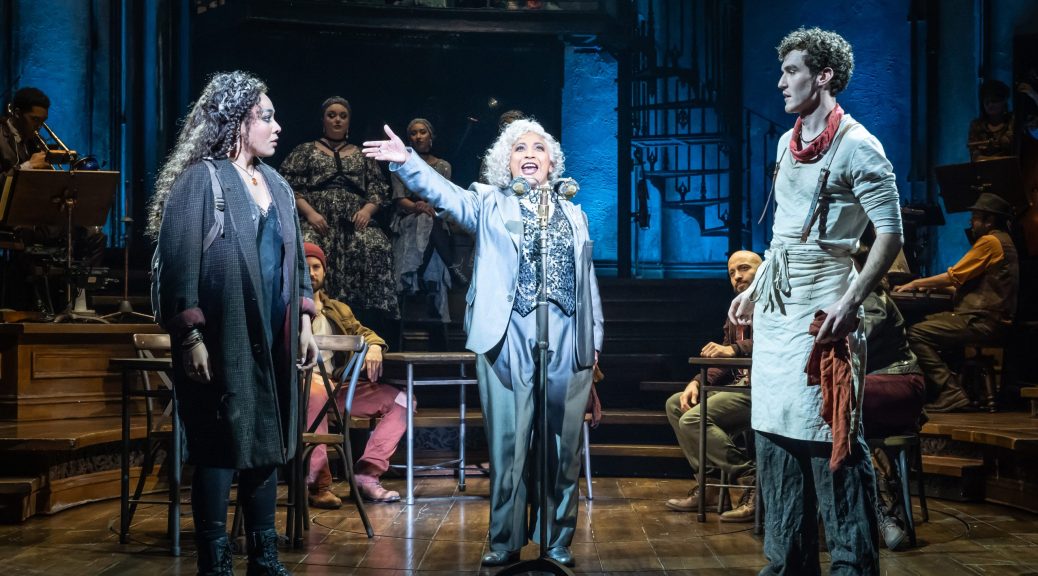
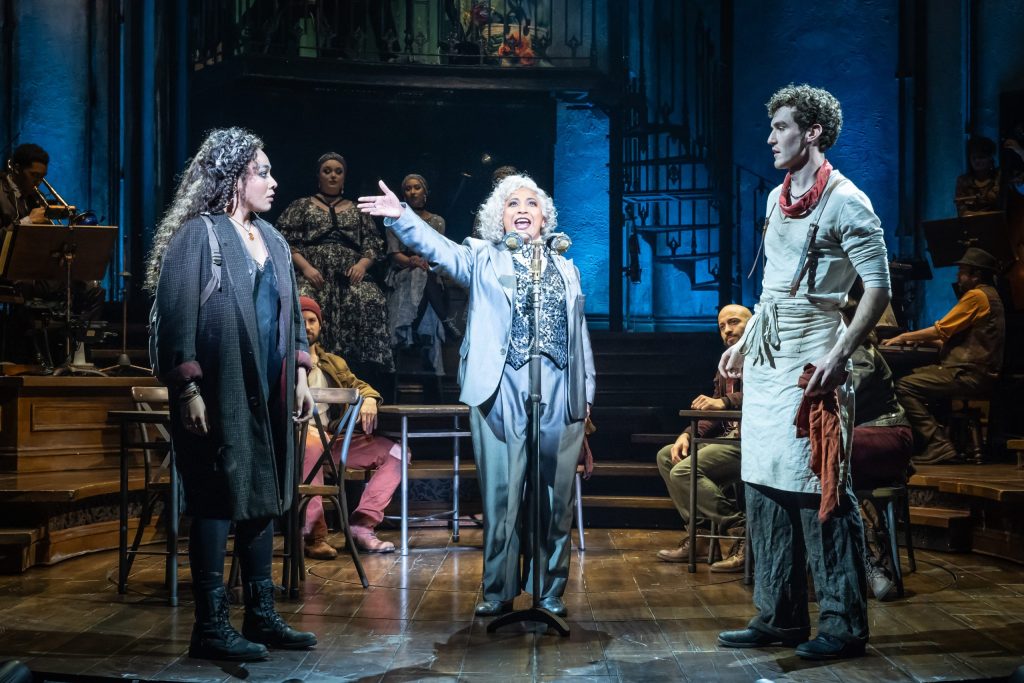
As a cast they are top tier. A spirit of a bard, Dónal Finn is Orpheus with piercing falsetto and an all round Irish charm. His love: Eurydice is Grace Hodgett Young who is equally matching Finn in voice and atmosphere. Melaine La Barrie is the wise Hermes, the narrator guide who really loves to belt out numbers and use a novelty train whistle of the underworld. Zachary James is Hades in the vain of the comic baddie, not really songs for a singer, more acting songs. He looks a bit like Wesker from Resident Evil and Robotnik from the Sonic franchise. Not much to the depth of the part other then having some mercy for the couple leading to an atmospheric trial home scene. Gloria Onitiri is an easy favourite as Pesephone, of colour and spring lost to the underworld. Some blazing moments with her, really stirring powerhouse songs and good fun too. The Fates: Bella Brown, Madeline Charlemagne and Allie Daniel are analysing and wild sparks to the party, their harmonies a revelation. 

Rachel Chavkin could have done more with this show as director. Something about it not filling it’s true potential, yet the show has become a hit. Some costumes and set pieces might not have wowed as much as they should. Steam punk, art noveau and the Wild West all seem to be a part of this, though only in suggestion. If kept shorter this could have worked better, the songs though getting love and the all round gun-ho attitude is what makes this memorable.