
 (4 / 5)
One thing Wagner made clear. There would never be performances of his Rienzi in Bayreuth. An earlier work from his canon, there have been versions with various lengths and changes. For the 150th anniversary of the creation of the Bayreuth Festival, ‘Rienzi, the last of the Tribunes’ has been seen and heard for the first time. It’s all very exciting.
I knew not the music, bar the loved overture (the first ever piece of music at the Sir Henry Woods Proms) which can easily been forgotten out of the rest of the canon. There is a shadow which looms over the score, not quite the Wagner most know, the latter darker ventures. There is a leaning on Grand French opera, Wagner’s teacher Meyerbeer a good example of this style. The story is also relatively simple, even with the typical Wagner length of four hours (there appears to be a version as long as The Mastersingers of Nuremberg – 4 hours, forty minutes). Rienzi rises in popularity; this is actually a person from history: Cola di Rienzo from the 14th Century.
He advances in the polls and earns the Tribune position in Rome. Through dodgy dealings and a lot of Shakespearian murk, there is an inevitable to the story. History never changes. Through this brand-new production at the festival, we get a contemporary twist with touches of Trump, the Titus film from Julie Taymor, Arturo Ui and a whole lot of spin. Given the change and setting of now, it’s an absorbing, at times fun and intimate outing. Though the scale of this opera rivals much of his later, moody output, Wagner creates many vast plateaus for the chorus. They own many wads of this opera.
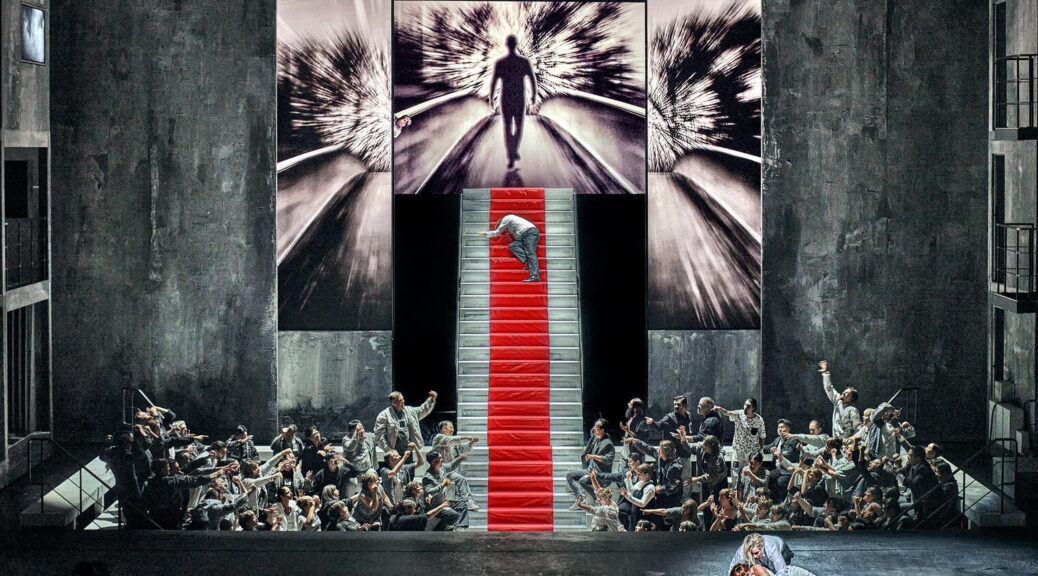
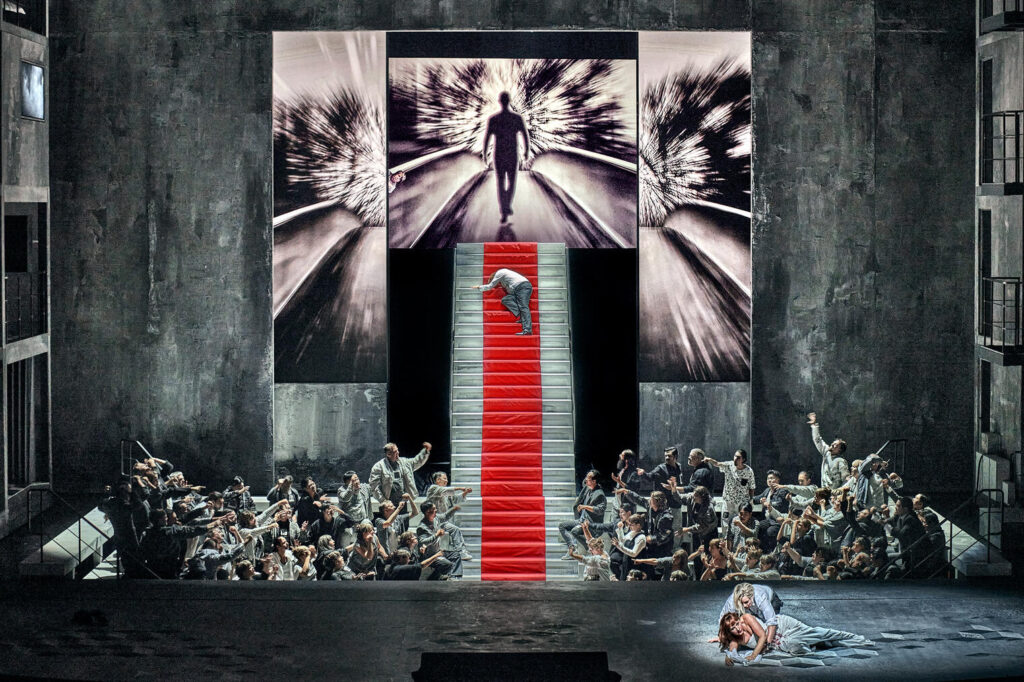
Directors Alexandra Szemerédy and Magdolna Parditka (also making set and costume) have taken risks and set it in what appears to be today’s world of piercing political duality. The extensive overture sees Rienzi lose a child of his, this grief then permeates the entire opera, tragically effecting his career. The elongated ballet sequence in act two, a staple of Paris opera (with even Wagner’s cheeky changes in other opera caused riots), is a joy here. I didn’t expect this serious audience to be laughing the way they did, as said ballet was a wonderful send up of Bayreuth itself.
The chorus watch vaudevillian parody of most of Wagner’s operas. Some of the chorus mock us as an audience running about at intermission trying to use the toilet, eat pretzels and make sure their heels stay on their feet. I loved all this, even through its silliness. The event that this was at in the opera would suggest a Met Gala do. Many statements about power and wealth are dripping in this. Its Video work frequently alludes to fascist imagery and news reels. Severe concrete and militaristic attire are the main stays of the set and dress.
As for the cast, chorus and orchestra, everything is matched near perfect to perfection. I’ve spoken of the many passages for the chorus, who’s emotional depth is touching, nearly profound. Other highlights include the harps (Wagner uses them so scarcely), bells and even an organ into the fold. The orchestra, under the baton of Nathalie Stutzmann glistened and glowed in this mighty piece. This may not have been written for this famous opera house, but the sound thanks to the impeccable acoustic and the finest musicians made this a treat to the ears.