
Category Archives: Theatre

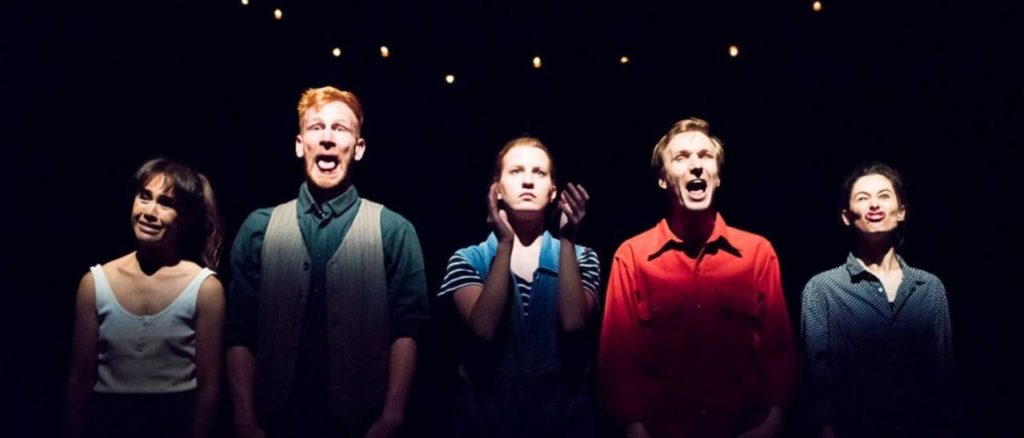
Review : Some Like It Hop Hop, Zoonation, Peacock Theatre, By Hannah Goslin

 out of 5 stars (3 / 5)

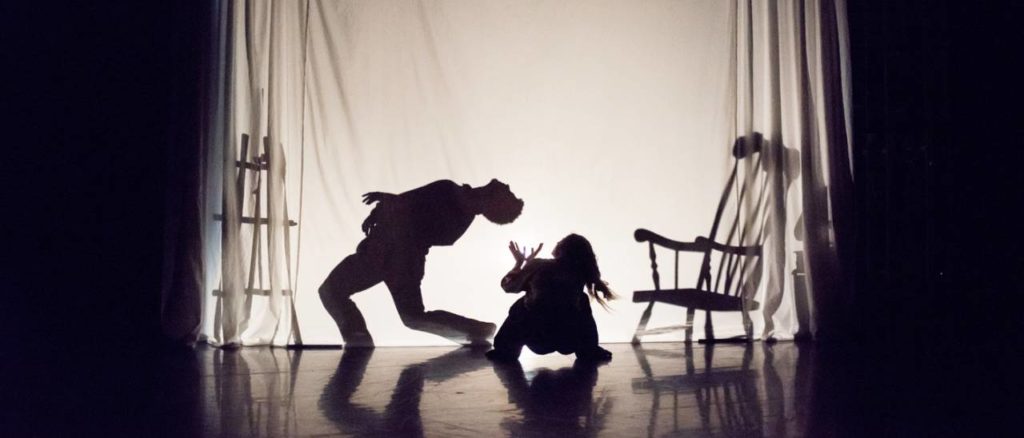
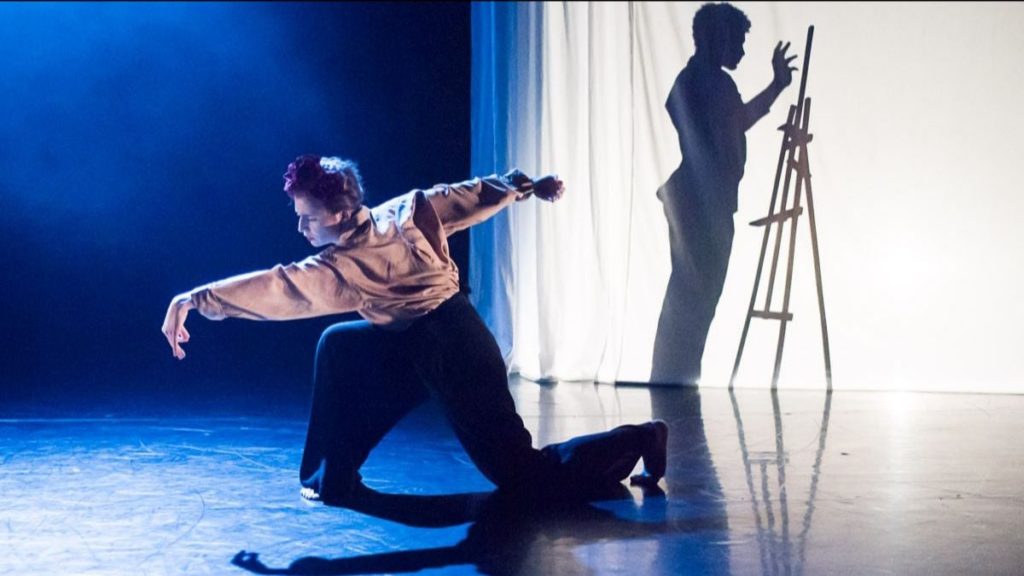
A tale as old as time, Some Like It Hip Hop by Zoonation is a story about mistaken identity, crossed wires, love, loss and family. Taking themes from Billy Wilder’s Some Like It Hot and Shakespeare’s, Twelfth Night, this story is not like any other – of course, it has Zoonation’s comical, emotional and energetic style.

Verging on a cross between Street/Hip Hop dance and physical theatre, this piece sees little vocal additions to the performance except for a narrator. Emotions, actions and events are all played out physically, and this in itself is well formed, slick and smooth. The physicality looks so easy, so gentle but any one who has previously danced knows the extreme energy, the muscle and the technicality that goes into even the smallest of moves.

The character’s all do a great job of bringing the feelings into their general persona – this being reflected in their facial expressions, in every movement and the whole performance is well polished.

While I did enjoy this, and it arose a sense of longing for the days where I danced like this, it wasn’t my favourite of all the Zoonation productions I have seen. There is an essence of a similar theme with their storytelling – mostly always with a narrator, the character’s being quite stereotyped e.g. the nerdy guy who incidentally was the same nerdy guy in their Alice and Wonderland piece and it feels a little predictable when you have seen them a few times previously.

None the less, Zoonation’s pieces are always entertaining, fun, astonishing with skill and a definite good night out. If you like a little boogie after at your seats, or being very involved vocally throughout, then this is for you.

Review: On Bear Ridge, National Theatre Wales, Royal Court Theatre, By Hannah Goslin

 out of 5 stars (4 / 5)

Set in the isolated mountains, this small cast encounter the almost apocalyptic world of a small rural town in Wales. Where everyone has left due to violence and lack of supplies, John Daniel (Rhys Ifans) and Noni (Rakie Ayola) endeavour to stay put, with their memories and their lost lives.

On Bear Ridge is a simple play, full of dialogue and not much need for anything else. There are some theatrical tricks implemented to add to the on-stage feel, and give it that National Theatre Wales (NTW) and Royal Court feel, but the main magic comes from the detailed narrative and fantastic acting.

As expected, Ifans is brilliant. With this being my second time seeing him on stage, I can already see complete differences from his role on the National Theatre Stage as a dying King, to this countryside man who is slowly losing everything. The accents are of course different, but how he holds himself, his emotions and the pure comedy he effortlessly eludes are different and brilliant. With such a big name in a production there’s more to draw upon and compare to other work, but along with the other actors, they all gel and bounce off one another effortlessly and triumphantly – creating an overall equal success on stage.

Ayola’s character fits perfectly with Ifans’s. They work well together and make the characters fit like puzzle pieces. While this feels slightly science-fiction as a narrative, yet also possible in our world, their relationship is very real, very loving and it’s clear that their character’s are meant to be as one.

On Bear Ridge is emotional, heartbreaking, wonderful and hilarious. A world that could easily be imagined, could easily be reality, we feel a part of a small family, and feel every bit of grief, every bit of happiness and every bit of love that these characters exude.

Theatre Company exports Welsh Hero

Welsh company Theatr na nÓg continue to innovate and increase awareness of Welsh Theatre! The company have just announced that they will present their original play “You Should Ask Wallace” in Indonesia.

The play tells the inspiring story of Alfred Russel Wallace, who was born in Usk and who left Wales in 1854 to document the diverse fauna, flora of the area in Indonesia now known as the Wallacea Region.

Ioan Hefin as Alfred Russel Wallace, credit Simon Gough.

The British Council has invited the award-winning Theatr na nÓg to take part in the Festival of Inspiration, Education and the Arts to celebrate the diversity of the Wallacea region. The Festival will be held in Makassar from the 22nd -28th of November 2019.

We asked the companies Artistic Director, Geinor Styles about the relevance of the work of Wallace today.

With the Welsh Government recently declaring a Climate Emergency the themes of this production seem especially relevant. What do your think Wallace might make of our Climate Emergency and organisations such as Extinct Rebellion if he was alive today?

I think he would definitely be part of Extinction Rebellion.

He was extremely aware of the impact man had on the environment, he certainly didn’t forsee the crisis we are in now. During the Industrial Revolution he was working in Neath as a surveyor for the railways , and although he had a love for nature and in particular beetles  he was conscious of the fact  that  “I was cutting up the land and beneath me a whole new universe teeming with life”.

Also whilst in Indonesia he explains that when he first discovered the King Bird of Paradise he describes it’s fate  as “should man ever reach these distant lands, we can be sure that he will disturb the balance of nature so that he will cause the disappearance, and finally extinction, of this creature.”

Paul Smith, Director of The British Council in Indonesia explained how delighted they are about the collaboration, “Here in Indonesia we are thrilled that the Welsh Wallace is returning to the Archipelago. In our Wallace Week in Sulawesi we are not just exploring biodiversity but also the cultural and ethnic diversities that Wallace encountered. Theatr na nÓg’s production will contribute greatly to the understanding and inspiration of young audiences along The Wallacea Line and we are thrilled that the company will transfer the production to local performers to ensure its own ‘sustainability’ here.

Each year Theatr na nÓg create original productions for over 5,000 young people which integrate live theatre performance with innovative creative learning resources. The organisation will be sharing their successful model of presenting theatre and education in workshops and symposiums in Makassar. The company is grateful to Wales Arts International and British Council Cymru for supporting this exciting opportunity.

Theatr na nÓg’s Artistic Director Geinor Styles said :- “It is an incredible opportunity for us to tell the Welsh story of Wallace to an area that celebrates and recognises this often forgotten scientist who co-discovered the theory of evolution with Charles Darwin, and to be here in the place where Wallace wrote the theory is inspirational.”

Styles together with actor Ioan Hefin, who originated the role of Alfred Russel Wallace, will not only perform the original play but will subsequently work with Indonesian actors and director to enable them to formulate their own version of the drama which they can continue to present to local audiences. “Our first performance of ‘You Should ask Wallace’ was in 2008. At the time I thought we were revisiting an important but forgotten historical figure. I now realise that ARW is very much a voice for today and tomorrow. He was, and still is, a visionary influence”

This terrific opportunity tops a great year for this small Neath based company where they started the year with another British Council invitation to present their hit musical “Eye of the Storm” in Hong Kong and which has just completed a UK tour captivating audiences and receiving rave reviews.

REVIEW Peter Pan Goes Wrong, New Theatre by Barbara Hughes-Moore

Following its rousing success with The Play That Goes Wrong, Mischief Movie Night and The Comedy About A Bank Robbery, Mischief Theatre are back with their unique take on J.M. Barrie’s Christmassy classic Peter Pan, which descends into utter chaos in what might just be their best show yet.

The poster warns us that this is not a pantomime – indeed, an increasingly irritated Captain Hook (Connor Crawford, in one of three excellent performances) reminds us of that fact, even as we the audience gamely reply ‘OH, YES IT IS!’ – but there’s enough magic, musical numbers and mishaps to be considered one. The comedy starts even before the curtain rises, from the hilarious programme (including an in memoriam section for Nadia the crocodile) to the bored-looking stagehands roping in audience members and fusing the whole theatre trying to light a few tiny lamps. The gang have crafted something of a stage-bound MCU – a Mischief Theatrical Universe, if you will – in which their hapless cast and crew from “Cornley Polytechnic Drama Society” slowly descend into chaos and madness: their inventory of onstage oopsies include malfunctioning tech, sets on the verge of collapse and all manner of bungled staging, line deliveries and prop mishaps – and it’s a deceitfully clever, canny formula that runs like clockwork.

The whole cast is an incredible, fine-tuned machine of mischief and they all work so hard – though perhaps none so toilsomely as thespian troupers Oliver Senton and Phoebe Ellabani. Senton plays the over-enthusiastic AD, Nana the Dog, and a particularly unintelligible pirate who sounds like those blokes from Hot Fuzz – but perhaps his best moments come when he inhabits – nay embodies – the role of Peter’s Shadow, which is worth seeing the show for alone. Ellabani has maybe the most divergent set of roles, impressively swapping between the genteel Mrs Darling and family maid Lisa in seconds – not to mention pulling double (quadruple?) duty as Tiger Lily and a fabulously chaotic Tinkerbell. Senton and Ellabani also share perhaps my favourite scene: the one where Senton-as-Nana gets stuck in a door, and Ellabani-as-Mrs-Darling attempts to sing a moving lullaby as the technical team bring out a workshop-worth of noisy power tools to drill him out. You have got to see it for yourselves.

This is the kind of show which wouldn’t work if there was even a single weak link, and everyone in the cast is simply brilliant. One of the standouts is Tom Babbage as Max, a lovelorn actor who was only cast because his rich uncle funded the hapless production (revealed by the malfunctioning sound system). Babbage brings an Andrew Garfield adorkableness to the role, sweet and so sympathetic that he had the entire audience on-side and cheering for him to succeed (his triumphant crocodile dance is perhaps the cutest thing these eyes have ever seen). His unrequited (or is it?) love for Sandra is one of the loveliest aspects of the show, and, as the dance-loving Wendy Darling, Katy Daghorn brings the kind of delightful exuberance only generally found in the end of term school production.

Ciaran Kellgren as Jonathan aka a deliciously smarmy Peter Pan in whose flying sequences gets swung about more ferociously than Miley Cyrus on a wrecking ball. Even Ethan Moorhouse’s stolid stagehand Trevor gets roped in (and strung up – literally and figuratively) when the chaos starts taking out cast members, including the timorous Lucy aka Tootles (Georgia Bradley), one of the many victims of the structurally-unsound set. Romayne Andrews as John Darling gives a gloriously stilted performance as an actor so apathetic his lines – not to mention Classic FM and the shipping forecast – are being fed to him through anachronistic headphones. His line deliveries are an utter joy – matched only by the delectably dramatic narration of Patrick Warner as Francis, the ill-fated master of ceremonies who punctuates his tale by throwing glitter and growing increasingly afraid of his seemingly-possessed chair. Connor Crawford is particularly great as Captain Hook (and he’s clearly enjoying his stylish pirate costume – the way that coat moves!) but as Mr Darling he delivers a perfect homage to Gene Wilder in Young Frankenstein (you’ll know it when you see it).

The revolving set is spectacular – split into three segments that artfully represent numerous locations including the Darling nursery, Hook’s pirate ship, Pan’s woodland hideout, a moonlit London skyline and more, it’s a gorgeous feat of ingenuity that even a tide of technical issues can’t hide. Although it’s not a musical it still boasts some brilliant musical numbers like a rousing sea shanty on the Jolly Roger and a poppy group number about imaginary feasts. There’s also a truly visually striking scene in which Peter and Wendy go for a swim in the Neverland lagoon, and the set transforms into a spectacular evocation of the ocean depths in which neon sea-creatures frolic and glide. They still manage to wring out its comic potential (not least a lights-up reveal as to how they achieved said effect), but it doesn’t dull the polish of the scene’s creative beauty.

Mischief Theatre’s marvellous modus operandi is fast becoming as beloved as theatre tropes and
traditions on which it gleefully riffs. Peter Pan is a story so familiar to us
that we know the plot beats, the characters and the lines even as the production
falls apart at the seams – and there is joy to be had in watching people desperately
striving to remain sane while the world collapses around them. It takes pinpoint
precision to look this imprecise, and Mischief Theatre have got it down to a
fine art. It’s a show for people who adore theatre and even those who aren’t so
keen – because every tradition, trope and trapping is lovingly ribbed in that creative,
entertaining and endearing way that Mischief does so well. I was lucky enough
to see this production with my grandpa, who dubbed the show ‘the best theatre
experience I’ve ever had’. It’s a show you shouldn’t miss and won’t forget.

Peter Pan Goes Wrong is playing at the New Theatre, Cardiff through Sunday 10th November.

Review tic toc, Parama 2 by Helen Joy

Reminiscence is a tricky thing. It can border
on the nostalgic if you’re not careful.

Those
factory workers faced a lot of tough times and made a lot of tough decisions.
But they laughed a lot too. They made life long friends. They forced some
change. They probably sang a fair bit along the way as well.

I
like a sing song, I’m very fond of a musical and I like a good story. I like
characters I recognise and a history I know just enough about to give that
story ballast.

Clearly, I am not alone. A whole audience agrees with me for sure. What a glorious romp! Parama 2 gives us an all singing, all dancing romp of a performance with every body on that stage playing to her natural strengths effortlessly and with joy.

Such
witty pithy solos and duets with heart, a heart ripping trio trips us towards
the end of an excellent saga.

I
love it. I am watching everyone around me, sitting around candle lit, cloth
covered club tables laughing, listening and sad for times past and people too.
Touched by the factory workers, wondering how much has really changed and what
this future holds. No woman is an island.

I
am sitting with Olwen’s daughter, ‘that’s my mum, the one in the silly skirt’
and when she sings her ballad, we are both a little moved, a little teary.

It would be impossible to single any one actor
out for particular accolade – each song matched their style, each scene matched
their character, each laugh and each sigh was earned.

Please
join this troupe, this band of friends, at their reunion and prepare to tap
your toes and reminisce and glimpse behind the aprons of our past.

Seen: Friday, 1st November at
Chapter Arts

An Interview with Sam Pullan Nominee for Young Person of the Year, National Rural Touring Awards 2019.

Hi Sam great to meet you, can you give our readers some background information on yourself please?

I am a 15-year-old who is very interested in the technical side of theatre. I do a lot in the hall which is closest to me which is Neuadd Dyfi in Aberdyfi . I help out with all types of events that happen in the hall from small touring shows, dance and talent shows to our local pantomime.

So what got you interested in the arts?

It all started when I moved down here at the age of 7, my mum became involved with Aberdyfi Players the 1st year we moved down here.

Aberdyfi Players directors Su Tacey and Des George outside the Neuadd Dyfi earlier this year with the two awards for Best Pantomime overall in their District in Wales and Best Stage Management and Special Effects. Amateur Theatre National and Operatic Dramatic Association (NODA) for their 2018 production of Aladdin.

I was pretty much dragged along to watch the performance of their yearly pantomime. From the moment I walked into the hall I wanted to know how to work the lighting. Most children at that age wouldn’t have continued to think about it but after talking to mum she introduced me to Des George who runs the hall and he fuelled my interest even more. I didn’t join Aberdyfi Players straight away but it wasn’t long as I was inching to get involved with the tech side with Des’s knowledge, help and experience it has got me to where I am today.

Congratulations on your nomination for Young Person of the Year in the National Rural Touring Awards 2019.The awards recognise the valuable work of productions, venues, promoters, schemes, and staff in the rural touring sector. What is your role at Neuadd Dyfi?

Good question, I don’t feel I really have one specific role at the Neuadd, I try my best to help with as many things as I can. Obviously my main interest is lighting and sound which I help all the touring companies or events which come into the hall with.

Get the Chance works to support a diverse range of members of the public to access cultural provision Are you aware of any barriers to accessing high quality productions for audiences at Neuadd Dyfi?

I would have to say it would be the size of our auditorium, we have had half of the hall levelled out, but we would like it to all be retractable seating. If we did have retractable seating installed it would open up so many more opportunities.

If you were able to fund an area of the arts what would this be and why?

I have to say it is difficult to choose one area to fund, it would have to be backstage in general. From props to tech

What excites you about the arts ?

The fact that everyone comes together to form one big team and works together to create one big show. Everyone has their own part from technical to costume to performing.

What was the last really great live performance you experienced that you would like to share with our readers?

It would have to be ‘I Ain’t Afraid of No Ghost’ by Little Earthquake. By far one of the most mind twisting shows I have ever watched, if you get the chance ( no pun intended) to go and watch it please do. The meaning behind it is amazing but that’s all I can say about it.

The next productions to play at Neuadd Dyffi are,

Mrs Peachum’s Guide to Love & Marriage by Mid Wales Opera

Roots by National Dance Company Wales.

National Dance Company Wales are also running a free Day of Dance at Neuadd Dyfi on Saturday the 23rd of November. Booking details are below.

Review Hedda Gabler, Sherman Theatre by Eva Marloes

I couldn’t take it any longer and I left at the interval. I know I should have stayed but I couldn’t. Hedda Gabler was awful. The reviews are all ecstatic, but I only saw incongruous old-fashioned theatre. There is nothing of Ibsen, there is nothing of bourgeois anxiety, and nothing of women’s suppressed individuality in Chelsea Walker’s production.

Hedda Gabler, played by Heledd Gwynn, is here turned into a hysterical woman. She wears a loose evening gown in the middle of the day, bare foot, with a pixie style hair-do, shouting and fidgeting. Ibsen’s Hedda is not mad.

Hedda Gabler scandalised Norwegian and European society not because she was outrageous, but because everybody could identify with her. What makes it a classic is not the reverence we have of authors from a bygone era, but Ibsen’s shattering of our illusions of success and fulfilment, to reveal how those very illusions crush our thirst for meaning, freedom, and beauty.

Hedda Gabler is not a feminist or a frustrated woman, her profound rejection of social trappings echoes with all of us, across genders, race, and even class, because we all live within the bounds of social norms and expectations, which stifle us. Ibsen pointed an unforgiving light on the troubles of the bourgeoisie at the end of the nineteenth century, when the bourgeois class was at once at its height and already experiencing decadence. One could be forgiven for thinking that this work sits awkwardly today, at a time of a severely diminished middle class, which cannot even aspire to be called ‘bourgeois’. It lacks the sophistication, the imagination, and the audacity of the nineteenth century bourgeoisie. Yet, today’s struggling middle class, like yesterday’s bourgeoisie, battles with economic forces it has unleashed and cannot control. We have been reduced to cogs in the machine, yet the ideology of the machine is to make us believe that we are all individuals and can shape our destiny, if we only wanted it. Failure is our fault. We don’t want it badly enough. So tripped into guilt, we feel but loss and futility.

The Tesmans, Hedda and her husband George, are not doing badly. George, played humorously by Marc Antolin, is in line for a professorship and, unlike now when professors live in foodstamps, that would have meant financial security and social respectability. We don’t get a sense of that, thanks to a Ikea-inspired stage design, which consists of a white and minimal table, a bench, a chair, and a piano. The comments on Hedda’s liking for luxury fall flat and make one wonder whether anyone in the production read the script.

Hedda doesn’t like expensive furniture and clothes for its own sake, but because they signify beauty as much as acceptability. Hedda feels trapped by social conventions, but she cannot resist them. In this production, Hedda has pixie hair and walks bare foot in a loose silk gown, almost a nightie.Hedda Gabler is not a free woman, she is not a sixties’ swinging London carefree girl, a hippie or a sexy femme fatale. She is in prison. It is the prison of respectability, of appearance, of sense. She tells us over and over again that she is afraid of scandal, she is envious of Thea Elvsted, who leaves her husband in ‘broad daylight’ and can express herself by writing with Eilert Loevborg.

Turned into a 1960s rebel, Hedda’s firing a pistol and burning a manuscript are but whimsical pranks. There is no explosive fire in Hedda Gabler.

Review Frankenstein, New Theatre by Barbara Hughes-Moore

The story behind Frankenstein’s creation is nearly as mythic as the tale itself: eighteen-year-old Mary Shelley, dared by Lord Byron and her husband Percy Bysse Shelley during that fateful summer in Geneva, dreamt of a young scientist staring in horror at the fearful creature he brought into being, and subsequently penned one of the most timelessly influential works of literature.

With countless adaptations of the classic tale over the years, and even more just inspired by it, it’s difficult to envision how a modern interpretation could evoke the same subversive quality as it did in its inception – or even warrant its existence in a sea of Frankenstein reimaginings. To my surprise and delight, this new version, penned by the acclaimed Scottish writer Rona Munro and directed by Patricia Benecke, is a bold and radical reworking that earns its place in the pantheon through ingeniously inserting Mary Shelley into her own story. Although in reality she plotted out her book in great detail, here we get to see Mary think up the book in real time – perhaps not historically accurate, but an innovatively metatextual way of watching the creative process unfold.

As Mary Shelley, Eilidh Loan is a crackling lightning strike of charisma; brash, snarky and devilishly charming, she wields her pen like a magic wand and has the audience in the palm of her hand. I just love the way she takes up space: her Gentleman Jack swagger-and-style (that long black leather coat!) is captivating, her frantic real-time thought-process compelling, and it’s refreshing to see a woman so joyously aware of her own genius. She’s a Regency Fleabag, dragging us through the fourth wall into her world, making snide comments about her own characters and gleefully twirling the strings of their fate like a Romantic-era Deadpool – in many ways, her brazen delight at the gory demise of her cast makes her as bloodthirsty as her own monster.

It’s a quirk that might seem trite in lesser hands, but it makes sense: the women of both Frankenstein and Shelley’s world were pawns, prisoners and victims of patriarchal control and/or male-perpetrated violence, but Mary Shelley was a woman who smashed through the binaries in which society had boxed her – breaking centuries-old societal conventions was just a regular Tuesday for her. So, to set her in the midst of her own story, to give her the reins completely in the telling of her tale, feels like a natural extension of her work and a compelling tribute to such a revolutionary woman – plus, it injects female agency into a story which is (in)famously bereft of it. Sometimes, Mary’s asides slightly dull the dramatic edge of the proceedings – but the characters and plot beats are so familiar that it was refreshing to see them reinvented in a new light. Maybe Mary wouldn’t quite express herself in the way this version of her does, but her fierce rebellious spirit is made of the same stuff.

Loan is so commanding that the other characters in the play often feel just like that: characters, archetypes, shadows of Shelley’s genius mind. This is Mary’s show, and she won’t let you forget it – which, for my money, works, but perhaps that’s because I know and love the novel so much that simply to portray its plot from point A to point B would seem almost too basic at this point. The central conceit, of Mary inviting us into her writing process as she shapes the characters, is experimental enough to risk the cohesion of the tale (which it just about avoids breaking) whilst also speculating as to Mary’s thoughts and motivations in writing it. It’s a meta deconstruction of Frankenstein as much as an adaptation of it, and the original framing device reanimates a well-worn story into something fresh and unpredictable.

Despite Mary’s dominance, the ensemble is brimming with talent and carry the story with ease. In a shocking turn of events, I found Victor more sympathetic here and the creature less; Ben Castle Gibb’s interpretation of Dr F is rather heart-breaking, even if the love story between he and Natali McCleary’s Elizabeth never quite convinces (it doesn’t work for me in the novel either, to be fair). Michael Moreland’s ‘Monster’ (as he is credited here) is effectively animalistic in his performance, although doesn’t appear as overtly monstrous as the characters’ reactions might suggest. His monster is less elegantly eloquent as his on-page counterpart, but he excellently delivers the play’s best line (which, to my recollection, isn’t in the original): ‘despair was the first gift you ever gave me’.

The rest of the cast is energetic and gamely inhabit Frankenstein’s sprawling character list. Thierry Mabonga is tasked with the most variable cross-section of roles, playing Victor’s hyper younger brother William, his genial bestie Henry Clerval, and (a particularly imposing incarnation of) Captain Walton. As Victor’s long-suffering fiancée Elizabeth, Natali McCleary is saddled with one of the novel’s least meaty roles yet still infuses the character with kindness and charm; however, she shines particularly as Safie, a Muslim woman who leaves home in pursuit of true love, and whose newfound family is spied on by the creature from afar. Greg Powrie and Sarah MacGillivray convince as the domestic parade of paternal/maternal figures who influence Victor and the creature, even if their multiple roles are rather thankless.

In a play that so unabashedly celebrates a woman’s accomplishments, it’s wonderful to see so many women in key roles in the creative team. Munro’s script is sharp, witty and inventive – she also wrote the compelling Rebus: Long Shadows which I reviewed for Get the Chance earlier this year – and Benecke’s dynamic direction ensures the story whips by at breakneck pace. But it’s the production design that makes the show truly unmissable: Becky Minto (who also designed the costumes!) has crafted a, spectacular, visually stunning and gorgeously symbolic set which doubles as an abandoned stately home, an Arctic-bound ship, and the internal tapestry of Mary’s mind all in one. The set is skeletal, adorned with spindly trees that variously evoke spines, vines, and veins – and which, in a delightfully inventive novelty, the actors climb as the action moves between the two tiers. The gorgeously Gothic atmosphere is augmented by Grant Anderson’s effectively-Frankenstinian lighting and Simon Slater’s eerie music/sound design.

Some reviewers suggest that the play emphasises the ‘morality tale about unfettered science’ angle of the text at the expense of its contemplation on moral responsibility, but I beg to differ. From where I was sitting, the play focuses almost entirely on the latter whilst throwing the scientific cautionary tale out the window – and is all the better for it. After all, we never learn the exact workings of Victor’s reanimation process, and the condemnation of him playing God or mistreating his ‘patient’ relates to the larger themes of humanity’s shared responsibility in the creation of monsters. Munro herself interprets Frankenstein not as a cautionary tale about unchecked science, but rather about inequality – an interpretation I really feel gets to the heart of the story.

Of the monster’s two creators, Mary is the more attentive and empathetic to the being for whose existence she is responsible; she listens to his story, touches him with kindness, and talks to him like a human being. Mary’s rage at the ‘great men’ who abuse their authority is powerfully tinged in shades of #MeToo – but the script leaves enough room for nuance and ambiguity that lends itself to multiple readings, not least Mary’s implied anger at her distant father William Godwin, who easily meets the requirements of the ‘great men’ she condemns. The real monstrous act is failing to take responsibility for the things you create – indeed; to renege on that responsibility is particularly heinous when one has the privilege, means and status that others lack. Victor does not only fail as a father and as a scientist, but as a human being.

This new version of Frankenstein is a refreshingly creative take on a familiar tale. It’s meta approach to the Gothic makes it feel like a mashup of Rosencrantz and Guildenstern are Dead and Young Frankenstein (I can give no higher praise). As Mary Shelley surmises near the play’s close, ‘vengeance is a monster’; perhaps here, the very novel Mary crafts is her last (or first?) act of vengeance against the myriad foes who have wronged her. This may be just the latest in a litany of adaptations of Shelley’s genre-defining masterpiece, but it’s also an invigorating take on the source material that demands to be seen – and it’s just the thing to get you in the spooky mood this Halloween week. Frankenstein is playing at the New Theatre through Saturday 2nd November.

Dance and Audiences at Neuadd Dyfi with Sarah Verity

Hi Sarah great
to meet you, can you give our readers some background information on yourself
please?

I have been dancing since the age
of 3 and have trained in many dance styles such as ballet, modern, jazz, street
dance, freestyle and Cheerleading. I completed the IDTA Dance Teaching Diploma
in Freestyle and Modern Jazz with Distinction and I am qualified Cheerleading
and Fitness Instructor. I have been privileged to work alongside many industry
professionals such as Wayne Sleep and Darcey Bussell.

Since graduating from the University of Manchester, I performed and taught overseas before moving to Leeds to own a dance franchise which involved teaching dance in schools and the wider community.

I was a member of the National Youth Theatre and have gained much Musical Theatre experience over the years. Since recently moving to Aberystwyth I have already acquired many dancing opportunities and teach at Aberystwyth Arts Centre

Dreams Dance School and set up my own Dance School ‘The Sarah Verity School of Dance’ as well as teaching freelance in local schools and the wider community.

So what got
you interested in the arts?

I have danced since the age of three and despite my peers stopping
dancing in their early teens, I have always had the desire to continue. During
my academia studies at school and University, dancing and the performing arts
has always been an escape for me and a form of self-expression.

You run your own dance school called, The Sarah Verity School of Dance. Your dance provision is obviously very important as its the only dance school in the area and teaches a range of dance styles to all ages, including adults. What do you hope to achieve with your dance school?

The positive effects of dancing whether it is as a hobby or as a career are significant and I have been fortunate enough to live in different places across the UK where dancing has always been an option. Therefore I wanted the people of West Wales who live in the more remote areas to have the same opportunities, without having to travel a great distance. I have been fortunate with my dance career and have seen the positive impact dancing has on children and adults. My aim is to continue to have a positive impact on people’s lives through dance.

You are collaborating with National Dance Company Wales to support a Day of Dance at Neuadd Dyfi,Aberdyfi on Saturday the 23rd November from 3-5pm. Do you think its important for organisations like NDCWales to work with community dance organisations such as your own?

I think it is amazing that we can offer the opportunity for people in this area to be able to work and be trained by National Dance Company Wales and have the experience of watching them perform, without having to travel to the city. I hope it will be a valuable experience for the National Dance Company Wales artists too, to work with dancers with mixed abilities and dance experience.

NDCWales then play at Neuadd Dyfi, Aberdyfi on Sunday the 24rd November as part of their autumn Roots tour. This is the first time the National Dance Company has performed at the venue, what piece of work are you most looking forward to seeing from the Roots programme and why?

I’m looking forward to seeing Why Are People Clapping!? by Ed Myhill as it has similarities with the musical ‘Stomp’ which I have been a fan of from seeing it at a young age. I love the simplicity of making a rhythm out of a simple sound and then gradually layering different sounds and movement onto the beat to produce an amazing result.

https://youtu.be/9XeHVyGvO0s

Neuadd Dyfi,Aberdyfi is an Arts Council Wales Night Out touring venue and is clearly an important asset to the local community. We interviewed Des George who runs the venue, in 2017,  how is the venue important to you personally?

Theatre Rum Ba Ba performing “L’Hotel” at Neuadd Dyfi, Aberdyfi, under the Arts Council of Wales ‘Night Out’ scheme Sunday 14 August 2016 ©keith morris

The venue has ‘West End’ standard facilities such as amazing lighting and sound equipment and sprung floor rehearsal space, which we are so fortunate to have in a small village in West Wales. We were able to rehearse and perform our dance school shows at the venue, which is so important for the pupils and their parents to have this opportunity as it is the largest venue in the area.

Theatre Rum Ba Ba performing “L’Hotel” at Neuadd Dyfi, Aberdyfi, under the Arts Council of Wales ‘Night Out’ scheme Sunday 14 August 2016 ©keith morris
getthechance.wales/2017/07/05/interview-des-george-winner-best-promoter-rural-touring-awards/

Get the Chance works to support a diverse range of members of the public to access cultural provision. Are you aware of any barriers to accessing high quality Dance provision?

In
deprived areas, it is difficult for parent/guardians to have extra income to
pay for their children’s dance tuition. Therefore cost of dance tuition is
reduced which means that the income is also reduced for the dance teacher. Even
reduced fees may still be a considerable expense for some of the parents paying
it.  

If you were
able to fund an area of the arts what would this be and why?

Enabling funding for underprivileged children to be able to partake in
dance lessons.  

What excites
you about the arts ? 

In a world of ever changing political situations, climates and
technological advances, the arts still remain a form of liberation from the
pressures of modern society, yet it also has the opportunity to enable
expression around such issues and has the potential to influence the future.

What was the
last really great live performance you experienced that you would like to share
with our readers? 

Despite living far from the city, we are very fortunate to have a local cinema that portrays the ‘live theatre screenings’. Therefore last year Matthew Bourne’ s adaptation of ‘Cinderella’ did a live performance from Sadler Wells that was screened to our local cinema in Tywyn. It was an hour to watch. We are lucky enough to have his latest version of ‘Swan Lake’ coming to our cinema as live screening at the end of November, which I am very much looking forward to.

https://youtu.be/sfzP8OiJZWo

Many thanks for your time

REVIEW Hedda Gabler, Sherman Theatre by Barbara Hughes-Moore

Hedda Gabler will not be coerced. It’s the mantra of a general’s daughter, the battle cry of a woman so enmeshed in the art of war that she keeps loaded pistols in her living room. Henrik Ibsen’s convention-demolishing heroine raised eyebrows (and tensions) when she first stormed onstage in 1891, and the Sherman Theatre’s bold new version proves that Hedda is still as fresh, furious and fascinating a character in 2019 as she ever was.

Adapted from the original by Brian Friel, we follow Hedda Tesman (née Gabler) as she as her husband George return home from their honeymoon. Having recently received his doctorate, George is hopeful of gaining a much-telegraphed professorship – until the resurfacing of his academic rival, and Hedda’s former lover, Eilert Løvborg, threatens to upend the fragile new life they have built together. Chelsea Walker’s electrifying direction keeps mystery and character motivations simmering just below the surface; under her careful, artful eye, the stage is always thrumming with movement, which not only propels the drama along at a nimble pace but makes the world (though encased in a gorgeously hyper-real theatrical set) feel lived-in and authentic.

As Hedda Gabler, Heledd Gwynn is astonishing. Brutal, blunt and unbending, she demands space and attention, majestically spreading her arms like a King holding court – because although Hedda is a wife (and possibly an expectant mother), she defies and often transcends the strict binaries of gender and the behaviour dictated therein. Hedda wears her hair short and her feet bare; the most feminine she allows herself to be in appearance is the glamorous silk dress she sports throughout – a militaristic green gown she wears defiantly like armour (she is the only character who does not change her clothes – or anything else, for that matter – in the second act). And yet Gwynn meticulously threads a vein of vulnerability into Hedda’s precipitous façade, deposits of entombed emotion that Hedda battles to suppress and, if need be, destroy.

After Gwynn’s stellar turn, the other most overtly impressive performance is from Richard Mylan as Judge Brack, a sinewy nerve of malevolent machismo who is perhaps the closest Hedda has to an intellectual equal. As both a man and a judge, Brack is a repulsively-drawn sleaze of the highest order who delights in wordplay and innuendo as a means of making himself look powerful and sophisticated. As the sole representative of the law, Brack is a petty, pernicious piece of work; a man who, despite his profession’s aim to locate the truth, deals in gossip, hearsay and lies. Mylan deliciously articulates his every word with a sort of Wildean lasciviousness, and his every moment onstage feels unsettlingly dangerous.

On the opposite end of the spectrum is George Tesman, Hedda’s blissfully clueless beau, endearingly played by Marc Antolin. George is just so lovable that his oblivious adoration of Hedda even as she ridicules him behind his back is one of the most heart-breaking elements in an already-tragic story. Antolin treads a fine line in making George’s naïveté sweet without slipping into bumbling foolishness; his interpretation is a far more sympathetic take on the character than most – even if did manage to turn their honeymoon into a six-month long research trip. His doting aunt Juliana, tenderly played by Nia Roberts, seems to understand more of Hedda’s foibles than she would ever passive aggressively hint to her nephew, but Roberts brilliantly plays the role on several different levels at once, hinting at a more intricate inner life that other versions might gloss over – meanwhile Caroline Berry as stalwart servant Bertha watches proceedings with soundless intensity.

The ever-excellent Alexandria Riley once again shines in a complex role. As Thea Elvstead, Riley represents a more conventional femininity than Gwynn’s Hedda, escaping one troubled romance to start another, and finding herself caught in the dead space in between men who continue to fail her. She has devoted herself to the cause of Løvborg’s redemption and is willing to put in the invisible emotional labour to help co-author his revolutionary new book uncredited. Although Thea is eager to raise Løvborg up at her own expense, she is presented as a far more bold, brave person than Hedda, who despite her brash callousness admits herself a coward in catering to her phobia of scandal above all else – and the thorny rapport between Thea and Hedda is one of the drama’s most engaging and multifaceted relationships.

As a heroine in 1891, Hedda was unlike any woman in fiction at the time – her existence was a triumph in itself, every cruel act a defiant reclamation of agency that other women (fictional or otherwise) were then denied at a systematic level. Even though Hedda remains frustratingly oblique about her intentions (for the most part), that she has the freedom and privacy of her own thoughts and motivations was a privilege afforded to few women in the literature of her era. It is even more poignant when considering how Hedda is treated as property and possession to everyone in her life – especially to Brack, who views her as uncharted (and as-yet unconquered) territory, and even to dear, darling George (who takes on more of the emotional, empathetic woman-coded duties of the domestic household), who starts mapping out her entire life the second he learns that he has a progeny on the way, exuberantly uncaring of what she has to say in the matter.

Tragically, perhaps the only one to see her as a person is one she dehumanises the most: Eilert Løvborg, wonderfully portrayed by Jay Saighal. He is the one to call Hedda by her maiden name, by the name we know her, by the name that reflects her true self. Saighal is captivating in the role, projecting the image of a genuinely kind but self-destructive person brimming with love and beauty but unable to channel it into healthy, rewarding pursuits – his infatuation with Hedda a prime example. The moment where Løvborg secretly touches Hedda’s hand as an unknowing George flips through the honeymoon photo album is the most sensually-charged moment in a play that also features the judge crawling towards Hedda on all fours. That brief, almost-hidden moment of contact is a subtle, gorgeously romantic moment that represents all that was, is and could be between two people who just keep missing the chance to be together.

The superb acting is bolstered by a truly spectacular set, gloriously designed by Rosanna Vize in a way that is both edgily creative and deeply symbolic. The stage is decadently austere – all sharp lines and stark colours, nothing homely in sight save for the battered old piano which maybe represents Hedda’s deceased mother; a cage hangs ominously over the domestic square like a sword of Damocles, ready to ensnare her. The set is both specific and universal enough to enable a multitude of readings: perhaps it represents the reductive domestic sphere, or a psychoanalytic manifestation of Hedda’s internal mind; perhaps a domesticated purgatory or a metaphysical courtroom – or all at once? Ash falls from the ceiling at times; a real fire burns in a hidden compartment under the floor; in parts the stage is littered with flowers, symbols of pure, pretty, uncomplicated femininity – and Hedda takes a blowtorch to them. It’s utterly mesmerising.

Giles Thomas and Robert Sword’s anxious heartbeat of a score throbs ominously as tensions rise, and the cast wait their turn while sitting in chairs at the back of the stage, watching. As a purgatorial judiciary of peers, they sit in judgment, but also don’t seem to exist unless as pawns in the machinations of Hedda, who is the only actor onstage at all times – even when she is not participating in a scene, she remains the focus of it, standing imposingly at the centre of the stage as others talk about her. At one point George waxes lyrical about how there is only one Hedda, but she is already two – Hedda Gabler and Hedda Tesman. The true Hedda lies behind a door to which we are never given access; though the drama’s vibrant brush strokes paint only a partial portrait, we learn that Hedda is a deeply complicated, contradictory and confounding person. We may not agree with her, like her, or even sympathise with her – but we are her, in all our wondrous complexity.

It was a privilege to be a part of the post-show panel, along with Hannah Morgan (Head Above the Waves), David Mellor (Lecturer of Sociology, University of South Wales), led by Tim Howe (Communities & Engagement Coordinator, Sherman Theatre). It was such a joyful panel to be a part of and honestly my favourite so far – not least because Hannah
memorably dubbed Løvborg ‘hot bleedy guy’ and made my night! It was particularly special because Cardiff’s Law and Literature module was out in force, including our brilliant students and fearless leader Professor Ambreena Manji. We have been studying the play in our classes and it has been wonderfully rewarding to hear each of the students develop and express their own individual interpretation of the story, characters and themes. Although Hedda Gabler is not obviously legal on the surface, a deeper reading reveals legal issues at play such as gendered criminal behaviour, theft, co-authorship, property law, blackmail, and encouraging suicide (and that’s just the non-spoiler list!) Reading the play with these issues in mind can help to historicise law and explore its real-world effects and implications. The panel culminated in the question of whether Hedda ultimately has a choice in the end – I can only urge you to see this stunning production and answer that question for yourselves. Hedda Gabler is playing at the Sherman Theatre until 2nd November.