
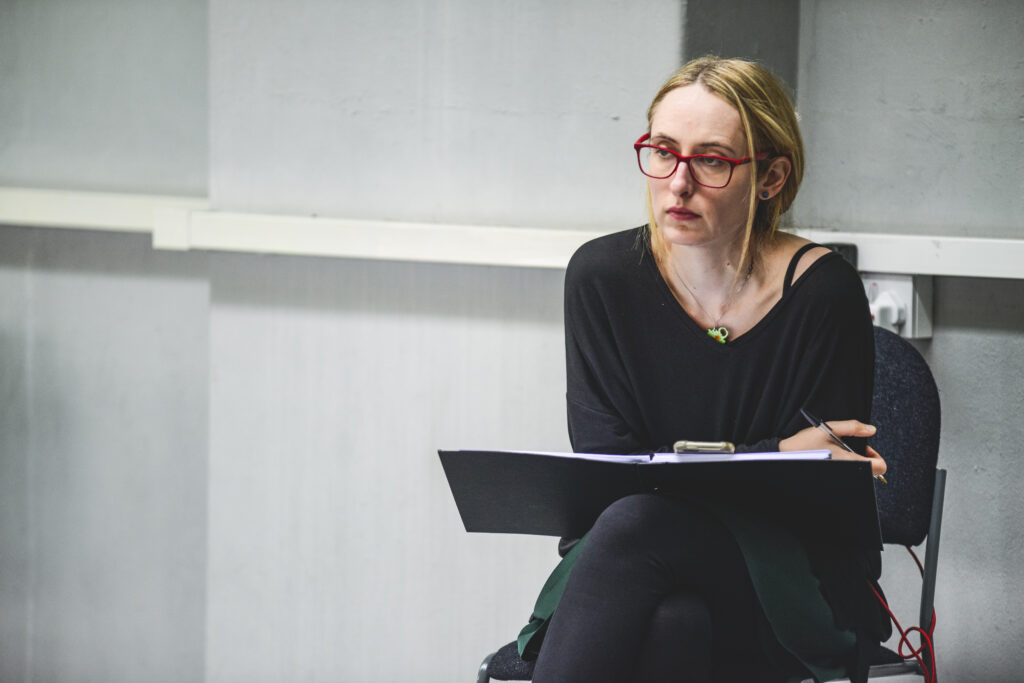
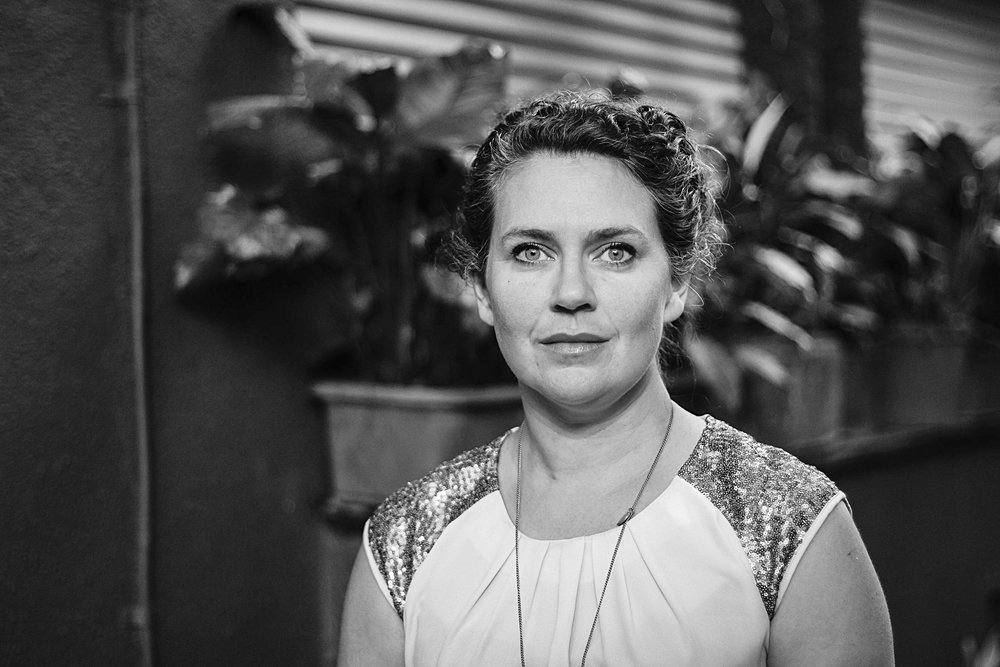
In our latest Playwright interview Director of Get the Chance Guy O’Donnell chats to Wales based Playwright Lisa Parry. Lisa discusses her career to date, her latest production The Merthyr Stigmatist due to play at Sherman Theatre, Cardiff in October and her thoughts on opportunities for Playwrights in Wales.
Hi Lisa, great to meet you, can you give our readers some background information on yourself please?
Sure. I’m a playwright, based in Cardiff. I used to be a journalist but had a wobble one day when I realised I was having to tell a woman’s story in a way that didn’t feel right to me. It felt the way of writing her story for the paper would lead to her feeling judged by the readers/its audience and I felt really uncomfortable with that. It wasn’t bias or anything from the paper’s side, it was literally the way I had to structure it. I was just at the point where I was picking up work on the nationals and I was on a pretty clear career trajectory. After meeting this woman, I started going back to my flat and writing drama again (I did this a fair bit during my A-levels) as opposed to short stories and poems, which I had been doing as a creative release up until that point. I applied to Birmingham Uni to do their MPhil in playwriting, was offered a place and took it. I was taught by playwrights such as Sarah Woods and David Edgar and Moira Buffini – sessions that really impacted how I write.
I then moved to London, temping and working front of house at the Royal Court so I could see heaps of stuff for free and pay my rent at the same time. I learnt heaps down there – nothing beats watching the same production over and over again to see what works and what doesn’t and why. Then one of my short plays was picked up by the Sherman for Script Slam and I ended up being developed by the old literary department here quite a lot.
I was constantly travelling backwards and forwards because the theatre scene here really excited me. Eventually, with work, we had the chance to move and so we took it and settled in Cardiff. We’ve been here for over eight years now.
So, what got you interested in the arts?
I’m a Valleys/Midlands hybrid and from a really working-class background. Going to the theatre to see plays just wasn’t a part of my childhood. It was what middle-class people did. I always loved books and stories though and I remember visiting my very bookish great-great uncle and pulling Shakespeare’s complete works off the shelf, flicking through it and being surprised I could read and understand it. Then I read a really old copy of A Midsummer Night’s Dream – I think I bought it at a car boot sale – in one sitting and thought it was incredible. I loved the way the story was told just through dialogue and it wasn’t couched in heaps of description like in novels. It felt really refreshing. My love of theatre then really grew when I was doing my A-levels. I remember seeing Debbie Isitt’s Sqealing Like A Pig on a school trip at Birmingham Rep and being really taken aback by it – the fact it was contemporary, the way she used heightened language in certain sections, but it still felt refreshing and new, not dusty and archaic. I could relate to it. I did some really bad acting throughout sixth form and university but it was always text that got me if I’m honest.

Can you tell us about your writing process? Where do your ideas come from?
It’s really random. Sometimes it’s just a phrase that will stick in my mind or an image and I can’t shake it off and eventually it’ll just come out as a play. (When I say eventually, this can genuinely take years.) I quite like leaving stuff ticking over until I simply have to write it. I try to read as much as possible and to see as much theatre as possible too.
I think with ideas, it’s mainly about keeping your mind creatively open. Sometimes that comes from switching the creative side off though and tricking it. If I’m not writing and I’m reading non-fiction instead, my brain has an amazing strop and starts throwing ideas my way. If I rest it a bit after finishing something, it needs to create something new.
Can you describe your writing day? Do you have a process or a minimum word count?
I’m really awful with this. I hear people tell me they do so many pages or words each day and I would love to be like that because then I could chalk up a standard working day, but I simply can’t do it. I’ll write in the time that I have. It loosely fits into the school day now and if my partner has the kids either side of that so I can cram in a few more hours, that’s a bonus. I’ll tend to blitz things in the run-up to deadlines too. Since having the kids though, I’ve noticed I can get more done in a shorter amount of time – I think I’ve developed a more intense focus. And I definitely plan more. If I think about writing a full-length play, I have a complete panic at the start. If I think about writing ten pages or so and just needing to hit a certain point in the story by the end of the week, it’s more manageable.
That said, everything’s gone completely out of the window recently with Covid-19 and like a lot of people, I’m juggling home education now with work. My partner is a doctor at UHW on top so our rhythms as a family are all over the place. My work pattern has changed and I’ve had to step back and look at it and come to terms with how to manage it. I’ve been writing shorter plays, which I love doing anyway, and have also then felt I’ve achieved something. I’m probably hitting the point of getting back to broken-down longer work again now. The fact I’ve not put everything on hold though has surprised me. Obviously there are financial reasons not to do that, but the fact I’ve desperately needed to write with all this going on has made me realise how much a part of me it is and also how much I desperately believe theatre is needed to help us all through this: be that preparing work for the stage in the future or simply short plays going into the community or online now.
Why and where do you write?
I write for a few reasons I think. The most straightforward answer is that I get really crabby if I don’t. I think it might just be a way I process things. If I’ve not written for a while, I don’t feel like myself and I’m not sure I’m that pleasant to live with. I need a narrative ticking over in my head or it’s really too quiet. I also write plays because I really believe in them. One reason for that is – and I think we’re seeing this with isolation – it’s really important for human beings to simply be together and to listen to stories. It’s a fundamental part of who we are as a species. The world wouldn’t stop turning if I wasn’t one of those writing them, but I do love writing them very much.
The other reason I write plays is that I think theatre is an incredibly powerful and political medium. Anything you put on stage is a metaphor, it carries meaning. And plays can shake us out of our complacency and cause us to ask questions. The second a play causes you to think about something, anything, a little differently, it’s activated a muscle that is really powerful when applied in the outside world: nothing has to be a certain way. That’s a real Brechtian idea, but I really love it. I think I’d struggle to write something if I didn’t think that could be going on in the background. It would feel a bit too self-indulgent.
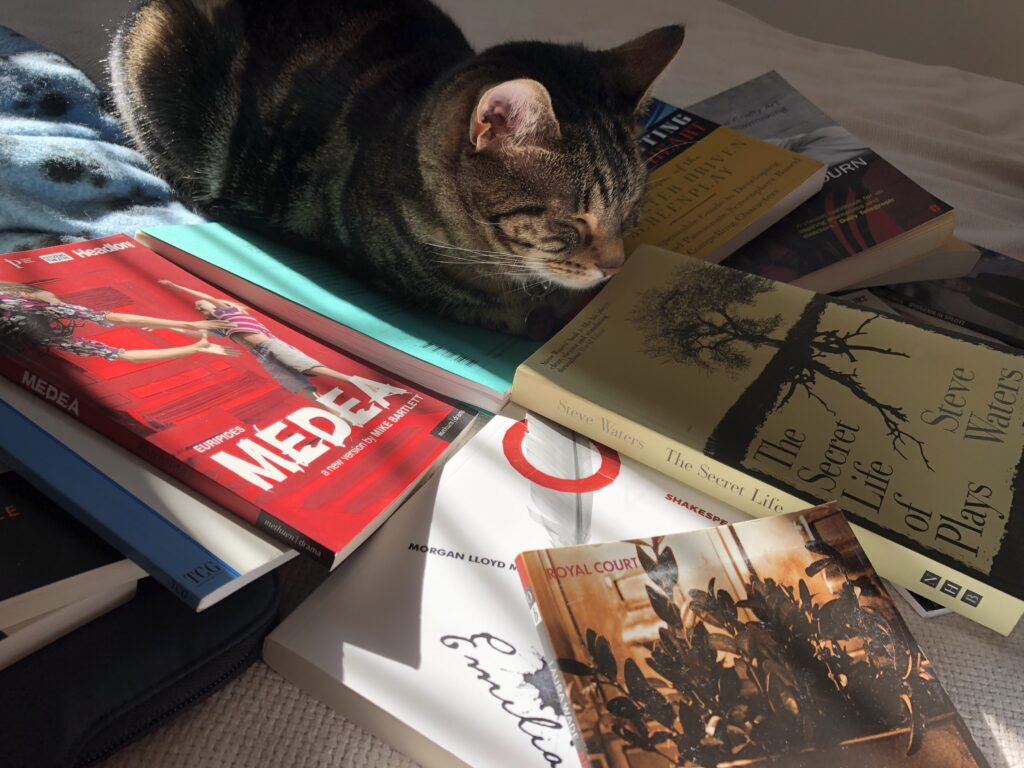
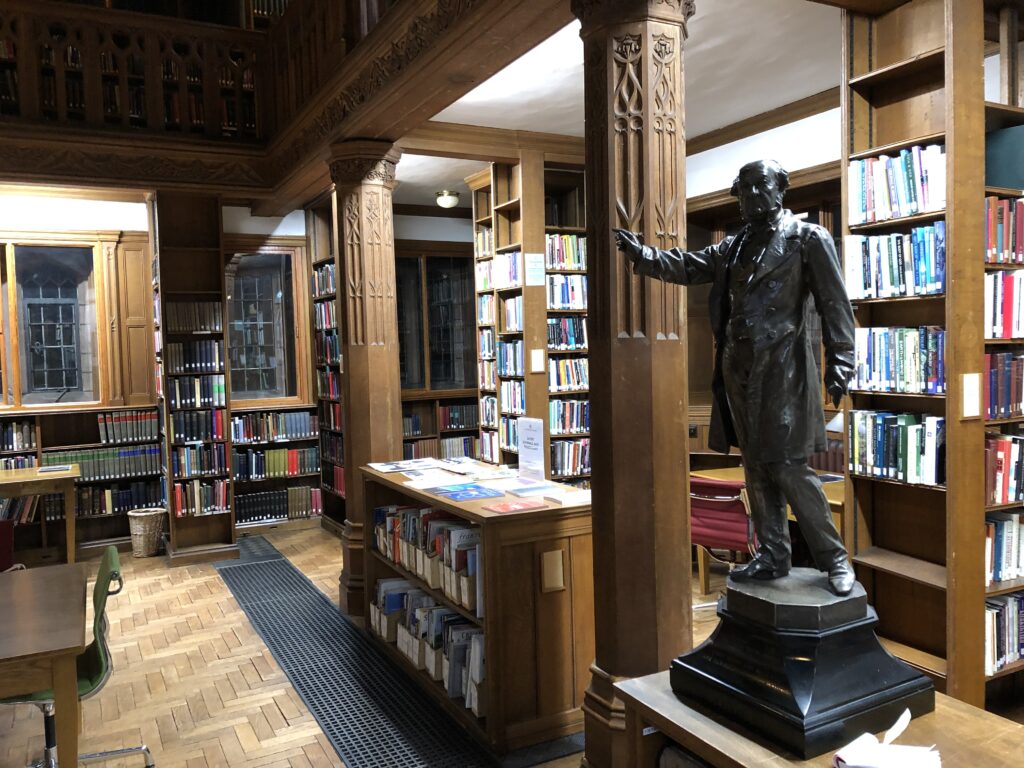
As for where I write… I’m so cross with myself about this. For years I have been telling myself that I need a desk and decent chair, but I still work sat on my bed with books and drafts spread out everywhere. I spend far too much time trying to pull out previous drafts from beneath sleeping cats. I was pretty good when my eldest was little as he slept in a sling and I’d work as he napped on me which means I had to be sat in a chair at a table or something. When I want to work without the presence of small mammals and have a decent run at something, I often pop down to Chapter and get there early to nab a plug socket. I recently worked at Gladstone’s Library when I was up at Theatr Clwyd on a residency and it was incredible. I was able to work much later because I could pop downstairs to a library. It was blissful and really productive.
Your latest play The Merthyr Stigmatist will be produced by Sherman Theatre and Theatre Uncut in October. Why would you say Merthyr is worthy of a Welsh playwright’s attention?
I think I need to flip this question to answer it properly. I’ve never struggled with the idea of whether Merthyr was a worthy subject or not. It’s one of my favourite places in the whole world and I love it there. To me, growing up, it was always magical. My grandmother used to clean the castle and she’d tell me stories of how she saw Crawshay’s ghost in the castle windows perving on them all. And when we’d visit relatives, we could look out over the mountains and then walk into town and pick up the different speech rhythms. The dialect of Merthyr is really rich; its history is phenomenal and there are so many stories still to be told. The idea that it shouldn’t be on stage whereas somewhere like Chelsea should only really holds if you buy into social snobbery and I have absolutely no patience with that. Merthyr’s epic and I’m gobsmacked it’s not on stage more.

That aside, I’ve been putting off writing about Merthyr for years. I always wanted to but it’s so locked into my family and a real grief for my grandparents that I was very wary of going there with my work. And I didn’t want to write something that wasn’t heartfelt and contemporary either – I wanted it to be truthful. It was after we moved across and my partner worked at the Prince Charles for a while and was coming home with stories about his day that I realised how much I’d missed feeling plugged into the place; it felt as if part of me had been asleep for a while. And then a couple of things happened in the world of politics as I was building back up my relationship with it and I creatively exploded.
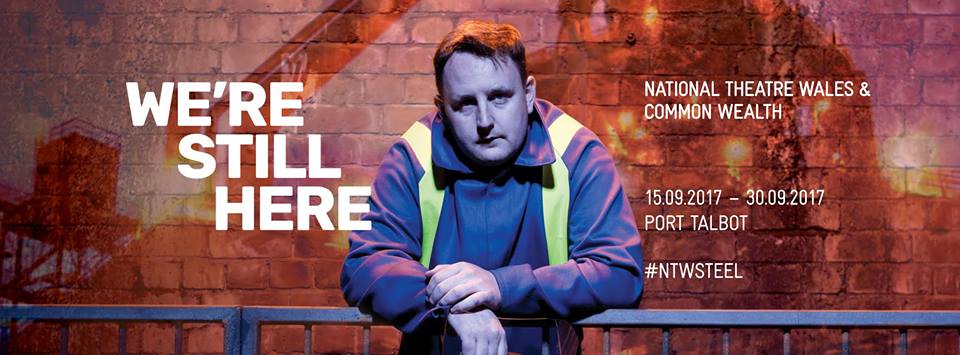
The play is described as “A riveting and poignant drama that tackles theology, doubt and life in the Valleys in 2020”. With productions such as We’re Still Here by NTW portraying the lives of Neath Port Talbot Steel Workers, Theatr na nÓg’s Nye and Jennie examining the political background and personal inspiration of Aneurin Bevan and Jennie Lee, do you feel that Welsh theatre is presenting representative stories of its citizens on our stages?
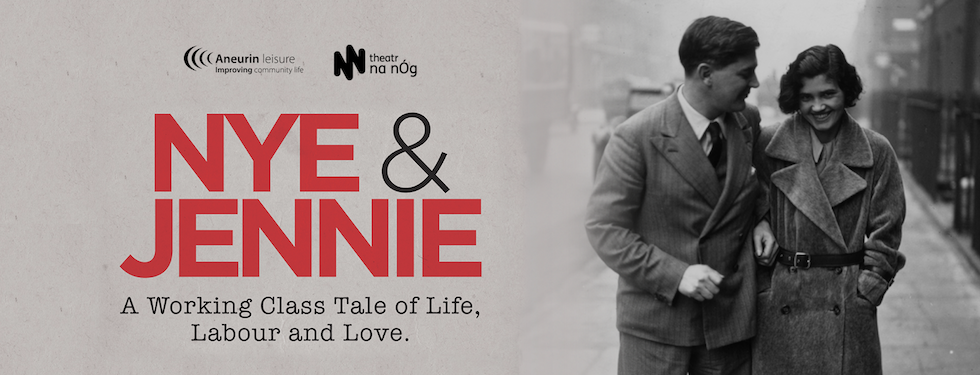
That’s an interesting one. I’d say yes but there is more work to do. Audiences respond really positively to Welsh stories which does make sense – I think if you see theatre being for its community, people are going to want to see themselves represented on stage. And modern Wales needs theatrically exploring. I think it’s why the Sherman’s latest season is so exciting because it’s doing that, even with A Christmas Carol.
And I think that’s the rub to be honest. Wales’ past is so rich, you can see why our plays are perceived as mostly being about historical events. But we have to remember that there’s a generation going to the theatre now which wasn’t even alive during the Miners’ Strike and they need to see their lives reflected too or we’ll lose them. There’s heaps that we haven’t explored and voices from various communities that we haven’t heard from yet and we really need to in order to explore who we are and what this country is here and now.
I think there’s something interesting that feeds into this question too though. There seems to be a real push to say ‘Oh, it’s Welsh – but it’s also universal’, as if we have to apologise for telling a Welsh story somehow because what we’re aiming for isn’t that. I don’t see why it can’t be. If the play’s good, if it’s specific to here and truthful, the truths its exploring will be universal anyway. That’s just how theatre works.
There are a range of organisations supporting Welsh and Wales-based writers. I wonder if you feel the current support network and career opportunities feel ‘healthy’ to you? Is it possible to sustain a career as a writer in Wales and if not what would help?
I genuinely find this a hard question to answer. Everything is very competitive, but I think that’s true everywhere and there are certainly more opportunities now than there were. It’s a hard industry to succeed in; I think that’s true everywhere though. And you have to really know what you’re doing and why you’re doing it, rather than just applying for everything and anything I think. Is it possible to earn an average UK salary solely as a playwright in Wales? No. But then very few people manage that writing anywhere and second jobs are pretty much essential. In terms of playwriting though, I do look to Scotland sometimes, with the Playwrights’ Studio and also Oran Mor and think things like that here would hugely help.


Ultimately, you learn a thousand times more about your craft and process by actually having work on. A body commissioning short plays like Oran Mor does and then sending them off on tour on a loop to small venues around the country seems like a real win-win situation to me, in terms of development, building-up audiences and employment, and I really wish someone would do it.
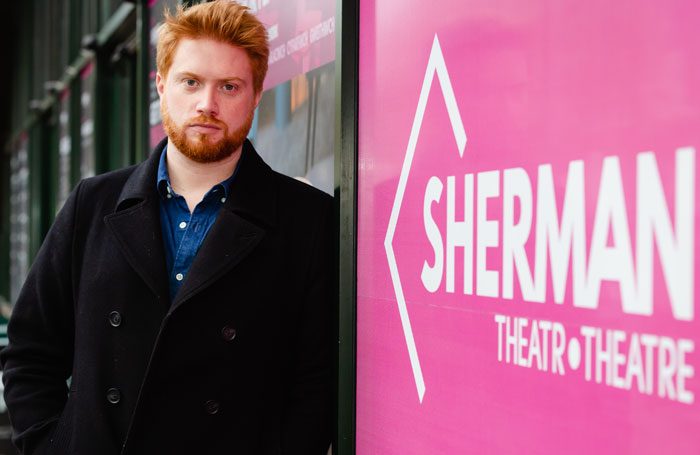
Sherman Cymru has recently announced the reinstatement of their literary department, on a one-year pilot basis funded by Arts Council Wales. What does this say to you as a playwright as regards the venue’s intention to support your craft? What change do you hope will be realised with this new department at Sherman Theatre?
I think it sets out quite clearly from the off that the Sherman takes literary development and playwriting seriously and we really are crying out for that. The number of times the phrase ‘new writing isn’t our remit’ has been uttered over the years has been heart-breaking given the writing talent here. I’ve heard it said in the past that it’s okay not having a Welsh literary department because people have still been able to send work to London, but I think that misses a crucial point: people in Wales are more likely to send it out to a theatre in Wales. I really saw that teaching a writing workshop recently – sending work to the Sherman just felt safer for them somehow because they see themselves as writing in that Welsh tradition. And for Welsh-language work, those London theatres haven’t been accessible so this is really important. I’m so pleased the Sherman’s secured money from ACW to pull this off and I really hope it continues and that the arts council continues to fund it.
In terms of the Sherman and their support for the craft, in particular with my own work, I have to say I really cannot praise Joe Murphy enough. He has a unique ability to help me tidy up my brain and I’m chuffed to bits he’s here. Between him and Emma Callander at Theatre Uncut who really encourages me to trust my instincts, working on the script of The Merthyr Stigmatist truly is an absolute joy. From personal experience I have to say that Wales really is an exciting and nurturing place to write at the moment. I hope the literary department will help that be the case for writers in the not-too-distant future. I’m just desperate for the ghost lights to be turned off now, for the literary department to be up and running and for work to be back on stage. It’s tough at the moment but when I think about how it’s going to feel seeing and making work here again: it’s going to be absolutely incredible. I can’t wait.
If you were able to fund an area of the arts in Wales what would this be and why?
I think the touring scene in Wales needs more focus and money. We have villages with halls paid for by miners’ contributions which are set up for performance and we don’t use them anywhere near as much as we could. It’s really hard for smaller companies to take work out too because companies as a whole aren’t hitting those venues regularly enough to build up audiences so it’s a massive financial risk. I’ve seen amazing work in Cardiff that could easily tour and hasn’t, simply for that reason. We’re still a divided nation after Brexit I think, but that’s exciting in terms of touring work – plays can help stimulate debate and discussion. But to do that, we need more financial support and a willingness across the board to tour.
What excites you about the arts in Wales?
There’s a confidence at the moment from the grassroots up that, if capitalised on, could be really exciting. And for the first time I can remember, there seems to be a critical mass of playwrights. I also think that as a community, the one we have is one of the friendliest and most welcoming on the planet. It’s really exciting to live here, and watch people’s journeys as artists. As a writer too, I think it’s exciting that two languages feed into the literary tradition here and aren’t separate. A lot of English-language work is influenced by Welsh and vice versa. And I really love how heaps more people are going to Welsh-language work now.
What was the last really great thing that you experienced that you would like to share with our readers?
I was up at Theatr Clwyd just before the theatres closed and sat through some of the rehearsals and tech for Milky Peaks. It’s such a brilliant show and knowing work like that is ready to go when the buildings all reopen is keeping me going at the moment if I’m honest.

Thanks for your time Lisa.

 (5 / 5)
 (4 / 5)
 (3 / 5)