Category Archives: Dance

Review Roots, National Dance Company Wales, Theatr Clwyd by Katie Price

 out of 5 stars (5 / 5)

I recently had the privilege of going to see ‘Roots’ by National Dance Company Wales, at Theatr Clwyd.  This performance included four different dance pieces which consisted of ‘Ecrit’ ‘Why Are People Clapping ?’ ‘Codi’ and ‘Rugby: Annwyl/Dear’. These dances were performed by a small but strong ensemble cast that made the dances look really interesting. In between the dances, the audience got the opportunity to share their opinions/views on what they watched, which I think made the audience look deeper into the story behind each dance.

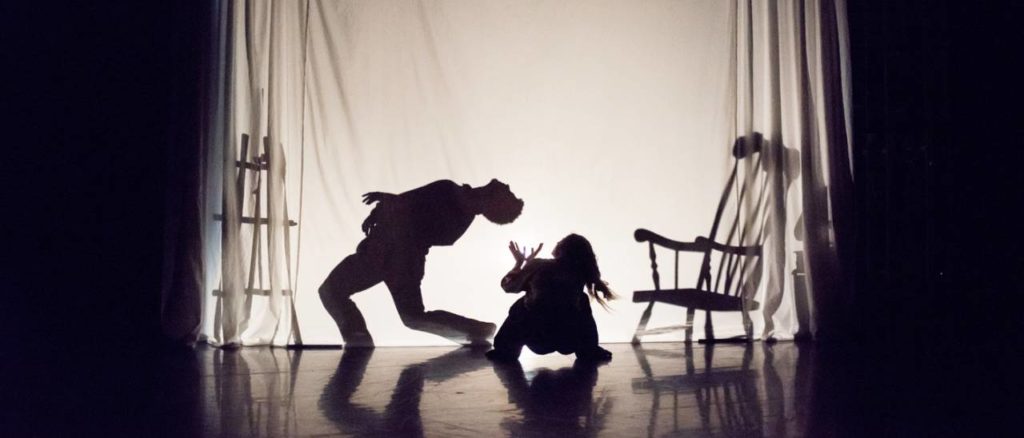
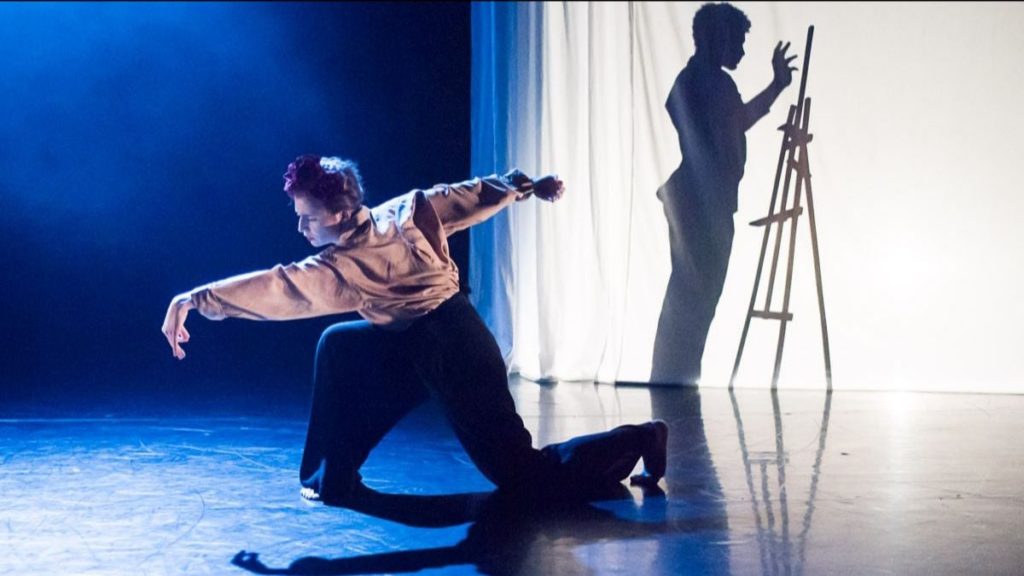
The first dance presented to the audience was ‘Ecrit’. This was a duet that was performed with one person behind a screen so this created a shadow-like figure. This was visually interesting for the audience and I made me think about the different things that it could represent. This helped to show the status of the two characters at different points in the dance. There were also sections in the dance that were performed without music. This made me realise that dance is just as effective without music as it is with music.

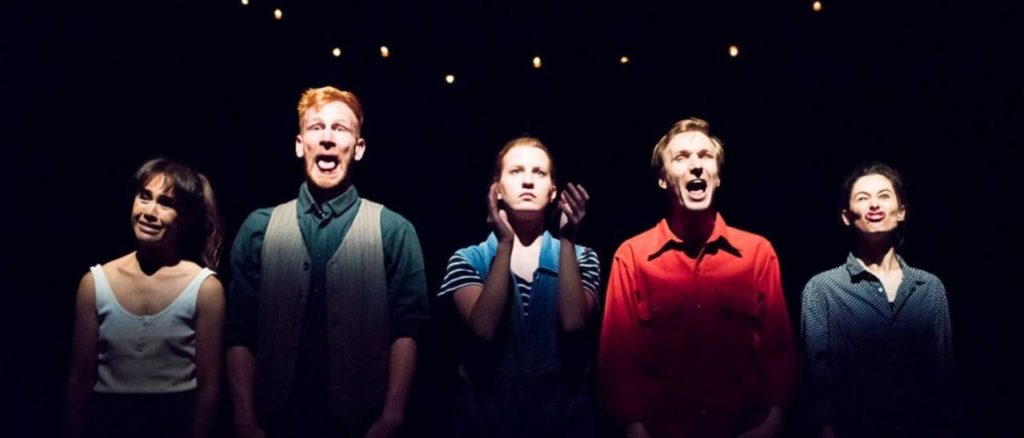
Another dance we saw was ‘Why Are People Clapping ?’. This one stood out to me the most because I found it fascinating how the dancers were creating the rhythm themselves and they all managed to stay in time. Although the rhythm didn’t change, the speed of the dance did and I found it clever how everything still managed to fit together perfectly.

The third dance ‘Codi’ had more of a theatrical vibe to it. As the dance progressed, the acting element became very clear. This made the audience connect with the characters emotions and got them hooked on the journey that they go through.

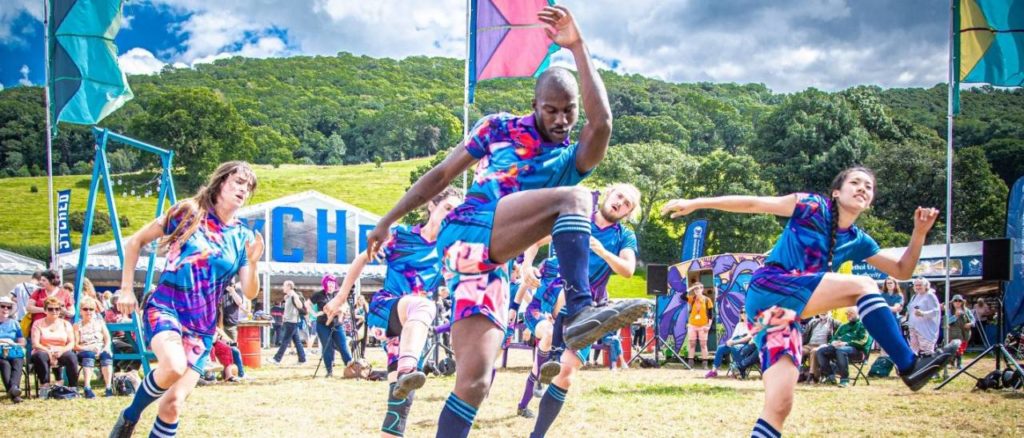
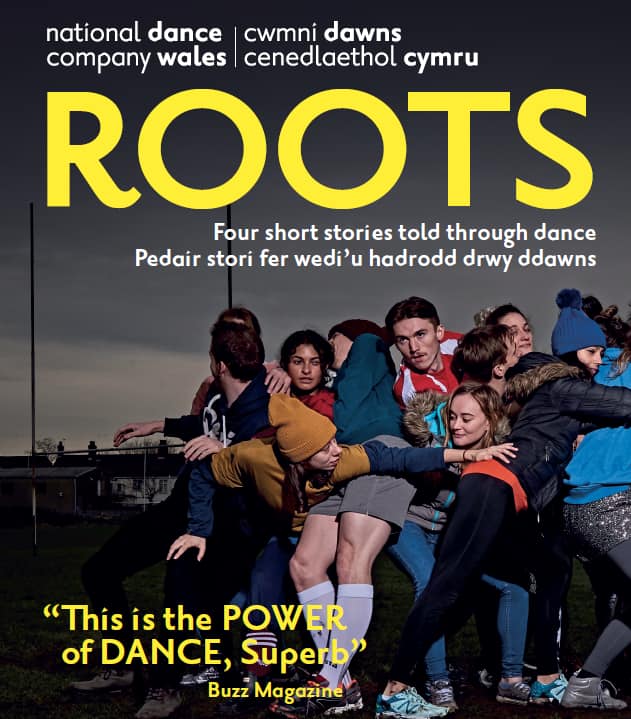
The last dance piece that was performed was ‘Rugby: Annwyl/Dear’. This included very strong ensemble work. I loved how energetic this piece was and how well the sport of Rugby was shown through a form of dance eg. lifts, running around, supporting each other. Although the dance was performed really well, I think that at times some of the movement was repetitive which sometimes made the story hard to follow.

Overall, I enjoyed hearing people’s views on each dance as they were sometimes different to what I thought so it made me think about the dance from a different perspective. Also, in the dance ‘Ecrit’, there was a section in the dance where one of the dancers sang a few lines of a song. I think this worked effectively as it made the audience realise that dancers also have other talents and this could be incorporated into a dance to put a twist on it. Finally I enjoyed how the acting through the dance pieces was over exaggerated as this helped the audience to understand what was going on throughout the dances. I think the show could have been better if some of the dancers shared their own views on the dances as it would have been interesting to hear if any of the storylines of the dances changed throughout the rehearsal process.

In conclusion, I would rate this five stars as I think that the audience interaction was incredibly unique and each individual dance was performed with a lot of emotions and with strong movements. 

Review Roots, National Dance Company Wales, Theatr Clwyd by Chloe Kerr

 out of 5 stars (4 / 5)

The performance Roots is made up of four
short dances (Rygbi, Ecrit, Why Are People Clapping?, Codi). All four of these
pieces are from Wales. I personally got different ideas about each of the
dances as they progressed. I found that I often changed my mind of what I
thought the pieces were about.

The first piece we watched was Ecrit. Throughout this dance my ideas developed. I got the impression that it represented some kind of forbidden relationship because of the battle between the man’s shadow and the girl on stage. However, I also got the impression that it represented communication between a soldier and his girlfriend/ wife. As the piece progressed I found myself leaning towards the latter option. I feel that it was beautifully executed and I think having the male as a shadow to show they weren’t together was really effective. I found it really interesting how everyone had different opinions on the piece when we talked after the piece, however I feel that they all seemed to relate to one another.

The next piece was Why Are People Clapping? This piece was my favourite! In this piece I found it really interesting how they incorporated so many different elements into it. They used many familiar things such as clapping, tennis and head shoulders, knees and toes. It was also weird because clapping can be used in polar opposite situations, it can be used as support or in anger as a sort of come on kind of thing, or in a patronising way. I loved how the claps really controlled the whole of the dance and also switched the mood of the piece. I really like how it started and ended with the tennis match, which led me to believe that all these different parts in the middle were what was going on in peoples head as they watched the tennis, although I may have misinterpreted this.

The third dance was Codi. Throughout this
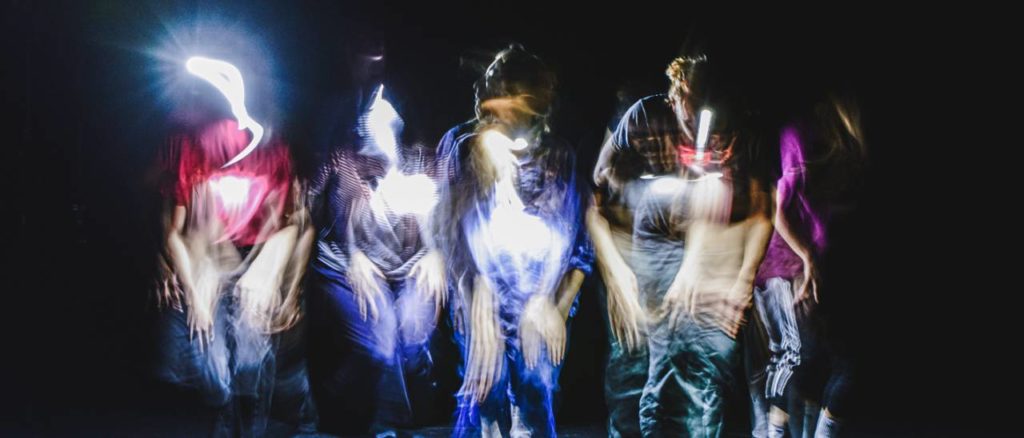
dance I got the strong impression that it was based on miners. The use of
headlights (which were worn on their necks) really helped to portray this scene
for me. This piece was full of emotion and it was something that really
represented what miners would go through. I think it was executed amazingly and
I love the use of the sticks. Now whilst I did love the use of lights on their
necks I found that at some points it also held them back in a way because it
meant there were many movements we lost because it was too dark. Although I did
love this piece.

Lastly Rygbi, which is pretty much explained in the title of it is based on rugby. I thought this piece was beautifully choreographed, it was amazing to watch popular rugby moves slowed down and turned into a beautiful dance that represents teamwork and helping each other out when they’re down. It had a really soft look to it even though it was mimicking a really hard and rough sport which I thought was really effective. I loved how the dancers all seemed to rely on each other throughout the piece which really added to the togetherness and community feel of rugby. I also read up on it and found out that it was actually made with some input from rugby players and fans, which I think really adds to the authenticity of the piece. The only criticism I have for this piece is I think it went on slightly too long. This piece lasted around twenty five minutes, and I felt that some of the movement were repeated throughout which meant we lost the rawness of the piece. I personally feel that this piece would have been a lot more effective and made more of an impact if it was slightly shorter.

Overall I really enjoyed the show! I loved how it was laid out and how interactive it was. I loved the discussion in between each piece, I feel that this really brought the audience together and it was lovely to hear other people’s interpretations of each piece. Overall I would give the show four stars!

Choreographers – Nikita Goile, Ed Myhill, Anthony Matsena, Feargus O Conchuir

Dancers – Nikita Goile, Ed myhill, Aisha Naamani, Moronfoluwa Odimayo, Elena Sgarbi, Tim Volleman, Marla King, Ellie Marsh

Review Roots, National Dance Company Wales, at Theatr Clwyd by Simon Kensdale

This touring programme of new pieces of contemporary dance creates something of a buzz – a buzz provoked by the NDCW’s Artistic Director, Fergus Ó Conchúir coming forward to encourage audience members to talk to someone near them who they don’t know about their reactions to the work.

The approach will
work for those who, like me, are a bit mystified by dance and perhaps also for
those who have come on their own.  It
might not appeal so much to purists because it generates a bit of atmospheric
untidiness:  conversations start up and
have to be quietened down.  Still, given
that the whole programme is not very long, there is time for all of this.

As for the main
event itself – the performances and the choreography –  I should repeat that I am relatively ignorant
as far as dance goes.  I am not dance
phobic but if I go to see a show it is usually a play or a concert, possibly an
opera, very occasionally a ballet – almost never contemporary dance.  Unfortunately for development officers, we
are all creatures of habit.  This is a
shame because, ‘knowing what we like’, we don’t venture far from our comfort
zones to take in new experiences. I had a complimentary ticket from Theatr Clwyd
and a free evening and I’m glad I was able to see Roots.

The programme contains four pieces.  Ecrit is choreographed by Nikita Goile and features two dancers.  Both Why Are People Clapping? by Ed Myhill and Codi by Anthony Matsena featured four or five, and Rygbi by Fergus O’Conchuir himself featured seven – or was it eight?  The imprecision in my counting is not just middle-aged muddle: it’s a reflection of the impact of all the dynamic and fluid body movements out in front.  You lose track of numbers because of the intensity of what is going on.

Ecrit is about a man and a woman and the
balance of power in heterosexual relationships. Rygbi is about rugby, prompting thoughts of what it would be like
if economics and logistics permitted a full team of at least thirteen dancers.

However, I’m not
sure that what the pieces are said to be about, or what the choreographers and
the dancers themselves intend to do, matters much.  The performances take you some distance
beyond the start point.  The titles and
notes really only serve as spring boards, or launching points for your
reactions.  (You don’t think about rugby,
for example, in the same way as you might watching a performance of Hull
Truck’s Up and Under).  The show’s overall title, Roots, is not hugely satisfactory
because it reminds you of the eminently forgettable best-seller/blockbuster
movie/TV series phenomenon.  But it’s
there to let you know that what you going to see is largely about Wales, having
been made in Wales by people who work there, or who are Welsh themselves.

Knowing that the
start point for Ecrit was a letter to
Diego Riviera by Frida Kahlo made me search for references to them and their
painting, to murals and to Mexico – but only briefly.   Dance tends to liberate you from your
thinking through the movements – in this case by the movement of the woman’s
hands, which dance together, forming shapes expressive of both passion and
suffering.  The piece depends on a
dramatic use of a screen and shadow play to convey the essential distance and
separation in a relationship.  The male
dancer is concealed from view – as he is from his lover – and appears at first
only in silhouette, the back lighting permitting him to grow massively in
stature, like a nightmare monster and then shrink.

Why Are People Clapping? asks a question for which of course there is no real, single answer, other than ‘just for fun’ – although the loud, sustained and rhythmically very accurate clapping throughout must be hard work for the performers. It provides a percussive sound wall which the dancers move against, either together or in solo movements.  It’s very reminiscent of flamenco, except that here there is no singing and no shouting and, as with much of the programme, the musical accompaniment is not very noticeable.

Codi is apparently about ‘the strength
of the Welsh communities who come together to tackle isolation and depression
during troubled times’ but if you hadn’t read the programme notes you could be
excused from thinking it was about coal mining. 
This is because the main impact of the piece is achieved through the
ingenious use of single bright lights worn around the neck by the dancers,
instead of on helmets.  They shine out
through a smoky atmosphere at you and their beams strike out in all
directions.  The dancers are also dressed
in overalls which don’t restrict them but which do suggest they are miners.

Rygbi was very
well done – NDCW performed it for the World Cup in Japan – but I found it the
least interesting of the four pieces.  This could be because it came on last and by
that time, despite the conversations and the detailed introduction, I had had
enough contemporary dance for one evening. 
I wanted there to be more humour in it – rugby being fairly ridiculous  – and even some ugliness – rugby is also often
quite unpleasant. (It’s not a beautiful game!)  I was unsure about what the dancers were
wearing – brightly coloured ensembles, tops and shorts and long socks which
were definitely not team strips.  What
happened drew a lot on typical rugby moves but I was unsure, I suppose, of what
the piece was saying and it wasn’t a comfortable uncertainty.

That said, this
was a good evening’s entertainment, giving me plenty to think about and lots to
remember.  It may also encourage me to
see contemporary dance more often.  I
think, in the end, it’s a pity that, for a number of reasons, dance occupies a
separate niche in theatre and that it has to be enjoyed in isolation.  Dance was originally central to drama and
even today it can be effectively introduced in plays.  A weakness of much modern drama is its lack
of physicality, with actors relying on their delivery of text and not
understanding the importance of suggestive body language and sinuous physical
expression.  What shows like Roots demonstrate is how evocative and
expressive pure movement can be on its own, when it is performed by talented
and disciplined dancers in companies like NDCW. 
Long may they continue to tour.

Dyma Adolygiad Mags, Cwmni Pluen Gan Lowri Cynan (Review Mags, Cwmni Pluen By Lowri Cynan in the Welsh Language)

Dyma brofiad theatrig diddorol. Mae ‘Mags’, drama ddiweddaraf Cwmni Pluen, a ysgrifennwyd gan Elgan Rhys yn gynhyrchiad awr o hyd ond yn un sy’n eich gadael angen gwybod mwy. Mae’r stori yn mynd â ni ar daith y ferch ifanc o Ogledd Cymru i Lundain a nôl i’w phentref genedigol. Ond nid yw ei thaith yn un rhwydd. Mae’n profi anhapusrwydd plentyndod ac yn ffoi i chwilio am antur yn Llundain lle mae’n colli’i ffordd yn llwyr. Mae’n darganfod rhyddid peryglus dinesig, cariad dros dro a beichiogrwydd. Ond o’r holl themâu hyn, efallai mai’r un mwyaf torcalonnus yw’r ffaith ei bod yn rhy ifanc i ofalu am ei phlentyn ac yn gorfod rhoi ei merch i ffwrdd. Mae colled ar sawl lefel felly’n amlygu yn y stori hwn.

Llwyfannir y ddrama mewn gwagle addas a defnyddir symbolau yn unig i ddynodi lleoliadau. Roedd y cyfarwyddwr, Gethin Evans, wedi stwythuro hyn yn dra effeithiol gyda deunydd o garped, cadair syml a gorchudd plastig. Does dim angen mwy oherwydd mae’r actorion yn medru awgrymu’r sefyllfaoedd drwy eu gwaith corfforol. Ensemble o bump sy’n perfformio yn y cynhyrchiad – Anna ap Robert, Seren Vickers, Matteo Marfoglia, Eddy Bailhache a Casi – ac maent yn defnyddio cyfuniad o waith traethu, deialog, canu a gwaith corfforol yn dda. Roedd eiliadau hynod deimladwy gyda’r actorion yn creu delweddau emosiynol iawn gyda’u cyrff. Ond cryfder y ddrama i mi oedd y sgôr gerddorol a’r caneuon. Teimlais bod hyn yn gyfeiliant hyfryd a theimladwy i’r stori, gyda llais hudolus Casi yn serennu.
Roedd gwaith goleuo Ceri James hefyd yn creu awyrgylch addas i arddull symbolaidd y cynhyrchiad.

Er bod darnau hyfryd i’r sioe hon, roeddwn yn teimlo fy mod am wybod mwy am fywyd Mags, yn enwedig wrth ddeall ei bod dal yn hiraethu am ei babi a gollodd flynyddoedd yn ôl. Mae’r ddrama yn trafod themâu oesol fel pwysigrwydd perthyn a cholled sy’n gyffredin i bawb. Byddwn yn annog pobl ifanc yn arbennig i weld y ddrama hon er mwyn cael syniadau ynghylch arddulliau theatrig gwahanol.

Sweat Baby Sweat, Jan Martens – a comment by Eva Marloes

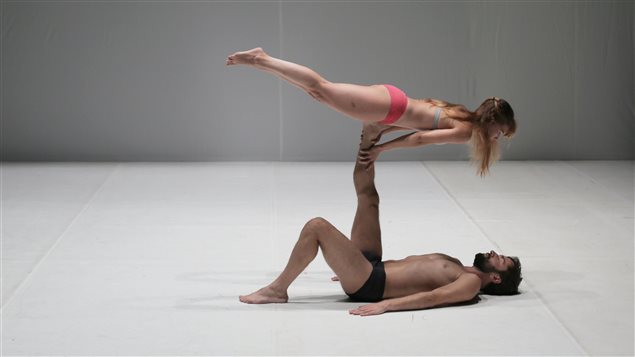
Jan Martens’ Sweat Baby Sweat is a minimalist, slow, and stretchy take on love relationships in dance form. At the beginning, the duo (Kimmy Ligtvoet and Steven Michel) become entangled, as in a yoga pose. The movement is minimal. They become one body turning on itself. It reminded me of Plato’s Symposium where Aristophanes describes androgynous humans with four legs, four arms, and one head made of two faces, which were then split by Zeus in two. Thus, when one finds one’s soulmate one feels whole. 

Sweat Baby Sweat is a little less wholesome. The couple splits and then begins again with the same initial movement of the first section. Martens says that he wanted the audience to think that they were going to see the same movements again and then be relieved from the change. The change is a long and protracted kiss, which I found uncomfortable. I am rarely comfortable with displays of intimacy on stage or on screen. Yet, the kiss being slow and continuous becomes just an extension of the movement. It is not sexy or tender. 

The continuous movement trails the ups and downs of relationships, the closeness and distance. At one point, the woman clings desperately while the man pushes her away. Not something the women to whom I have spoken appreciated. It could have been reversed or repeated with the man clinging, or could have featured two dancers of the same sex, so to avoid the stereotype of clinging women and independent men. The male dancer then seeks the female dancer, but instead of leading to tenderness and intimacy, it leads to lustful copulation. I raised my eyebrows. 

Sweat Baby Sweat is problematic and yet engrossing. It holds the attention of the public for over an hour. It brings the audience close to the couple rather than performing to them. It is an intense performance. During the post-show talk, a member of the audience described it as ‘electric focus’. Kimmy Ligtvoet and Steven Michel show an impressive physicality, which explains the longevity of the piece, now in its eighth year running. Sweat Baby Sweat does not play to the public; it draws the public in. It is compelling, but a new direction is needed.

(First published on Groundwork Pro: https://groundworkpro.com/sweat-baby-sweat-jan-martens/)

Review Roots, National Dance Company Wales by Eva Marloes

Roots is an engaging, diverse, and emotional production that marries Welshness with contemporary dance and gives life to art that is accessible without compromise on quality. Roots is the biannual production by the National Dance Company that brings dance to audiences around the world and around Wales. It makes its way into venues with little technical equipment and space, in towns and villages around Wales, to bring dance to new audiences. Roots succeeds equally in introducing new audiences to dance and in delighting dance enthusiasts. 

This year’s production features four very different pieces from four choreographers at different stages in their career and artistic maturity. Écrit, choreographed and performed by Nikita Goile is an emotional dance recounting a conflictual love relationship executed beautifully. Goile, a budding choreographer, combines an elaborate work of hands, inspired by Indian Bharata Natyam dance, with her lover’s silouette behind a curtain, and a more traditional duet form. It is effective in conveying the power imbalance between the two lovers, the hurt, and the closeness. The only weakness of the piece comes from its inspiration: the letters of Frida Kahlo to Diego Rivera. Although they both had other lovers, Kahlo suffered from Rivera’s numerous affairs. In Écrit, Goile’s graceful and gentle movements do not capture the intensity of Kahlo. Having suffered from polio, Kahlo had very weak legs, underwent many surgeries, and had miscarriages. Kahlo’s suffering body was the source of her art and Kahlo used her body to reinterpret her MexicanidadÉcrit is at its strongest when Kahlo is forgotten and Goile is herself. Goile conveys a nuanced fragility, which contrasts with the powerful gestures and movements of Moronfoluwa Odimayo as her dominating lover. It is effective and moving. 

The second piece, Why Are People Clapping? is also by a new choreographer, Ed Myhill. It is an entertaining and funny piece that conveys the joy of dancing to the rhythm of elaborate clapping. In contrasts with the intimate piece Écrit, Myhill’s Why Are People Clapping? plays to the audience and for the audience. It begins with a tennis match with no actual balls or rackets, conveyed by only a single clap and well-timed movement. It is all so well tuned that you can almost see the ball hit the racket. The piece includes dancers in a semicircle taking turns to do and enjoy a solo to Steve Reich’s clapping music, followed by claps that bring order and dictate action, a catwalk, and a run through as many facial expressions as possible. I would have liked the tennis players in 1970s headbands and wristbands for a replay of Borg v. McEnroe, but Clapping oozes fun anyway.  

The third piece, Codi (rise up) is by emerging choreographer Anthony Matsena, who is finding his voice in a socially and politically aware dance infused with energy. Codi takes the audience underground, into the mines of the Welsh Valleys. There is a sense of suffocation, isolation, struggle, and helplessness. The small headtorches the dancers wear around their necks are used effectively to convey the darkness of suffering, of perishing, of being forgotten. Then, they rise up. They beat wooden rods to the ground and the energy rushes through the body. There is power in being together. Together, we can rise up. When I interviewed Matsena, he told me that once you recover, you still have the past hurt with you, like a ‘stain on the shirt.’ With soot on their clothes and faces, the dancers face the audience calling for attention. The past is not forgotten; it is there to give strength and purpose. 

Roots concludes with the longer piece Rygbi. Annwyl i mi, by Fearghus Ó Conchúir, the Artistic Director of NDC Wales. Rygbi captures the passion and synergy of players and fans of the game, which ripple across the whole of society in Wales. It is the national game that takes over cities altering time, colouring the pavements with people in red shirts, and getting us stuck in traffic. Rygbi does not borrow movements from the game, it extracts the essence of rugby and gives it a new form. The piece alternates duets, ensembles, and solos to guide us through effort, injuries, fatigue, hopes, victories, and defeats. The dancers-players touch one another and in that touch is being part of a whole, something bigger than oneself, that is made of each one’s individuality. Dancers, like players, rely on one another, know what the other can do, is likely to do, the other’s weaknesses and strengths. Like players, they create together. Rygbi is elegant and strong. It is a painting and it is theatre. Ó Conchúir takes us onto the pitch with colour, movement, and music. He makes us breathe the tension of the competition, feel the strain of the muscles, and sense the elation of victory. Rygbi uses the language of dance expertly to tap into our emotions, thoughts, and ideals, and creates a moment of shared passion and commitment. 

Roots is currently on tour. More information can be found here.

To Speak of Wales in Dance by Eva Marloes

Back from its recent international tour, National Dance Company Wales (NDCW) is now bringing contemporary dance across Wales with this year’s production of Roots. Two of the pieces, Rygbi: Annwyl i mi by Feargus Ó Conchúir and Codi by Anthony Matsena (who grew up in Swansea) explicitly reference Welsh culture and society.

Anthony Matsena

Rygbi portrays the shared effort of rugby players on the pitch, in triumph and defeat, while Codi (meaning uplift) explores how mutual support can lift up communities that have been suffering from economic and social deprivation.

The Roots tour aims to be understandable to audiences across Wales; yet it is not an exercise in pleasing an audience with familiar themes and symbolism. It speaks of Wales in the language of dance from the richness of the diverse backgrounds and experiences of NDCWales choreographers and dancers.

Feargus Ó Conchúir 

NDCWales Artistic Director, Feargus Ó Conchúir, brought up in the Ring Gaeltacht in Ireland, heads dancers and choreographers from Wales, England, mainland Europe and Singapore. In the companies recent international tour, they represented Welsh contemporary dance in Japan during the Rugby World Cup.

https://youtu.be/q1SoZ0VfIxk

During its Welsh tour, Roots gets to the heart of Wales geographically, emotionally, and culturally. With performances in Mold, Cardiff, Blackwood, Ystradgynlais, Narberth, Aberdyfi, Caernafon, and Pwllheli, NDCWales shows a commitment to bring dance to diverse audiences in sometimes very small venues and confronting technical challenges. 

Aisha Naamani

Aisha Naamani, a Welsh and Lebanese dancer with NDCWales, tells me how important Roots is for her, ‘it’s my favourite tour because you go to these small places and even if its not a large audience, it’s hard, but they go away with a brand new experience.’ Ó Conchúir’s piece Rygbi was first performed at the Eisteddfod. This is the first time NDCWales has done so. It has brought dance to a new audience. Aisha told me, ‘I’ve never performed in front of so many different people … We’ve had more of a turnout of men coming to watch the show and people genuinely stopped and watched … We spoke to many people about the piece itself.’

By taking contemporary dance out of the studio and bringing it outdoors and in small venues across Wales, NDCWales is at the forefront of making and sharing Welsh culture and identity. It challenges monolithic views of Wales and articulates a Welsh culture that is at once rural and urban, local and cosmopolitan, and, above all, enriched by diversity. Cultural identity is a conversation, always changing and always carried out by different people. Fearghus Ó Conchúir tells me, ‘national identity is something that is constantly being created and recreated; it’s not something that exists and you reflect or don’t reflect. So for me our role as the National Dance Company is to be part of the conversation that continues to define and redefine what national identity is.’

Like dance, an identity is fruit of collaboration, of individuals giving their own interpretation, and of the public being part of that conversation. So national identity is constructed by people who imagine and reimagine a place and a culture. For Ó Conchúir, ‘Welsh identity is defined by people who are born here and have left, people who are born here and stay, the ones who have just arrived, the ones who are passing through, we all make a place, even people who have never been here and we are thinking about Wales and are helping to imagine Welsh identity.’ 

The work of interpretation of Welsh culture by artists shows that there isn’t a single unchanging identity, to which one needs to be loyal. There is no homogeneous and authentic Welsh culture, but a range of identities within Wales and making Wales. Ó Conchúir tells me, ‘there are all kinds of people living in Pwllheli. … If I had assumed that where I grew up in Ireland, which was an Irish-speaking area, with a very strong traditional culture. If everyone assumed that that was the only thing that applied there, then I wouldn’t have found a route to where I am now.’ 

Ó Conchúir, who studied ancient Irish literature, tells me that, in the ancient Irish myths, people moved continuously between Ireland and Wales. They were ‘popping over, like we go over to Newport, they go over and consult A seer or something or they go and see a warrior and come back, it just, reminds me that mobility and exchange and mixing has always been happening.’ 

It is in the mixing where art happens. Contemporary dance incorporates movements from different sources, be they different dance styles, sport, martial arts, everyday movements, and gives it a shape to explore what it means to be human. Contemporary dance is a plurality of styles, languages of movements, and inspirations held together by a shared structure. The dance emerges from the synergy of disparate elements, from dancers expressing their individuality while also making space for others, and from pushing physical and symbolical boundaries. Contemporary dance holds difference and is made through difference. It is the perfect metaphor and embodiment for those aspiring to a pluralistic country. 

‘Playing Ballet and Dancing Contemporary’ – Discovering Contemporary Dance with National Dance Company Wales by Eva Marloes

If you want to get an inkling of what contemporary dance is, you need to watch dancers not dancing. Ahead of a run, Rehearsal Director Pablo Sansalvador-Chambers asks dancers of National Dance Company Wales (NDCWales) to ‘space it,’ go through the movements to check where they are meant to be. The movements are only sketched. No need for focus. Tim Volleman, a dancer with NDCWales, scratches his newly grown beard and jokes making funny moves that are extraneous to the piece in front of Elena, another NDCWales dancer. They are not meant to dance, only to go through the moves. There is no acting, no presence, no intensity. Then the run begins. I watch and feel their muscles tensing up and contracting, their body stretching and twisting. That power, swiftness, energy I’ve come to recognise in contemporary pieces is back.

Contemporary dance has a strange quality to it. It doesn’t go for the graceful lightness of ballet, for clearly laid out patterns, for established and precise movements. It has a spontaneous quality, but it is not carefree; it is intense. ‘I think contemporary dance can get very serious,’ Aisha Naamani, one of the NDCWales dancers tells me. It is so serious that dancers need some comic relief at times, after a hard phrase or when they get things wrong. They do so by playing ballet. Ballet, that invisible ‘other,’ that parent who is always in the room and yet belongs to another space. It often creeps in as an aside, something that doesn’t belong and yet is part of one’s core identity. When it gets too tense, dancers ‘play ballerinas’ and release the tension.

All dancers of NDCWales have had some training in ballet; yet as they begin the ballet class led by Pablo, they blush and feel awkward. ‘If you mess your pirouette, everybody sees it,’ says Nikita Goile, dancer and choreographer of the piece Écrit, part of the Roots production now touring Wales. They do indeed. Unlike most piece rehearsals, Pablo begins the ballet class by drawing back the curtains and revealing the mirror. The class begins with gentle movement to slow piano music. It is not classical music but pop music in a piano version. This time, the ‘escape’ from the intense focus required by the ballet class is found in extraneous movements that are not ballet. Some dancers release the tensions by doing some martial arts or street dance, and blushing. As the music gets faster, the movements get faster, as the music gets more recognisable, the dancers sing. Some move to the rhythm of the music as a preparatory preamble to get into the required ballet movement. 

Ballet is ‘healthy, nutritious,’ says Tim, ‘it is structured, it gives you a good base, a rule. To be able to break the rule, you need to know what the rule is.’ Contemporary dance takes the established rule, the customary view, the narrative structure and subverts them. It wants you to see with new eyes. As Aisha explains, an element of contemporary dance is to ‘try to think of ideas differently, or explore different ways around a common thought, whatever that might be. Someone once said to me contemporary dance is this big umbrella, movement that doesn’t necessarily have a story all the time, it’s more about an experience and your interpretation of it.’ 

Contemporary dance can be very conceptual, sometimes too conceptual and abstract. I have heard dancers often complain about it. The NDCWales production Roots seeks to be accessible and engaging.

https://youtu.be/9XeHVyGvO0s

The piece Rygbi Annwyl / Dear by NDCWales Artistic Director Fearghus Ó Conchúir, expresses the mutual reliance, joy, and disappointment of the national sport; Anthony Matsena’s Codi speaks of the community spirit of the Welsh valleys; Nikita Goile’s Écrit is about the flows of personal relationships; Ed Myhill’s Why Are People Clapping? captures the playfulness of sport and dance.

Common to all the pieces is an energetic quality of movement. Energy is often mentioned. Aisha tells me, ‘You can have the same angle of an arm but how you get the arm to that place is going to have a different energy.’ She pauses and then continues, ‘I think it comes down to quality and what kind of, to put it with an image, if someone moves their hand, they’re pushing water or something heavy that gives a different quality and energy than moving through air. Quality creates different energy in the room.’ 

‘There are problems with contemporary dance,’ Pablo says, ‘the public come out and don’t understand anything or they don’t know why it was like that.’ The danger of abstraction and obscure symbolism lurks behind contemporary dance creations; yet there is something mesmerising about contemporary dance. For Pablo it’s ‘the realness, the physicality without the illusion that it’s pretty or untouchable. Classical ballet has to be flawless and exquisite. Contemporary dance can be all that but it is more organic.’ Contemporary dance seems to draw out life from dancers. The effort, pain, and intense emotion of it are laid bare for all to see. It is raw and unreservedly human. 

(This article is based on
Eva Marloes’ interviews with Aisha Naamani and Pablo
Sansalvador-Chambers as well as the observation of NDCWales rehearsals of Roots)

Roots opens today at Theatr Clwyd in Mold.

Mold Theatr Clwyd Thursday 7 November 2019, 19:45 BOOK

Friday 8 November 2019, 19:45 BOOK

Cardiff Dance House Tuesday 12 November 2019, 19:30 BOOK

Wednesday 13 November 2019, 13:00 BOOK

Wednesday 13 November 2019, 19:30 BOOK

Thursday 14 November 2019, 19:30 BOOK

Blackwood Miners Institute Tuesday 19 November 2019, 19:30 BOOK

Ystradgynlais, The Welfare Thursday 21 November 2019, 19:30 BOOK

Narberth, The Queens Hall Friday 22 November 2019, 19:30 BOOK

Aberdyfi, Neuadd Dyfi Sunday 24 November 2019, 19:30 BOOK

Caernarfon, Galeri Tuesday 26 November 2019, 19:30 BOOK

Pwllheli, Neuadd Dwyfor Wednesday 27 November 2019, 19:30BOOK

Review : Some Like It Hop Hop, Zoonation, Peacock Theatre, By Hannah Goslin

 out of 5 stars (3 / 5)

A tale as old as time, Some Like It Hip Hop by Zoonation is a story about mistaken identity, crossed wires, love, loss and family. Taking themes from Billy Wilder’s Some Like It Hot and Shakespeare’s, Twelfth Night, this story is not like any other – of course, it has Zoonation’s comical, emotional and energetic style.

Verging on a cross between Street/Hip Hop dance and physical theatre, this piece sees little vocal additions to the performance except for a narrator. Emotions, actions and events are all played out physically, and this in itself is well formed, slick and smooth. The physicality looks so easy, so gentle but any one who has previously danced knows the extreme energy, the muscle and the technicality that goes into even the smallest of moves.

The character’s all do a great job of bringing the feelings into their general persona – this being reflected in their facial expressions, in every movement and the whole performance is well polished.

While I did enjoy this, and it arose a sense of longing for the days where I danced like this, it wasn’t my favourite of all the Zoonation productions I have seen. There is an essence of a similar theme with their storytelling – mostly always with a narrator, the character’s being quite stereotyped e.g. the nerdy guy who incidentally was the same nerdy guy in their Alice and Wonderland piece and it feels a little predictable when you have seen them a few times previously.

None the less, Zoonation’s pieces are always entertaining, fun, astonishing with skill and a definite good night out. If you like a little boogie after at your seats, or being very involved vocally throughout, then this is for you.

Review Out Of The System:Mixed Bill, Dance Umbrella by Tanica Psalmist

Out Of The System :‘MIXED BILL’ curated by Dance Umbrella, featured guest programme ‘Freddie Opoku; in partnership with Bernie Grant Art Centre & Systems LAB. Out from this showcase stemmed acts who brought more than just multi-disciplined, deeply conscious and lucrative art.

All pieces structurally provided visual content that were richly infused with innovation & culture. This was exceptionally recognised during the first act of the evening, ‘Fragility in Man’ by dancer Theo Inart. His unique segment poured vulnerability on stage. A one man show featuring live looping, un-dressing, mental channelling & emotional battling through movement & sound-making. Each movement foretold his insanity as a man looking sane, meanwhile each sound enchanted torment from the infliction of oppression within society as a man.

Next on ‘Exhibit F’ by Becky Namgaud. Her piece was the most abstract out of the other pieces showcased, to the point you would’ve needed to pick her brain to find meaning within the intensity of her choreography & low lit to dark mood lighting choice. Becky’s performance grasped attention being the only act who was nude, top half of her body. Becky incorporated sounds of running water & stayed levelled on the ground in her piece infusing ambience sounds which I struggled to find the correlation with to match her theme. However, in spite of this I’d describe this piece as deeply metaphorical, original & innovative with complex moves combined with contemporary & Capoeira style of dance. I perceived this piece may have been more personal, explaining why it wasn’t self-explanatory to members of the audience. This gave Becky’s presence power & bravery, as she interestingly also had a lot of repetition throughout.

Followed on from Becky’s piece was a duet act, ‘Beyond Words’ performed by FFion Camberwell Davis & Tyrone Issac Stewart. Ffion first appeared on stage wearing lingerie, whilst Tyrone appeared in boxers; circulating a lot of their movement at the beginning on balance by firmly climbing, gripping & stepping on to one another weary of their surroundings. As their piece built more momentum both acts started exploiting various episodes of their unique individuality through phases of facing judgment, living in a world where your made to feel uncomfortable when in reality feeling comfortable with yourself. To portray their multifaceted mindsets they’d transitioned to a volume of costume changes on set, emphasising through spoken-word that external factors don’t define them but helps in finding their purpose to re-connect deeply to their roots. The incorporation of spoken word for me was distinctive, as it helped exclaim the powerful discovery of two individuals dressing down to reflect the value found in being at one as a collective amongst people with different tribal history.

Lastly, Jonzi D presented his piece ‘Aeroplane Man’, which personally blew me away! His piece was a perfect way to end the showcase as he took the audience on a never-ending, mental plane journey bringing nothing but himself. Energetically jogging on one spot as he physically, mentally, emotionally & spiritually ran his way to regions where respect & acceptance from his ethnic heritage, indigenous people were expected. However, ironically we’d witnessed his robust character repeatedly facing rejection and humiliation instead. Confused, saddened but determined not to give up, he remained hopeful of finding unity, validation, identity & belonging in countries where his people had his interest at heart & wouldn’t see him as a fabricated, disillusioned wannabe, despite being unable to speak his mothers tongue or know & understand his African tribe fully. ‘Aeroplane Man’ is a story told through the lens of relatable periods in life, experienced when being of African descent, raised within another culture who have difficulty accepting you due to your race. A man birthed from West Indian parents who came to England during the Windsrush, migrated & have no recollection of home other than their current place of residence. Themes in this piece were propaganda, racism, belonging & adaptation.

All artists focused on abstract ways of grouping their political, emotional views on factors that surround society. All pieces embodied rich characterisation and were well thought through in terms of their mis-en-scene choices. The following artists FFion Camberwell Davis, Tyrone Issac Stewart, Becky – Namgauds, Miguel-Altunaga & Florian- Peus demonstrated effective, triumphed work they should each be proud of.  

Credits

THĒO INART / FFION CAMPBELL-DAVIES & tyroneisaacstuart / BECKY NAMGAUDS / JONZI D

(FRAGILITY IN MAN) PART 1
Choreography Theo TJ Lowe
Art Direction Theo TJ Lowe
Sound Collaborators Louis Van Johnson, Sabio Janiak
Voice Work Theo TJ Lowe
Performer Theo TJ Lowe

EXHIBIT F
Choreographed and performed by Becky Namguads
Additional Direction Marso Riviere
Music Yael Claire Shahmoon
Producer Amy Sheppard

Curated by DU Guest Programmer Freddie Opoku-Addaie
A Dance Umbrella production
Presented in partnership with Bernie Grants Arts Centre