Hi Sam great to meet you, can you give our readers some background information on yourself please?
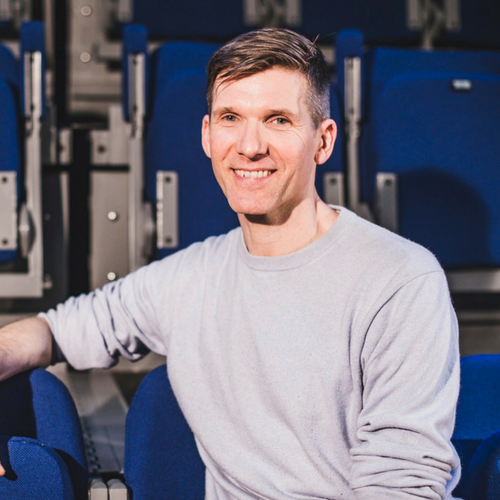
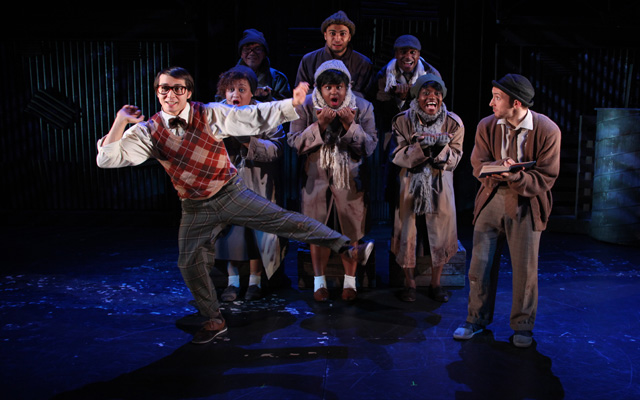
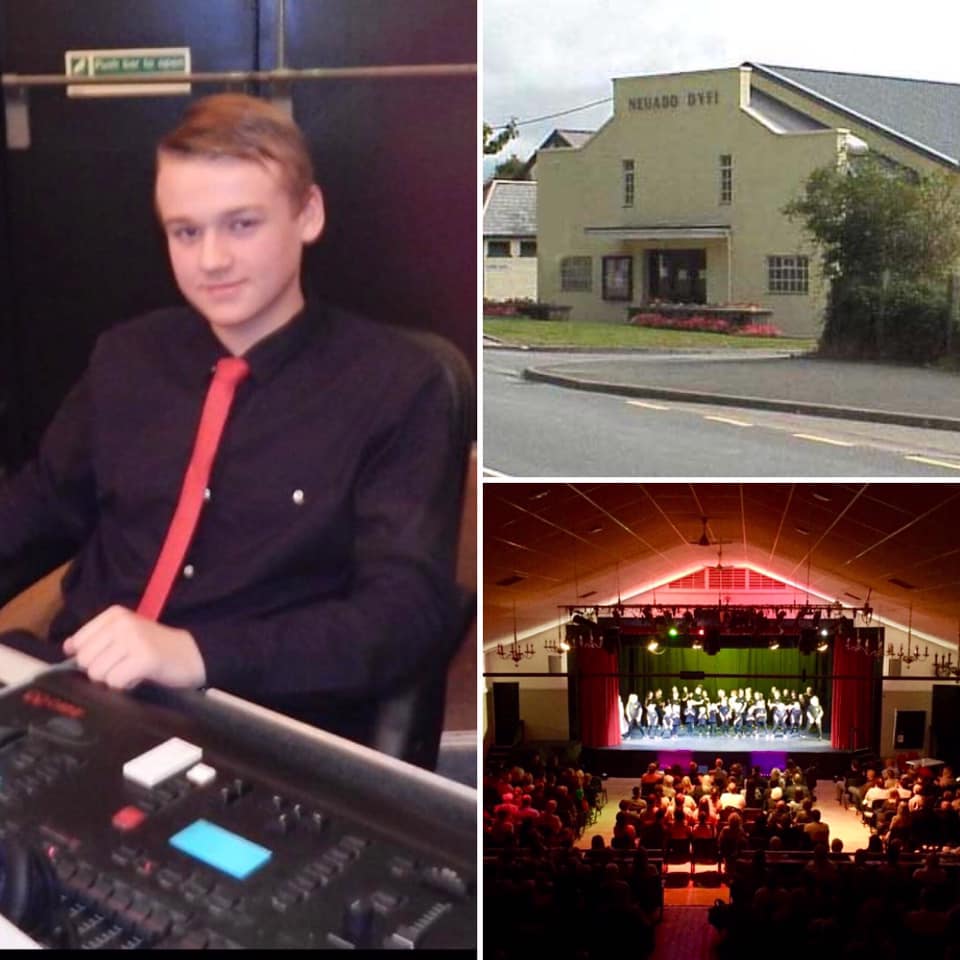
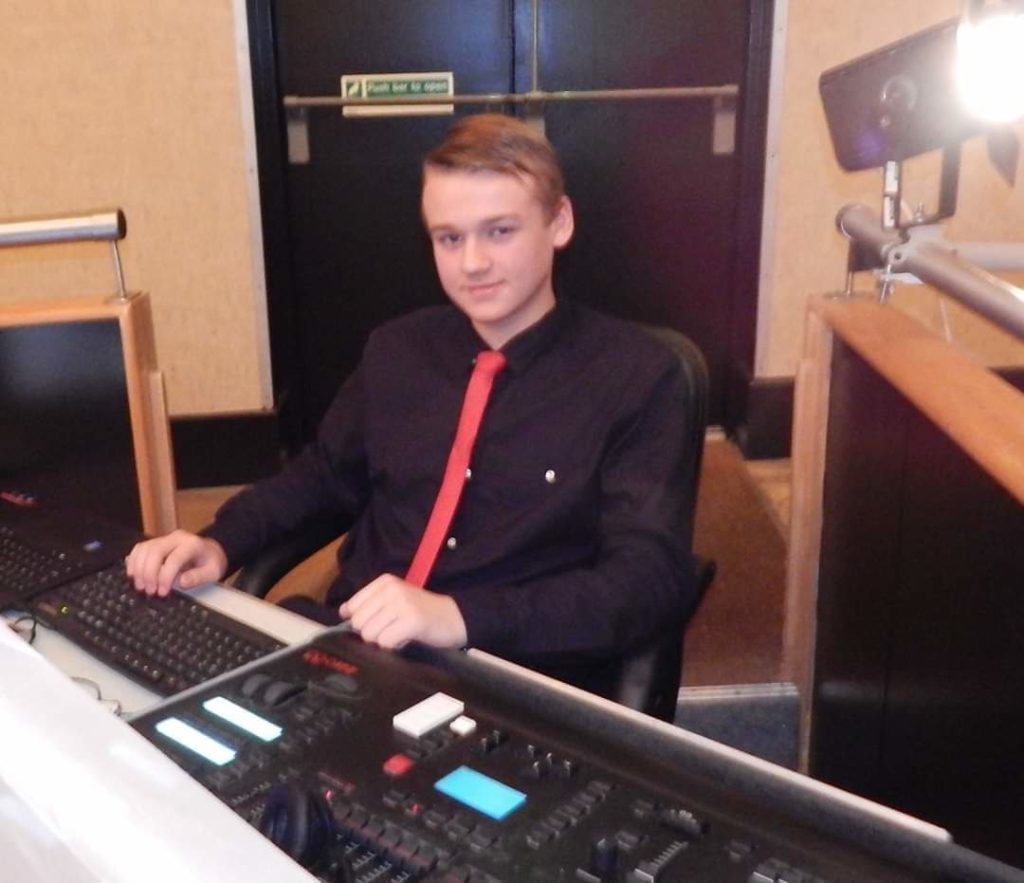
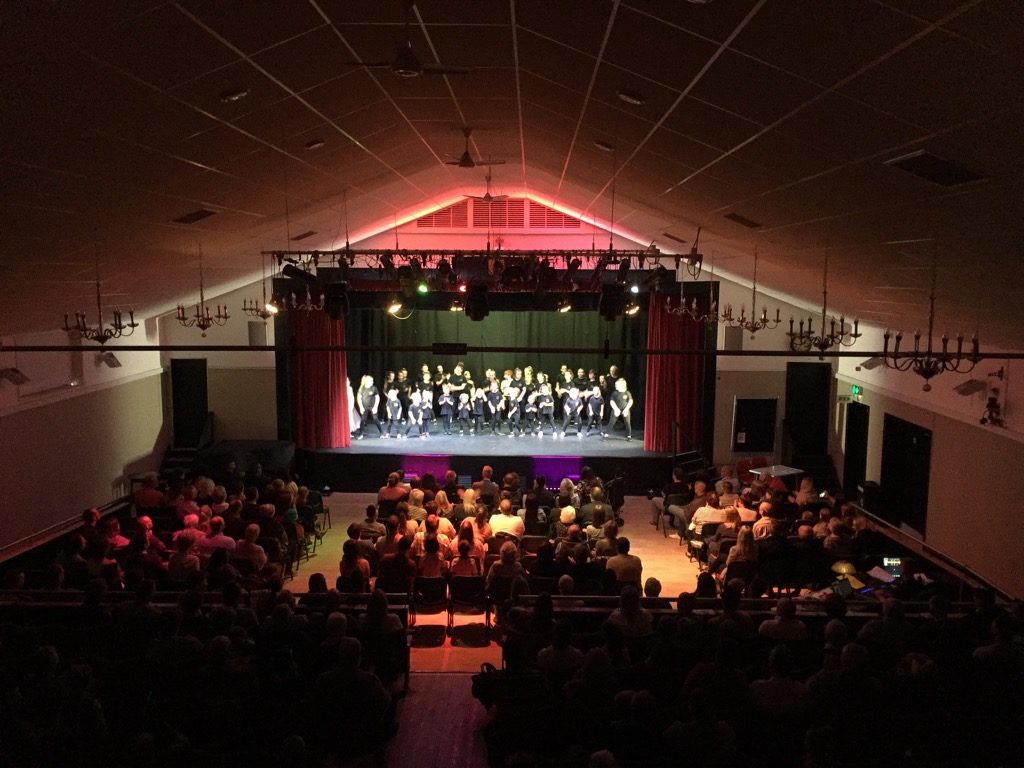
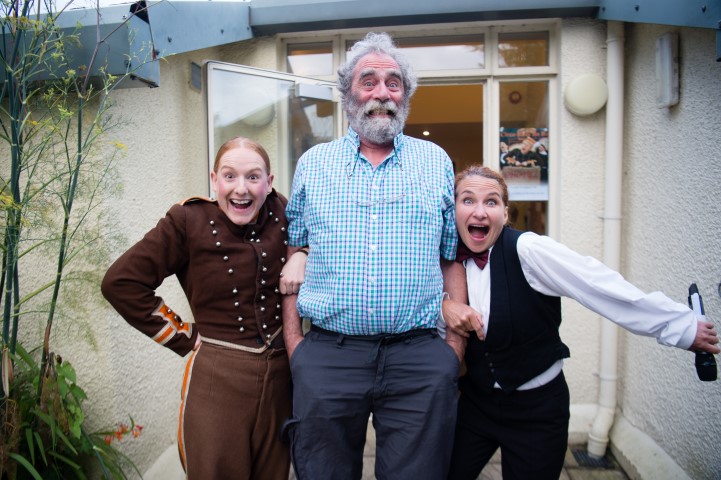
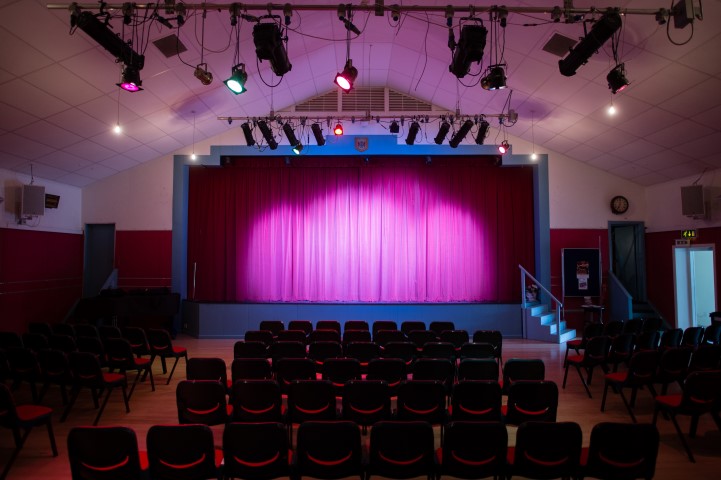
I am a 15-year-old who is very interested in the technical side of theatre. I do a lot in the hall which is closest to me which is Neuadd Dyfi in Aberdyfi . I help out with all types of events that happen in the hall from small touring shows, dance and talent shows to our local pantomime.
So what got you interested in the arts?
It all started when I moved down here at the age of 7, my mum became involved with Aberdyfi Players the 1st year we moved down here.
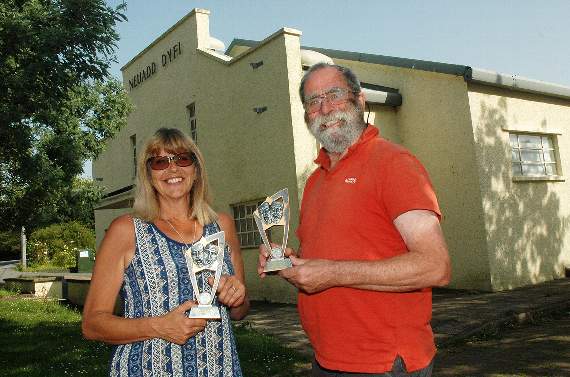
Aberdyfi Players directors Su Tacey and Des George outside the Neuadd Dyfi earlier this year with the two awards for Best Pantomime overall in their District in Wales and Best Stage Management and Special Effects. Amateur Theatre National and Operatic Dramatic Association (NODA) for their 2018 production of Aladdin.
I was pretty much dragged along to watch the performance of their yearly pantomime. From the moment I walked into the hall I wanted to know how to work the lighting. Most children at that age wouldn’t have continued to think about it but after talking to mum she introduced me to Des George who runs the hall and he fuelled my interest even more. I didn’t join Aberdyfi Players straight away but it wasn’t long as I was inching to get involved with the tech side with Des’s knowledge, help and experience it has got me to where I am today.
Congratulations on your nomination for Young Person of the Year in the National Rural Touring Awards 2019.The awards recognise the valuable work of productions, venues, promoters, schemes, and staff in the rural touring sector. What is your role at Neuadd Dyfi?
Good question, I don’t feel I really have one specific role at the Neuadd, I try my best to help with as many things as I can. Obviously my main interest is lighting and sound which I help all the touring companies or events which come into the hall with.
Get the Chance works to support a diverse range of members of the public to access cultural provision Are you aware of any barriers to accessing high quality productions for audiences at Neuadd Dyfi?
I would have to say it would be the size of our auditorium, we have had half of the hall levelled out, but we would like it to all be retractable seating. If we did have retractable seating installed it would open up so many more opportunities.
If you were able to fund an area of the arts what would this be and why?
I have to say it is difficult to choose one area to fund, it would have to be backstage in general. From props to tech
What excites you about the arts ?
The fact that everyone comes together to form one big team and works together to create one big show. Everyone has their own part from technical to costume to performing.
What was the last really great live performance you experienced that you would like to share with our readers?
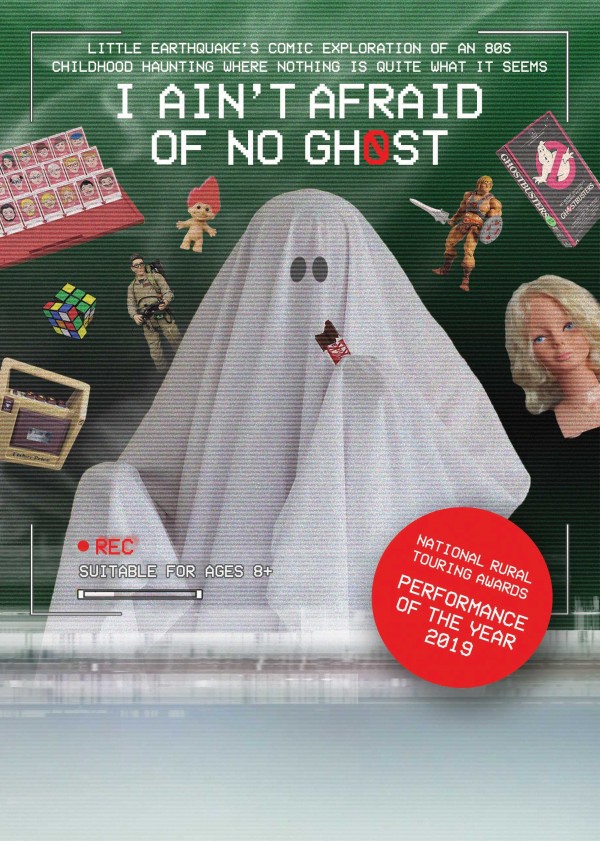
It would have to be ‘I Ain’t Afraid of No Ghost’ by Little Earthquake. By far one of the most mind twisting shows I have ever watched, if you get the chance ( no pun intended) to go and watch it please do. The meaning behind it is amazing but that’s all I can say about it.
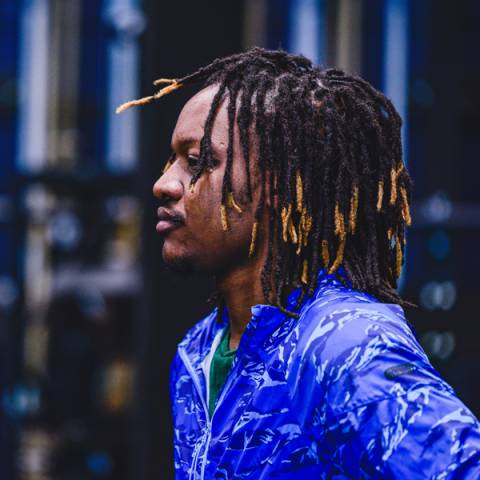
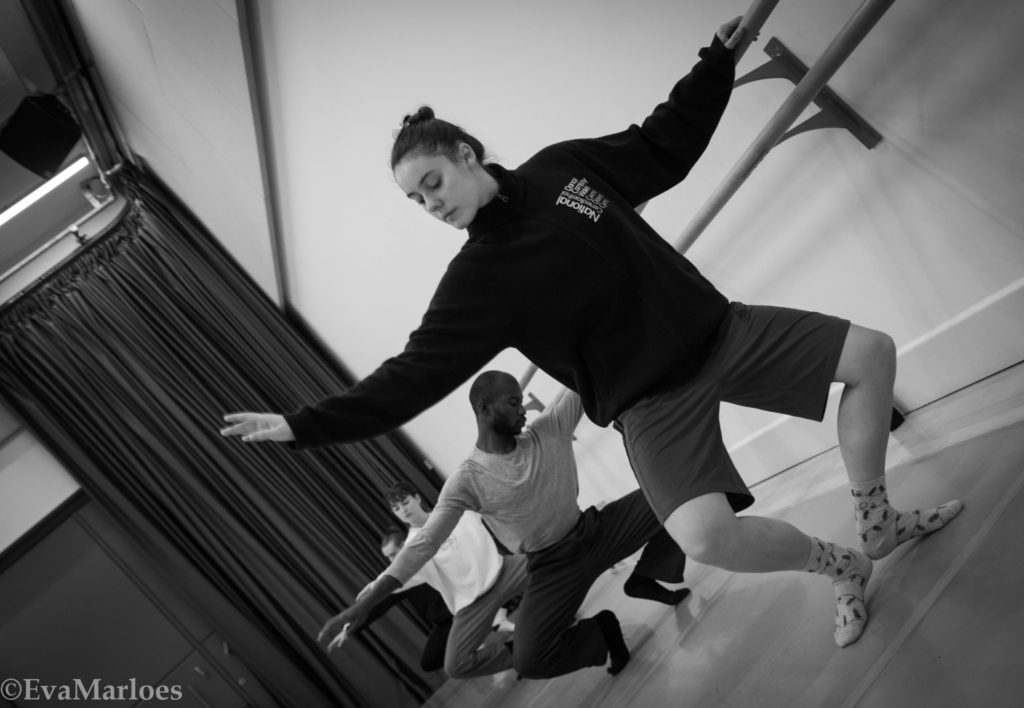
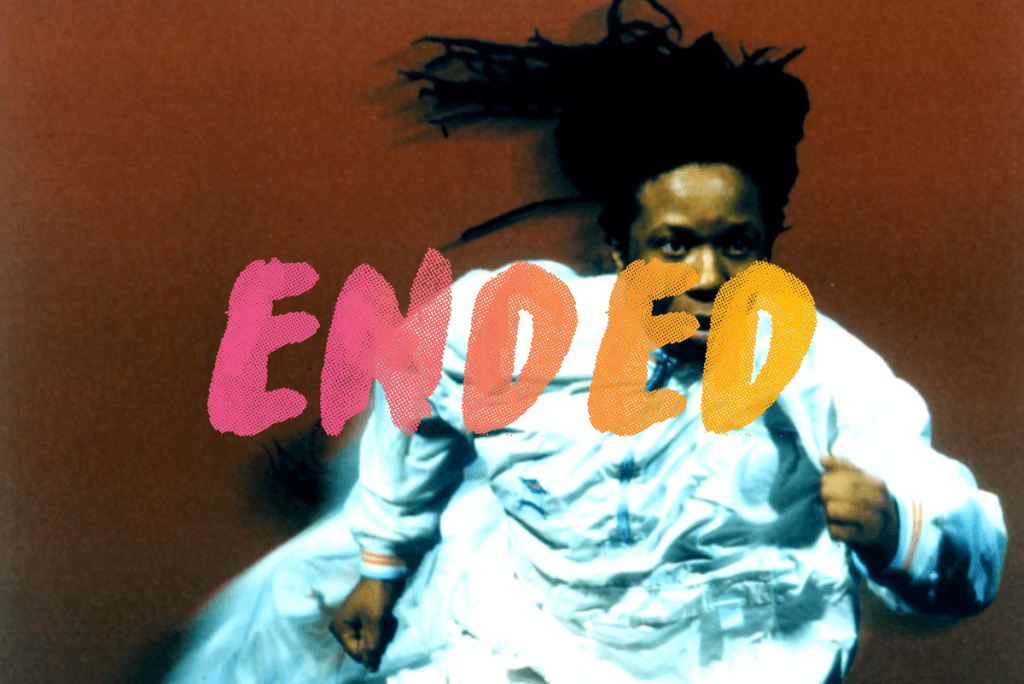
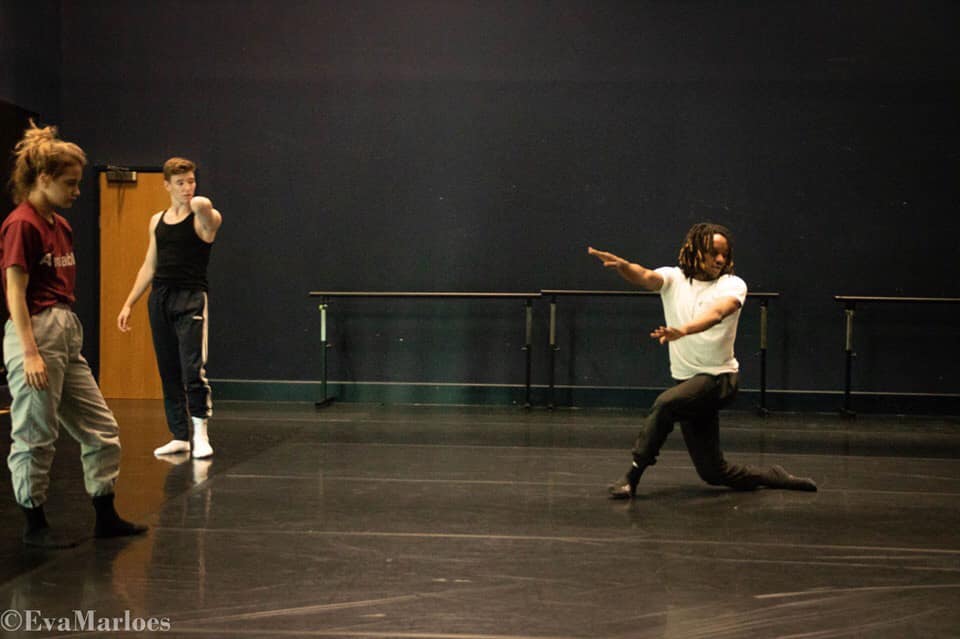
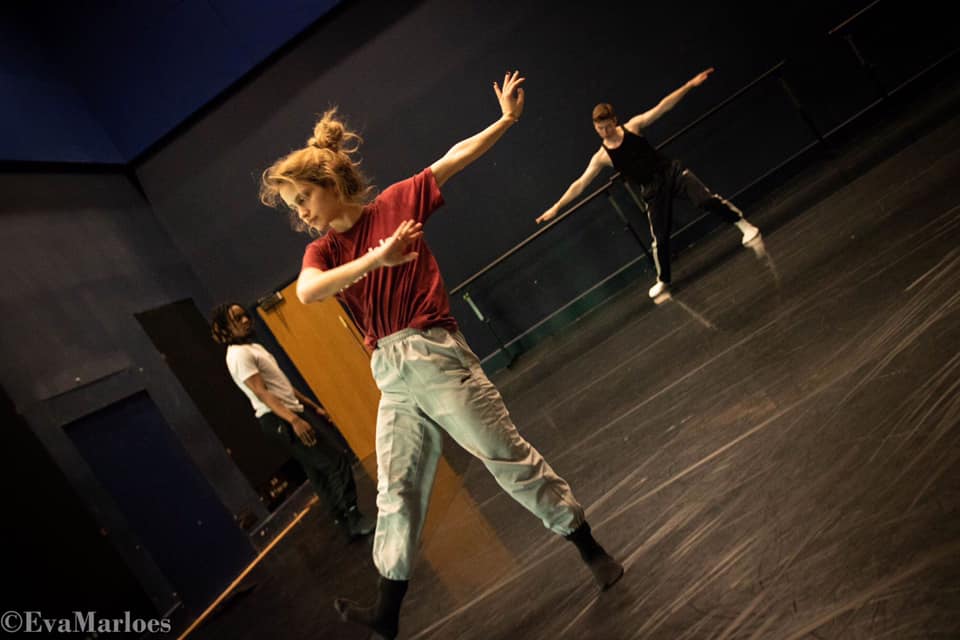
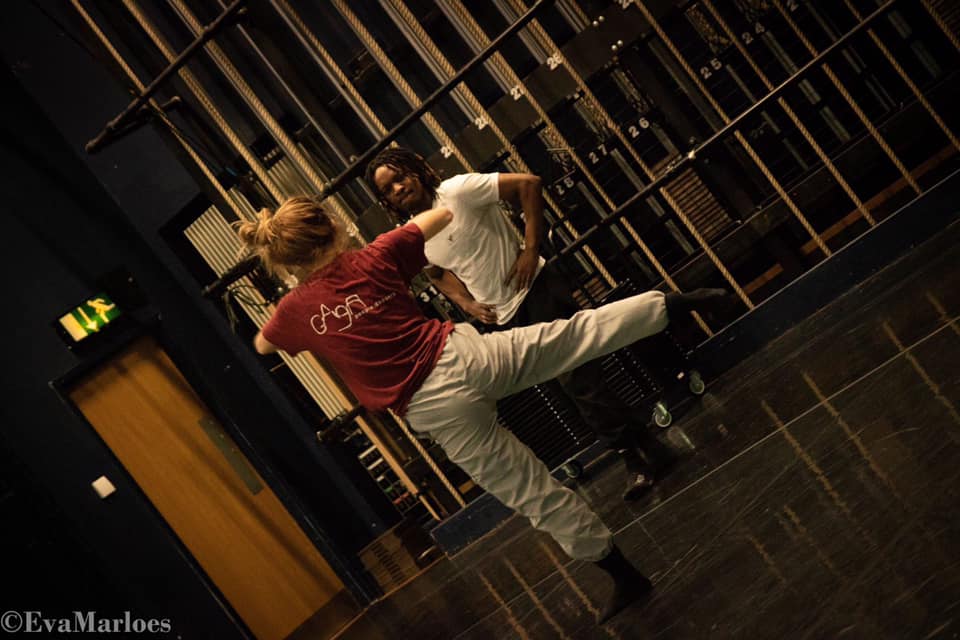
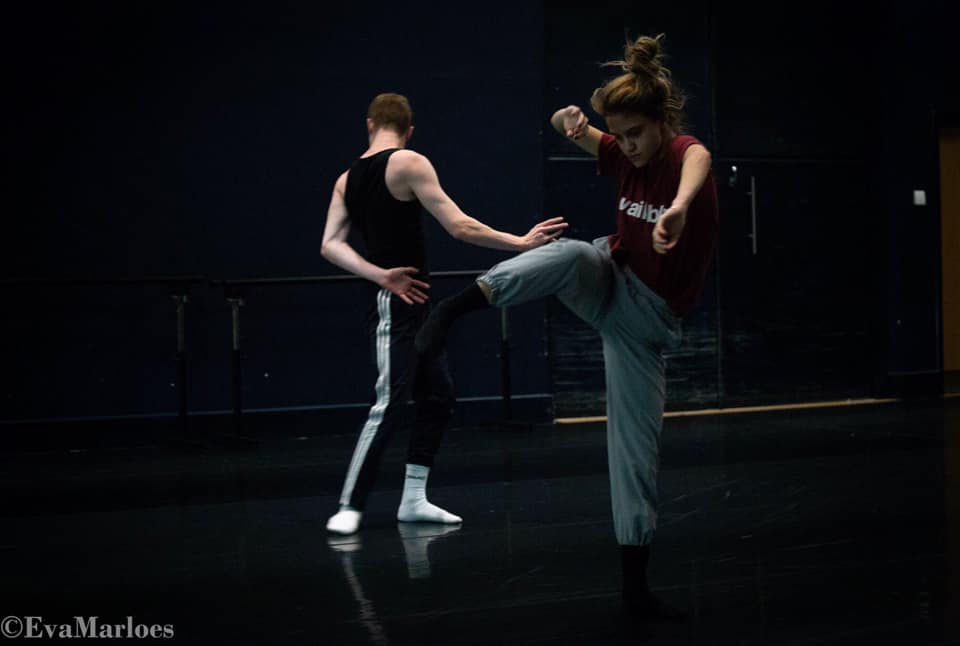
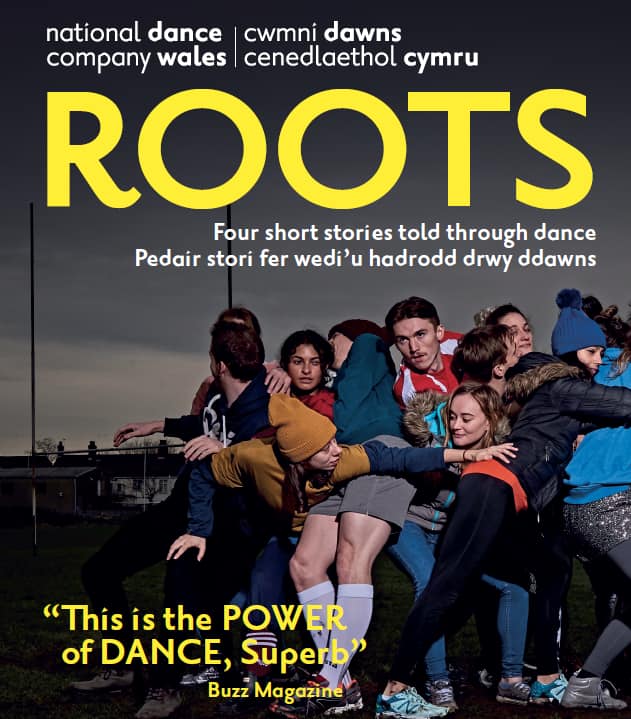
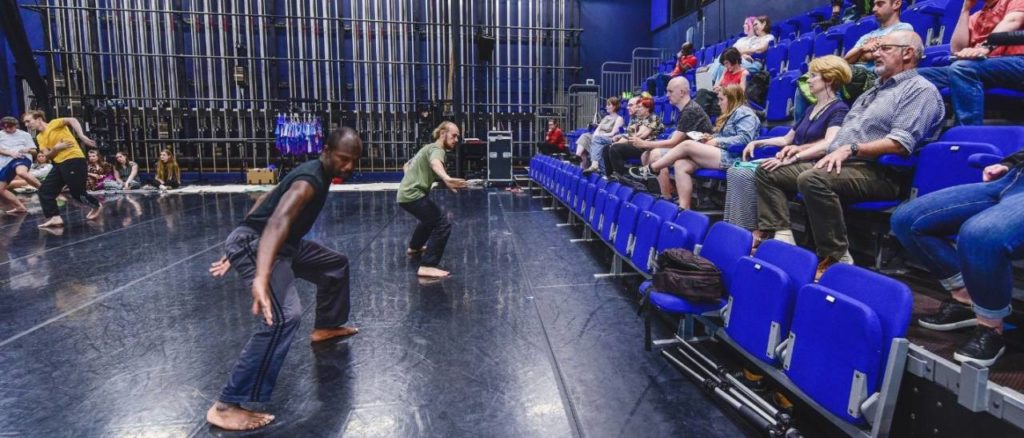
Contemporary dance is storytelling without narrative. It evokes emotions and thoughts through movement and rhythm. It is the body that speaks, over music, over story, over costumes. Something is said through movement. I watch dancer and choreographer Anthony Matsena trying ideas with Will Bridgland and Artemis Stamouli for his piece Codi, which is part of Roots, the autumn dance tour of National Dance Company Wales. He is going through only some small sections of the piece; yet, I get a sense of his energy-infused dancing style.
Born in Zimbabwe and raised in Swansea, Matsena has trained in street dance and contemporary dance first in his hometown Swansea and then London. He is now back in Wales to collaborate with the showcasing of Welsh dance talent with the National Dance Company Wales.
Before the start, Matsena asks Will Bridgland and Artemis Stamouli how their body is, that precious instrument of expression, at once strong and fragile. During a movement, Matsena says: ‘your body is much heavier in this … don’t rush, take your time.’ It’s an exercise in stretching the body but always going with the body, not against it. This seem counter to some experimental contemporary dance that seeks to test the limits of the body in an attempt to break boundaries. Matsena’s dancing style has none of that.
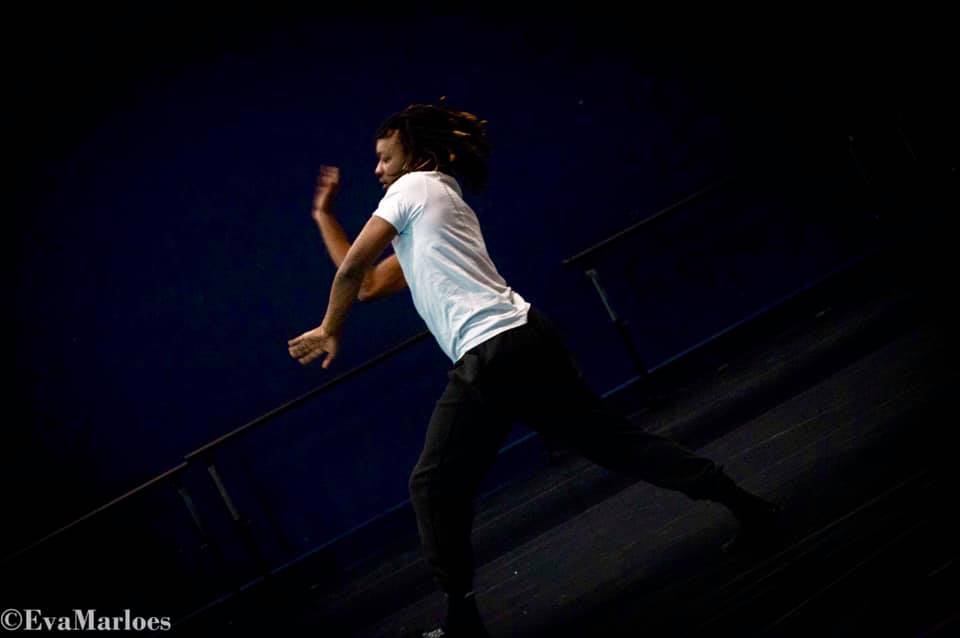
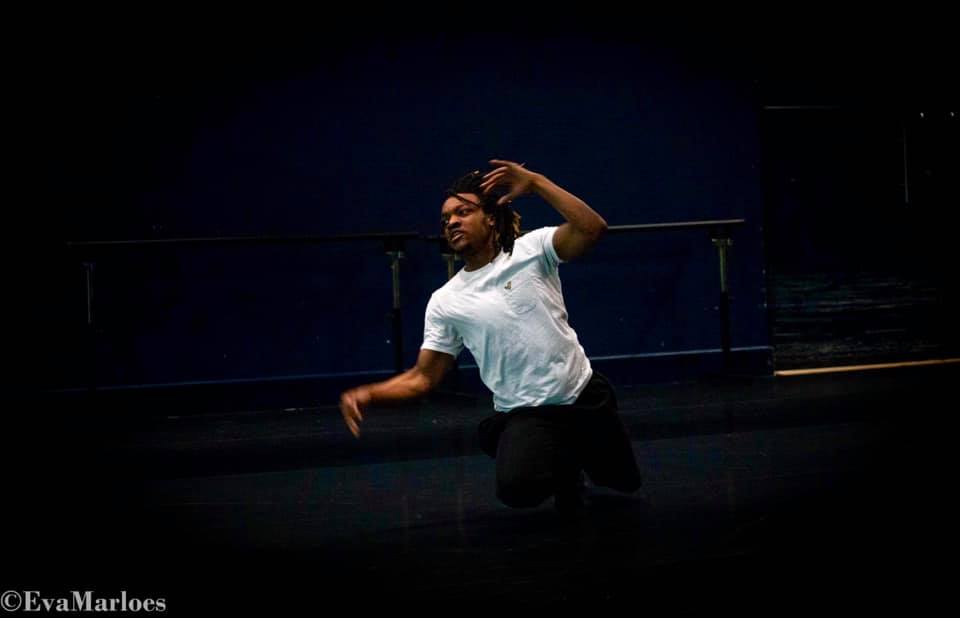
Matsena’s dance style is infused with energy. It is noticeable ever after watching him only briefly. The movement is fluid, broken up, tense, slow, and fast. He kicks with legs and pushes with his hands. In a duet with Stamouli, he picks her up, holds her, and turns her gently. It is a delicate and intense dance where every movement seems effortless and yet mindful. They are present in every move.
Matsena began as a teenager with Hip Hop, Krumping, Street Dancing, and African Dancing. I ask him to what kind of movements he is drawn. He tells me he is drawn to ‘highly energetic movement, variations in velocity, speed, I’m drawn to phrases and movement that have high energy.’
I ask him from where he draws his movements. He tells me they come from ‘the curiosity of the different things the body can do,’ as well as a very eclectic training. He is fascinated by how other people move. In the first week with the dancers from National Dance Company Wales, Matsena worked on exploring their different ways of moving and approaching movement. He wanted ‘something that best shows their skills, their unique experience.’ ‘The hard thing is framing it,’ Matsena tells me, ‘it’s not about teaching them to dance but to find a frame that holds those skills.’
Dancers inform the piece and are engaged because the piece is partly theirs. Matsena did not want to impose how his body moves on them; rather he wanted to find a place where different styles can coexist and are distinguishable. Contemporary dancing rests on collaboration; yet it is also a deeply personal practice that strives for personal expression, for authenticity.
‘If you’re being true to yourself, you will be authentic,’ Matsena tells me. ‘You need to use the tools that are true to you in order to transmit that idea. Then it will feel authentic. … Sometimes I don’t recognise what I’ve done but that’s because it’s new. If I set myself the task to find a new pathway, it won’t feel natural, it won’t feel authentic. … Krumping, Hip Hop, Street Dance, I know the foundations of these techniques, but if I try something new, it’s gonna feel not authentic until it’s authentic. When it sits in your body you feel it’s authentic.
Dancing in a way that pleases people, that will be liked, is not authentic. ‘Part of being a dancer is being conscious and aware, of what you are doing,’ Matsena says. Authentic dancing lies in using the dancer’s ‘unique way of viewing things to elevate them to extraordinary things, simple things.’ Simple things, like a tree, are transformed in a dance piece through the perspective of the artist and thus shift people’s perspective. A new dimension is added to everyday objects or actions.
I ask Matsena what the unique feature of dance is within the arts. He tells me that in theatre words can be limiting because they define, dance is ambiguous and each person can come away with a different insight. Yet, dance, for Matsena, should be accessible. People should be able to relate to the meaning behind a dance piece. Dance bridges, when words fail us, it’s got this magical thing that gives this physical empathetic transmission between the audience and the performer, the things that we recognise but cannot articulate.
Matsena is drawn to stories and pieces that can convey what it means to be human, particular and univesal. For Codi, Matsena sought to combine elements of African dance, street dance, and the sense of community of the Welsh valleys. Codi is about finding solidarity in community.
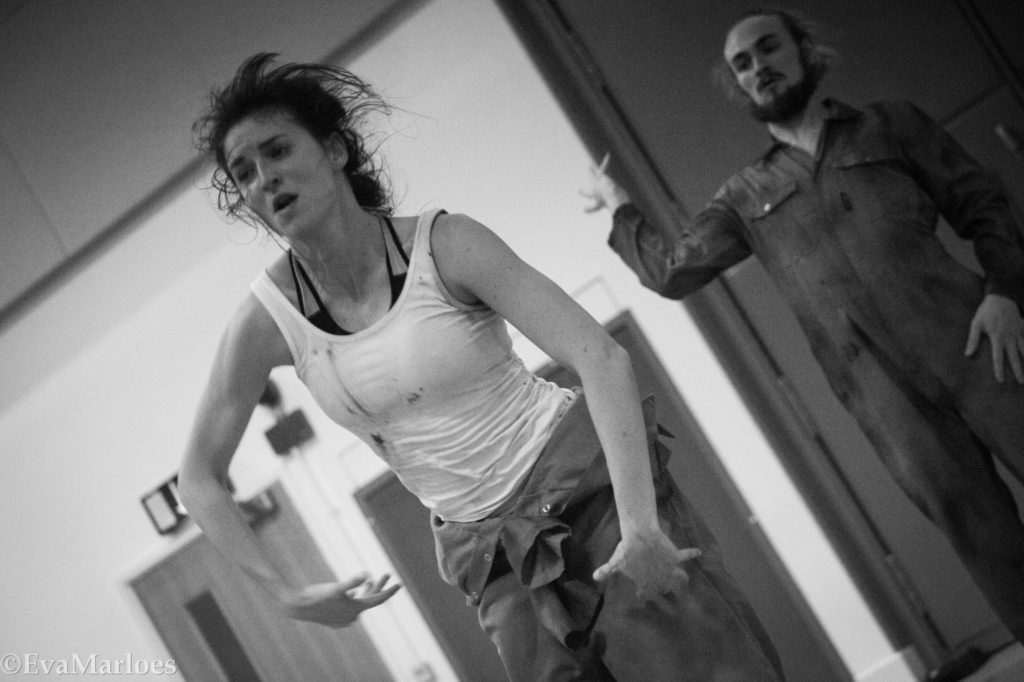
The best thing to do this was to do something that is closely related to Welsh communities. ‘I was looking at the Mining industry. … Once collapsed, you want to find your way out to the surface. … I wanted to make people aware of the support system around them, opening people’s eyes to everything that is around them. It is not about everything is all right. When you recover you still have the stain on the shirt from before. … If we’re trying to crawl up, how do we do that? We shape it in a way that people can find each other.’
At home, in Wales, Matsena feels free and able to create art. ‘There’s this crazy energy and freedom I get when I’m home. I make better work when I’m here. There’s a lid that is lifted when I’m home.’ With Codi, he taps in the sense of community and place that is at once particular to Wales but also universal.
Codi forms part of the National Dance Company Wales autumn Roots tour, further information can be found below.
Mold Theatr Clwyd Thursday 7 November 2019, 19:45 BOOK
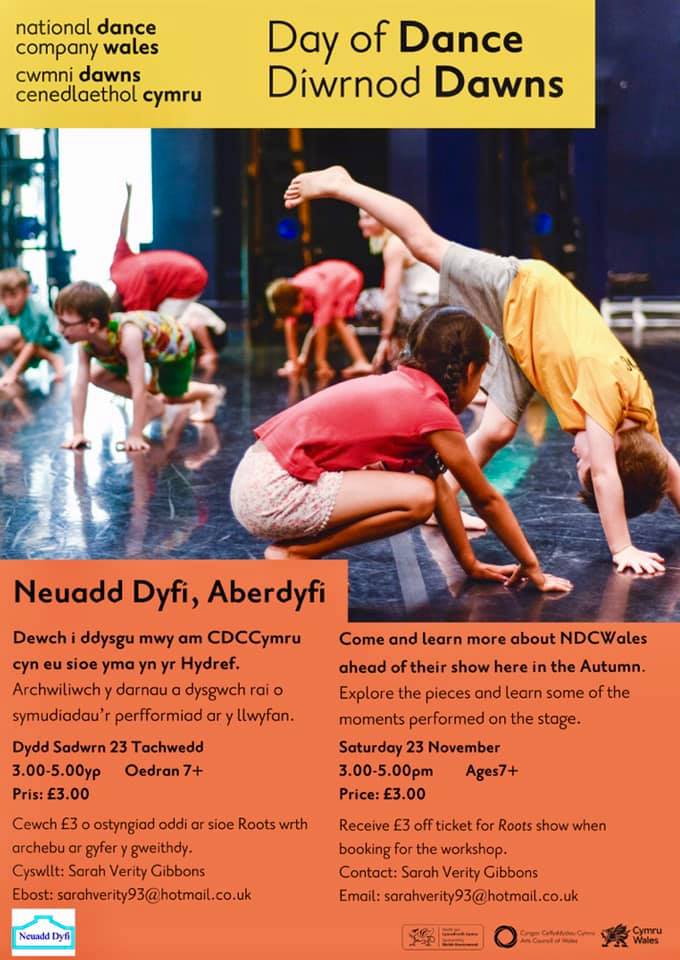
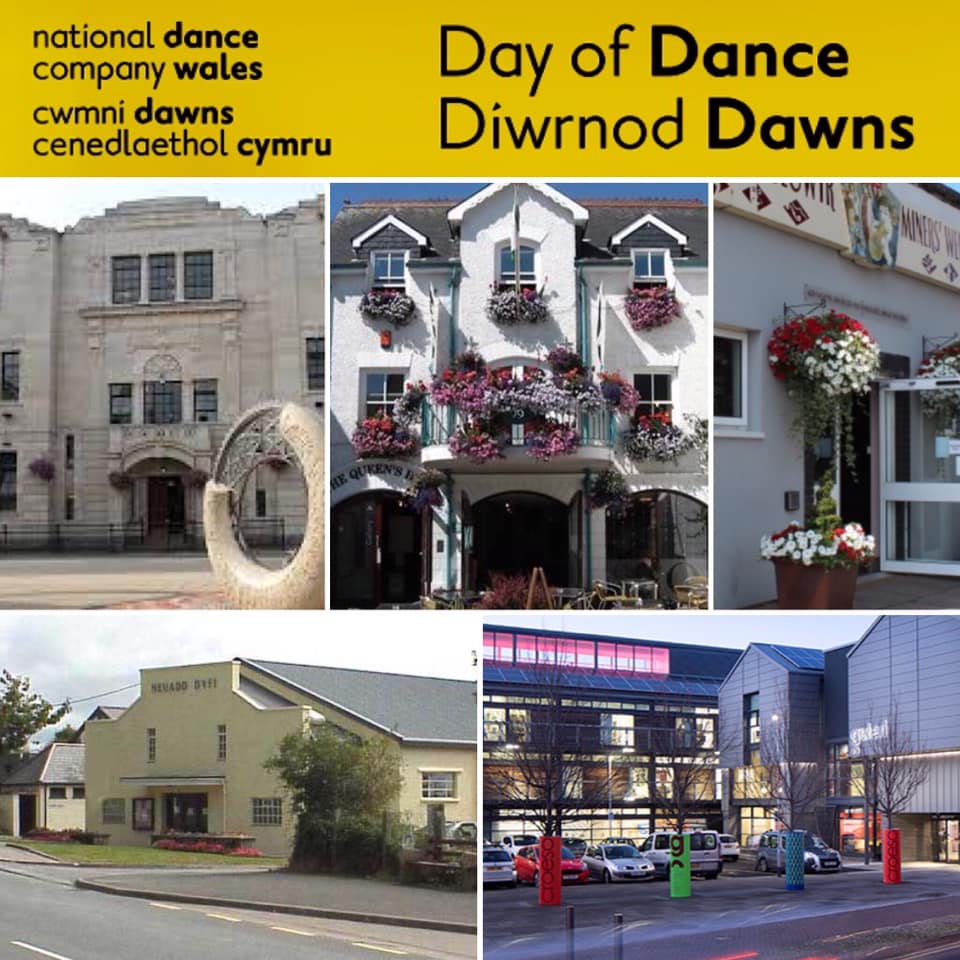
National Dance Company Wales are running Days of Dance at a range of venues in Wales this autumn. The day will consist of a range of workshops for a variety of ages. The workshops will be linked to the NDCWales Roots autumn tour which visit the same venues later this year.
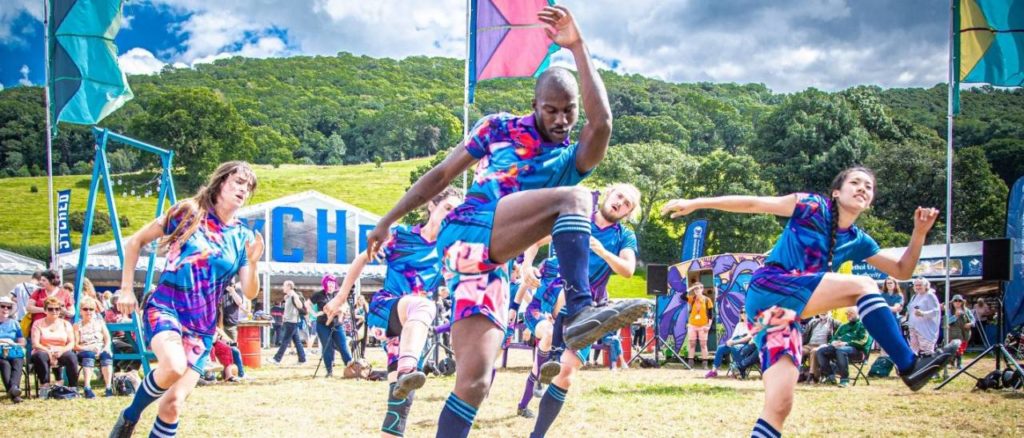
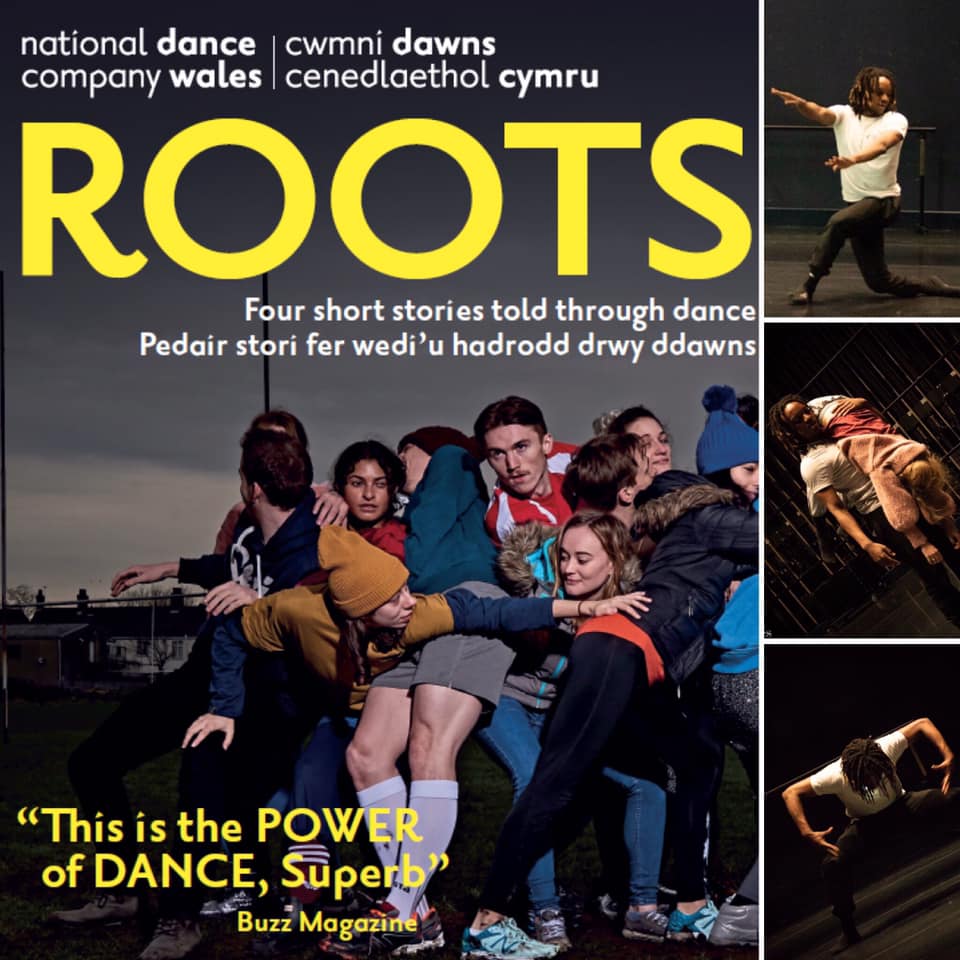
Roots features four short pieces of dance from Wales, each different from the one before it.
Roots is a guided tour through contemporary dance. NDCWales take some of our favourite pieces and pair them with a discussion to help you get to the heart of the stories, and learn behind-the-scenes secrets.
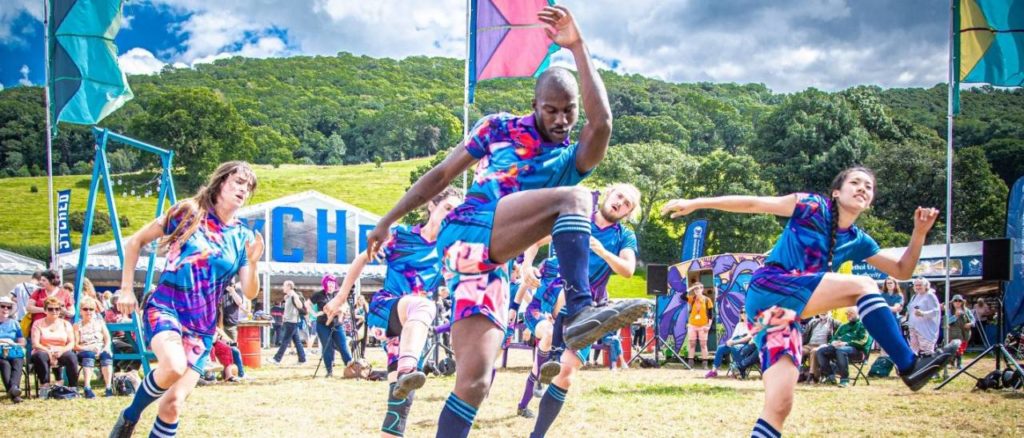
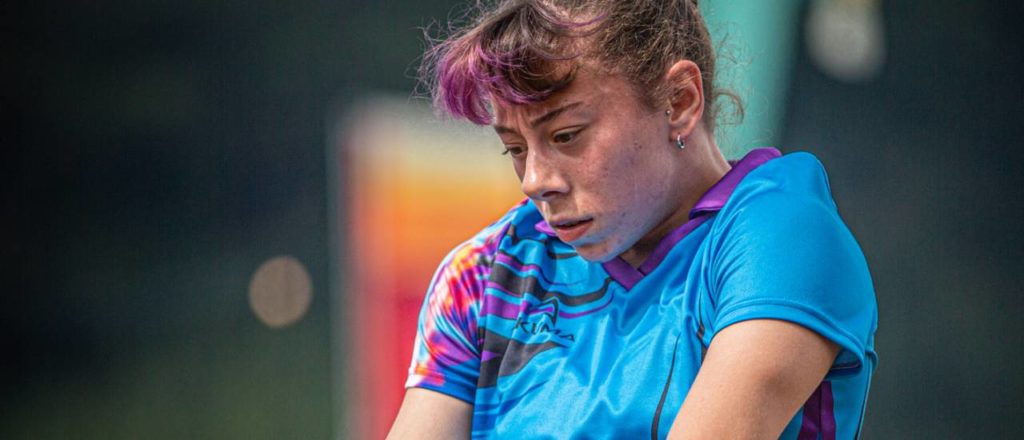
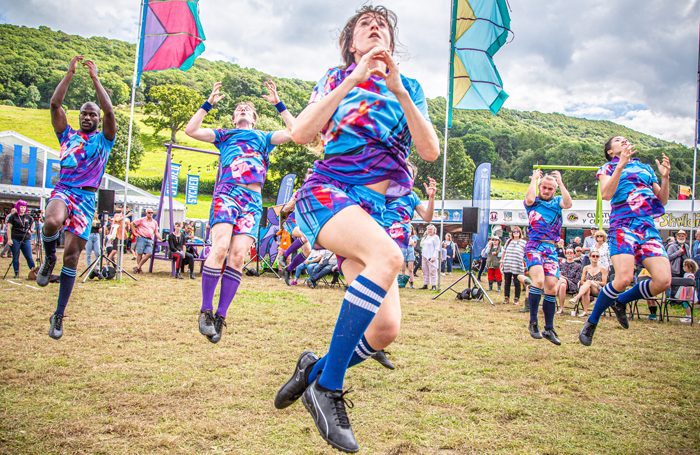
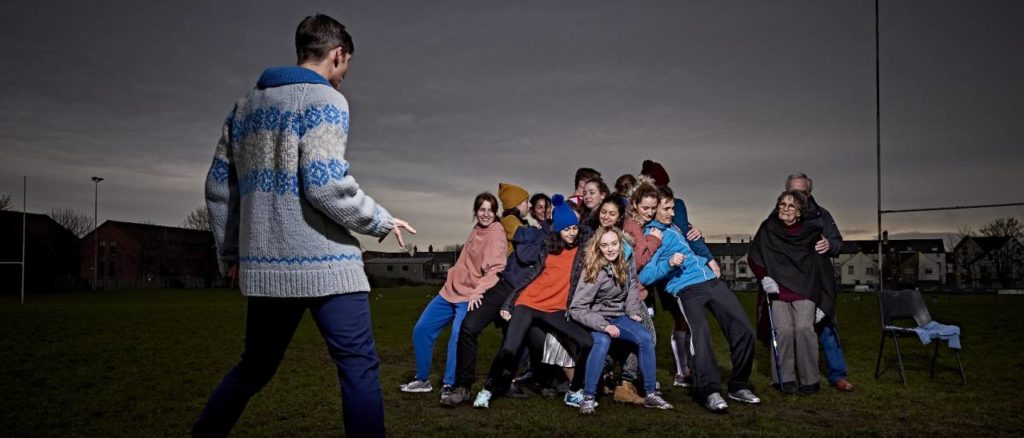
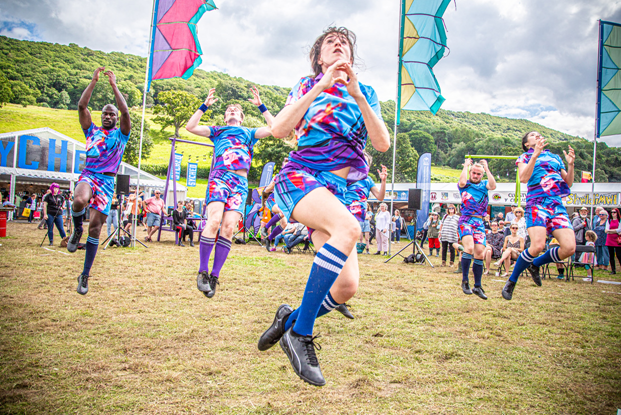
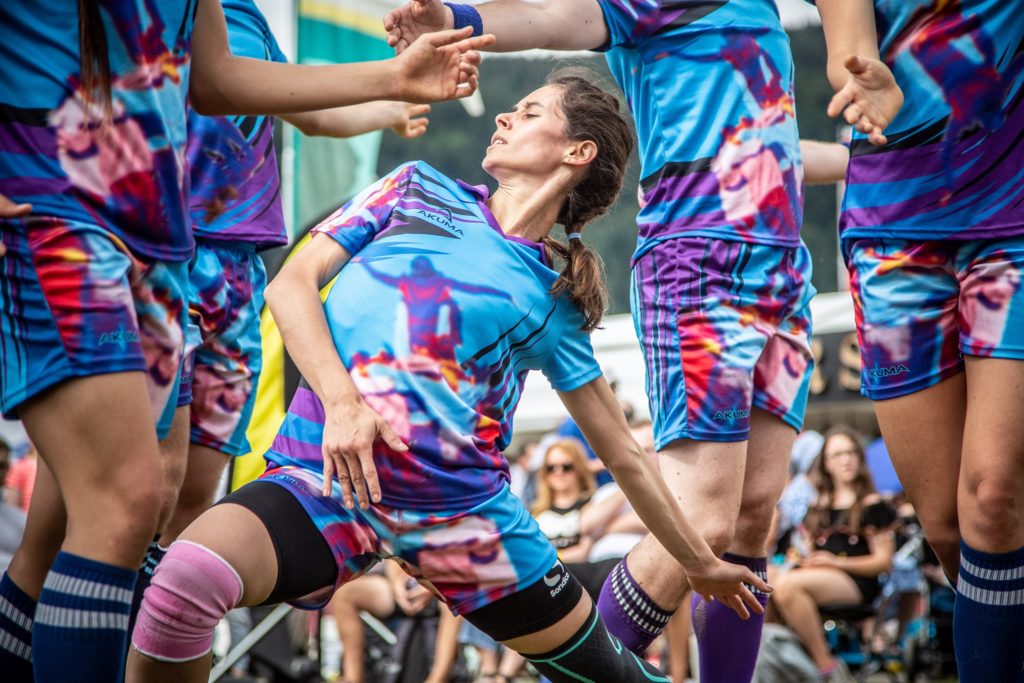
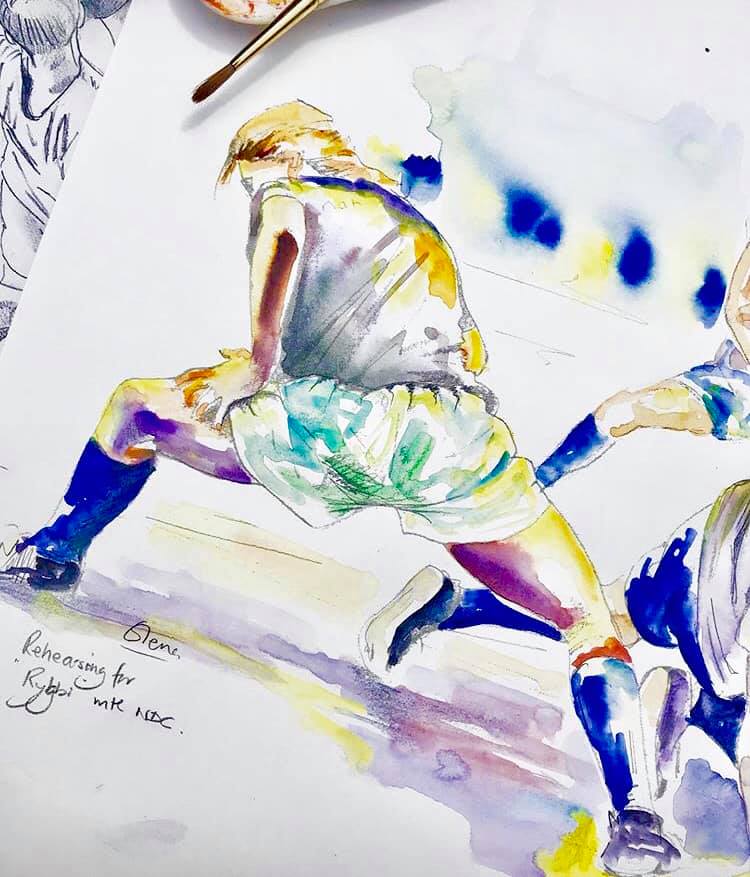
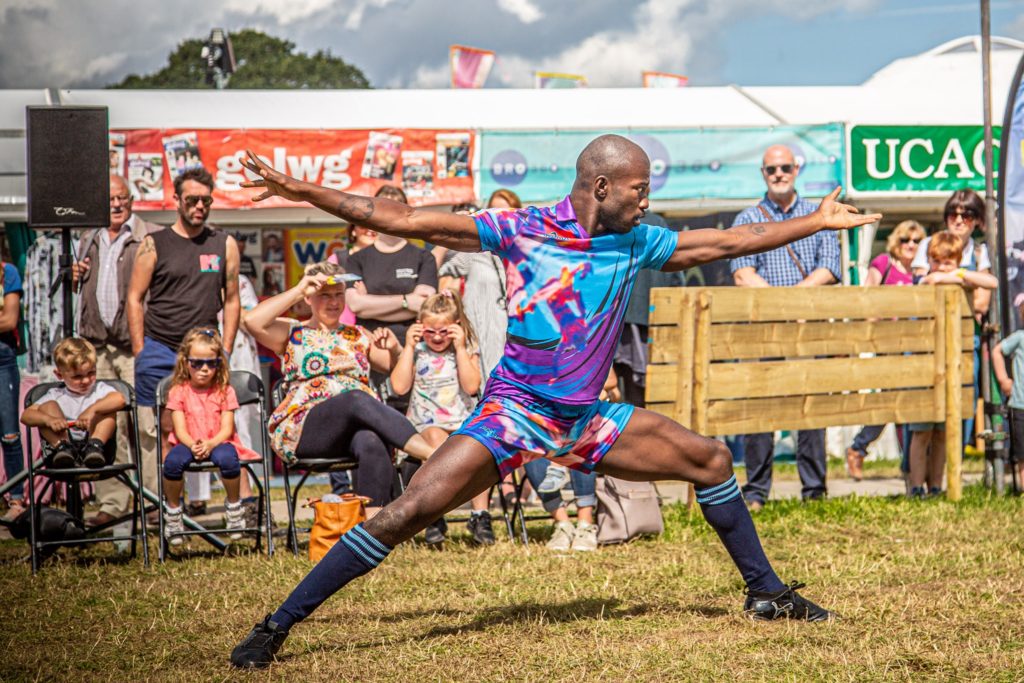
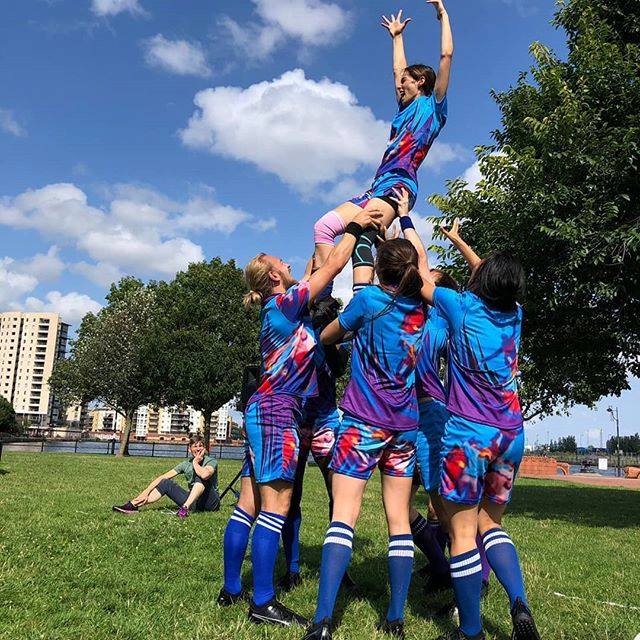
Rygbi: Annwyl / Dear by our Artistic Director Fearghus Ó Conchúir celebrates rugby in Wales and highlights the hopes, glory and passion of rallying together on and off the pitch. Rygbi was created with input from rugby fans and players across Wales so that the dance really echoes the sport.
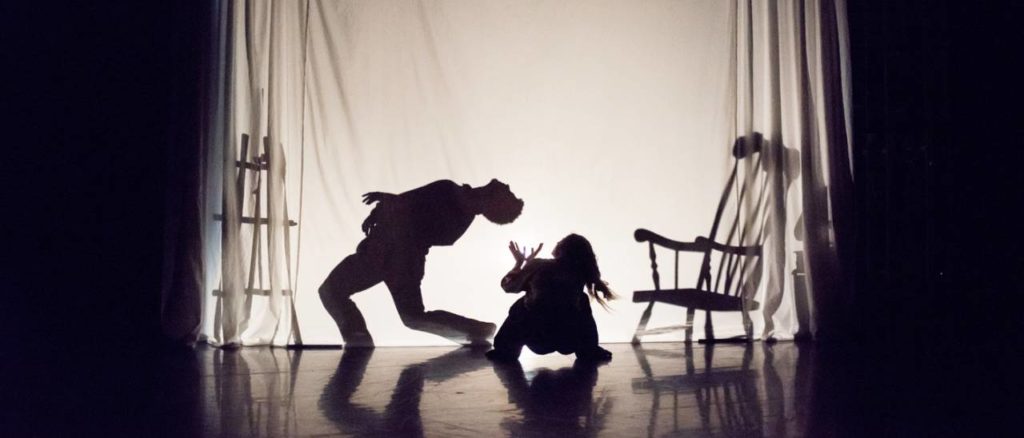
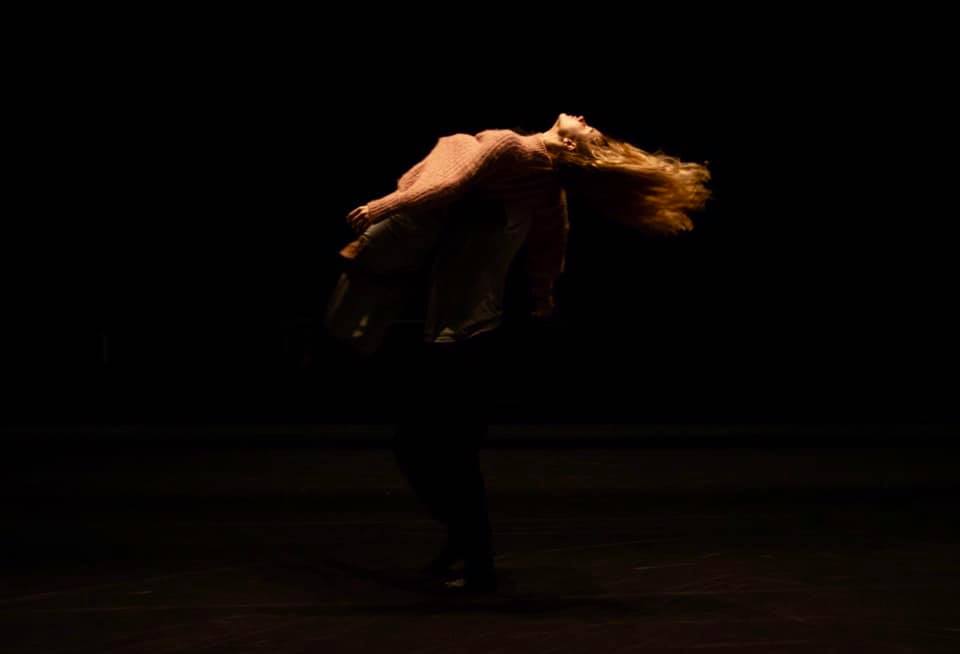
Écrit by Nikita Goile was inspired by a letter from iconic artist Frida Kahlo to her partner Diego. The clever duet is performed by a female dancer and a giant silhouette of her lover. It’s a beautiful power struggle that reflects the ups and downs of passionate relationships.
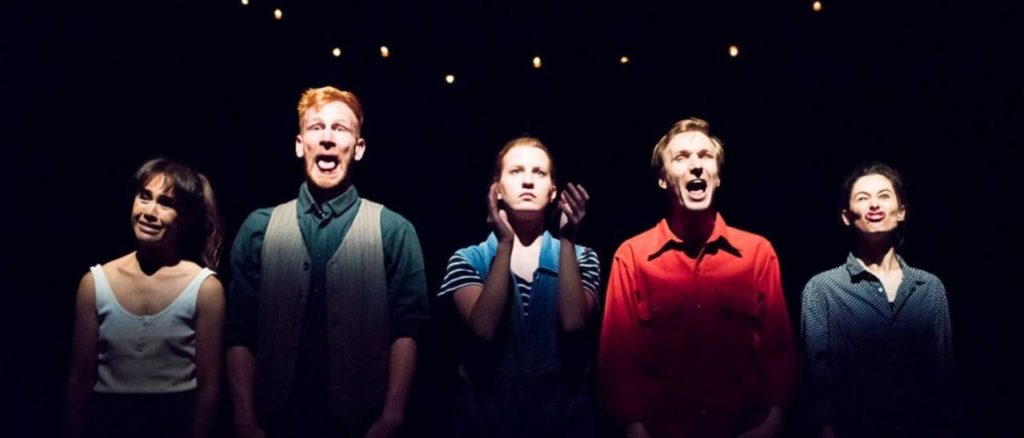
Why Are People Clapping!? by Ed Myhill is set to composer Steve Reich’s Clapping Music and uses rhythm as a driving force. The dancers use lively movement and clapping to create a soundtrack for the fun and dynamic dance.
Codi by Anthony Matsena who grew up in Swansea and is about Welsh people who come together to tackle isolation and depression during troubled times. It’s an energetic and uplifting dance about the strength of communities.
There is more information on the Day Of Dance workshops and how to book below.
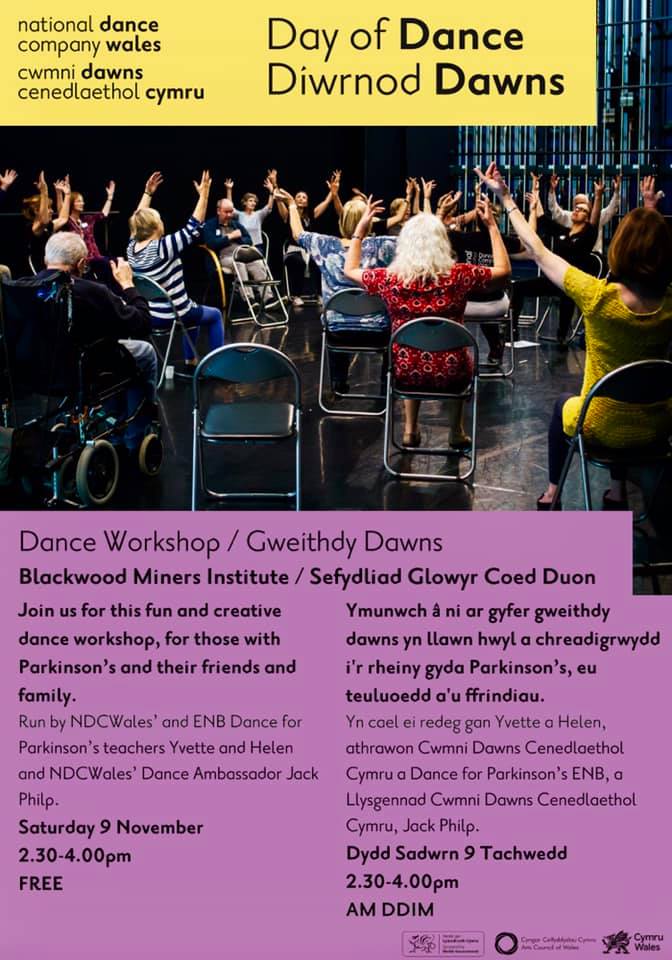
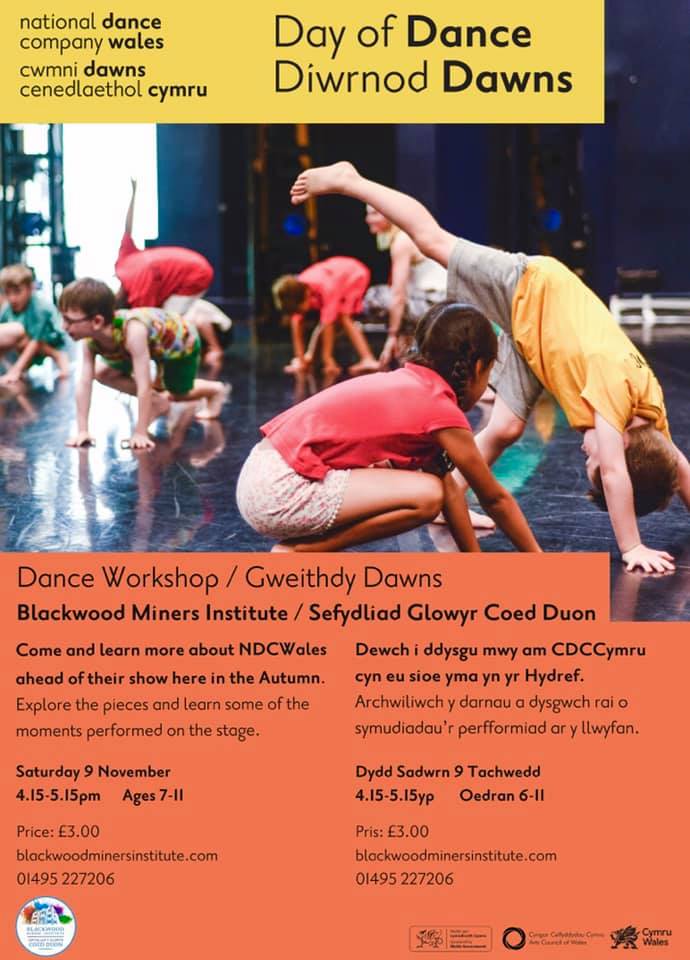
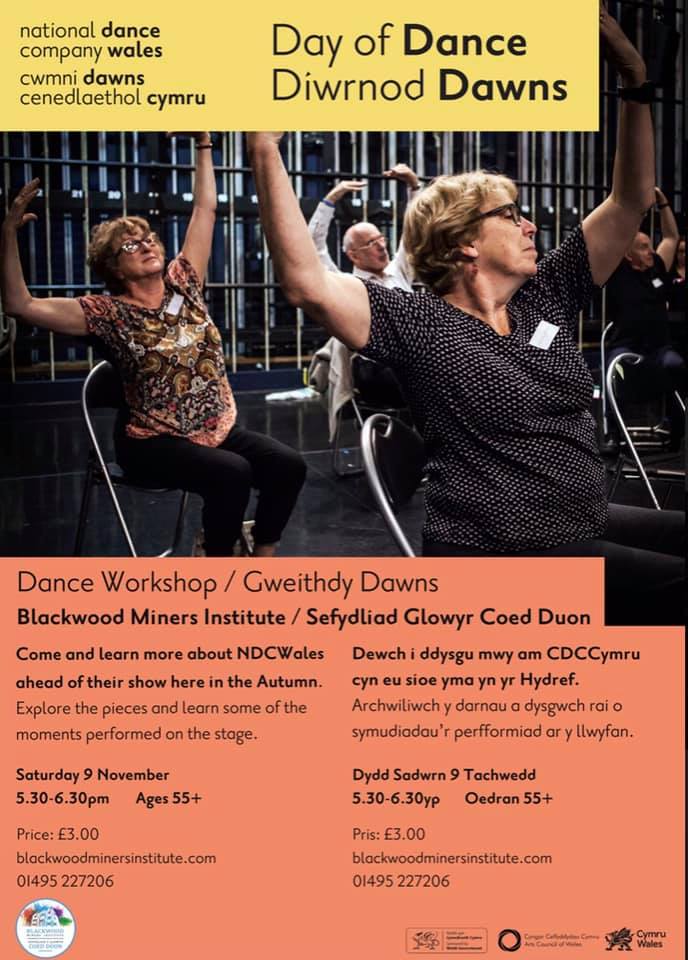
Blackwood Miners Institute
Get your chance to dance with National Dance Company Wales at Blackwood, Miners Institute this autumn!
NDCWales is organising a FREE Afternoon of Dance at Blackwood, Miners Institute on Saturday the 9th November 2019. Take part in a FREE dance workshop. Participants will get the opportunity to learn dance elements of the forthcoming Roots tour, coming to Blackwood, Miners Institute on the 19th November. A range of other FREE activity will also be taking place throughout the day. Perfect for complete beginners as well as those with dance experience.
The below workshops are FREE if you book tickets for Roots at Blackwood, Miners Institute on Tuesday 19 November 2019 7:30pm To book a Roots ticket and FREE workshop place please book in person, or contact the Box Office on 01495 227206.
Please note workshop places are strictly limited.
Workshop Times
14.30 – 16.00 Dance for people with Parkinson’s, their friends and families
16.15 – 17.15 7-11 Years
17.30 – 18.30 Age 55+
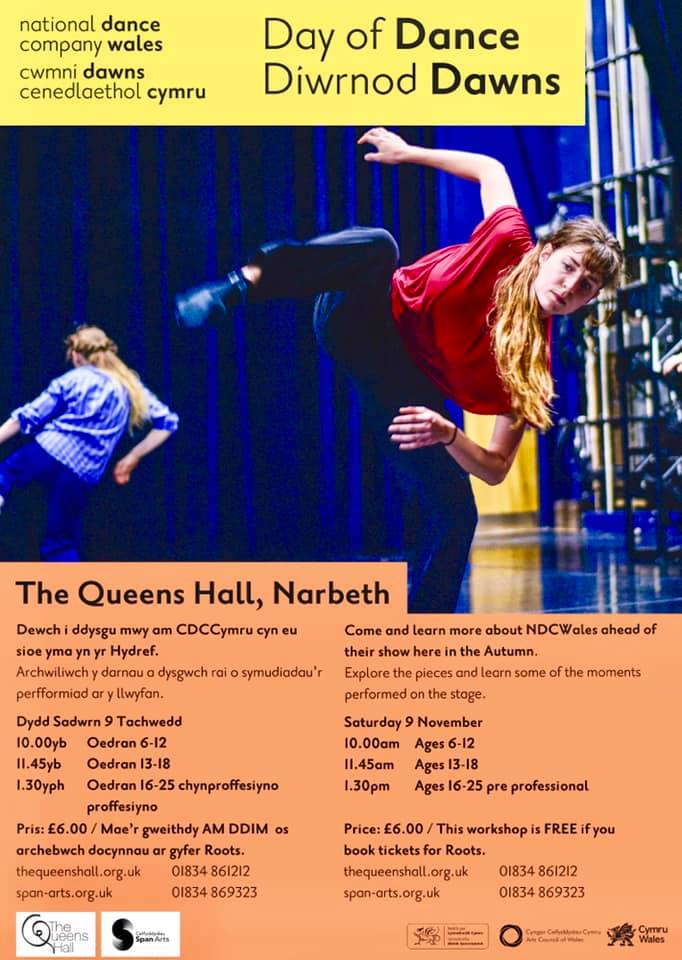
The Queens Hall, Narberth.
If you book a ticket for ROOTS, by NDCWales at The Queens Hall Narberth on the 22 November you are eligible to a FREE place on a Day of Dance Workshop being run by National Dance Company Wales on 9 Nov 7:30 pm at The Queens Hall, Narberth. Tickets need to be purchased via the Box Office – please call 01834 869323.
Workshop Times
10.-11.30 am 6-12 years
11.45-1.00 pm 13-18 years
1.30-3pm 16-25 years
The Welfare, Ystradgynlais
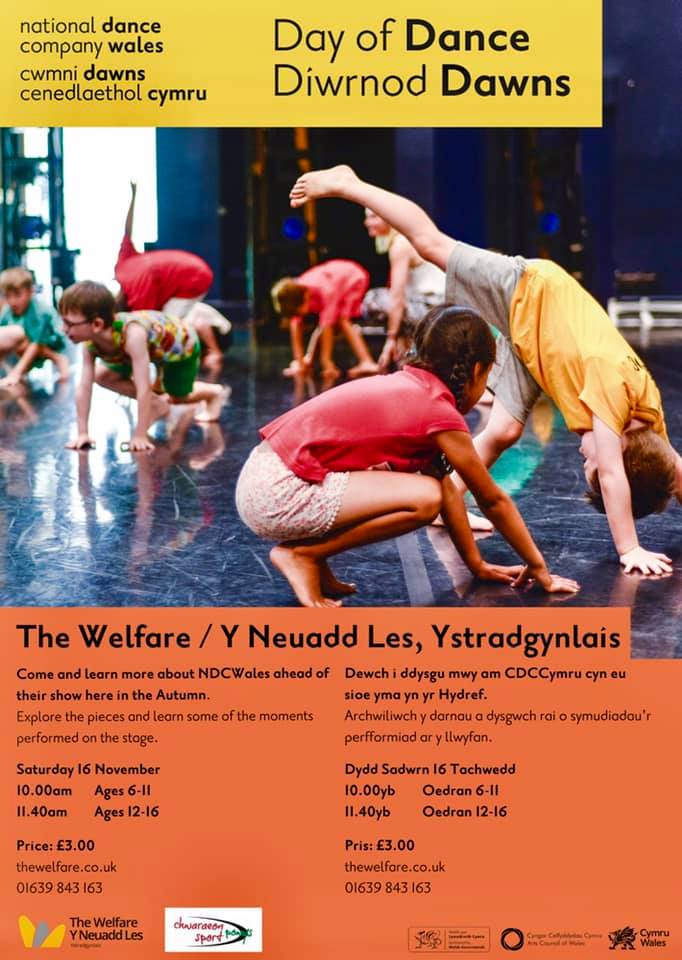
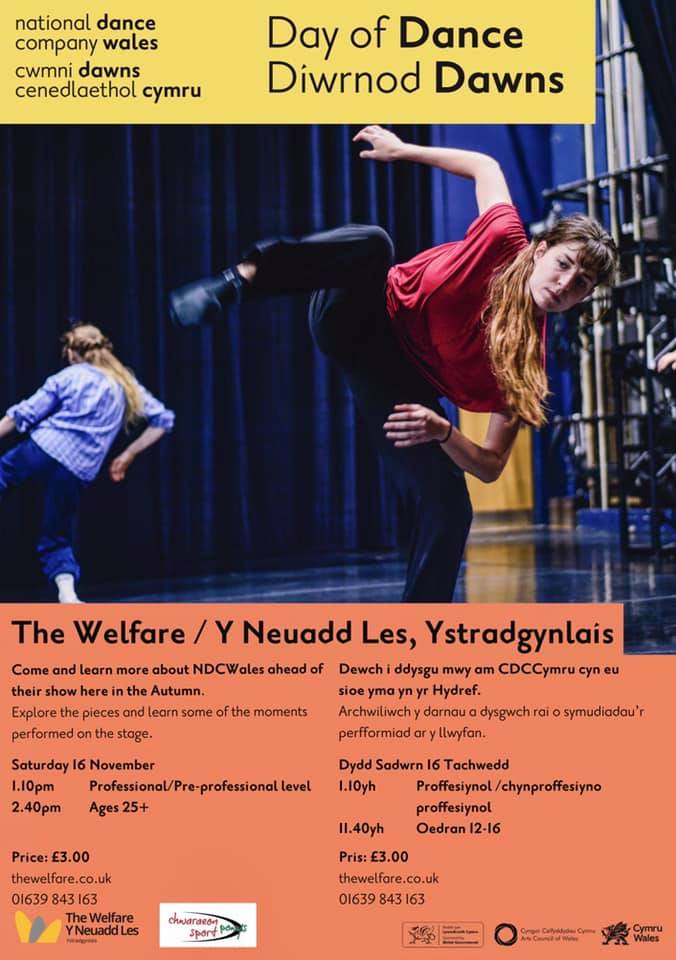
The Day of Dance takes place on Saturday the 16th November, this is your chance to explore the pieces and learn some of the moments explored on stage. Freedom Leisure will also be in attendance running some free sports activities throughout the day. Contact 01639 843 163 to book.
Workshop Times
10-11.30 6-11 Years
11.40-1.00 12-16 Years
1.10-2.30 Professional/Pre Professional
2.40-3pm 25+
Neuadd Dyfi, Aberdyfi
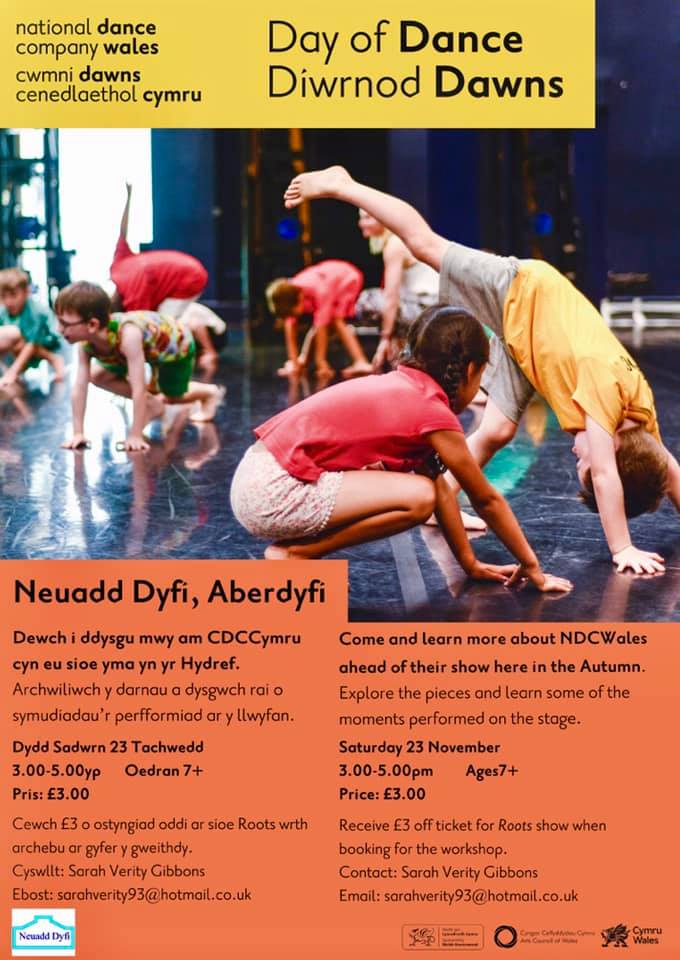
The Day of Dance at Neuadd Dyfi,Aberdyfi will take place on Saturday the 23rd November from 3-5pm. The Day will be supported by Sarah Verity School of Dance. Tickets are £3.00 and this gives you £3.00 off the price of a ticket to Roots by NDCWales at Neuadd Dyfi on Sunday 24th November at 7.30 pm. the To book a place email sarahverity93@hotmail.co.uk.
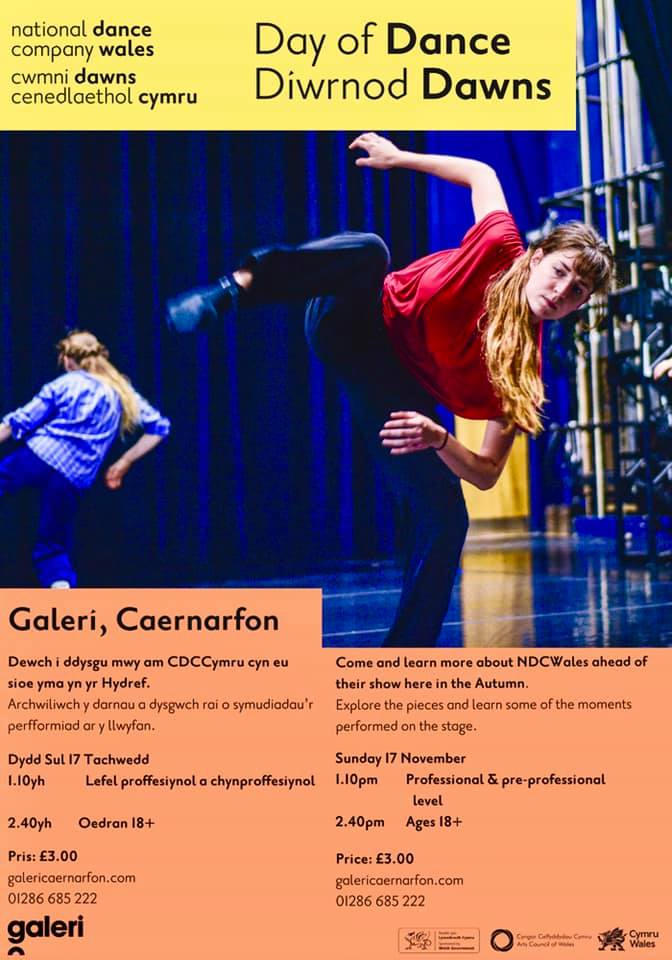
Galeri, Caernarfon
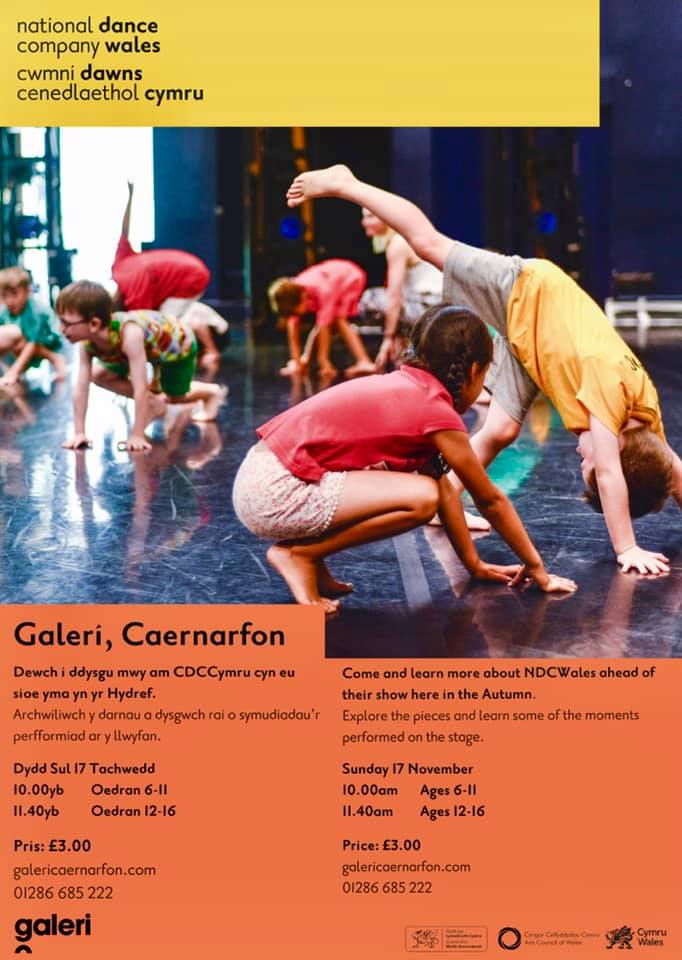
The NDCWales Day of Dance at Galeri Caernarfon takes place on Sun 17 Nov. Tickets are £3.00 and this gives you £3.00 off the price of a ticket to Roots by NDCWales at Galeri, Caernafon on Tuesday the 26th November at 7.30 pm. To book workshop tickets contact Galeri Box Office on 01286 685 222 Or at the links below.
Hi Sarah great
to meet you, can you give our readers some background information on yourself
please?
I have been dancing since the age
of 3 and have trained in many dance styles such as ballet, modern, jazz, street
dance, freestyle and Cheerleading. I completed the IDTA Dance Teaching Diploma
in Freestyle and Modern Jazz with Distinction and I am qualified Cheerleading
and Fitness Instructor. I have been privileged to work alongside many industry
professionals such as Wayne Sleep and Darcey Bussell.
Since graduating from the University of Manchester, I performed and taught overseas before moving to Leeds to own a dance franchise which involved teaching dance in schools and the wider community.
I was a member of the National Youth Theatre and have gained much Musical Theatre experience over the years. Since recently moving to Aberystwyth I have already acquired many dancing opportunities and teach at Aberystwyth Arts Centre
Dreams Dance School and set up my own Dance School ‘The Sarah Verity School of Dance’ as well as teaching freelance in local schools and the wider community.
So what got
you interested in the arts?
I have danced since the age of three and despite my peers stopping
dancing in their early teens, I have always had the desire to continue. During
my academia studies at school and University, dancing and the performing arts
has always been an escape for me and a form of self-expression.
You run your own dance school called, The Sarah Verity School of Dance. Your dance provision is obviously very important as its the only dance school in the area and teaches a range of dance styles to all ages, including adults. What do you hope to achieve with your dance school?
The positive effects of dancing whether it is as a hobby or as a career are significant and I have been fortunate enough to live in different places across the UK where dancing has always been an option. Therefore I wanted the people of West Wales who live in the more remote areas to have the same opportunities, without having to travel a great distance. I have been fortunate with my dance career and have seen the positive impact dancing has on children and adults. My aim is to continue to have a positive impact on people’s lives through dance.
You are collaborating with National Dance Company Wales to support a Day of Dance at Neuadd Dyfi,Aberdyfi on Saturday the 23rd November from 3-5pm. Do you think its important for organisations like NDCWales to work with community dance organisations such as your own?
I think it is amazing that we can offer the opportunity for people in this area to be able to work and be trained by National Dance Company Wales and have the experience of watching them perform, without having to travel to the city. I hope it will be a valuable experience for the National Dance Company Wales artists too, to work with dancers with mixed abilities and dance experience.
NDCWales then play at Neuadd Dyfi, Aberdyfi on Sunday the 24rd November as part of their autumn Roots tour. This is the first time the National Dance Company has performed at the venue, what piece of work are you most looking forward to seeing from the Roots programme and why?
I’m looking forward to seeing Why Are People Clapping!? by Ed Myhill as it has similarities with the musical ‘Stomp’ which I have been a fan of from seeing it at a young age. I love the simplicity of making a rhythm out of a simple sound and then gradually layering different sounds and movement onto the beat to produce an amazing result.
Neuadd Dyfi,Aberdyfi is an Arts Council Wales Night Out touring venue and is clearly an important asset to the local community. We interviewed Des George who runs the venue, in 2017, how is the venue important to you personally?
The venue has ‘West End’ standard facilities such as amazing lighting and sound equipment and sprung floor rehearsal space, which we are so fortunate to have in a small village in West Wales. We were able to rehearse and perform our dance school shows at the venue, which is so important for the pupils and their parents to have this opportunity as it is the largest venue in the area.
Get the Chance works to support a diverse range of members of the public to access cultural provision. Are you aware of any barriers to accessing high quality Dance provision?
In
deprived areas, it is difficult for parent/guardians to have extra income to
pay for their children’s dance tuition. Therefore cost of dance tuition is
reduced which means that the income is also reduced for the dance teacher. Even
reduced fees may still be a considerable expense for some of the parents paying
it.
If you were
able to fund an area of the arts what would this be and why?
Enabling funding for underprivileged children to be able to partake in
dance lessons.
What excites
you about the arts ?
In a world of ever changing political situations, climates and
technological advances, the arts still remain a form of liberation from the
pressures of modern society, yet it also has the opportunity to enable
expression around such issues and has the potential to influence the future.
What was the
last really great live performance you experienced that you would like to share
with our readers?
Despite living far from the city, we are very fortunate to have a local cinema that portrays the ‘live theatre screenings’. Therefore last year Matthew Bourne’ s adaptation of ‘Cinderella’ did a live performance from Sadler Wells that was screened to our local cinema in Tywyn. It was an hour to watch. We are lucky enough to have his latest version of ‘Swan Lake’ coming to our cinema as live screening at the end of November, which I am very much looking forward to.
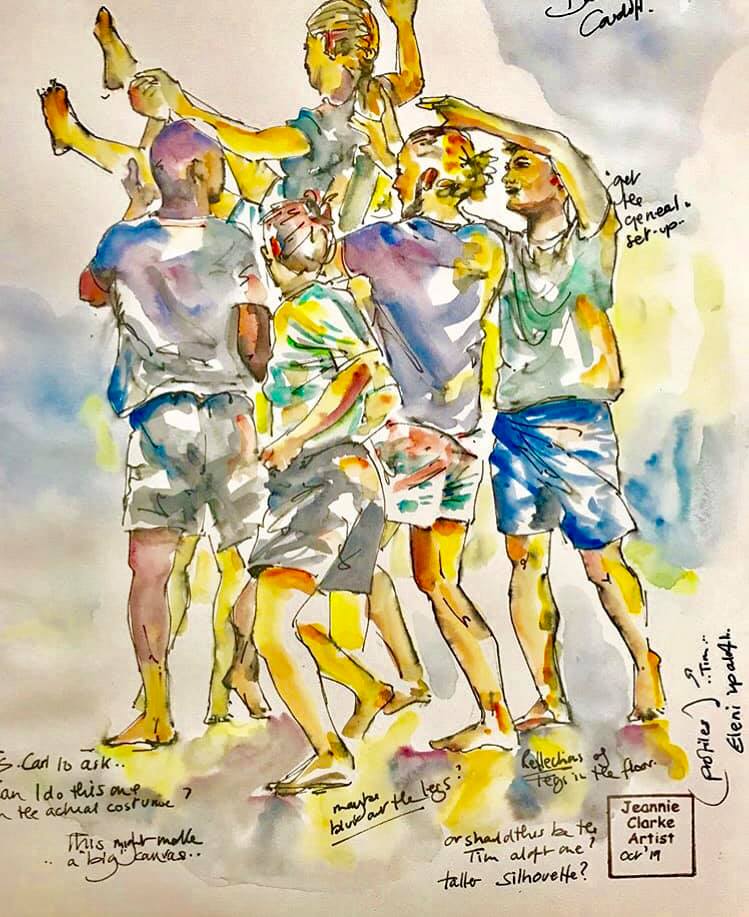
Hi Jeannie, so what got you interested in the arts?
I have been drawing and painting ever since I was a child – and I went to a Grammar school where the only subject I excelled in was Art – so it was inevitable that I would go on to try to make a career in the Arts somehow!!
You are fairly new to drawing and painting contemporary dance, can you tell us more about your work in this area?
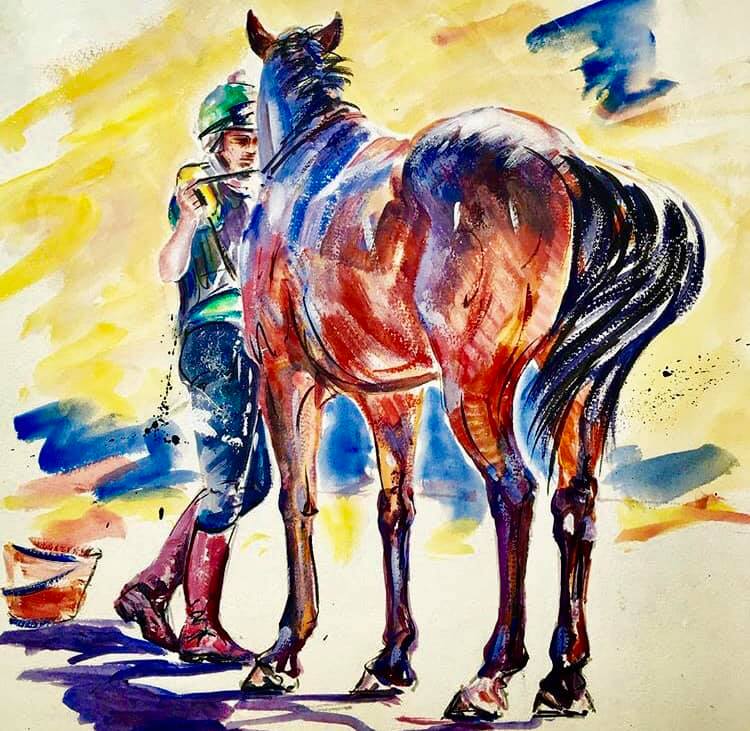
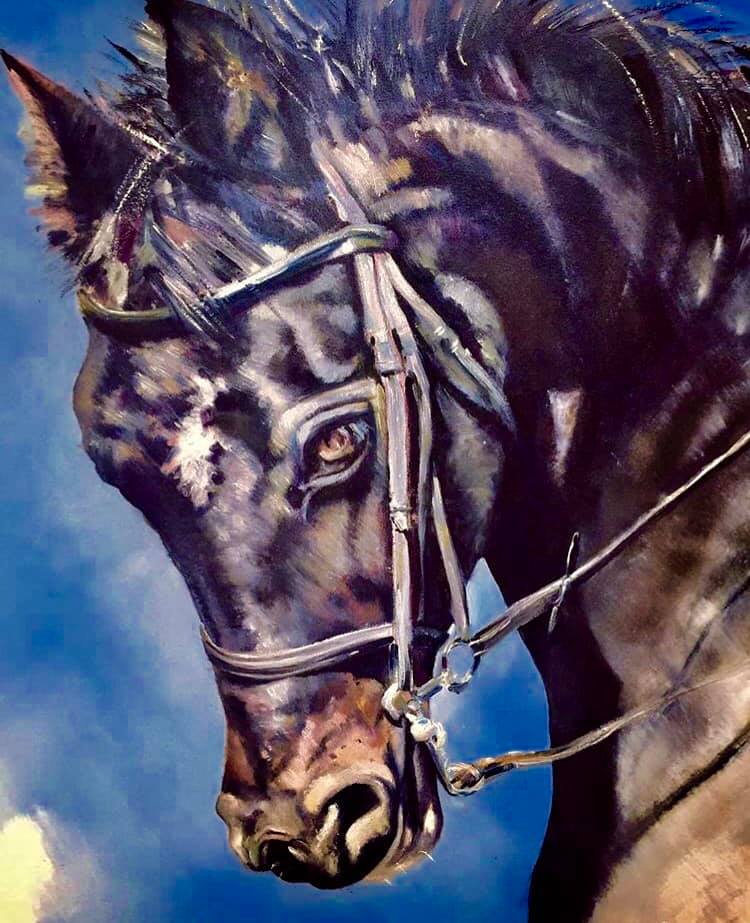
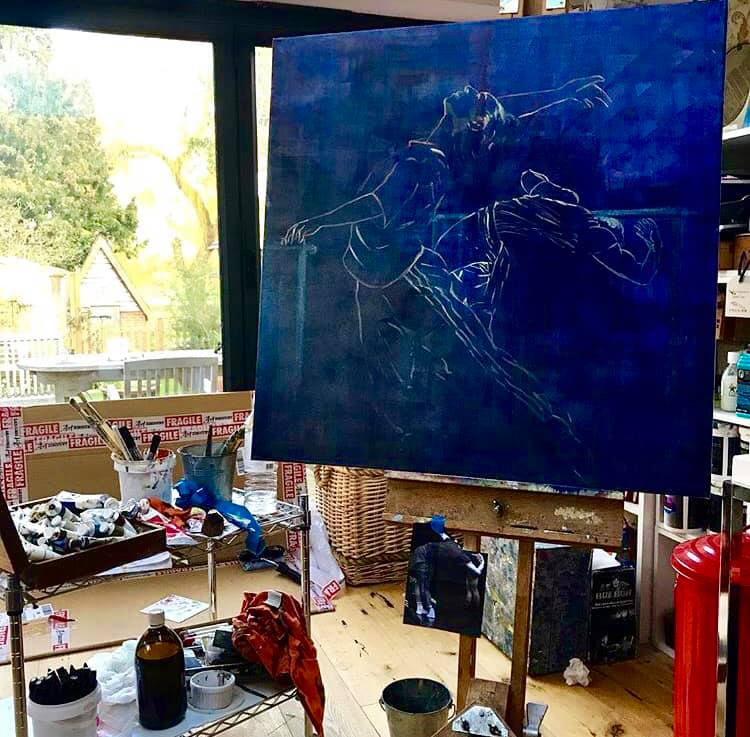
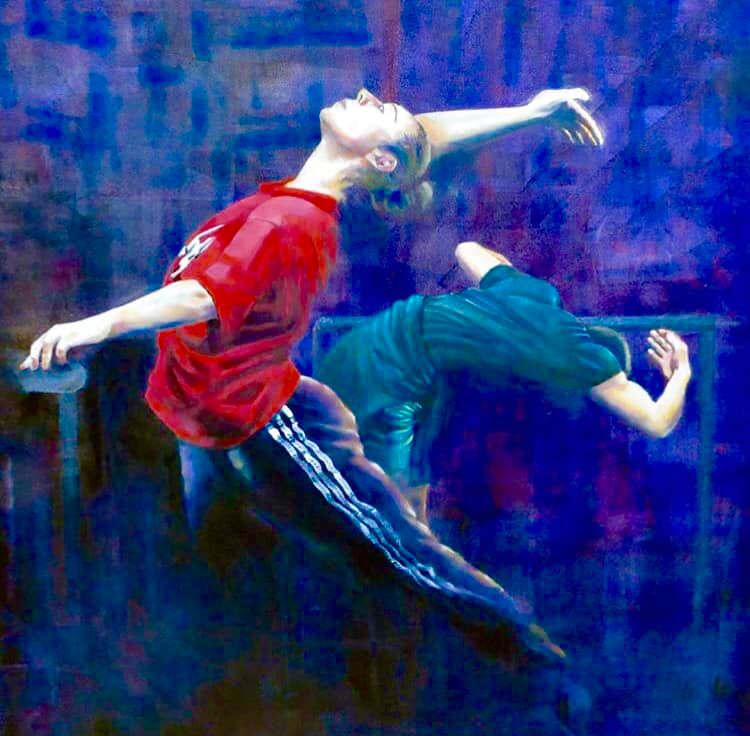
For a time my professional work was centred around racehorses – As a child I was obsessed with drawing and painting them and especially the way they moved. I have always been interested in the human figure too – not particularly portraiture but the figure itself, especially in movement.
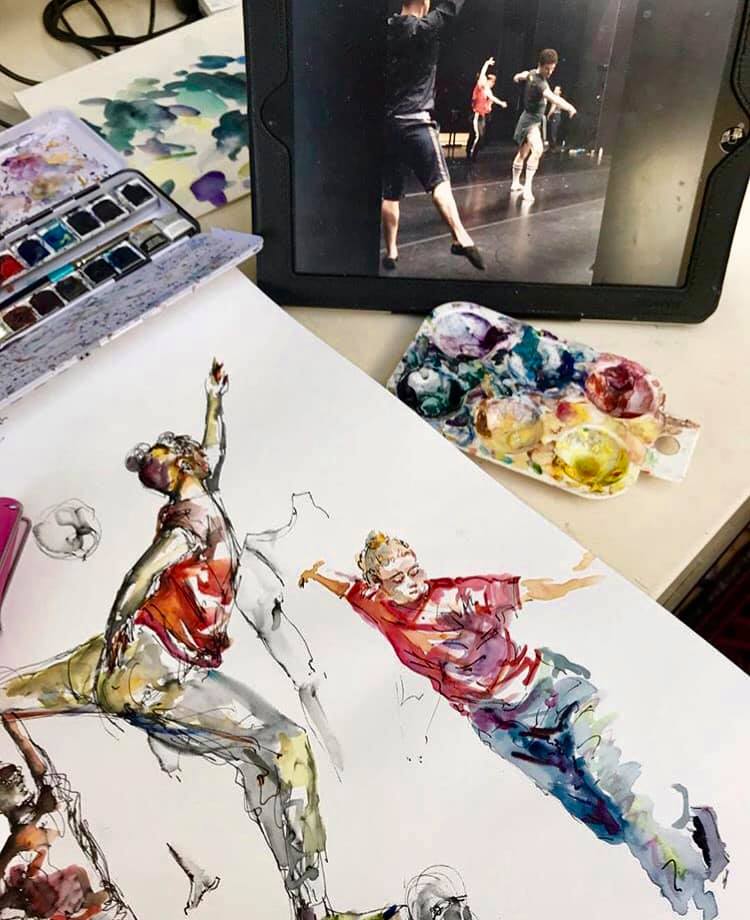
Only a year ago I was invited to a National Dance Company Wales, Open Rehearsal in London where the company were rehearsing for a show that night – that was my introduction into seeing dancers at work and I have been trying to capture my response ever since!
How has your relationship with National Dance Company Wales developed?
Well, I think I am hooked! Since that first encounter with the dancers I have worked almost exclusively on studying the way they “work”, whether they are resting or rehearsing and have been fortunate to be able to come to Cardiff and spend some days with them in the studio sketching and photographing and in particular I am building up a body of work depicting their production of “Rygbi” which I hope to exhibit next year, fingers crossed…The dancers themselves are hugely enthusiastic and supportive of what I do and are genuinely intrigued to see what I produce. As for me, I am completely in awe of what they do – obviously!!
Get the Chance works to support a diverse range of members of the public to access cultural provision. Are you aware of any barriers to equality and diversity for artists?
Hm… for artists? I haven’t personally hit any barriers in that sphere. I was a teacher in mainstream education many years ago before I left to pursue a career in commercial art. but I am sure that my own involvement with the art world has placed me in a bubble which has shielded me from exposure to barriers and I am sure they DO exist.
If you were able to fund an area of the arts what would this be and why?
For some years after I left mainstream art teaching, I worked with children and young adults who had special needs and varying disabilities (as they were then called)… Our art and creativity sessions were a joy! Hugely beneficial but hugely underfunded and undervalued and certainly would get money!!
What excites you about the arts ?
Wow, where to start!……how much space have I got?….Lets put creativity, in whatever form, back into peoples lives! … Its transformative and life enriching…..
What was the last really great thing that you experienced that you would like to share with our readers?
You mean apart from watching the dancers from National Dance Company Wales almost flying across the stage so beautifully and bringing me to tears……it don’t get much better than that!
National Dance Company Wales are touring Roots to venues across Wales this autumn.
Mold Theatr Clwyd Thursday 7 November 2019, 19:45 BOOK
The latest production of the International Contemporary Dance Collective (iCoDaCo), It Will Come Later, explores the interconnected and interdependent nature of human beings with a little help from science. We are individuals, part of a collective, and nature, in a constant effort to transform. In this piece, the body is not only a means to communicate different ideas of transformation, but a tangible instance of it.
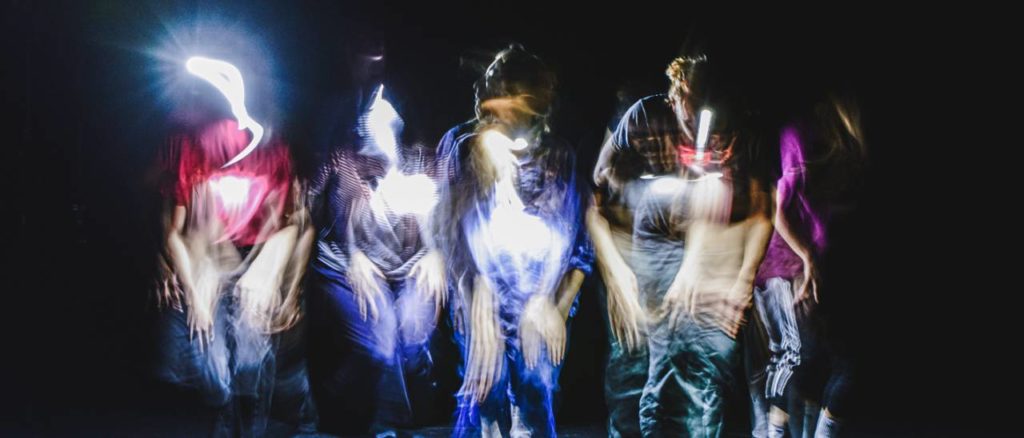
The dancers collect their sweat in little glass jars, which will then be connected to a small lightbulb. Electricity can be derived from sweat, as scientists have foundhttps://www.sciencedaily.com/releases/2017/08/170822092209.htm. Our body transforms under strain and produces sweat and sweat can be transformed into light. It Will Come Later is infused with raw energy from bodies being pushed and pushing each other.
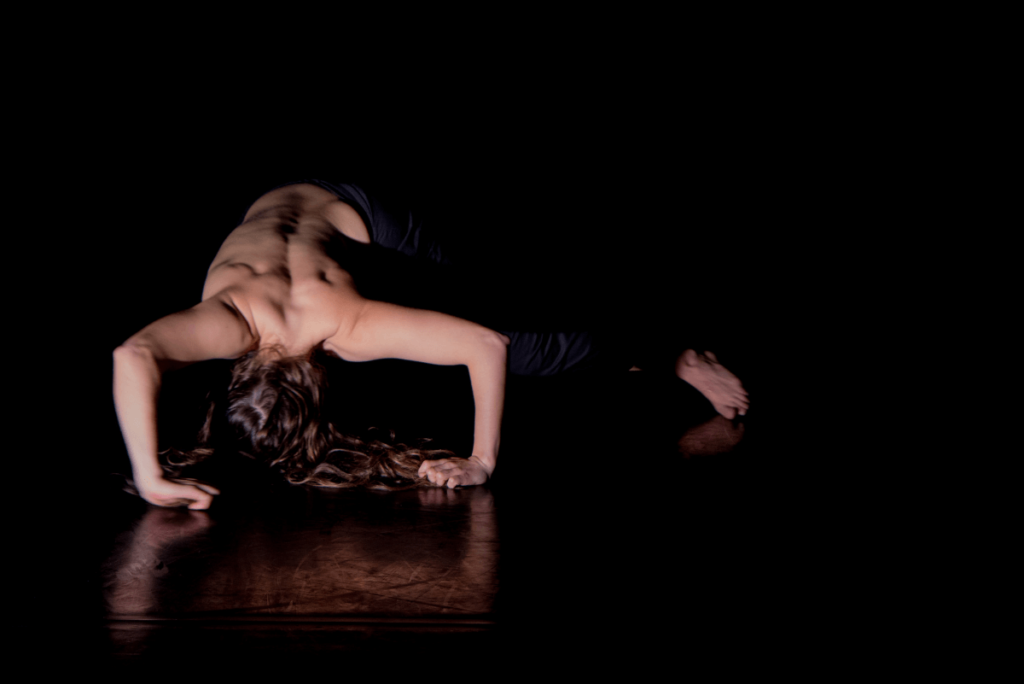
A group of dancers form an ensemble by pushing one another in concentrated effort and maintaining connection. They move slowly at the edge of the stage. As they reach me, one pushes my knee and connects me to him and the group. I am suddenly part of that shared energy. There are remarkable duets where dancers display a beautiful interdependence, balance, and reciprocity. In one, a dancer is in a static position, like a statue, and is handled with care by another, then they begin to exchange roles faster and faster. As they take up pace, the careful lifting and handling gives way to stretching, slapping, and tossing the statue’s body to one side. In another duet, the couple begin by fighting each other, but it soon becomes clear that they are challenging each other so that they can sweat more. Perspiration brings inspiration and fights desperation, we are reminded. The body transformation, as a metaphor, is open to the interpretation of the audience.
The dancers, alone and together, create a mesmerising performance alternating beautiful plasticity, frenzy, gentleness, and primordial intensity. No special effects, no fancy costumes, no elaborate scenario, no dominant music. It is the piece’s simplicity what makes it most compelling and successful in conveying transformation.
iCoDaCo hosted a workshop on the theme of transformation, Eva Marloes writes about it here.
Performances of It Will Come Later at Chapter Arts Centre run until 26 September 2019. Tickets available now
The International Contemporary Dance Collective (iCoDaCo) is a collaborative community of dancers, choreographers, and performers from different European countries coming together to create a new piece of dance. Ahead of their performance of it will come later at Chapter Arts Centre, Cardiff iCoDaCo hosted a workshop to present their research on the theme of transformation. Eva Marloes writes of her experience of the workshop.
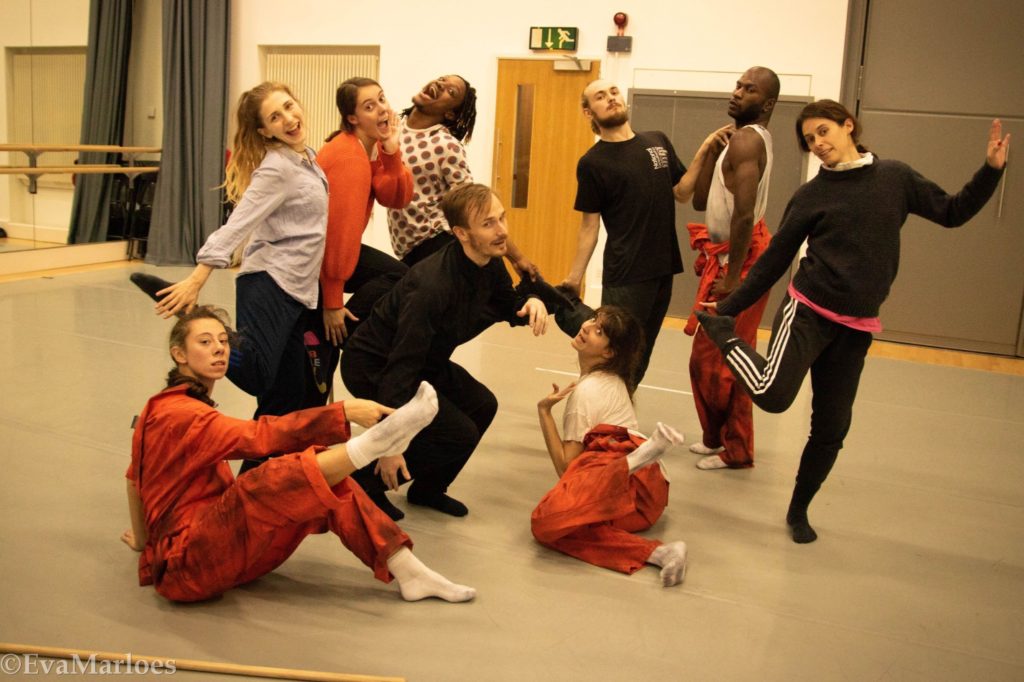
I close my eyes and feel the space around me. I feel my feet on the floor, the walls, and people near me. I realise I only become aware of space when I encounter an obstacle, when it is unfamiliar to me, or when it is redesigned in a new way. I often forget about my body too. I am reminded of it when I make a physical effort, feel pain, or trip over something. Dancers are more ‘bodily-minded’. They hug you and, in the dancing space, they take off their shoes and socks, and often trousers to dance in shorts or leggings. They become familiar with the space they use and how to move with one another.
Imre Vass
Imre Vass, a dancer from Hungary and part of iCoDaCo, begins the first session of the workshop by asking us to sense the space around us, to sense our bodies, and sense our bodies in relation to the space we are in. He asks us to concentrate on our feet, our footprint, and expand it. ‘Imagine you are painting the floor with our feet,’ he tells us. We begin to slide our feet in small strides to cover our little spot carefully, then in big strides, faster and faster, to cover the entire floor with imaginary paint. We take possession of the space and we do so together. Dance is not just body and space, but the interaction of bodies. It is a constantly changing relationship of people, space, and movement.
The next exercise requires us to touch one another. I roll on the floor while another participant touches me in different parts of my body pushing gently downwards. It is then my turn to ‘apply gravity,’ as Imre calls it. I am slightly uncomfortable at first. I scramble for a polite way of touching someone I have never met before. As the exercise continues, I no longer worry. Then we all come together in a group. All pushing each other downwards towards the ground, to feel the ground and each other. We do not push the other away. Those at the centre barely move while those at the edges end up orbiting around them. It is a ‘testament to human effort,’ Imre says. We connect with our bodies by tensing muscles and with each other by applying pressure on each other’s bodies.
It is an extraordinary experience in sensing the world through the body. We connect with one another and our surroundings without talking, without explanation, without seeing. I find myself with my eyes closed most of the times. I need that darkness to concentrate on my body, to know where it is, and to forget that other people might be watching. We all focus and exert ourselves in every exercise. ‘Do you want my sweat?’ asks a participant. Eddie Ladd, choreographer and performer with iCoDaCo, collects our sweat in small glass jars for an experiment. She uses the sweat to switch a little light on. She leads a rather challenging circuits session to make sure we yield the goods.
Eddie Ladd
The next exercise involves starting with a small movement, like moving a hand or a foot, and letting that move lead to another thus going beyond kinaesthetic movement. I notice I develop patterns of movement and follow a rhythm. I keep my eyes closed but become aware of other people’s rhythms and follow them. The movement arouses images in my head, something another participant notices.
The final exercise involves someone choosing a position and being a statue while their partner tries to manipulate them. I am paired with a male dancer. I feel weak and hopeless next to his muscled body. I copy ‘my’ statue. I align my body with his as if to connect with him physically. I hold him in an embrace and, as I do that, I can begin to shift his body. He lets me hold him and I do my best to protect him from a fall.
The workshop and the performance seek to explore transformation. For me, transformation requires reframing my experience in a new way not by starting afresh, but renewing oneself. This experiment in contemporary dance has helped me connect with my body and others to see, feel, hear, and touch the life that is around me. I become aware of the way I move, my rhythm, my body’s weaknesses and strength. It is an awareness that is made possible by being in relation with others. Transformation is a relationship.
The International Contemporary Dance Collective (iCoDaCo) perform it will come later at Chapter on 24 September, with a post-show Q&A. Performances run until 26 September 2019. Tickets available now
Who couldn’t be excited by an adult only circus? We begin our night by our intro full of comedy, verbal notes on a good time and nudity – and this is exactly what we get.
Amongst awe inducing stunts, flying high in the air, balancing
on unstable chairs, fire, whips, you name it, we get a show full of attitude,
hilarity, tongue and cheek and lots of naughtiness. It’s true that this is a
circus unlike any other.
This isn’t a show for the prudish, or the shy. The group openly admit that their idea behind the show is breaking down gender and sex roles, and so we see plenty of sexual tension between all sexes – they throughout cross gender roles, with femme and androgynous looks as well as woman taking a lead in dominance. And this shows another great step towards more open and equal performances that are popping up across the theatrical scene.
Don’t be shocked if you fall in love with these characters –
each with their own personality on show, they can be demure and intense with
more serious acts but none are afraid to make a fool of themselves, taking playful
approaches to S&M, hilarious dance routines with obscured faces by a lamp
shade and dancing to a song stating ‘turn me on’ – at this point a light switch
by their genitals can be flicked on with light blasting out. There’s no end to
the inventiveness and comedy with their routines.
And of course, the more intense stunts are beautiful, well-rehearsed
and stunning. The ability to make it look so easy, but with our full knowledge
of the strength and skill going into these. They keep their performance faces
on, even if the heat literally gets turned up as they swallow fire or keeping
their head as they are swung around the room.
Rouge is raunchy, a great degree of enjoyment and certainly a brilliant night out – For ADULTS ONLY!
Rouge plays at Underbelly as part of the Southbank Festival until the 15th September.
A combination of comedy, quintessential camp fierceness,
honesty, raw truth and pure love, Crystal Rasmussen (out of drag, lovely Tom
Glitter) brings us the story of violence, shame and betrayal he felt growing up
as a homosexual man in a less accepting world, and how his drag alternative
personality helped him to accept himself and ignore the haters.
Crystal is beautiful, glamorous and hilarious. She bares all
to us not only emotionally but physically, spinning on the stage in all her
glitter for us to cheer, whoop and love.
When she opens up to us about Tom’s past, the physical,
emotional and mental abuse he suffered for just being him, it is brought to us
in a really sensitive way and anyone with a brain on their shoulders and a
heart in their chest feels for him, feels the anger, betrayal and sadness that
there are people who could treat someone else like this.
The narrative is nicely and equally split – while there is
some hard hitting stuff, there’s as much joy and comedy and utter glamour to
help us along.
Crystal also makes us feel included – saying hello to all of
us, somehow making us feel as if she knows us one by one (and she is so
brilliant, you just WISH you were her friend!) and makes us feel welcome. It
feels like a safe sanctuary, where we are all joined together to celebrate
Crystal and Tom’s love.
Not to mention, some well-known tunes, that we boogie to, but that she sings – and what a voice! I would happily listen to her sing any song and love it more than the original. Crystal Rasmussen/Tom Glitter, Bible 2, is great fun, a wonderful night out, but a hard hitting realisation of the world for LGBTQ+ people. It is not a shy performance, the jokes are NSFW and we come away even more in love with her than before.
Have you ever been on hold? The irritating music. The
repetitive recorded voice. The infuriation. But when we reach the end and
someone answers, aren’t we polite.
The Sensemaker is a predominantly multimedia, choreographed
piece, responding to sound and music, with repetitive, but also different
gestures and movement throughout.
We are there to question what is happening, and what would
we do for the right opportunity. Some parts of the performance are comical –
the performer continues to smile but her eyes and her glances away insist she
is nothing but happy – a relatable response to being on hold; and others are unfathomable.
Would you really do THAT if you were asked? If your opportunity depended on it?
While the piece is simple, there is a sense of Sci-Fi to it.
The recorded voice and the reactions are relatable to anyone who has been stuck
on hold. But the responses that are required e.g. ‘Clap 6 times for English.’ ‘Crouch
down and take one step to the right …(for analyses)…’. e.t.c is demanding and
unusual, making this process the performer goes through feel all too much like
a potential future reality.
It feels funny but it also feels dark and unnerving –
reaching some points when you really question what she is working for and
whether it is worth it. But who are we to question when we may be in the same
predicament and willingly do the same things.
With almost 99% pure movement with sound and music queues,
The Sensemaker is a really interesting piece; being able to bring something so
deep across with only the minimal is quite a feat and a very clever response.
The Sensemaker is good fun, but also dark. It throws up a lot of questions about ourselves, our World and the Future. And watching something very ‘mime’ orientated was a breath of fresh air through the Fringe.
Creating opportunities for a diverse range of people to experience and respond to sport, arts, culture and live events. / Lleisiau amrywiol o Gymru yn ymateb i'r celfyddydau a digwyddiadau byw