Edalia Day has brought a very unique and very interesting
production to the forefront at this year’s Vaults.
Beginning slow and slightly awkward, Day seems nervous and
uneasy in this plain white room. Soon we are to realise, this is very much a
clever theatrical technique to their story and very much the beginning of
something special.
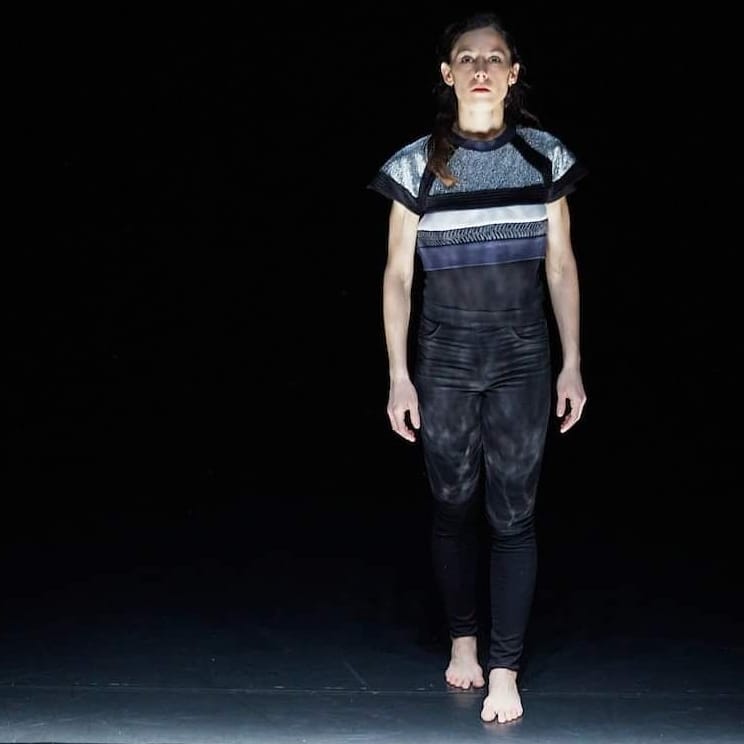
Too Pretty To Punch brings Day’s autobiography to the stage.
Identifying as trans, Day transforms the stage into their life story, the
trials and tribulations and turmoil in accepting who they are and seeking
acceptance in society. It then continues into a widen view of the issues trans
people face and eventually brings in verbatim videos to others facing the daily
obstacles.
It would be easily and still powerful to have used these
videos to support Day’s points, but they go the step further – animation is
projected onto screens, one an ordinary square screen, another slightly
misshapen and another as a moveable canvas. These are used to flick between
images and animations as they move across the stage, along with physical
theatre by Day, making the action come to real life in our eyes.
Some of the performance feels like we are getting to know a
new friend – Day addresses us and talks to us like a new friend being made, but
then some poignant moments being transferred into visual elements adds a unique
and clever nature to this production and hits the points home.
Supported at times with kitsch music that reminds me of
Golem by 1925, this makes the production feel a little special and like nothing
on the theatre scene right now.
Too Pretty To Punch is not only a really important production to see but is also one of the most unique and fascinating pieces of theatre I have seen in a long time.
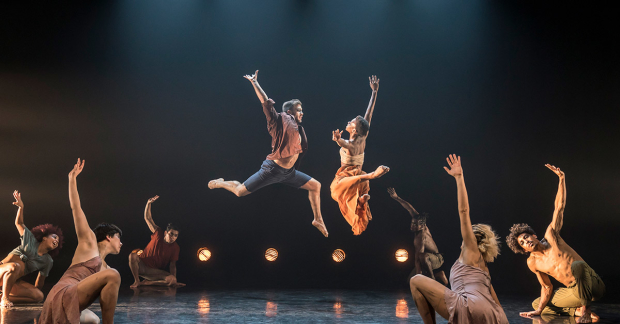
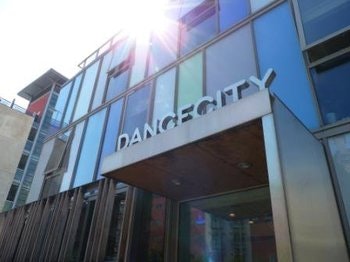
I had the pleasure of seeing KiN, performed by visiting dance company, National Dance Company Wales at Dance City, Newcastle upon Tyne, a couple of weeks ago. I really do love dance, and yet I don’t get many opportunities to see a performance. What I have seen has usually been reworked productions of well-known pieces. Think Swan Lake.
I was looking forward to seeing the work of a company that describes itself as a company which creates dance ‘With and for all kinds of people in all kinds of places’. A young, vibrant repertory company, whose aim is to innovate, make accessible and include.
The
current production on tour is KiN. This brings together three very different
dance performances, Rygbi:Yma/Here, 2067:Timeand Time and Time and Lunatic.
Here
I offer you a review of Rygbi.
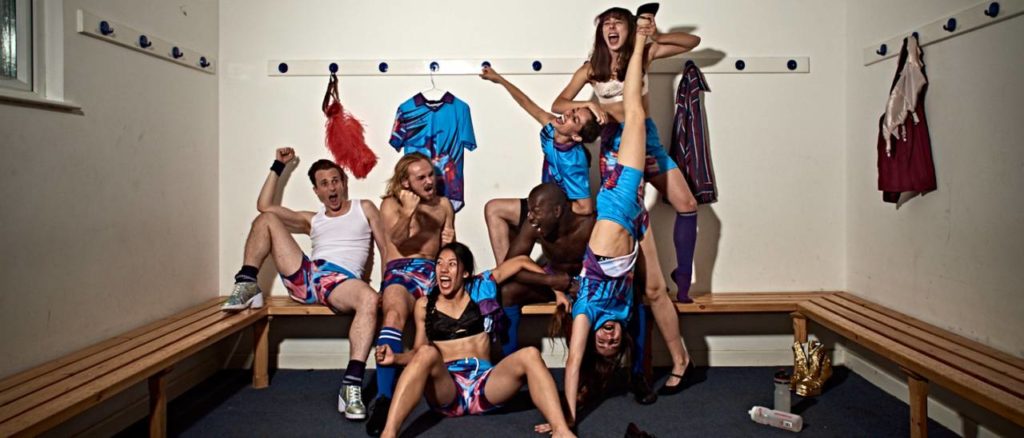
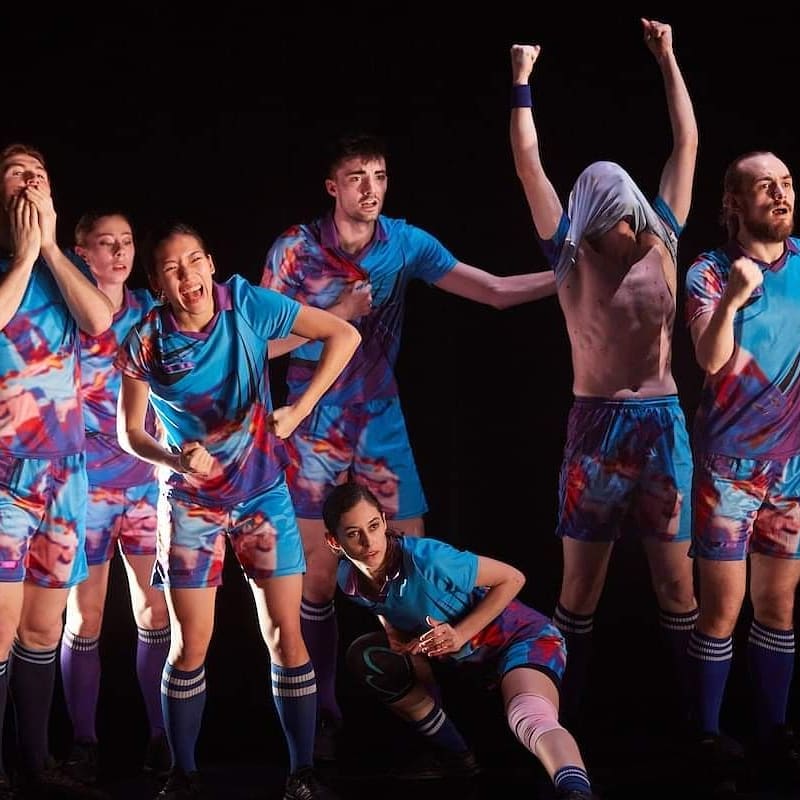
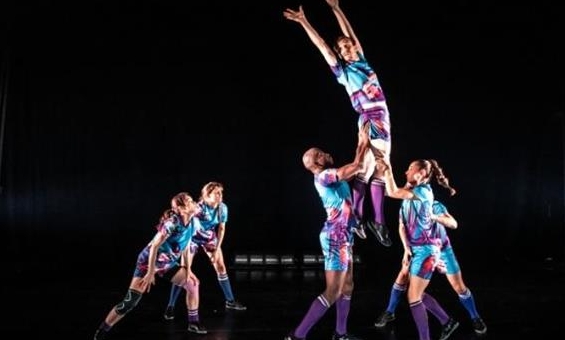
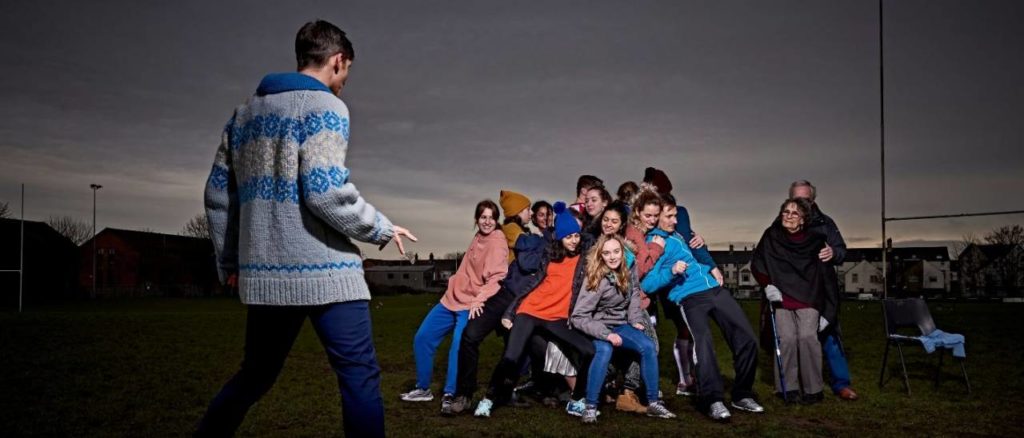
If a dance company is going to aim to be a company of the community then it makes sense it would devise a performance conjuring up Wales’ national sport. Choreographed by Fearghus O Conchuir along with the performers, music composed by Tic Ashfield, the intention of Rygbi, as we are told, is to express and celebrate the sense of ‘pride and passion’, ‘commitment and camaraderie’. This piece came together with the help of rugby players and fans.
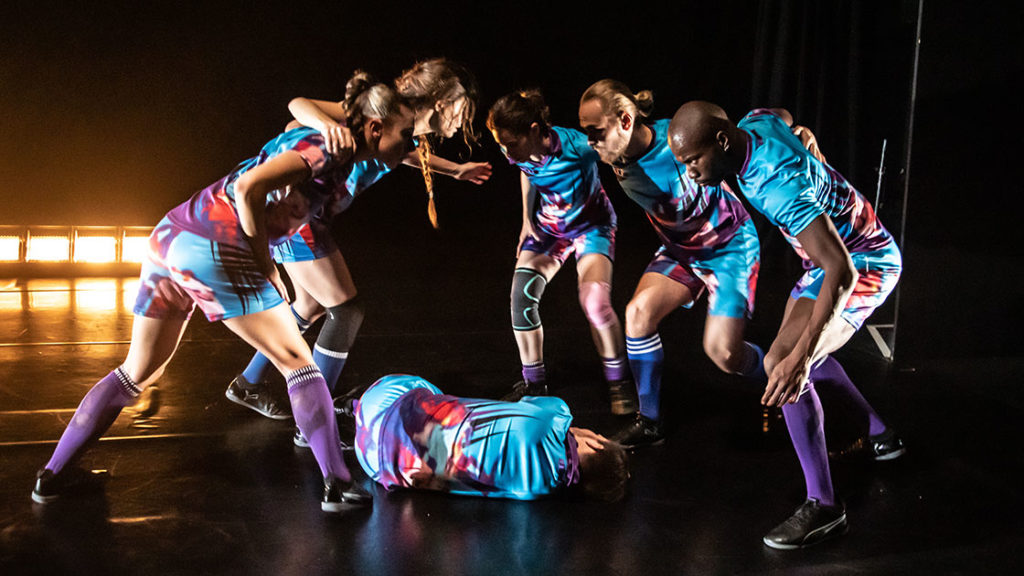
The piece begins with an explosion of energy. From the very beginning there is a felt tension, an anticipation for the match ahead. As an audience we can’t help but be lifted by the fast-paced athleticism of the dancers moving together, representing the way in which a team does work in unison. Just as with a real rugby match though, the energy levels wax and wane, the action slows down or speeds up. There are times for composure and times for full on attack. The performance captures every nerve tingling moment. Every high, every disappointment, every resurgence is danced with true conviction.
I
enjoy watching rugby, which is probably why I was so interested in seeing this
piece. Watching this performance feels like I am experiencing a match in its
entirety. A first kick, a scrum, a conversion. The desperation to succeed is
etched on each and every face of the dancers. All play their part extremely
well, connecting as they do to the audience and taking it on the journey of one
game.
The
music is never intrusive but serves to enhance the constant roller-coaster.
I
can’t fault the performance. I can only sit back in awe at how this is
simultaneously experienced as dance, theatre and sport. The choreography, as
well devised as it is, works that magic.
I
find myself thinking that what I am seeing cannot be defined, it crosses
boundaries and has a way of connecting with anyone.
National Dance Company Wales say they want to make ‘dance for all kinds of people’ and with this they delivered.
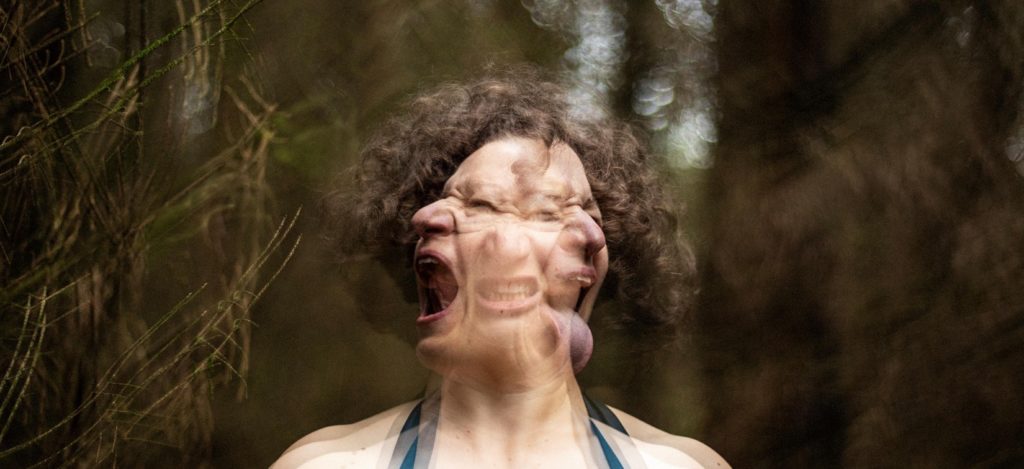
The disconnect with our bodies is making us sick. We communicate through disembodied social media and are strangers to one another. As the Coronavirus spreads across Europe, it might sound strange to advocate for a stronger connection with our body and nature, and yet it is through connection that we get to know what our body can do, its vulnerabilities, and how to make it resilient. The exhibition and performance ‘Fabulous Animal’ by dancer and performance artist Zosia Jo is thus unwittingly topical. It is an invitation to rediscover our body without judgment and to find strength by tapping into our animal side.
I have never had a rosy picture of nature. Nature can be terrifying and ruthless. Nature doesn’t ‘need’ us; rather we need nature. We are of nature. Zosia Jo’s invitation to have a more grounded relationship with our body and those of others emphasises strength born of acceptance rather than control. It is a much needed lesson in these times of uncertainty, anxiety, and disconnect.
Some might find it all too abstract, but there’s nothing abstract about the body. The coronavirus spreading illness and panic brings home how we fool ourselves into believing that we are above nature and detached from it. We want to dominate nature even to the point of extinction. We want control over the body. Men, in particular, want to control women’s bodies. They do so through rape and harassment, through restrictive legislation on reproductive health, and through the labels applied to women for what they wear, how they look, and how they move. Zosia Jo wants to ‘shake off the patriarchy’. Yet, her message is for everyone. Women bear the brunt of this ideology of dominance and control, but men are oppressed by this too. The attempt to eliminate vulnerability, repress emotions, and control the body is what makes us weak.
The work of Zosia Jo
invites us to stop, watch, and listen to our body. There is an
aliveness in the photos and videos of Zosia Jo seeing and
experiencing her body as if she has woken up from a long sleep. She
plays with her flesh and muscles, with her hair, teeth, and skin. She
touches the body of a tree from inside in a sensuous and playful way.
She climbs a tree like a monkey. She does not conquer nature, but
connects with it.
As a dancer, Zosia
Jo tells me that she was always aware of how important the line of
the body and the look of the body were. She tells me,
“I got thrust into this world where it was all about ultimately how I looked, even though it’s more complicated than that. I got swept into trying to be thin, trying to be in a certain way. My journey back to performing and dance became a very personal one, one that was about finding myself, empowering myself to feel good about my own body and to dance again. To perform was a big part of that.”
She studied somatic
dance, which stresses listening to one’s body to appreciate how
movement emerges. She has run workshops for people to experience
their bodies without judgment. She has worked extensively with women
in Cairo, who rarely get the opportunity to be in a safe and creative
space away from the ever-present male gaze. Women are under constant
pressure to look pleasing to men. Zosia Jo sought to ‘shake off’
that judgment. She tells me,
“It’s the curiosity about the body, feeling and touching with no judgement, I might be touching the part of body I least like but I have to discover it as if I had no attachment to what that is.”
Zosia Jo listens to
her body and only her body. She seems to forget the audience and the
camera or, more poignantly, she doesn’t care. Released from the
pressure to conform to expectations, be they expectations of beauty,
grace, agility, she can breathe freely. Her technique is like
breathing, a continuous expanding and pulsating. It’s paying
attention to one’s body and only one’s body.
“I wanted to make something that was ugly … let go of this instinct of making something beautiful and just be utterly unrefined. The goal was to be so ugly that is beautiful.”
Yet, she is a
performer relying on external validation and enjoying the
relationship with the audience. I ask her what she does to
communicate how she feels to the public. She tells me,
“Somatic dance can be a bit trippy … I might feel great but I look disempowered, how do I match my own experience with what I’m trying to say to the audience and not look like shrinking and hiding in public space? That is the question.”
It is the connection
with animals that makes that communication possible, she asked
herself,
“Which animal enabled me to be in the world in such a way that it’s clear I’m taking space or that I’m being empowered? At the same time a feeling good, that is not fake, that is not impersonating a kind of traditionally male sense of what power is or what power looks like, but that I am feeling good.”
Zosia Jo performs
the instinctive and earthy
character of an animal but juxtaposes with the ‘fabulous’
of queer culture.
“Fabulous … I think of queer culture, dressing up, taking ownership of one’s sexuality. … I like the contrasts between queer culture, glamour, sequins, sparkles, sexuality and shiny expressionism, and animal, which is something earthy and grounded. I loved the seemingly paradox.”
This is what makes
it a fun performance. Performance can in itself be liberating. I ask
her where she finds the internal validation for this work. She tells
me,
“When you listen to physical reality, you can ground yourself and feel grateful just for being present and alive. When you feel what the body can do and get excited about what it can do instead of what it can’t do or instead of what is wrong with it that’s very validating without having to be impressive in any way… It’s not ‘heroic’ movement … moving to the beat, it’s something so human. Everyone can do it.”
Everyone can do it.
Everyone can rediscover their body, “wobble all the fat” and have
fun with it without fear of judgment, without the need to control it.
The empowerment is not in dominating and controlling; the empowerment
is in the connection.
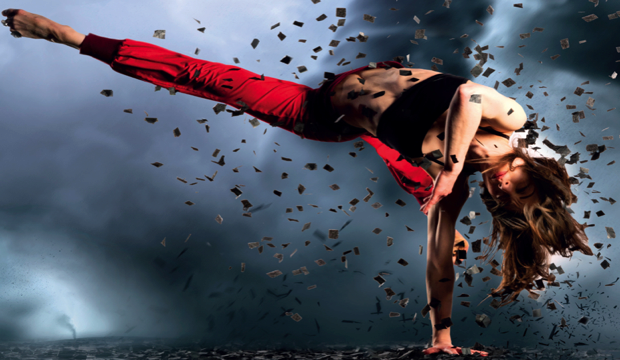
Wales braced for further tempests as James Wilton Dance whips up The Storm across the country. High energy dance at Ystradgynlais, Holyhead and Pwllheli in return visit for critically acclaimed company.
James Wilton Dance, one of Europe’s most in demand dance companies, brought their last show, Leviathan to Wales as one of the first Dance Across Wales productions. This season, they are back country with The Storm, a whirlwind of lightning fast, athleticism, where acrobatics, break-dancing, martial arts and contact work fuse to form dance that promises to blow audiences away. Seven dancers, a soundtrack of thundering electro-rock specially composed by Amarok and thousands of pieces of paper combine to create a work that astounds with its athleticism and touches audiences emotionally in a way that words simply can’t.
The Storm visits Wales this March, with performances at The Welfare, Ystradgynlais (25th March), Canolfan Ucheldre, Holyhead (27th March) and Neuadd Dwyfor Pwllheli (28th March).
The performances form part of the programme for Dance Across Wales, a Creu Cymru project aiming to give venues in non-urban areas of Wales more confidence in bringing dance to their audiences.
Creu Cymru is working with the National Rural Touring Forum (NRTF) in an Arts Council of Wales funded project to enable five theatres in Wales who currently programme little or no dance, to engage with and develop local audiences for dance. The idea of the project is to encourage people to ‘Give dance a chance’ at their local theatre.
Each of the five venues have chosen work from the NRTF’s Dance Menu. The Dance Menu (curated by NRTF, China Plate and The Place) contains existing dance pieces from established artists and companies which have been re-choreographed for small-scale presentation.
The project is funded by Arts Council of Wales and has been running from October 2018. The participating theatres, (Ucheldre Centre Holyhead, Neuadd Dwyfor Pwllheli, Parc and Dare Theatre Treorchy, The Welfare Ystradgynlais and Ammanford Miners), are all located in rural areas or small towns, have been able to select two to three dance pieces to present at a subsidised rate. As part of the project the theatres also receive marketing and outreach support to share ideas and strategies, marketing approaches and evaluation.
Creu Cymru’s mission is to develop a vibrant and progressive sector of theatres and arts centres for the people and communities of Wales.
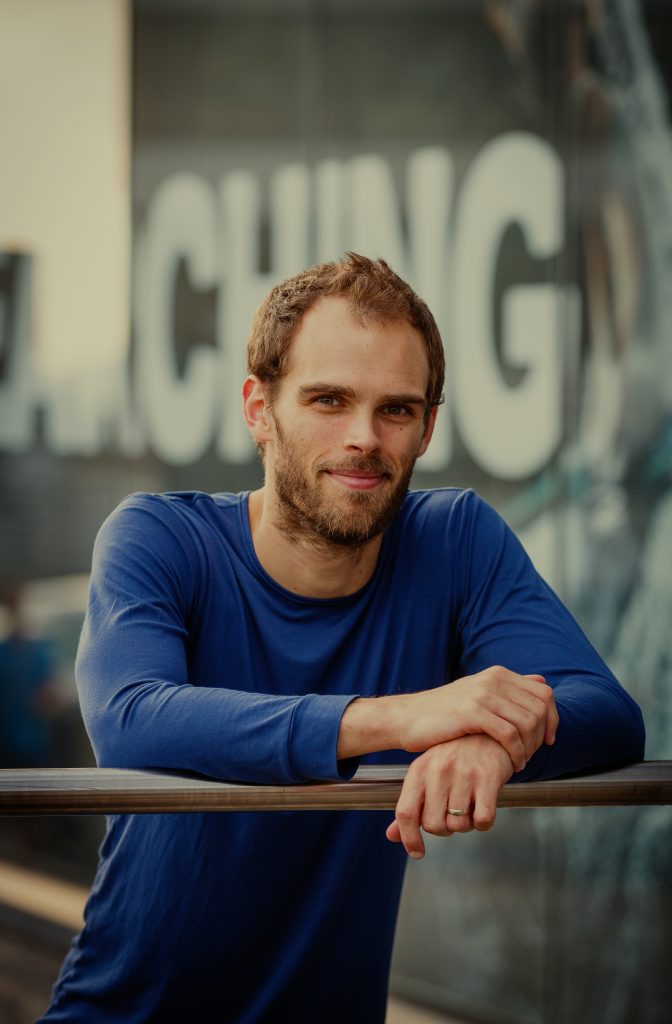
Choreographer James Wilton discusses his work in the interview below
What is The Storm about?
The Storm is
essentially about how we process emotions and happiness. It occurred to me that
there are many parallels between weather and psychology. For example the word
tempestuous can mean either an overwhelming emotion, or a storm. Before a hurricane
there is what is referred to as a depression. When people are sad others say
“it will all blow over”. How you can’t see wind but can see how it changes
objects and how you can’t see emotions but can see how they change people. I
also likened the world to a storm. We are surrounded by this turbulent,
challenging world, where danger, injustice and suffering are all around us. In
this world how can we manage to remain happy? How can we not get swept up in
the world around us and how can we be the quiet, calm eye of the storm.
When did you first have
the idea?
I am a generally very
happy person, and I’ve always wondered why. In 2016, shortly after creating
LEVIATHAN, I had a term of relative unhappiness, where I was swept up into some
of the problematic things around me. At this point it occurred to me how
important, and how beautiful happiness is, and how the world would be a much
better place if people understood emotions and complex psychology more deeply.
What will be different
physically?
We’re going bigger,
faster and more fierce than ever with The Storm, but we’re going to be
contrasting that with more subtlety, texture and softness than ever as well. As
well as the earthy physicality we usually bring to the table, there will also
be a greater sense of line and shape. Of course, we’re not going to be going
too classical, however we are adding some elements from those techniques in
order to push our physicality somewhere new.
What does Dr. David Belin,
lecturer in Behavioural Neuroscience at Cambridge University, add to the piece?
I wanted to make sure
that the work had a foundation in genuine science. I think so often people
think they understand psychology, however we really don’t. Dr. Belin is a world
expert in his field, with over 50 peer reviewed publications, and has taught me
a great deal about the human mind. The most interesting thing being about
dysregulation, and how people attribute the wrong feelings to the wrong
emotion.
What excites you about the
music of Amarok the composer?
In 2017 Amarok, aka
Michal Wojtwas, released an album called Hunt, which received many nominations
for prog-rock album of the year. It was through a “top 30 of the year” list
that I discovered his work and I’ve been hooked ever since. I used three tracks
off of his album for my creation “Hold On” for Theater Münster, and once I saw
how well the music gelled with my choreography, I knew that I had to get him to
write something especially for The Storm. There is just so much power and depth
in the music that Michal writes, and it is emotive in some indescribable,
other-worldly way.
Finally-What can audiences
expect?
In short-to be blown
away by the physicality, the storytelling and the raw emotion of the dance,
set, music and light. We want audiences to feel the piece, as well as see it.
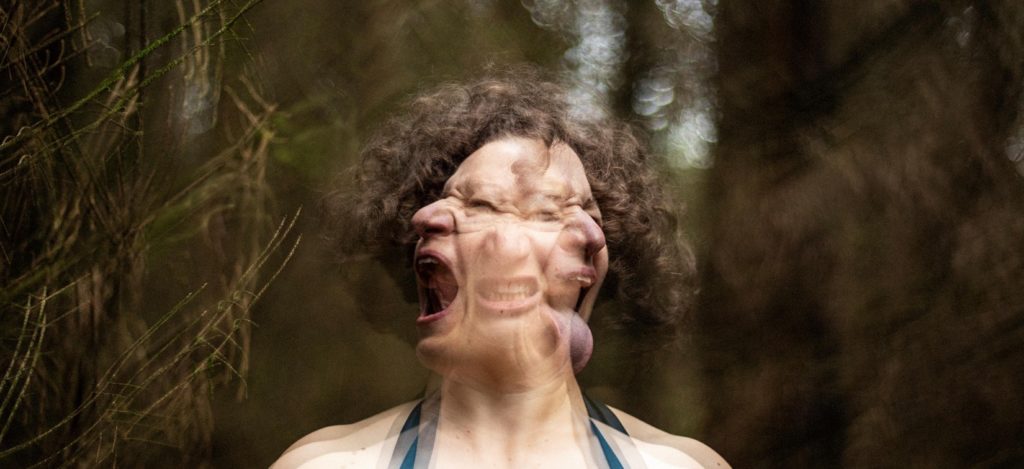
Fabulous Animal is a composite artistic project, which includes
photos and videos of professional dancer Zosia Jo and of workshops’
participants and Zosia Jo’s live performance at Cardiff Made. It is
an exploration of the body in its fleshy and animalesque dimension.
The performance begins with Zosia Jo feeling her body, her teeth, her
arms, licking her arm, comparing the hair in her armpits with the
hair on her head. She stretches her muscles and shakes her body. She
dresses and undresses.
The performance
starts with playfulness and warmth. Zosia Jo is friendly and puts us
at ease. Zosia Jo has a beautiful physicality and control over her
body. Every move looks natural, with no tension, and easy. As her
body moves slowly and softly, it becomes seductive. It is seductive
in the literal sense of the word, in bringing us closer. She embodies
an eroticism without a mask.
In the very small
space of Cardiff Made, Zosia Jo projects a sense of wider nature. She
moves like the waves of the sea, like the movement of our lungs as we
breath. What is striking of the performance is her ability to give a
sense of being in nature and part of nature. Zosia Jo is successful
in stripping us of our everyday masks and let us see that underneath
our clothes we are animals. In nature, the spectators would have been
able to sense more their own body and their relationship with rocks,
sands, trees, or water.
The texts beside the photos give a thoroughly research context linking this exploration of the body and nature to feminism. However, it is too abstract for the performance, while it is probably more powerful in the contexts of the workshops Zosia Jo did in Egypt. The exploration of the body outside of societal constructs of beauty, strength, and skill can resonate with men as well as women. In a disembodied society, we can all benefit from experiencing our bodies differently. At the performance, we remain spectators; yet as we watch Zosia Jo, we can imagine her as an animal. Like a butterfly she spreads her wings and she is nature. She is a fabulous animal.
I am going to be honest with you dear readers, I was rather dubious about Message In A Bottle.
I’ve never been a huge fan of Sting or The Police, but the fact this was another dance production by the wonderful Katie Prince of Zoonation fame (of which I am a fan) I was really intrigued with how the two could combine.
A really poignant story, Message In A Bottle focuses on a family torn apart from war and disaster, facing a life of a refugee and starting life again. A story that has often hit our newspaper headlines and breaking news articles on TV.
Zoonation has been known for its comedy – taking existing stories and giving them a comical yet urban feel to them. This production from Prince is something so different and dare I say it, my favourite to date from this choreographer and director.
Somehow the music from Sting fits every scene so well, without much change to the music, the world this family exist in feels almost alien and somehow the electronics of his songs, and the earthly beats of others just fit so well to the story and the characters.
The dancing, of course, is flawless and awe inspiring as Prince’s work always is. It is great to see her branch out even more with choreography – previous work lending to the fact it is urban, a hip hop version of a story; this production has these moments, but there are also beautiful contemporary moments, really showing the skills and versatility of each dancer.
And a review cannot be written without mentioning the set – a combination of multimedia usage with projections, a cubed stage where the background is ever changing, costumes that just fit effortlessly with the colour schemes and the lighting effects that are those I haven’t seen before in a show but also manage to include us the audience – an absolute triumph.
Message In A Bottle is an absolute masterpiece. It is everything from a dance show and more, and somehow, if you weren’t a fan of Sting or The Police before, you will now have them on repeat.
Kin, a triple bill of two
new works and one revival performed by National Dance Company Wales at Dance City,
Newcastle is deceptively simple and unspectacular but leaves a warm and deeply
satisfying feeling. Performed by a fine tuned and yet relaxed ensemble this is
beautiful dance with an underlying humanity.
National Dance Company Wales, based in the Wales Millennium Centre, Cardiff is a contemporary dance company in existence since 1983, first as Diversions and, since 2009 as the National Dance Company of Wales. Kin is the latest touring triple bill with works by the current Artistic Director Fearghus O’ Conchuir, Dussledorf based English choreographer Alexandra Waierstall and the late Nigel Charnock, co funder of internationally acclaimed DV8.
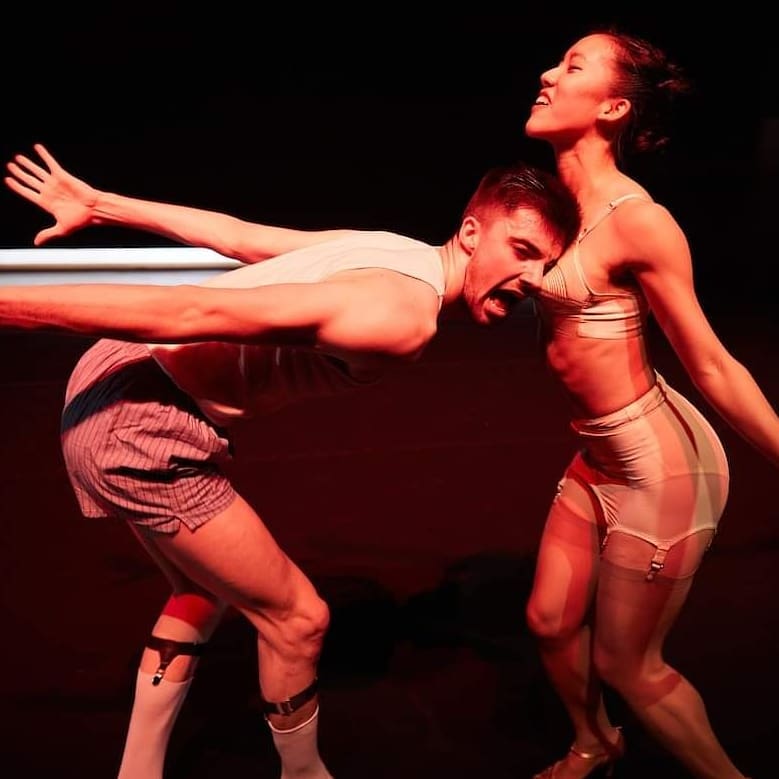
Rygbi, (Rugby in Welsh) the opening work is by Fearghus O Conchuir and is inspired by the, as the title suggests, game of rugby and is a fun, beautifully researched and choreographed piece. That choreographic detail even includes the slightly tight concentrated expressions of the players/dancers, who occasionally break out in victorious smiles. Physically both fluid and dynamic, with rhythmic, fast paced changes of direction and slow motion moments it’s an easily understood piece full of quirks and camaraderie.
Next up 2067 Time and Time and Time is a much more meditative piece with structured improvisational movement, which though sensitively performed felt diffuse and sometimes obscure. Clearly created with great care and skill I was left wondering what the choreographer really intended even down to the compositional devices and use of props .
Lunatic by the late, great
Nigel Charnock known for his intense theatricality both as performer and
choreographer and important among LGBTQ artists, who tested new ways of
expressing their sexuality and their social situation was created in 2009. It
is expertly restaged by Jo Fong and feels uncanny in its’ relevance to today,
from the period style of the 1950s sequences through drag to joyously mad
ballet movement. A mix of dance and gesture filled with despair, madness and
joy using voice, props and costume changes to create a fantastic piece of choreography
which is highly relevant to today. It is also a test for the six dancers who perform
it with panache and humour.
“It is a kind of madness. All my work – to the public – doesn’t look chaotic, but mad. A little bit lunatic. People say, ‘I didn’t know what was going to happen next, what you were going to do next’.” Nigel Charnock interviewed by Emily Lambert, Wales Online 2009
The evening has a clear overarching theme of the group, how important we all are and how connected we are; there’s a sense of humanity and kindness. Superbly curated by Fearghus O’Conchuir it is contemporary dance that seeks to reach out without losing any integrity and it does.
Choreographer Alexandra Waierstall Composer Hauschka Costume Concept and Set Design Alexandra Waierstall Lighting Design Caty Olive Costume Design Brighde Penn
Lunatic
Choreographer Nigel Charnock Costume Design Shanti Freed Costume Make Brighde Penn Lighting Design Jackie Shemesh Costume Design Consultant Joseff Fletcher Restaging & Rehearsal Director Jo Fong. With thanks to the Nigel Charnock Estate
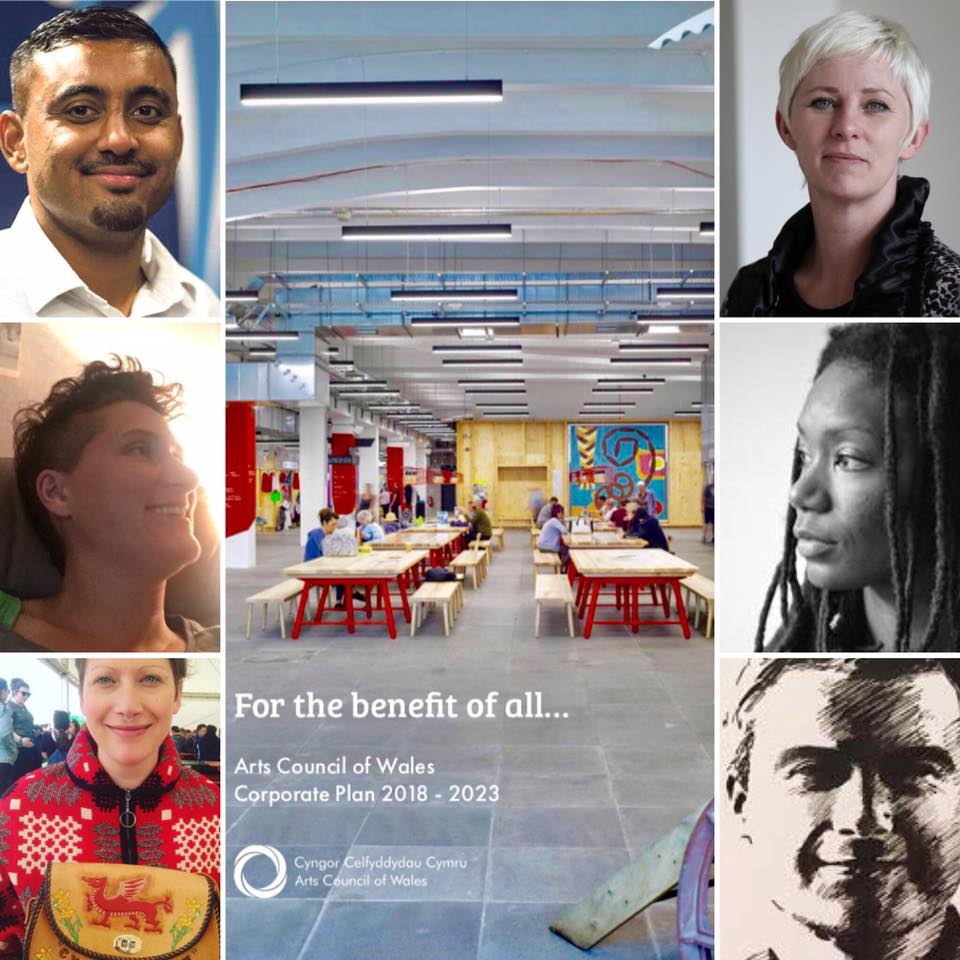
In November 2018 we published an article in response to the new Arts Council Wales Corporate Plan “For the benefit of all..” with a range of contributions from Creatives in Wales. We revisit this area in the updated article below with responses from one of the creatives featured in the article as well as an additional contribution.
Our mission statement at Get The Chance is “Creating opportunities for a diverse range of people to experience and respond to sport, arts, culture and live events.”
We were very pleased to see some of the priority areas in the new Arts Council Wales, Corporate Plan, 2018 – 2023 “For the benefit of all”
In particular we were interested in Commitment 2 below
We will enable a greater number and a wider diversity of people to enjoy, take part and work in the publicly funded arts.
ACW then go onto make a series of intentions (below) for where they want to be in 2023 (5 years)
We will be able to demonstrate clearly that all our funding programmes promote and contribute to equality and diversity
There will be a narrowing of the gap between those in the most and least affluent social sectors as audiences and participants
We will develop the creative work of disabled artists by funding “Unlimited” commissions and developing a scheme similar to “Ramps on the Moon” operated by Arts Council England
We want to introduce a “Changemakers” scheme placing BAME and disabled people in senior executive positions in the arts
We want to see a doubling of the number of disabled people in the arts workforce
We want to see a doubling of the number of Black and Minority ethnic backgrounds in the arts workforce
We want to have introduced an Arts Council Apprenticeships scheme designed to provide opportunities for people from diverse backgrounds
We will have achieved a trebling of the number of BAME and disabled and on APW boards of governance
I struggle to fully engage this as a response. My recent experience has revealed that there is certainly a surge to include diversity in all its forms on boards and in creative spaces and projects. However, this new ‘interest’ feels more like organisations ‘needing’ to diversify rather than ‘wanting’ to diversify, in order to secure their future and funding. I am hopeful though.
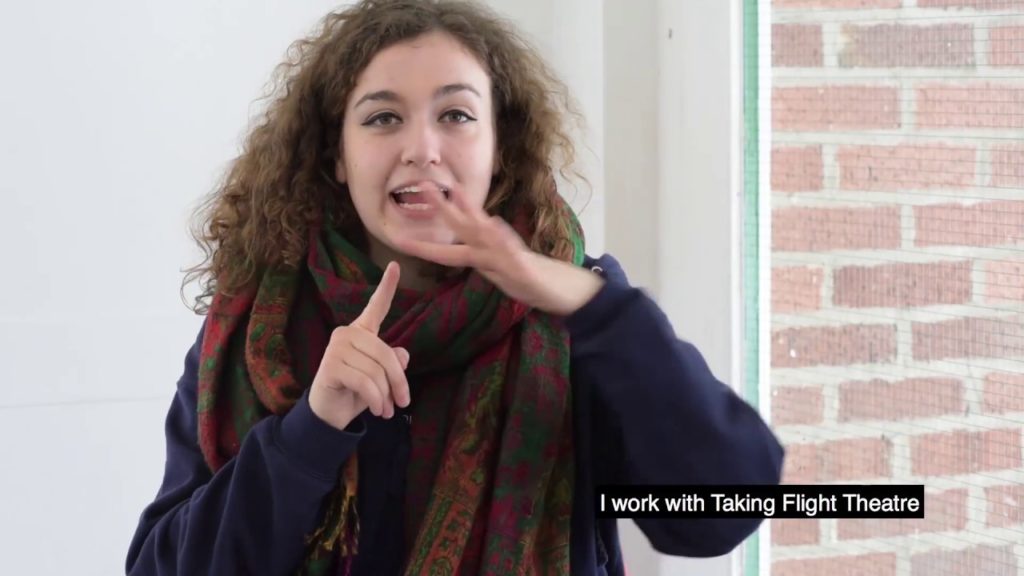
Elise Davison
Artistic Director, Taking Flight Theatre Company
What a year of change 2019 has been. For Taking Flight it has seen the company move away from the annual Shakespeare production to more indoor, venue-based work.
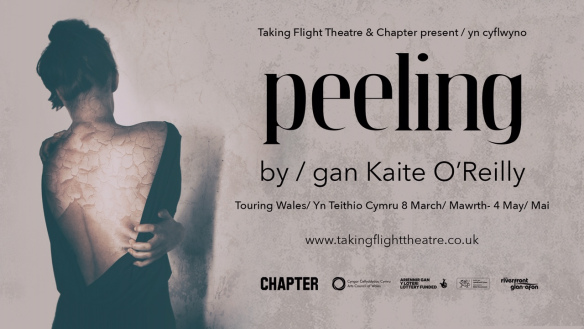
peeling by Kaite O’Reilly, opened on International Women’s Day in March at The Riverfront, Newport and then toured Wales and England and was a huge success earning 4 and 5* reviews.
The Guardian stating “Accessible theatre? Do it properly – do it like this”. Following this Taking Flight was invited to Grenzenlos Kulture festival in Mainz, Germany as an example of best practice in accessibility. It was a huge tour and highlighted once more the inaccessibility of much of Wales; accessible accommodation is very hard to find, and some venues struggled to meet our access riders. However, this did lead to some very inventive solutions involving temporary dressing rooms created with flats, curtains and even a marquee! Obviously not the ideal but with our hugely creative stage management team always looking for solutions rather than the problems and the support of venues we made it work. High applause to Angela Gould at RCT Theatres for her work in this department.
Angela Gould, Theatre Programme and Audience Development Manager, RCT Theatres.
One of our lovely actors toured with her dog who was a lovely addition to the team. Max is a therapy dog; many places we visited were only familiar with guide dogs, which made us realise how much there is to learn about the different types of assistance dogs.
Everything we learnt during this extensive tour will feed into the work we have been developing towards a scheme like the Ramps on the Moon initiative. A scheme like this can never be replicated, but the interest and passion from venues in Wales to be involved is overwhelming. Creu Cymru, hynt and Taking Flight have been in ongoing discussions about ways to make this happen. We read with interest that it was also a priority for ACW and have begun conversations with them around a similar scheme. As we have been researching and pushing for this to happen since ‘Ramps’ began in 2016, we are passionate that this becomes a reality. Taking Flight has just received funding for their next production, Road, at Parc and Dare, RCT Theatres and we hope this partnership will be the first step. Taking Flight will give support to participating venues to be confident to manage and produce inclusive work, to provide excellent access and a warm welcome to all- both audiences and creatives.
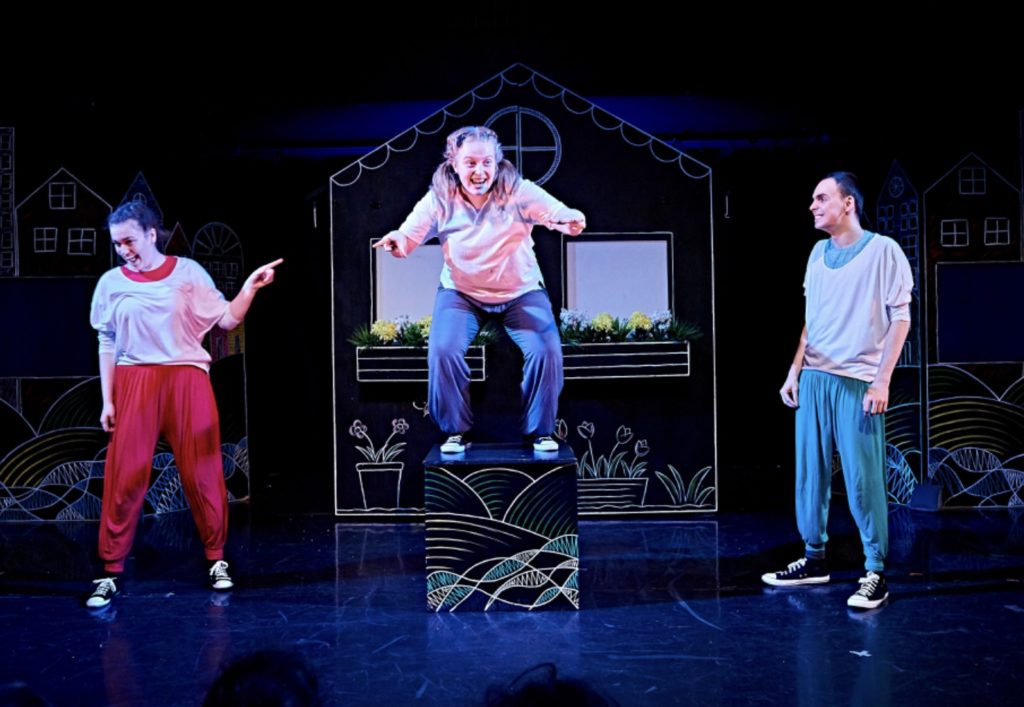
While peeling was out on the road in the Autumn, we also remounted the hugely successful and totally gorgeous You’ve got Dragons. After a run at WMC we hit the road again for a UK tour including a week run at Lyric Hammersmith which was almost sold out and incredibly well received. The desire for inclusive and accessible work for young people is growing. Watch this space for more news on You’ve Got Dragons next adventure.
Taking Flight has often dreamt of setting up a Deaf- led Youth Theatre for D/deaf and Hard of Hearing young people and with funding from BBC Children in Need we have finally done it. Led by the tremendous Stephanie Back in BSL and English, the youth theatre began last week and the results are already fabulous. The Wales Millennium Centre are our amazing venue partner and host the weekly sessions for D/deaf children aged 4-18. We have been overwhelmed with interest in this project, demonstrating that this has been needed in Wales for a long time.
There has also been a surge in interest from companies and individuals wanting to consider access while writing funding applications. There is a general excitement around making work accessible. There are some brilliant intentions and I’ve had exciting conversations with companies about different types of access and have been able to recommend consultants and access professionals.
The ground has been fertile for change for some time and there is much more inclusive and accessible work being created here than when we first started 12 years ago. Theatres are also much more interested in programming diverse work and many have invested in Deaf Awareness training with Taking Flight (Led by Steph Back).
Steph Back
There is a real desire to diversify audiences and welcome them to theatre spaces. Taking Flight’s next symposium on 28th Feb at Park and Dare RCT theatres on Relaxed Performances brings the brilliant Jess Thom, Touretteshero to Wales to discuss ways to provide the warmest possible welcome to those who may find the traditional etiquette of theatre a problem.
Jess Thom, Touretteshero
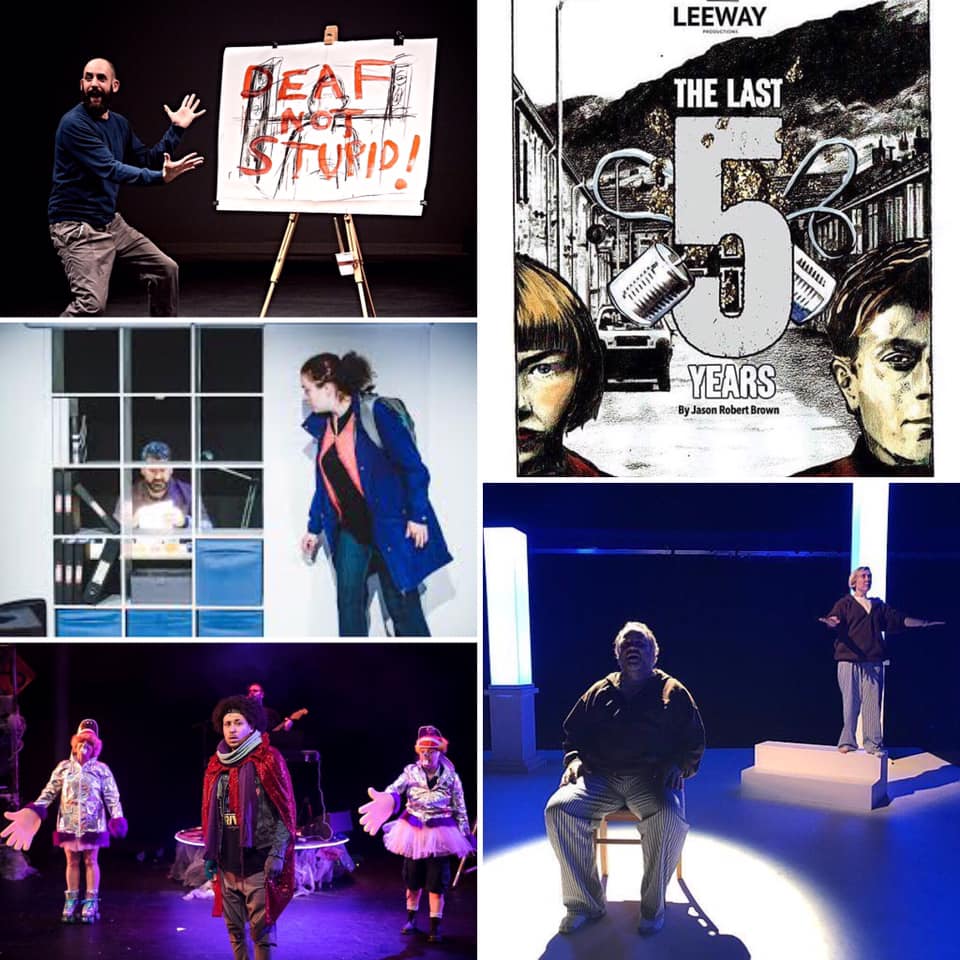
There has been a surge of work featuring D/deaf and disabled performers, productions like Jonny Cotsen’s Louder is Not Always Clearer, Leeway Productions Last Five Years and Illumine’s 2023 really engaged new audiences and the venues have really built on this success. There have been more productions that embed access in a creative way, a gorgeous example in Gods and Kings by Fourinfour productions with integrated BSL from Sami Thorpe. I had lots of fun working with Julie Doyle and Likely Story integrating BSL interpreter Julie Doyle into Red. Companies are choosing to interpret, audio describe or caption all the shows in a run rather than just one which is really encouraging and promoting more equality of access to shows.
So, the will to make accessible work is absolutely there, the best of intentions are definitely there and, now the funding for access is factored into budgets, the funds are usually there. However, why is it still access that falls through the cracks, gets pushed aside or forgotten as a production approaches opening night? I hear stories of interpreters and audio describers who can’t get into a rehearsal space to prep or are placed somewhere on stage that is neither aesthetically pleasing nor practical. It can still sometimes feel like access is something that needs to be ticked off a list in order to fulfil a funding application.
I am absolutely sure that this is not the intention; but we are all so overstretched, one person is often doing multiple jobs (especially in small companies) and when no one is directly responsible for access or it simply forms ‘part’ of someone’s role. So those best intentions and exciting plans are really hard to fully achieve. Taking Flight are exploring this lack of provision for access co – ordination with Bath Spa University so watch this space for the results of our research… The next generation of theatre makers are coming, and they really care about making work that can be accessed by all – that makes me happy.
I am sure that many of us would dread to know what the contents our minds would look like if they were to come into reality. Those odd dreams, the nightmares and the fears.
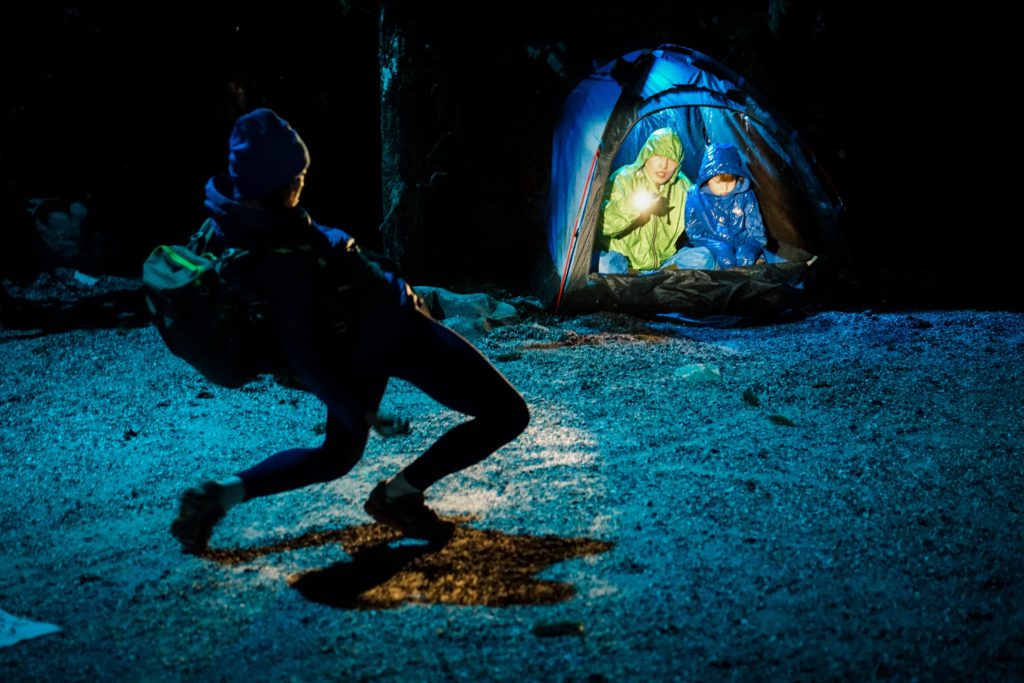
Peeping Tom’s Child brings all of these to the forefront in a bizarre continuous performance staged in a pretty normal looking forest clearing. Taking the fears and dreams of a child, what we encounter for the next hour or so is not only comical but at times quiet frightening and confusing.
By no means is this a negative comment.
With a little feeling of inspiration from the likes of Antonin Artaud’s theory of Theatre of Cruelty and a touch of Bertolt Brecht’s Alienation effect, we are intrigued by and at times disgusted at what we see. For the few, this is too much but for the many, once you are invested, there’s no leaving until the end.
Engagement comes in the anticipation of the next scene. Seamless in delivery, and with seemingly no obvious scene changes (although, of course there is, but they meld into one another so well, you can hardly tell) we encounter bizarre character’s with little relation to one another; scenes that we couldn’t even imagine in our wildest dreams, and they form together to give real laughter, uneasy laughter and real “WTF” moments that are nothing but brilliant.
There are ranges of physical theatre throughout the piece – bodies push the boundaries of what we understand they are capable of; like liquid, at times mechanic, without fear and flawless. One cannot help but be in awe of the performer’s capabilities and inspired by how graceful and yet at times fearless their movements can be.
Child is really something special. Not for fans of contemporary or traditional theatre, but certainly something that everyone must try for the sheer courage and impossible creativity it exudes.
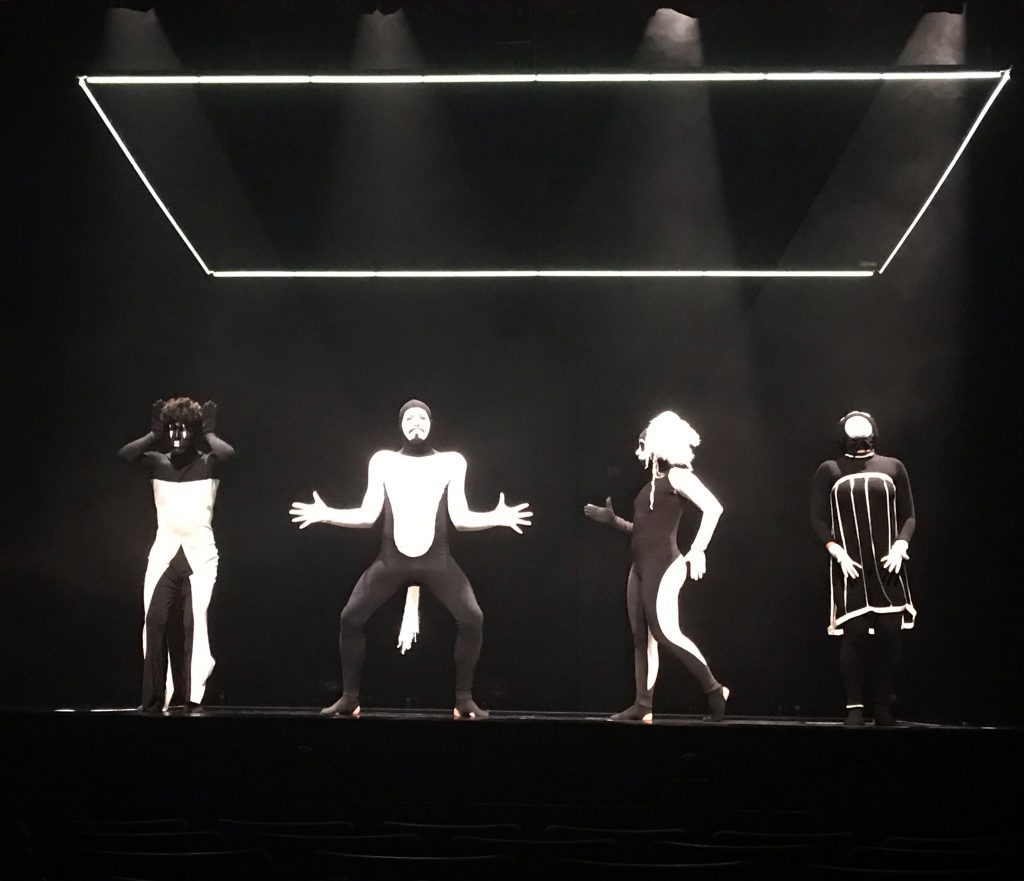
A monochrome Zoetrope of cross- continental imagery.
“Created in collaboration with Peruvian artists and long- time collaborator, composer Steve Blake, ‘Laberinto’ continues Anderson’s work around misconstruction of reimagined lost dances, leading the audience on a serpentine journey into the labyrinth, into worlds beyond death.”
The piece was performed at Bristol’s Old Vic in their Weston
studio, an enchanted yet cosy space which fit the themes of Laberinto
perfectly. This meant the dancers were really amongst the audience, almost
close enough to touch but certainly close enough hear and maybe even feel their
breath.
The dancers begin the piece with grounded movement which
seems heavily influenced by Capoeira, an afro-Brazilian martial art form. They
create strong shapes, providing visual imagery for the audience which is almost
like a caricature or cartoon. This makes characters for each performer within
the monochrome zoetrope of cross- continental imagery that emerges on stage.
The dancers hold their own persona within the piece, each
with their own personality and therefore, their own characteristics. This allows
the audience to form a relationship with each, creating space for light- hearted
comedic moments which feature regularly within the piece and to the very end (including
the bow). These add to the theatrics of the performance and provide breaks from
the intensity of the images throughout. Also making the piece accessible for
those, who are not necessarily from an arts background.
I adored the stark contrast between the characters, whether
that was being devilishly camp or oppositely, stern and unphased. The posture
of these really played true to the role. They often carried a Parisian
‘laissez-faire’ attitude which occasionally indulged us in their inner
flamboyance. However, that isn’t forgetting the shift in physicality when
performing sections that deemed more heavily tribal influenced. The dancers
would then adopt a curved and more grounded approach, contrasting the seemingly
European personas they were previously carrying. Sadly, as the performers
tired, it did seem as though the sparkle of what were such strong, captivating
personalities had become more distant and less embodied by the dancers.
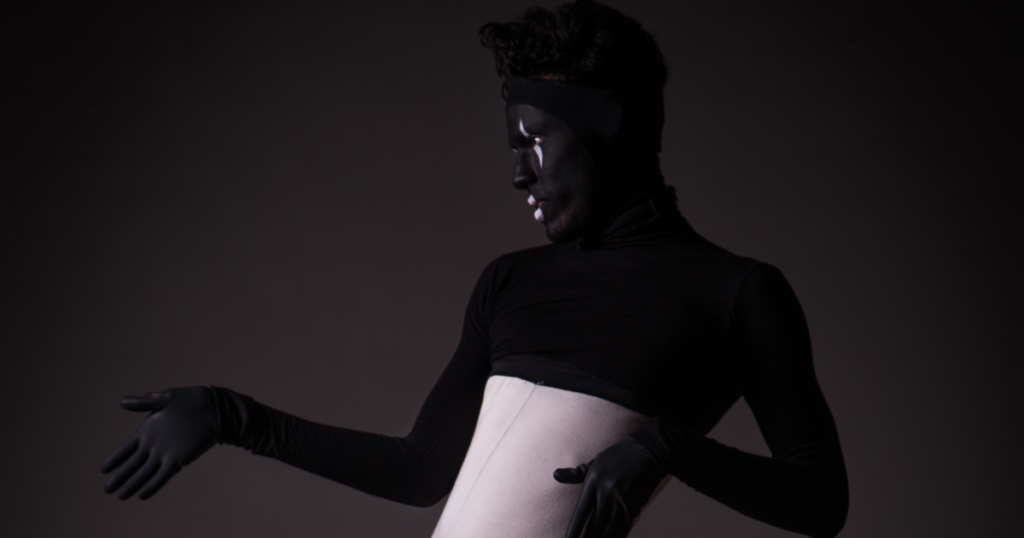
The costumes, all variations of monochrome catsuits, hold
reference to French icons such as Marcus Marceau as well as to Incan or Native
American masks. This fusion of European and Latin American aesthetics is
constant throughout the piece, both in imagery and movement. The use of face
paint on the face enhances the characters in which the dancers play. With
strict monochrome and neutral expressions, it is their physicality which tells
us of their individual stories. Only to be broken with exaggerated facial
expressions or the use of the tongue which strikes contrast to the sullen
monochrome otherwise. Imagery like the sticking out of the tongue and piercing stares
relate to that often seen in tribal rituals. This is heightened in the
penultimate section of the trio. The trio is made up of a solo and a duet. The
soloist seems to be trapped within a shamanic ritual between the other two
dancers. The two dancers appear to be chanting around the soloist but not
verbally, physically. The shamanic chanting is created via the use of hands and
gestural movements, almost like a text. Repeated, over and over, each time with
more power and vigour, growing in strength and intensity.
Throughout the piece the dancers’ hands will never be seen in a fist, but always splayed or stylistically positioned. Often the hands and arms will make references to whacking or vogueing foundations, often crossing over with that of 1980s catwalk models or magazine covers. This shape of movement is always precise, with transitional movements from one shape to the other. These shapes provide the context for the audience, often presenting imagery from familiar historic images. Not only supermodels but mimes, jesters, court dancers and circus performers. I did question at times which images have been used to make the choreography, as although some were obvious in their links, others not so much. There seemed to be expressions that linked with that of ‘Uncle Tom’ propaganda from the 1950s but whether that was purposeful or solely my connections, I am unsure.
The choreography itself relies on a mixture of devised games
(such as freezeframes or adding to the picture) as well as the use of strict
patterns playing with timings, canons, shape and poise. The accents of the choreography
tended to swap between ‘hits’ and breaks’, meaning sharp held movements and
sharper movements that then blend into something softer. The pathways of the
piece were most intriguing and formed a key role within the piece. The
characters would glide past each other, whilst in strict canons but along
unusual pathways meaning as the audience, your eyes were constantly drawn to
different areas within the stage.
The set simply details a square of flooring which is matched
by a dangling box light above. This cube of parameter provides ample space for
the performers to move and with their grounded movement quality, they seem
encased within the space and we the audience are peeking through the looking
glass. The strict spacing provided by the set allows the structure of the piece
to provide breath and more importantly to reset from scene to scene. Almost as
though when the dancers aren’t within the set, they are offstage (although they
continue to pursue their characters and to respond to what is emerging on
stage).
I was fortunate to witness the Q&A at the end of the
performance which added further insight into the process of creation and how
such a project came about. I was happy to learn that photographic images had
been one of the core ways in which the piece had been created and that the
piece focussed on these shapes and imagery throughout. It’s wonderful to see
such open ways of creating and these types partnerships taking place. I look
forward to seeing more from such an emerging professional company and wish them
the best of luck on the rest of their tour.
Creating opportunities for a diverse range of people to experience and respond to sport, arts, culture and live events. / Lleisiau amrywiol o Gymru yn ymateb i'r celfyddydau a digwyddiadau byw

 (4 / 5)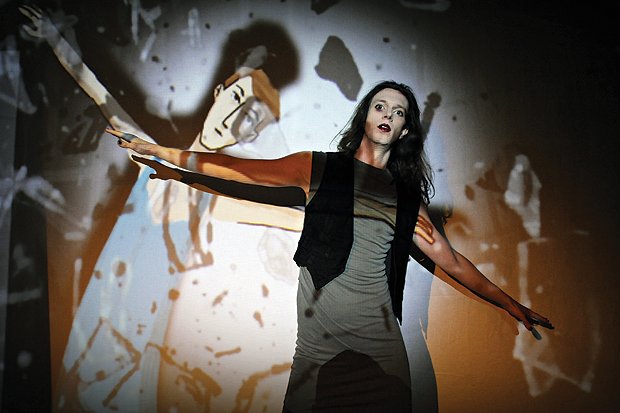
 (5 / 5)